25 Easy Embroidery Designing Ideas for Beginners
A plain tote bag, a ten-dollar hoop, and a single skein of floss is genuinely all it takes to start. Embroidery looks intricate from a distance, but most beginner projects lean on three or four basic stitches repeated with patience. Below are 25 embroidery designing ideas that build skill in a sensible order — simple motifs first, then personalization, then gifts and trickier surfaces. Pick one, finish it, and the next will feel easier.
1. Simple Floral Embroidery Designs
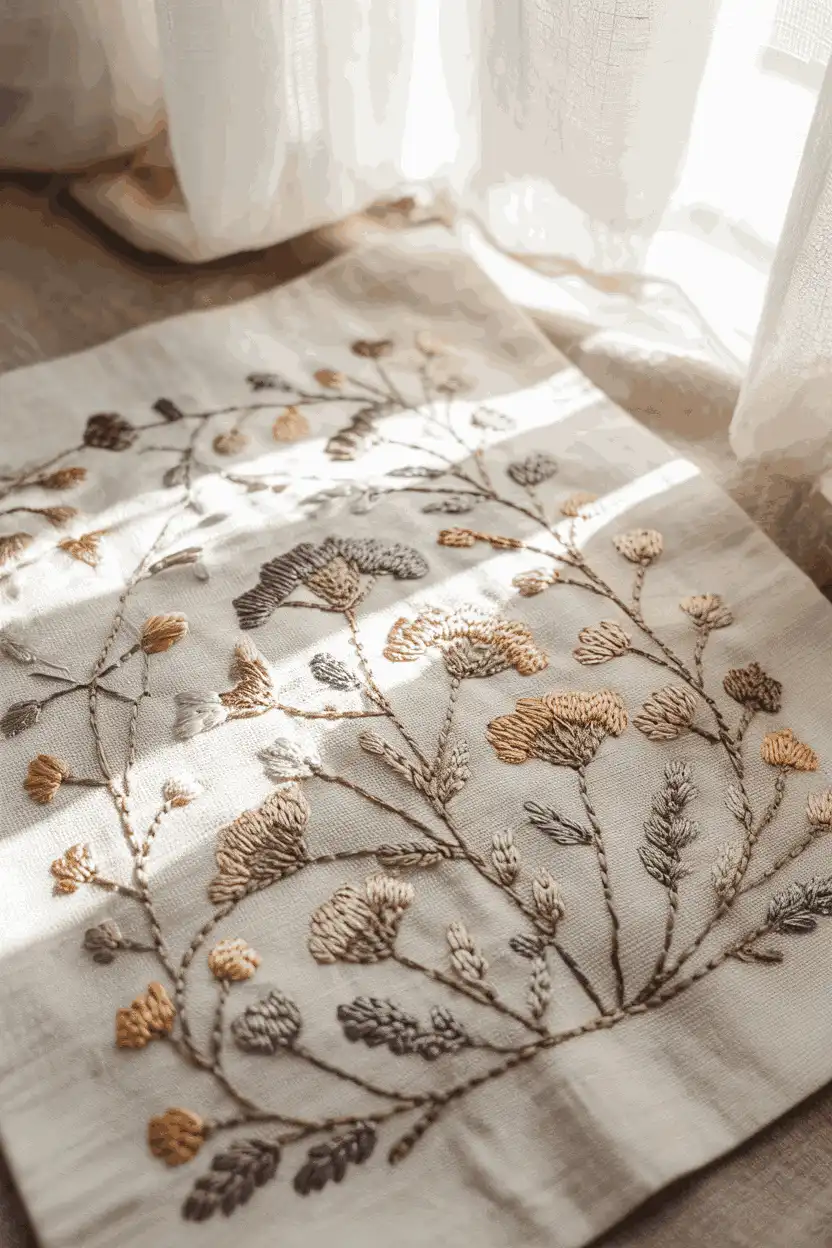
Flowers are the classic first project because they forgive wobbly stitches. A daisy is just a ring of lazy-daisy petals around a French-knot center; a tulip is three satin-stitched petals. Start with two colors and cotton fabric that doesn’t stretch.
Once the motif works, put it on something you’ll actually use — a tote bag, a cap, a pillow cover. A single small flower in the corner of a plain bag looks deliberate, and stitching on finished items teaches you placement: centered, cornered, or scattered.
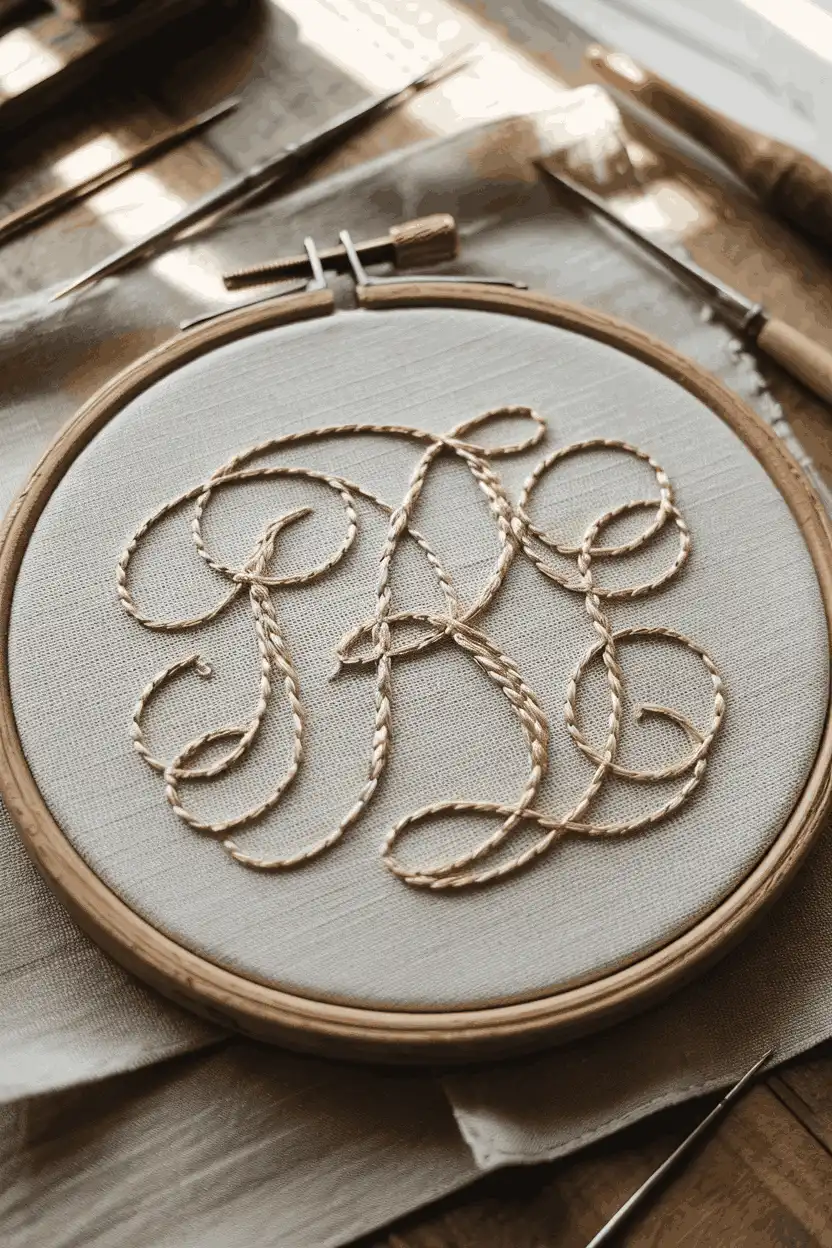
2. Monogram Embroidery Ideas
Monograms are the fastest route to gifts that look expensive. Sketch the initial lightly in pencil, outline it in backstitch or chain stitch, and you’re done in an evening. Block letters read modern, script reads classic — pick the mood first, then the thread color. Initials on towels, shirt pockets, and tote bags never miss as presents.
3. Cute Animal Embroidery Patterns
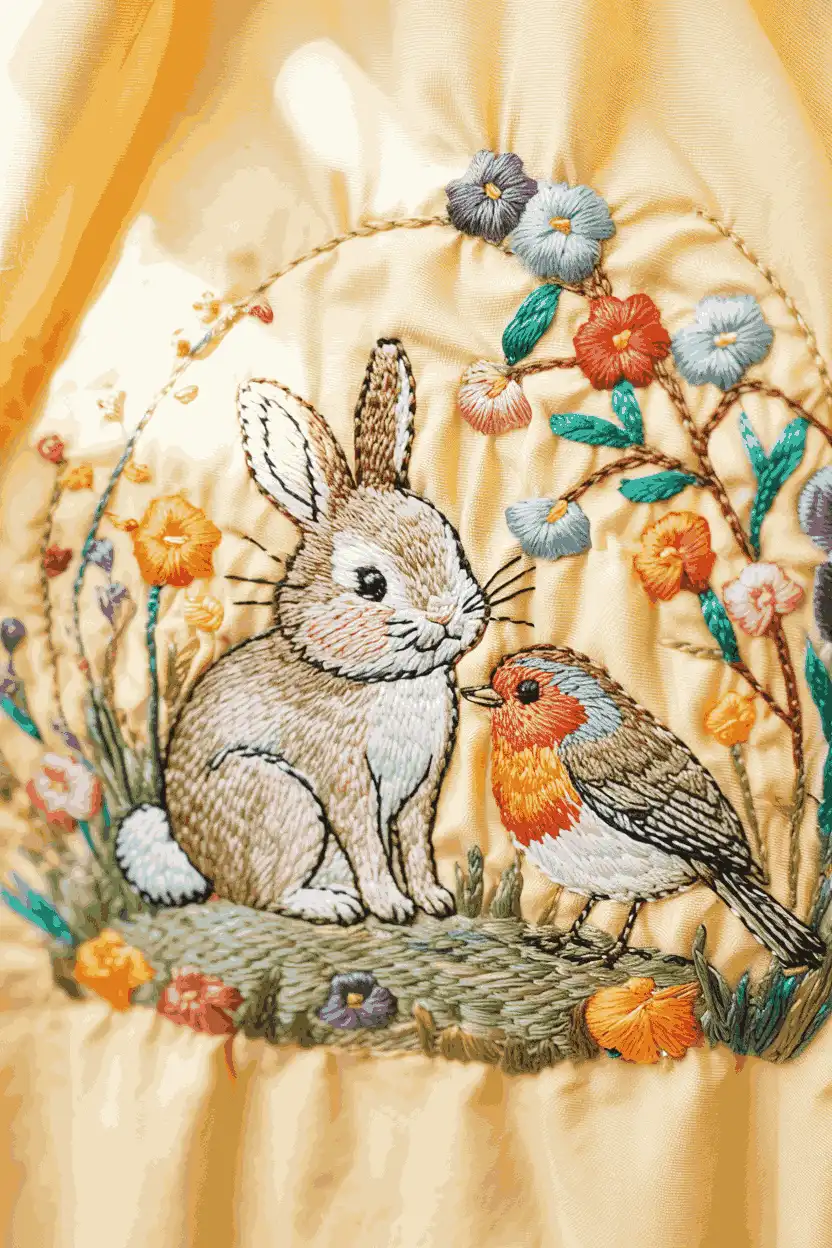
Cats, birds, and bunnies make forgiving subjects because simple outlines carry the whole design. A cat is an oval, two triangle ears, and whisker lines — nobody expects photorealism from thread.
These motifs land best on kids’ t-shirts and sweatshirts, where a slightly wonky bunny reads as charm. Small projects like these also quietly train stitch control: short, even stitches on curves are a skill worth drilling early.
4. Embroidery Cross Stitch Patterns
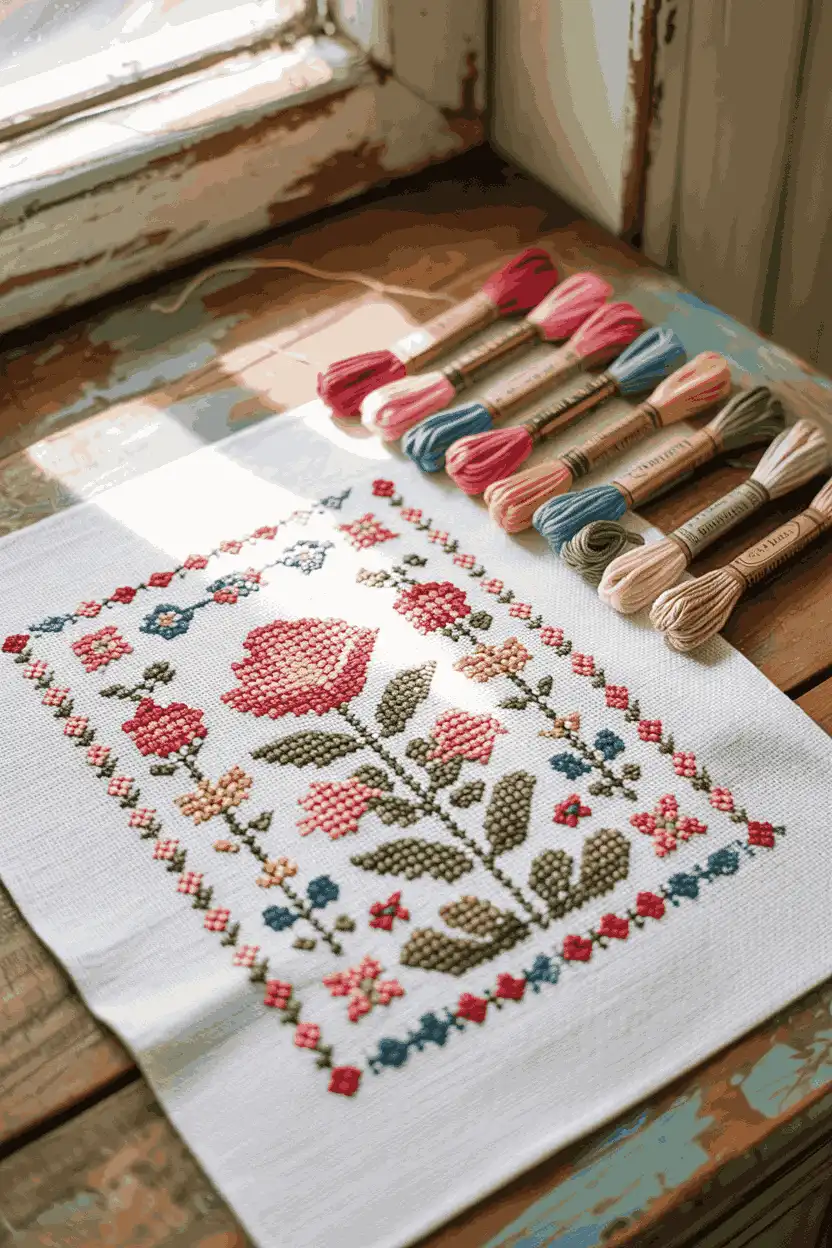
Cross stitch trades freehand drawing for counting: every X sits on the fabric’s grid, so the pattern does the thinking. Aida cloth makes this almost foolproof, and small geometric or icon patterns finish in a weekend.
Finished pieces suit wall hangings, bookmarks, and ornaments — anything flat that shows off the pixel-like texture. The counting habit you build here transfers directly to more complex counted-thread work later.
5. Embroidered Tote Bag Ideas
A blank canvas tote is the most forgiving surface a beginner will find: sturdy, flat, and cheap enough to redo. One motif — a sprig of lavender, a short quote, an abstract sun — placed slightly off-center looks intentional and modern. Because you carry the result daily, tote projects also teach you to stitch durably: knot your ends well and keep the back tidy, since the inside shows.

6. Bead Embroidery Ideas
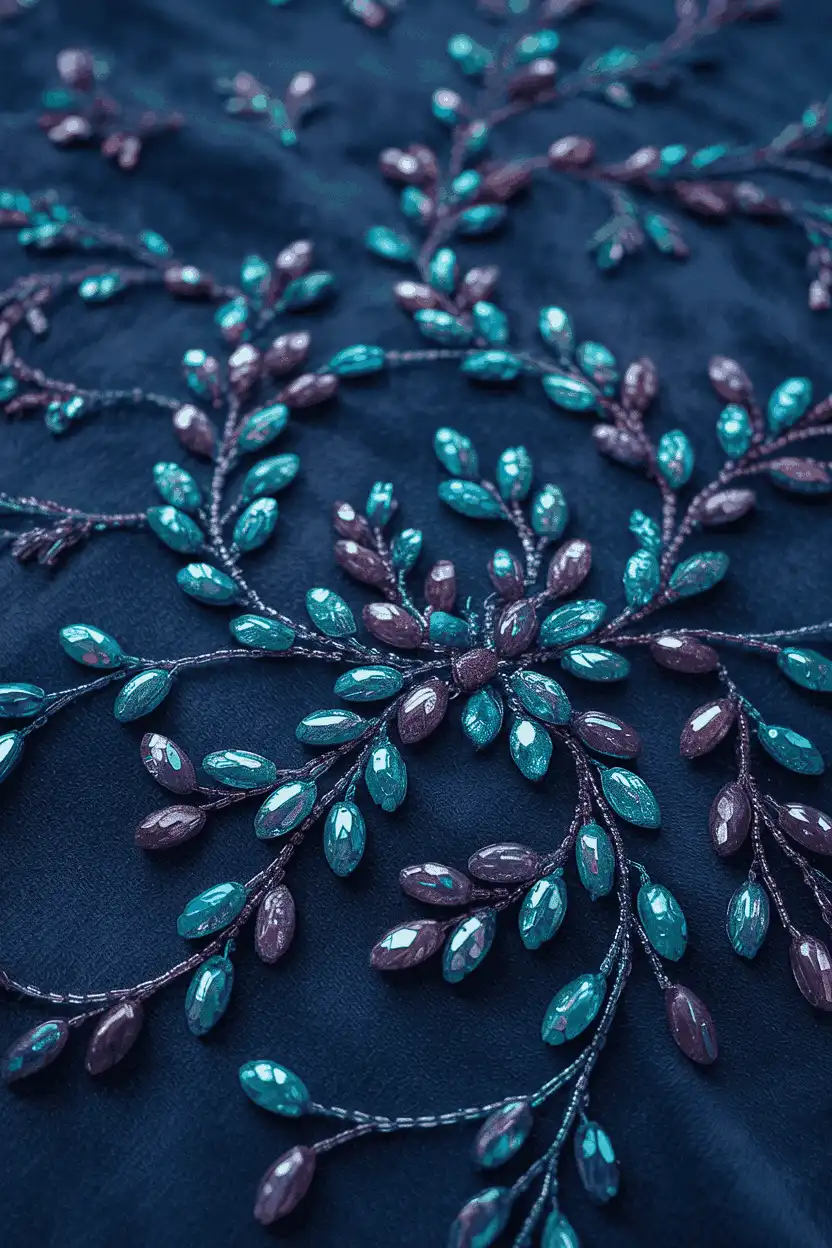
Beads add a kind of texture thread alone can’t reach. Couch a line of seed beads along a stem, or anchor a single larger bead as a flower center, and the piece suddenly catches light. Work beads in after the stitching is done, one at a time on a doubled thread — rushing this step is how beads end up loose. Collars, cuffs, and bag flaps are the natural homes for beaded accents.
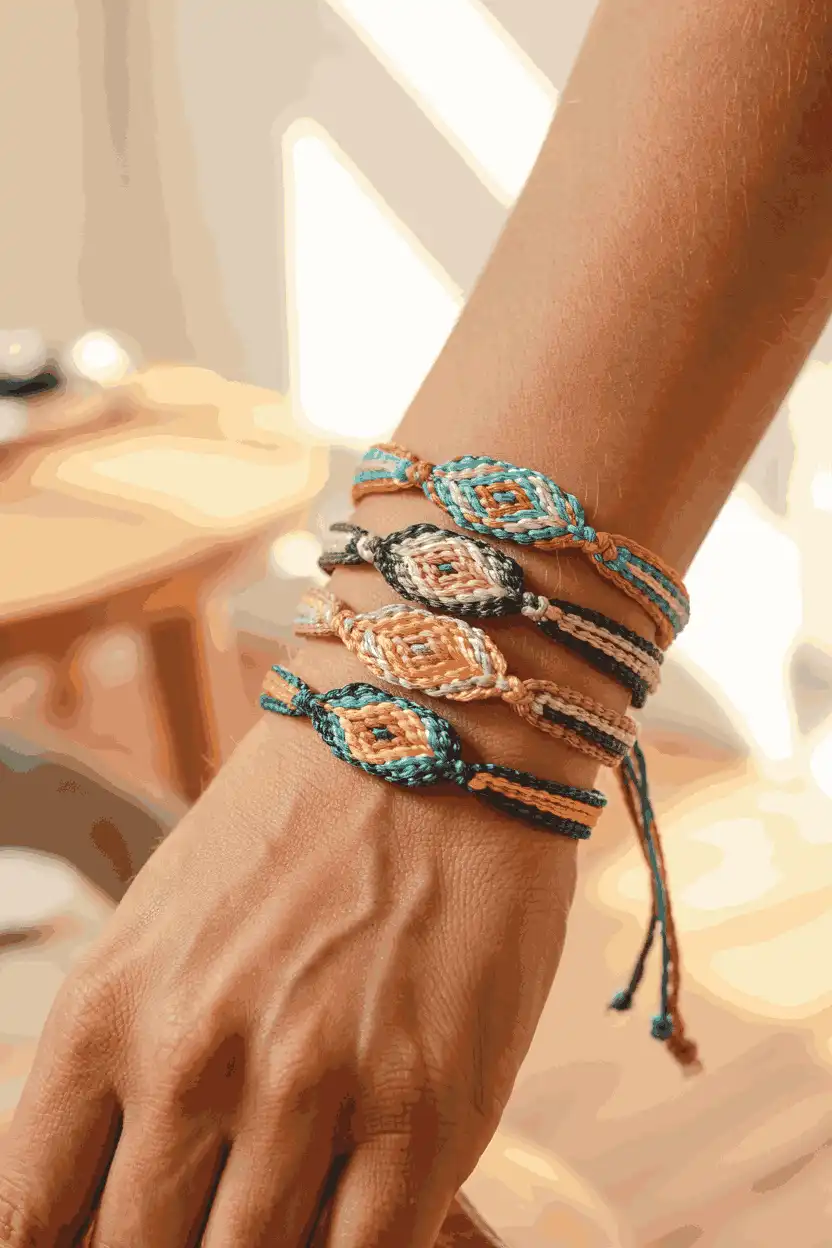
7. Embroidery Thread Bracelets Patterns
Friendship bracelets are just embroidery floss plus knotting, which makes them a stealth training tool: your hands learn thread tension without a hoop in sight. Simple chevron or stripe patterns use only forward and backward knots. They finish in an hour or two, cost almost nothing, and make genuinely welcome small gifts. Once the basic knots feel automatic, the same techniques scale up to wider cuff patterns.
8. Simple Geometric Embroidery Designs
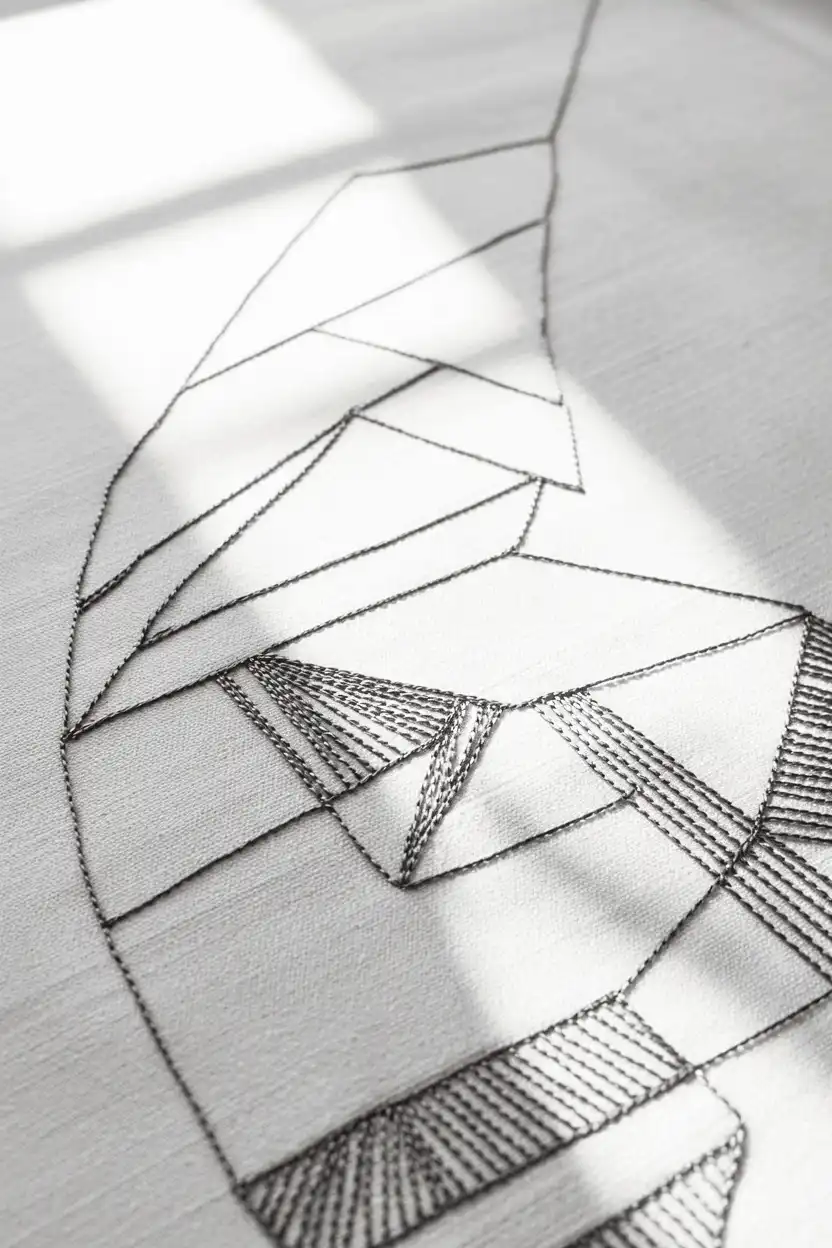
Triangles, circles, diamonds, and parallel lines sound plain until you stitch them in metallic or variegated thread. Geometric designs are where beginners build the muscle memory that matters — consistent stitch length, straight lines, even spacing — without any drawing skill required. They suit modern wardrobes best: a row of small triangles along a shirt placket or a single large circle on a pillowcase. Minimalist work also hides in plain sight as genuinely fashionable.
9. Embroidered Hat Ideas
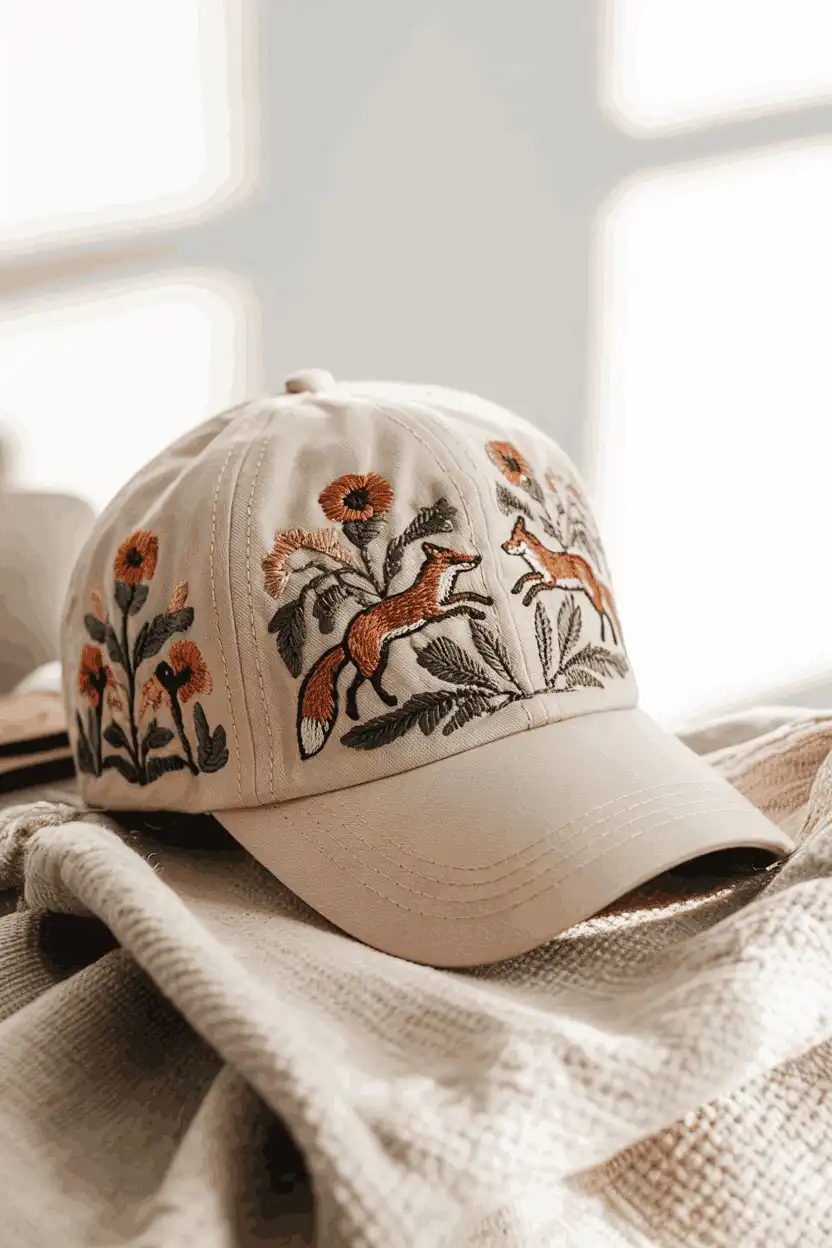
A cap or beanie offers a small, high-visibility canvas — one motif, front and center, and you’re done. Initials, tiny florals, or a simple icon all work; the curved surface just asks for shorter stitches and a tighter hoop. Practice on an old cap first. Stitching through thick crown fabric dulls needles fast, so keep a few sharps on hand and don’t force the needle — rock it through instead.
10. Punch Needle Design Ideas
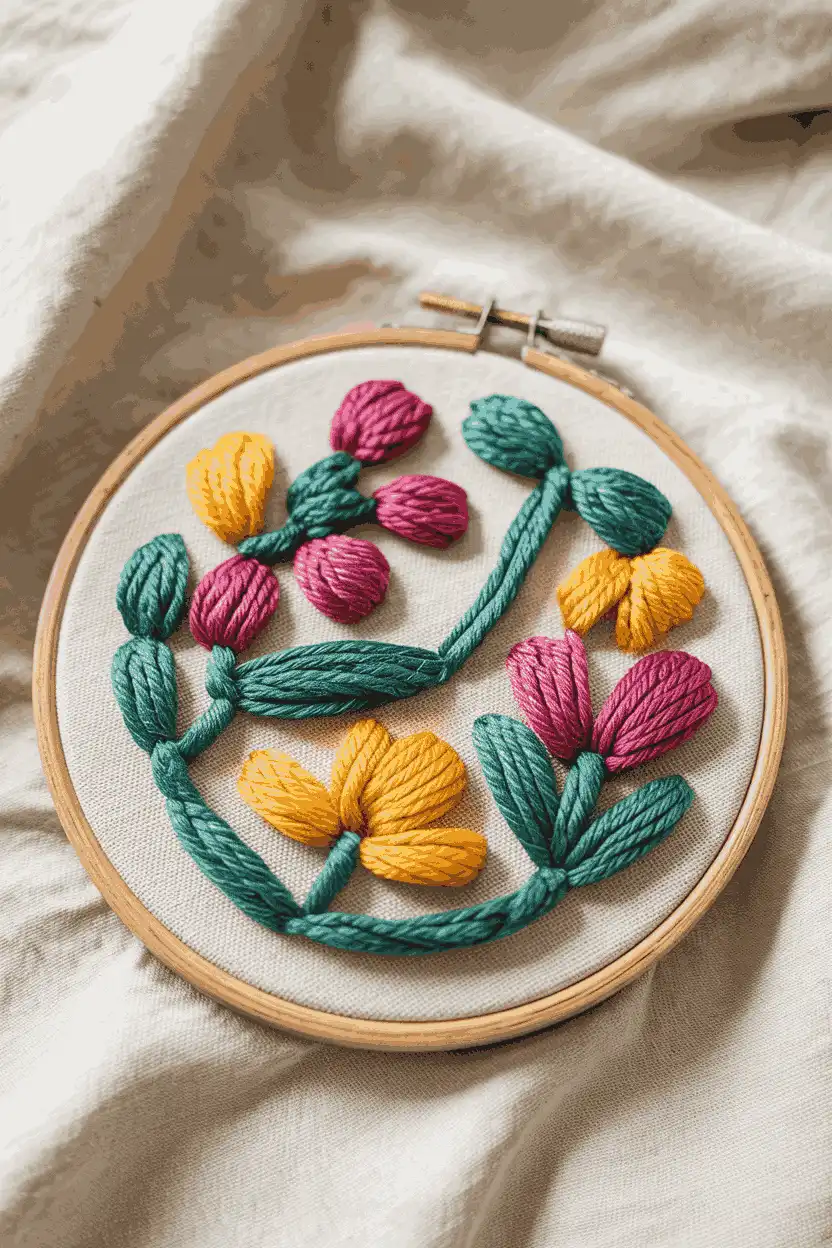
Punch needle skips most of the learning curve: you push loops through fabric with a hollow needle instead of pulling thread through it. The result is a nubby, rug-like texture that looks impressive after about twenty minutes of practice. Flowers, abstract blobs, and small animals all translate well. It’s the fastest path to a finished piece that looks store-bought, which makes it a great hook for impatient beginners.
11. Embroidered T-Shirt Ideas
A plain t-shirt plus a small motif near the collar, cuff, or pocket is the classic wardrobe upgrade. Keep designs under three inches — small embroidery on knit fabric puckers less and washes better. Use a cut-away stabilizer ironed inside the shirt; without it, jersey stretches and your neat flower becomes a wavy one. One evening’s work turns a five-dollar tee into something nobody else owns.

12. Christmas Embroidery Ideas
December is embroidery’s natural season: snowflakes, holly sprigs, and tiny ornaments stitch up fast on towels, stockings, and tree skirts. The limited palette — red, green, white, gold — actually helps beginners, since color decisions are made for you. These make genuinely good gifts because they’re seasonal and personal at once. Start in October; hand-stitched presents have a way of multiplying once people see the first one.

13. Embroidery Hoop Designs for Beginners
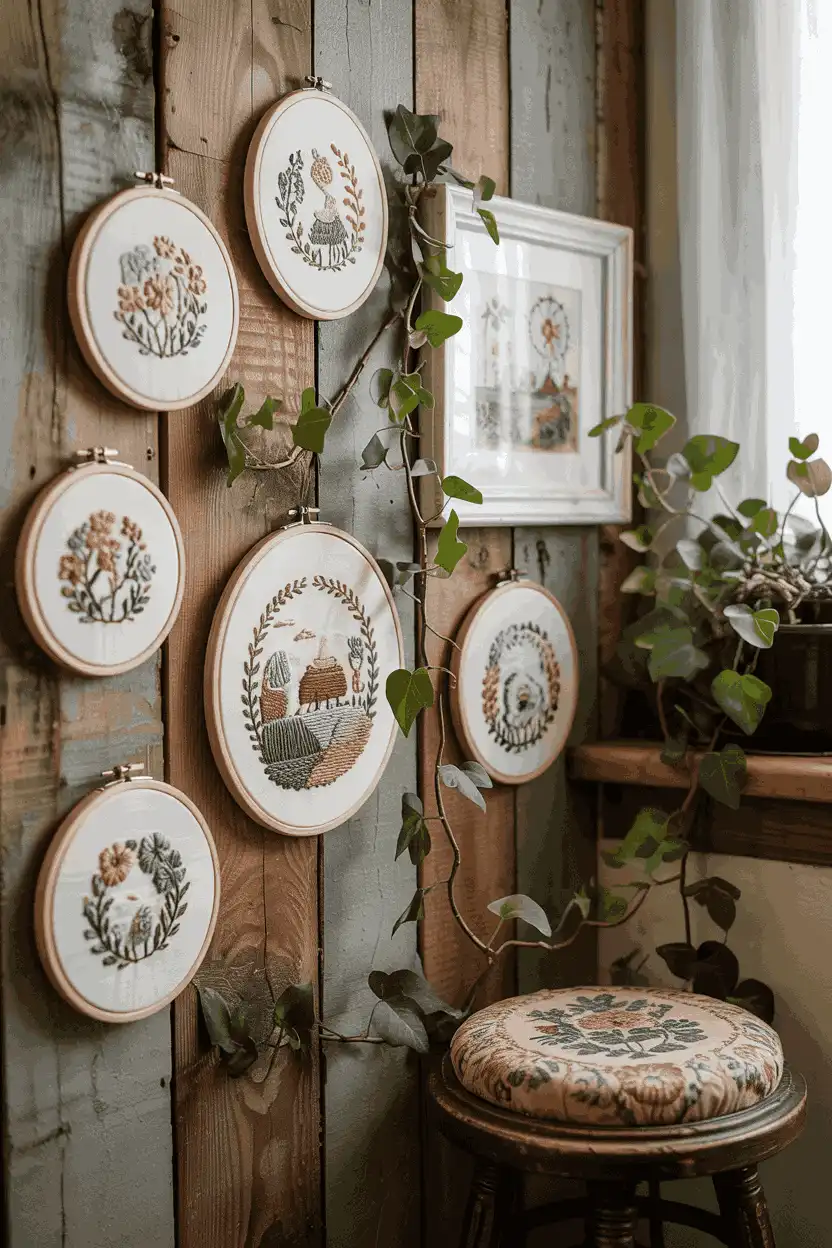
The hoop is doing double duty here: it keeps fabric drum-tight while you stitch, then becomes the frame when you’re done. Trim the excess fabric, glue or lace the back, and hang it straight on the wall — no framing costs. Quotes, botanical studies, and small landscapes all suit the round format. Beginners should know the hoop itself teaches finishing: a piece isn’t done until it’s presentable.

14. Name for Embroidery Business
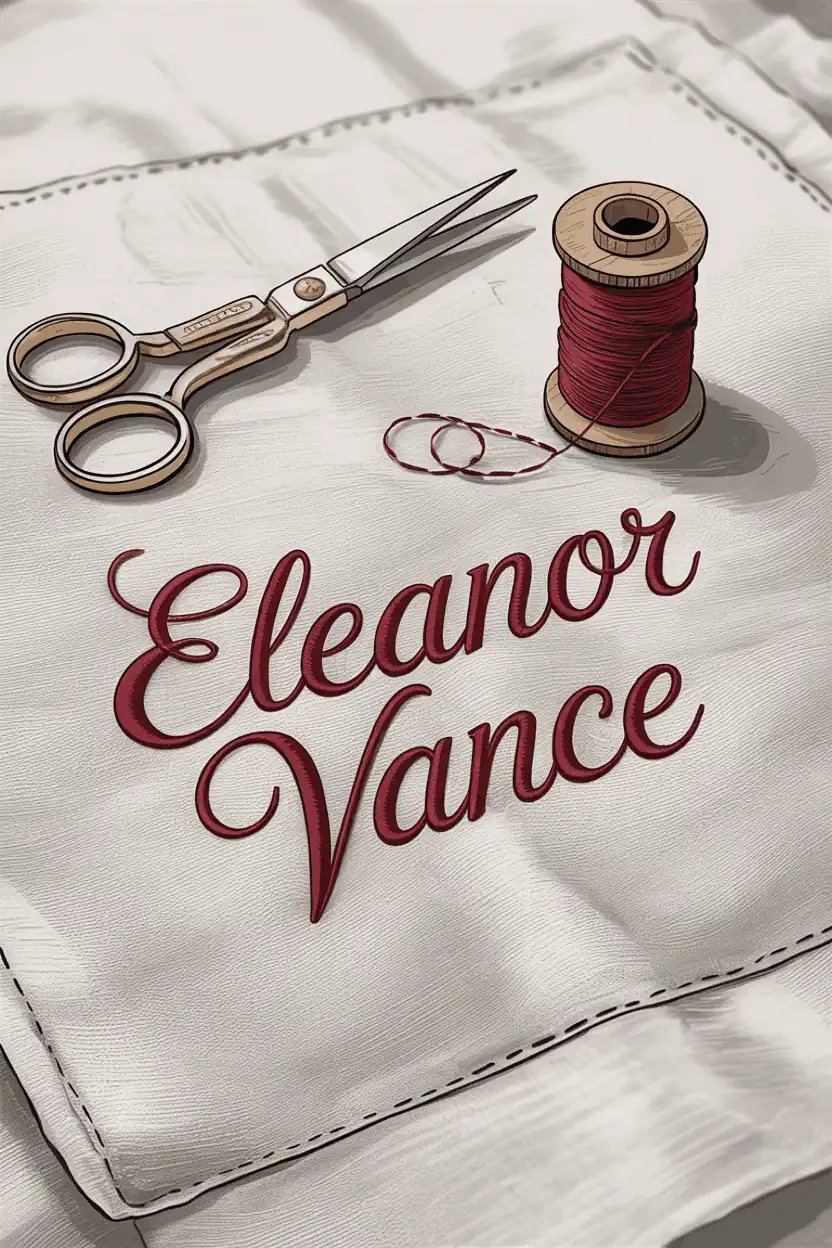
A business name should say what you do and how it feels: “Threaded Dreams” promises whimsy, something like “Loop & Linen” promises craft. Say candidates out loud and check the domain before you fall in love. Keep it short enough to embroider — you’ll be stitching this name onto tags and packaging. Pair it with one simple logo mark and use both consistently from day one.
15. Sweater Embroidery Ideas
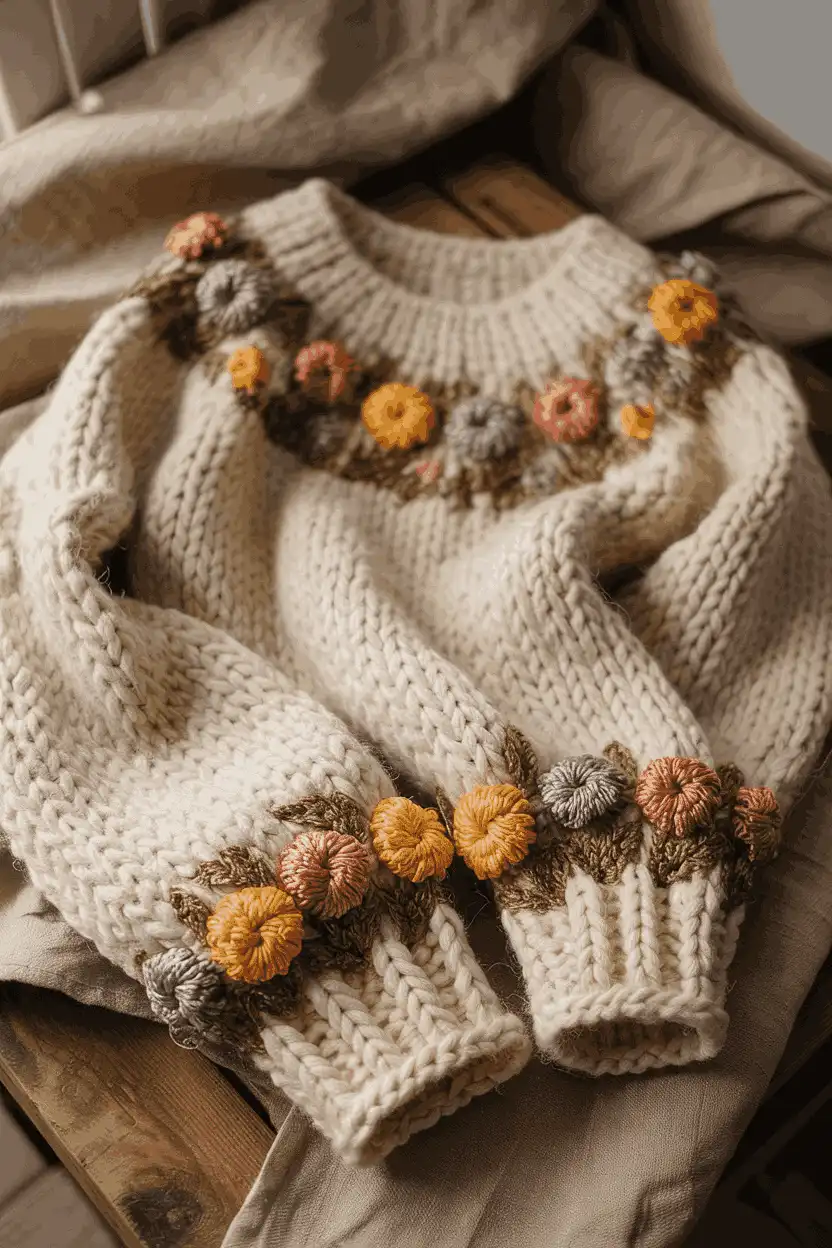
Knit fabric intimidates beginners, but a sweater only needs one adjustment: a stabilizer on the inside so stitches don’t sink between the knit rows. After that, leaves, stars, and scattered sprigs stitch up like they would on cotton. Place motifs on the chest, shoulders, or cuffs where the knit lies flat. A single embroidered elbow patch’s worth of design can rescue a plain sweater from the donation pile.
16. Embroidered Denim Jacket Ideas
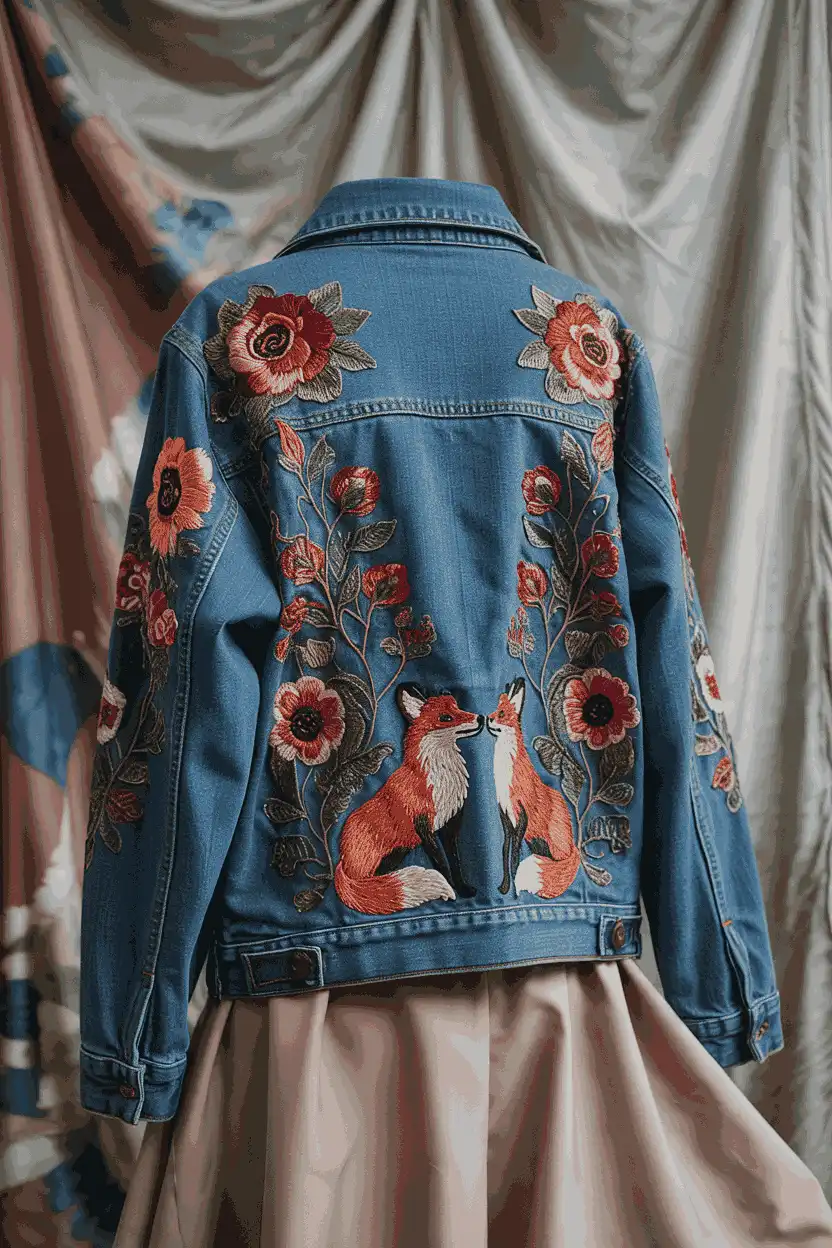
Denim rewards boldness: thick fabric holds heavy stitching that would pucker lighter cloth, so go big with florals, lettering, or patches. A denim jacket back panel is practically a billboard — plan the composition on paper first. The trade-off is hand strain; use a thimble and take breaks. An old jacket with fresh embroidery beats a new one in every way that matters.
17. Easy Embroidery Hoop Designs
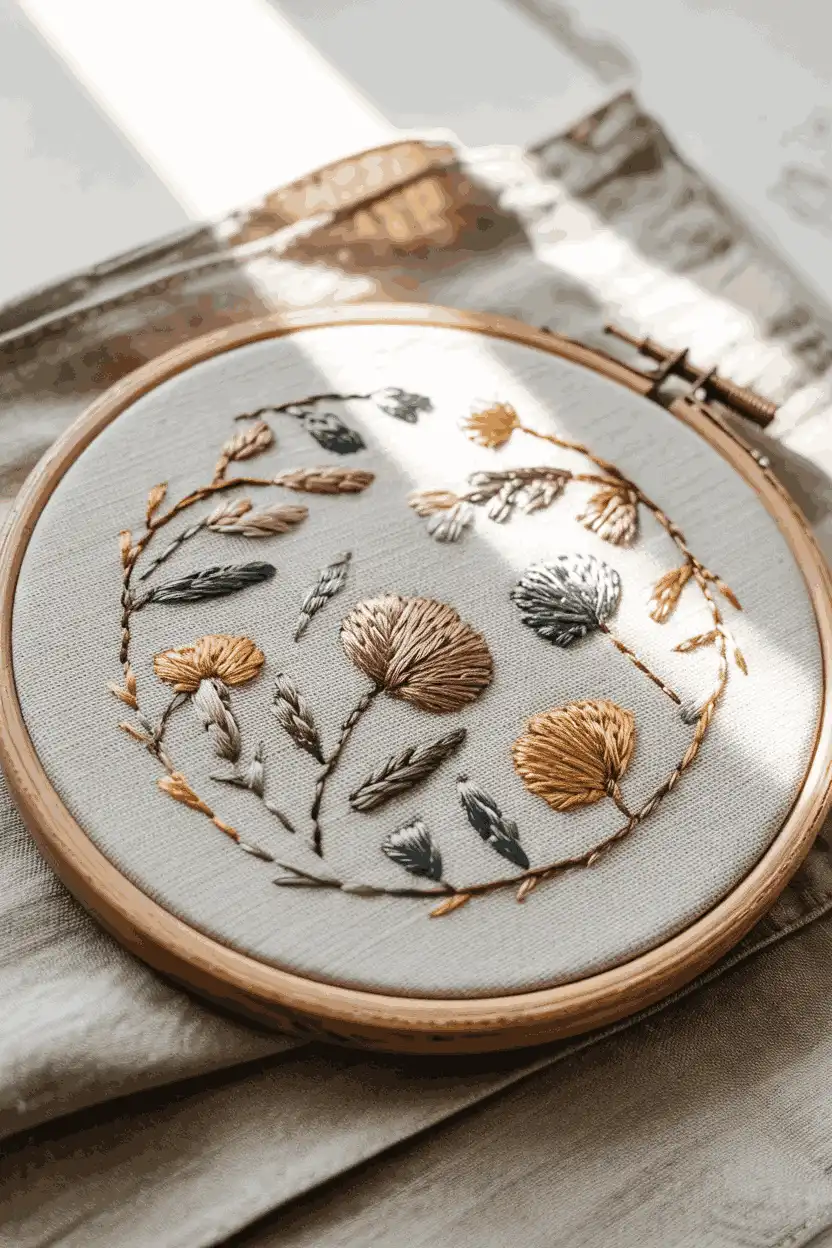
Small hoop pieces — a single initial, a minimal sprig, a tiny landscape — are the ideal first finished projects because they’re completable in a sitting or two. Beginners learn the full arc: design, stitch, finish, hang. They also make the best practice ground for layout. A three-inch circle forces decisions about balance and negative space that sprawling projects let you dodge.
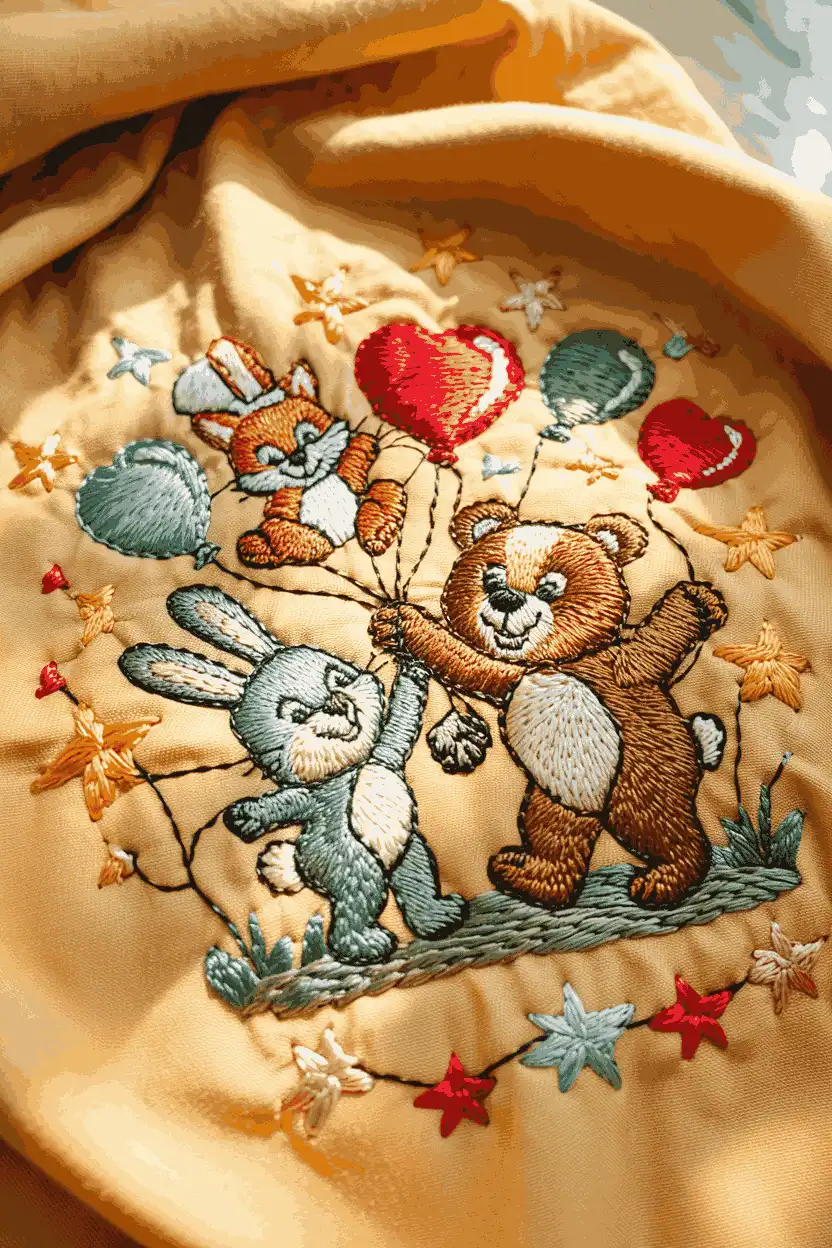
18. Fun Embroidery Designs for Kids
Simple, chunky motifs work best for young stitchers: smiley faces, cartoon animals, bold flowers in bright floss. Big shapes mean fewer stitches and faster payoffs, which is exactly what keeps a kid’s attention.
Start kids on patches or tiny hoop art they can finish in one go — a completed project beats a perfect one. Blunt tapestry needles and plastic canvas remove the two biggest frustrations: pricked fingers and lost count.
19. Embroidery Gift Ideas for Friends
The gifts people actually keep are the useful ones: a hand towel with a monogram, a set of napkins with a small motif, a tote with the recipient’s initial. Handmade lands hardest when it’s also practical.
Personalize with the recipient’s name, initials, or a motif tied to something they love — their dog, their hobby, their favorite flower. That one specific detail is what turns a nice gift into a kept-forever one.

20. Embroidery Business Logo Ideas
A logo for a stitching business should read at thumbnail size, because that’s where customers will see it: a simple needle-and-thread mark next to clean lettering. Avoid fine detail that vanishes when small. Pick two colors and one readable font, then use them everywhere — tags, packaging, profile pictures. Consistency does more for professionalism than cleverness.

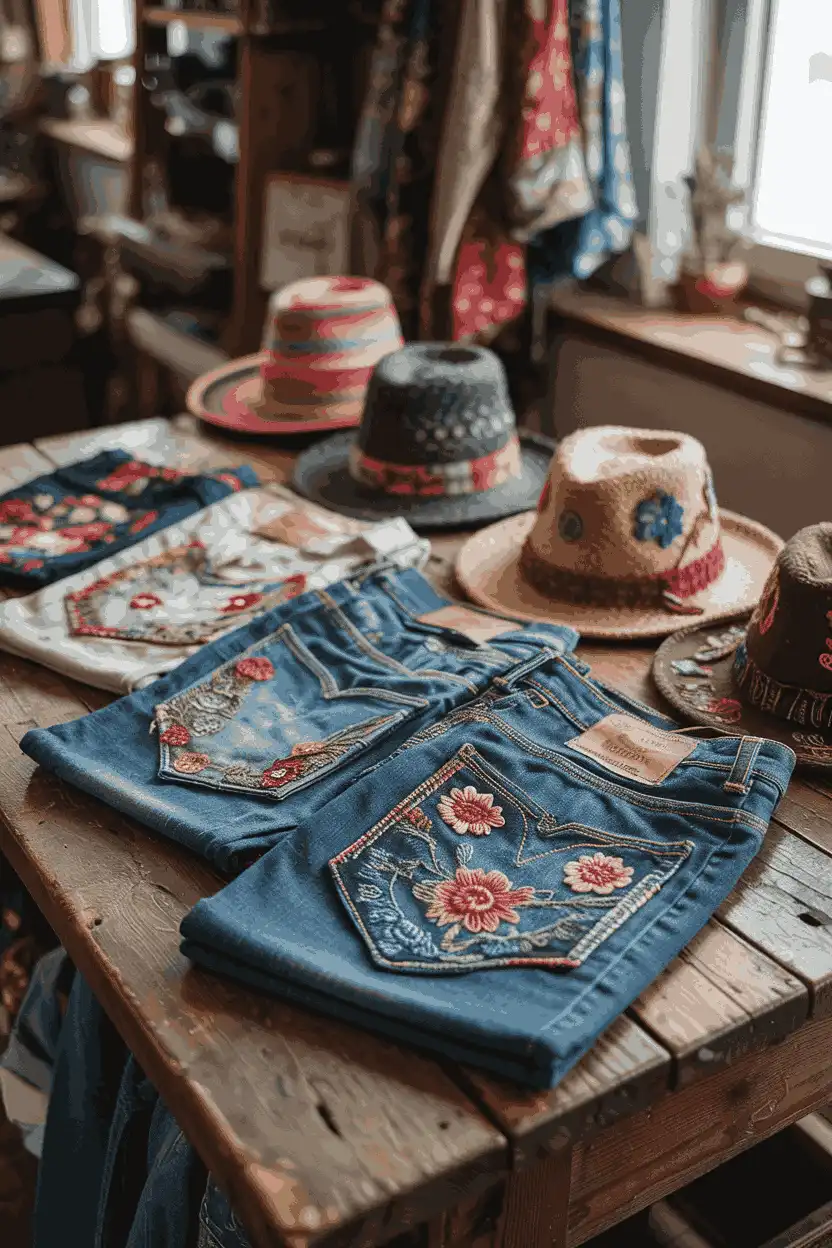
21. Embroidery on Clothes Ideas
Jeans pockets, skirt hems, scarf ends, shirt cuffs — embroidery doesn’t stop at t-shirts. Small motifs placed where the eye naturally lands refresh a whole garment with an hour of stitching.
Each fabric teaches something: denim demands strength, silk demands delicacy, knits demand stabilizer. Rotating through them is how beginners build the judgment that separates decent work from good work.
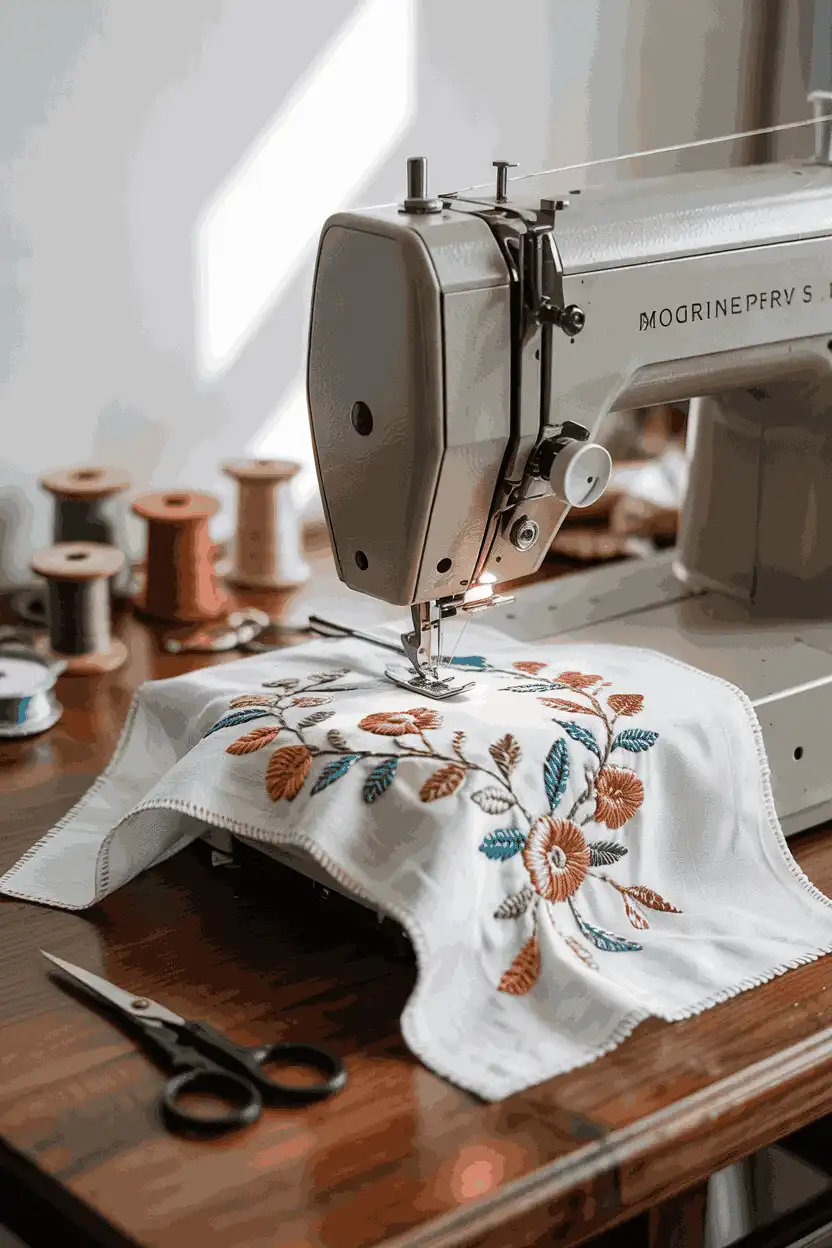
22. Machine Embroidery Project Ideas
A basic machine handles monograms, patches, and simple appliqué far faster than hands can, which makes it the right tool when you need ten identical items — team shirts, wedding favors, market stock.
Hats, tote bags, and patches are the sensible first machine projects: flat or simple curves, forgiving placement. Master hooping and stabilizer choice here before attempting anything fitted.
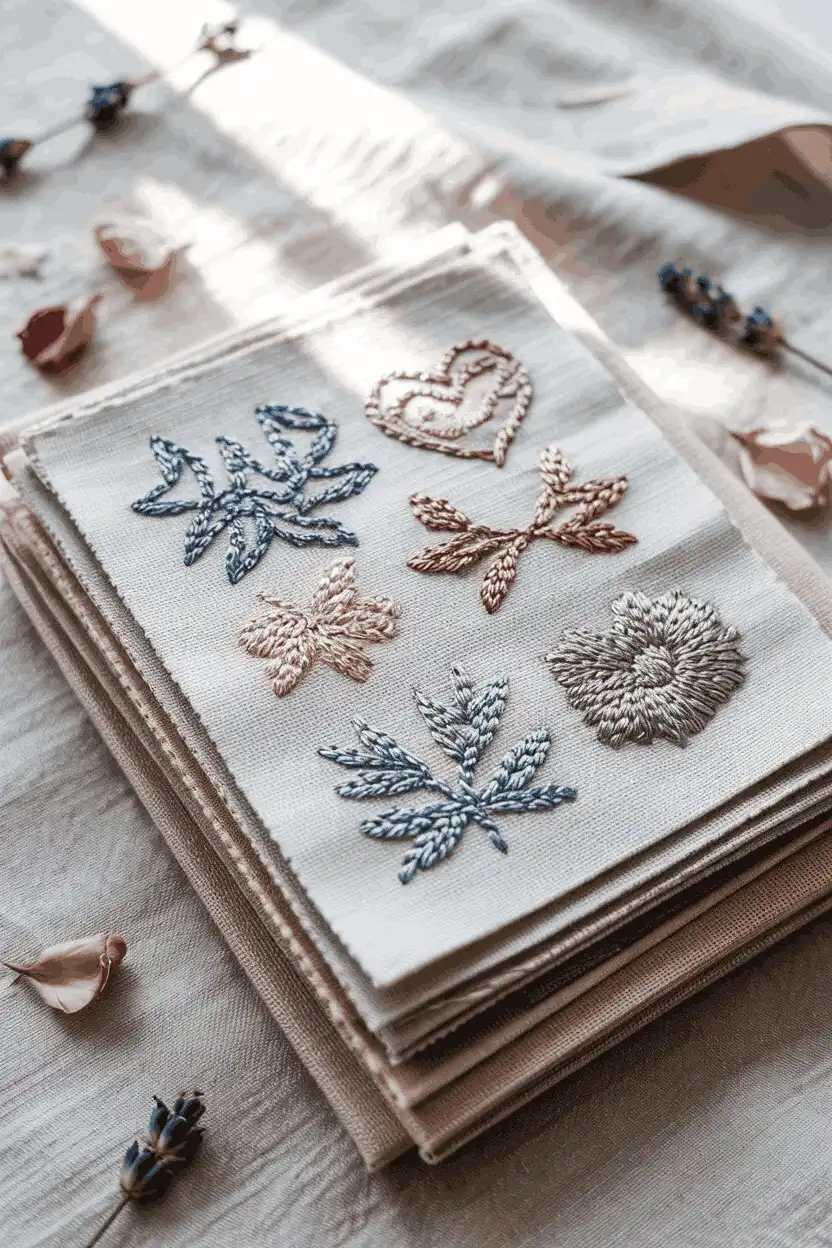
23. Hand Embroidery Ideas for Gifts
Bookmarks, napkins, handkerchiefs, and small framed quotes are the hand-embroidery gift canon for a reason: quick to make, easy to personalize, and genuinely used. The slight irregularity of hand stitching is the charm — it’s the signature that says a person made this.
Keep a running list of upcoming birthdays and holidays, and match each to a small project. A year of handmade gifts costs less than one store-bought splurge and means infinitely more.

24. Cute Easy Embroidery Designs
Hearts, stars, and smiley faces in bright floss are the definition of instant gratification: finish one in an evening and stick it on a jacket, bag, or hair tie. Small motifs are also the best vehicle for practicing stitch consistency, since flaws show immediately at this scale.
Use the brightest threads you own — cute designs want saturated color. Two or three shades per motif is plenty; beginners often overcomplicate the palette when the charm is in the simplicity.
25. Embroidery Display Ideas
Finished work deserves better than a drawer. Hoops hung in a cluster, pieces in simple floating frames, or a fabric banner of small studies turn output into decor — and seeing your progress on the wall is genuinely motivating.
Presentation changes how work is received: the same stitched piece in a clean frame reads as art, loose in a bag reads as clutter. Photograph finished pieces in daylight too; good photos matter if you ever sell or gift.
On My Premium Ideas, you’ll find fresh hobbies ideas covering embroidery ideas, crochet ideas, Clay Craft Ideas, handmade easy crafts and plenty more. Bookmark the site and check back often — new project ideas go up regularly.
FAQs for Easy Embroidery Ideas