Introduction
Christmas dinner in our house is not a meal, it is a production, and I have been its slightly stressed stage manager for more than a decade. These 21 Christmas dinner recipes are the ones that survived the test: the dishes that actually made it to the table more than once, that guests asked about, and that did not leave me crying into a bowl of lumpy gravy at 6 p.m. If you are planning your own feast, this list of Christmas dinner recipes covers everything from the showpiece roast to the sides people quietly fight over, plus a few shortcuts I learned the hard way. My rule now is simple — one star main, three sides I can mostly make ahead, and one dessert nobody has to fuss over. Everything below follows that rule, and it has saved my sanity more than once.
1. Classic Roast Turkey with Herb Butter
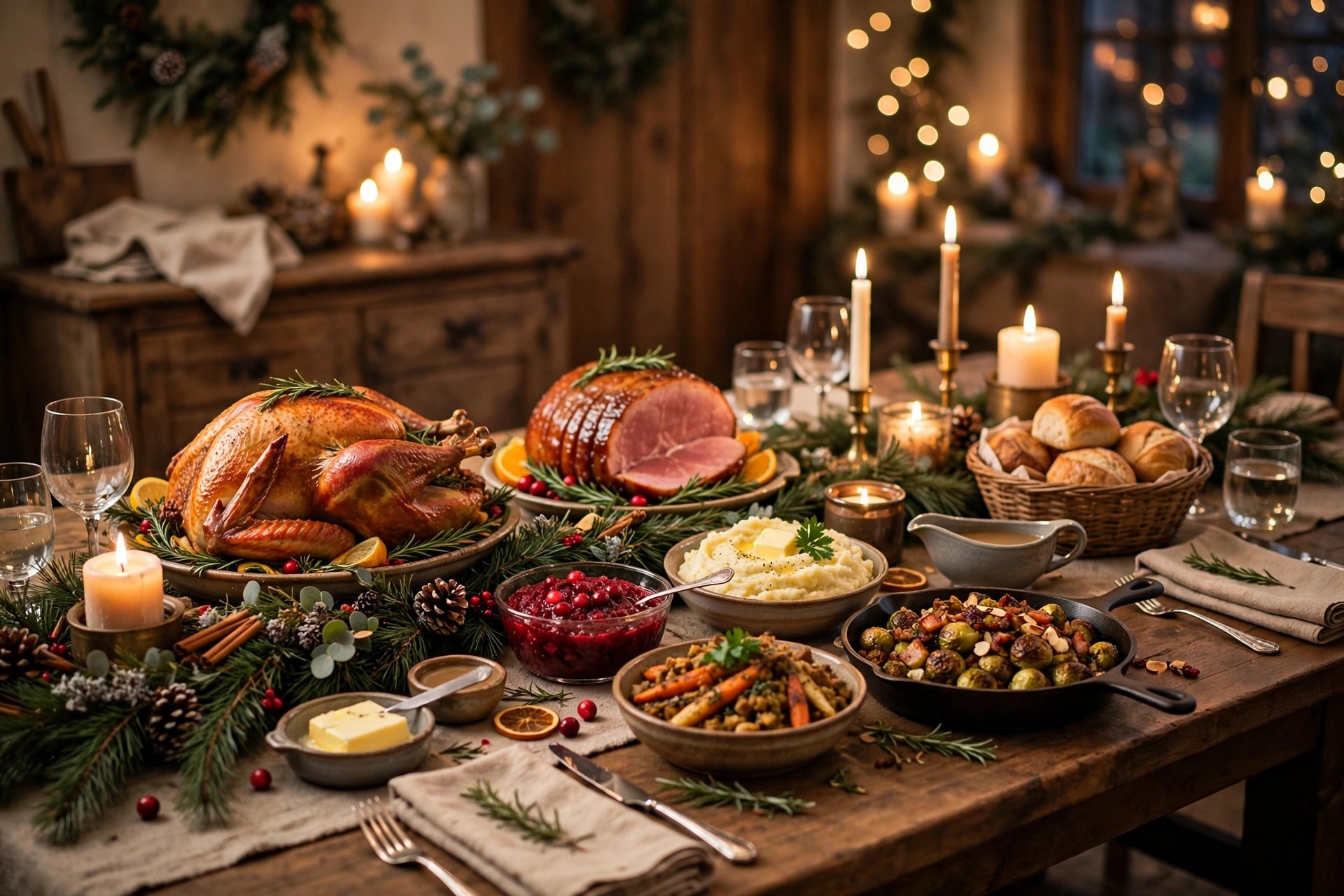
Every Christmas dinner in my family starts with the turkey question, and after years of experimenting I keep coming back to this one. I rub softened butter mixed with thyme, rosemary, sage, and a ridiculous amount of garlic under the skin the night before, then let the bird sit uncovered in the fridge so the skin dries out and crisps properly. A Butterball turkey is my usual pick because it is consistently sized and easy to find, and I roast it in my Le Creuset roasting pan with the oven starting hot and then dropping down. The single best purchase I ever made for this was a ThermoWorks Thermapen — guessing at doneness ruined two birds before I bought one. Rest the turkey for at least 30 minutes before carving, and save every drop of pan juice for gravy.
What you need
A 12–14 pound turkey, unsalted butter, fresh thyme, rosemary and sage, garlic, a reliable instant-read thermometer, and a sturdy roasting pan with a rack.
2. Brown Sugar and Mustard Glazed Ham
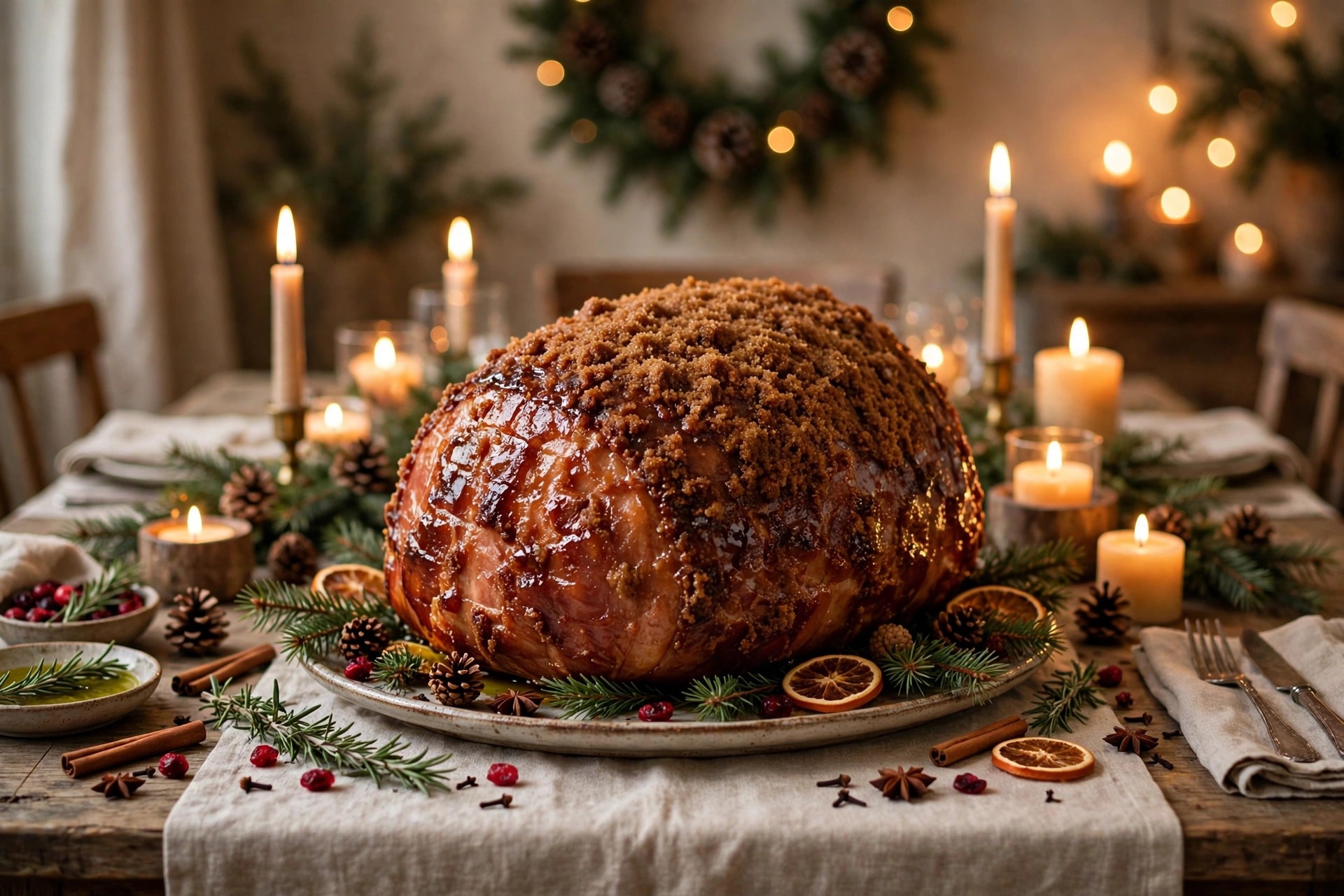
Ham is my secret weapon when the guest list grows, because it feeds a crowd with almost no last-minute work and the leftovers are gold for days. I buy a bone-in spiral-sliced ham, score the fat in a diamond pattern, and brush on a glaze of brown sugar, Dijon mustard, honey, and a splash of apple cider vinegar during the last 45 minutes of baking. The glaze caramelises into a sticky, dark crust that people pick at while I am still carving. One year I glazed too early and the sugar burned to a bitter shell, so now I wait until the ham is nearly heated through before the glaze goes on. Serve it with a pot of whole-grain mustard on the side, because someone always wants more tang.
3. Standing Rib Roast with Horseradish Cream
When I want Christmas dinner to feel like an occasion, I go for a standing rib roast, and I will admit it took me three years to stop being terrified of the price tag. The trick is simpler than the butcher counter makes it look: salt the roast a full day ahead, bring it to room temperature, roast it low and slow at 250°F, then blast it at 500°F for the final crust. I use a probe thermometer left in the whole time, because opening the oven to check is how you lose heat and nerve. The horseradish cream is just sour cream, prepared horseradish, lemon juice, and chives, whisked together in five minutes, and it cuts the richness perfectly. Slice it thick, serve it pink, and watch the table go quiet.
4. Beef Wellington with Mushroom Duxelles
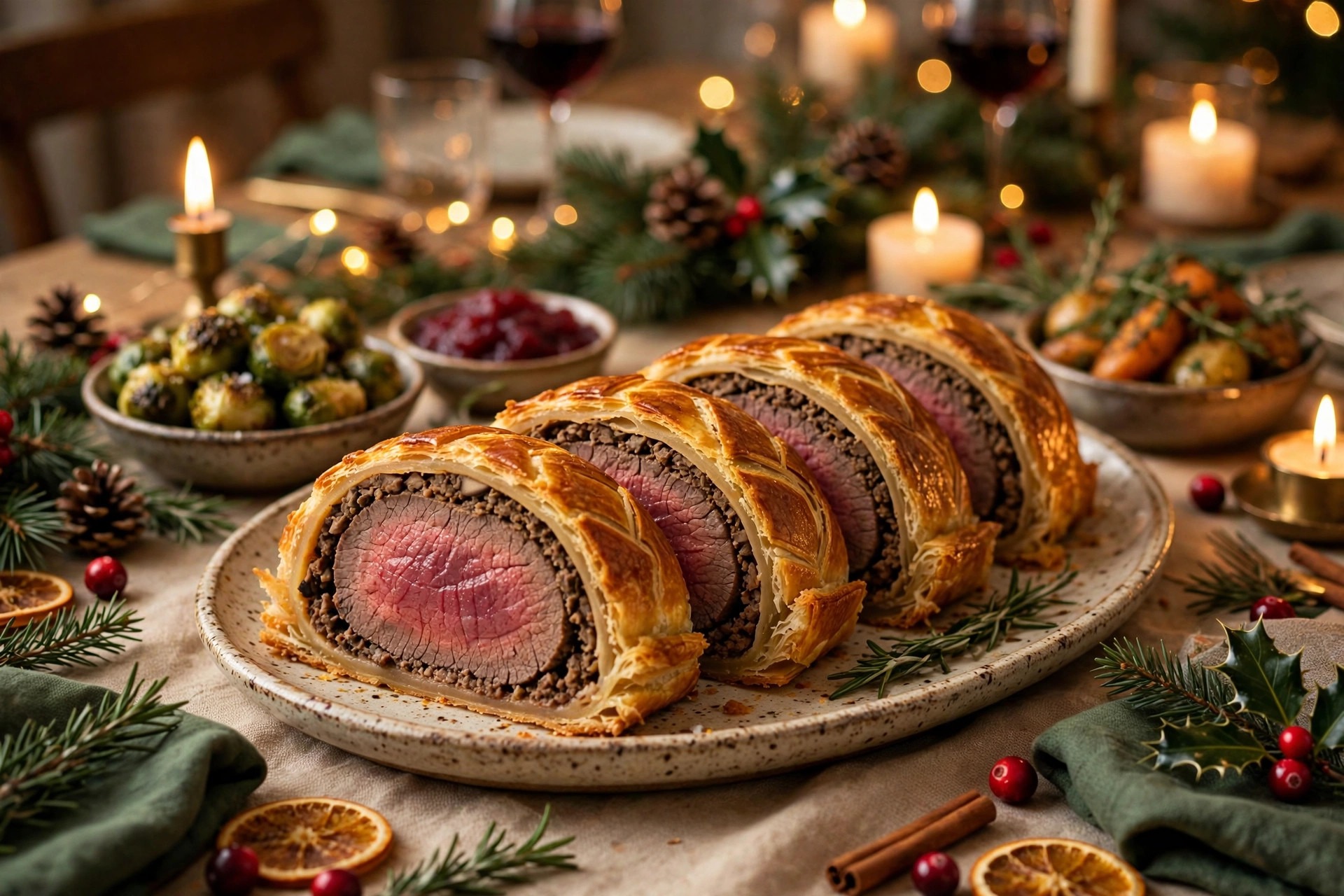
Beef Wellington is the dish I make when I want to show off a little, and honestly it is less fragile than its reputation suggests. The keys are searing the beef tenderloin hard, cooking the mushroom duxelles until genuinely dry — wet mushrooms are what make the pastry soggy — and wrapping everything tightly in prosciutto and puff pastry with cling film before chilling. I use store-bought all-butter puff pastry from the freezer aisle and I have no shame about it; homemade pastry is a project for another day. Chill the wrapped loaf for at least 30 minutes before baking, brush with egg wash, and score the top lightly. When you slice it and the layers hold, you will feel like a chef, and your guests will agree.
5. Roast Goose with Crispy Skin
Roast goose is the old-fashioned centrepiece I grew up watching my grandmother wrestle with, and I finally tackled it myself a few years ago. Goose is fattier than turkey, which means you need to prick the skin all over and roast it on a rack so the fat renders out instead of pooling. The payoff is skin that shatters like glass and meat that is darker and richer than turkey. Save the rendered fat in a jar — roast potatoes in it the next day and you will understand why my grandmother guarded hers like treasure. Goose feeds fewer people than a turkey of the same weight, so plan on one bird for six to eight guests, and serve it with tart red cabbage to cut the richness.
How I styled it
I serve the goose on my biggest platter surrounded by roasted apples and fresh rosemary sprigs. It looks like something out of a storybook, and it takes about two minutes.
6. Herb-Crusted Rack of Lamb
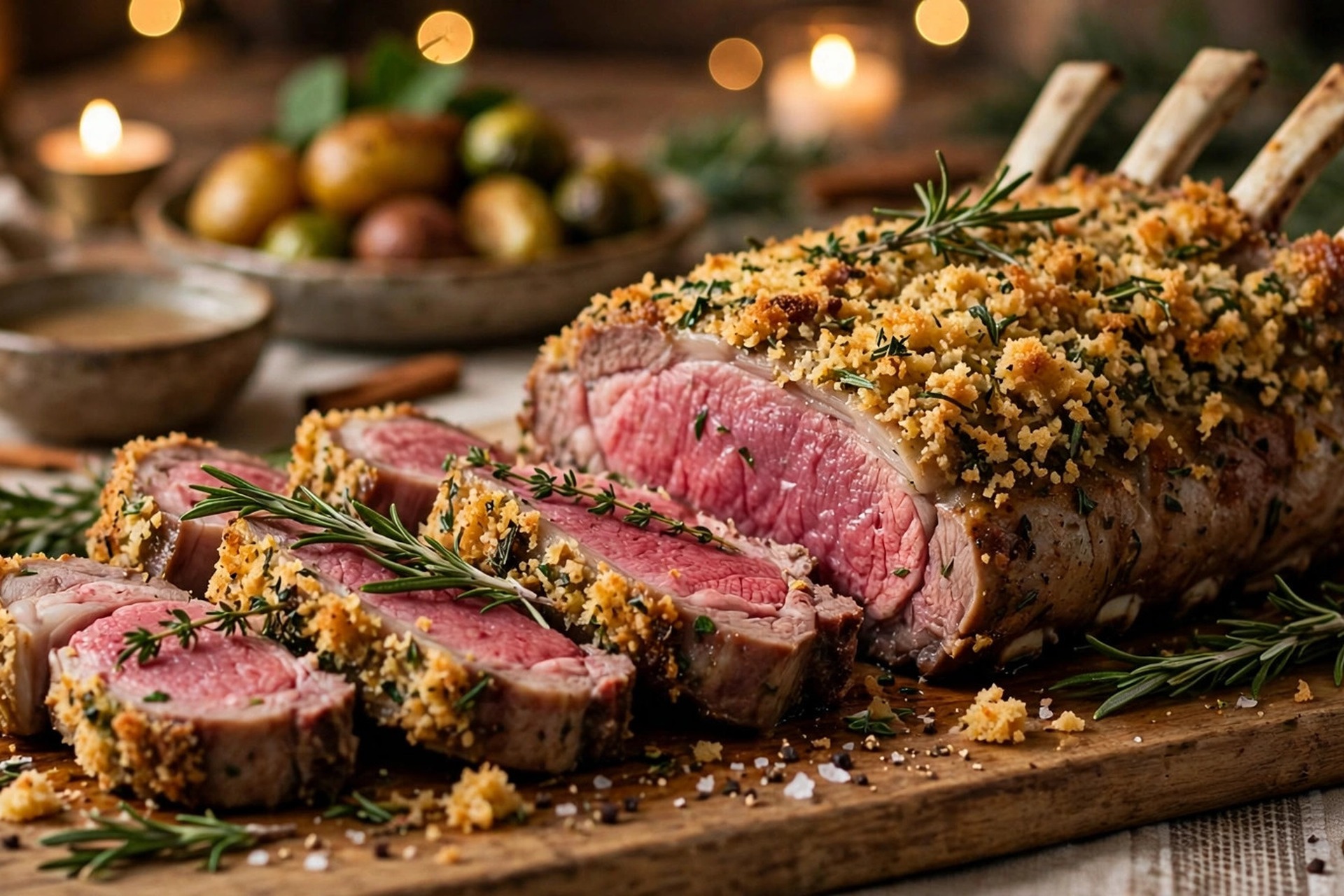
Rack of lamb is my answer to a smaller, more elegant Christmas dinner, and it cooks in under half an hour, which feels like cheating. I coat the racks in Dijon mustard, press on a crust of breadcrumbs, parsley, rosemary, garlic, and grated Parmesan, and roast them at high heat until the crust is golden and the middle is blushing pink. A frenched rack from the butcher costs more, but the clean bones look so good on the plate that I pay it every time. The first time I made this I overcooked it out of nerves and served grey lamb to my in-laws, so now I trust the thermometer, pull it at 130°F, and rest it for ten minutes. Two racks comfortably feed six.
7. Slow-Cooked Beef Brisket
Brisket is the Christmas dinner I make when I want the house to smell incredible all day and the actual work to be nearly nothing. I rub a whole brisket with salt, pepper, garlic powder, and smoked paprika, then cook it low and slow in my slow cooker or a low oven for eight to ten hours until it yields to a fork. The beauty is that it only gets better made a day ahead — I refrigerate it in its cooking liquid, slice it cold, and reheat it gently in the sauce, which means zero carving stress on the day. Serve it with soft rolls so people can build sandwiches from the leftovers, and keep the cooking liquid as a gravy base. If you have never cooked brisket, this forgiving cut is the one to learn on.
8. Cranberry Glazed Pork Loin
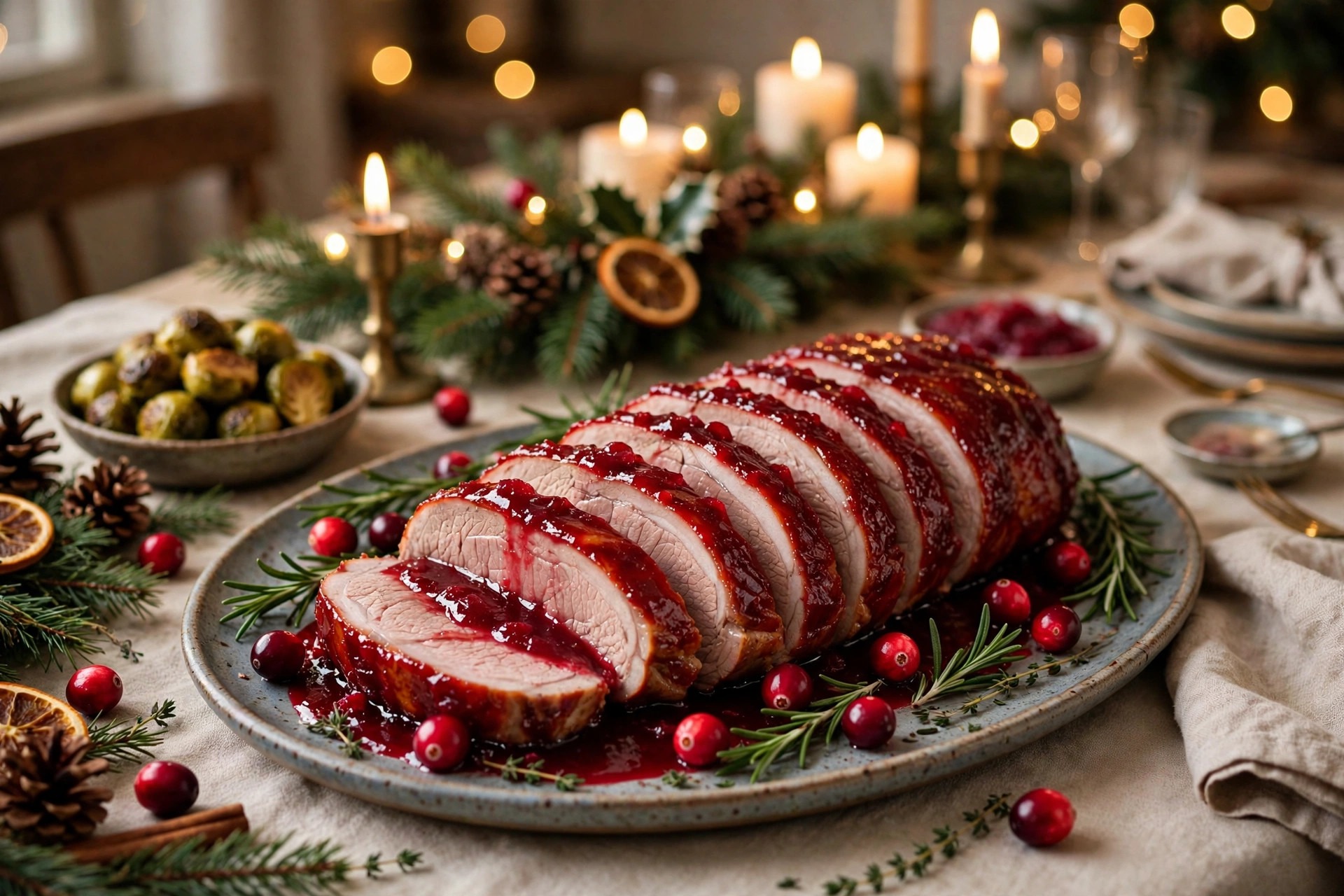
Pork loin with a cranberry glaze is the prettiest budget-friendly main on this list, and it has rescued me more than once when beef prices made me wince. I sear the loin in my Lodge cast iron skillet, then roast it with a glaze of cranberry sauce, orange juice, Dijon, and a pinch of cloves until it hits 145°F. The glaze turns glossy and ruby-red, and it tastes like Christmas without any extra effort. The mistake I used to make was cooking pork until it was dry and grey, the way my mother did; a thermometer and a proper rest changed everything. Slice it thin, spoon over the pan glaze, and scatter fresh cranberries and thyme around the platter for colour. It pairs beautifully with the sweet potato casserole below.
9. Garlic Butter Roast Chicken for a Smaller Table
Not every Christmas dinner feeds twenty people, and when it is just four of us I roast two chickens instead of wrestling a turkey. I stuff them with lemon halves and whole garlic heads, rub the skin with garlic butter and thyme, and roast them at high heat until the skin crackles. The cooking time is under ninety minutes, the pan juices make a quick gravy, and everyone gets a crispy leg, which is the real prize. I learned this approach the year my parents visited alone and a whole turkey felt absurd — the chickens were done faster, tasted better, and there was still enough left for sandwiches. If your crowd is small, do not let tradition bully you into a bird you do not need.
10. Baked Salmon with Dill Cream Sauce
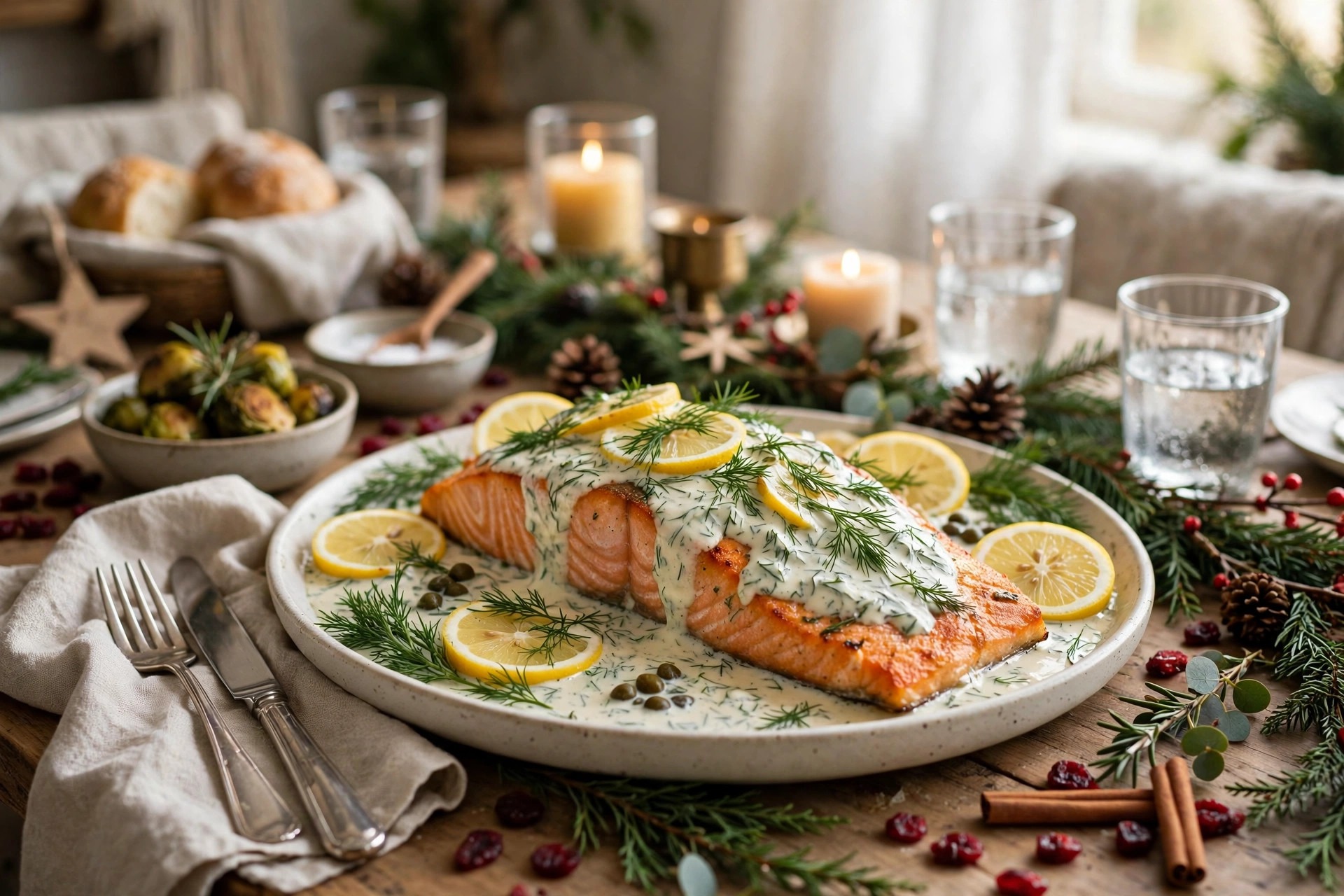
For guests who do not eat red meat, or for a Christmas Eve dinner that feels lighter before the big day, baked salmon is my go-to. I roast a whole side of salmon on a sheet pan lined with Reynolds parchment, brushed with olive oil and lemon, until it just flakes, then serve it with a cold sauce of Greek yoghurt, fresh dill, lemon zest, and a little Dijon. It takes about twenty minutes from fridge to table, which makes it the least stressful dish on this list. The salmon looks stunning on a platter with lemon slices and dill sprigs, and it gives the table a lighter option next to the roasts. One honest tip: pull it out a touch before you think it is done, because carryover heat finishes the job while you plate everything else.
11. Butternut Squash and Mushroom Wellington
This vegetarian Wellington is the dish that finally stopped my sister-in-law from getting a sad plate of side dishes at Christmas. Roasted butternut squash, sautéed mushrooms with garlic and thyme, wilted spinach squeezed very dry, and a layer of crumbled feta or goat cheese, all wrapped in puff pastry and baked until golden. The trick, same as the beef version, is getting the filling dry before wrapping, or the base goes soggy. I assemble it the morning of and refrigerate it until baking time, which makes it genuinely practical. When sliced, it shows beautiful layers of orange, green, and gold, and even the meat-eaters at my table ask for a piece. Serve it with mushroom gravy and nobody feels like an afterthought.
12. Garlic Mashed Potatoes with Cream Cheese
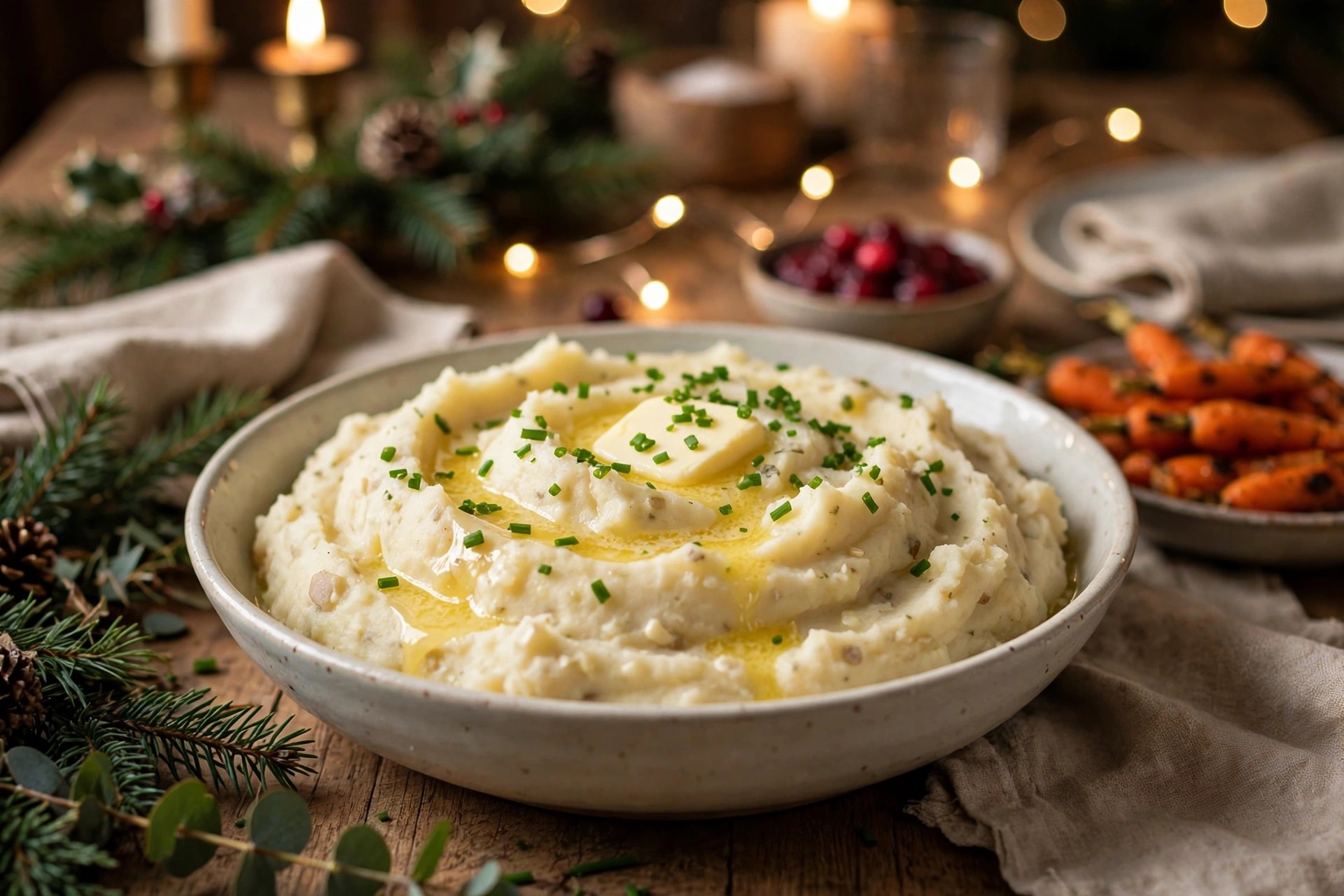
Mashed potatoes are not a side dish in my house, they are a non-negotiable, and this version is the one people ask me to bring to other people’s dinners. I boil Yukon Gold potatoes until tender, mash them with warm cream, butter, roasted garlic, and a block of cream cheese that makes them impossibly silky. The cream cheese is the trick I stole from a friend years ago, and it also means the potatoes reheat beautifully, which matters when you are juggling ten dishes. I keep them warm in my slow cooker on low with a towel under the lid to catch condensation, freeing up a burner. Make a double batch if your crowd is large; mashed potatoes are the first thing to disappear, every single year.
13. Sweet Potato Casserole with Pecan Streusel
Sweet potato casserole divides families, so let me be clear: mine has no marshmallows, and my family has come around to it. The base is mashed sweet potatoes with butter, brown sugar, a splash of cream, and a pinch of cinnamon, and the top is a streusel of chopped pecans, brown sugar, flour, and cold butter baked until crisp. It is the sweet-savoury bridge of the whole meal, and it works next to ham, turkey, or pork. I assemble it the day before and refrigerate it, then bake it while the roast rests, which is perfect timing. If your family is firmly team marshmallow, you can scatter a handful over half the dish and keep the peace — I have done exactly that and nobody complained.
14. Green Bean Casserole, Upgraded
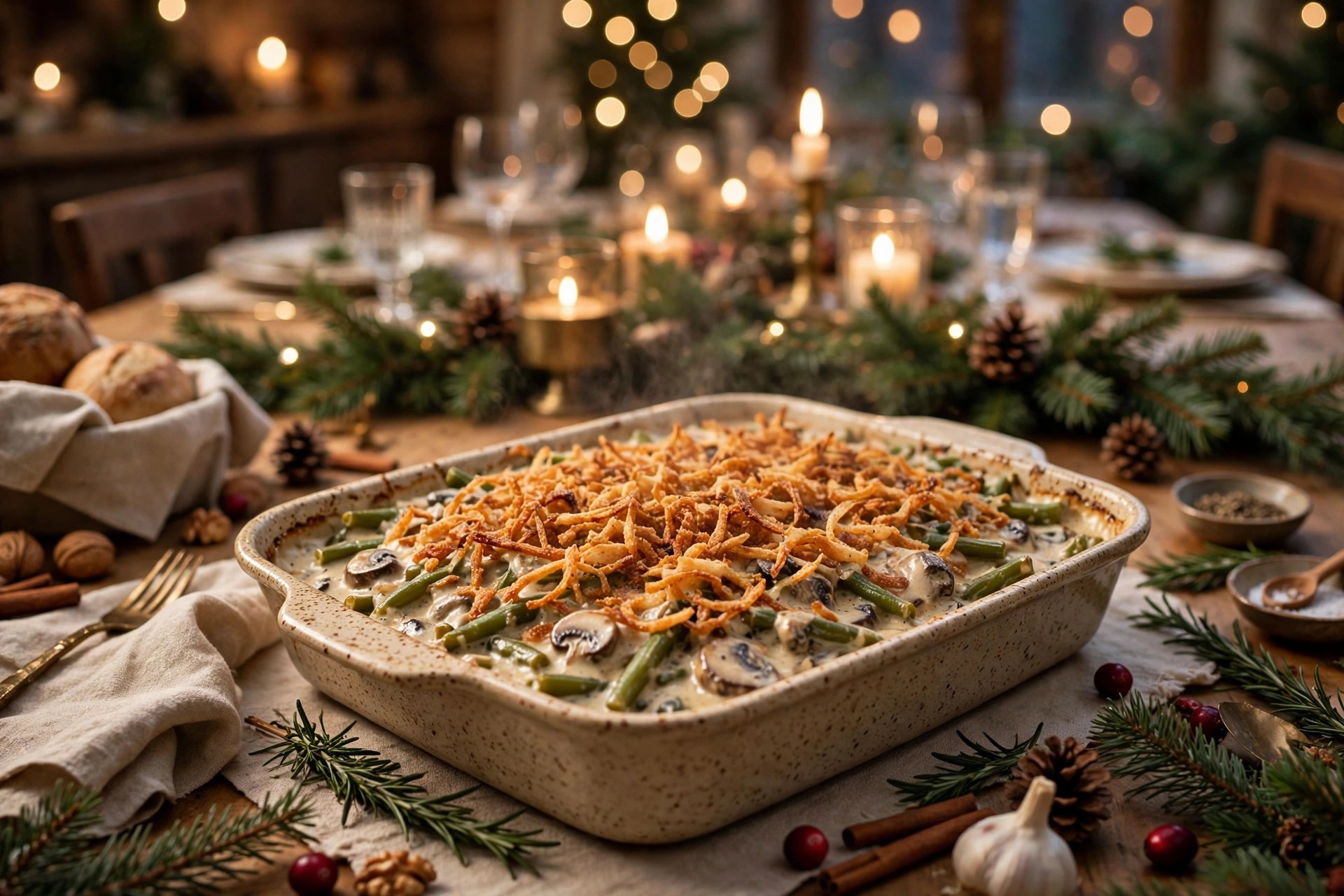
I grew up on the canned-soup version of green bean casserole, and I still love it, but my upgraded version is what I serve now. Fresh green beans blanched until bright, a from-scratch mushroom cream sauce with garlic and thyme, and a topping of crispy fried shallots instead of canned onions. The sauce takes about fifteen minutes and tastes so much better than the can that I never go back, though I will defend the original to anyone who grew up on it. The fried shallots can be made a day ahead and kept crisp in an airtight tin, which is the kind of small prep that makes Christmas day feel manageable. For a full holiday spread, my Thanksgiving side dish recipes share several dishes that cross over beautifully to Christmas.
15. Homemade Cranberry Sauce with Orange and Ginger
Once you make cranberry sauce from scratch, the canned stuff tastes like a different food entirely, and this version takes twelve minutes. Fresh cranberries, sugar, orange juice and zest, and a thumb of grated ginger simmered until the berries pop and the sauce thickens. I make it up to a week ahead — it keeps beautifully in the fridge and the flavour deepens — and I always double it because someone inevitably wants a jar to take home. The ginger is my twist; it adds a warm background note without making the sauce taste spicy. Spoon it into a small bowl with a few reserved whole berries on top, and it looks as good as it tastes next to the turkey.
16. Sausage and Sage Stuffing
Stuffing is the dish my family argues about most, and this sausage and sage version ended the debate. I dry cubes of sourdough overnight — stale bread is essential, fresh bread turns to paste — then toss them with browned pork sausage, sautéed celery and onion, fresh sage, chicken stock, and an egg to bind. It bakes in a buttered dish until the top is crisp and the middle stays custardy, and I always make extra because the leftovers fried in butter the next morning are arguably better than the original. Cook it outside the bird, always; stuffing a turkey slows the cooking and risks undercooked centres. If you want more ideas for the morning after, my Christmas breakfast ideas put those leftovers to good use.
17. Roasted Brussels Sprouts with Bacon and Maple
Brussels sprouts are the side that converts sceptics at my table, and the method is dead simple: halve them, toss with olive oil and salt, roast cut-side down at high heat until deeply browned, then toss with crisp bacon and a drizzle of maple syrup. The high heat is the whole secret — steamed sprouts are the reason people hate them, and roasted sprouts taste nutty and sweet. I roast them on a rimmed sheet pan from Nordic Ware so they have room to crisp instead of steaming in a crowd. A scatter of toasted pecans at the end adds crunch, and a splash of balsamic vinegar brightens the whole pan. Even my sprout-hating uncle asked for seconds last year, which I consider a personal victory.
18. Yorkshire Puddings and Rich Gravy
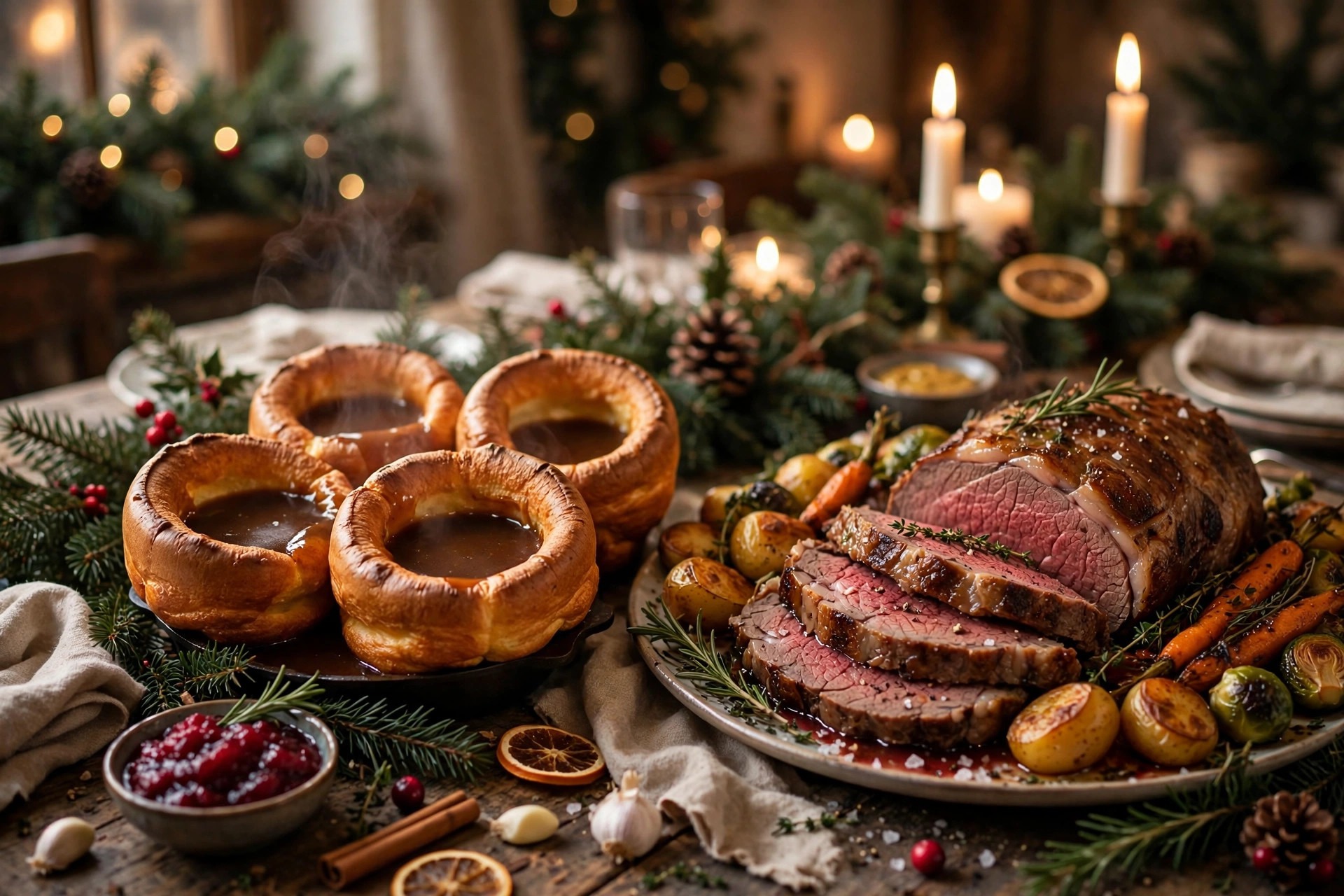
If you are serving roast beef, Yorkshire puddings are not optional in my house, and they are far easier than people think. The batter is just eggs, flour, milk, and salt, rested for at least thirty minutes, then poured into a smoking-hot muffin tin with beef dripping or oil and baked at high heat without opening the oven door. The puddings puff into golden cups with crisp edges, ready to fill with gravy. The gravy itself is the pan drippings whisked with flour and good stock, simmered until glossy — I use the drippings from whatever roast I cooked, and I never thicken it with a packet if I can help it. Make the batter the night before and the whole thing takes twenty minutes on the day.
19. Honey Glazed Roasted Carrots
Carrots are the quiet side dish that makes the whole plate look like Christmas, and this version earns its place. I roast whole rainbow carrots with olive oil and salt until tender and caramelised at the edges, then glaze them with honey, butter, and a squeeze of lemon in the last ten minutes. The honey catches and darkens just enough to look jewel-like, and a sprinkle of fresh thyme and flaky salt at the end keeps them from tasting too sweet. They take one pan and almost no attention, which is exactly what you want when the roast is resting and the gravy needs stirring. For the table itself, my Christmas kitchen decor ideas help the room match the meal.
20. Cranberry Baked Brie Starter
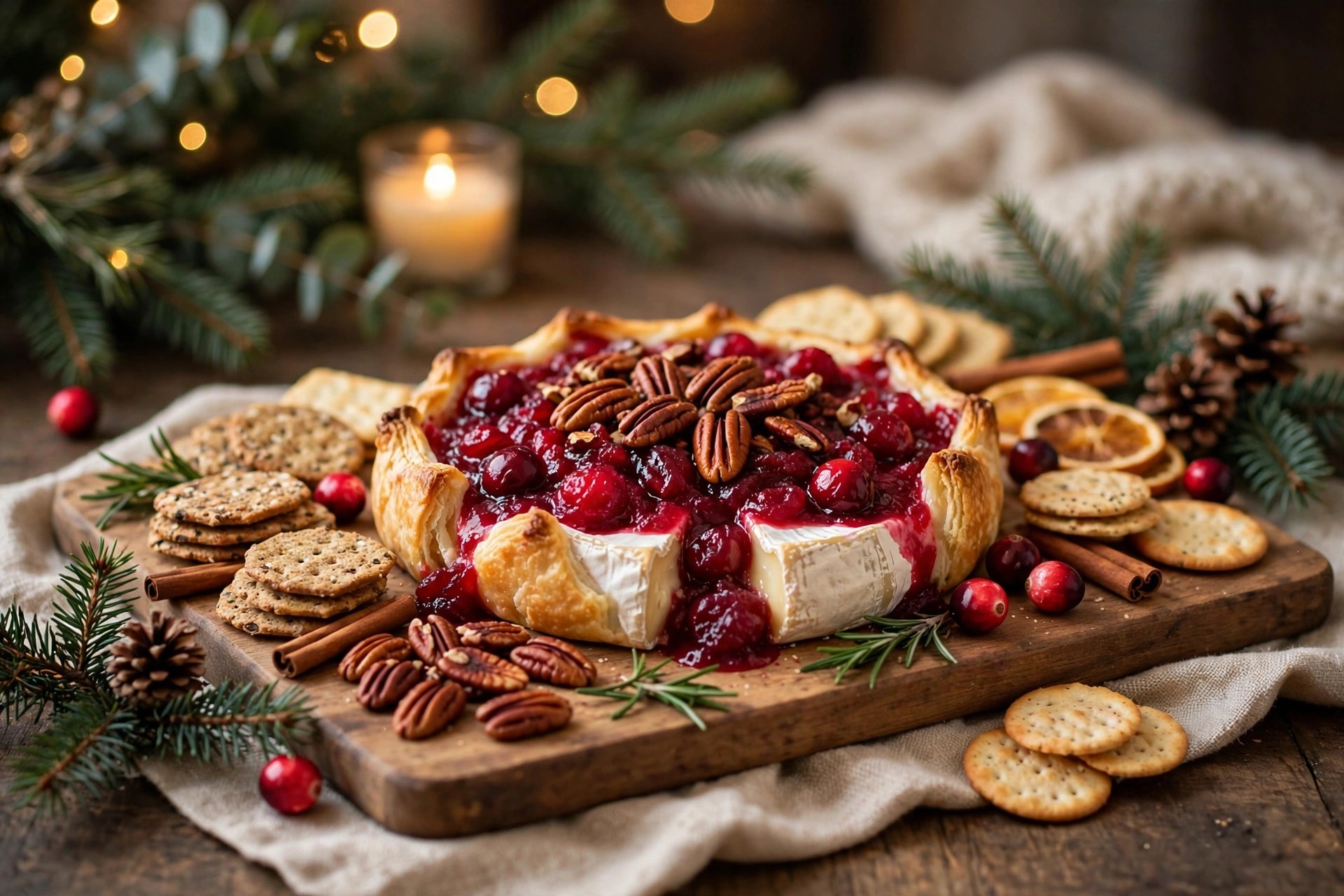
Every Christmas dinner needs something for guests to nibble while the roast rests, and this baked brie is mine. A wheel of brie topped with cranberry sauce and chopped pecans, wrapped in puff pastry or baked bare in a small dish, until molten and bubbling. I set it out with crackers and sliced baguette about thirty minutes before dinner, which buys me time to carve without an audience and keeps everyone happy. It is also the rare starter that looks impressive and takes ten minutes of actual work. If you want a fuller spread of starters, my hot chocolate bar ideas round out the evening nicely, and a sweet finish pairs well with the next idea on this list.

21. Roast Duck with Cherry Sauce
Roast duck is my wildcard main, the one I cook when I want Christmas dinner to feel a little different without leaving tradition behind. Like goose, duck needs its skin pricked and a rack so the fat renders, and the reward is crisp skin and rich, dark meat that pairs beautifully with a tart cherry sauce made from frozen cherries, red wine, and a spoonful of redcurrant jelly. A duck feeds four generously, so it suits a smaller gathering or a second main for a mixed crowd. The cherry sauce takes fifteen minutes and can be made ahead, which keeps the day calm. Slice the breast thin, spoon over the sauce, and serve with the honey carrots and mashed potatoes above — it is a combination my guests still talk about.
Styling Tips
- Cook one star main and make three sides ahead — a rested roast carves better anyway, so use that resting time to finish the sides.
- Set the table the night before, including serving dishes with little labels, so Christmas day is about cooking, not hunting for platters.
- Keep a slow cooker on warm for gravy or mashed potatoes; it frees a burner and saves the last-minute scramble.
- Put drinks and the starter on a separate surface from the dinner table so guests are not crowding your carving space.
- Scatter fresh rosemary, cranberries, and pine sprigs around the platters — it costs almost nothing and makes the whole table look festive.
- Accept help with exactly one job, like drinks or clearing, and guard the rest; too many cooks at Christmas is a real thing.
Frequently Asked Questions
What to serve for Christmas dinner? A classic Christmas dinner is one main roast, three or four sides, a sauce, and a dessert. Think turkey or ham, mashed potatoes, stuffing, a green vegetable, cranberry sauce, and gravy. Add one starter like baked brie and one sweet finish, and you have a complete meal without cooking fifteen dishes. The key is choosing sides that can be made ahead so you are not finishing everything at once.
What to serve with Christmas ham? Ham loves sweet and tangy partners: sweet potato casserole, honey glazed carrots, green bean casserole, and a sharp mustard on the side. Scalloped potatoes and roasted Brussels sprouts also work well, and a simple cranberry sauce cuts through the saltiness of the ham. Avoid doubling up on very sweet sides — pick one sweet, one green, and one starchy dish for balance.
How do you cook a Christmas dinner without stress? Work backwards from serving time and make as much ahead as possible. Cranberry sauce keeps for a week, stuffing and sweet potato casserole can be assembled the day before, and a slow-cooked brisket actually improves overnight. On the day, roast the main, use its resting time to finish the sides, and keep gravy and potatoes warm in a slow cooker. A written timeline with oven times is the single best stress reliever I own.
What to bring to Christmas dinner? The safest contributions are dishes that travel well and reheat easily: a dessert, a side like green bean casserole, a bottle of wine, or a baked brie starter. Ask the host what is missing before you commit, and avoid anything that needs oven space at the last minute — the host’s oven is already fully booked. A jar of homemade cranberry sauce is always welcome and never duplicates the main menu.
Final Thoughts
Here is what a decade of Christmas dinners taught me: the menu matters less than the timing, and the timing matters less than sitting down together. Pick one main you are excited about, three sides you can mostly make ahead, and one dish that makes the table look festive — the rest is gravy, sometimes literally. And once dinner is done, do not forget the sweet finish: my Christmas cookie recipes are waiting for the dessert table. Pour yourself a glass of whatever is left, sit down, and actually eat. That is the whole point.