
Introduction
The first stocking I ever sewed was a lopsided red felt tube with a crooked cuff, and my mother hung it anyway, right in the middle of the mantel. Twenty years later I still make a stocking or two every December, and I have learned that handmade stockings are the decorations people actually keep. These 17 DIY Christmas stocking ideas cover every skill level, from no-sew fleece to heirloom embroidery, and every style from farmhouse to full glam. Whether you are sewing your first stocking on a borrowed machine or adding to a matching set you have built over a decade, there is a project here with your name on it — sometimes literally.
1. Classic Red Felt Stocking with Felt Appliqué
Felt is the most forgiving fabric a beginner will ever meet: it does not fray, it does not need hemming, and it holds its shape. Cut two stocking shapes from red felt, stitch around the edges with a simple blanket stitch in cream embroidery floss, and appliqué snowflakes, trees, or stars on the front before you sew the sides together. I use DMC embroidery floss for the blanket stitch because the color range is enormous and the thread does not shred under a needle. My first felt stocking took an evening in front of a Christmas movie, and the blanket stitch looked wobbly in places — which, honestly, only made it more charming. Add a loop of ribbon at the top for hanging.

2. Buffalo Check Farmhouse Stocking
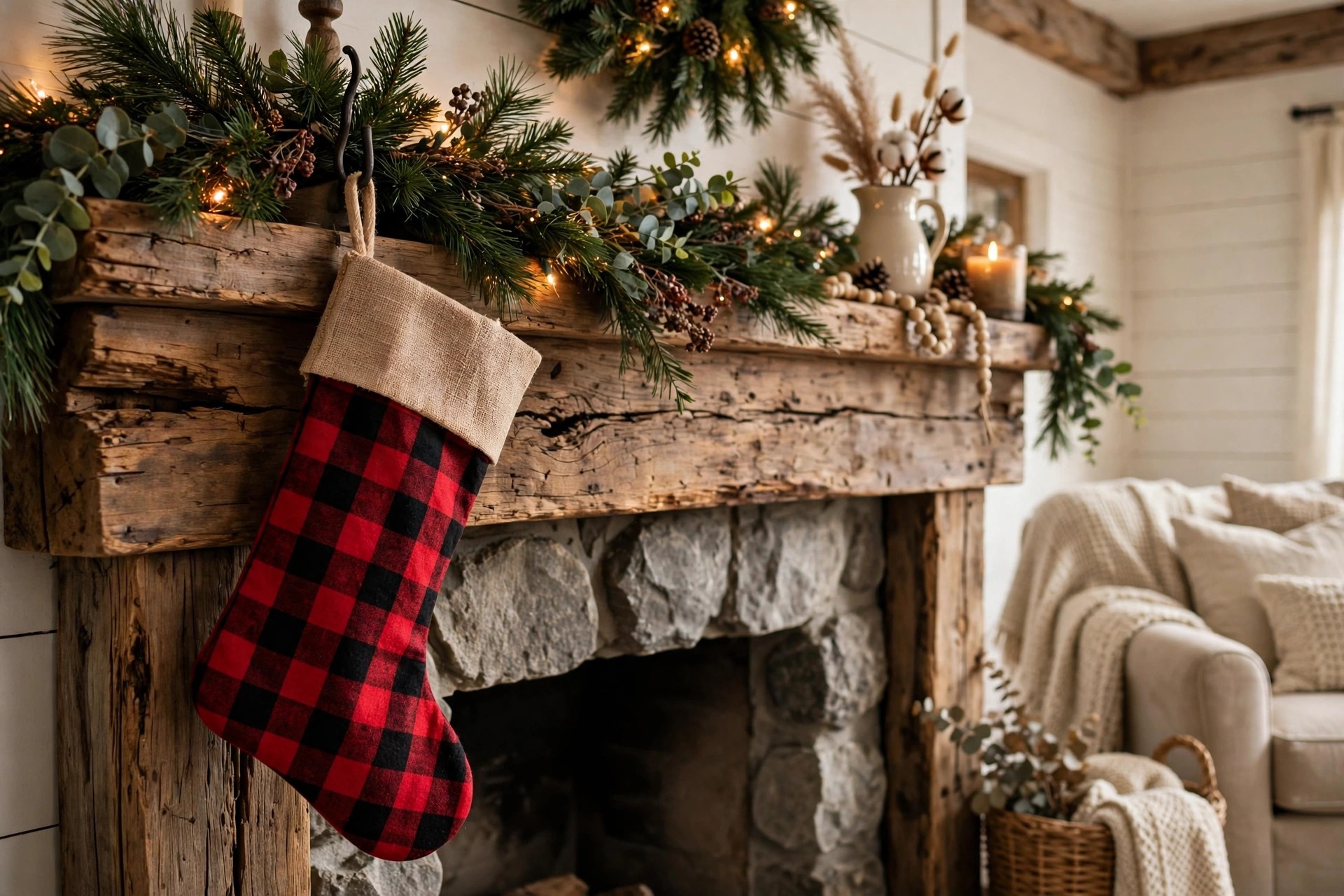
Red and black buffalo check is practically the uniform of farmhouse Christmas, and it makes a stocking that looks store-bought with very little effort. Cut the stocking shape from buffalo check cotton, add a burlap or cream canvas cuff, and line it with plain muslin so the inside looks as neat as the outside. The check pattern does most of the decorating for you, so keep embellishments minimal — a small wooden button or a sprig of faux pine at the cuff is enough. I made a set of four in one weekend using my Brother machine’s straight stitch and nothing else. They have survived five Christmases, two toddlers, and one very determined dog.
3. Knitted Cable-Knit Stocking
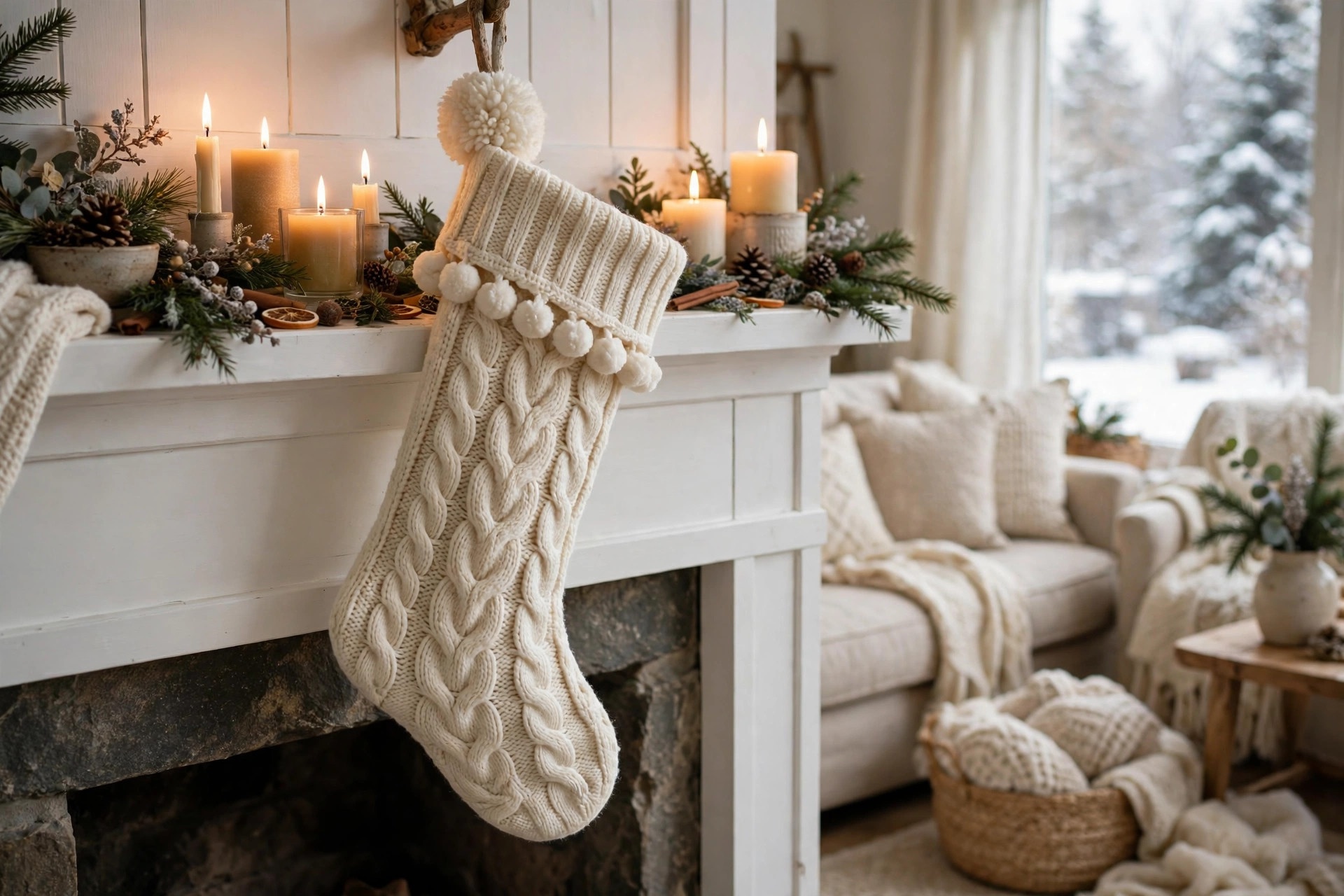
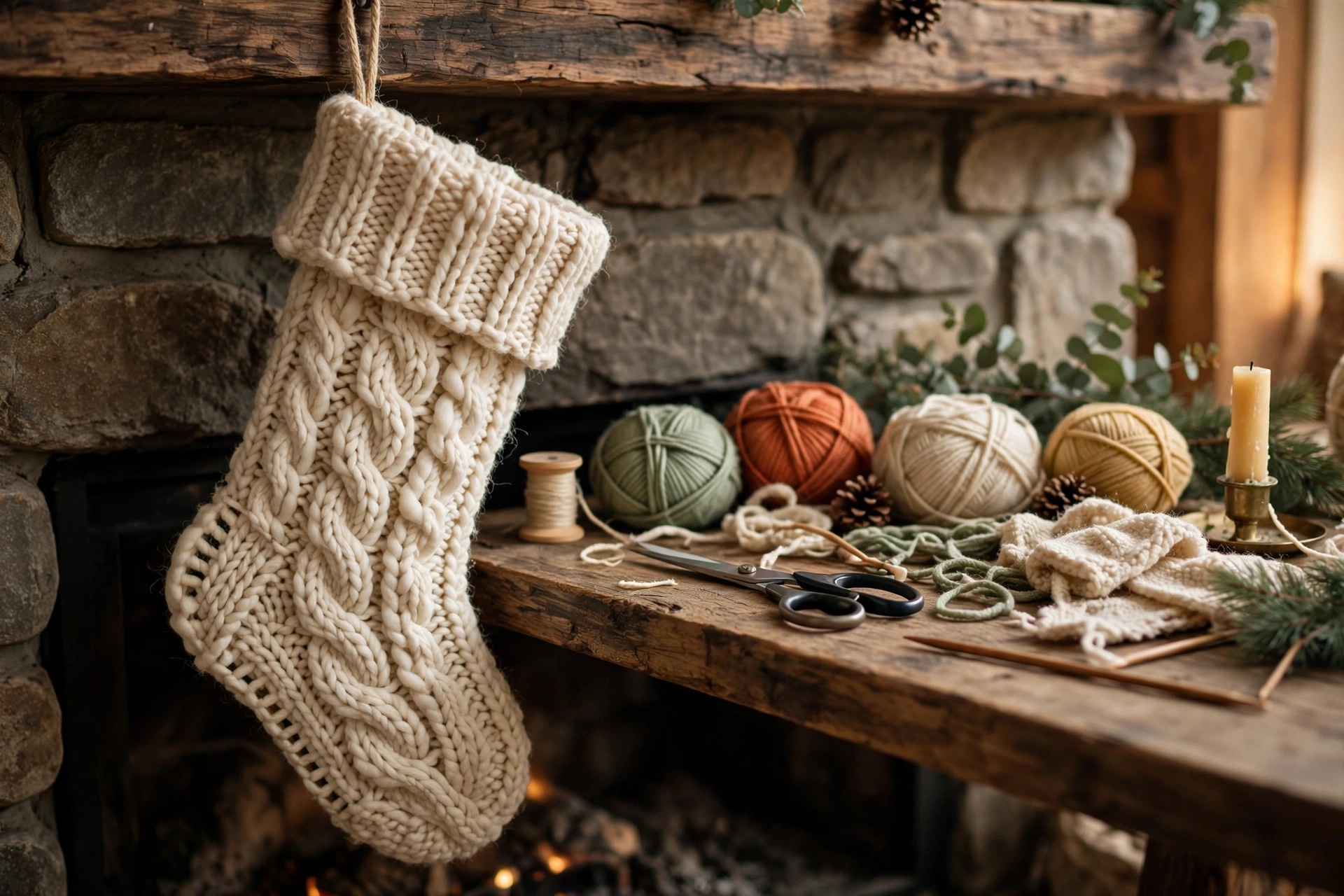
A chunky cable-knit stocking is the coziest thing you can hang on a mantel, and it is easier than it looks if you already knit. The classic pattern is a simple four-stitch cable repeated up the leg, worked in cream or oatmeal aran-weight yarn, with a folded ribbed cuff. I knit my first one over two weeks of evenings, and the cables confused me exactly twice before they clicked. If you do not knit, chunky knit fabric from a craft store can be cut and sewn into a stocking shape that reads almost identically from mantel distance. Add a faux-fur cuff for the full cozy effect, and use a sturdy hanging loop — knit stretches under weight.
4. Burlap and Lace Rustic Stocking
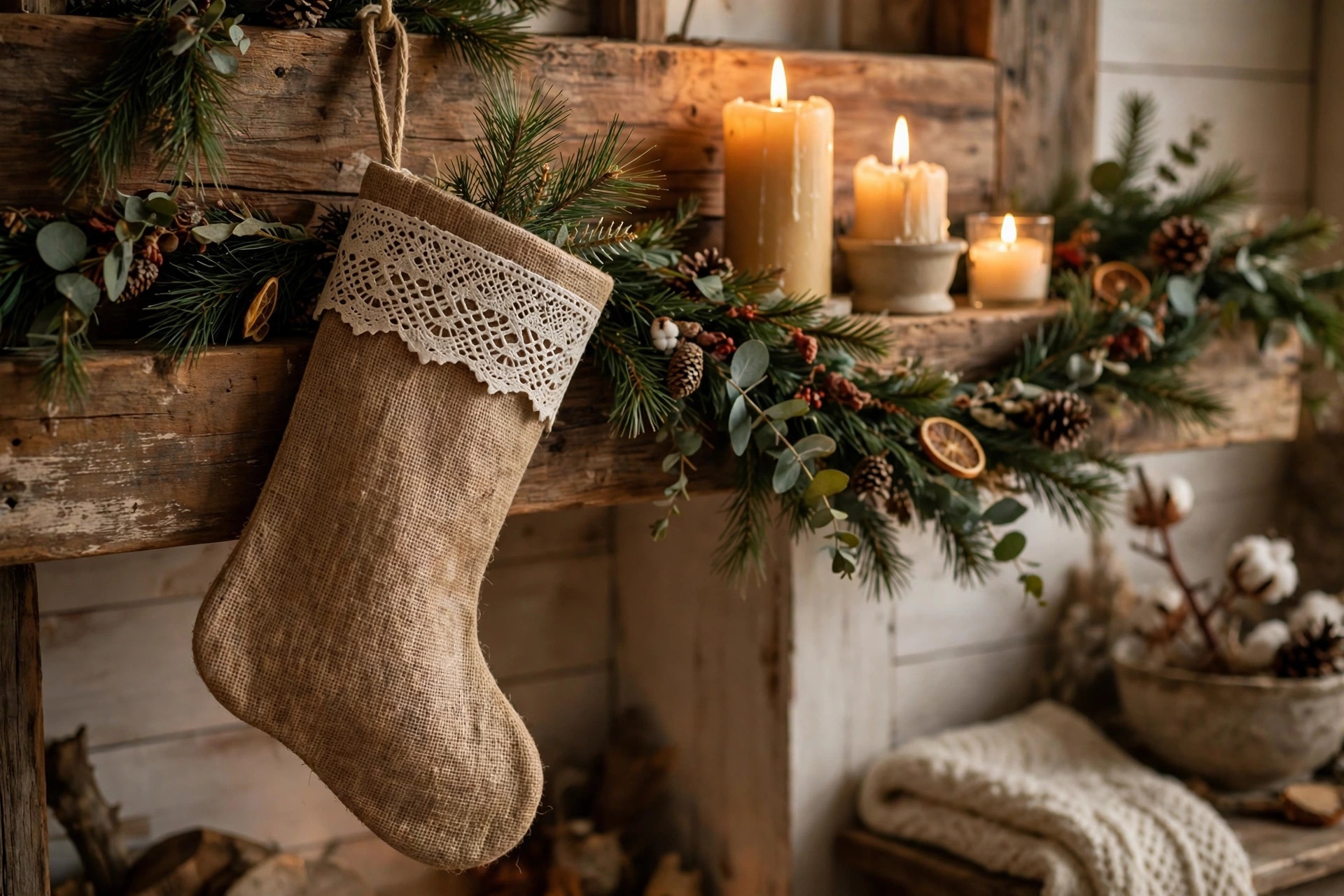
Burlap and lace should not work together, and yet they do, every time. Cut the stocking from natural burlap, add a wide band of cream lace across the cuff or down the front, and finish with a twine loop. The burlap gives it that rustic, homespun feel, and the lace keeps it from looking like a feed sack. One honest warning: burlap sheds, so sew it with a lining and shake it out outside before hanging. I made these for my sister’s cabin Christmas one year, and she still brings them out first, before any other decoration. A small pine sprig tucked into the cuff completes the look without any extra sewing.
5. Velvet Stocking with Gold Embroidery
Velvet is the fabric that turns a stocking into an heirloom. Deep emerald or burgundy velvet, a gold embroidered initial or a simple star motif, and a gold cord loop — that is the whole project, and it looks like something from a boutique. Velvet does require a little care: use a walking foot if your machine has one, because velvet creeps under a standard foot, and press it from the back with a pressing cloth or you will crush the pile. I embroidered my first velvet stocking by hand with gold metallic thread, which took three evenings and one broken needle, but it is still the stocking I reach for first when I decorate.

6. Sweater-Upcycled Stocking
That old sweater with the stretched elbows? It is a stocking waiting to happen. Cut the stocking shape so the sweater’s existing ribbed cuff becomes the stocking cuff — instant finishing, zero extra work. Chunky knits, Fair Isle patterns, and even a plain cashmere sweater all work, and the result has a warmth that new fabric cannot fake. I made one from my father’s old cardigan the year after he passed, and it is now the most meaningful stocking on our mantel. Reinforce the seams with a zigzag stitch, since knit fabric stretches, and line it with cotton so small gifts do not snag on the knit.
7. Patchwork Quilted Stocking
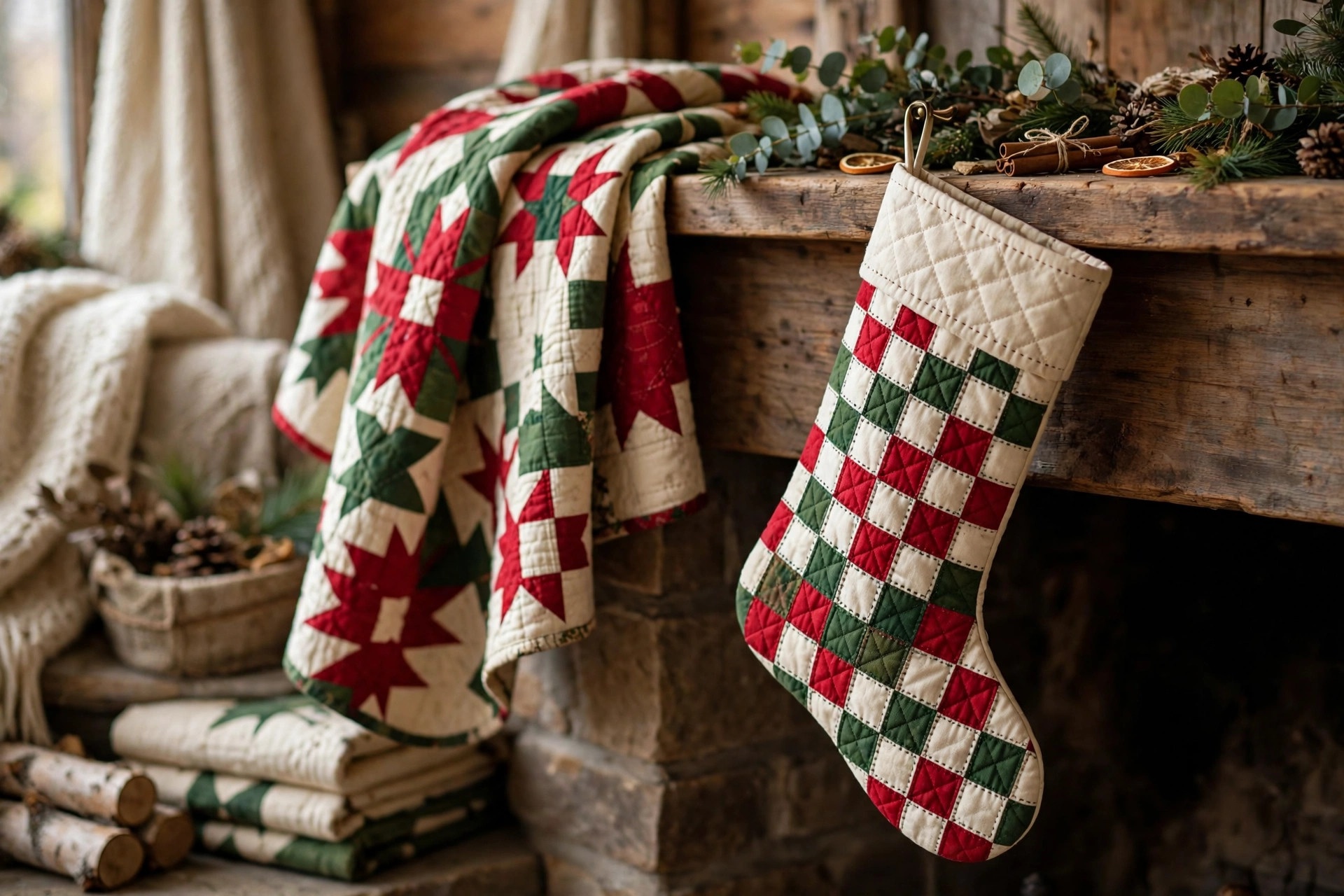
If you have a scrap bin, you have a patchwork stocking. Sew small squares of coordinating Christmas fabrics — reds, greens, creams — into a patchwork panel, quilt it lightly to a batting layer with a simple diagonal stitch, then cut the stocking shape from the quilted panel. The quilting gives the stocking body and structure, so it hangs beautifully instead of flopping. My scrap-bin stocking used leftover fabric from a decade of projects, including a piece of my daughter’s baby blanket, and guests always ask about it. Use an Olfa rotary cutter and a clear ruler for the squares; uneven squares are the only thing that will frustrate you here.
8. Personalized Name Stocking with Iron-On Letters
Nothing stops stocking mix-ups faster than a name on the cuff. Iron-on vinyl letters, cut with a Cricut or bought pre-cut, press onto a plain stocking cuff in about two minutes with a household iron. I use HeatnBond-style iron-on vinyl on cotton or felt cuffs, and I press from the back as well as the front for a bond that survives years of stuffing. If you do not own a cutting machine, felt letters glued or blanket-stitched onto the cuff look just as good and arguably more handmade. I made a set of these for my nieces and nephews, and the kids now check “their” stocking first every Christmas morning — which was exactly the point.
9. Pom-Pom Trim Stocking
Pom-pom trim is pure joy in a spool. Sew a row of colorful pom-pom trim along the cuff of a plain stocking — red and white for classic, multicolor for playful — and suddenly the simplest stocking looks like a party. I use a zipper foot to stitch close to the pom-poms without squashing them, and I hand-tack the trim ends so they do not unravel. This is a wonderful project to make with kids: they pick the trim colors, you do the sewing, and they get to claim full credit. One caution: pom-poms and toddlers are a combination that ends with pom-poms everywhere, so hang these higher than little hands can reach.
10. Woodland Animal Stocking
Foxes, deer, owls, and bears appliquéd onto a stocking turn a mantel into a storybook. I cut a simple fox face from orange and cream felt — two triangles for ears, a white muzzle, a black nose — and blanket-stitched it onto a forest-green stocking. The trick is keeping the animal design simple and bold; tiny details get lost from mantel distance. Felt is ideal here because the edges do not fray and you can layer shapes without turning under seams. If you want more woodland inspiration, my DIY Christmas ornament ideas include felt animals that match these stockings perfectly. My woodland set is the one guests photograph most.

11. Sequin and Glitter Glam Stocking
Some years call for sparkle, and this stocking delivers it. Start with a plain velvet or satin stocking and add sequin trim, glitter iron-on shapes, or a fully sequined front panel from the craft store. I made a gold sequin stocking for my glam Christmas year, and it caught the fairy lights so well it practically glowed. Practical notes: sew sequin trim rather than gluing it, because glue lets go under the weight of a stuffed stocking; and keep glitter stockings away from white furniture, because glitter migrates. It just does. Pair this with a glam tree and you have a mantel that looks like a holiday party.
12. Denim Stocking with Cuff
Denim stockings are the unexpected favorite in my house — casual, sturdy, and perfect for a modern or rustic mantel. Cut the stocking from old jeans, using the existing leg seam as a design detail, and fold down a cuff from a contrasting fabric like red gingham or plaid flannel. Denim is heavy, so use a jeans needle in your machine and go slowly over the seams; my Singer handled it fine once I switched needles, but a standard needle will snap. Embellish simply: a stitched star, a small patch, or a bit of lace at the cuff. These are also the stockings most likely to survive being stuffed with heavy gifts.
13. No-Sew Fleece Stocking
No machine, no problem. Fleece does not fray, so you can cut two stocking shapes, glue them together with fabric glue or fusible tape, and finish the edges with a blanket stitch by hand or even pinking shears for a decorative edge. I made a set of these with my kids on a rainy afternoon: they chose the fleece patterns — one picked reindeer print, one picked snowflakes — and we glued and decorated for an hour. Fabric glue needs a full 24 hours to cure properly, so do not hang them the same day. For a truly no-sew option, use iron-on hem tape along the edges and press with a hot iron.
14. Embroidered Heirloom Stocking
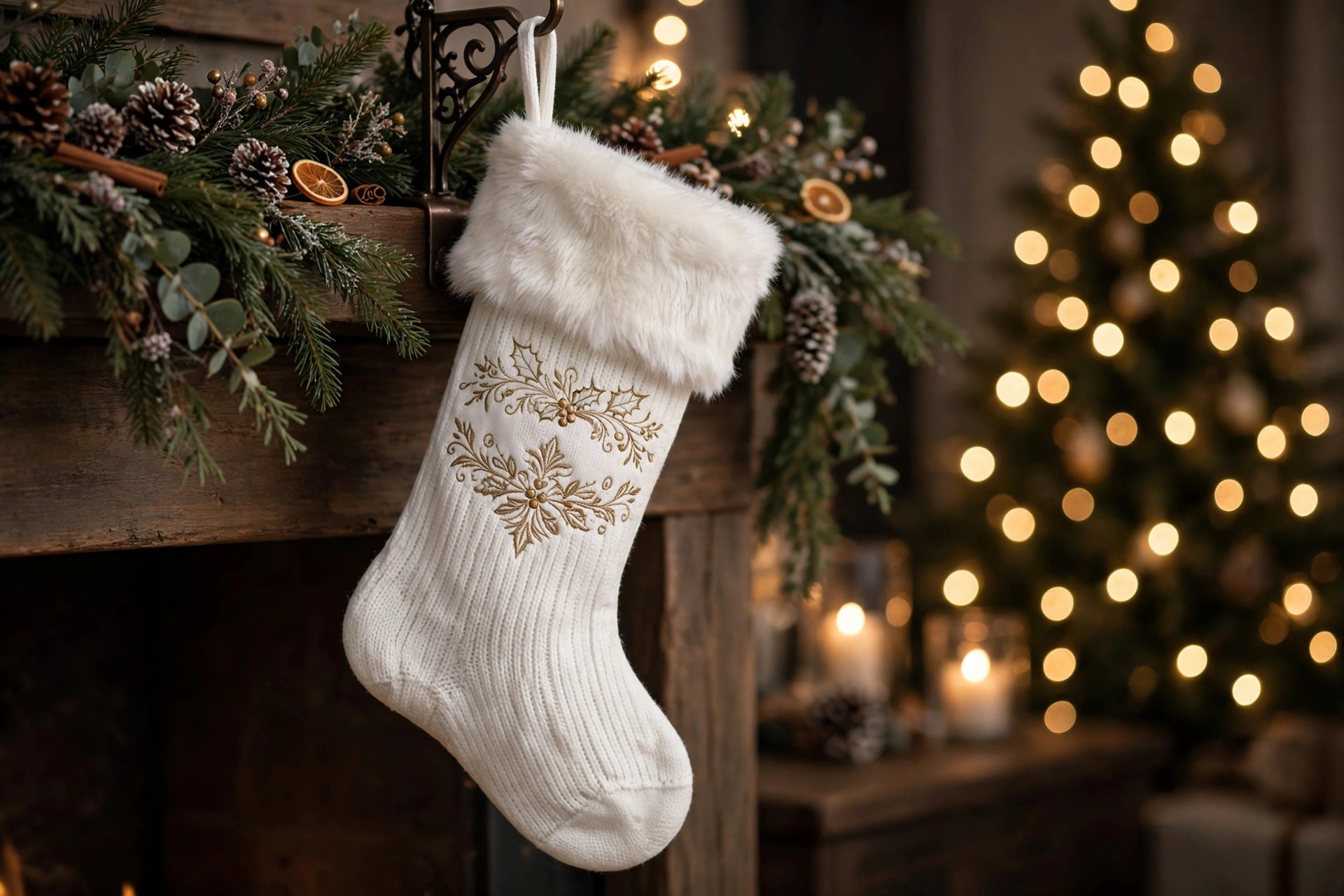
This is the stocking you make once and keep forever. A linen or wool felt stocking, embroidered with a family name, a date, and a motif — a tree, a star, a snowflake — in classic cross-stitch or crewel work. I use a Bernina for the base construction and hand-embroider the design, working a little each evening through November. It is slow work, and that is the point: the stocking carries the time you put into it. If hand embroidery feels daunting, iron-on embroidery patterns transfer a design onto the fabric so you can follow the lines. My grandmother’s embroidered stocking is still hung every year, and I intend mine to last just as long.
15. Mini Stocking Garland
When you want stockings but have no mantel — or when you want stockings everywhere — make a garland of mini stockings. Cut a dozen tiny stockings from felt or fabric scraps, stitch or glue them closed, and string them on twine with wooden beads between each one. I hang mine across a bookshelf, along a staircase banister, and once, memorably, across the kitchen window. They are also perfect for an Advent-style countdown: tuck a tiny treat or note into each one. If you are building a full Advent setup, my DIY Advent calendar ideas pair beautifully with a mini stocking garland.
16. Pet Stocking with Paw Print
Pets are family, and they know when they have been left out of the mantel lineup. A small stocking in a durable fabric — canvas or denim works well — with a paw print appliqué or embroidered in a contrasting thread, sized for treats and a small toy. I made one for our beagle from red canvas with a cream paw print, and he now sits under the mantel on Christmas morning waiting for it. Keep the stocking small and the loop strong, because pet stockings get pulled down with enthusiasm. Fill it with treats, a new toy, and maybe a dental chew — the contents matter more to the recipient than the sewing does.
17. Oversized Mantel Stocking for Big Gifts
Standard stockings are too small for the big stuff — a book, a scarf, a pair of slippers — and that is where the oversized stocking comes in. Cut the pattern about one-and-a-half times the usual size, use a sturdy fabric like canvas or heavy cotton, and reinforce the hanging loop with a double layer of fabric and a metal ring. I made oversized stockings the year my daughter asked for a novel she could not fit into a normal stocking, and now everyone wants one. The trick is proportion: a giant stocking needs a wide cuff to look intentional rather than accidental. Hang it from a proper stocking holder, not a nail, because a loaded oversized stocking is heavy.

Styling Tips
- Hang stockings at slightly different heights for a collected-over-time look, rather than a rigid matching row.
- Use proper stocking holders weighted for the load — a filled stocking can weigh several pounds and will pull down a weak hook.
- Mix textures on one mantel: felt, knit, velvet, and burlap together look richer than a single fabric repeated.
- Stuff the toe lightly with tissue paper so stockings hold their shape even before the gifts go in.
- Keep one consistent element — same cuff color, same trim, same hanging loop — to tie a mixed set together.
- Store stockings flat, in tissue, after the holidays; hanging them year-round stretches the loops and fades the fabric.
Frequently Asked Questions
How do you make DIY Christmas stockings? The simplest method: cut two stocking shapes from your chosen fabric, sew or glue them together around the edges leaving the top open, add a cuff, and attach a hanging loop. Felt and fleece are the easiest fabrics for beginners because they do not fray. More advanced makers can add a lining, appliqué designs, or embroidery before sewing the sides together.
What fabric is best for Christmas stockings? It depends on the look you want. Felt is best for beginners and appliqué; velvet and satin suit elegant stockings; burlap and canvas suit rustic ones; knit and fleece suit cozy ones. Whatever you choose, use a sturdy fabric that can hold weight, and line thin fabrics so the stocking keeps its shape when filled.
How do you hang Christmas stockings without a mantel? Use adhesive stocking holders on a wall or shelf edge, a tension rod inside a window frame, a decorative ladder, or a wall-mounted rail with hooks. Command-style hooks hold a surprising amount of weight on smooth surfaces. A stocking garland on a bookshelf or banister is another great mantel-free option.
What size should a Christmas stocking be? A standard stocking is about 18 to 20 inches long from cuff to toe and 7 to 8 inches wide at the cuff — big enough for small gifts, candy, and an orange. Pet stockings can be smaller, around 12 to 14 inches. Oversized stockings run 24 inches or more and are designed for larger gifts like books and scarves.
Final Thoughts
The stocking you make this year might be the one your family hangs for decades. Start with the project that matches your skills and your fabric stash, not the most impressive one on this list — a simple felt stocking made with love beats an ambitious velvet one abandoned halfway. And once the mantel is dressed, keep the handmade momentum going: my DIY Christmas gift ideas and Christmas tree decorating ideas will help the rest of the room match, and if you are still hungry after all that sewing, my Christmas breakfast ideas are waiting for the morning. Happy sewing — and hang that first lopsided stocking right in the middle, where it belongs.
Stockings hung? Keep the magic going all December with these Elf on the Shelf ideas, from easy wins to the funny setups kids remember.