20 DIY Wall Art Ideas for a Home That Looks Like You
I once walked into a friend’s apartment and spent ten minutes reading her walls before I said hello — framed concert tickets, a painted canvas she’d made from a Pinterest fail, a mirror she’d glued seashells to on a beach trip. That’s what these 20 projects are about: making walls that say something about you, across your living room, bedroom, kitchen and beyond. Some take an afternoon, some take an hour, and all of them beat staring at another blank white wall.
The best part of making your own art is control: the exact shade of sage that matches your sofa, the exact size that fills that awkward gap above the stairs. Below you’ll find twenty ideas grouped by material and room, from quick decals to statement pieces — each one adaptable to your space, your tools, and your skill level.
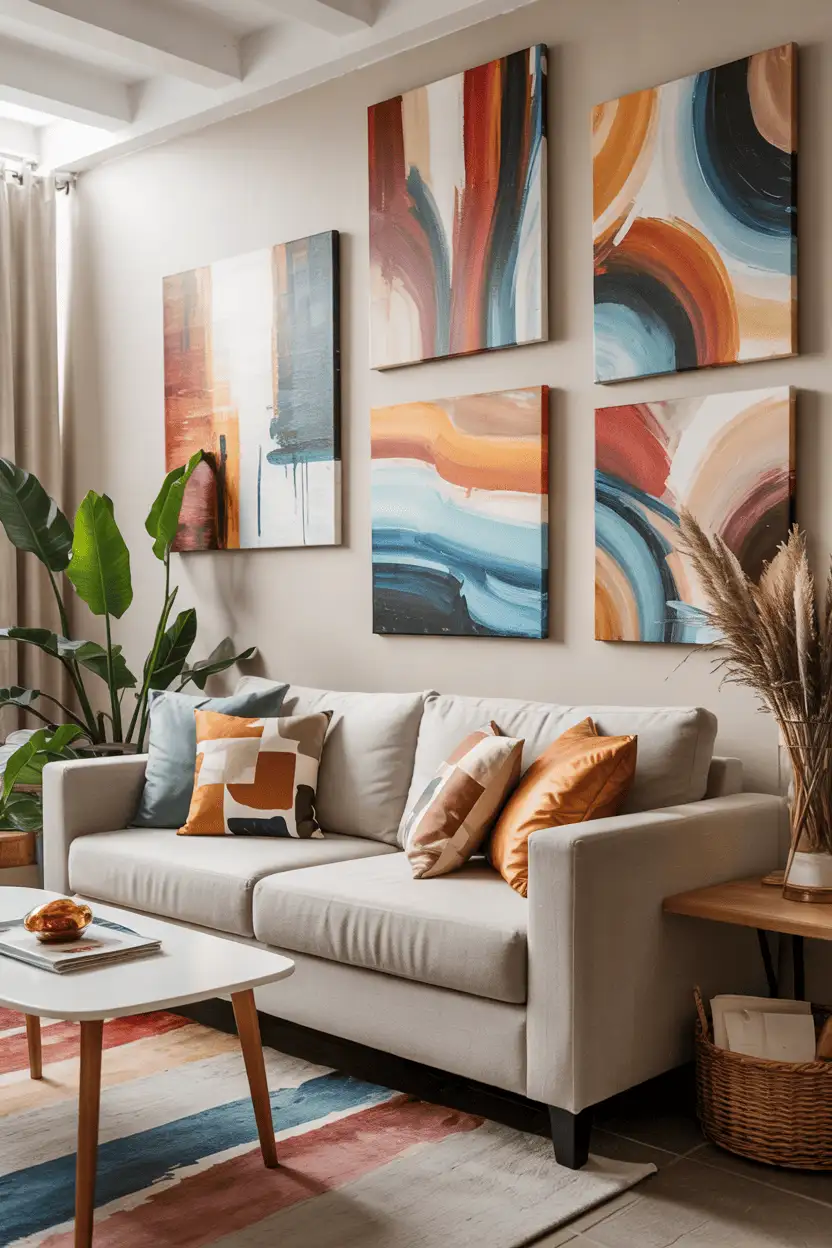
1. Canvas Art You Can Actually Paint Yourself
Canvas is the most forgiving starting point in this whole list. A $10 value pack of pre-primed canvases, three tubes of acrylic paint, and a palette knife are genuinely enough to make something worth hanging. Color-blocked rectangles in your room’s accent colors look intentional and modern; a gradient wash made by blending two shades while the paint is still wet gives you an abstract piece that fools most people into thinking it was store-bought.
Hang larger canvases at eye level — center around 57 inches from the floor — and keep bedroom palettes to soft blues, warm neutrals, or whatever genuinely relaxes you.
2. Wood Pieces That Warm Up a Room Fast
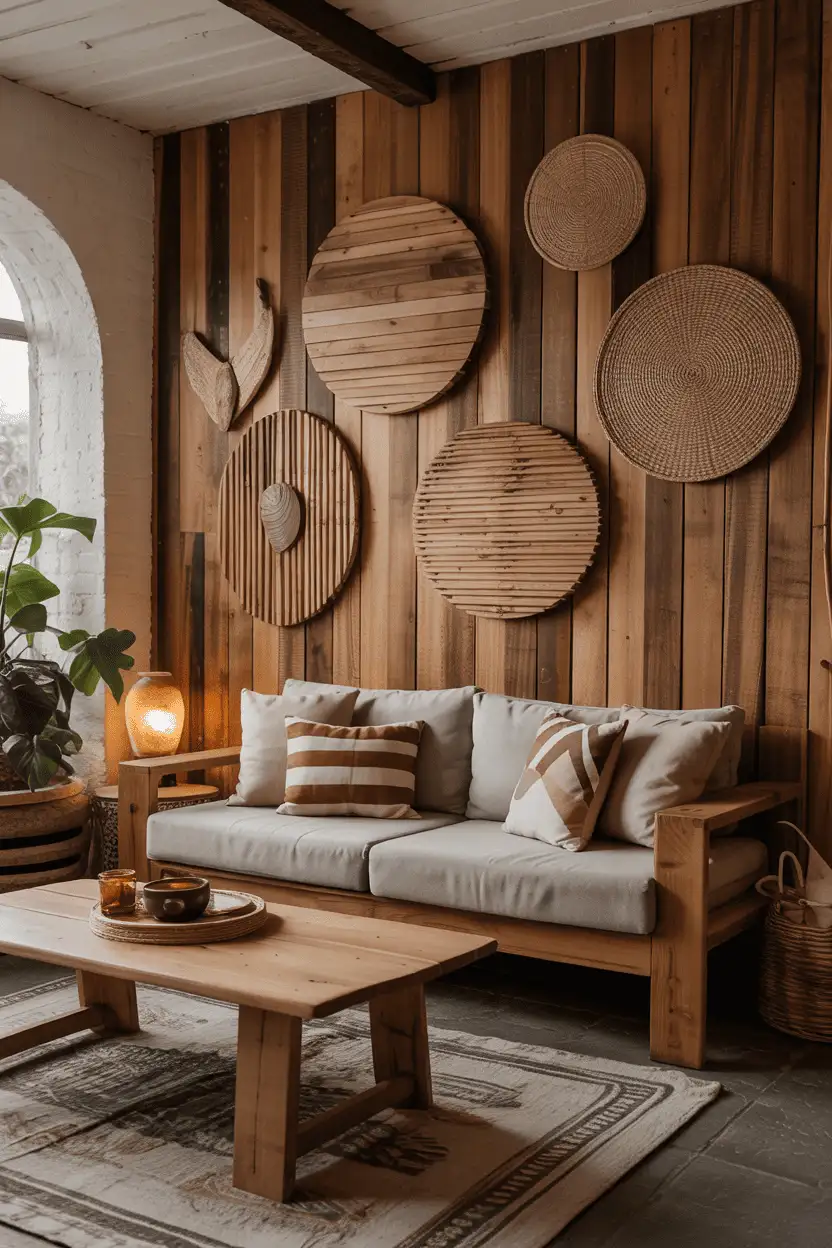
Wall wood decor adds something paint never can: actual texture you can touch. A weekend project like a reclaimed-plank accent panel (sand it smooth, stain it walnut, mount it with French cleats so it hangs straight) brings warmth to rooms dominated by glass and metal. Even simpler: cut pine boards into hexagons, stain them in three alternating shades, and arrange them like honeycomb above a console table.
3. Mirrors That Bounce Light Around
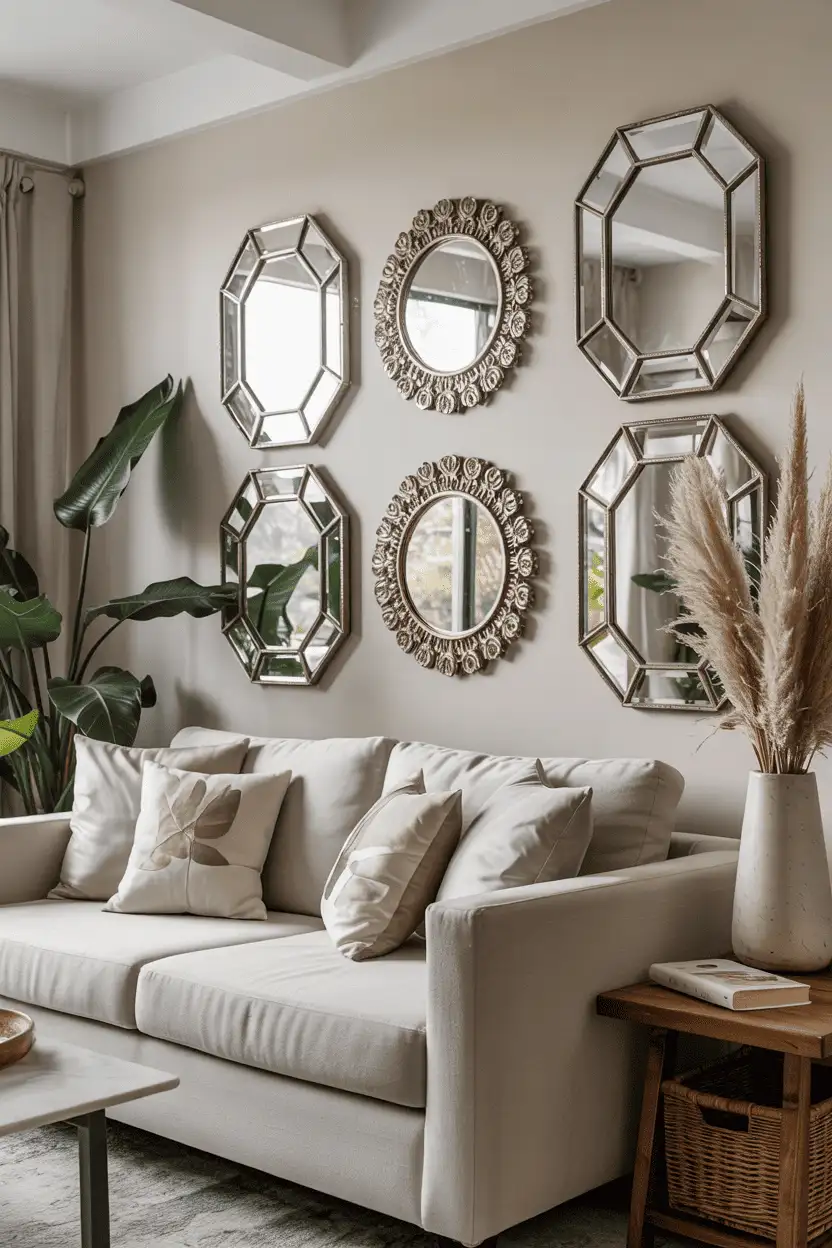
Mirrors that brighten rooms are as much engineering as decoration. Hang a large mirror directly opposite a window and it effectively doubles your daylight — a trick interior designers use in hallways and galley kitchens that feel like caves. Lean toward simple frames you can build or refinish: a coat of matte black paint on a thrifted frame takes fifteen minutes and looks sharp.
Anchor a mirror with smaller pieces around it — framed photos, a small shelf, a metal accent — so it reads as part of a composition instead of a lone rectangle floating on plaster.
4. Woven and Macramé Hangings That Soften Hard Walls
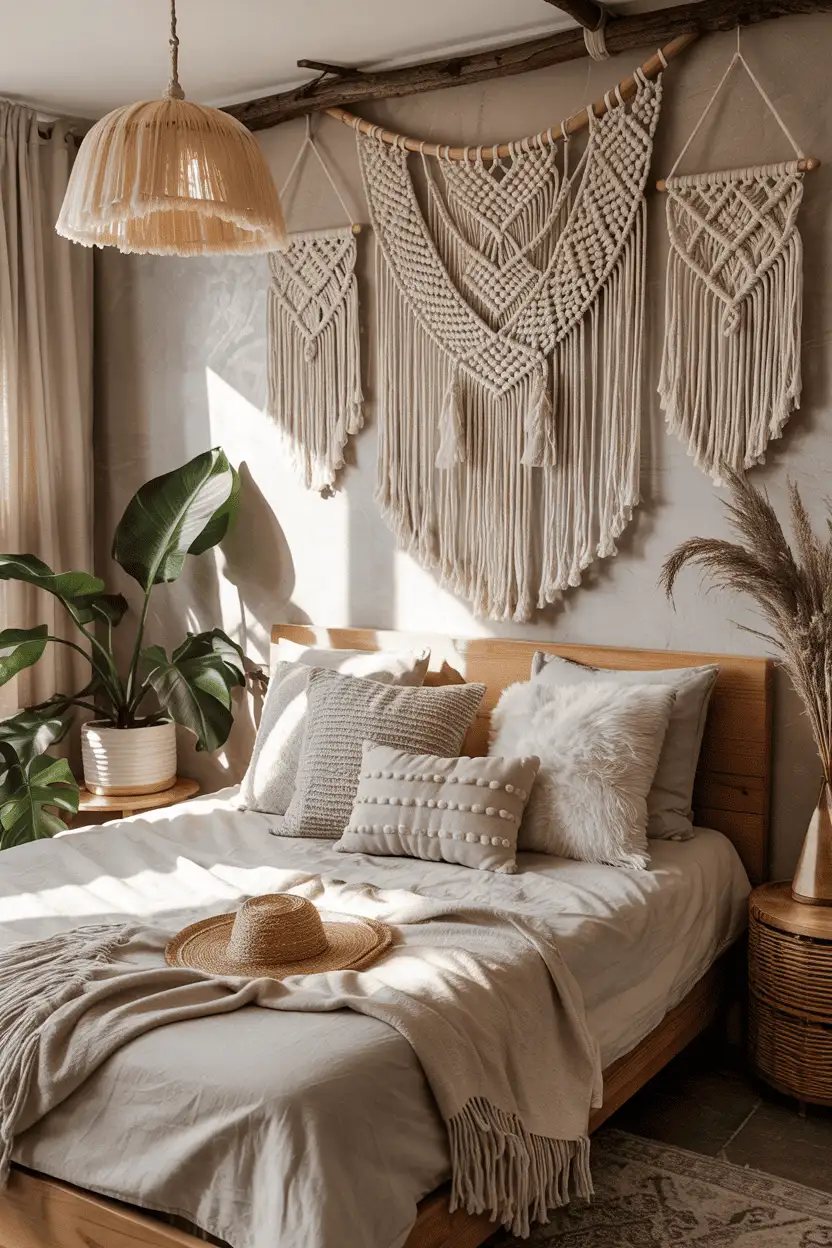
Macramé and woven textiles do the opposite job of metal and glass: they absorb sound, soften edges, and make a room feel lived-in. You don’t need to master every knot — a wall hanging made of three rows of simple square knots on a wooden dowel, left with long fringe, takes a beginner about two hours and looks like something from a boutique. Cotton cord in natural cream goes with everything.
Hang one beside a bed instead of a headboard, or let a large weave fill the space above a sofa where a single canvas would feel lost.
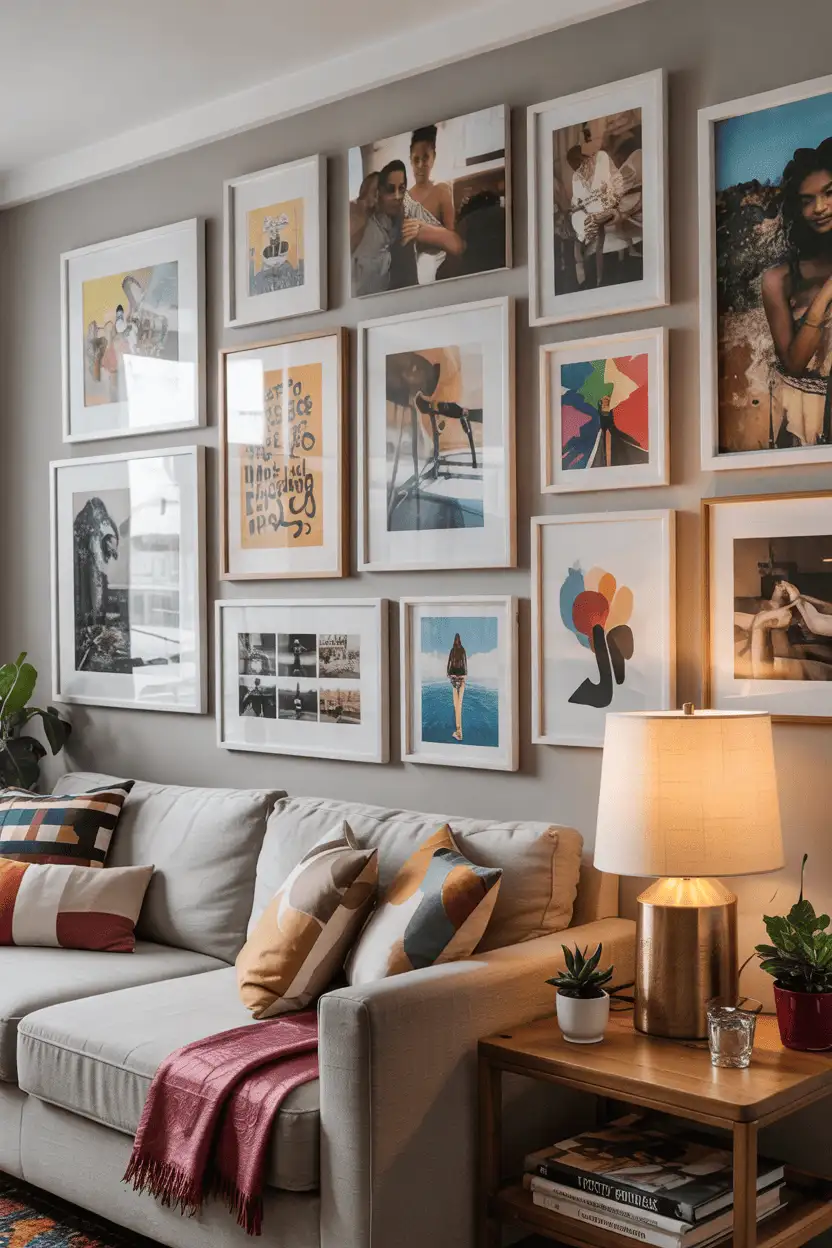
5. Gallery Walls That Feel Curated, Not Cluttered
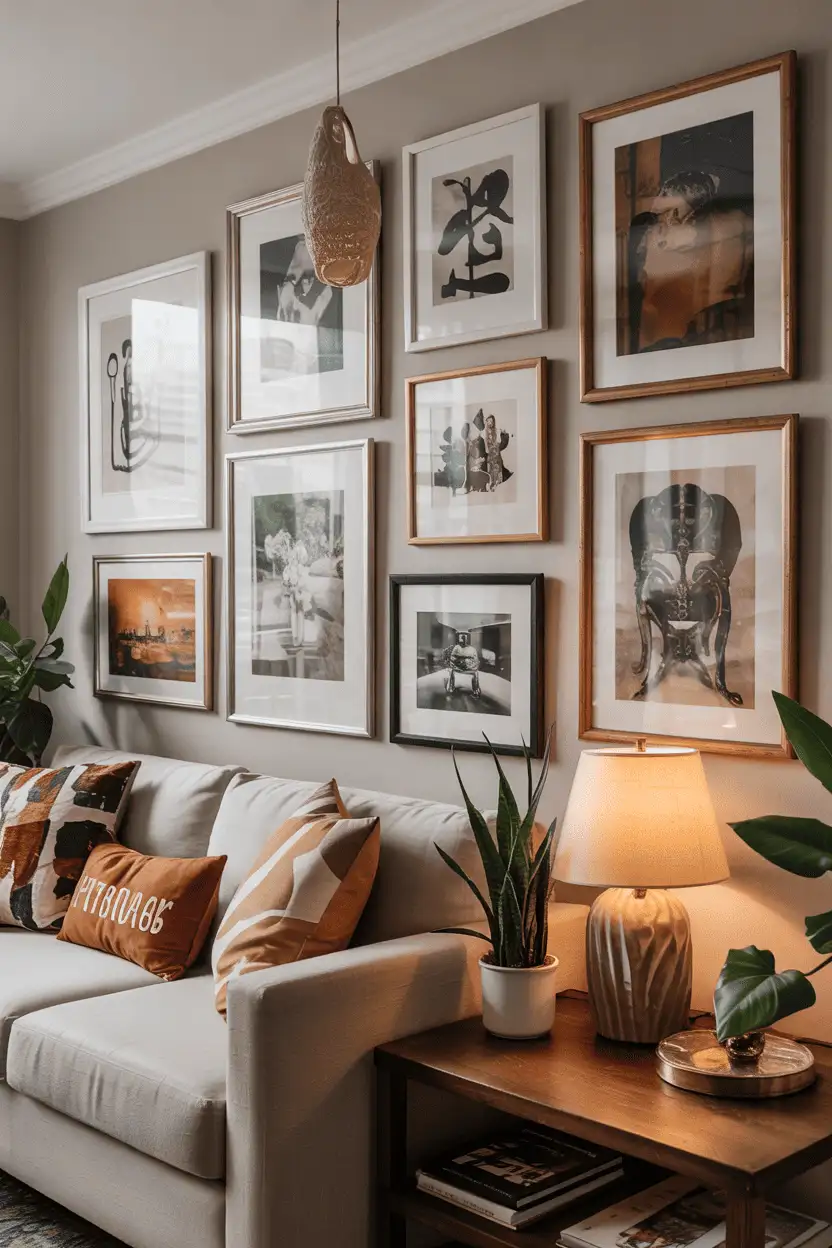
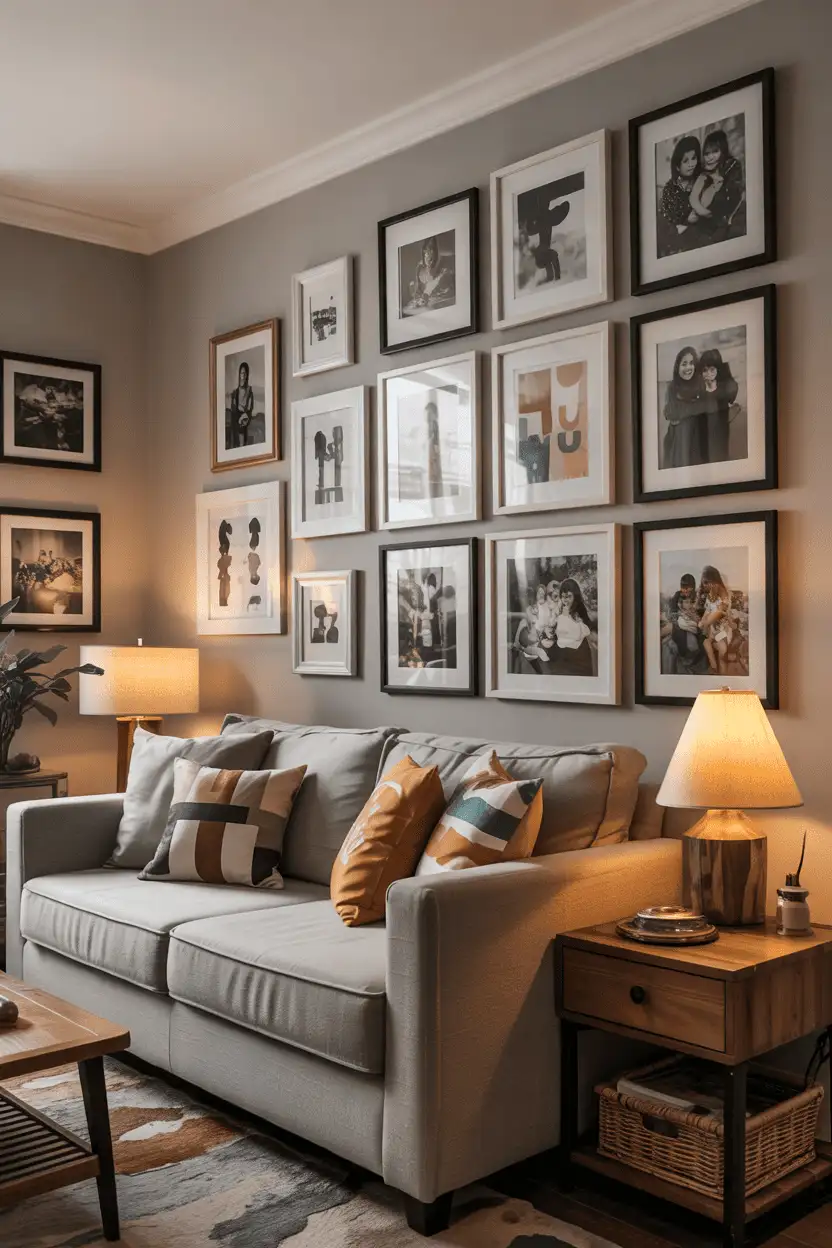
The difference between a gallery wall that looks collected and one that looks chaotic is one rule: pick a unifying thread. Same frame color, same white mats, or a limited palette across all the art — any one constraint makes mixed pieces feel deliberate. Lay the arrangement on the floor first, photograph it from above, and hang from the center outward.
6. Metal Art for a Sharper Edge
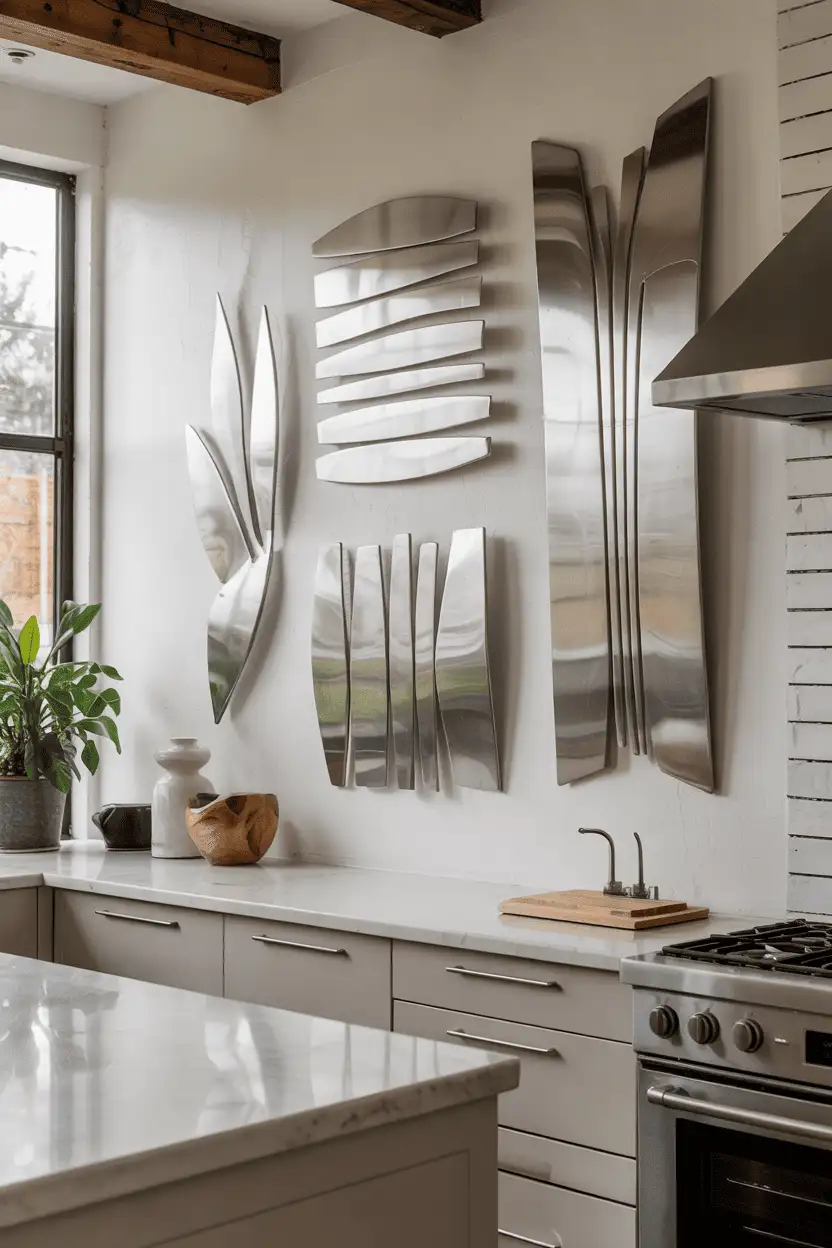
Cut-metal pieces — abstract botanicals, geometric sunbursts — give kitchens and entryways a finished look without taking up shelf space. If buying feels too easy, laser-cut kits from craft stores let you assemble and finish a design yourself. The payoff is in the light: metal catches morning sun and throws moving shadows across the wall.
Balance metal’s coolness with one warm material nearby — a wood frame, a woven basket — so the room doesn’t feel like a lobby.
7. Decals for Zero-Commitment Refreshes
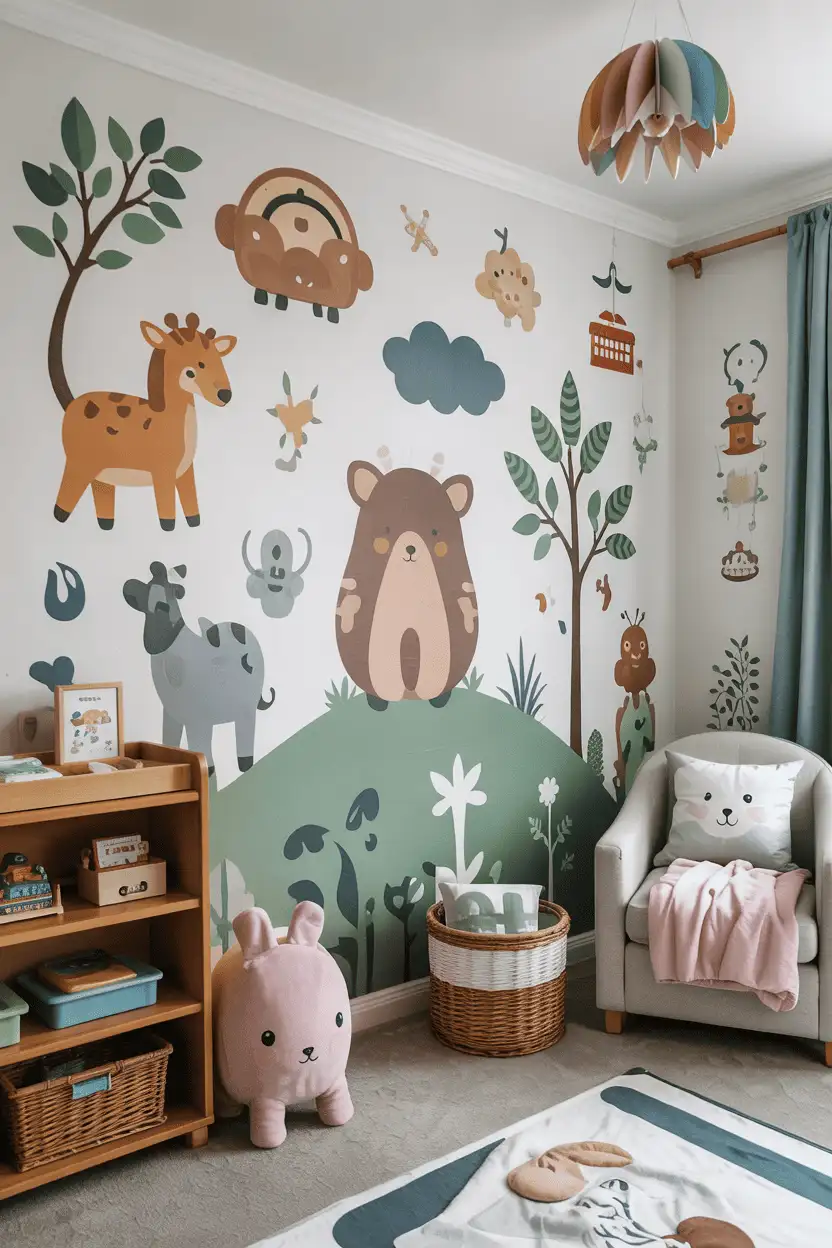
Peel-and-stick decals are the renter’s best friend: botanical arches, constellation maps, geometric half-circles that cost under $25 and come off without a trace. They’re also the fastest way to test a big idea — want a dramatic black arch behind your bed? A $20 decal answers the question before you commit to paint.
Press them onto clean, dry walls and smooth from the center out with a credit card to avoid bubbles.
8. Frame Walls That Show Your Actual Life
A wall of frames holding your own photographs beats any print you could buy, because nobody else has it. Mix black-and-white travel shots with one or two color prints for rhythm; standardize on one frame style so the images do the talking. Thrift stores are goldmines for solid wood frames — a $2 frame and new mat looks better than most big-box sets.
Leave one frame empty on purpose, or rotate photos seasonally. The wall stays alive instead of becoming wallpaper you stop seeing.
9. One Oversized Piece for Maximum Impact
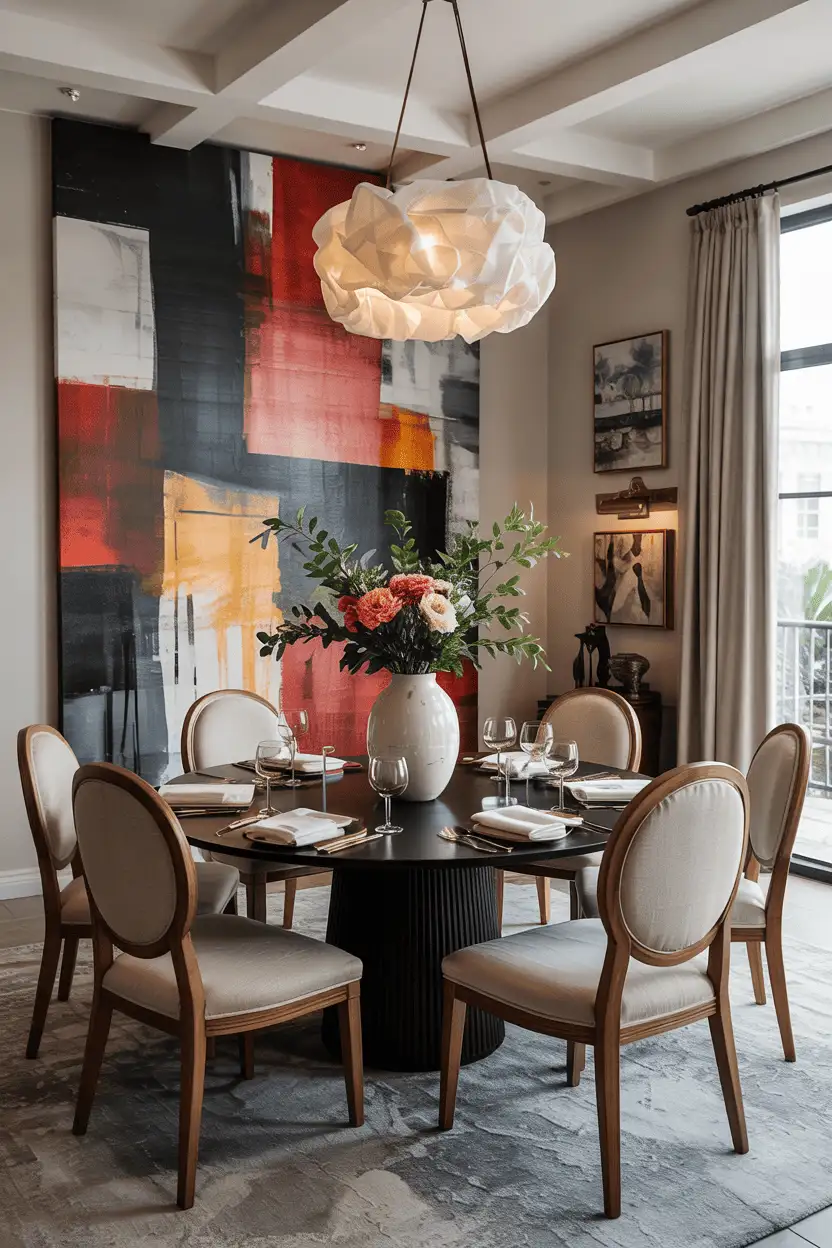
Sometimes a single 36-by-48-inch canvas does what twenty small frames can’t: it gives the room an anchor. Oversized pieces work hardest above sofas, dining tables, and beds, where smaller art gets swallowed by the furniture. Abstract shapes in three colors pulled from your rug or curtains tie the whole room together.
Hang big pieces so their center sits at eye level, and keep everything else on that wall minimal — the piece needs breathing room to do its job.
10. Art for the Walls Everyone Forgets: Outdoors
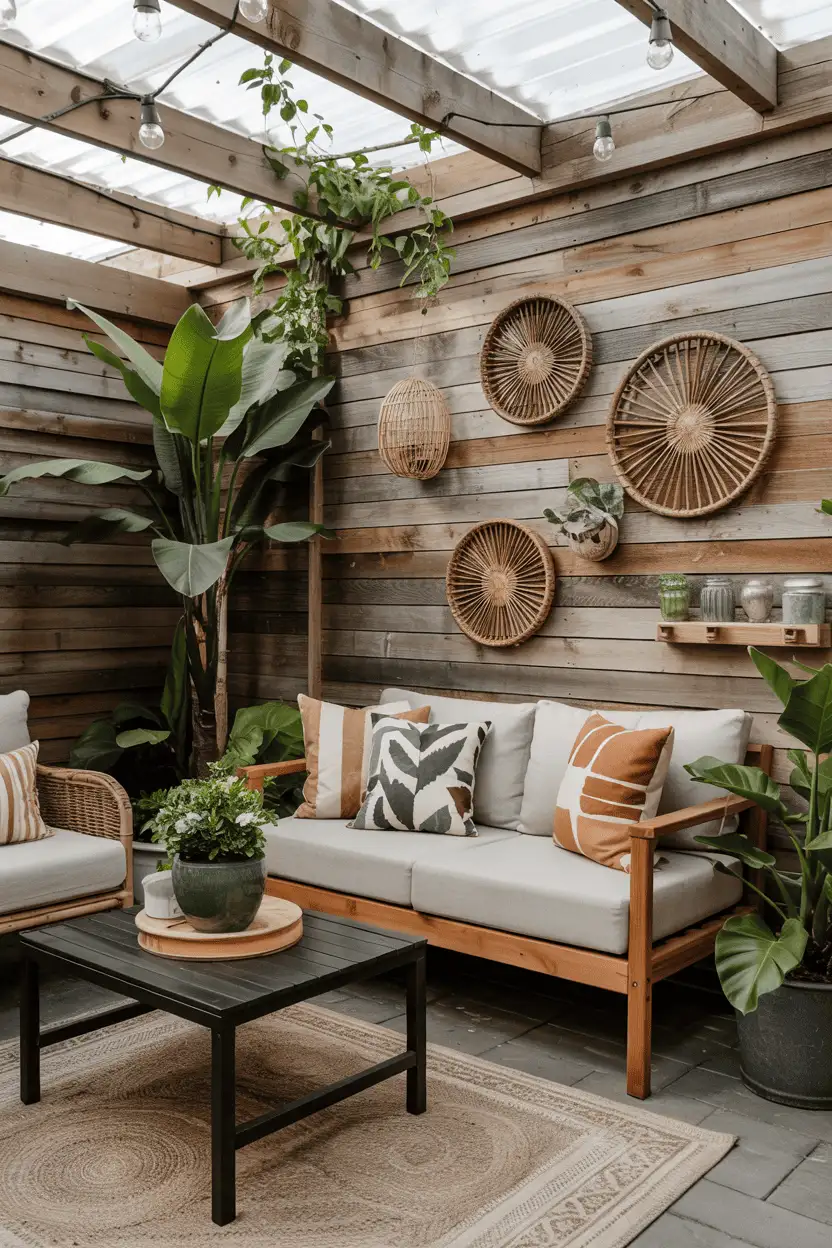
Outdoor-friendly wall art belongs on patios and porch walls, which most people leave blank. Powder-coated metal sculptures survive rain; sealed cedar or teak panels weather to a nice silver. Even a painted cinder-block wall in two tones can turn a dull fence into a backdrop.
11. Nursery Walls That Are Calm, Not Boring
In a nursery, aim for soft and interesting: hand-painted polka dots in muted sage, framed watercolor animals, a felt-ball garland strung along the wall. Skip anything with small detachable parts within reach of the crib, and use washable paint — it will get touched.

12. Bathroom Art That Survives the Steam
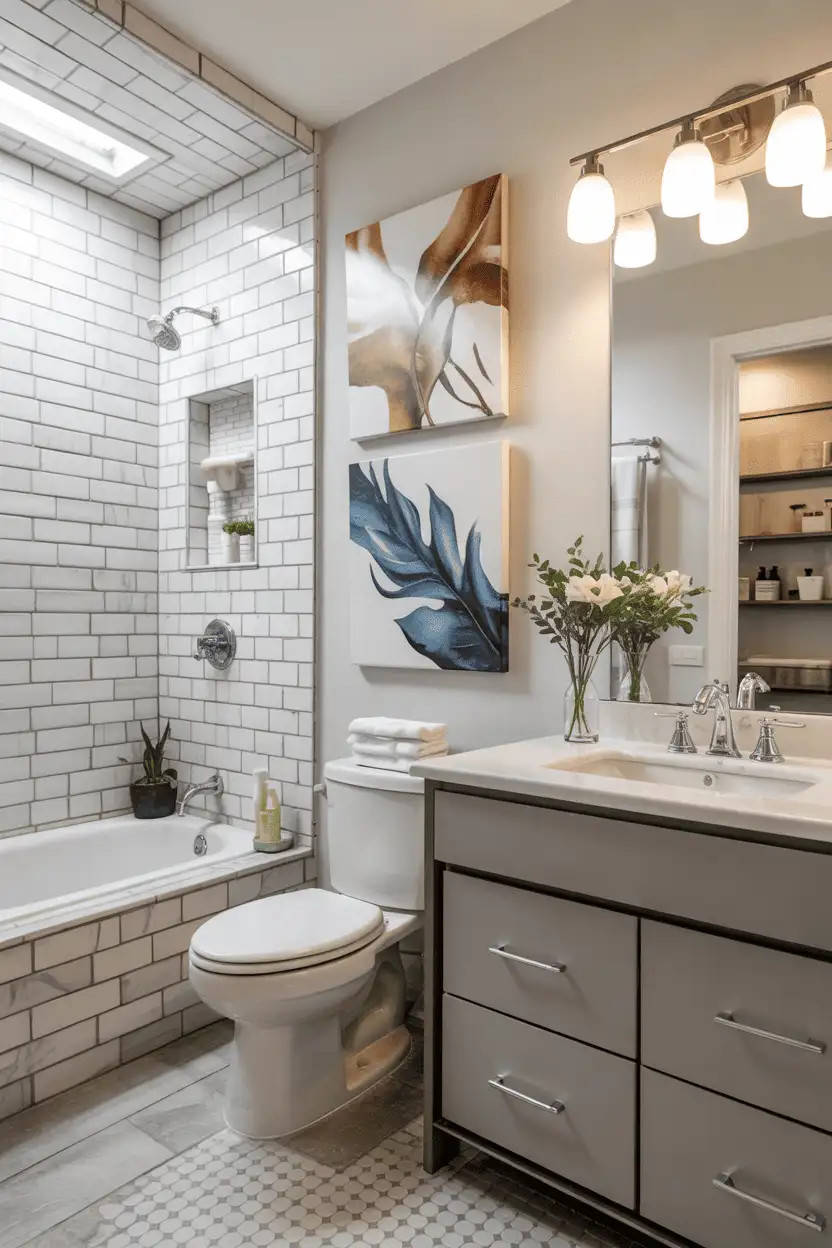
Humidity kills paper and warps cheap frames, so bathrooms need a different playbook: acrylic-sealed canvases, powder-coated metal, or glass-fronted prints with sealed backs. A set of three botanical prints above the towel rack takes five minutes to hang and makes the smallest room feel considered.
Treat bathroom art like you’d treat a phone near water — sealed, wipeable, and nothing you’d cry over if it eventually needs replacing.
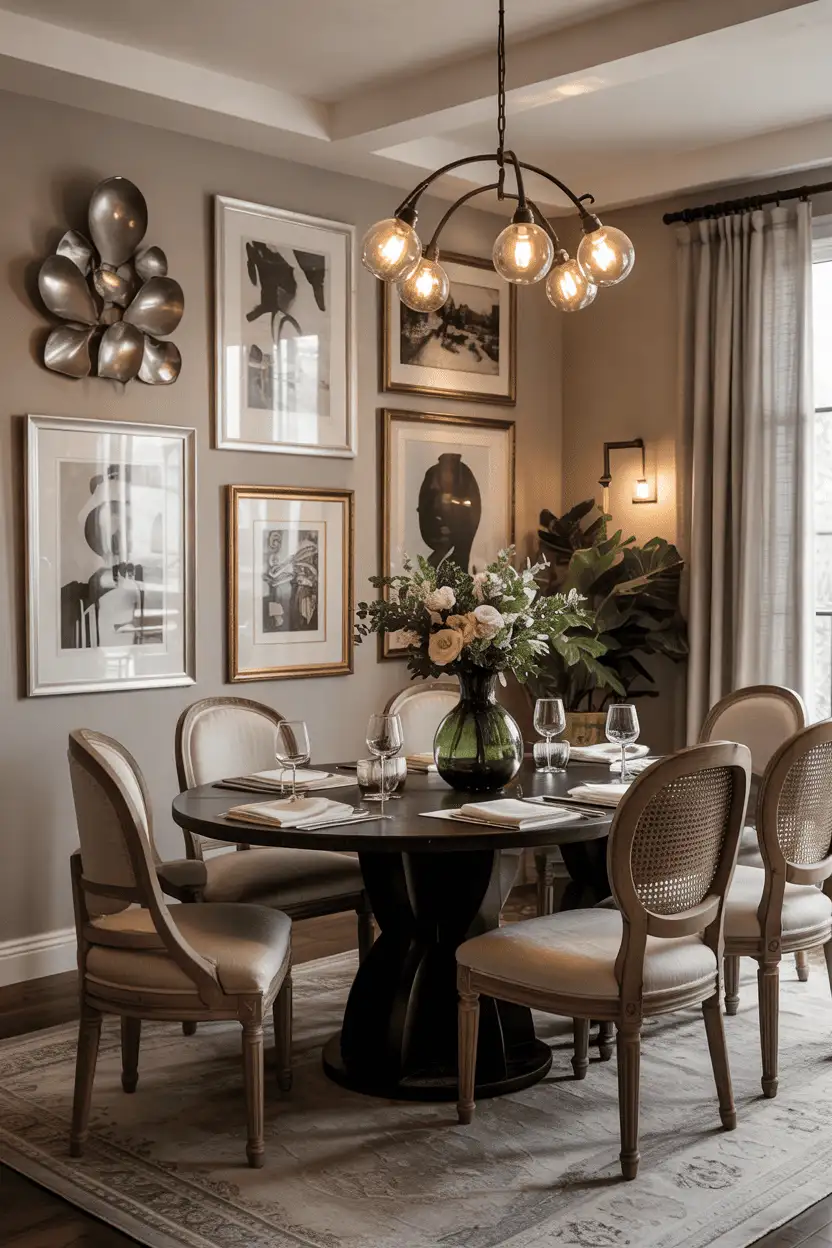
13. Dining Room Walls With Dinner-Party Energy
Dining rooms earn their art after dark, so choose pieces that look good under warm light: deep colors, metallic accents, a large mirror that doubles candlelight. A single landscape or abstract canvas sized to roughly two-thirds the width of your table anchors the room without competing with the food.
14. Stairways: The Longest Wall You’re Ignoring
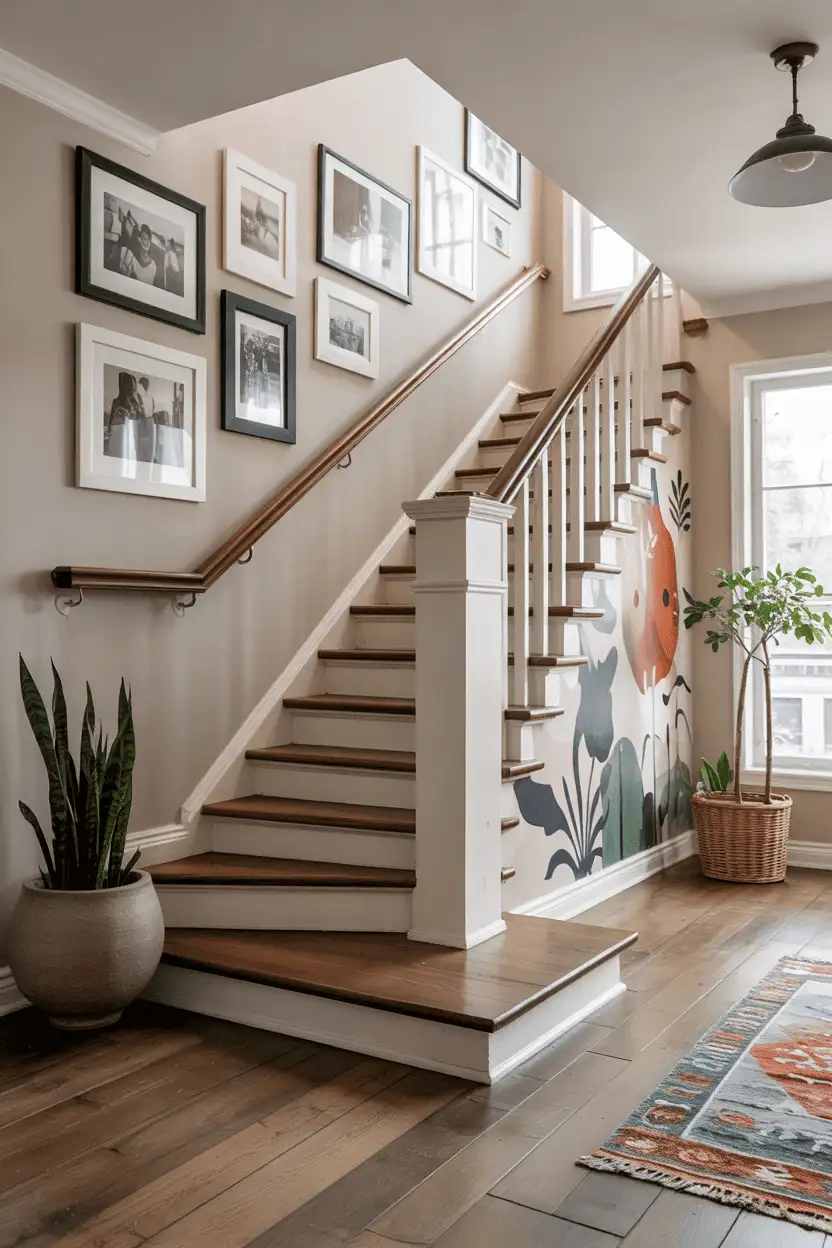
Staircase walls are the most underused vertical space in most houses. A climbing arrangement of framed photos that rises with the steps turns a transitional space into a timeline — family photos in chronological order work beautifully. Keep frames light and use proper anchors; you don’t want one falling down the stairs.
Because stair walls are viewed in motion, bold simple shapes read better than fussy detail. Step back to the landing to check the composition before you commit to nails.
15. Boho Walls Without the Clichés
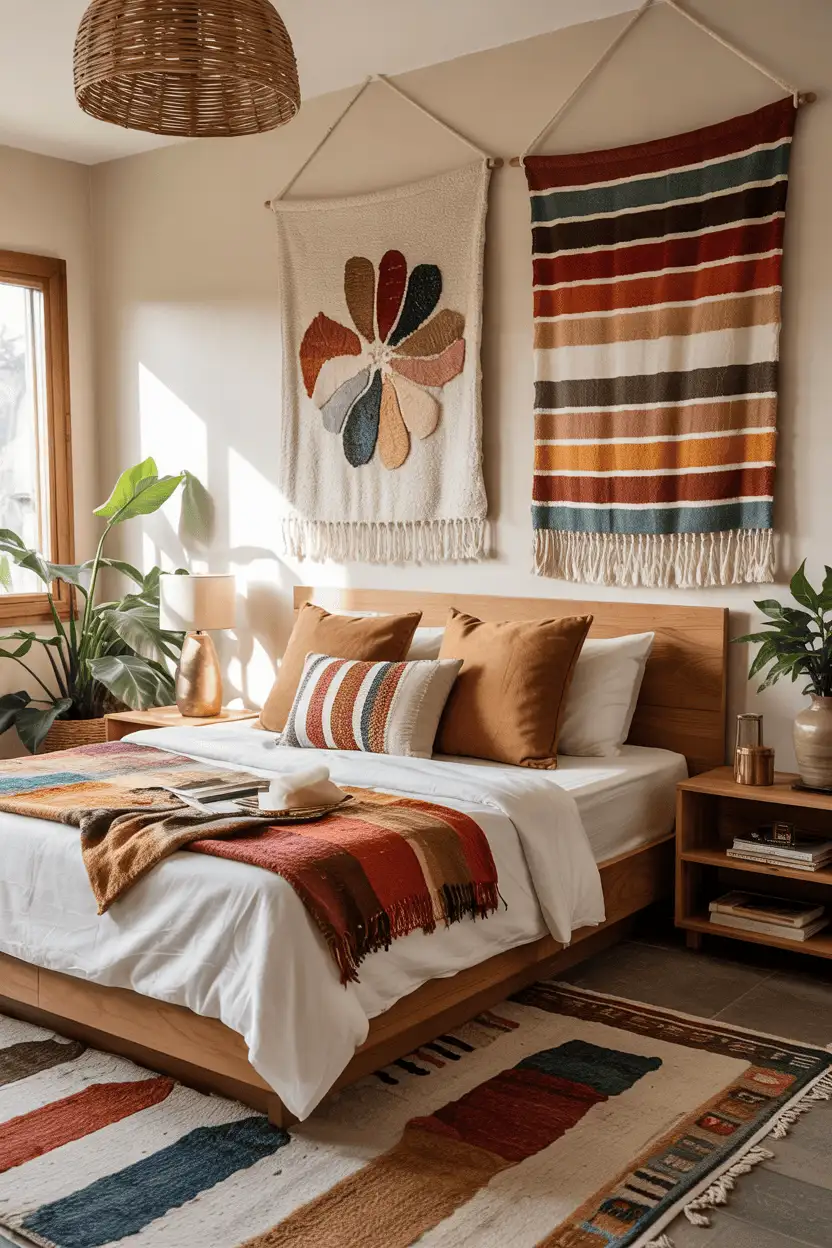
Boho done well is texture and warmth, not a costume shop. Layer one woven hanging with a couple of framed botanical prints and a rattan mirror, stick to a palette of cream, terracotta, and one deep accent, and let the materials — cotton, jute, wood — carry the style instead of piling on motifs.
16. Minimalist Painting for Quiet Rooms
For minimalist rooms, the painting should barely raise its voice: a single horizon line, three brushstrokes in ink, a canvas divided into two soft blocks of color. One rule that works — the art’s palette should match the room’s existing palette exactly, so it reads as part of the architecture.

17. Kitchen Walls That Earn Their Keep
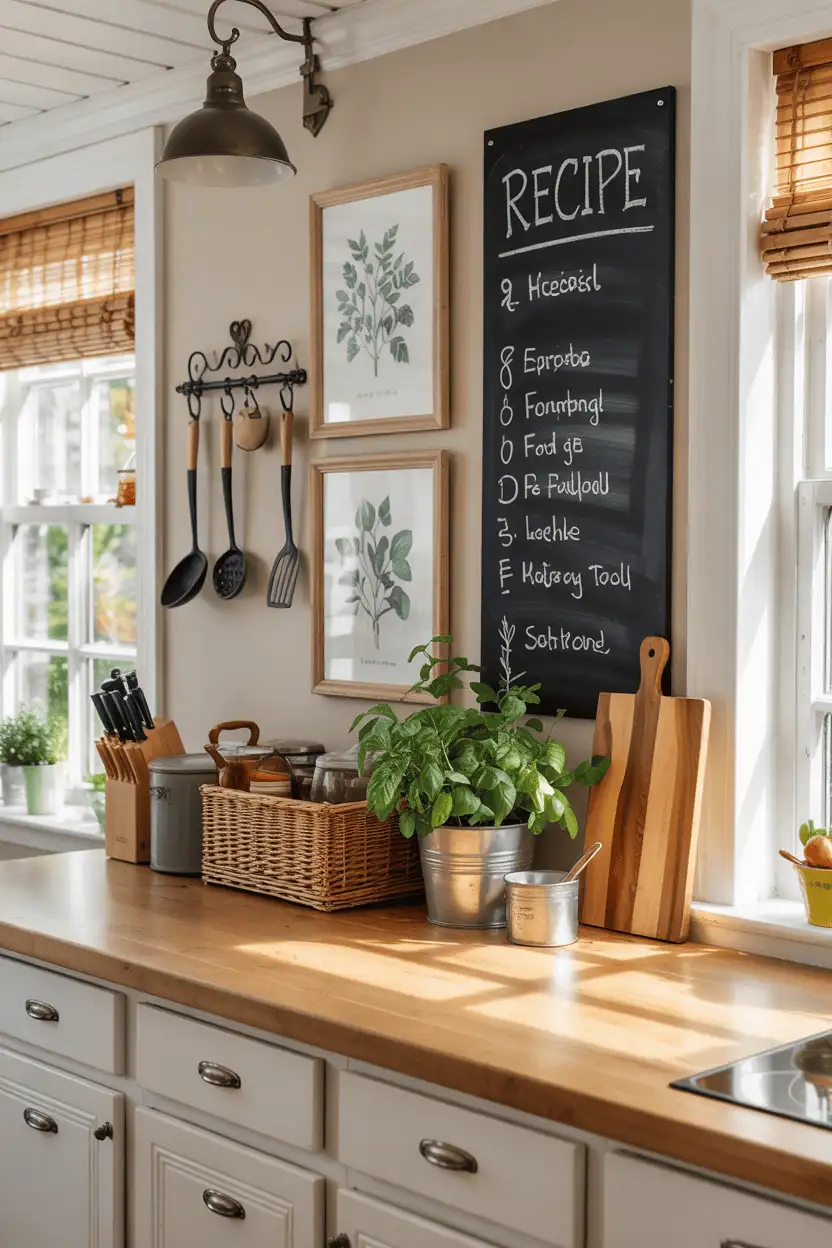
Kitchen wall pieces should work as hard as the room does: a chalkboard for the week’s menu, framed vintage seed packets, a magnetic knife strip mounted as a display. Keep art away from the stove’s grease zone and use glass fronts you can wipe down.
18. Photo Collages That Tell a Real Story
Collages hit harder when they have a theme instead of a random mix: one trip, one year, one color. Print photos in mixed sizes — a few 5x7s, several 4x6s — and leave roughly two inches between them so each image gets air. A grid keeps it tidy; a salon-style cluster feels more energetic.
Start with the largest photo in the middle and build outward. And skip the tiny wallet-size prints — they’re unreadable from more than a foot away.
19. 3D and Textured Pieces With Real Depth
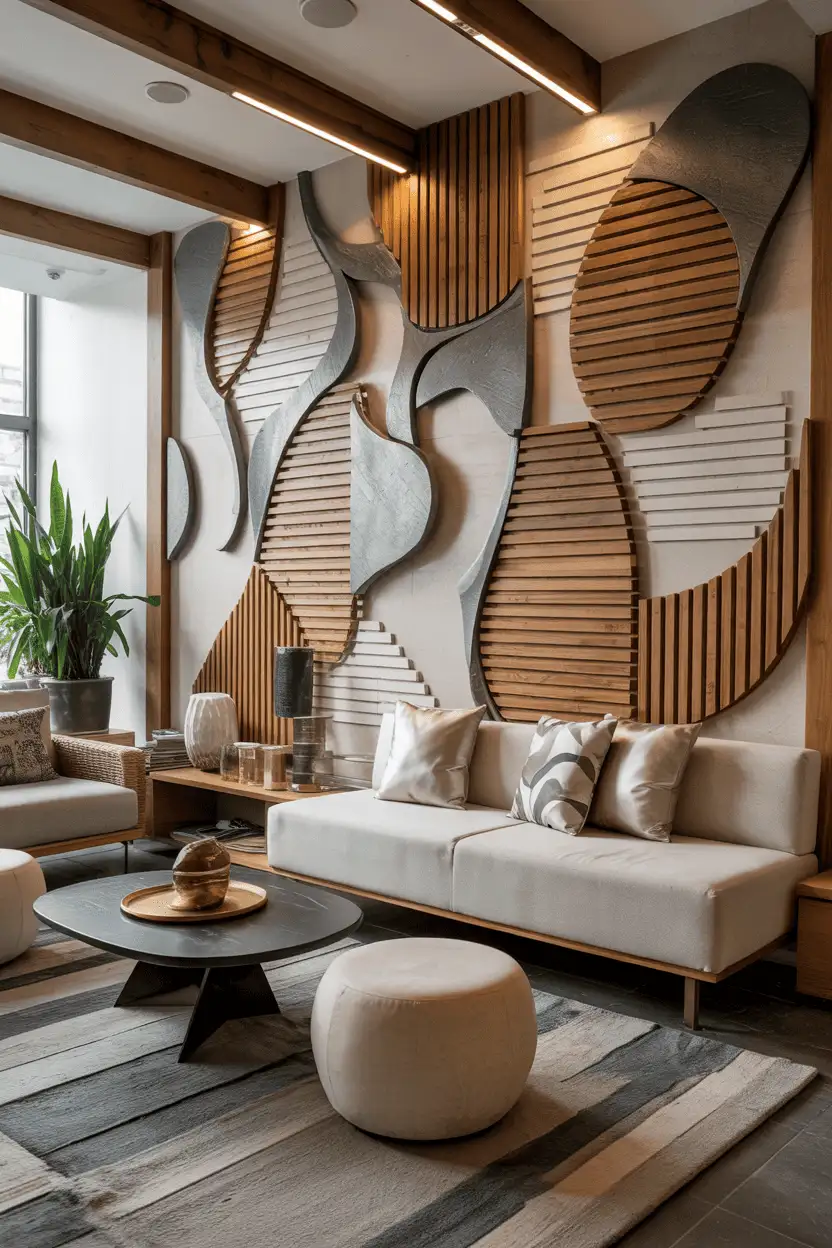
Dimensional art — carved wood panels, layered paper sculptures, wrapped-fabric acoustic tiles — changes as you walk past it, because the shadows move. Place these where people actually walk by: hallways, entryways, the wall beside the stairs. Flat art looks the same from every angle; textured art rewards movement.
20. Seasonal Swaps That Keep Walls Fresh
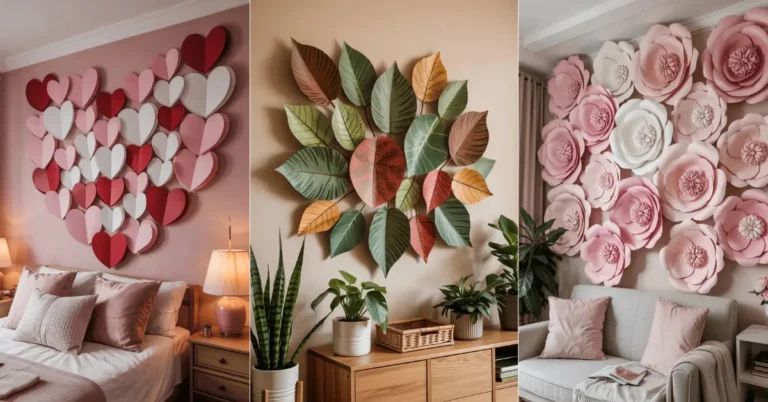
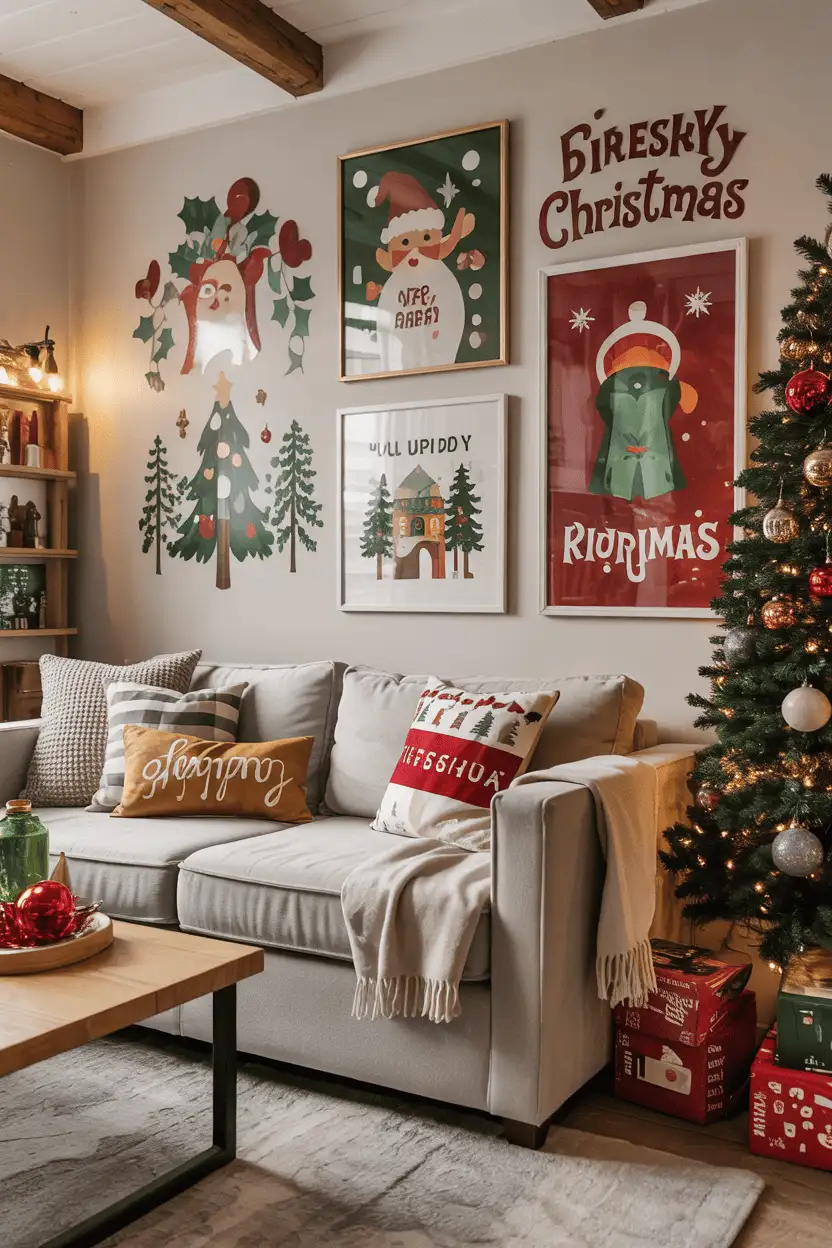
You don’t need permanent art in every spot. Keep two or three frames on a picture ledge where prints can be swapped in a minute: autumn landscapes in October, something bright in spring. Seasonal decals on a mirror or a wreath on a bare wall take ten minutes and make the whole room feel current.
And store the off-season prints flat in a portfolio case so they stay crisp for next year.
FAQs for DIY wall art ideas