Introduction
There is a moment every Thanksgiving when the turkey is resting, the kitchen smells like sage and butter, and I finally step back and look at the table — and that is the moment I live for. I have been setting Thanksgiving tables for close to twenty years now, from a cramped apartment table that seated four on folding chairs to a long farmhouse table that somehow fits seventeen. These 23 Thanksgiving table decor ideas are the ones I actually use: the centerpiece trick that costs almost nothing, the candle setup that makes everyone look like they are in a movie, and the place-setting details guests always comment on. Whether your style runs classic and candlelit or you are more of a pumpkin-on-every-surface person, there is something here worth stealing. And yes — every one of these Thanksgiving table decor ideas works with a real, chaotic, gravy-splattered holiday, not just a photo shoot.
1. The Classic Harvest Centerpiece
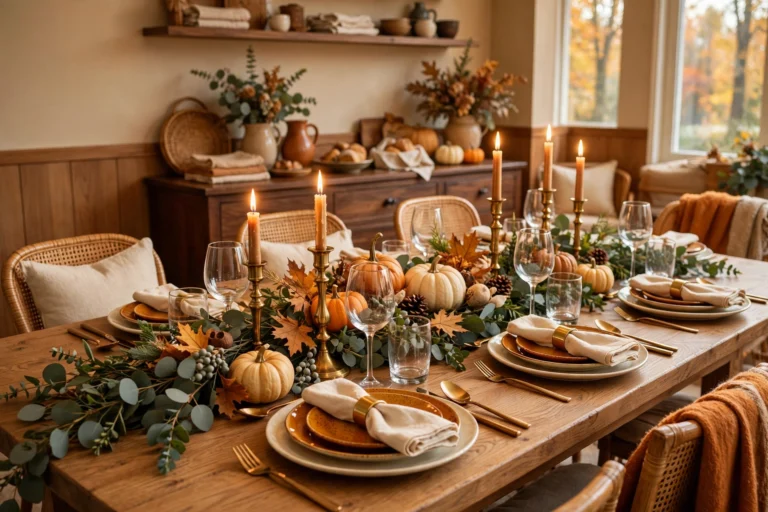
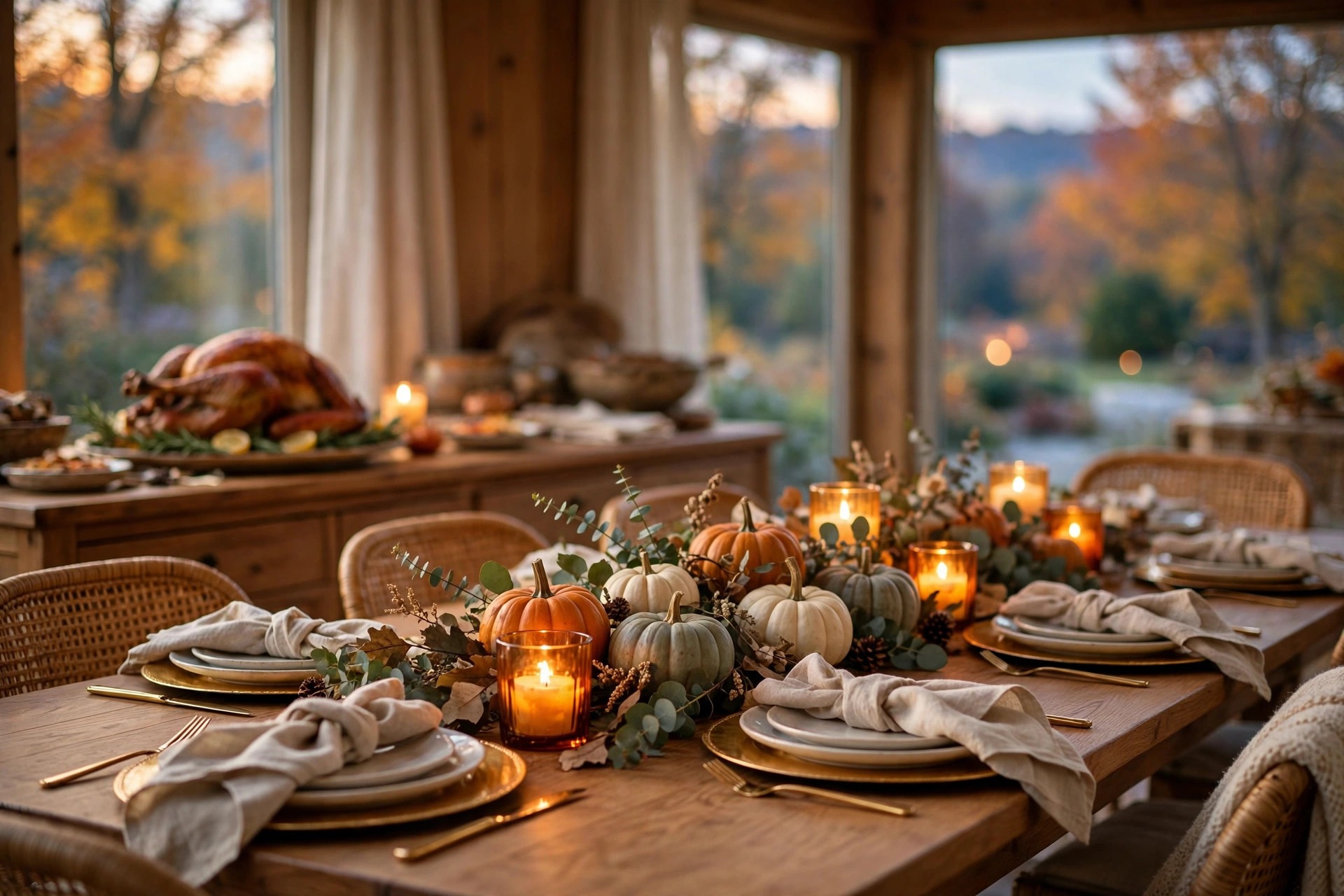
If you only do one thing on your table, make it a proper harvest centerpiece. I start with a long, low wooden dough bowl — mine came from a flea market years ago and it is still my favorite piece — and fill it with small pumpkins, gourds, pinecones, and a few sprigs of eucalyptus tucked between them. The trick is keeping it low. I learned this the hard way the year I built a tall cornucopia arrangement and nobody across the table could see each other; we spent dinner passing dishes around a wall of squash. Keep everything under twelve inches tall so conversation flows. A mix of white, orange, and sage-green pumpkins looks more expensive than all-orange, and a few dried leaves scattered at the base make it feel gathered rather than bought. This is the centerpiece I return to most years, because it photographs beautifully and takes about fifteen minutes.
What you need
A low wooden bowl or tray, five to seven mini pumpkins and gourds, a handful of pinecones, and a few stems of eucalyptus from Trader Joe’s or your own yard.
2. Candlelight in Amber Glass
Candles are the single fastest way to make a Thanksgiving table feel special, and amber glass holders are my not-so-secret weapon. I collect them year-round — thrift stores, the Dollar Tree candle aisle, a few nicer ones from Pottery Barn — and cluster them down the center of the table in groups of three. The amber glass turns plain taper and votive flames into this warm, honeyed glow that flatters everyone and everything, including the slightly lumpy mashed potatoes. I mix heights on purpose: tall tapers in brass holders at the ends, short votives in the middle. One honest warning from experience: keep the candles away from the bread basket and any dried leaves, and never leave them burning while everyone is in the kitchen. I light mine right when guests sit down, not before, so nothing melts or scorches.

3. A Burlap and Wood Slice Runner
Some years I skip a tablecloth entirely and go rustic. A strip of burlap down the middle of a wood table — or over a plain white cloth — instantly says farmhouse Thanksgiving, and it costs almost nothing. I lay wood slices under the serving dishes as little risers, which does two useful things: it protects the table from hot casserole dishes, and it gives the table levels so it does not look flat. My burlap runner is a single piece of fabric I cut myself and frayed the edges of on purpose; the fraying looks intentional, I promise. Under it, I tuck a few sprigs of dried wheat. The whole look pairs beautifully with stoneware plates and simple linen napkins, and when the inevitable gravy spill happens, burlap hides it better than any white cloth ever could. I have tested this theory. Repeatedly.
4. White and Gold Elegance
Not every Thanksgiving table has to look like a cornfield exploded on it. My white-and-gold version is the one I use when I want the table to feel a little dressy — usually the year my mother-in-law visits, if I am being honest. White taper candles in gold holders, a white linen cloth, gold chargers under plain white plates, and a few white pumpkins painted with a light dusting of gold spray paint. That is it. The restraint is the point. I add a single sprig of fresh rosemary tied to each napkin with gold twine, which smells wonderful when people sit down. Gold flatware helps if you have it; if not, regular silverware still looks great against the white and gold. The trick is keeping the palette tight — white, gold, and one green accent, nothing else sneaking in. My first attempt had red napkins in the mix and the whole thing fell apart visually.

5. Plaid and Flannel Cozy Farmhouse
There is a version of Thanksgiving that smells like woodsmoke and feels like a flannel shirt, and this table is it. I use a red-and-black buffalo check runner — mine is actually a cheap tablecloth from Target’s Threshold line that I fold into a runner — over a plain wood table, with plaid napkins and a few plaid ribbon bows tied around mason jar candles. The plaid does a lot of the decorating work, so I keep the centerpiece simple: a galvanized metal tray with mini pumpkins and pinecones. This is the table I set when the guest list includes kids and dogs, because plaid hides everything and nothing on it is precious. I once watched a toddler smear cranberry sauce across this exact runner and it just… blended in. Buffalo check is forgiving like that. Add a basket of folded throw blankets near the table for guests who get chilly, and you have the coziest Thanksgiving on the block.
How I styled it
I fold the plaid cloth lengthwise into a runner so the check pattern reads bigger and bolder down the center, then set plain cream plates on top so the pattern does not fight the dishes.
6. Fresh Fruit and Pomegranate Centerpiece
Here is the centerpiece idea that gets the most compliments at my house, and it is literally just fruit. A big, shallow bowl or a footed cake stand piled with pomegranates, persimmons, figs, red grapes, and a few clementines with leaves still attached looks like a Dutch still life and costs less than a florist arrangement. I cut two or three pomegranates open to show the ruby seeds — guests always reach for them — and tuck in a few sprigs of fresh bay leaves for green. The fruit does double duty: after dinner, people snack on it while we play cards. One practical note: put a small linen cloth under the bowl, because pomegranate juice stains wood and tablecloths with zero mercy. I learned that on a white tablecloth in 2019 and I still think about it. This arrangement also photographs incredibly well, which is why it ends up on my fall table centerpiece ideas every single year.

7. Dried Orange and Cinnamon Garland
Dried orange slices are my favorite cheap luxury for a Thanksgiving table. I slice oranges thin, bake them low and slow until they are dry and translucent, and string them on twine with cinnamon sticks and a few dried cranberries. Draped down the center of the table in a loose garland, they glow like stained glass when the candles are lit, and the whole table smells faintly of Christmas before Christmas has even started. I make mine the weekend before Thanksgiving — they keep perfectly in an airtight tin — and I always make extra, because someone always asks how I made them. The answer is boring: a 200-degree oven and patience. You can also scatter a few loose slices around the base of your centerpiece if a full garland feels like too much work. Either way, it is the detail that makes guests lean in and ask questions, which is my favorite kind of decor.
8. Personalized Place Cards Guests Keep
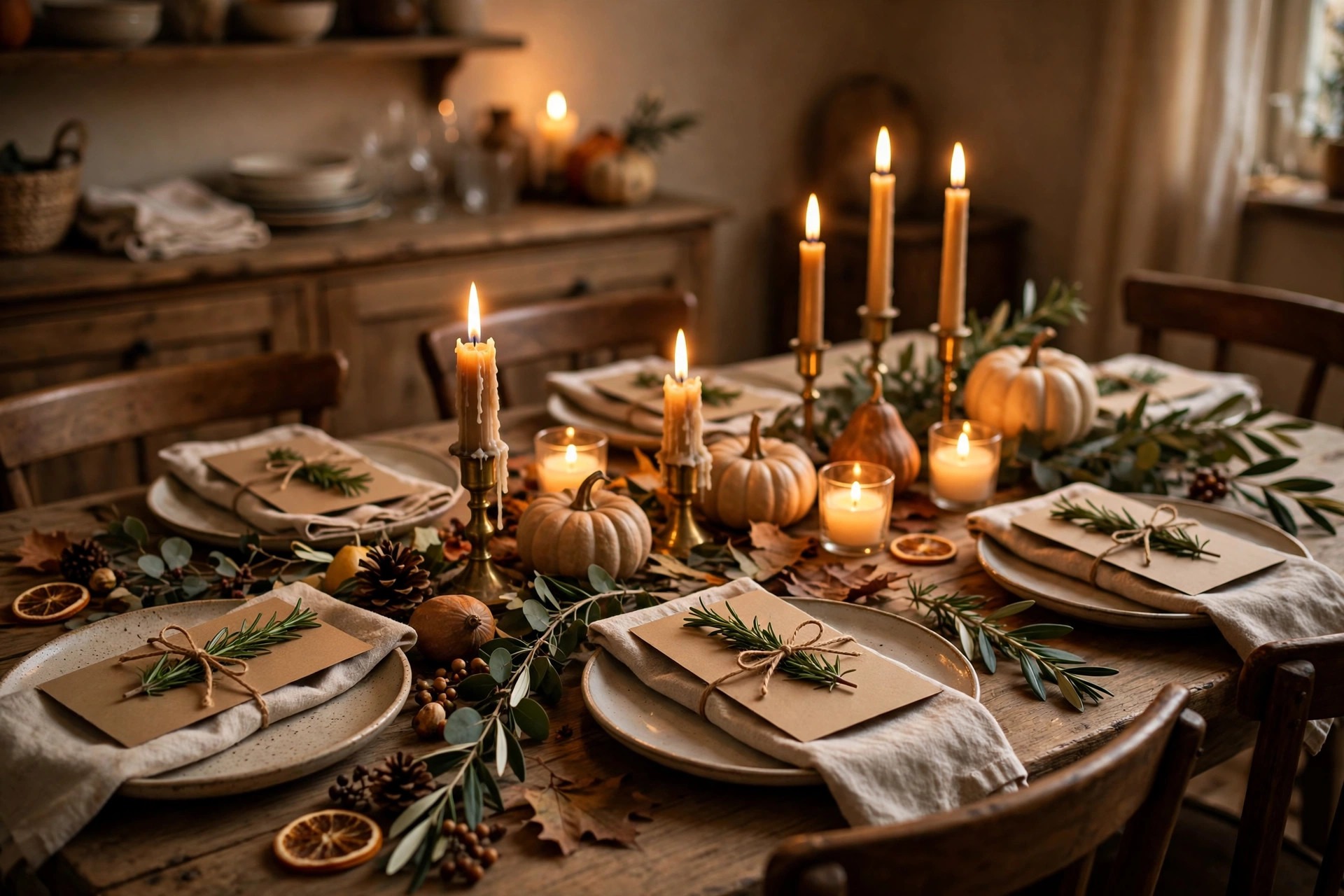
Place cards sound fussy until you see how much people love finding their name at the table. I make mine from kraft paper tags — the kind with a string loop, from the craft aisle at Michaels — and write each name with a gold paint pen. Then I tie a tiny sprig of rosemary or a dried flower to each one. Total cost: a few dollars. Total effect: guests feel genuinely welcomed, and half of them take the tags home. I started doing this the year we had two Thanksgivings’ worth of blended family at one table and I wanted nobody to feel like an afterthought. It worked so well it became a tradition. If your handwriting is not your strong suit, print the names on kraft card stock instead — nobody judges, and the rosemary sprig still makes it look handmade. Place the card on top of the plate or leaning against a glass; either way, it is the first thing guests notice when they sit down.
9. Layered Linen Napkins with Herb Sprigs
Napkins are an underrated decorating tool, and layering them is the easiest upgrade I know. I fold a large linen napkin into a simple rectangle, lay a smaller patterned or colored napkin on top at an angle, and tuck a sprig of fresh thyme or sage into the fold. The layering adds color and texture without buying a single new dish. My linen napkins came from a thrift store bundle years ago and they are mismatched on purpose — cream, sage, and one rust-colored set — which makes the table feel collected rather than matched. If you only own paper napkins, do the same trick: a paper napkin folded over a small square of kraft paper with a herb sprig still looks thoughtful. The herb sprigs do real work here, too: when guests unfold their napkins, the smell of sage hits them right before the meal, which is a small sensory trick I am very proud of.
10. Copper and Brass Accents
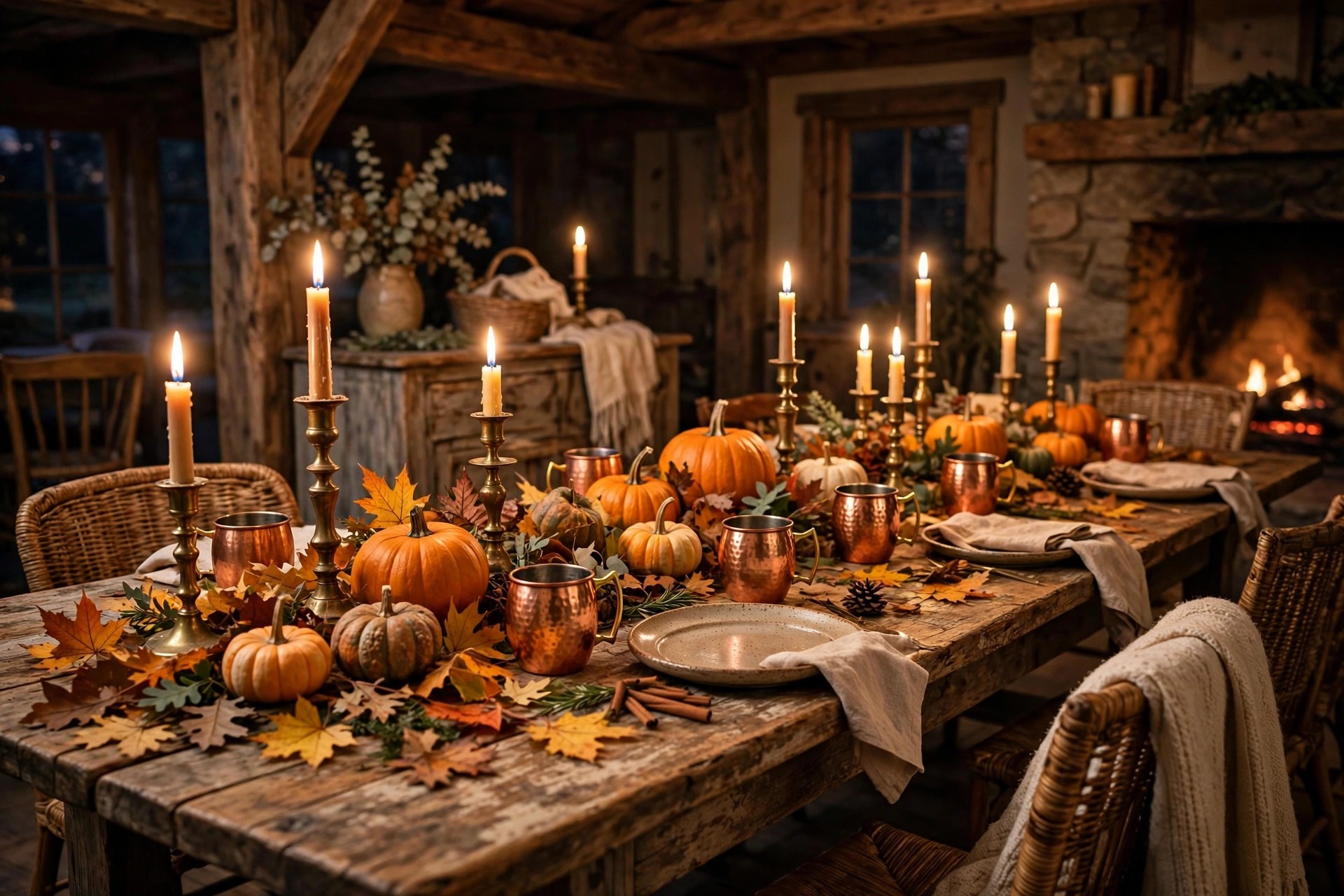
Copper is Thanksgiving’s best metal, in my opinion — warmer than silver, less formal than gold, and it pairs perfectly with orange and brown tones. I bring out my copper mugs (the Moscow mule set I bought years ago and barely use for actual mules), a few brass candlesticks from the thrift store, and a copper tray under the centerpiece. The metals catch candlelight beautifully and make the whole table glow. My favorite trick is using copper measuring cups as tiny vases for single stems — a dried flower or a sprig of eucalyptus in each one, lined up down the table. They cost almost nothing at thrift stores and look like something from a magazine. If your copper has gone dull, a quick rub with lemon and salt brings it back in minutes; I do this every November while listening to a podcast, and it is weirdly satisfying.
11. The Cornucopia, Reimagined
The cornucopia gets a bad rap because the wicker ones from the grocery store look, well, like the grocery store. But the idea — abundance spilling onto the table — is a good one, and I have a version I actually like. I use a simple woven basket tipped on its side, with pumpkins, gourds, grapes, and dried corn spilling out onto a bed of eucalyptus and autumn leaves. No fake fruit, no plastic leaves. The key is letting the spill look natural and a little messy, like the harvest just tumbled out. I set mine at one end of the table rather than the center, so it anchors the table without blocking anyone’s view. If you have kids, let them arrange the spill — they are better at “artfully messy” than any adult I know. My daughter arranged ours one year and it was genuinely the best version we have ever had. I have stopped trying to top it.
12. A Kids’ Table That Actually Looks Good
The kids’ table does not have to be a folding table with paper plates and a prayer. I set ours with the same care as the adult table, just sturdier: a kraft paper tablecloth they can draw on, mason jars with crayons and markers as the centerpiece, and small pumpkins they can take home. The kraft paper is the genius move — it doubles as a tablecloth and an activity, and cleanup is just rolling it up and throwing it away. I also give each kid a mini pumpkin with a paint pen to decorate during dinner, which keeps small hands busy while adults talk. The plates are melamine in fall colors, not paper, because kids notice when they get the “lesser” table and I refuse to be that host. One year I added a tiny chalkboard with “Kids’ Table” written on it in fancy script, and the kids treated it like a VIP sign. Worth it.

13. Moody Dark Table with Jewel Tones
Some years I am in the mood for drama, and that is when the moody table comes out. A deep charcoal or forest-green tablecloth, dark taper candles in black holders, burgundy and plum napkins, and a centerpiece of dark red dahlias or burgundy mums with black grapes. It sounds like Halloween, but with gold flatware and warm candlelight it reads rich and autumnal, not spooky. I love this look for evening Thanksgiving dinners, when the room is dark and the candles do most of the work. The contrast with the usual orange-and-brown Thanksgiving palette makes it feel unexpected, and guests always comment on it. My rule for moody tables: keep the food and serving dishes light-colored so the meal still pops against the dark cloth. White platters on a charcoal table look stunning. I tried dark platters once and the turkey basically disappeared. Lesson learned.
14. Vintage Brass Candlesticks at Mixed Heights
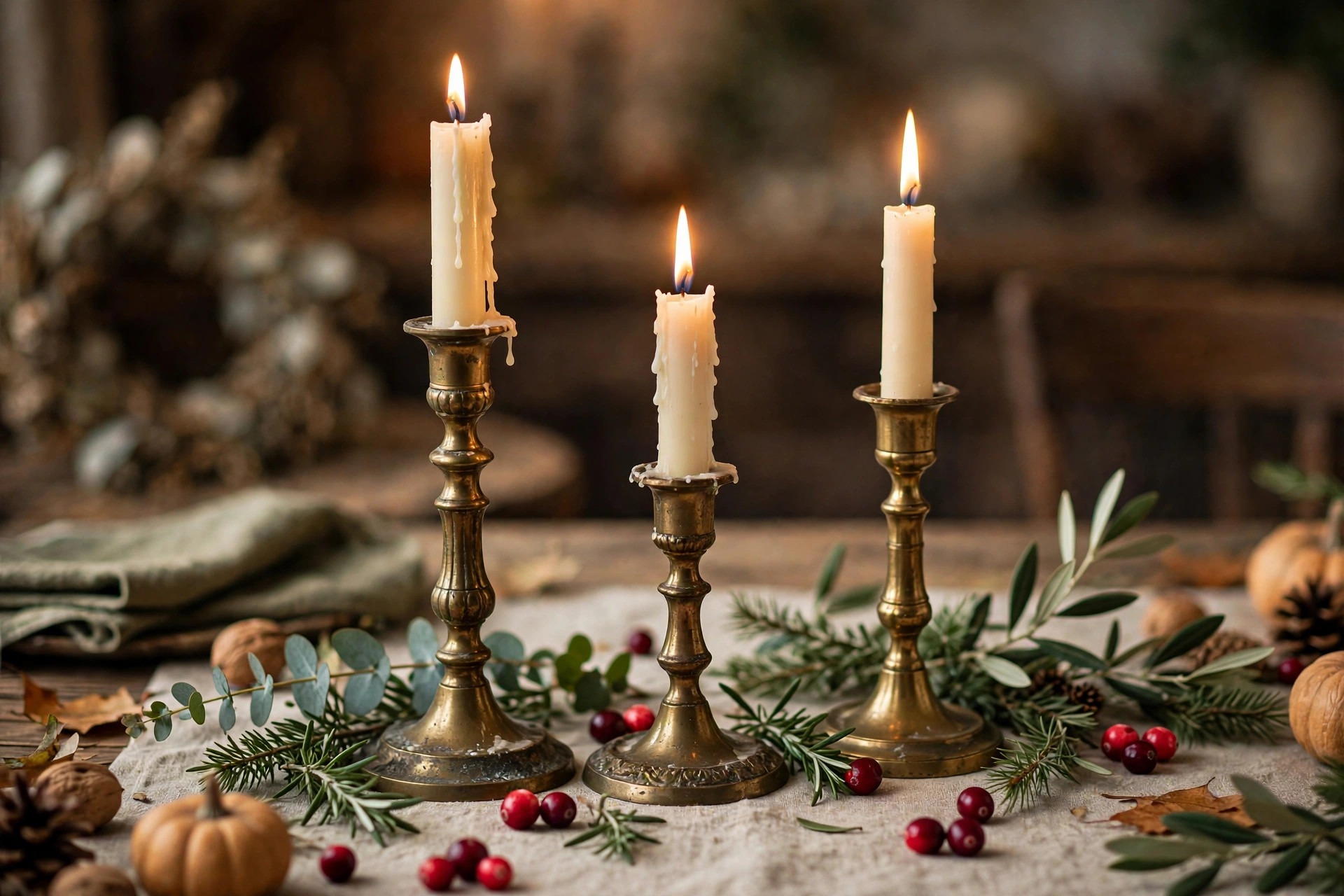
If you haunt thrift stores like I do, you have seen the brass candlesticks — a dollar or two each, slightly tarnished, all different heights. Buy every one you like. A collection of mismatched brass candlesticks down the center of the table, all lit with ivory tapers, is one of the most elegant Thanksgiving looks I know, and it costs less than a single new centerpiece from a florist. I group mine in clusters of three and five, mixing tall and short, and tuck small sprigs of greenery or a few loose cranberries around the bases. The brass warms up as the candles burn and the whole table glows. This is also the most forgiving centerpiece I own: nothing has to match, nothing can wilt, and if a candlestick tips over, you just stand it back up. It pairs beautifully with my Thanksgiving tablescape ideas for anyone building a whole-room look.
15. Mini Pumpkin Place Card Holders
Mini pumpkins are the hardest-working decoration in November. For place settings, I cut a small slit in the top of each mini pumpkin and tuck a name card into it — instant place card holder, instant favor, instant charm. White mini pumpkins look elegant; orange ones look classic; a mix looks abundant. I write names on kraft cards with a gold pen, matching the place cards from idea 8, or I just use one system or the other depending on the year. The pumpkins sit on top of the plate or just above it, and guests take them home. One practical tip: use a sharp paring knife and cut the slit before guests arrive, obviously, and pick pumpkins that sit flat — wobbly pumpkins with cards in them are a small disaster waiting to happen. I test each one on the counter first. It takes two minutes and saves the embarrassment of a pumpkin rolling into someone’s gravy.
What you need
One mini pumpkin per guest, kraft cards, a gold paint pen, and a sharp paring knife. That is the whole project.
16. Wheat Sheaves and Dried Grasses
There is something about dried wheat that just reads “harvest” more than any other decoration. I buy a few bundles of dried wheat stalks and pampas grass from Etsy or the craft store, tie them with twine, and stand them in a tall vase or lay a bundle flat along the table as a runner. The golden color ties the whole table together, and the height — when used in a vase at the end of the table — adds drama without blocking faces. Dried grasses are also the lowest-maintenance decoration I own: they do not wilt, they do not need water, and I reuse the same bundles year after year. My wheat bundles are on their fourth Thanksgiving now and they still look great. If you have allergies in the family, though, check first — dried grasses shed a little, and one sneezing guest is one too many. A quick shake outside before bringing them in keeps the shedding to a minimum.

17. A Chalkboard Menu Board
This is the detail that turns dinner into an event. I prop a small chalkboard at the end of the table — or on a sideboard if the table is crowded — with the menu written out in chalk: turkey, stuffing, the works, in my best attempt at fancy handwriting. Guests love reading it, it builds anticipation, and it saves me from answering “what is in this?” twelve times. I also add a little note at the bottom, like “save room for pie,” which is both a joke and a sincere warning. The chalkboard itself cost me a few dollars at a craft store, and I reuse it for every holiday. If your handwriting is shaky, print the menu on kraft paper and clip it to a small easel instead — same effect, less pressure. Either way, pair it with my Thanksgiving dessert recipes when you plan the menu, because the pie list is what everyone actually reads first.
18. Cranberry Garland Runner
Fresh cranberries strung on thread make the prettiest, cheapest table runner I have ever made. I thread cranberries onto heavy-duty thread with a needle — it takes about an hour while watching a show, and I recommend a thimble — then drape two or three strands down the center of the table, weaving them around candles and the centerpiece. The deep red berries pop against any tablecloth color, and they last for days without wilting. After dinner, I toss the cranberries into the sauce pot or the compost, so nothing is wasted. One caution: cranberries stain if crushed, so this runner is best on a table where people are not leaning hard on it. I lay mine on a runner cloth rather than directly on the tablecloth, which makes cleanup simple. Guests always ask if the cranberries are real, and I love saying yes.

19. Mix-and-Match Thrifted Plates
Matching dish sets are overrated. My favorite Thanksgiving table uses plates collected over years from thrift stores, flea markets, and clearance bins: cream stoneware, a few blue-and-white patterns, some plain white, all in the same warm family but none of them matching. The table looks curated and collected, like it has a history, because it does. I stick to one rule: all plates the same size, so the table still looks intentional. The mismatched approach also means I never panic about a broken plate — it is one of many, not one of a set. If you want to try this, start collecting now: thrift stores in October are full of autumn-toned stoneware, and a full mismatched set for twelve costs less than one new boxed set. My guests regularly ask where my “set” is from, and I enjoy telling them it is from about fifteen different stores.
20. A Foraged Nature Walk Centerpiece
Some of my best centerpieces cost exactly zero dollars, because I gathered them on a walk. The week before Thanksgiving, I take a basket out and collect interesting things: pinecones, acorns, interesting branches, dried seed heads, a few colorful leaves pressed flat. Back home, I arrange them on a wood board or a linen runner with a few candles, and the table looks like the woods came inside. The foraged look works best when you do not over-arrange it — a little chaos reads as natural, not messy. I add one store-bought element, usually a few white pillar candles, to keep it from looking like a science project. This is also my favorite Thanksgiving tradition with my kids: the annual “centerpiece walk,” where everyone has to find one thing for the table. The pinecone my son found three years ago is still in the rotation, and he points it out every single year.

21. Warm Throws in a Basket by the Table
This is not technically table decor, but it changes the whole feeling of the meal. I set a basket of folded throws and blankets near the table — plaid flannel ones, mostly — so guests who get chilly can grab one without asking. Thanksgiving dinners run long, houses get drafty, and nothing says “stay a while” like a blanket. The basket itself becomes part of the decor: a big woven basket with blankets spilling out looks cozy and intentional in the corner of the dining room. I started this the year we hosted Thanksgiving in a drafty old rental and half the guests were shivering by dessert. Now it is a permanent part of my setup, and guests genuinely love it. Choose blankets in fall colors so the basket blends with the table palette, and wash them the next day — someone always spills gravy on one. Every year. Without fail.
22. Golden Leaves as Place Settings
For a place setting that costs almost nothing and looks like a million dollars, I spray-paint real leaves gold. I collect large, interesting leaves — maple and oak work best — press them flat in a book for a day, then spray both sides with gold paint. Each leaf goes on top of the plate, sometimes with the guest’s name written on it in a dark pen. The effect is stunning against dark napkins or a dark tablecloth, and guests can take them home as favors. I make these the weekend before Thanksgiving, because spray paint needs drying time and good ventilation — do it outside or in the garage, not in the kitchen. One year I did them the morning of Thanksgiving and the whole house smelled like spray paint during appetizers. Not my finest hosting moment. Gold leaves also scatter beautifully around the centerpiece as confetti-like accents, if you have extras.
How I styled it
On dark charcoal napkins, a single gold leaf with a name written in black ink looks like something from a boutique stationery shop. It is a leaf. From my yard. I love that.
23. The “Grateful” Table Runner Message
My favorite idea of all is also the simplest: a table runner that says something. I use a plain kraft paper runner down the center of the table and write “grateful” in big script across it with a marker — or I let the kids write what they are grateful for all over it during dinner. Some years I use a fabric runner with “Give Thanks” stitched on it, bought from Etsy years ago. Either way, the message sets the tone for the whole meal in a way no centerpiece can. It reminds everyone why we are there, and it gives the table a focal point that is not about stuff. I started this tradition the year my grandmother could not attend, and writing her name on the runner with a little heart next to it made her feel present. Now it is the first thing I set out, before the plates, before the candles. The table can be simple or elaborate, but the message stays.
Styling Tips
- Keep centerpieces low — under twelve inches — so guests can actually see each other across the table. Height belongs at the ends of the table, never in the middle.
- Light candles when guests sit down, not hours before. You get the full glow for the meal and nothing melts, scorches, or burns down while you are in the kitchen.
- Pick one metal and one main color family and stick to them. Restraint is what separates a styled table from a cluttered one.
- Use things guests can take home — place cards, mini pumpkins, gold leaves — as double-duty decor and favors. People remember the details they carry out the door.
- Test your table the night before with actual plates and glasses in place. A centerpiece that looks perfect empty can crowd a table once twelve place settings go down.
- Protect your table: put a cloth or tray under fruit, candles, and anything that stains. Pomegranate juice and cranberry stains are forever, and I speak from experience.
Frequently Asked Questions
How do you decorate a Thanksgiving table? Start with a low centerpiece — pumpkins, fruit, or candles — so guests can see each other, then layer in a tablecloth or runner, place settings, and personal touches like place cards or herb sprigs. Pick one color palette and one metal, and stick to them. Add candles last, lighting them when guests sit down, and keep one or two take-home details like mini pumpkins or name cards for a personal touch.
What should be on a Thanksgiving table? The essentials are plates, flatware, glasses, napkins, and a low centerpiece that does not block conversation. Beyond that, add a tablecloth or runner, candles for warmth, place cards if you have a big group, and a few seasonal accents like pumpkins, pinecones, or greenery. Serving dishes can go on the table if you serve family-style, or on a sideboard if space is tight.
How do you set a Thanksgiving table for a crowd? Use a long table or push two tables together, and keep the centerpiece low and narrow so it does not eat up serving space. Set places about two feet apart, use a buffet or sideboard for serving dishes to free up elbow room, and add place cards so seating is settled before anyone sits down. A kids’ table with a kraft paper cloth keeps little ones happy and protects your good tablecloth.
When should you set the Thanksgiving table? I set mine the night before Thanksgiving, with everything except fresh flowers, fruit that bruises easily, and candles unlit. That way Thanksgiving morning is for cooking, not scrambling for napkins. If you have a big crowd or a complicated centerpiece, two nights before is even better — just cover the table with a clean sheet to keep dust off.
Final Thoughts
Here is what twenty years of Thanksgiving tables has taught me: the best table is not the fanciest one, it is the one where everyone feels welcome and nobody has to shout over a cornucopia. Pick two or three ideas from this list — a low centerpiece, some candles, one personal touch — and you have a table people will remember. And once the table is set, the meal itself deserves the same care: my Thanksgiving side dish recipes and easy fall appetizer ideas will help you fill the table you just decorated. Then light the candles, sit down, and enjoy it. The table is set, the people you love are around it, and that is the whole point.