20 Simple Bedroom Decor Ideas for a Relaxing Vibe
Notice how a good hotel room settles your shoulders the moment you walk in — pale walls, a bed you could fold into, nothing competing for your attention. That’s the effect these 20 straightforward bedroom decor ideas aim for, and none of them needs a contractor or a big budget. Pick the two or three that fit your space, and the room starts doing what a bedroom should: helping you switch off.
1. Choose Soft, Neutral Colors for Walls and Decor
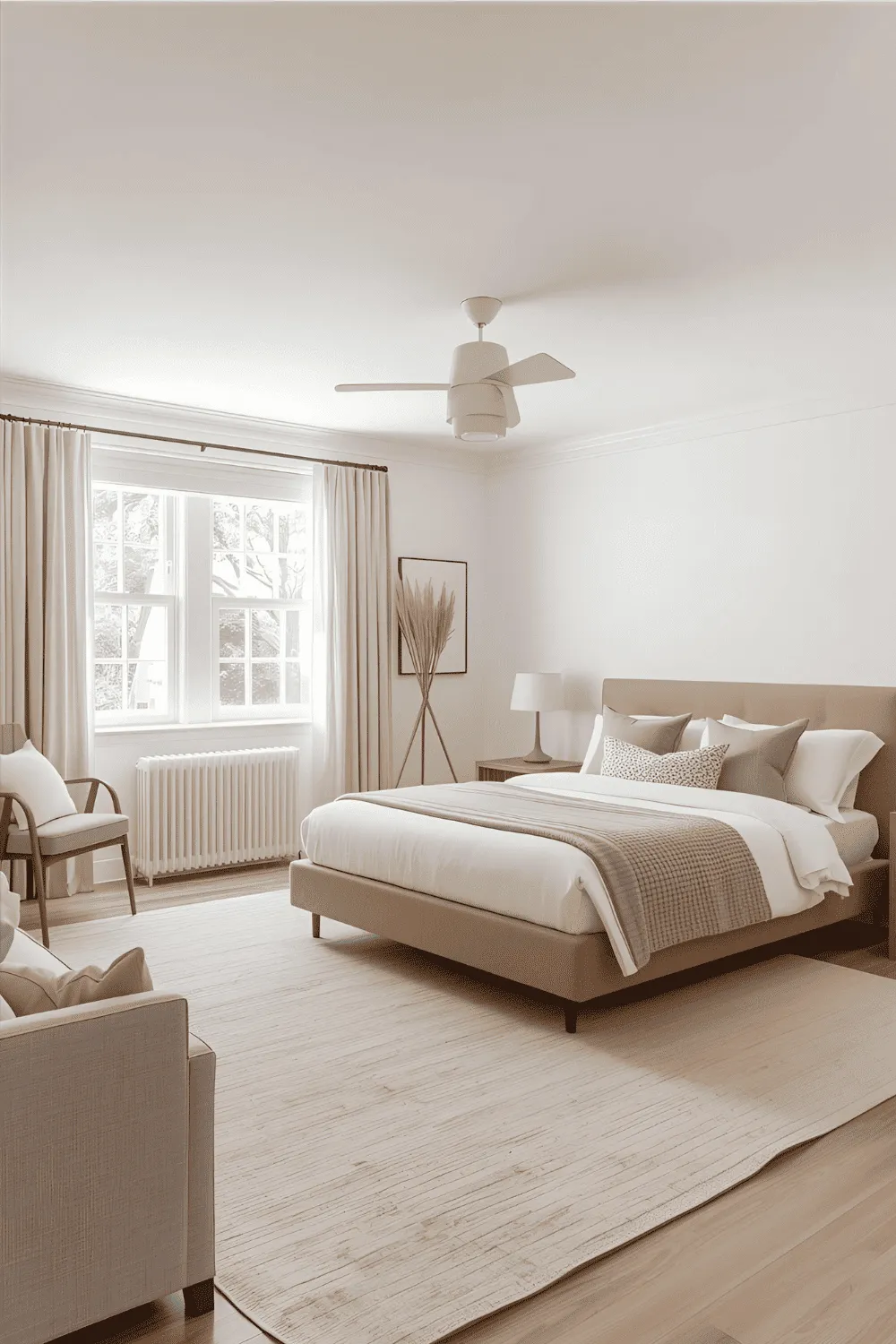
Paint is the cheapest reset a room can get — a gallon of warm white or greige usually runs $30–$50 and covers the average bedroom’s walls. Beige, soft gray, pale blue, and muted green sit quietly instead of demanding attention, which makes a smaller room feel more open and lets your bedding and artwork carry the personality.
A neutral base also means you can swap accent pillows or a throw in spring without repainting anything — nothing clashes with warm white. Whether you repaint or stick with what you have, keeping the walls calm does most of the heavy lifting for the room’s mood.
2. Use Minimalist Furniture to Maximize Space
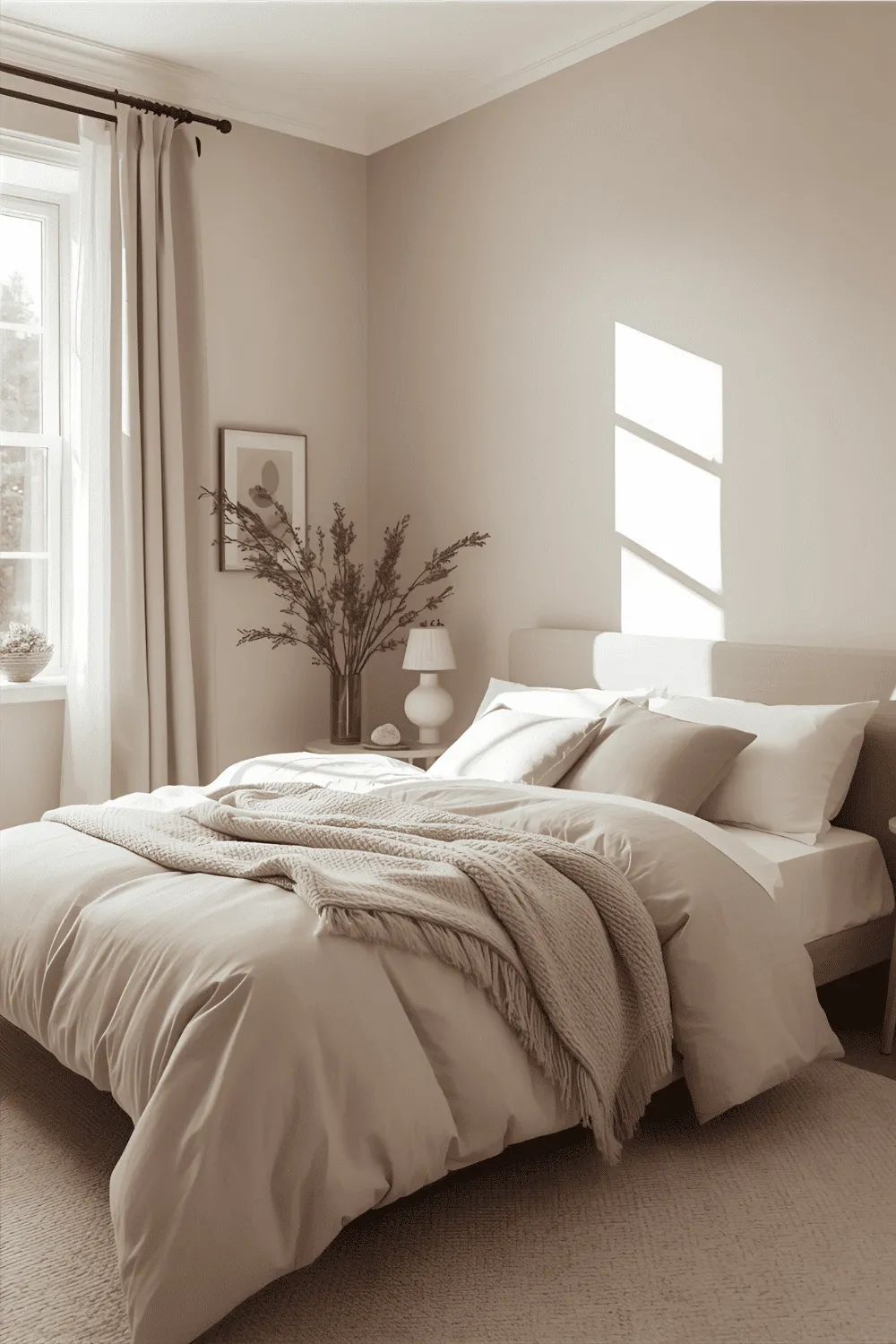
Start with fewer, better pieces: a low-profile bed frame, one or two compact nightstands, and a dresser that closes fully. Furniture with clean lines and legs that show a bit of floor underneath reads as lighter, and every piece you skip is one less surface collecting dust and visual noise.
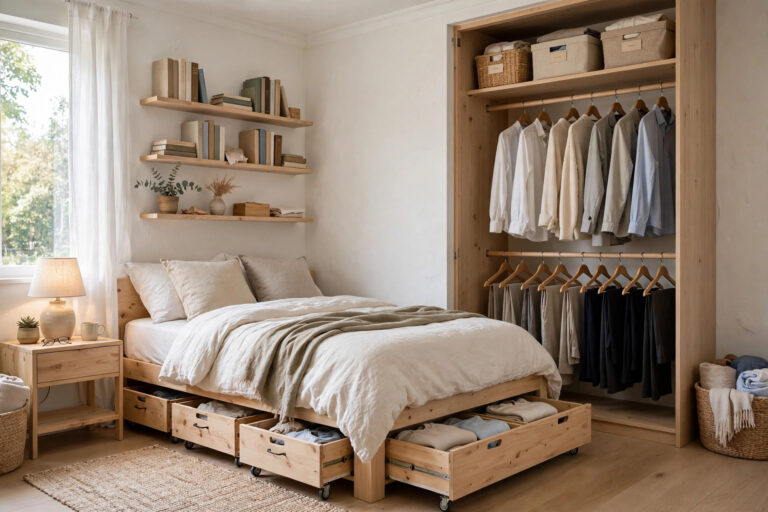
Wherever possible, make furniture pull double duty — a bed with drawers underneath, a nightstand with a drawer instead of an open shelf. A room you don’t have to tidy every night is a room that lets you exhale when you walk in.
3. Incorporate Natural Materials Like Wood and Plants
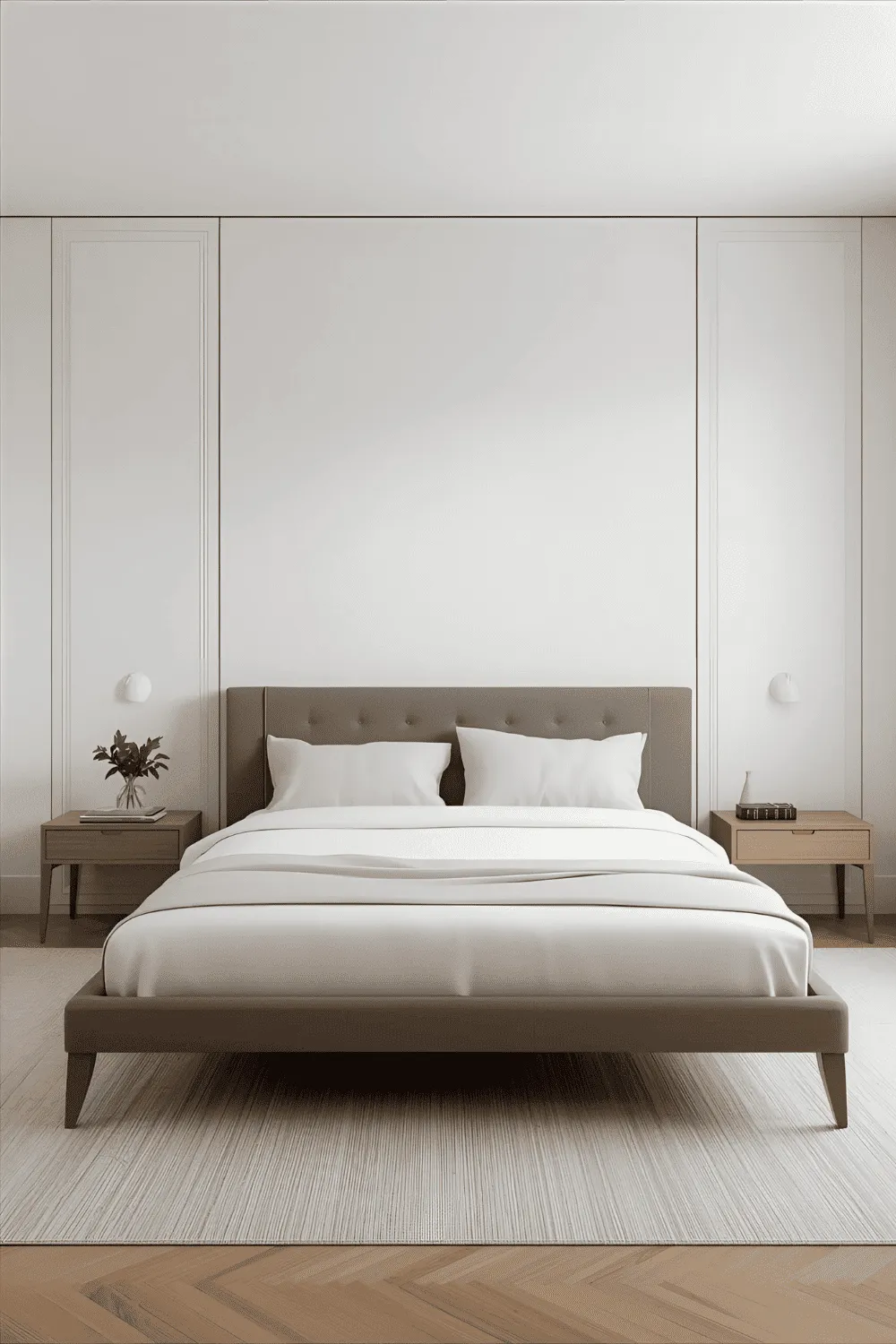
Wood and plants are the fastest way to make a plain room feel finished. A light oak or pine piece — even just a small stool or a floating shelf — adds warmth that painted furniture can’t, while a couple of forgiving plants like pothos or snake plants bring in living green for a few dollars each.
Small doses work fine: a woven seagrass basket for extra blankets, three succulents in matching pots on the dresser. The trick is sticking to genuine materials — one real wood or woven piece beats five plastic lookalikes.
4. Layer Soft Textiles for Comfort and Warmth
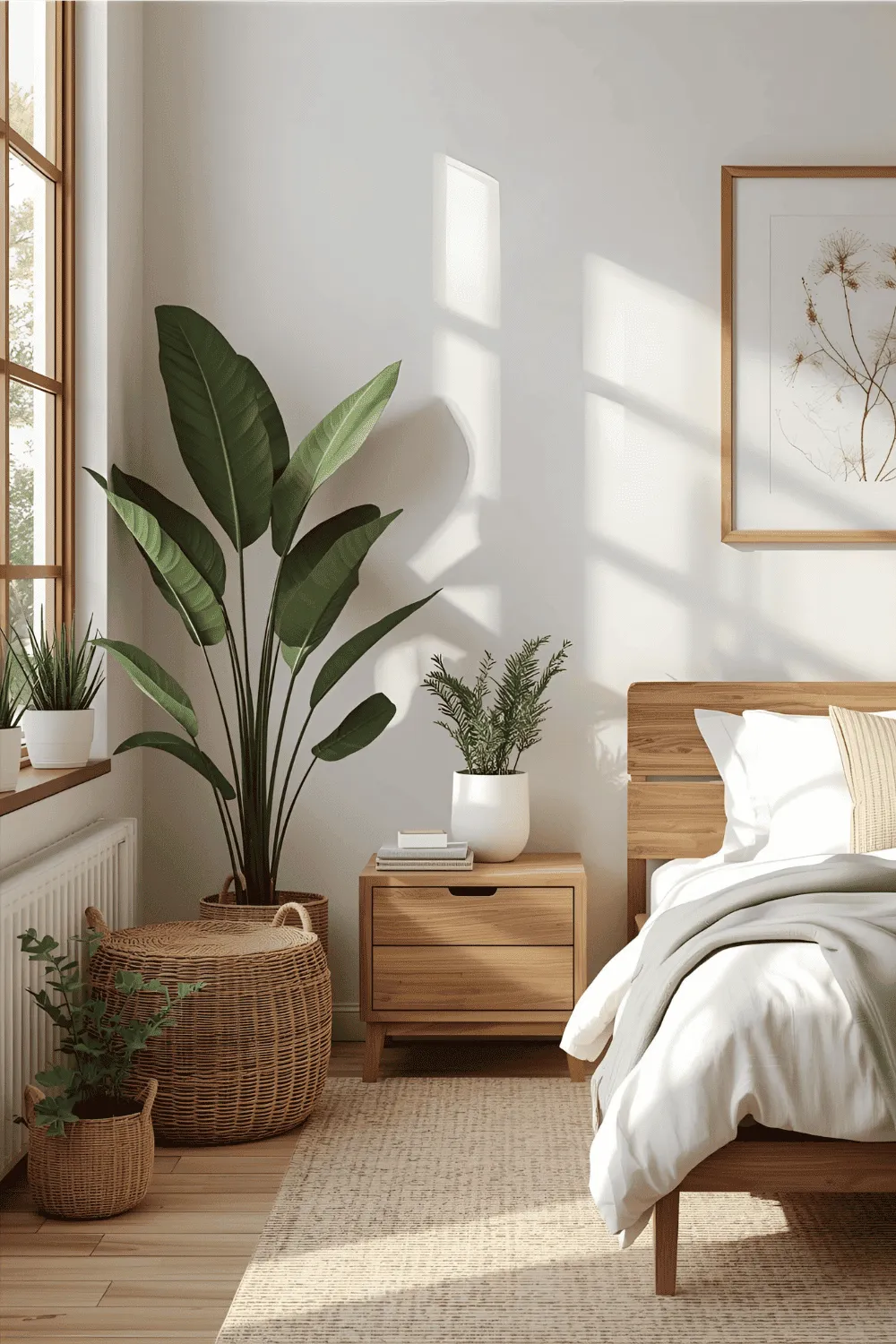
This is where the comfort actually comes from. A soft rug underfoot on the first step out of bed, a throw you can grab without thinking, pillows in two or three textures — say a chunky knit against smooth cotton. Mixing materials like wool, linen, and a nubby weave adds depth through touch instead of color.
Textiles are also the low-commitment way to test a color: a $20 pillow in sage tells you whether you actually like sage before it ever touches a wall.
5. Create an Accent Wall with Simple Paint Techniques
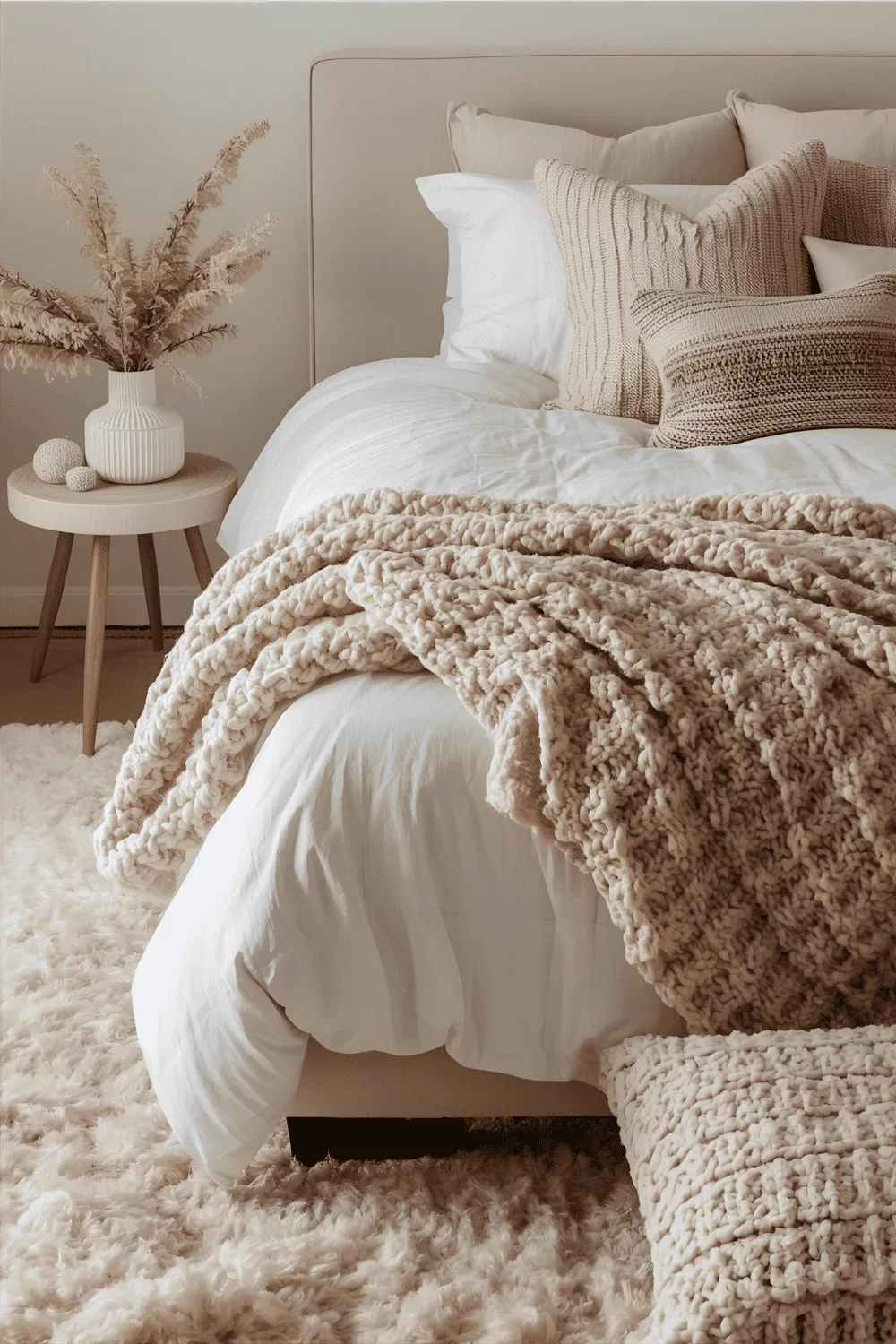
Painting all four walls can feel like a project; painting one doesn’t. The wall behind the bed is the natural candidate — one solid color a shade or two deeper than the others, or wide horizontal stripes if you want a weekend project. A single gallon and a roll of painter’s tape is genuinely all it takes.
Stay in the muted family — dusty blue, clay, warm taupe — so the accent reads as depth rather than a shout. One deeper wall also makes the headboard and pillows in front of it look more expensive than they are.
6. Use Easy DIY Wall Art for Personal Flair
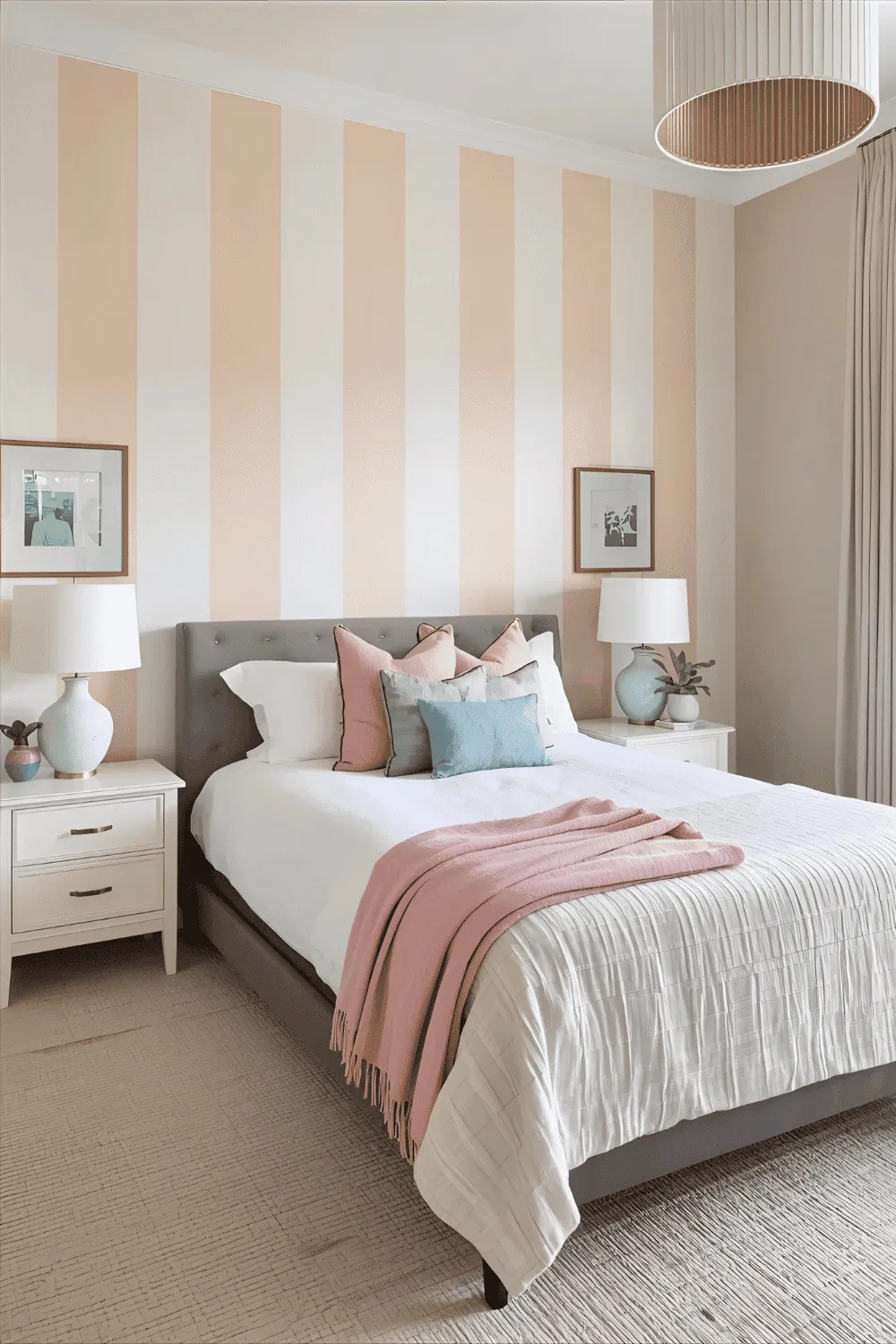
Making your own wall art costs a fraction of framed store prints and lets you match your exact palette. Stretch a remnant of linen or patterned fabric over a $5 canvas frame, frame a favorite travel photo, or hang three small canvases painted in your accent color — each one takes under an hour.
Handmade pieces have an advantage nothing from a store can match: nobody else owns them. A print of a map from a trip you took beats generic hotel-lobby art every time. Keep the frames consistent — all black or all natural wood — so an eclectic collection still looks intentional.
7. Add a Simple Room Divider for Function and Style
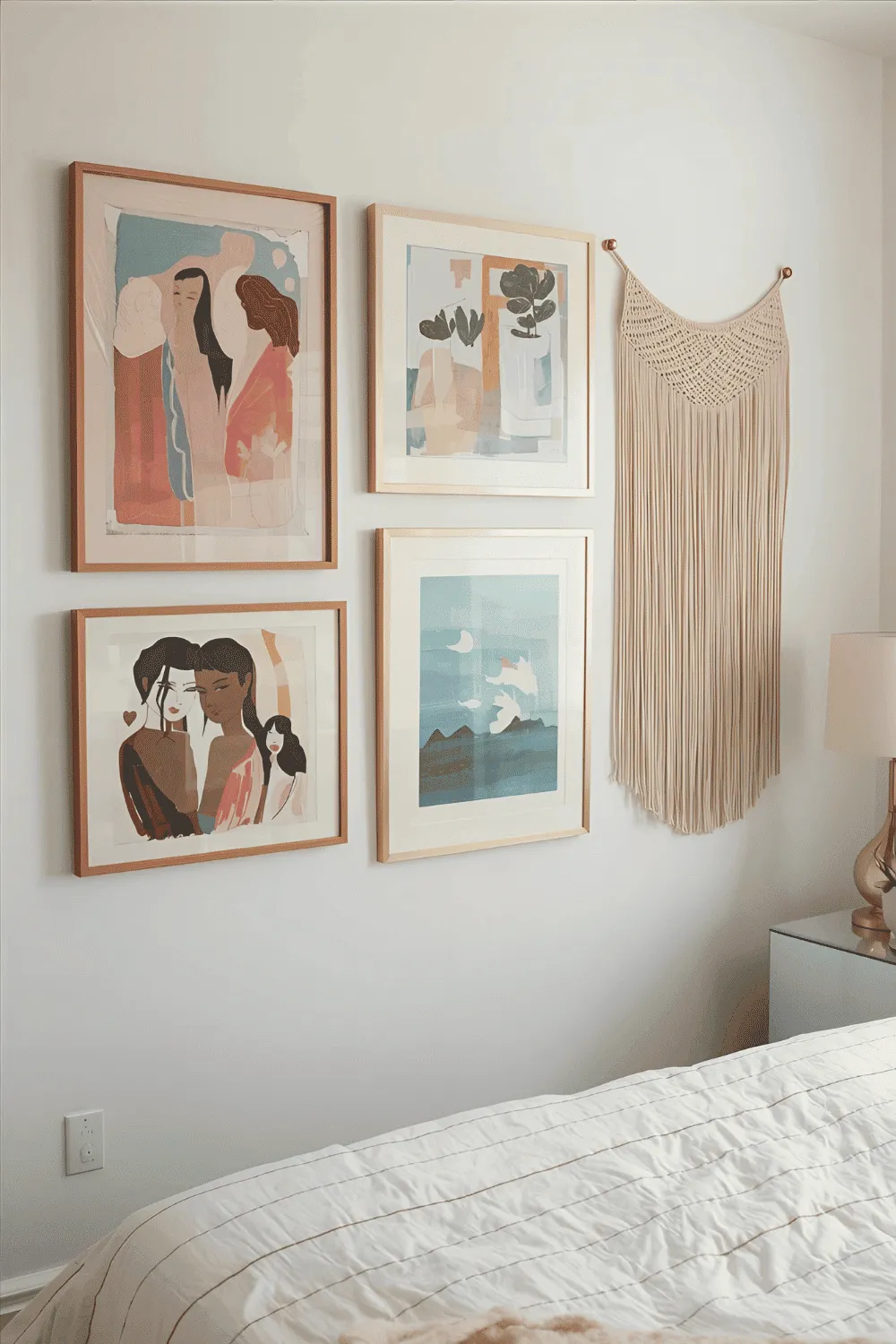
In a studio or a bedroom that doubles as an office, a divider draws a line your brain respects. A ceiling-mounted curtain panel on a $15 tension rod, an open-backed bookshelf, or a folding screen each carve out a sleep zone and a work zone without closing the room in.
Choose materials you can partly see through — sheer fabric, slatted wood, open shelving — so the room still reads as one space. A solid, floor-to-ceiling barrier just turns one small room into two cramped ones.
8. Choose Soft Lighting to Set the Mood
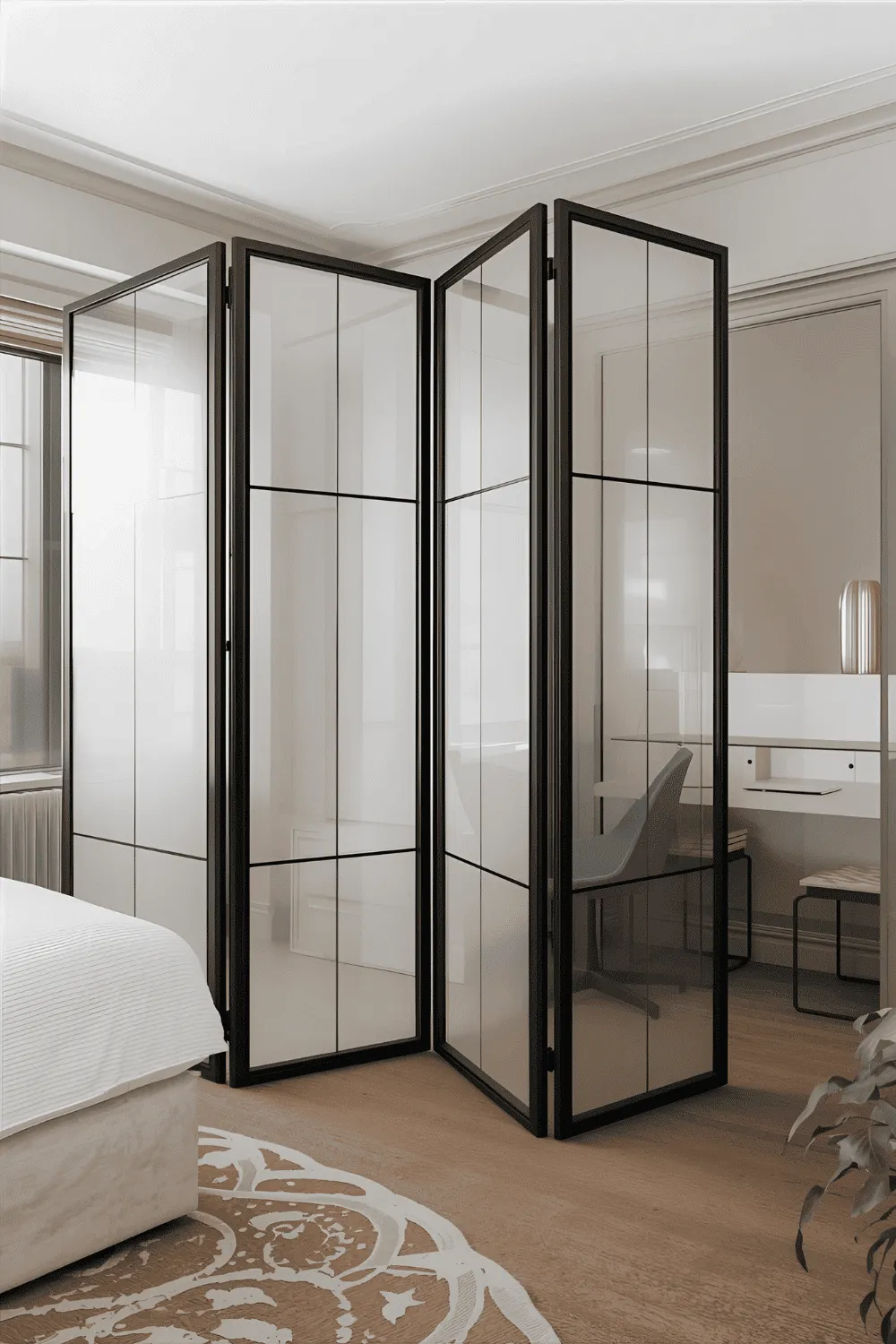
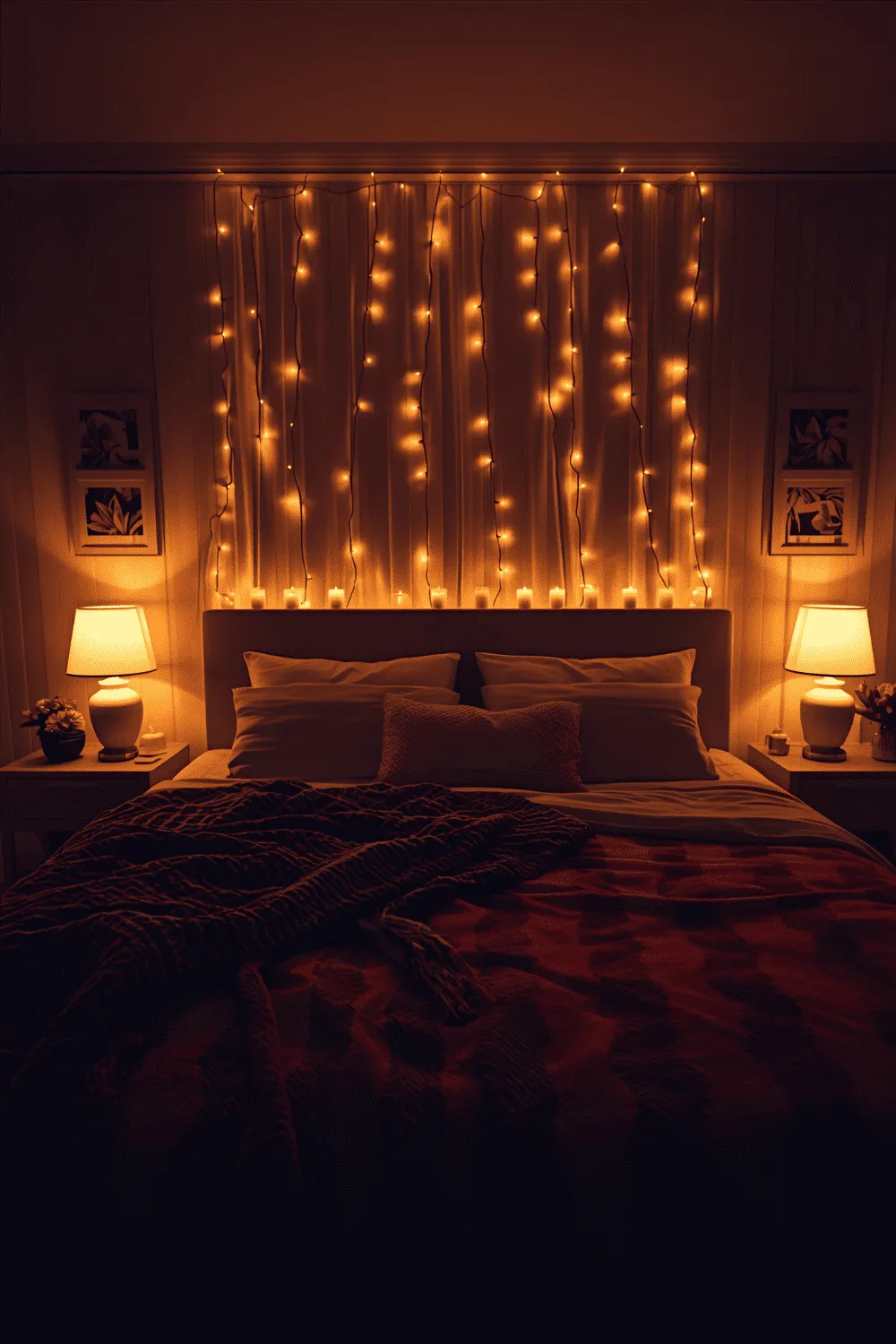
The overhead “big light” is the enemy of a calm bedroom. Two or three warm light sources at lower heights — a bedside lamp around 2700K, a string of warm LEDs along a shelf, a candle — do more for atmosphere than any paint color. Dimmable bulbs are worth the extra couple of dollars.
Plug-in wall sconces or fairy lights take ten minutes to hang and no wiring at all. Layer two or three sources and you can shift the room from bright-enough-to-clean to soft-enough-to-sleep with a switch.
9. Embrace Simple Bedding with Texture
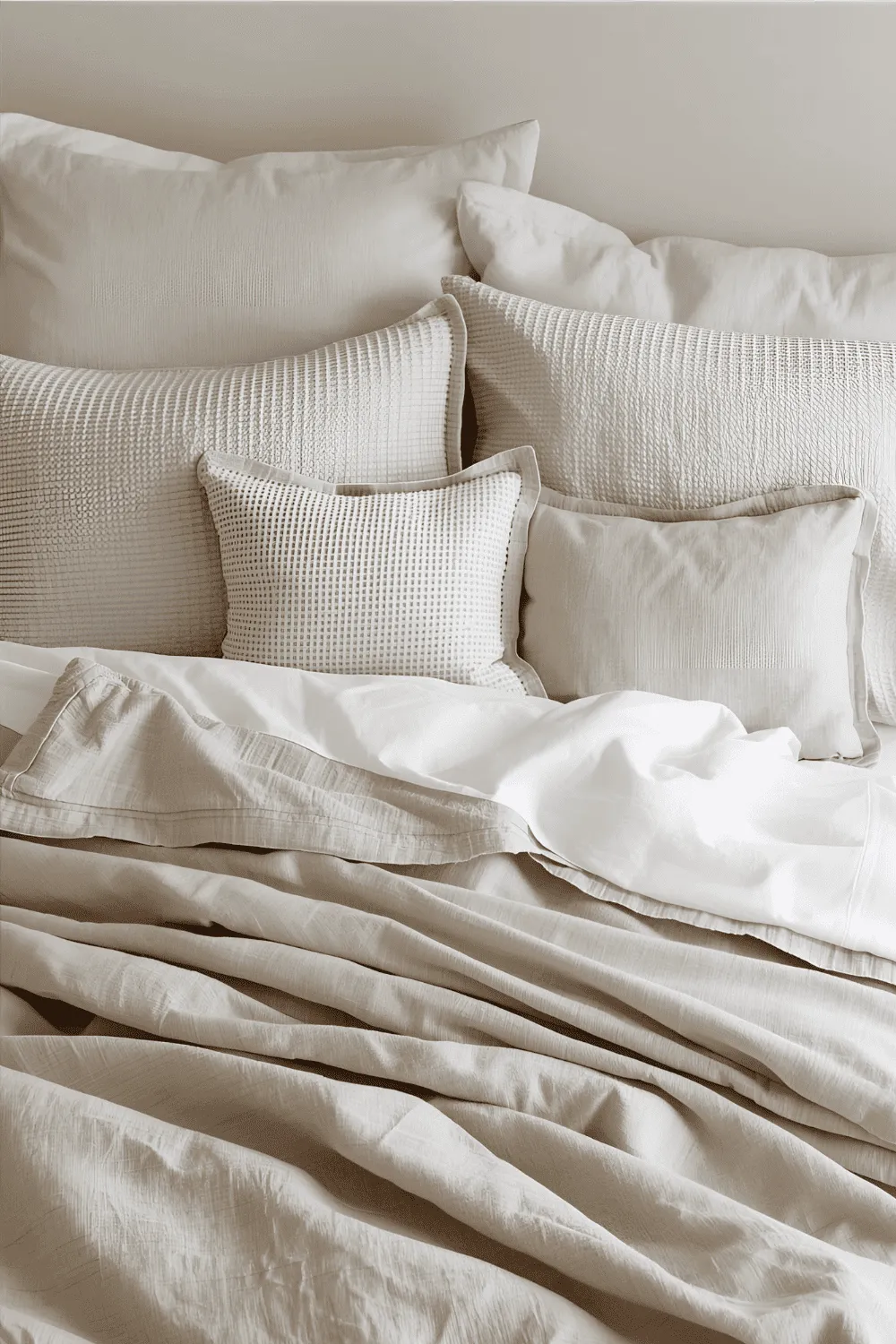
Skip the loud duvet print and invest in texture instead: washed linen sheets, a waffle-weave coverlet, a cotton quilt with a bit of loft. Interesting weaves catch light and shadow, which gives the bed visual richness without a single pattern.
The layering formula that never fails: flat sheet, light blanket, folded throw across the foot, two sleeping pillows plus two in front. Stick to one color family — whites, creams, a warm gray — and the mix of textures does the rest.
10. Keep Clutter Hidden with Smart Storage Solutions
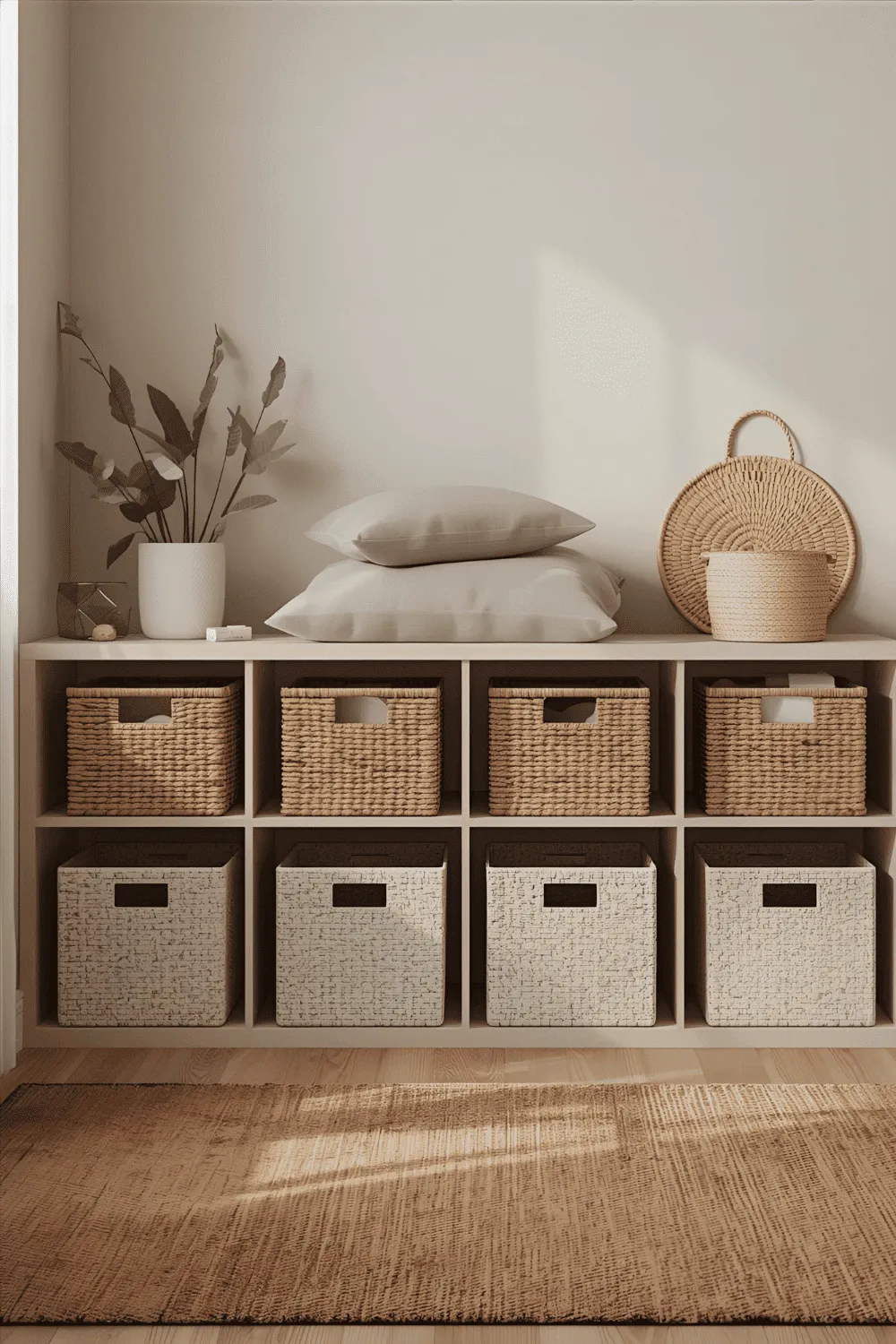
You can’t feel calm in a room that’s nagging you. Under-bed bins with lids swallow off-season clothes, a lidded basket by the door catches the day’s clutter, and an ottoman that opens hides chargers and remotes. Ten minutes of put-away beats an hour of deep cleaning.
When everything has a closed home — not a pile, a home — the room looks bigger and your brain stops cataloging messes. Hidden storage is the difference between tidy-for-guests and tidy every day.
11. Incorporate Personal Touches Mindfully
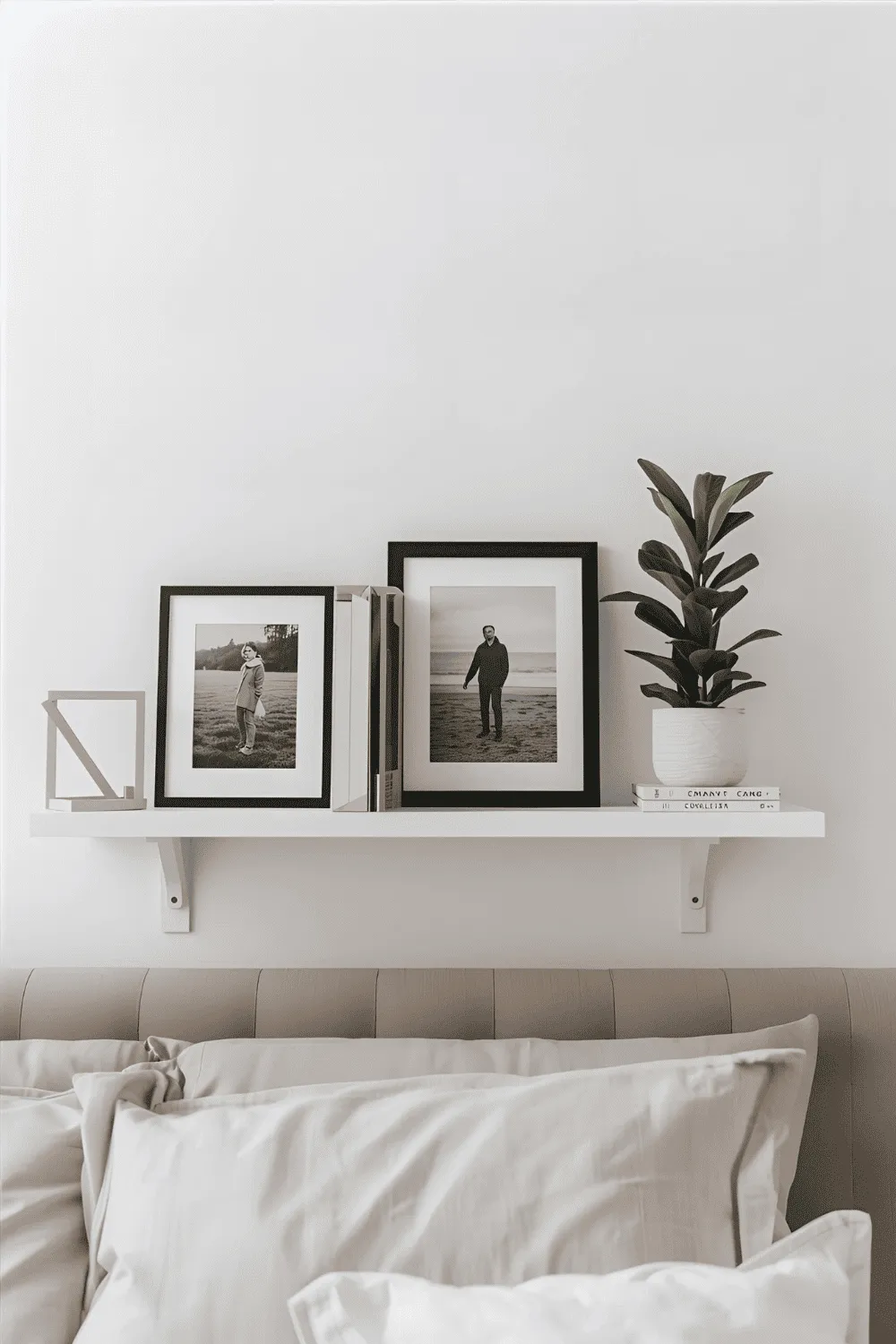
Pick five to seven personal items you actually love — a framed photo, a souvenir from a trip, a book you reread — and give each a real spot: the nightstand, one shelf, the dresser top. A small, deliberate collection says “this room is mine” louder than a shelf crammed with everything you’ve ever kept.
12. Use Mirrors to Enhance Light and Space
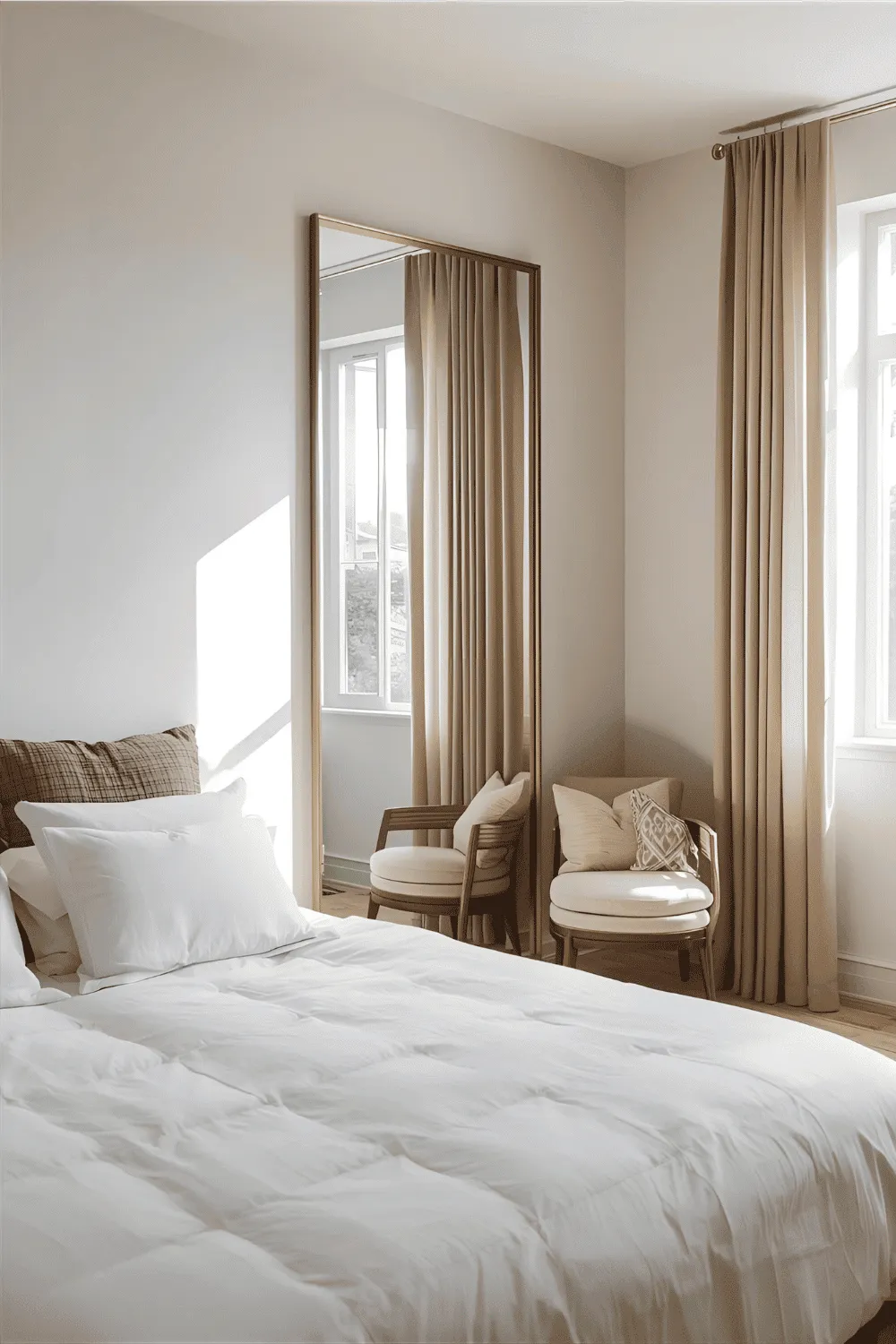
A mirror opposite the window is the oldest trick in the book because it works — it doubles the daylight and visually pushes the wall back a few feet. A simple full-length mirror leaning against the wall costs less than a framed art print and does more for the room.
Frameless or thin black frames keep the look modern; an ornate vintage frame can be the room’s one statement piece. Either way, angle it to catch light, not to catch your reflection from the bed.
13. Opt for Light, Airy Window Treatments
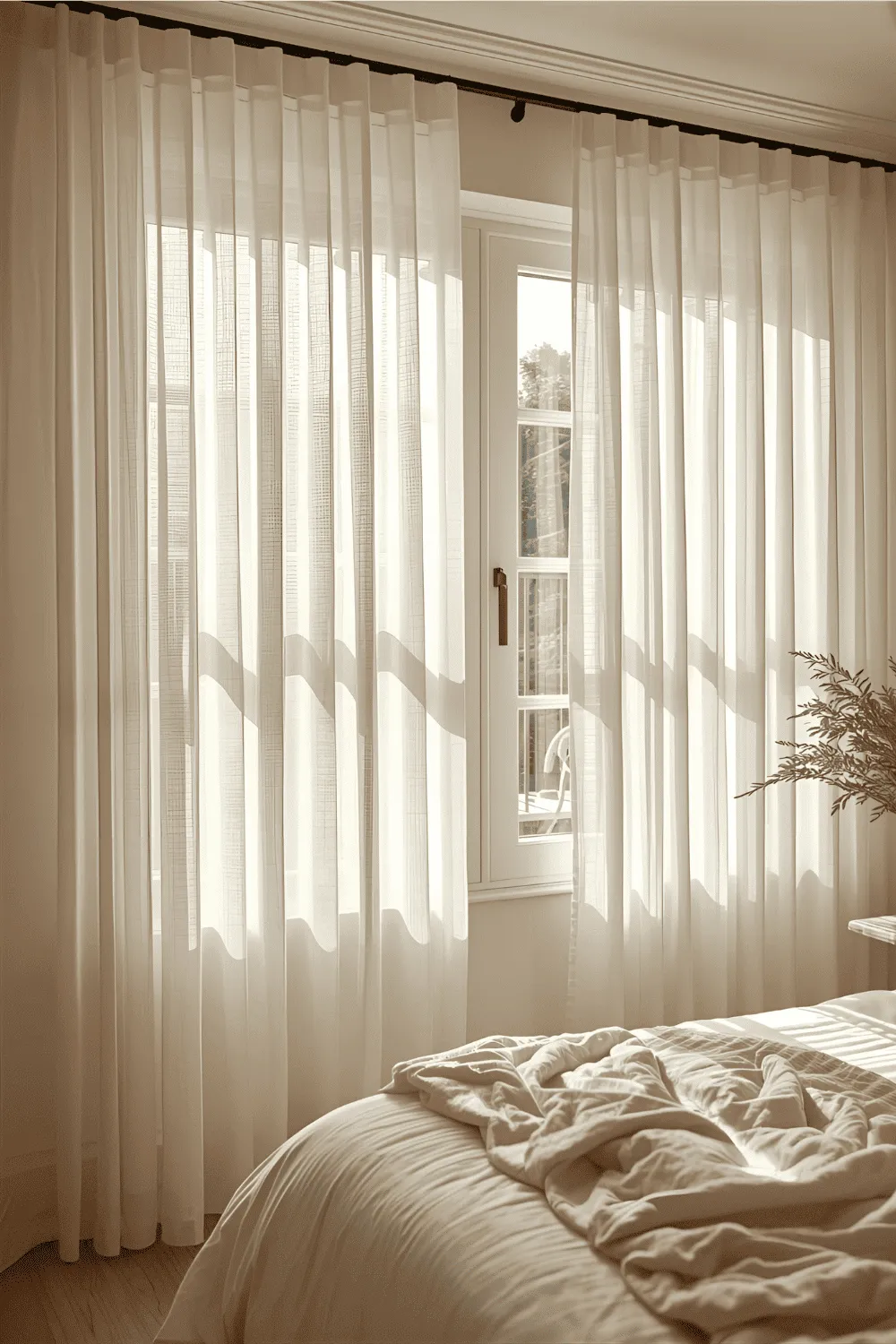
Heavy drapes drink the daylight. Sheer white curtains or light-filtering blinds soften the sun without blocking it — the room stays bright but nobody sees in. Hang the rod 4–6 inches above the frame and a few inches wider than the window; the window looks bigger and the curtains actually clear the glass when open.
14. Incorporate Fun and Easy DIY Decor Projects
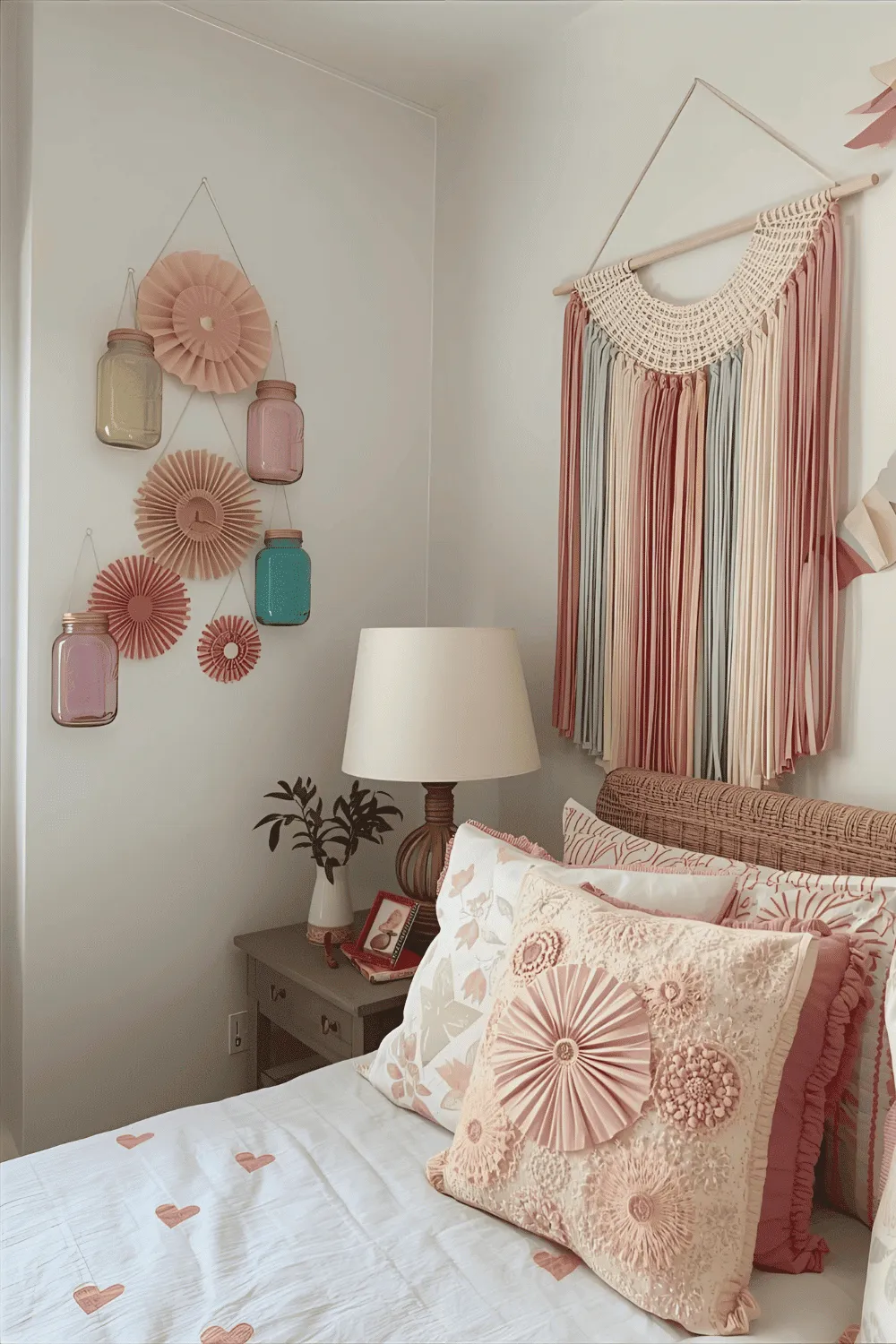
Weekend-friendly DIY projects — painted jars as vases, a simple woven wall hanging, a garland of wooden beads — add the handmade layer that makes a room feel personal. Most need nothing more than craft paint, twine, and an afternoon; pick projects in your room’s existing colors so they blend in instead of shouting.
15. Create a Cozy Reading Nook with Simple Seating
An unused corner becomes the best seat in the house with a $60 accent chair or a floor cushion, a small side table for coffee, and a clip-on reading light. Six square feet is plenty — the point is a spot that isn’t the bed, so your brain gets a “not sleep” zone for winding down.

16. Add Subtle Patterns in Rugs and Pillows
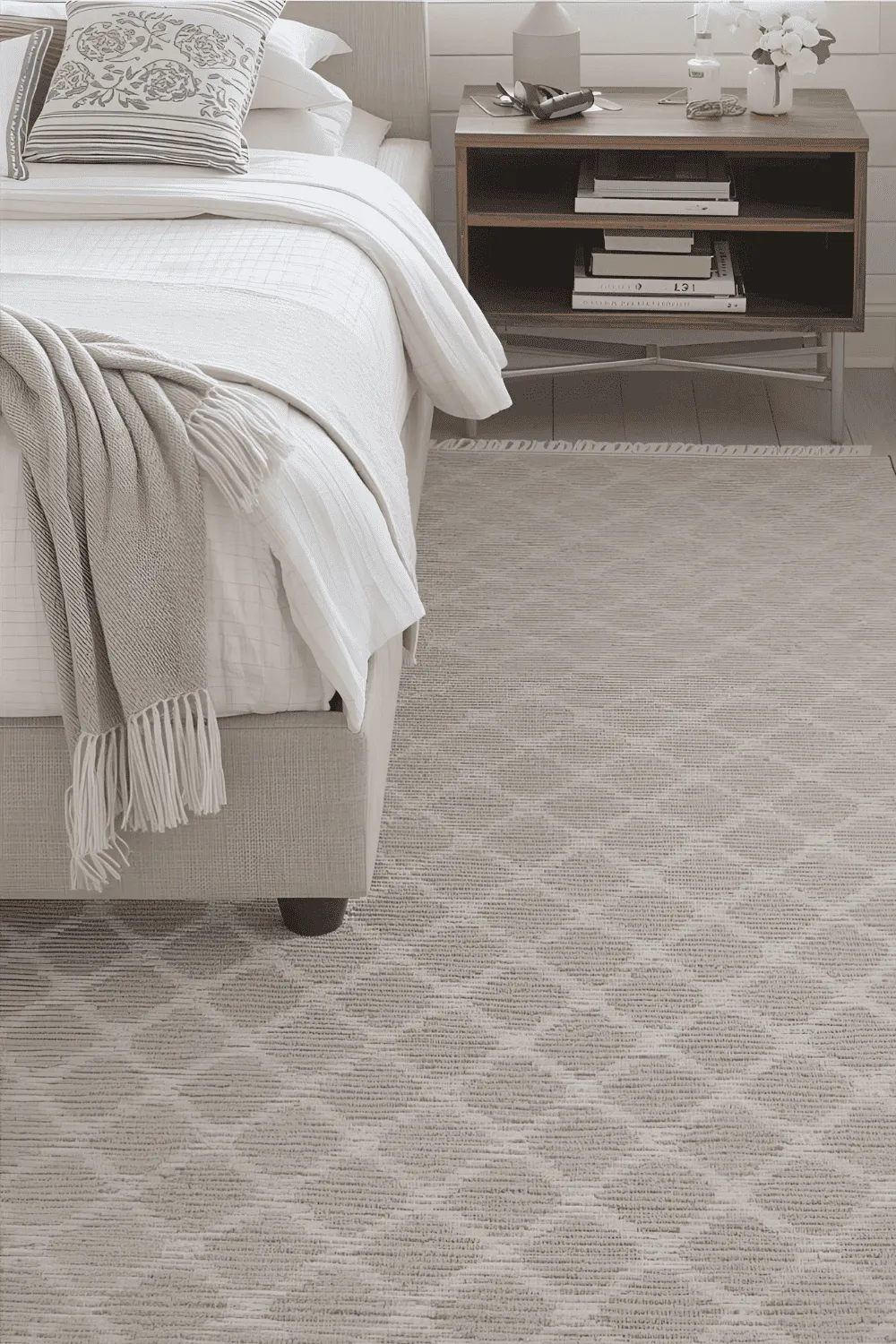
A quiet room still needs a little rhythm. One patterned rug or two striped pillows — in colors pulled from your existing palette — give the eye somewhere to land. The rule of thumb: pattern in one scale (small print or bold stripe, not both), and keep it to two pieces max so it stays an accent, not a theme.
17. Choose Simple Nightstand Decor
Your nightstand only needs four things: light, something to drink from, the book you’re reading, and maybe a small plant. Everything else — the mail, the extra chargers, the three half-used hand creams — lives in the drawer. Clear surface, clear head.
If your nightstand has no drawer, a small tray corrals the essentials and makes everything else look like clutter by comparison — which is exactly the point.

18. Rearrange Furniture for a Quick Refresh
Before buying anything, try moving the bed. Pulling it off the shared wall, floating it under the window, or swapping the dresser to the opposite side changes how light hits the room and how you move through it — a full refresh for zero dollars and an hour of effort.
19. Use Soft Scents to Enhance Relaxation
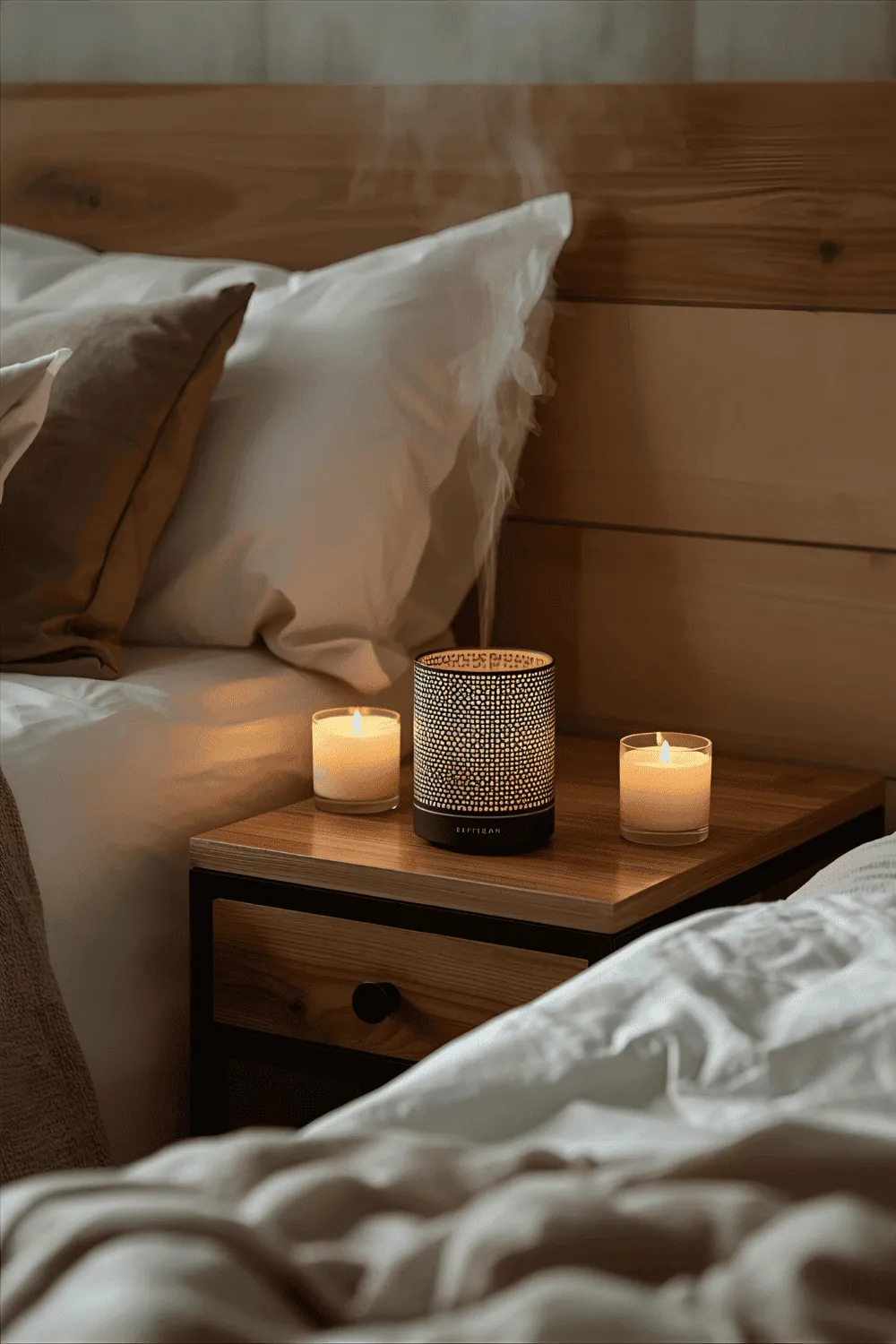
Smell bypasses everything and goes straight to your mood. A lavender sachet in the pillow drawer, an ultrasonic diffuser with eucalyptus or chamomile oil ($15–$25 for the unit), or one good candle burned during the last hour before bed — that turns the evening routine into a signal that the day is over.
Stick to one scent family at a time; three competing fragrances read as a candle shop, not a sanctuary.
20. Rotate Seasonal Decor for Freshness
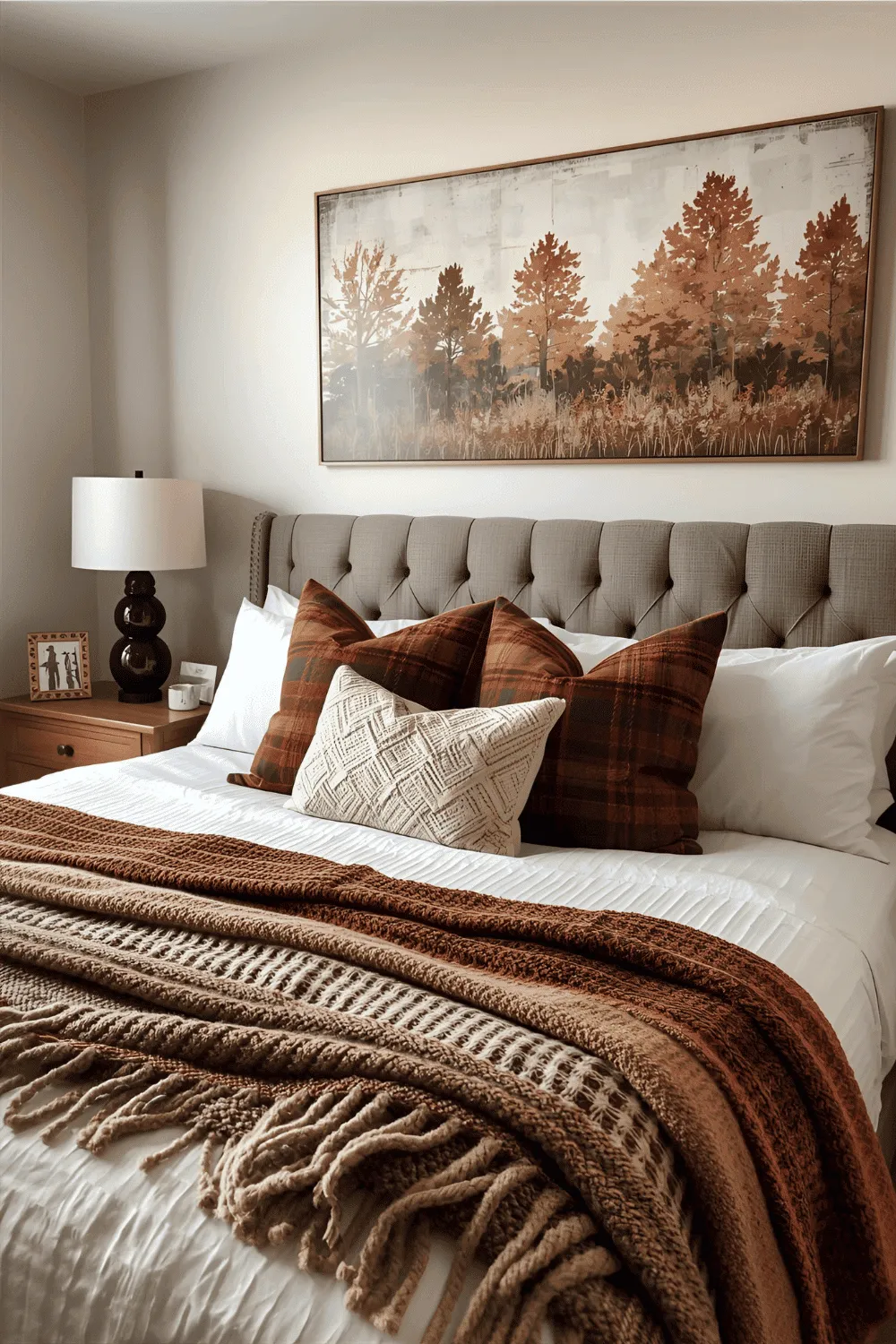
You don’t need a new room every season — just a swap box. Linen pillow covers and a light cotton throw for summer; trade them for velvet or chunky-knit covers and a heavier throw in October. Fifteen minutes, twice a year, and the room always feels current.
Store the off-season set in a vacuum bag under the bed. Out of sight, out of the closet, zero extra storage furniture needed.
FAQs for Simple Bedroom Decor
None of these twenty ideas needs a big budget or a contractor — most cost less than a takeout dinner and take a single weekend afternoon. Start with the calm base (paint and light), add the soft layers (textiles and lighting), and finish with the personal touches — the approach behind every one of these simple bedroom decor ideas. Do those three in order and the room takes care of the rest.