30 Cozy Living Room Decor Ideas for Small Spaces
The best small living rooms all share one habit: every object earns its square footage.living room decor ideas for tight quarters come down to three things — layout flow, layered light, and a restrained palette — that together make 200 square feet feel generous instead of cramped.
Every idea below is built for real apartments and small houses, rentals included, with notes on what it costs, where to put it, and the common mistakes that make a small room feel smaller than it is.
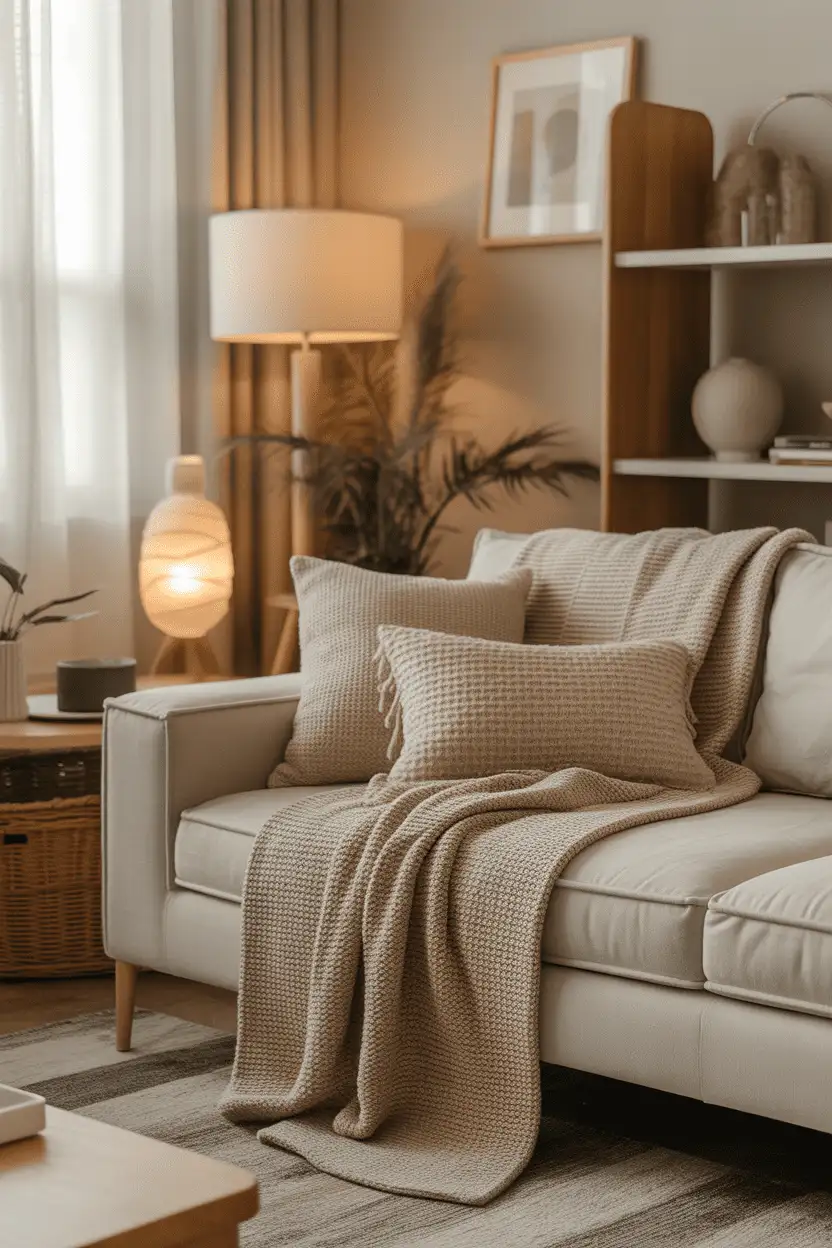
1. Add Soft Layered Blankets
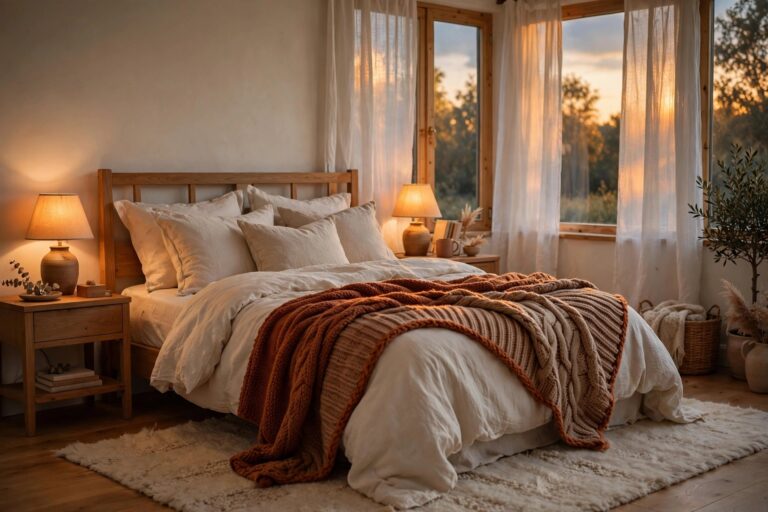
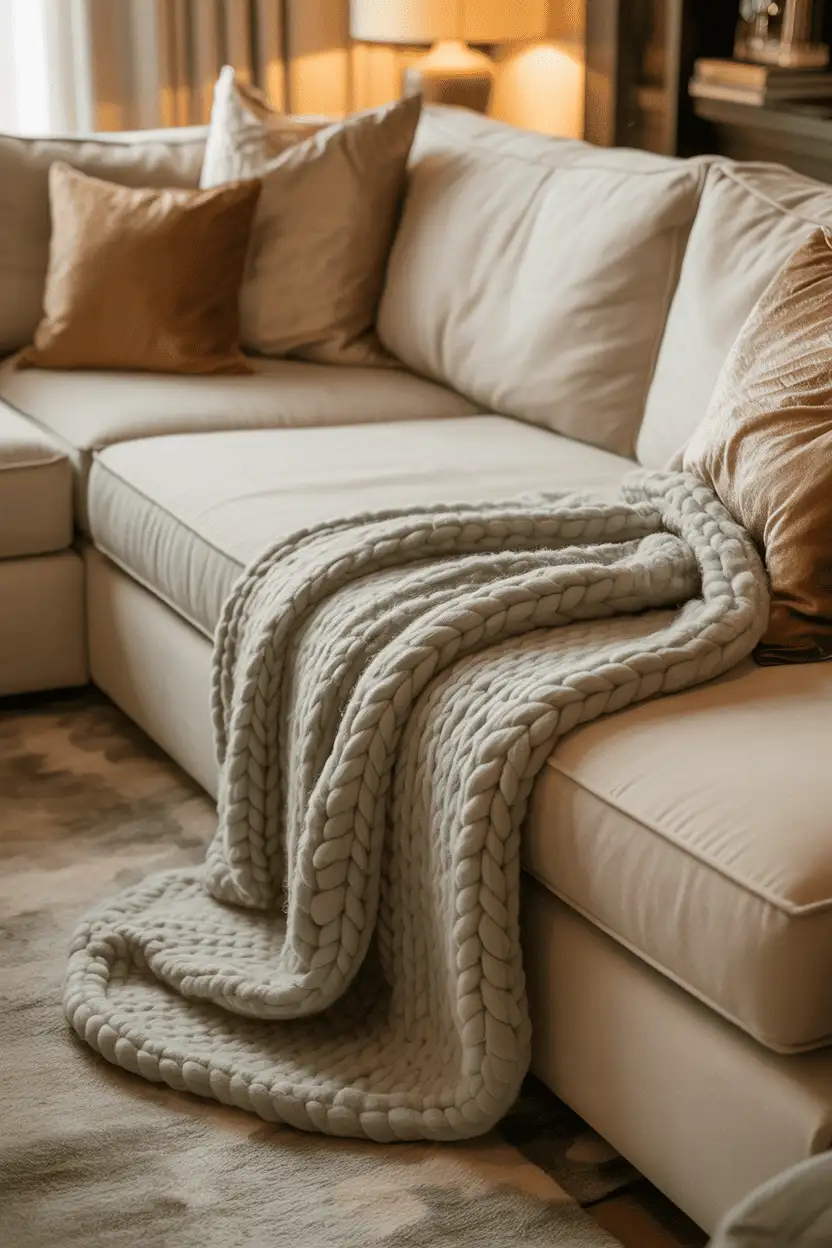
Two throws beat one: drape a chunky knit over the sofa arm and fold a lighter cotton throw on the ottoman. Mixing a heavy texture with a smooth one adds warmth without visual bulk, and the layers make even a basic sofa look styled.
Stick to a shared color family — creams with oatmeal, rust with terracotta — so the layers read as intentional rather than cluttered. Washable fabrics matter here; these throws will get daily use.
2. Use Warm Neutral Tones
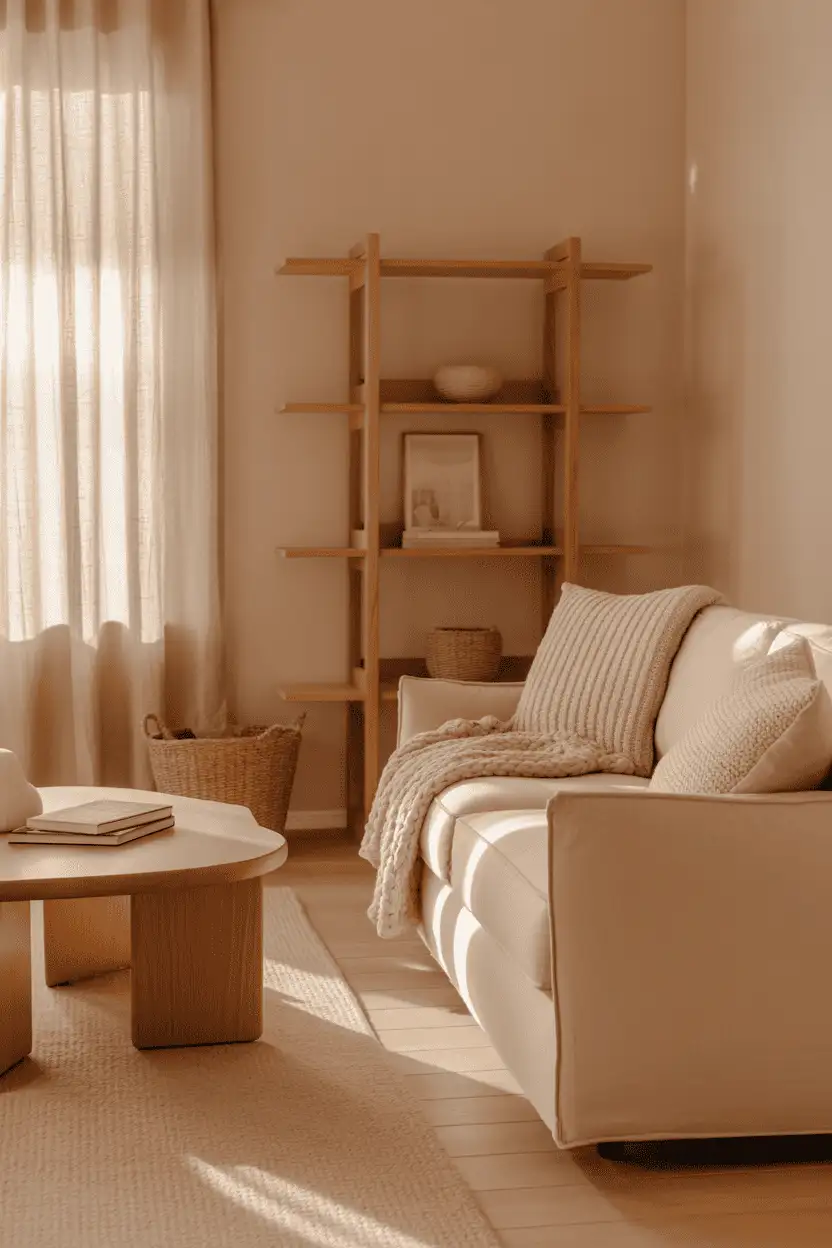
Beige, cream, warm gray, and soft camel reflect light instead of absorbing it, which is exactly what a 12×14 room needs. Paint the walls one warm neutral and repeat two of the same tones in textiles, and the whole room will read as larger.
The trick is staying inside one undertone family. Cool grays next to warm beiges chop the room into pieces; warm-on-warm lets the eye travel uninterrupted, which the brain reads as space.
3. Choose Soft Ambient Lighting
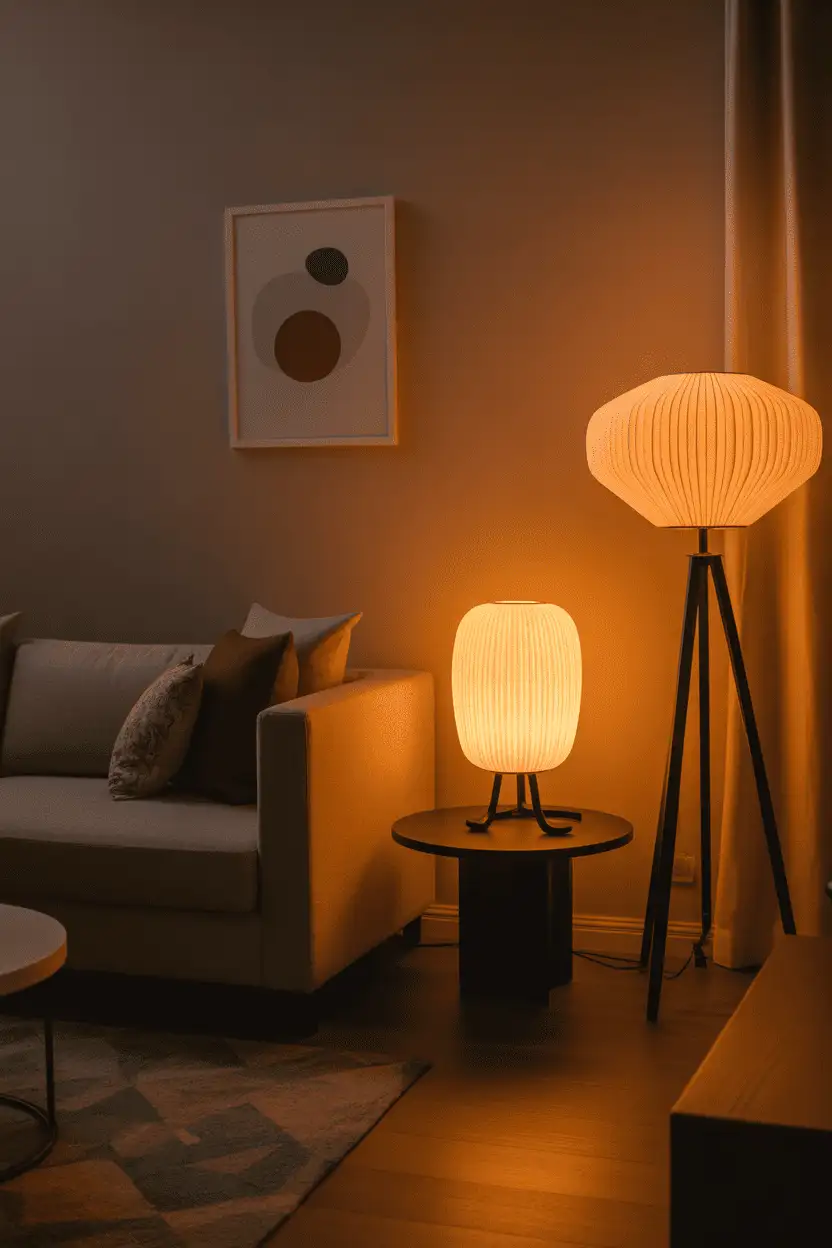
Ambient lighting softens a small room’s hard edges. A table lamp with a linen shade, a 2700K LED bulb overhead, or a low-profile arc fixture each throws a warm pool of light that kills the harsh shadows which shrink tight spaces.
Aim for three sources at different heights — floor, table, wall — instead of one bright ceiling light. The layered glow makes the layout feel deliberate, and plug-in dimmers (about $12) let you tune it for evenings.
4. Add a Plush Area Rug
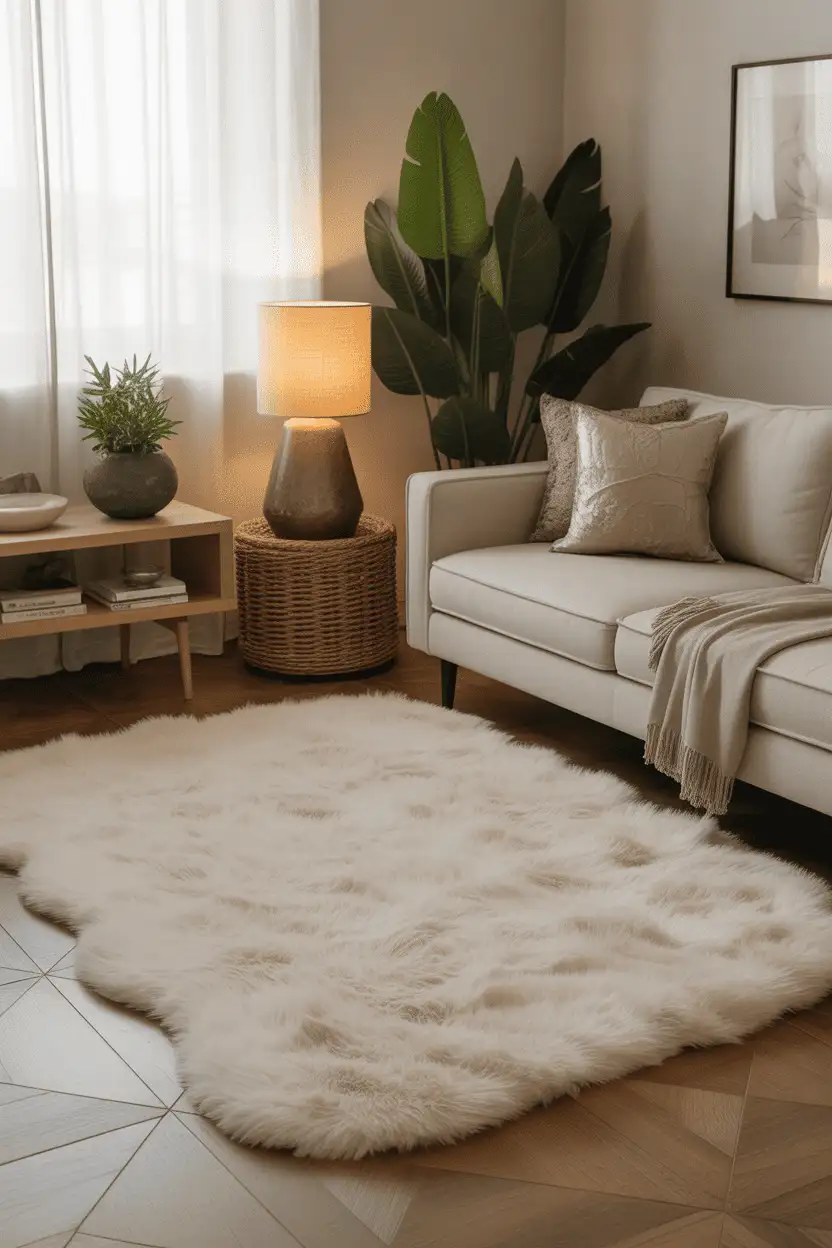
A 5×7 rug under the front legs of the sofa and chairs defines the seating zone and adds immediate softness. In a small room, skip the tiny 3×5 — it floats and makes everything look smaller. A low-pile wool or washable rug in a quiet pattern works hardest.
Let at least the front two legs of every seat sit on the rug; that single rule is what makes a small arrangement feel anchored instead of scattered.
5. Use Oversized Pillows
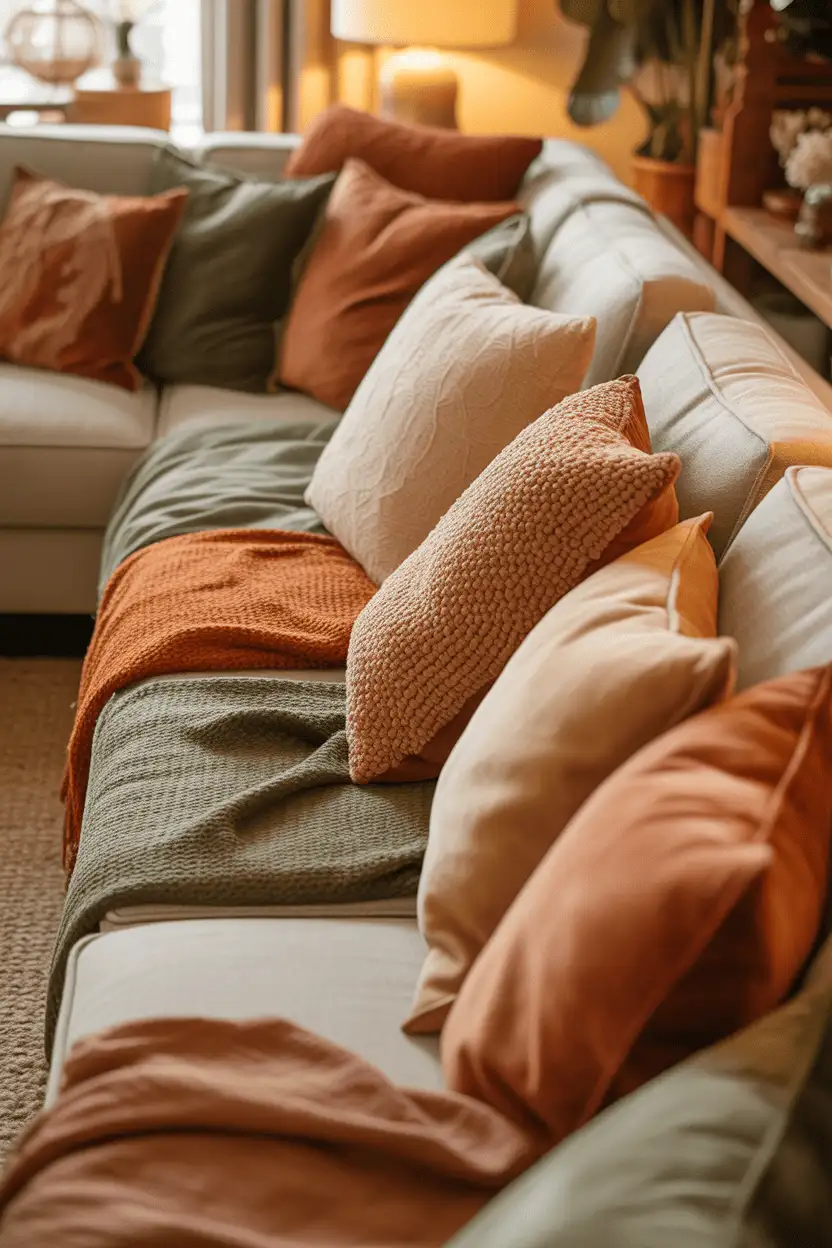
One or two oversized pillows — 22 to 24 inches — do more than a row of small ones. Their scale relaxes rigid sofa lines, and in a compact room they read as comfort rather than clutter.
Mix textures (linen against velvet, knit against cotton) in two or three tones from your palette. The contrast adds depth; matching sets look flat.
6. Bring in Natural Wood
A light-oak coffee table, a pair of walnut floating shelves, or a single teak side table brings organic warmth that flat-pack white furniture can’t. Wood grain breaks up expanses of fabric and paint without adding visual weight.
Keep finishes within one or two tones — honey oak with walnut works; five competing stains don’t. The restraint is what keeps the room calm.

7. Create a Reading Nook
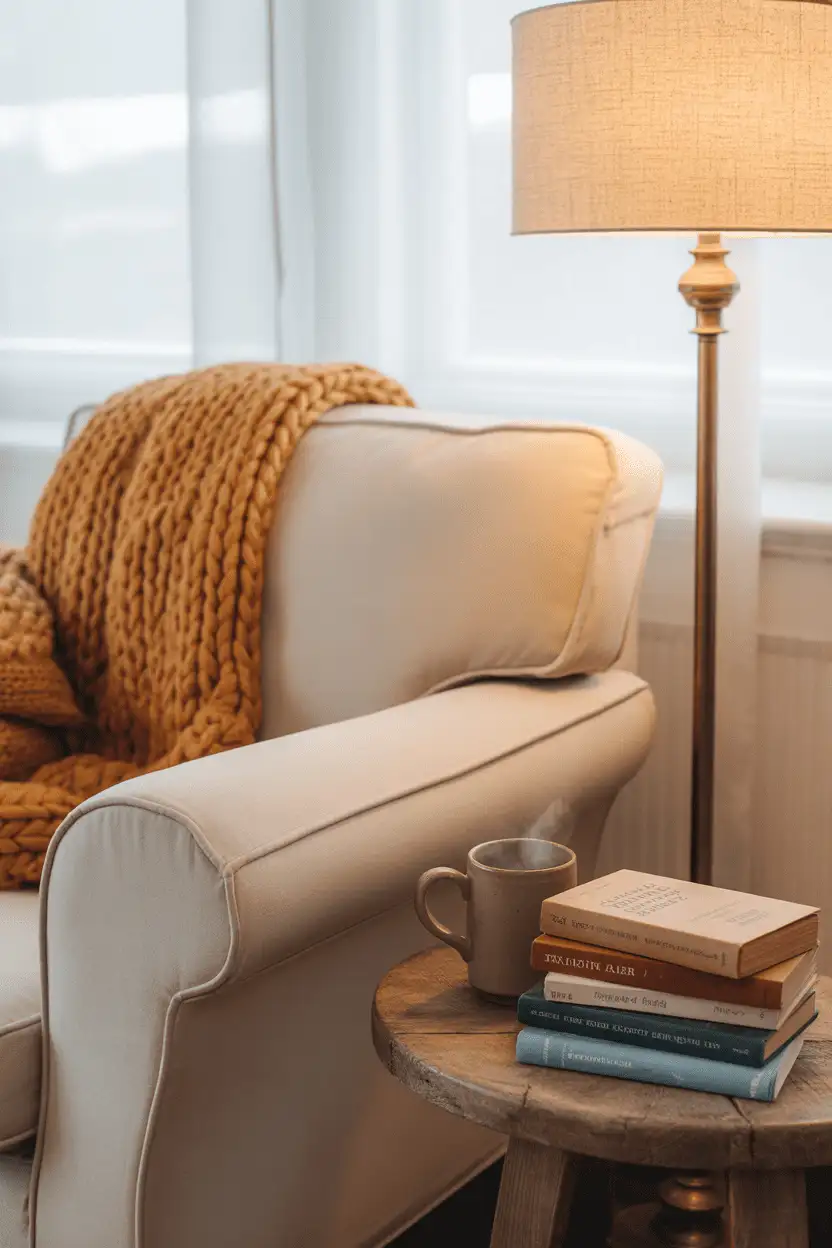
A reading nook needs only a corner: one comfortable armchair, a small side table, and a clip-on or floor lamp. It turns dead space beside a window or behind a door swing into the most-used seat in the house.
Give it a throw and a small basket for books and it reads as intentional design, not leftover furniture. Even a 3-foot corner works.
8. Add Indoor Plants
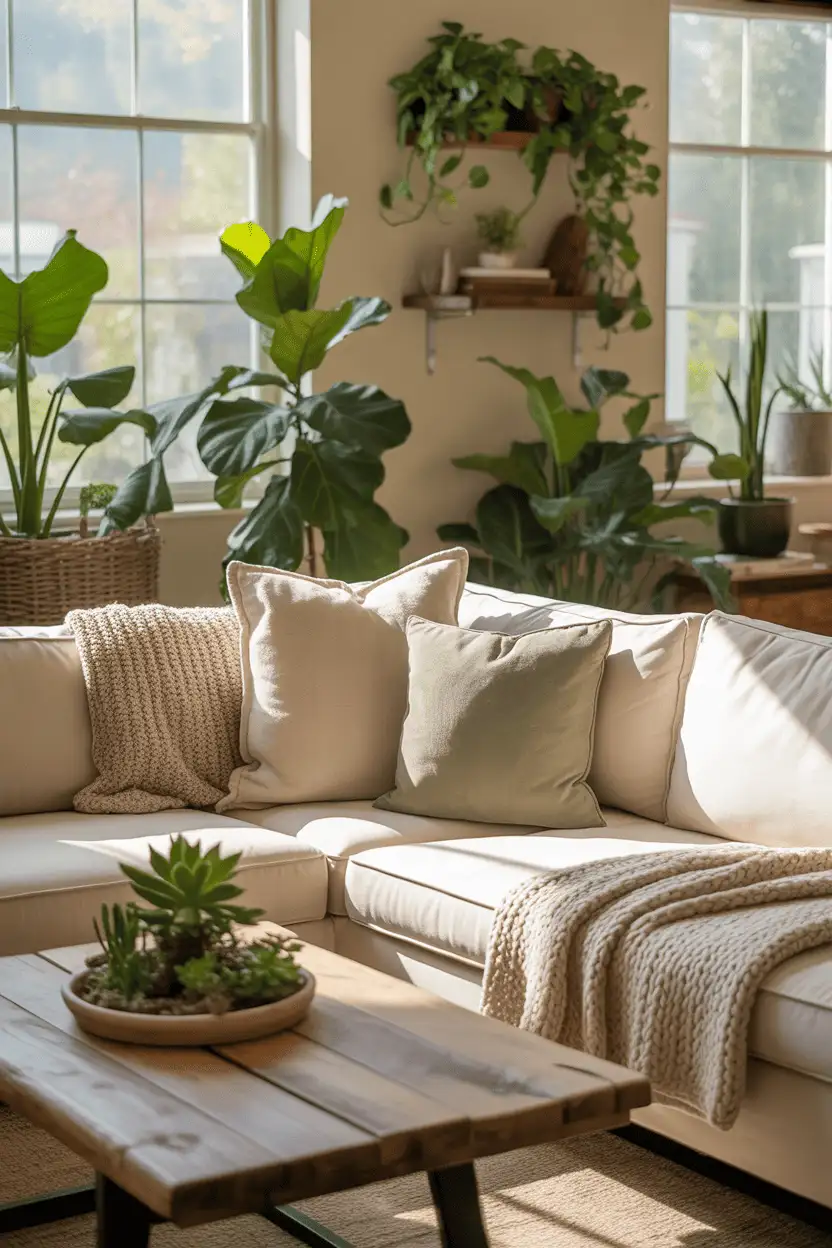
A trailing pothos on a shelf, a snake plant in an empty corner, and one medium olive or fiddle-leaf in a woven basket cover three heights for under $60 total. The green breaks up beige-on-beige and softens hard furniture lines.
Plants also fix the ‘empty corner’ problem without buying more furniture. Just check the light: low-light rooms want ZZ plants and pothos, not fiddle-leafs.
9. Hang Warm Art Prints
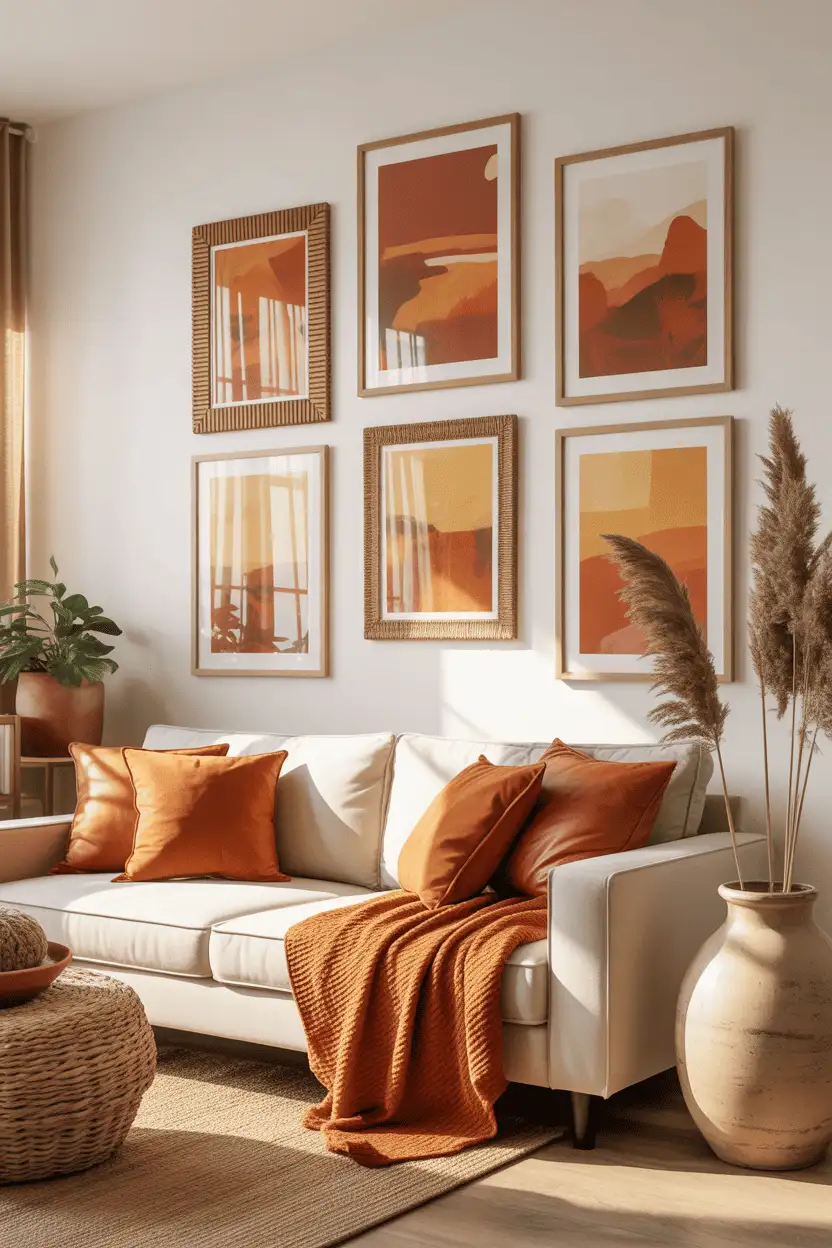
Prints in ochre, rust, clay, and warm charcoal pull the room’s palette together. One large piece (24×36) above the sofa has more impact than four small frames, and hanging it 6–8 inches above the sofa back draws the eye up.
Limit wall art to two or three groupings. In a small room, every frame competes for attention — fewer, larger pieces win.
10. Use a Soft Throw Over the Sofa
A 50×60 throw in fleece, chenille, or a loose knit instantly softens a sofa’s silhouette. Drape it diagonally across one corner rather than spreading it flat — the casual fold adds texture without hiding the whole sofa.
It doubles as the blanket you actually reach for on cold evenings, so choose something washable. Function earning its place is the whole point in a small room.
11. Add Candle Clusters
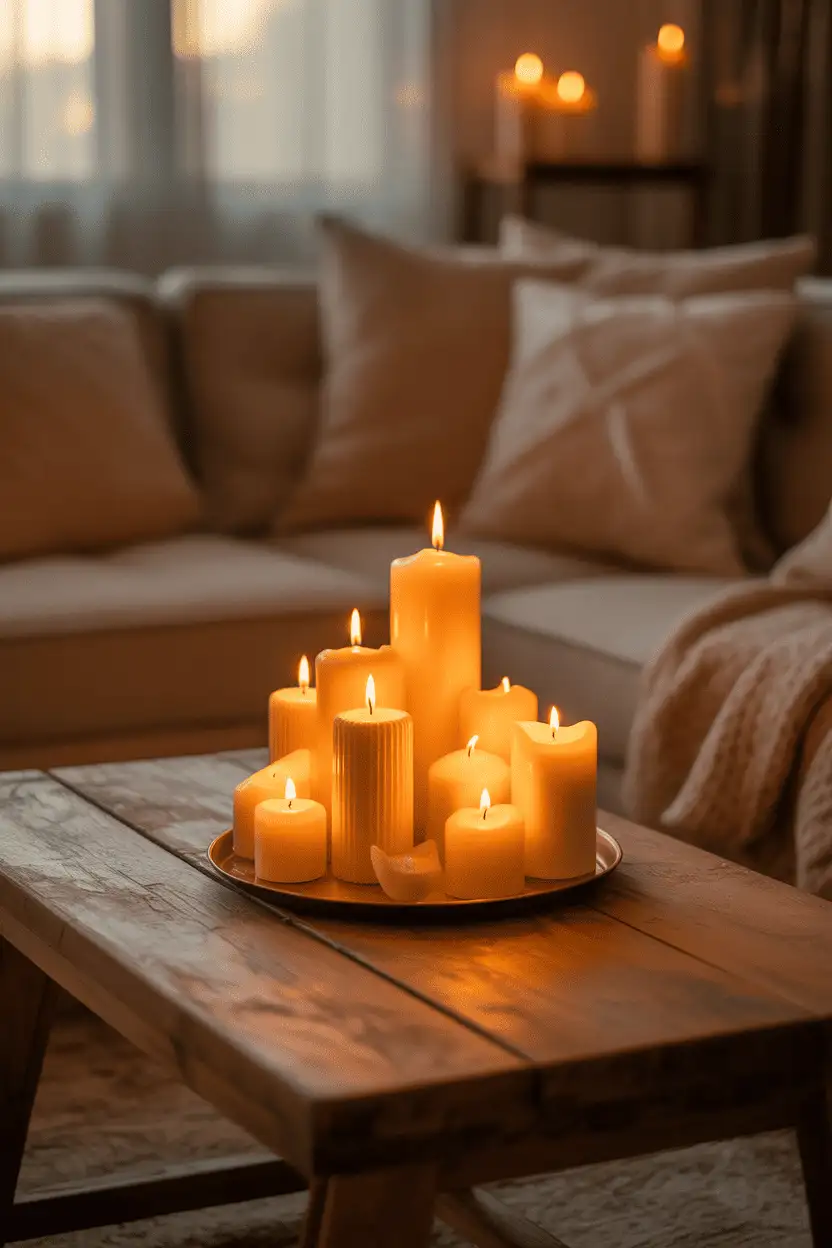
A cluster of pillar candles in three heights on the coffee table or mantel gives off the warmest light in the room — around 2200K, warmer than any bulb. Unscented pillars avoid competing fragrances in a small space.
Vary heights by 2–3 inches between candles for depth, and set the cluster on a tray to contain wax and make it look deliberate. Flameless LED pillars work if open flame worries you.
12. Style a Coffee Table
A styled coffee table pulls the seating arrangement together. A short stack of two books, one candle, and a small bowl or object with a story keeps it personal without crowding the surface you actually use.
Leave a third of the surface empty. Negative space is what separates ‘styled’ from ‘cluttered,’ especially at coffee-table distance.

13. Bring in Textured Fabrics
Bouclé, washed linen, nubby cotton, and a touch of velvet in the same warm family create the layered feel that makes small rooms inviting. Texture does the work that bold color can’t in tight quarters — it adds interest without visual noise.
Rotate covers seasonally: linen and cotton for warm months, bouclé and knit for cold. The swap costs little and the room feels new twice a year.
14. Add Curtains With Warm Tones
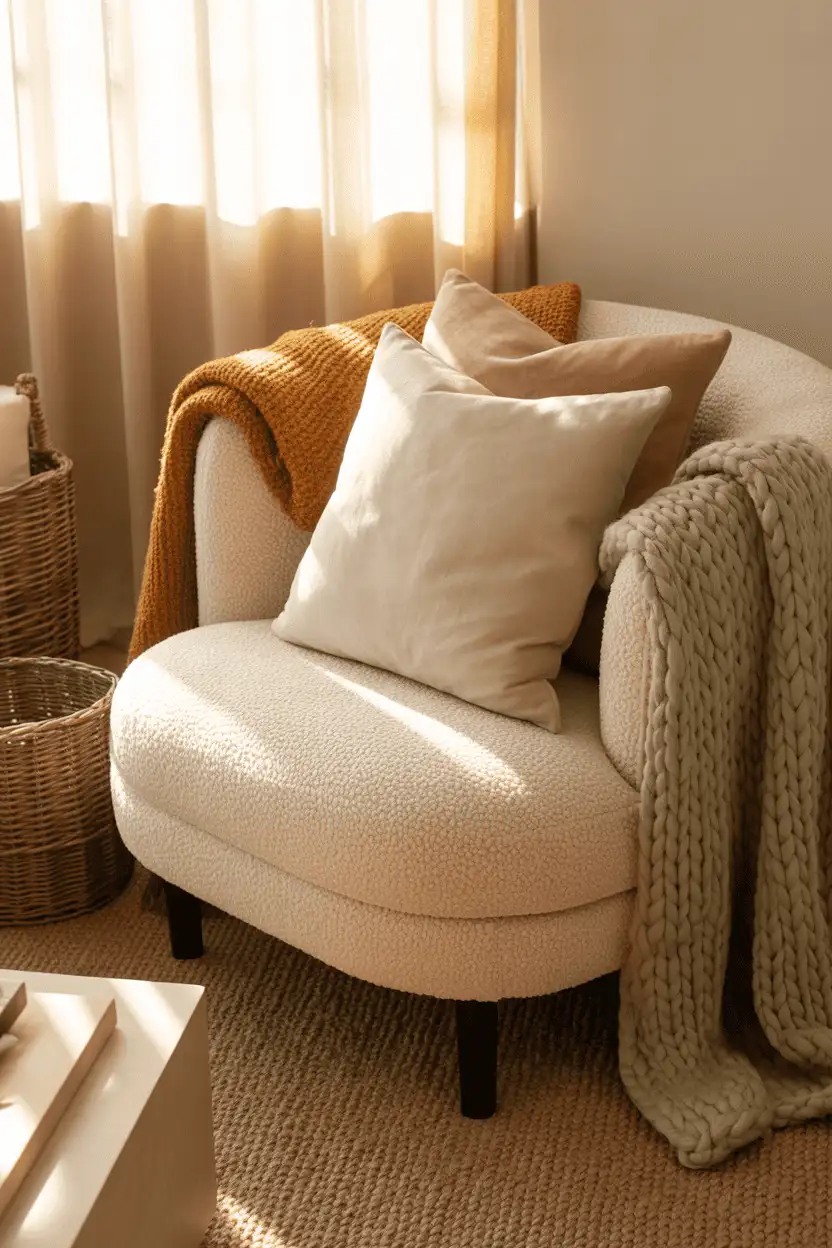
Floor-length curtains in warm beige, rust, or muted gold frame the window and soften the room’s edges. Hang the rod 4–6 inches above the frame and let panels just kiss the floor — the extra height makes ceilings feel taller.
Linen or cotton-linen blends filter daylight beautifully; avoid heavy blackout fabrics in the living area unless you need them, since they deaden the light a small room depends on.
15. Display Personal Decor
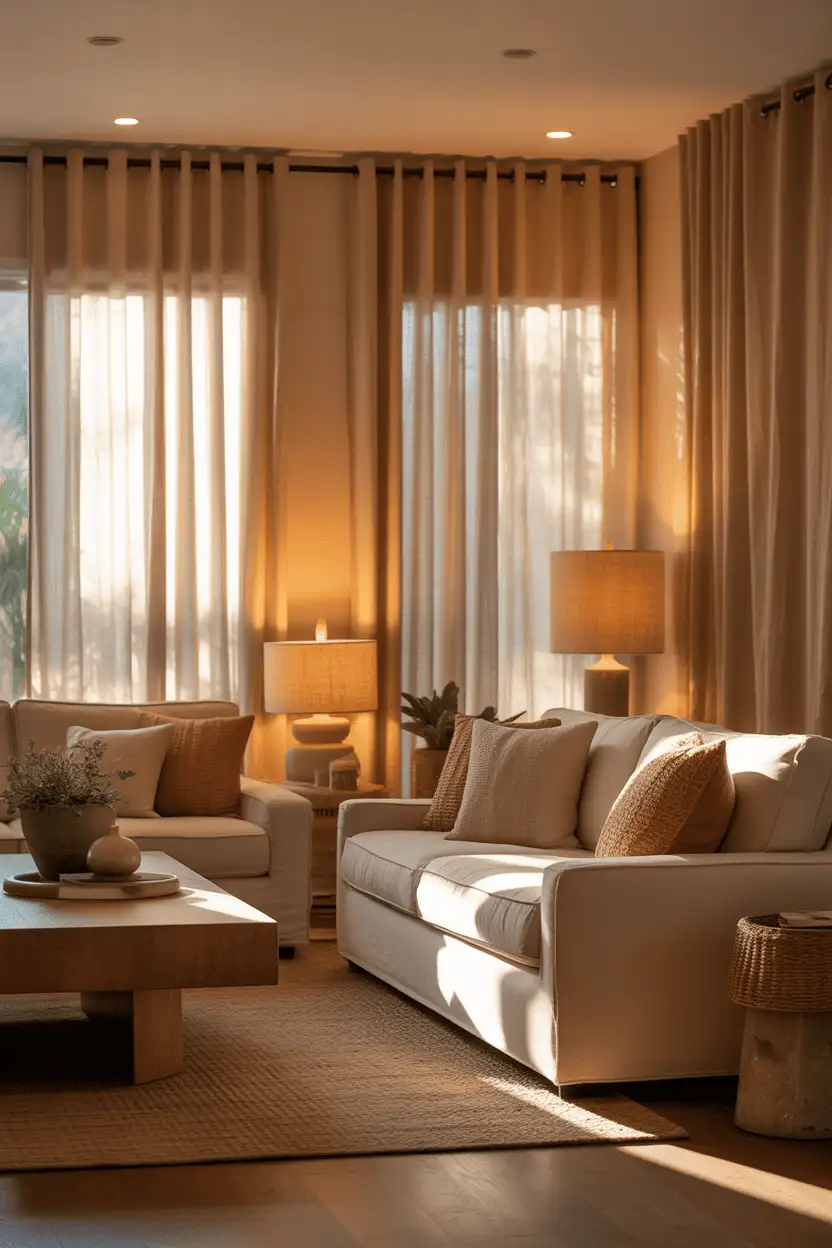
Framed photos, a handmade bowl, or a souvenir from a trip give the room a backstory no catalog can. These are the pieces guests remember — and they cost nothing if you already own them.
Group personal items in odd numbers and give each one breathing room. A single shelf styled with three meaningful objects beats a mantel crowded with ten.
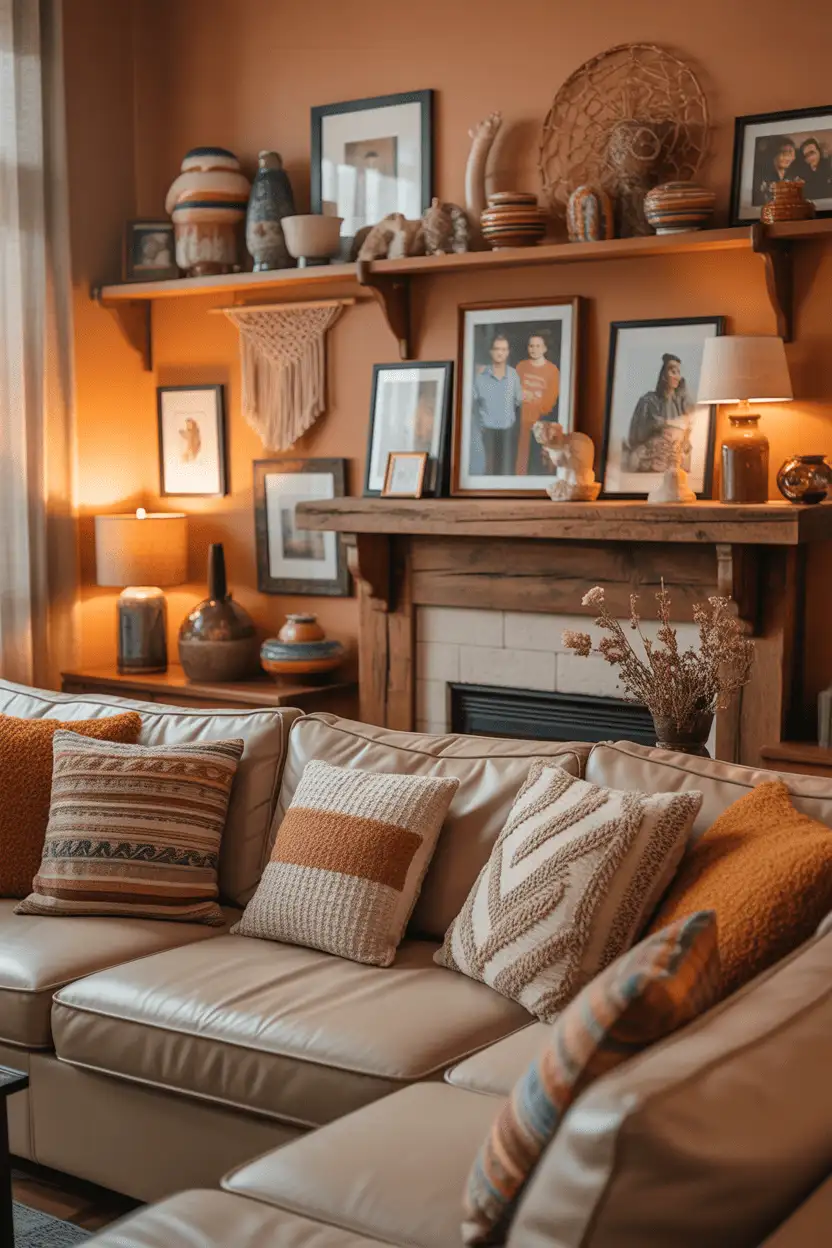
16. Use Soft Ottoman Seating
A soft ottoman is the hardest-working piece in a small living room: footrest by day, extra seat when friends visit, tray-topped side table in a pinch. At 16–20 inches wide it tucks against the sofa or under a console.
Choose one in a performance fabric or leather-look material if it will double as a table — crumbs and rings wipe off, and it won’t show wear the way light cotton does.

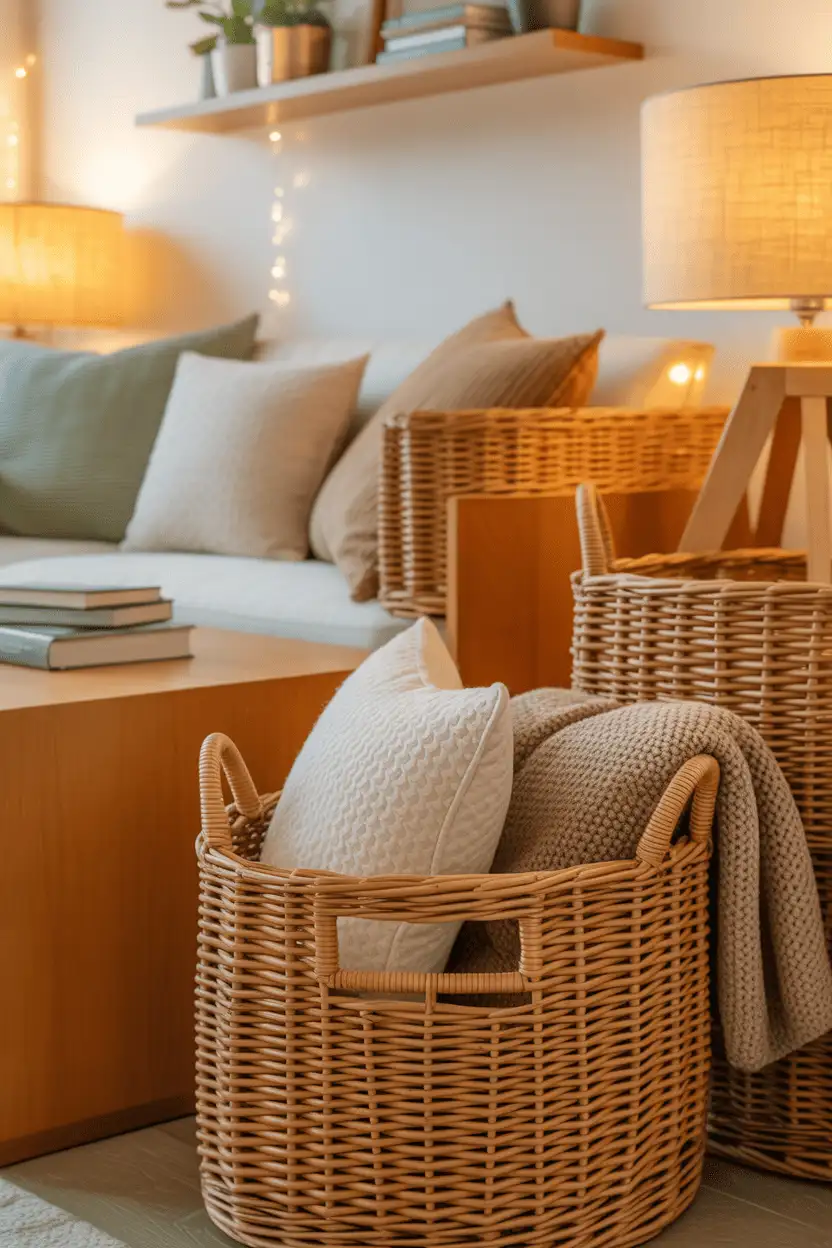
17. Add Woven Baskets
Seagrass and rattan baskets swallow throws, remotes, and magazines while adding natural texture. A lidded basket beside the sofa hides the clutter you don’t want to style.
Slide a flat basket under the console table and a tall one next to the media stand. Storage that looks like decor is the small-room cheat code.
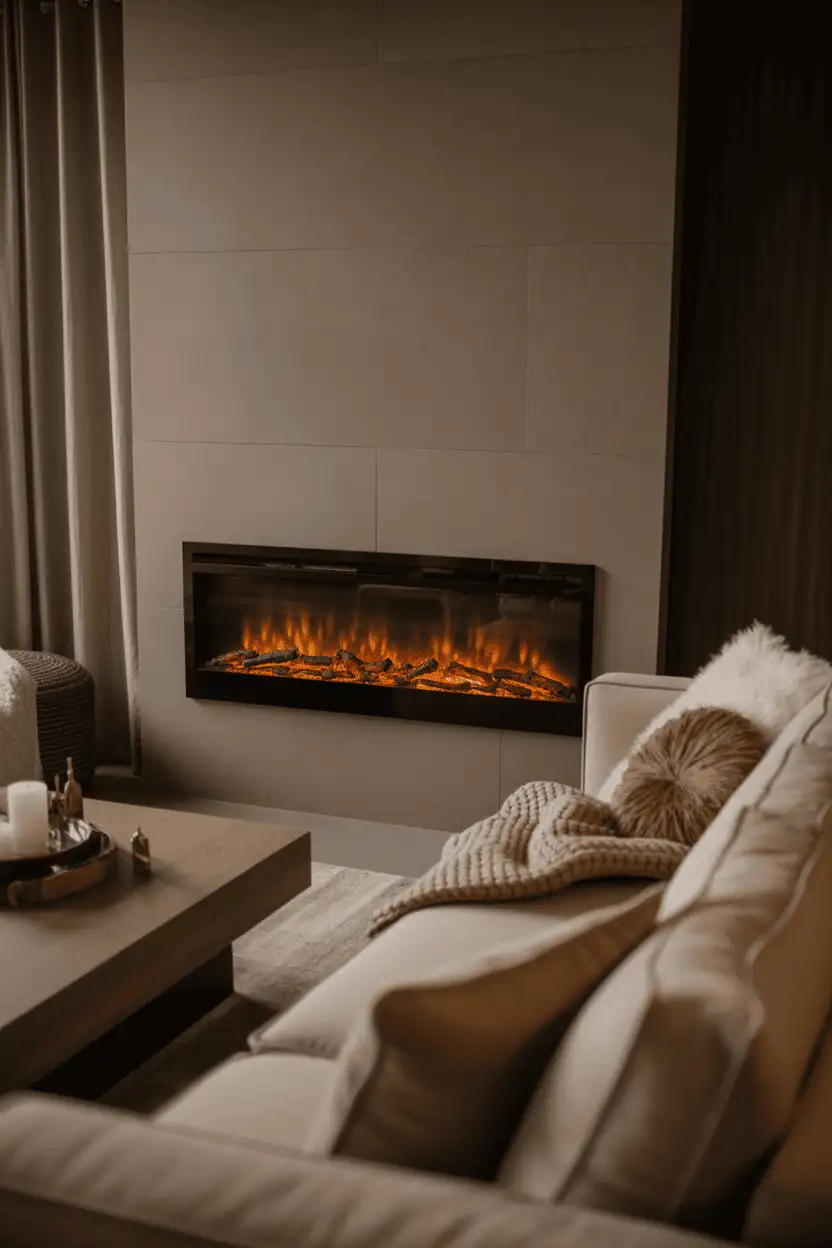
18. Create a Fireplace Focal Point
A compact electric fireplace — many are under 30 inches wide — creates a focal point and real warmth without a chimney or gas line. Center the seating on it and the whole room gains a purpose.
Style the mantel shelf with restraint: one piece of art or a mirror, plus two small objects. The fireplace should anchor the room, not compete with it.
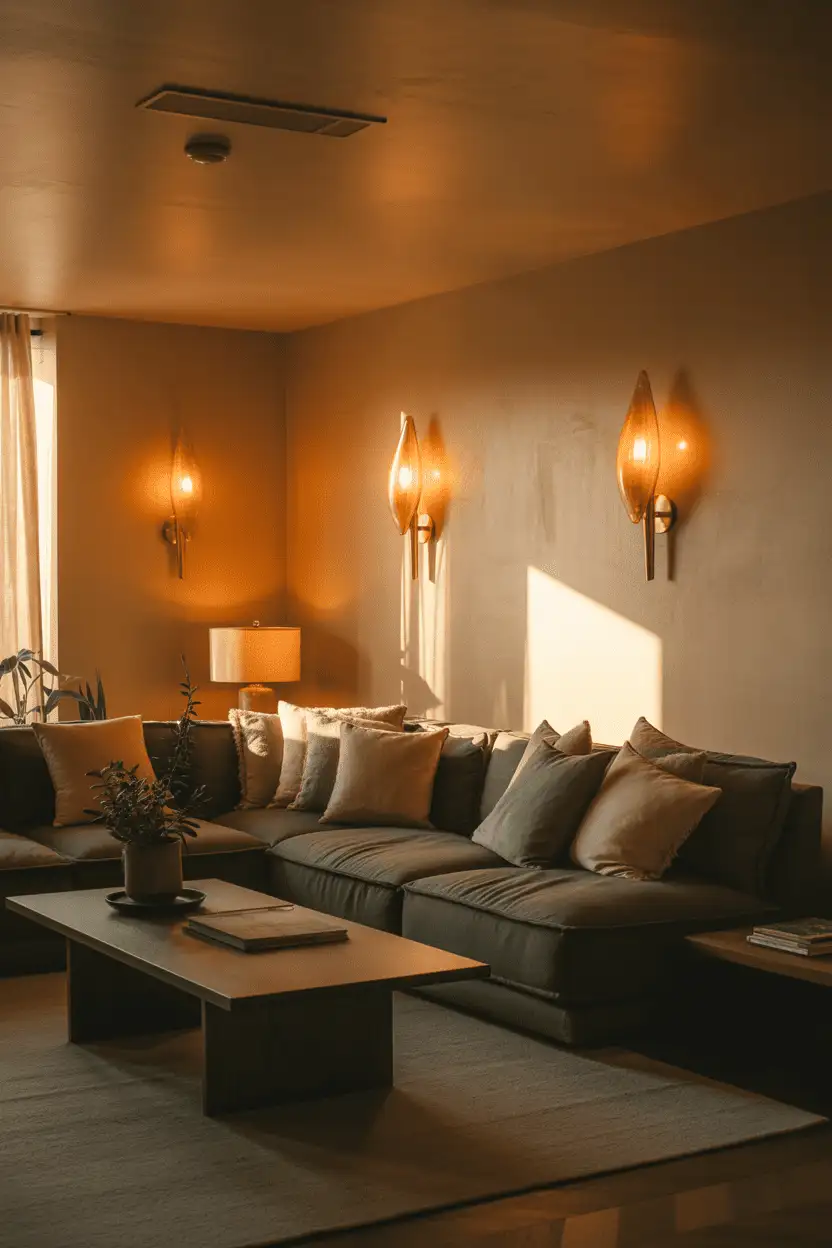
19. Use Wall Sconces
Plug-in wall sconces flanking the sofa or artwork free up every inch of floor and table space while washing the wall with warm light. The upward glow visually lifts a low ceiling.
Pick 2700K bulbs and, if possible, put them on a dimmer. Sconces at half brightness are the fastest way to make a small room feel expensive in the evening.
20. Bring in a Soft Color Palette
Muted sage, dusty blue, soft peach, and warm putty keep the visual flow calm and open. Use them in textiles and art while walls stay neutral — color you can swap is safer than color you paint.
One rule: keep saturation low. Muted tones recede and make walls feel farther apart; anything bright advances and shrinks the room around you.
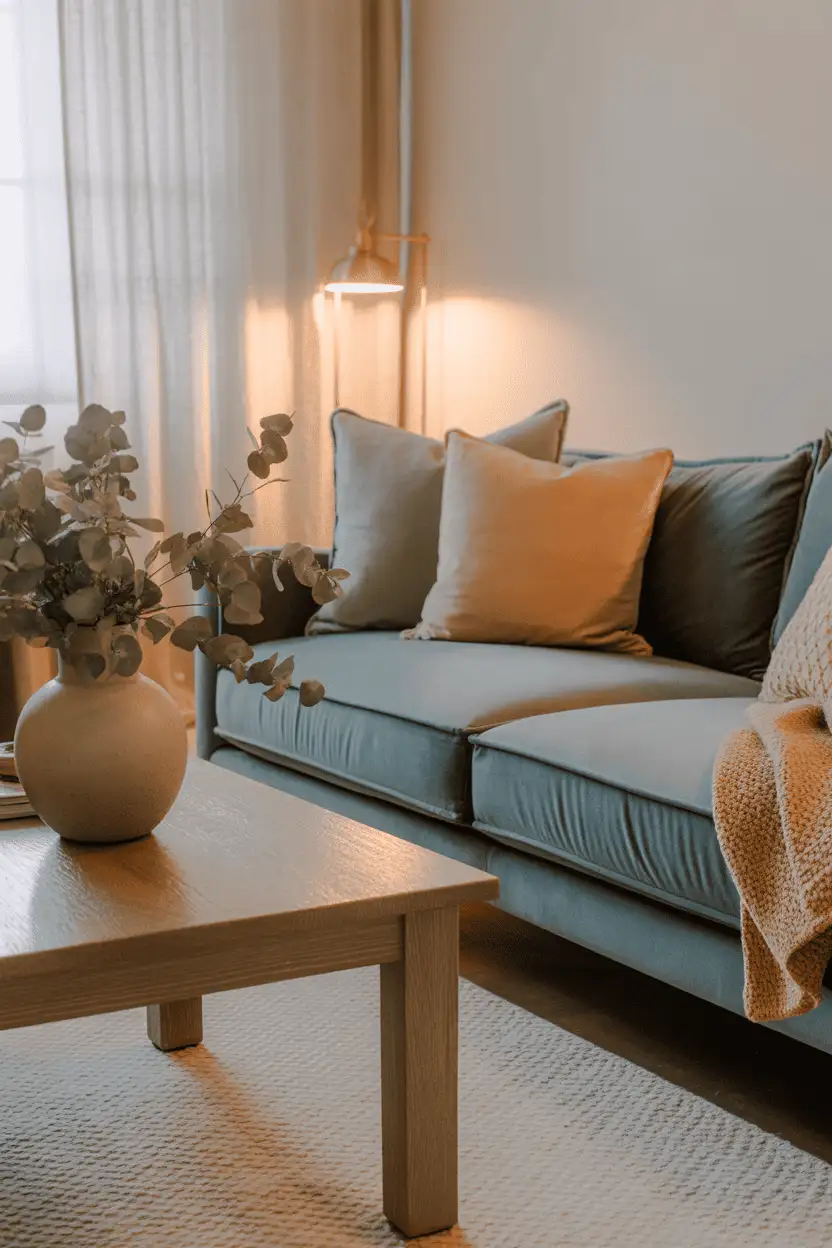
21. Add a Cozy Throw Ladder
A leaning ladder holds four or five throws in 18 inches of wall space, turning blanket storage into a display. The vertical line draws the eye up, which helps low ceilings, and the slim profile fits behind a door or beside the sofa. Choose wood over metal for warmth, and fold throws in thirds so they hang neatly.
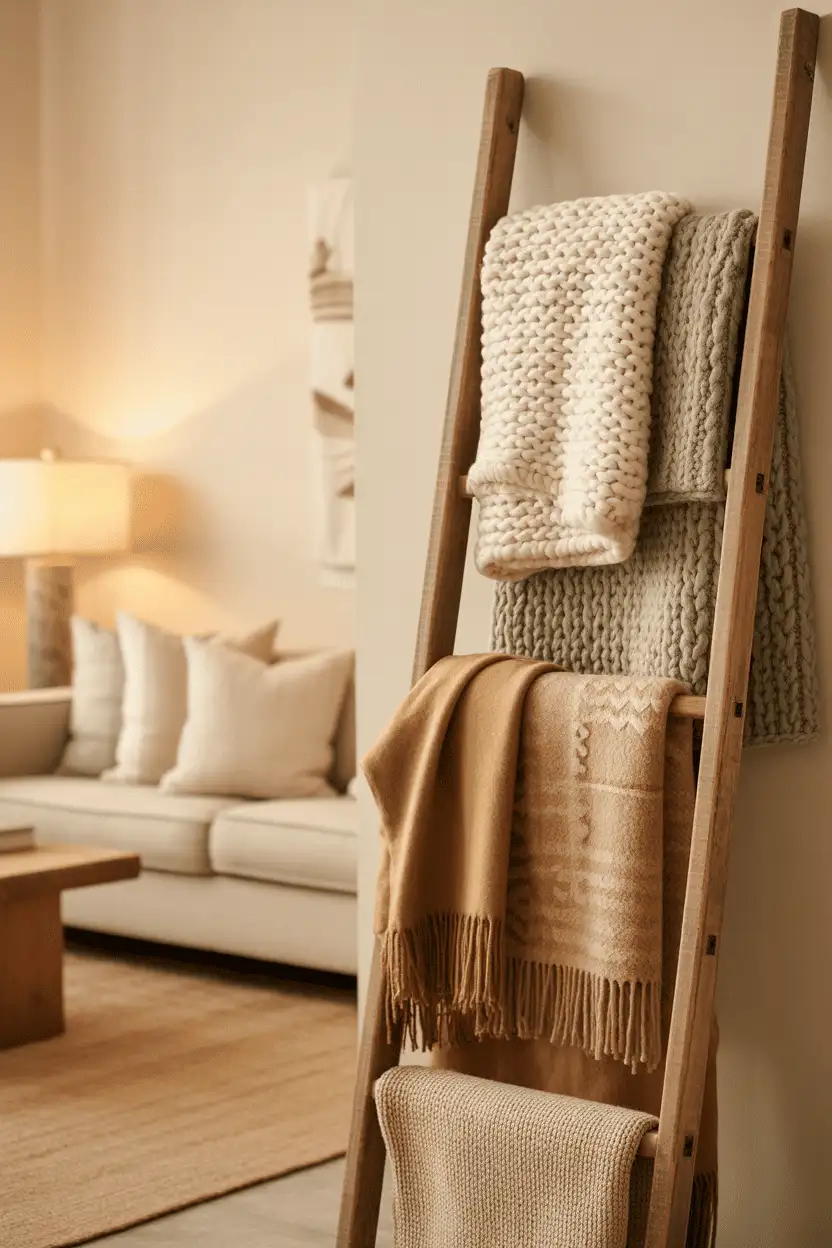
22. Use Layered Window Treatments
Sheers closest to the glass plus a heavier linen or cotton panel on the same rod give you daylight control and evening privacy in one window. The double layer reads soft and finished, and you can adjust each independently through the day.
Mount both on a double rod, or use clip rings on a single rod to keep it simple. In a small room, the layered window becomes a feature rather than just a covering.
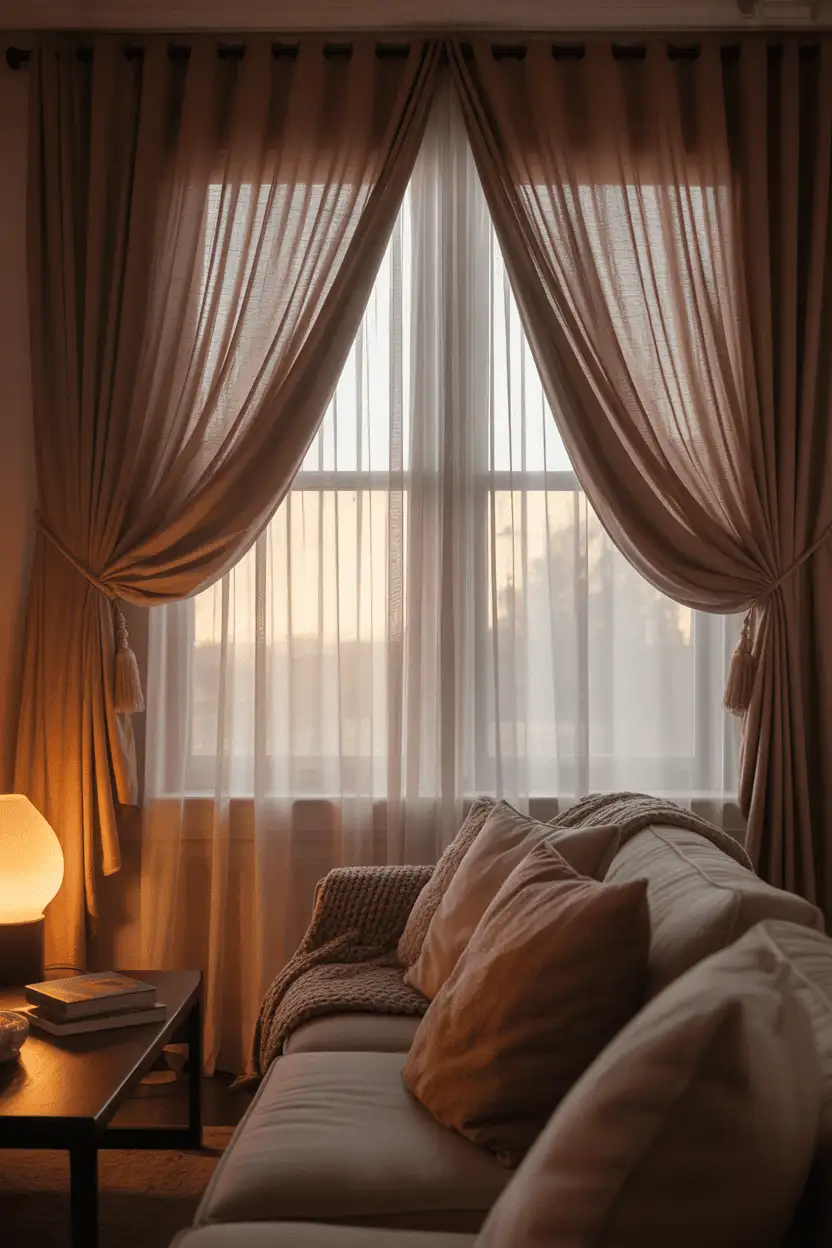
23. Add a Floor Lamp Beside Sofa
A floor lamp beside the sofa fills the dead zone between seating and wall with warm, usable light. An arc or pharmacy-style floor lamp throws light exactly where you read, which matters in rooms with a single dim ceiling fixture.
Place it 6–12 inches from the sofa arm so the light lands on the seat, not the floor. A lamp with a heavy base won’t wobble when the dog brushes past.
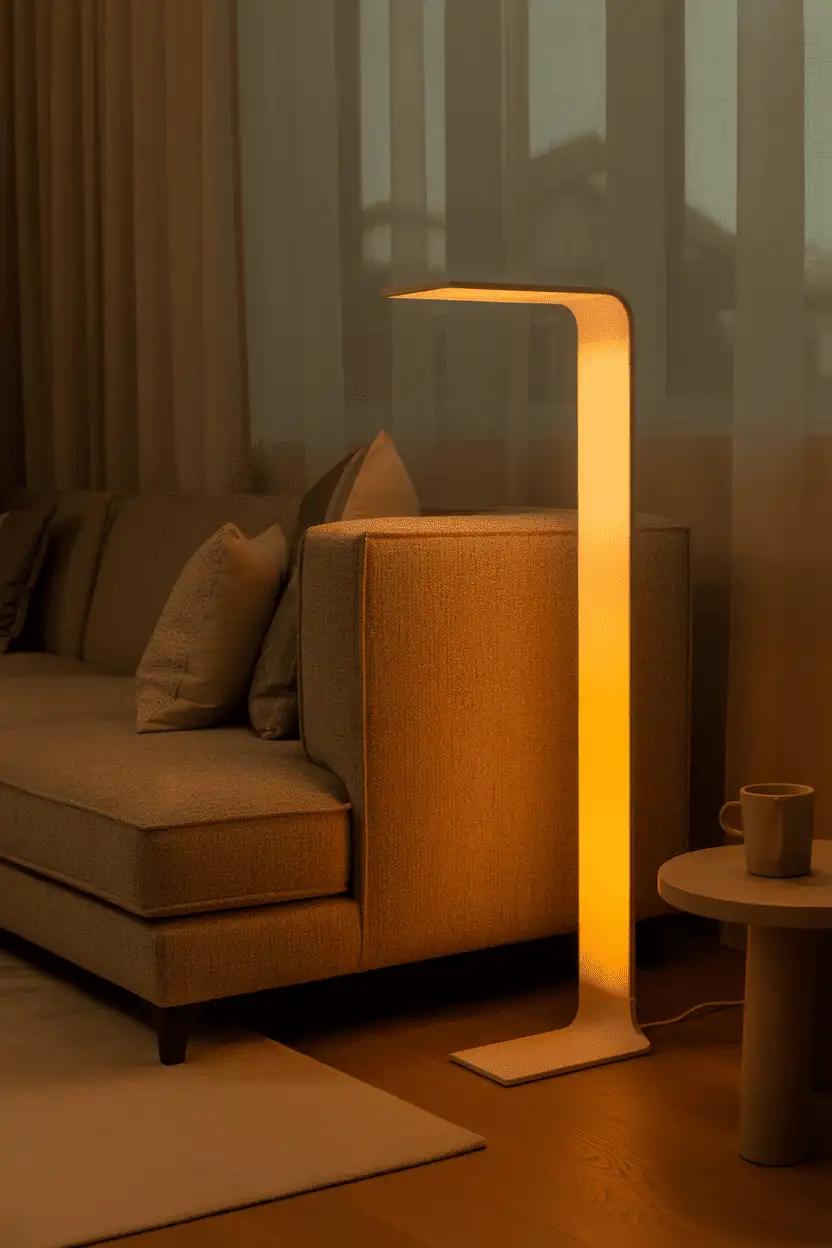
24. Mix Dark and Light Woods
Pairing honey oak with walnut, or pale ash with a dark-stained shelf, adds depth that single-tone rooms lack. Light woods keep things airy while one darker piece grounds the arrangement.
Limit the mix to two tones and repeat each at least twice — a walnut shelf and a walnut frame, for example. Repetition is what makes mixed woods look chosen rather than accidental.
25. Add a Soft Pouf
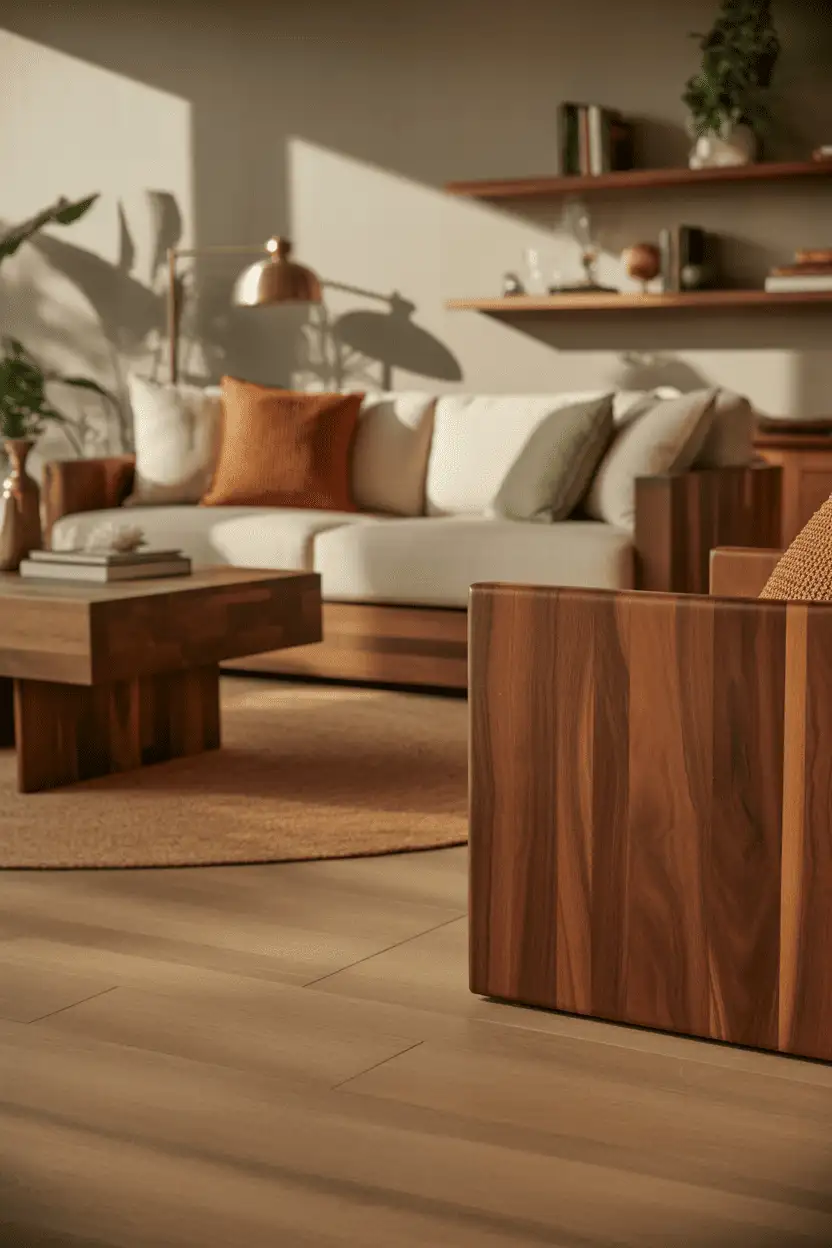
A 17-inch pouf tucks under a console, beside a chair, or in front of the sofa, ready as a footrest or a fifth seat. Knit and woven poufs add texture; leather-look ones wipe clean.
Because they’re light, poufs migrate to wherever the gathering is — movie night, game night, kids’ homework. Few pieces earn their footprint this efficiently.
26. Style a Console Table
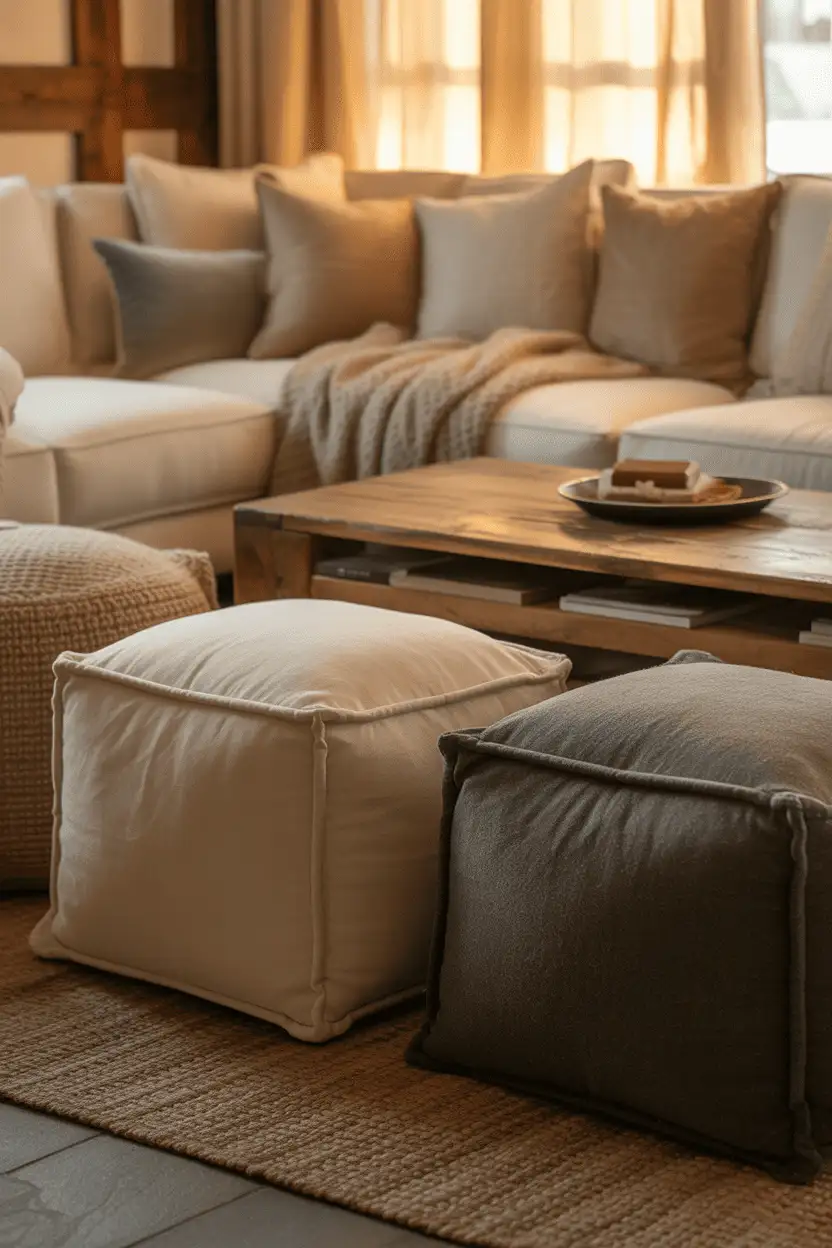
A narrow console behind the sofa or along an empty wall adds height and a landing spot for keys, lamps, and books. At 10–12 inches deep, it structures a room without stealing floor space.
Use the lower shelf for baskets and the top for a lamp plus two or three objects. In narrow rooms, a console does the organizing work of a whole bookcase.

27. Use Rustic Accent Pieces
A dough bowl, a vintage frame, or a hand-thrown vase brings in earthy texture that new decor can’t fake. One or two rustic pieces warm up a room; a dozen turns it into a theme.
Source them from flea markets or thrift stores for a few dollars each. The slight imperfections are the point — they keep the room from feeling like a showroom.
28. Add Soft Draped Fabrics
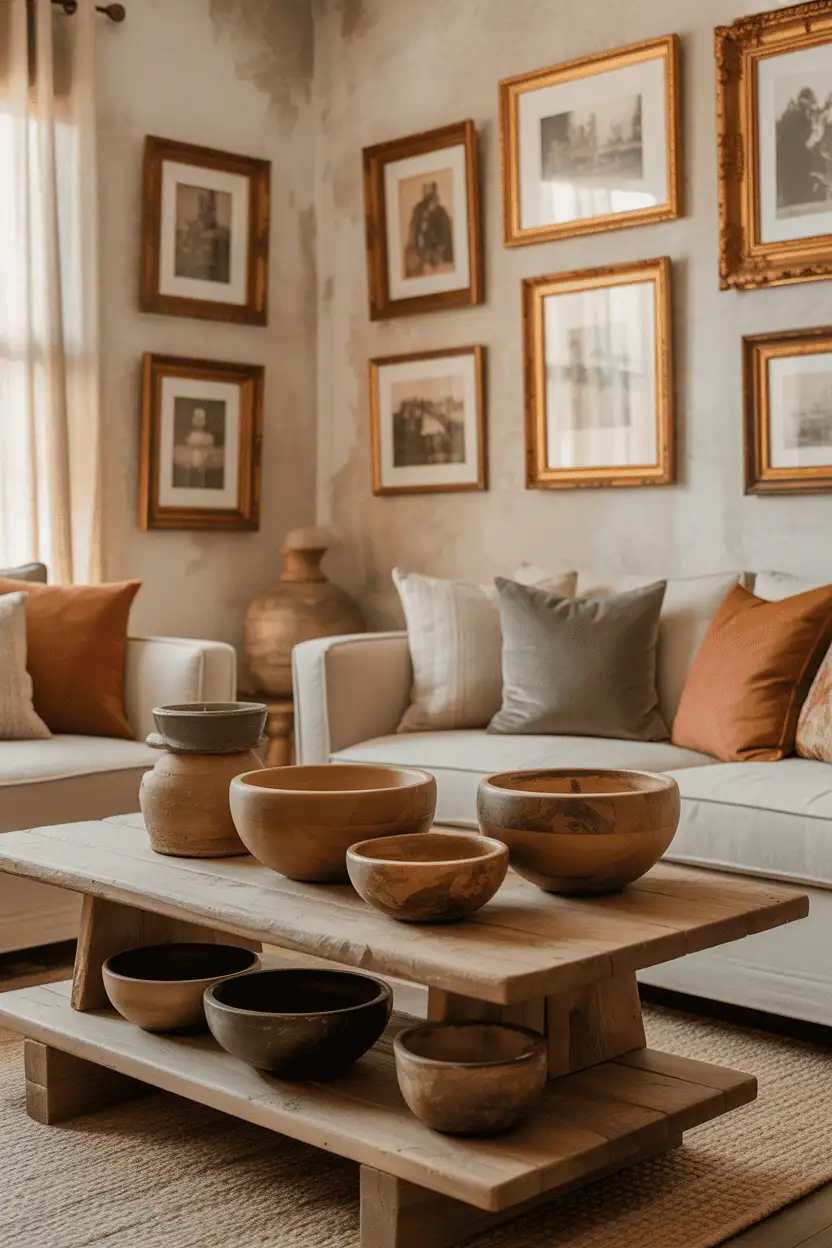
A gauzy throw over the sofa back or softly gathered curtain panels introduce movement that balances boxy furniture. The gentle folds catch light and shadow, which reads as softness. Keep drapes relaxed rather than pressed — the casual fall is what makes them feel inviting instead of formal.
29. Display Books on Shelves
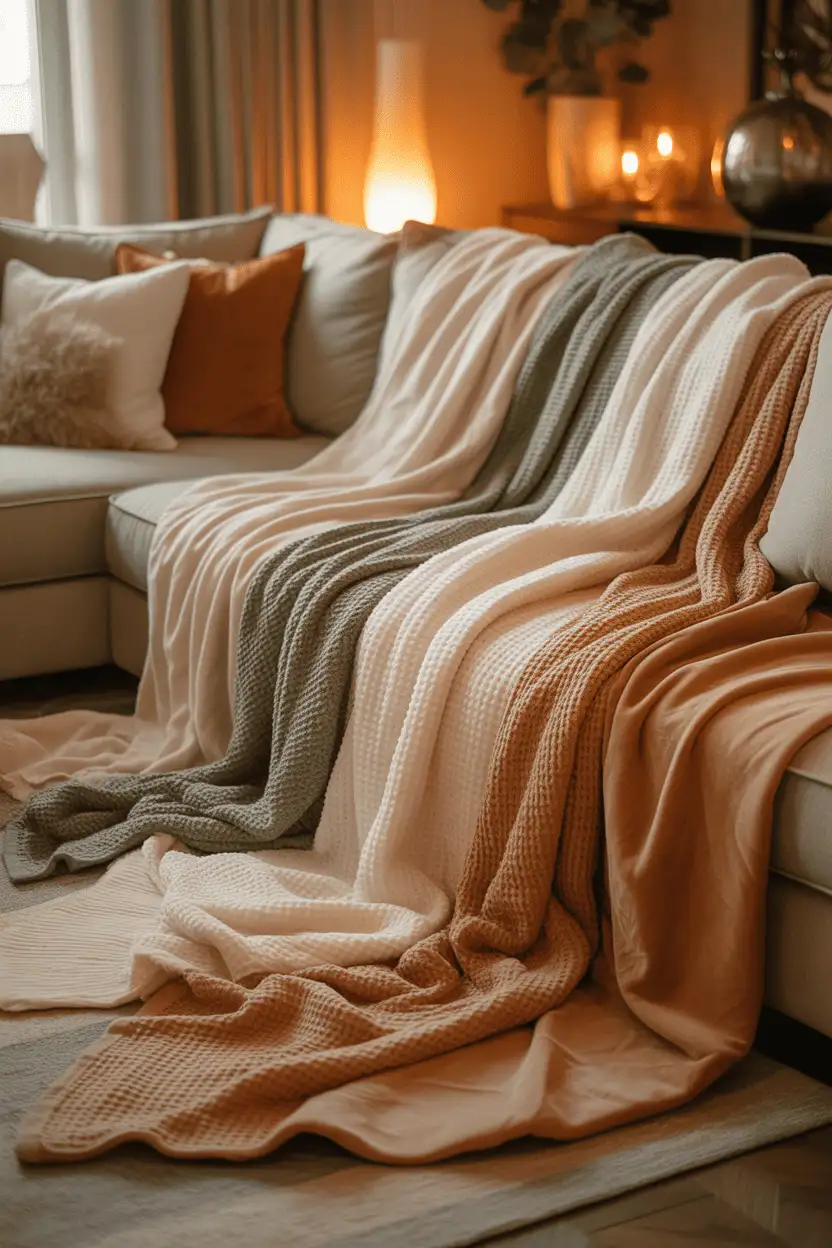
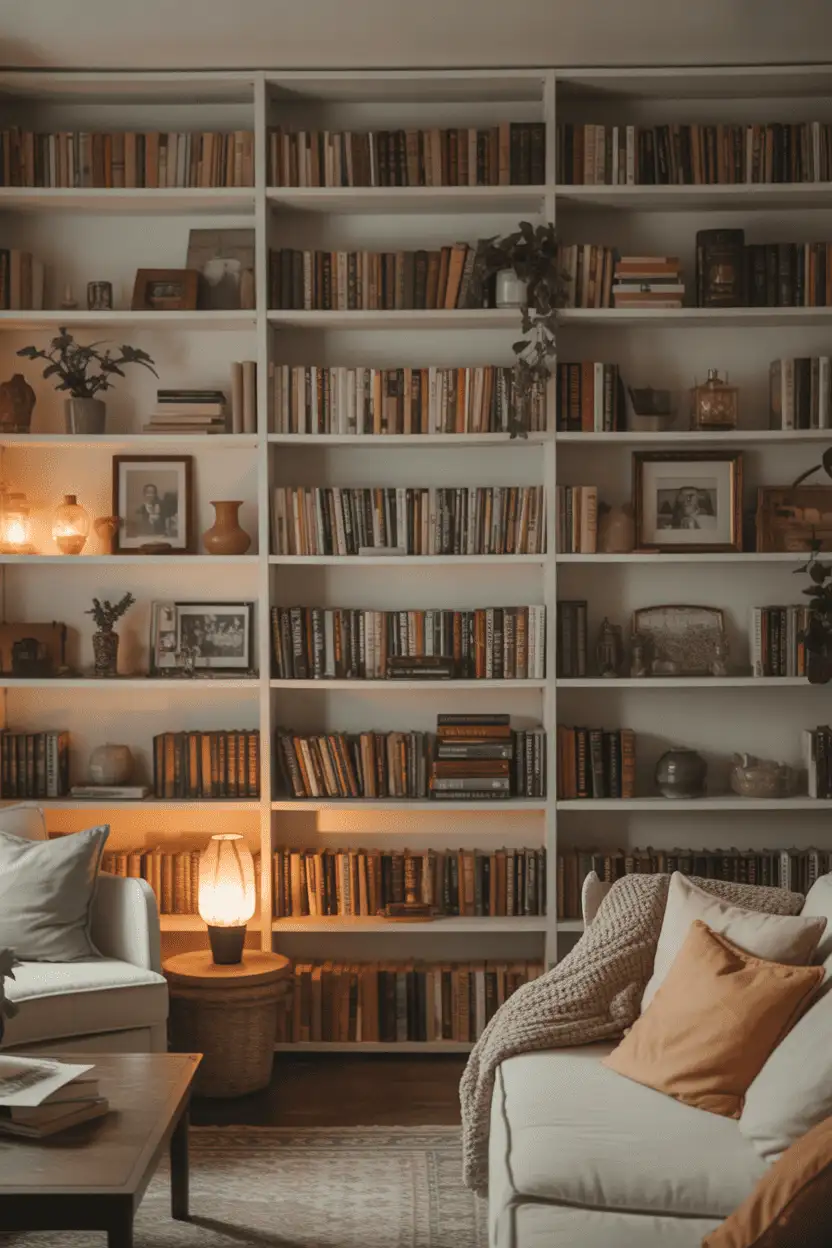
A short row of books on a floating shelf adds color, height, and personality in one move. Arrange some vertically and stack a few horizontally with a small object on top to avoid the library look.
Edit ruthlessly: twelve books you love beat forty you don’t. In a small room, every shelf is on display, so curate like it.
30. Incorporate Warm Metallic
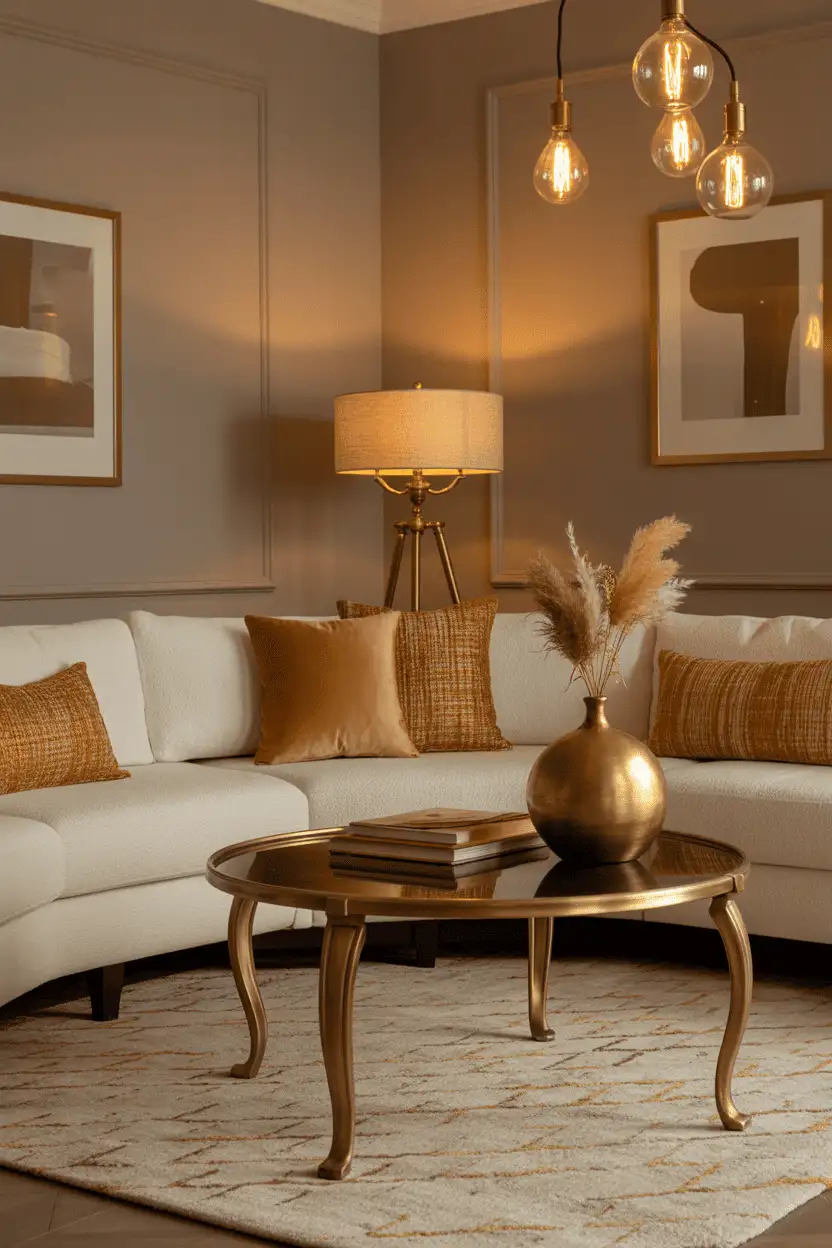
Brass, bronze, and brushed gold catch lamplight and add a quiet glow that flat finishes lack. A brass floor lamp base, bronze frames, or gold cabinet pulls are enough — metal should glint, not dominate.
Keep it to one metal family and repeat it three times around the room. The repetition turns an accent into a scheme.
FAQs for Cozy Living Room