20 Upcycled Dresser Ideas for Stylish Storage
The dresser is the most upcycled piece of furniture in existence, and it’s not close: every thrift store has a wall of them, all solid wood, all with dovetail drawers, all cheaper than one flat-pack drawer unit. The ones worth grabbing have dovetail joints and drawers that slide on wood runners — that means the bones predate particle board. This list runs from paint-only weekend jobs to full conversions, so start with whichever room needs storage most.
There’s a dresser idea here for every room and every commitment level — a nursery changing station, a bathroom vanity, a kitchen island — which means the real first step is deciding what your house actually needs, then shopping your own rooms (or the curb) before you shop the store.
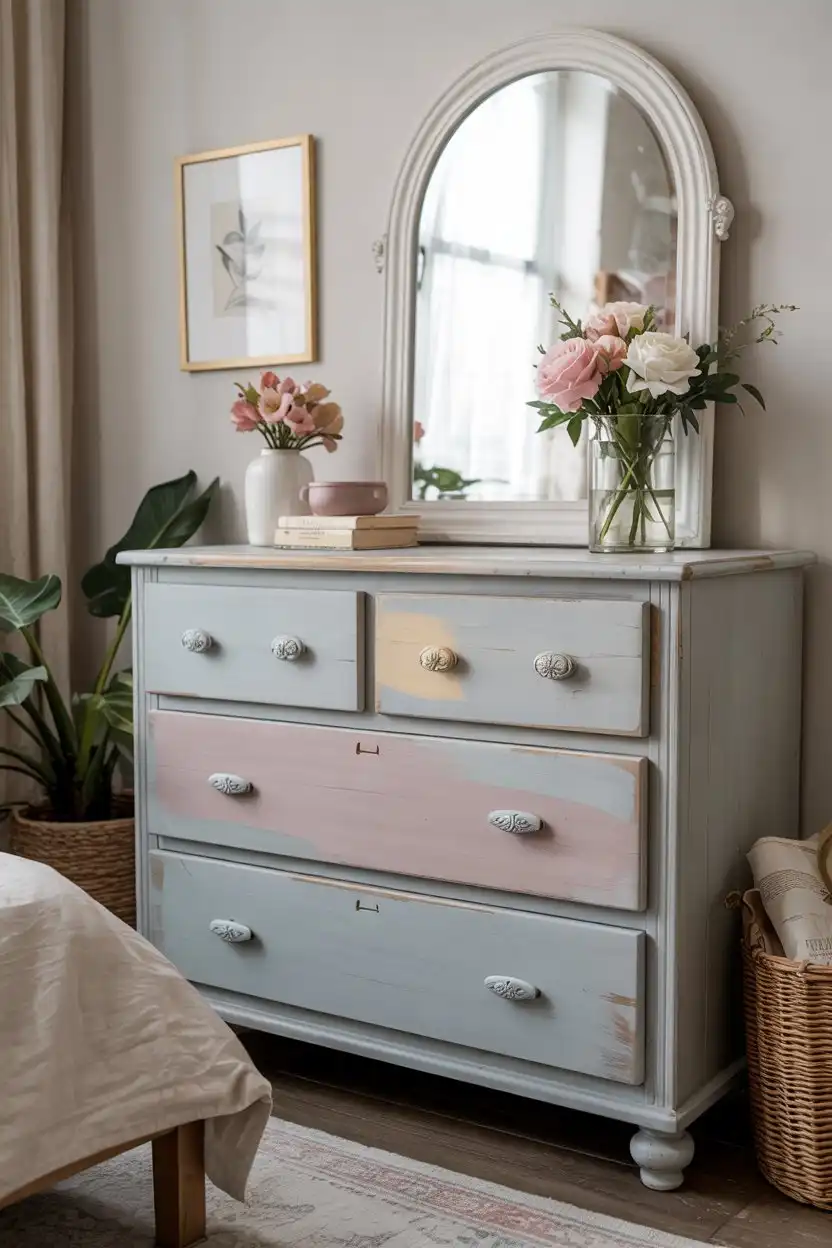
1. Chalk Painted Dresser for a Soft, Vintage Look
Chalk paint is the dresser makeover’s fast lane: no sanding, just a wipe-down with sugar soap and two thin coats. A 750 ml tin ($18–$25) covers a standard six-drawer dresser. The matte finish suits farmhouse and shabby-chic looks, and distressing the edges with 220-grit after the second coat reveals the wood underneath in exactly the spots that would wear naturally.
Chalk paint forgives beginners in a way latex never does — brush marks melt into the finish, and mistakes sand out in seconds. It belongs on bedrooms and nurseries where the look is soft and touchable; for a dresser that takes real abuse (entryway, kids’ room), seal it with wax or it’ll mark within the first week.
2. Two-Tone Painted Dressers for Modern Contrast
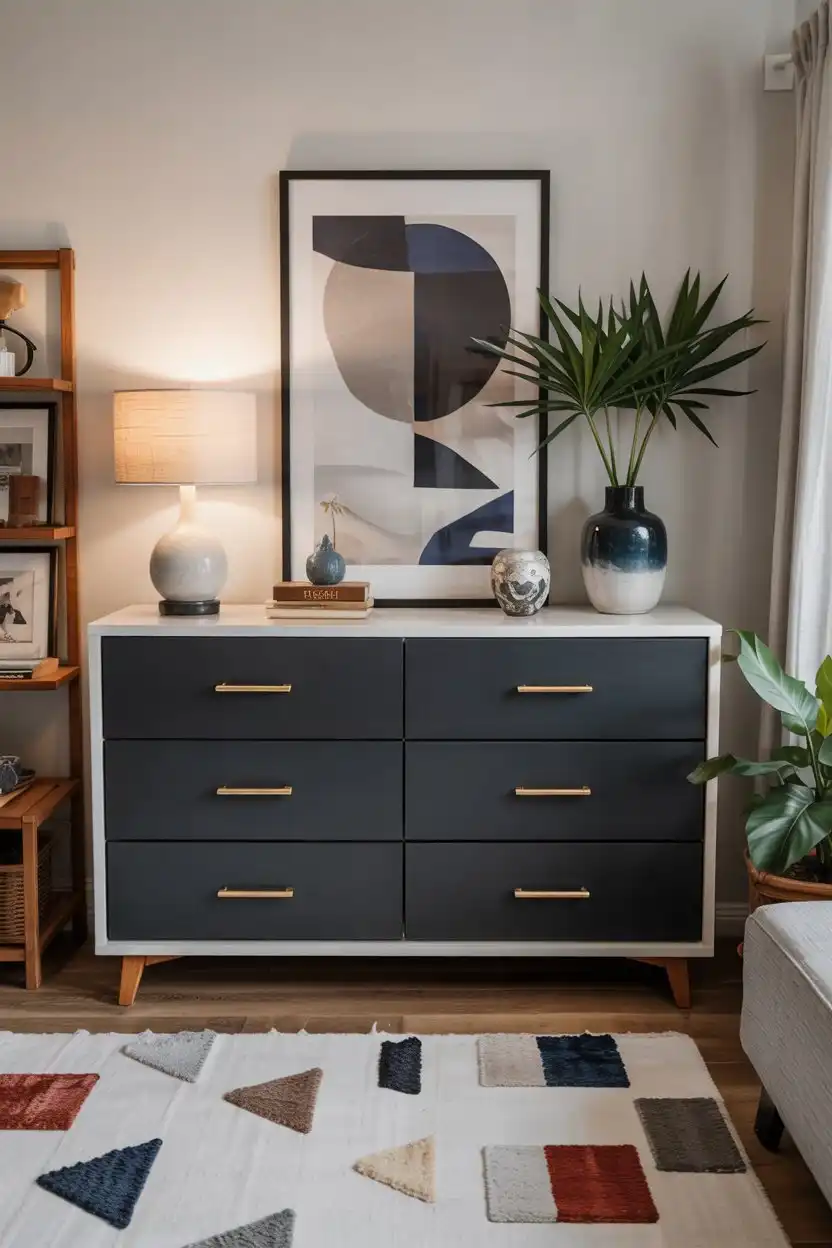
Two-tone is the simplest way to make a dresser look custom: paint the frame one color and the drawer fronts another. The safe formula is a neutral body (warm white, greige) with deeper drawer fronts (navy, forest, charcoal) — or flip it for a bolder read. Ombre takes more patience: five drawers, five shades mixed from one base color with increasing white.
Tape the line where frame meets drawers and pull it while the paint is tacky — a crisp boundary is what sells the two-tone look. Bold-plus-neutral keeps it sophisticated; two bold colors fight each other. A one-weekend project that photographs like a furniture-store piece.
3. Repurposed Dresser as a Bathroom Vanity
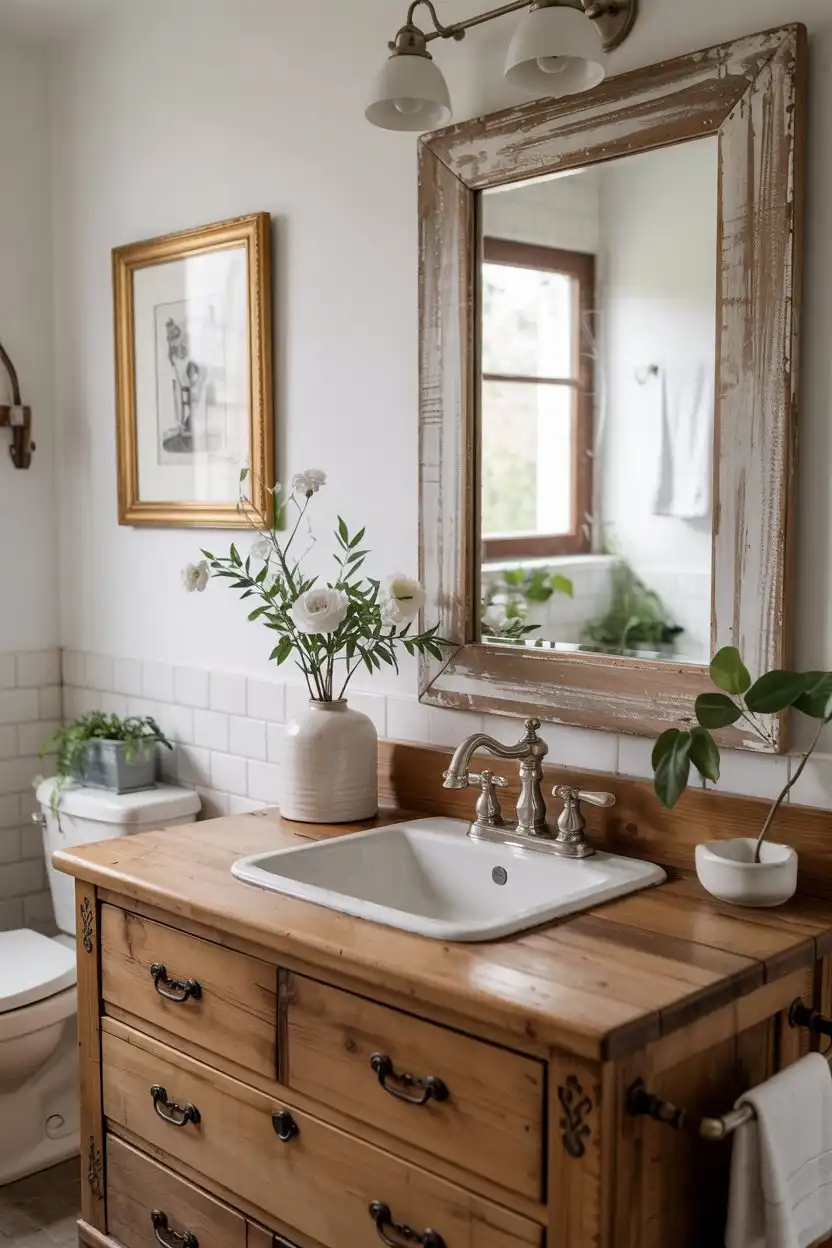
A dresser becomes a bathroom vanity by sacrificing the top drawers: remove them or cut around the P-trap, cut a hole for a vessel sink ($40–$80), and seal every surface with marine-grade polyurethane — bathrooms are steam rooms, and unsealed wood swells. A standard 90 cm dresser is already counter height, which is why this conversion is so popular.
Refurbished dresser ideas like this suit vintage, rustic, or eclectic small bathroom designs. The wood must be sealed — three coats of exterior-grade poly, including the drawer interiors — or the piece won’t survive a year of showers. Done right, you get more storage than any stock vanity and a piece nobody else has.
4. Dresser Drawer Storage on the Wall
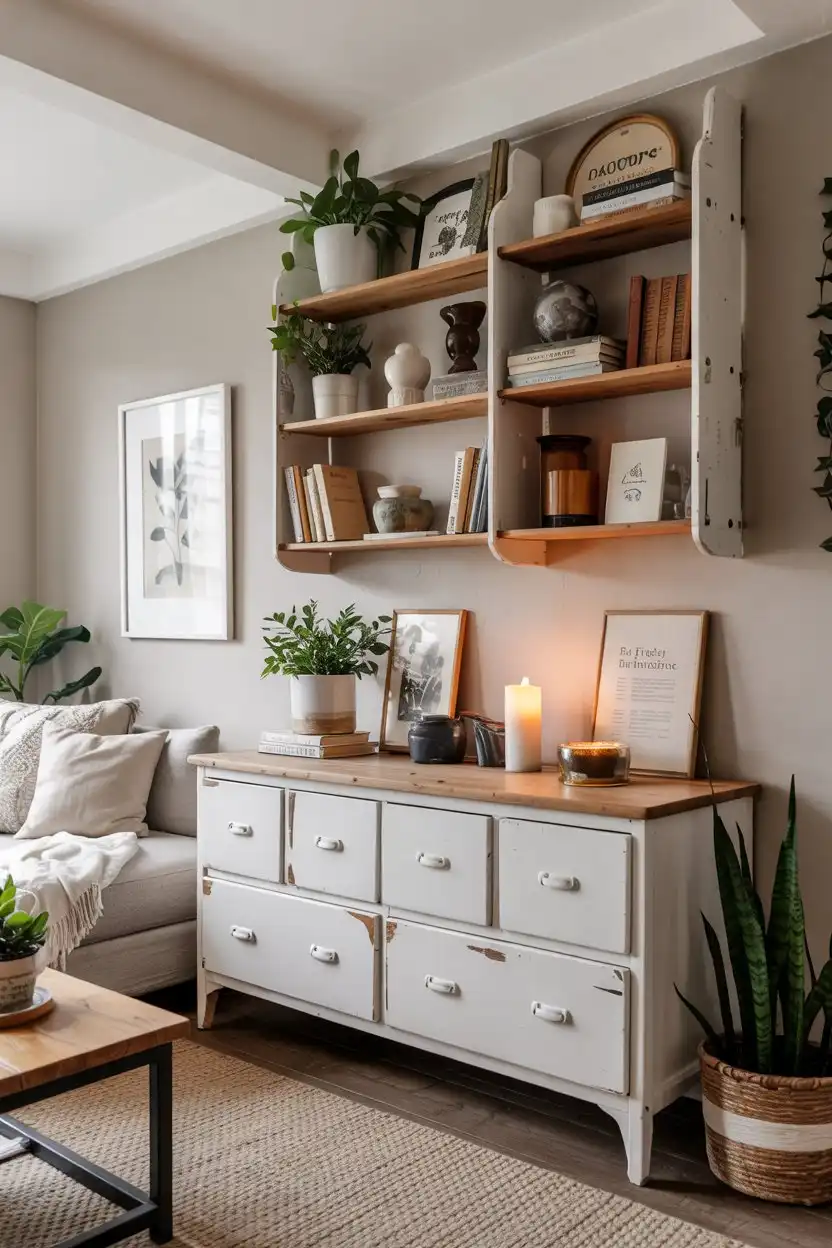
Dresser drawers pulled from a dead frame make excellent wall shelves: they’re already boxes, already finished inside. Mount them on French cleats or L-brackets — two per drawer, driven into studs — lined with wallpaper or paint inside for contrast. A deep dresser drawer runs 35–40 cm, roomy enough for books, plants, or entryway clutter.
Paint the boxes to match the wall and they read as built-ins; stain them and they read as floating cubes. In small rooms, three drawers up a narrow wall give you a full shelving unit without touching the floor.
5. Adding Decorative Knobs and Hardware
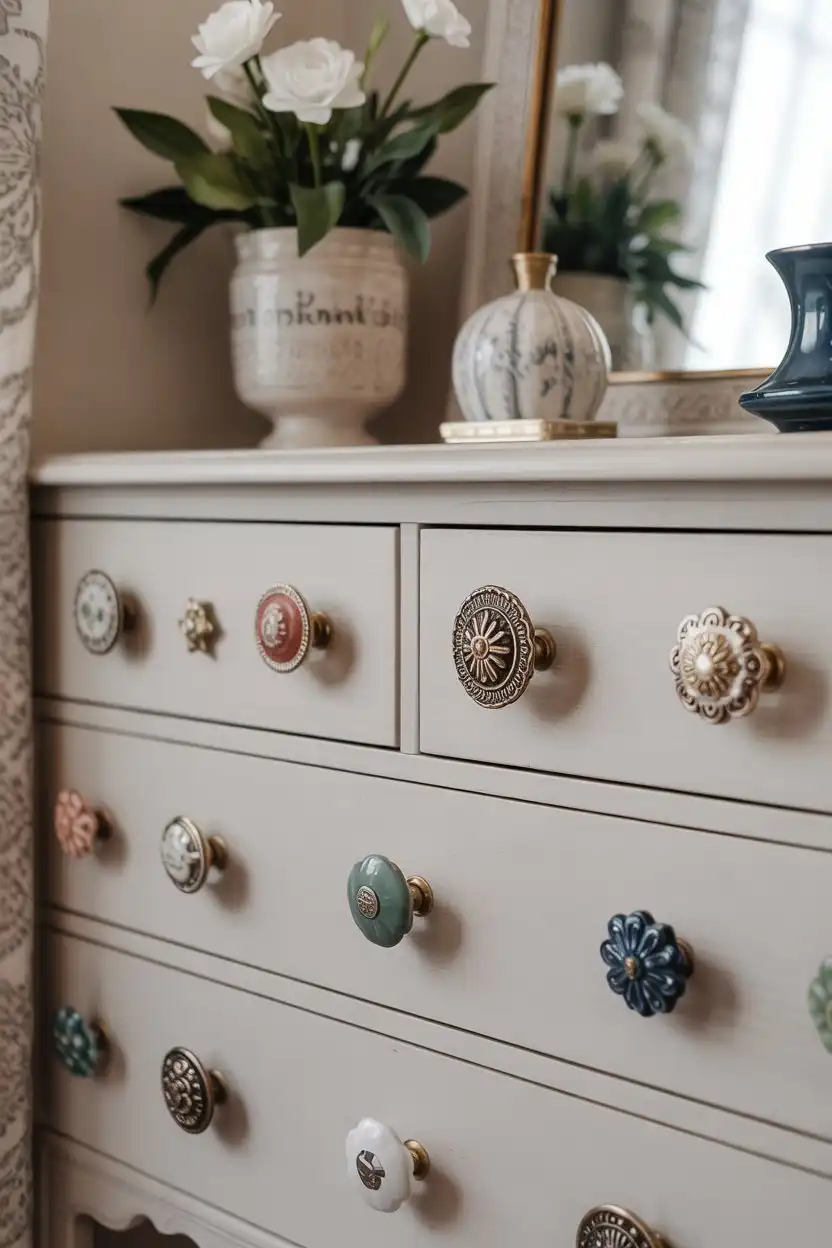
New knobs are the cheapest transformation in this list: $2–$5 each, twenty minutes with a screwdriver. Vintage glass reads traditional, unlacquered brass goes modern-farmhouse, matte black suits everything contemporary. Measure the existing hole spacing before ordering — 96 mm and 128 mm are the common ones.
Hardware sets the tone more than paint does: the same white dresser looks French with porcelain knobs and industrial with iron pulls. Buy one extra of whatever you choose — knobs get discontinued, and replacements are never quite the same.
6. Painted Bureau Ideas with Stencils and Patterns
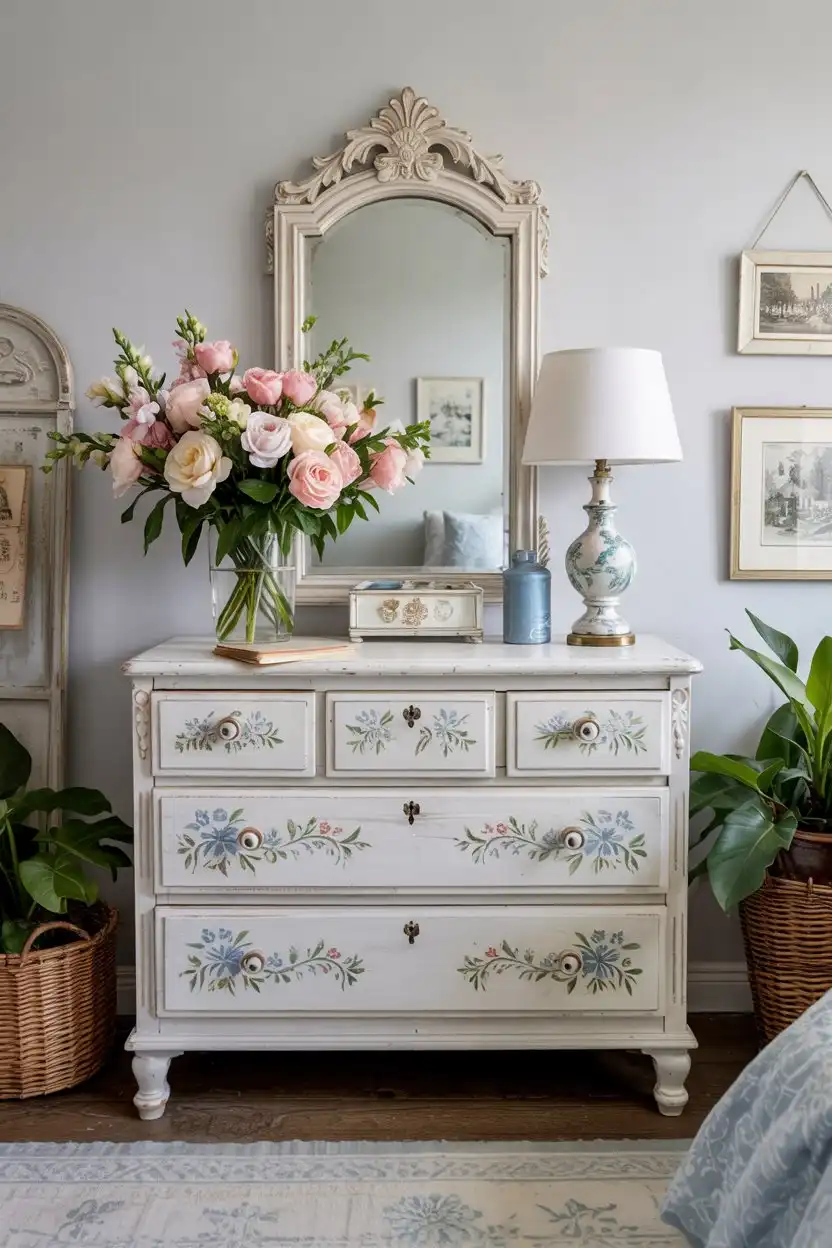
Stencils put illustrated detail on drawer fronts without illustration skills: a $12 damask or botanical stencil, a nearly-dry foam roller, and patience. Hand-painted motifs (a stripe, a number, a simple branch) read more personal; stencils read more precise. Seal with two coats of poly so the detail survives daily handling.
Confine the pattern to the drawer fronts and leave the frame solid — all-over pattern overwhelms a dresser fast. This is also the rescue move for a dresser whose wood is too damaged to refinish: pattern hides a multitude of sins.
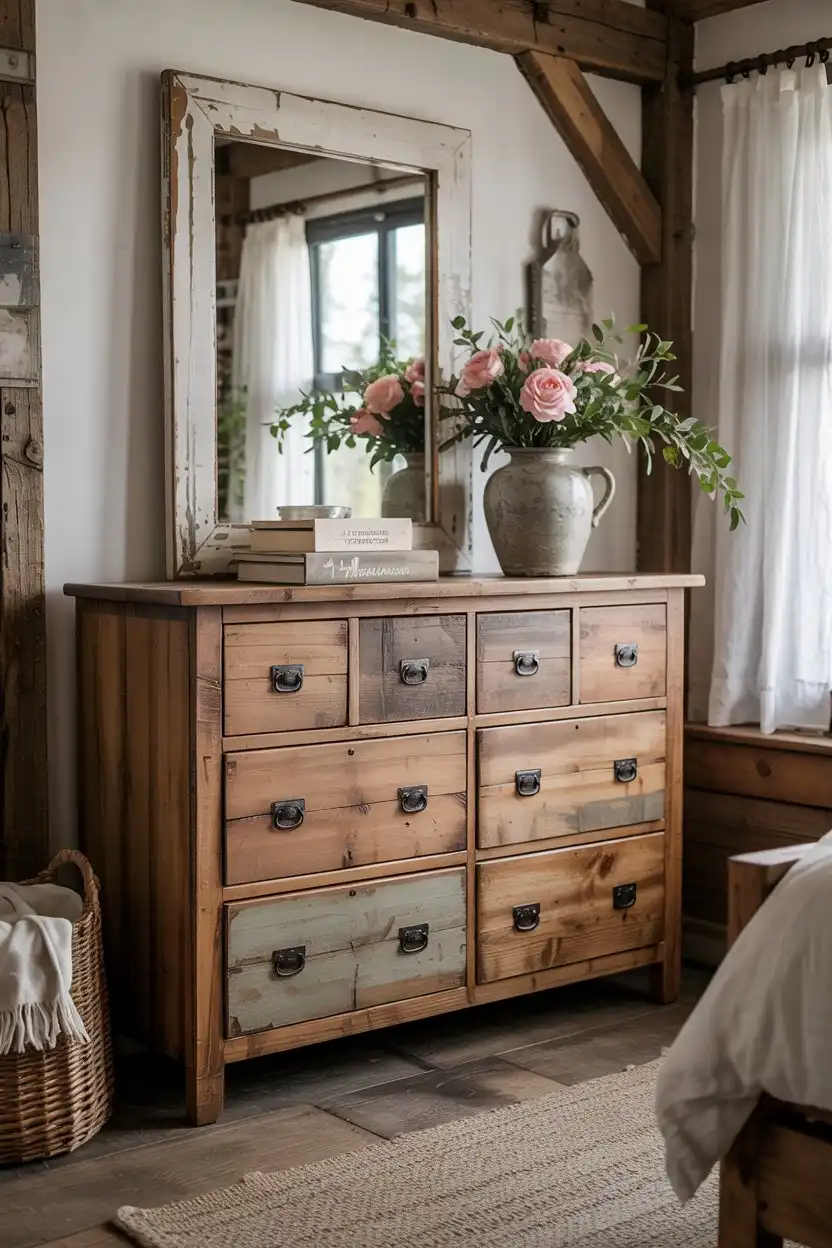
7. Rustic Upcycled Dresser with Distressed Wood
A rustic makeover is mostly subtraction: strip the old finish with a heat gun or citrus stripper, sand to 120 grit, and let the wood speak. Distress edges with a chain or hammer head if you want the aged look — real wear happens at corners and drawer pulls. Finish with hardwax oil, which is repairable spot-by-spot unlike polyurethane.
Pair the raw wood with wrought-iron or leather pulls and it lands firmly in farmhouse territory. Rustic dressers carry warm, heavy visual weight — they need rooms with natural light and breathing space, or they drag the whole room down.
8. Modern Minimalist Dresser with Clean Lines
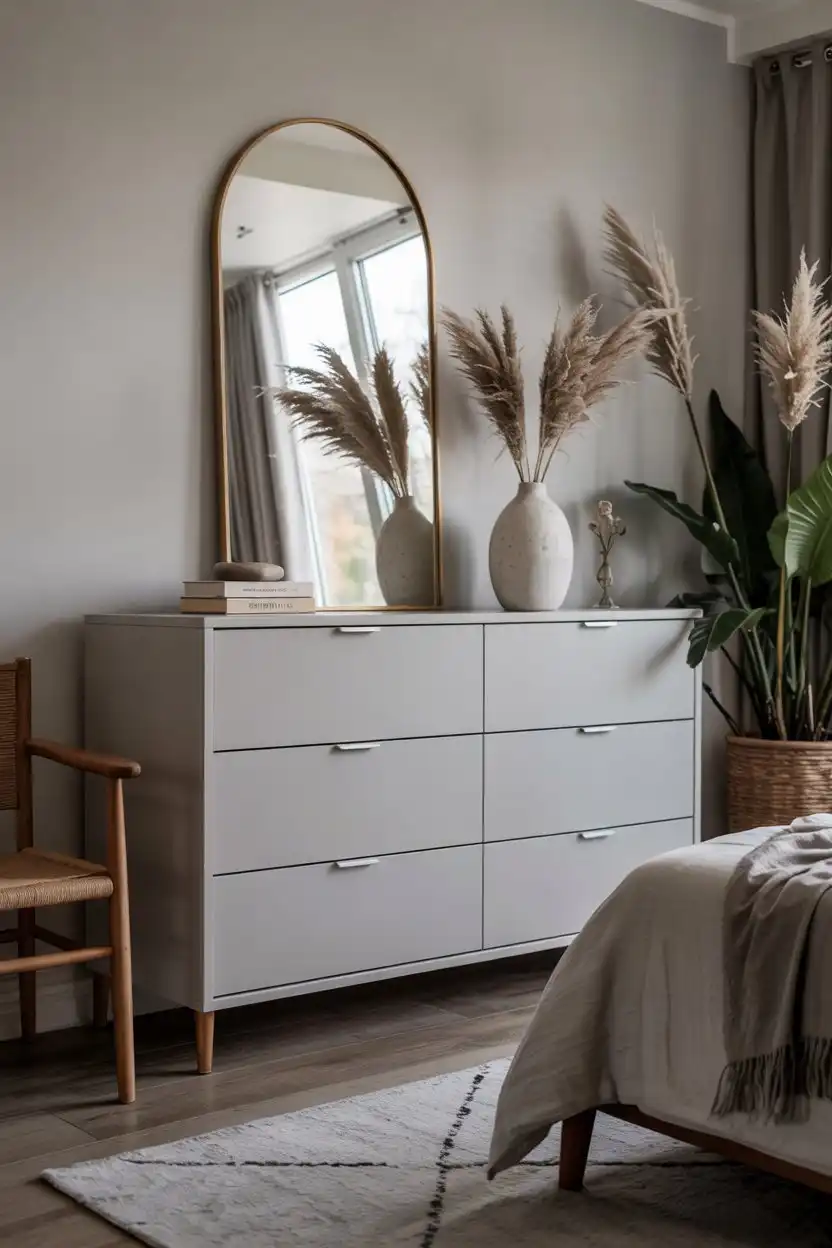
For a sleek contemporary look, the formula is ruthless simplicity: one satin paint color (warm white, greige, soft black), slim bar pulls, zero ornament. This approach pays off in small modern bedrooms or apartments where visual quiet matters. The payoff is a piece that disappears into the room and lets everything else breathe.
The minimalist dresser demands a minimalist top: one lamp, one tray, done. Every extra object on top argues with the whole concept. The upside is a piece that works in any room for a decade without dating.
9. Dresser Makeover with Wallpaper or Decoupage
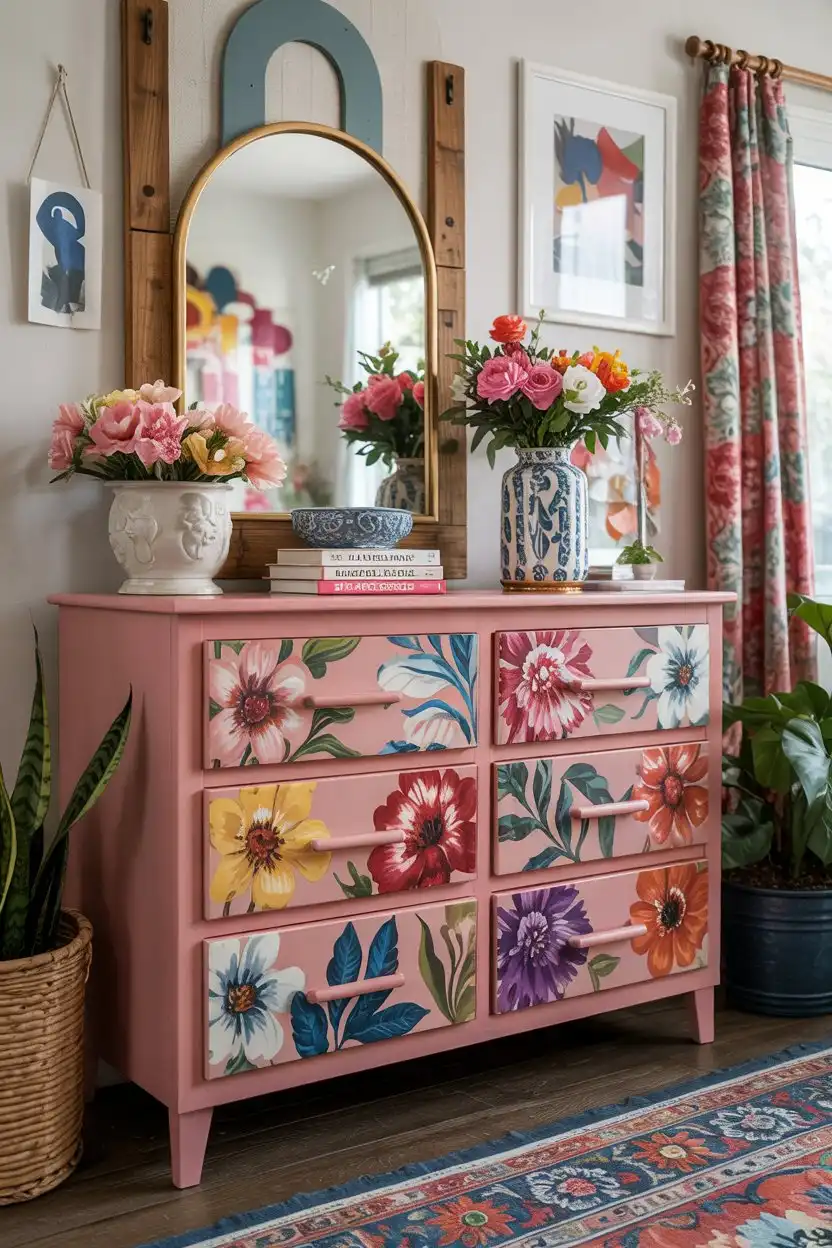
Wallpaper or decoupage on drawer fronts is instant pattern without painting skill: cut to size, apply with Mod Podge, seal with two poly coats. Vintage maps, bold florals, chinoiserie — the flat drawer front is the perfect canvas. Peel-and-stick wallpaper ($8–$12 a roll) makes the whole thing reversible.
Seal every edge, not just the face — paper lifts at corners first. This technique rescues dressers with ugly-but-sound drawer fronts, and it suits eclectic, boho, or vintage rooms where pattern is already part of the language.
10. Upcycled Dresser as a Kitchen Island or Storage Cabinet
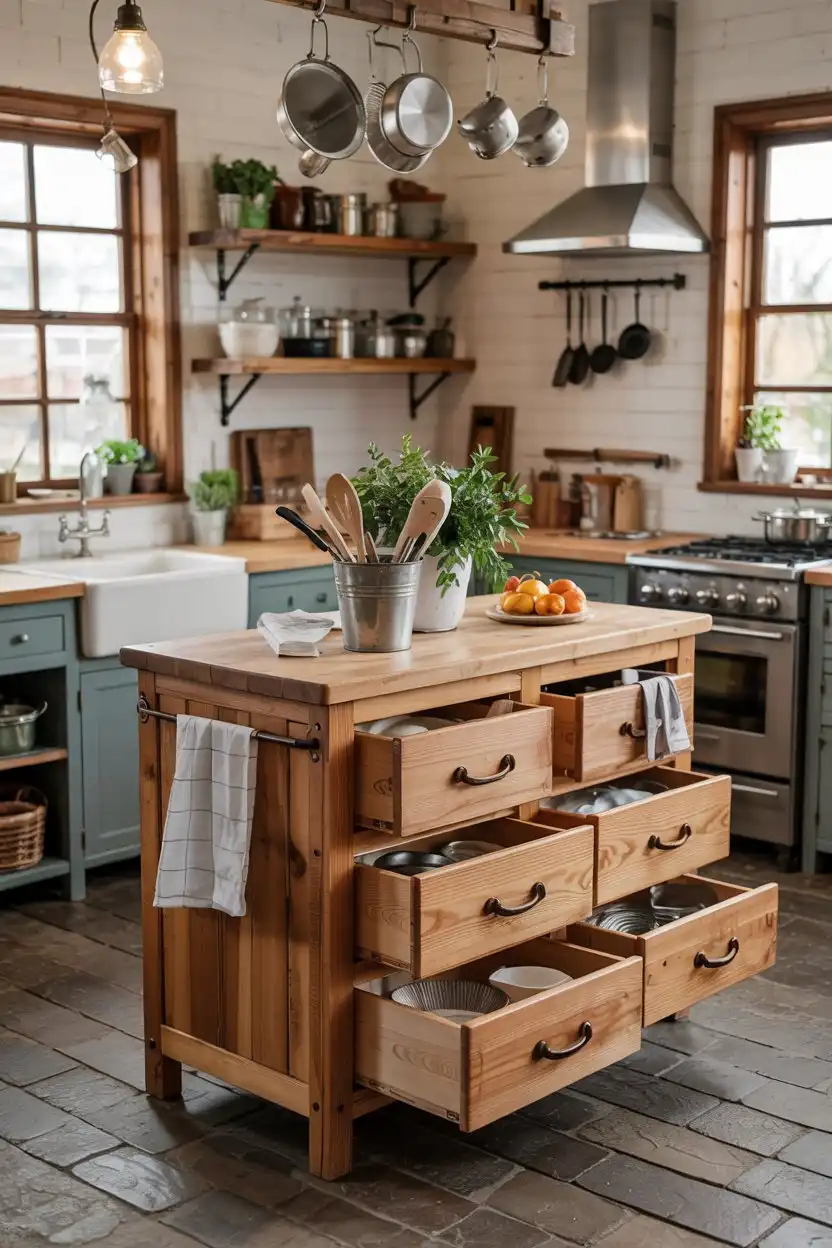
A dresser with a solid carcass becomes a kitchen island the moment a countertop goes on: butcher block for warmth ($80–$150 for a 120 cm run), or a stone remnant for a high-end read. The drawers swallow utensils, linens, and the junk drawer in one move — and at 90 cm, most dressers are already island height.
Paint it to match the kitchen’s lower cabinets and it reads as built-in. Locking casters ($8–$12 a set) make it movable for parties — just make sure the dresser is deep enough (45 cm+) not to tip when the drawers are open.
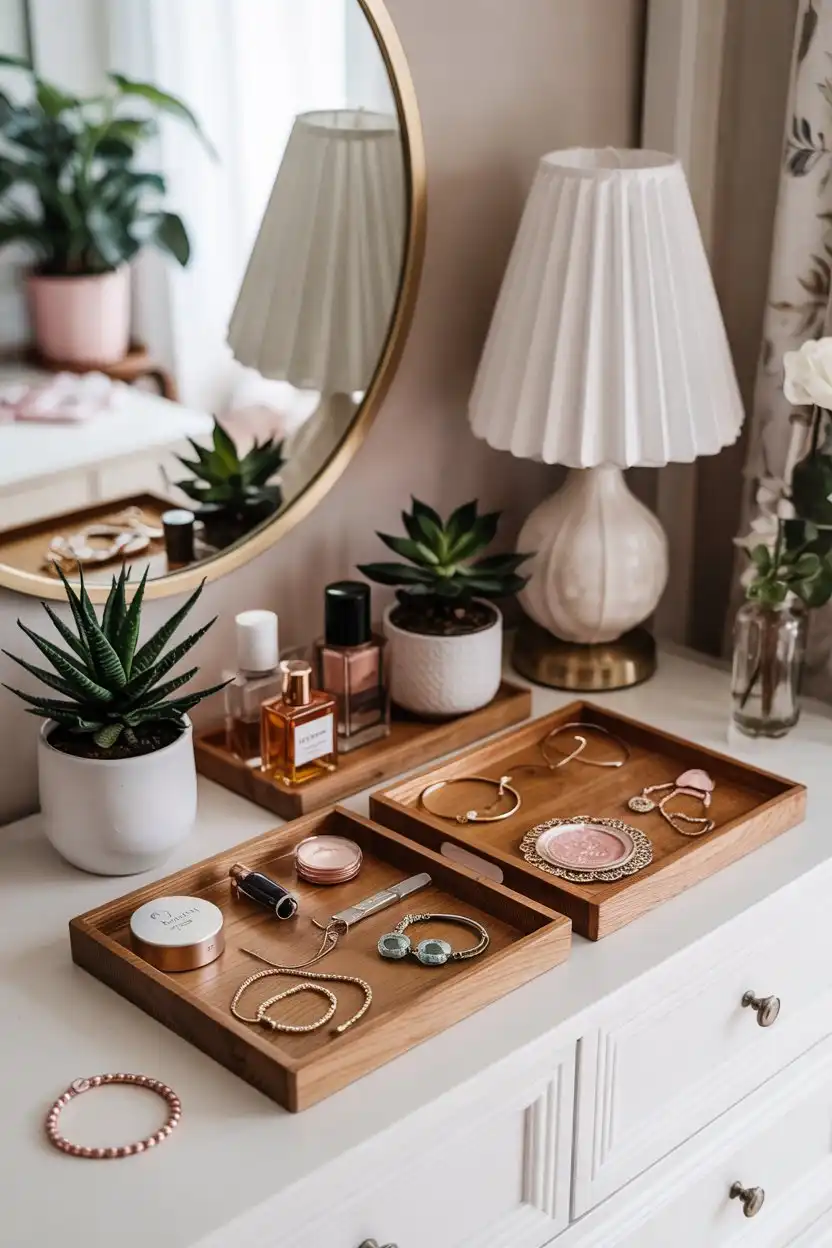
11. Dresser Top Organization with Trays and Dividers
The dresser top is the landing strip of the bedroom: corral the daily chaos with a tray for jewelry, a small bowl for keys, a box for the watch. One tray, grouped by person or function, turns clutter into a vignette. Without a container, “organized” lasts until Tuesday.
Match the containers to the room’s palette — leather, wood, or ceramic — and keep the count low: three objects max on a standard dresser top. It should look restful, not stocked.
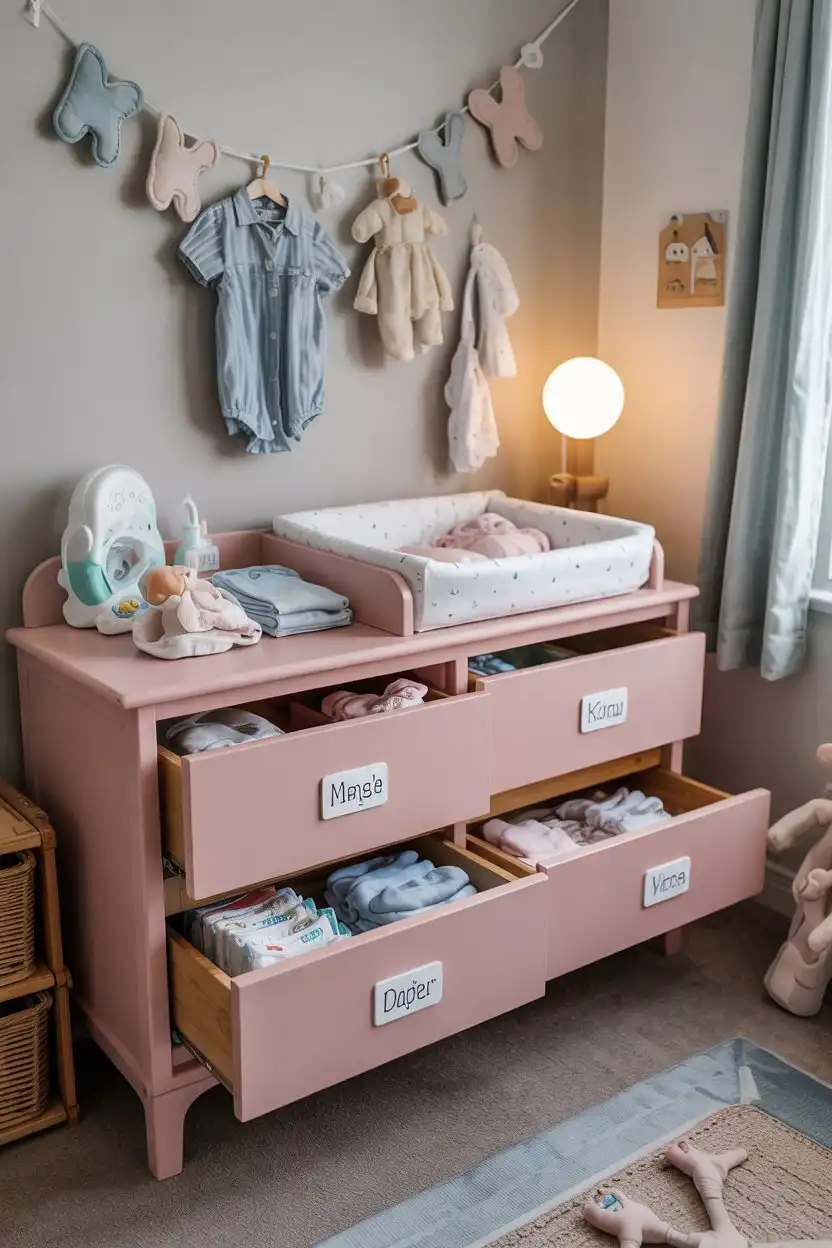
12. Nursery Dresser Organization for Baby Essentials
Dressers are the unsung heroes of nurseries: deep drawers swallow clothes, diapers, and the toy avalanche. Add drawer dividers ($15 a set) so onesies don’t become one tangled layer, and anchor the dresser to the wall — tip-over is the real nursery hazard, and a loaded dresser is top-heavy.
A fresh coat of low-VOC paint and new knobs (no small parts, nothing a toddler can unscrew) turns a $40 thrift find into a changing station with storage underneath. It outlasts the nursery phase and moves into the kid’s room after.
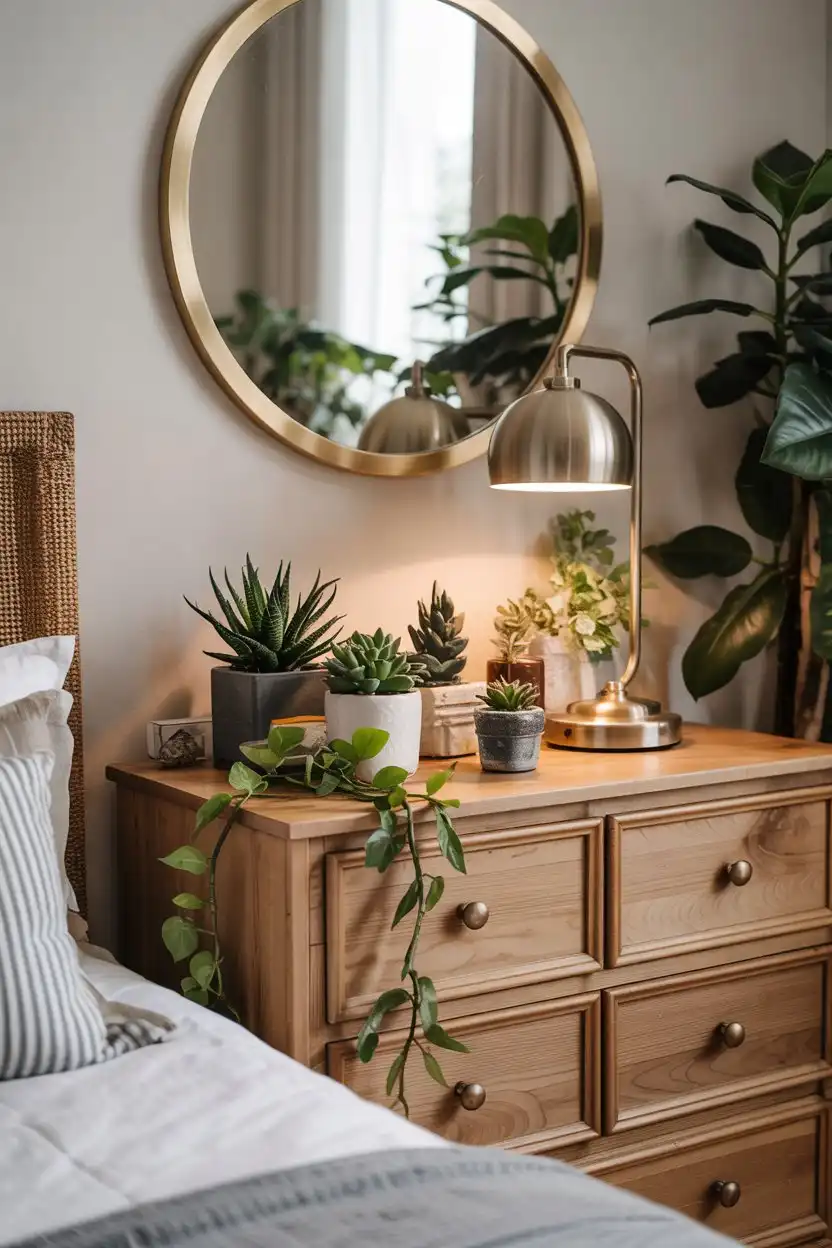
13. Decorating Dresser Tops with Plants and Lighting
A trailing pothos and a small lamp change a dresser’s entire mood: the plant softens the rectangle, the warm light makes the finish glow. Low-light plants (pothos, snake plant, ZZ) survive bedroom corners, and a $15 clip lamp with a warm bulb does what a $100 lamp does.
Plants on a dresser need a saucer or a cache pot — water rings are forever. One medium plant beats five tiny ones; scale the greenery to the dresser’s width or it reads as clutter.
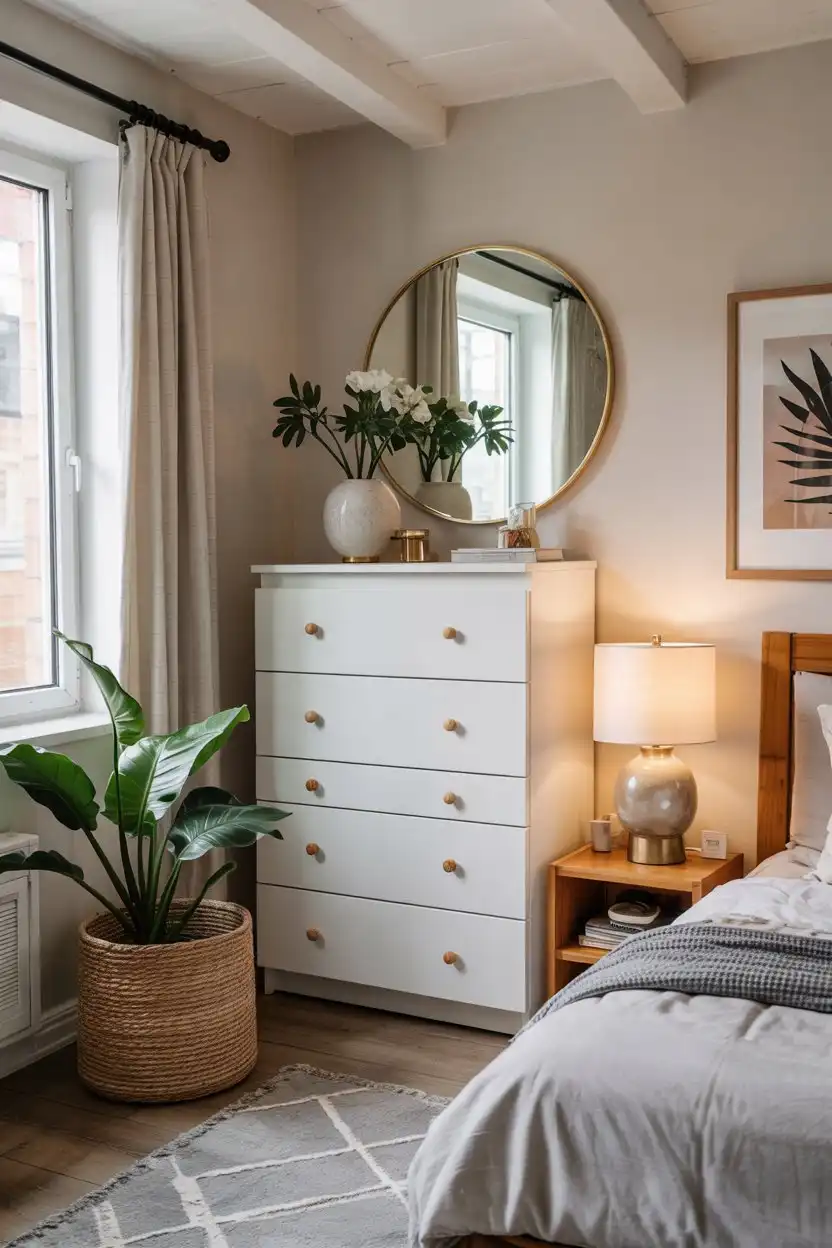
14. Alternative Dresser Ideas for Small Spaces
In a tight bedroom, the dresser should go tall and narrow: a lingerie chest or five-drawer tallboy takes the same floor space as a nightstand but holds a wardrobe. Measure the wall, then buy — “small” dressers are often wider than people remember.
Paint it the wall color (or one shade lighter) and it visually recedes; hang a mirror above and the room doubles. Light colors and reflective surfaces are the oldest small-space tricks because they work.
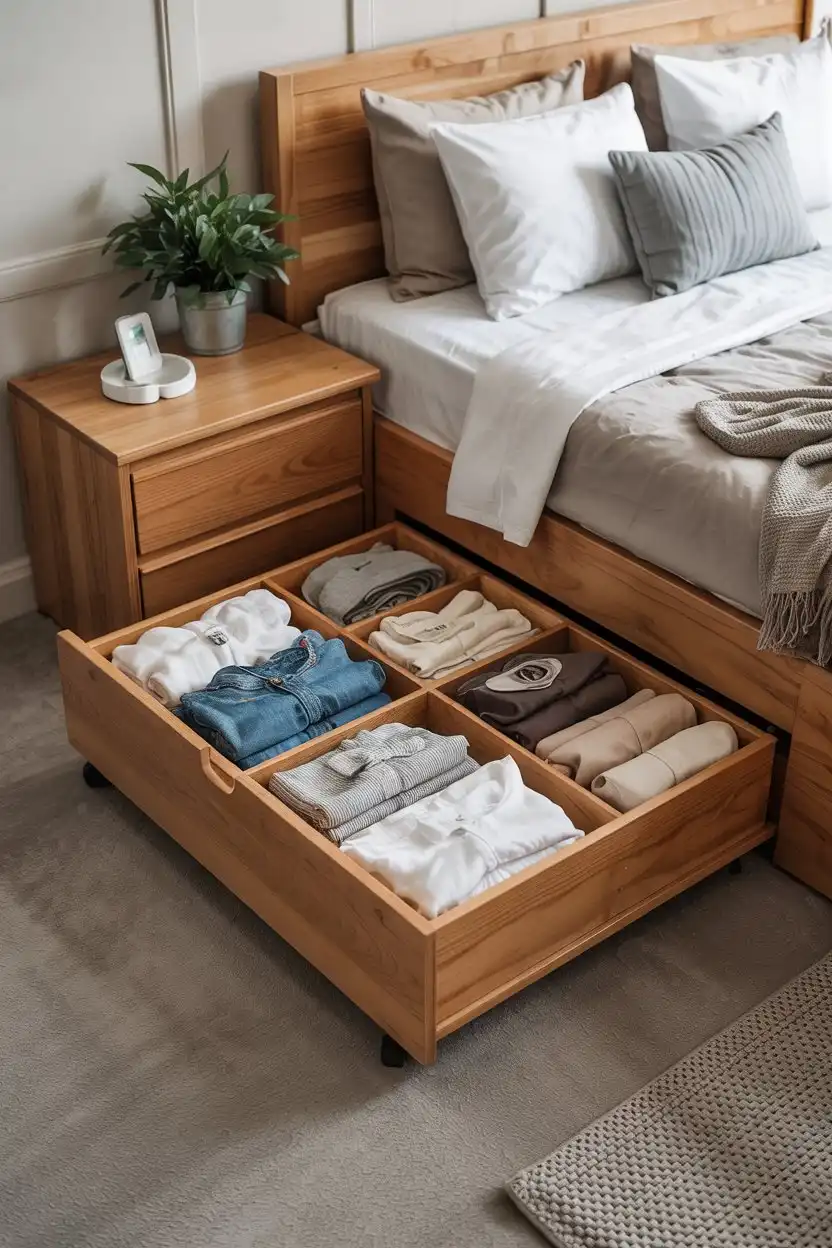
15. Repurposed Dresser Drawers as Under-Bed Storage
Dresser drawers that survive a dead frame become under-bed storage: screw on a $10 caster set or rope handles, and they slide under a standard bed frame (most clear 15–20 cm). Perfect for off-season clothes and shoes — the stuff you need twice a year but can’t throw out.
It’s the cheapest storage you’ll ever own — the drawers were free, the casters ten dollars. They keep bedrooms and walk-in closets, maintaining a clean, organized environment — no plastic bins required, which is the real win.
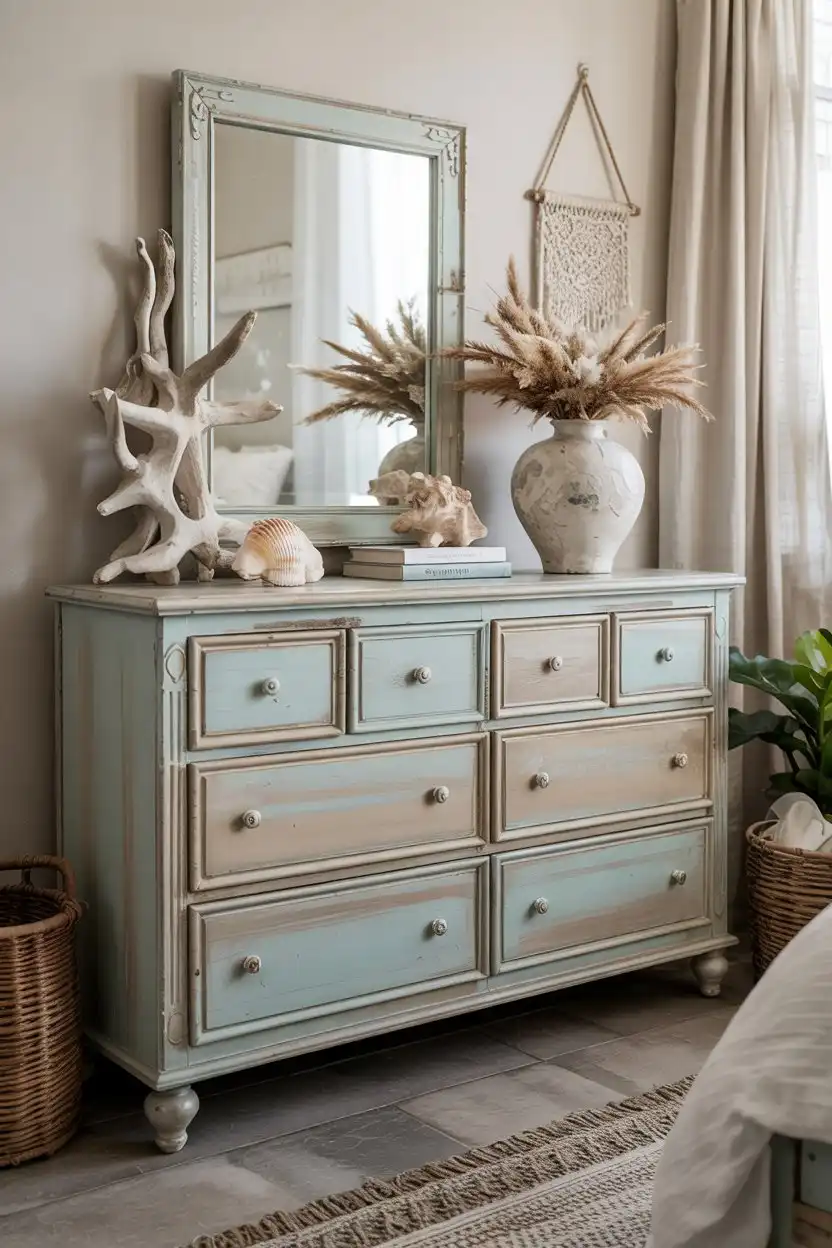
16. Coastal or Beach-Themed Painted Dressers
Coastal is a color story more than a technique: soft blues, sandy whites, seafoam greens, with edges sanded back for a weathered feel. Two coats of a desaturated blue-gray over a white base, distressed at the corners, reads beachy without a single seashell on it.
If you want the theme, commit on top: a piece of driftwood, a bowl of shells, one nautical print. The dresser carries the color; the accessories carry the theme. More than three themed objects and it’s a gift shop.
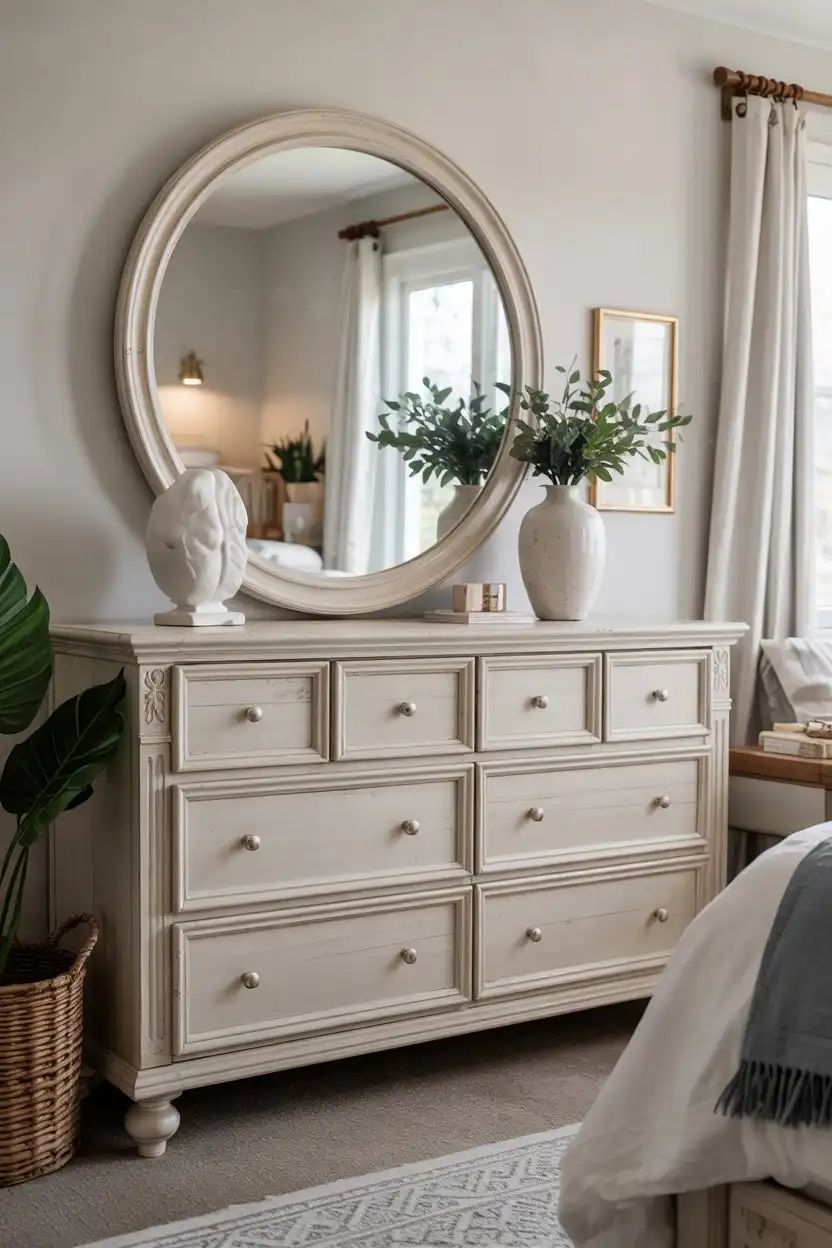
17. Incorporating Mirrors into Dresser Design
A mirror above a dresser does two jobs: it gives you a grooming station and bounces light around the room. Size the mirror to the dresser — roughly two-thirds its width, hung 10–15 cm above the top. Match the frame to the hardware finish and the two pieces read as a set.
In an entryway, mirror-plus-dresser is the last-look station: keys in the tray, coat check in the glass. In a bedroom it doubles as a vanity without taking vanity space. The mirror does the heavy lifting for light, so keep it clean — a dusty mirror above a beautiful dresser is a wasted opportunity.
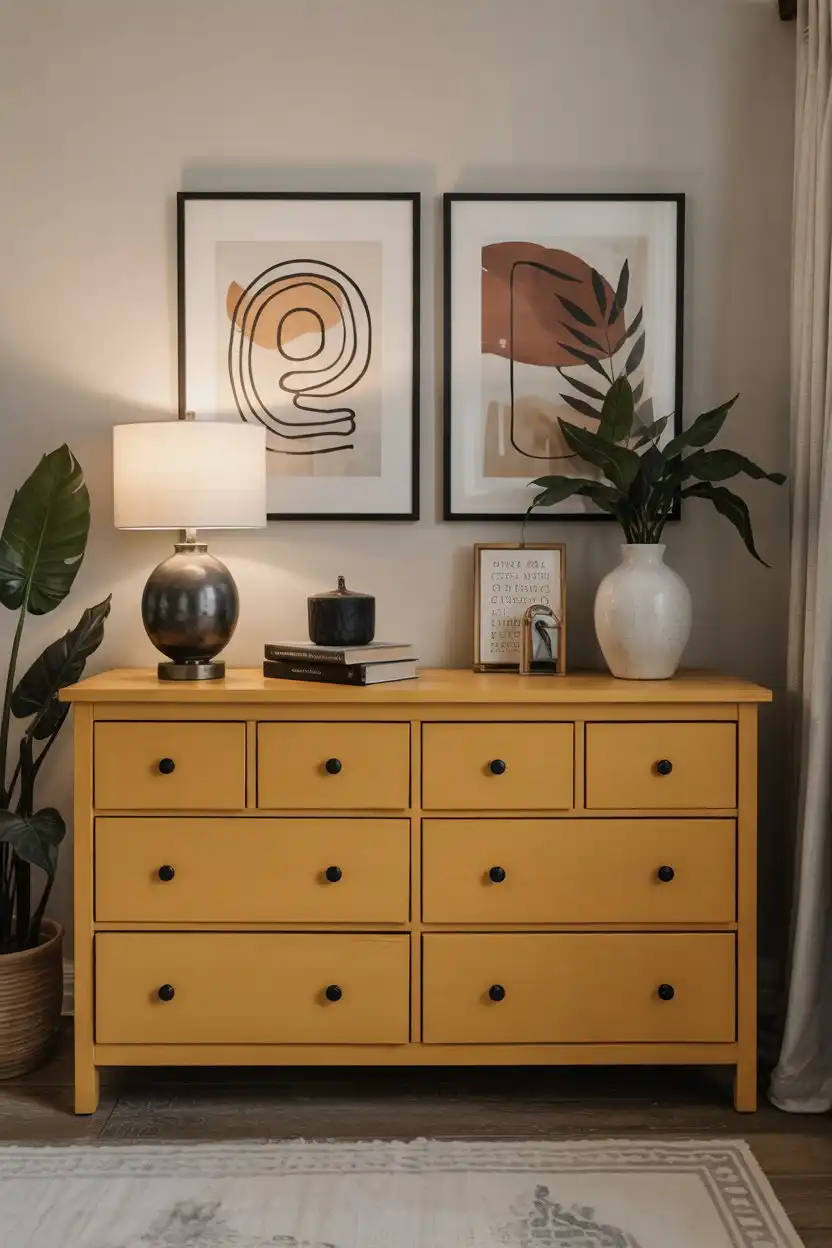
18. Using Bold, Colorful Paint for Statement Pieces
A dresser in mustard yellow, emerald green, or lipstick red stops being furniture and becomes the room’s personality. Bold color works when the room is otherwise calm — neutral walls, simple bedding — so the dresser gets the whole stage. modern house interiors where contrast is welcome. Pair the loud color with quiet hardware (matte black, brushed nickel) — loud paint plus loud knobs is too much noise.
One rule for bold paint: it has to be applied well. Bright colors show every brush mark and drip, so thin the paint slightly, use a good brush, and do three thin coats. A sloppy bold dresser looks like a mistake; a crisp one looks like a choice.
19. Dresser as Entryway Storage and Decor
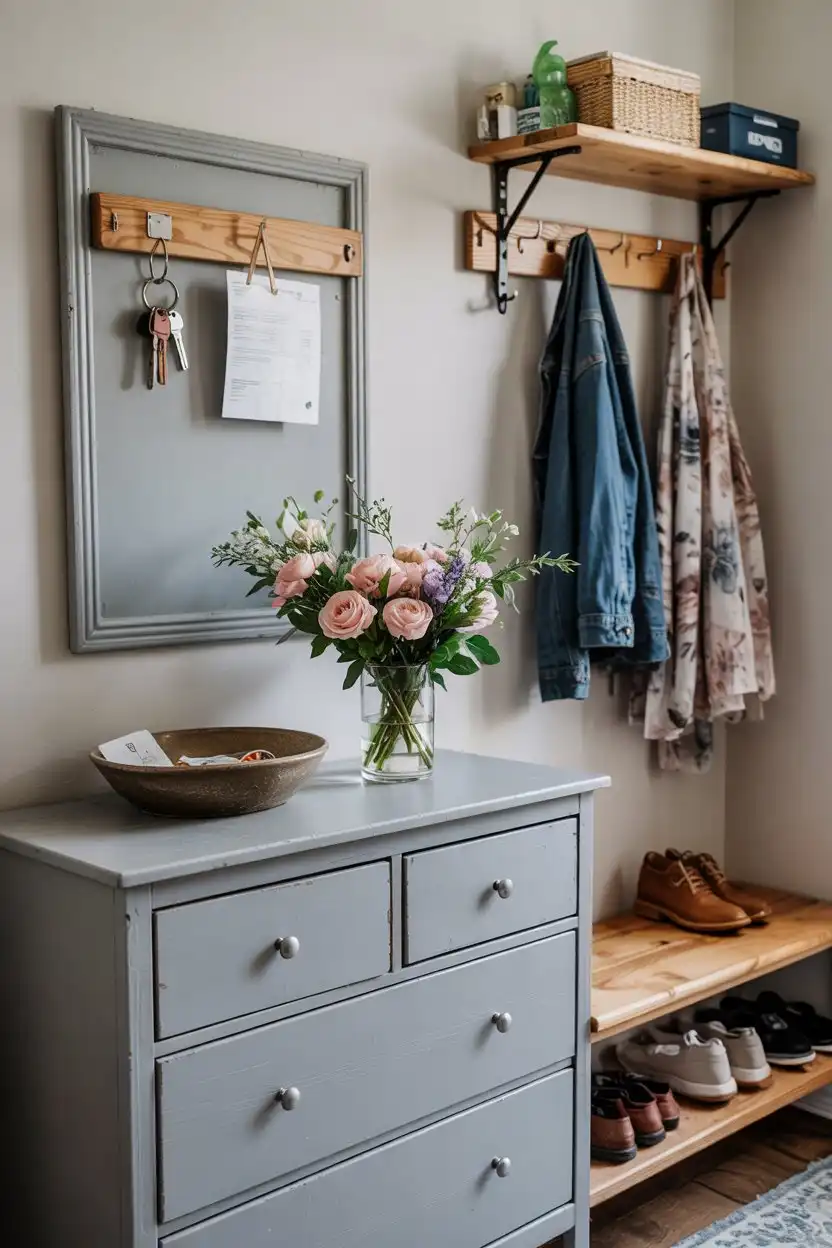
A narrow dresser in the entryway is the hardest-working piece in the house: keys, mail, sunglasses, the dog leash — everything that otherwise migrates to the kitchen counter. Look for pieces under 35 cm deep so they don’t block the path. One tray on top per person keeps the peace.
Hooks or a small shelf above complete the station: coats up high, daily essentials in the drawers. The entryway is the room’s first impression and the family’s dumping ground — the dresser is what keeps it the former.
20. DIY Drawer Front Makeovers with New Materials
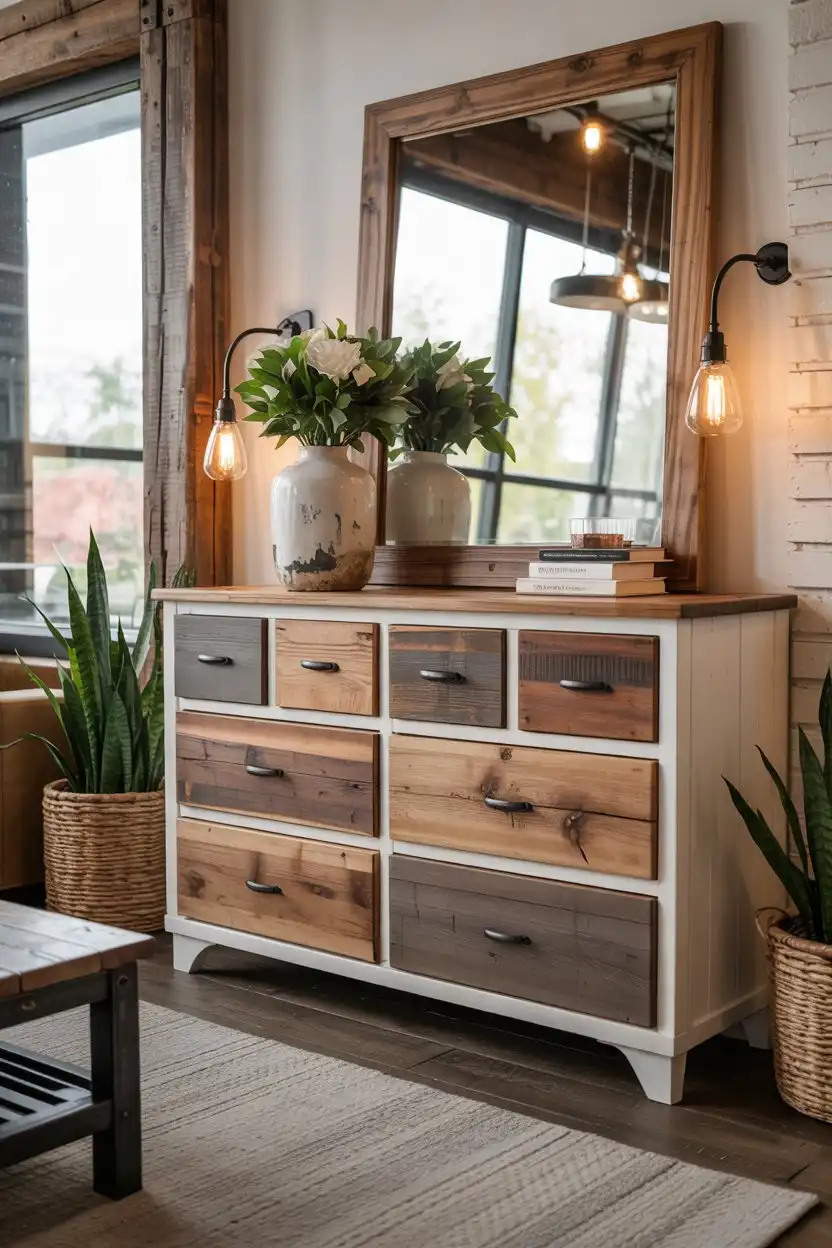
When the carcass is sound but the drawer fronts are dated, replace just the fronts: reclaimed wood planks, upholstered panels, cane webbing, or even leather. Cane webbing ($15–$25 a roll) over a simple frame is the current classic — texture, airflow, and it hides clutter while looking intentional.
This is the most surgical dresser upgrade: keep the box, change the face. It works for any style — industrial (steel mesh), boho (cane), modern (slab fronts in a new color) — because the fronts are what your eye actually reads.
FAQs