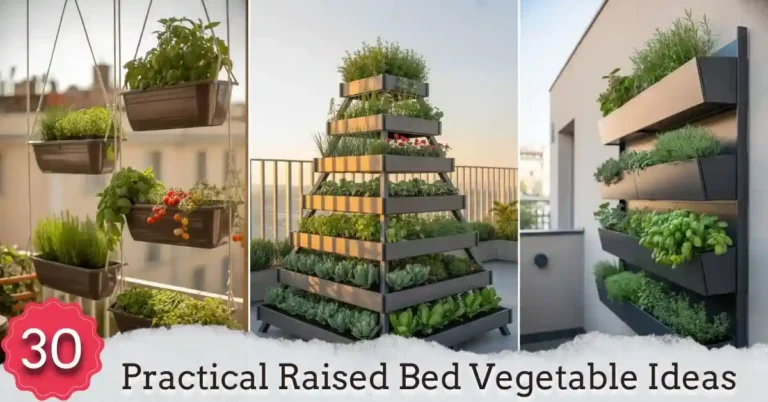
30 Practical Raised Bed Vegetable Ideas for Modern Balconies
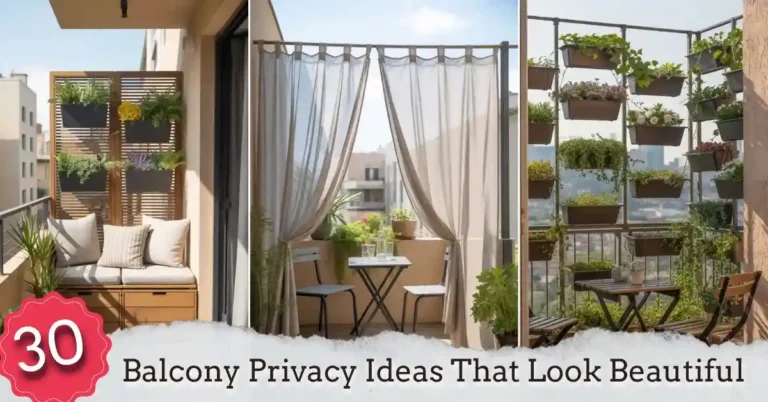
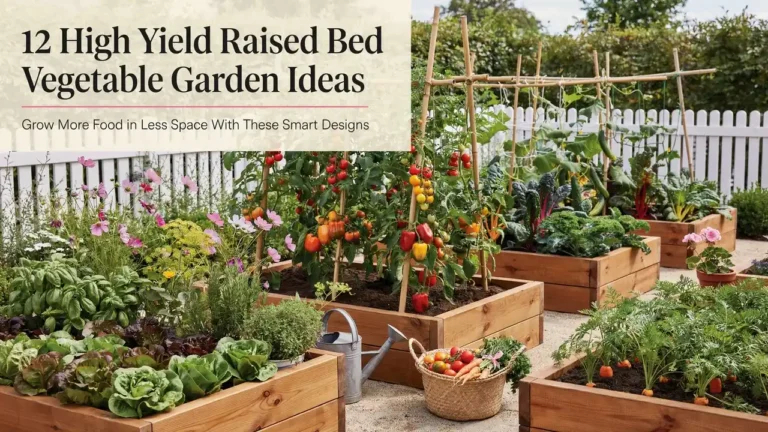
The average apartment balcony is maybe 40 square feet, and most of it is occupied by a chair nobody sits in and a grill used twice a year. Reclaim even half of it and you can grow a genuine share of your vegetables. These thirty ideas are all built for that scale: vertical where the floor is small, lightweight where weight limits matter, and good-looking enough that the neighbors won’t complain.
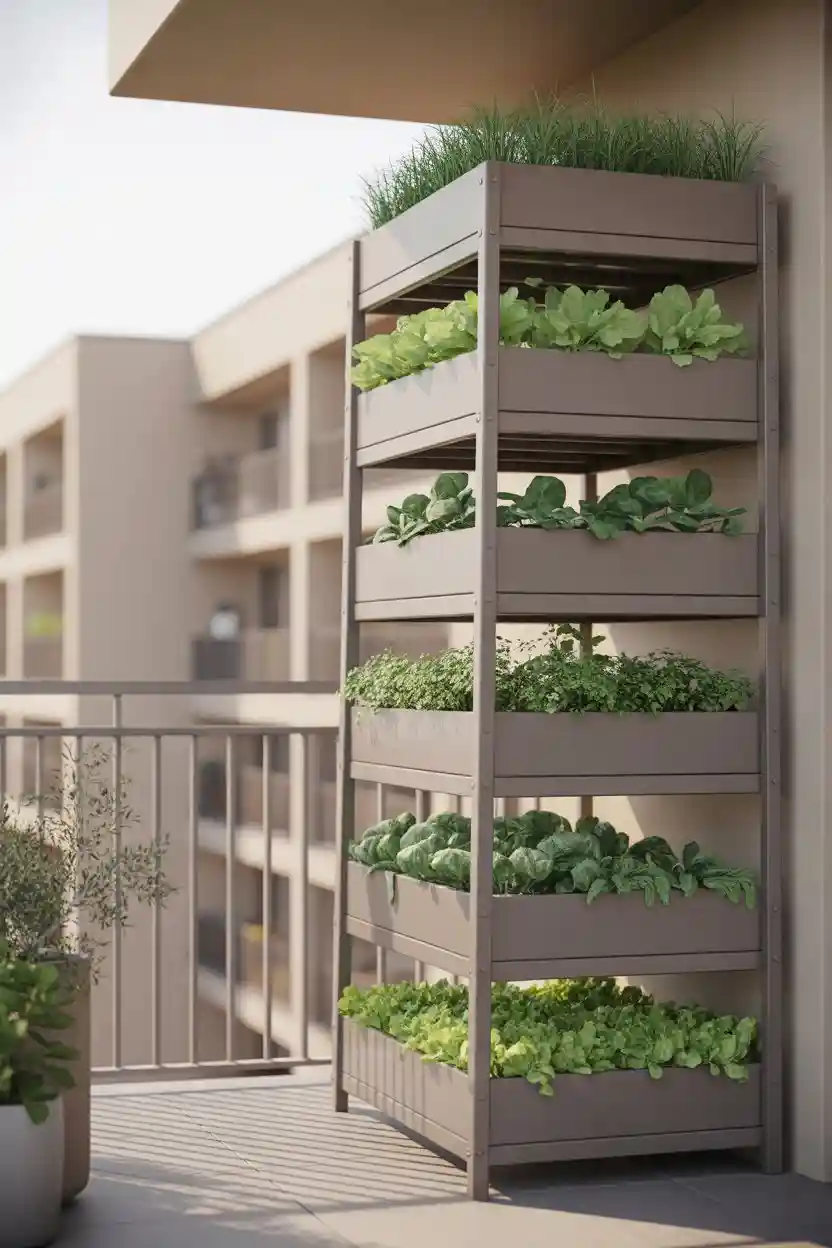
Idea 1: Vertical Ladder Raised Bed
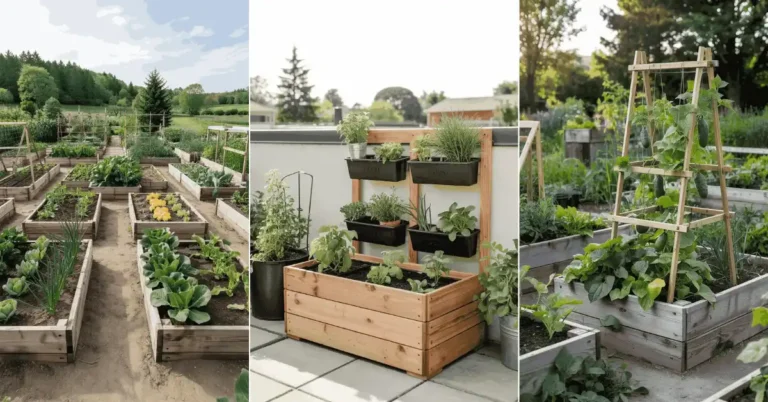
A ladder shelf with a shallow tray on each rung turns one square foot of floor into four square feet of growing space. Six-inch-deep trays suit lettuce, spinach, arugula, and herbs — crops that don’t need depth but love the light each tier gets. Tilt the whole unit slightly or stagger the shelves so upper trays don’t shade the lower ones.
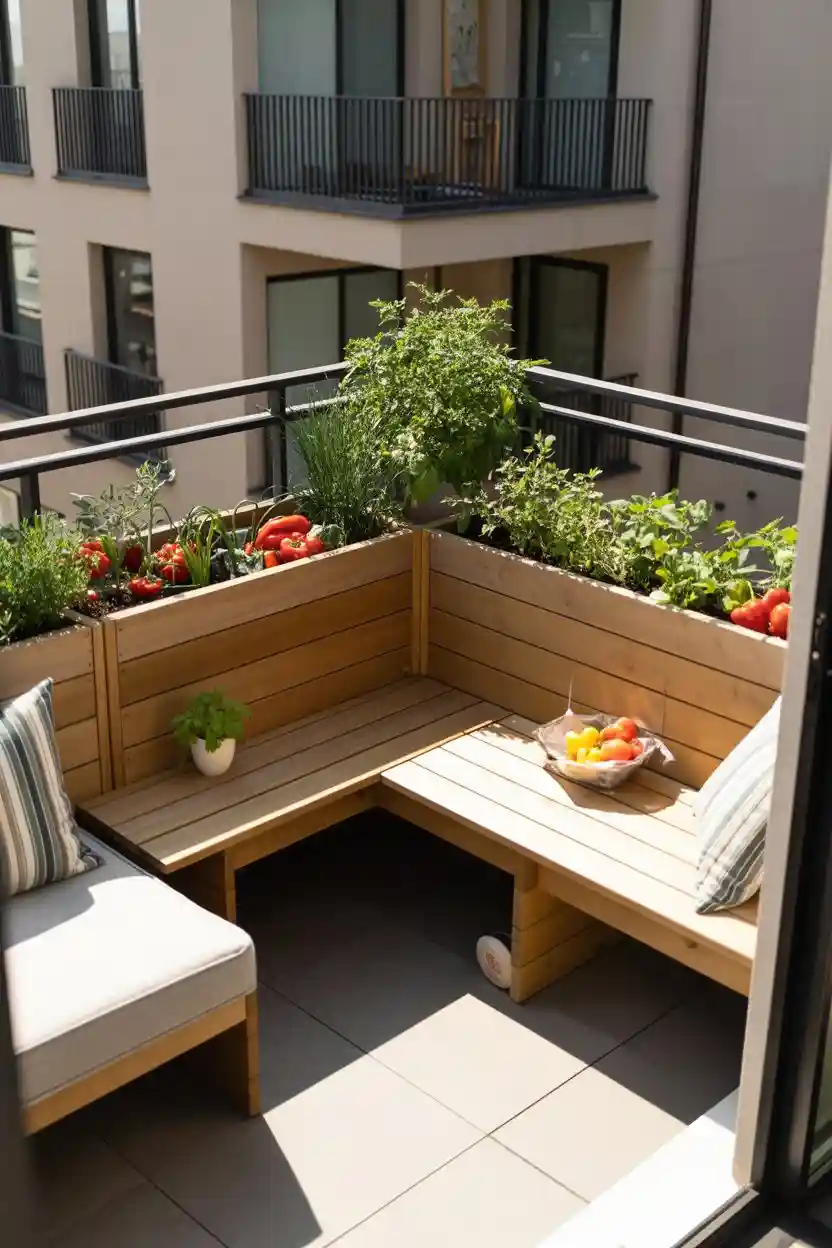
Idea 2: Corner L-Shaped Raised Bed
Corners collect dead air on most balconies; an L-shaped bed puts that space to work. One continuous frame wrapping two walls holds peppers and tomatoes on the sunny arm, herbs on the other, while the middle stays open so the balcony still feels like a balcony.
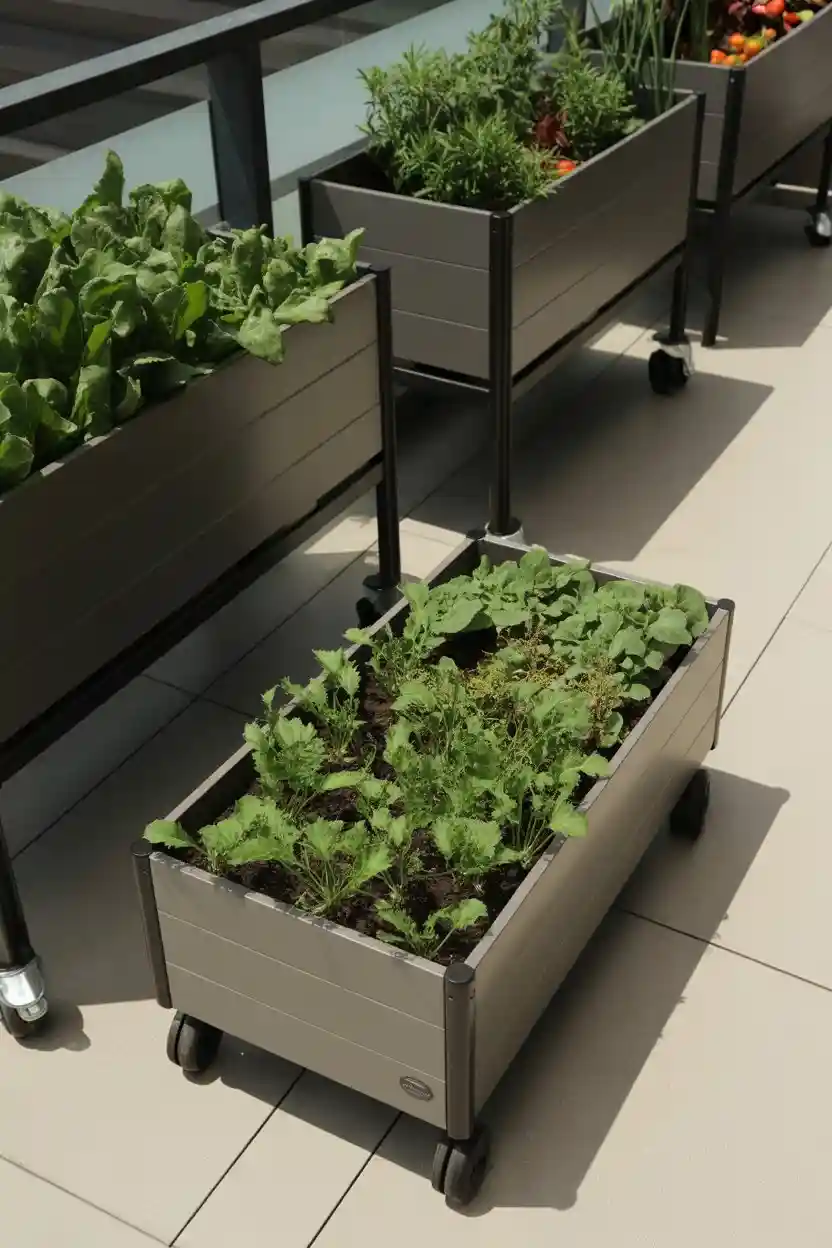
Idea 3: Rolling Raised Bed Boxes
Wheels change everything when the sun moves across your balcony through the day. A box on locking casters — loaded with greens, carrots, or herbs — rolls into morning sun and out of brutal afternoon heat. Lock the wheels once positioned; a loaded box on a slope is a runaway waiting to happen.
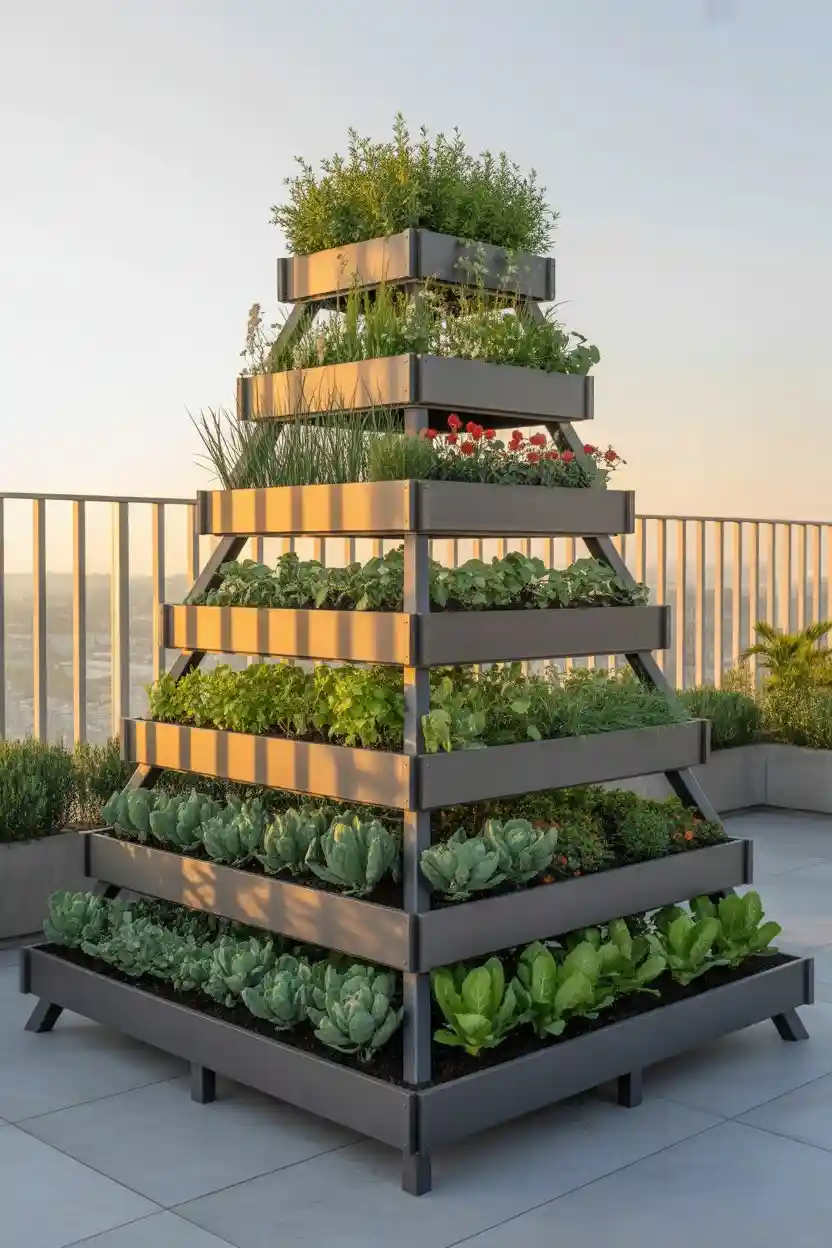
Idea 4: Tiered Pyramid Raised Bed
A stepped pyramid — three or four shrinking square frames stacked — gives every plant its own sun exposure with zero shading between levels. Strawberries love the top tier where fruit hangs clear of soil; trailing herbs like thyme spill down the sides.
Idea 5: Railing Mounted Raised Beds
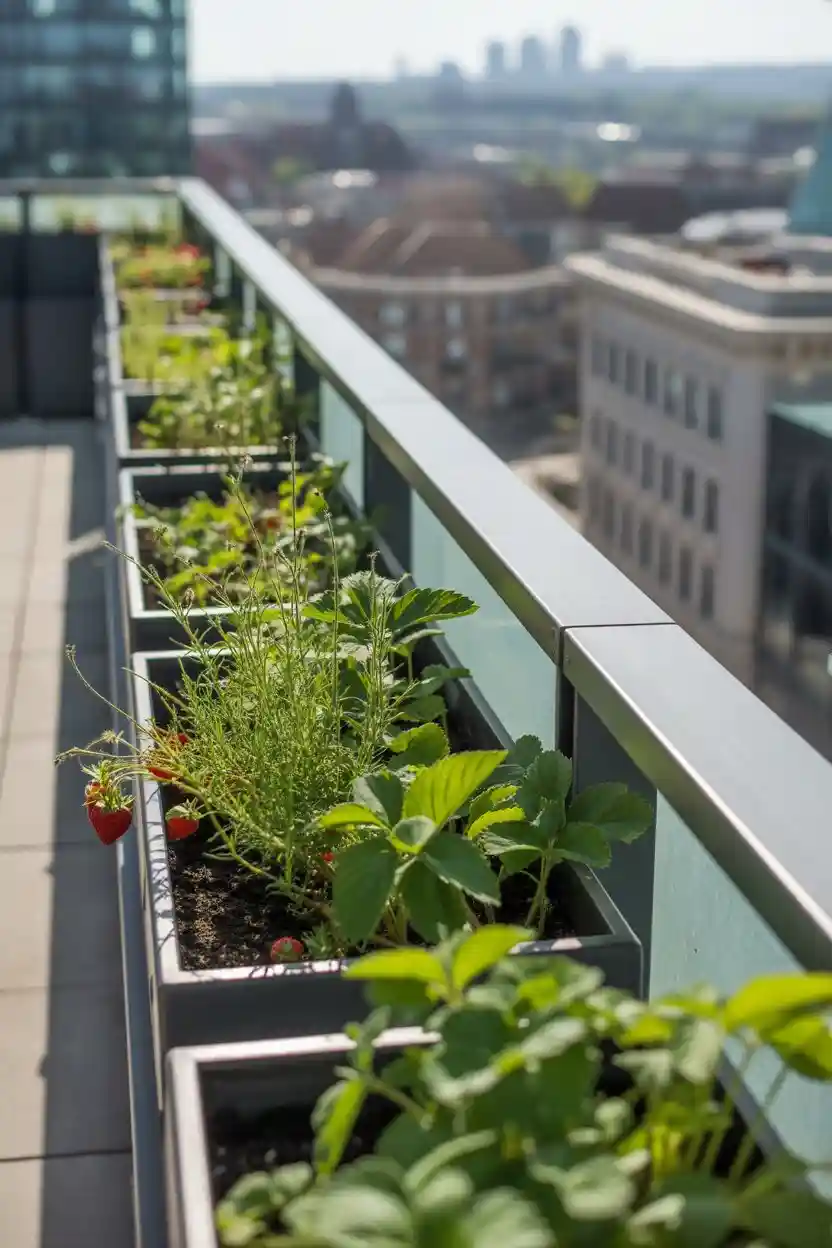
Railing-mounted boxes hang outside the railing, which means they use precisely zero floor space. They’re perfect for herbs, lettuce, and strawberries. Check two things first: your building’s rules about exterior attachments, and that the brackets are rated for the weight — wet soil is around 100 pounds per cubic foot.
Idea 6: Glass-Covered Mini Raised Bed
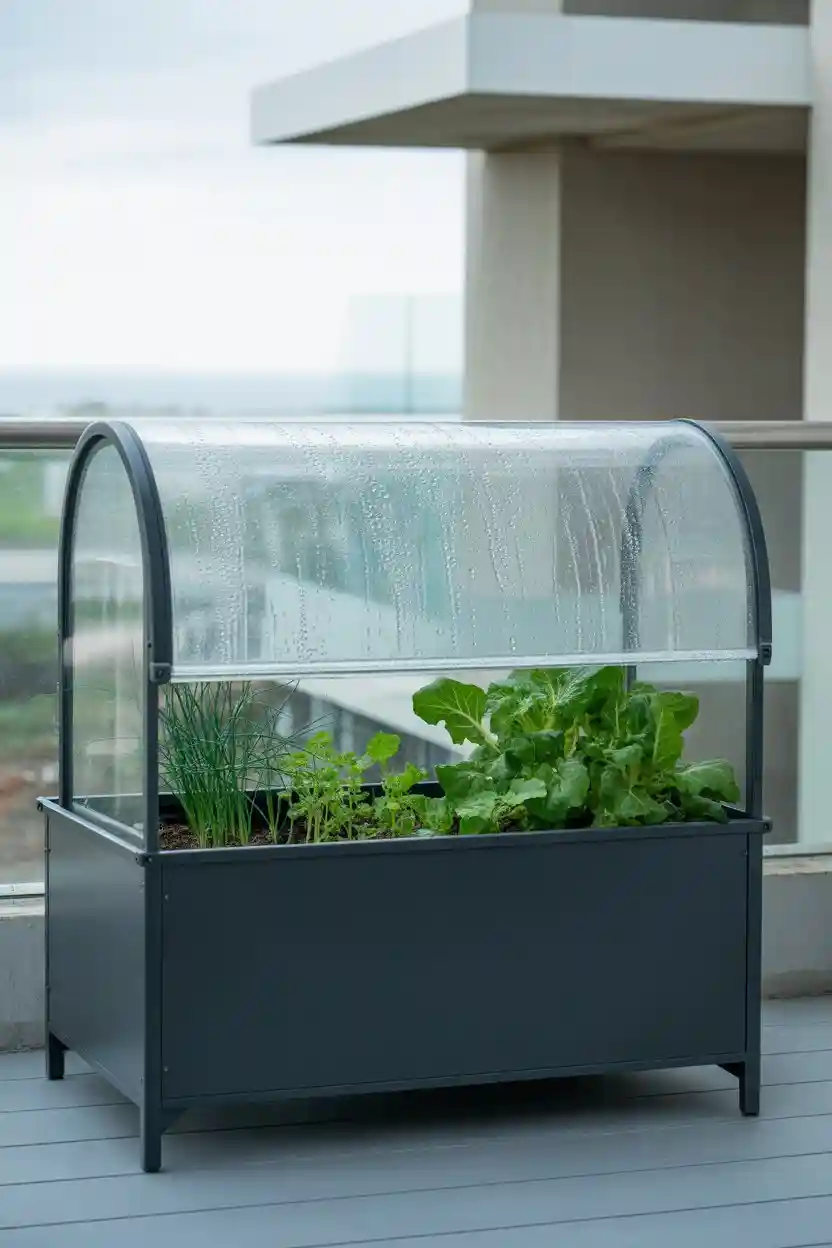
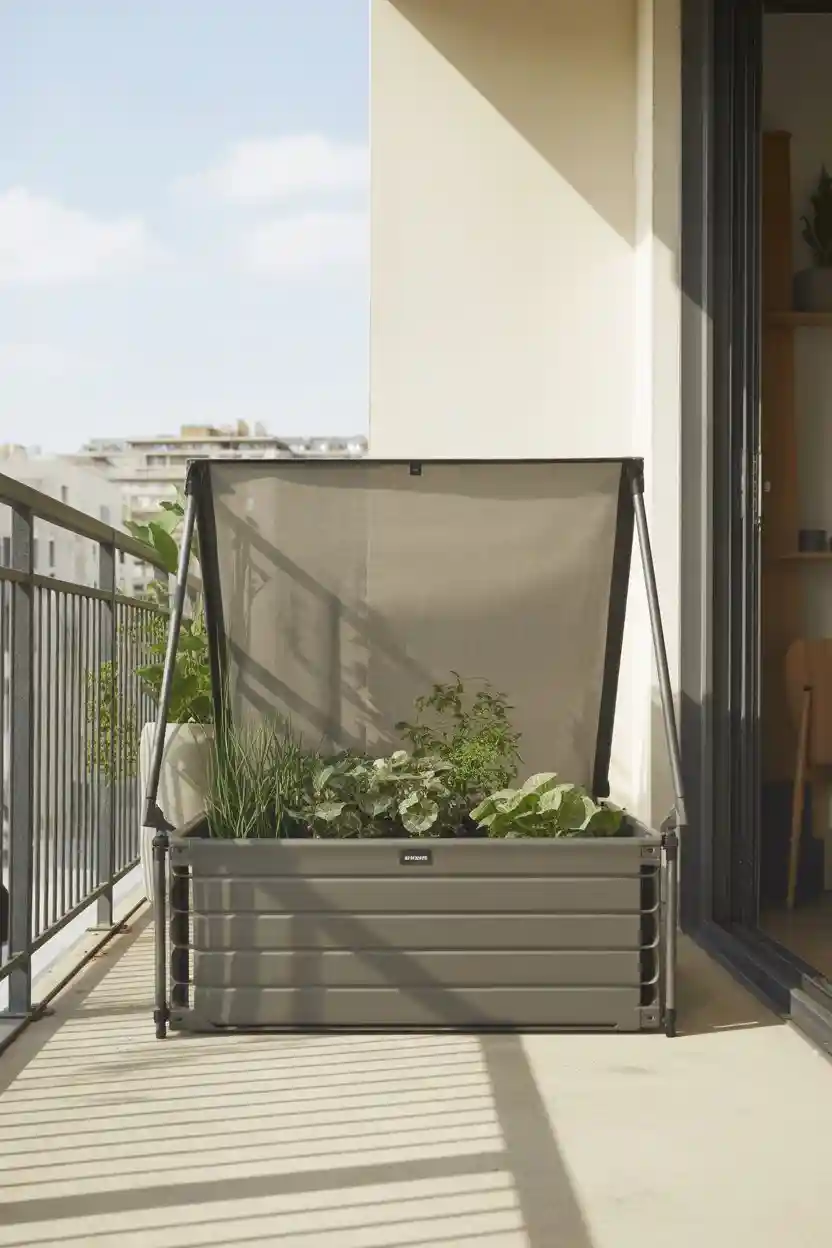
A shallow bed under a hinged glass or polycarbonate lid is a cold frame in disguise. It buys you a month of extra season on each end and doubles as a hardening-off station for seedlings. Prop the lid open on sunny days or you’ll cook everything by noon.
Idea 7: Modular Stackable Raised Beds
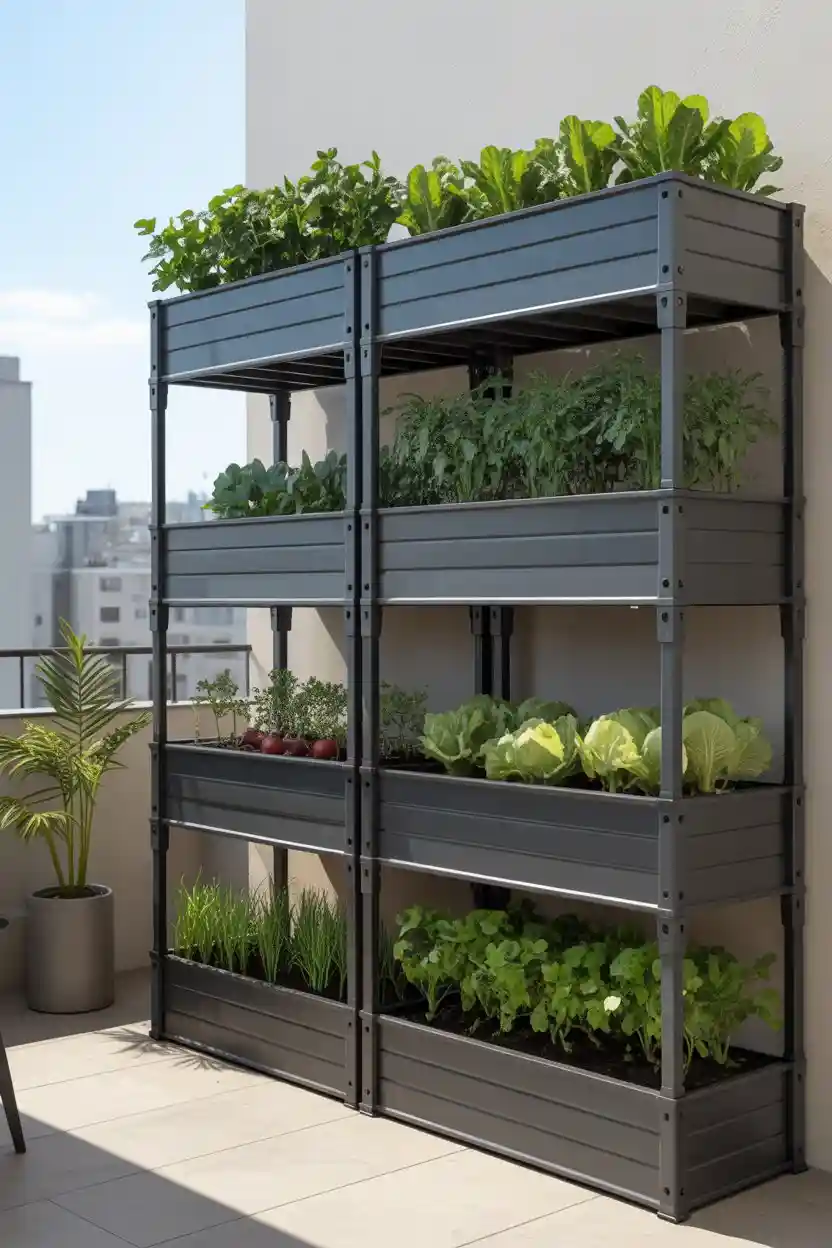
Stackable corner-bracket kits let you start ankle-high and add tiers as ambition grows. Two tiers suit most vegetables; three works for deep-rooted crops. The real win is reconfigurability — unstack and rearrange when you learn which corner actually gets six hours of sun.
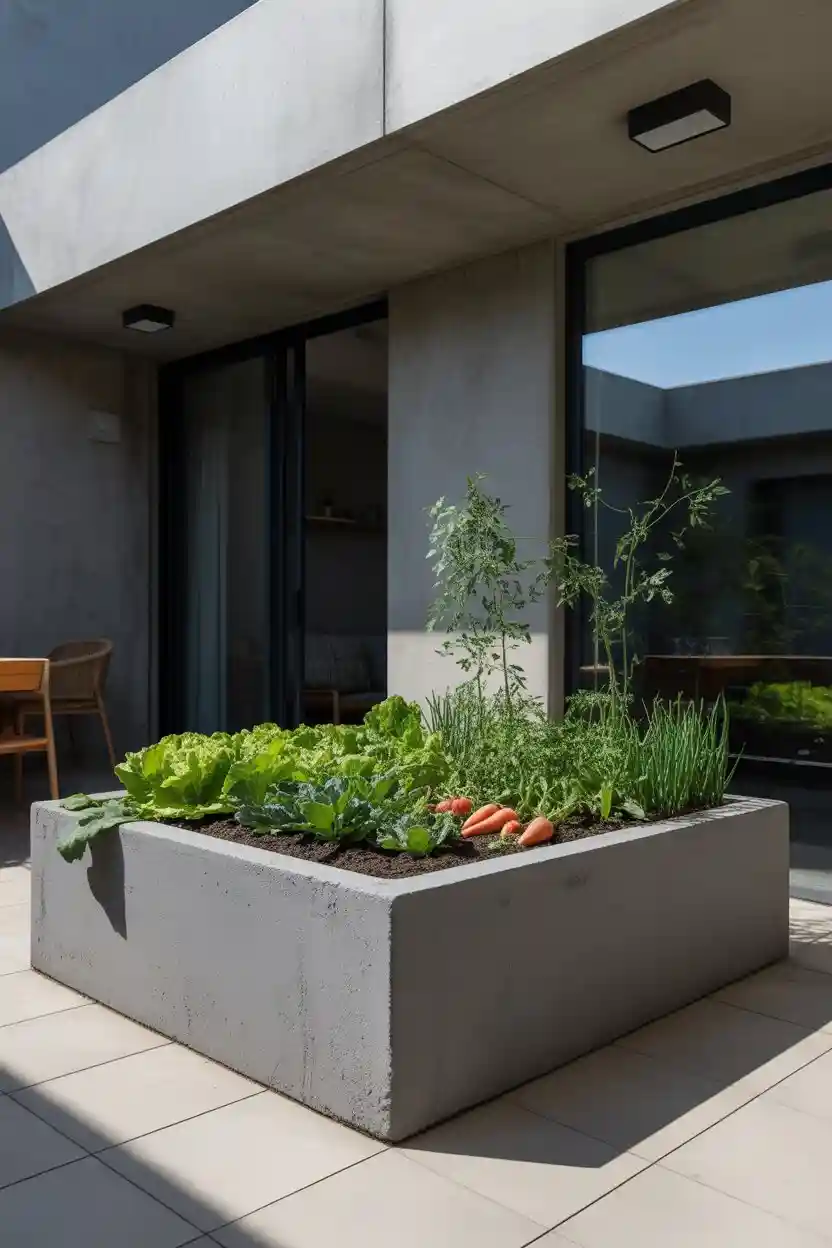
Idea 8: Concrete Slab Raised Bed
Sitting a bed directly on a concrete slab is fine as long as water can escape: drill drainage holes every foot or lay two inches of gravel under the soil. The slab’s thermal mass actually helps, moderating the temperature swings that stress container plants.
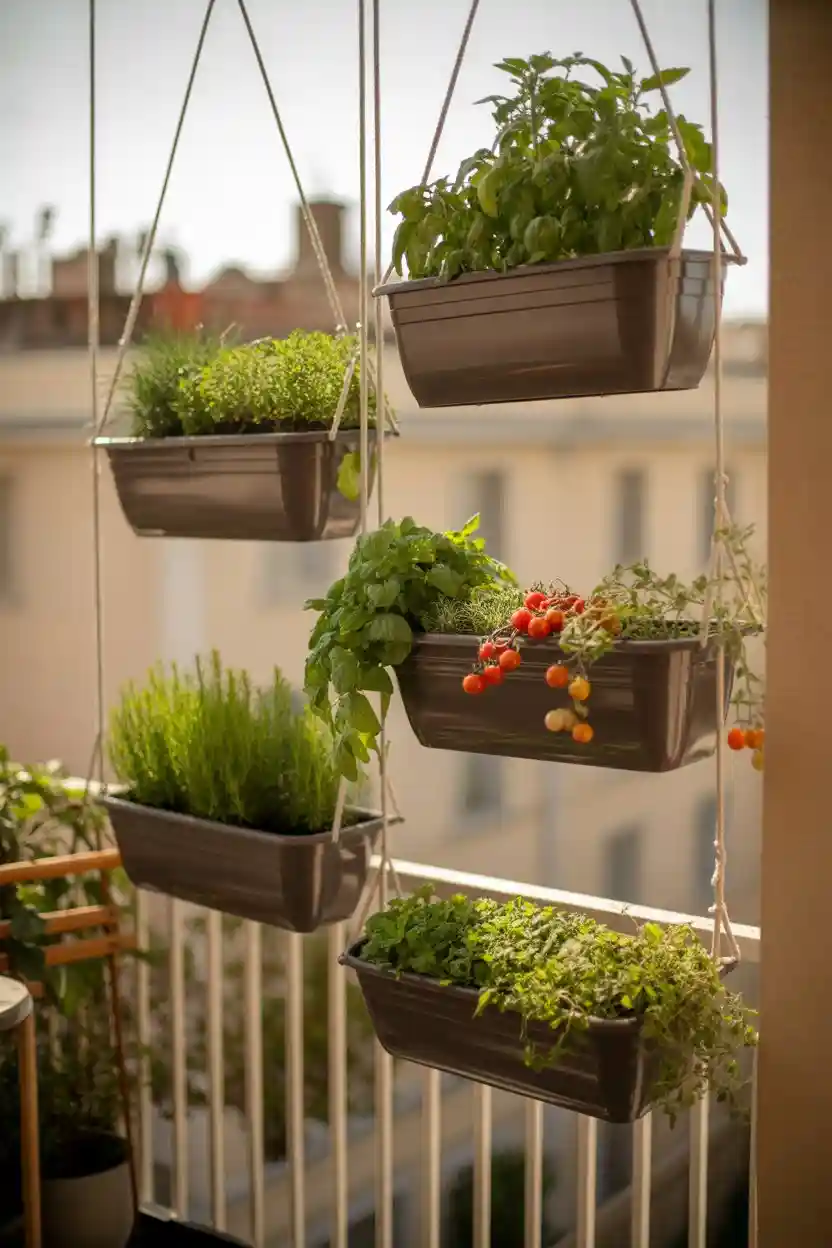
Idea 9: Hanging Raised Bed Planters
Hanging planters from the ceiling or a sturdy bracket put cherry tomatoes, trailing herbs, and strawberries at eye level. Use strong hooks into structure, not drywall anchors — a planted 12-inch basket can weigh 25 pounds after watering.
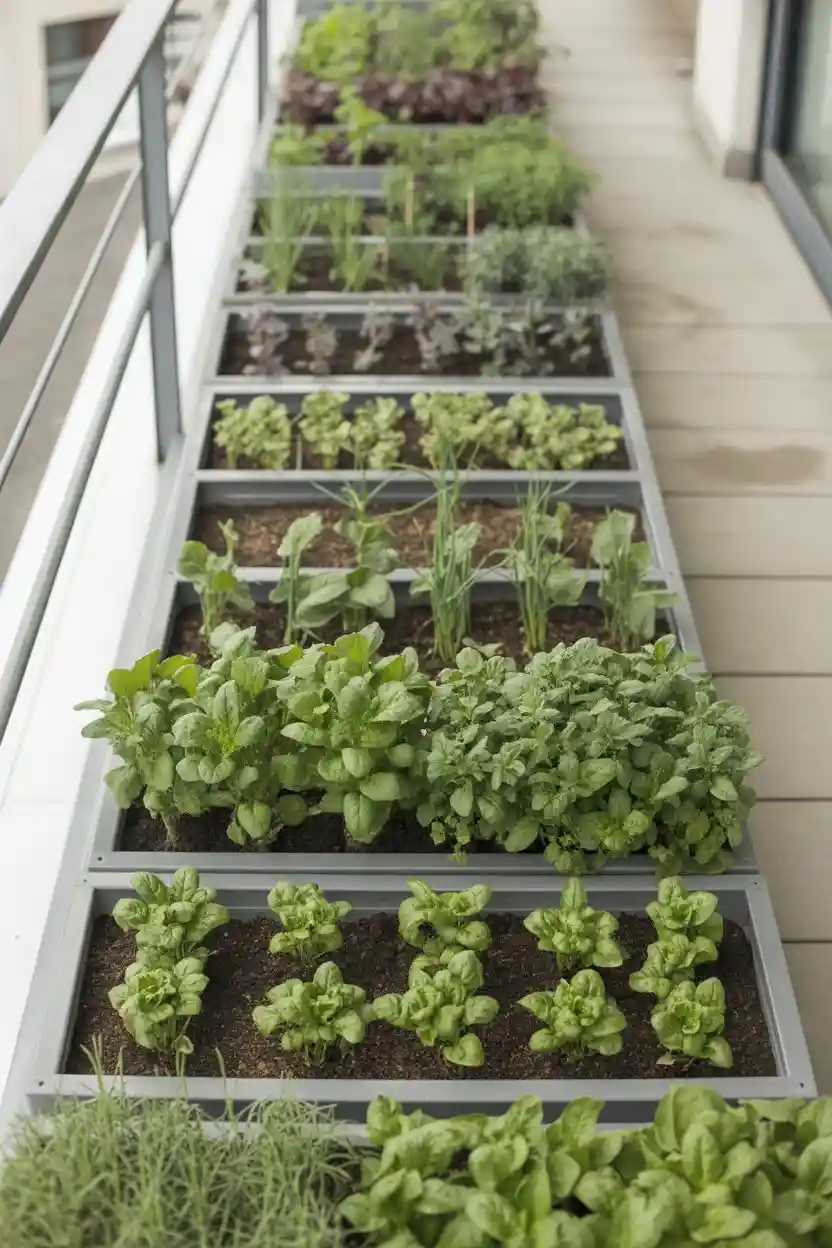
Idea 10: Narrow Trough Raised Beds
A long, narrow trough — 8 to 12 inches wide — fits the skinny strip along a railing or wall that nothing else uses. Plant a single row of lettuce, radishes, or herbs; a drip line down the middle waters the whole thing evenly.
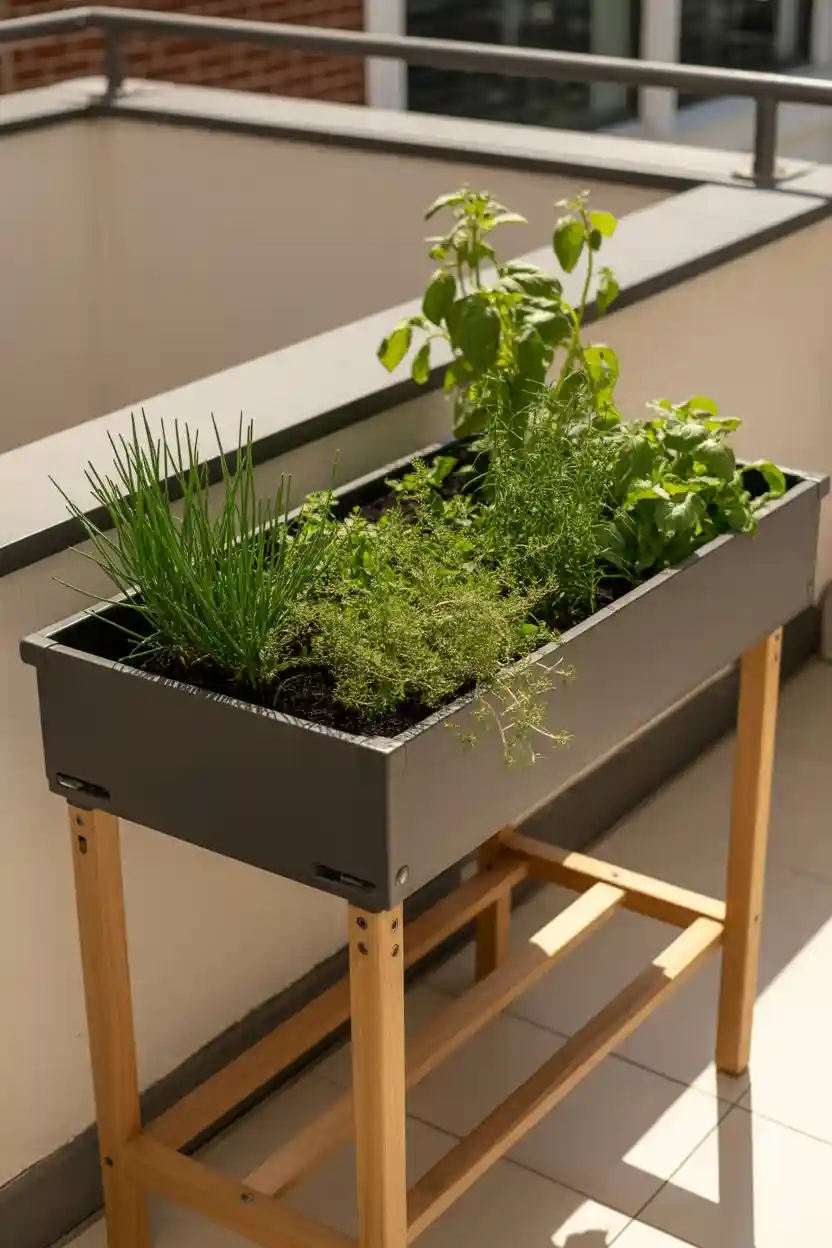
Idea 11: Elevated Table Raised Bed
A waist-high table bed means gardening standing up, which is the difference between tending plants daily and avoiding the chore. Ten to twelve inches of soil depth handles most vegetables; line the bottom with landscape fabric and plan on watering often, since shallow boxes dry fast.
Idea 12: Circular Raised Bed
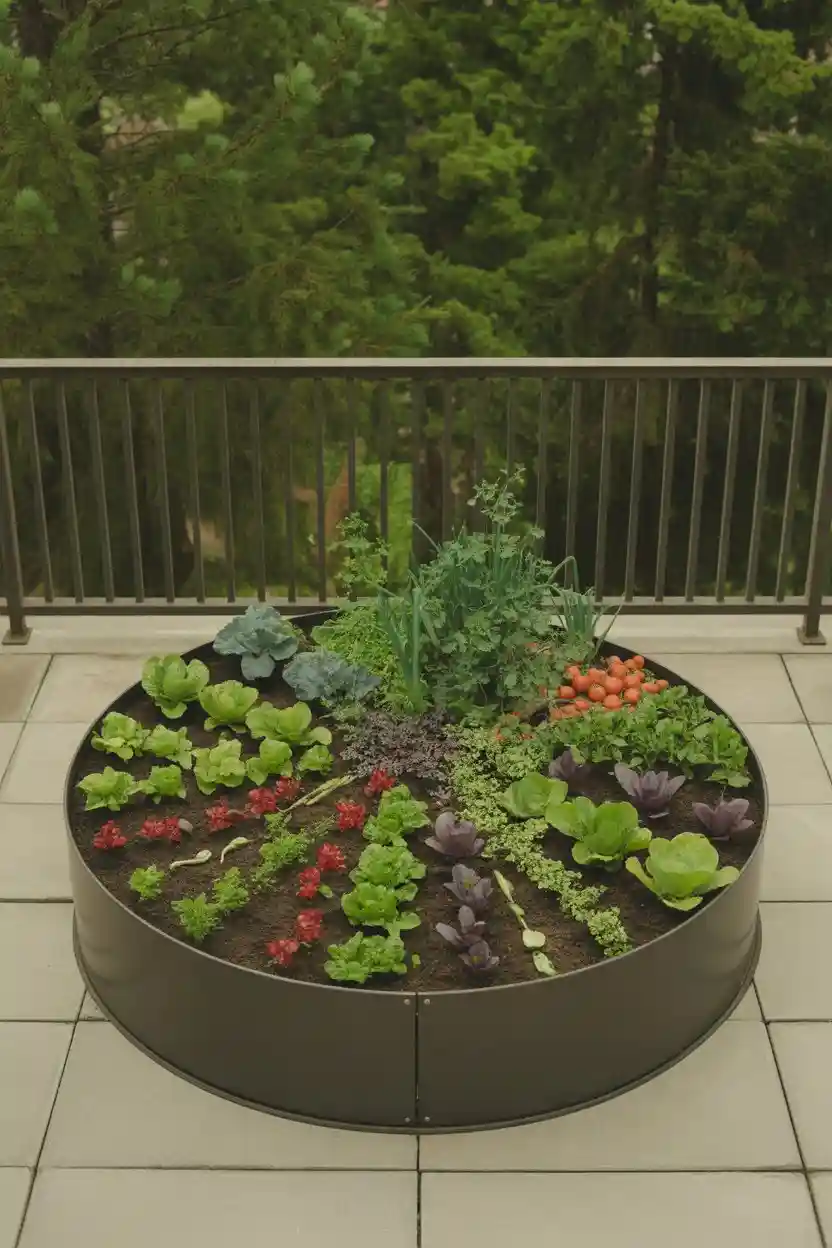
A circular bed — a galvanized ring or a round of stacked stone — gets even sun from all sides and you can reach the center from anywhere. Put one tomato or pepper in the middle, ringed with progressively shorter crops.
Idea 13: Wooden Crate practical Raised Beds
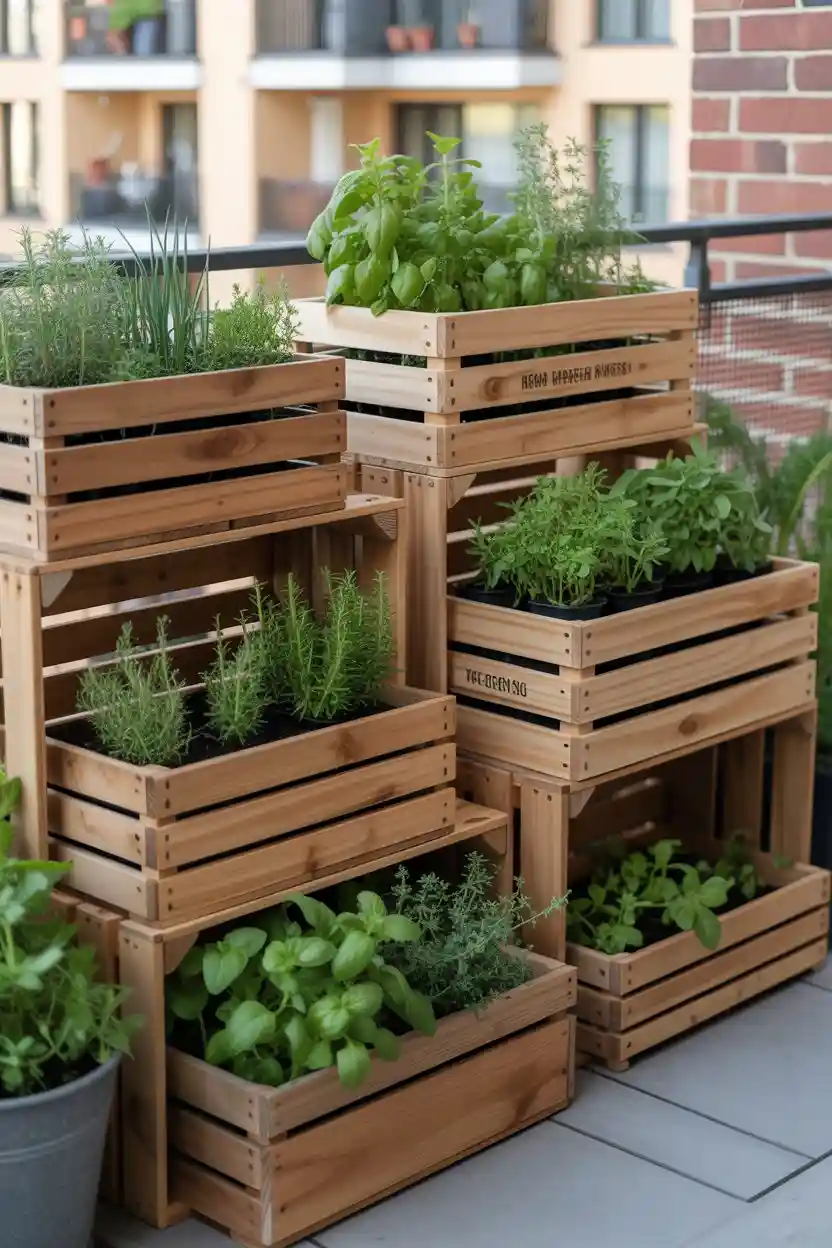
Wooden crates, the sturdy kind fruit ships in, make instant beds: line with landscape fabric, fill with mix, done. They’re free or nearly so, look appropriately rustic, and last two to three seasons. Check they’re heat-treated (marked HT), not chemically treated.
Idea 14: Metal Grid Raised Bed System
A grid of metal mesh panels — think modular cube shelving — lined with fabric becomes a customizable bed system you can reshape at will. Lightweight, rust-resistant if galvanized, and easy to break down when you move.
Idea 15: Foldable Raised Bed Setup
Hinged or fabric-sided beds that fold flat solve the renter’s dilemma: a real growing space that fits in a closet in winter. Unfold, fill, plant; in November, empty the soil into bags and fold it away.
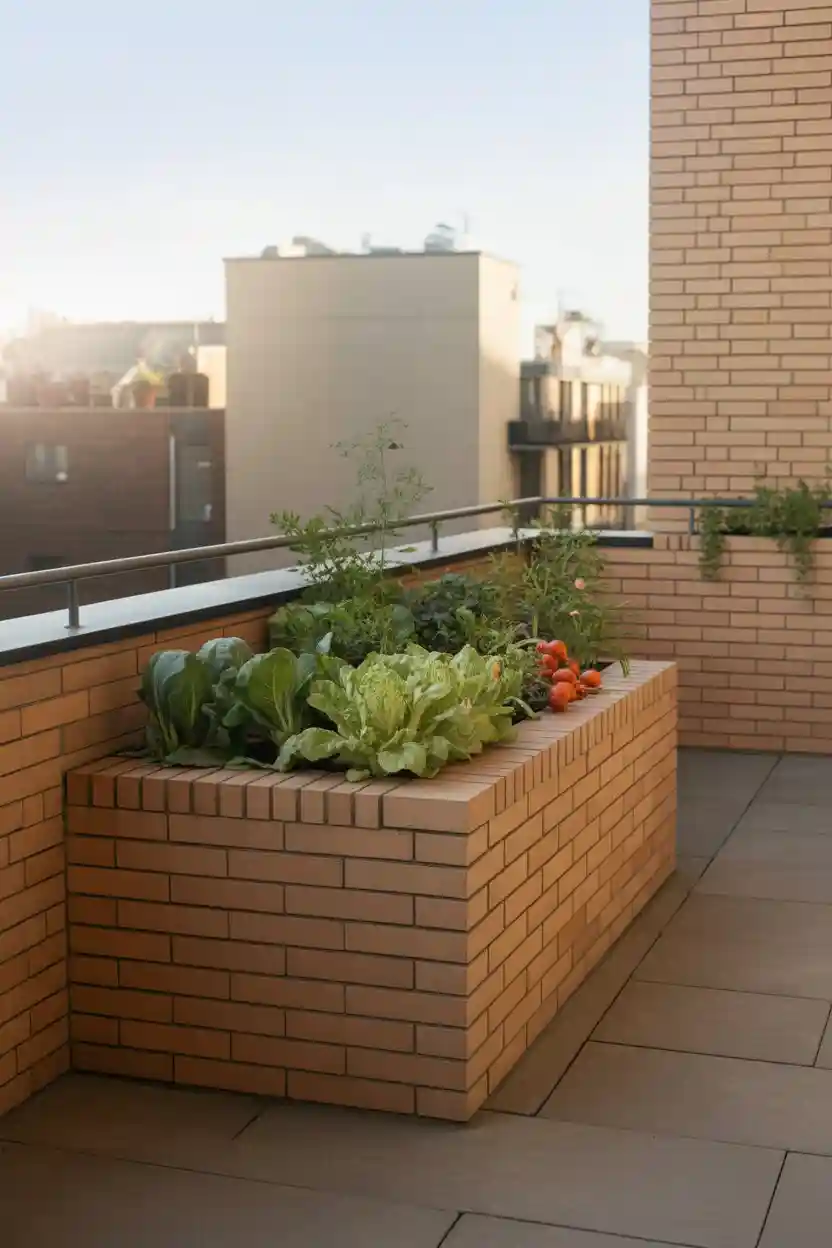
Idea 16: Brick Style Raised Bed
Dry-stacked brick takes an afternoon and lasts decades. The thermal mass smooths out day-night temperature swings, which container plants appreciate more than in-ground ones. Cap the top course with flat stones for a finished edge you can set a coffee on.
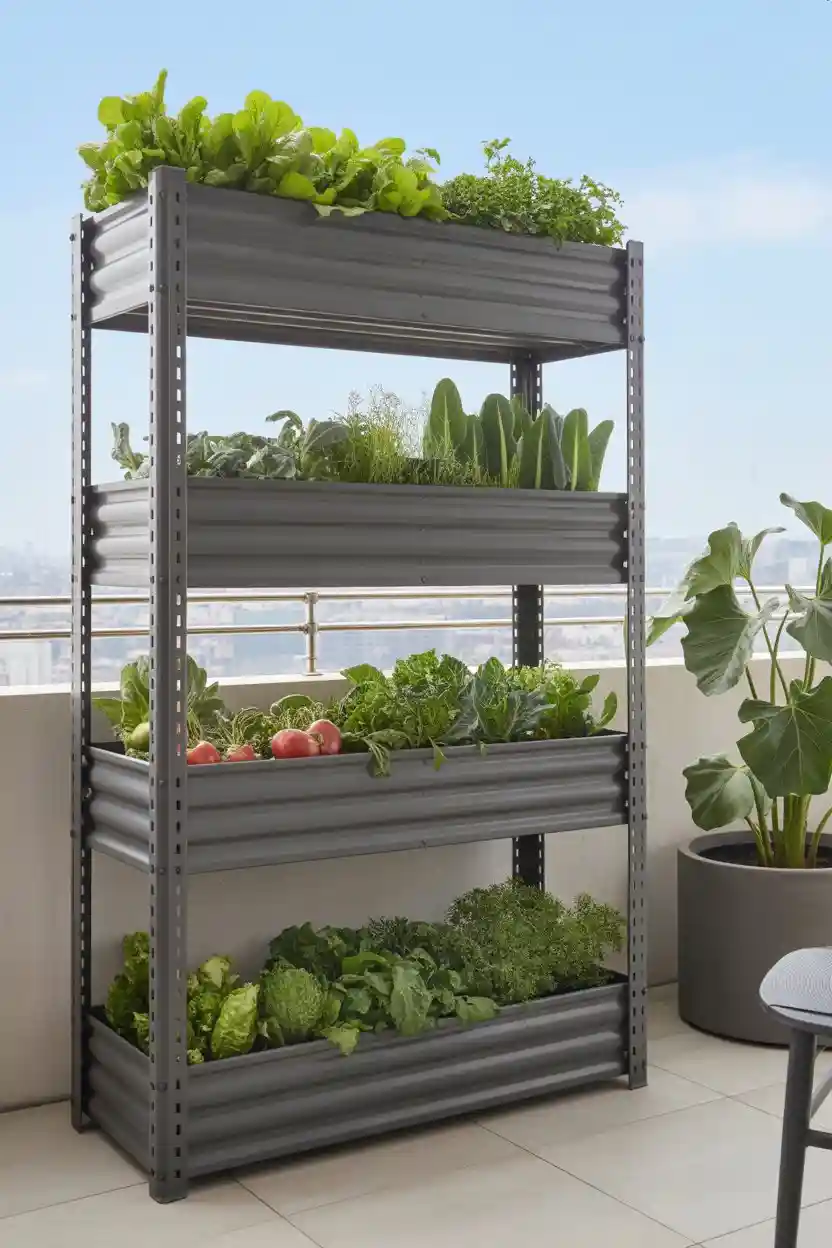
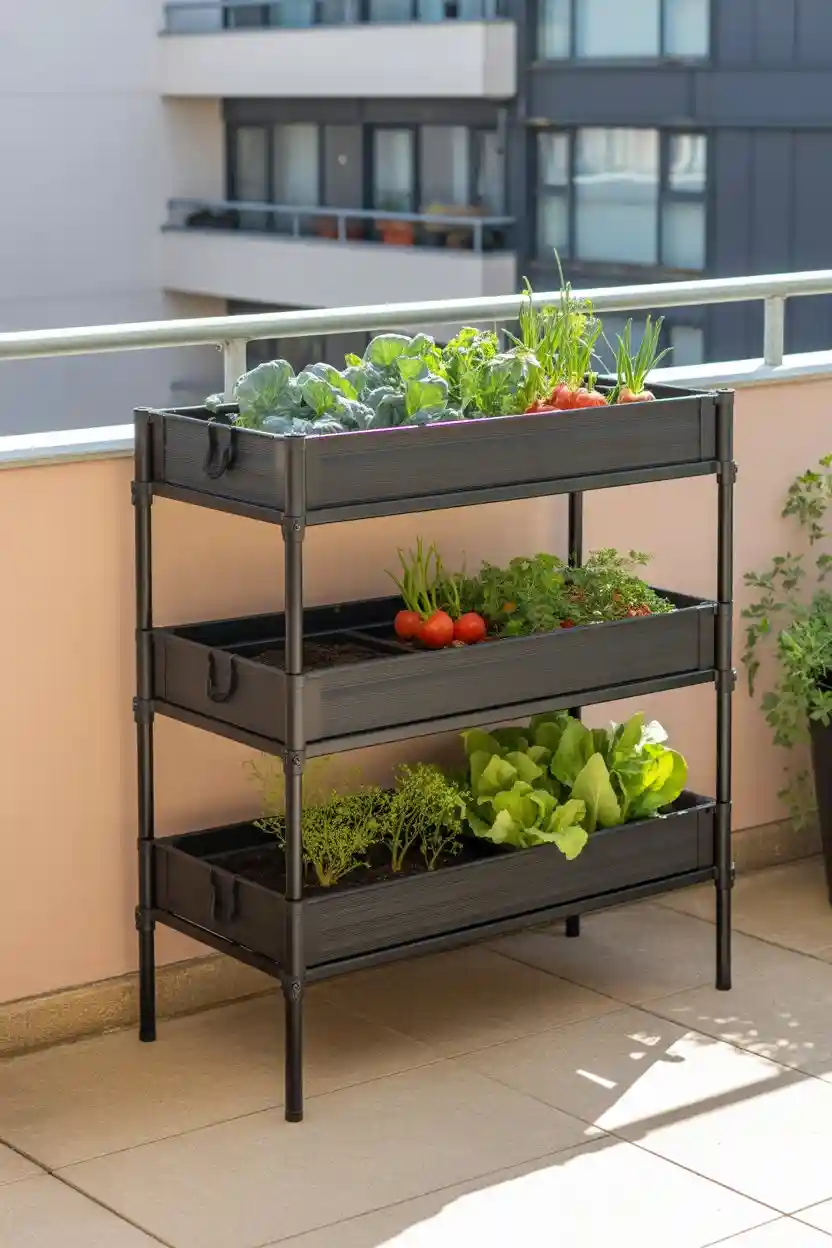
Idea 17: Multi-Level Shelf Raised Bed
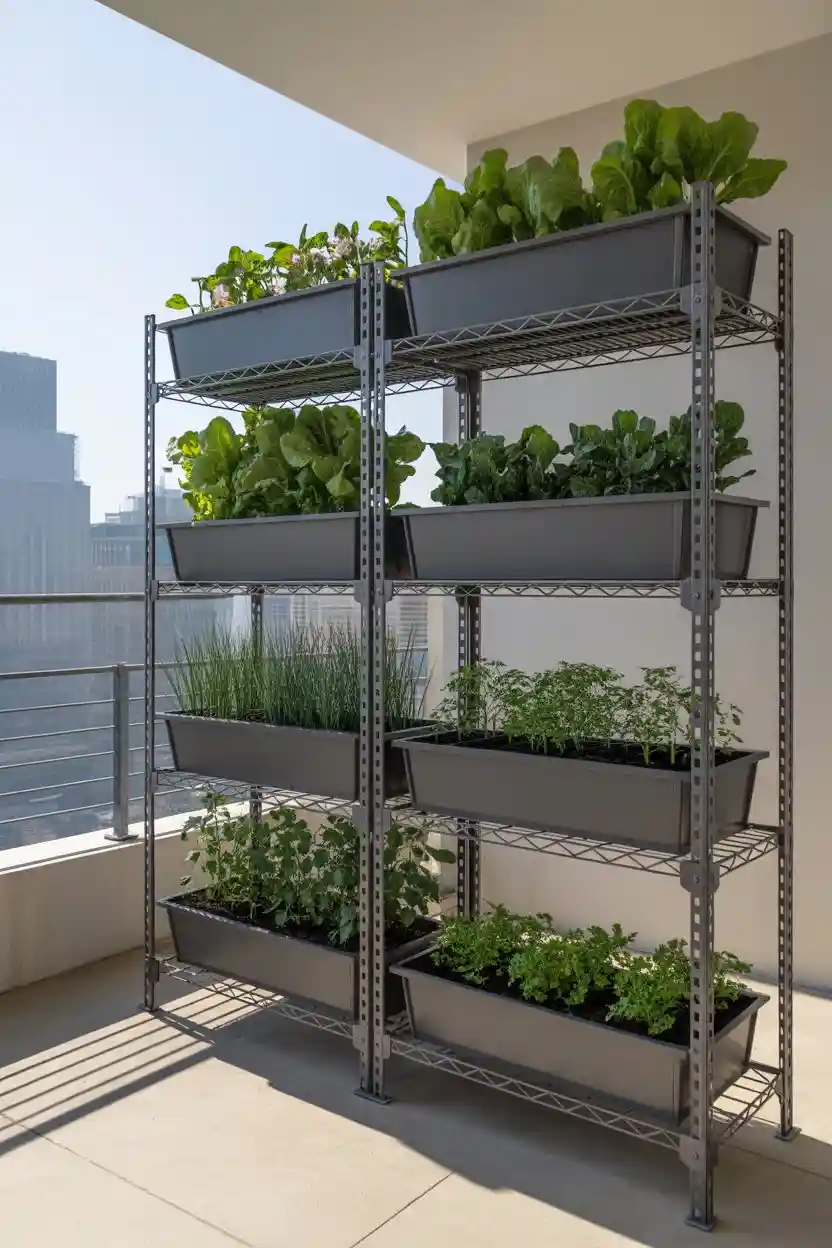
A shelf unit where each shelf is a shallow bed multiplies a 2×4 footprint into 24 square feet of growing area. Reserve the top shelf for sun-lovers, the lower ones for shade-tolerant greens like lettuce and mint — light drops fast as you go down.
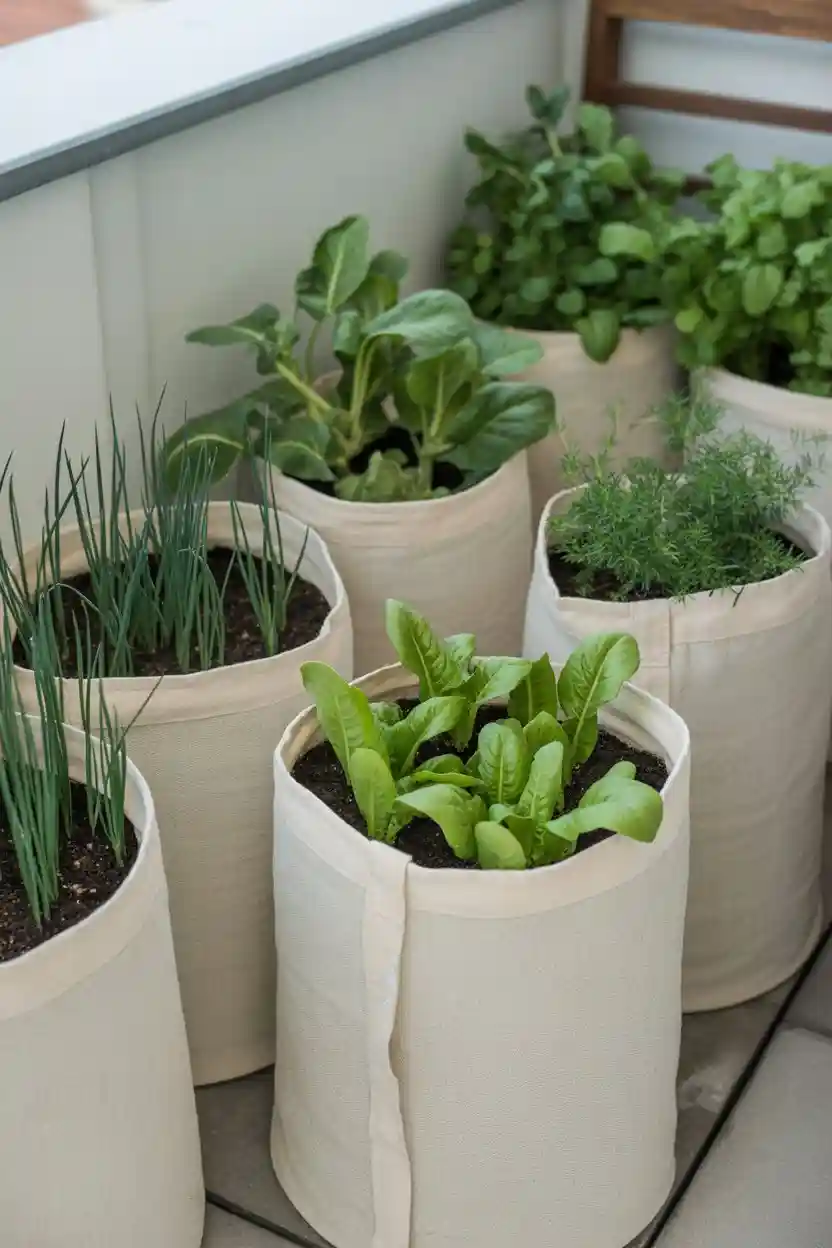
Idea 18: Fabric Raised Bed Grow Bags
Fabric grow bags air-prune roots — when a root hits the breathable wall it stops instead of circling, growing a denser, healthier root ball. They’re cheap, nearly weightless empty, and ideal for potatoes: just unroll the sides to harvest instead of digging.
Idea 19: Compact Box Raised Bed
A simple 2×2 or 2×4 box remains the smartest starting point — big enough for real harvests, small enough to tend in minutes. If you’re new to this, our beginner raised bed vegetable plans walk through the first build step by step.
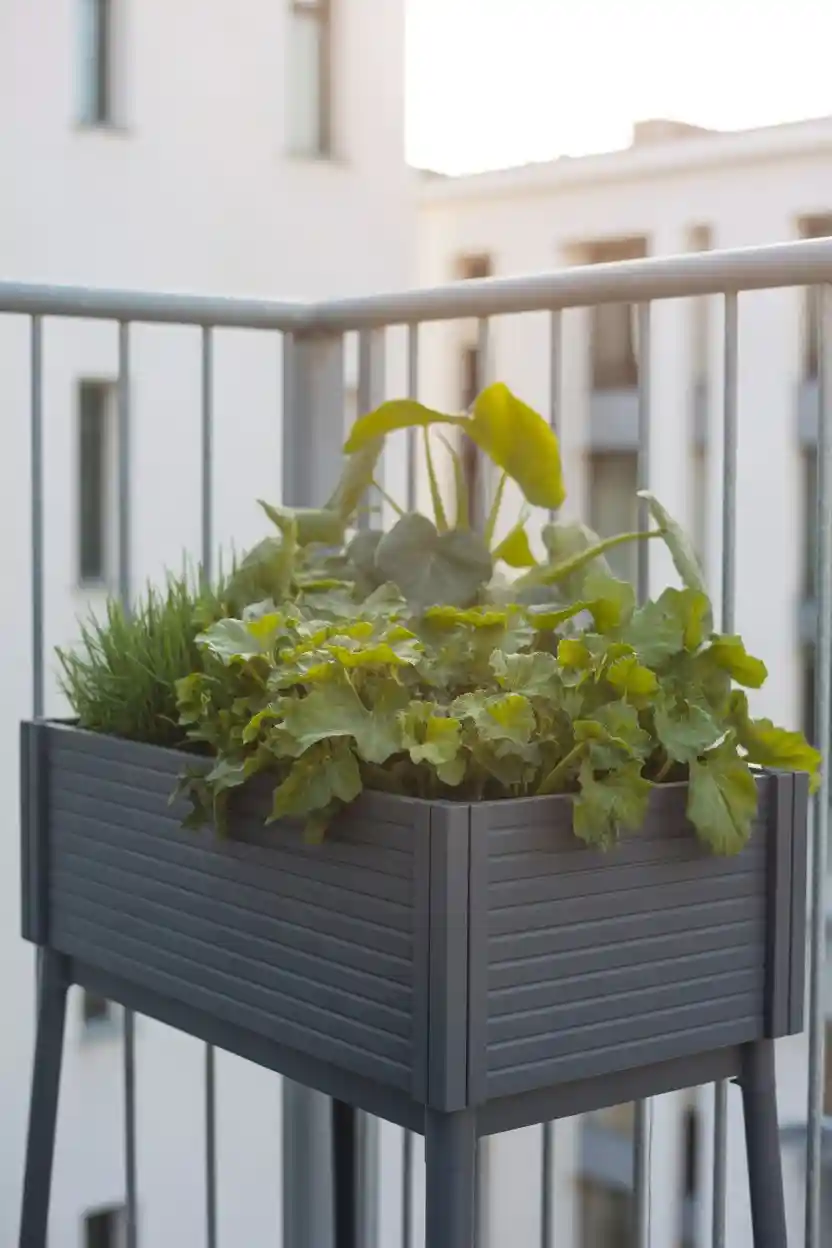
Idea 20: Glass Panel Raised Bed
A bed with clear or frosted glass sides looks striking and functions as a windbreak, which matters on exposed high-rise balconies. Use tempered glass or polycarbonate — never plain window glass outdoors — and ensure drainage holes in the base.
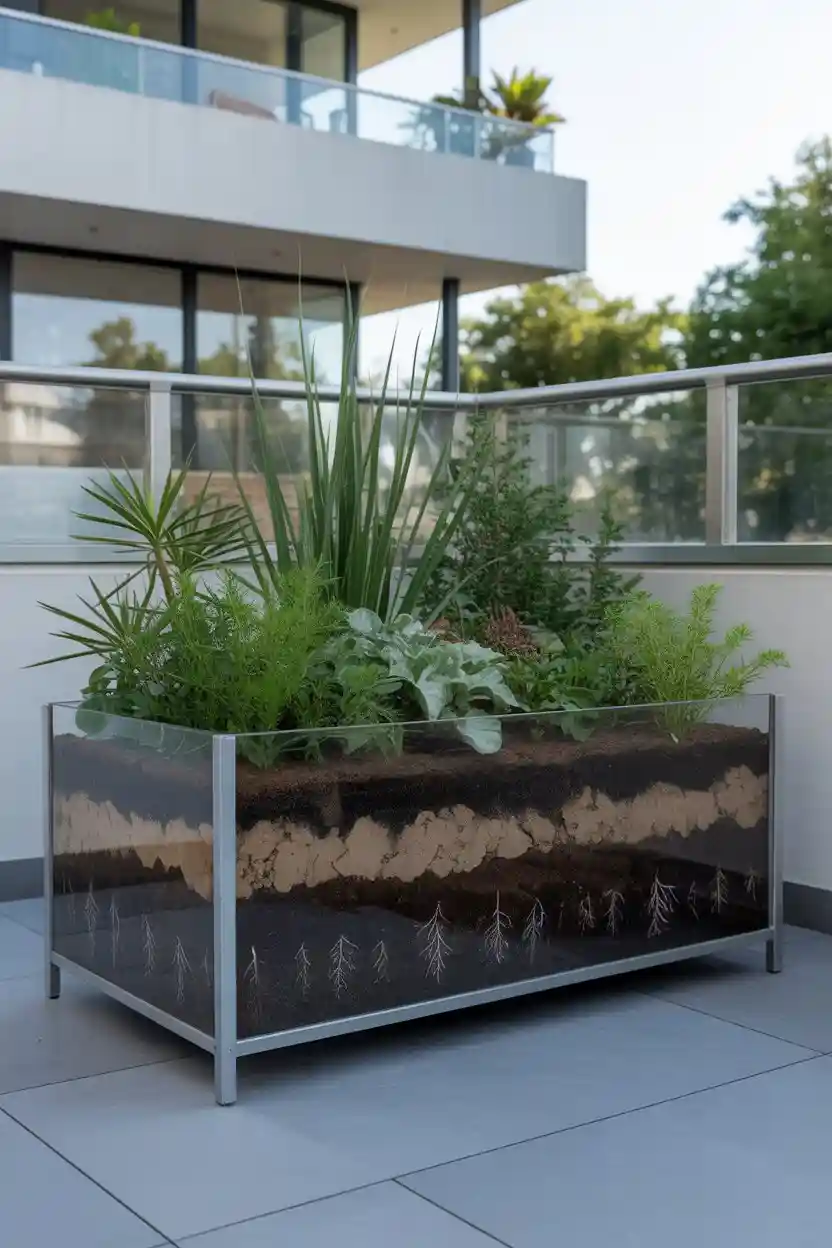
Idea 21: Steel Frame Raised Bed
A welded or bolted steel frame with a fabric or metal liner is the buy-it-once option: it won’t rot, warp, or blow over. Powder-coated steel resists rust; in hot climates, mulch right up to the walls since metal sides warm the edge soil.
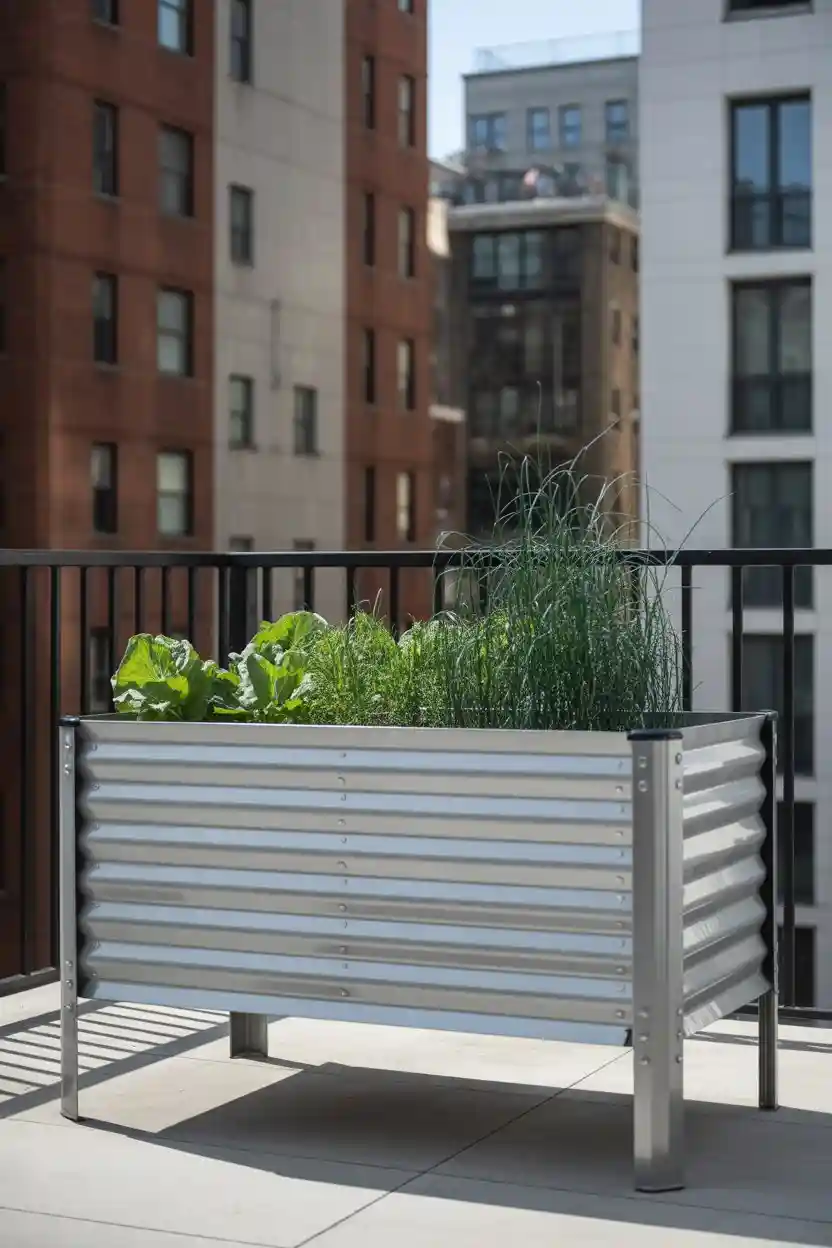
Idea 22: Corner Stack Raised Bed
Stacked corner units — square frames decreasing in size — build a stepped tower that fits a 2×2 footprint. Each level gets full sun, and the structure is stable without fasteners if the frames interlock.
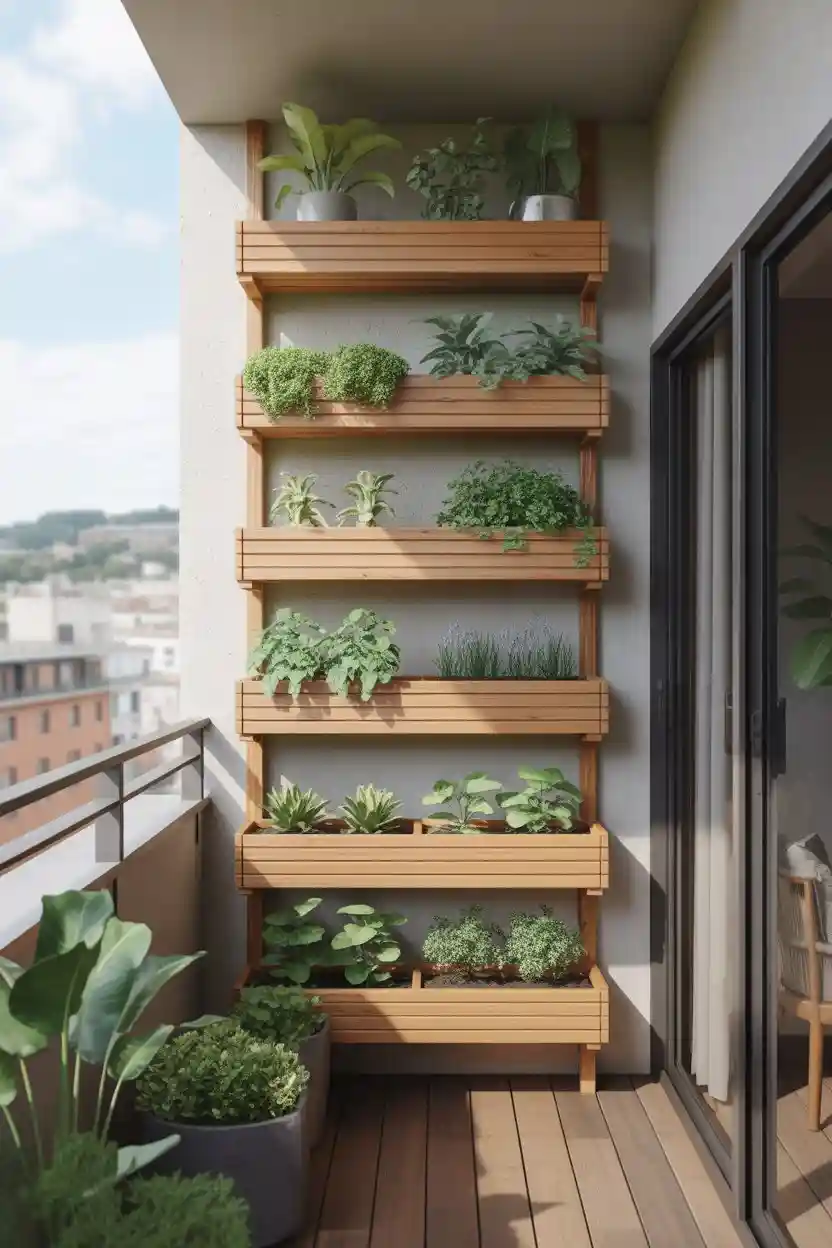
Idea 23: Raised Bed with Trellis
Bolt a trellis to the back of the bed before you fill it — retrofitting later disturbs roots. A 5-foot cattle panel or string trellis carries cucumbers, pole beans, or peas upward while lettuce and herbs fill the ground below.
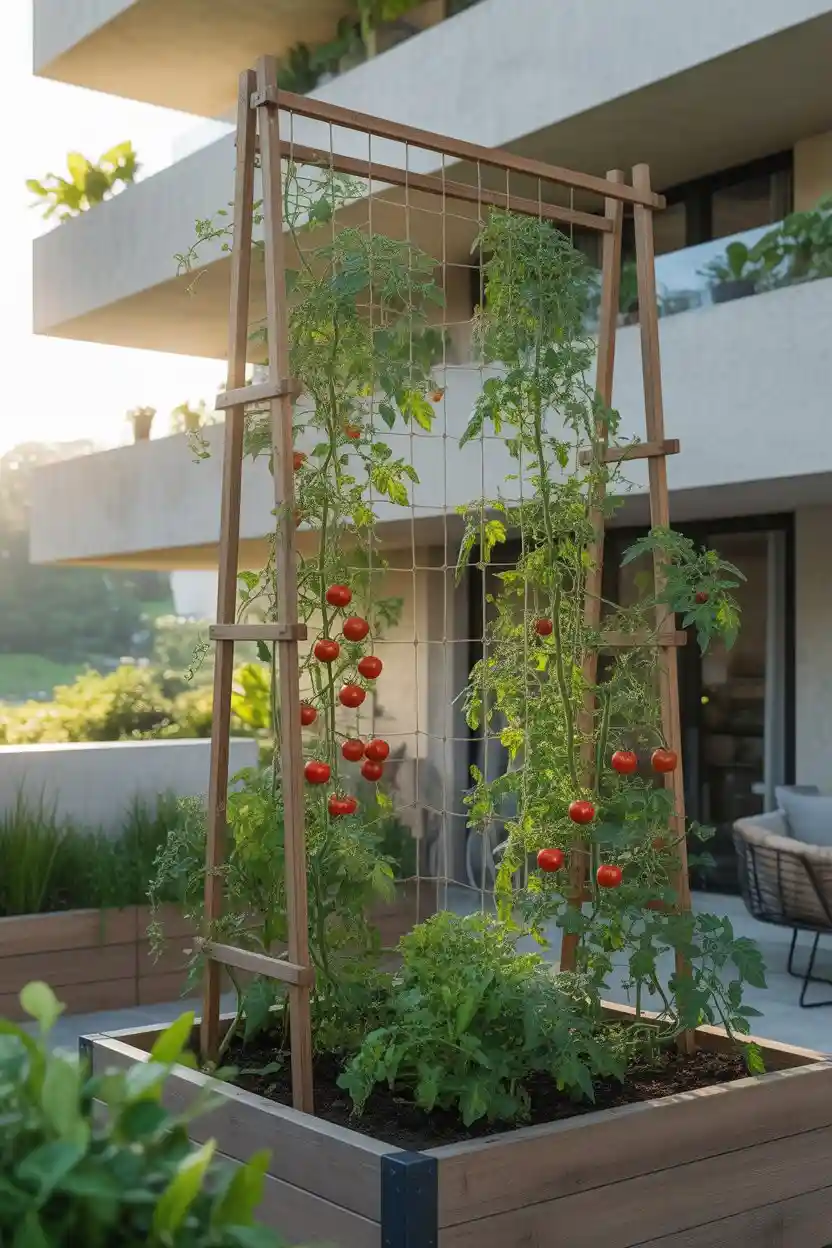
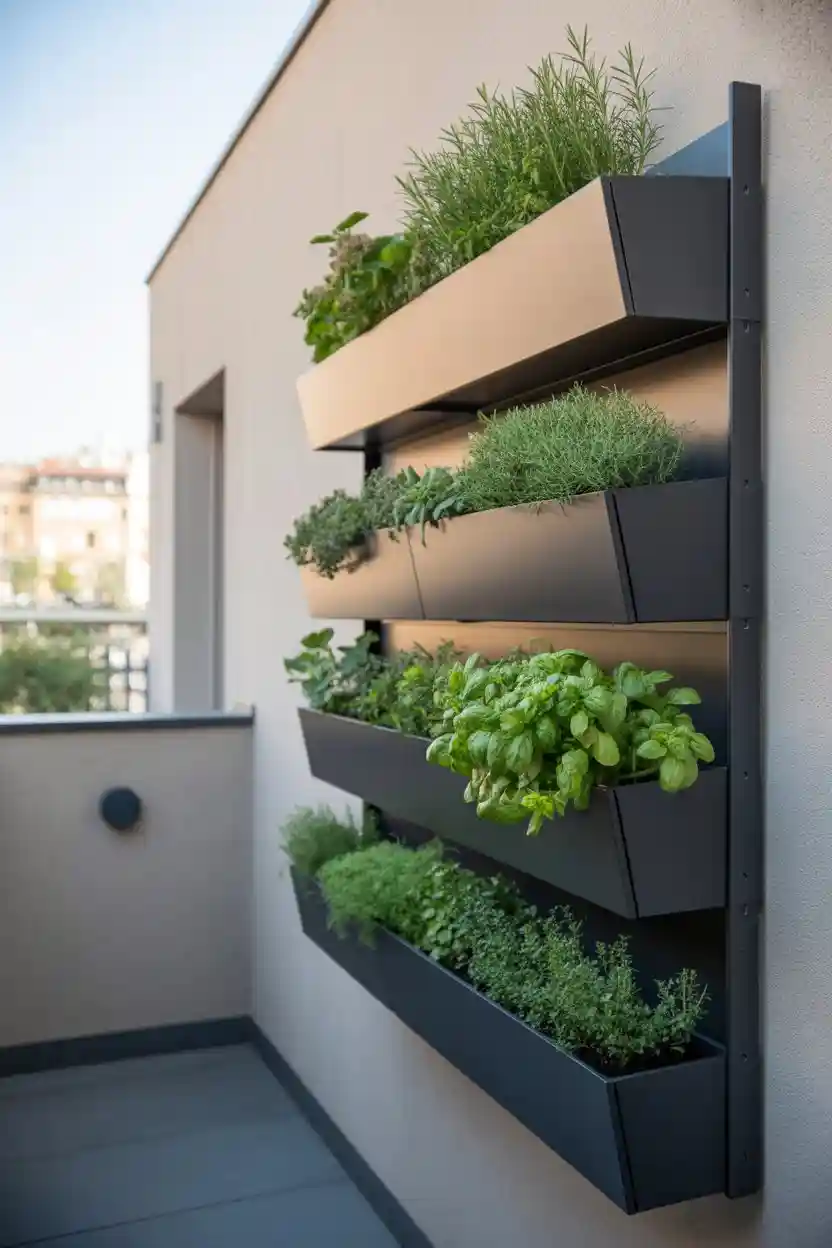
Idea 24: Slim Wall Raised Bed
A wall-mounted bed 6 to 8 inches deep holds herbs and salad greens while consuming no floor at all. Mount into studs or masonry with proper anchors; a planted 4-foot unit can weigh 80 pounds wet.
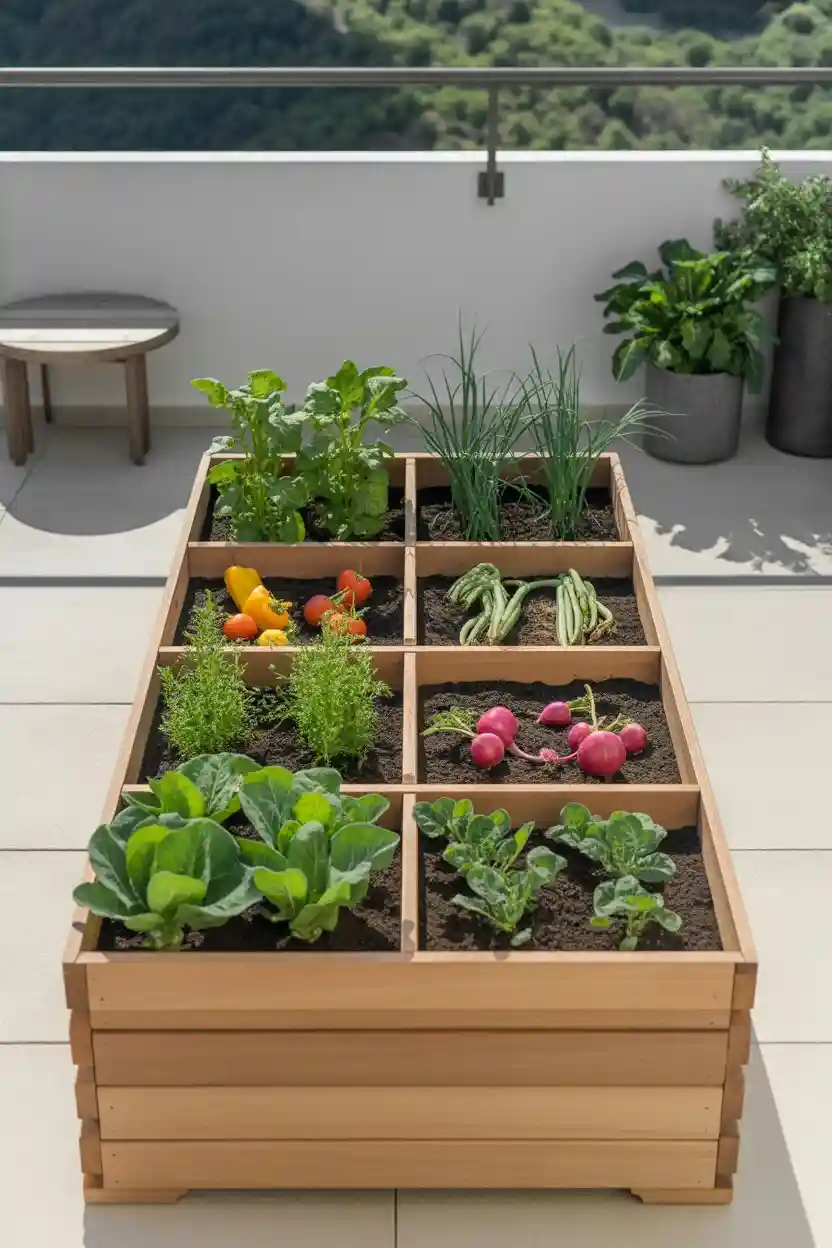
Idea 25: Raised Bed Divider System
Dividers — simple slats or fabric panels — split one bed into zones with different soil or watering. Keep the thirsty cucumbers’ section moist without drowning the herbs next door. For material options for the bed itself, see our raised bed vegetable garden ideas.
Idea 26: Portable Raised Bed Kit
Flat-pack kits with pre-cut boards and corner brackets assemble in under an hour with no saw. They’re the pragmatic choice for renters and anyone who rearranges often — disassemble, move, rebuild.
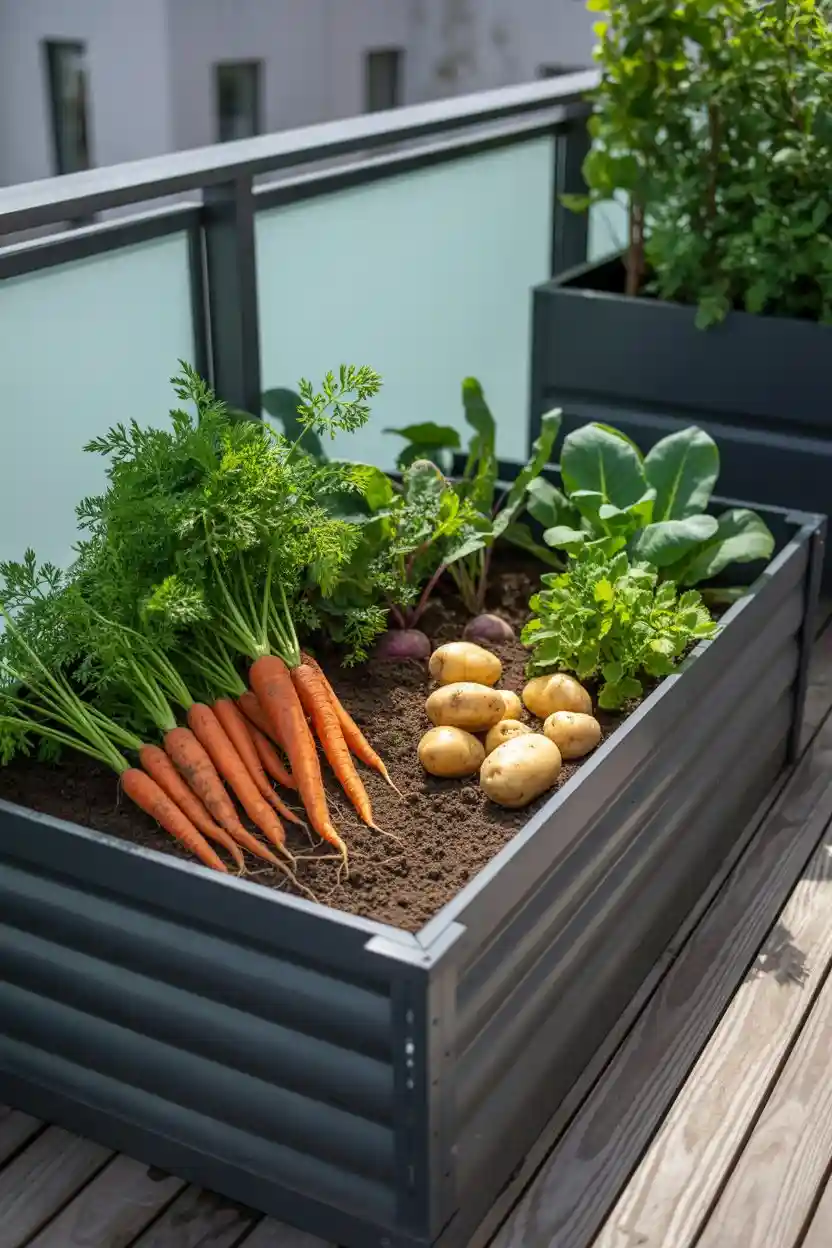
Idea 27: Deep Root Raised Bed
Carrots, parsnips, and potatoes need 18 to 24 inches of loose soil to grow straight. On a balcony that means planning for weight: pair a deep bed with the space-saving arrangements in our small raised bed vegetable layouts guide so the footprint stays small.
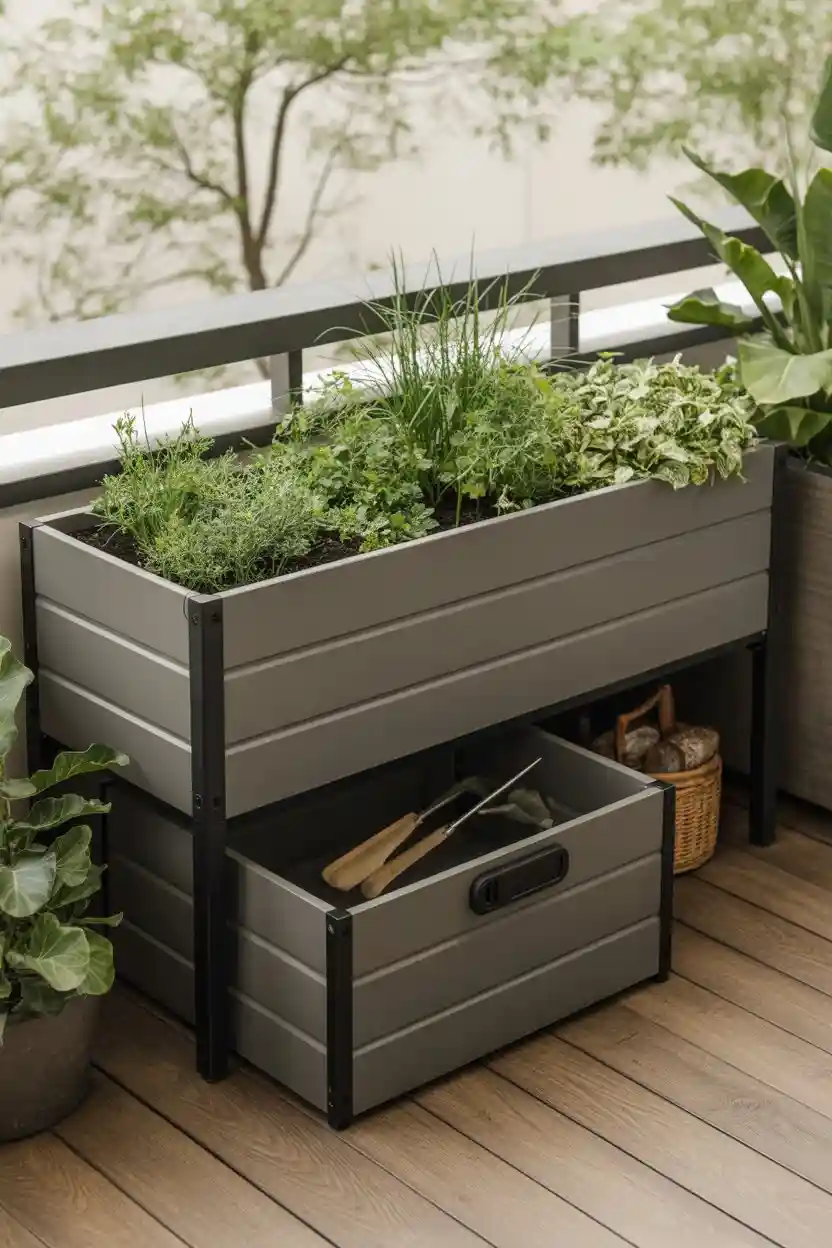
Idea 28: Raised Bed with Storage Base
A bed with a cabinet base stores soil, tools, and fertilizer where you use them instead of in a hall closet. Keep the storage compartment ventilated so bagged soil doesn’t go musty, and don’t store anything that can’t handle damp.
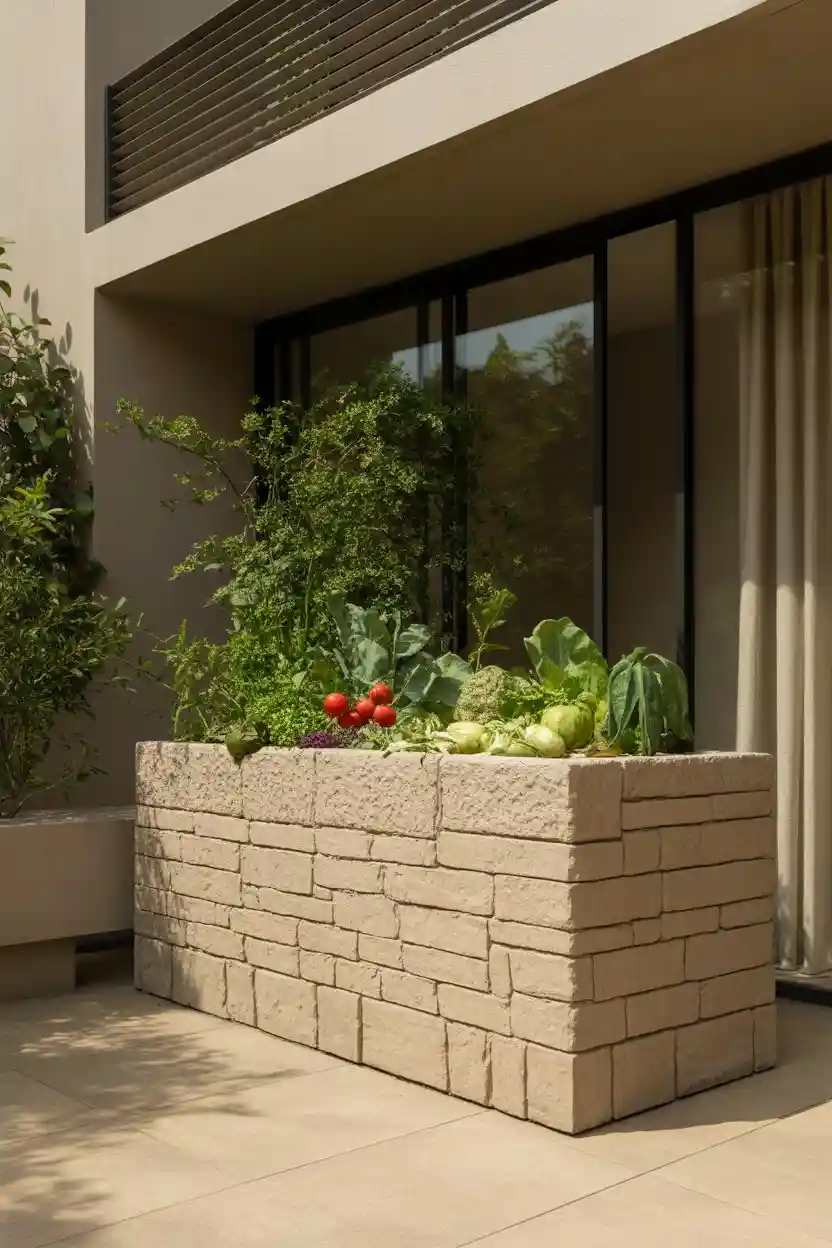
Idea 29: Decorative Stone Raised Bed
Dry-stacked stone looks like it’s always been there and needs essentially no maintenance. The weight is the consideration — stone plus wet soil adds up fast, so this one suits ground-level patios more than high-rise balconies.
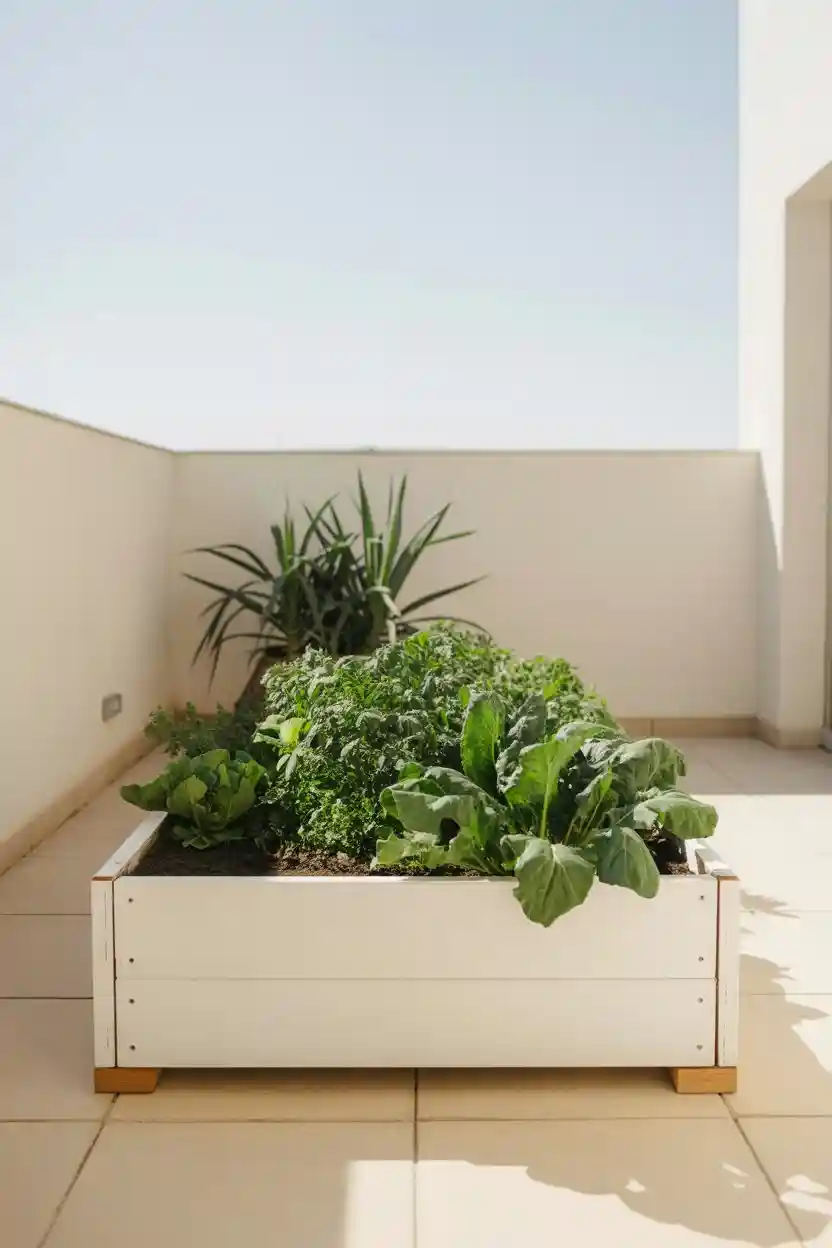
Idea 30: Minimalist White Raised Bed
A white or light-colored bed reflects light onto the plants and makes a small balcony feel brighter and larger. Use exterior-grade paint or powder coating; raw white wood grays within a season. The look pairs well with simple, modern planting — straight rows, minimal fuss.
FAQs for Practical Raised bed Vegetable Ideas