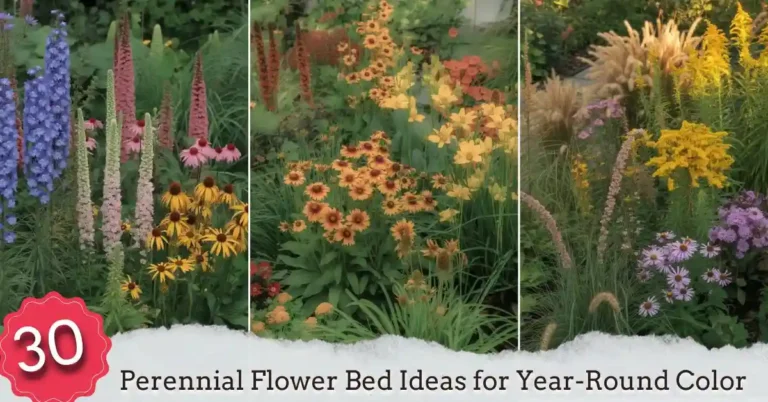
30 Perennial Flower Bed Ideas for Year-Round Color
Creating a perennial flower bed that delivers year-round color requires selecting plants with staggered bloom times, complementary foliage, and varied textures. Combining early spring bloomers, summer showstoppers, and late-season favorites ensures visual continuity across all seasons. Using low-maintenance perennials like coneflowers, phlox, and nepeta alongside bold statement plants such as cardinal flower lobelia cardinalis or kniphofia red hot poker provides layered depth. Thoughtful combinations of height, color, and form create a dynamic, resilient landscape. These Perennial Flower Bed Ideas ensures your garden remains vibrant, ecologically supportive, and visually appealing throughout the year.
Idea 1: Spring Shade Lovers Bed
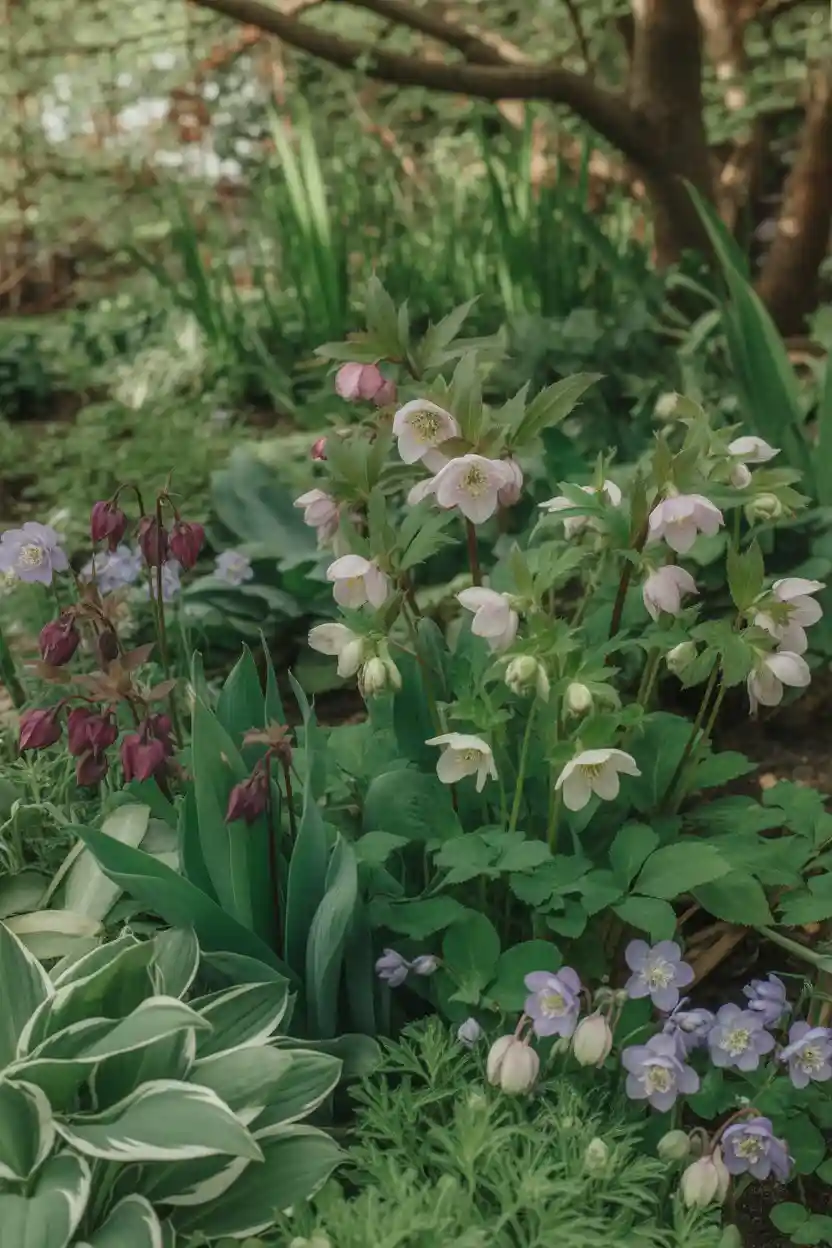
Design a shady bed using hellebore, bleeding heart, aquilegia columbine, and pulmonarias to provide early spring color in cool areas. Add hosta foliage for texture and creeping phlox to cover bare soil. Position taller plants at the back and shorter groundcovers in front for layered depth. This combination thrives in filtered shade, tolerates moist soil, and attracts early pollinators. Mixing soft blooms with diverse leaf shapes ensures the bed remains visually appealing before summer perennials emerge. Seasonal layering creates seamless transitions into summer colors.
Idea 2: Summer Heat-Tolerant Perennial Bed
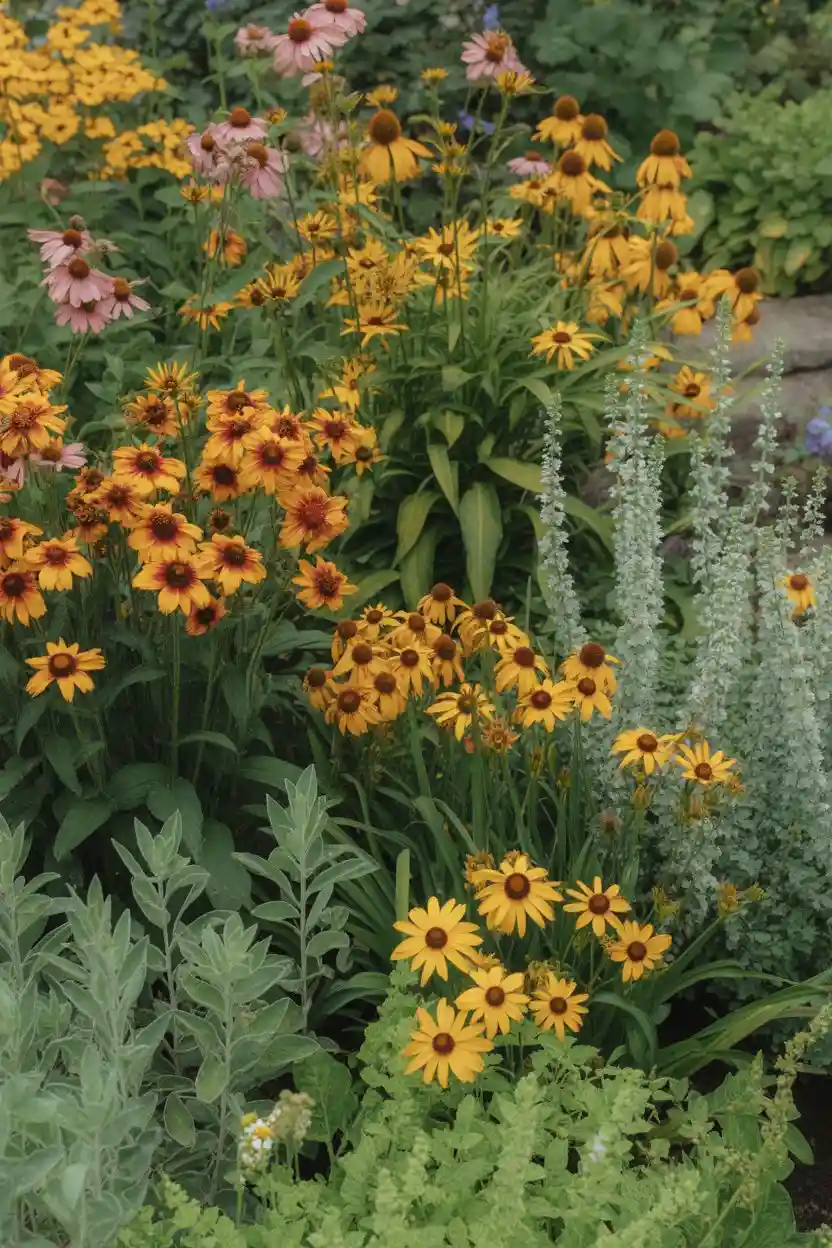
Create a sun-loving bed with rudbeckia black eyed susan, coneflower echinacea, daylilies, and coreopsis for vibrant midsummer color. Include russian sage and perovskia for vertical interest and silvery foliage contrast. Low catmint or lambs ear soften edges and provide texture. Grouping plants by height creates balance while staggered bloom times ensure continuous color. This low-maintenance raised flower bed garden thrives under high heat and minimal water. Layered plant heights with mounding perennials offer depth, creating a dynamic, long-lasting summer display that also attracts pollinators.
Idea 3: Pollinator-Friendly Wildflower Bed
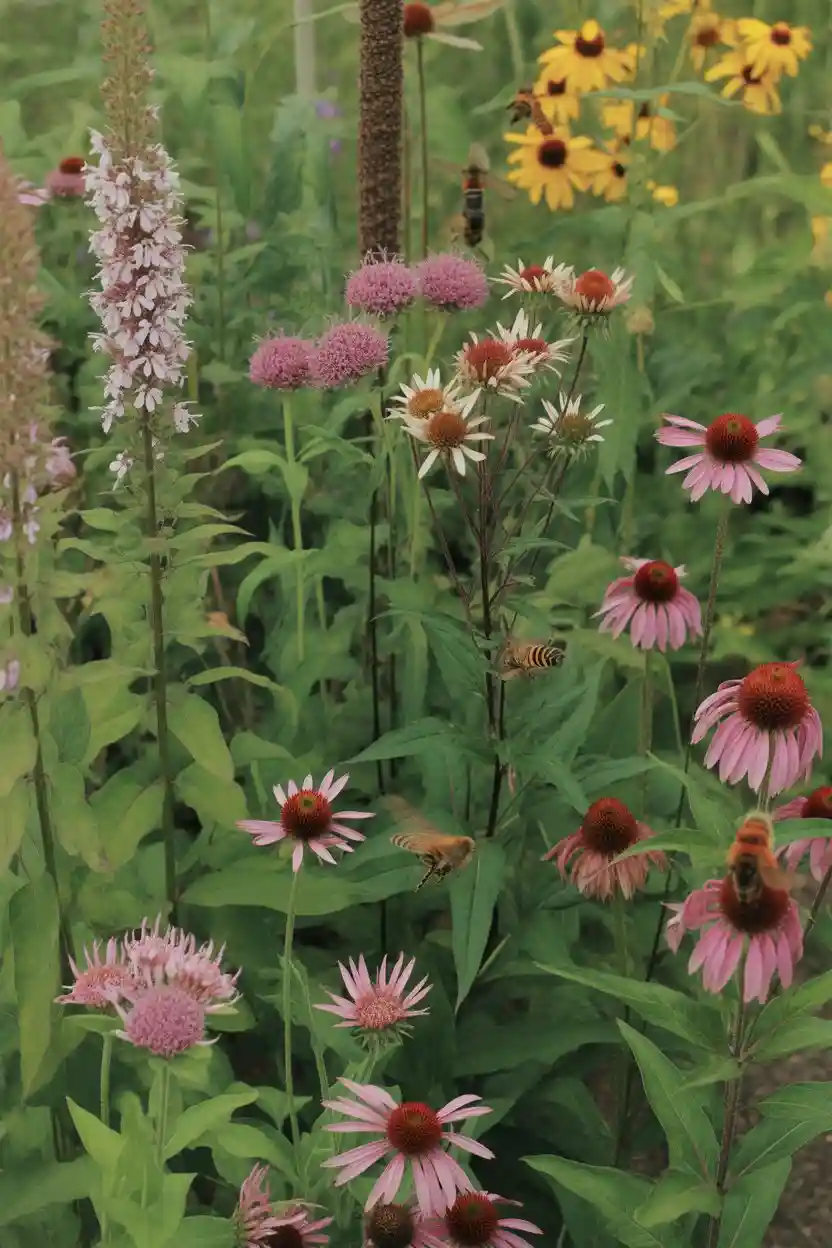
Focus on attracting bees, butterflies, and hummingbirds by combining monarda bee balm, asclepias milkweed, echinacea purpurea, and liatris spicata. Add gaillardia blanket flower for long-lasting, nectar-rich blooms. Plant taller liatris centrally and shorter perennials at the edges for depth. Native species improve pollinator visits and require less maintenance. Full sun exposure and well-drained soil maximize flowering. Layering textures and color ensures visual excitement while supporting wildlife. Sequential bloom times create a vibrant display from early summer through fall, making it a garden haven for pollinators.
Idea 4: Bold Color Contrast Bed
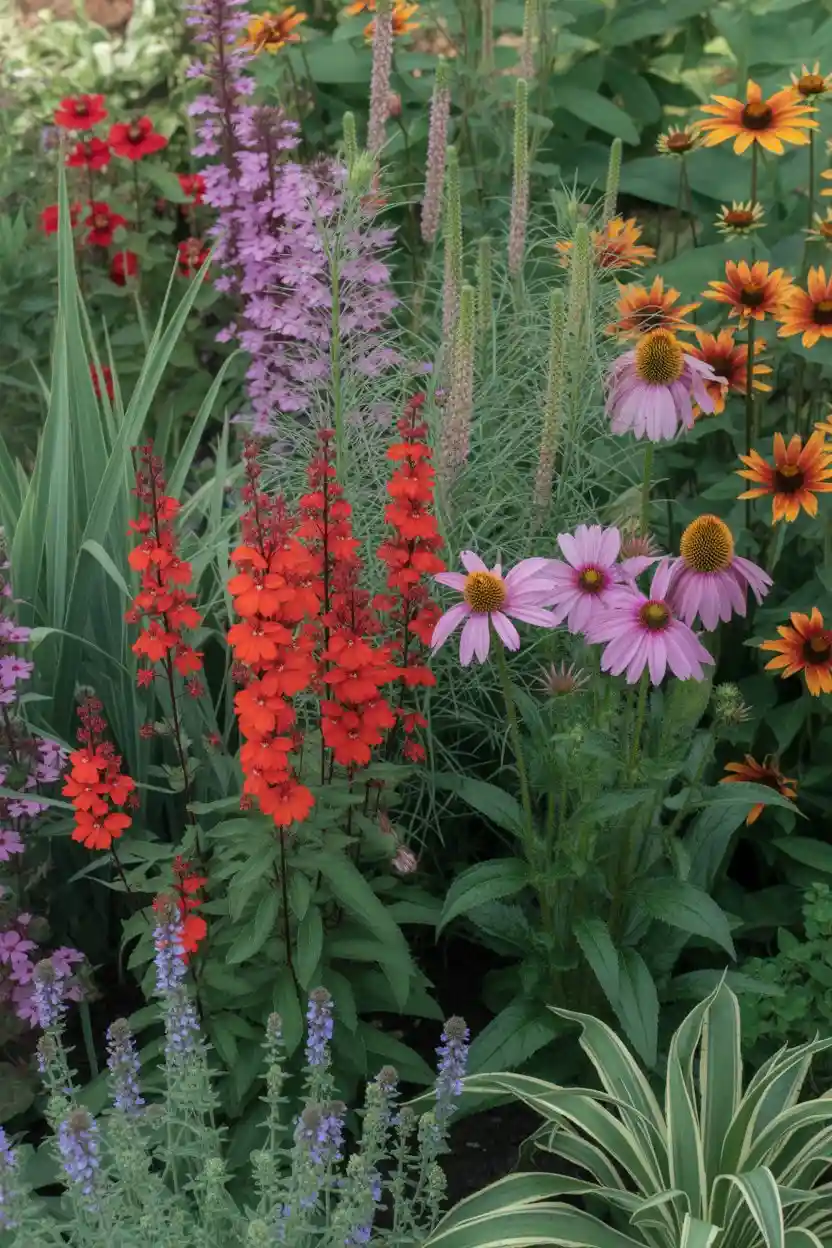
Combine cardinal perennial flower lobelia cardinalis, cosmos atrosanguineus, echinacea purpurea, and rudbeckia purpurea for dramatic visual impact. Add agastache and kniphofia red hot poker for vertical spikes and contrasting textures. Include heuchera coral bells to highlight foliage while softening bold blooms. Taller plants go in the back, midsized in the center, and low-growing at the front for balance. This raised garden bed thrives in full sun, attracts pollinators, and maintains color from midsummer into fall. Mixing deep reds, oranges, and purples creates striking, eye-catching perennial color that endures throughout the season.
Idea 5: Low-Maintenance Perennial Bed
Select resilient plants like nepeta catmint, achillea yarrow, lambs ear, and phlox subulata for an easy-care garden bed. Creeping phlox offers vibrant spring color, while taller perennials add summer interest. Layering plants by height maintains depth and prevents bare areas. Group similar bloom times for extended color and use alchemilla mollis for soft foliage. This design suits gardeners seeking minimal effort yet maximum beauty. Low water needs, drought tolerance, and simple pruning keep upkeep low. Continuous blooms with diverse textures make this bed attractive all season.
Idea 6: Early Spring Pastel Bed
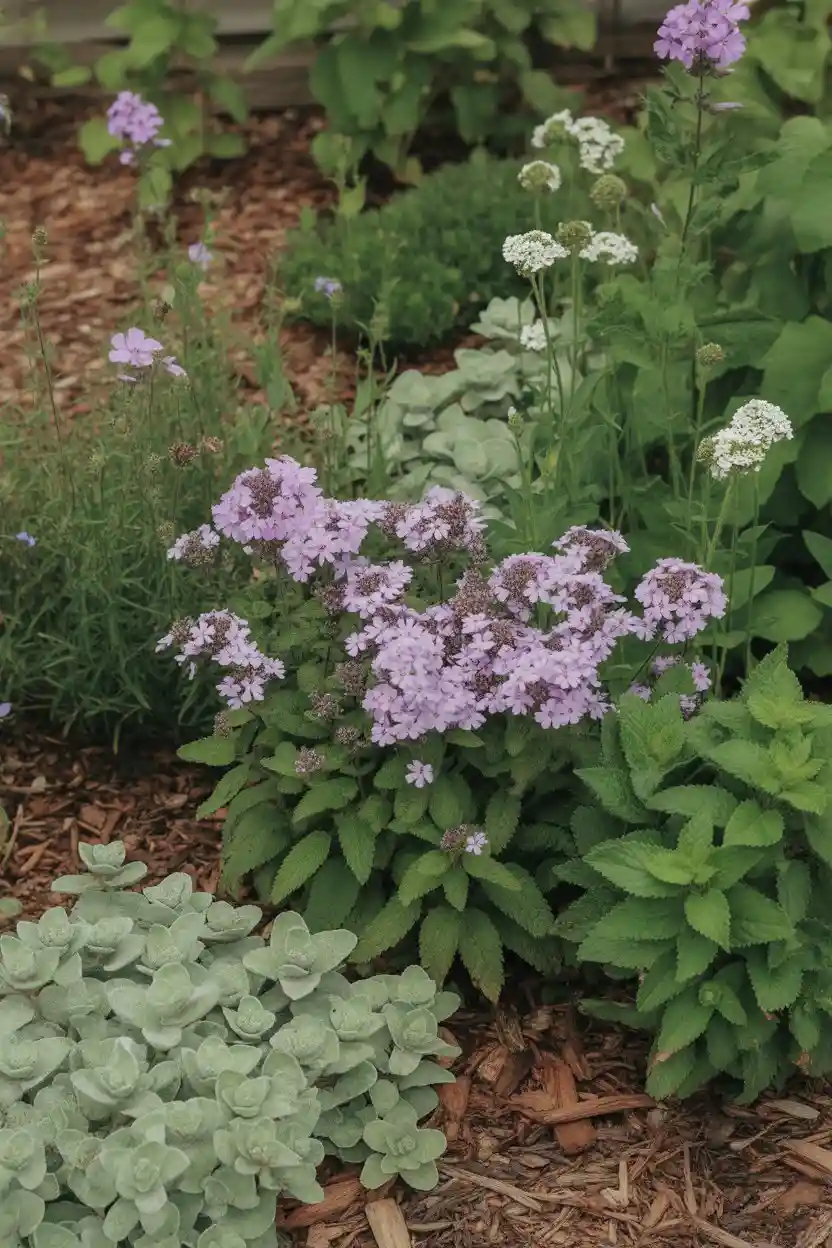
Highlight delicate spring shades with hellebore, lenten rose, pulmonarias, and aubrieta. Add dwarf phlox subulata along the front for soft mats of color. Include bleeding heart and aquilegia columbine for vertical elegance. Partial shade and moist soil ensure thriving growth. Layering by height enhances depth and creates interest before summer blooms arrive. Pastel tones provide a gentle transition from winter, supporting early pollinators. This perennial combination gradually fades into summer plantings, maintaining seasonal flow. The bed remains visually engaging while establishing structure for mid-season color.

Idea 7: Summer Cottage Garden Bed
Combine phlox paniculata, rudbeckia hirta, coneflower echinacea, and shasta daisy for a romantic, cottage-style summer bed. Include nepeta catmint and geranium rozanne cranesbill for prolonged blooms. Add daylilies and coreopsis to brighten the palette. Taller plants at the back, medium in the center, and low mounding perennials at the front create a balanced layered effect. Textural contrasts from lambs ear or heuchera coral bells add subtle interest. Repeated color patterns unify the bed, attracting pollinators and maintaining color from early summer into fall.

Idea 8: Autumn Glow Perennial Bed
Create a fall-focused bed with solidago goldenrod, liatris spicata, asters, and rudbeckia purpurea. Include coneflower echinacea seed heads for added texture. Add perennial phlox and gaura lindheimeri for soft pink and white accents. Layering heights ensures visual interest while maintaining continuous color into autumn. Late bloomers attract pollinators when other perennial flowers fade. Use taller plants in the back and creeping phlox or groundcover at the front. This combination provides autumnal vibrancy and textural variation while supporting wildlife. The bed remains dynamic and visually appealing through fall transitions.
Idea 9: Mixed Texture Perennial Bed
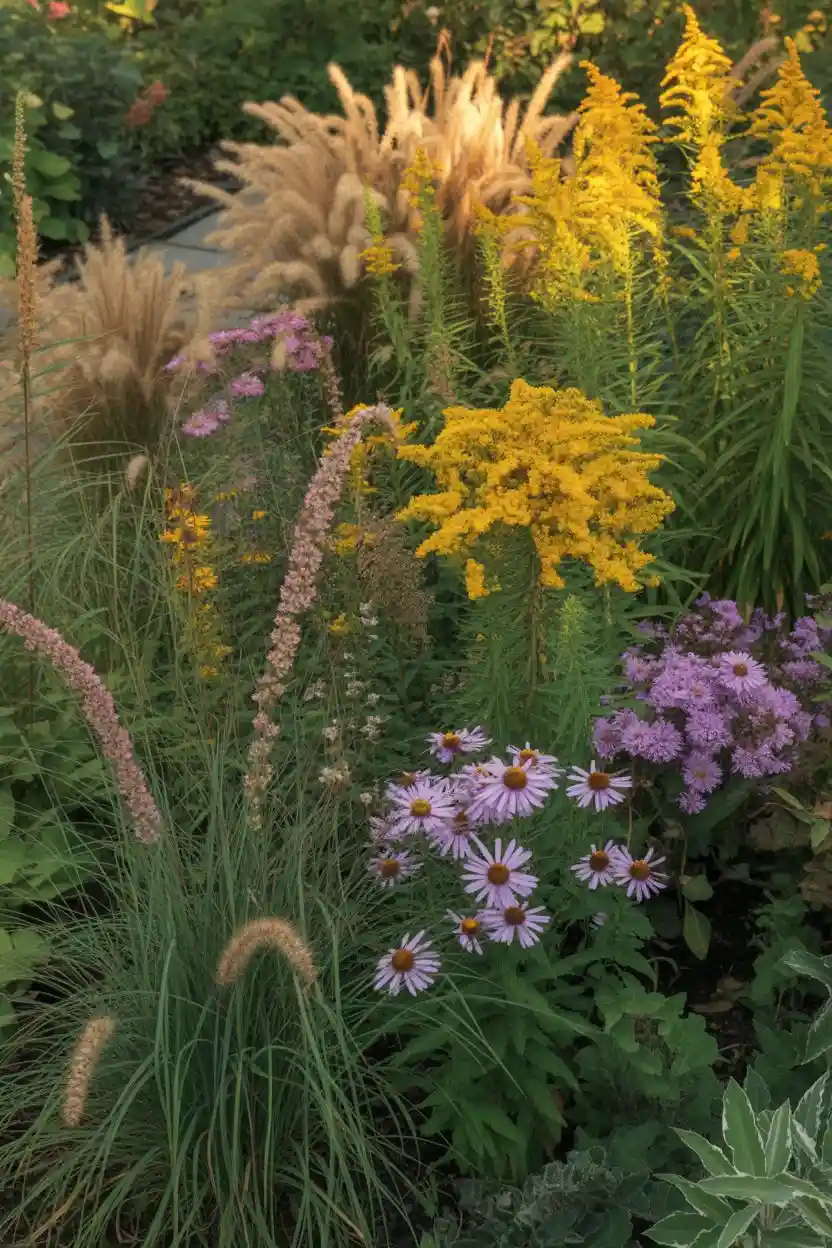
Combine heuchera coral bells, lambs ear, geranium macrorrhizum, and nepeta catmint to focus on foliage contrast and texture. Add creeping phlox for early spring color. Include mid-height coneflowers and rudbeckia for summer vertical interest. Layered plant heights create depth and diversity while leaf shapes maintain year-round appeal. Blending soft mounding perennials with bold textures adds dimension. This approach emphasizes structural beauty even when perennial flowers are minimal. Groupings of repeated colors and complementary forms ensure visual balance while allowing low-maintenance enjoyment.

Idea 10: Butterfly & Hummingbird Perennial Bed
Use nectar-rich plants like monarda bee balm, asclepias tuberosa, echinacea purpurea, and gaura lindheimeri. Add cardinal perennial flower lobelia cardinalis to attract hummingbirds. Include liatris spicata for vertical, late-season blooms. Plant in sunny, well-drained areas for maximum flowering. Layered heights and repeated colors maintain visual harmony while encouraging wildlife visits. This bed provides a continuous source of nectar throughout the season. Combining bright colors with varied textures creates dynamic interest, supports pollinators, and ensures the garden remains lively from summer into early fall.

Idea 11: Late Spring Lavender and Blue Bed
Combine salvias, nepeta catmint, and agastache for a serene palette of blues and purples. Include geranium rozanne cranesbill for a soft, long-lasting bloom. Position taller salvias at the back and creeping nepeta toward the front for layered depth. Incorporate daylilies and coreopsis for complementary pops of yellow and orange. This combination thrives in full sun and well-drained soil. Continuous bloom from late spring into summer keeps the bed vibrant. Pollinators love these nectar-rich flowers, making it an attractive and ecologically supportive planting.
Idea 12: Summer Sunset Perennial Bed
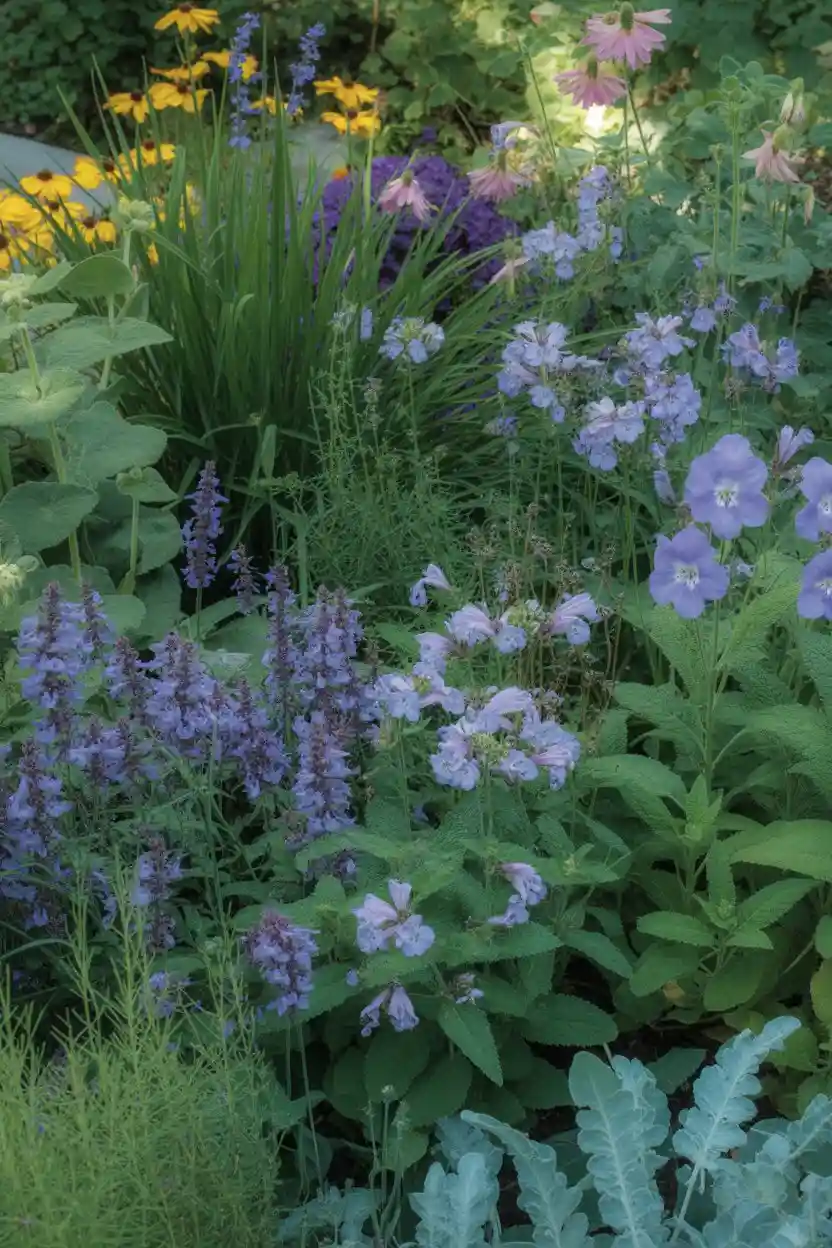
Design a warm-toned bed using rudbeckia, gaillardia blanket perennial flower, coreopsis, and daylilies to mimic sunset colors. Add kniphofia red hot poker for dramatic vertical height. Surround with lambs ear or heuchera coral bells to soften edges. Plant taller blooms at the back and shorter perennials in front for depth. This combination thrives in sunny locations, requires moderate water, and supports pollinators. Sequential bloom times create continuous summer color. Layering textures and warm tones provides visual interest while energizing the garden space.
Idea 13: Shade-Loving Woodland Bed
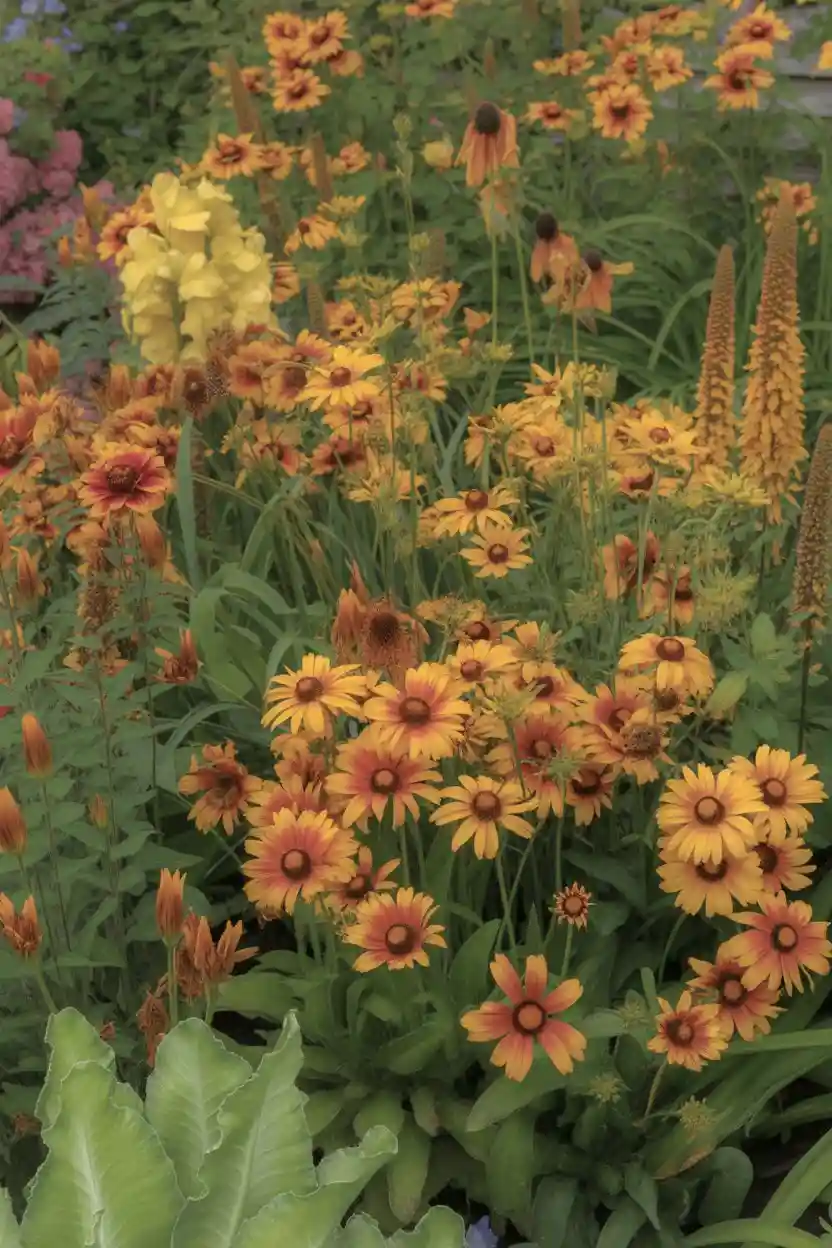
Use bleeding heart, hellebore, aquilegia, and pulmonarias to form a soft, shaded woodland bed. Add hostas for lush foliage and creeping phlox for spring groundcover. Layer taller blooms behind medium-sized plants, leaving shorter species in front. Moist soil and partial shade conditions support healthy growth. Pollinators benefit from early blooms, ensuring ecological balance. This combination maintains visual appeal even before summer perennials bloom. Layered textures, leaf shapes, and pastel flowers create a tranquil and inviting shaded garden retreat.

Idea 14: Bold Vertical Spike Bed
Incorporate delphinium, liatris spicata, kniphofia, and liatris blazing star for a vertical-focused display. Use coneflowers and rudbeckia for mounding contrast. Arrange tallest spikes at the back, with medium perennials in the center and low-growing plants at the front. This bed thrives in full sun with well-drained soil. Nectar-rich blooms attract pollinators throughout summer. Continuous layering of height, color, and texture creates a dynamic and dramatic effect. Including subtle foliage elements balances bold spikes, ensuring a structured and eye-catching garden presence.

Idea 15: Low-Water Drought-Tolerant Bed
Select resilient perennials like achillea yarrow, perovskia russian sage, nepeta catmint, and coreopsis. Add gaura lindheimeri for airy movement. Arrange taller perennials centrally and low-growing groundcover at the edges. This combination tolerates drought, thrives in full sun, and requires minimal care. Layered bloom times from spring through fall maintain continuous color. Pollinators benefit from extended perennial flowering periods. Textural contrasts between soft foliage and bold blooms enhance visual interest. This bed is ideal for sustainable, low-maintenance landscapes that provide color and ecological support with minimal water input.

Idea 16: Autumn Jewel Toned Perennial Bed
Combine solidago goldenrod, rudbeckia purpurea, liatris spicata, and asters for deep autumn hues. Add ornamental grasses for texture and movement. Plant taller species at the back and lower mounding plants at the front for depth. These late bloomers support pollinators and provide a vibrant fall display. Layered heights and varied foliage maintain visual interest when summer perennials fade. Including contrasting shapes and colors prolongs seasonal appeal. This bed ensures a lively, colorful garden throughout autumn, creating a rich jewel-toned tapestry with structure and continuous bloom.

Idea 17: Butterfly Magnet Bed
Plant monarda bee balm, echinacea purpurea, asclepias tuberosa, and gaura lindheimeri to attract pollinators. Add cardinal perennial flower lobelia cardinalis for hummingbirds and liatris for late summer color. Arrange taller plants at the center, medium perennials around them, and shorter blooms at the edges. This sunny bed thrives in well-drained soil and requires moderate maintenance. Repeated bloom colors and layered heights encourage continuous wildlife visitation. Vibrant textures, nectar-rich flowers, and strategic placement ensure year-round interest and a lively, functional habitat for pollinators.
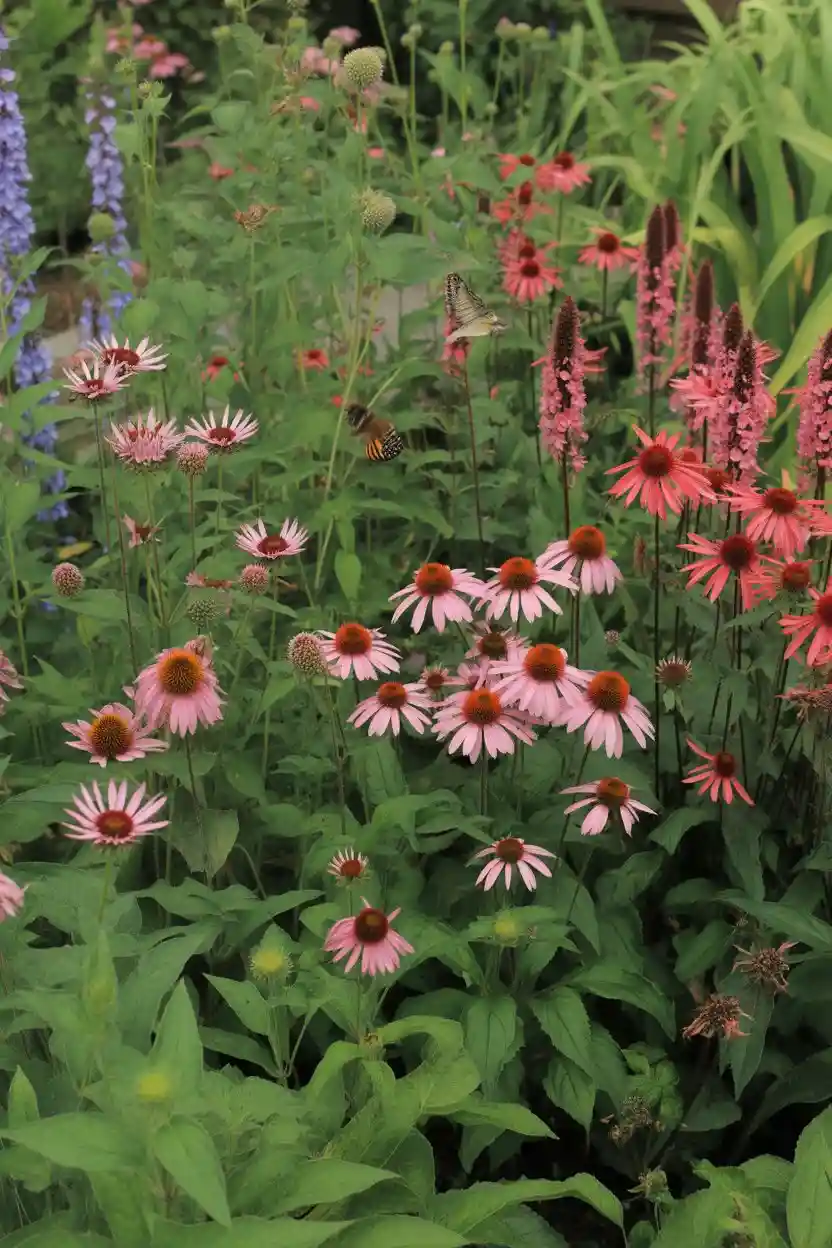
Idea 18: Spring Pastel Mix Bed
Combine hellebore, lenten rose, pulmonarias, and aubrieta for early pastel blooms. Include dwarf phlox subulata along the front for colorful mats. Add bleeding heart and aquilegia columbine for vertical elegance. Layer by height to create depth and visual appeal. Partial shade and moist soil ensure optimal growth. Early blooms support pollinators, transitioning seamlessly into summer perennials. The combination maintains a gentle, soft palette while preparing the bed for midsummer color. Subtle textures and layered foliage keep interest before bold blooms appear.
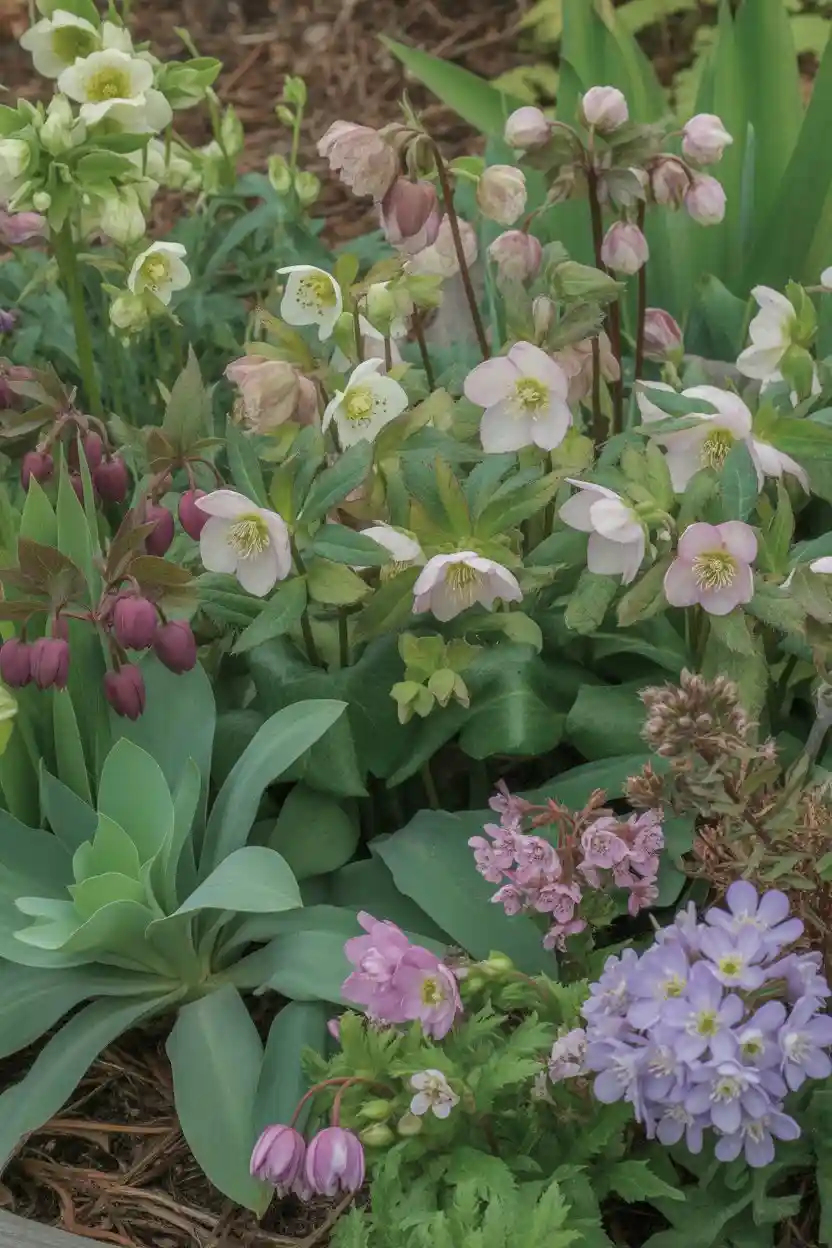
Idea 19: Cottage Garden Color Explosion
Mix phlox paniculata, rudbeckia hirta, coneflower echinacea, and shasta daisy for a classic cottage-style display. Include nepeta catmint and geranium rozanne cranesbill for extended bloom periods. Add daylilies and coreopsis for bright accents. Layer heights with tall perennials at the back and low mounds in front. Lambs ear or heuchera coral bells provide texture and softness. This bed thrives in sun, attracts pollinators, and provides continuous blooms from early summer into fall. Repeating colors and layering textures enhances a whimsical, abundant cottage feel.

Idea 20: Summer Sunset Harmony Bed
Create a warm-hued bed with rudbeckia, gaillardia blanket flower, coreopsis, and daylilies. Include kniphofia for vertical height and lambs ear for soft texture. Arrange taller plants at the back, midsized at mid-layer, and shorter perennials at the front. This sun-loving bed thrives under moderate care and provides long-lasting summer color. Pollinators are attracted to vibrant, nectar-rich blooms. Layering bold tones with soft foliage balances intensity, creating a visually dynamic garden. Staggered bloom times ensure continuous interest and a cohesive color story from summer to fall.
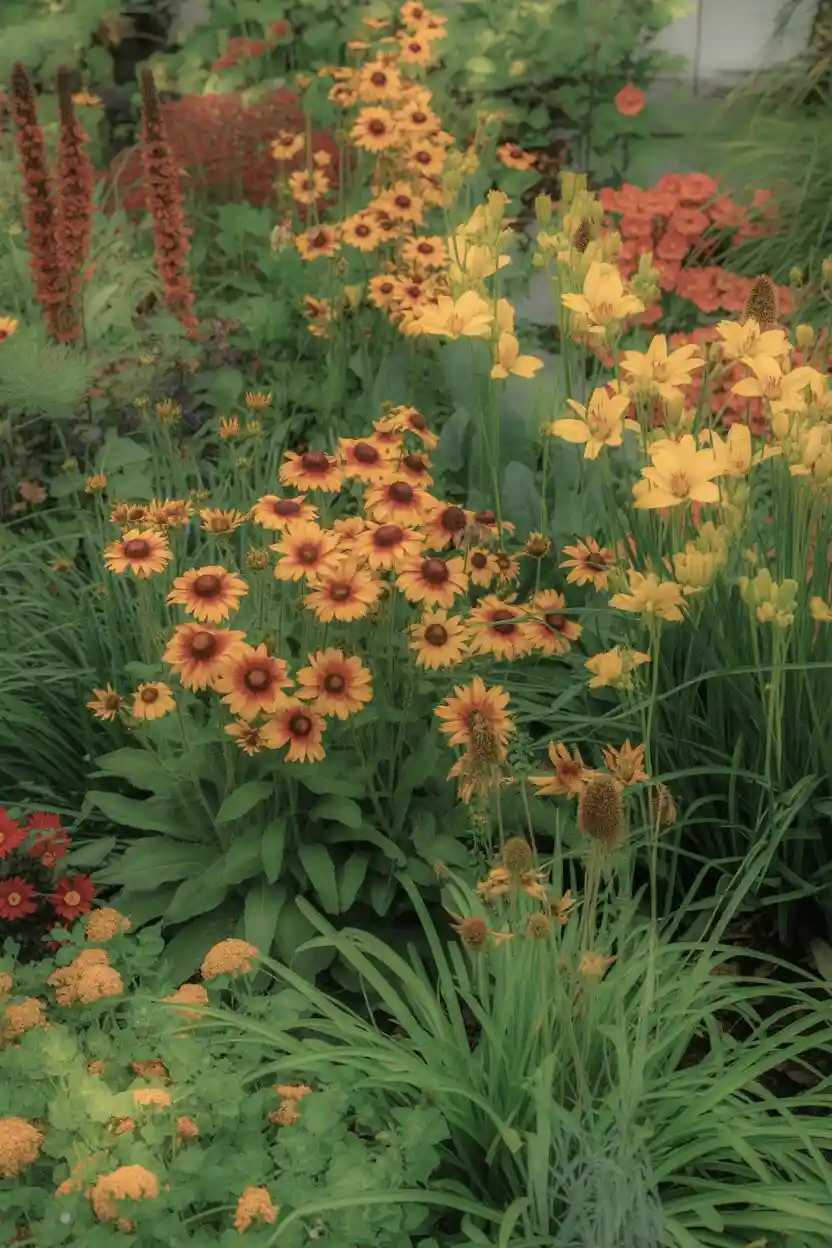
Idea 21: Shade-Friendly Woodland Edge Bed
Plant bleeding heart, hellebore, aquilegia, and pulmonarias for soft woodland colors. Add hostas and creeping phlox for layered foliage and early spring blooms. Taller species go at the back with low-growing perennials along the edges. Moist, shaded areas promote healthy growth. Early blooms attract pollinators and transition gracefully into summer perennial flowers. Combining delicate textures, subtle colors, and layered heights maintains visual appeal. This approach creates a tranquil woodland edge that is both ecologically supportive and aesthetically pleasing from spring through early summer.
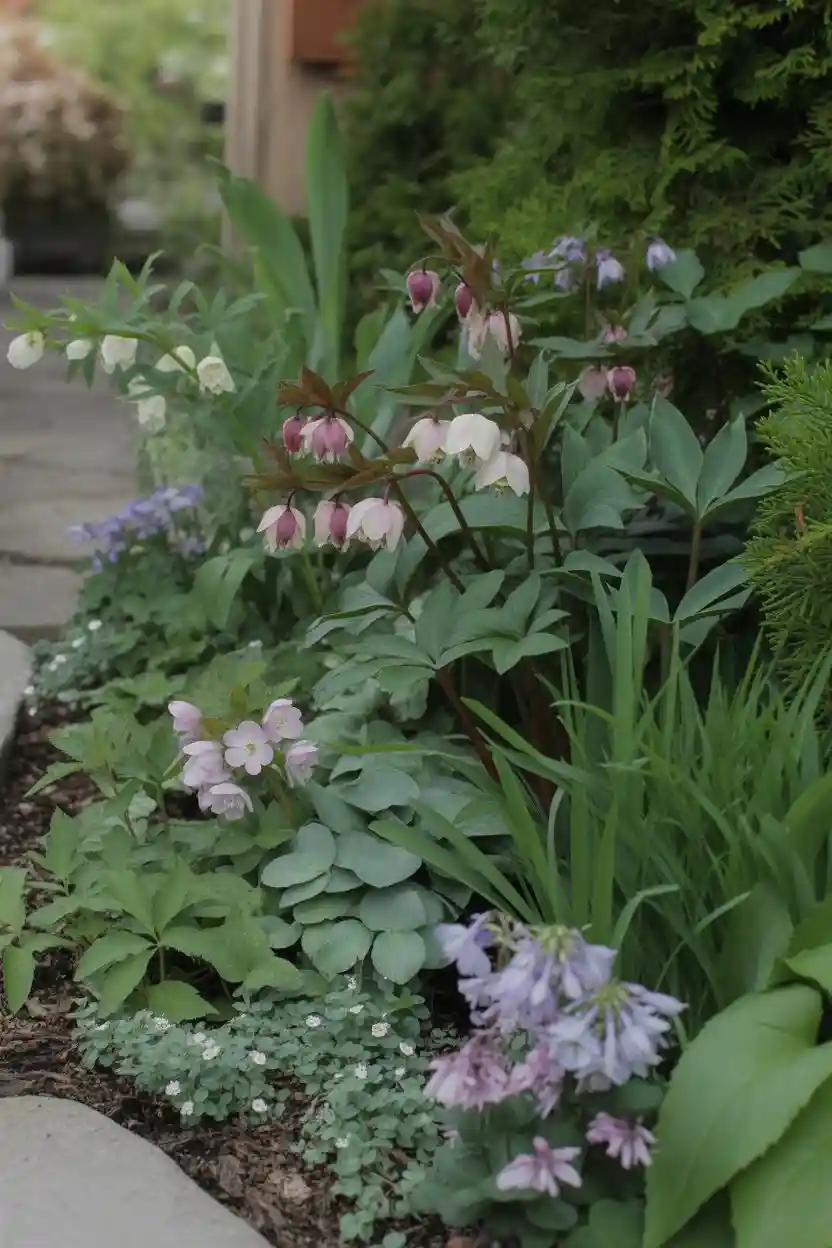
Idea 22: Vertical Drama Perennial Bed
Incorporate delphinium, liatris spicata, kniphofia, and liatris blazing star for striking vertical presence. Pair with coneflowers and rudbeckia to create mounding contrast. Layer tall spikes at the back, medium in the center, and low-growing perennials in front. Sun-loving and well-drained, this bed is easy to maintain and pollinator-friendly. Continuous blooms through summer provide year-round appeal. Textural contrast between bold spikes and soft foliage adds depth. This combination produces dramatic height, color, and form while balancing structure and floral dynamics.
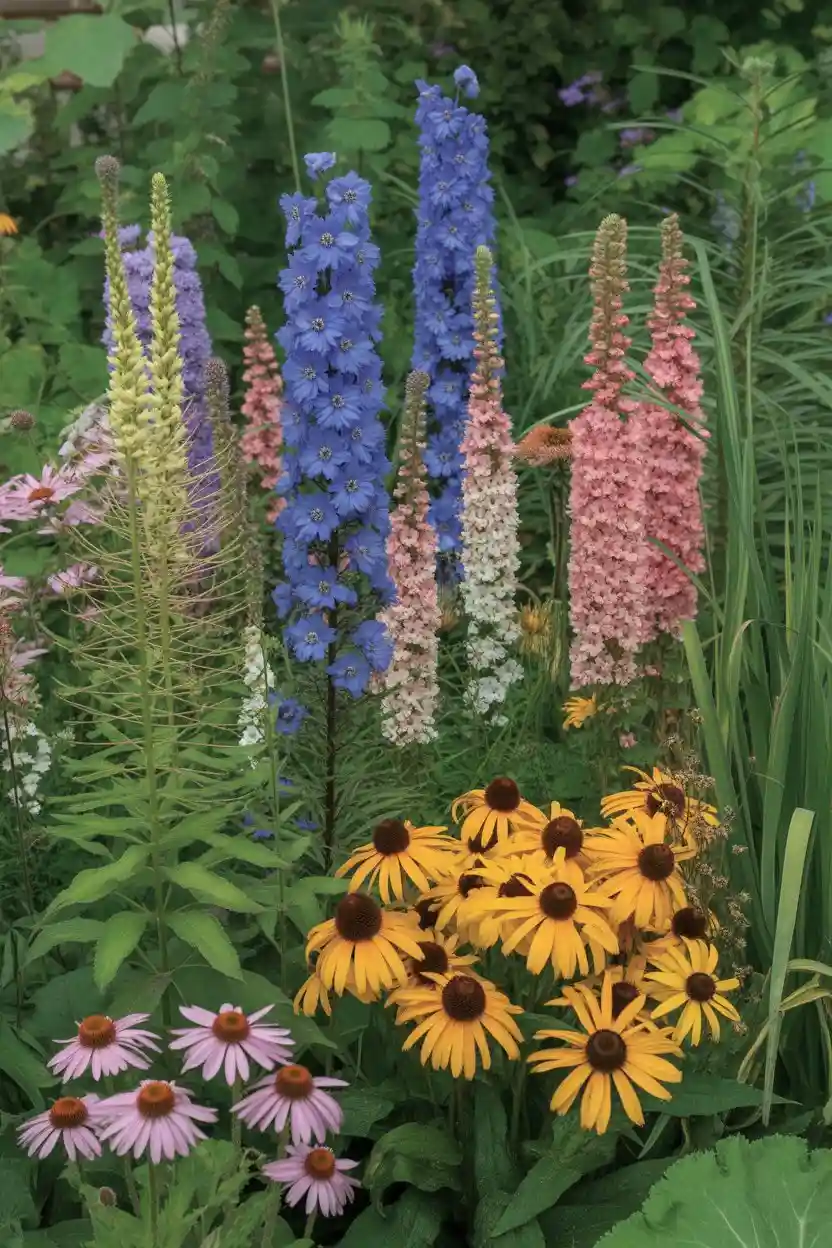
Idea 23: Drought-Tolerant Summer Bed
Choose resilient perennials like achillea yarrow, nepeta catmint, perovskia russian sage, and coreopsis. Include gaura lindheimeri for airy movement. Taller perennials go in the center, low groundcover along edges. Sun-loving and drought-tolerant, this low-maintenance bed requires minimal care. Staggered bloom times provide continuous color from spring through fall. Pollinators are supported with nectar-rich perennial flowers. Layered textures, contrasting foliage, and vibrant blooms ensure interest without heavy watering. This sustainable bed combines practicality, beauty, and ecological benefits for low-effort gardening with long-lasting summer impact.

Idea 24: Autumn Jewel Perennial Bed
Combine solidago goldenrod, rudbeckia purpurea, liatris spicata, and asters for late-season color. Add ornamental grasses for texture and soft movement. Taller plants go in the back, low mounding species at the front. Late bloomers attract pollinators and maintain vibrancy as summer fades. Layering different heights ensures visual depth. Contrasting shapes and colors prolong seasonal appeal. This autumn jewel-toned bed creates a rich, textured landscape. Continuous bloom and structural interest maintain ecological support while enhancing garden aesthetics through crisp fall months.

Idea 25: Pollinator Paradise Bed
Plant monarda bee balm, echinacea purpurea, asclepias tuberosa, and gaura lindheimeri to support wildlife. Add cardinal perennial flower lobelia cardinalis and liatris spicata for vertical attraction. Arrange taller species centrally, midsized perennials around them, and low-growing blooms at the edges. Sunny, well-drained conditions maximize flowering. Layered bloom times ensure nectar availability throughout the season. Textural variety and repeated colors provide aesthetic cohesion. Pollinators thrive, and gardeners enjoy dynamic blooms. This combination creates a functional, beautiful habitat, sustaining butterflies, bees, and hummingbirds from summer into fall.
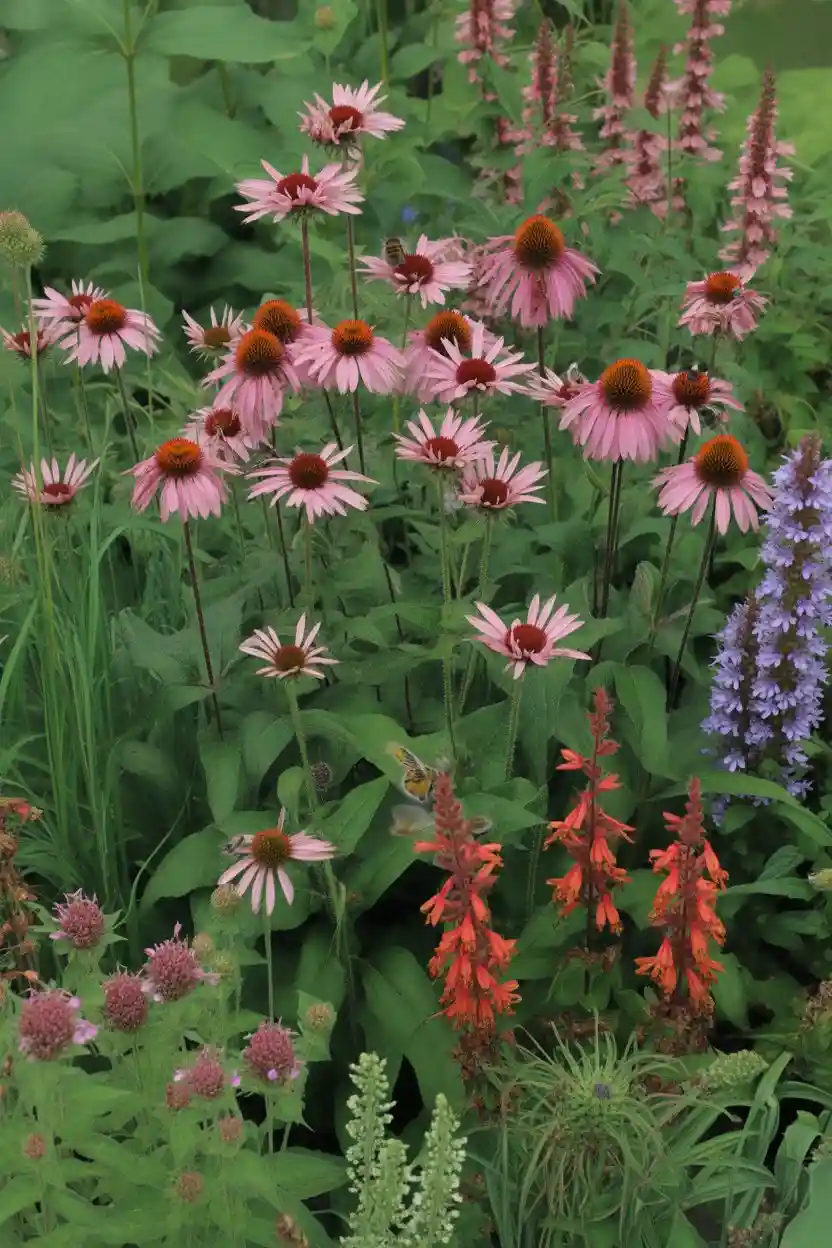
Idea 26: Soft Pastel Shade Bed
Combine hellebore, lenten rose, pulmonarias, and aubrieta for early pastel spring blooms. Use dwarf phlox subulata as front groundcover. Include bleeding heart and aquilegia for vertical interest. Partial shade and moist soil enhance growth. Layering by height ensures visual depth. This bed transitions smoothly into summer perennials. Early blooms support pollinators, and layered foliage maintains interest before showier perennial flowers appear. Subtle color variation and textured leaves create a gentle, inviting atmosphere, providing a serene, woodland-inspired garden corner for spring enjoyment.

Idea 27: Classic Cottage Summer Bed
Mix phlox paniculata, rudbeckia hirta, coneflower echinacea, and shasta daisy for a traditional cottage garden. Include nepeta catmint and geranium rozanne cranesbill for extended bloom periods. Add daylilies and coreopsis for brightness. Layer tall plants at the back, midsized in the center, and low mounds in front. Textural contrasts from lambs ear and heuchera coral bells soften the display. Repetition of color and height patterns creates cohesion. Pollinators are attracted, and blooms persist from early summer into fall, maintaining visual appeal and cottage charm.
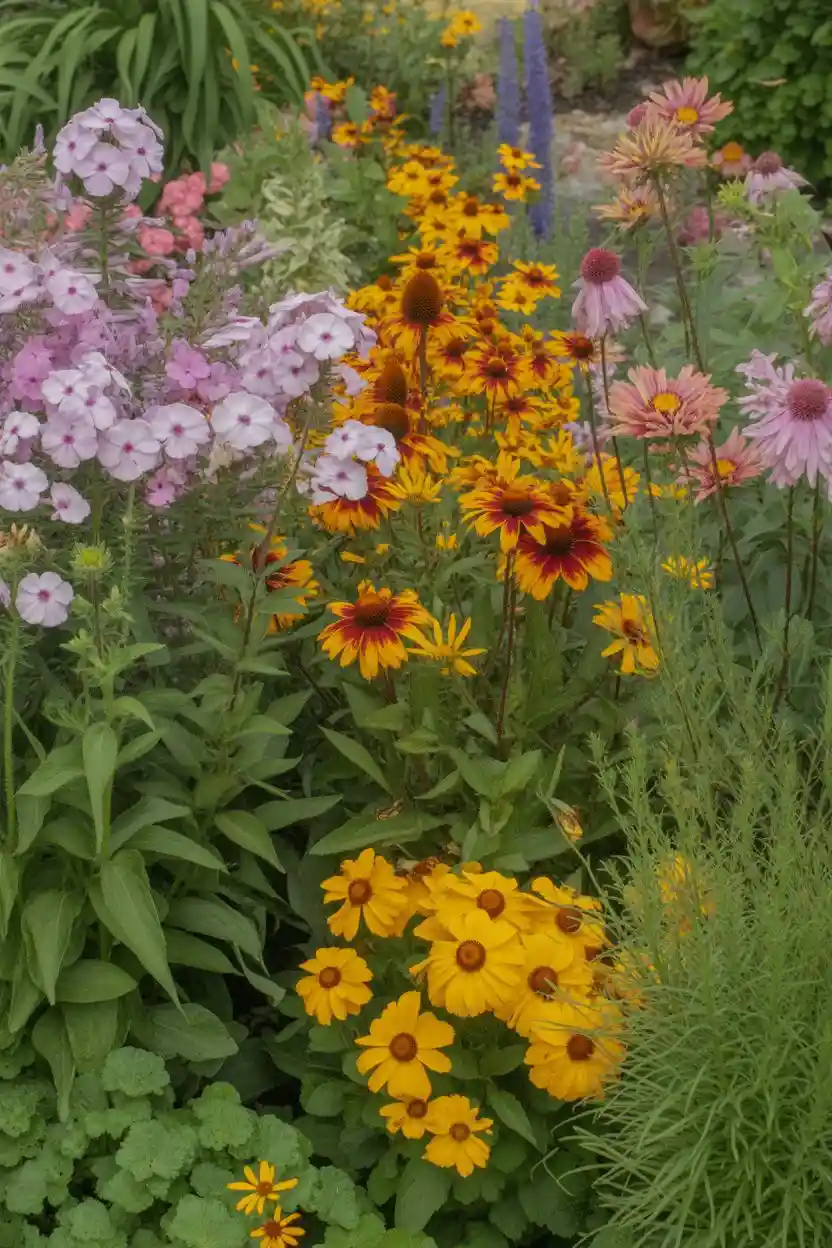
Idea 28: Sunset-Inspired Summer Bed
Design a warm-toned bed with rudbeckia, gaillardia blanket perennial flower, coreopsis, and daylilies. Include kniphofia for vertical accent and lambs ear for softness. Tallest blooms go in the back, midsized in mid-layer, and low groundcovers upfront. Sun-loving and moderately maintained, this bed provides extended summer color. Pollinators thrive on vibrant nectar sources. Layered textures and complementary hues create depth and movement. Staggered bloom times ensure continuous interest, making the bed a cohesive, lively, and visually striking garden feature from early summer to fall.
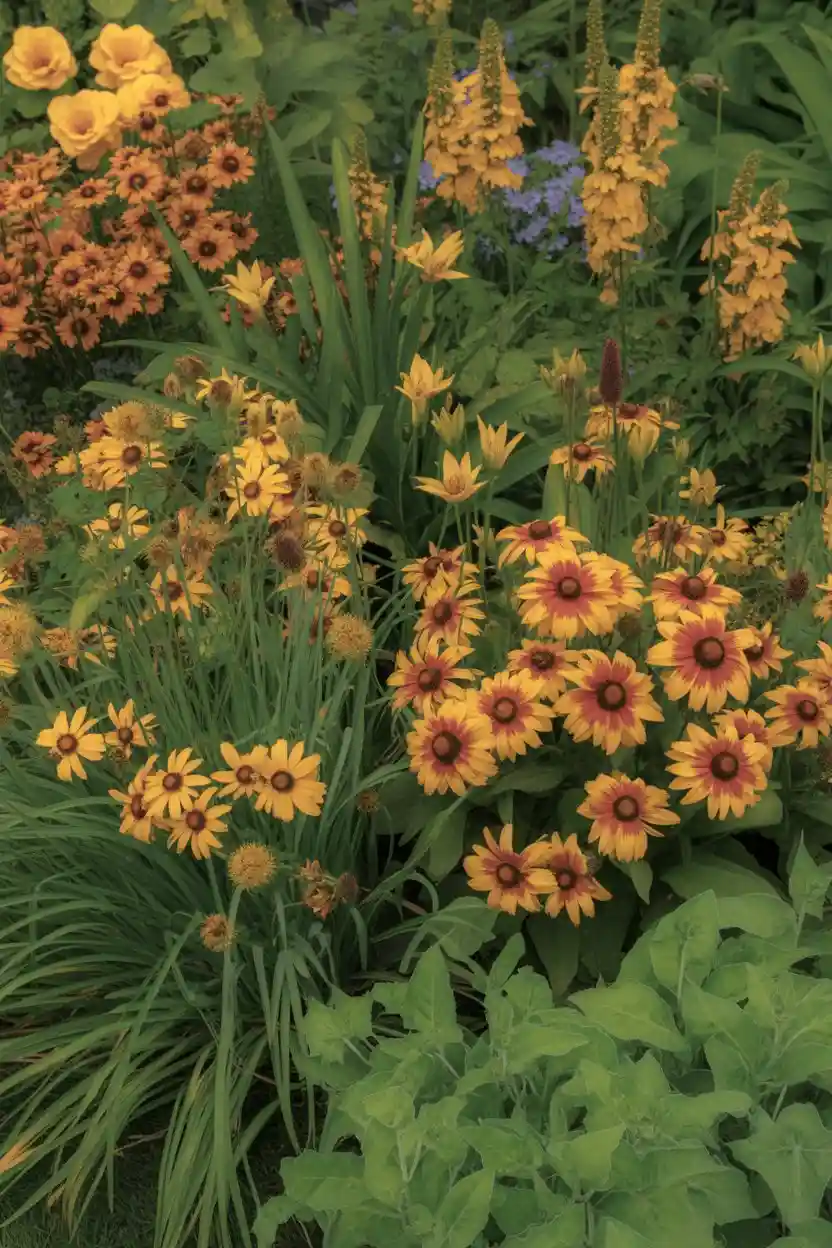
Idea 29: Woodland Edge Layered Bed
Use bleeding heart, hellebore, aquilegia, and pulmonarias for a soft woodland-themed bed. Add hostas and creeping phlox for layered foliage and early blooms. Taller plants at the back, smaller in front. Partial shade with moist soil ensures thriving growth. Early flowers support pollinators, transitioning into summer blooms. Layered textures, heights, and pastel colors create depth and tranquility. This woodland edge design enhances shaded areas, supporting wildlife while maintaining year-round interest. Gradual succession of perennials ensures continuous color and structural appeal throughout spring and summer.
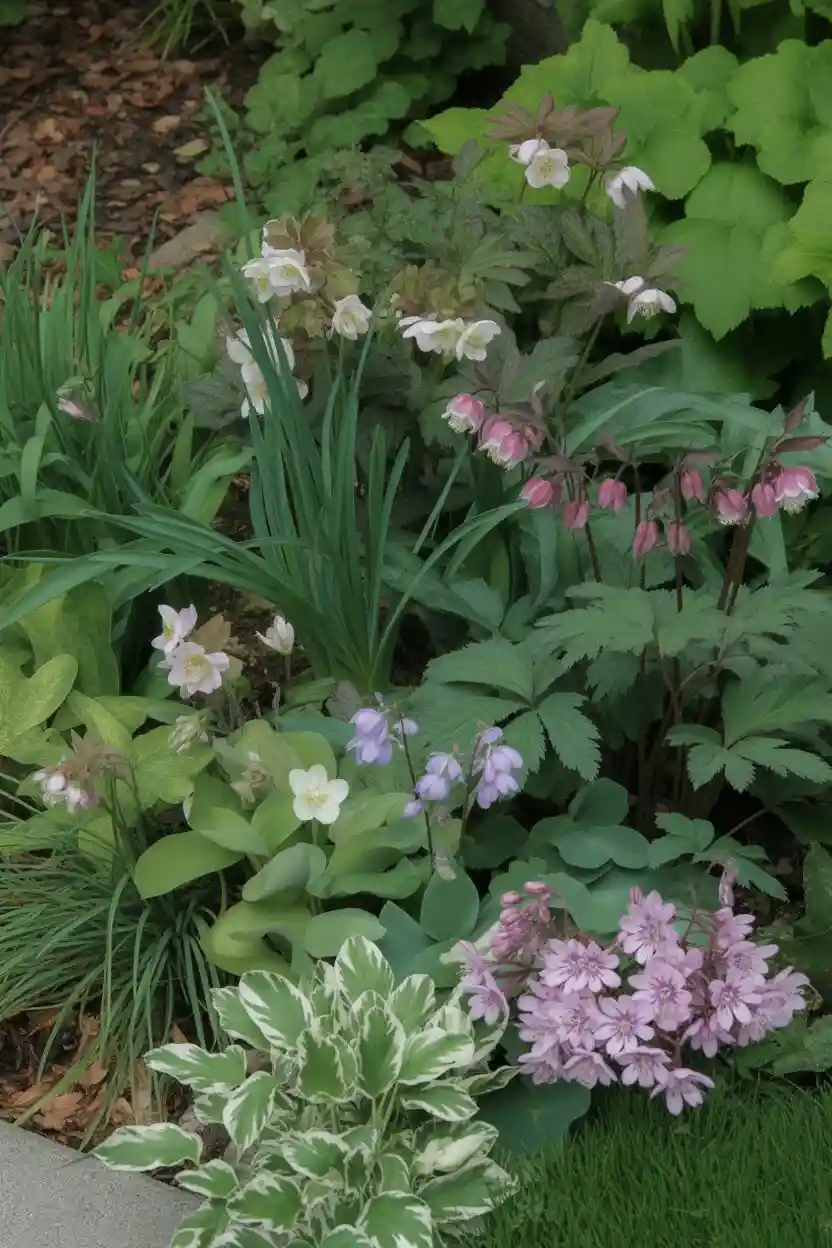
Idea 30: Vertical and Mounding Summer Bed
Combine delphinium, liatris spicata, kniphofia, coneflowers, and rudbeckia for vertical and mounding contrast. Layer tallest perennials at the back, medium in mid-layer, and low groundcovers upfront. Sun-loving and well-drained, this bed requires moderate care and attracts pollinators. Continuous blooms from summer into fall maintain interest. Textural diversity, repeated color patterns, and layered heights create a structured yet dynamic display. Bold spikes contrast soft mounds for a visually striking effect. This perennial bed provides long-lasting seasonal beauty with ecological benefits.