Introduction
Look at the back of your bookshelf. Chances are it is plain white, scuffed, or that sad beige every flat-pack unit seems to come with — and it is dragging down everything sitting in front of it. Lining the back panel with wallpaper is the fastest way I know to make a basic shelf look custom. It adds color, pattern, and depth in about an hour, and peel-and-stick versions mean renters can do it too, with zero damage when the lease ends. You do not need special skills: measure, cut, smooth, done. The trick is choosing a pattern that works with what you already own, not against it. These 21 shelf wallpaper ideas cover every style — from moody charcoal to vintage florals — with honest notes on which papers to buy and exactly what to style on the shelves once the paper is up.
1. Classic Botanical Prints
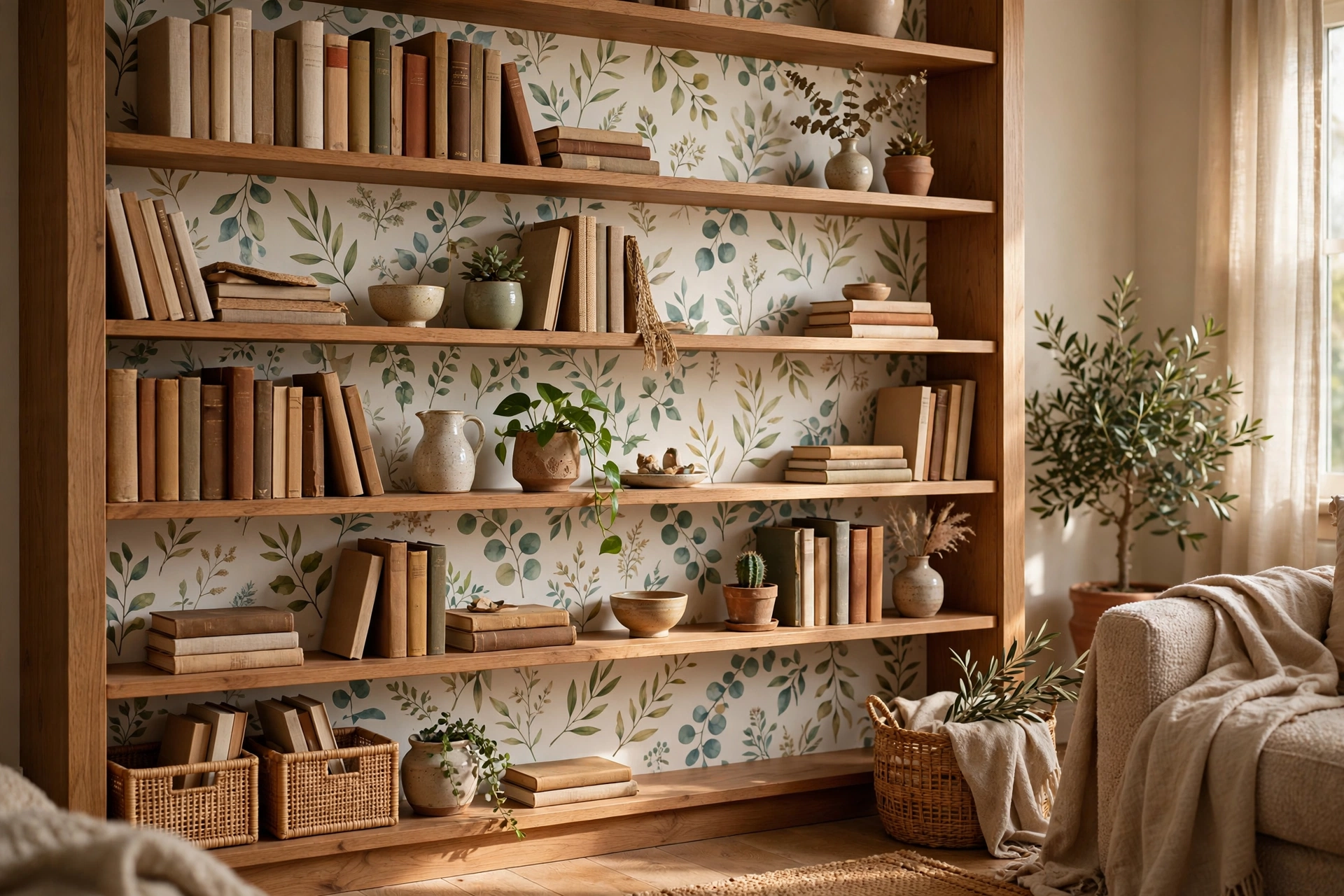
Fern, eucalyptus, and leaf sprigs printed on a warm white or soft cream ground never go out of style. Choose a peel-and-stick botanical with fine linework rather than heavy blocks of color — the lighter hand keeps small shelves feeling airy instead of busy. This pairs beautifully with oak, walnut, or honey-toned wood. Style it with white ceramic vases, a short stack of coffee-table books, and one trailing pothos. Because the paper is removable, it is perfect for renters who want the conservatory look without painting. Press the paper firmly into the corners with a plastic smoother so the leaf pattern reads crisp right up to the edges.
2. Bold Black-and-White Geometric
A hexagon, trellis, or oversized chevron in black and white turns a plain bookcase into a graphic statement. Use a removable peel-and-stick version — geometric prints show every wrinkle, and repositionable paper lets you rehang a crooked panel without ruining it. The high contrast makes colorful book spines pop, so this is ideal if you actually read your books and want them on display. Add brass bookends, one black-framed print, and a small sculptural object in matte black. Keep the shelf styling spare; the pattern is doing the talking and clutter will fight it.
3. Faux Grasscloth Texture
Real grasscloth is expensive and fussy, but textured vinyl that mimics it gives you the same woven warmth for a fraction of the cost — and in peel-and-stick form. Pick a warm greige or natural jute tone, which flatters both white and dark wood shelving. The nubby texture also hides scuffs and dings on older bookcases, making this the best choice for thrifted or hand-me-down units. Style with woven seagrass baskets, handmade pottery, and linen-covered storage boxes. Because the pattern is essentially a solid, you can go heavier on objects without visual chaos.

4. Vintage Floral
Dusty rose, sage, and butter-yellow florals on a cream ground bring instant cottage charm. For a permanent piece of furniture, traditional paste-the-wall paper gives the most authentic look; for anything you might resell or move, choose a prepasted or peel-and-stick reproduction. Small ditsy prints suit narrow shelves, while larger cabbage-rose motifs need a wide bookcase to breathe. Style with antique brass picture frames, stacked teacups, folded linen, and old hardcovers with the dust jackets removed. Avoid modern plastic storage here — it clashes with the romantic mood.
5. Chinoiserie Panels
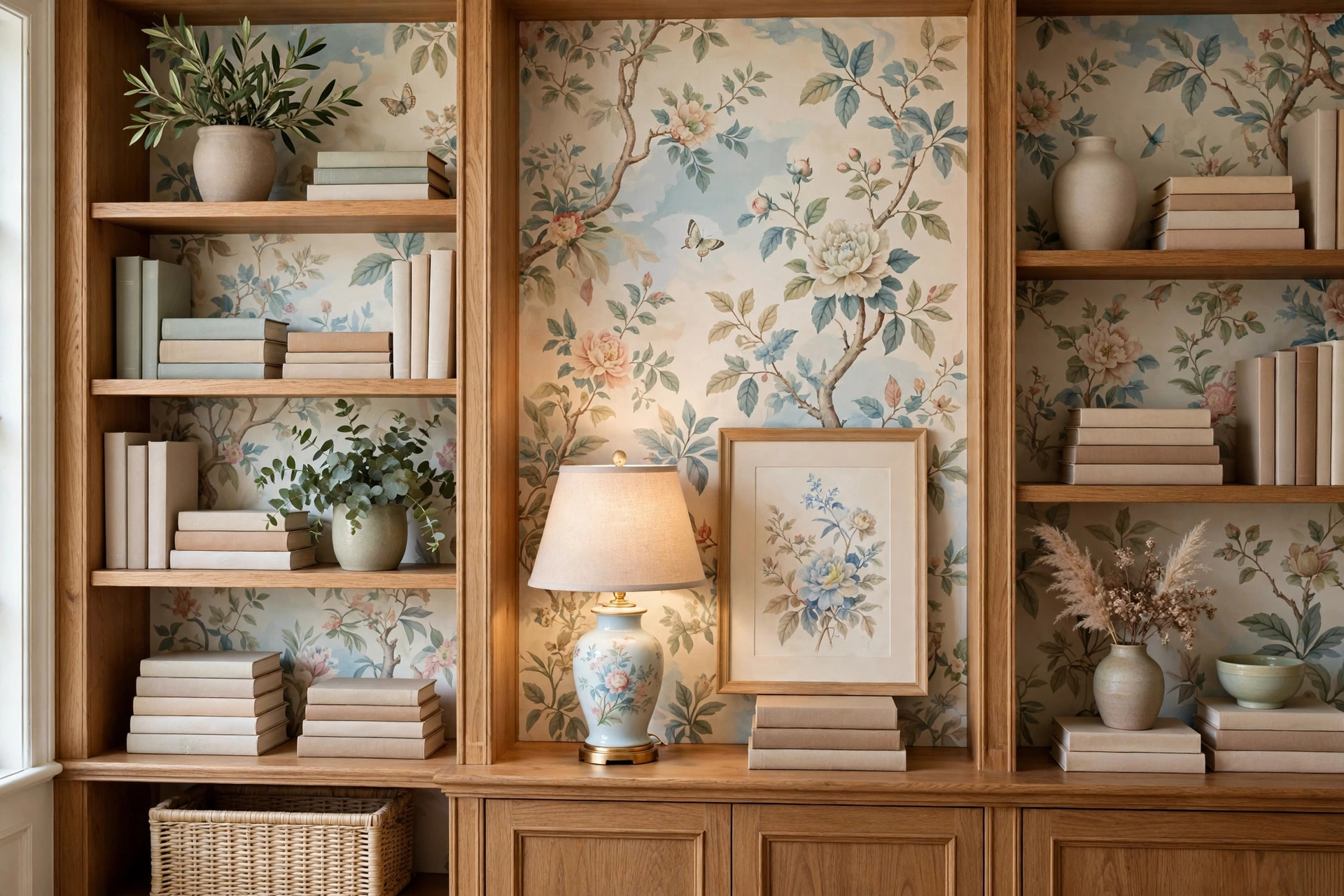
Chinoiserie — pagodas, cranes, and flowering branches — is the drama option, and shelves are the perfect low-commitment place to try it. A navy ground with gold or white motifs looks rich against dark wood; a blush or pale blue ground feels softer on white shelving. Peel-and-stick chinoiserie murals come in panel sets sized for accent walls, so buy one panel and cut it down — far cheaper than full rolls. Style with blue-and-white porcelain, ginger jars, and a single orchid. Keep everything else minimal; this pattern needs room to be admired.
6. Watercolor Ombre
A soft gradient — blush melting into cream, or misty blue fading to white — gives shelves a calm, gallery-like backdrop. Ombre peel-and-stick panels are printed as one continuous fade, so measure your shelf height first and buy panels tall enough to cover it in a single drop; seams will break the gradient. Because the color is so gentle, style sparingly: two or three ceramics in white or clear glass, a candle, and negative space. This works especially well in bedrooms and reading nooks where you want the shelving to feel restful, not stimulating.
7. Moody Charcoal
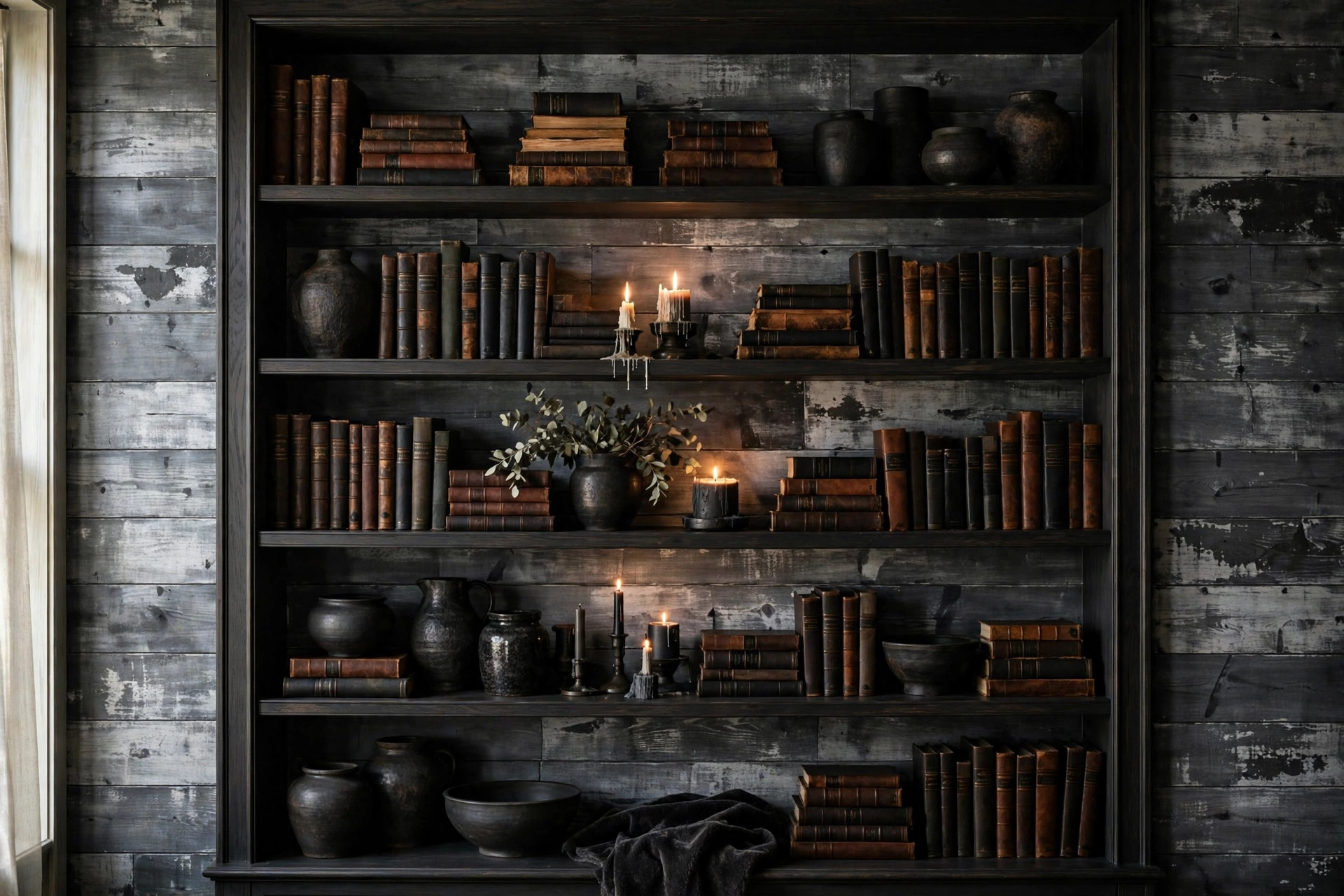
Matte charcoal or near-black paper makes everything in front of it look more expensive — it is the oldest stylist trick in the book. Use a flat, non-reflective finish; anything with sheen will show fingerprints and glare under shelf lighting. The dark backdrop loves metallics, so bring in brass candlesticks, gold-framed art, and amber glass. Art books with bold covers, decanters, and a small lamp or two complete the private-library mood. One warning: dark paper shrinks a room visually, so reserve it for a single bookcase rather than a whole wall of shelving.
8. Faux Whitewashed Shiplap
Whitewashed wood planks give you the farmhouse-coastal look without a single nail or saw. Peel-and-stick shiplap prints are printed with realistic grain and plank gaps — choose one with subtle gray undertones rather than stark white for a more authentic feel. Run the planks horizontally for a wider look, vertically to add height. Style with rope baskets, driftwood pieces, white ironstone dishes, and folded striped throws. This is a forgiving pattern for beginners because the plank lines hide small cutting mistakes at the edges.
9. Marble Effect
White marble with soft gray or gold veining instantly reads luxury, and the peel-and-stick versions have gotten remarkably convincing. Look for a large-scale veining pattern — small, busy veins look fake up close. Marble paper loves reflective surfaces, so style with glass vases, a mirrored tray, perfume bottles, or crystal bookends. It is a natural fit for bathroom shelving, vanity nooks, and home offices where you want polish. Wipe the paper occasionally with a damp cloth; the smooth vinyl finish cleans up easily, which is why it survives in humid bathrooms.
10. Terrazzo Print
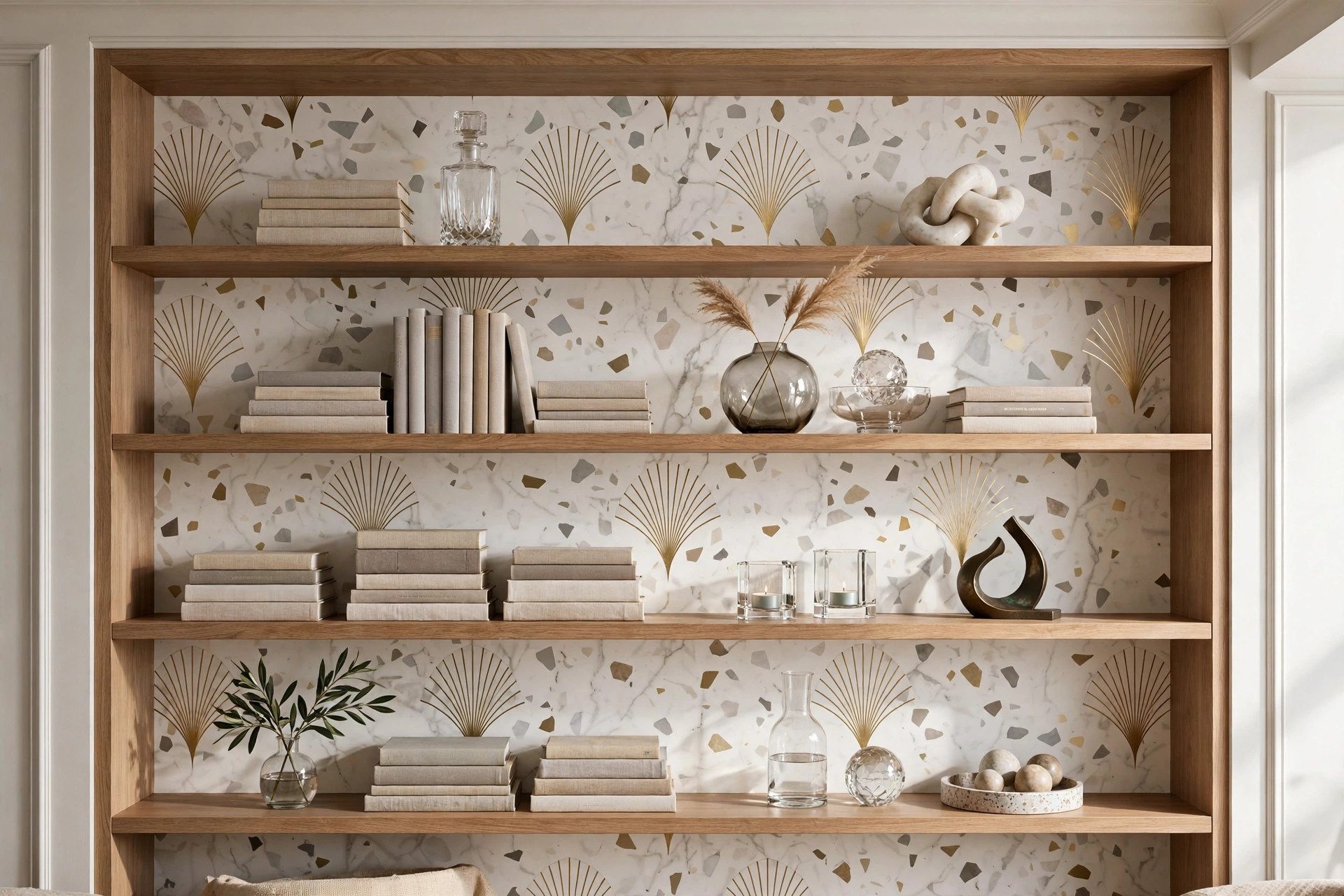
Terrazzo — those cheerful speckles of stone chips — brings playful mid-century energy to shelves. Modern peel-and-stick terrazzo comes in soft neutral bases with pastel chips, or bold versions with primary-color flecks on white. Match one chip color to an accent in your room for a pulled-together feel. Style with colorful ceramics, small potted succulents, and a few art books. This pattern is busy by nature, so give it breathing room: leave at least a third of each shelf empty, or the speckles and the objects will compete.
11. Ticking Stripe
The classic navy-and-cream ticking stripe — the one you know from vintage mattresses and French workwear — is crisp, tailored, and almost impossible to get wrong. A narrow stripe reads traditional; a wide awning stripe leans coastal and modern. Peel-and-stick stripes are beginner-friendly, but take time aligning each panel so the stripes continue seamlessly across the back. Style with natural linen storage boxes, folded throws, apothecary jars, and wooden crates. Stripes pair with nearly any wood tone, which makes this the safest pattern if you are decorating around existing furniture.
12. Art Deco Fan
Scalloped fan motifs in gold on emerald green, navy, or blush pink channel 1920s glamour. This is a maximalist pattern, so commit: it looks best on a bookcase styled like a bar cart or display cabinet rather than everyday storage. Use peel-and-stick for easy removal, and center the fan motif so the pattern looks intentional rather than randomly cut. Style with a mirrored tray, a sculptural vase, cocktail glasses, and metallic picture frames. Add a small picture light or LED strip at the top of the shelf — the gold ink catches the light beautifully.
13. Vintage World Map
Sepia-toned world maps turn a home office or study bookcase into something with real character. Look for reproduction cartography prints with aged edges and old-fashioned typography rather than bright modern political maps. Peel-and-stick map murals are sold in sections — measure carefully, since you will be trimming to fit. Style with leather-bound books, a small globe, framed travel photos, and souvenirs from your own trips. Group books by color (browns, tans, deep reds) to echo the map’s palette and keep the whole unit feeling curated.
14. Faux Exposed Brick
Not everyone can have a real brick wall, but a brick-look peel-and-stick panel gets you the industrial loft vibe on a single bookcase. Choose a print with varied brick tones — reds, browns, and a few darkened bricks — rather than a flat uniform red, which reads as cartoonish. This is a strong look, so use it on one accent shelf, not every bookcase in the room. Style with black metal planters, wooden crates, Edison-bulb string lights, and iron bookends. The rough texture hides wear beautifully, making it ideal for entryways and kids’ rooms.
15. Soft Scallop Pattern
Rows of small scallops in sage, blush, or powder blue are sweet without being babyish — perfect for a nursery, kids’ room, or a feminine home office. The repeating curve adds texture while staying calm, and small-scale scallops suit narrow shelves where big patterns would get lost. Peel-and-stick is the obvious choice here since kids’ tastes change fast. Style with pastel picture books facing forward, small stuffed animals, wooden toys, and a name garland. Keep the palette to three colors maximum so the shelf feels designed rather than cluttered.

16. Toile de Jouy
Toile’s pastoral scenes — shepherds, windmills, garden parties — printed in a single color on white is timeless French style. Navy toile is the classic, but red, black, and sage versions all work. Because the scenes are detailed, choose a scale that fits your shelf: large repeats need a tall bookcase, while small repeats suit narrow units. Traditional paste paper gives the most authentic result on a permanent piece. Style with white porcelain, a small topiary, candlesticks, and linen-bound books. Toile dislikes visual competition, so keep modern electronics and plastic bins off these shelves.
17. Concrete Effect
Cool gray concrete-look paper gives shelves an industrial-modern edge without any actual construction. The best versions have subtle mottling and tonal variation — flat gray looks like primer, so check close-up photos before buying. This neutral backdrop lets bold objects shine: style with black metal frames, a single sculptural vase, architectural books, and one green plant for contrast. Concrete paper suits home offices, studios, and masculine living rooms. It is also one of the most forgiving patterns to hang, since there is no motif to align.
18. Tropical Palm Leaf
Oversized banana leaves or palm fronds in deep green make a bookcase feel like a boutique hotel. This is a high-energy pattern, so it works best as a single statement unit — a bar shelf, a plant stand with shelves, or one bookcase in a neutral room. Peel-and-stick palm prints are widely available and easy to remove when the trend passes. Style with rattan baskets, woven textures, brass accents, and real plants to double down on the jungle feel. Keep the surrounding walls plain; tropical print plus patterned walls is too much.

19. Gold Foil Geometric
Thin gold foil lines — triangles, diamonds, or linear grids — on a white or cream ground add quiet glamour. The metallic ink catches both daylight and lamplight, so these shelves look different (and lovely) at different times of day. Because the pattern is delicate, handle peel-and-stick foil paper gently and avoid creasing it during hanging. Style with crystal, cut glass, metallic frames, and white ceramics. This is a beautiful choice for vanity shelving, living room display cabinets, and anywhere you want a touch of shine without full-on glitz.
20. Chalkboard Wallpaper
Writable chalkboard paper turns shelf backs into a functional surface: label bins in a playroom, write the week’s menu on kitchen shelving, or let kids doodle in their bedroom. Use proper chalk markers rather than dusty chalk sticks for crisp lines that wipe off cleanly with a damp cloth. The matte black doubles as a dramatic backdrop, so style with light-colored objects — white dishes, natural wood toys, colorful books — that stand out against it. Re-season the surface by rubbing the side of a chalk stick over it first; this prevents ghosting from your first drawings.
21. Scenic Mural Wallpaper
For maximum impact, skip the repeating pattern and hang a full scenic mural — a misty forest, mountain range, or coastal view — across the back of a wide bookcase. Peel-and-stick murals are printed in numbered panels; lay them out on the floor first to check the scene flows before you stick anything. Because the mural is the artwork, style the shelves minimally: a few books, one vase, plenty of empty space so the landscape shows through. This single move can make a basic flat-pack bookcase look like a custom built-in.
Styling Tips
- Measure the back panel and add an inch on every side; trim the excess with a sharp craft knife after hanging for perfectly clean edges.
- If the back board is screwed on, remove it and paper it flat on a table — far easier than working inside the shelf. Otherwise, trace each opening onto the paper backing and cut to fit between shelves.
- Smooth from the center outward with a plastic smoother or credit card to push air bubbles to the edges as you go.
- Repeat the same paper across every shelf of one unit for a cohesive look; save pattern-mixing for separate pieces in different rooms.
- Let the paper be the star — leave breathing room on each shelf instead of crowding it with objects that hide your work.
- Test a small swatch behind a stack of books for 48 hours before committing, especially on raw wood or vintage pieces.
Frequently Asked Questions
Is wallpaper on shelves removable? Peel-and-stick paper yes — warm it with a hairdryer on low and pull slowly at a sharp angle. Traditional pasted paper needs water or steam to remove, so only use it on furniture you own and plan to keep.
Do I have to take the shelves apart? No. Trace each shelf opening onto the paper’s backing sheet, cut out the rectangles, and apply the paper between the fixed shelves. If the back panel unscrews, though, removing it makes the job much easier.
What if my shelf has no back panel? Apply the wallpaper directly to the wall behind the open shelf. You get the same layered, styled effect, and renters can still use removable paper on the wall itself.
Will wallpaper damage the wood? Peel-and-stick is safe on sealed, painted, or laminated surfaces. On raw wood or valuable antiques, test a hidden spot first — and skip it entirely on precious vintage pieces, where even gentle adhesive is a risk.
Final Thoughts
Wallpapering the back of a shelf is one of those rare projects that is cheap, quick, renter-friendly, and genuinely transformative. Pick the pattern that makes you happy, take your time smoothing out the bubbles, and style the shelves like the paper deserves to be seen. Your bookshelf will thank you.