25 Cozy Apartment Decor Ideas for Small Spaces
Most small apartments fail at cozy because every inch is already spoken for — the desk doubles as a dining table, the sofa hides the guest bed. The trick isn’t buying more; it’s choosing pieces that earn their footprint. These 25 apartment decor ideas all work that way, from a sofa bed that swallows your spare blankets to a $30 mirror trick that doubles your daylight.
1. Use a Sofa Bed for Flexible Living Space
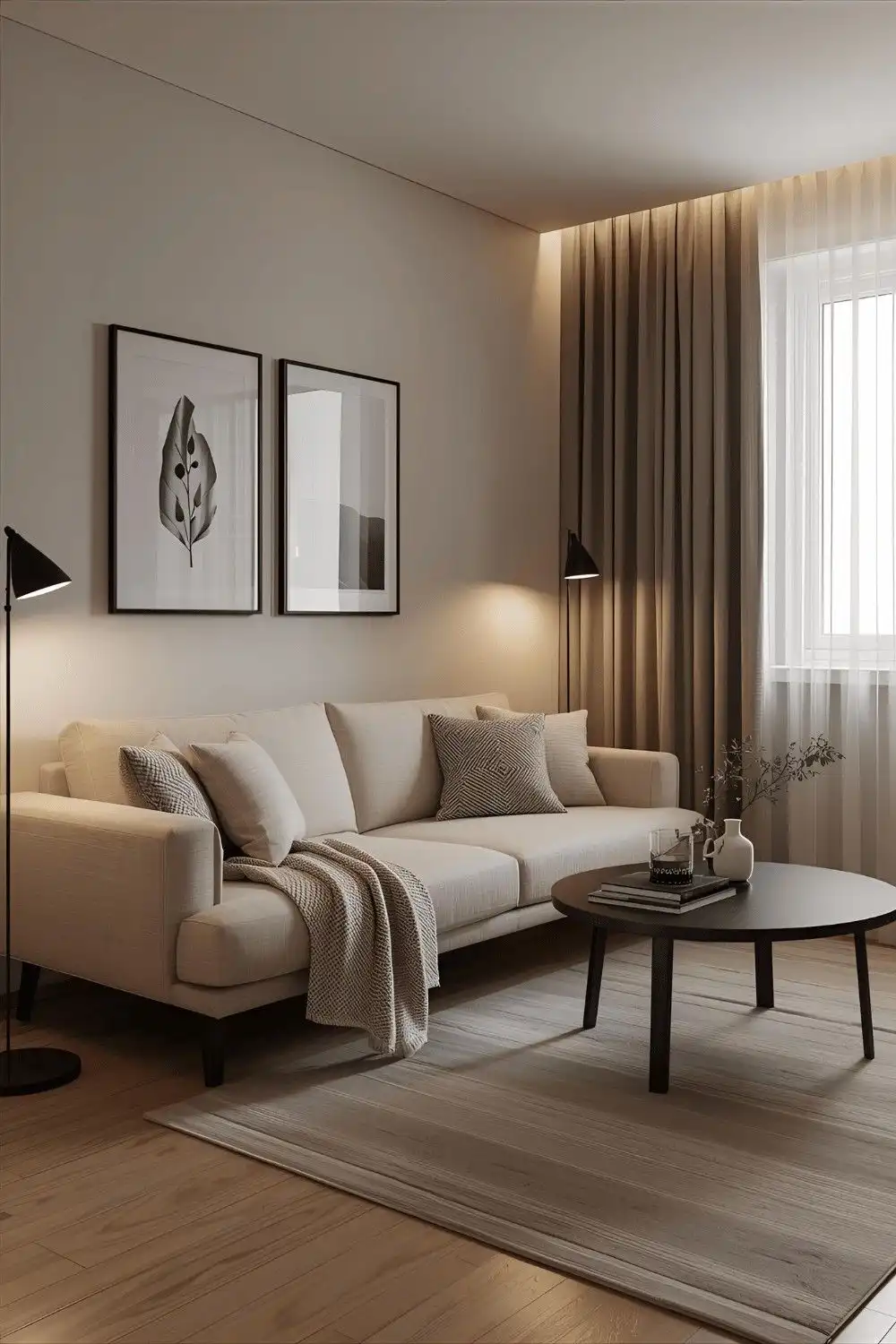
A good sofa bed pays for itself in a small apartment: it’s your everyday couch and, when a friend stays over, a real bed — no air mattress on the floor. Pull-out models run $400–$900; a daybed with a trundle costs less and doubles as extra daytime seating.
If the budget stretches, pick a model with under-seat storage for blankets and pillows. Measure your doorways and the unfolded length before ordering — a queen pull-out needs roughly seven feet of clearance in front of the sofa.
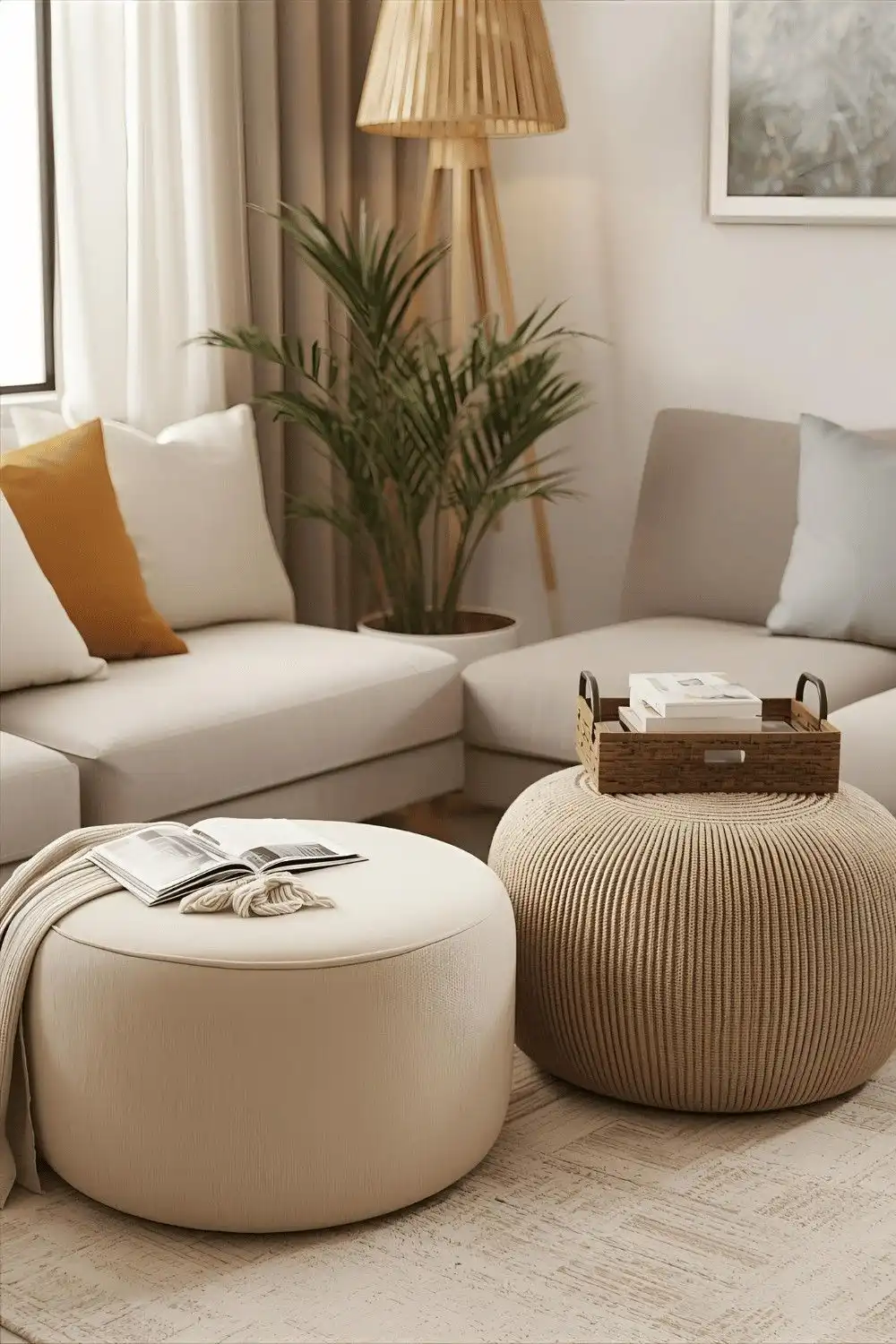
2. Choose Storage Ottomans for Seating and Hidden Storage
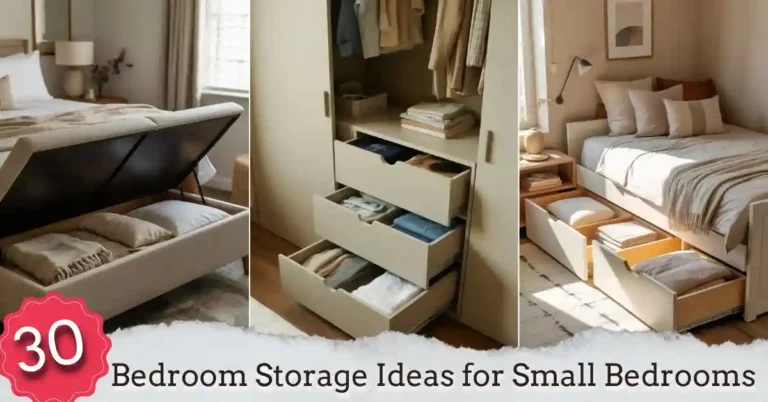
An ottoman with hidden storage earns its spot twice: it’s a footrest, an extra seat when friends come over, and a box that swallows throws, remotes, and board games. A 15–18 inch cube holds a surprising amount — roughly two folded blankets.
Use one as a coffee table with a tray on top, or park a pair at the foot of the bed. Leather-look vinyl wipes clean; boucle or linen weaves read warmer but stain more easily.
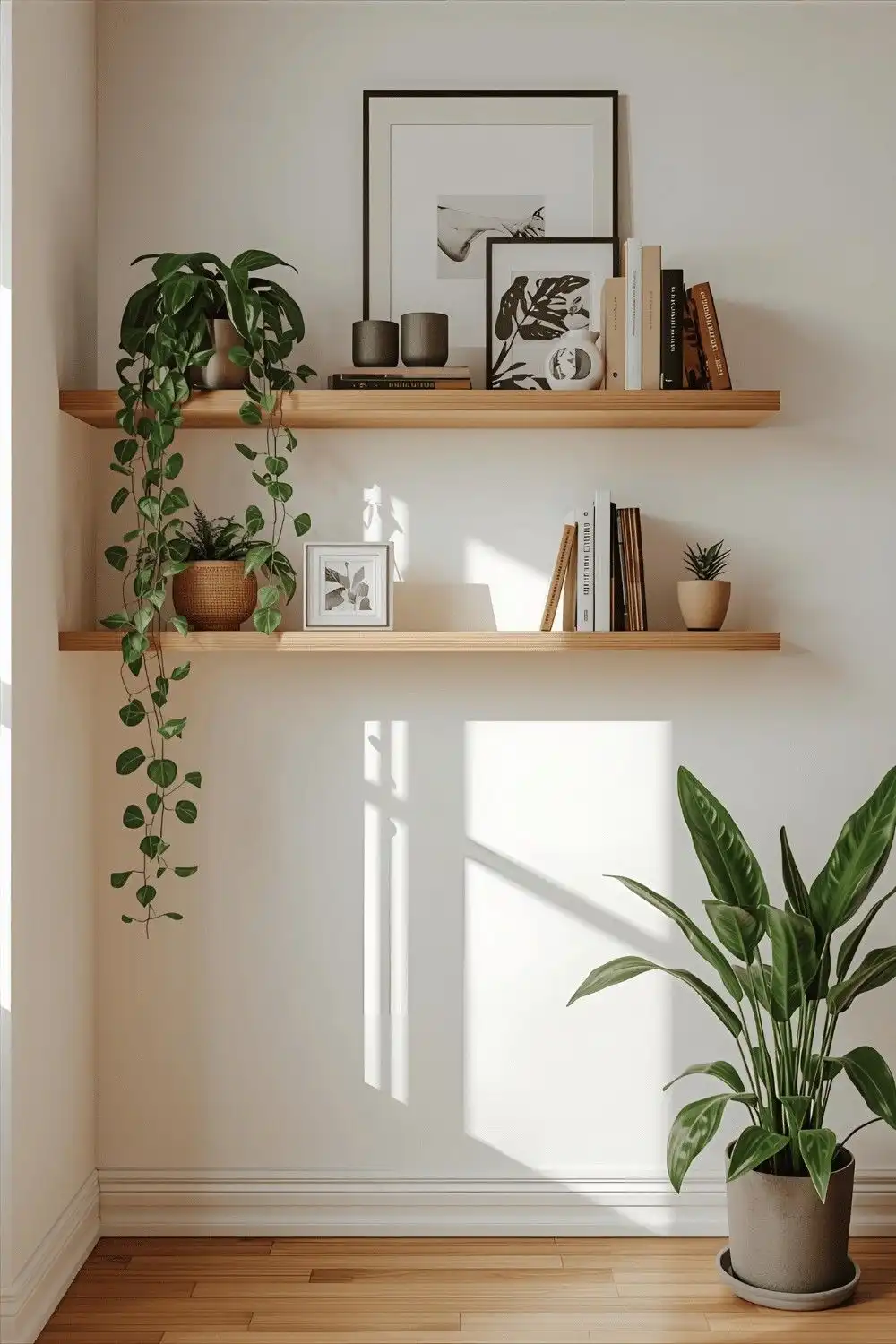
3. Install Floating Wall Shelves for Storage and Display
Floating shelves are rental-friendly storage that costs almost no floor space — a 24-inch shelf holds a row of paperbacks or a small plant collection. Mount them into studs (drywall anchors sag over time), and keep each shelf under about 20 pounds.
Style them with a mix: books on one, a trailing pothos on the next, a lidded box for the clutter. Two shelves stacked 12–15 inches apart look intentional; much more than that starts reading as a lumberyard.
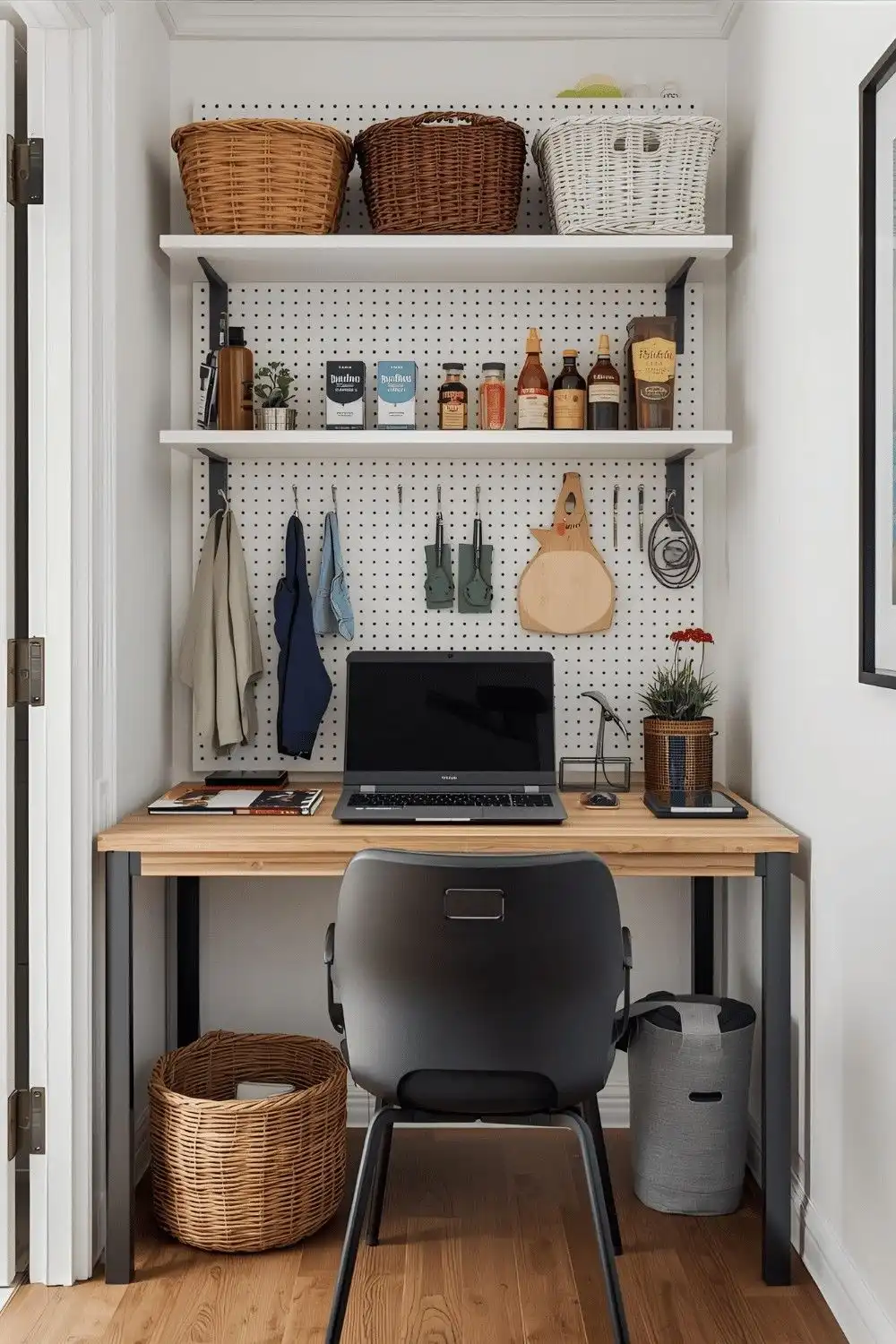
4. Use Pegboard Wall Organizers for Versatile Storage
A pegboard organizer turns a blank wall into a kitchen station, craft corner, or entryway drop zone. A 2×4-foot board holds utensils, scissors, tape, and headphones on hooks you can rearrange in seconds — no drilling new holes each time you change your mind.
Paint it to match the wall and it nearly disappears; frame it in thin wood trim and it looks custom. Standard pegboard with metal hooks runs about $25–$40 with accessories.
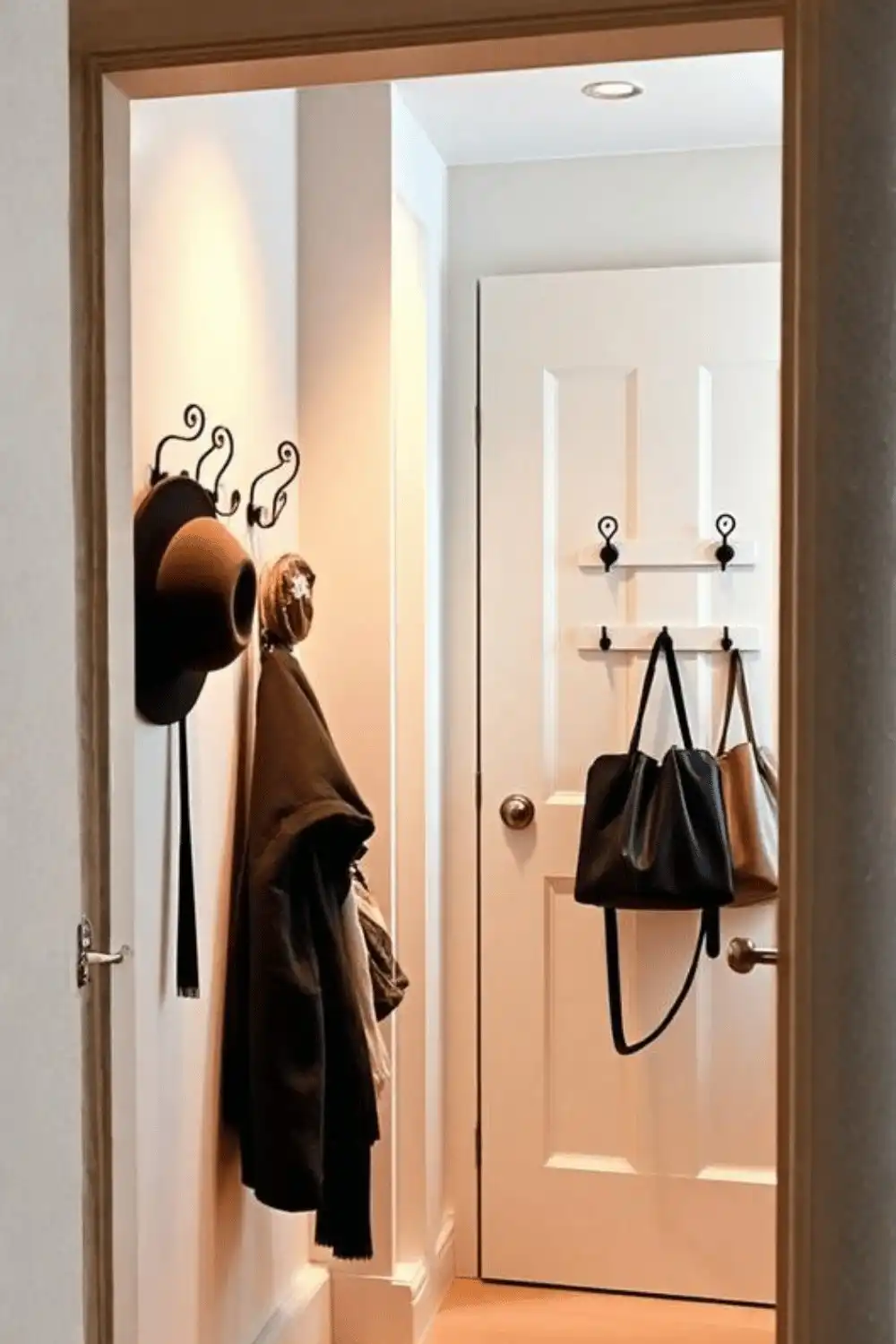
5. Hang Wall Hooks and Over-Door Racks for Efficient Storage
Hooks are the cheapest square footage you’ll ever buy: a row of wall hooks by the door keeps coats, bags, and dog leashes off the floor and the sofa. Screw-mounted hooks hold 10–25 pounds each; adhesive ones handle lighter loads on tile and glass.
Over-door racks add a whole extra shelf of storage to bathrooms and closets without a single screw — just check the door still closes fully, and leave a hair of clearance so paint doesn’t chip.
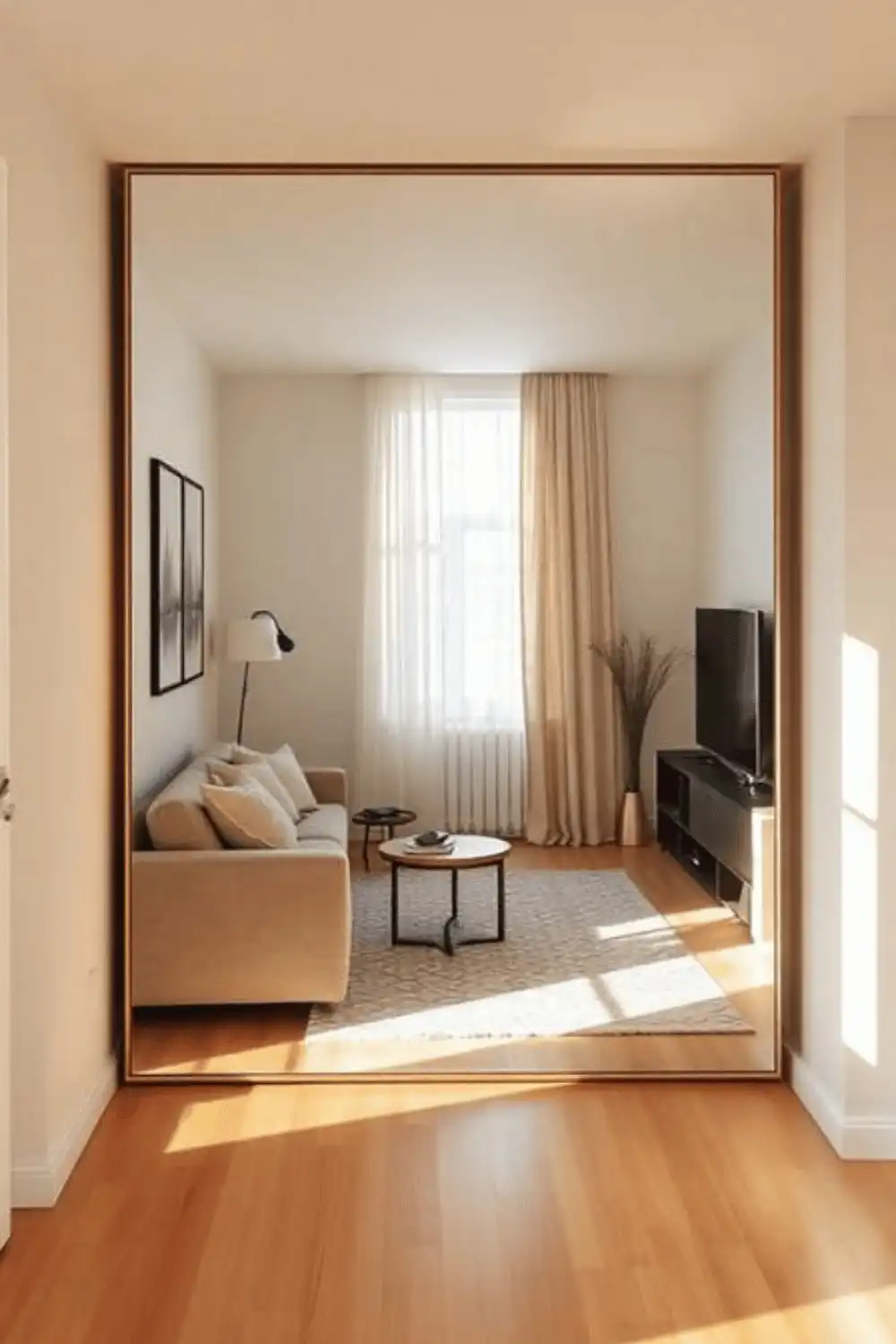
6. Add Large Mirrors to Expand Visual Space and Light
A big mirror is the oldest small-space trick because it works: hung opposite a window, it doubles your daylight and makes a 10×12 room read more like 12×14. A 3×5-foot leaner mirror costs $60–$120 and needs no mounting hardware.
Skip the frameless builder-grade look — a thin black or oak frame turns the mirror into an actual design choice. Angle it slightly to catch the window, not the TV glare.
7. Create a Mirror Collage for Artistic Depth and Light
If one big mirror feels too expected, group five to nine small ones instead. Round mirrors in a loose cluster scatter light around the room and read as wall art — thrift stores sell them for a few dollars each.
Lay the arrangement on the floor first and photograph it before hanging anything. Keep about two inches between frames and center the cluster at eye level over a console or sofa.

8. Paint Walls in Light, Neutral Colors to Open the Space
Paint is the fastest reset for a cramped room: warm whites, pale greiges, and soft sage bounce light around instead of swallowing it. A gallon covers about 350 square feet — one gallon usually does a small bedroom with two coats.
Eggshell finish hides wall flaws better than flat and wipes clean. If you rent, ask before painting; peel-and-stick wallpaper on one accent wall is the no-permission alternative.
9. Hang Floor-to-Ceiling Curtains to Add Height and Elegance
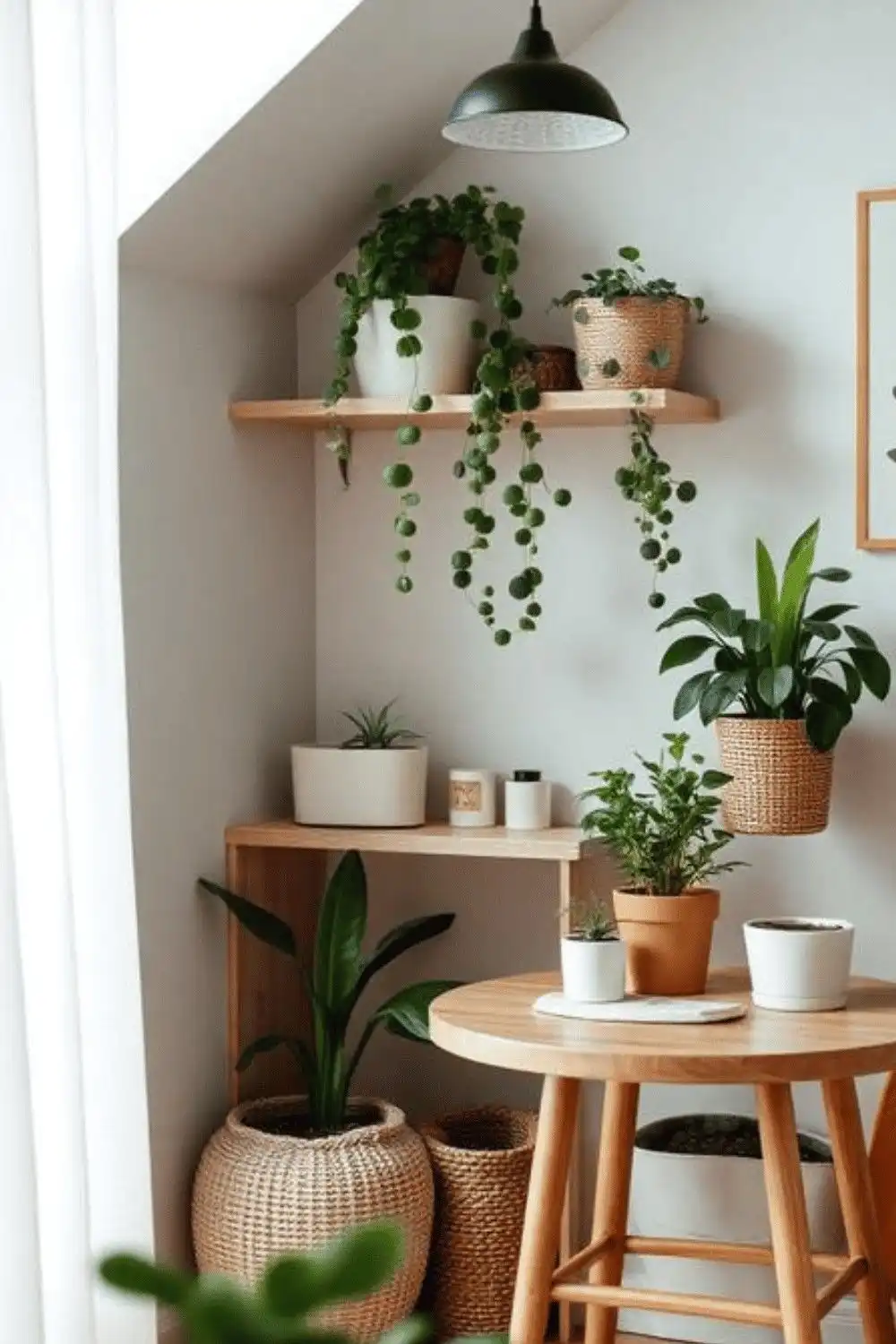
Hang the curtain rod 4–6 inches above the window frame and 3–4 inches wider on each side, then let the panels fall to the floor. The window instantly reads taller and wider, even though nothing about it changed.
Sheer or light linen panels keep the brightness; heavy velvet makes a 200-square-foot room feel like a cave. A basic rod and two panels run $40–$70.

10. Use Area Rugs to Define Functional Zones
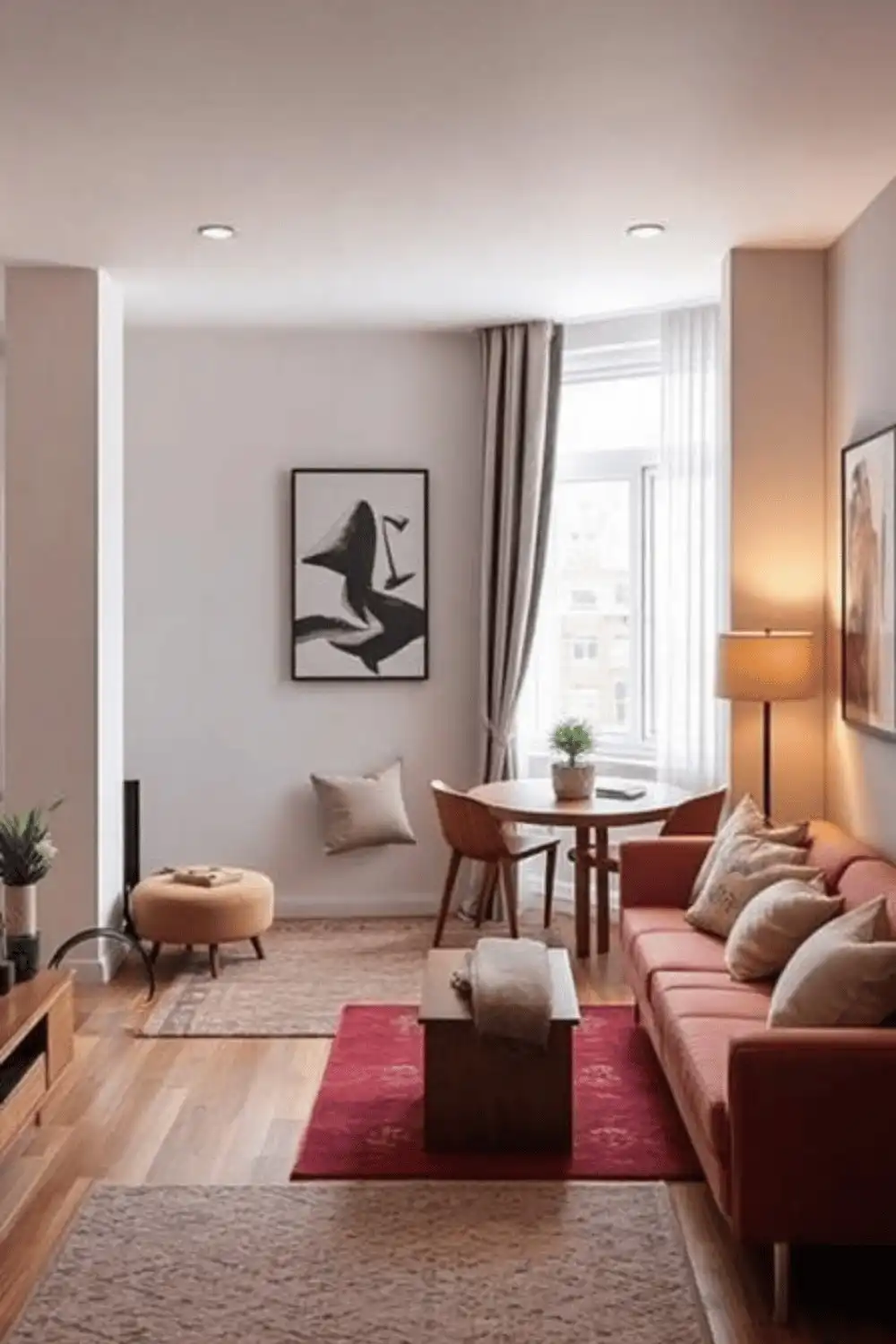
In a studio, rugs draw the floor plan: one rug under the sofa marks the living zone, another under the table marks dining — no walls required. An 8×10 anchors a seating area; leave at least six inches of rug under the front legs of the sofa and chairs.
Low-pile or flatweave rugs survive vacuum cleaners and desk chairs with wheels; high-pile shag traps crumbs. If the rug floats alone in the middle of the floor, it’s too small — size up.
11. Layer Cozy Throws and Cushions for Texture and Warmth
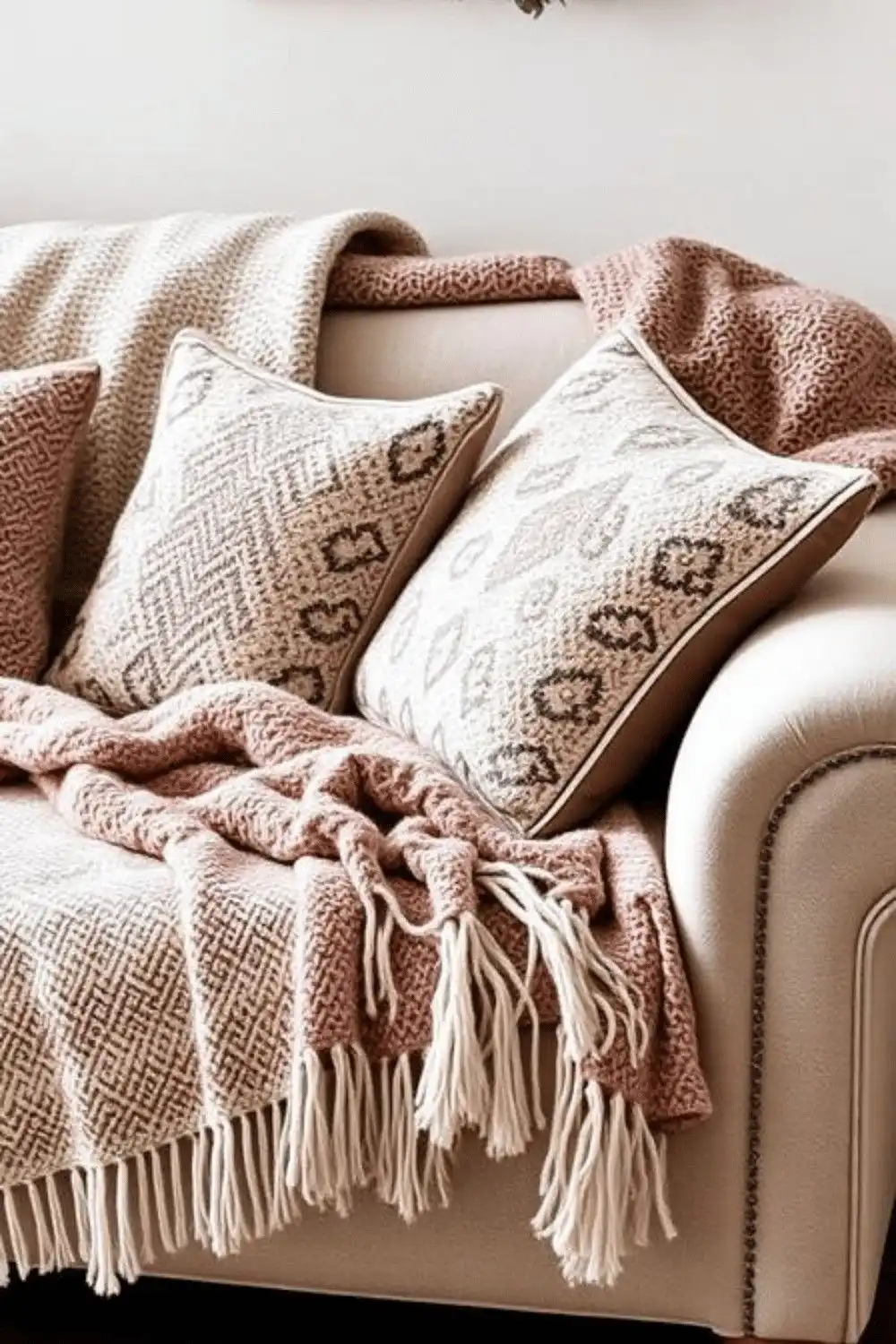
A small apartment earns its ‘cozy’ from textiles: two or three throw pillows in different textures — a chunky knit, a linen, a faux fur — make a plain sofa look styled in five minutes.
Drape one throw over the arm instead of folding it into a perfect square; the casual look reads warmer. Washable covers matter when the sofa is also the dining chair — look for zip-off cases.
12. Incorporate Indoor Plants for Freshness and Life
Plants are the cheapest way to make a rental feel alive. A pothos or snake plant survives low light and a fortnight of neglect; hang one in a macramé holder and you’ve decorated an empty corner for under $20.
Cluster three pots of different heights on a plant stand rather than scattering singles around the room — odd numbers look intentional. indoor garden Water when the top inch of soil is dry, and rotate pots monthly so growth stays even.
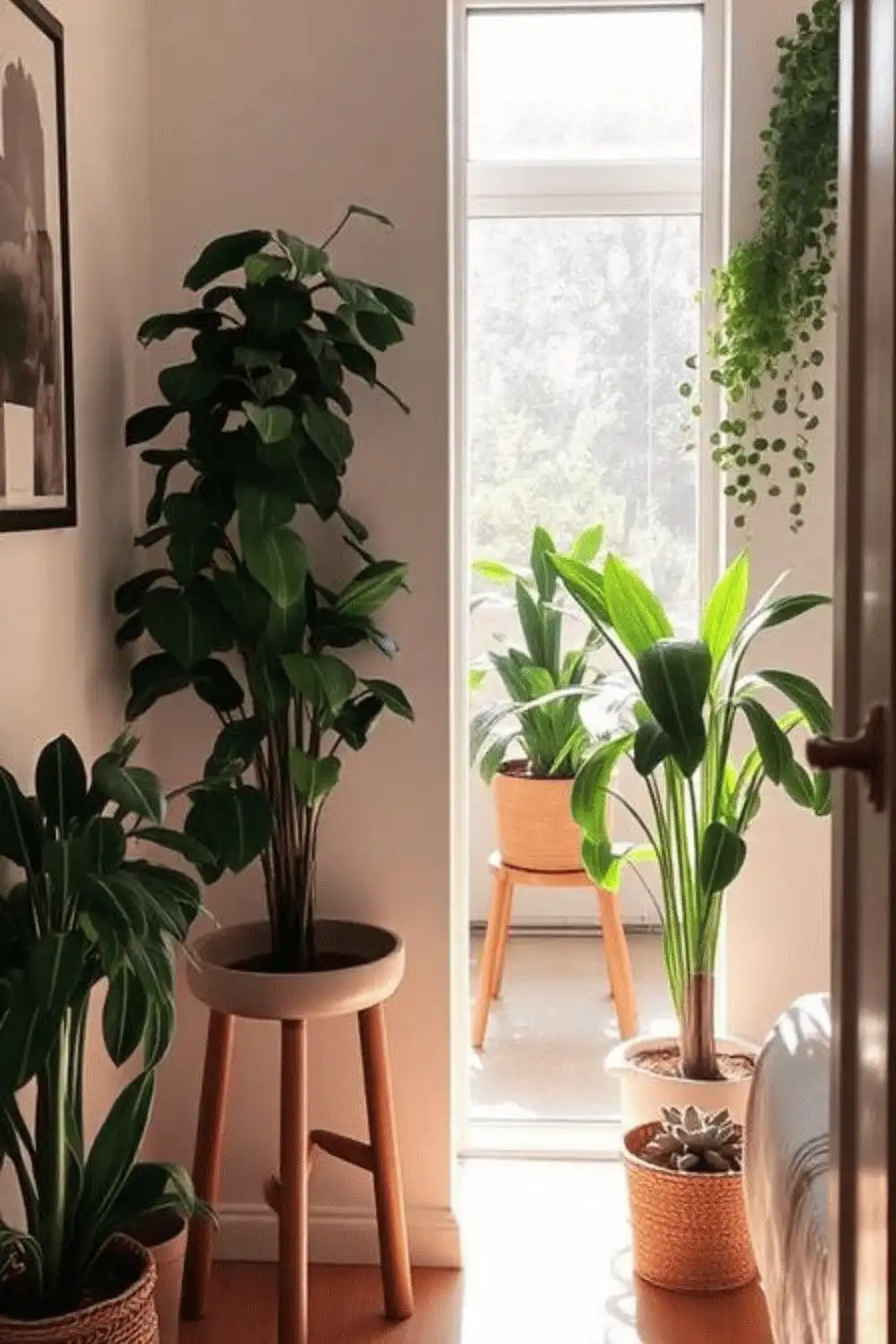
13. Opt for Multi-Functional Furniture to Maximize Use
Every piece in a small apartment should do at least two jobs: a coffee table with a lift-top becomes a desk, an ottoman becomes storage, a drop-leaf table seats two daily and six on holidays.
Before buying, list what the piece replaces — if it doesn’t replace something, it has to justify its floor space. Fold-flat and nesting designs are worth the 20–30% price premium because they disappear when you need the room.
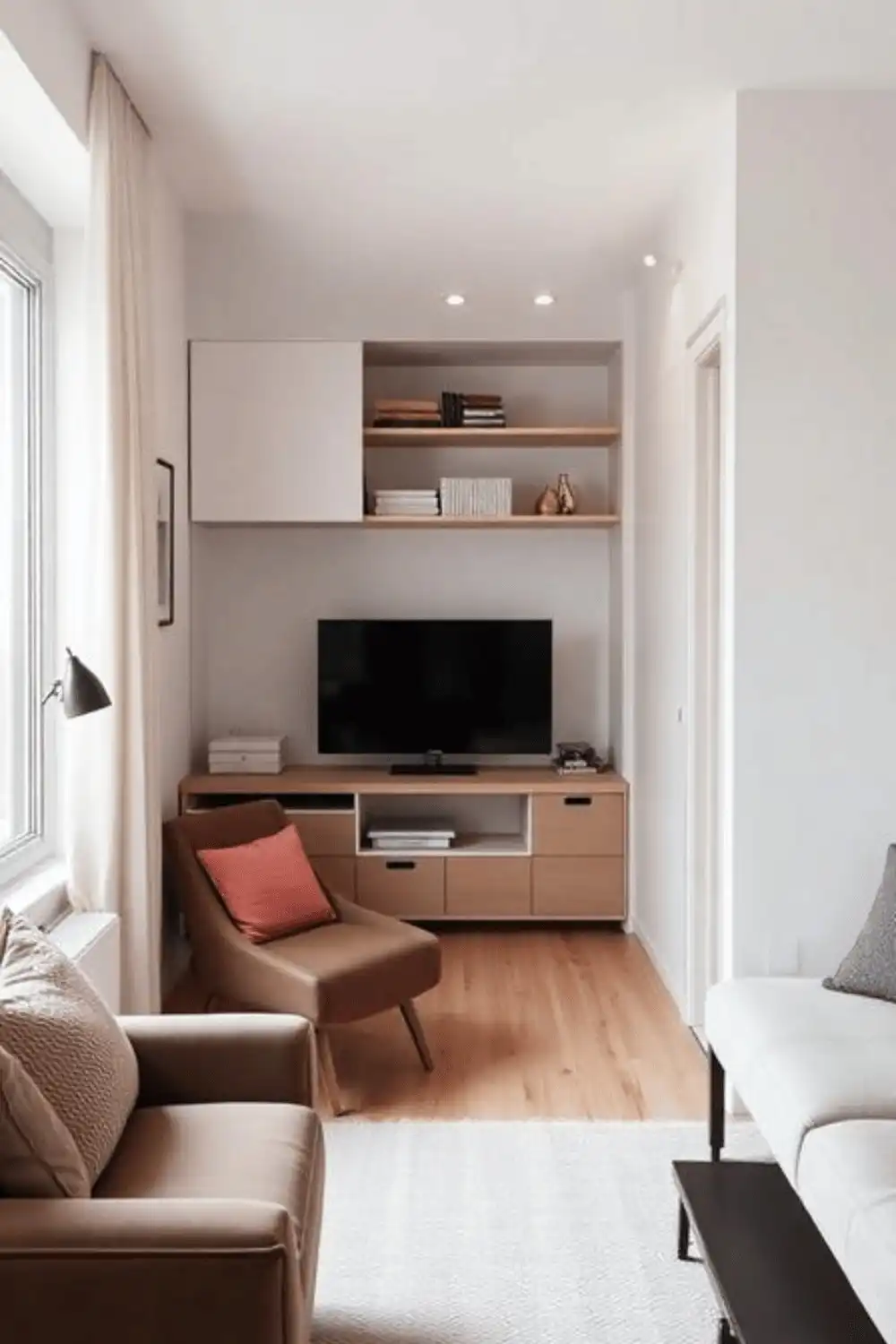
14. Select Slim or Narrow Furniture for Tight Spaces
Scale is everything: a 36-inch-deep sofa eats a 10-foot room alive, while an apartment-size 72-inch loveseat leaves walking space. Tape the footprint on the floor with painter’s tape before you buy — two minutes of work that prevents the most common small-space regret.
Armless or low-arm designs, legs you can see under, and glass tops all reduce visual bulk. If a piece looks big in the showroom, it will look enormous at home.

15. Use Nesting Tables for Versatile Surface Options
Nesting tables are side tables that stack inside each other — pull one out for guests, tuck it back when they leave. A set of two or three costs $50–$90 and replaces a bulky side table plus a TV tray.
Match the finish to your coffee table, or go deliberately different (black metal plus oak) so the set looks like a choice rather than a leftover. Check that the smallest table actually fits under the largest — not all sets do.
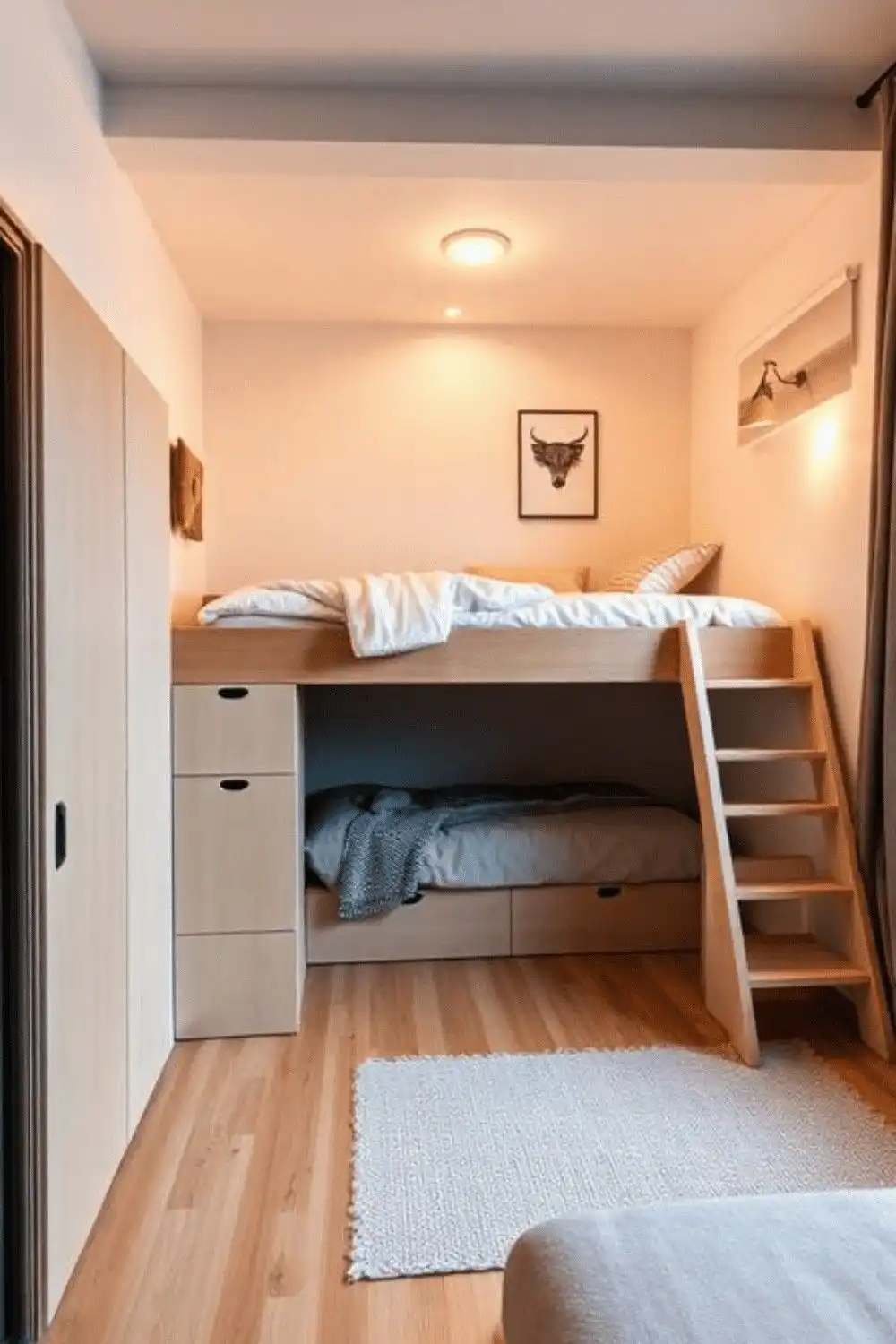
16. Install Loft Beds or Beds with Storage Drawers
A loft bed hands you back roughly 30 square feet — enough for a desk, a reading chair, or a dresser underneath. Storage beds make the opposite trade: the same footprint, but four deep drawers instead of dead space.
Lofts suit ceilings of eight feet or more (you want 30-plus inches of sitting clearance up top); storage beds suit anyone. If you rent, confirm the loft is freestanding — most are, and they disassemble with an Allen key.
17. Add Warm Ambient Lighting for Cozy Atmosphere
Overhead lighting alone makes small rooms feel like interrogation chambers. Add a floor lamp in the reading corner and a table lamp on the console — three light sources at different heights is the standard designer formula.
Stick to 2700K ‘warm white’ bulbs; anything above 4000K reads blue and cold. A $15 dimmer plug makes any lamp dimmable without rewiring, which renters will appreciate.

18. Use Gallery Walls to Personalize Your Decor
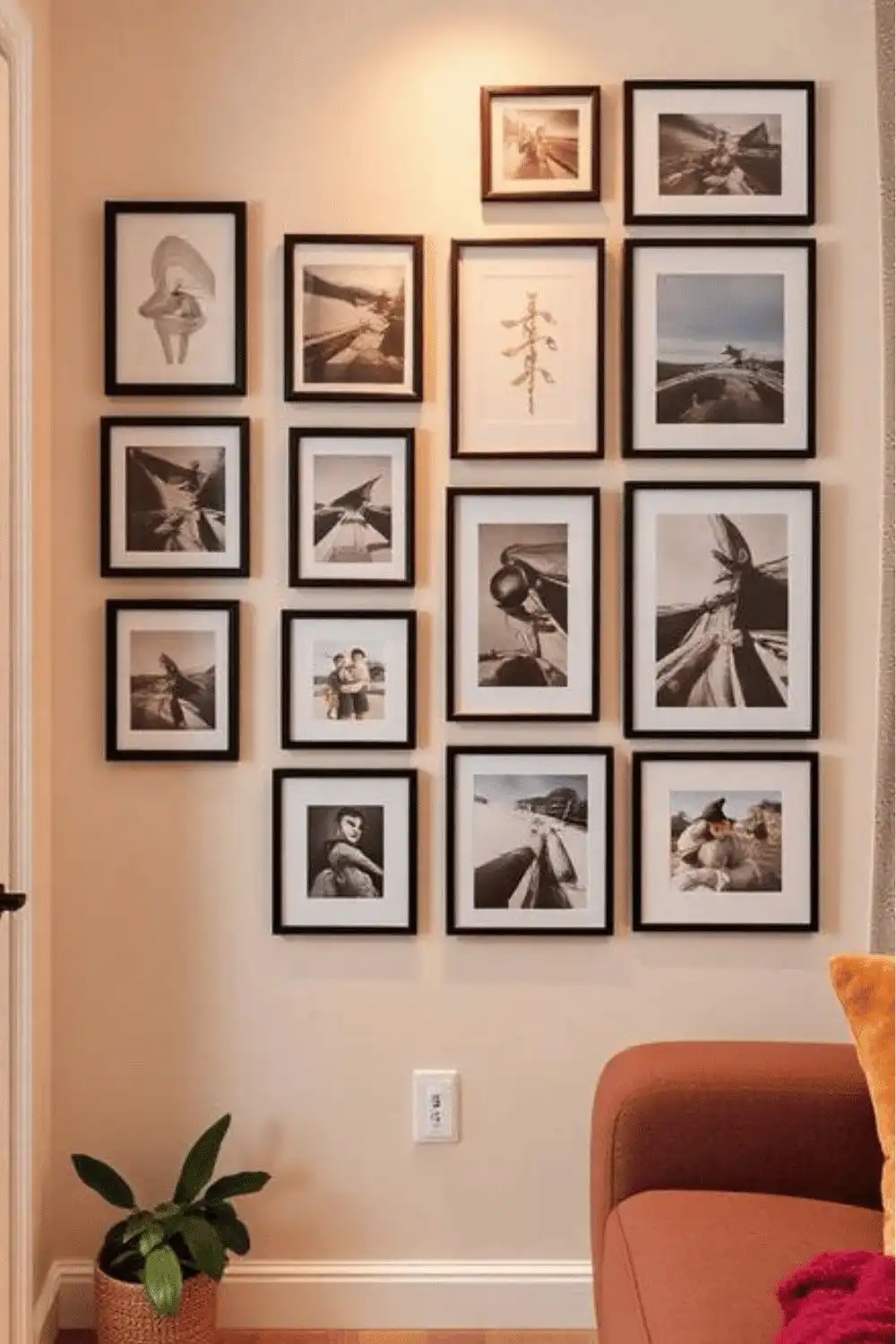
A gallery wall is wall decor with zero footprint — ideal above a sofa or along a hallway. Mix frame sizes but keep one consistent element (all black frames, or all white mats) so it looks curated rather than chaotic.
Plan on the floor first, trace frames onto kraft paper, tape the paper to the wall, and hang through it. Personalized walls come from your own photos and flea-market finds — not the same three prints everyone owns.
19. Choose Scandinavian-Inspired Decor for Bright Minimalism
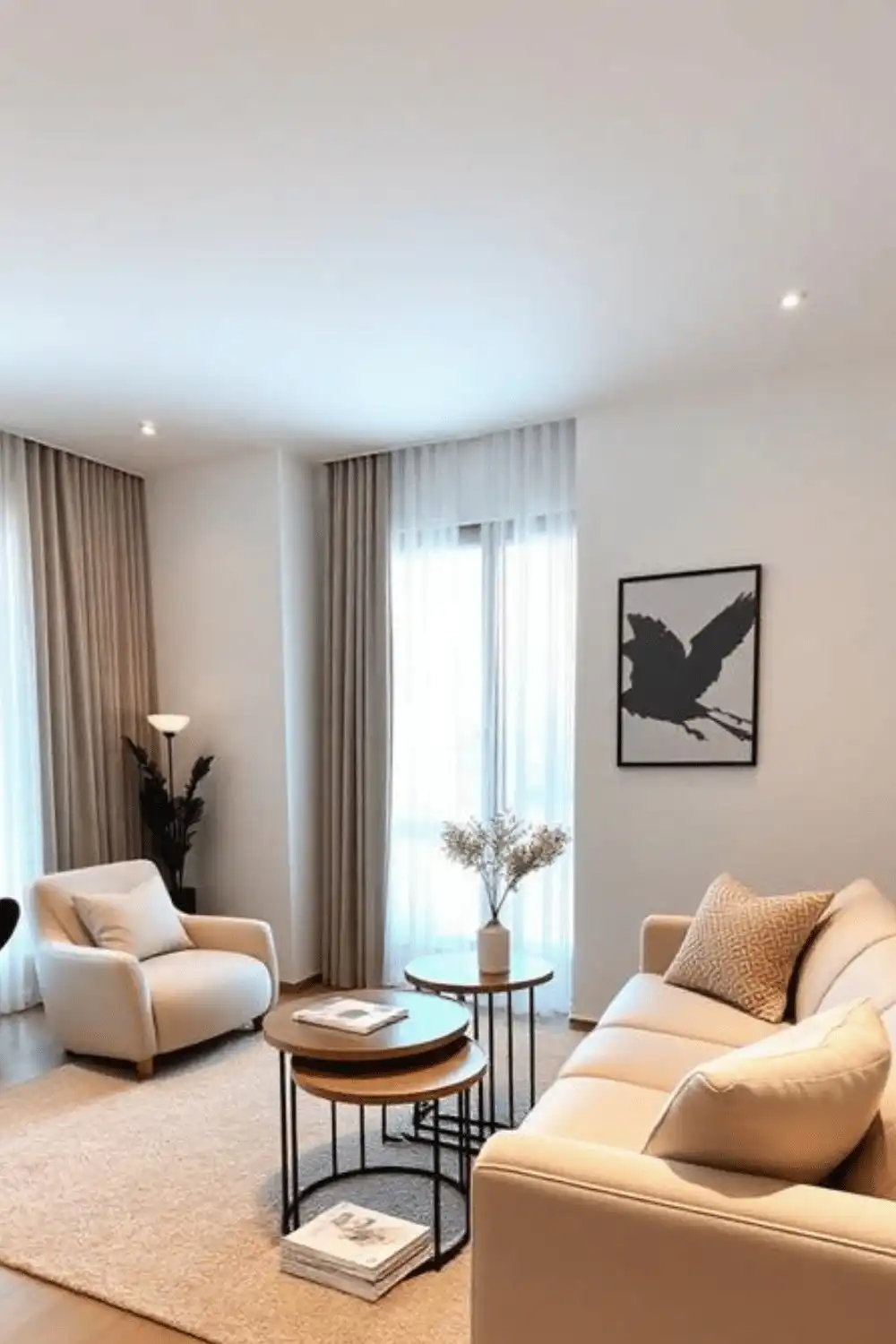
Scandinavian style suits small apartments because it was built for them: pale woods, white walls, and furniture on legs that lets light flow underneath. Think the best of flat-pack catalogs, but edited — one sheepskin, not five.
The formula is simple: neutral base, one wood tone, one textile texture per room, and a single black accent for contrast. It photographs well because every surface earns its place.
20. Embrace Minimalism to Reduce Clutter and Stress
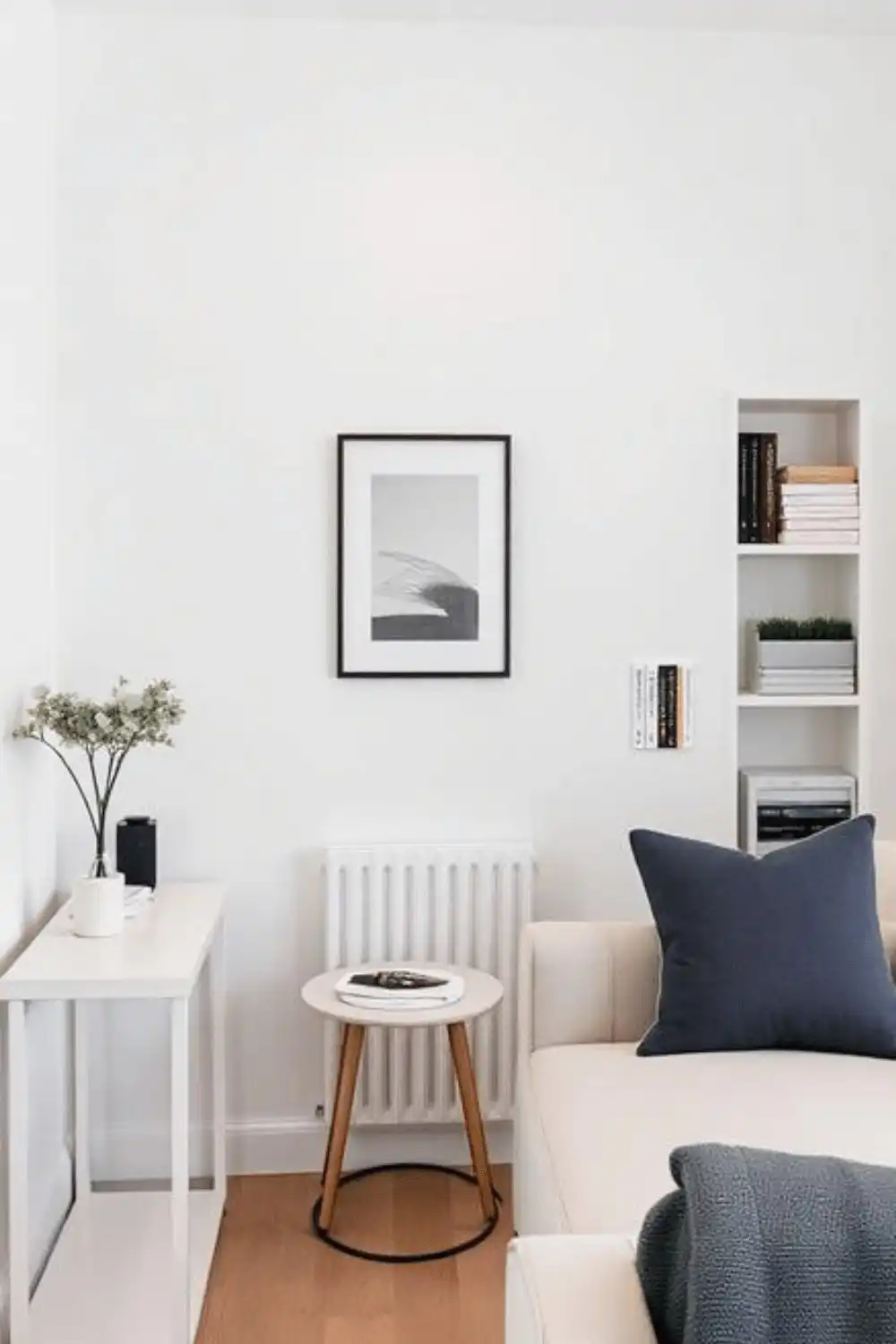
Minimalism in a small apartment isn’t an aesthetic — it’s logistics. Fewer things means less to store, clean, and trip over. Start with surfaces: if the coffee table, counters, and nightstand are clear, the whole place reads as calm.
The one-in-one-out rule keeps it that way: a new book means an old one goes to the donation box. Hidden storage (ottomans, under-bed boxes) handles the rest without the room looking like a warehouse.
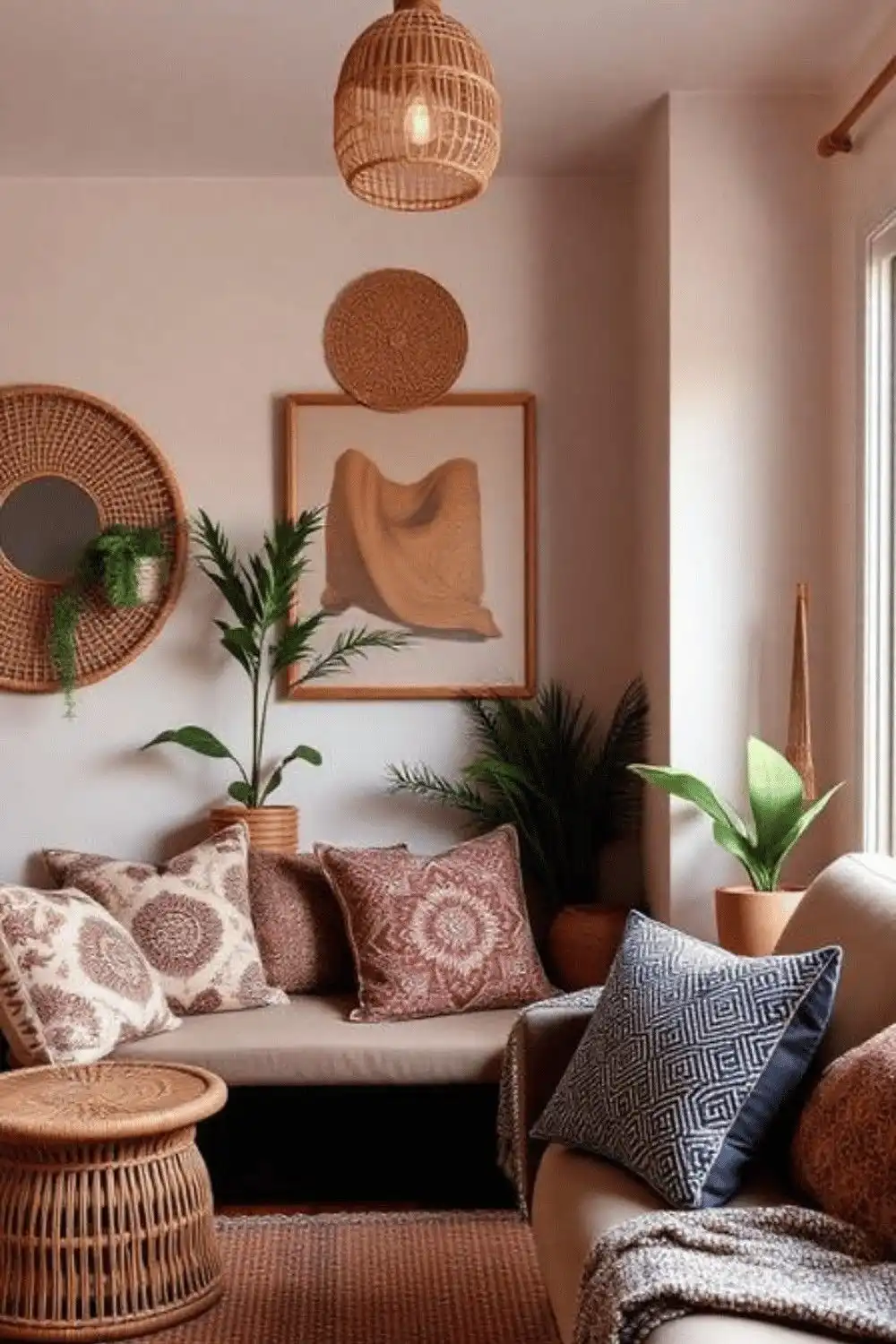
21. Add Boho Touches for Texture and Warmth
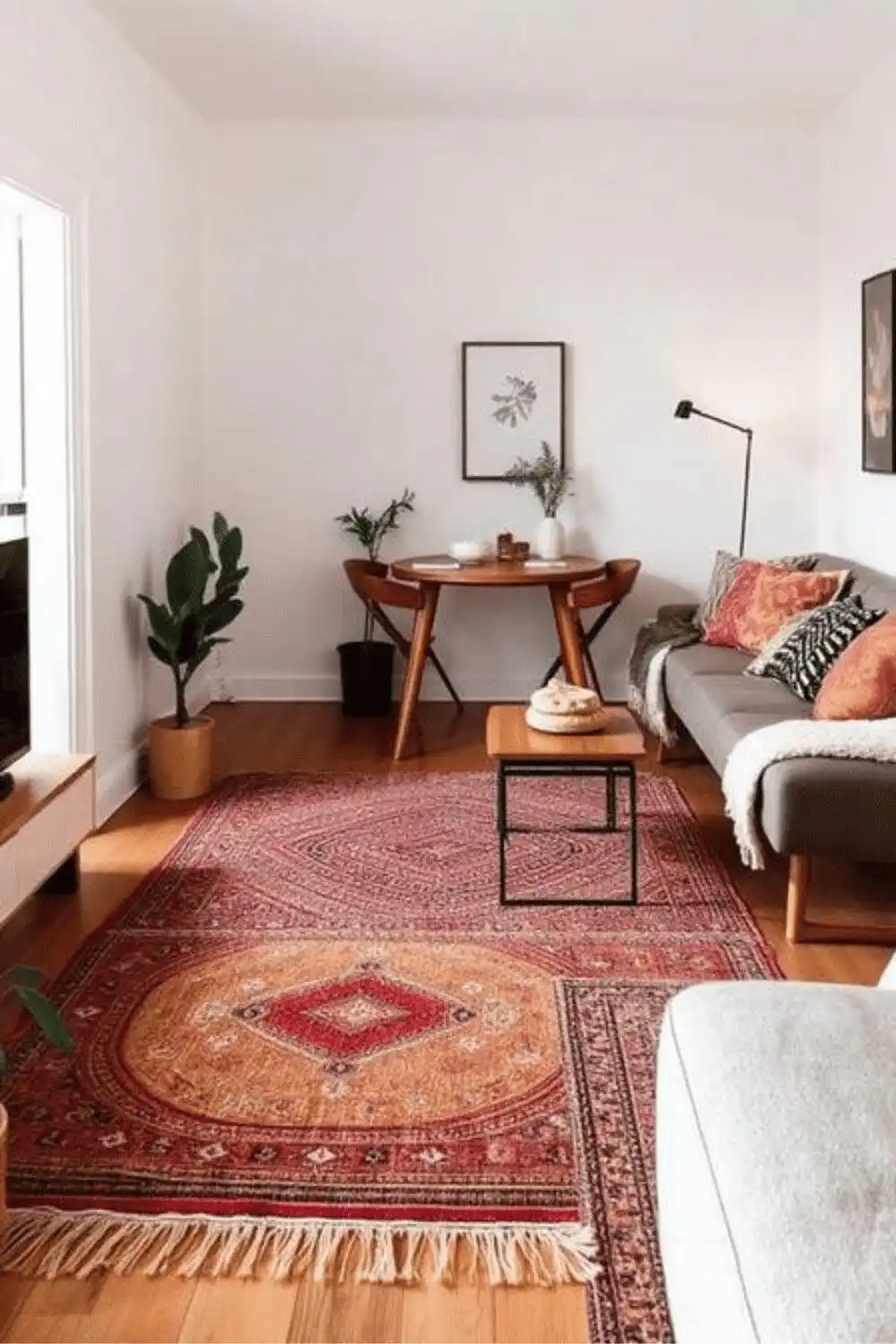
Boho brings the warmth minimalism sometimes lacks: layered rugs, rattan, macramé, and plants everywhere. In a small space, keep the palette tight — warm neutrals plus two accent colors — so ‘collected’ doesn’t slide into ‘cluttered’.
Thrift stores are boho goldmines: brass candlesticks, woven baskets, and vintage textiles cost a few dollars each. One statement piece per room (a patterned rug, a hanging chair) is enough; let the small things support it.
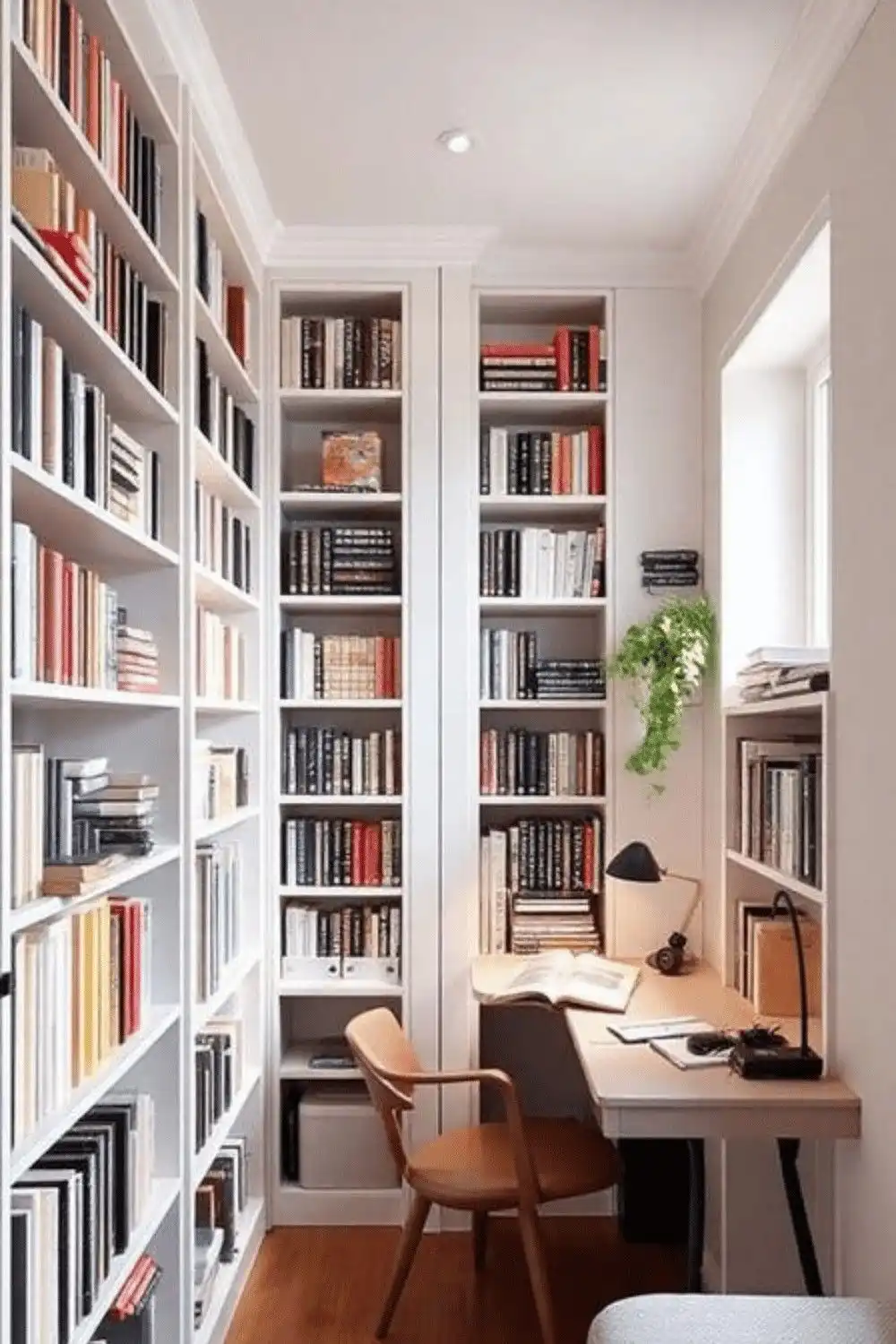
22. Maximize Vertical Storage with Tall Bookcases
A tall, narrow bookcase — 12 inches deep, six feet high — stores as much as a wide dresser while eating a quarter of the floor space. Anchor it to the wall; a loaded bookcase in a small apartment is a tipping hazard.
Style shelves in thirds: books, a lidded basket for the ugly stuff, a plant or frame. Leave some breathing room — a shelf packed edge to edge reads as storage unit, not decor.
23. Use Transparent Furniture Pieces to Reduce Visual Clutter
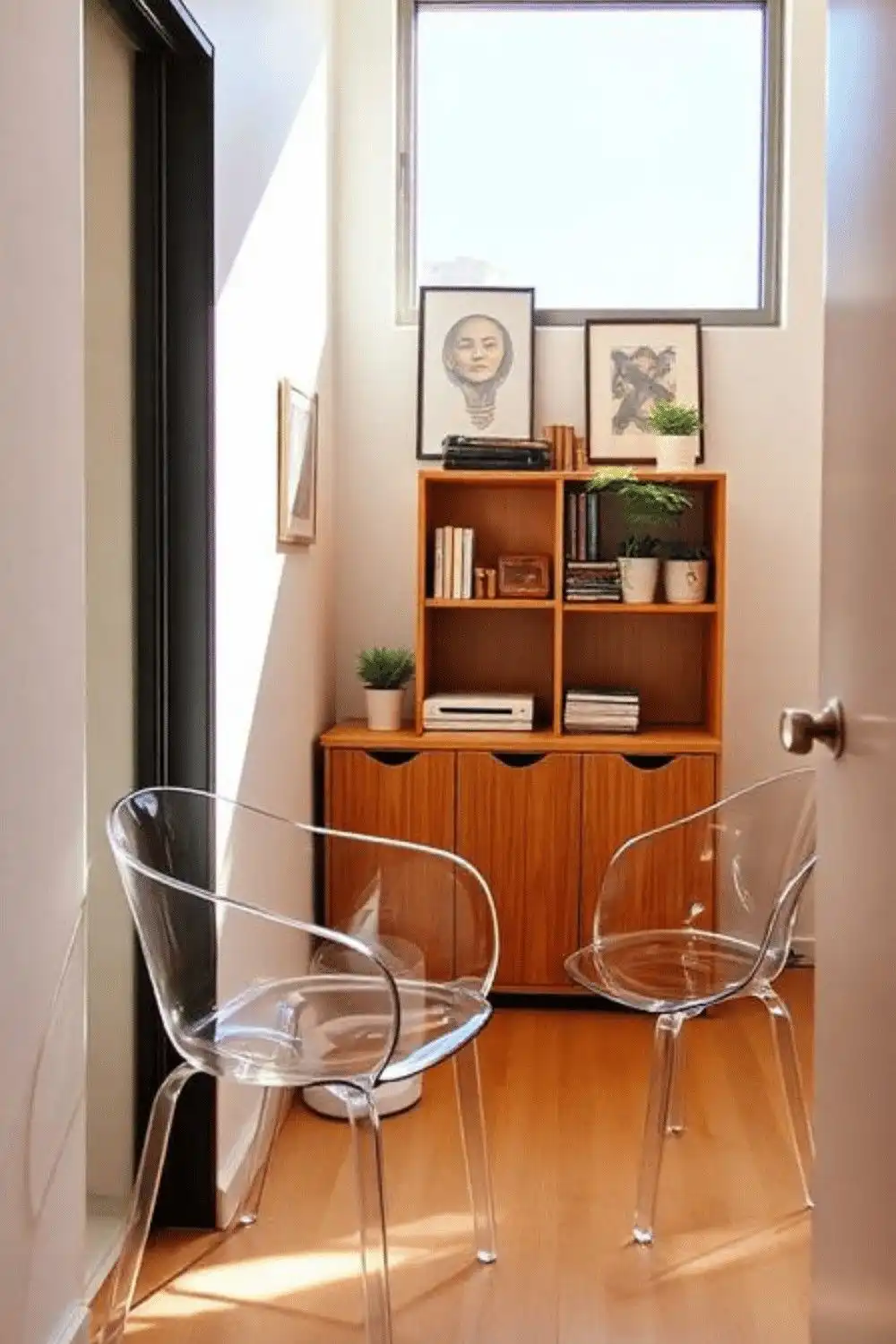
Glass and acrylic pieces visually disappear, which is why a ghost chair or glass side table works in a 300-square-foot studio. You get the function with almost none of the visual weight.
Use them sparingly — modern apartment one transparent piece per room is the limit before the space feels like a showroom. Note they show every fingerprint; keep microfiber cloths handy.
24. Organize with Decluttering and Smart Storage Solutions
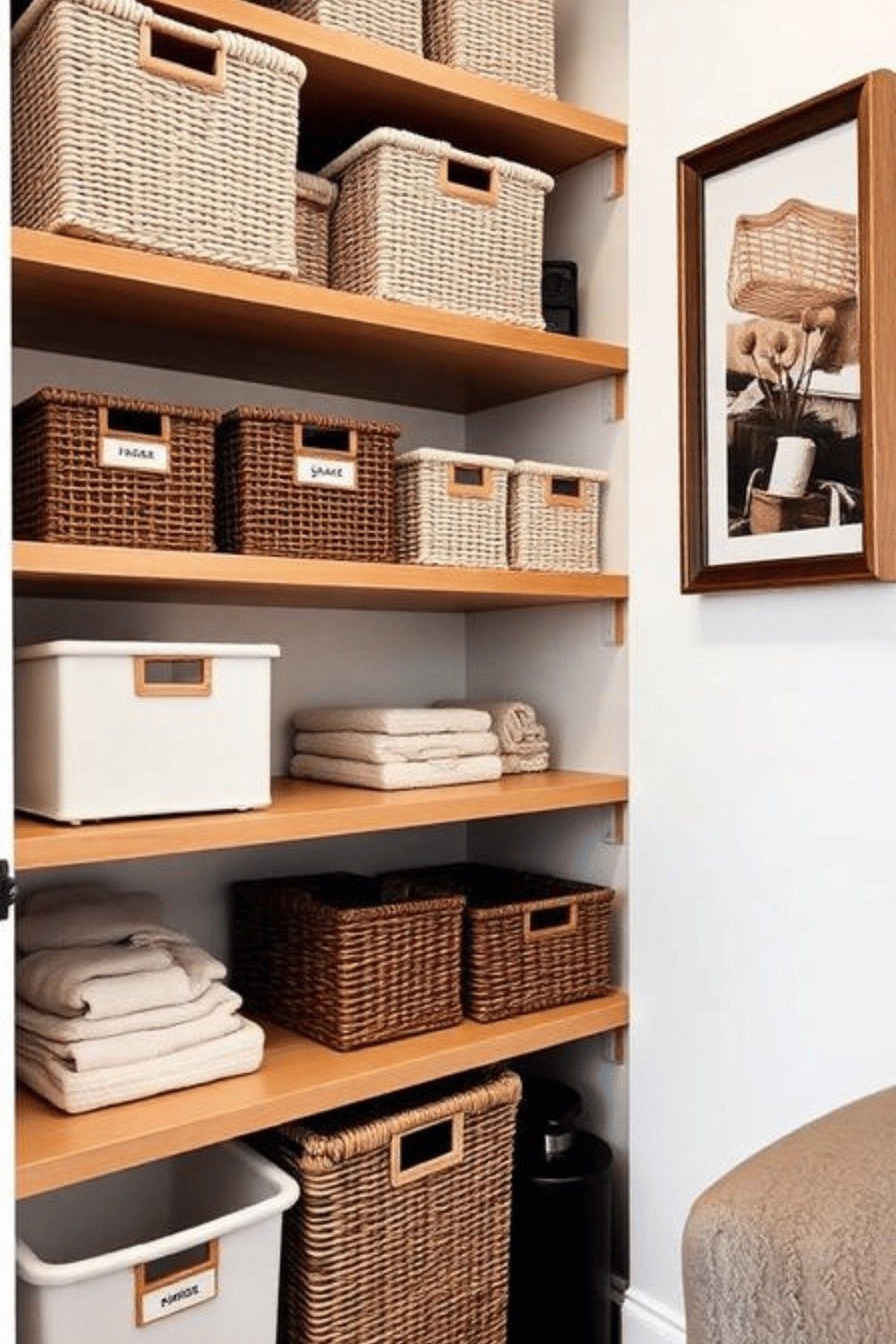
No decor idea survives clutter. A monthly 20-minute sweep — one bag for trash, one for donations — keeps a small apartment from slowly filling up. Small spaces show mess faster because there’s nowhere for it to hide.
Give everything a home with lidded baskets and labeled bins; the ‘miscellaneous drawer’ is how clutter starts. The payoff is real: a tidy 400 square feet feels bigger than a messy 600.
25. Define Zones with Furniture Arrangement and Rugs
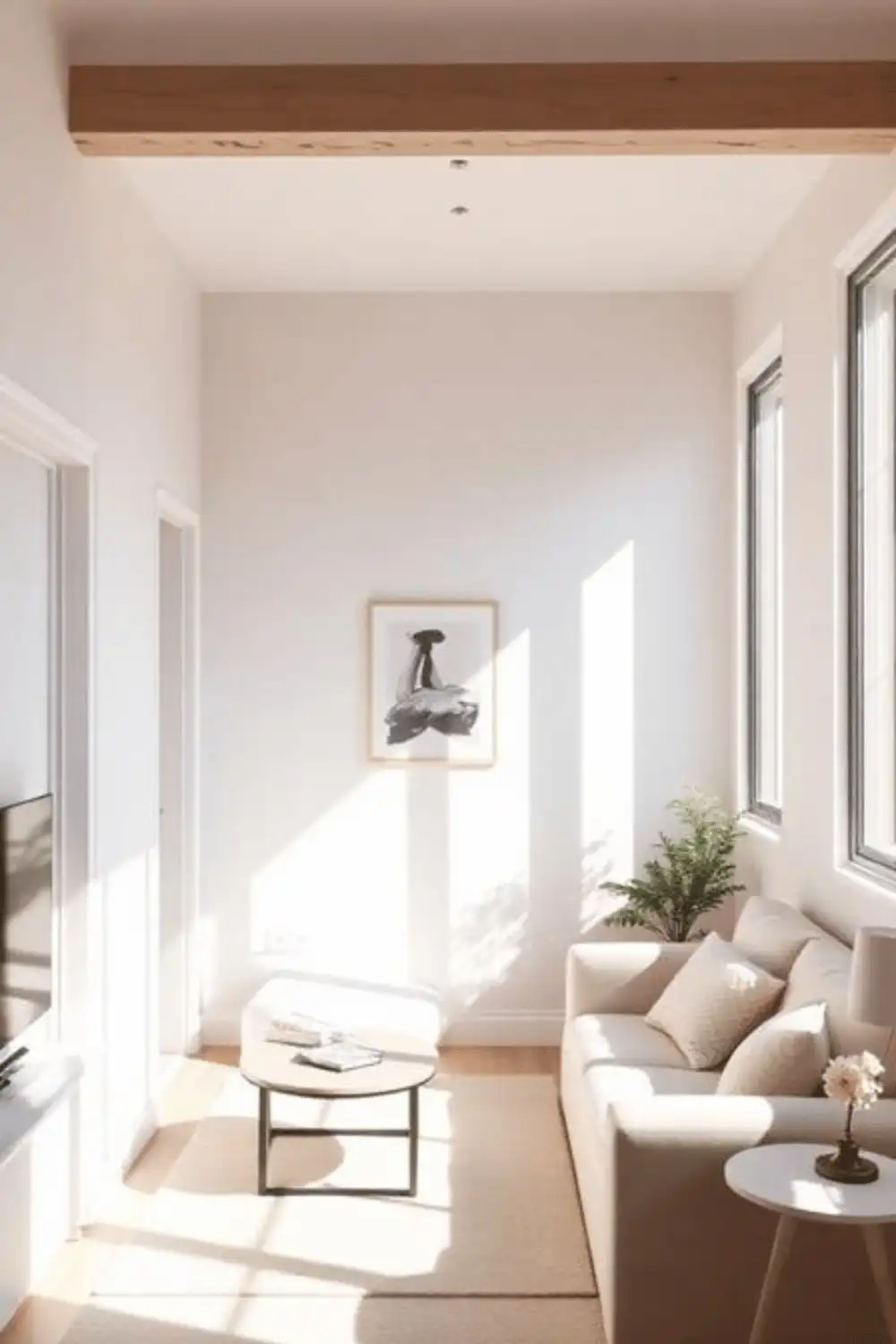
In a studio, arrange furniture back-to-back to draw invisible walls: the back of the sofa faces the bed, a bookcase stands perpendicular as a divider, and rugs mark each territory.
Walk the path from door to bed after arranging — if you have to sidestep furniture, the flow is wrong. Every zone needs its own light source, or the ‘bedroom’ half stays gloomy.
Conclusion
The through-line across all 25 cozy apartment decor ideas is simple: make every piece earn its floor space, push storage upward, and let light do the heavy lifting. Start with the three cheapest wins — hooks, a mirror, and paint — and the place will feel twice its size before you spend real money.
FAQs