Introduction
The tree is dressed, the lights are twinkling, the ornaments are all hung — and then you look down and see the bare tree stand, a tangle of wires and a plastic base that ruins the whole effect. That is exactly what a crochet tree skirt is for. These 21 crochet tree skirt patterns cover every style I have made or admired, from a classic granny square circle to a delicate snowflake lace, and every one of them finishes the tree properly. Most are worked in the round with simple increases, and a few are more ambitious, but all of them are achievable in the weeks before Christmas if you start now. If you want a tree that looks finished from top to bottom, start here.
1. Classic Granny Square Tree Skirt
The granny square tree skirt is the one I made first, and it is still the one I recommend to anyone starting out. I work a large circle in the round, using the classic granny cluster — three double crochets in each space, worked in a different colour for each round — and increase evenly so the circle lies flat. The beauty of the granny pattern is that the colour changes do all the decorative work, so you can use up leftover yarn in festive reds, greens and creams and it still looks deliberate. Mine is made in a soft acrylic that washes well, which matters when it sits on the floor all December. It took me about a week of evenings, and it is the skirt I still use every year.
2. Ripple Stitch Tree Skirt
A ripple stitch tree skirt is wonderfully rhythmic to make, and the gentle waves suit a Christmas tree perfectly. I work in the round using the classic ripple pattern — a series of increases and decreases that create peaks and valleys — in alternating bands of red and cream. The ripples catch the light as the tree lights reflect off them, and the texture hides any small mistakes in tension, which is a mercy when you are working a large circle. I use an aran weight yarn for this one, because it gives a good drape without being too heavy. The hardest part is keeping the stitch count right in the early rounds, so I use stitch markers at every peak until the pattern settles into a rhythm.
3. Snowflake Motif Tree Skirt
A snowflake motif tree skirt is the prettiest thing I have ever made for Christmas, and it is simpler than it looks. I crochet individual snowflake motifs — small, lacy circles worked in the round with picots and chain spaces — then join them together into a large circle, filling the gaps with small solid motifs. Each snowflake takes about ten minutes, so I make them in batches while watching television, and joining them is a relaxing evening’s work. I use a white or cream yarn for the snowflakes and a soft grey for the fillers, which gives a frosty, wintry feel. It is the skirt that gets the most comments, and it pairs beautifully with my crochet snowflake patterns for matching ornaments.
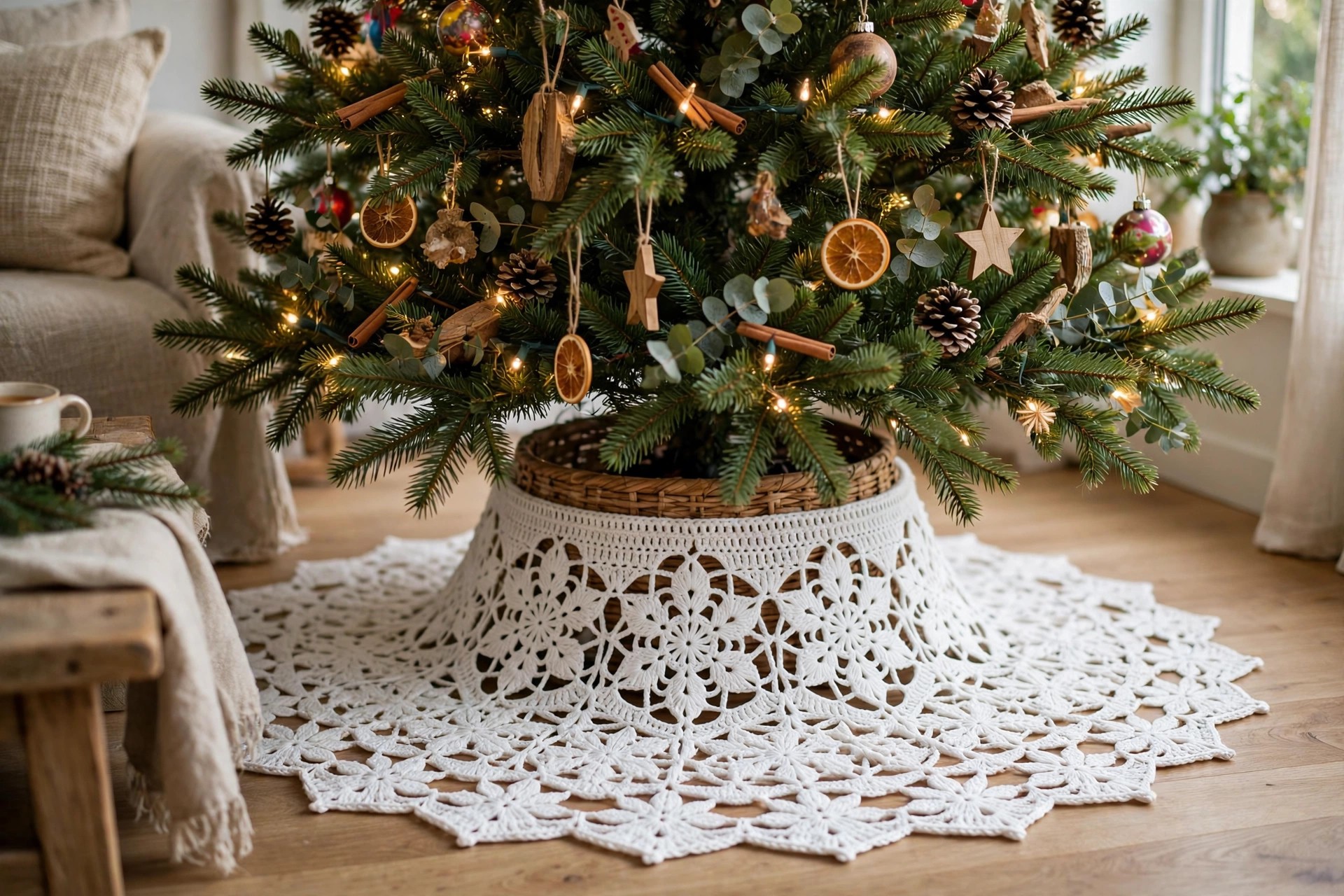
4. Star Stitch Tree Skirt
The star stitch gives a tree skirt a lovely dense texture that looks like a field of tiny stars, which is exactly right for Christmas. I work the star stitch in the round, increasing evenly to keep the circle flat, in a deep red yarn with a cream border. The stitch itself is a little fiddly at first — it is worked by pulling up loops through several stitches at once — but once you have the rhythm it is meditative, and the texture it creates is worth the learning curve. I made this skirt in a wool blend, which gives it a lovely weight and drape, and it sits beautifully under the tree without curling at the edges. It took me about ten days of evenings, and it is the skirt I reach for when I want something rich and traditional.
5. Bobble Stitch Tree Skirt
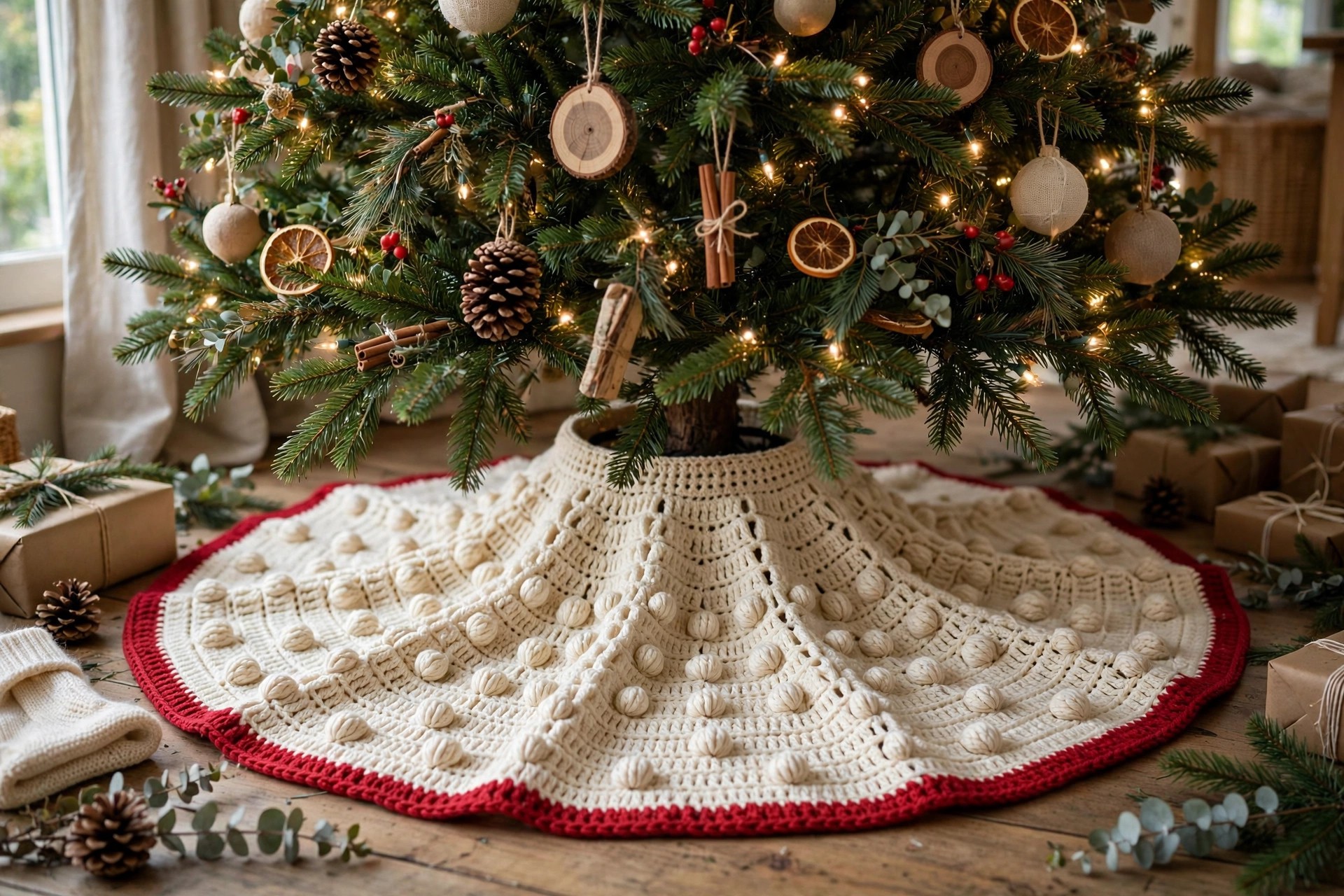
A bobble stitch tree skirt is pure texture, and it is the most fun to make on this list. I work rows of bobble stitches — clusters of double crochets worked into the same stitch and pulled together — in a soft cream yarn, spacing them evenly so the bobbles form a regular pattern across the circle. The bobbles catch the light and give the skirt a cosy, almost knitted feel, and children love running their hands over them. I use a chunky yarn for this one, because the bobbles need a bit of bulk to hold their shape, and I add a border of single crochet in a contrasting red. It is a cheerful skirt, and it hides a multitude of sins, which is handy when you are working a large piece and your tension wanders a little.
6. Scalloped Edge Tree Skirt
A scalloped edge is the detail that turns a plain tree skirt into something special, and it is easier than it looks. I work a simple circle in half double crochet, then finish the edge with a row of shell stitches — five double crochets in one stitch, skipped, repeated around — which creates a gentle wave all the way around. The scallops frame the tree beautifully and give the skirt a finished, deliberate look. I made mine in a soft green yarn with a cream scalloped edge, which echoes the colours of the tree itself. The key is keeping the stitch count even so the scallops are all the same size, and I count carefully on the final round, because a lopsided scallop is the one thing people notice.
7. Cable Stitch Tree Skirt
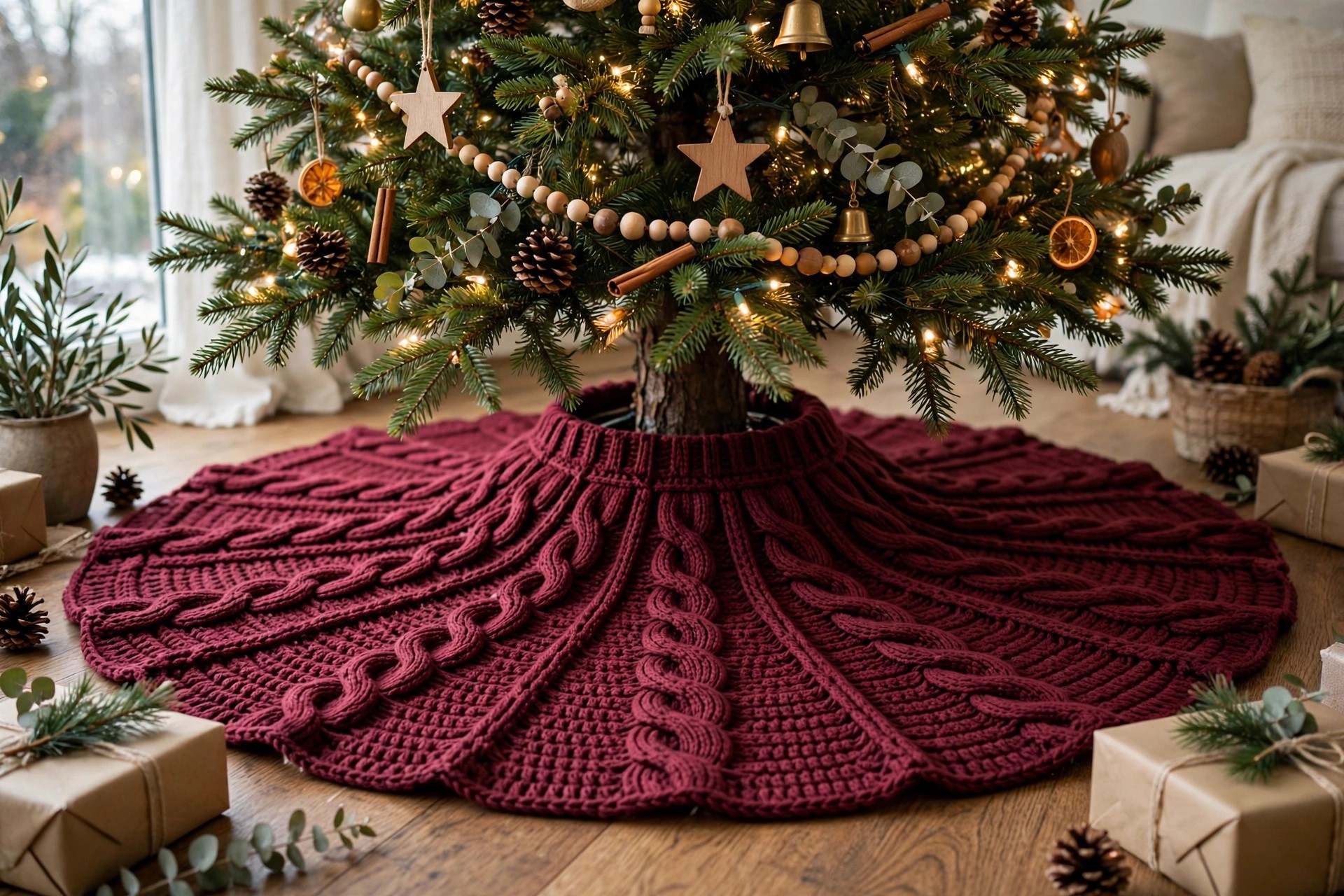
Cables in crochet are not as common as cables in knitting, but they give a tree skirt a lovely, traditional feel that suits a classic Christmas. I work front post double crochet stitches crossed over each other to form a cable pattern, radiating out from the centre in panels separated by plain stitches. It is the most technical pattern on this list, and I would not recommend it as a first tree skirt, but if you have made a cabled blanket or a sweater, you will manage it fine. I use a soft aran weight yarn in a deep burgundy, which makes the cables stand out beautifully. It took me the longest of any skirt on this list, but it is also the one I am proudest of, and it looks like something from a heritage pattern book.
8. Filet Crochet Tree Skirt
Filet crochet is an old technique that uses open and filled squares to create a picture, and a tree skirt made this way is genuinely a work of art. I work a large circle in filet, following a chart that creates a pattern of snowflakes and stars in the mesh, using a fine cotton yarn and a small hook. It is slow work — filet is not a fast technique — but the result is delicate and lacy, and it looks like something your grandmother might have made, in the best possible way. I use a white cotton for this one, because it shows the pattern clearly, and I block it carefully when it is finished so the squares sit square. It is the skirt I bring out for a formal, elegant tree, and it is the one I handle most gently.
9. Chunky Jumbo Yarn Tree Skirt
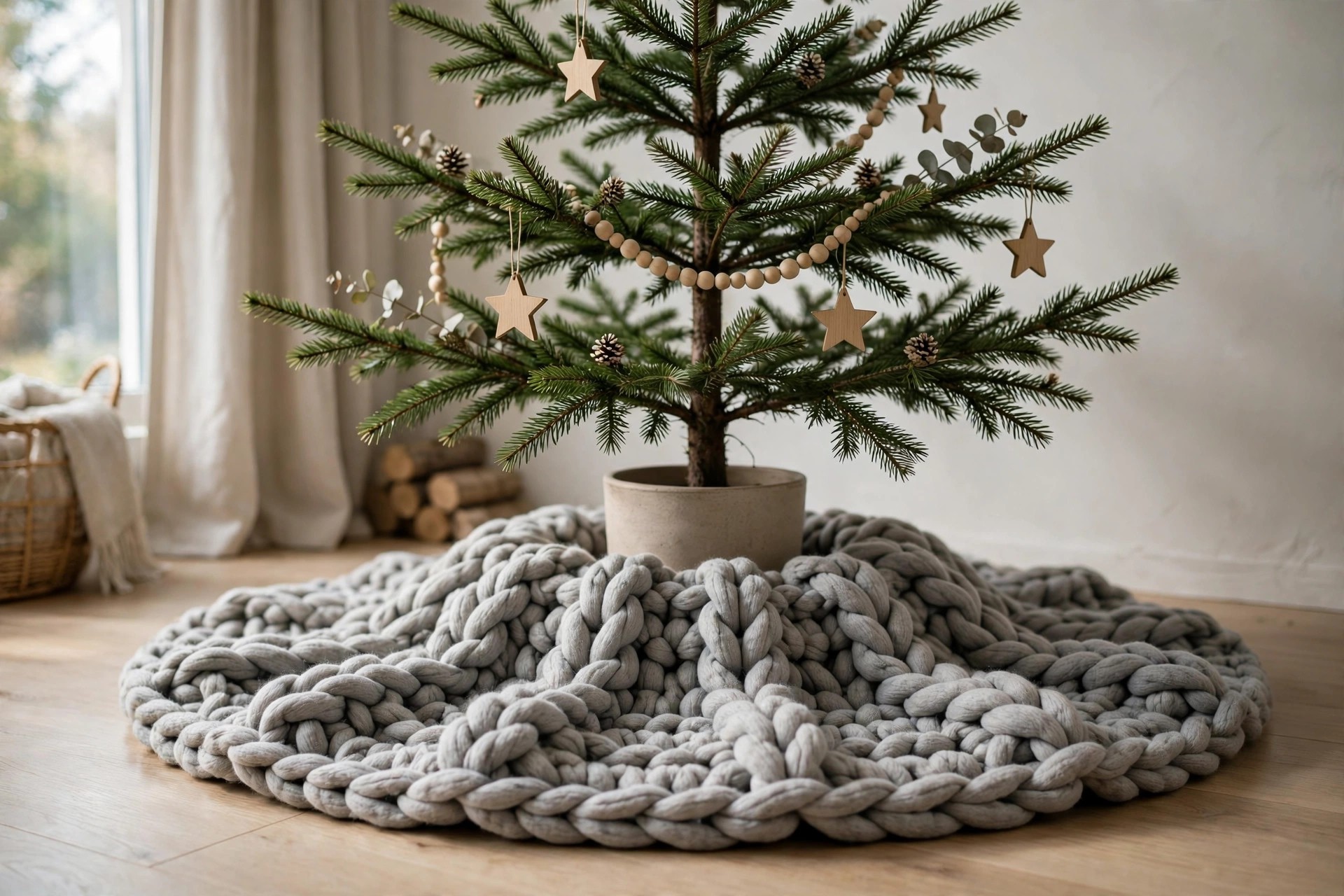
A chunky jumbo yarn tree skirt is the fastest one on this list, and it is the answer if you have left it late. I use a super chunky yarn and a 12mm hook, working a simple circle in half double crochet, and the whole thing comes together in a weekend. The stitches are big and bold, the fabric is thick and cosy, and the skirt looks wonderfully modern under the tree. I made mine in a soft grey, which suits a minimalist tree, but a deep red or forest green would be just as lovely. The trick with jumbo yarn is to keep your tension loose — if you crochet too tightly, the skirt goes stiff and will not lie flat. It is the skirt I recommend to anyone who wants a handmade tree skirt but does not have a month to spare.
10. Mandala Tree Skirt
A mandala tree skirt is a riot of colour and pattern, and it is the most joyful thing under my tree. I work a large circle in the round, changing colour every few rounds and using a mix of stitches — shells, bobbles, popcorns and picots — to create a mandala pattern that grows outwards from the centre. Each round is a little surprise, and the colour changes keep it interesting even when the circle gets large. I use a mix of leftover yarns in festive colours, which gives it a scrapbook feel, and I finish with a border of single crochet in a dark green. It is not a subtle skirt, and it is not meant to be — it is a celebration, and it looks wonderful under a tree full of colourful ornaments.
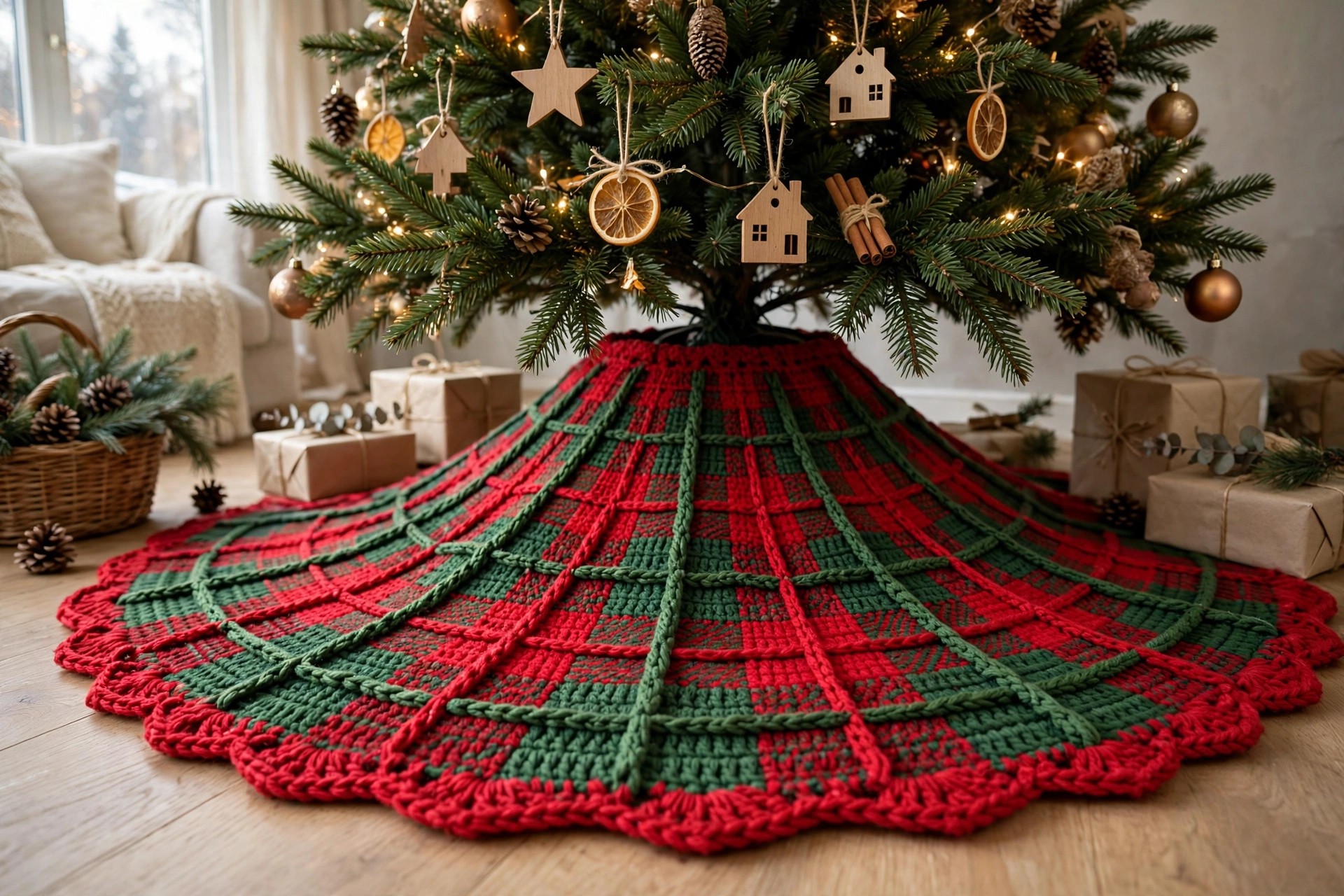
11. Plaid Tree Skirt
A plaid tree skirt is a classic, and it is easier to make than it looks. I work a circle in single crochet, alternating bands of red, green and cream, then add the plaid lines afterwards by surface crocheting thin lines of contrasting yarn across the finished piece. The surface crochet is the clever part: it lets you add the plaid pattern without changing yarn in the middle of a round, which would be fiddly on a large circle. I made mine in a traditional red and green plaid, which suits a classic tree, and I finished it with a border of single crochet in cream. It is a skirt that looks like it came from a high street shop, and nobody believes it when I tell them I made it myself.
12. Pom-Pom Trim Tree Skirt
A pom-pom trim is the finishing touch that makes a tree skirt feel festive and fun, and it is surprisingly easy to add. I work a simple circle in half double crochet, then attach a row of small pom-poms around the outer edge — made with a pom-pom maker, or wrapped around a piece of cardboard if you prefer the old-fashioned way. I use white pom-poms on a red skirt, which looks like snowballs, or a mix of red, green and cream for a more playful feel. The pom-poms add a lovely texture and a bit of whimsy, and children love them. The only downside is that they collect a bit of dust over the season, so I give the skirt a gentle shake outside before I pack it away in January.
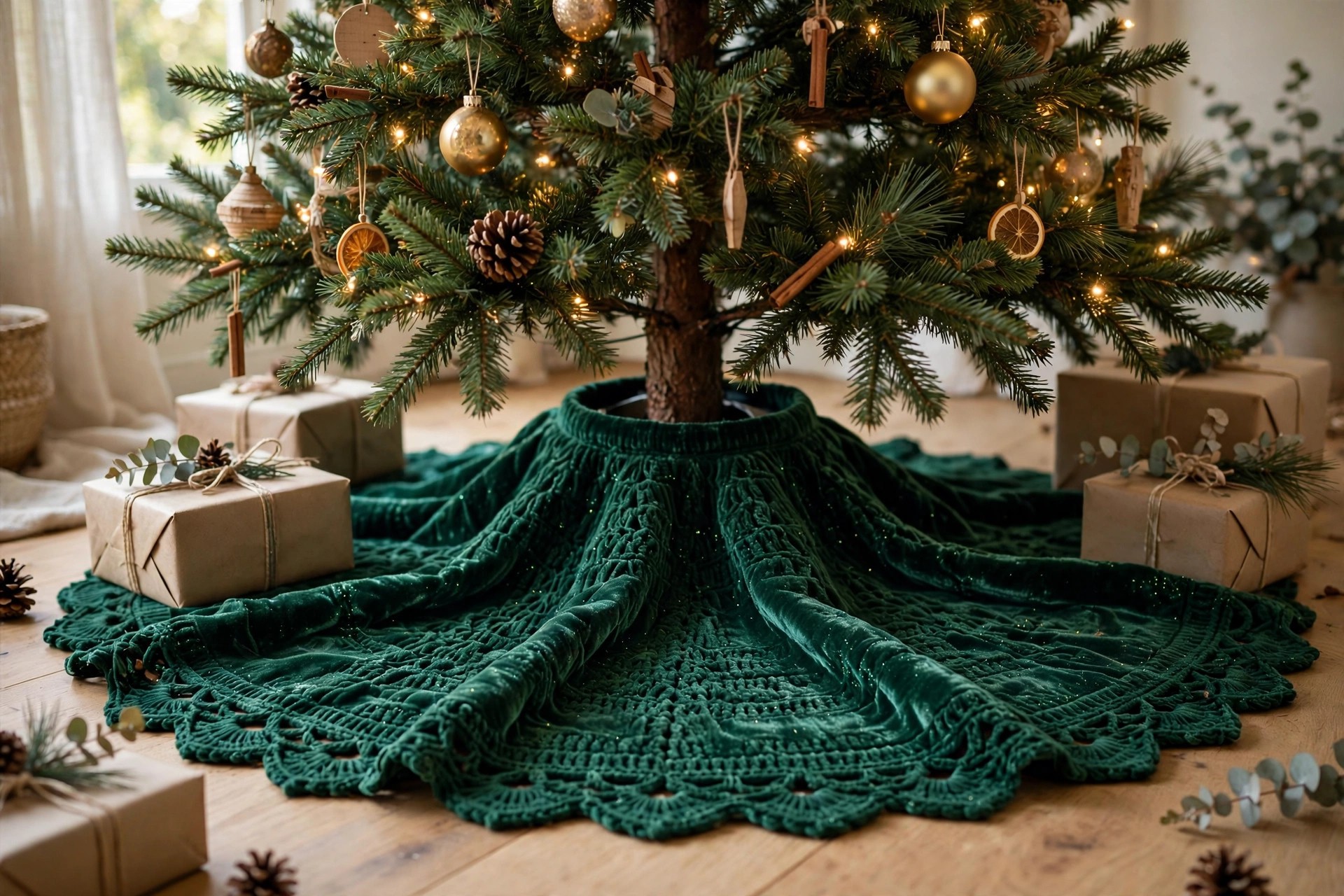
13. Velvet Yarn Tree Skirt
Velvet yarn makes a tree skirt that looks and feels luxurious, and it is the most indulgent fabric on this list. I work a simple circle in half double crochet with a velvet yarn in a deep emerald green, and the stitches come out soft and plush with a lovely sheen. Velvet yarn can be slippery to work with, so I use a hook a size larger than usual and keep my tension loose, which stops the stitches from disappearing into each other. The result is a skirt that looks like it cost far more than the yarn did, and it photographs beautifully. It is the skirt I choose when I want the tree to feel rich and opulent, and it is the one I handle with the most care when I pack it away.
14. Pinecone Stitch Tree Skirt
The pinecone stitch is a textured stitch that looks like a row of tiny pinecones, and it is perfect for a Christmas tree skirt. I work it in the round, increasing evenly, in a warm brown or deep green yarn, and the texture gives the skirt a lovely, rustic feel. The stitch is made by working a cluster of double crochets and pulling them together, which creates a raised, pinecone-like bump — it is a little slow at first, but once you have the rhythm it is satisfying work. I made mine in a soft brown, which echoes the colours of the tree trunk and the pinecones on the tree itself. It is a skirt that suits a natural, woodland-style tree, and it is the one I pair with wooden ornaments and dried orange slices.
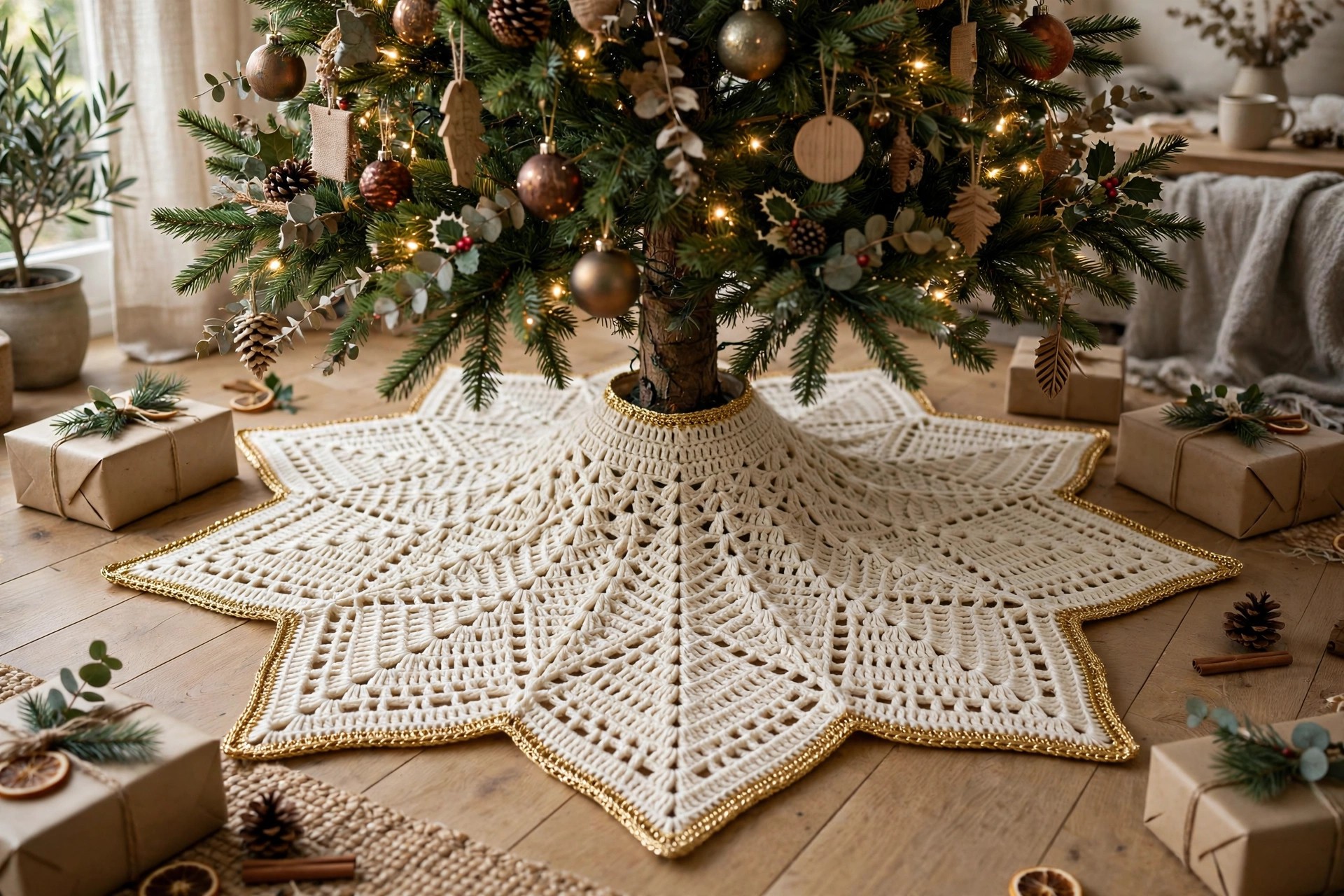
15. Six-Point Star Tree Skirt
A six-point star tree skirt is a clever shape that suits a tree perfectly, because the points echo the star on top. I work six wedge-shaped panels, each one increasing from the centre outwards, and join them into a star shape with a scalloped edge. The star shape is more interesting than a plain circle, and it gives the skirt a bit of drama without being difficult to make. I use a cream yarn with a gold border, which looks like a starburst under the tree, and I add a small star appliqué at the end of each point for a bit of extra sparkle. It is the skirt I make when I want something a little different, and it is the one that gets photographed the most. For the tree itself, my Christmas tree decorating ideas will help you carry the star theme upwards.
16. Striped Christmas Tree Skirt
A striped tree skirt is the simplest pattern on this list, and sometimes simple is exactly right. I work a circle in the round, changing colour every two rounds, in alternating bands of red and white, which gives a candy cane effect, or red and green for a more traditional feel. The colour changes are easy to manage — you just carry the yarn up the side — and the stripes look clean and deliberate. I made mine in red and white, which suits a tree with a lot of white and silver ornaments, and I finished it with a border of single crochet in red. It is the skirt I recommend to a complete beginner, because there is no shaping to worry about beyond the basic increases, and it still looks wonderful under the tree.
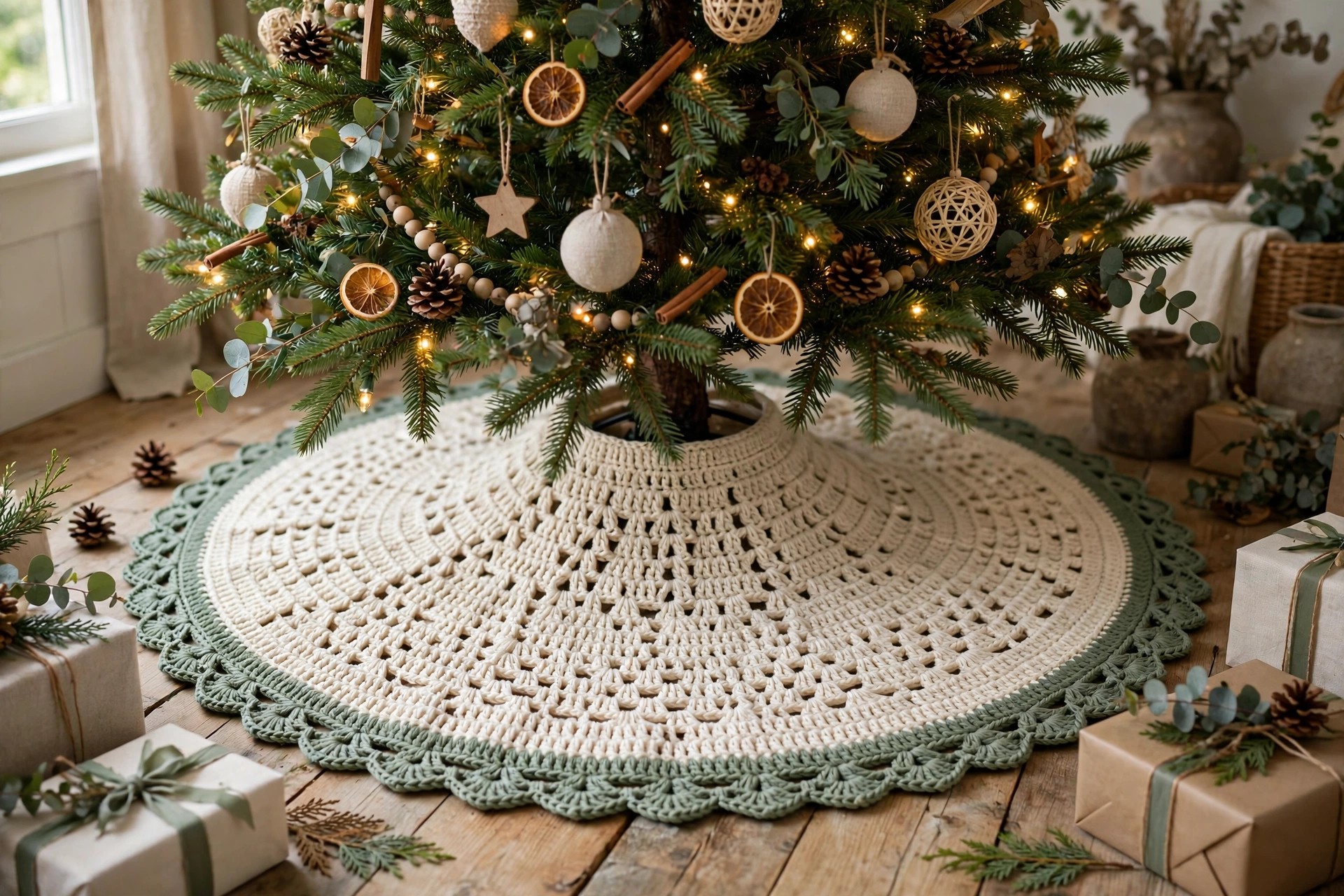
17. Farmhouse Neutral Tree Skirt
A farmhouse neutral tree skirt is calm, understated and timeless, and it is the one I choose when the rest of the house is decorated in neutrals. I work a simple circle in half double crochet using a natural, undyed yarn in cream or oatmeal, with a border of single crochet in a soft sage green. There is no colour change, no fancy stitch, just a clean, simple circle that lets the tree do the talking. The beauty of a neutral skirt is that it goes with any tree, any year, and any colour scheme, so you never have to make another one. I made mine in a cotton blend, which washes well and holds its shape, and it is the skirt I use when I want the tree to feel peaceful rather than busy.
18. Holly Berry Appliqué Tree Skirt
Holly berry appliqués are the detail that turns a plain tree skirt into a Christmas skirt, and they are a lovely way to use up small amounts of red and green yarn. I work a simple circle in half double crochet, then crochet small holly leaves and berries — the leaves are simple ovals with a pointed edge, the berries are tiny circles — and sew them around the skirt in clusters. Each appliqué takes a few minutes, so I make them in batches and arrange them on the finished skirt before sewing them down. I use a cream base with green leaves and red berries, which gives a classic, festive look. It is a cheerful skirt, and it is the one I make when I want a project that feels like decorating in itself.
19. Lace Tree Skirt
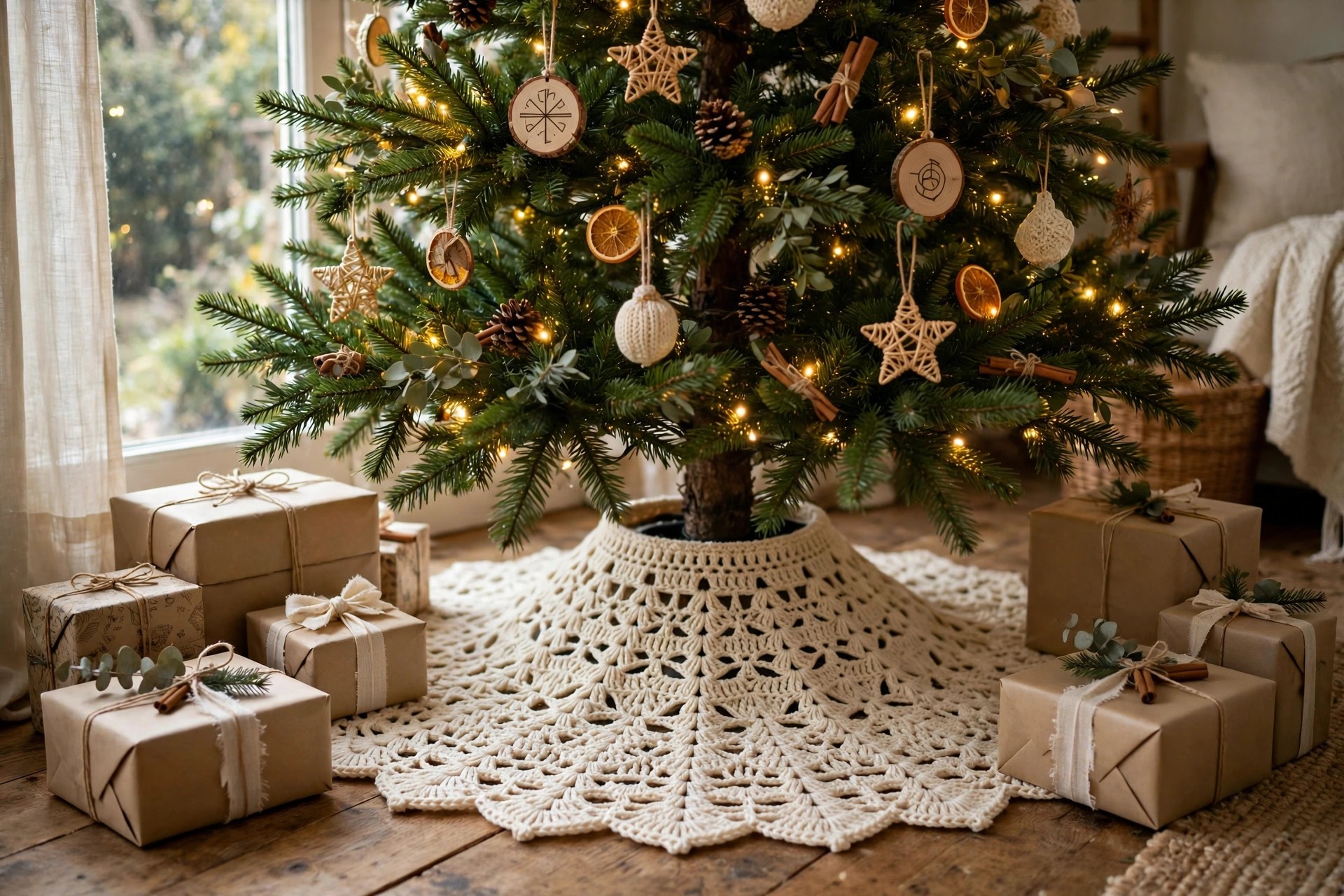
A lace tree skirt is the most delicate pattern on this list, and it is the one I save for a special tree. I work a large circle in a lacy stitch — a pattern of chain spaces and double crochets that creates an open, airy fabric — using a fine cotton yarn and a small hook. It is slow work, and the open fabric means you need to block it carefully when it is finished, but the result is exquisite: a skirt that looks like a doily, light as air, with the tree lights shining through the gaps. I use a white cotton for this one, because it shows the lace pattern clearly, and I handle it gently when I pack it away. It is not the skirt for a house with small children or pets, but for a quiet, elegant tree, it is perfect.
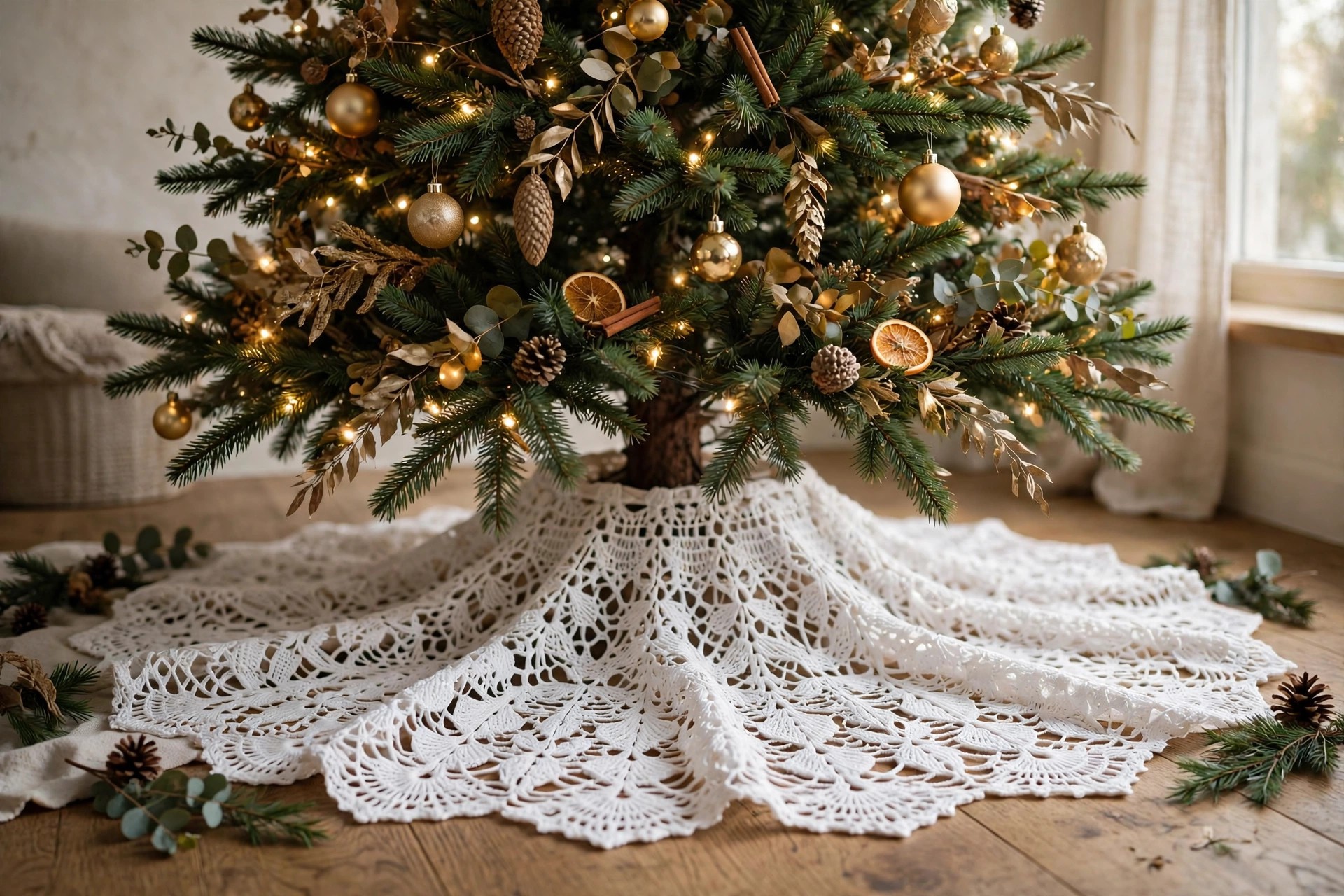
20. Two-Tone Tree Skirt with Ties
A two-tone tree skirt with ties is a practical design that solves a real problem: getting the skirt around the tree stand without lifting the whole tree. I work a circle in the round but leave a slit from the centre to the outer edge, then add ties — simple chains worked in the yarn — on either side of the slit so the skirt can be wrapped around the stand and tied closed. I use two colours, a deep red for the main body and a cream for the border and ties, which gives a clean, tailored look. The ties are the clever part, and they make the skirt easy to put on and take off, which matters when you are wrestling with a tree stand in December. It is the skirt I recommend to anyone with a real tree, because it is the easiest to fit.
21. Heirloom Snowflake Tree Skirt
An heirloom snowflake tree skirt is the project I save for last, because it is the one I hope will be used for years to come. I work a large circle in the round using a snowflake stitch pattern — a combination of picots, chain spaces and clusters that creates a snowflake design radiating out from the centre — in a soft white yarn. It is a slow, careful project, and it took me most of November, but the result is a skirt that looks like it was made by someone who loved making it, because it was. I block it carefully, I store it in tissue paper, and I bring it out every year with a little ceremony. If you want matching decorations, my crochet Christmas garland patterns and my free crochet Christmas ornament patterns will help you build a whole handmade Christmas around it.

Styling Tips
- Measure your tree stand before you start, and add at least six inches to the radius so the skirt covers the stand completely.
- Block your skirt when it is finished — pin it out flat and steam it lightly — so the circle lies flat and does not curl at the edges.
- Leave a slit or an opening in the skirt so you can fit it around the tree stand without lifting the whole tree.
- Choose a yarn that washes well, because a tree skirt sits on the floor all December and picks up dust and pine needles.
- Match one colour from the skirt to an ornament on the tree so the whole display feels designed, not random.
- Store your skirt flat in tissue paper, not folded in a bag, so it keeps its shape for next Christmas.
Frequently Asked Questions
How big should a crochet tree skirt be? A tree skirt should be at least 36 inches across for a standard six-foot tree, and 48 inches for a larger tree. Measure your tree stand and add at least six inches to the radius on each side, so the stand is fully covered. If in doubt, make it bigger — a skirt that is too small looks like a mistake, while a generous one looks deliberate.
How long does it take to crochet a tree skirt? A simple tree skirt in chunky yarn takes a weekend, while a detailed one in fine yarn can take three to four weeks of evenings. The granny square and striped skirts in this list are the quickest, and the filet and lace skirts are the slowest. Start in early November and you will finish comfortably before Christmas, even with a busy schedule.
What yarn is best for a crochet tree skirt? Acrylic is the most practical choice, because it washes well and holds its shape, and it is affordable for a large project. A wool blend gives a lovely drape and warmth, cotton is best for lace and filet work, and velvet yarn is beautiful but needs a larger hook and a loose tension. Avoid anything too fluffy or novelty, because it hides the stitch pattern you worked so hard on.
How do I block a crochet tree skirt? Lay the finished skirt flat on a blocking mat or a clean towel, pin it out to its full size, and steam it lightly with an iron held a few inches above the fabric — do not press the iron directly onto the yarn. Leave it pinned until it is completely dry, which usually takes a few hours. Blocking makes the circle lie flat, opens up lace patterns, and gives the skirt a professional finish.
Final Thoughts
A crochet tree skirt is one of those projects that feels like a commitment and turns out to be a joy — a slow, rhythmic make that ends with a tree that looks properly finished. Pick a pattern that matches your skill and your schedule, start early, and enjoy the process. And once the skirt is done, the tree itself deserves the same care: my crochet Christmas tree patterns will help you make the ornaments to match. Happy crocheting, and may your tree skirt lie flat on the first try.