
Introduction
A crochet Christmas tree was the project that finally got me to slow down in December instead of sprinting through it. I made my first one on a snowy weekend with a half-finished skein of green worsted yarn, a 5 mm hook, and absolutely no plan, and it came out lopsided in the most charming way. Since then I have stitched trees in every size from thimble-small to floor-standing, and these 19 crochet Christmas tree ideas and patterns are the best of what I have learned along the way. Some are quick evening makes, some are weekend showpieces, and a few are the kind of heirloom pieces your family will unpack every year. Whether you are brand new to a hook or you have been working amigurumi for years, there is a tree here with your name on it.
1. The Classic Green Cone Tree
Every crocheter should make one classic cone tree, if only to learn the shaping. You work in continuous rounds, increasing steadily, and watch a flat circle turn into a proper little fir. I use worsted-weight acrylic, usually Red Heart Super Saver or Lion Brand Vanna’s Choice, because it holds its shape and survives being squashed in a storage box every January. Single crochet gives the firmest fabric, and a slightly smaller hook than the label suggests keeps the stuffing from peeking through. My first cone leaned like the Tower of Pisa because I skipped stitch markers, so now I mark the first stitch of every round without fail. Add a star on top and a few tiny buttons as baubles, and you have the tree most people picture when they hear the words crochet Christmas tree.
What you need
One skein of green worsted yarn, a 4.5 or 5 mm hook, polyester fiberfill, a stitch marker, and a small star button or felt star for the top.
2. Mini Tabletop Trees
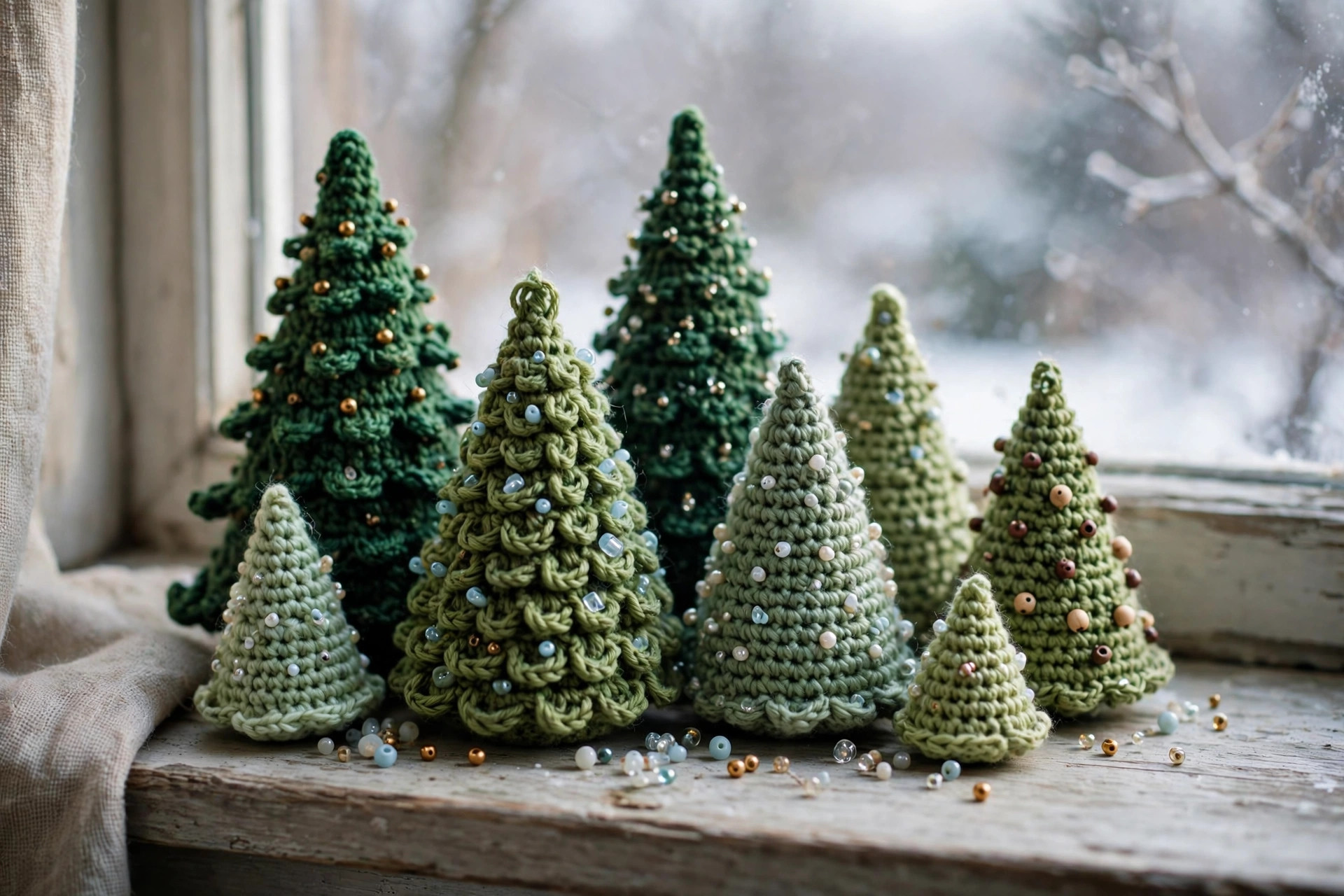
Mini trees are my favourite stash-busters and my go-to gift when I need something handmade in an evening. At six to eight inches tall, one uses barely a quarter of a skein, and you can finish it while half-watching a Christmas film. I like to make them in sets of three, each a slightly different green, and group them on a windowsill or a mantel like a tiny forest. The trick with minis is proportion: keep the ornaments tiny, think seed beads and French knots instead of buttons, or the tree looks overloaded. I once glued on beads that were bigger than the tree’s top section and it looked like a very festive cactus, which was not the goal. These little trees also make sweet place settings, with a guest’s name on a tiny tag tied to the trunk.
3. Amigurumi Tree With Tiny Ornaments
An amigurumi tree is where crochet turns into pure play. You stitch the tree itself in the round, then add a whole cast of miniature characters: a crocheted star, a string of bead garland, maybe a tiny angel if you are feeling ambitious. The magic ring start matters here, because a loose centre hole at the base will show, and nobody wants a tree with a hole in its bottom. I stuff firmly but not rock-hard, shaping as I go so the tiers stay rounded rather than lumpy. My daughter claimed my first amigurumi tree for her bedroom shelf and it has lived there for three Christmases now, which is the highest praise a handmade thing can get. If you enjoy crochet blanket patterns for beginners, the same single-crochet rhythm will feel familiar here, just in three dimensions.
How I styled it
I gave mine a terracotta-coloured pot worked in half-double crochet, which makes the whole thing look like a proper potted fir rather than a floating cone.
4. Granny Square Wall Tree
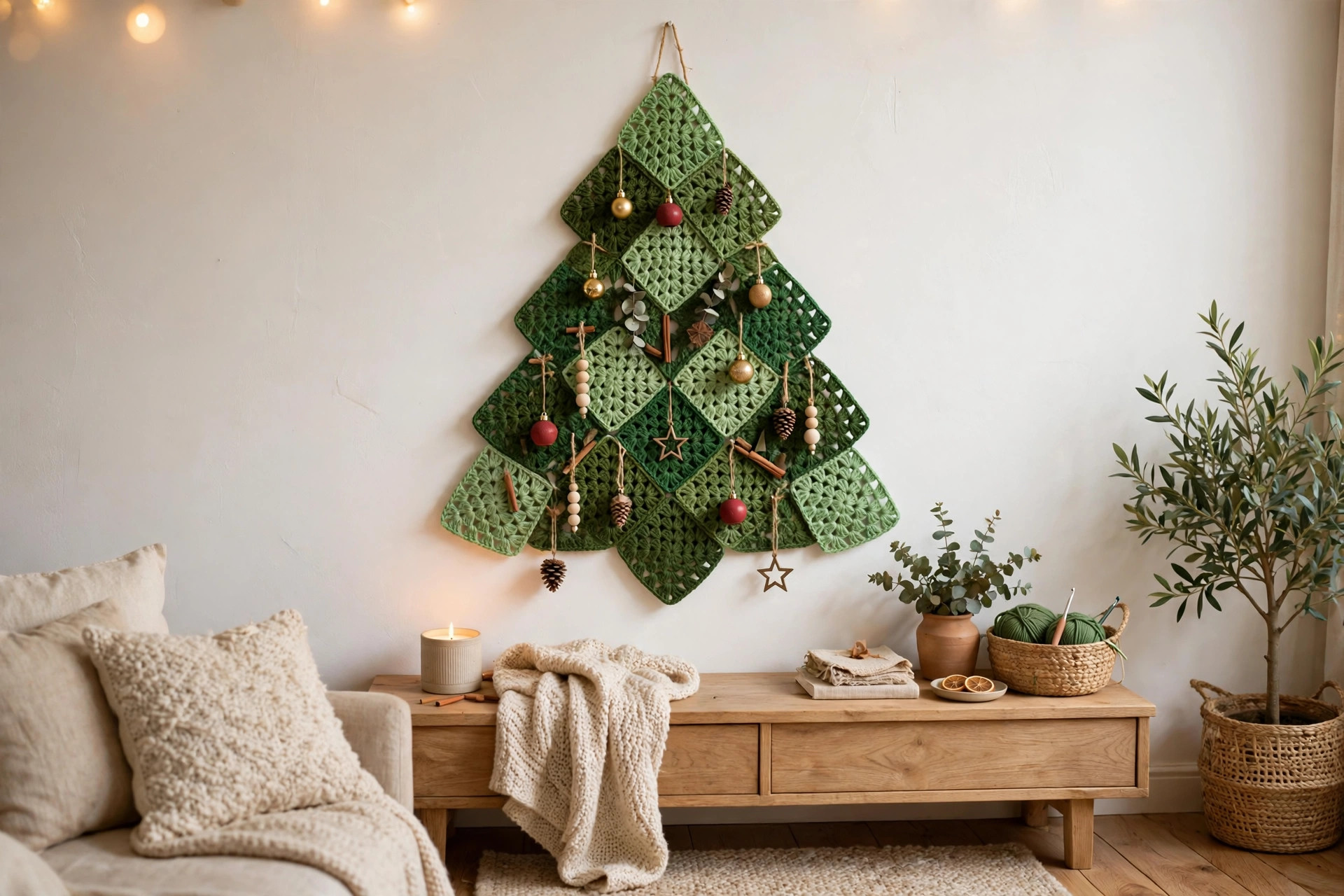
Not every crochet tree has to stand up, and the granny square wall tree is proof. You join green granny squares in a triangle, add a brown square trunk at the bottom, and hang the whole piece flat on a wall or a door. It is perfect for small flats, rented rooms, or anyone whose cat treats a standing tree as a personal climbing frame. I made one for a friend’s studio flat using leftover squares from a blanket project, and she hangs it every year with Command strips, no holes in the wall. Join with a slip-stitch seam for a neat finish, or a whip stitch if you like a slightly rustic edge. Hang a few lightweight ornaments from the squares with thread, and it reads as a tree from across the room, even though it is completely flat.
5. Frosted White and Snow-Dusted Tree
A white crochet tree looks like it has just come in from a snowfall, and it suits homes that lean modern or Scandinavian. The catch is that white yarn shows every stray stitch and every bit of uneven tension, so take your time and keep your gauge even. I like to work mine in a soft cream rather than stark white, which is more forgiving and looks warmer under fairy lights. Add silver seed beads as frost, a dusting of white eyelash yarn in the last few rounds for a snowy texture, and a simple silver star. My frosted tree sits on a white cake stand in the hallway, and visitors keep asking where I bought it. That is the moment I quietly love most, honestly, because it means the handmade look reads as polished, not homemade in the apologetic sense.
6. Chunky Jumbo Yarn Tree
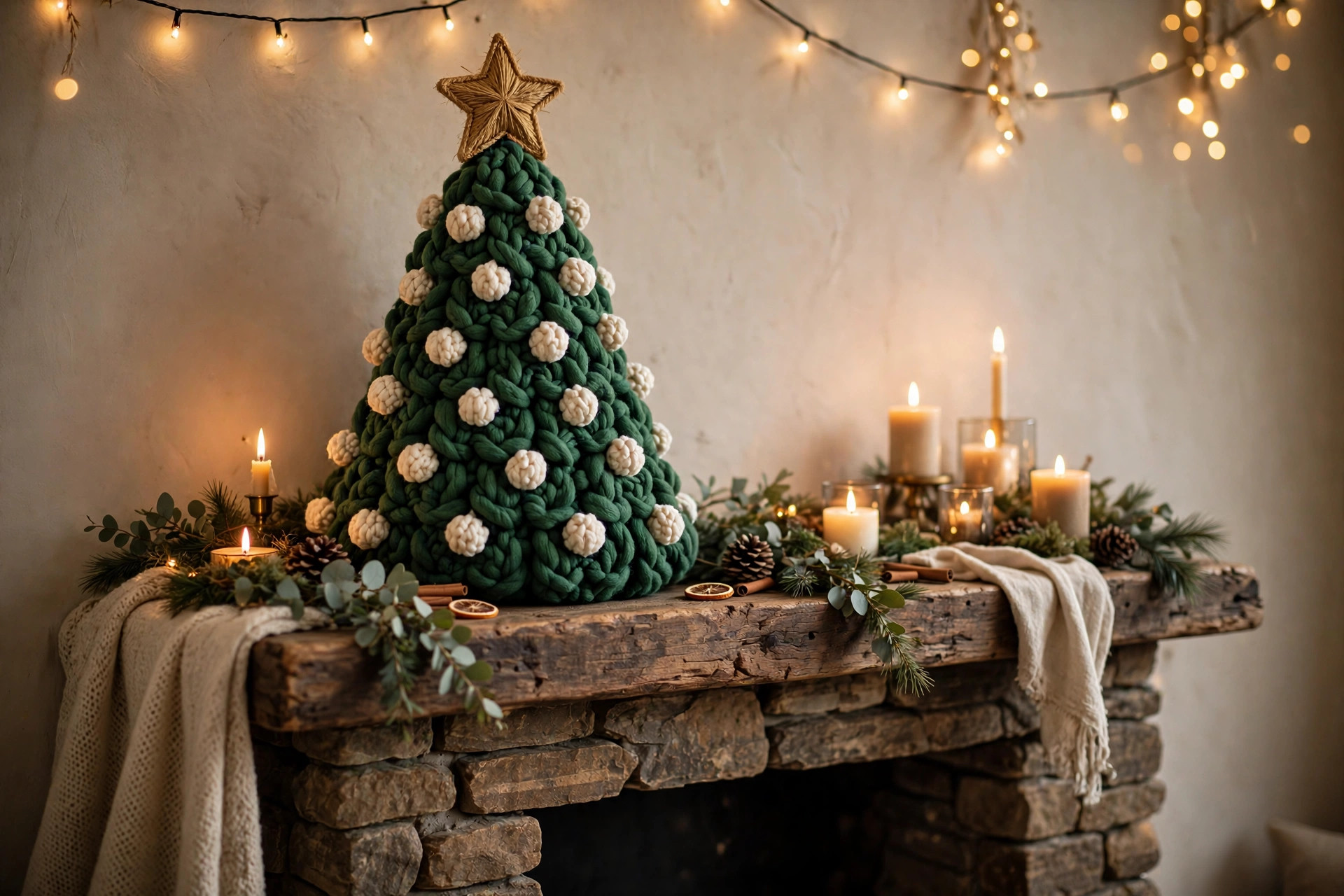
When I want a statement piece fast, I reach for chunky yarn and a big hook. A jumbo tree worked in Bernat Blanket yarn with a 9 mm hook grows shockingly quickly, sometimes in a single afternoon, and it has a plush, almost knitted-toy softness that guests cannot resist touching. The downside is weight: a tall chunky tree gets heavy and can slump, so keep it under about eighteen inches or add a sturdy base, like a weighted pot or a disc of cardboard inside the bottom round. I made one in a deep forest green with cream bobble “snow” stitches, and it anchors my fireplace mantel every year. Chunky trees also hide uneven tension beautifully, which makes them a kind gift for a newer crocheter who wants a big win.
7. Rustic Farmhouse Tree
The farmhouse tree is all about texture and natural colours: sage green, cream, a little burlap, and wooden beads strung as garland. I work mine in a slightly looser gauge so the fabric drapes like fabric rather than standing stiff, then wrap it with a twine garland and a few cinnamon-stick bundles tied on with ribbon. A galvanised tin pot as the base completes the look, and it sits happily next to plaid cushions and a wooden bead garland on the mantel. This is the tree I reach for when the rest of the house is already leaning rustic, because a shiny glam tree would look out of place there. My farmhouse tree has a tiny flaw, one round where I miscounted and the tree jogs slightly to the left, and I have left it in. It reminds me that handmade is allowed to be imperfect.
8. Pastel Pink Christmas Tree
Pink Christmas is having a real moment, and a pastel pink crochet tree is the easiest way to try it without repainting your living room. Work the tree in blush or rose pink, add cream and gold bead ornaments, and top it with a pearl-white star. The colour does something surprising to a room: it makes the whole corner feel softer, almost like a boutique window display. I was sceptical the first time I made one, convinced pink trees were a novelty, but my niece’s face when she unwrapped it changed my mind completely. It now lives on her dresser year-round, which is either a compliment or a sign she never got the memo about taking Christmas down. Pair it with a DIY Christmas ornament or two in matching pink, and the whole display ties together.

9. Rainbow Striped Tree
A rainbow tree is pure joy, and it is a brilliant way to use up a mountain of oddments. Work two rounds in each colour, cycling through red, orange, yellow, green, blue, and purple, and carry the yarn up the inside to avoid a forest of ends to weave in later. The trick is keeping your tension consistent across colour changes, because a tight round in one colour will pinch the whole tree inward. I check my stitch count at every colour change, which sounds fussy but saves a lot of frogging. My rainbow tree lives in my craft room, where it matches absolutely nothing and cheers up the whole shelf. Kids adore this one, and it makes a wonderful gift for a teacher or a nursery, since it reads as festive without relying on the traditional red-and-green palette at all.
10. Gold and Champagne Glam Tree
For a tree that looks like it belongs in a hotel lobby, go dark green with gold. I work the base tree in a deep hunter green, then add gold metallic yarn as a garland, spiralling up the tiers, plus gold beads and a gold star that catches the light. Metallic yarn can be scratchy and splitty, so I pair it with a smooth yarn held together, or use it only for the garland rounds rather than the whole tree. The result is rich without being gaudy, especially against a dark mantel or a navy wall. I made a glam tree for a friend’s New Year’s Eve party and she kept it up through January as a winter decoration, which tells you how versatile the palette is. Keep the ornaments small and gold-toned, and let the metallic thread do the talking.

11. Scandinavian Minimal Tree
The Scandinavian tree is the opposite of the glam tree: pale, quiet, and deliberately simple. Work it in undyed wool or a soft grey-green, keep the shape clean, and decorate with almost nothing, maybe a few wooden beads and a single white star. The yarn choice matters more than usual here, because there is nowhere for a cheap-looking yarn to hide. I used a lovely undyed merino from WeCrochet for mine, and the stitch definition alone carries the whole piece. Blocking helps too: a gentle steam block evens out the rounds and gives the tree a crisp silhouette. This is the tree for the friend who loves Christmas but hates clutter, and it looks beautiful on a pale wooden sideboard with a single candle beside it. Less really does more, for once.
What you need
Undyed or pale grey-green wool, a 4 mm hook, a handful of natural wooden beads, and a simple white felt or crochet star.
12. Vintage Red and Green Tree
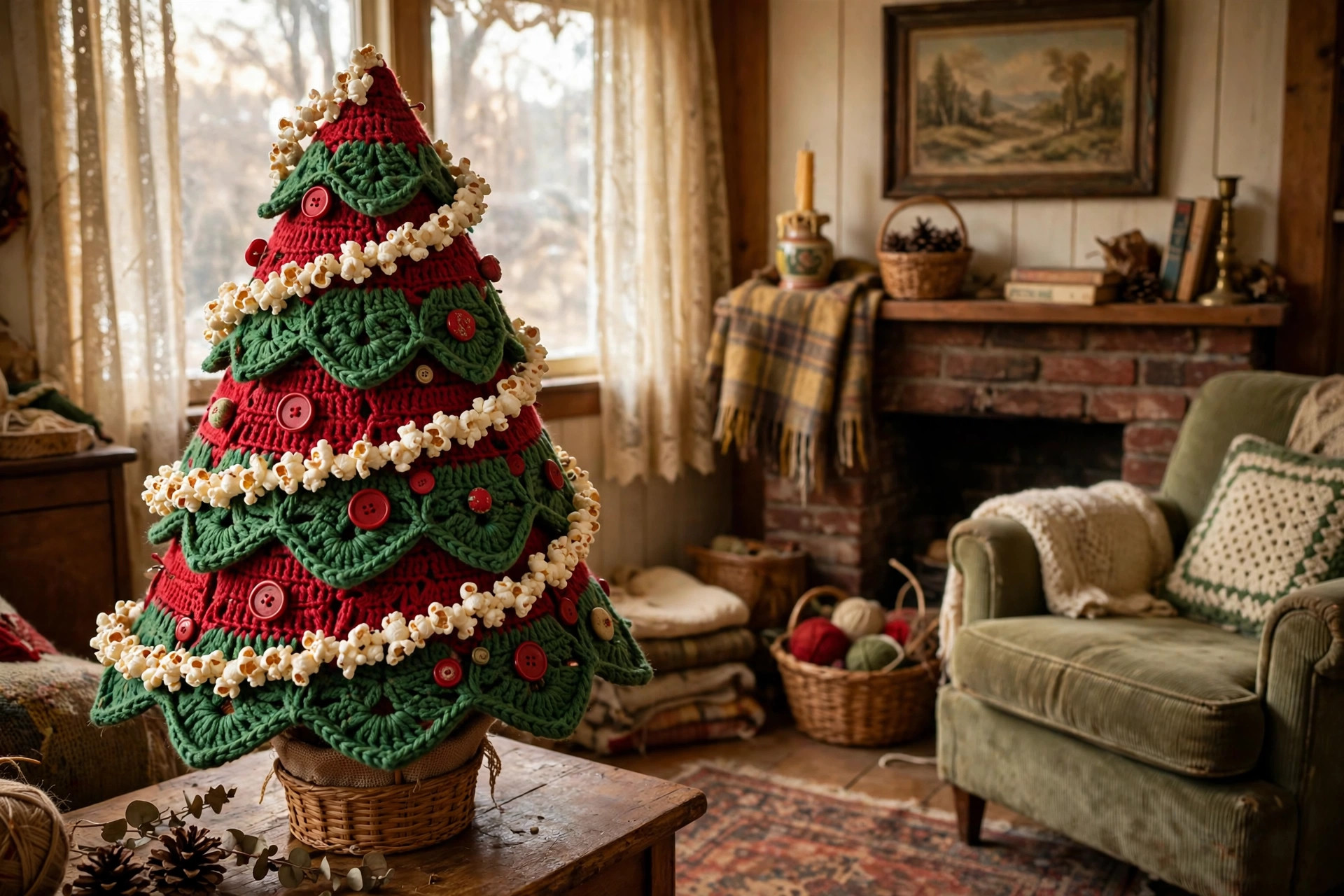
Some years I want the Christmas of my childhood, and that means a vintage-style tree in true red and green with a slightly old-fashioned feel. I use a classic red for the garland rounds, deep green for the body, and cream for the snow-capped tips, worked in a simple stitch that looks like it could have come from a 1970s pattern book. The charm is in the details: a popcorn garland in cream, tiny red buttons, and a slightly lopsided star that looks hand-cut. I found a similar tree in my grandmother’s attic years ago, made from a pattern she had photocopied from a magazine, and it still comes out every December in our family. Making a new one in the same spirit felt like continuing a conversation with her, which is a sentimental reason to crochet, but a good one.
13. Potted Tree in a Crochet Pot
A tree in a pot solves the age-old problem of a cone tree tipping over, and it looks complete in a way a bare cone sometimes does not. You crochet the pot separately, usually in a terracotta or cream colour, add a firm base disc, and then either stitch the tree to the pot or set a weighted insert inside. I like to fill the pot with dried beans in a small fabric pouch for weight, which keeps it stable on a windowsill without making it impossible to store. The pot also gives you a second colour to play with, and a striped or textured pot can turn a simple tree into a gift that looks shop-bought. My potted trees are the ones I give most often, because they arrive ready to display, no stand or saucer required.
14. Spiral and Twisted Tree
The spiral tree breaks the cone rule entirely, and that is what makes it fun. Instead of working straight rounds, you build a long, tapered strip and wind it into a spiral, or you work a cone and add a twisted garland that corkscrews up the outside. The effect is modern and sculptural, almost like a piece of fibre art, and it photographs beautifully. Getting the spiral even takes patience: mark your increases, count often, and do not be afraid to pull back a round if the twist starts drifting. I made my first spiral tree in a variegated green yarn from Hobbii, and the colour changes did half the visual work for me. It is not a beginner’s first project, but it is a wonderful second or third tree, once the basic cone shape feels automatic.

15. Tree With Pockets and Surprises
A pocket tree is a tree and an advent calendar in one, and children go absolutely wild for it. You work small pockets onto the tiers, or hang tiny pouches from the branches, and tuck a sweet, a note, or a tiny toy into each one. The pockets need to be worked firmly, in single crochet with a smaller hook, or they will stretch out of shape after a few days of treasure-hunting. I made one for my nephew with twenty-five pockets and a numbered tag on each, and he still talks about the year the tree itself gave him presents. It is more work than a plain tree, no question, but the payoff is a December ritual, not just a decoration. If you like this idea, my DIY Christmas gift ideas include small makes that fit neatly into a tree pocket.
16. Woodland Animal Tree
A woodland tree is a storytelling tree: a crochet owl perched halfway up, a tiny fox at the base, a cardinal tucked near the top, all in natural browns and creams. The animals are small amigurumi pieces attached after the tree is finished, so you can build the menagerie over several evenings and add to it each year. I started mine with one owl and now have a small forest’s worth, including a hedgehog that took three attempts to get right. The trick is scale: keep the animals small relative to the tree, or the tree starts looking like a zoo enclosure. Woodland trees suit a cabin or rustic room beautifully, and they make wonderful gifts for nature-loving kids. If you want more animal inspiration, my overlay mosaic crochet patterns show how colourwork can add woodland motifs to flat pieces too.

17. Black and Gold Modern Tree
Black crochet trees sound daring, and they are, but the result is genuinely striking. Work the tree in a soft black yarn, add gold beads and a gold star, and let the contrast do the work. Black yarn is notoriously hard to see while you stitch, so work in good light, use a light-coloured lap blanket underneath for contrast, and count stitches more often than you think you need to. I keep a small lamp clipped to my chair for black-yarn projects, and it has saved my eyesight and my temper. The finished tree looks dramatic on a white mantel or against a pale wall, and it suits a modern home far better than a traditional green tree would. It is the tree I recommend when someone says they want Christmas decor that does not look like everyone else’s.
18. Tree Garland and Bunting
Sometimes the best crochet tree is not a tree at all, but a garland of tiny trees strung together. You make a dozen or so flat or mini trees, join them with a chain or a ribbon, and drape the garland across a mantel, a doorway, or a staircase. Flat trees work up fast, use very little yarn, and the garland format forgives a slightly wonky tree, because the eye reads the whole strand rather than one piece. I made a garland of alternating green and cream trees for a friend’s fireplace, and it is the decoration she photographs most. This is also a great group project: each person makes a few trees, you join them together, and the garland becomes a record of who was there that Christmas. A lovely, low-pressure way to start.

19. The One-Hour Last-Minute Tree
Every December there is a moment when you realise you need a handmade gift by tomorrow, and the one-hour tree is my rescue plan. Use chunky yarn, a big hook, and the simplest cone pattern you know, with no separate ornaments at all: work a round of bobble stitches as the “baubles” and a star stitch at the top, and you are done. It will not win a craft fair prize, but it looks intentional, and it beats a gift card for warmth. I keep a skein of green chunky yarn and a 10 mm hook in a project bag by the sofa all December, precisely for this emergency. One year I made three in an evening for neighbours who had dropped by unexpectedly, and they are still on their mantels. Fast does not have to mean thoughtless, and a quick tree made with love beats a perfect tree never started.

Styling Tips
- Use a hook one size smaller than the yarn label suggests for amigurumi trees, so the stuffing stays hidden and the shape holds.
- Block flat trees and wall hangings with a gentle steam press before hanging, which evens out the stitches and sharpens the triangle shape.
- Group trees in odd numbers, threes or fives, in different heights, for a display that looks collected rather than lined up.
- Keep ornaments proportional: seed beads and French knots for minis, buttons and small baubles for full-size trees, never the other way round.
- Store crochet trees in breathable cotton bags, not sealed plastic, so the yarn stays fresh and moths are easier to spot.
- Photograph your tree in natural daylight near a window, which shows the true yarn colour far better than overhead lights.
Frequently Asked Questions
How do you crochet a Christmas tree? Start with a magic ring and work in continuous single-crochet rounds, increasing evenly to form a cone shape. Use a stitch marker on the first stitch of each round, stuff firmly as you go, and decrease near the top to close the shape. Add a trunk, a pot if you like, and ornaments like beads, buttons, or a small star. Most patterns use worsted-weight yarn and a 4.5 to 5 mm hook, and a simple cone tree is very achievable in one evening.
What size crochet hook is best for a Christmas tree? For a standard worsted-weight tree, a 4.5 or 5 mm hook works well, and going one size smaller than the yarn label suggests gives a firmer fabric that hides stuffing. Chunky blanket yarn needs an 8 to 10 mm hook, while fine cotton for mini trees works best with a 2.5 to 3.5 mm hook. The right hook is the one that gives you a dense fabric with no gaps, so swatch a few rounds first if you are unsure.
How do you make a crochet Christmas tree stand up? Stuff the tree firmly, work with a dense stitch like single crochet, and give it a solid base: a flat bottom round, a crochet pot, or a weighted insert like a pouch of dried beans. For tall trees, add a cardboard disc inside the base round and keep the height in proportion to the base width. A tree that still leans can be steadied by blocking it and letting it dry upright, or by stitching it to its pot.
Can beginners crochet a Christmas tree? Yes, absolutely. A basic cone tree uses only a magic ring, single crochet, increases, and decreases, which are the first skills most beginners learn. Start with a mini tree in chunky yarn, where mistakes are easy to spot and fix, and use a stitch marker every round. Many beginners finish their first tree in a single evening, and it is one of the most satisfying first projects because the result looks impressive so quickly.
Final Thoughts
If you take one thing from these 19 crochet Christmas tree ideas, let it be this: start with the tree that makes you smile, not the one that looks hardest. My lopsided first tree is still my favourite, flaws and all, because it started a December tradition I now look forward to all year. Pick your yarn, find a quiet evening, and let the rounds grow under your hands. And once your tree is standing proud, think about the room around it: if you fancy taking the festive feeling outside too, my outdoor Christmas decor ideas are waiting. Happy crocheting, and happy Christmas.