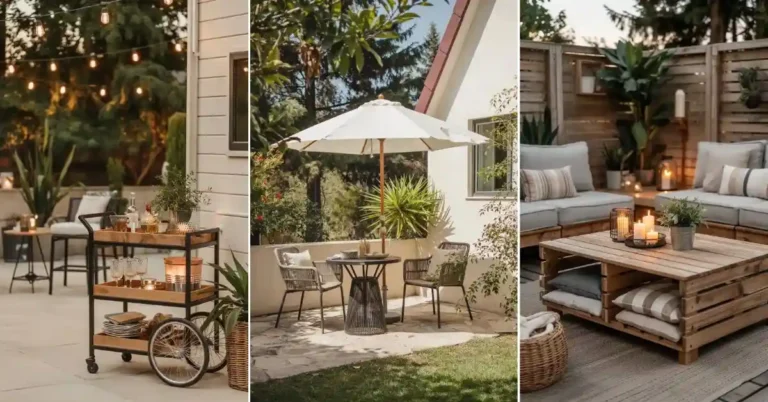
16 Minimalist Landscaping Ideas for Clean Gardens
A front yard does not need twelve plant varieties and three types of edging to look good. The calmest gardens are usually the ones where the homeowner resisted the urge to add one more thing: a single row of clipped boxwood, a straight concrete path, a bed of gravel quietly doing the work of mulch. Minimalist landscaping is the discipline of leaving things out — and it is the fastest route to a yard that looks intentional instead of accidental.
Most modern houses already have strong lines — flat roofs, big windows, rectangular footprints. A stripped-back garden echoes that architecture instead of fighting it. The payoff is practical too: fewer plant types means less pruning, less watering, and a clean garden that still looks sharp in February, not just May.
1. Modern Minimalist Front Yard Landscaping
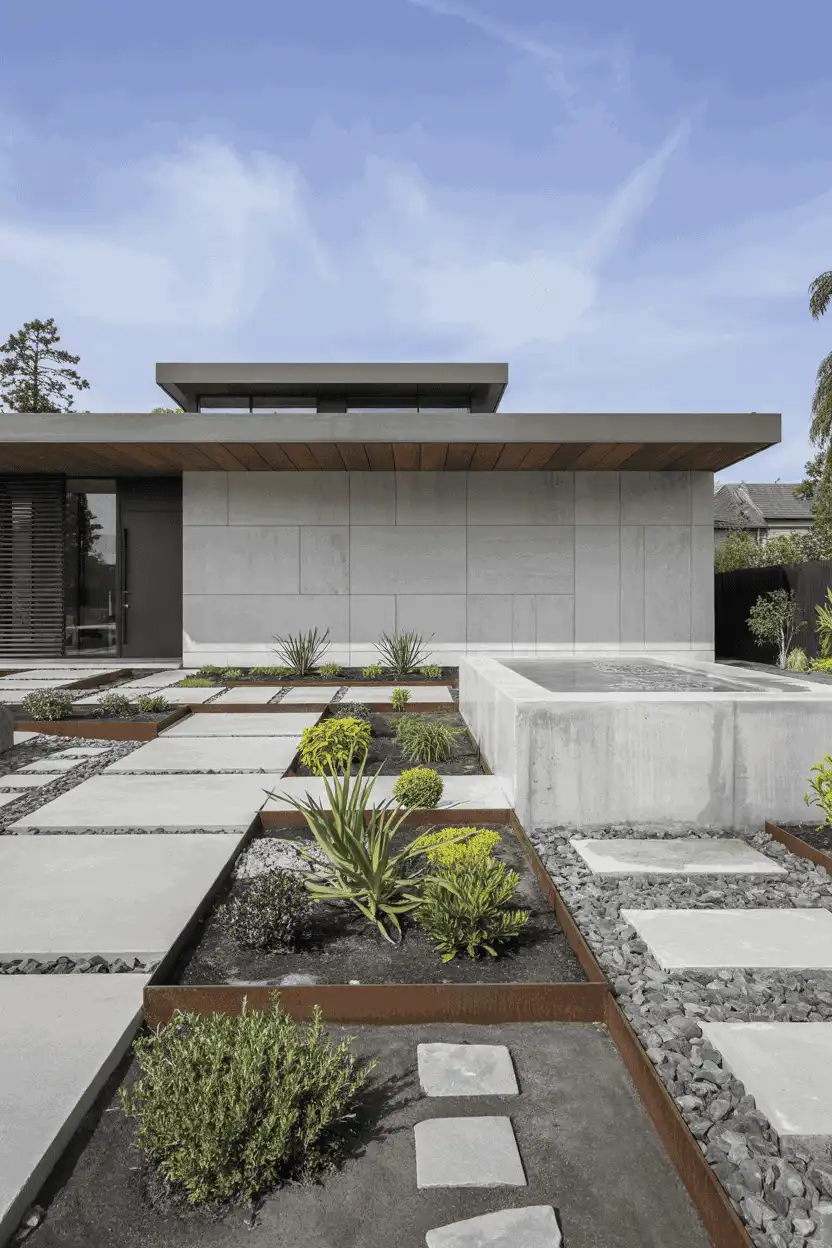
Decide the geometry before you buy a single plant. A straight four-foot concrete walkway from sidewalk to door, flanked by a two-foot band of pea gravel, gives the whole yard its skeleton. Two or three boxwood ‘Green Velvet’ or inkberry holly, clipped into low mounds and repeated along the gravel band, provide the planting — repetition is what makes a small planting plan look expensive.
Resist filling every gap. This style works when roughly half the ground plane stays open — gravel, lawn, or pavers — and the planting reads as deliberate punctuation. Cap yourself at three species; each one gets to be a star instead of background noise. Finish beds with a clean steel or stone border so the lines hold through every season.
2. Minimalist Front Yard Landscaping for Clean Curb Appeal
Mirror the planting on both sides of the entry path and the house instantly looks more composed. Twin rows of dwarf mondo grass or liriope along a straight walkway do more for curb appeal than a dozen mixed perennials — the eye registers the symmetry before it registers the plants. Keep the palette to greens plus one neutral hardscape tone, and the facade becomes the focal point.
Small front gardens gain the most from restraint. One paving material, one gravel tone, and a single hedge species — say, an eighteen-inch clipped privet or boxwood hedge — can carry the entire design. Leave breathing room between elements; crowding is what makes a small yard feel smaller.

3. Simpler Front Yards with a Minimal Layout
Pick one motif and repeat it down the length of the yard: a row of ‘Karl Foerster’ feather reed grass at three-foot intervals, or a low hedge of compact holly running parallel to the sidewalk. That single repeated element creates rhythm, and rhythm reads as order even when the space is tiny. One variety planted with discipline beats five varieties planted at random.
Commit to a material palette of two, maybe three elements: concrete pavers, one gravel color, one wood tone. Every extra stone type or edging style you introduce makes the design noisier. Consistency across paving and planting is what keeps the whole space calm.
4. Minimalist Front Garden Designs that Elevate Architecture
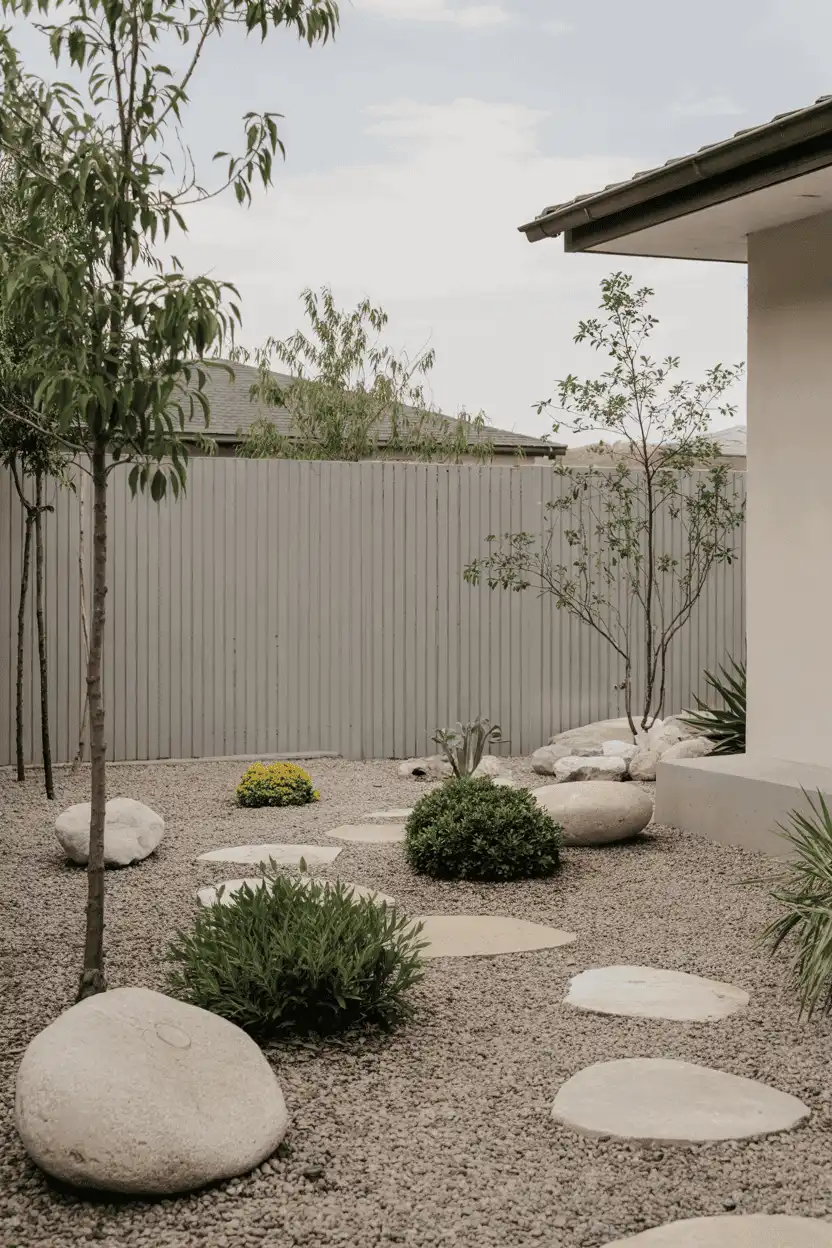
Treat the garden as an extension of the house itself. Rectangular concrete pads set with two-inch gravel joints, a low retaining wall doubling as a bench, and tightly clipped yew or boxwood cubes create a framework that flatters flat facades and big windows. Keep sightlines to the front door open — the geometry should guide visitors, not block them.
A single vertical accent keeps a geometric garden from feeling flat. One multi-stem Amelanchier, river birch, or Japanese maple beside the walkway adds height and seasonal interest without disturbing the order. Plant it where it gets breathing room on all sides.
5. Simple Planting Plans for Minimal Front Gardens
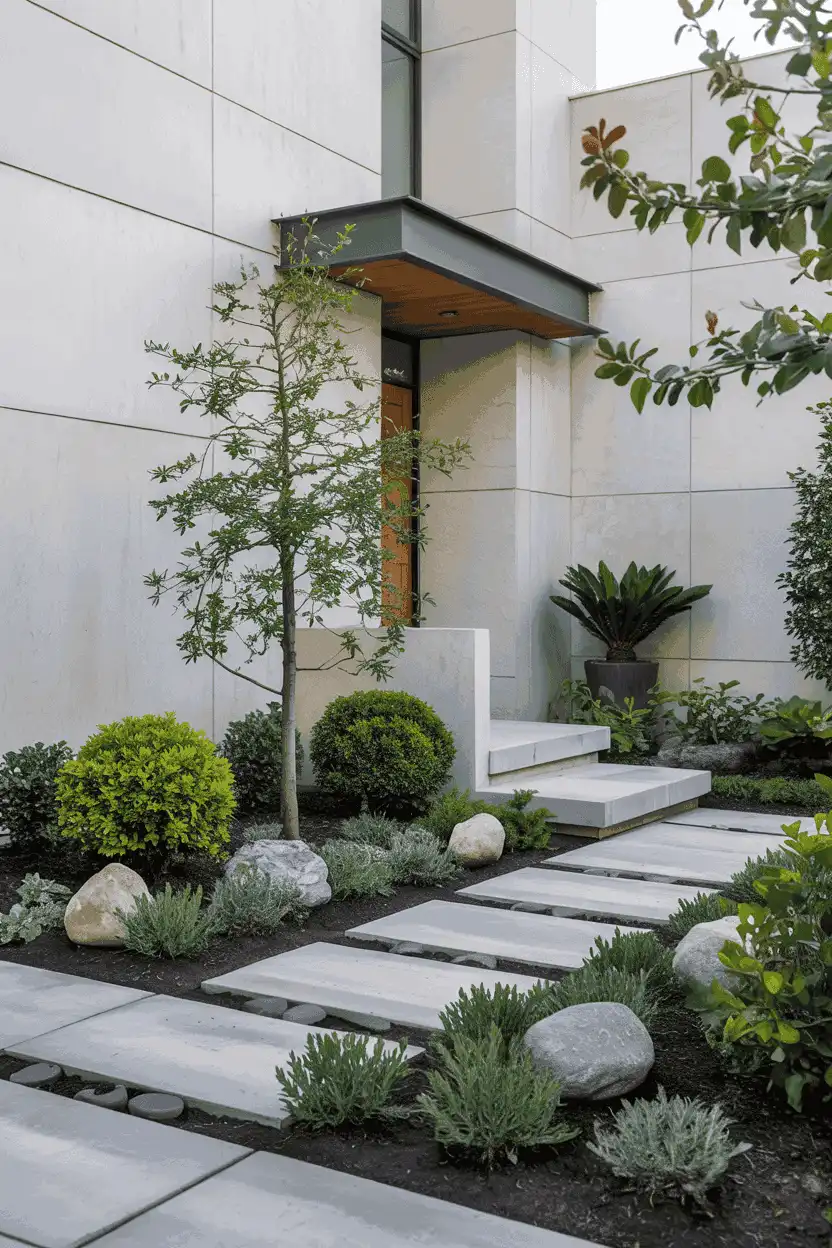
Build the plan around structure first and flowers second. Evergreen backbone plants — boxwood, dwarf Alberta spruce, compact junipers — hold the design through winter, while a drift of one ornamental grass softens it in summer. Three species repeated in odd-numbered groups is a complete palette for most front gardens.
Use gravel or shredded bark as the unifying ground layer; a two- to three-inch layer suppresses weeds and makes the green shapes pop against the neutral field. Keep the mulch line crisp with metal edging and the bed edges will look sharp for years with almost no attention.
6. Low Maintenance Minimalist Garden Design
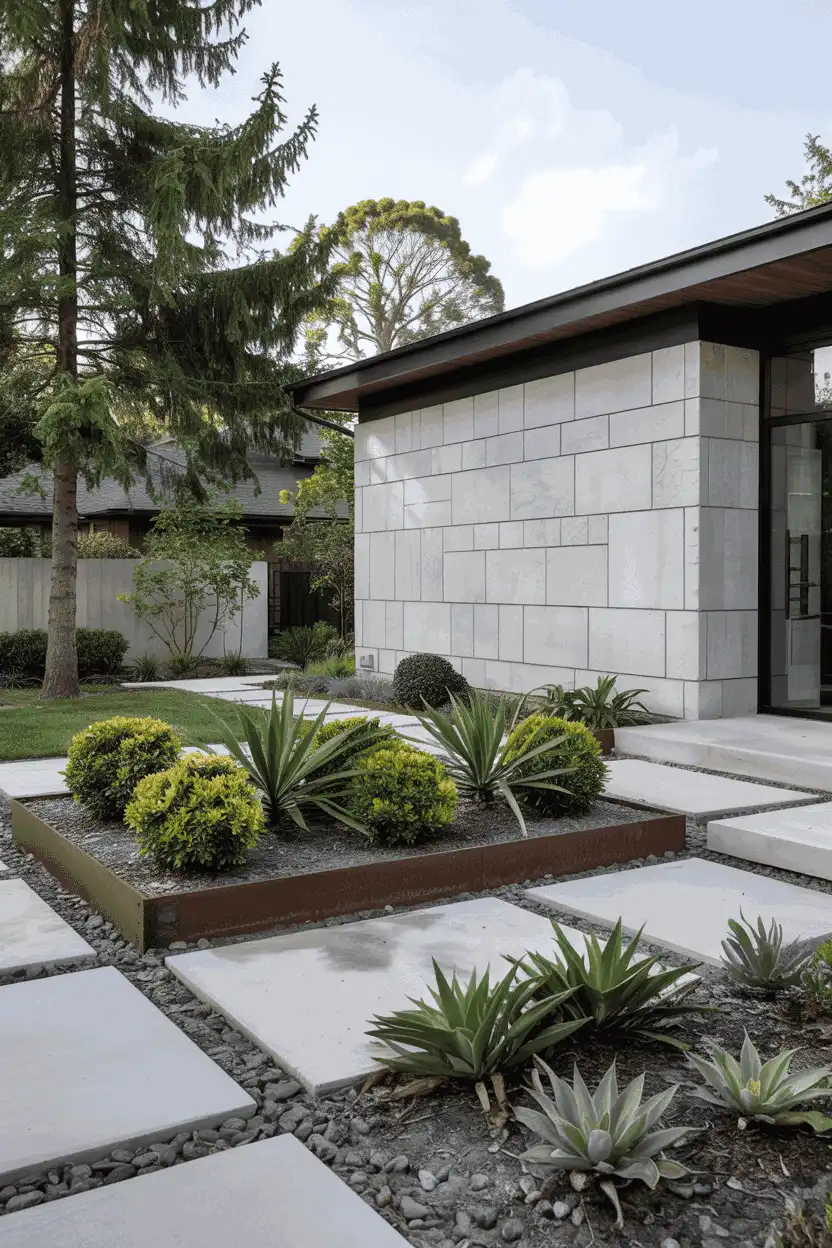
Choose materials that age well and ask nothing of you: twenty-four-inch square concrete pavers, decomposed granite paths, and corten or aluminum edging. These surfaces need no painting, no sealing, and no seasonal repair — an afternoon of blowing leaves off them is the entire maintenance routine.
Pair those surfaces with plants that survive neglect: sedums, lavender, ornamental grasses, and compact evergreens. Once established — usually after the first growing season — a drought-tolerant palette like this can go weeks without water in most climates and still look composed.
7. Minimal Flower Beds with Subtle Texture
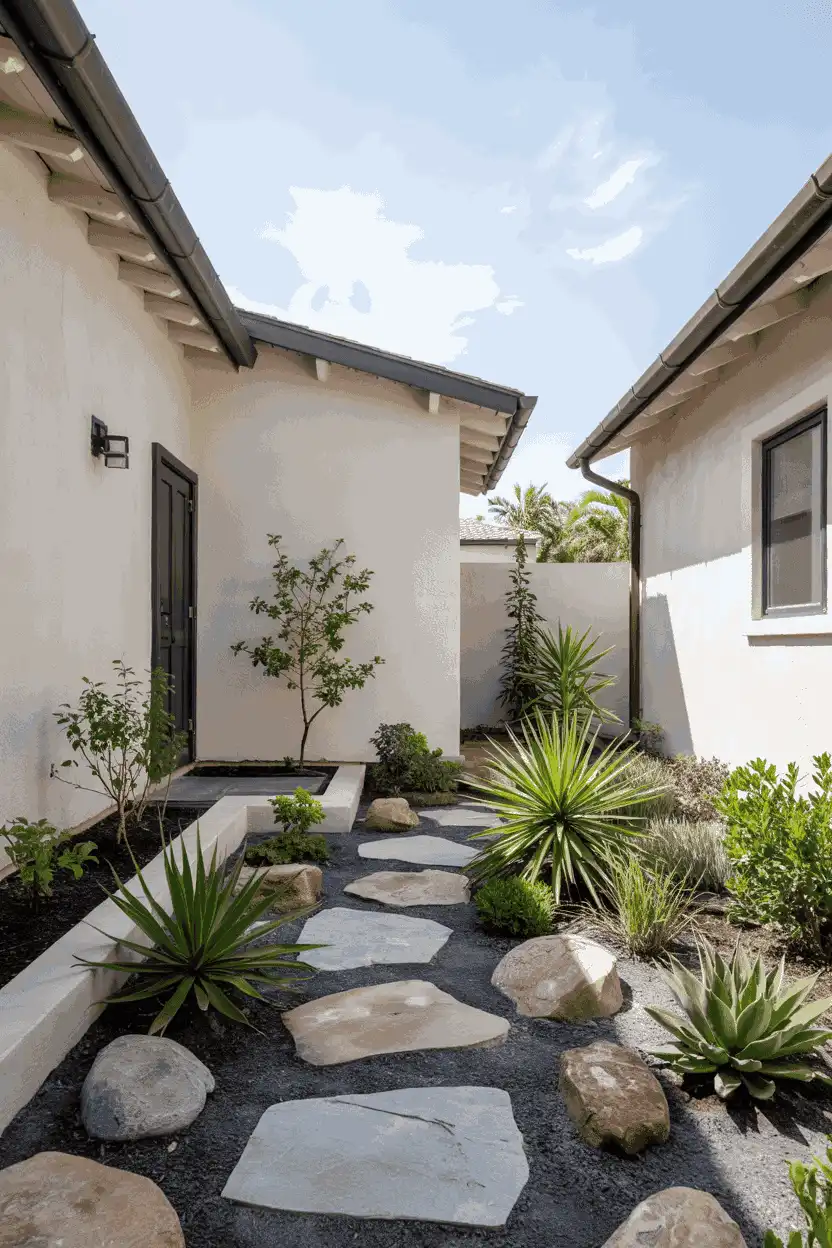
One flower, one color, repeated — that is the whole trick. A six-foot bed of white ‘Iceberg’ roses or a drift of blue Nepeta reads as intentional; ten mixed varieties reads as a clearance sale. Keep bed depth to two or three feet so every plant is reachable for deadheading without stepping into the soil.
Edge the bed with a single course of stone or a four-inch steel strip set flush with the lawn. Crisp edges are what make sparse plantings look deliberate rather than thin — the border tells the eye where the design starts and stops.
8. Minimal Garden Design for Balanced Outdoor Spaces
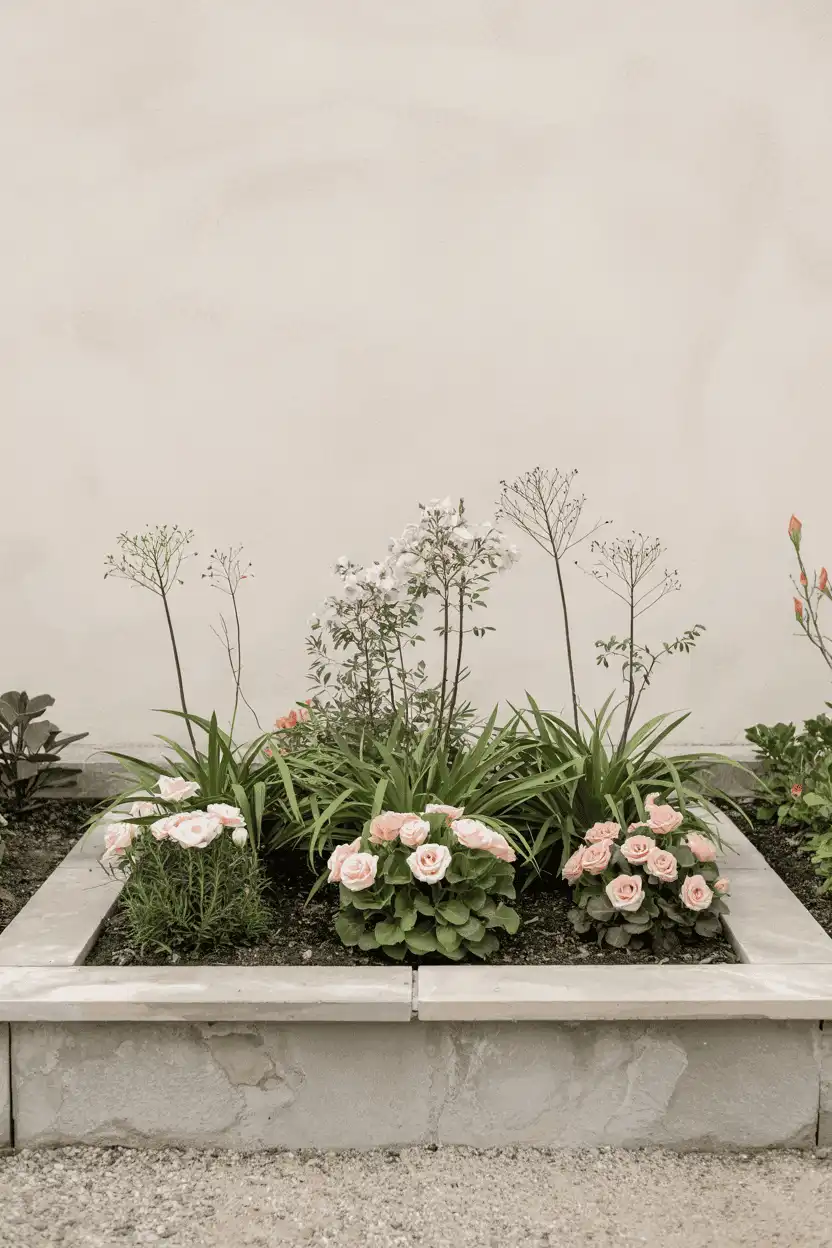
Leave some ground deliberately empty. A three-foot swath of gravel between two planting zones, or an unplanted corner of lawn, gives each planted area more presence — designers call it negative space, and it is the cheapest material in the garden. The temptation is to fill every square foot; the discipline is knowing which ones to leave alone.
When plants share a form language — all rounded mounds, or all upright blades — the garden feels unified even with almost nothing in it. Pick one texture family per zone and stick with it: soft mounds of germander and lavender together, or vertical accents of iris and grass together, never both competing.
9. Clean Geometry for the Minimalist Garden
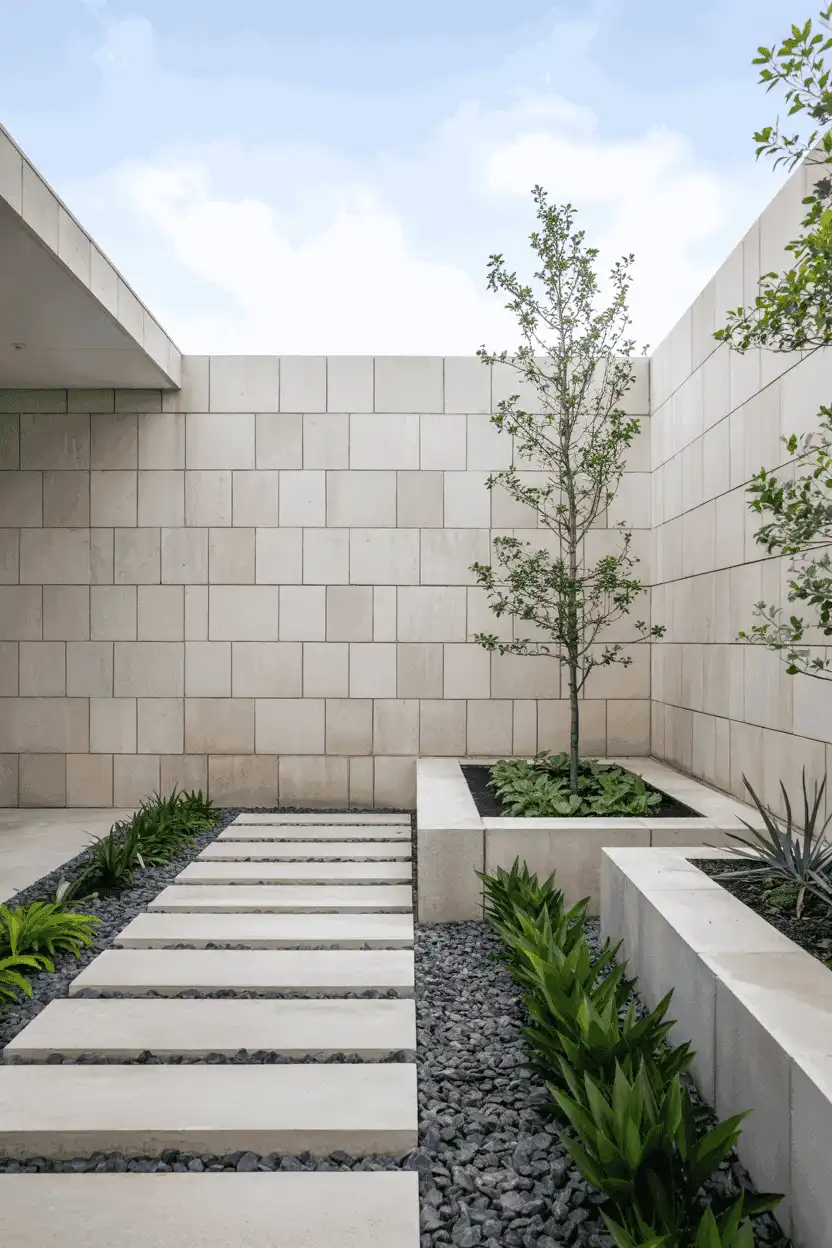
Draw the garden as rectangles first. A rectangular lawn panel, a square gravel terrace, a straight path connecting them — right angles are the easiest geometry to build and the hardest to get wrong. If you want curves, use one bold arc for the whole design rather than a dozen small wiggles.
Keep colors quiet so the geometry does the talking: greens, grays, warm stone tones. Loud accessories — painted pots, bright furniture, patterned pavers — compete with the shapes you are trying to show off. Let one strong material, like board-formed concrete or weathered steel, carry the visual weight.
10. Landscape Ideas Built Around Simplicity
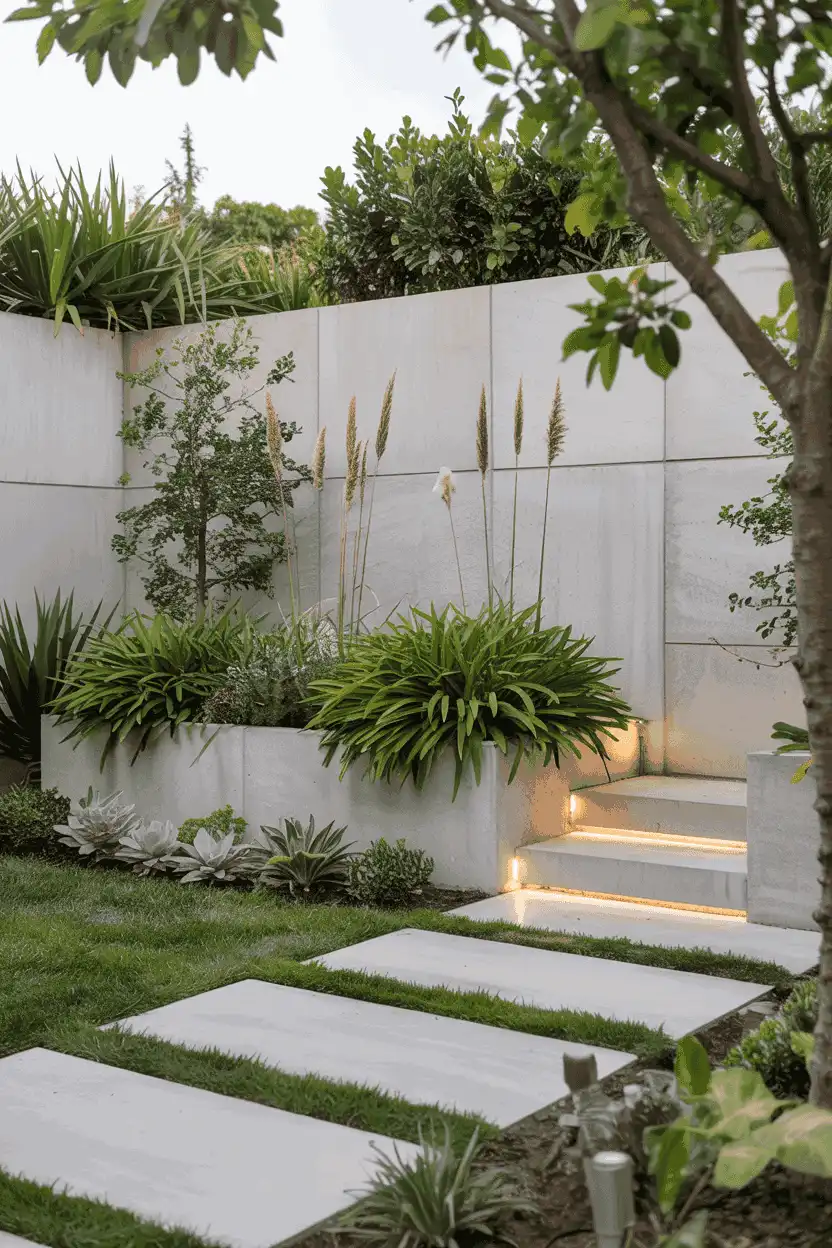
Limit every zone to three ingredients: one hardscape, one groundcover layer, one plant form. A concrete terrace plus gravel joints plus a row of clipped hornbeam is a complete composition. When each zone follows the same three-ingredient rule, the whole property feels coherent without any single area trying too hard.
Give each plant room to show its natural shape — space shrubs at about three-quarters of their mature width instead of cramming them together. A specimen with breathing room reads as sculpture; the same plant jammed into a hedge reads as filler.
11. Minimalist Backyard Design for Relaxed Living
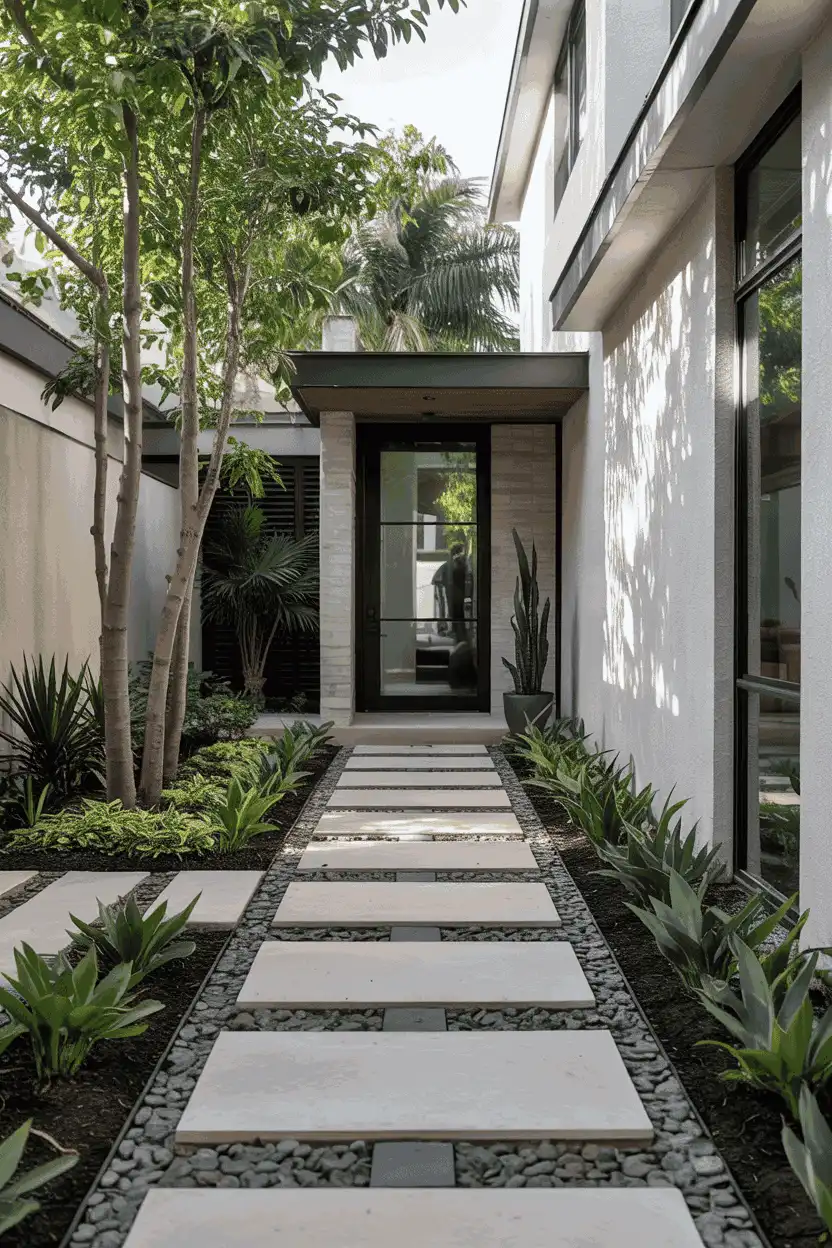
Design the backyard around how you actually use it: one level area for a table and chairs, one open stretch for kids or pets, and planting pushed to the perimeter. A simple twelve-by-sixteen-foot paver patio with a three-foot planting border on two sides is more useful than a yard full of decorative beds nobody walks through.
Anchor the corners with strong shapes — a clump of pampas grass, a trio of upright junipers — and keep the middle open. One focal plant near the patio, like a multi-stem birch or a large agave in a pot, gives the eye somewhere to land.

12. Minimalist Backyard Landscape with Streamlined Features
Run long, uninterrupted lines through the backyard: a deck that flows into a gravel pad that flows into a lawn panel, all on the same axis. One continuous sightline makes even a forty-foot lot feel twice as long. Avoid chopping the space into small separate rooms unless the lot is genuinely large.
Hold the color palette to three tones — green planting, gray stone or concrete, and one warm accent like cedar or corten steel. A restrained palette forgives mismatched furniture and ages gracefully; every new item you add automatically coordinates.
13. Minimalist Desert Landscaping for Hot Climates
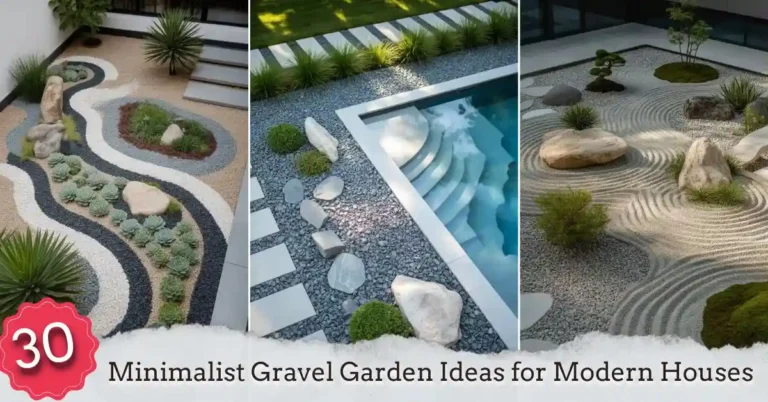
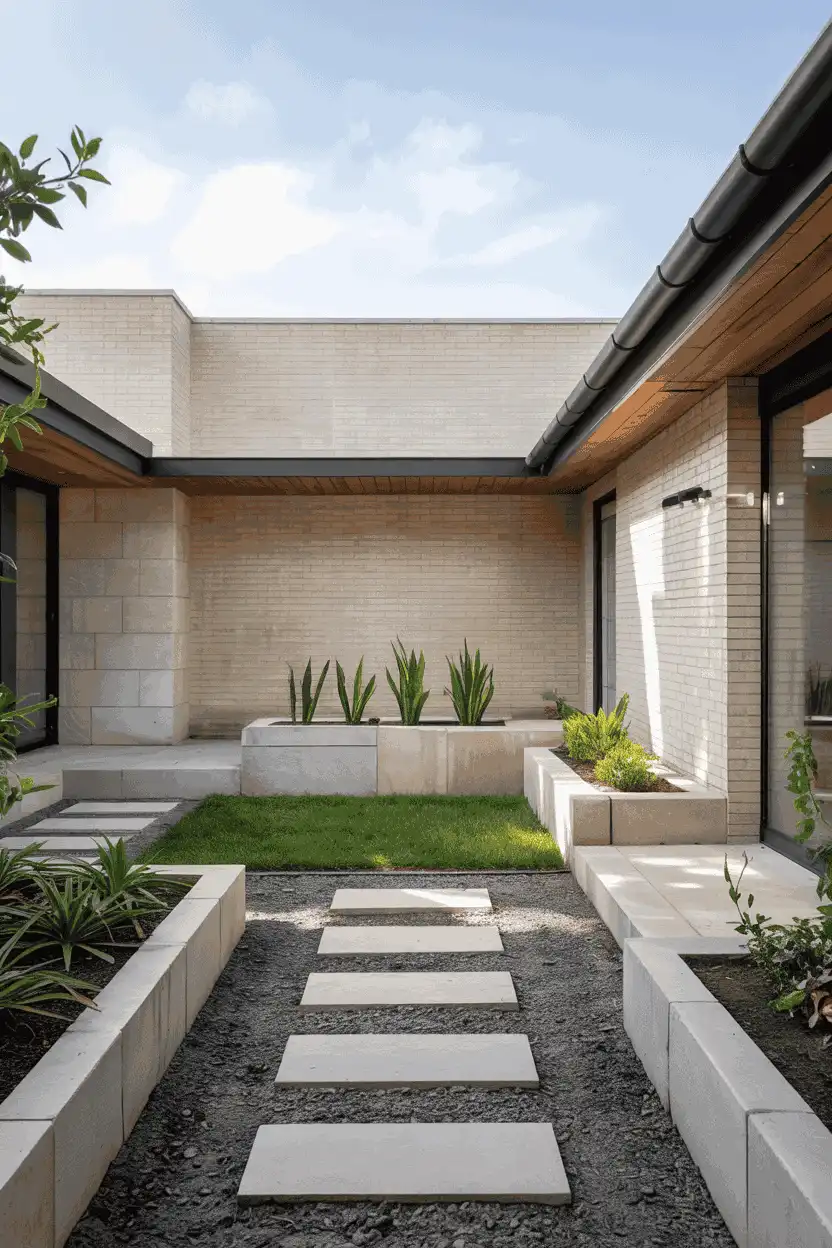
Desert minimalism is the easiest version to maintain: agave, golden barrel cactus, and red yucca in a field of three-eighths-inch gravel, with drip lines on a timer. These plants want heat and neglect — water deeply once a week in summer, almost never in winter. Keep the gravel two to three inches deep to smother weeds without suffocating the soil.
Let the plants’ architecture do the decorating. The rosette of an agave or the ribs of a saguaro are sculptural enough that you need no pots, statues, or colored rock patterns. Set specimen plants against a plain stucco or concrete wall and the contrast does all the work.
14. Modern Minimalist Garden Design with Architectural Flair
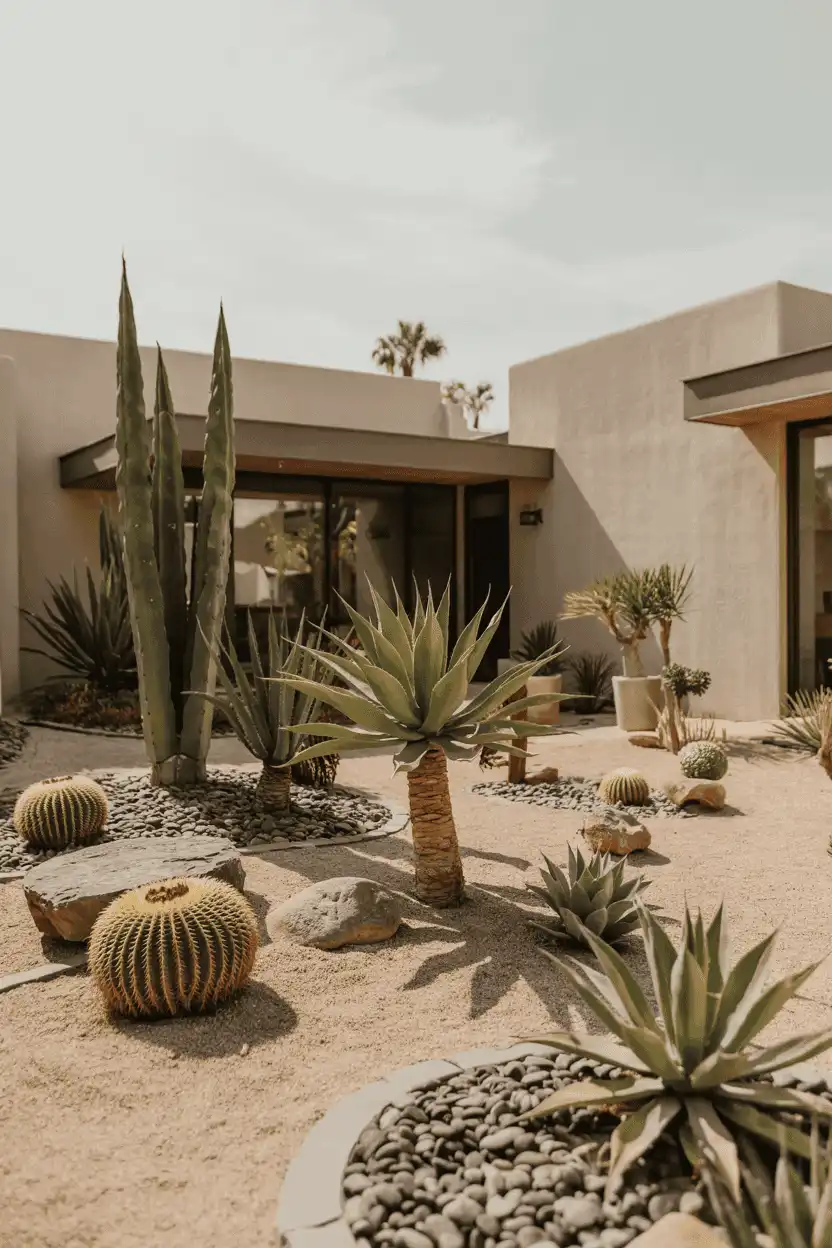
Raised planters are the signature move here: eighteen- to twenty-four-inch-high concrete or steel boxes set in a grid, each holding a single species. The grid gives instant structure, and the height brings planting up to eye level where it actually gets noticed. Align planter edges with the house’s walls or window lines for a tailored fit.
Soften the hardscape with just enough green: one ornamental grass per planter, or a row of clipped boxwood along the base of a wall. The aim is contrast — soft against hard — not coverage. If the concrete is still visible, you are doing it right.
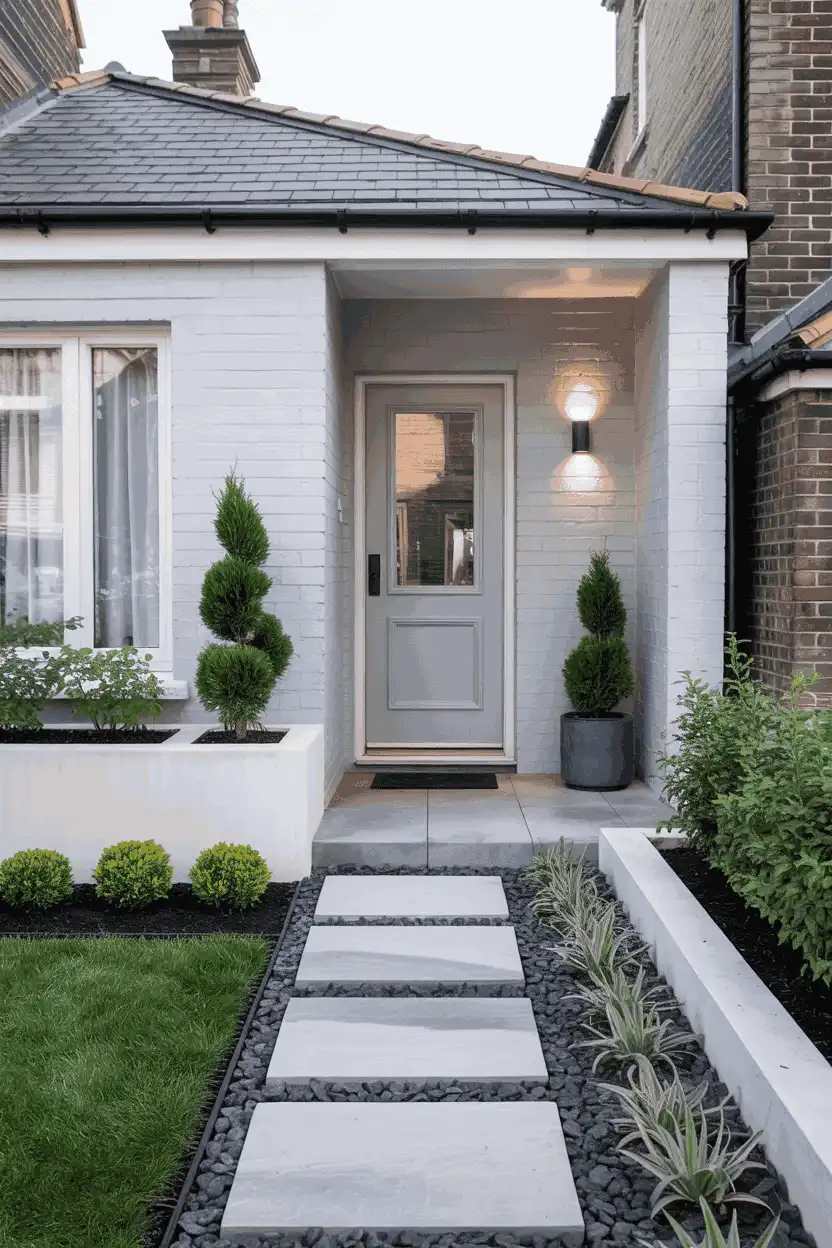
15. Modern Minimalist Landscape Design for Contemporary Homes
Echo the house’s materials in the garden: if the facade is board-formed concrete and black steel, repeat those two materials in paths and edging. A four-foot-wide concrete path with steel edging, flanked by a single row of ‘Sky Pencil’ holly or columnar yew, ties the landscape to the architecture without a single flower.
Choose plants for silhouette first and color second. Columnar, spherical, and weeping forms each read as intentional shapes from the street. Two or three specimens with strong outlines — a weeping cherry, a cloud-pruned pine — give a contemporary garden its personality.
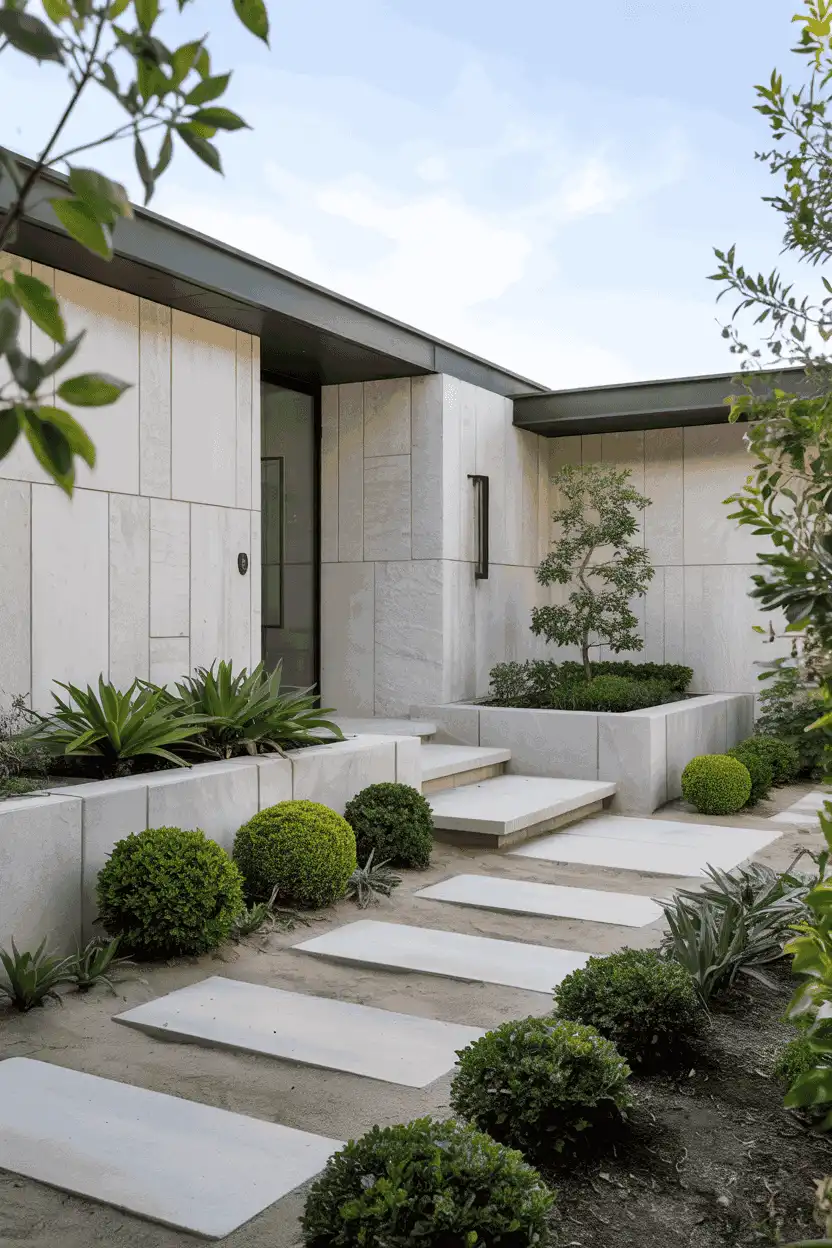
16. Front Yard Minimalist Garden for Streamlined Curb Appeal
Make the walkway the star: widen it to five feet, edge it with a low hedge of boxwood or germander, and light it with two or three path lights. Visitors experience the garden mostly as the thirty-second walk to your door — invest there and the rest of the yard can stay quiet.
Finish with one focal point visible from the street: a single Japanese maple, a sculptural boulder, or a water bowl. One confident gesture beats a yard of small decorations. Step back to the curb when you are done — if the house looks framed rather than hidden, the balance is right.
Looking for your next project? Browse the garden guides on My Premium Ideas — from Flowering garden ideas and Patio ideas to minimalistic Garden and vegetables garden Ideas. New posts land regularly, so bookmark the site and check back when you are ready to dig in.
FAQs for Minimalistic Landscaping