30 Minimalist Gravel Garden Ideas for Modern Houses
A bag of pea gravel costs less than a pizza, and a garden built on it asks for almost nothing afterward. That is the quiet appeal of the gravel garden: no mowing, no fertilizing, no irrigation schedule — just stone, a few strong plants, and geometry doing the heavy lifting. The thirty ideas below show how far that simple formula stretches, from raked Zen courts to fire-pit circles.
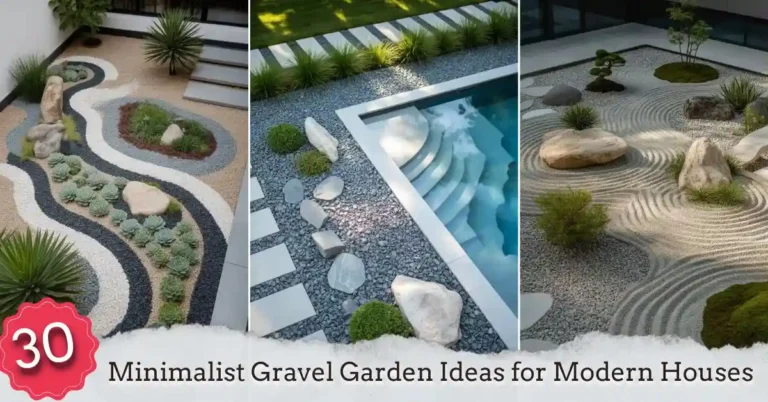
1. Zen-Inspired Gravel Garden
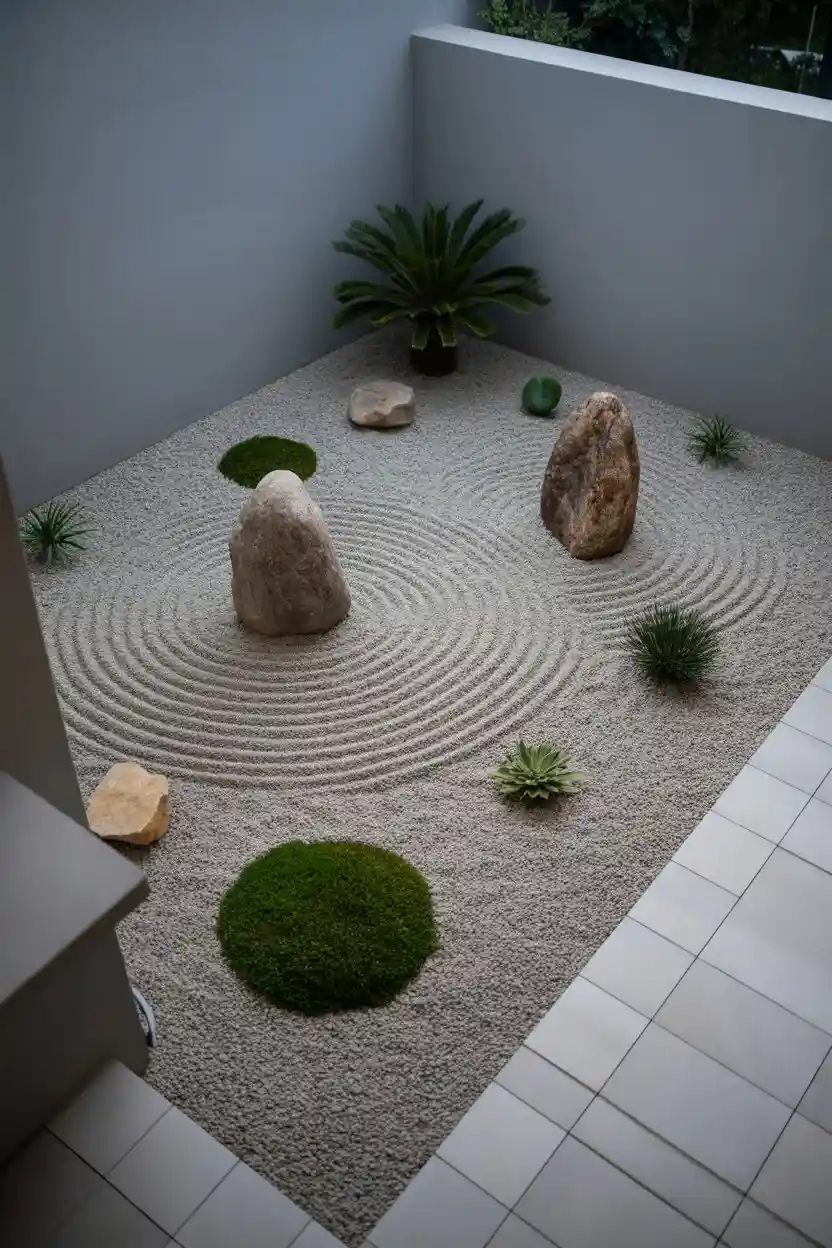
Raked gravel is the original low-maintenance garden — a two-inch layer of fine granite grit over landscape fabric, combed into waves with a wooden rake every week or two. Set three stones in an asymmetrical triangle, add one clipped pine or a clump of mondo grass, and stop. The raking is the upkeep, and it takes ten minutes.
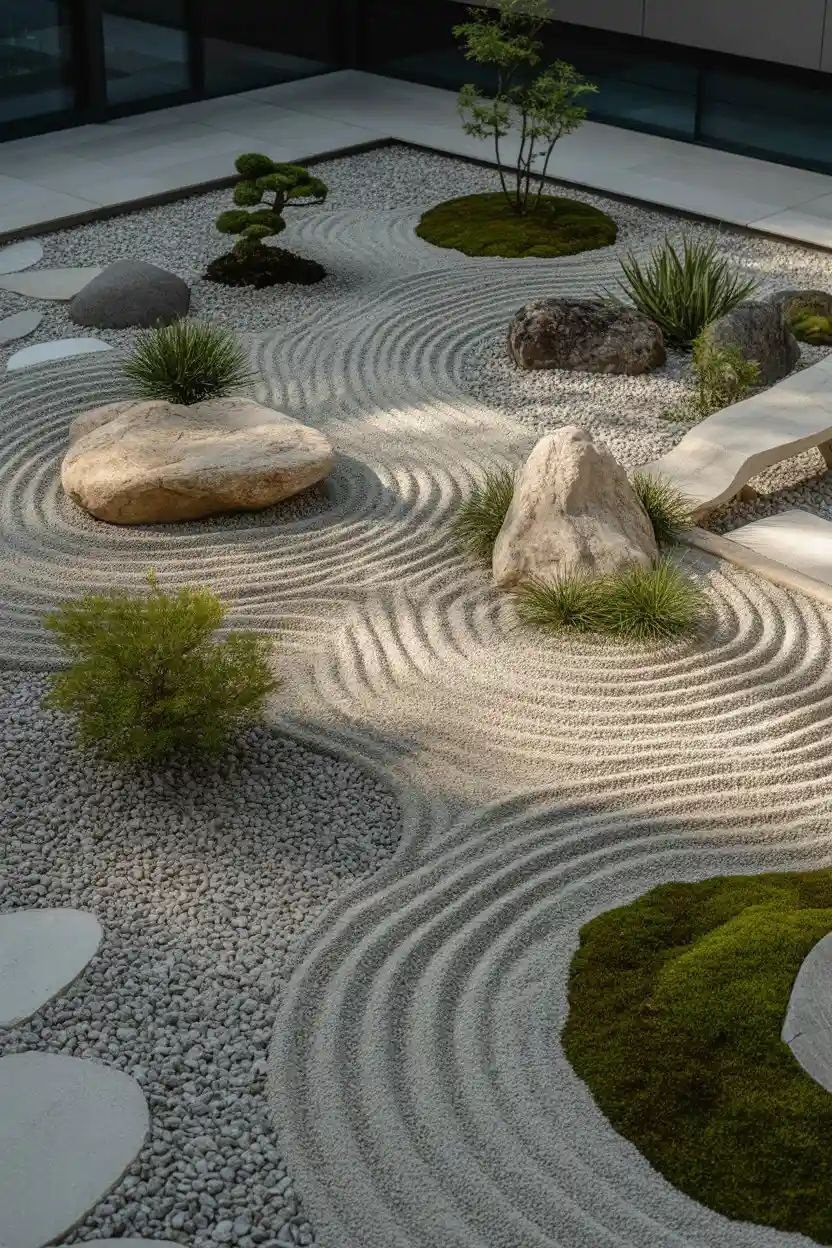
2. Linear Gravel Pathway Garden
Run a straight three-foot path of slate chippings from gate to door, edged with steel to keep the line crisp. Flank it with a single repeated plant — dwarf mondo grass or blue fescue — and place one sculptural boulder where the path turns. Straight lines make small yards feel larger, and gravel crunching underfoot is half the charm.
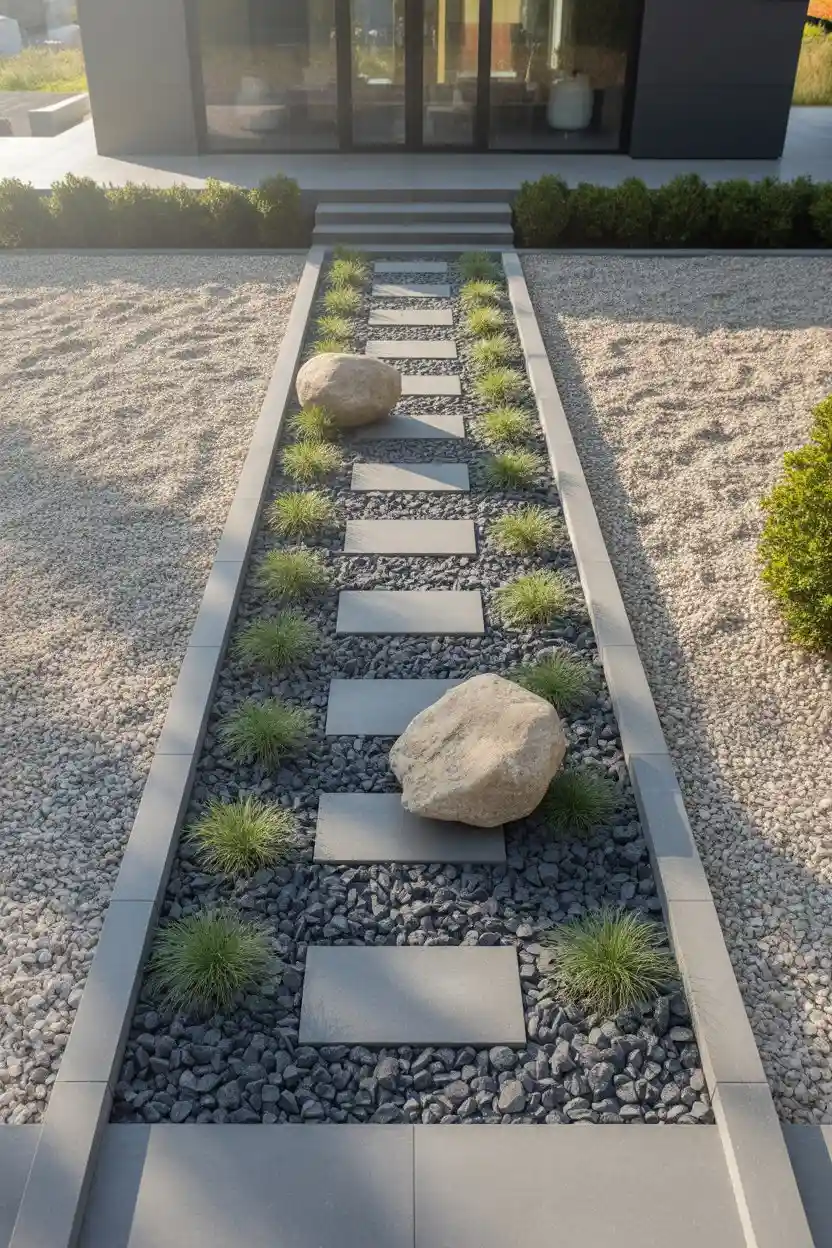
3. White Pebble Accent Garden
White pebbles bounce light into shady corners where lawn would struggle, and they make green foliage look electric by contrast. Use them in a contained bed — a courtyard or the strip beside the driveway — with lavender, sedums, or a single olive. Containment matters: white stone scattered thinly over soil just looks messy, so lay it two inches deep over fabric for that crisp minimalist landscaping finish.
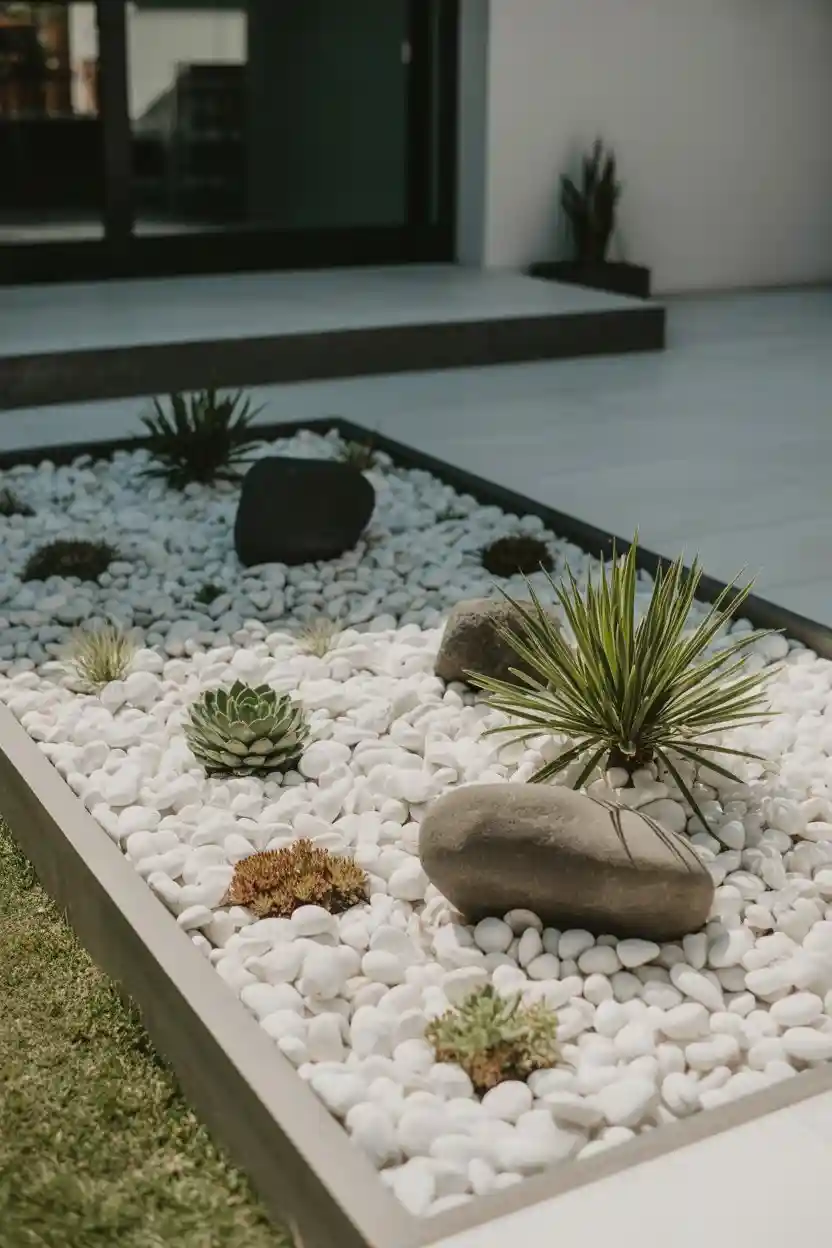
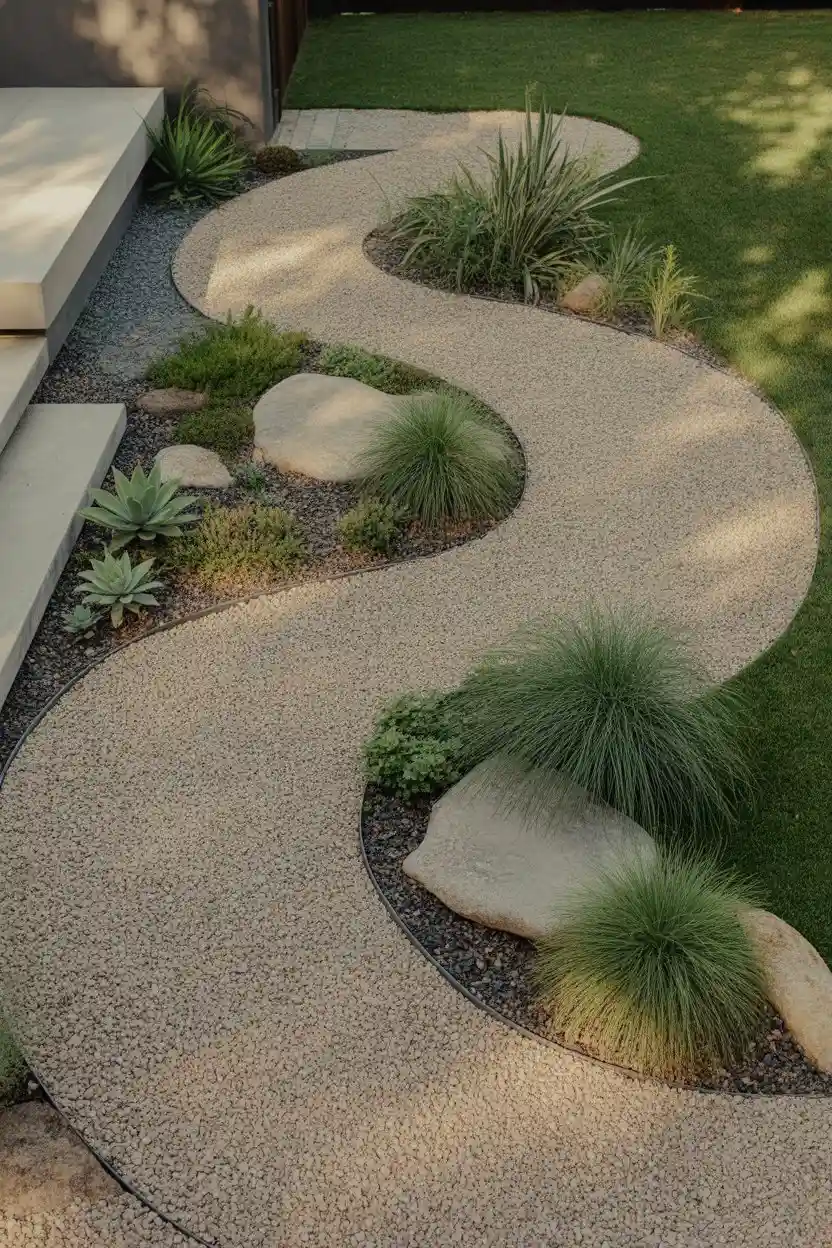
4. Curved Gravel Path Garden
One generous curve beats five small wiggles. Lay out the path with a garden hose first, step back, and adjust until the arc feels inevitable — then fill with pea gravel and edge with stone. A curved path suits houses with soft architecture; against a rigid modern minimalist garden facade it provides the one contrasting gesture the design needs.
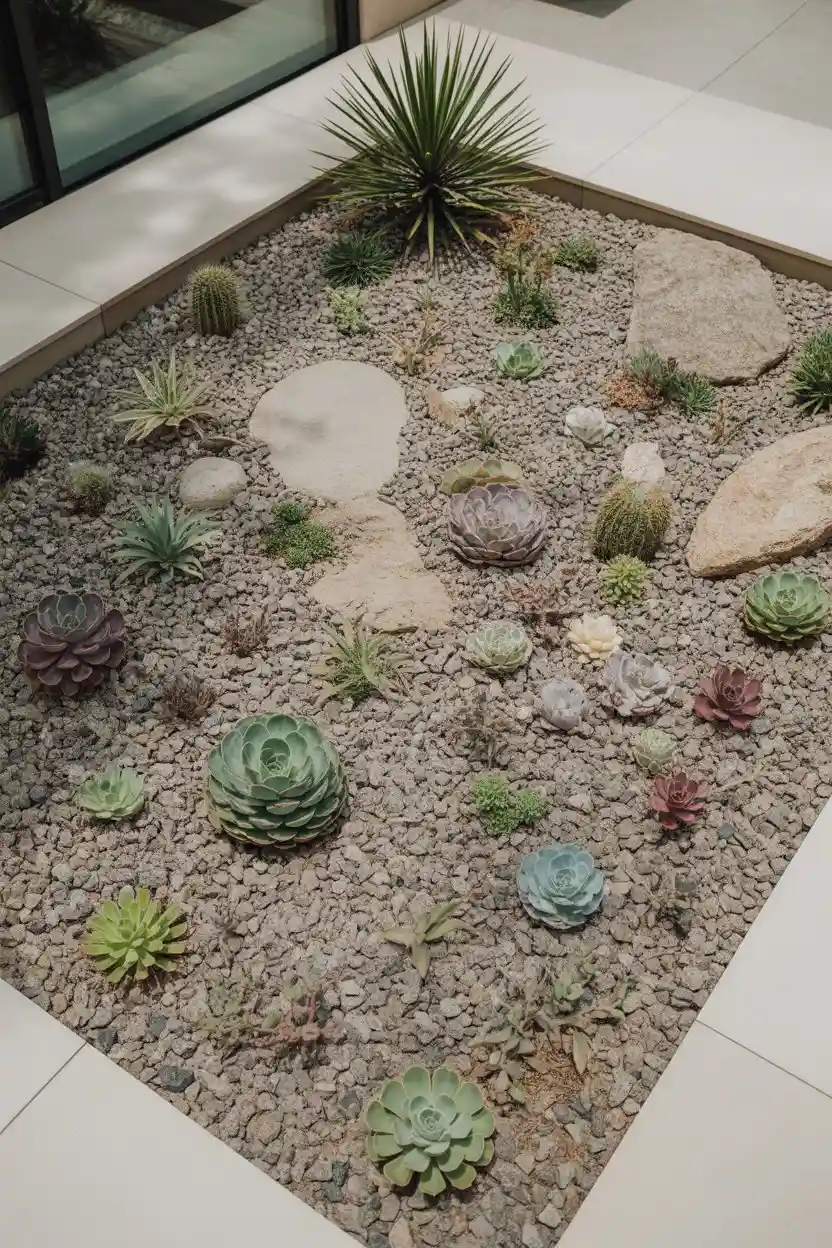
5. Succulent Gravel Bed Garden
Echeveria, agave, and aloe in a bed of crushed granite need water measured in minutes per month. Space them with room to grow — succulents double in size faster than you expect — and top-dress with a contrasting gravel color to make the rosettes pop. This is the backbone planting of low-maintenance minimalistic landscapes for a reason: it looks designed even when neglected.
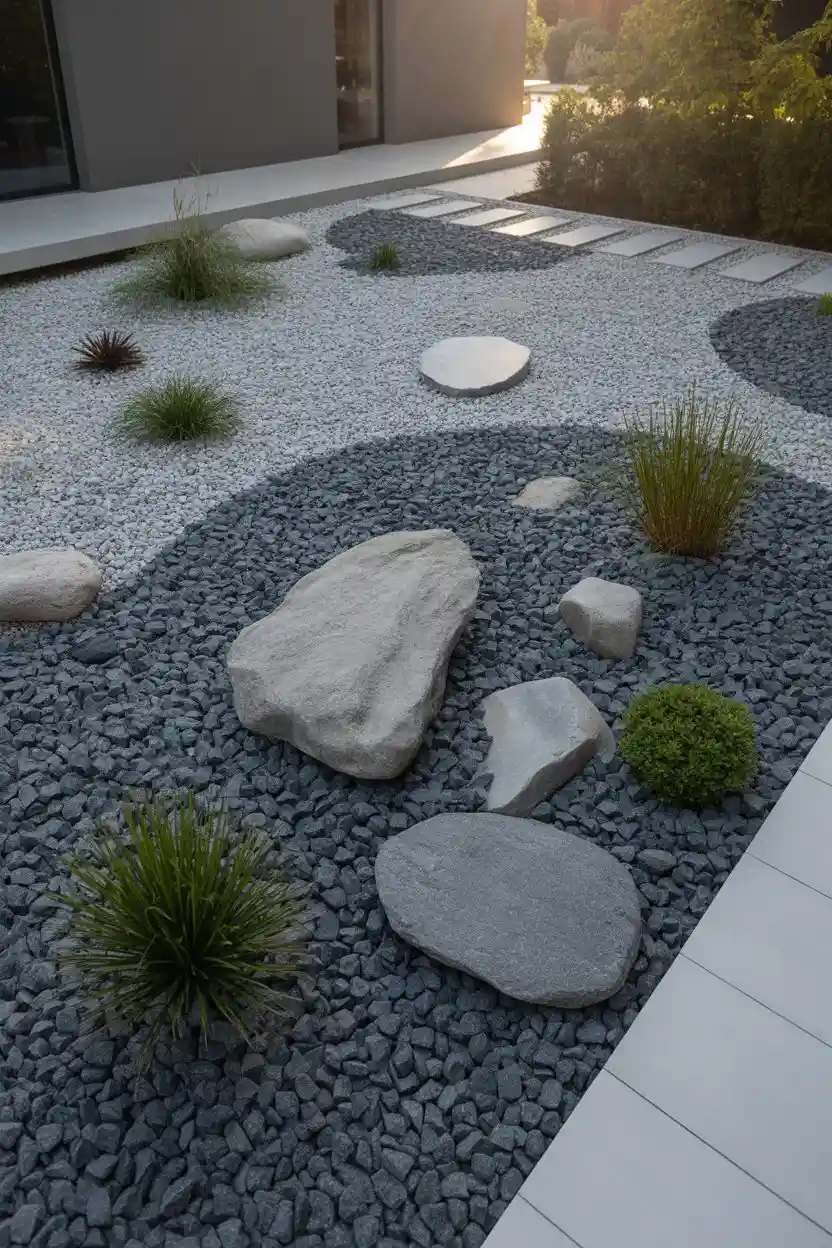
6. Monochrome Gravel and Stone Garden
Commit to gray, black, and white and the garden becomes a study in light and shadow: silver artemisia, black mondo grass, white pebbles, one dark basalt boulder. Without color to lean on, form has to carry everything — which is exactly the discipline that makes monochrome gardens look so sharp. Photograph it in harsh midday sun; that is when the contrasts sing.
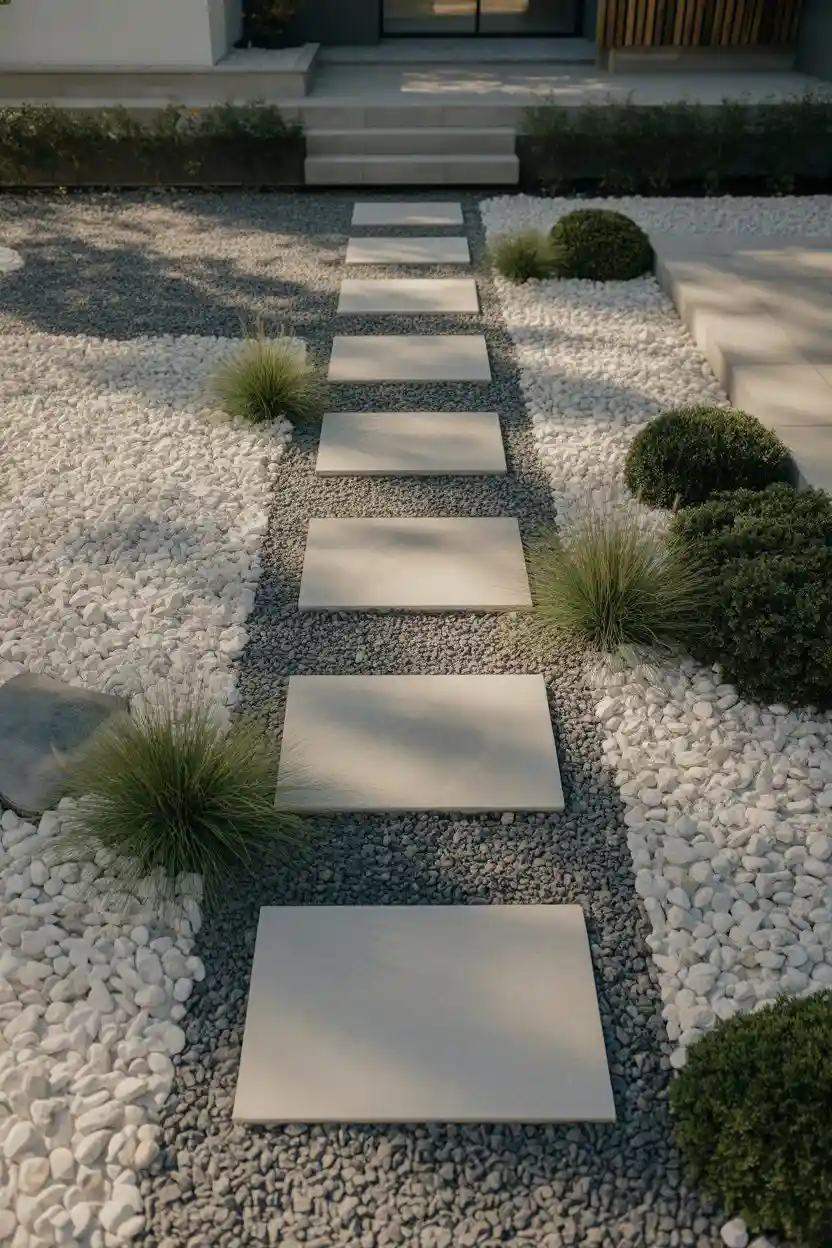
7. Pebble and Stepping Stone Garden
Set large, flat stones with two-inch gaps of pea gravel between them — the gravel locks the stones in place and drains instantly. Space the stones to your stride, about eighteen inches center to center, so walking feels natural. A drift of one grass softening a single edge keeps it from looking like a parking lot.
8. Gravel and Bamboo Zen Garden
Clumping bamboo — never the running kind, unless you enjoy trench warfare with the neighbors — gives a gravel court its vertical line and its sound. Fargesia varieties stay contained and hardy in most climates. Rake the gravel around the clumps into still-water patterns, and the whole corner reads as a temple garden.
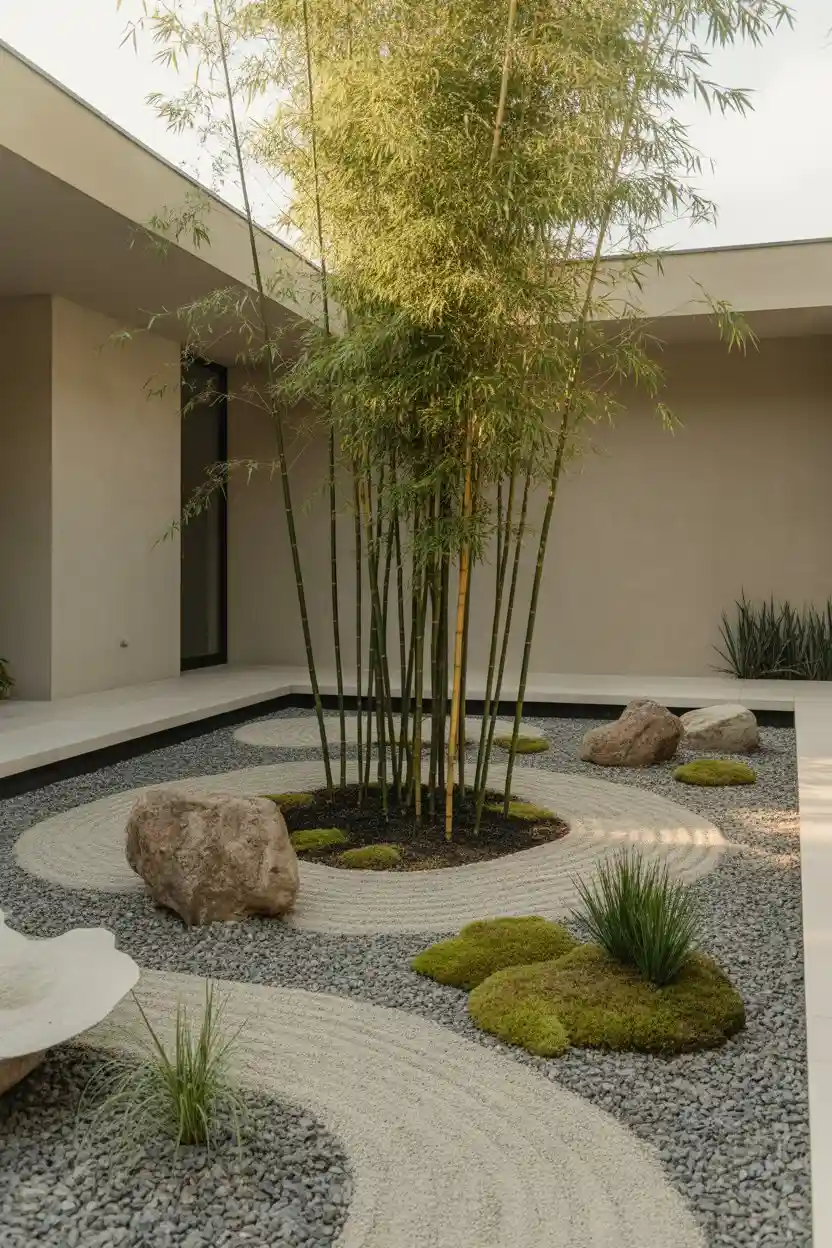
9. Gravel Courtyard with Central Sculpture
A gravel courtyard is a gallery floor: one strong piece — a weathered steel monolith, a carved stone basin — centered on a uniform field of pea gravel. Everything else stays quiet so the sculpture holds the room. Light it from below with a single uplight and the courtyard works after dark too.
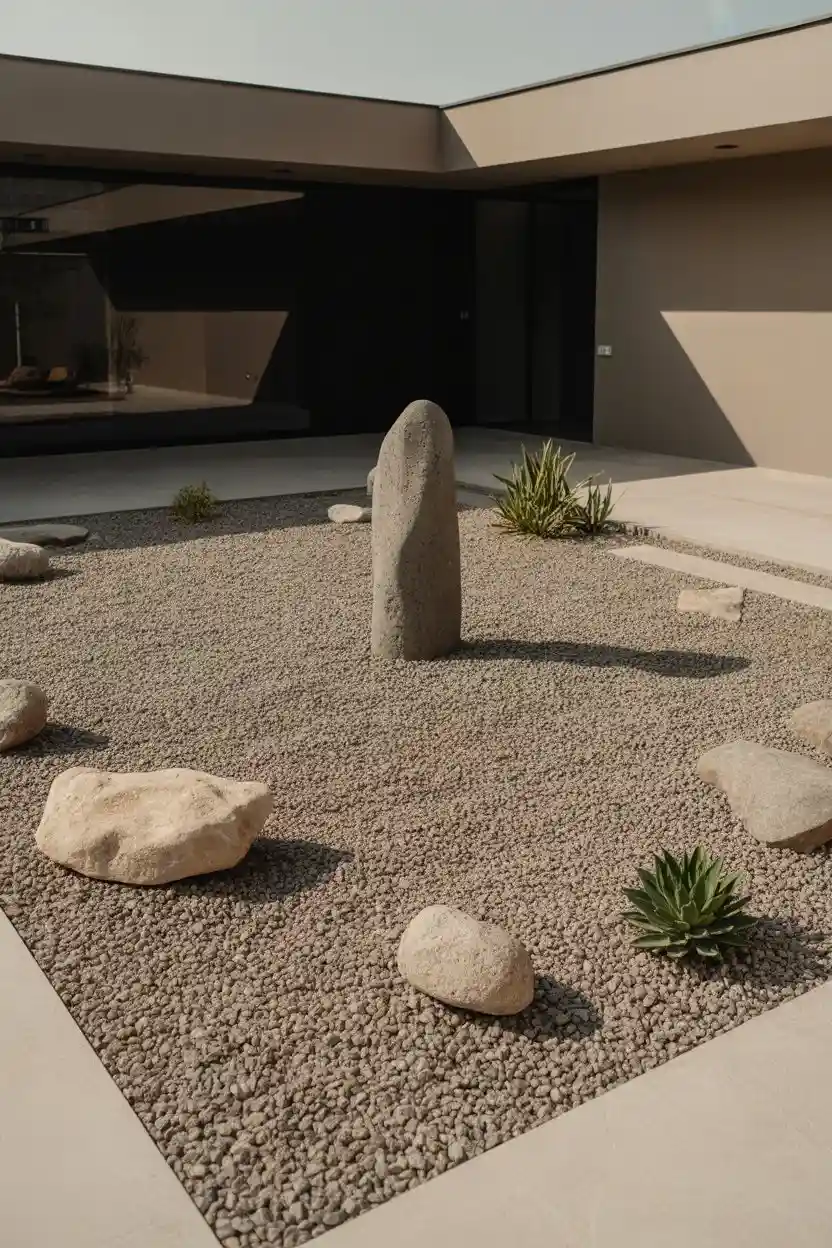
10. Gravel Patio Dining Area
Gravel makes a forgiving dining surface: chairs do not wobble the way they do on uneven pavers, and spills vanish. Compact the base well, use angular crushed stone rather than round pea gravel so it locks underfoot, and define the zone with a simple steel edge. A few large pots of herbs do the decorating.
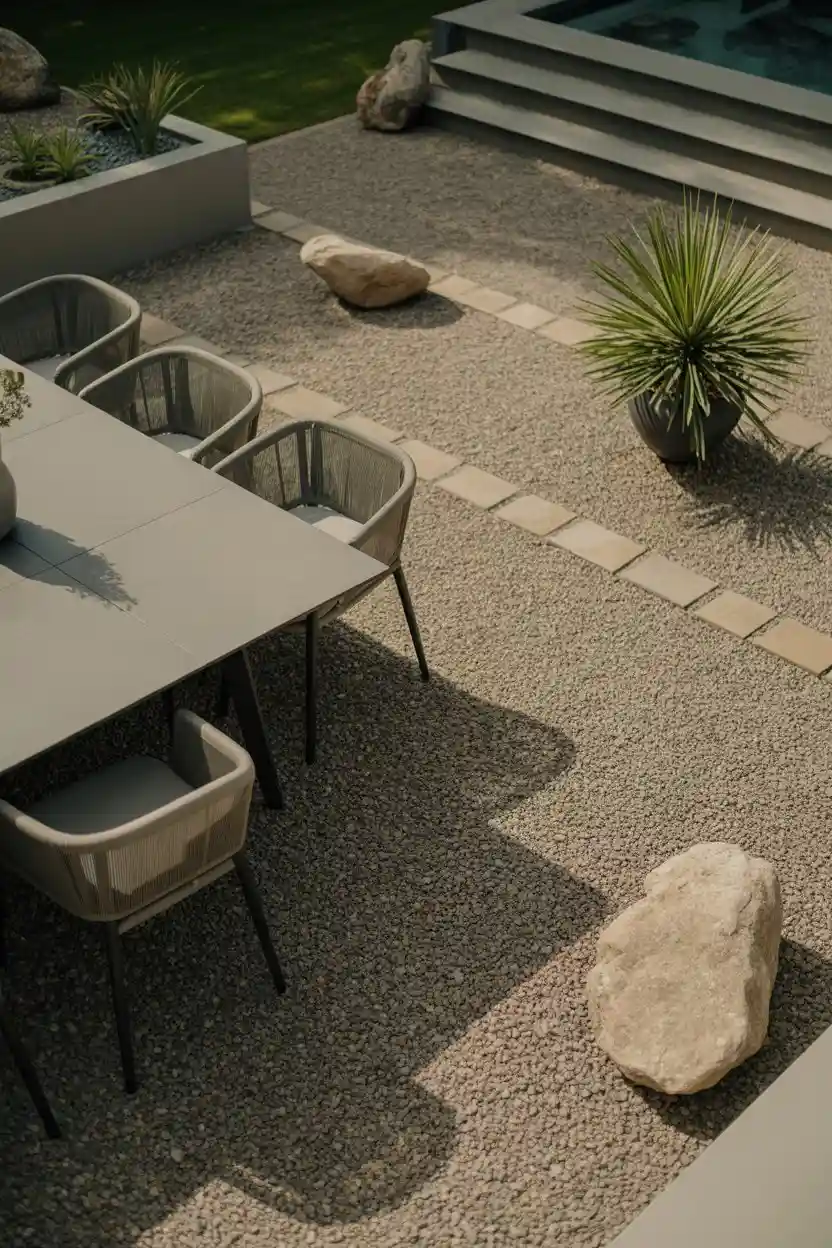
11. Gravel Meditation Nook
Tuck it where the house blocks the wind: a six-foot circle of fine white pebbles, two flat-topped boulders as seats, and a low evergreen behind for enclosure. No more than three elements — a meditation space with clutter is a contradiction. Rake the pebbles smooth when you sit down; the ritual is the point.
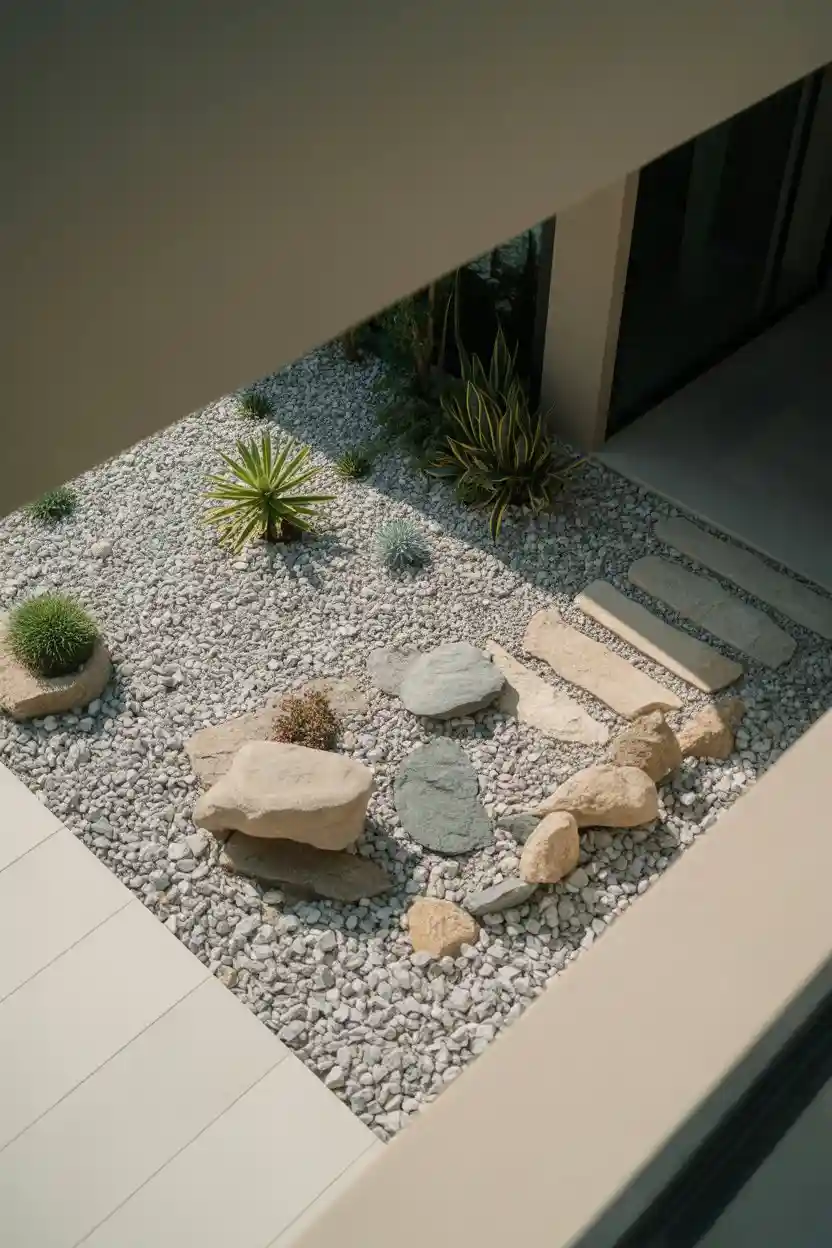
12. Gravel Fire Pit Circle
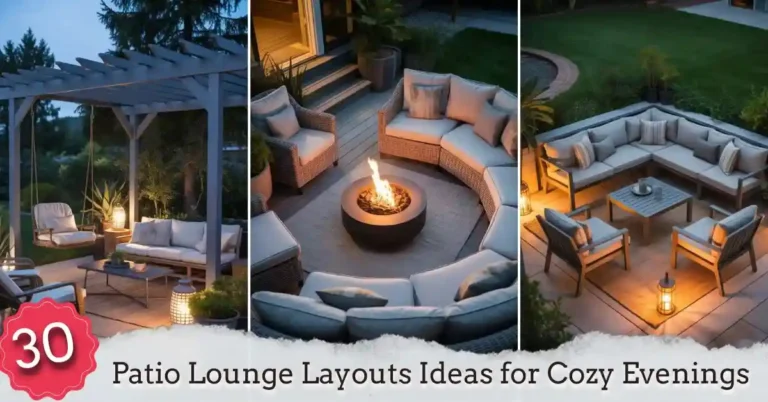
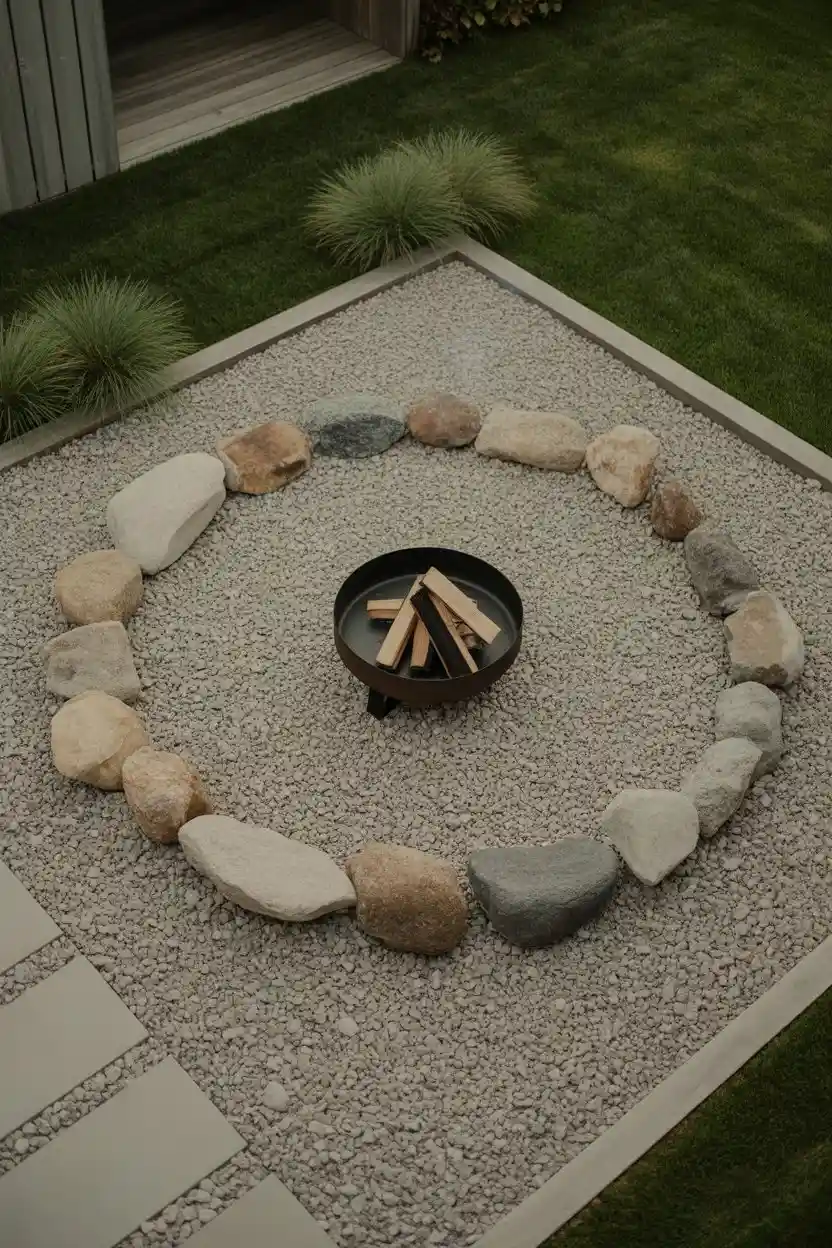
A twelve-foot circle of gravel with a steel fire bowl at the center is the simplest outdoor room there is. Gravel will not scorch like a deck or stain like pavers, and sparks die on stone. Ring it with low boulders or simple metal chairs, keep plantings back three feet from the flames, and you have the yard’s evening headquarters.
13. Gravel Roof Garden
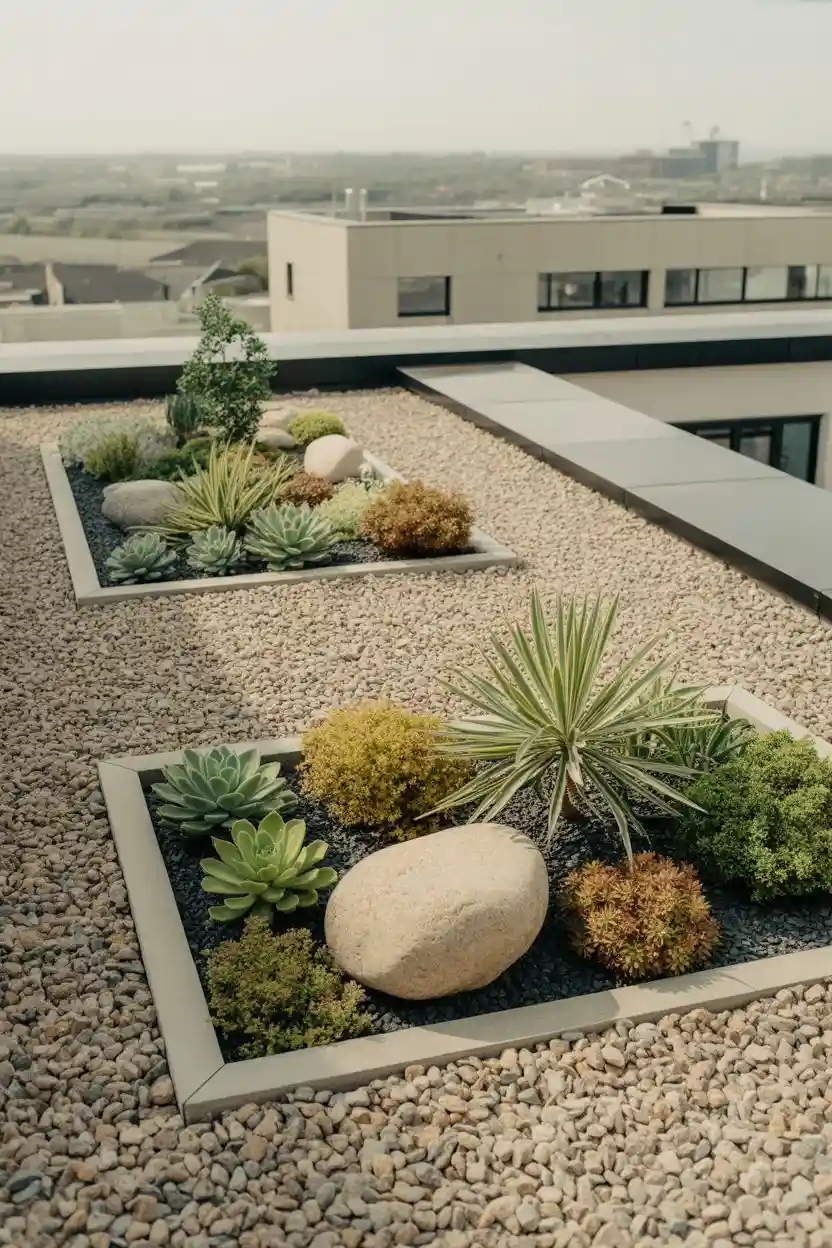
Weight is the constraint up here: use lightweight expanded-shale gravel, shallow planters, and drought-tolerant sedums and grasses that survive wind and reflected heat. Gravel mulch in the planters cuts watering in half. Check the roof’s load rating before adding stone — saturated soil and gravel are heavier than they look.
14. Gravel Pool Surround
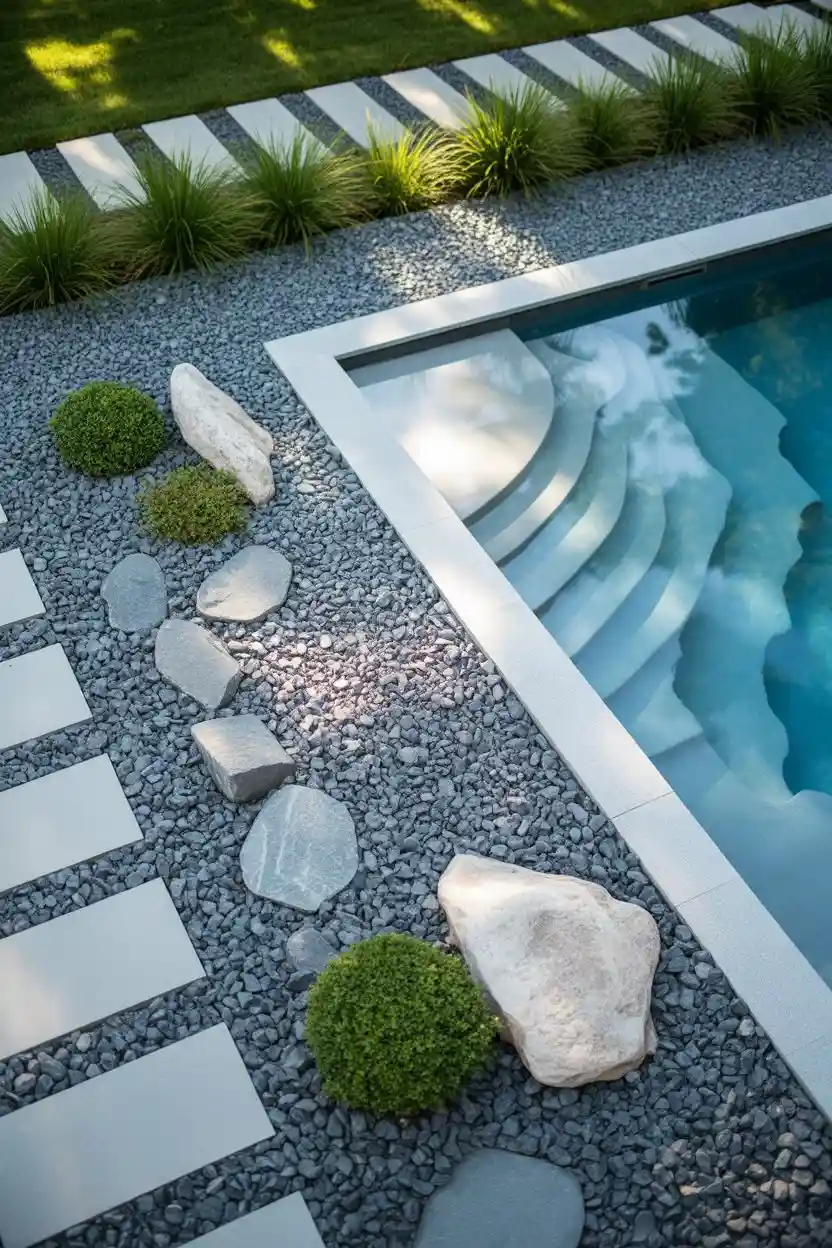
Pea gravel around a pool drains splash water instantly and stays cooler underfoot than concrete — though pale stone is kinder to bare feet than dark. Keep a paved margin right at the pool edge for wet feet, then transition to gravel beds with grasses beyond. Rinse the gravel occasionally; chlorine and stone dust build up over a season.
15. Decorative Gravel Border Garden
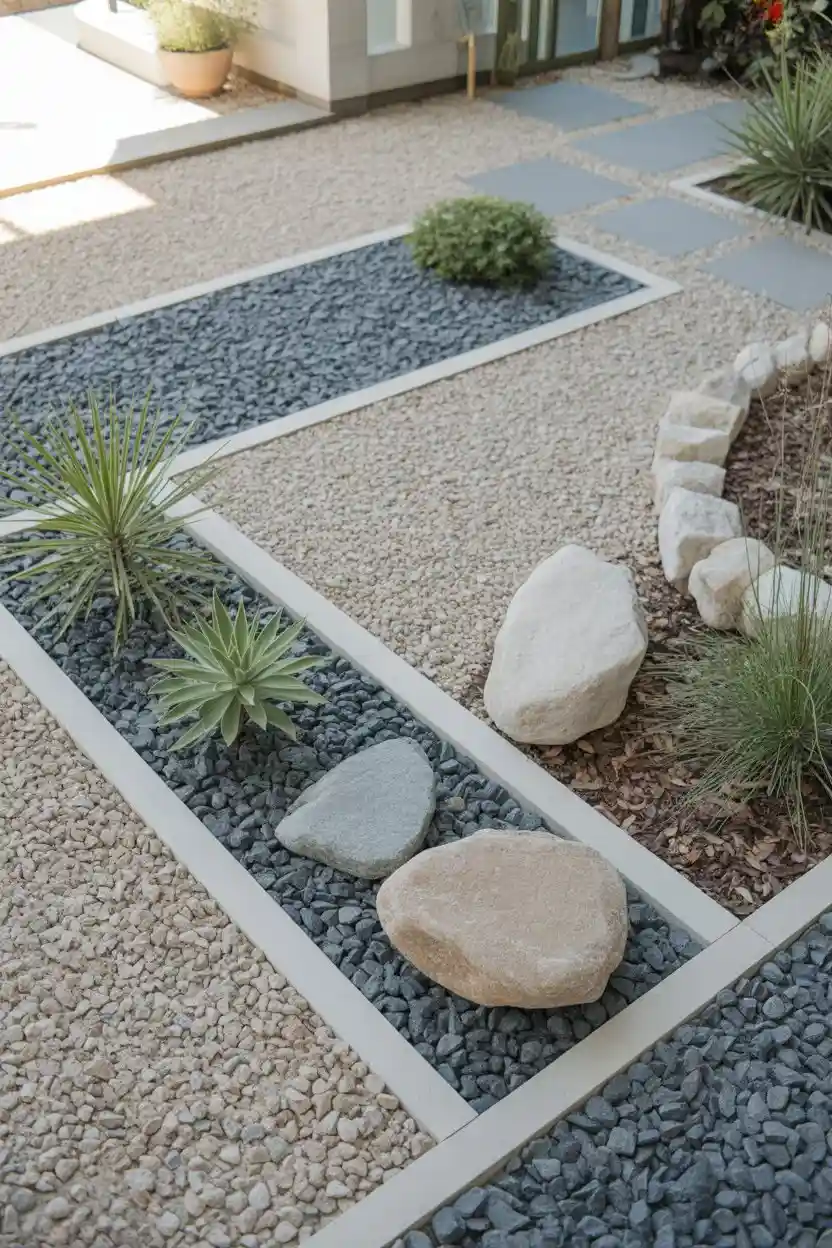
A six-inch band of contrasting gravel between lawn and bed is the cleanest edge there is — no trimming, no edging to heave, just a crisp line. Use a dark stone against green lawn for maximum definition. Top it up every couple of years as it settles; a thin band disappears faster than you expect.
16. Gravel Rock Pebble Garden
Layer three stone sizes — pea gravel as the field, river rocks as the middle ground, one or two boulders as anchors — and the bed gets depth without a single plant. It is the fastest way to make a new garden look established. Then add plants sparingly: a stone-first design needs only a few grasses to feel complete.
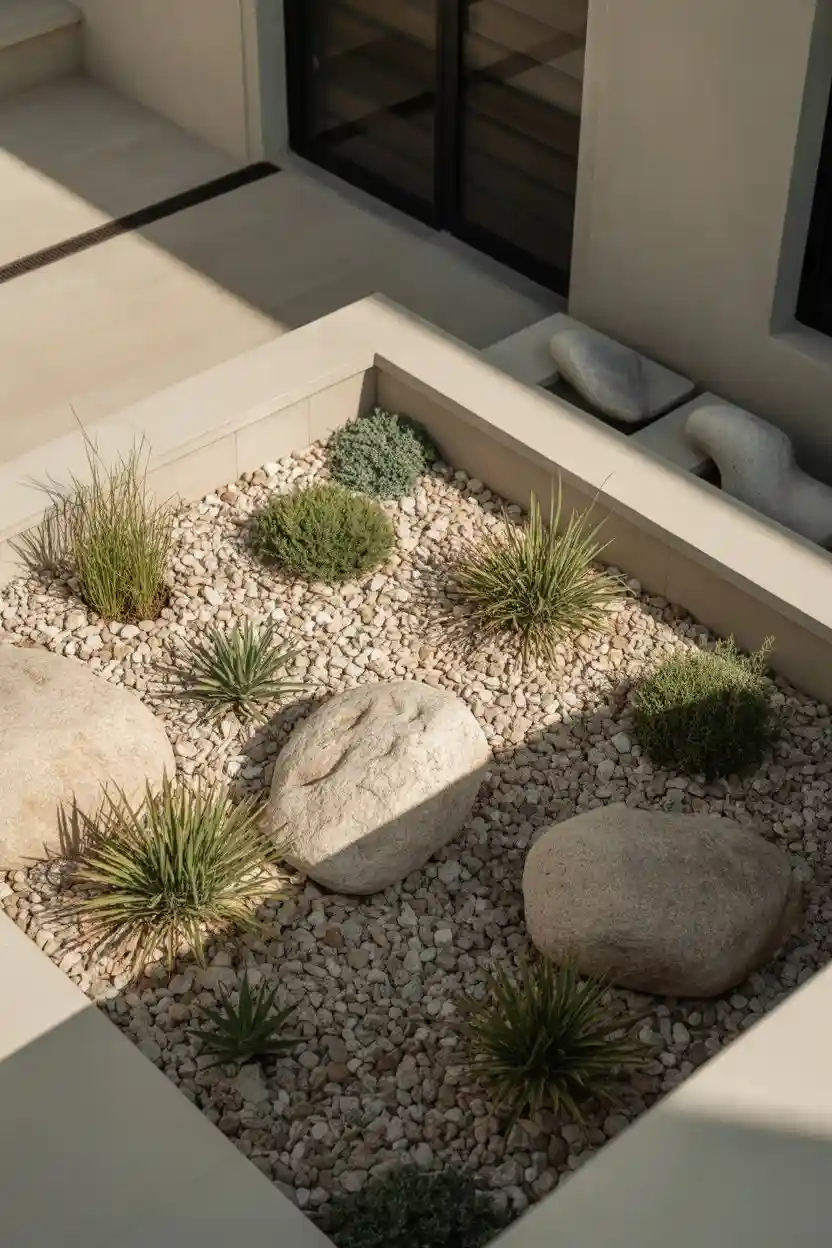
17. Gravel Courtyard with Seating Rocks
Flat-topped boulders, eighteen inches high, make benches that never rot, never need cushions, and seat a crowd. Set them level on compacted gravel and they will outlast the house. Arrange three or four in a loose arc around a fire bowl or a view, and the courtyard furnishes itself.
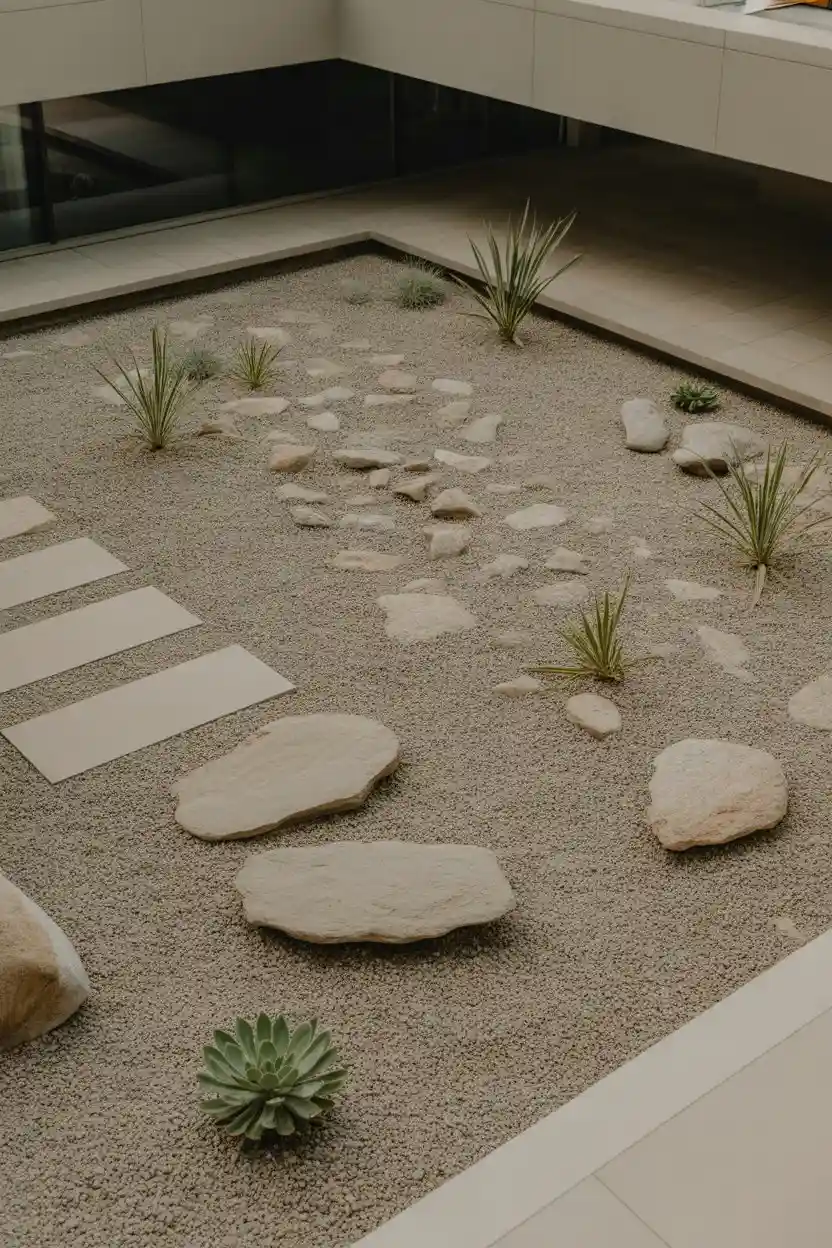
18. Gravel Garden with Water Feature
A still black basin — even a two-foot square — set flush in pale gravel is the highest-contrast move in this list. The water mirrors the sky; the gravel frames it like a mat around a photograph. A small recirculating pump keeps it from stagnating, and topping up evaporation is the only chore.
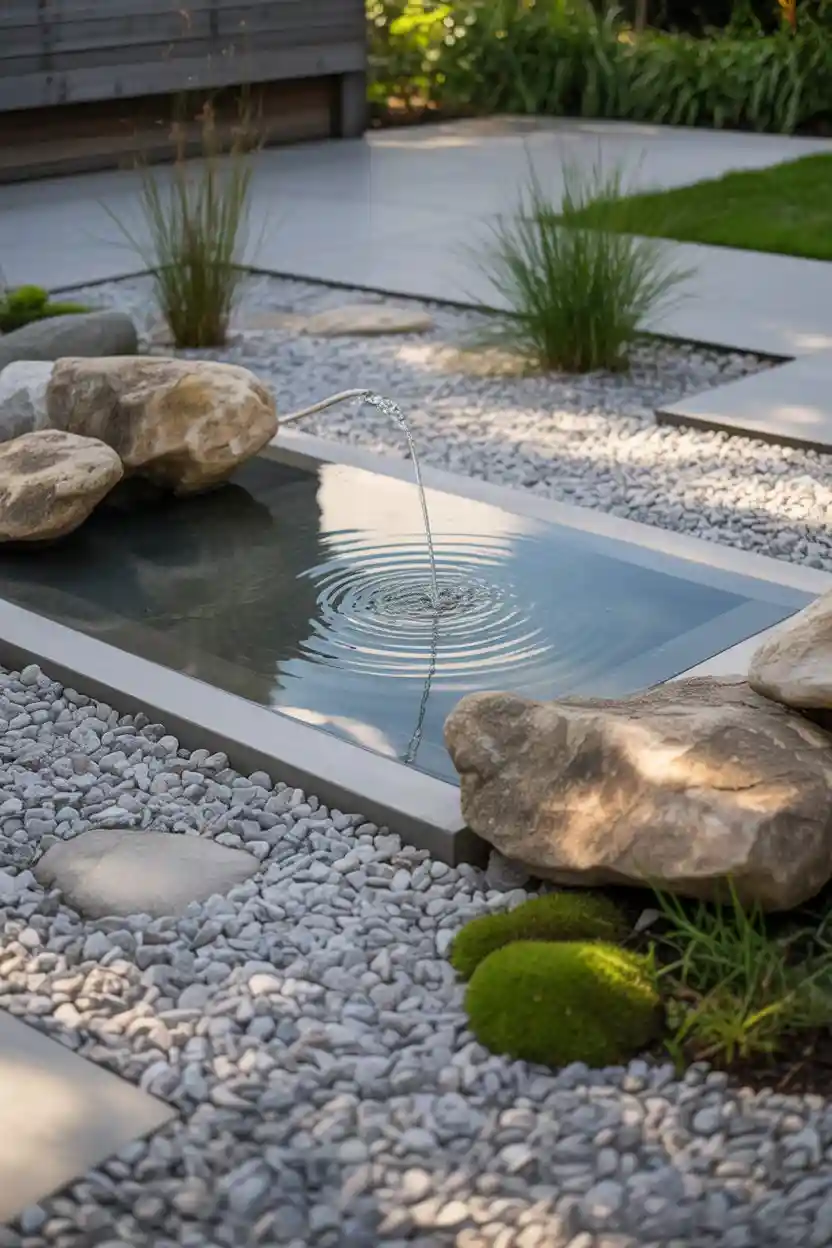
19. Gravel and Succulent Mosaic
Lay out swirls or bands of white, gray, and charcoal gravel using steel landscape edging as dividers — the edging keeps colors from migrating into each other. Plant succulents in the pattern’s negative space so the living and mineral patterns play off each other. Fiddly to install, nearly zero work afterward: the right trade.
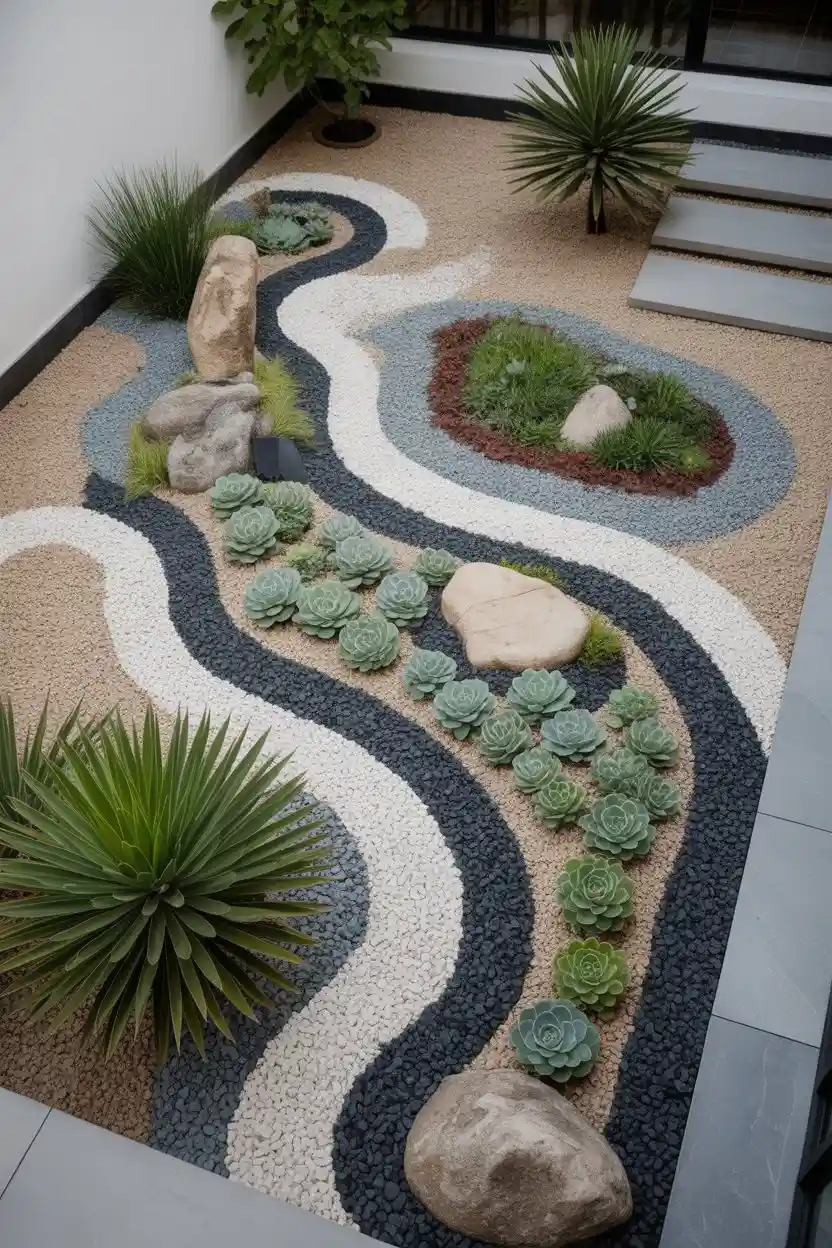
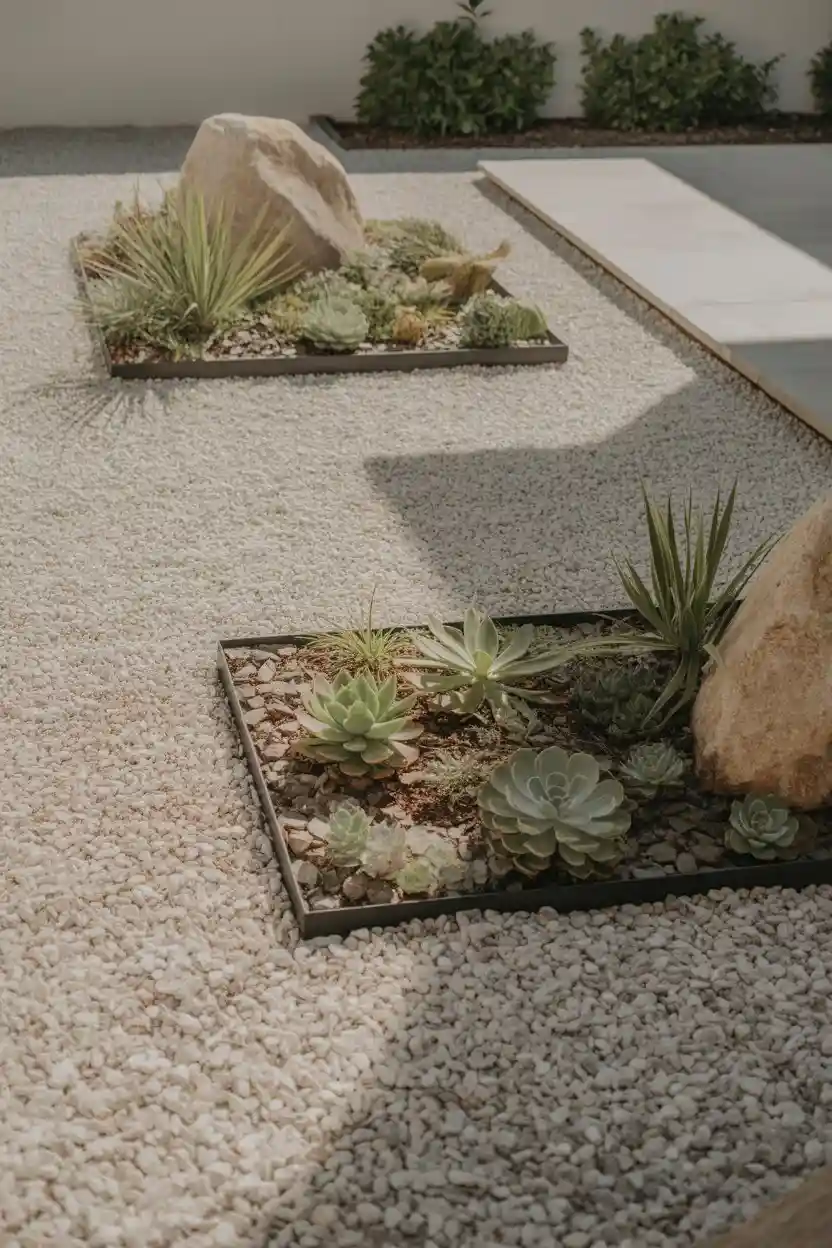
20. Gravel Patio with Planter Islands
Instead of one big bed, scatter three or four steel or stone planters across a gravel field, each holding a single species. The islands read as sculpture; the gravel between them is circulation space. You can rearrange the whole composition in an afternoon — try doing that with a planted border.
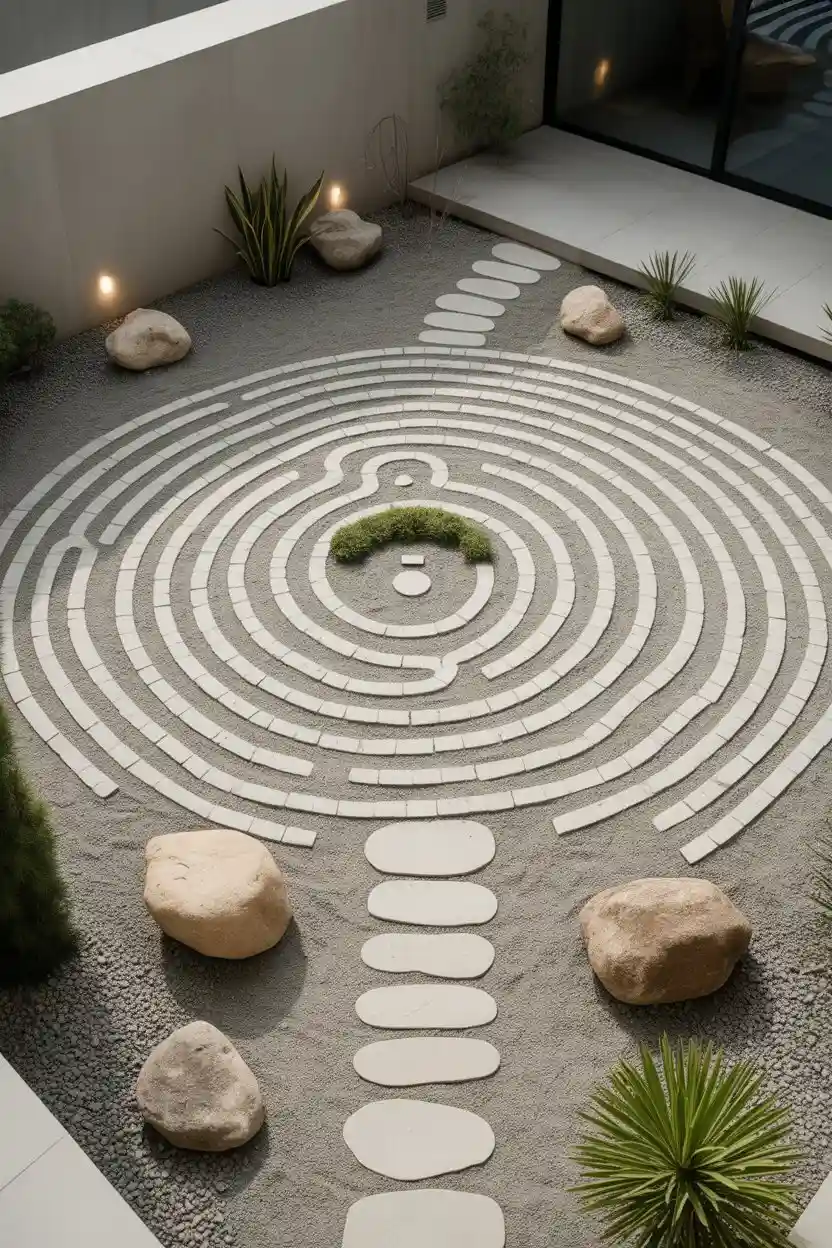
21. Minimalist Gravel Zen Labyrinth
A simple three-circuit labyrinth fits in a twenty-foot square: mark the path, fill it with raked gravel, edge with stone. Walking it slowly is the meditation — the design just gives your feet something to follow. Keep plantings outside the pattern entirely; anything inside the lines breaks the spell.
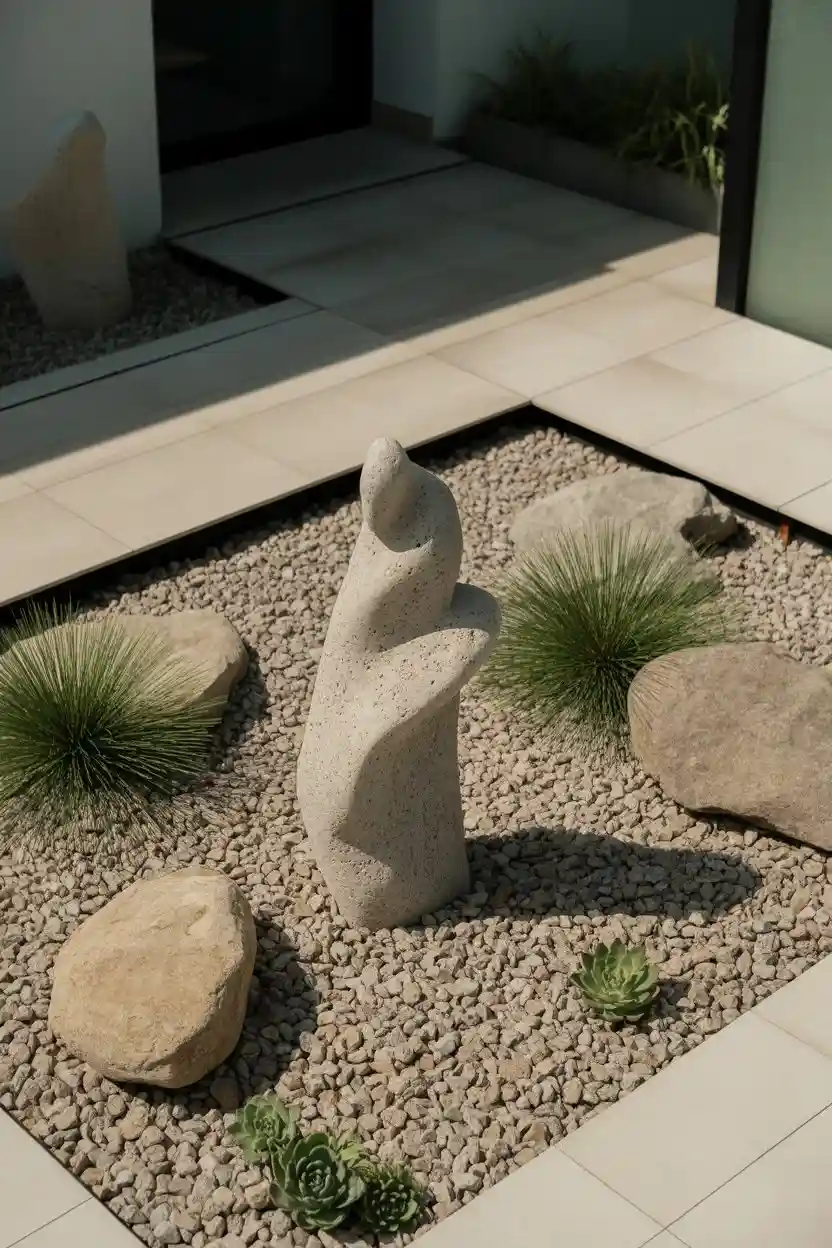
22. Gravel-Backed Rock Sculpture Garden
Stacked stone cairns or a single dramatic boulder on dark gravel need no explanation and no maintenance. The trick is proportion: the stone should be big enough to look inevitable, not decorative — when in doubt, go one size larger than feels safe. One strong piece beats five small ones every time.
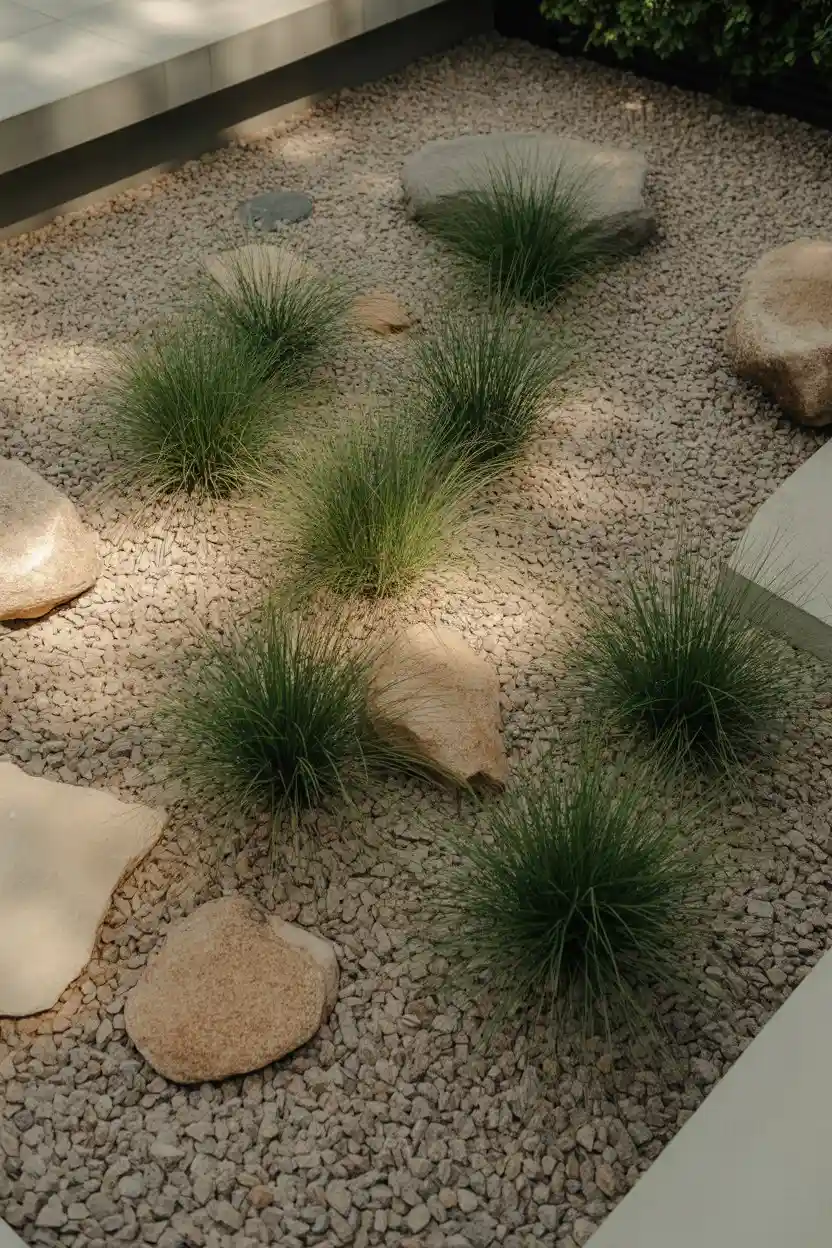
23. Gravel and Ornamental Grass Garden
Five ‘Karl Foerster’ grasses in a sea of pea gravel, repeated in a loose grid — that is the whole planting, and it is enough. The vertical blades against the flat stone give you movement, winter structure, and one annual haircut. In wind the whole garden sways; in still air it stands like architecture.
24. Gravel Courtyard with Black Stones
Black basalt or slate against pale gravel is the boldest contrast in the gravel palette — it reads as modern art, not landscaping. Use the dark stone sparingly: a few boulders or a single band, not half the yard. Too much dark stone absorbs heat and looks heavy; restraint keeps it elegant.
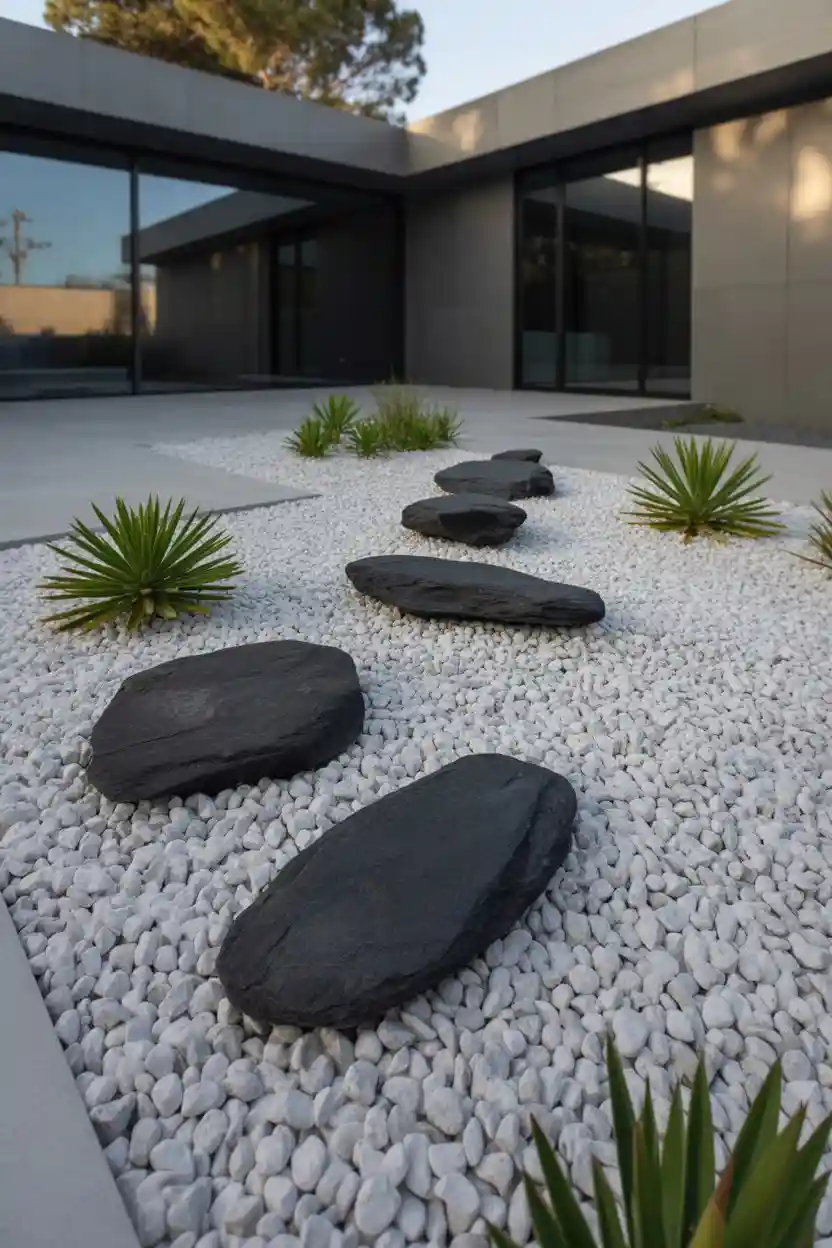
25. Gravel-Outlined Flower Bed
Ring a perennial bed with a four-inch band of gravel and you get a crisp edge that never needs trimming, plus drainage that keeps crowns from rotting. Inside, keep the planting to two or three varieties in drifts — the gravel frame makes even simple plantings look deliberate. It is the lowest-effort way to make a flower bed look designed.
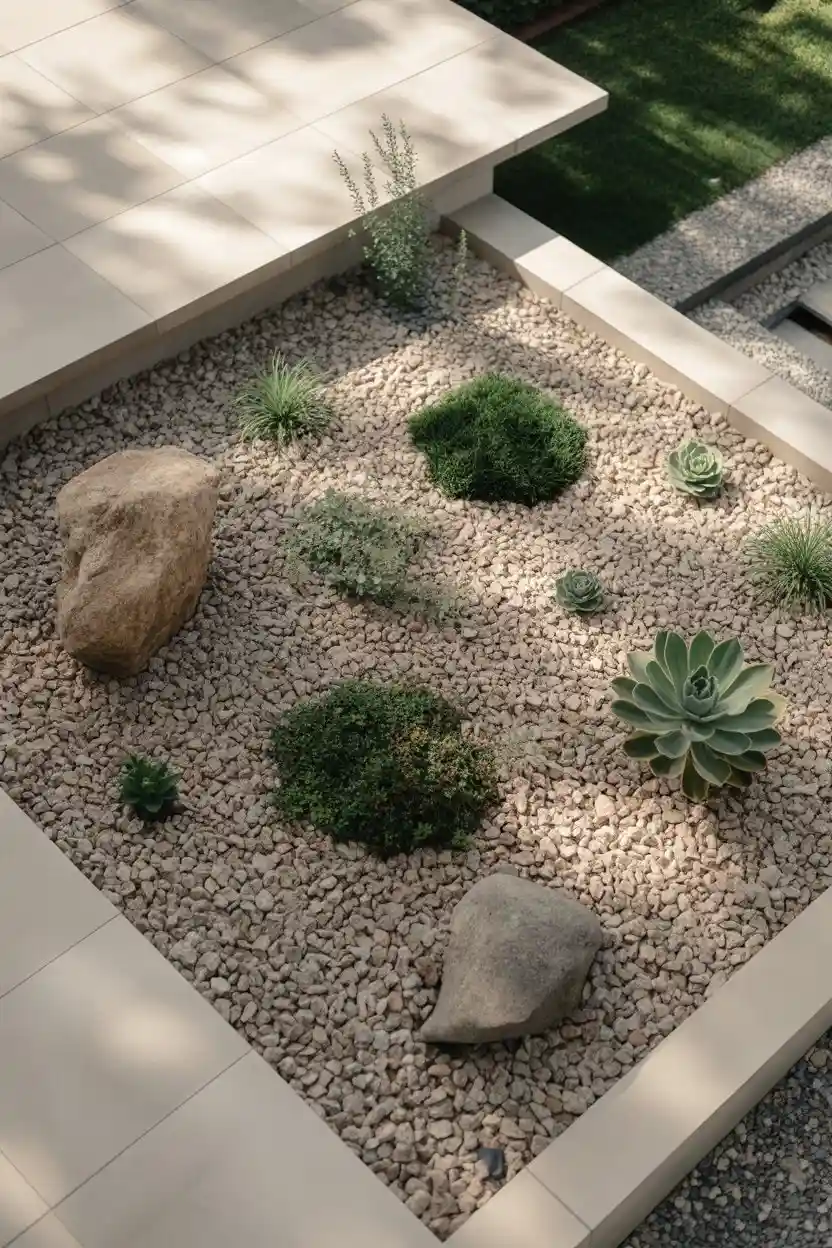
26. Gravel-Path Courtyard with Big Rocks
Line a straight gravel path with boulders at irregular intervals — not symmetrical, not evenly spaced — and the walk becomes a gallery. Vary the boulder sizes and sink each one a third deep so they look geological rather than delivered. One grass species softening the edges ties it together.
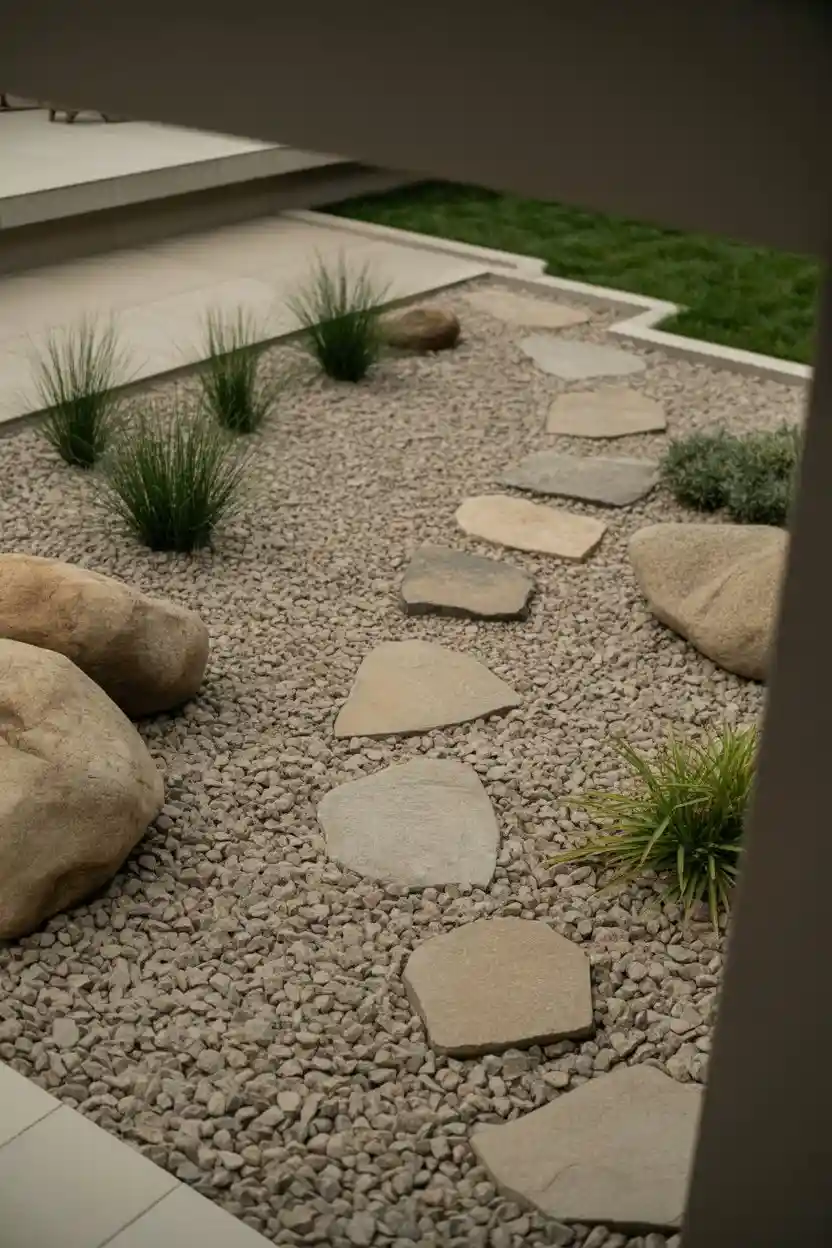
27. Gravel Garden with Paver Islands
Set large-format pavers — twenty-four-inch squares — directly in the gravel field with gravel joints, creating stepping zones that double as a patio. The pavers give stable footing for furniture; the gravel gives drainage and texture. Align the paver grid with the house’s walls and the whole yard snaps into order.
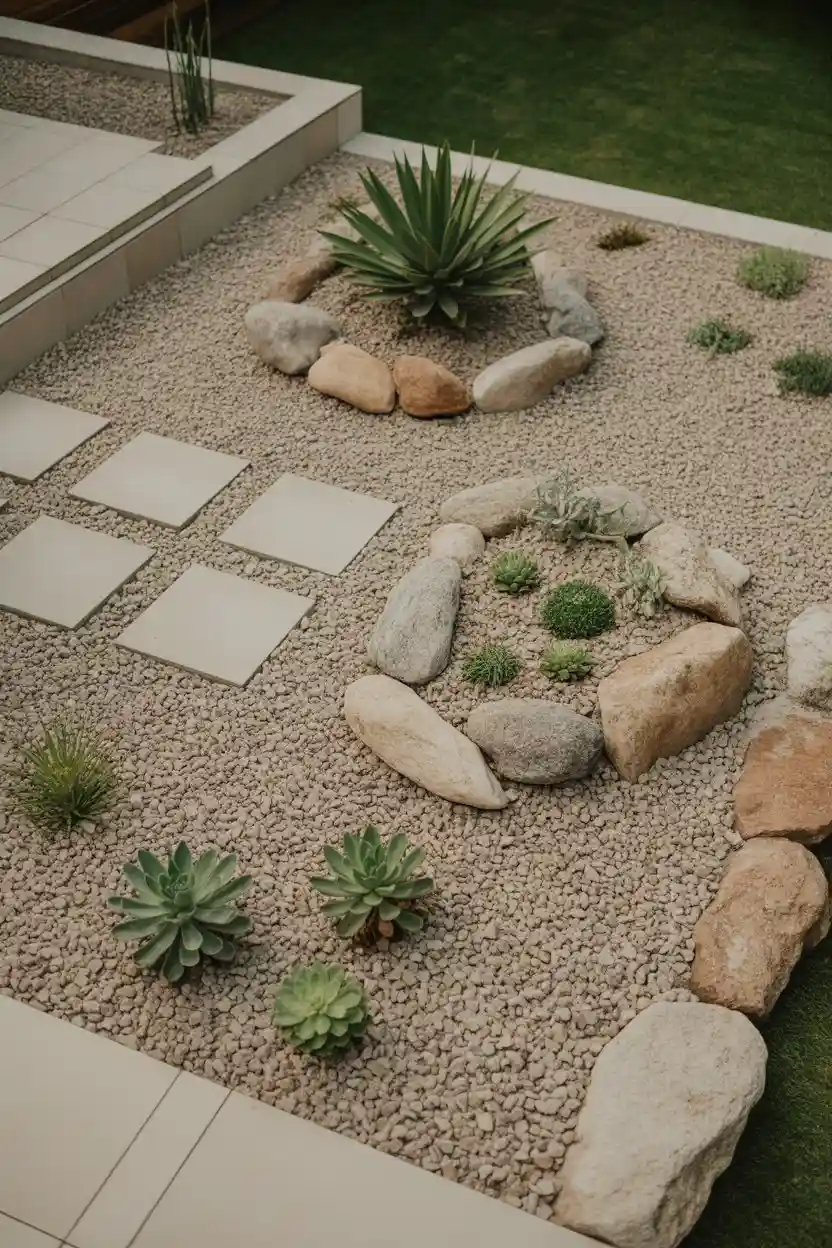
28. Gravel Rock Zen Corner
Claim the most overlooked corner of the yard — the side yard, the strip behind the garage — and give it the full treatment: raked gravel, three stones, one maple or pine. Forgotten spaces take Zen design best because there is nothing to work around. A simple bench facing the composition completes it.
29. Gravel Garden with Water Basin
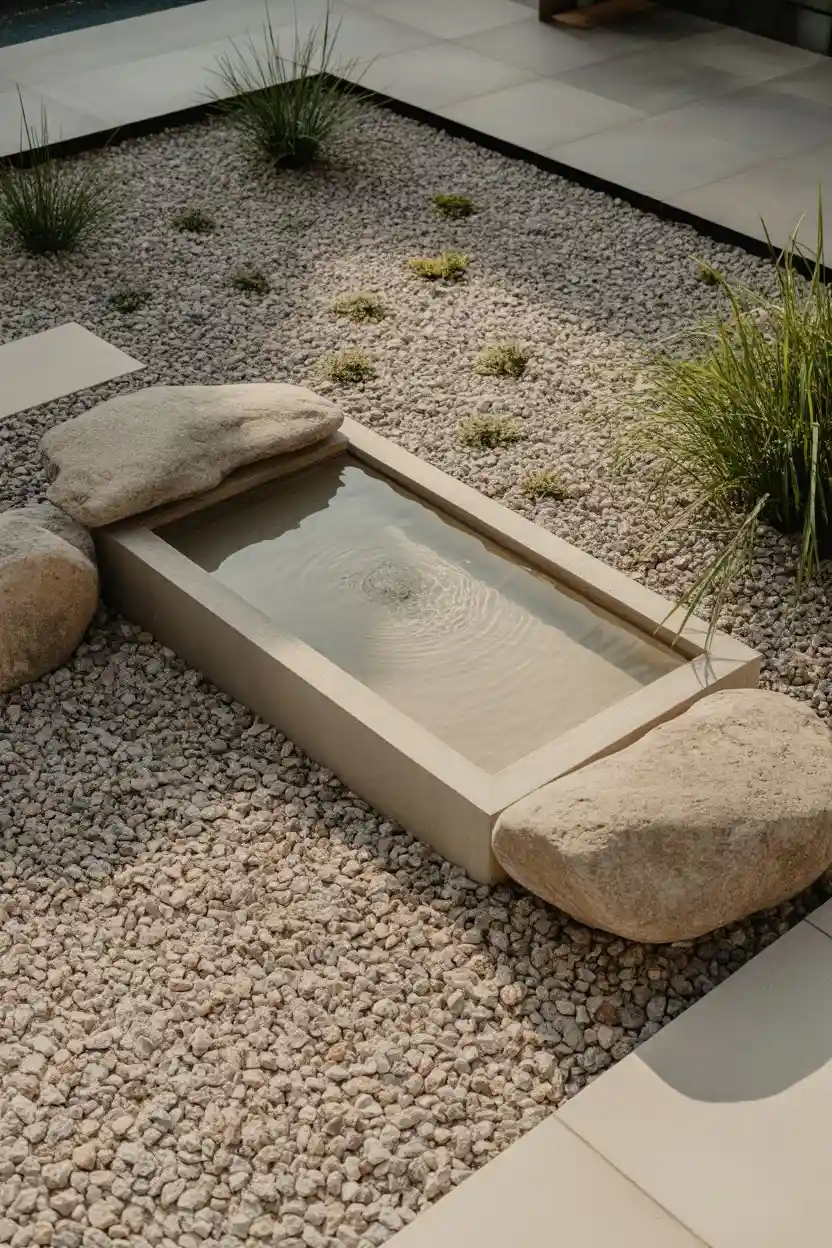
A stone basin with a bamboo spout dripping into it — the classic tsukubai — needs only a small recirculating pump hidden beneath the gravel. The sound of water on stone is the entire soundtrack. Surround it with moss or mondo grass, and keep everything else out of the frame.
30. Multi-Tone Gravel Garden Bed
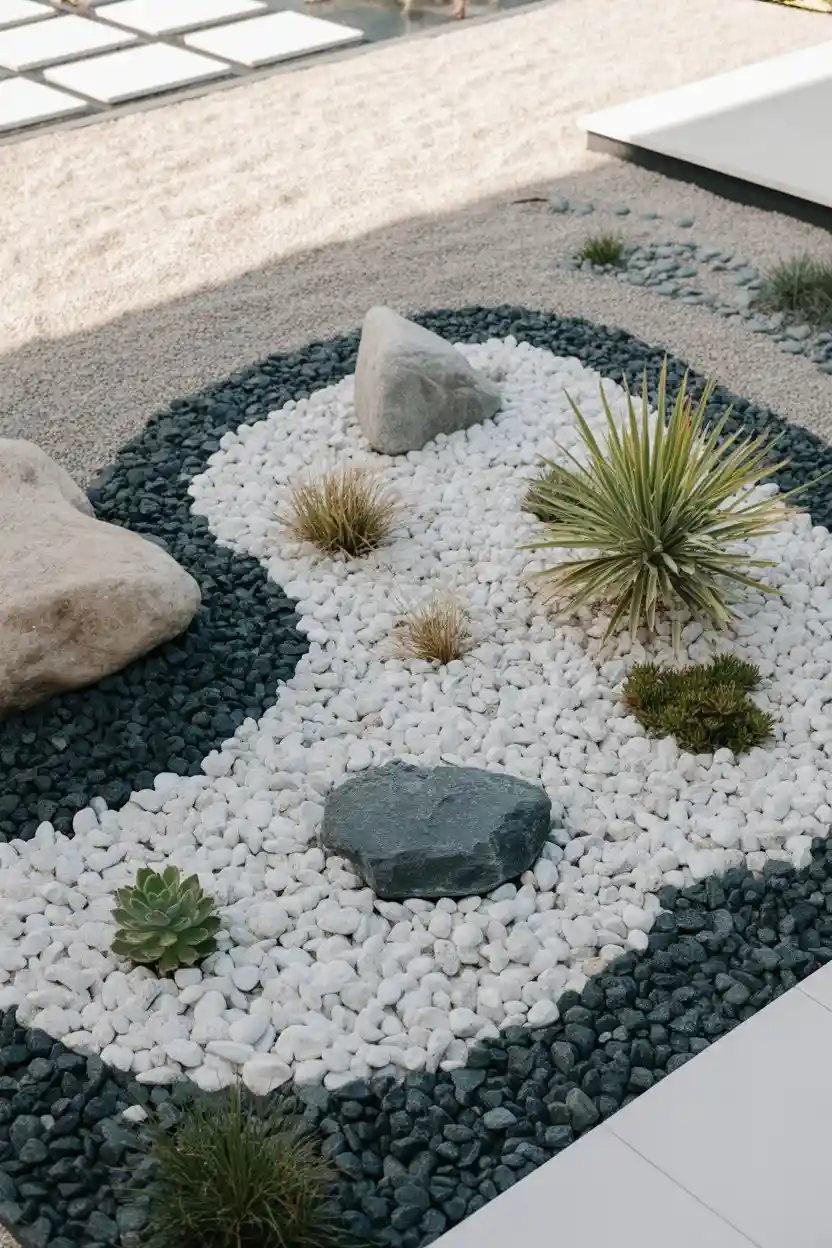
Bands of white, gray, and charcoal gravel separated by thin steel edging create a striped field that looks woven. The effect is strongest viewed from above — a second-story window or rooftop — so site it where it will be seen that way. From ground level keep the bands wide; narrow stripes blur into mud.
FAQs for Minimalist Gravel Garden Ideas