20 DIY Spring Decor Ideas for Fresh Homes
After four months of heavy blankets and early sunsets, the house needs a reset more than a redecoration. Spring decorating is really about subtraction first — packing away the dark throws, washing the windows, letting the light back in — then adding small, cheap hits of color. These twenty projects all cost under $25 and take an afternoon: wreaths, garlands, porch updates, and table refreshes built for real homes, from studio apartments to full houses.
Most of these lean on faux florals and dollar-store supplies — not because they’re trendy, but because they last. A well-made faux wreath hangs for five springs; fresh flowers last five days. Pick the projects that fit your space and skip the rest.
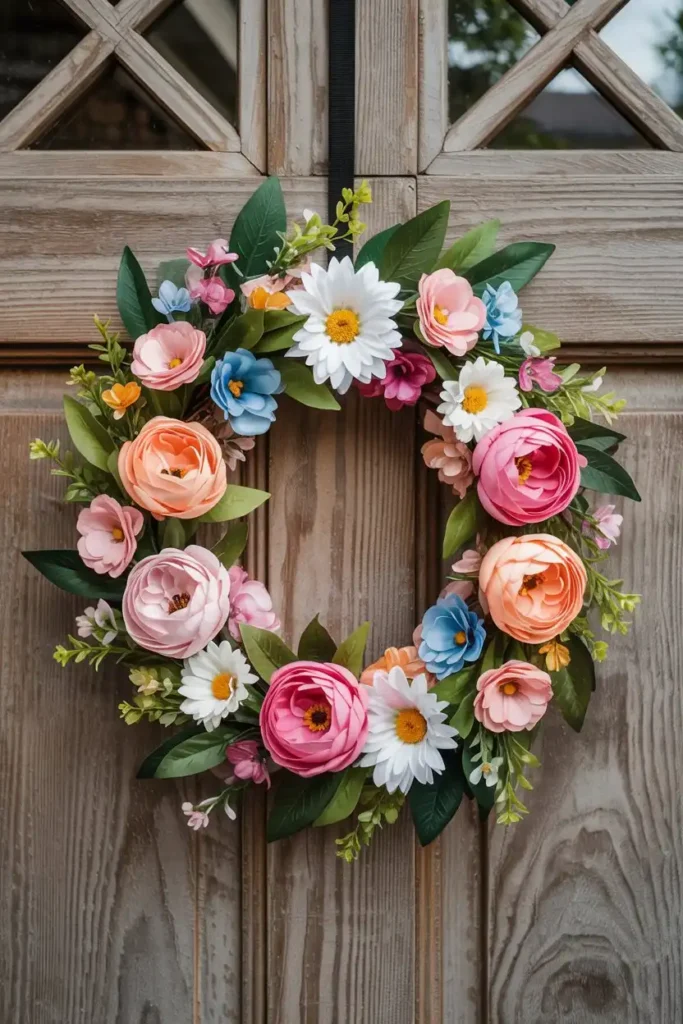
1. DIY Spring Wreath Using Faux Florals and Greenery
Faux florals have quietly gotten good — the peony stems at craft stores now fool people from three feet away. Build on an 18-inch grapevine or wire base: attach eucalyptus first as the filler, then cluster peonies and tulips in odd numbers, stepping back every few stems to check the balance. Hot glue for grapevine, floral wire for wire frames.
Hang it on the front door with an over-the-door hanger (no nail holes for renters), or inside on a mirror or blank wall. A faux wreath survives rain, sun, and being shoved in a storage bin each June — shake it out next March and it’s ready again.
2. Dollar Tree Spring Wreath for Budget-Friendly Decor
The dollar-store wreath is a specific skill: making $12 of supplies look like $60. Start with a foam or wire wreath form, then raid the floral aisle for greenery picks and three focal flowers. The trick is density — sparse dollar-store wreaths look cheap; packed ones look lush. Buy twice as much greenery as you think you need.
Copy the structure of high-end wreaths, not their materials: an asymmetrical cluster on one side, trailing greenery on the other. A spool of wired ribbon, cut into loops and tucked between flowers, hides every gap and every visible stem.
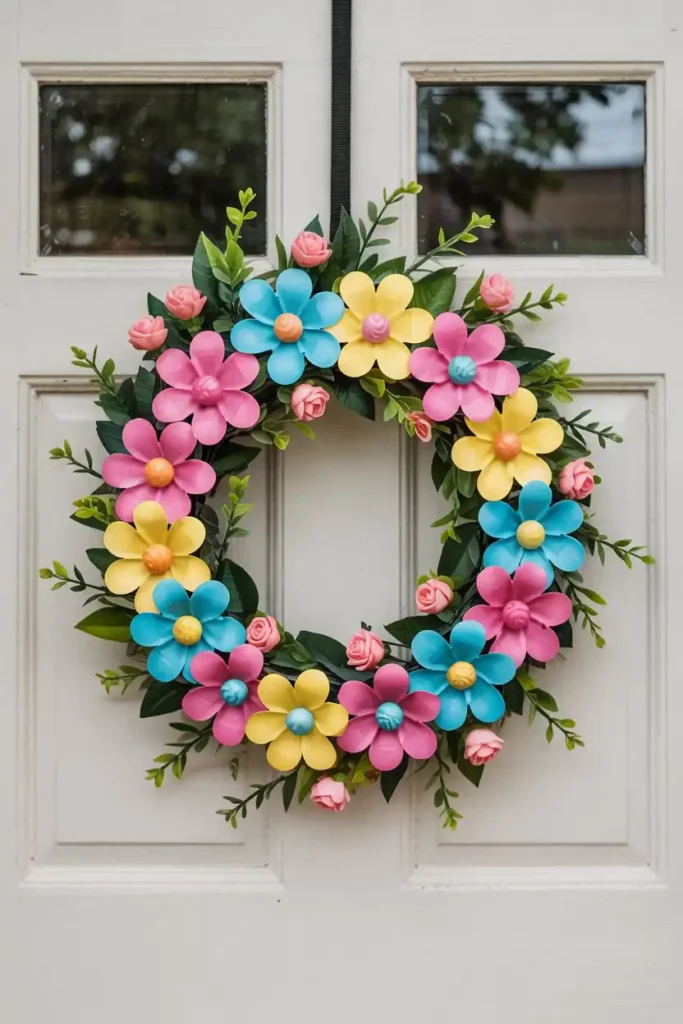
3. DIY Front Door Wreath with Ribbon and Signs
A front-door wreath with ribbon and a small wooden sign — “hello spring,” a house number, a bunny silhouette — layers flat and dimensional elements. Keep the sign under eight inches so it doesn’t swallow the florals, and hang it slightly off-center for a styled look.
Ribbon is the cheapest seasonal update there is: swap a sage gingham for a yellow stripe in May and the whole door feels new. Wired ribbon holds its loops through wind; unwired ribbon goes limp by week two.
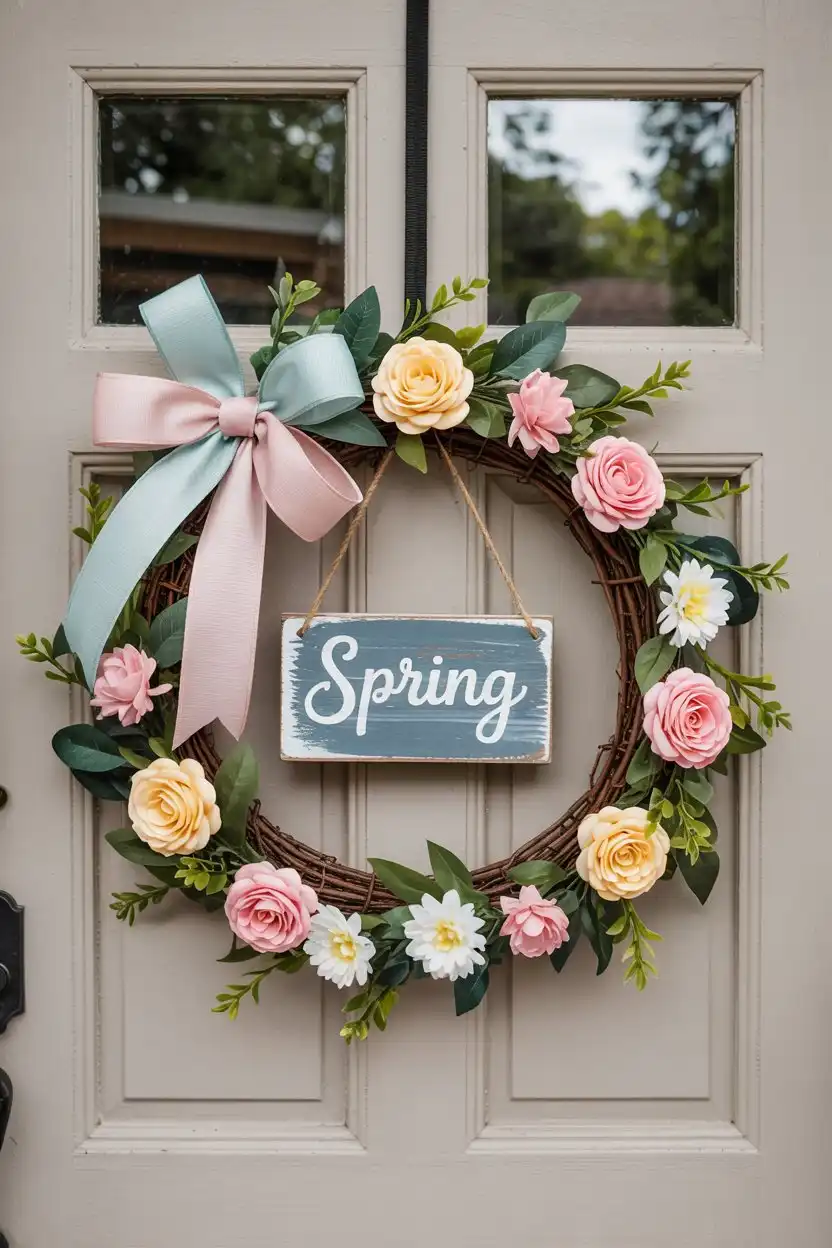
4. Grapevine Spring Wreath with Natural Texture
Grapevine is the most forgiving base for beginners because the texture does half the work — you can see the vine between the flowers and it still looks intentional. Tuck stems directly into the twists (no glue needed for most), starting with greenery and adding focal flowers last.
The neutral vine suits farmhouse, modern, and traditional homes alike, which is why it’s the best-selling base year after year. One grapevine wreath, re-trimmed with different florals, can carry you from March through August.
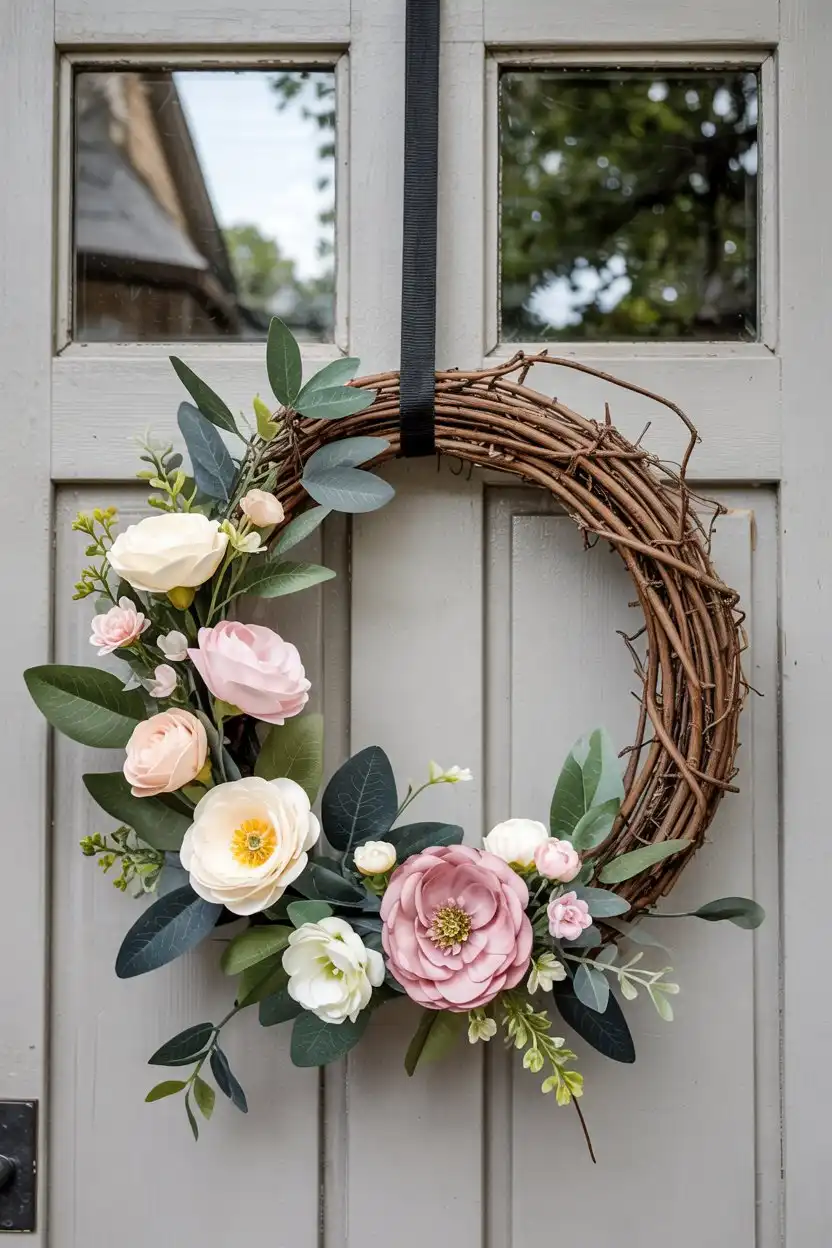
5. DIY Tulip Wreath for Classic Spring Color
Tulips read as spring instantly — no other flower says March quite like them. For a full look on an 18-inch base you need 18–24 stems; cluster them in groups of three, all facing the same direction, for that just-picked flow. Pastel mixes suit traditional homes; a single bold color suits modern ones.
Because tulip wreaths are so recognizable, they need no explanation on the door — guests register “spring” before they’re halfway up the walk. Store the wreath in a trash bag hung on a hook; crushed tulip petals don’t bounce back.

6. Simple Spring Mesh Wreath for Bold Entryways
Deco mesh is the maximalist’s shortcut: one 10-inch roll makes an 18-inch wreath look enormous. Cut the mesh into 10-inch squares, curl each into a “poof” around a pipe cleaner, and attach them to a wire work-wreath frame in alternating colors. It’s fast — under an hour — but it sheds, so build it outside.
Mesh wreaths are nearly indestructible on a covered porch, and beginners love them because there’s no arranging skill involved — fullness hides everything. Keep the palette to two colors plus ribbon, or the result reads as Easter explosion rather than spring. The same technique even carries into autumn: swap pastels for rust and gold and you have DIY fall decor from the same roll of mesh.

7. Burlap Spring Wreath for Farmhouse Homes
Burlap brings farmhouse texture without the country-kitsch risk, as long as you keep it simple: a burlap-wrapped foam base, a cluster of white and blush florals on one side, maybe a small nest with eggs for Easter. Let the burlap’s rough weave be the star — don’t bury it under flowers.
Burlap survives porches well (it was literally made for sacks), and a neutral burlap base can be re-trimmed for every season — spring florals now, sunflowers in July, leaves in October. One base, four holidays.
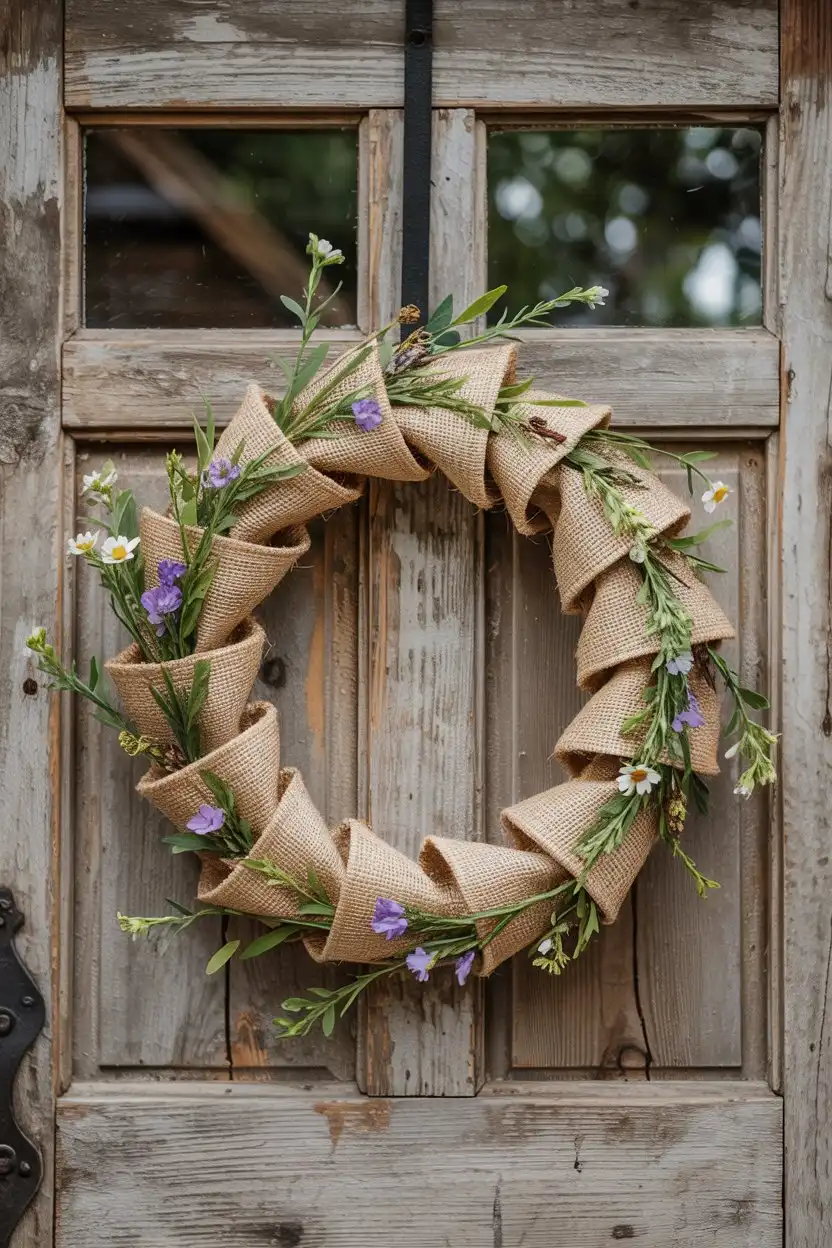
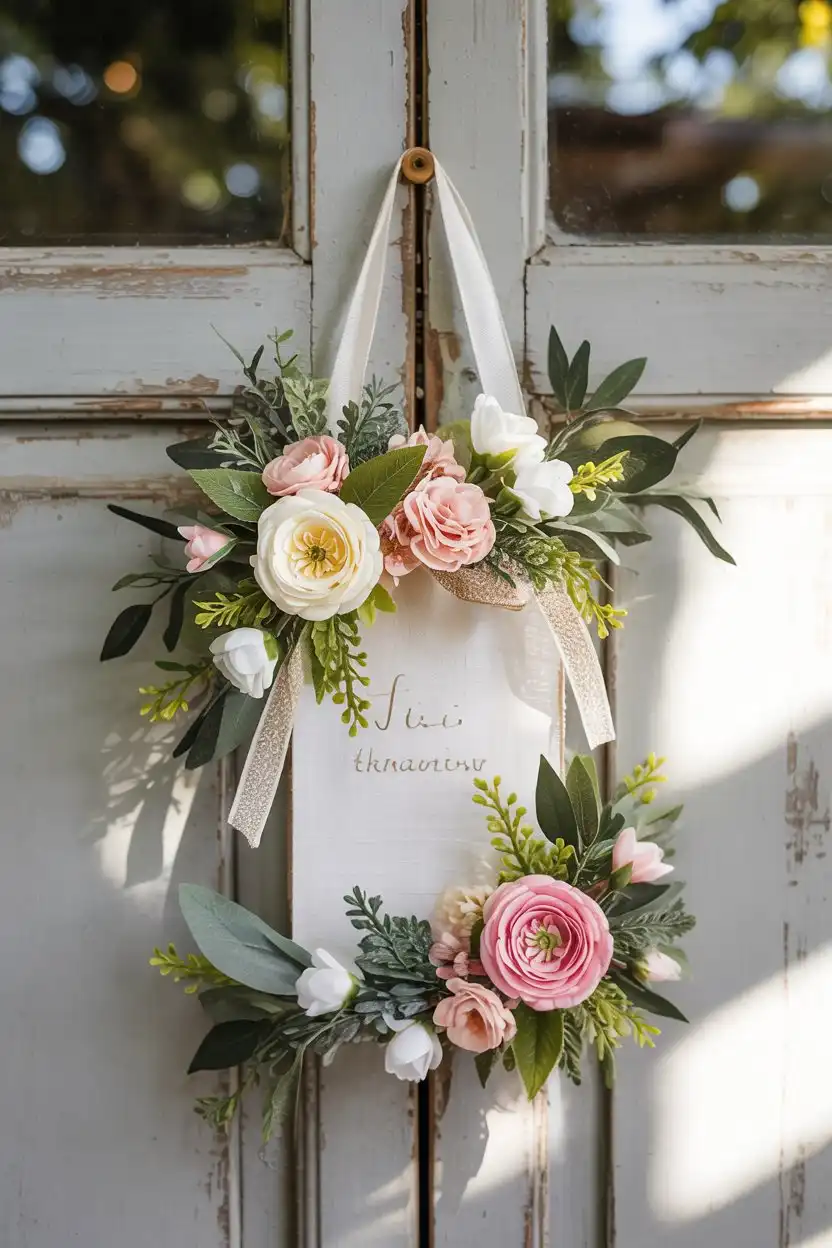
8. DIY Spring Door Hanger with Florals
Not every door wants a round wreath. A vertical door hanger — a wooden plank, an embroidery hoop with florals, a metal “hello” script — suits narrow doors and apartments where a 24-inch wreath overwhelms. They’re also easier to store: flat against a closet wall.
Door hangers take lettering and shapes that wreaths can’t: house numbers, monograms, seasonal phrases. Keep the total weight under two pounds if you’re using an adhesive hook rather than a nail.
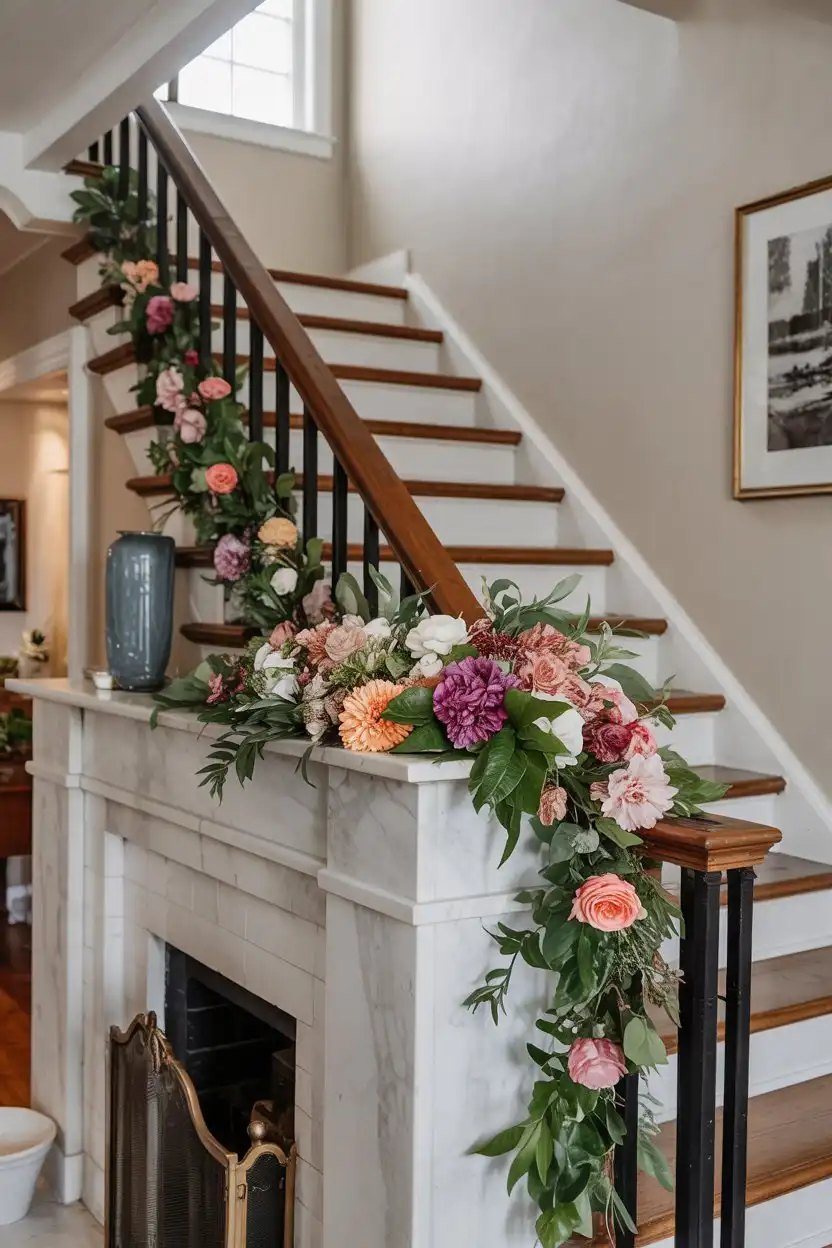
9. DIY Spring Garland for Mantels and Railings
A six-foot faux garland ($8–$15) transforms a mantel, stair rail, or bookshelf in ten minutes: drape it, fluff the branches, tuck in three to five floral picks. Twist two together for a fuller look on wide mantels. Command hooks hold garlands on rails without damage.
Garlands are the layering piece — on their own they’re background, but paired with the matching wreath on the door they make the whole entry feel designed. Coil and bag them after the season; a garland stored loose turns into a tangled nest by next year.
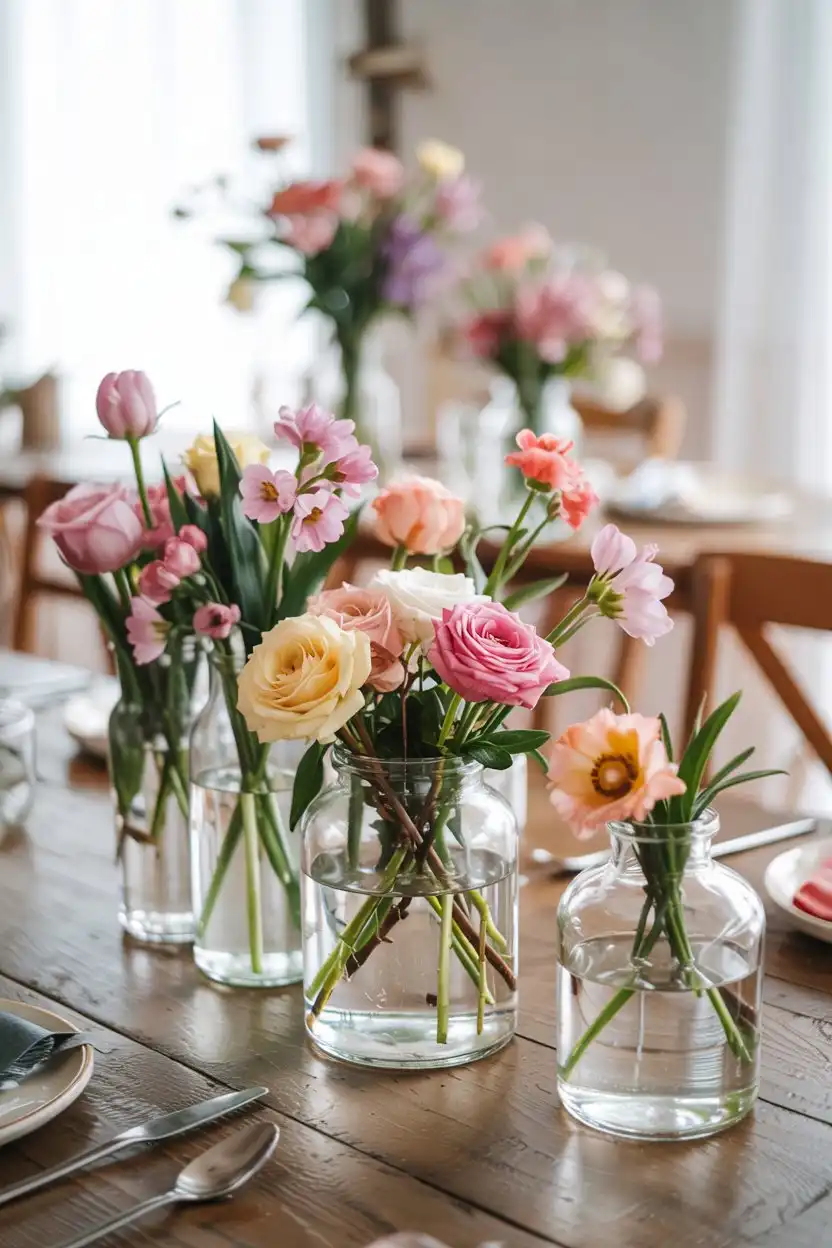
10. DIY Spring Centerpiece with Florals and Vases
The fastest table refresh: a low bowl or tray, three bud vases with single stems, and a linen runner. Odd numbers, varying heights, one color family. It takes five minutes to assemble and lifts off the table in one piece when dinner needs the space.
Scale the centerpiece to the table — a 24-inch arrangement swallows a small cafe table but disappears on a farmhouse one. Keep it under twelve inches tall so conversation flows over it, not around it.
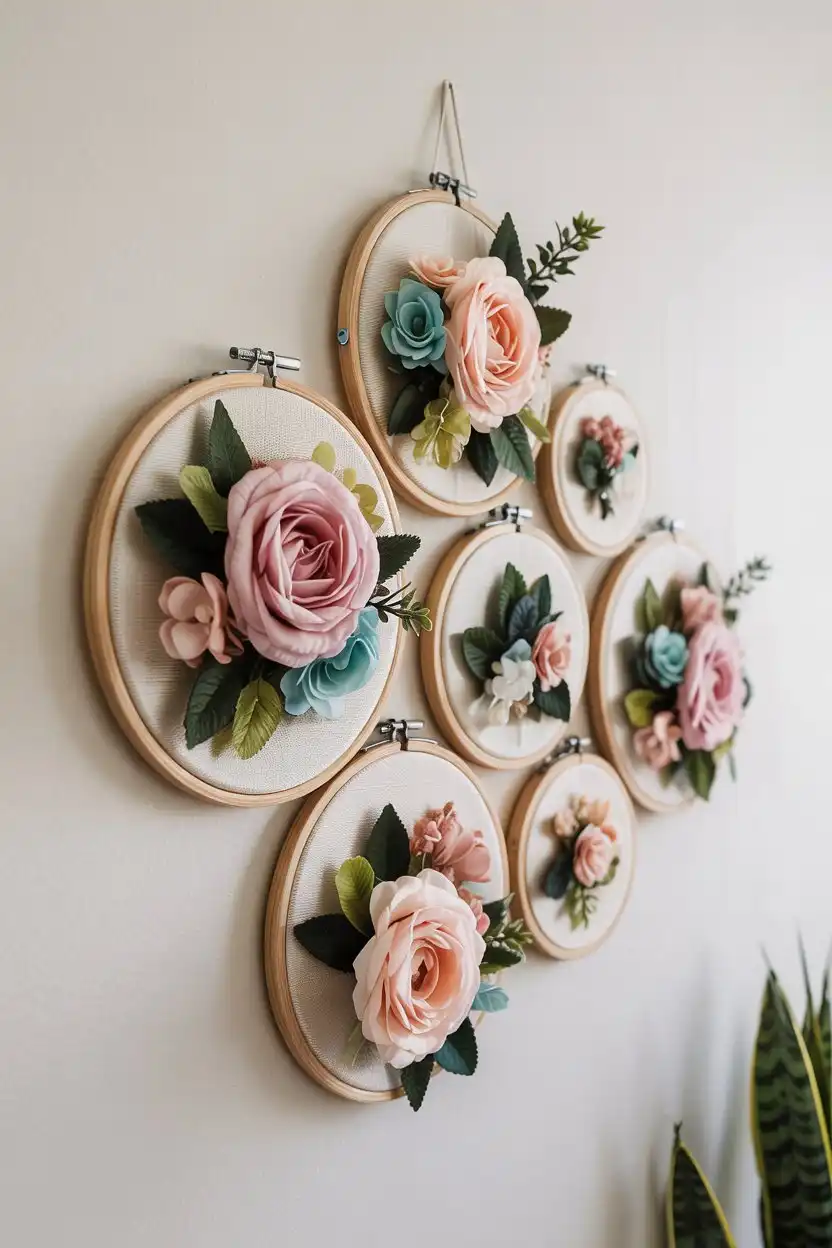
11. DIY Spring Wall Decor Using Hoops
Embroidery hoops (a dollar or two each) make modern wall decor: stretch linen in the hoop, glue on a small floral cluster, hang in a group of three. The open space around the flowers is what makes them feel contemporary rather than crafty.
Hoop art is renter gold — light enough for a single nail or adhesive strip, and groupings fill a blank wall without the commitment of a gallery. Swap the florals in summer and the hoops work year-round.
12. Dollar General Spring Decor DIY Projects
Dollar General’s floral aisle runs a half-step above Dollar Tree’s — slightly fuller stems, better color ranges — for about the same money. Mix the two stores freely: DG for focal flowers, DT for filler greenery and ribbon. Nobody can tell once it’s assembled.
Compare before you buy: a greenery pick that’s $1.25 at one store might be fuller at the other for the same price. Shopping both stores stretches a $20 budget into a wreath, a garland accent, and a table arrangement.
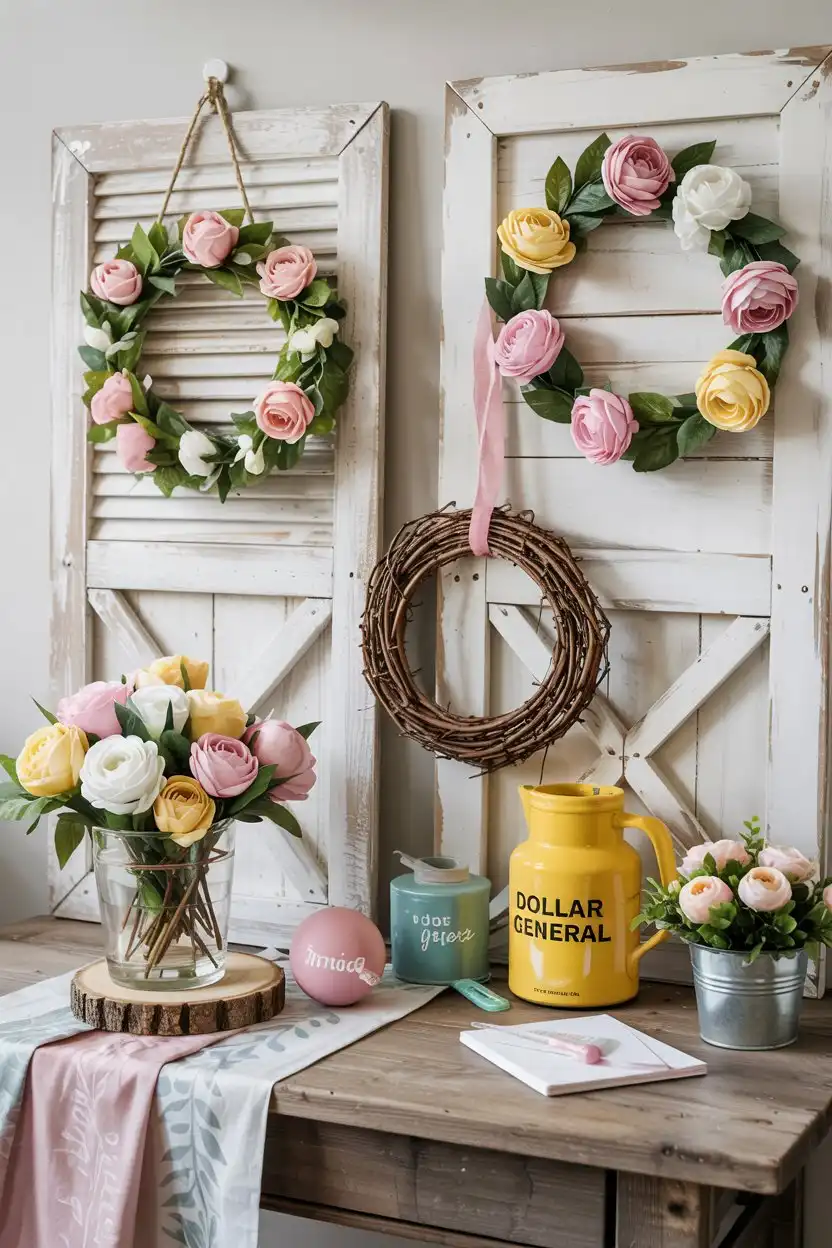
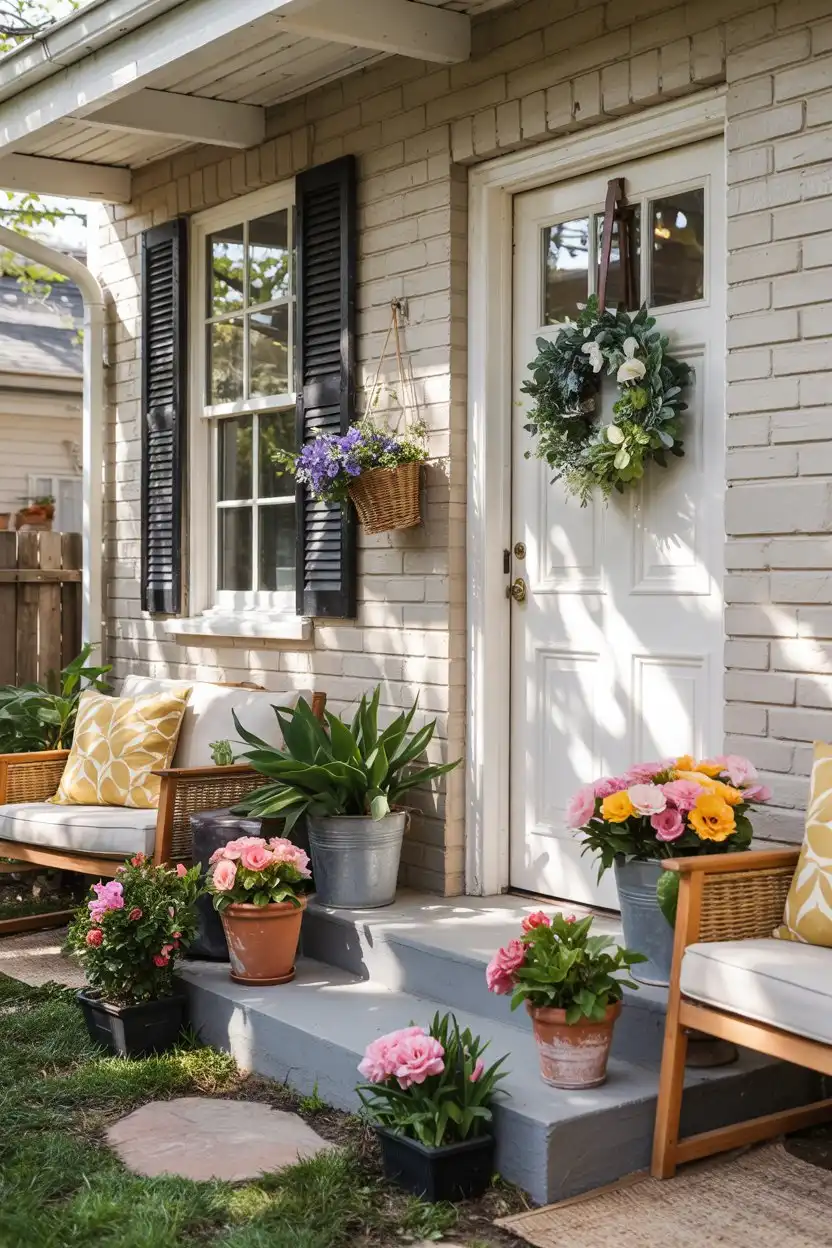
13. DIY Spring Porch Decor for Curb Appeal
Curb appeal is a formula: wreath on the door, two matching planters flanking it, one sign or mat. Repeat the same two or three colors across all three elements and the porch looks designed instead of decorated. Pansies and violas handle early-spring cold snaps down to freezing.
Choose weatherproof everything for the porch — UV-resistant faux florals, sealed wood signs, outdoor-rated ribbon. A porch arrangement that fades or warps by April costs more than one built right the first time.
14. DIY Moss Bunny for Seasonal Accents
A moss-covered bunny (foam form plus sheet moss plus hot glue) is the Easter-season mascot: equal parts cute and neutral, and it works from March through May. Tuck one into a bookshelf, on the mantel, or into the center of the spring tablescape.
Sheet moss from the dollar store covers a six-inch bunny form for about $3, and the project takes twenty minutes. Because it’s all texture and no color, it reads as seasonal without screaming Easter — leave it out past the holiday with no embarrassment.

15. Handmade Spring Wreath with Mixed Materials
The most interesting wreaths mix hard and soft: grapevine base, fabric ribbon, wood beads, faux florals, a little greenery. The rule is three textures max — more than that turns busy. Let one material dominate (usually the florals) and use the others as accents.
Mixed-material wreaths photograph beautifully because the camera loves texture contrast. Build the structure first (base plus greenery), then add the “jewelry” — beads, ribbon loops, one standout bloom — last.

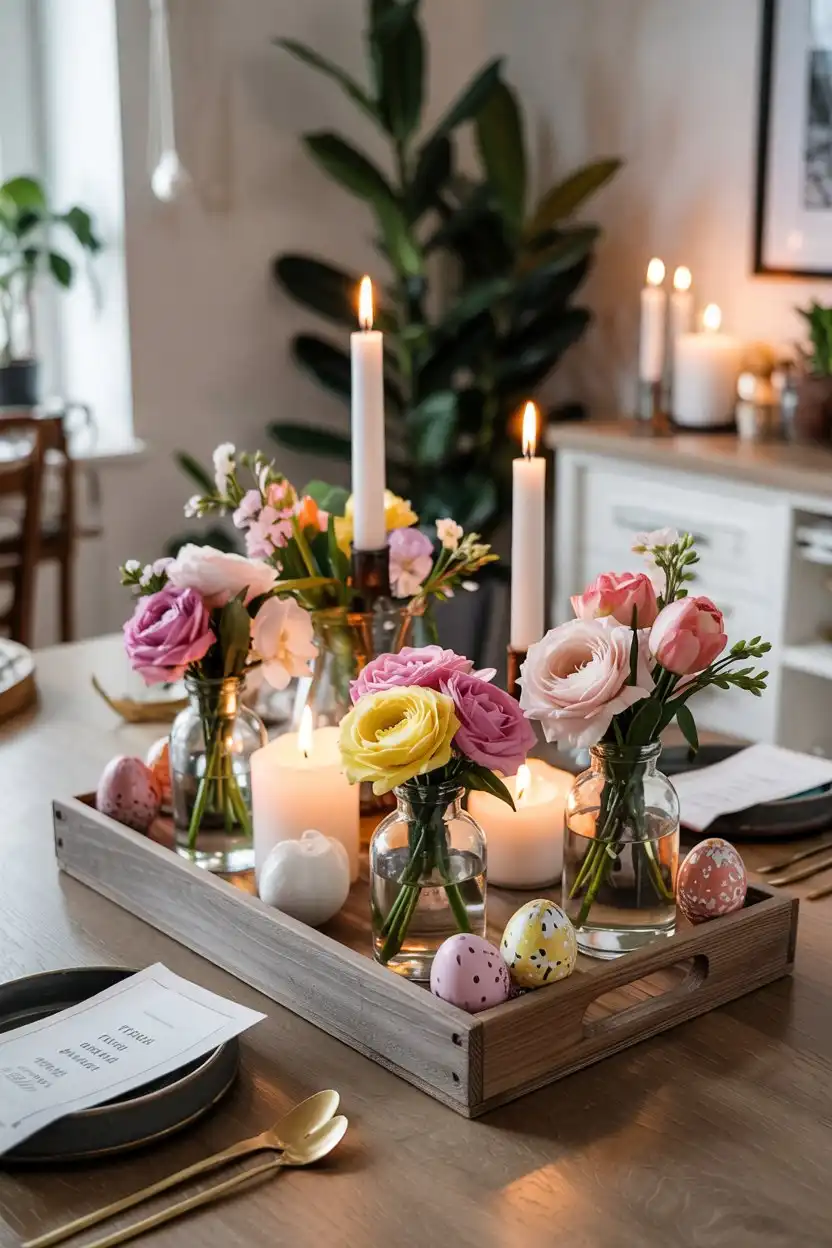
16. DIY Spring Table Decorations with Trays
A tray turns scattered decor into an arrangement: corral a candle, a small vase, and a seasonal object on a twelve-inch wooden or rattan tray. When the season changes, swap the contents — the tray stays. It also makes dusting a one-lift job.
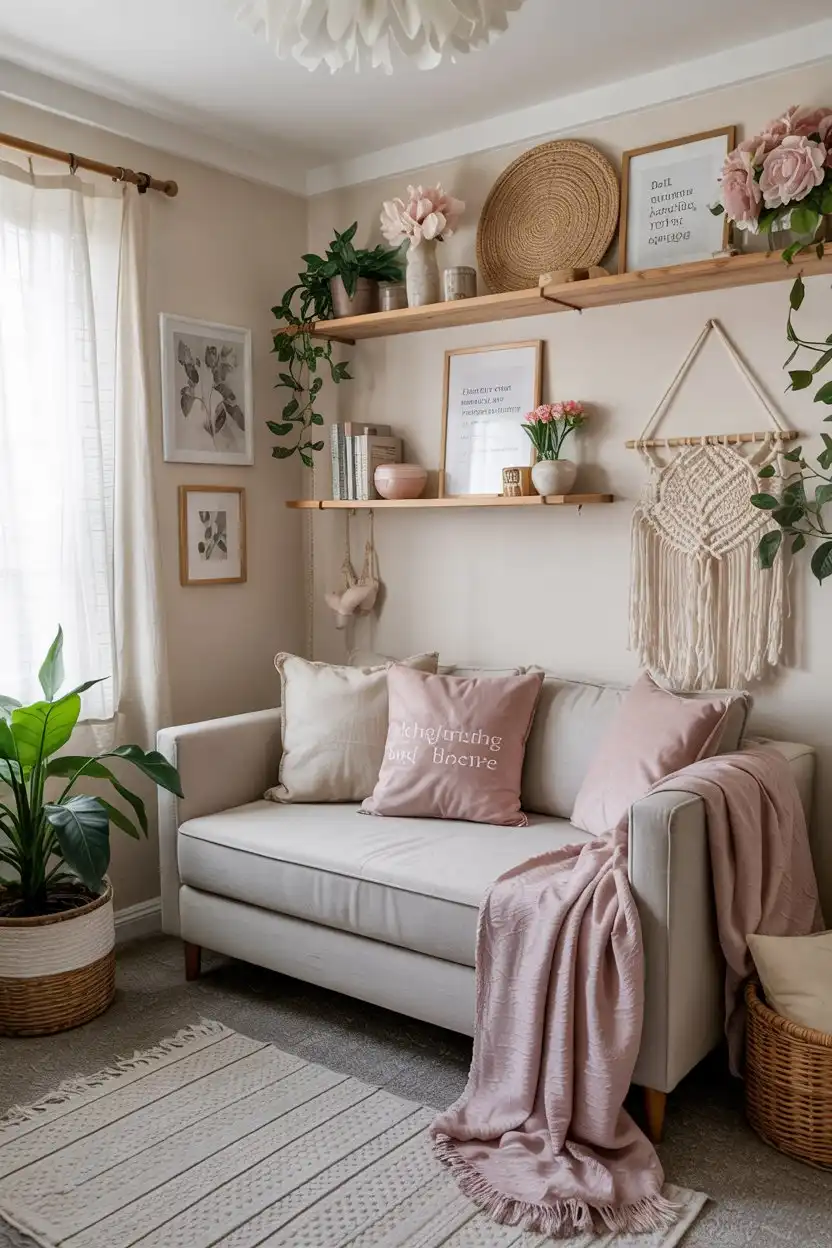
17. Textiles are the no-tools refresh: swap pillow covers (not whole pillows — $8 covers over existing inserts), fold a light throw over the sofa arm, hang a fresh print. Linen, cotton, and pastels in any combination read as spring; keep the winter velvet packed away.
This is the renter’s whole strategy: nothing nailed, nothing painted, everything reversible in an afternoon. Three textile swaps change a room’s season more than any single decoration.
18. DIY Spring Office Decorations for Productivity
A desk needs restraint: one small bud vase, one mini frame with a spring print, maybe a pastel desk organizer. Keep it to a six-inch zone at the back corner so the work surface stays clear.
The goal is a glance of spring, not a garden on your keyboard. If a decoration migrates into your typing space, it’s too big — scale down or move it to a shelf.

19. DIY Outdoor Spring Decorations for Entry Paths
Guide the eye from the sidewalk to the door: planters along the path, a wreath on the door, a welcome mat that matches. Repeat one color (yellow tulips in the planters, yellow ribbon on the wreath) so the whole approach feels connected.
Outdoor pieces earn their keep only if they survive the season: sealed wood, UV-stable faux florals, rust-proof metal. Bring fabric elements (pillows, soft signs) inside during storms and they’ll last years instead of weeks.
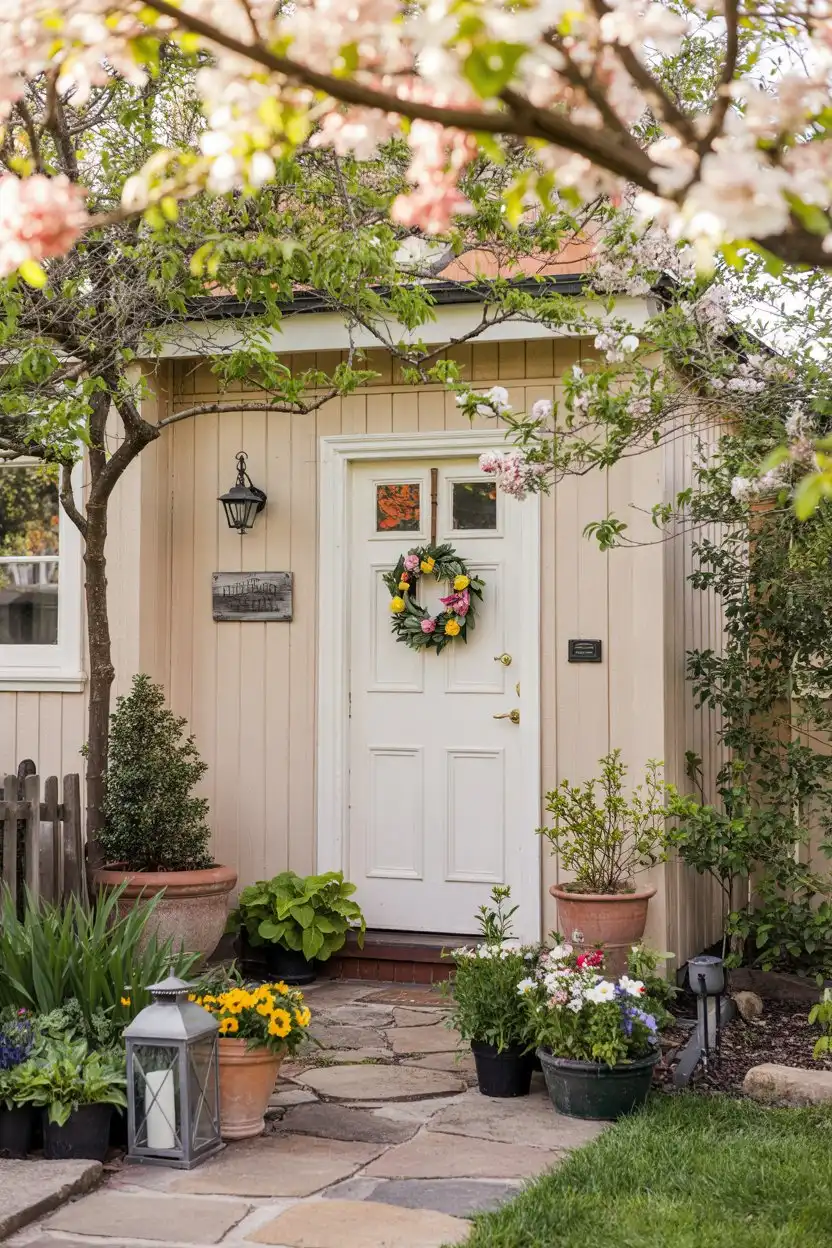
20. Unique Spring Wreath with Asymmetrical Design
Asymmetry is the modern wreath’s signature: cluster all the florals in the lower-left third and let greenery trail from the upper right. It looks artistic because it breaks the expected circle — the eye moves around the wreath instead of landing dead center.
The trick is committing: a half-hearted off-center cluster looks like a mistake, but a bold one looks designed. Take a phone photo from six feet back — if the balance feels intentional in the photo, it works.

FAQs About DIY Spring Decor