25 Budget Friendly Outdoor Patio Designs Ideas
A good patio doesn’t require a five-figure budget — it requires a plan. The expensive part of most patios is labor, not materials, so the 25 designs below lean on things you can buy cheaply and install yourself: pavers, stamped concrete, gravel, and simple shade structures. Expect to spend anywhere from a few hundred dollars for a painted concrete refresh to a few thousand for a proper paver patio with a pergola — and every idea here keeps the budget visible, not hidden.
1. Paver Stone Patio for Natural Charm
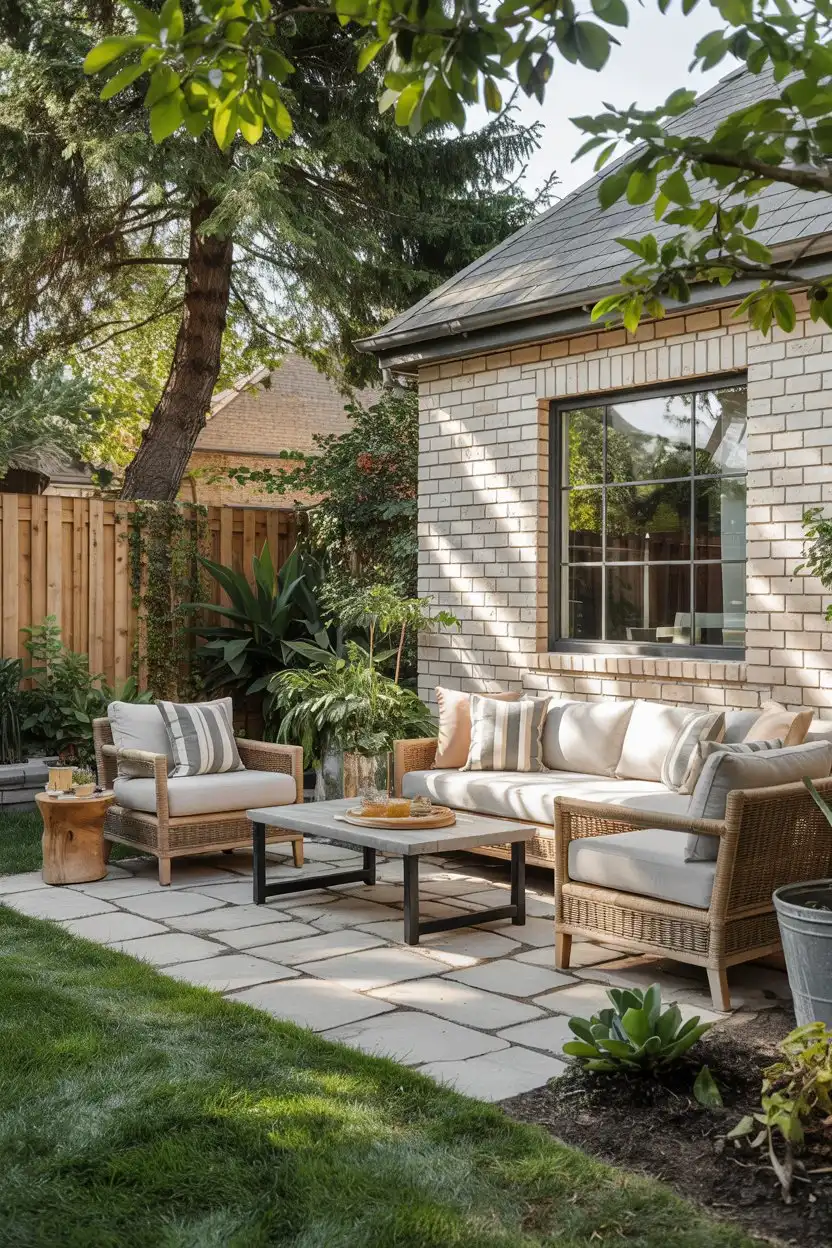
Pavers are the budget patio’s best friend: concrete or stone units that lock together dry, need no mortar, and can be laid by a careful beginner over a weekend. A 200-square-foot patio runs roughly $8–$15 per square foot DIY, versus double that professionally installed. patio garden layouts and simple running-bond patterns keep cuts (and waste) to a minimum. Edge the perimeter with paver restraints so the field doesn’t creep, and sweep polymeric sand into the joints to lock everything against weeds.
2. Stamped Concrete for Stylish Affordability
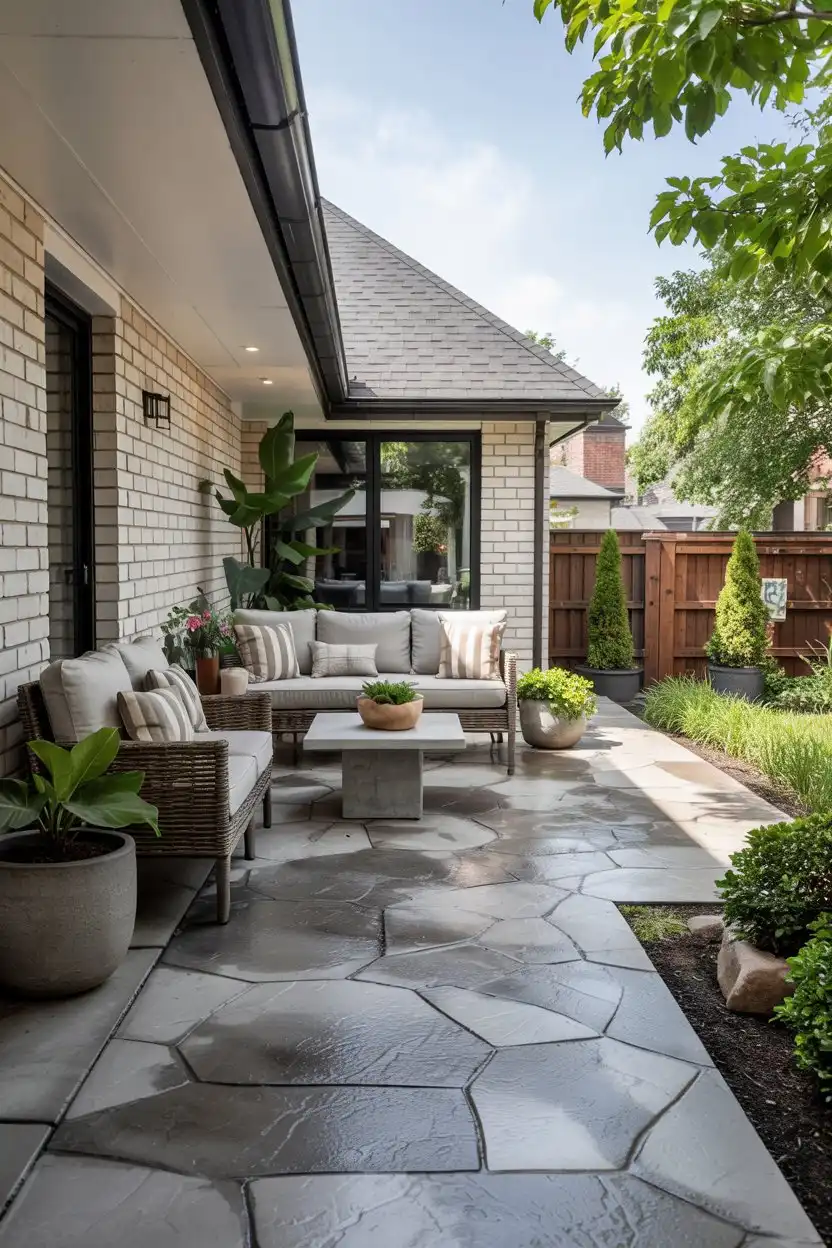
Stamped concrete gives you the look of flagstone or brick for $12–$18 per square foot installed — far less than real stone. The pattern is pressed into wet concrete, then stained, so you get texture without individual pieces to shift or weed through. The catch: it needs resealing every two to three years, and cracks, when they happen, are harder to hide than in a paver patio.
3. DIY Patio with Concrete Slabs
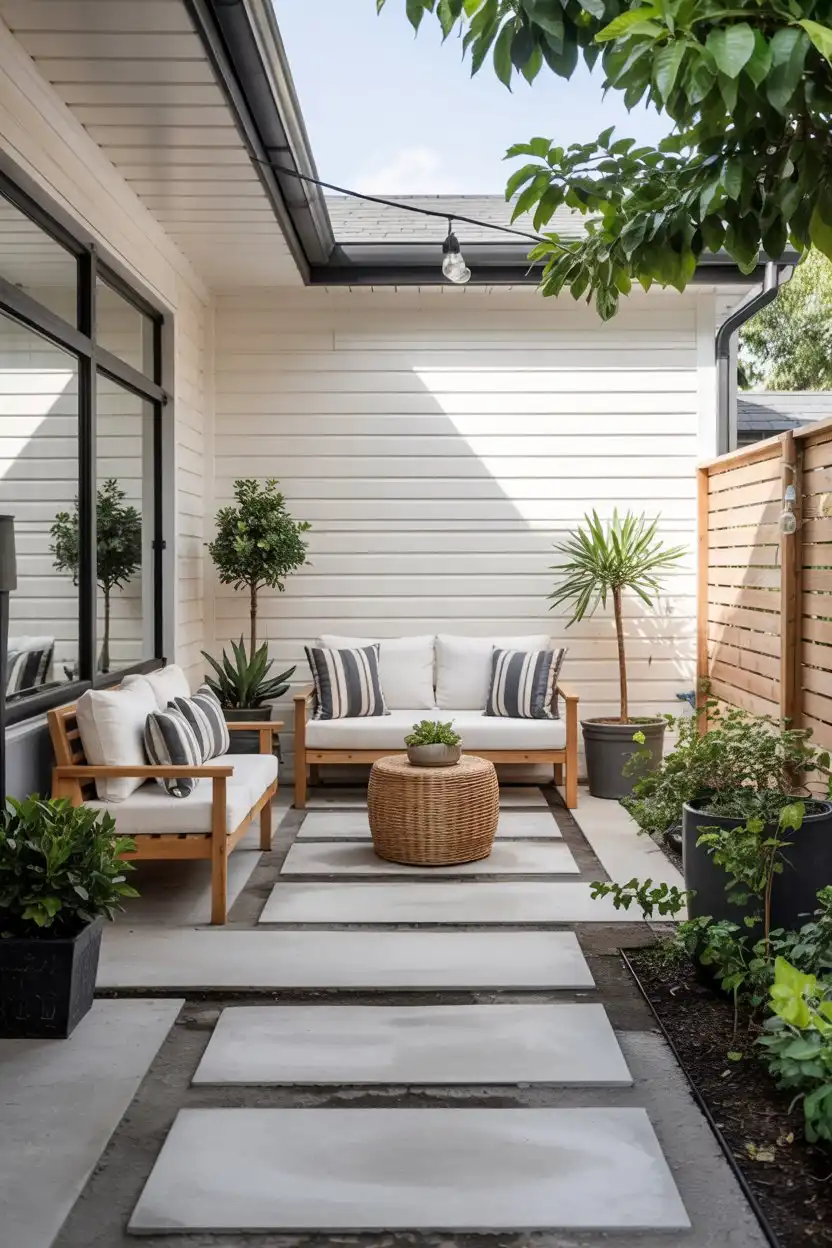
Pre-cast concrete slabs are the simplest patio of all: level a gravel base, lay 24-inch squares in a grid, done. At $3–$6 per slab from a home center, a small patio can cost less than a dinner out. The grid looks sharp with modern furniture; offset the joints or add ribbons of gravel between slabs for a softer feel.
Pair the slabs with a compact bistro set rather than full dining furniture — scale matters when the patio is small. A simple sail shade or a freestanding pergola kit keeps the space usable through summer without the cost of a roofed structure.
4. Outdoor Patio Designs with Pergola Shade
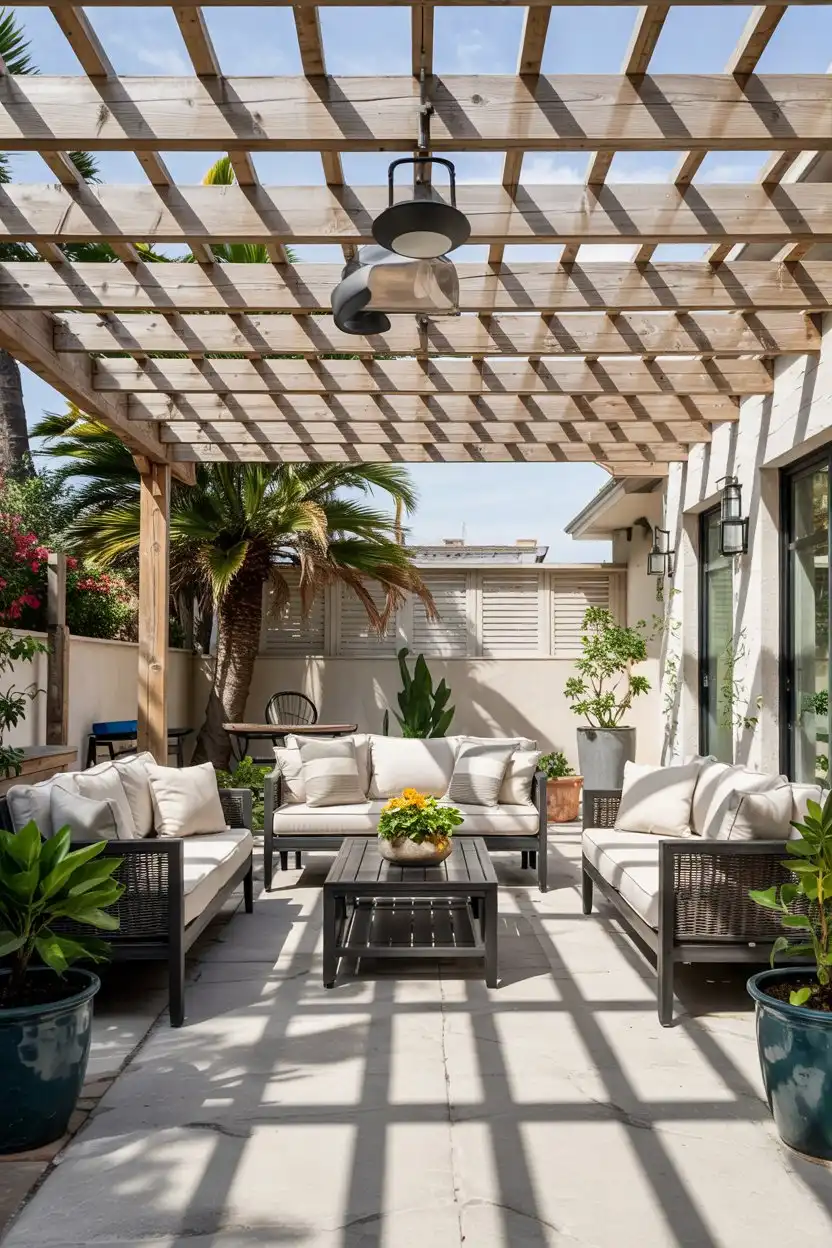
A pergola is shade with architecture: open rafters that filter sun while letting breezes through. Kits in cedar or powder-coated aluminum start around $500–$1,500 and assemble in a day with two people. Train a fast vine like clematis or jasmine over the top and within two seasons you have living shade that smells good too.
5. Affordable Flagstone Patio for Rustic Appeal
Flagstone’s irregular shapes and earthy tones make it the most forgiving patio material visually — uneven edges read as character, not mistakes. Laid on sand with wide joints, it drains naturally, and a single person can set a small patio over a long weekend. Fill the joints with gravel or creeping thyme instead of mortar for a cottage look that costs almost nothing extra.

6. Cozy Fire Pit with Patio Sets
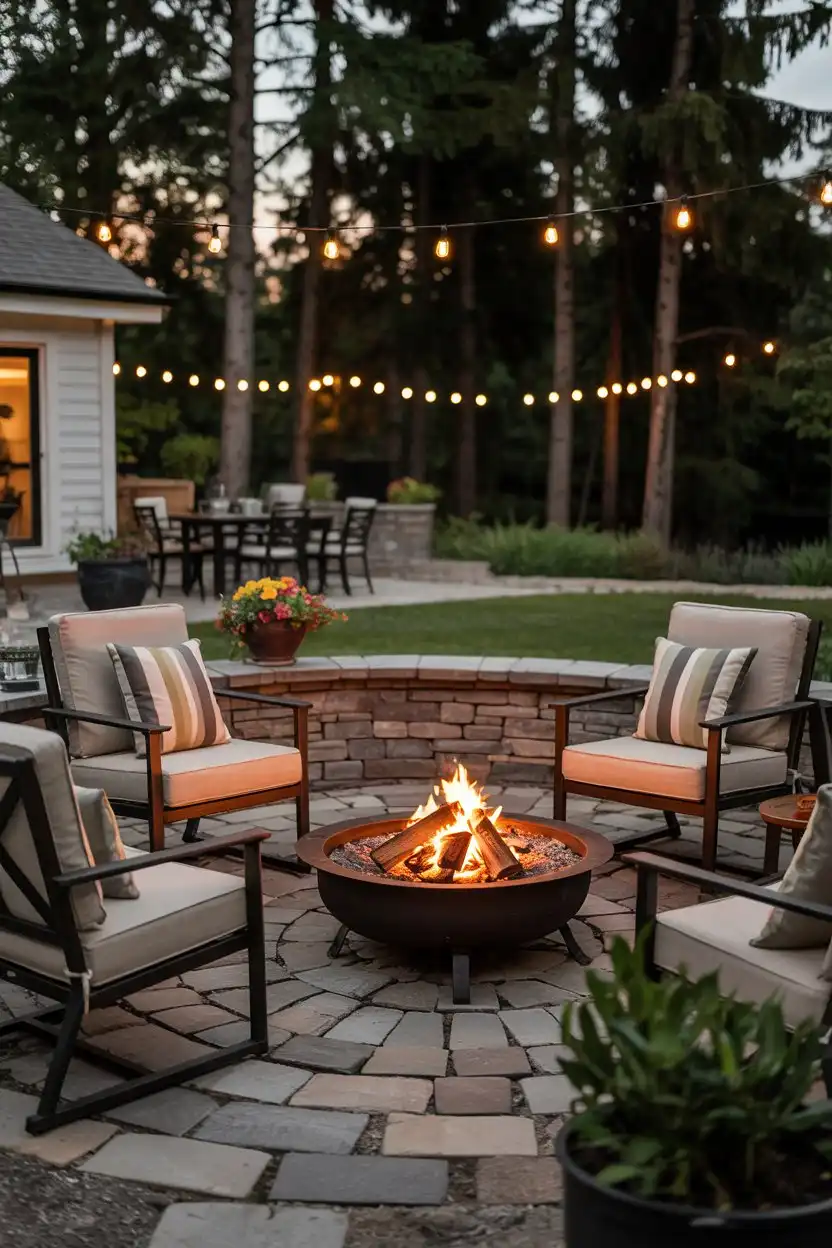
A fire pit is the cheapest way to double your patio’s usable season. A simple steel bowl runs $100–$300; a stacked-stone ring built from wall block costs about the same in materials. Keep seating low and close — Adirondack chairs or a curved bench around a 36-inch fire circle — and check local burn rules before you buy anything.
7. Small Patio Sets for Compact Spaces
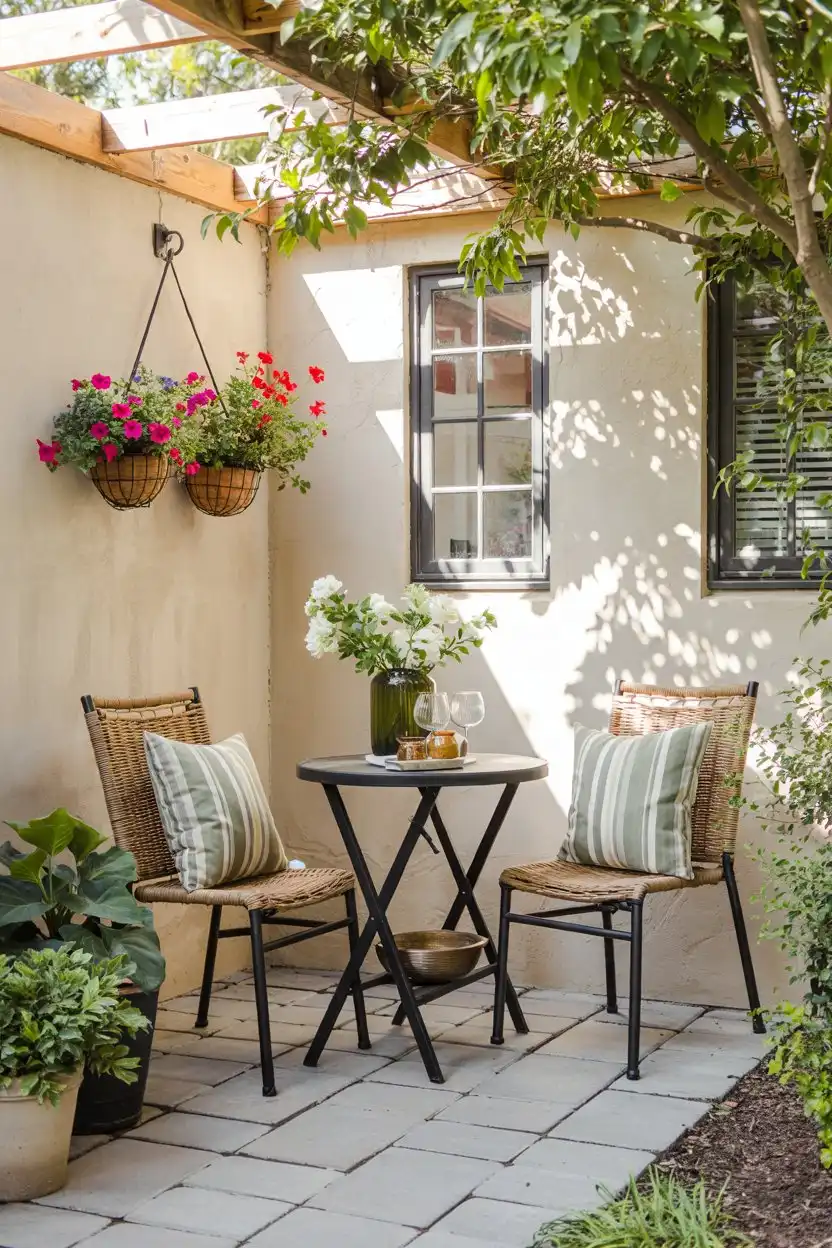
Small patios punish oversized furniture, so scale down deliberately: a 28-inch bistro table and two chairs, or a loveseat instead of a full sectional. Metal and resin wicker are the budget picks — light enough to rearrange, cheap enough to replace. Leave at least 30 inches of walkway around the set or the patio will feel like a furniture showroom.
8. Sturdy and Stylish Concrete Patio
A poured concrete slab is the workhorse foundation: $6–$10 per square foot, any shape you can form, and decades of life. For a budget build it doubles as the finished surface — no pavers needed on top. outdoor living areadesigns often start exactly here. Broom the finish for texture, or stamp and stain it for a stone look at a fraction of the price. Control joints every 8–12 feet keep inevitable cracks neat and straight instead of jagged.
If the pour is bigger than a small pad, hire the concrete work out — a bad pour is permanent, and a crew’s day rate is cheaper than jackhammering a mistake. Once cured, the slab takes any furniture you like, and a simple shade sail overhead turns it into a proper outdoor room.

9. DIY Paver Patio Installation
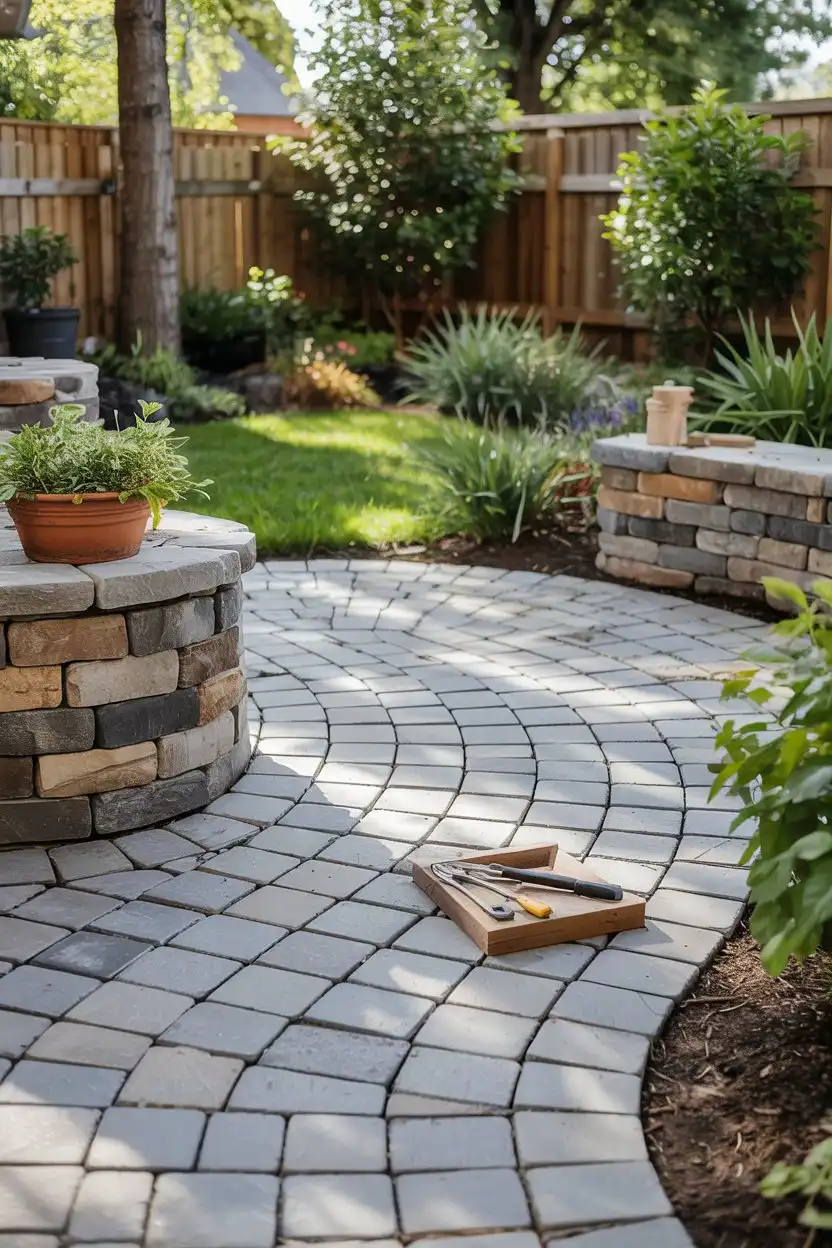
Laying pavers yourself saves roughly half the project cost, and the skill curve is gentle: excavate, compact gravel in lifts, screed sand, lay pavers, compact again. A plate compactor rents for about $75 a day and makes the difference between a patio that lasts and one that dips.
Start with a small area — 100 square feet — to learn the rhythm before committing to the whole yard. Snap chalk lines for your pattern and keep a rubber mallet handy; every paver should sit level with its neighbors before you move on.
10. Outdoor Sofa and Sectional Comfort
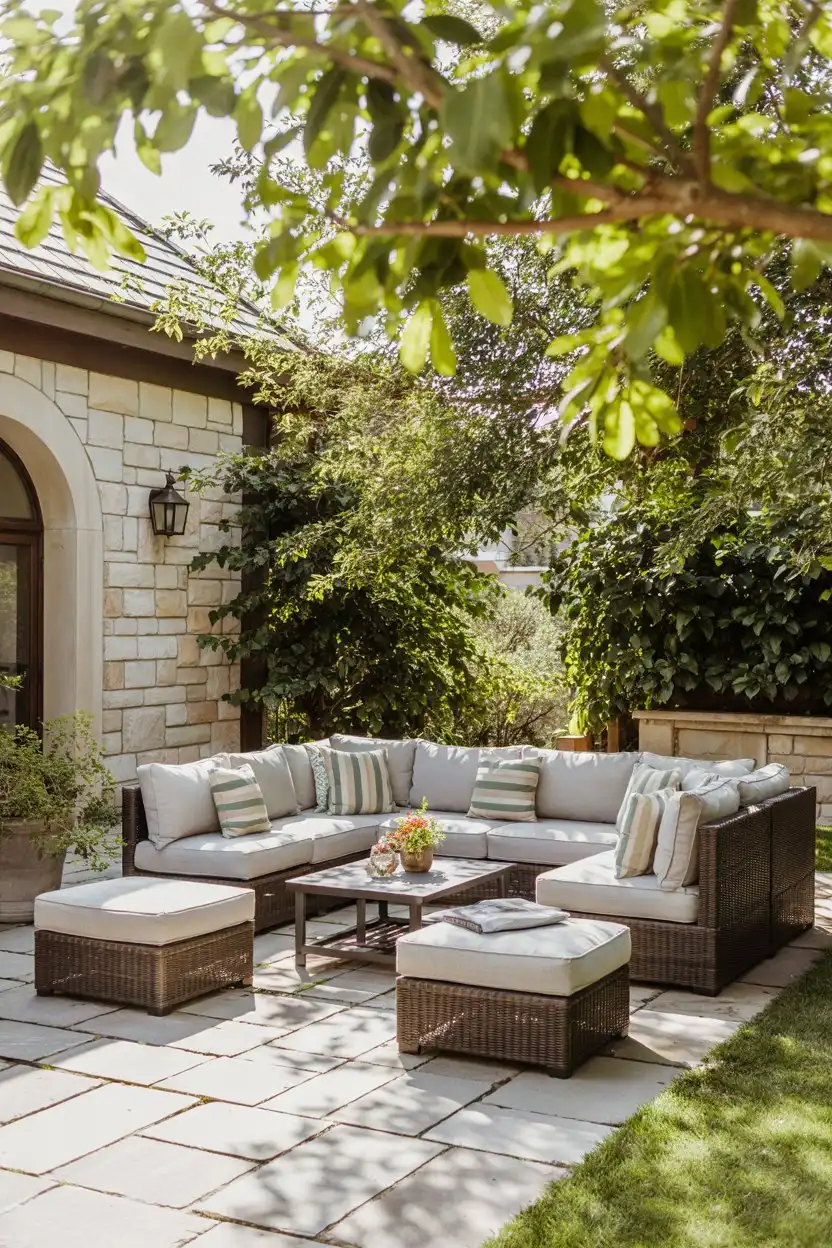
A deep-seated outdoor sofa changes how a patio gets used: suddenly it’s a living room, not just a place to eat. Budget sectionals in resin wicker with polyester cushions run $600–$1,200 for a full set — a fraction of indoor furniture prices. Look for removable, washable cushion covers; they’re the difference between a set that lasts five years and one that lasts two.
Add an ottoman or two instead of a coffee table and the seating becomes flexible — footrest, extra seat, side table with a tray on top. Storage ottomans swallow cushions and throws when storms roll in, which keeps the patio looking intentional instead of cluttered.
11. Covered Patio with Screened-In Option
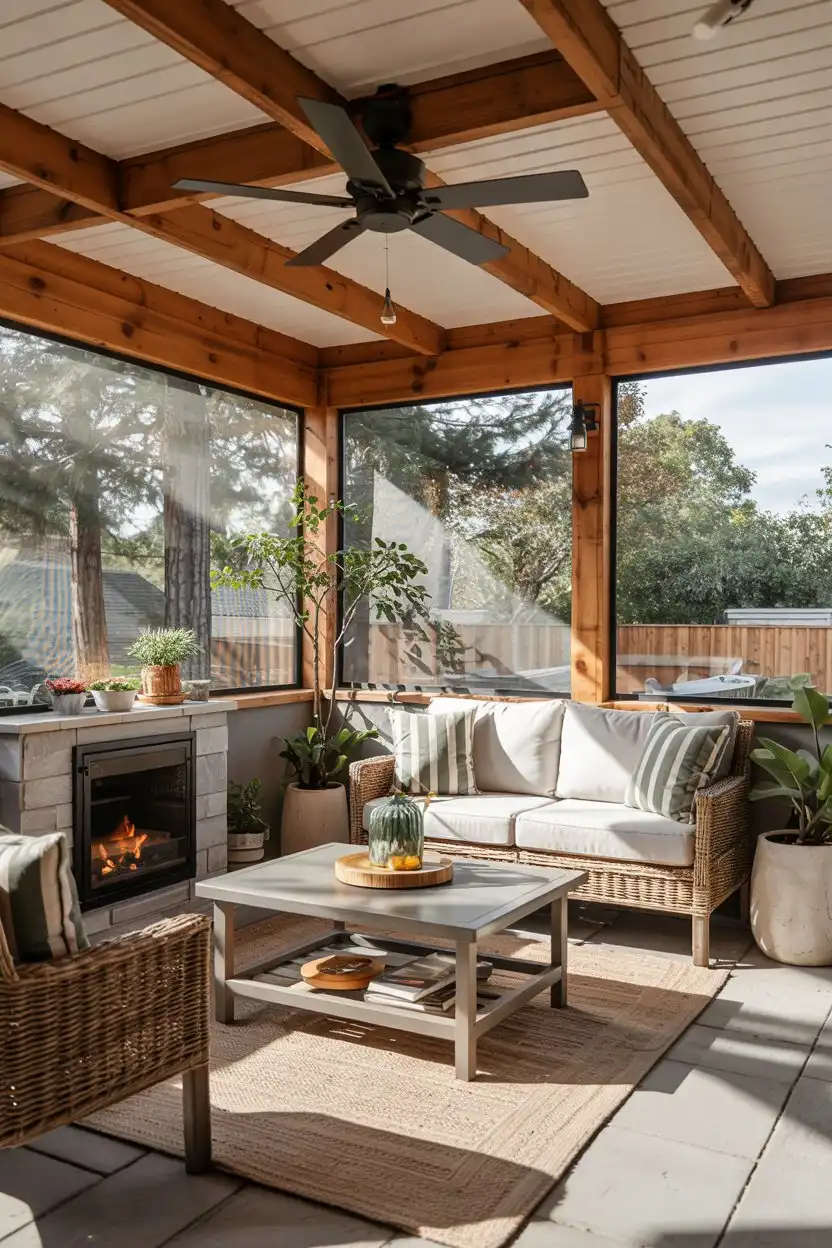
A roof changes a patio from fair-weather to year-round. The budget route is a simple gabled or shed roof on posts — or a screened enclosure if bugs are the real enemy. Screens add roughly $5–$10 per square foot to a roofed structure and turn evenings from a swatting session into actual relaxation. Keep one side open to the yard so it still feels like outdoors.
12. Garden Benches and Wooden Seating
A simple wooden bench is the cheapest real furniture you can put on a patio — under $100 bought, under $40 in lumber if you build it. Two benches facing each other across a small table make a dining spot; one bench along a path makes a destination. Cedar and pressure-treated pine both survive outdoors for years with an annual coat of sealer.

13. Using Garden Bistro Sets for Charm
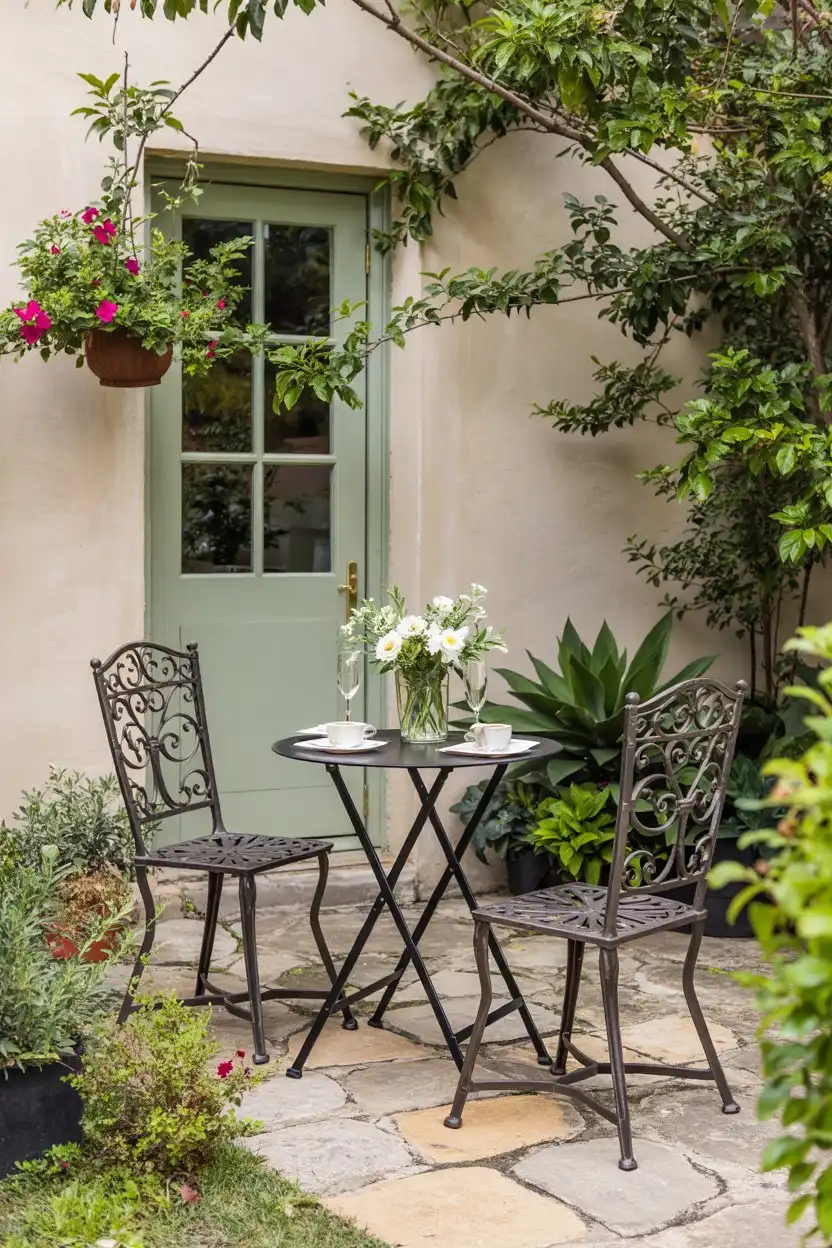
The bistro set is the patio equivalent of a café table: small, charming, and exactly right for coffee for two. At 24–32 inches across, it fits corners and narrow side yards where nothing else works. Metal sets under $150 are everywhere in spring; spend a little more for a folding design and it stores flat through winter.
14. Backyard Patio with Large Planters
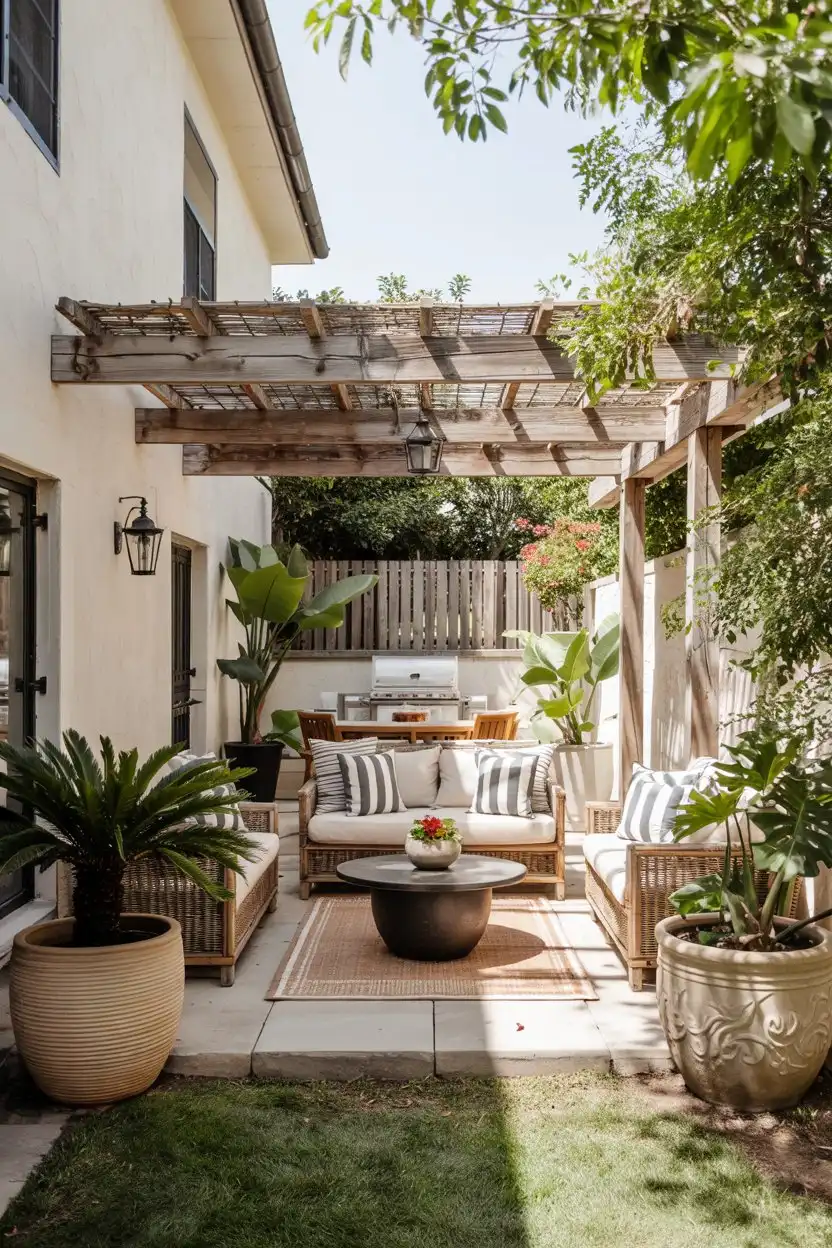
Oversized planters do structural work on a patio: they mark boundaries, add height, and soften hard edges. One 24-inch planter has more impact than six small pots, and big containers need watering less often. DIY versions from cedar fence pickets or half whiskey barrels cost a fraction of store-bought — just drill drainage holes and line with landscape fabric.
15. Affordable Patio Pavers with Design Variety
Not all pavers cost the same: basic concrete pavers run $3–$5 per square foot of material, while tumbled or specialty finishes climb from there. Mixing two tones — a field color with a darker border — looks custom without custom pricing. Buy 10% over your measured area; cuts and breakage eat into tight orders fast.

16. Fire Features for Cozy Evenings
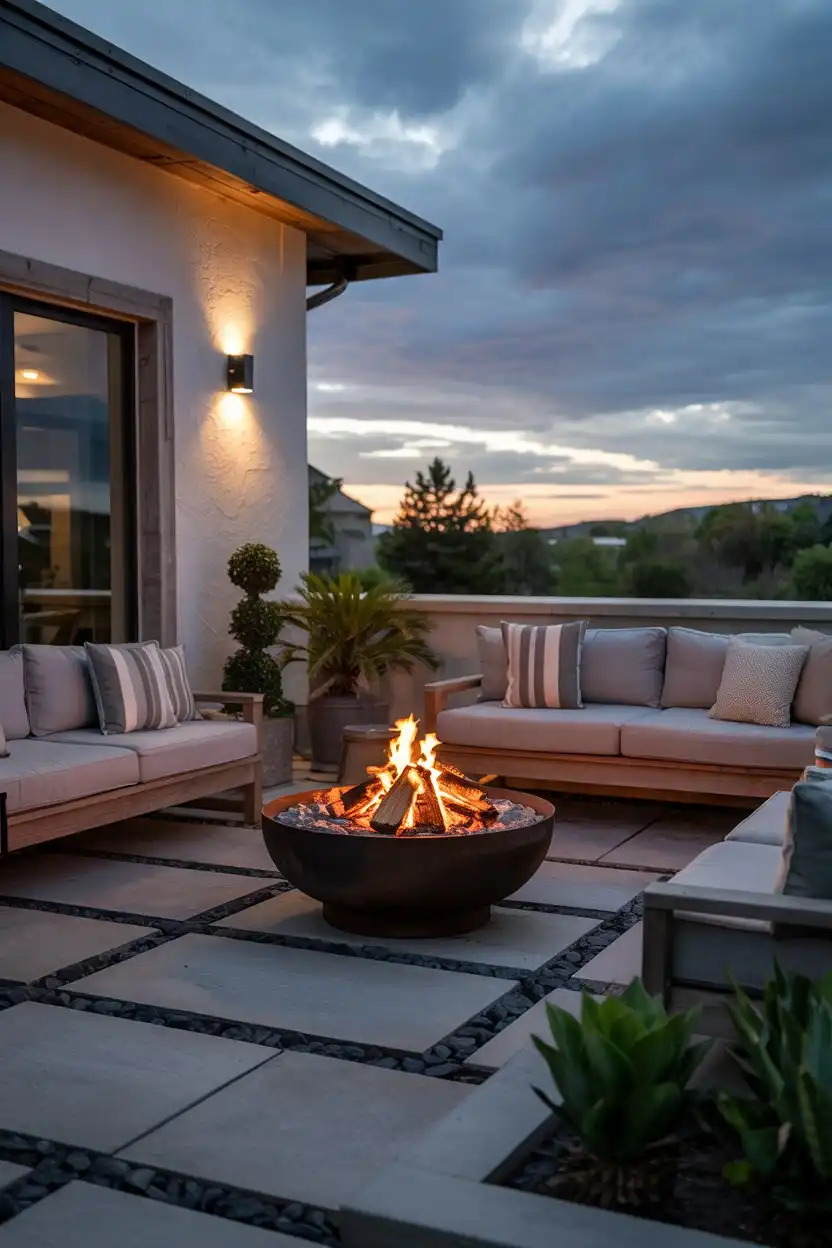
Fire features scale to any budget: a $150 steel bowl, a $400 gas fire table, or a DIY stone ring for the cost of block and an afternoon. Gas means instant on-off and no smoke complaints from neighbors; wood means real crackle and half the price. Either way, keep the feature 10 feet from the house and never on a wood deck without a proper heat shield.
17. Incorporating Outdoor Shade Structures
Shade doesn’t require construction. A 10-foot cantilever umbrella ($150–$400) shades a full dining set and tilts with the sun; a triangular sail shade ($50–$150) covers more area for less money but needs solid anchor points. Either one drops the felt temperature enough to make July afternoons usable — and protects your furniture from UV fading at the same time.

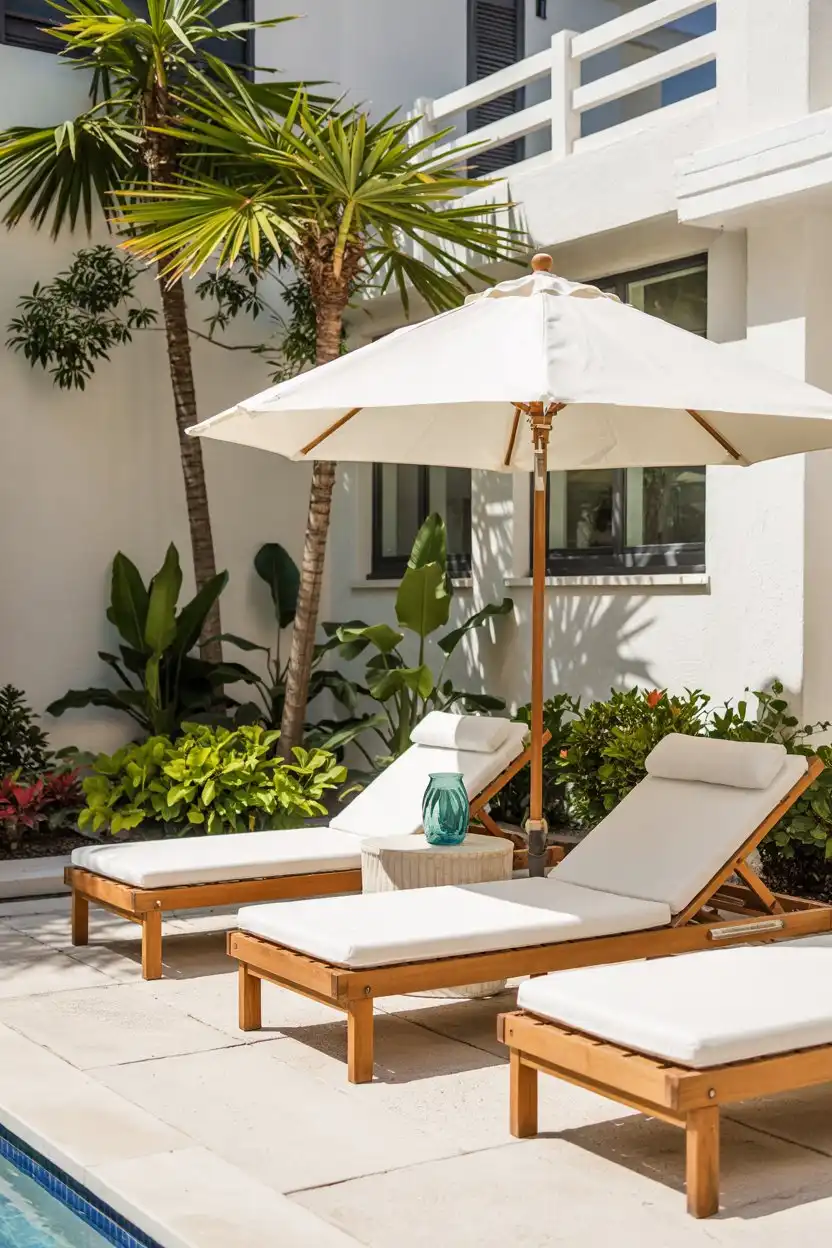
18. Pool Loungers for Relaxation Areas
Two loungers and a side table turn any patio corner into a resort vignette, pool or not. Resin or aluminum chaises run $100–$250 each and stack for winter. Angle them toward the best view — even if the view is just the garden — and add an umbrella; the resort feeling is mostly about posture and shade.
19. Metal Gazebo for Durable Shelter
A metal gazebo kit ($300–$900) is the budget answer to a permanent roof: bolt-together frame, fabric or polycarbonate top, up in a weekend. It won’t outlive a built structure, but five to eight years of sheltered patio for that price is honest value. Anchor it properly — a gazebo that becomes a kite in the first storm is the most expensive kind.

20. Concrete Patio Painting for Fresh Look
A gallon of concrete paint or stain ($30–$50) is the cheapest patio transformation there is. Etch and clean the slab first — paint bonds to prep, not to dirt — then roll on a solid color or tape off a geometric pattern. A stenciled tile pattern on gray concrete fools the eye completely from six feet away. Expect to recoat high-traffic paths every couple of years.

21. Combining Decks and Patios for Variety
Where the deck meets the patio, treat them as rooms with different jobs: deck for dining near the kitchen door, patio for lounging by the fire. A step or a change of material marks the threshold. Connecting them with a gravel or paver path keeps the flow natural, and each surface can be built in a different year to spread the cost.
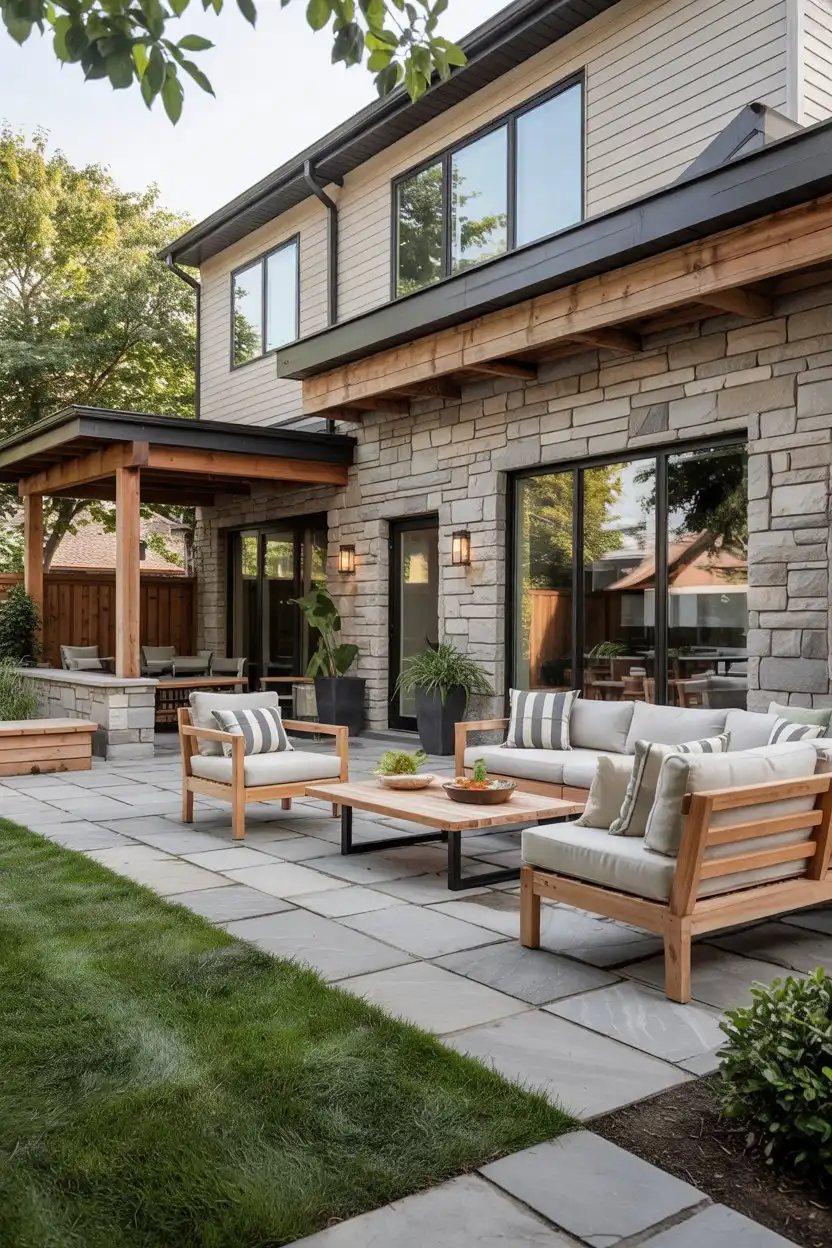
22. Using Driveway Pavers for Patio Use
Driveway-rated pavers are thicker and tougher than patio pavers, which makes them overkill — in a good way — for a patio that will never see a car. They cost about the same per square foot and you’ll never crack one dragging furniture. Buying a full pallet often drops the per-unit price enough to beat thinner patio pavers outright.

23. Screened-In Patio for Insect-Free Comfort
If mosquitoes own your evenings, screening is worth more than any furniture upgrade. A screened porch keeps the breeze, blocks the bugs, and protects cushions from surprise rain. The structure can be simple — posts, roof, screen panels — and it roughly doubles the hours you’ll actually spend outside. Ceiling fans help enormously; moving air is the second-best mosquito repellent.

24. Stylish Outdoor Ottomans and Loveseats
Outdoor ottomans and loveseats are the flexible pieces every patio needs: an ottoman is a footrest, a spare seat, and — with a tray — a side table. A loveseat seats two where a sofa would crowd. Buy them in the same weather-resistant weave as your main set and the whole patio reads as one deliberate design instead of assembled leftovers.

25. Adding Patio Conversation Sets for Social Spaces
A conversation set — two chairs, a loveseat, and a coffee table arranged facing inward — is what turns a patio from a walkway into a destination. The arrangement matters more than the price tag: pull furniture off the walls, face pieces toward each other, and leave the coffee table within arm’s reach. Shop end-of-season sales in August and September, when sets drop 30–50%.

FAQs for Outdoor Patio Designs