25 Minimalist Living Room Decor Ideas
Minimalism isn’t about owning nothing — it’s about every piece justifying its place. In a living room, that means clean lines, honest materials, and enough empty space for the room to breathe.
The 25 minimalist living room decor ideas below follow one rule: if a piece doesn’t serve comfort or function, it doesn’t make the list. Each pick covers what to look for, what to skip, and the dimensions that work in real rooms.
1. Choose a Neutral-Toned Sofa Set
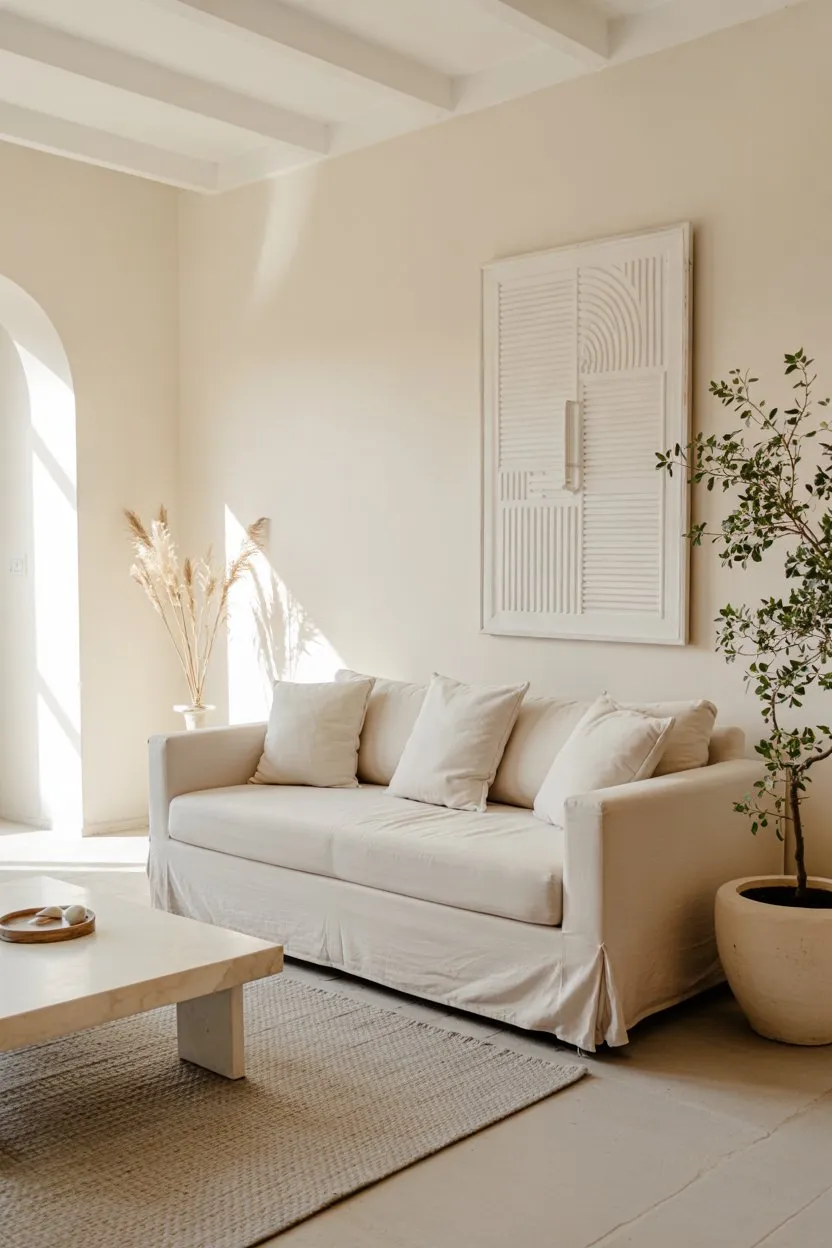
Start with the sofa — it’s the largest object in the room and sets the palette. Warm beige, greige, or soft white upholstery in a tight weave keeps the look calm; performance fabrics (look for 50,000+ double rubs) survive kids and pets without looking utilitarian.
Keep the silhouette simple: straight arms, low back, legs visible. A sofa on 4-inch legs shows floor underneath, which tricks the eye into reading more space — the oldest small-room trick in the book.
2. Opt for a Sleek L-Shaped Sectional Couch
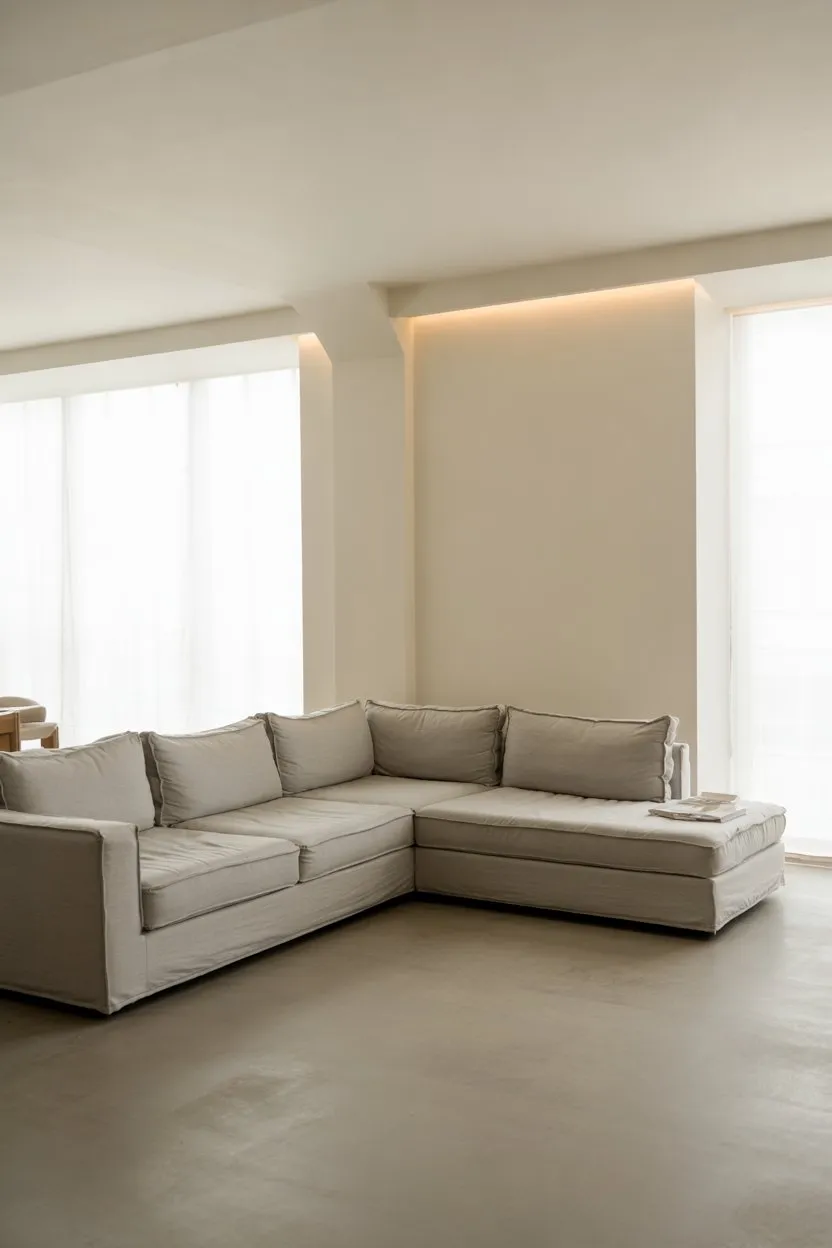
An L-shaped sectional seats five in the footprint of a sofa plus chair, and the chaise end defines the seating zone without a rug. Look for one with a low profile (under 34 inches high) so it doesn’t wall off the room.
Left- or right-facing matters — measure your wall and door swing before ordering. A reversible chaise costs a little more but saves you if you rearrange.
3. Use Floating TV Stands to Save Floor Space
A wall-mounted console frees 8–10 inches of floor and makes the whole wall feel lighter. Choose one with cable routing and closed compartments — visible wires undo the entire effect in seconds.
Mount it 6 inches below the TV’s bottom edge and keep the top surface nearly clear. One object, maybe two; a floating shelf crowded with gadgets is just clutter at altitude.

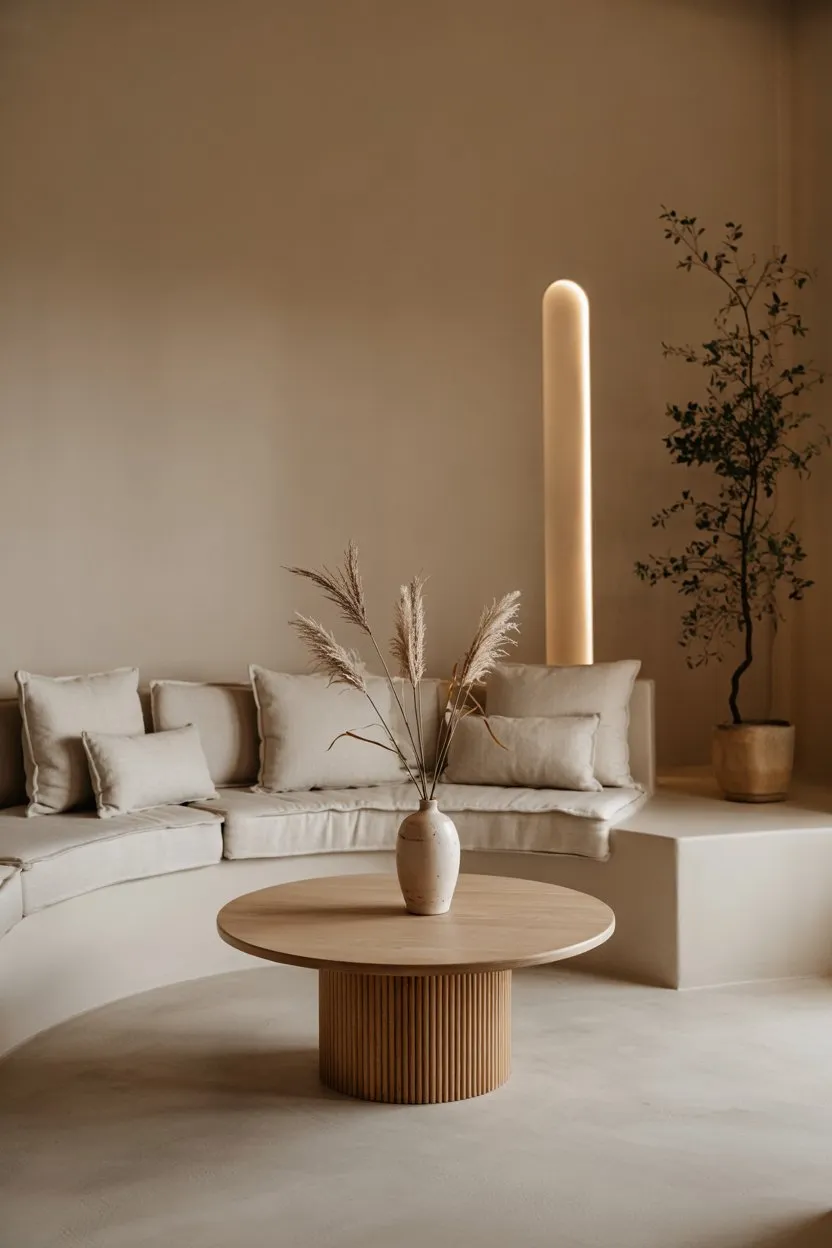
4. Integrate Round Coffee Tables for Softer Lines
Round coffee tables break up the rectangles — sofa, rug, TV wall — that dominate most rooms. A 30 to 36-inch round top keeps walkways clear where a square’s corners would catch hips.minimalist furniture pairs well with it because the contrast is built into the shapes, not the styling. Glass tops disappear visually; light oak adds warmth without weight.
One caution: round tables show clutter faster than rectangular ones, so commit to the tray rule — everything on the table lives on one tray, or it doesn’t live there.
5. Add Accent Chairs with Simple Shapes
Two accent chairs opposite the sofa create conversation without a bulky loveseat. Look for clean silhouettes — a slipper chair, a simple swivel — in a texture that differs from the sofa, like bouclé against flat weave.
Keep them light enough to move with one hand. If a chair can’t be dragged to the window for reading light, it’s furniture, not flexibility.

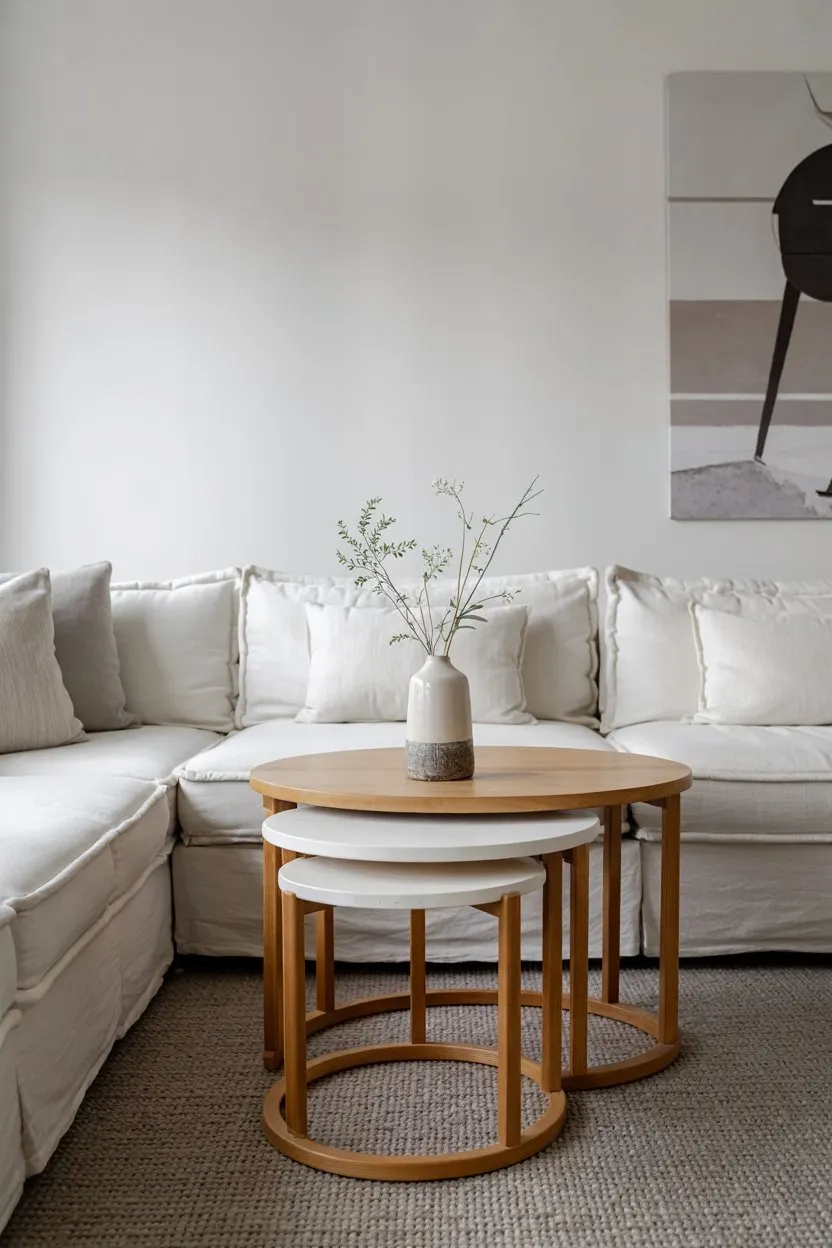
6. Use Nest of Tables for Flexible Functionality
Nesting tables are two or three side tables in one’s footprint — pull one out for guests, tuck them back after. It’s the most space-efficient surface you’ll own.
Match the finish to your coffee table so the set reads as intentional. The small one also makes an excellent plant stand or bedside table when it’s not on living-room duty.
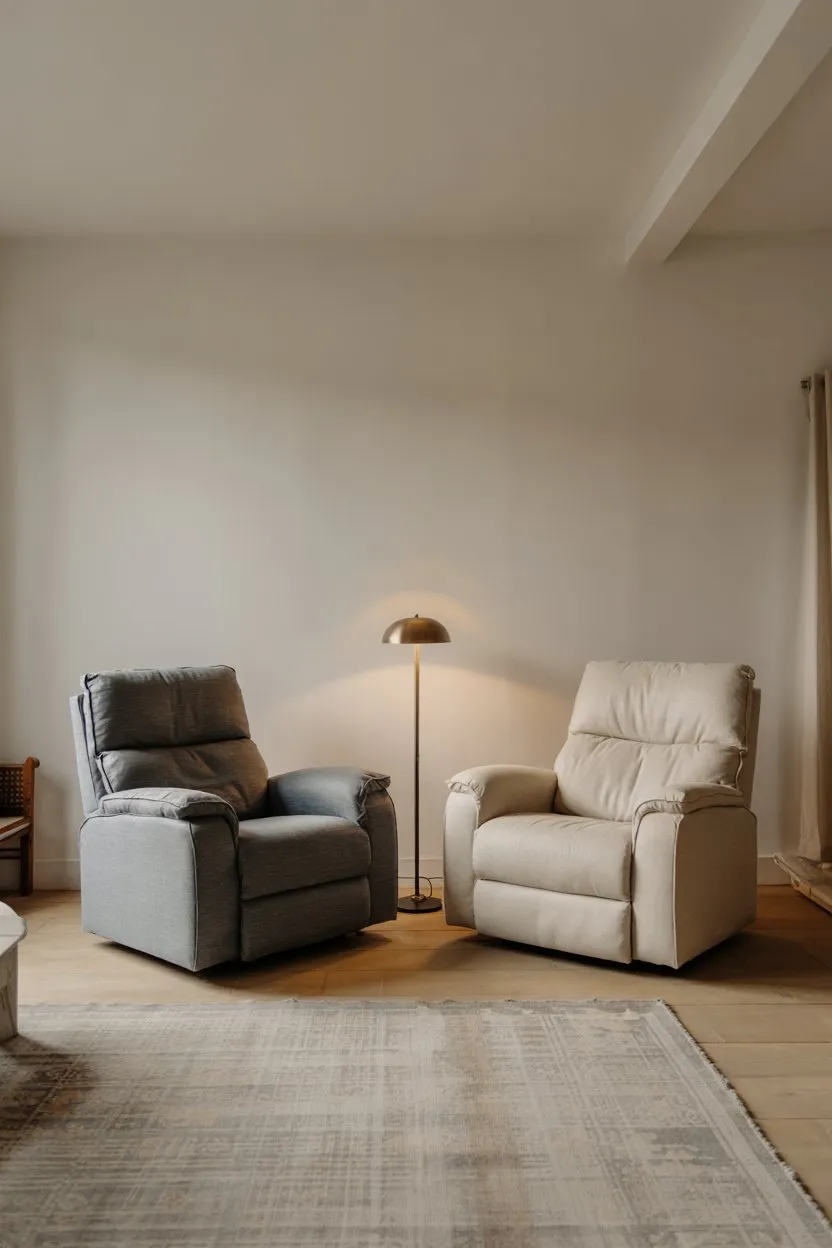
7. Embrace Recliner Sofas in Subtle Designs
Recliners can work if they don’t look like recliners: wall-hugger mechanisms, tailored upholstery, no visible levers. Modern designs need only 2–4 inches of wall clearance to recline fully.minimalist interiors demand visual quiet, so choose the recliner in the same neutral family as the sofa. The mechanism should be the secret, not the feature.
Test the recline in person if you can — cheap mechanisms wobble and ruin the tailored look within a year. A good one feels like a regular sofa until you lean back.
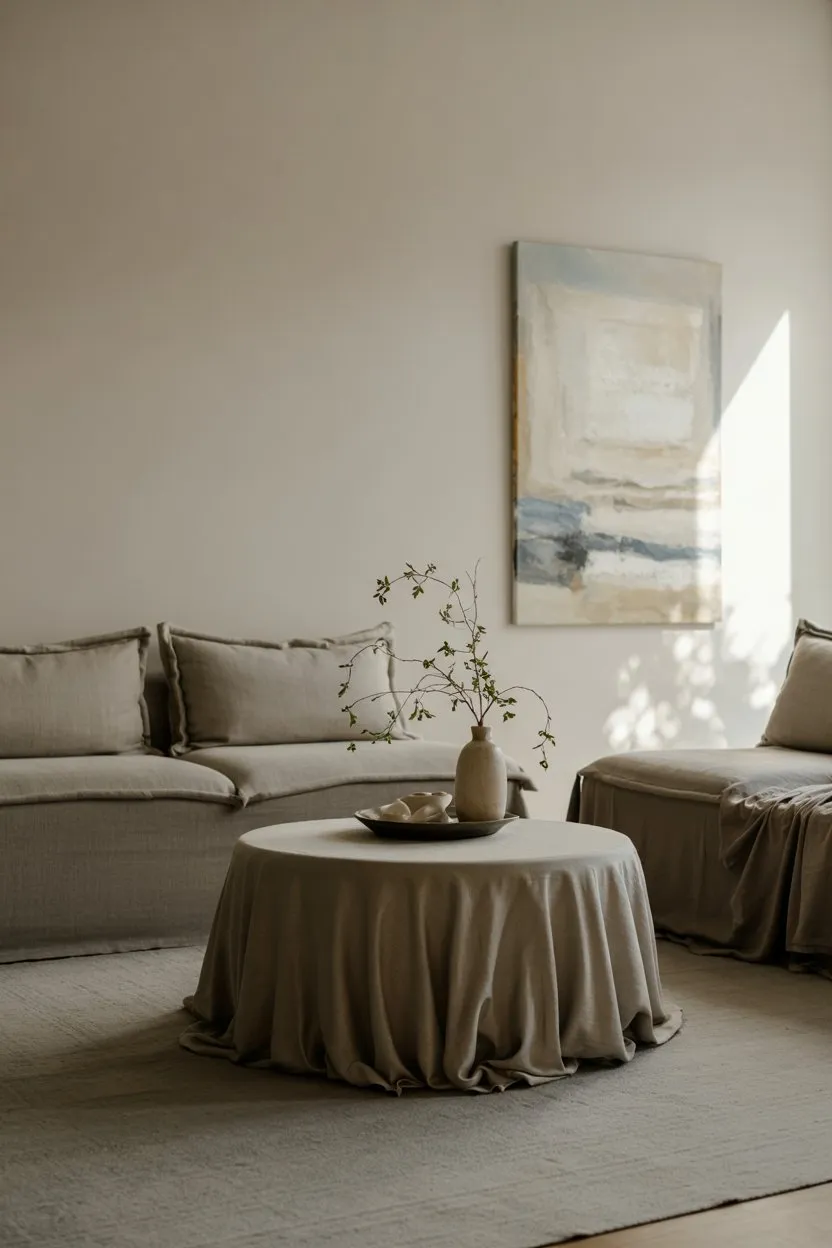
8. Incorporate Ottoman Coffee Tables
An upholstered ottoman as a coffee table gives you a footrest, extra seating, and hidden storage in one 36-inch square. Top it with a tray and it holds drinks as steadily as wood.
Look for one with a hinged top and washable fabric. The storage swallows throws and remotes — the two things that most often wreck a clean look.
9. Choose Side Tables with Clean Lines
A side table should be 1–2 inches lower than the sofa arm and just big enough for a lamp and a book — 16 to 20 inches across. Anything larger starts competing with the sofa.
One material, no ornament: a simple oak drum or a black metal C-table that slides under the sofa. Understated is the whole job description here.
10. Use Sofa Tables to Define Space
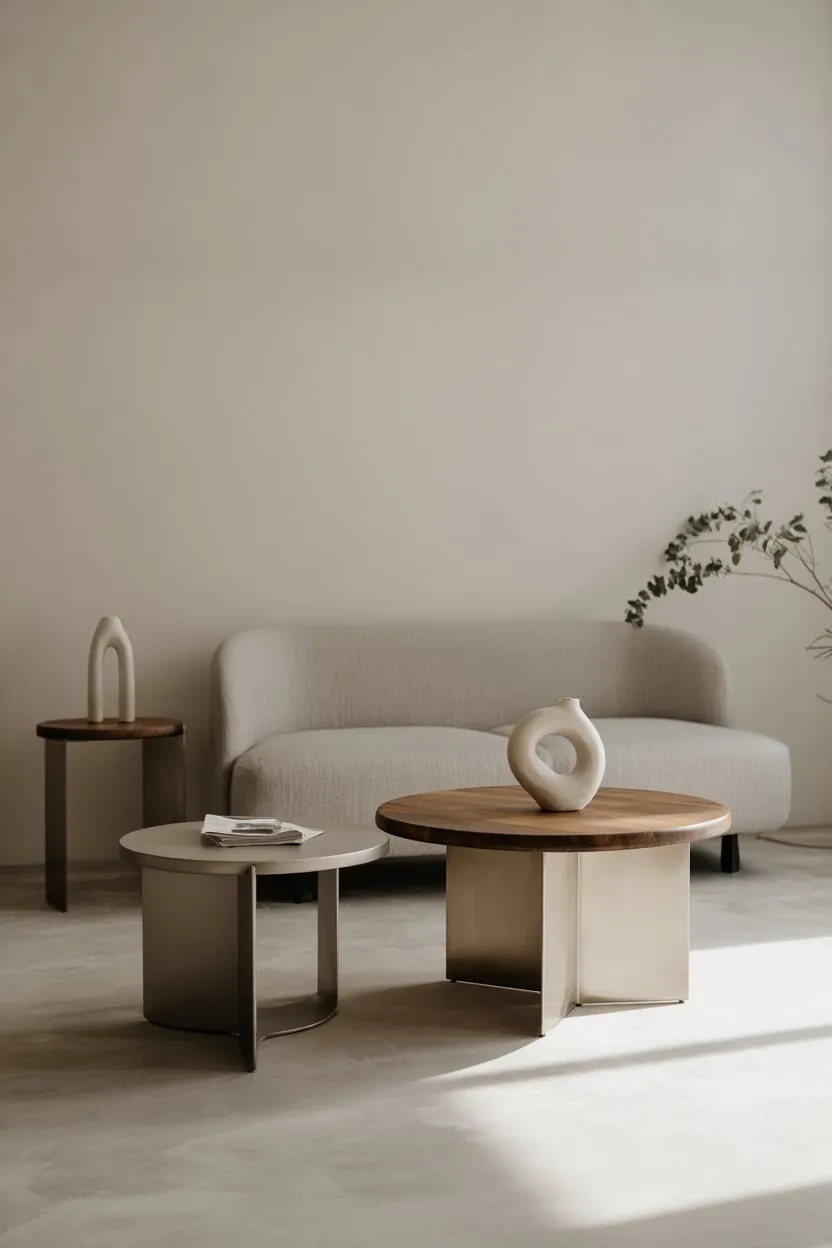
In an open plan, a slim console behind the sofa draws the line where the living room ends — no rug required. At 10–12 inches deep it defines without blocking sightlines.
Style it with a lamp at one end and breathing room elsewhere. It’s also the natural home for the things that migrate: keys, chargers, the book you’re reading.
11. Incorporate a Loveseat for Compact Spaces
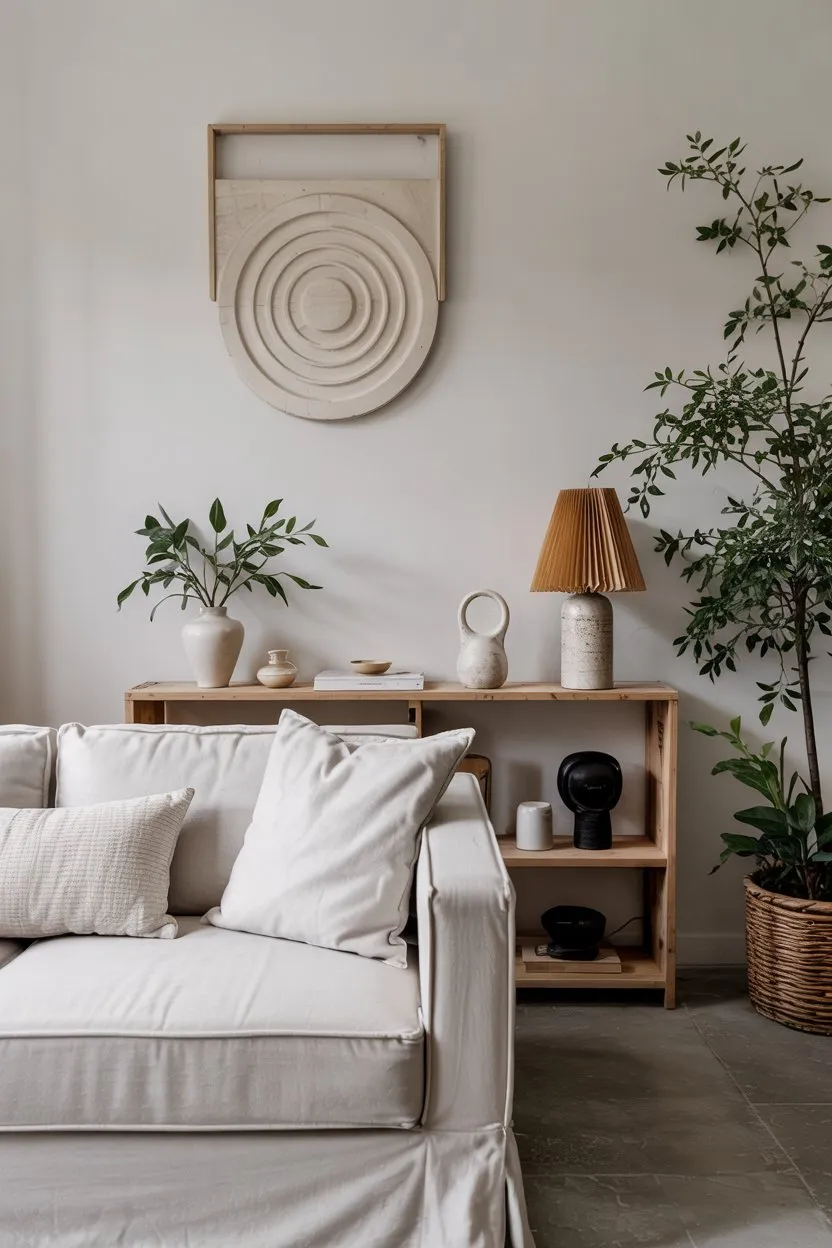
A 48 to 58-inch loveseat seats two in rooms where a full sofa overwhelms. It tucks into corners and pairs with a single accent chair to make a complete seating group.
Keep the back low and the arms slim — every inch of frame is an inch not spent on sitting. In tight rooms, a loveseat plus ottoman often beats a sofa plus chair.
12. Select Modern Living Room Furniture Sets
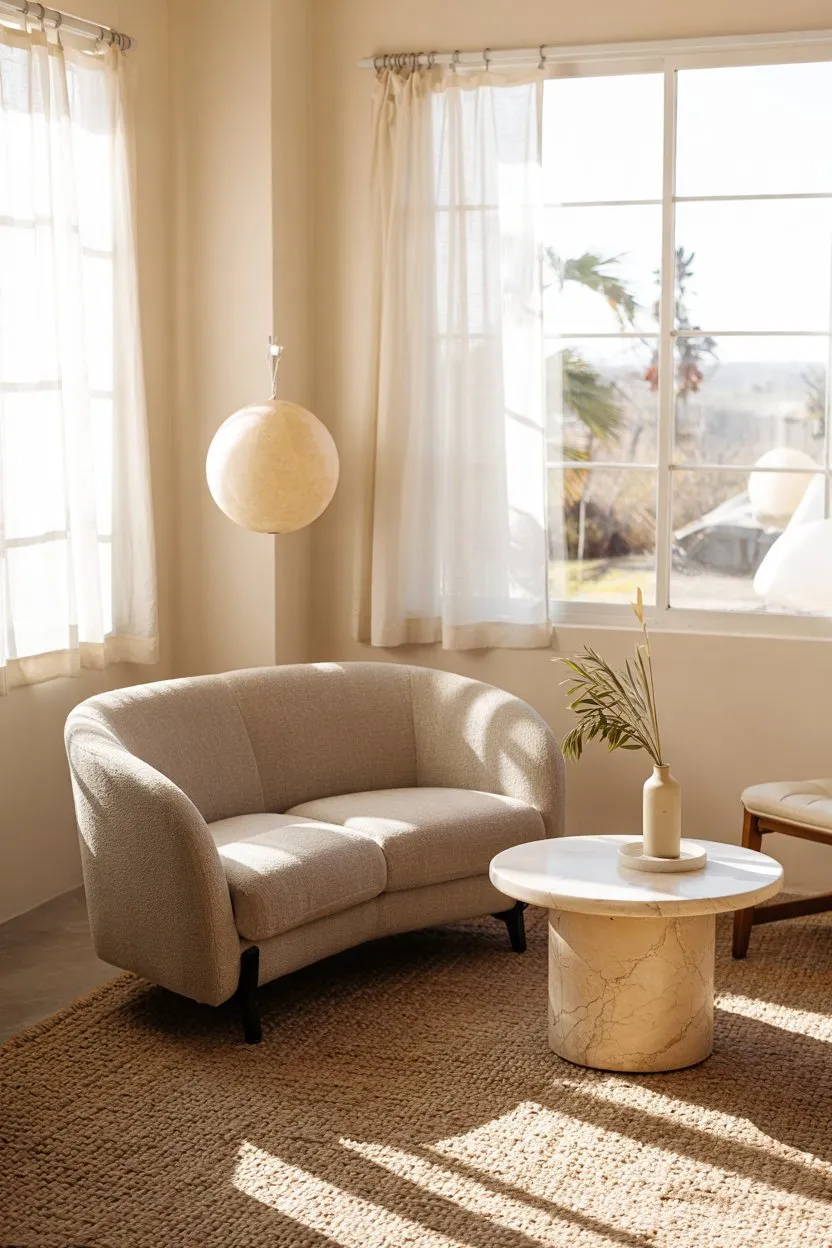
Matching sets get a bad rap, but coordinated pieces in the same wood tone and fabric family create instant calm. The trick is buying the set for the bones, not the accessories.
Break up the matchy-matchy with your own textiles and art. A set gives you harmony for free; personality is still your job.
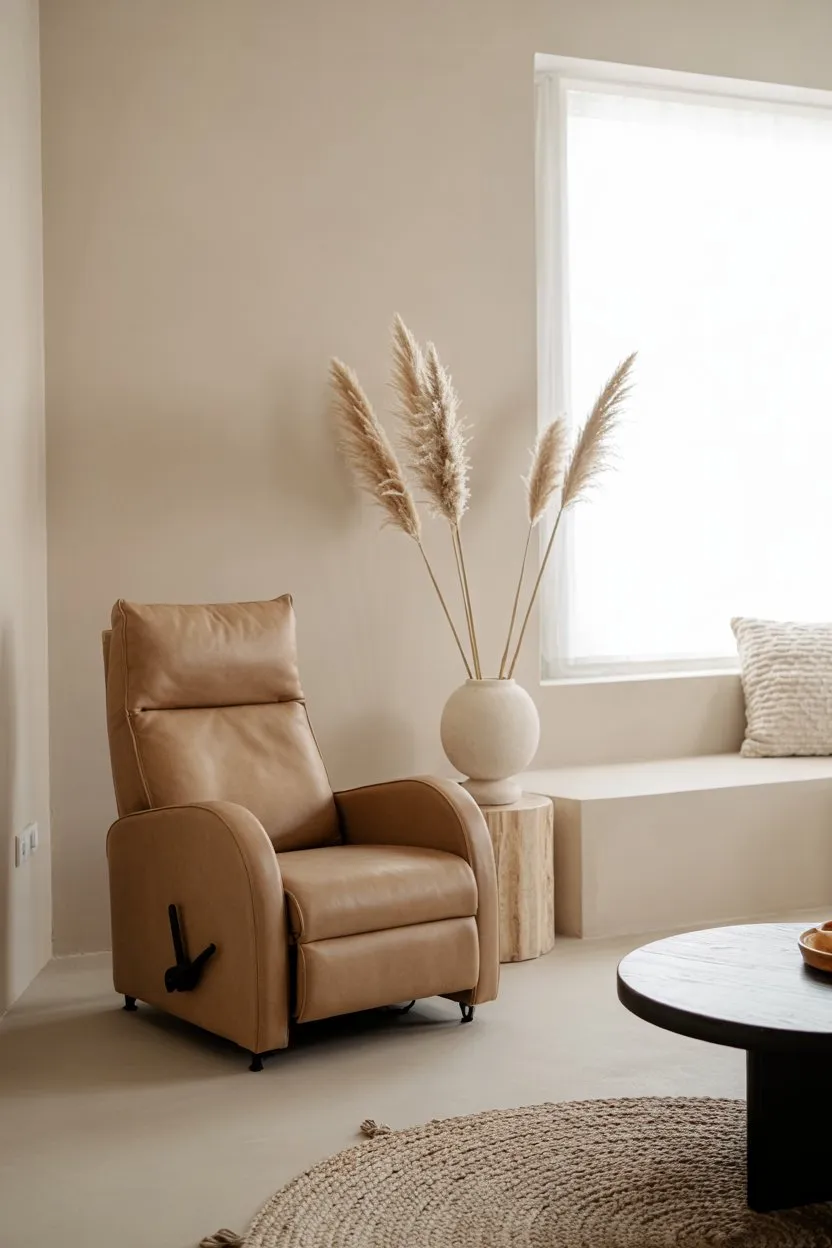
13. Highlight the Living Room with a Statement Recliner Chair
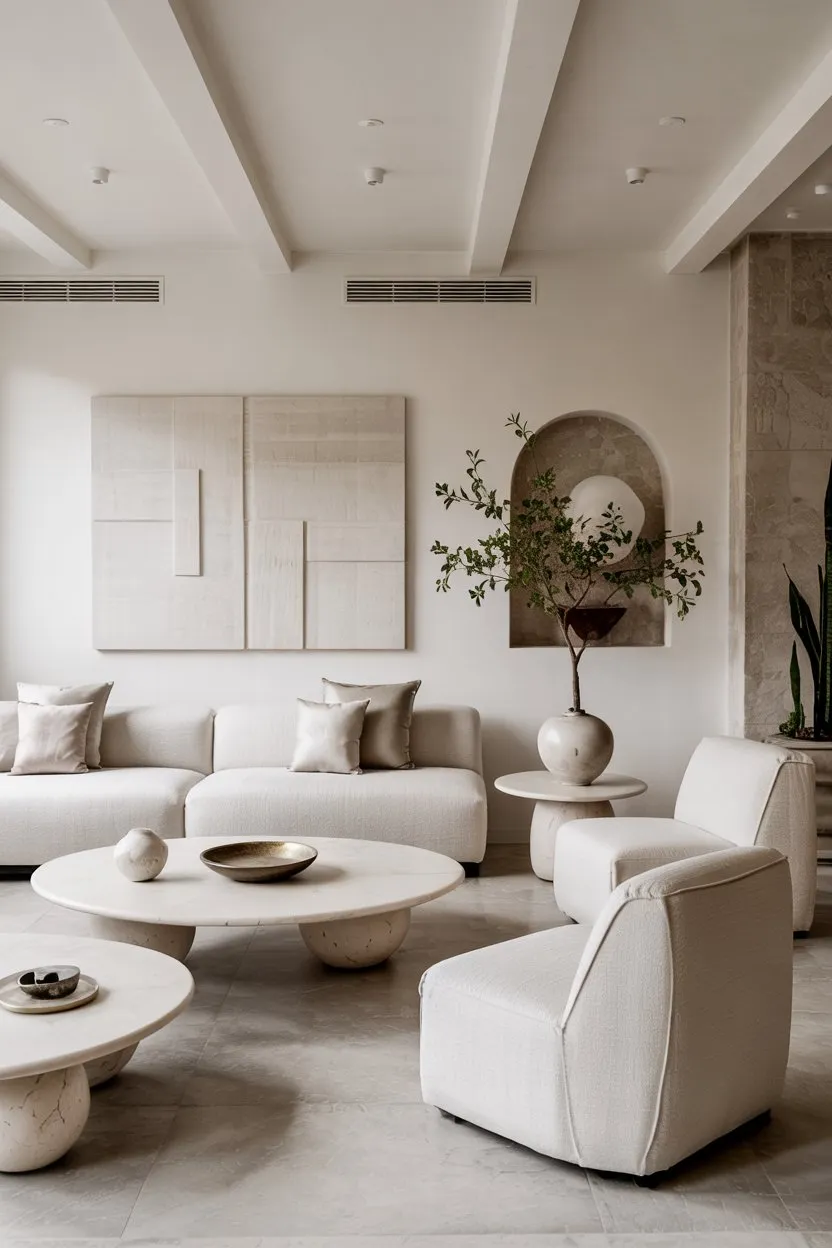
One chair is allowed to have personality: a sculptural swivel or a leather lounger in cognac becomes the room’s focal point. Keep everything else quiet so it can carry the room.
Angle it toward the main seating, not the TV — a statement chair invites conversation, and facing it at the sofa makes that invitation explicit.
14. Use Console Tables for Additional Storage
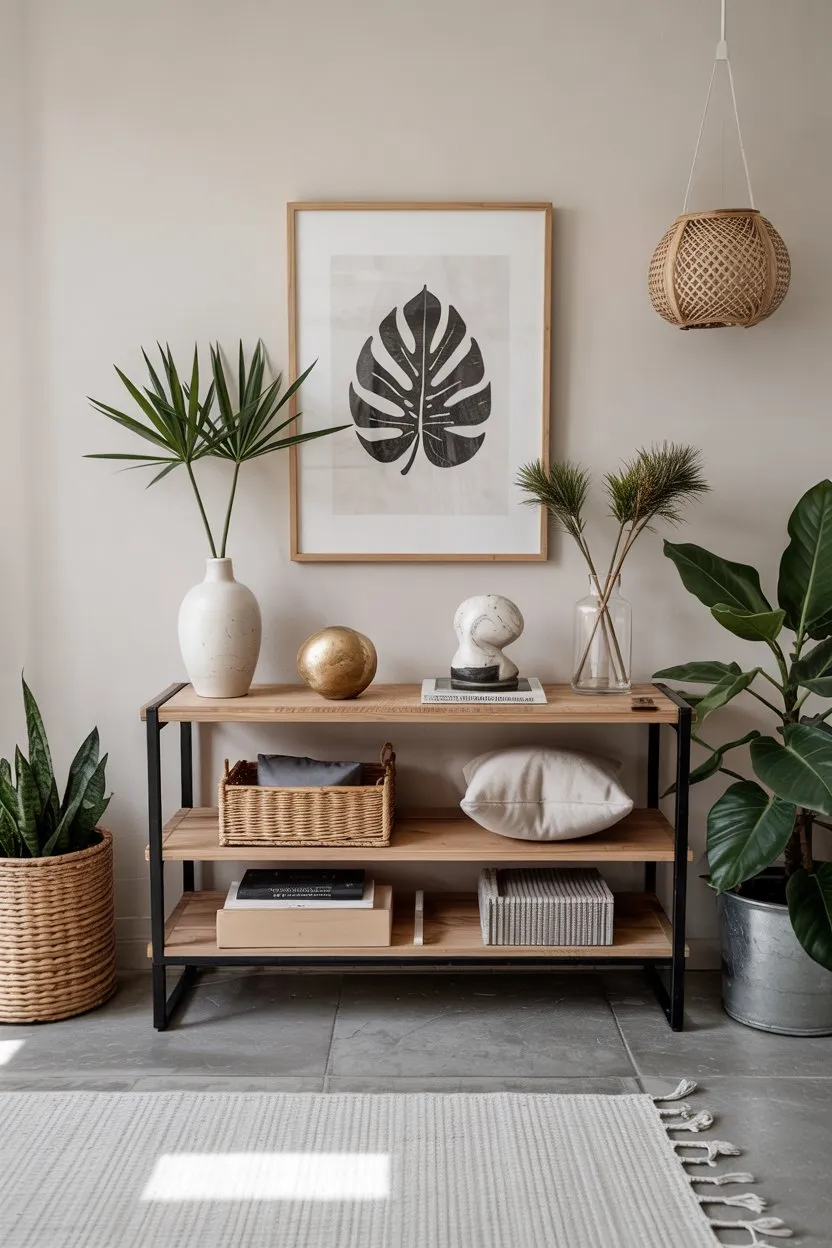
A console with drawers or a lower shelf turns dead wall space into storage for board games, throws, and the inevitable remote collection. Narrow profiles (under 14 inches deep) fit almost anywhere.
Use the surface for a lamp and one stack of books; the storage below does the real work. Closed storage beats open shelves here — out of sight is the minimalist way.
15. Integrate TV Cabinets with Concealed Storage
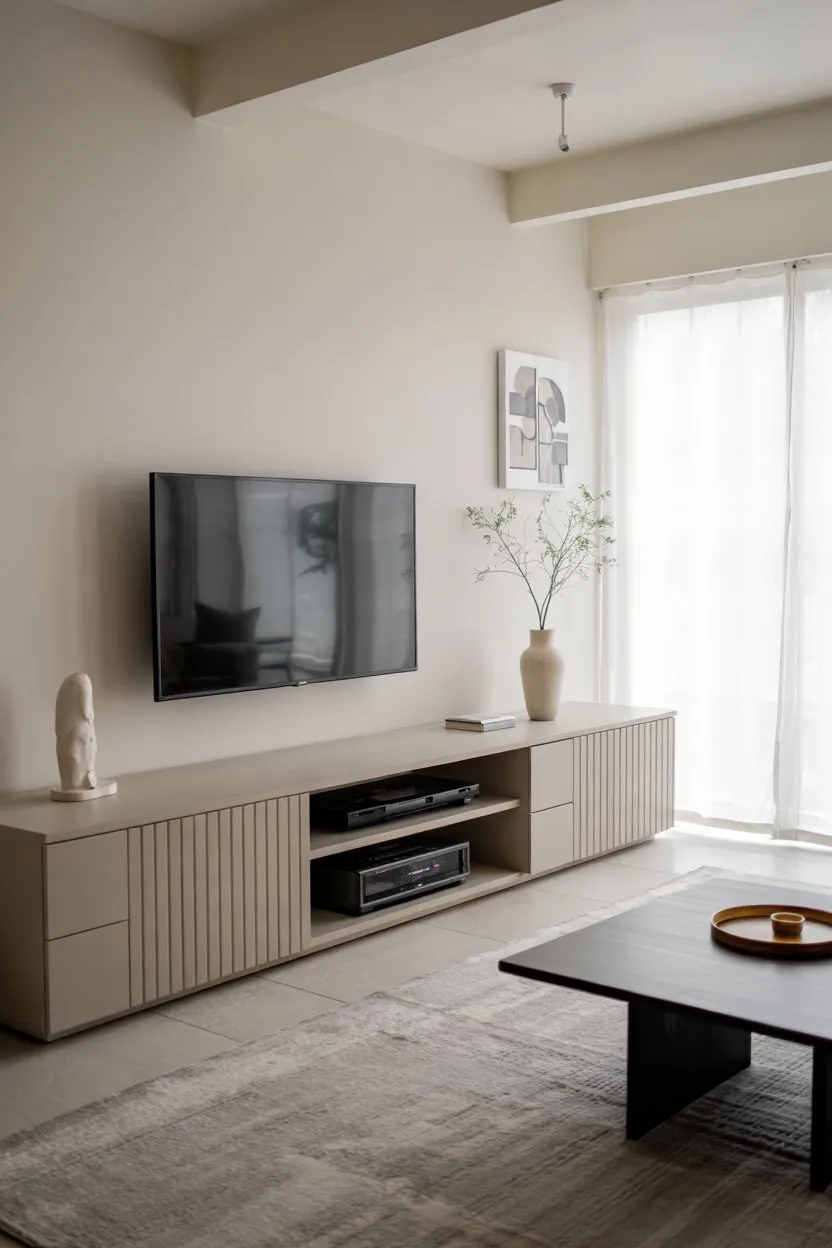
A low credenza with doors hides the router, consoles, and cable box behind clean fronts. Ventilated backs or mesh panels keep electronics cool without showing them.
Match its width to the TV (or slightly wider) and keep the top clear except for one low object. The cabinet should read as furniture, not as a gadget garage.
16. Incorporate Accent Armchairs for Visual Interest
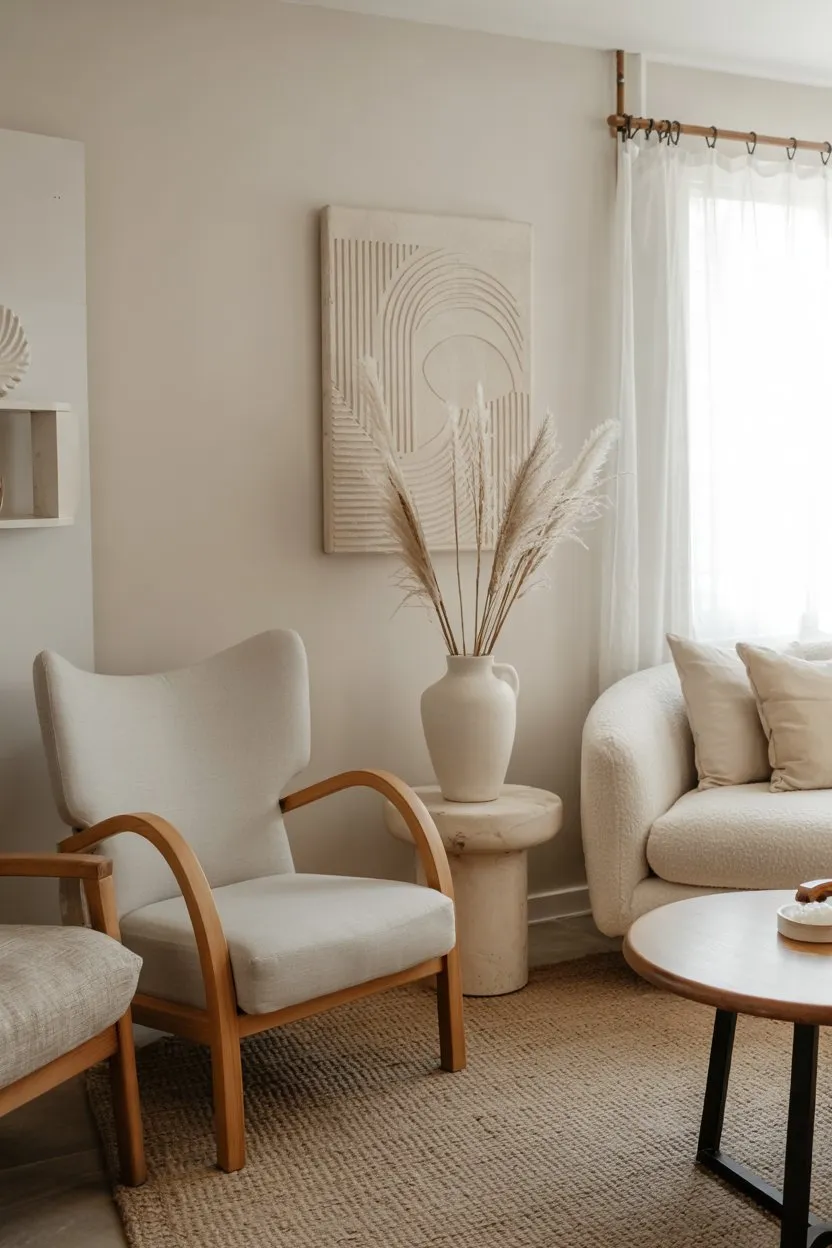
A second accent chair in a contrasting texture — rattan, leather, or a bold-ish muted tone like olive — stops the room from feeling like a showroom set. Contrast is interest; matching is monotony.
Place it at an angle to the sofa rather than parallel. The slight rotation makes the arrangement feel designed instead of lined up.
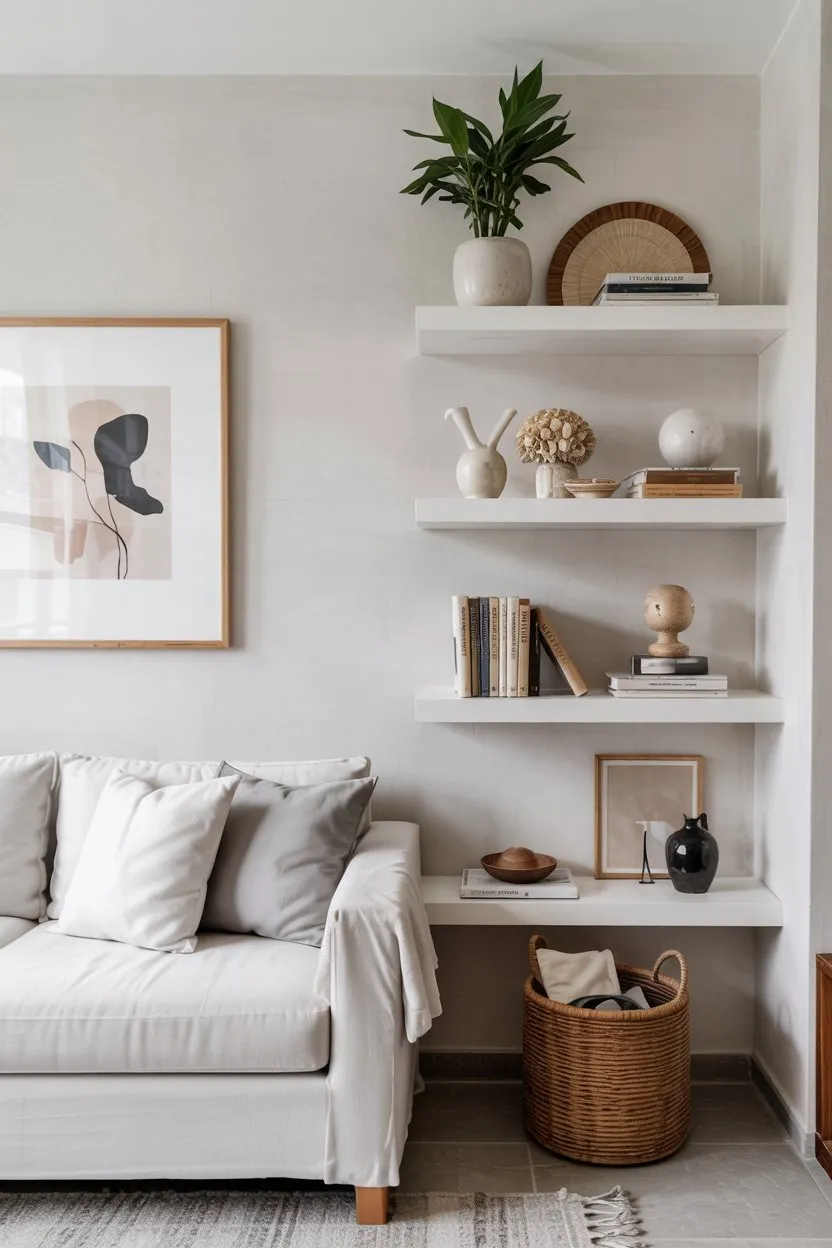
17. Add Floating Shelves for Display and Storage
Floating shelves keep books and objects off the floor while leaving the wall visually light. Two 36-inch shelves hold plenty; five shelves hold clutter. Edit before you hang.
Style them with the two-thirds rule: two-thirds books or storage, one-third breathing room and one or two objects. A shelf packed edge to edge isn’t minimalism, whatever the brackets look like.
18. Choose a Round Wooden Coffee Table for Warmth
Light oak or walnut brings the one warm note a gray-and-white room needs. Wood grain adds pattern without adding color, which is exactly the kind of interest a restrained palette wants.
Sealed finishes matter — unsealed oak rings the first time someone skips the coaster. A matte polyurethane keeps the natural look and survives real life.

19. Use Oversized Chairs Sparingly
One generous chair — a proper reading chair with an ottoman — can anchor a large room that feels empty. The key word is one; two oversized chairs start dictating the whole layout.
Give it the best spot in the room: near the window, with a floor lamp. A big chair in a bad corner just looks abandoned.
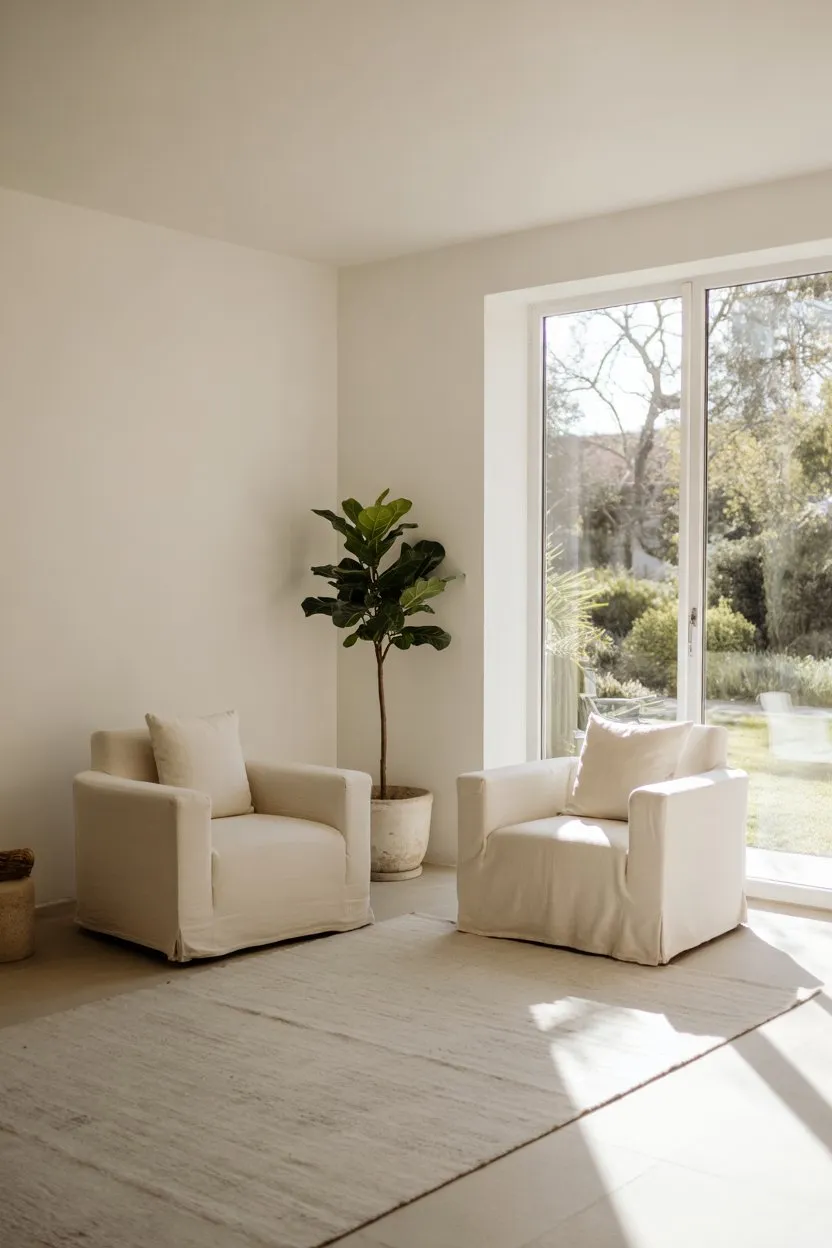
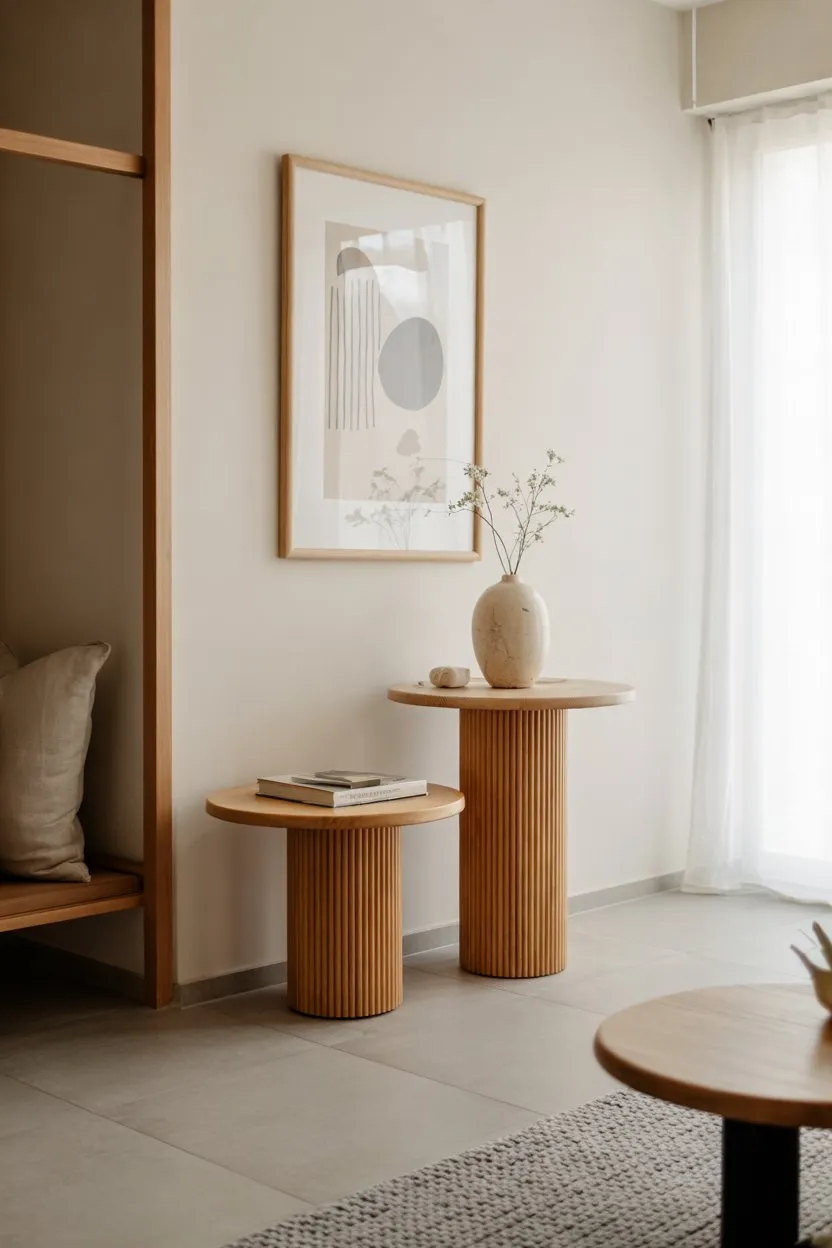
20. Incorporate Small Side Tables for Flexibility
A 14-inch garden-stool-style table or a lightweight metal side table moves wherever it’s needed — next to the guest chair, beside the sofa, by the reading nook. Portability is the feature.
Buy two small instead of one large. A pair flanks a sofa symmetrically or splits up for parties; one big table can only ever do one job.
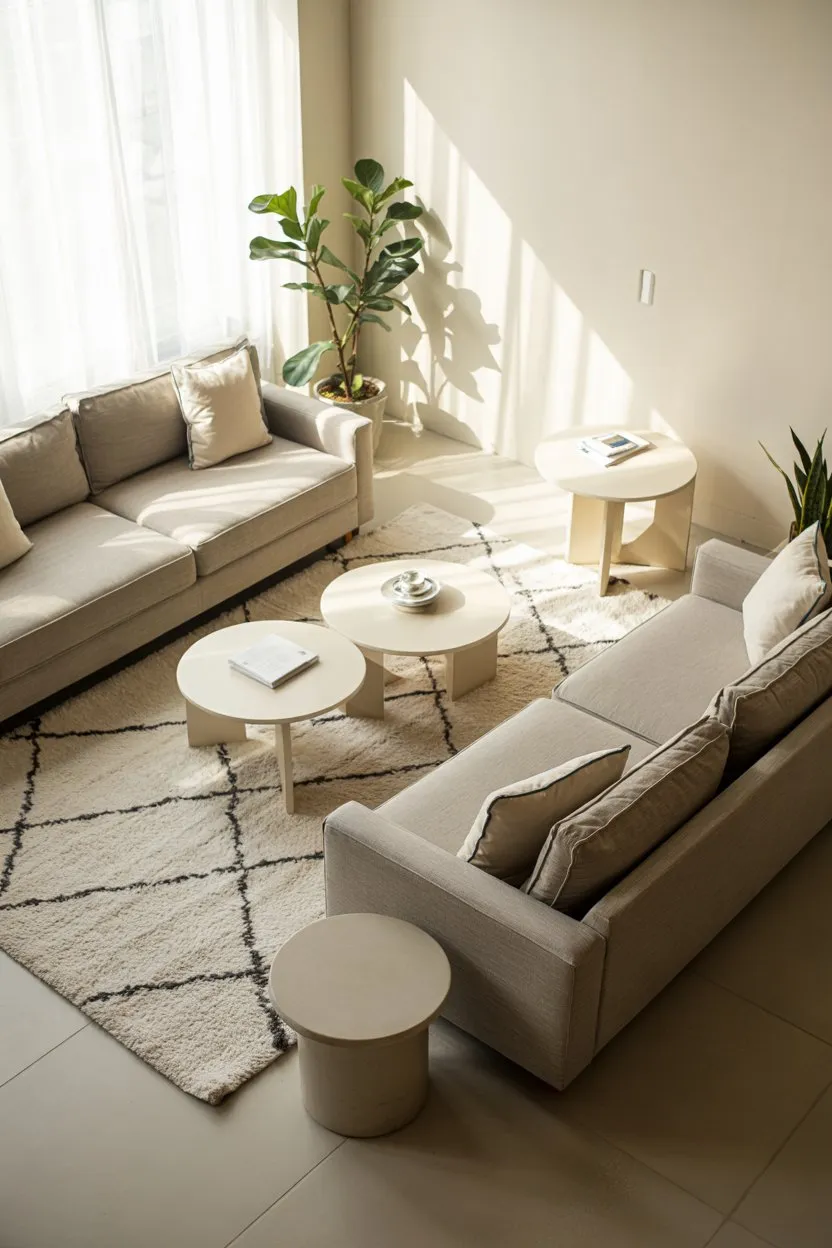
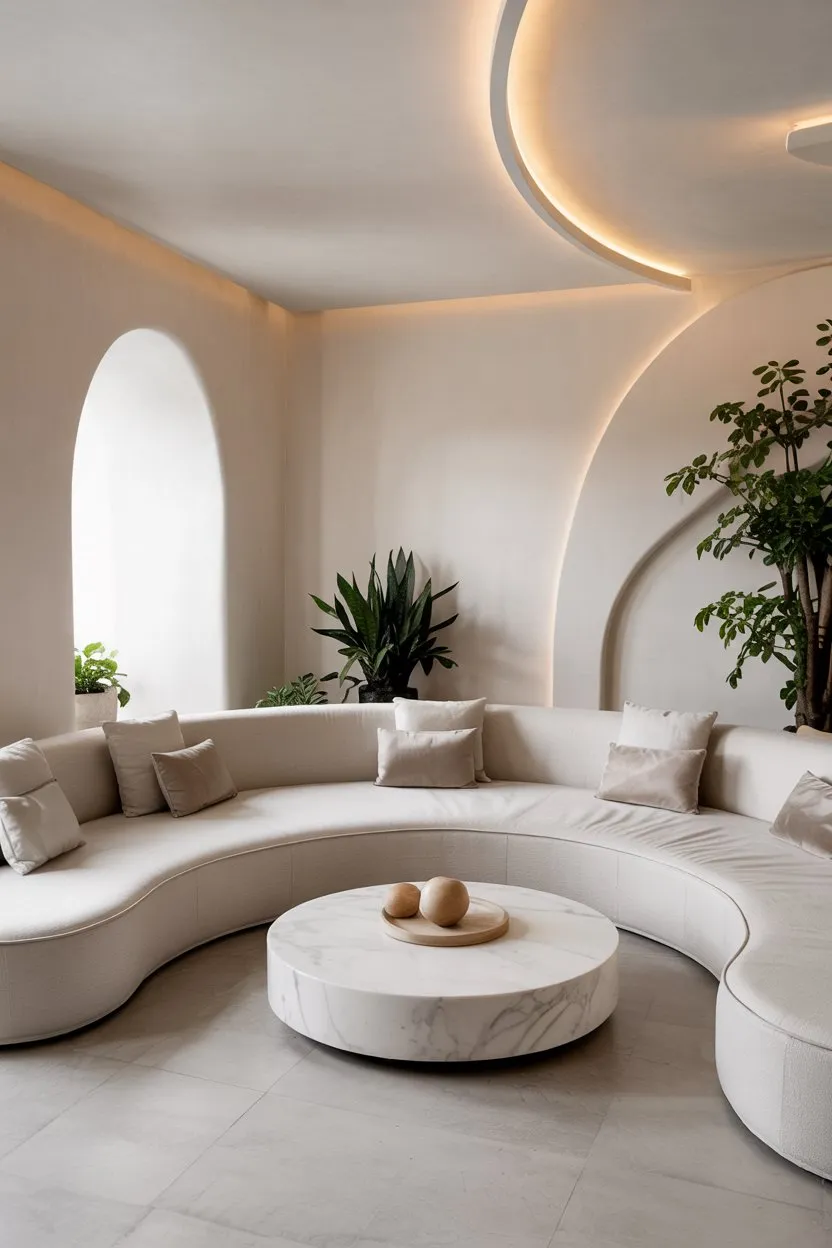
21. Select Curved Couch Sofas for Softness
A curved sofa breaks the grid of rectangular rooms and naturally gathers people facing each other. It’s the fastest way to make a seating area feel social rather than lined up for the TV.
They need more floor space than their seat count suggests — allow 36 inches of clearance around the curve. In the right room, though, nothing else creates that enveloping feel.
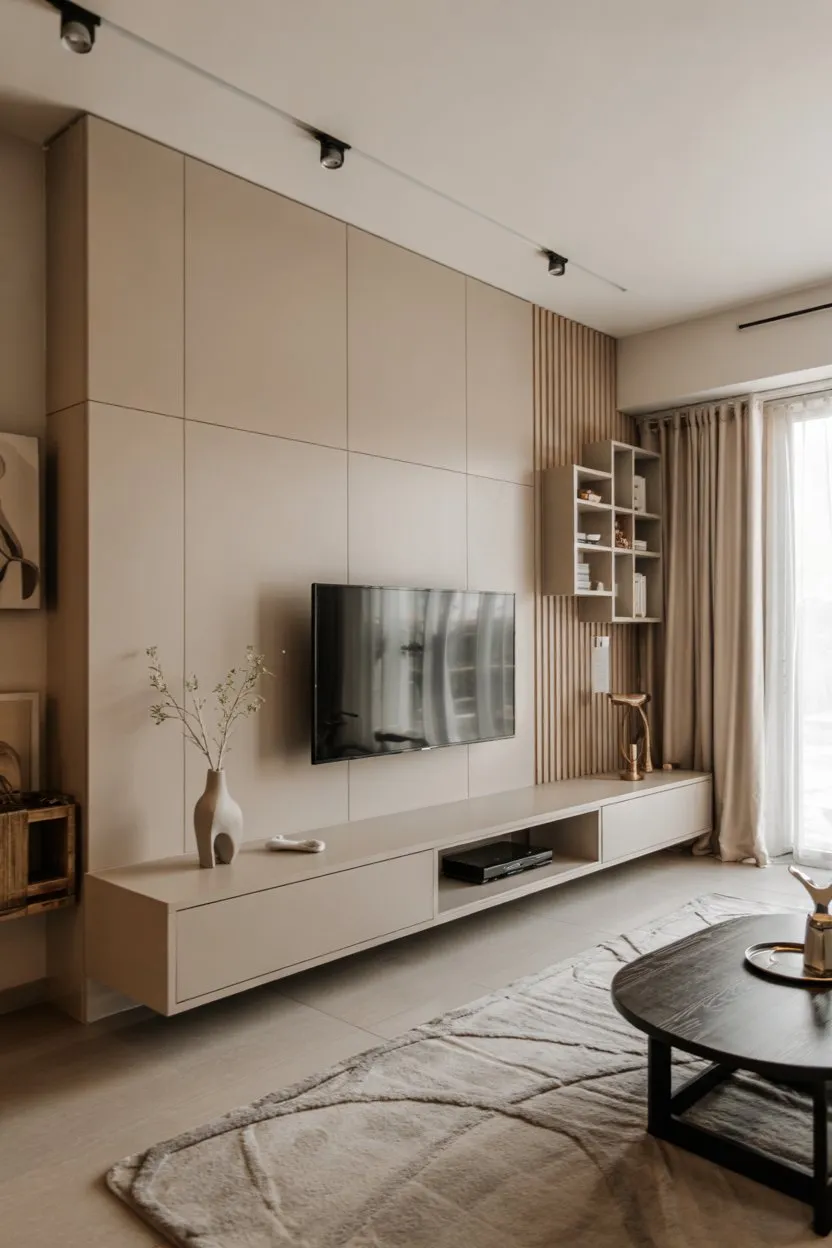
22. Choose Sleek TV Wall Designs for a Modern Look
A TV wall with matte panels or built-in shelving turns the black rectangle into architecture. Paint the wall a shade darker than the room and the screen recedes when it’s off.
Hide every cable — raceways painted to match the wall cost a few dollars and take an hour. Visible wires are the single biggest enemy of a clean media wall.
23. Incorporate Hall Tables for Transitional Spaces
In an open plan, a narrow table where the entry meets the living room marks the threshold. It’s a landing strip for keys and mail that keeps clutter from drifting onto the coffee table.
Add a small tray and a wall hook above for the daily-carry items. The table earns its keep by catching what would otherwise scatter.
24. Add Pillow Sofas for Texture and Comfort
A sofa with loose, plush cushions instead of tight upholstery invites actual lounging. Choose muted, washable covers — the relaxed look only works if it stays clean.
Rotate and fluff the cushions weekly; pillow sofas go lumpy fast without maintenance. The comfort is worth the five-minute ritual.

25. Use Black Coffee Tables for Bold Contrast
In a pale room, one black piece — a coffee table with clean lines — adds the depth that all-white spaces lack. It grounds the seating area like a period at the end of a sentence.
Keep it to one black anchor. Two or three black pieces start a theme; one is a deliberate accent. Matte black shows fewer fingerprints than gloss.

FAQs for Minimalist Living Room