25 Hand Embroidery Project Ideas Anyone Can Try
You don’t need artistic talent to embroider — you need a needle, some floss, and a first project small enough to finish. Hand embroidery rewards patience more than skill, and the 25 projects below are ordered by what they teach: basic stitches first, then trickier fabrics, then gifts people actually keep. Every one of them ends with something useful or beautiful, which is more than most hobbies can say. Pick the one that matches your week, not your ambition.

1. Personalized Tote Bag Embroidery
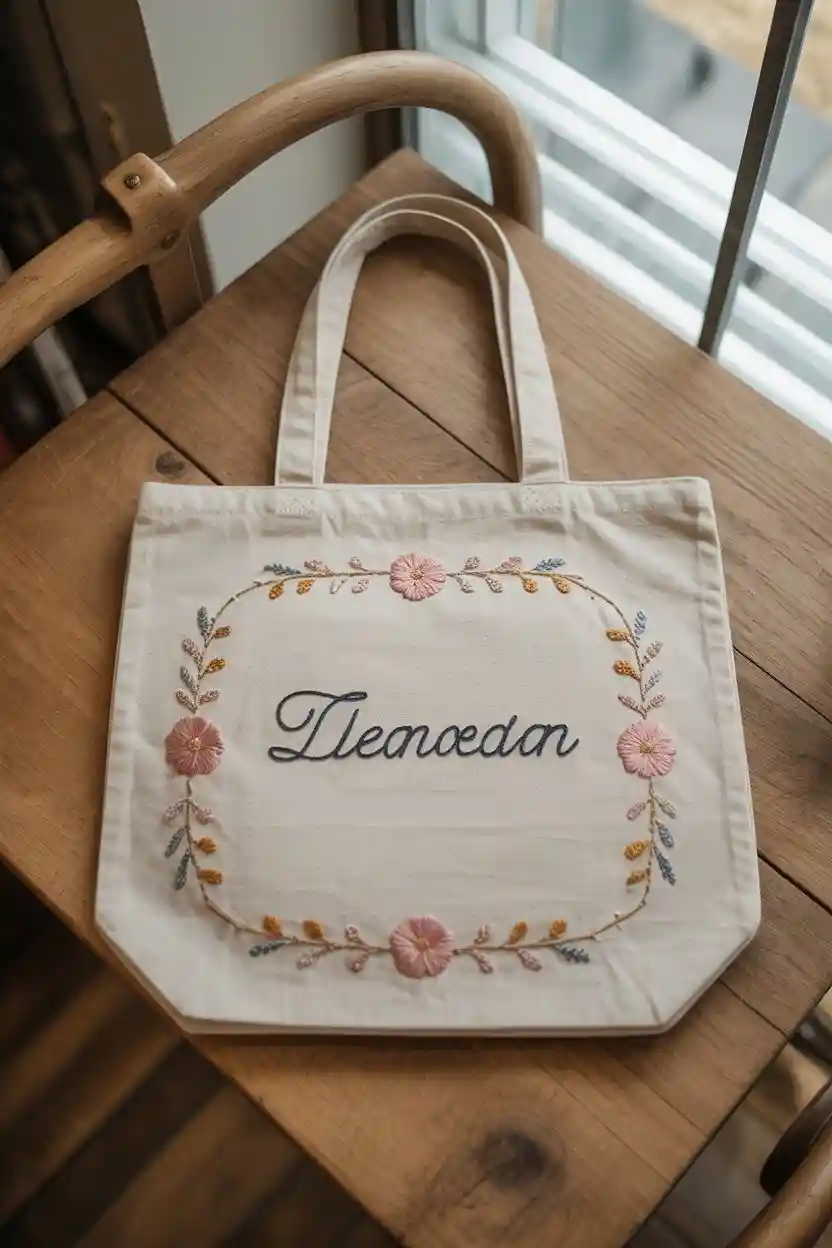
A blank canvas tote is the ideal first canvas: sturdy, flat, cheap, and something you’ll actually carry. Stitch your name, a short quote, or a simple sprig in backstitch — lettering teaches stitch control faster than any motif because wobbles show immediately. Canvas grips thread firmly, so stitches stay where you put them. Finish one tote and you’ll trust your hands for everything after.
2. Floral Embroidery Hoop Wall Art
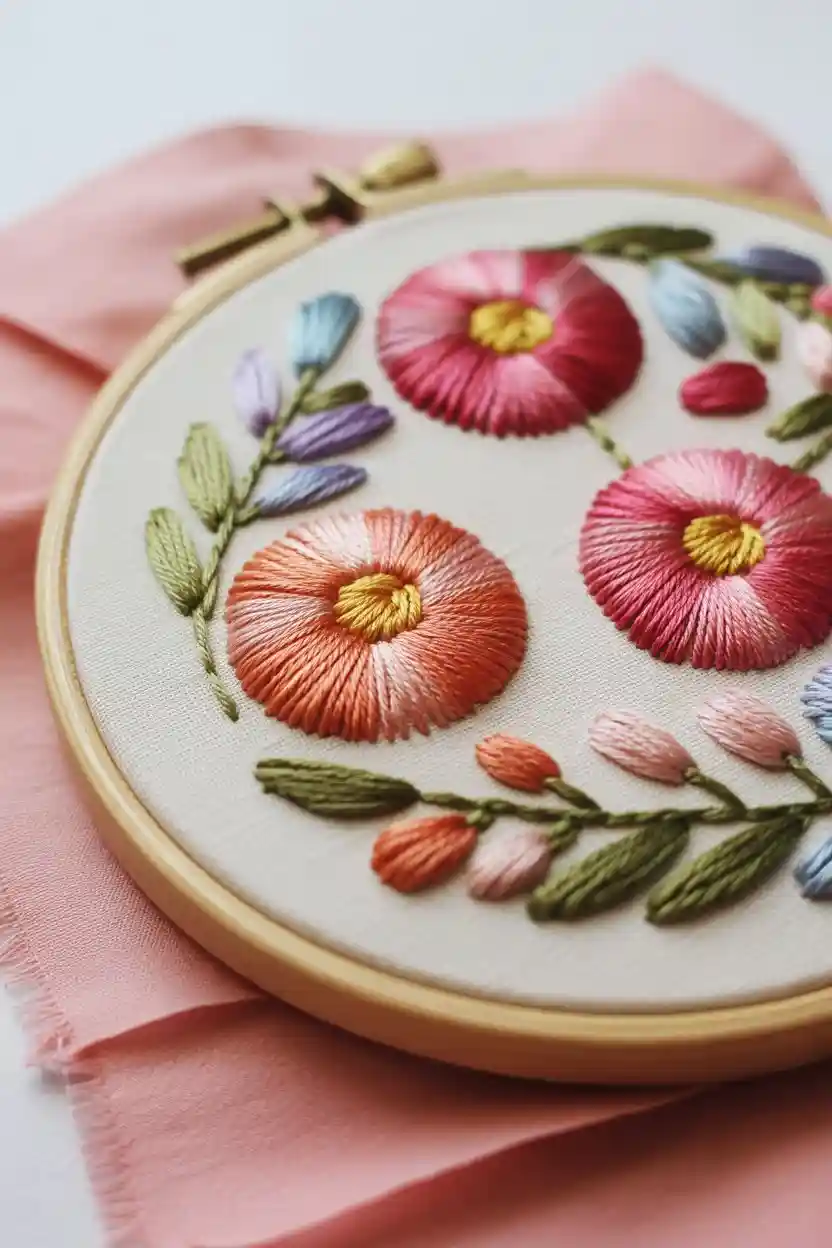
A wooden hoop full of stitched flowers is the fastest route to wall-worthy work. Lazy daisies build petals, French knots make centers, satin stitch fills leaves — three stitches, infinite combinations. Keep the palette to three or four shades so the piece reads as designed rather than random. The embroidery hoop art format does the framing for you: trim the back, and it hangs as-is.
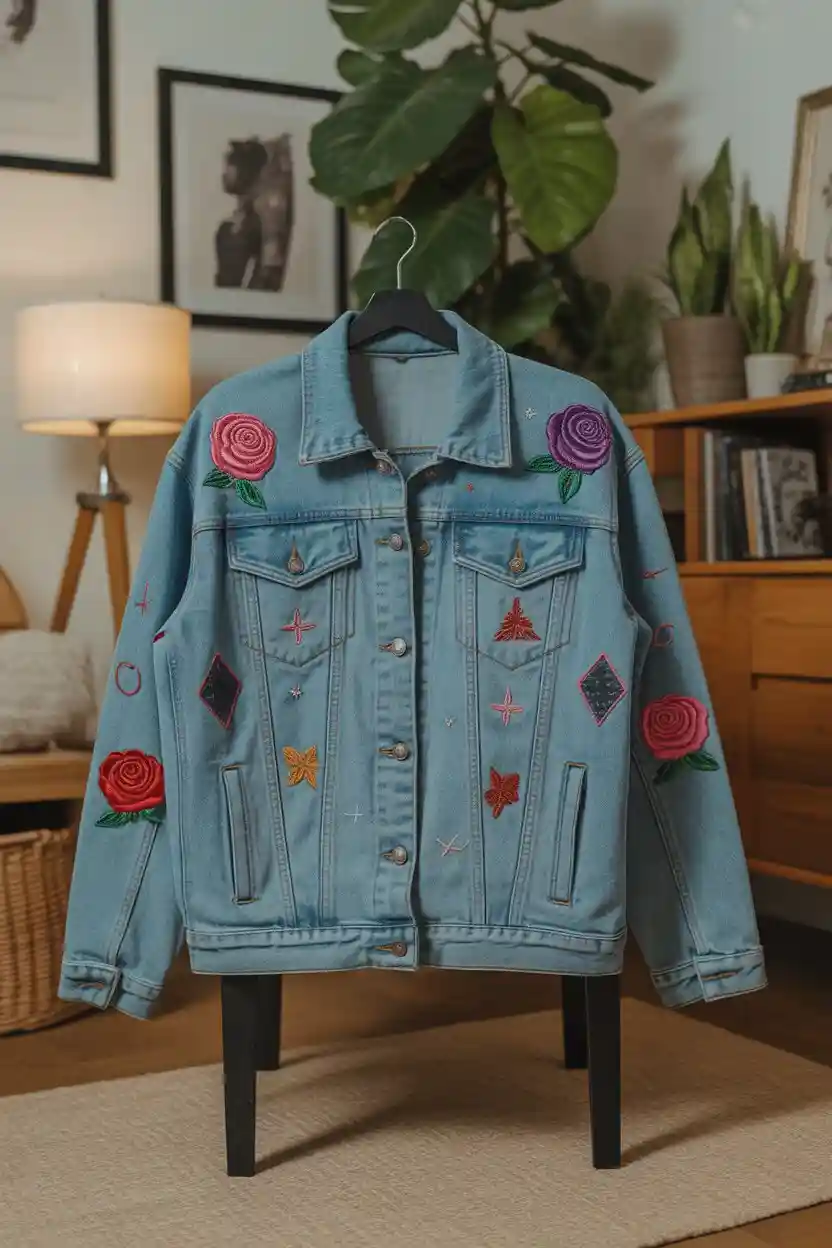
3. Denim Jacket Patch Embroidery
Denim is where beginners learn that fabric fights back — and how to win. Thick twill needs a sharp needle, a thimble, and deliberate tension; rush it and stitches pucker. Start with a small patch (a rose, a few leaves) sewn on as an appliqué rather than stitching directly into the jacket — removable means redoable. An old jacket with new embroidery beats a new jacket every time.
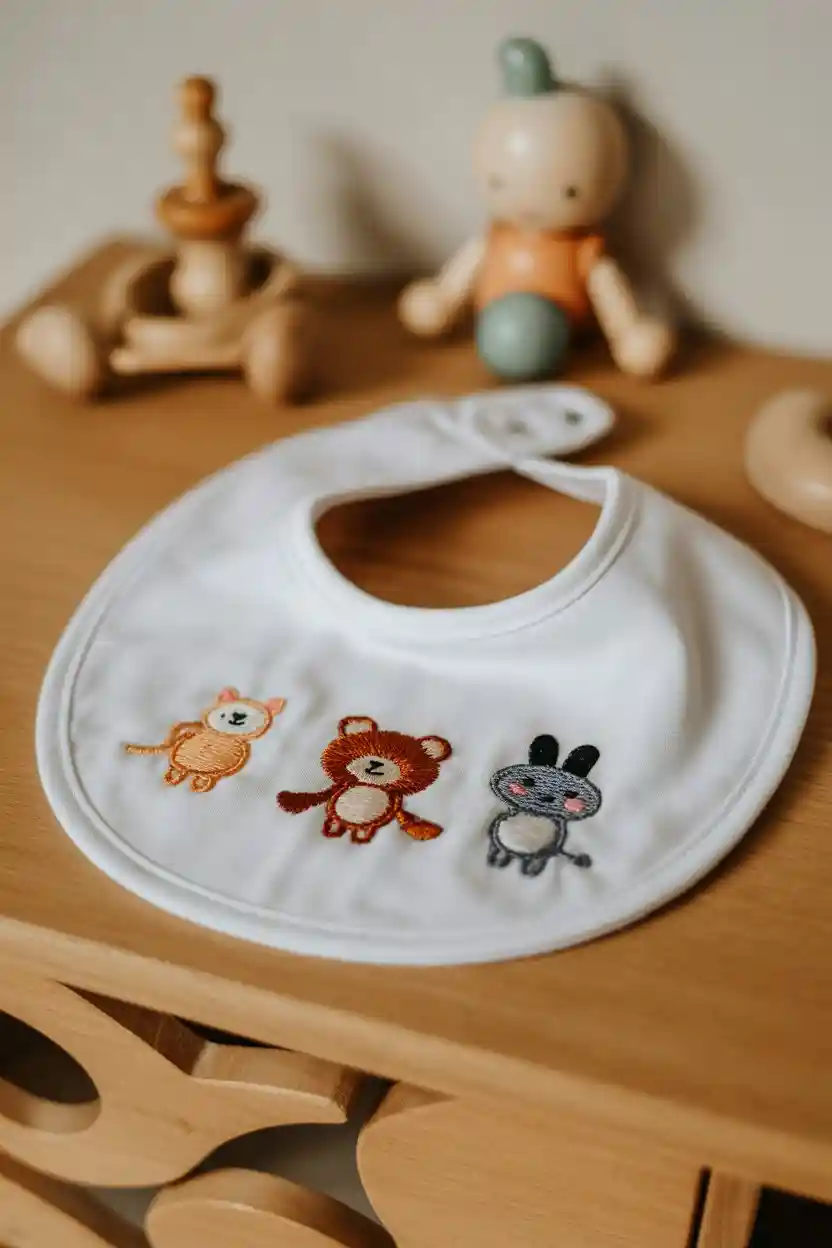
4. Hand Embroidery Baby Bibs
Baby bibs are small, soft, and deeply forgiving — the perfect low-stakes practice ground. A simple animal outline or a stitched initial in the corner takes an evening and becomes a keepsake parents genuinely treasure. Work with two strands of floss rather than three; fine thread suits the scale and washes better on items that will see a lot of laundry.
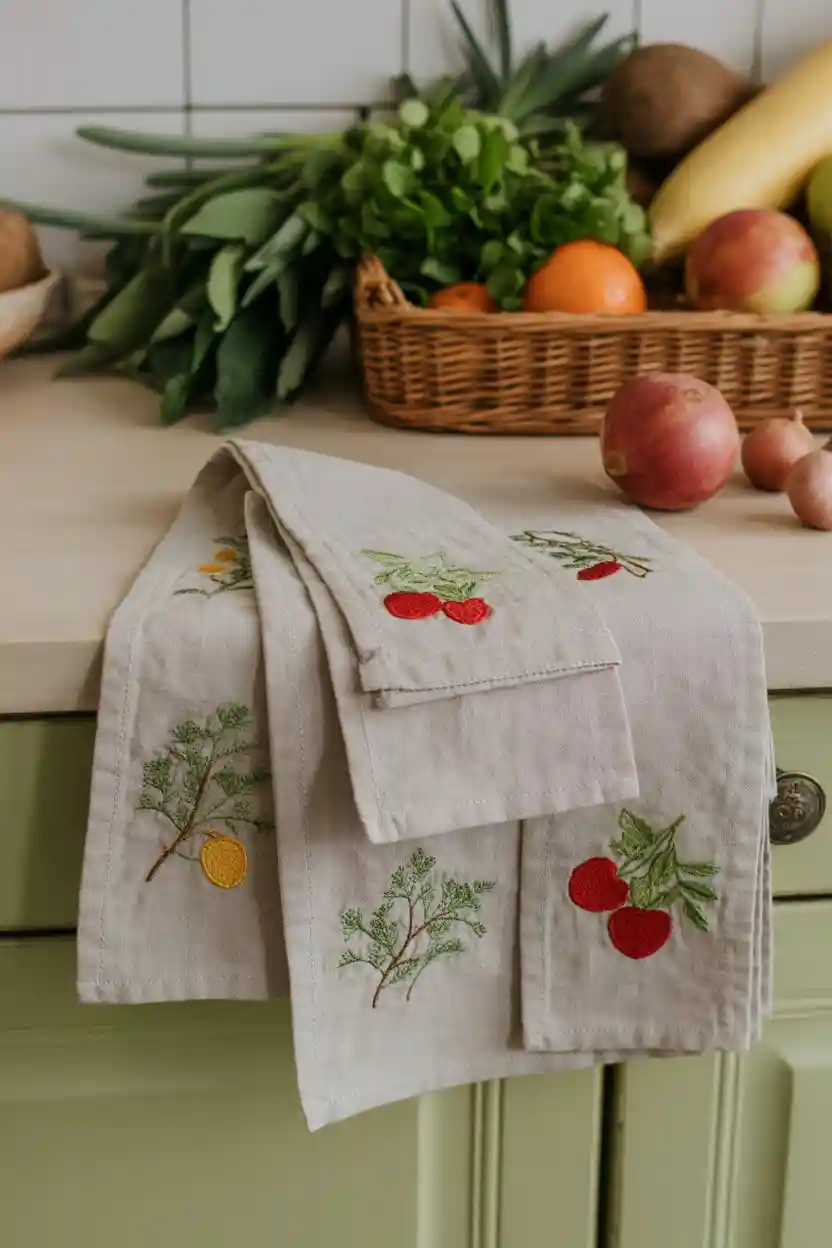
5. Kitchen Towel Embroidery
Kitchen towels turn practice into something useful: a row of stitched herbs or fruit along the hem teaches spacing, repetition, and consistency across a longer run of fabric. Linen and cotton both take stitches cleanly and survive the wash. Make them in sets — matching towels read as intentional gifts, while a single odd towel reads as practice.
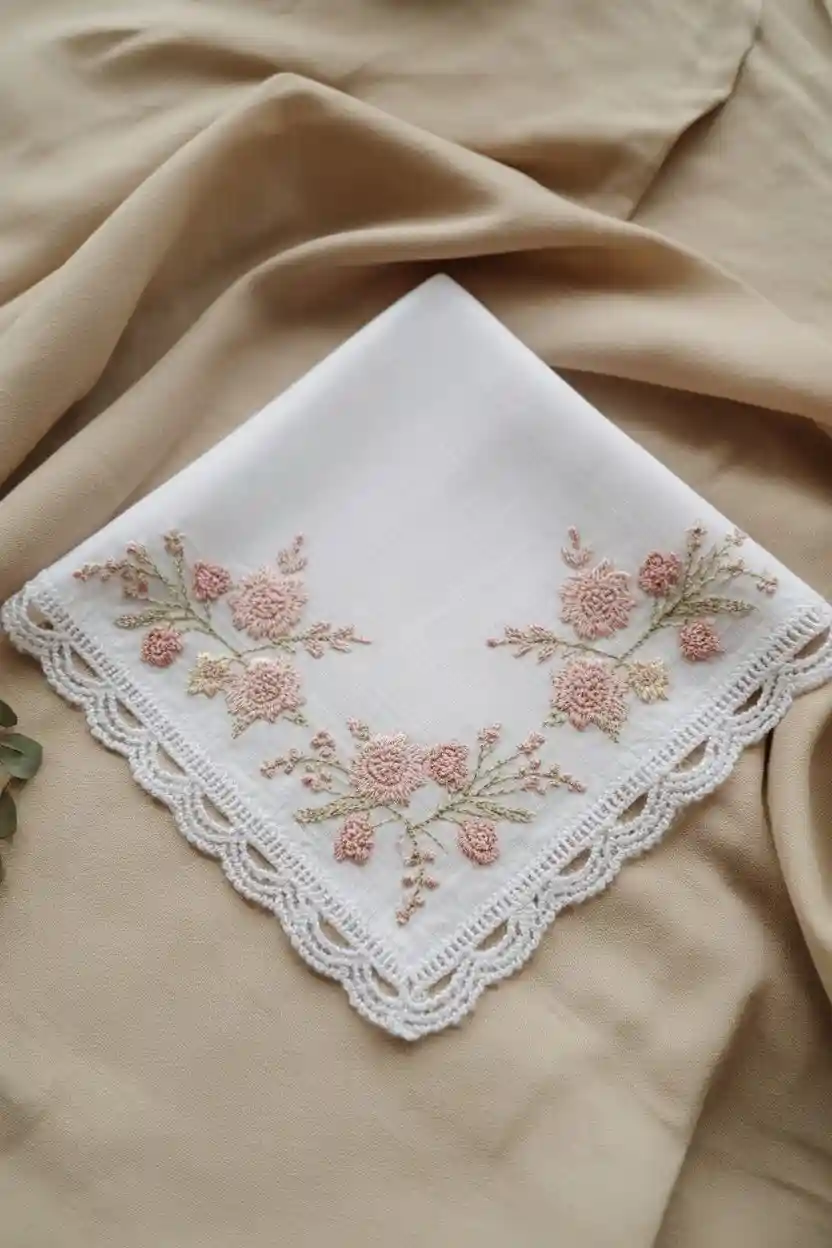
6. Handkerchief Embroidery with Lace Edging
A handkerchief with fine floral work and a lace edge is old-school elegance, and it teaches the skills fancier projects demand: tiny stitches, even tension, patience. Use single-strand floss and a sharp needle; this is slow work by design. The result is the kind of object people keep in drawers for decades — embroidery at its most heirloom.
7. Sweatshirt Accent Embroidery
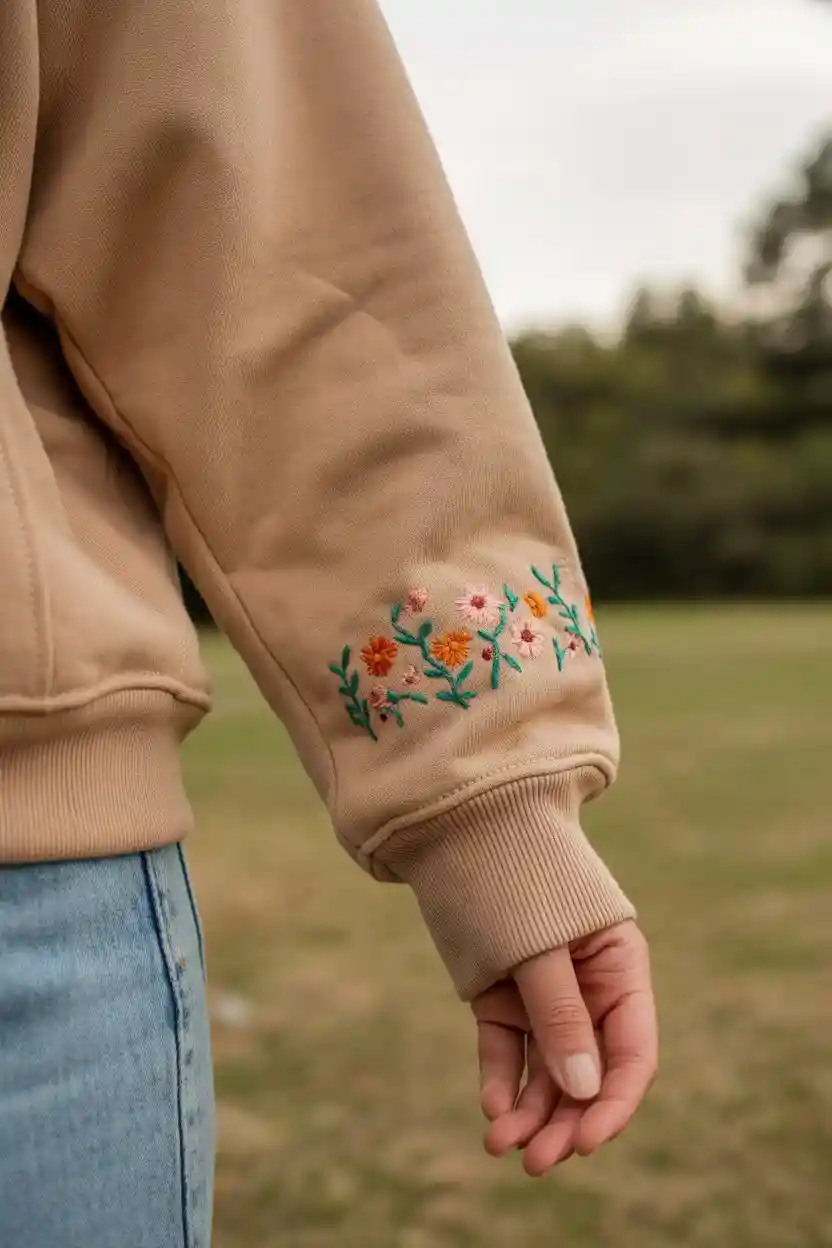
A small motif on a sweatshirt cuff, collar, or chest pocket — a flower, a star, an abstract squiggle — turns basics into one-offs. The lesson here is stretch: iron a cut-away stabilizer inside first, or the knit will pucker around every stitch. textured embroidery designs like raised satin-stitch petals hold up especially well on fleece, adding dimension that flat prints can’t match.
8. Journal or Book Cover Embroidery
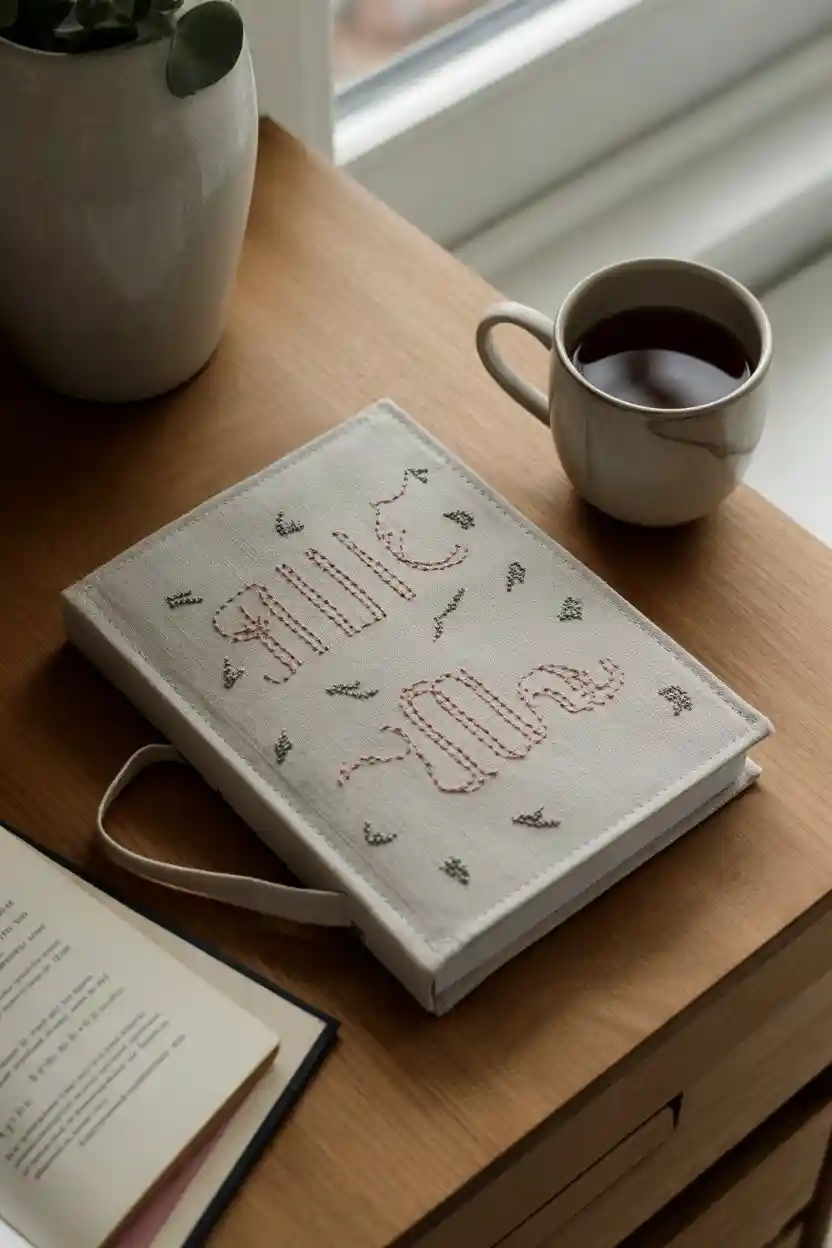
A fabric journal cover with stitched initials or a small motif makes a notebook feel personal before you write a word. The compact format forces good habits: plan the layout, keep stitches neat, finish edges cleanly. Removable covers sized to standard notebooks also make excellent gifts — useful, personal, and quick enough to batch.
9. Embroidered Cushion Covers
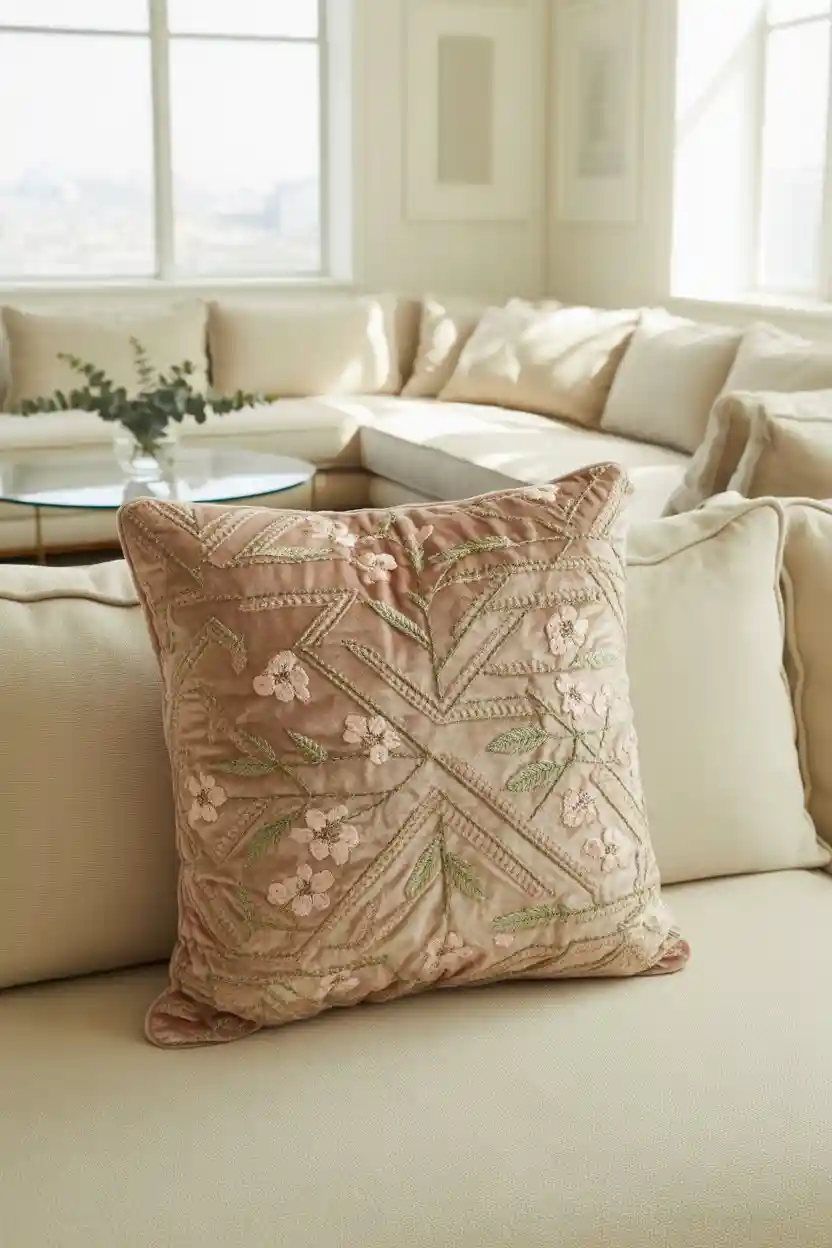
Cushion covers are where composition gets real: a 16-inch square demands decisions about balance, scale, and negative space. Mix florals with geometric borders, or go all-texture with knots and raised stitches in a single color. Because covers remove for washing, you can be bolder with thread choices than on garments — and a set of two matching covers transforms a sofa.
10. Fabric Bookmark Embroidery
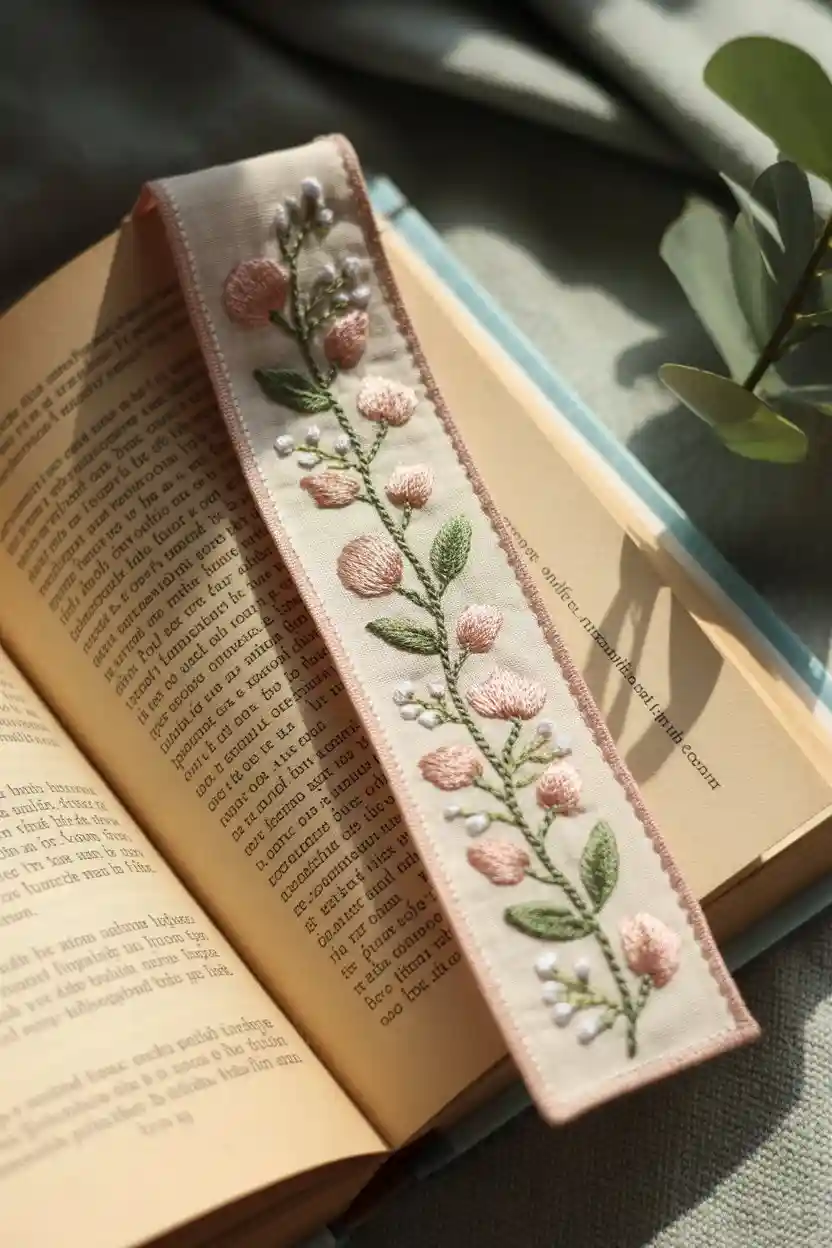
Bookmarks are the definition of completable: one evening, a strip of linen, a simple motif, done. They drill the fundamentals — stem stitch lines, lazy daisy leaves, tidy edges — in a format with zero pressure. Make a handful at once; they’re the rare handmade gift that’s genuinely useful and costs almost nothing.
11. Name Tag or Clothing Label Embroidery
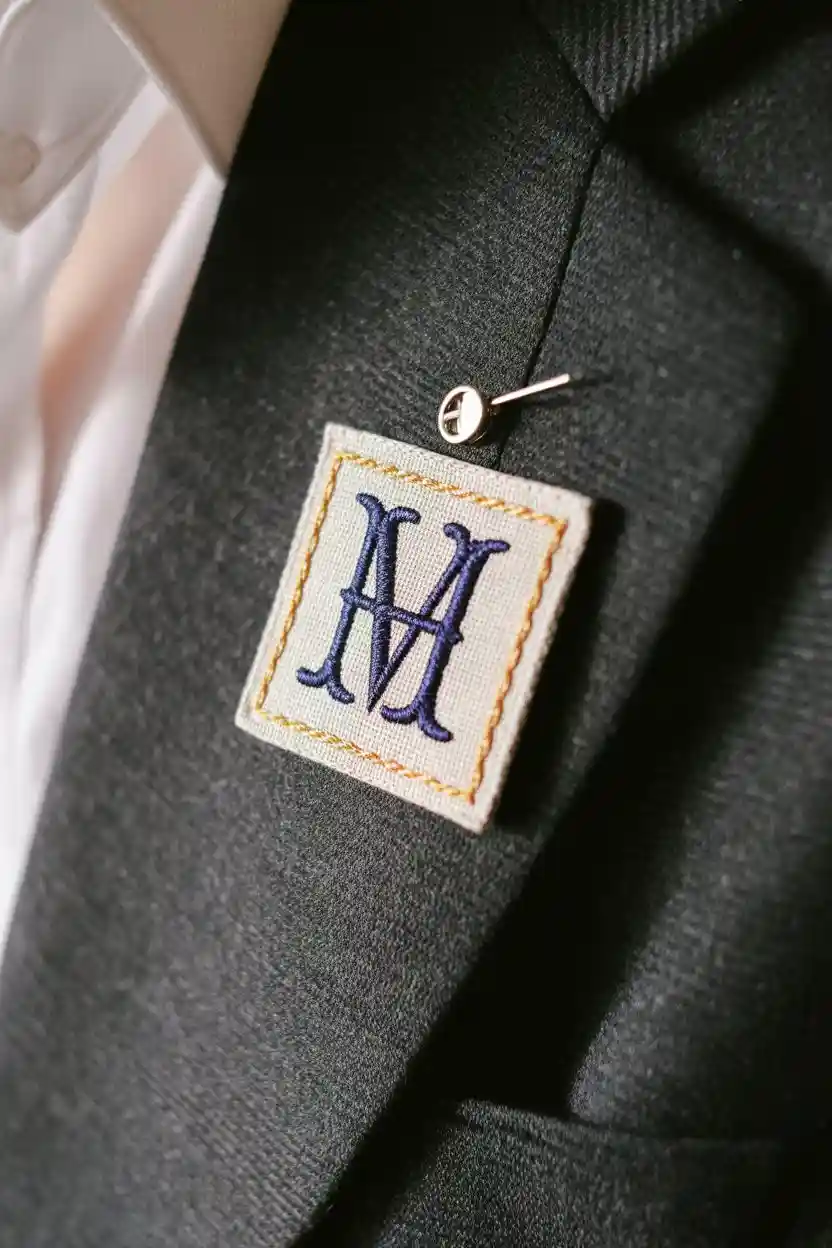
Stitched name tags and clothing labels are embroidery at its most practical: a monogram with a decorative border, sewn into handmade garments or onto gift items. Lettering this small demands control — sketch lightly in pencil first and stitch slowly. They’re also a quiet business asset: a hand-stitched label makes anything you sell feel premium.
12. Tea Towel Embroidery
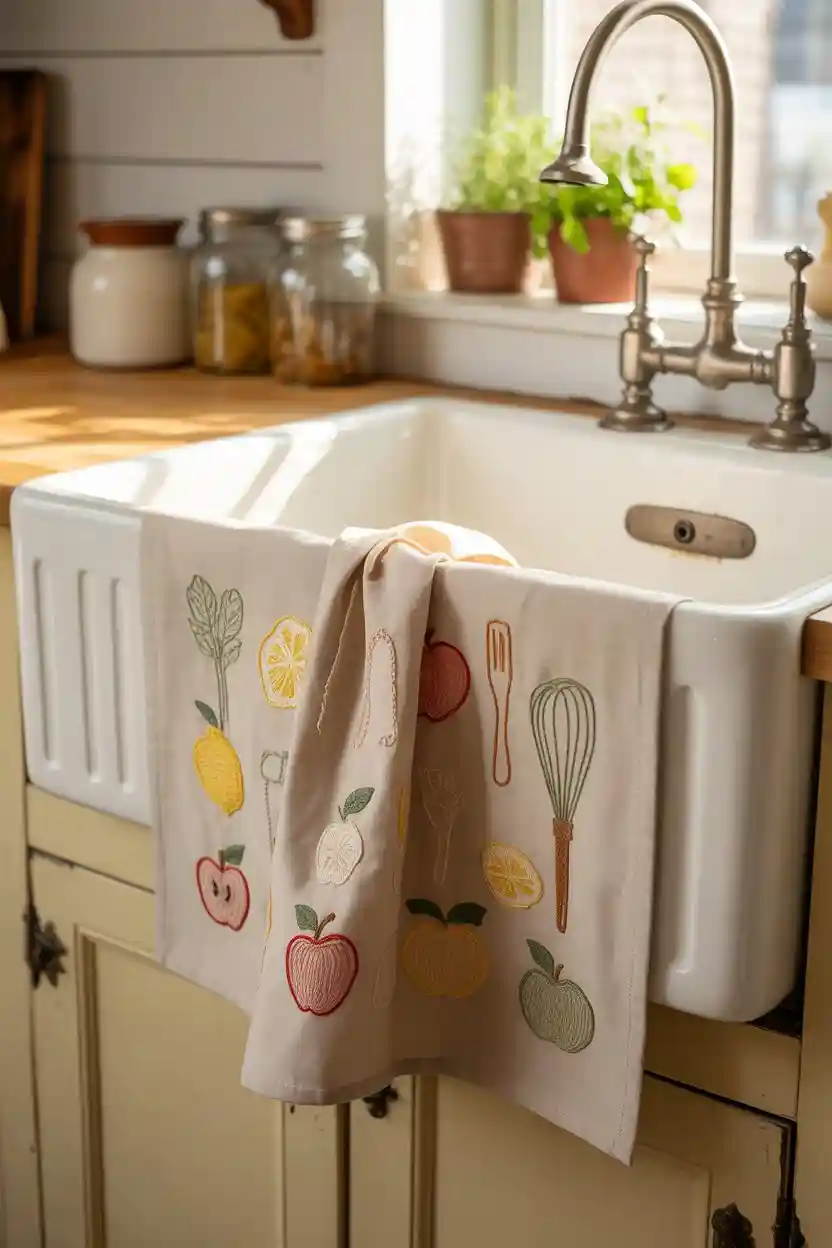
Tea towels deserve their own project because they’re the workhorse gift: useful daily, quick to stitch, and endlessly personalizable. A simple fruit or herb motif repeated along the border teaches rhythm — the same design, executed evenly, five times. Cotton flour-sack towels are cheap in bulk, which makes them ideal for stitching a whole set for holiday giving.
13. Embroidered Floral Headbands
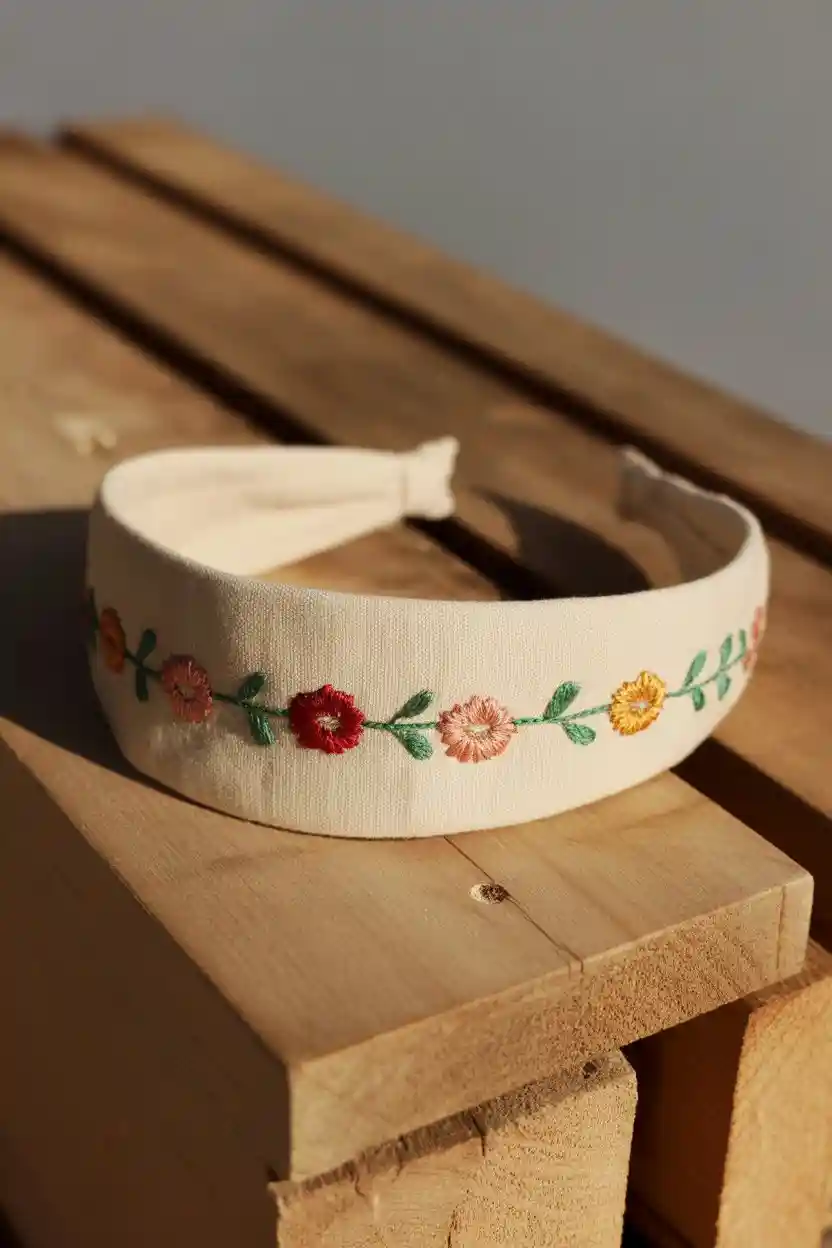
A fabric headband with a few stitched flowers is a one-evening wearable that teaches working on narrow, finished items. Lazy daisies and small satin leaves suit the scale; keep the design to one side so it sits nicely when worn. Elastic-backed bands are easiest for beginners — no sizing math, and they fit everyone you’d gift one to.
14. Jeans Embroidery Accents
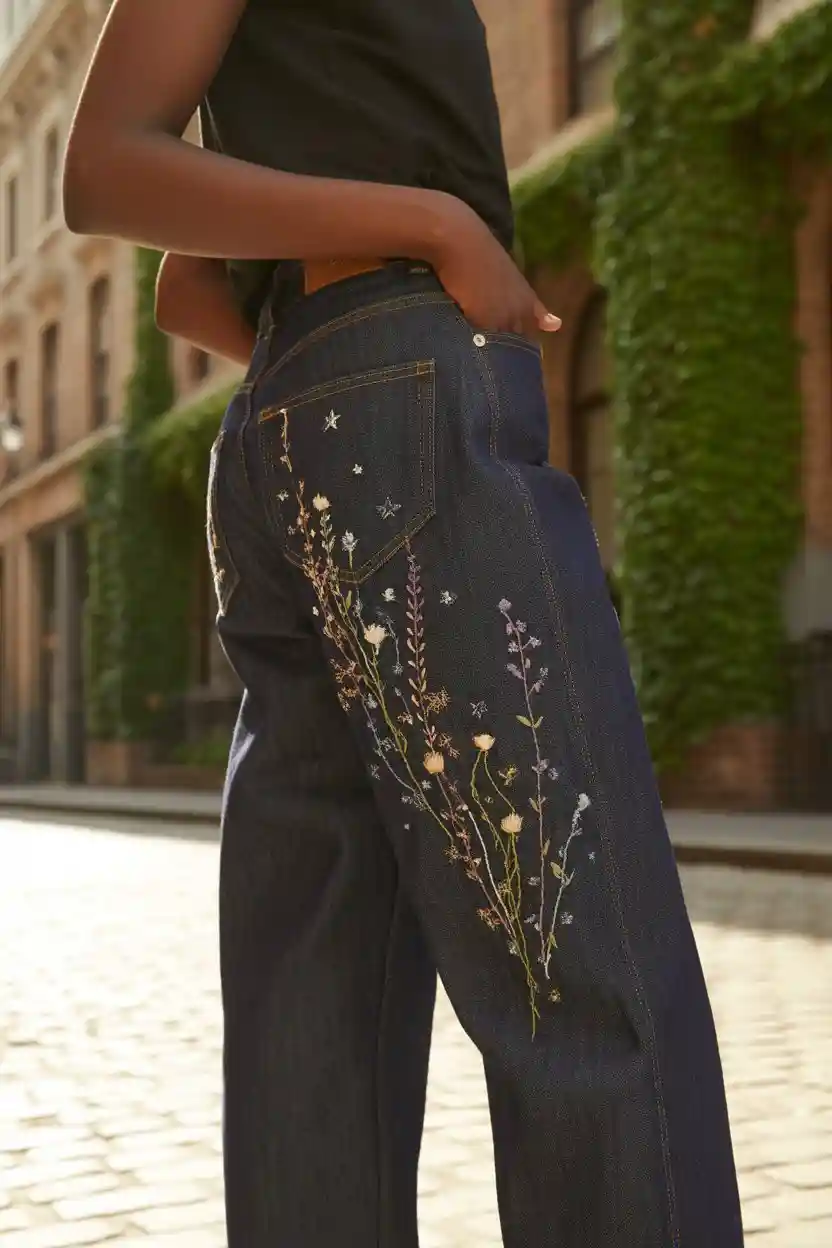
Jeans pockets and cuffs take embroidery beautifully because the heavy twill holds dense stitching without puckering. A small star on a back pocket, flowers trailing up a cuff — subtle placements read as cooler than all-over coverage. Use a denim needle and expect hand fatigue; thick fabric is honest work, but the results look effortlessly stylish.
15. Cloth Napkin Monogram Embroidery
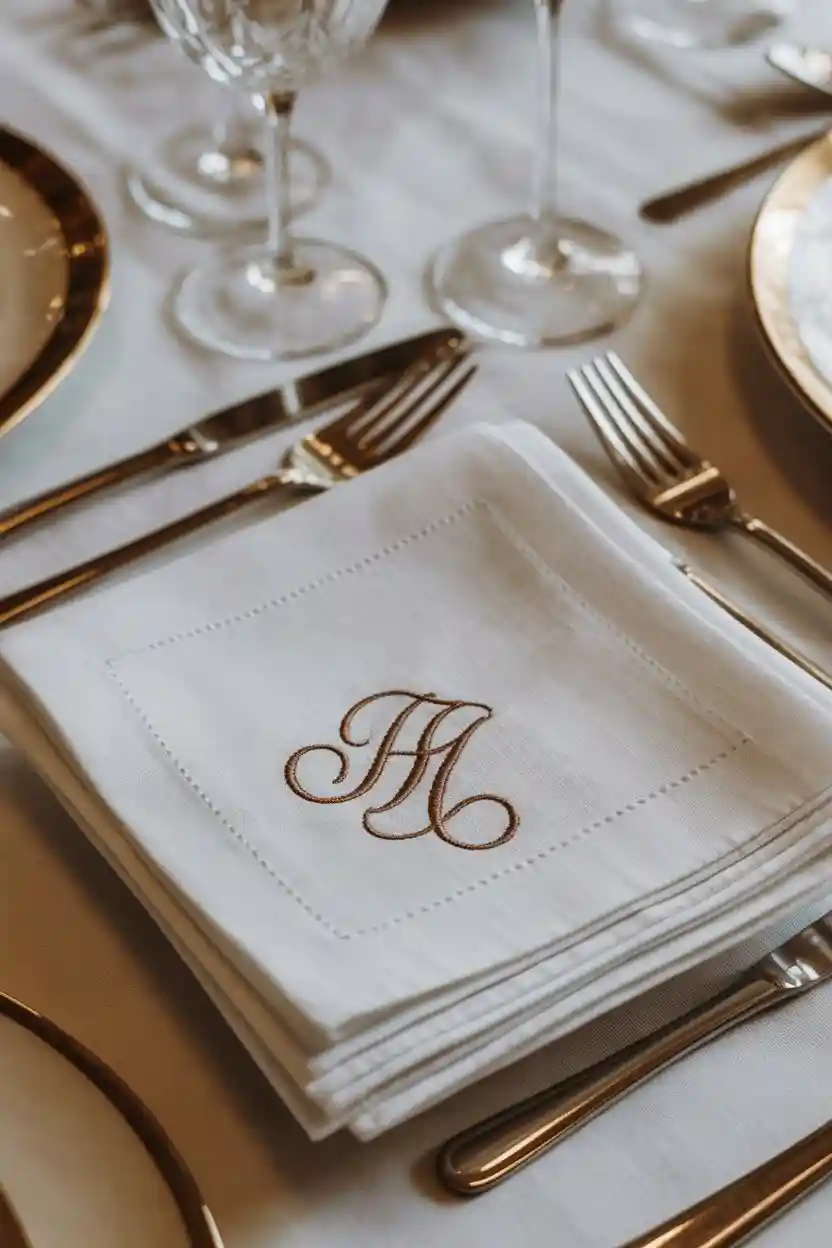
A monogrammed napkin is the smallest possible luxury: one initial, fine thread, a corner of linen. Sets of four or six — matching or with each guest’s initial — elevate a dinner table out of all proportion to the effort. Keep the lettering modest in size; a two-inch monogram whispers, a four-inch one shouts.
16. Embroidered Jacket Patches
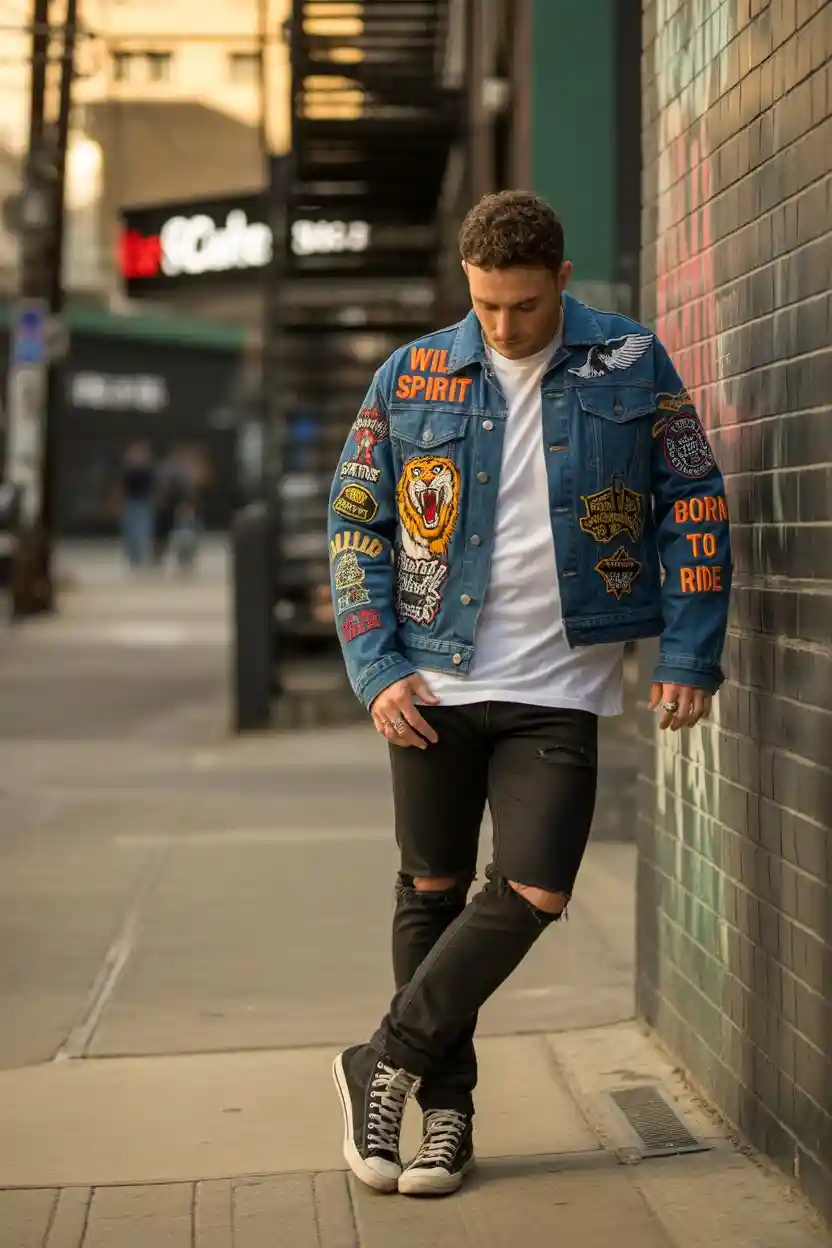
Design patches like tiny artworks — an animal, a slogan, an abstract shape — stitch them on felt or twill backing, and they’ll live on jackets, backpacks, and tote bags for years. Layered stitches give patches the density that makes them read as professional. Iron-on adhesive on the back makes them giftable; sew them on for permanence.
17. Handbag or Pouch Embroidery
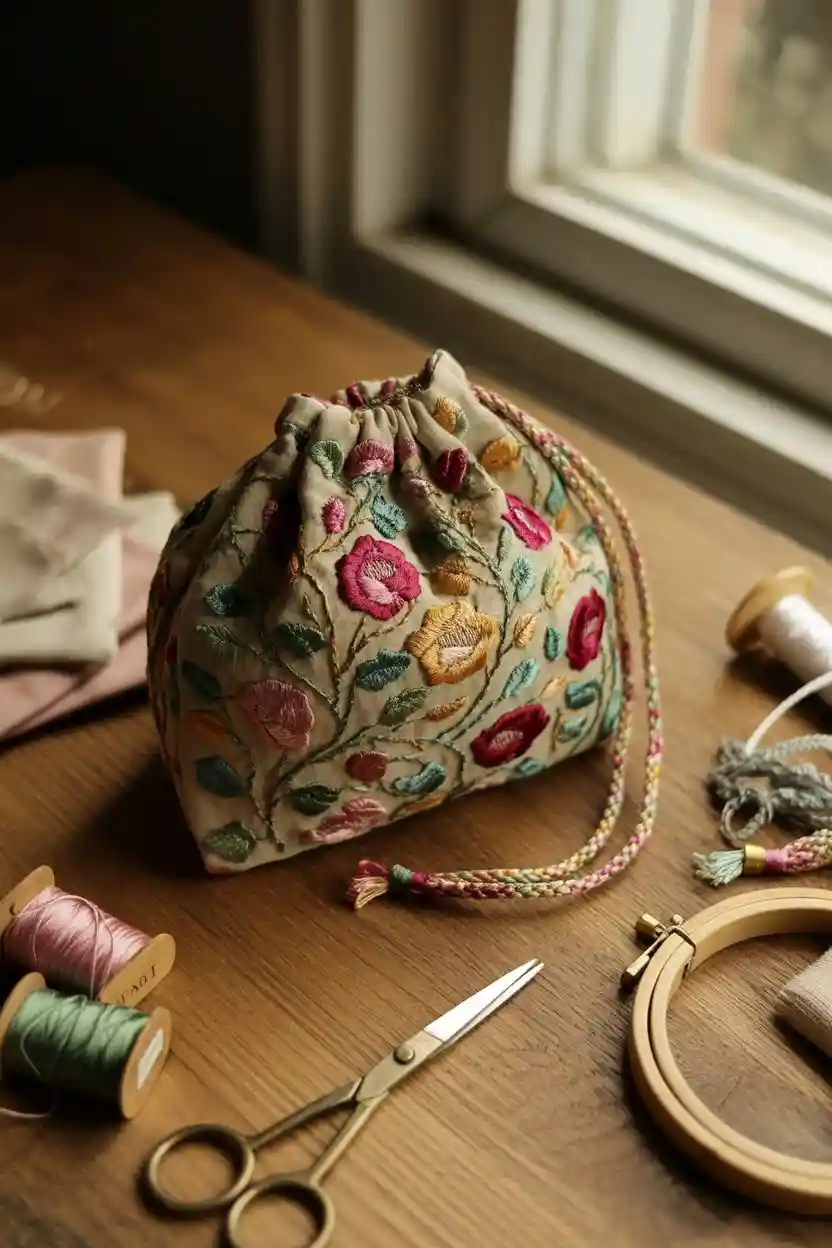
A plain pouch or handbag becomes a statement with an embroidered panel: florals on canvas, geometrics on denim. Bags teach planning — the design has to survive seams, zippers, and daily handling, so keep stitching away from stress points. Reinforce the back of the stitched area with fusible interfacing; it prevents sagging and adds years of life.
18. Wall Hanging Embroidery Art
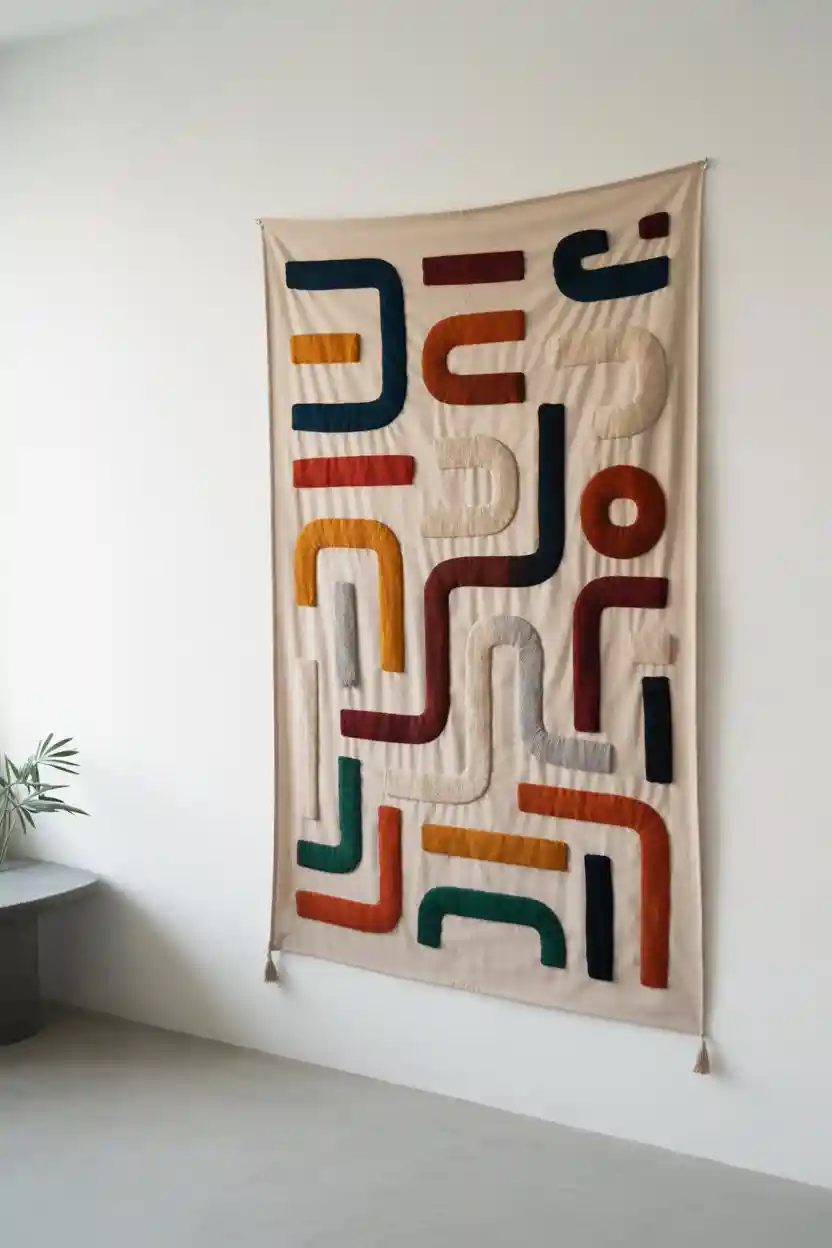
Large-scale wall hangings — bold patterns or landscapes on a yard of linen — are where embroidery becomes fine art. This is advanced territory: design planning, stitch variety, and the stamina to work a big piece over weeks. But the payoff is unmatched — a textile the size of a painting, with a texture no print can touch. Start smaller and work up; ambition is good, abandonment isn’t.
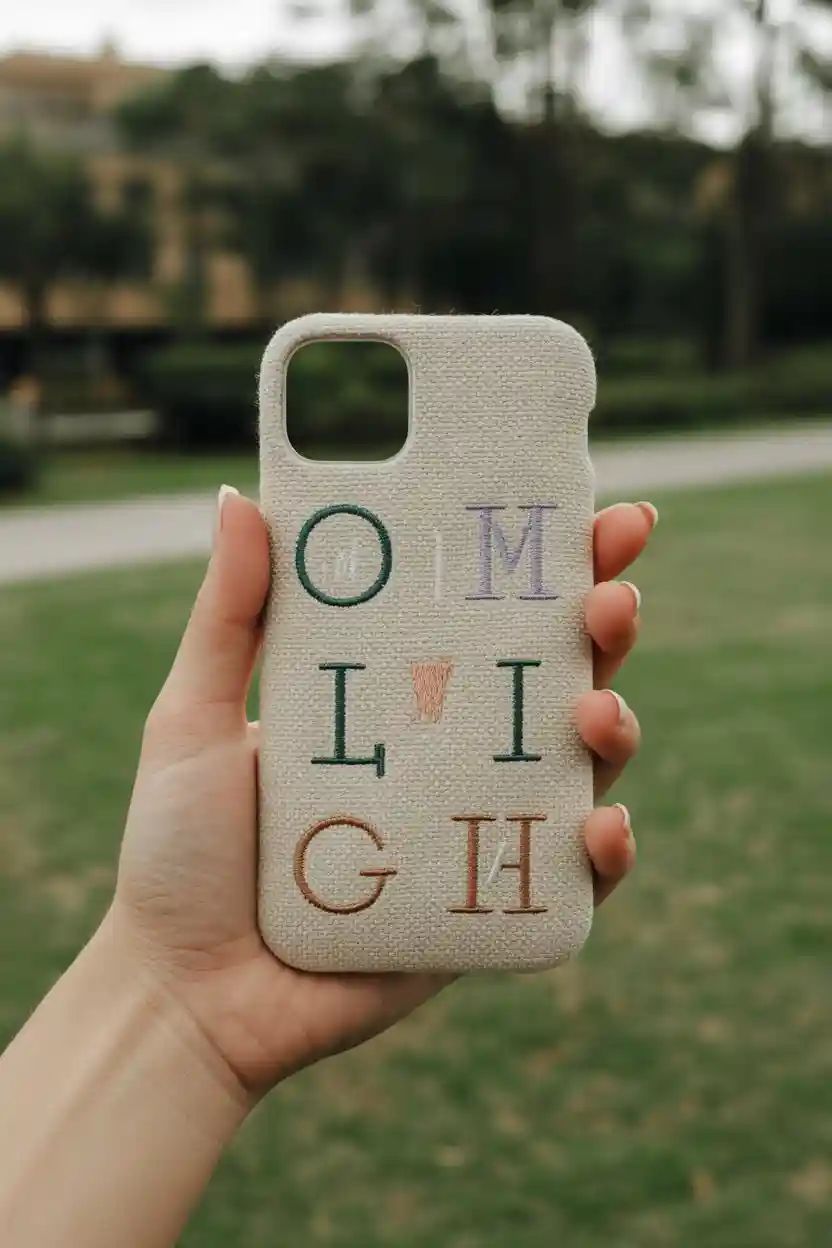
19. Phone or Laptop Case Embroidery
Fabric phone sleeves and laptop cases put your stitching where you’ll see it daily: an initial, a small symbol, a geometric border. Small surfaces demand precision — there’s nowhere for a wobble to hide — which makes these excellent skill-sharpeners. Pad the case well; the embroidery is decoration, but protection is the job.
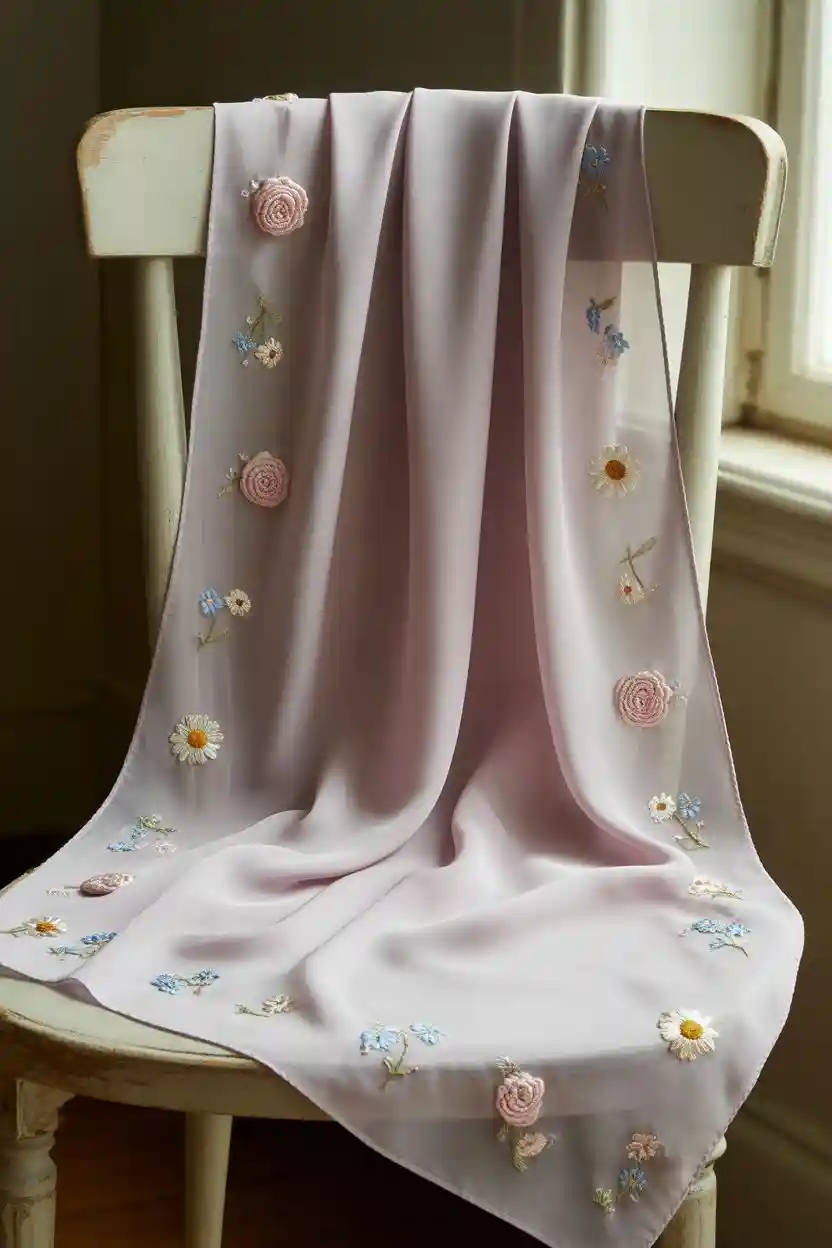
20. Embroidered Scarves or Shawls
Scarves and shawls ask for a light touch: delicate motifs along the border or scattered sparingly, stitched in fine thread that won’t stiffen the drape. Silk and fine cotton need sharp needles and a gentle hand — pull too tight and the fabric puckers permanently. Restraint is the aesthetic here; a few well-placed sprigs beat all-over coverage.
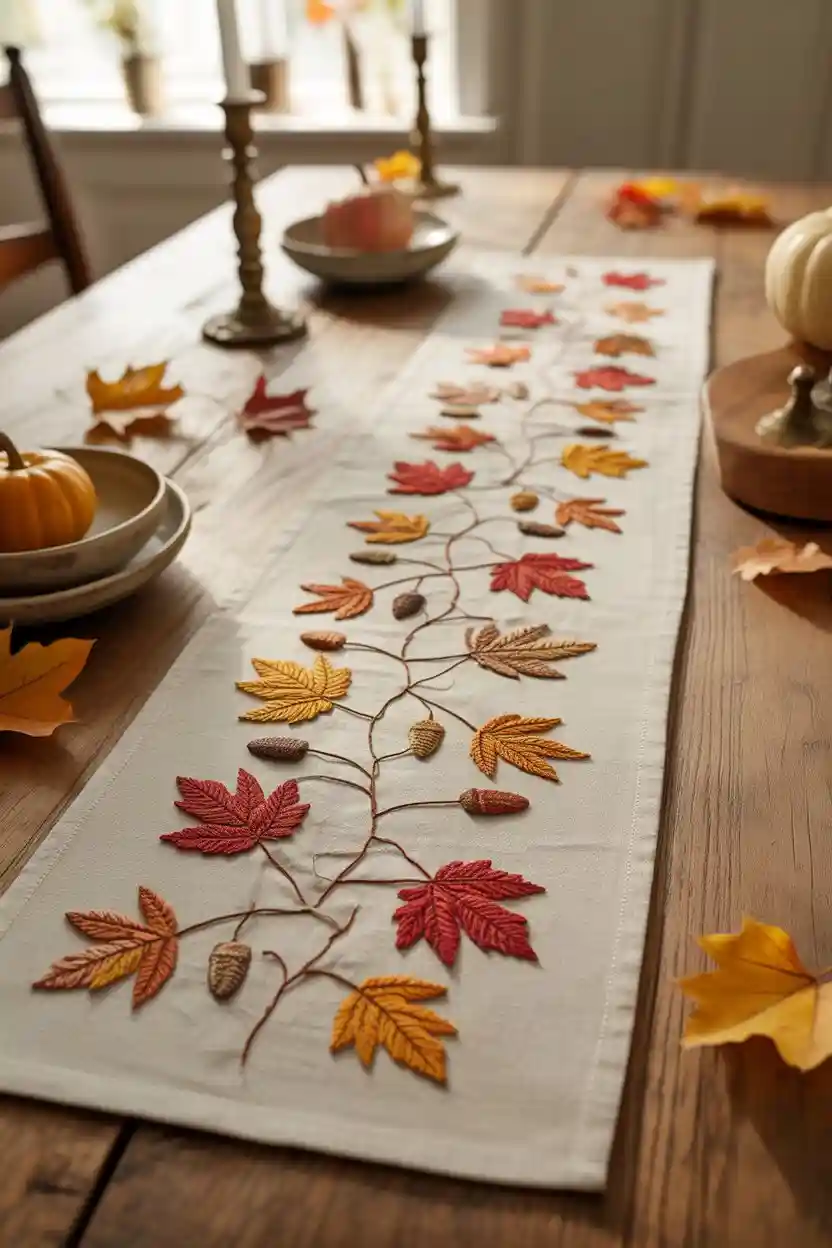
21. Table Runner Embroidery
A table runner is embroidery as interior design: a long, visible canvas that rewards cohesive planning. Repeat a motif down the length with careful spacing, or build a border pattern that frames the table. The challenge is consistency — stitch 47 and 48 must match stitch 3. Seasonal runners (harvest, holiday, spring) get used hard and loved harder.
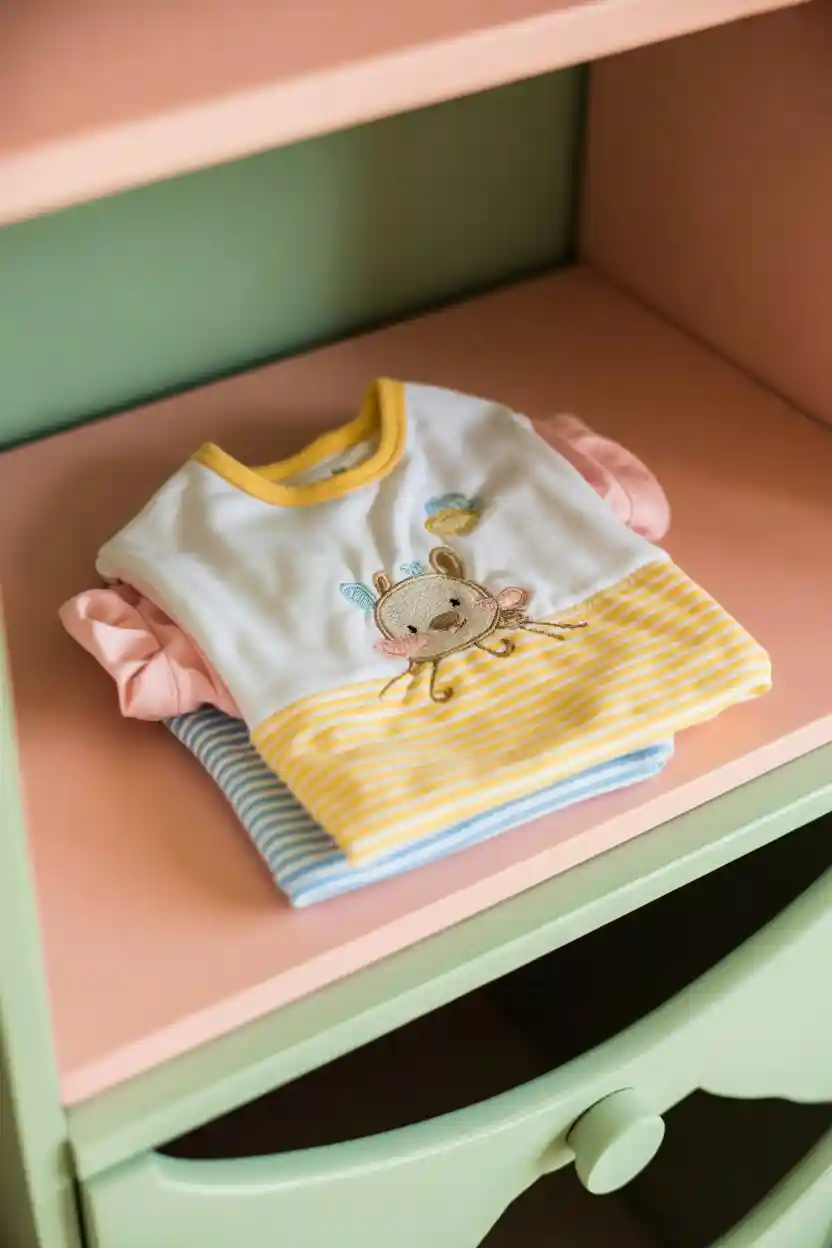
22. Baby Clothes Embroidery
Baby clothes take embroidery at its gentlest: tiny animals, initials, or stars in soft colors on fine cotton. Use soft stabilizer and keep knots minimal against delicate skin — or better, work the design where it won’t touch the baby directly. These become keepsakes almost immediately; photograph them, because the clothes will be outgrown in months.
23. Kitchen Apron Embroidery
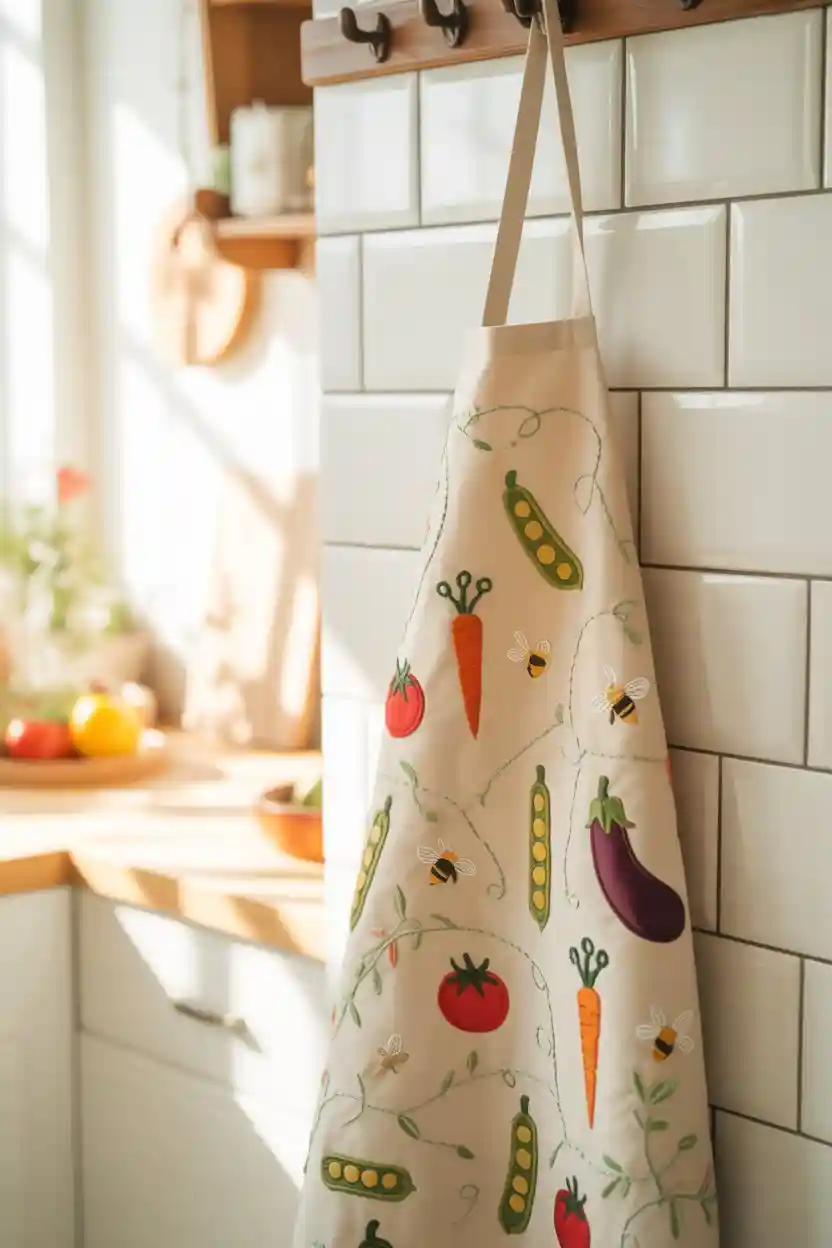
An apron is a billboard you wear: food motifs, herb sprigs, a witty phrase across the bib. The large flat front is forgiving for beginners and fun for improvers — plenty of room to experiment with color and scale. Stitch the design before assembling if you’re making the apron from scratch; it’s far easier than working around straps and pockets.
24. Fabric Jewelry Embroidery
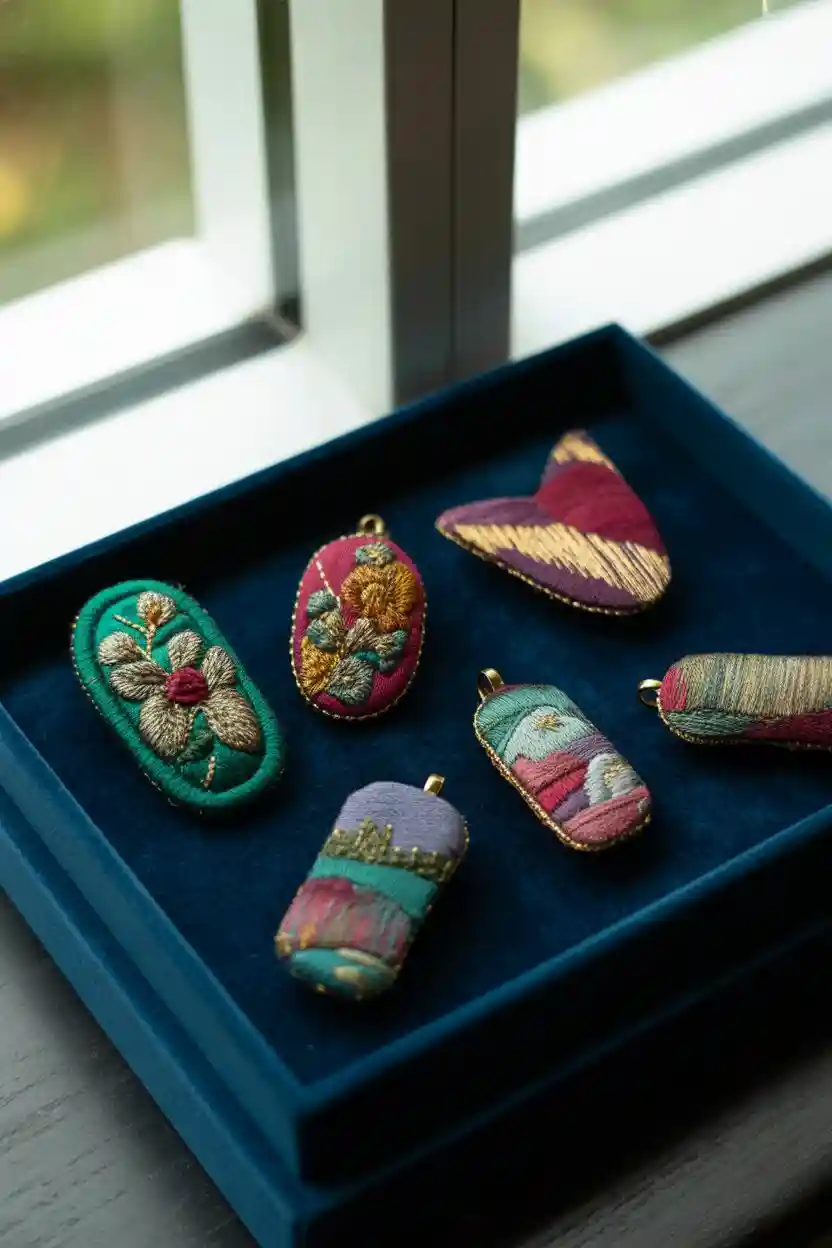
Shrink embroidery to jewelry scale — a stitched pendant, a pair of fabric earrings, a brooch — and precision becomes everything. Work the motif on linen, back it with felt, and set it in a bezel or hoop finding. These tiny pieces showcase skill disproportionate to their size and make remarkable gifts precisely because nobody expects thread in jewelry.
25. Christmas Ornament Embroidery
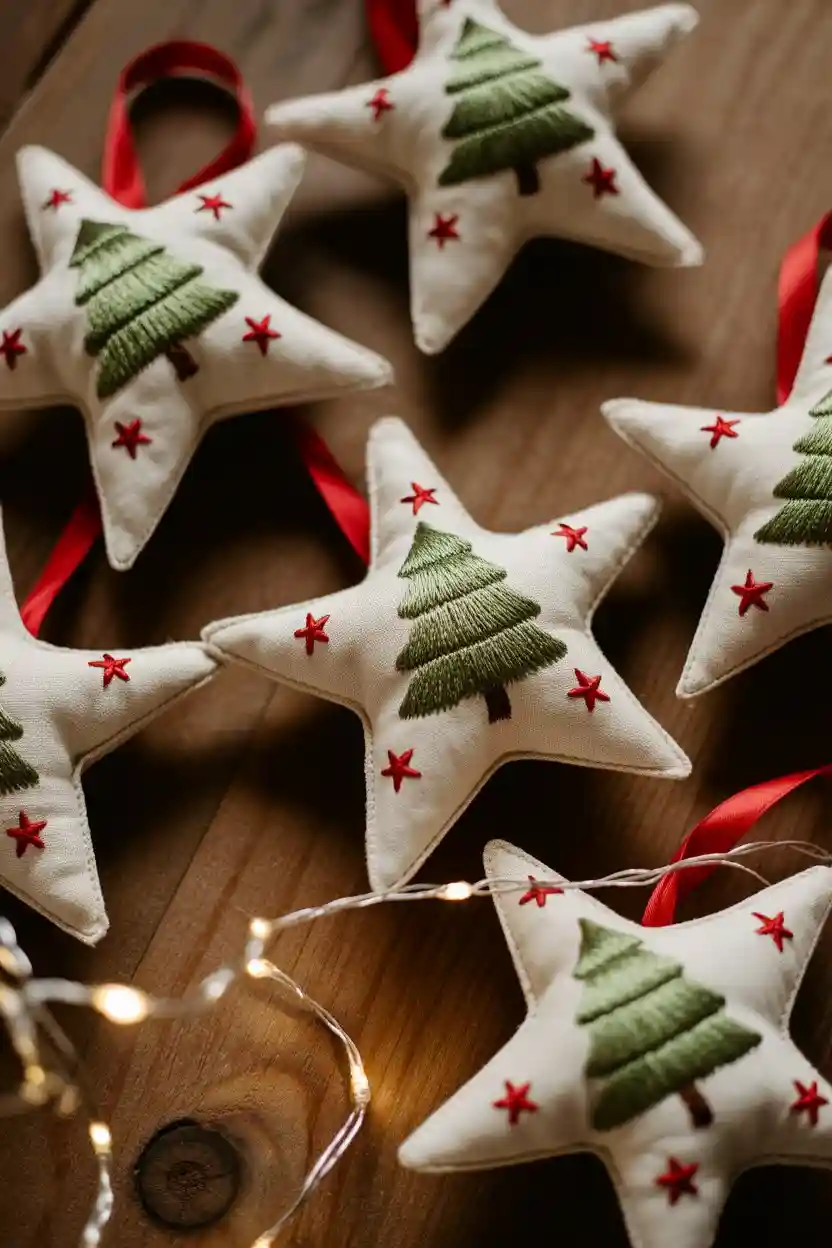
Fabric ornaments — stars, hearts, trees stuffed lightly and edged with blanket stitch — are the perfect December project: quick, festive, and batchable. Simple motifs in red, green, and gold on felt or linen need only basic stitches. Make a dozen in a weekend and you’ve solved teacher gifts, hostess gifts, and half the tree.
FAQs for Hand Embroidery Project Ideas Ideas