30 Creative Embroidery Design Ideas for Everyday Wear Clothes
The difference between a plain tee and a favorite tee is often about six inches of thread. Embroidery has moved well past grandmother’s tablecloth — it’s now a genuine fashion language, from single-line face outlines on streetwear to gold-threaded borders on festive kurtis. The 30 ideas below cover the full range: hand techniques for one-offs, machine-friendly designs for repeats, and placements — collars, cuffs, pockets, hems — that turn ordinary garments into signatures.

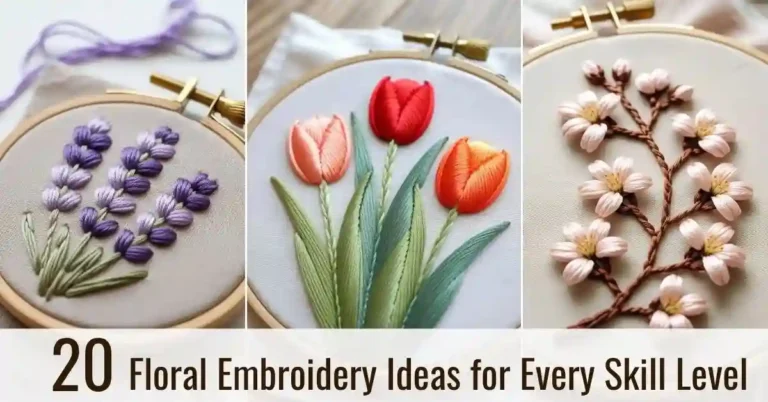
1. Floral Vine Embroidery Design
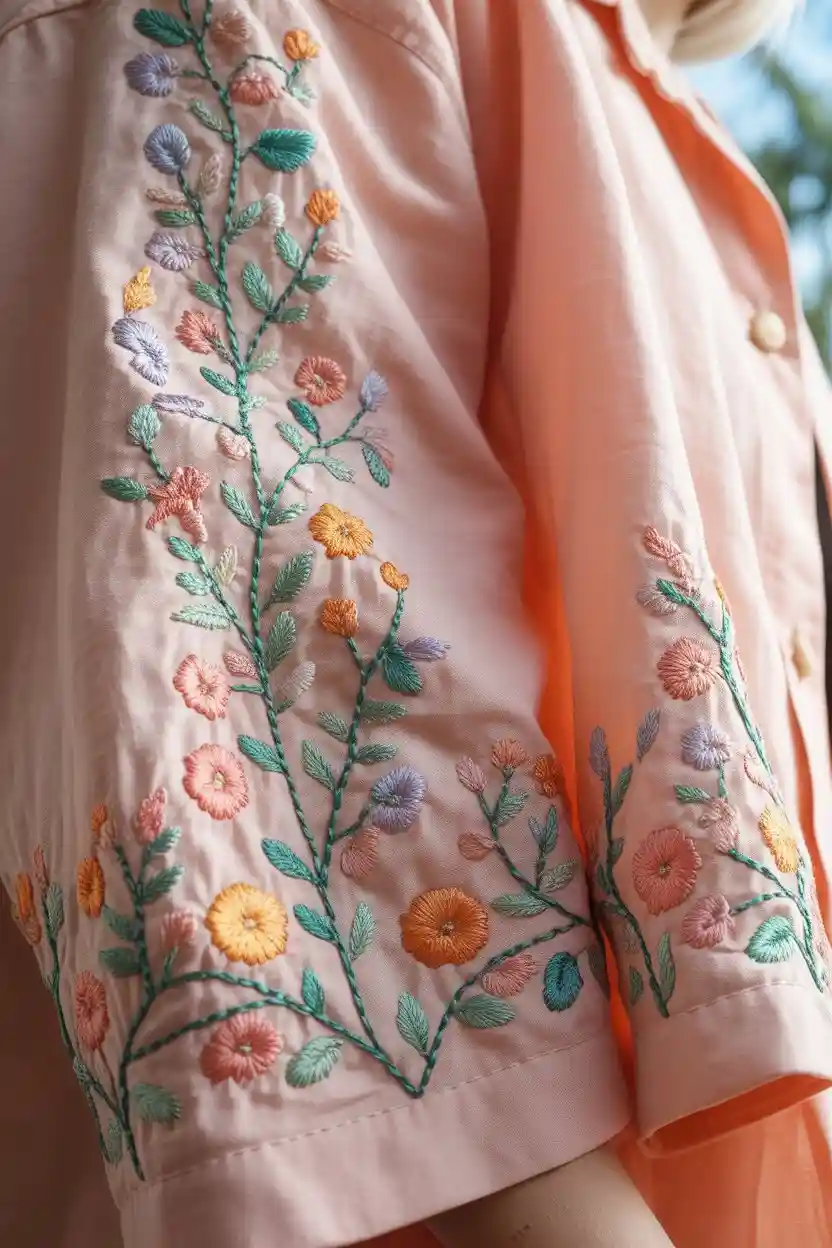
A vine that climbs a sleeve or trails along a neckline gives a garment movement that static motifs can’t. Thin stem stitch for the vine, lazy daisies for leaves, small satin-stitched blooms spaced unevenly — irregular spacing reads as natural, perfect spacing reads as wallpaper. Pastels whisper on summer cotton; jewel tones shout on dark denim. Let the vine follow the garment’s lines and it will look grown, not stuck on.
2. Minimal Outline Face Embroidery
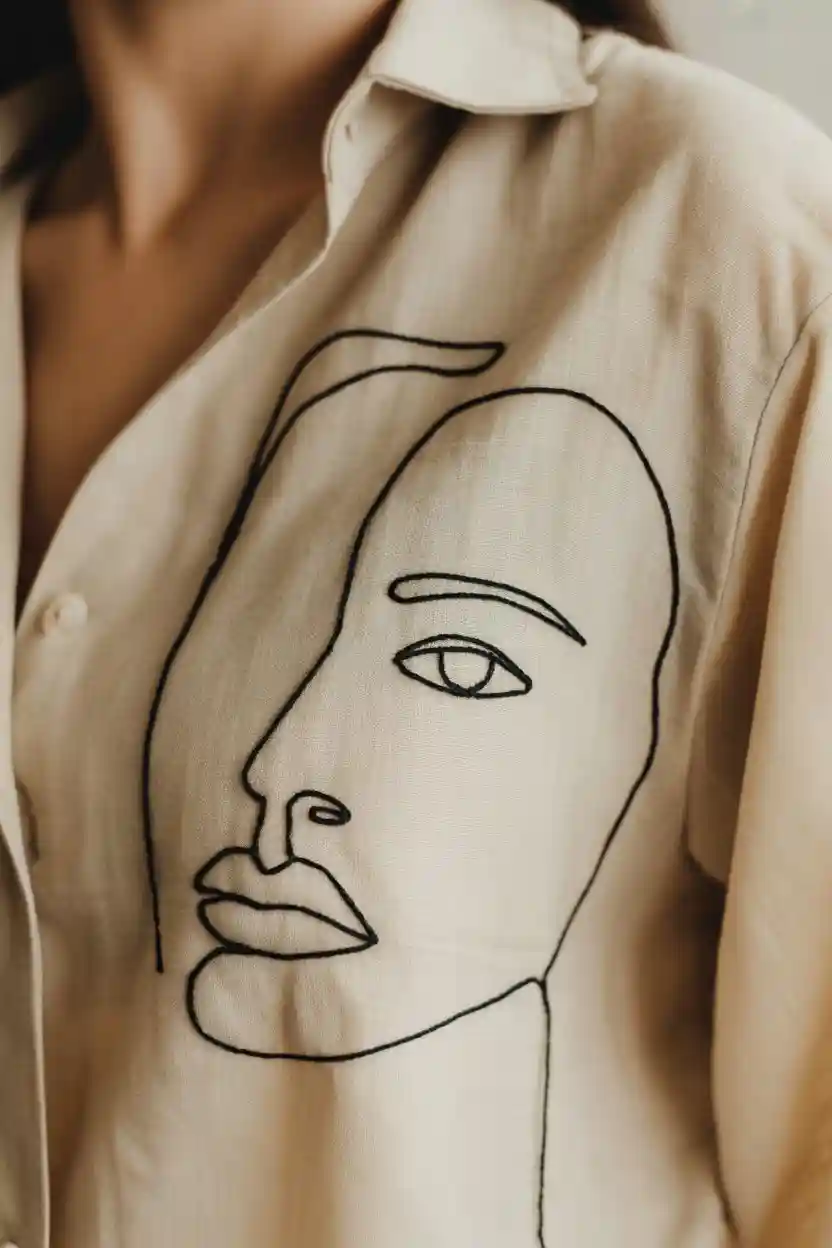
One continuous line forming a face — no lifting the needle, no filling in — is modern embroidery’s signature move. It suits the chest of a tee or the corner of a tote, where negative space does half the work. Black thread on natural fabric is the classic; try tone-on-tone for subtlety. This easy embroidery design flatters beginners too, since wobbles in the line read as style rather than mistakes.
3. Butterfly Cluster Embroidery Design
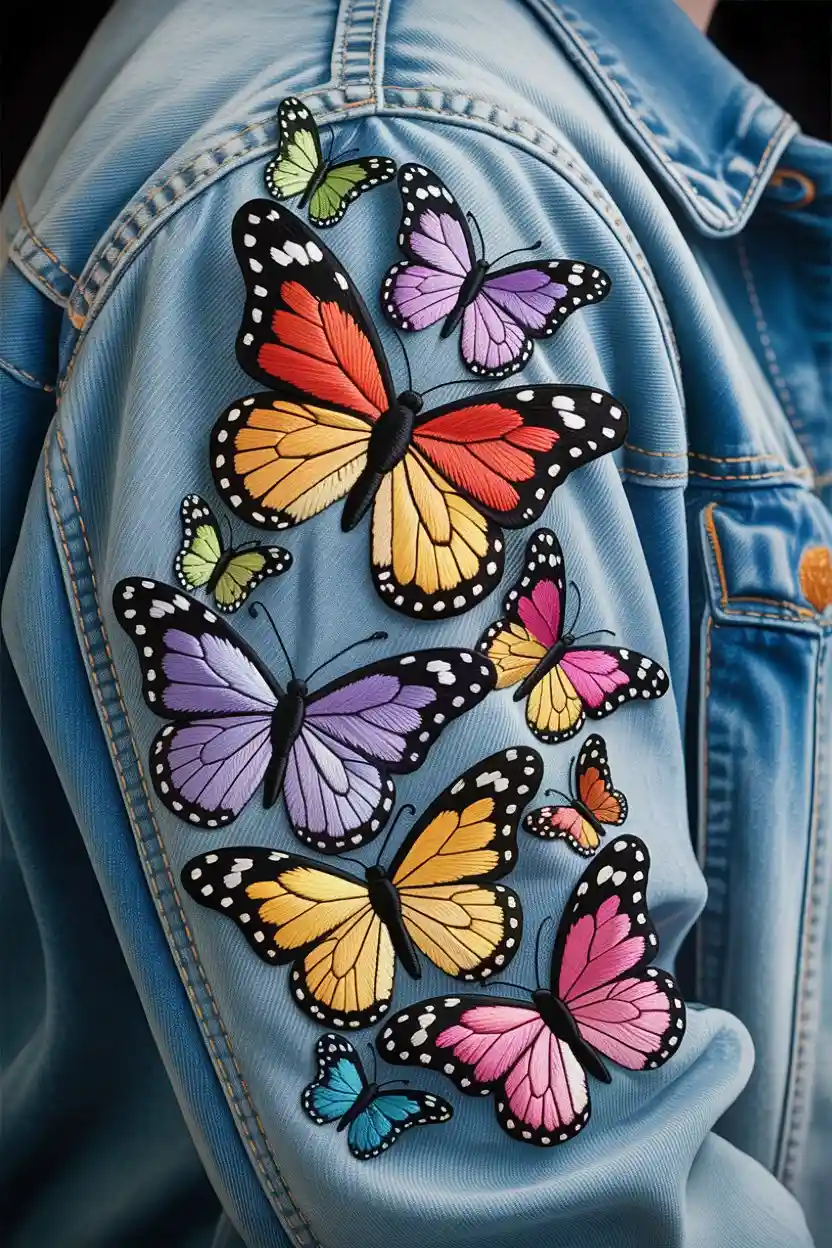
Scatter five to seven butterflies of different sizes across a shoulder or down a jacket back and the garment suddenly has motion. Vary the wing patterns — some solid satin stitch, some open lazy-daisy wings — so each butterfly feels individual. Cluster them as if they just landed: denser at one point, thinning outward. Denim and linen take the detail best.
4. Geometric Pattern Embroidery
Triangles, diamonds, and hexagons in clean repeats give clothing an architectural edge — the embroidery equivalent of good tailoring. Run them as a chest band, a sleeve stripe, or a full yoke panel; contrasting thread sharpens the geometry, monochrome keeps it quiet. It suits menswear and minimal wardrobes especially well. For first attempts at structured work, hoop art embroidery designs for beginnersteach the precision this style demands.

5. Embroidered Name or Monogram Design
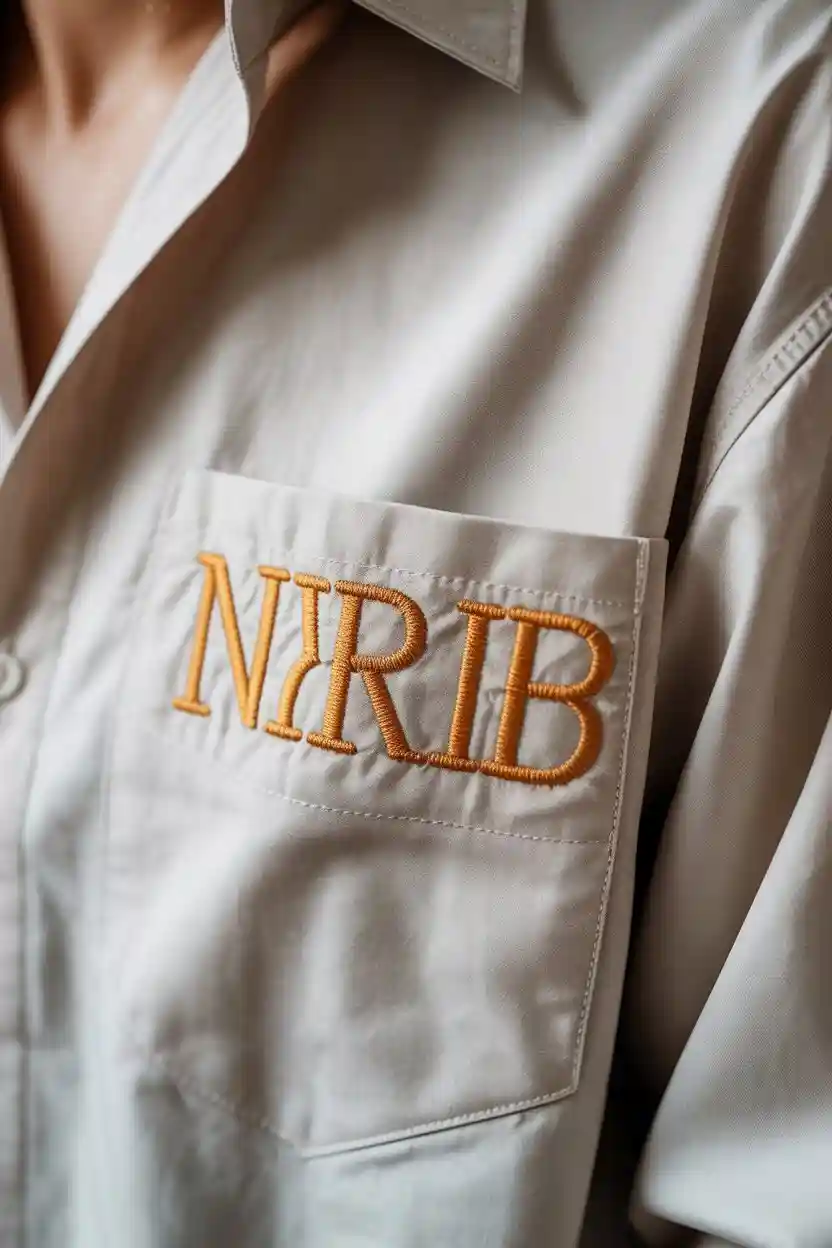
A name or monogram in good lettering never goes out of style — it’s the oldest personalization in clothing. Script for elegance, block letters for modern punch; place it on a pocket, cuff, or the nape of a collar where it reads as a signature. Use quality floss and keep the lettering modest — a two-inch monogram is confident, a four-inch one is a billboard.
6. Nature Landscape Embroidery Design
Stitch a tiny landscape — mountains, a low sun, a line of trees — inside a pocket-sized frame on a jacket back or sweater chest, and the garment becomes a story. Work back to front in earthy tones: pale distant hills, darker foreground, a French-knot sun. The miniature scale is the charm; a scene that would be boring large becomes captivating at four inches.

7. Applique Floral Patch Embroidery
Applique plus embroidery gives you dimension thread alone can’t: cut flowers from contrasting fabric, stitch them down, then outline in bold thread. The result sits slightly raised, catching light and attention. It’s a natural for kids’ clothes and statement jackets — playful, tactile, and far more interesting than flat stitching. Finish the raw edges with blanket stitch so they survive the wash.

8. Traditional Kurti Border Embroidery
Embroidered borders along a kurti’s hem, sleeves, or neckline carry centuries of tradition — paisleys, buttis, and geometric bands in gold, maroon, or deep green. The discipline here is repetition: motifs must march evenly, which is why this style rewards careful marking beforehand. Rich thread on rich fabric is festive; the same motifs in tone-on-tone thread turn quietly elegant for everyday wear.

9. Abstract Color Fill Embroidery Design
Fill irregular, overlapping shapes with saturated color and you get wearable abstract art. The trick is editing: three to four colors maximum, with one neutral to let the brights breathe. On a plain sweatshirt, one well-composed abstract panel beats all-over pattern — it reads as intentional rather than busy. Sketch the composition on paper first; spontaneity works better planned.

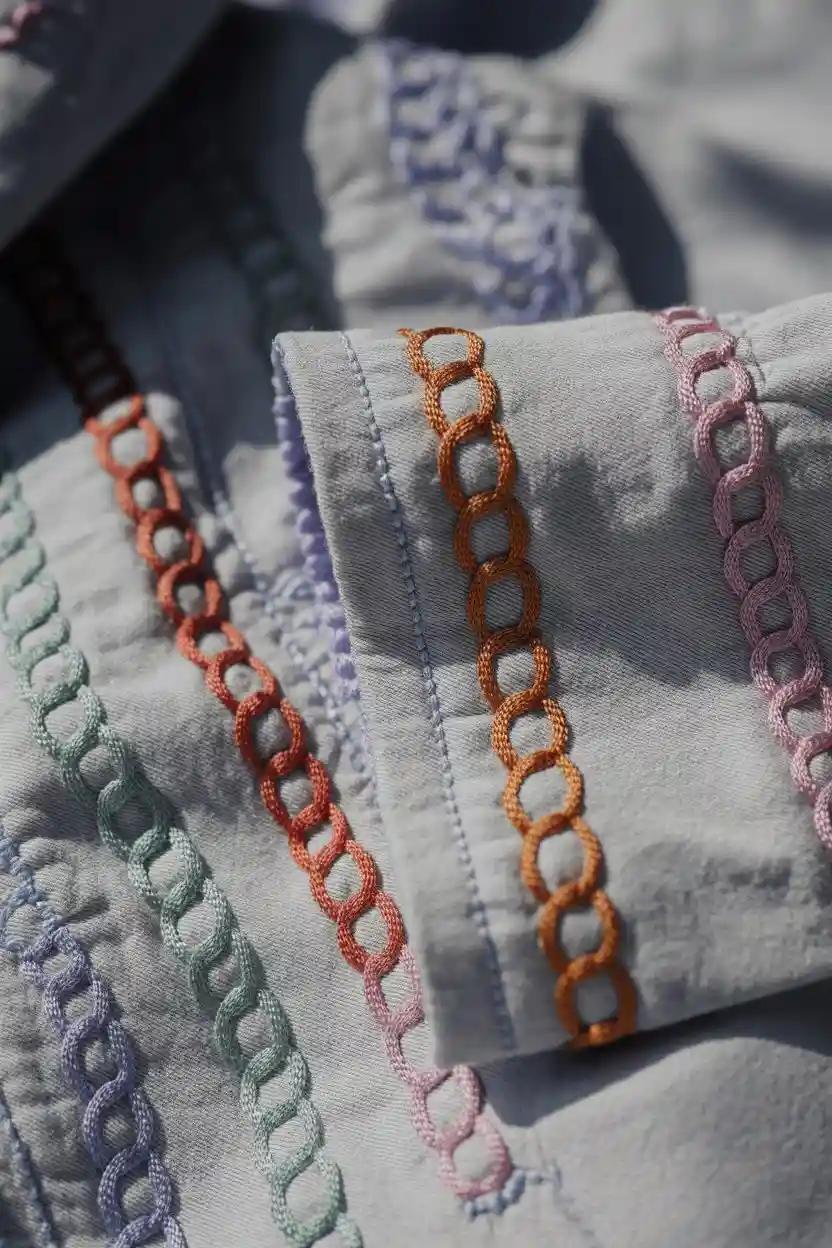
10. Chain Stitch Pattern Embroidery
Chain stitch is the beginner’s power tool: simple loops that build into textured lines, borders, and filled motifs with a lovely hand-made rhythm. It’s forgiving — uneven loops still look charming — and fast once the motion clicks. Use it for outlines that need presence, or fill entire flowers with concentric chains for a folk-art feel. Cotton and linen take it beautifully.
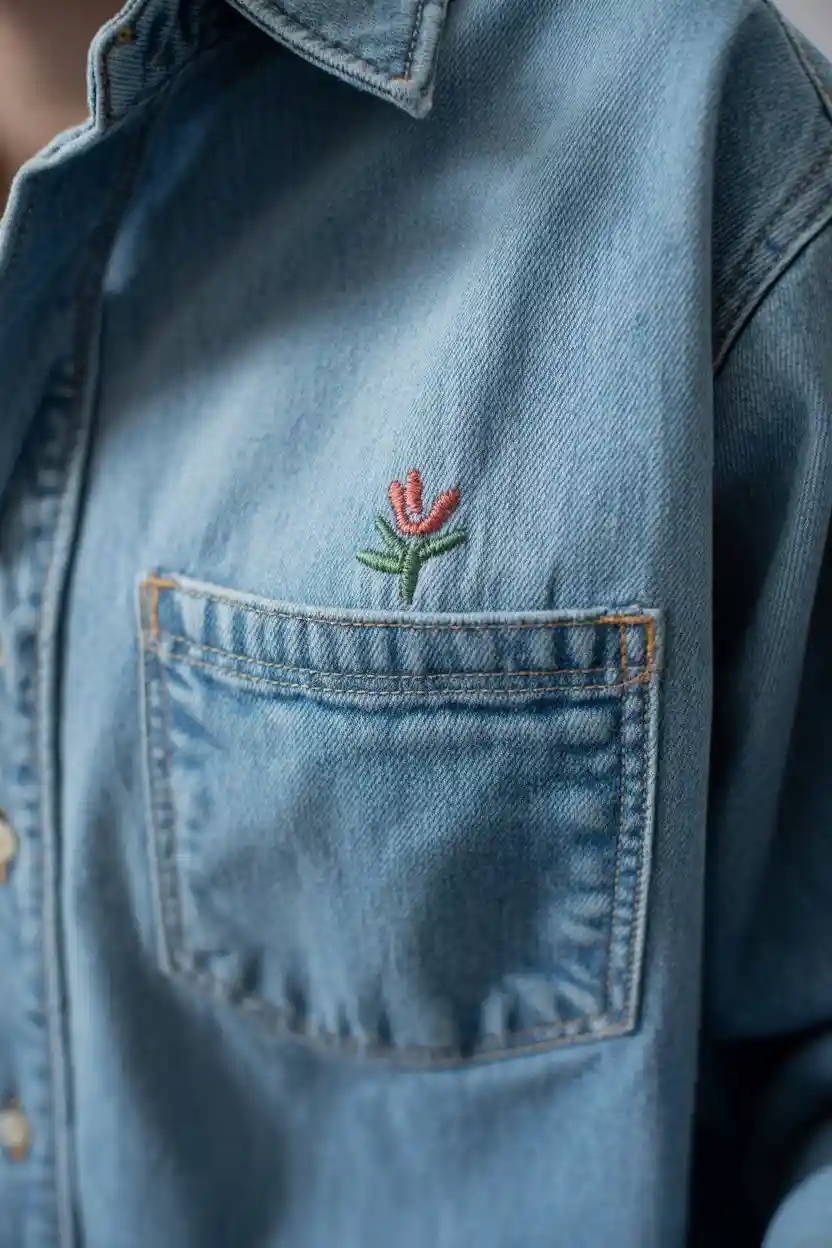
11. Embroidered Pocket Accent Design
Sometimes the smallest placement makes the biggest statement: a single tiny motif on a shirt pocket — a flower, a star, a miniature geometric. It rewards the second look, the person who notices details. Keep it under an inch and let the surrounding plain fabric do the talking. Minimalists, this is your embroidery.
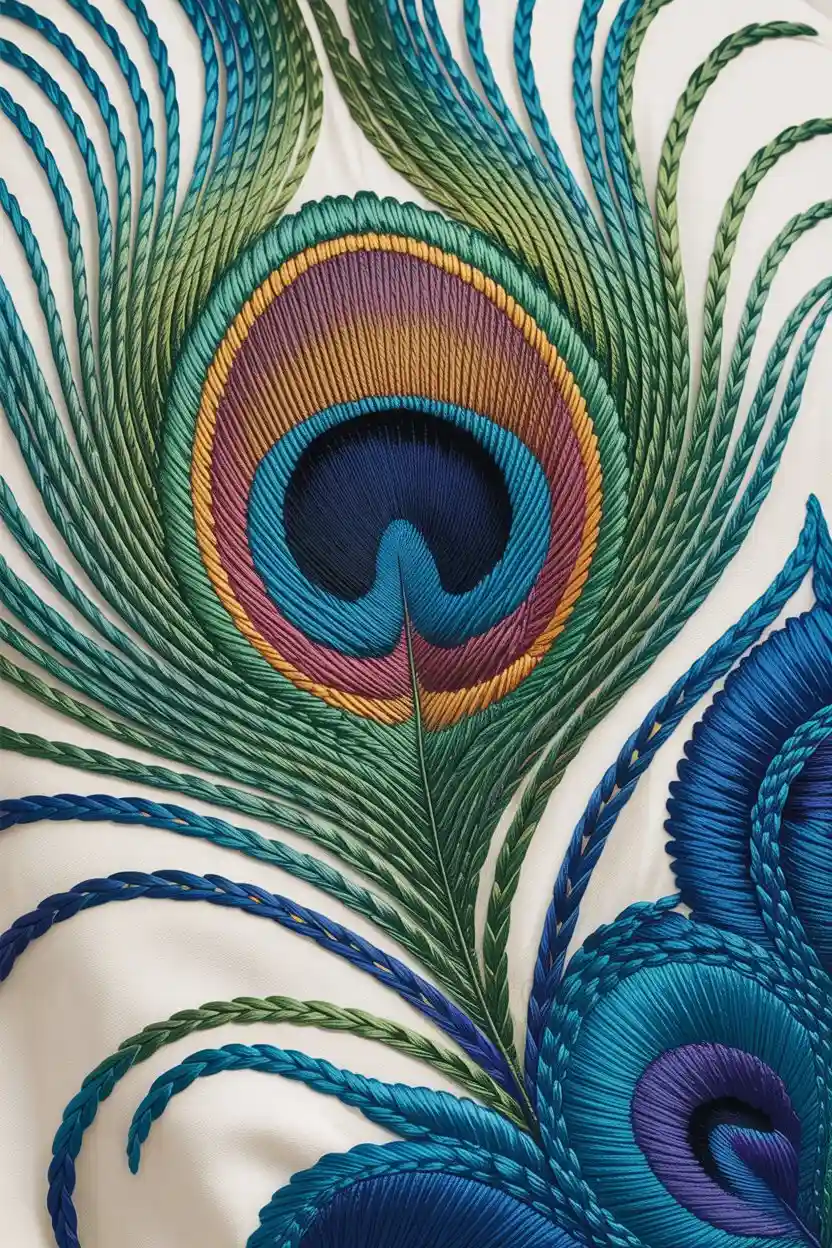
12. Peacock Feather Embroidery Design
The peacock feather’s “eye” — concentric teardrops in blue, green, and gold — is one of embroidery’s great showpieces. Build it with layered satin stitch, blending shades where the colors meet, and add fine stem-stitch barbs radiating outward. One feather on a blouse shoulder or scarf corner carries a whole outfit; it needs no company.
13. Cross Stitch Motif Embroidery
Cross stitch on clothing brings pixel-art precision to fabric: each X lands on the weave’s grid, so hearts, flowers, and small icons come out crisp and even. It suits casual wear and accessories where neatness matters — a row of tiny motifs along a collar or cuff. Even-weave fabric or waste canvas keeps the grid honest on plain cotton.

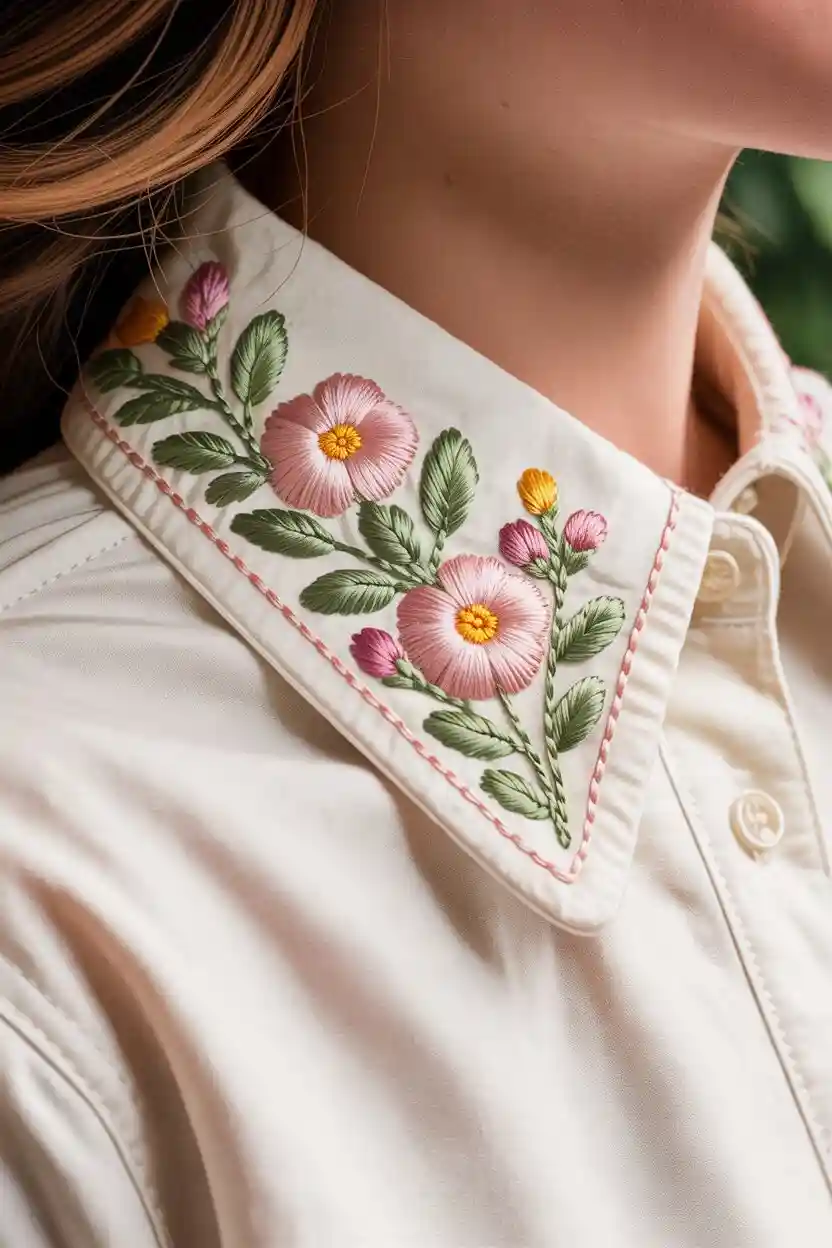
14. Embroidered Collar Detail Design
Embroidery at the collar frames the face, which makes it the highest-visibility placement on any garment. Small florals trailing along a collar edge, a geometric line following the placket — fine thread, restrained scale. Because it sits inches from the eyes, this is where neatness counts most; a wobble here shows. Done well, it makes a basic shirt look custom-tailored.
15. Sashiko Inspired Stitch Embroidery
Sashiko’s running-stitch geometry — white thread on indigo, traditionally — gives denim and workwear a textured, hand-crafted character that’s both ancient and completely current. The patterns are meditative to stitch: row after row of even running stitches building waves, mountains, and stars. Start with a pre-printed panel; freehand sashiko spacing is an advanced skill disguised as a simple one.

16. Embroidered Sleeve Statement Design
Give a sleeve the full treatment — a vine climbing from cuff to shoulder, a band of geometry at the bicep — and the arm becomes the garment’s headline. Sleeves offer long, uninterrupted canvas that torsos don’t, especially on kurtis and dresses. Keep the rest of the garment quiet; a statement sleeve plus a busy body is a fight nobody wins.

17. Embroidered Back Panel Design
The back panel is embroidery’s billboard: the largest uninterrupted space on most garments, visible to everyone except the wearer. Go big here — a full floral arrangement, a landscape, an abstract composition — planned on paper first and transferred carefully. Center-upper placement draws the eye naturally; symmetry feels formal, asymmetry feels modern.

18. Pocket Monogram Embroidery
A monogram on a pocket is personalization at its most discreet: one initial, contrast thread, done. It suits work shirts and casual jackets alike — professional enough for the office, personal enough to feel like yours. Machine stitching keeps multiples identical; hand stitching gives each one a slight, charming variation. Either way, keep it small and let it whisper.

19. Animal Motif Embroidery
Birds, foxes, pandas, cats — animal motifs bring instant personality to tees, sweaters, and kids’ wear. Simple outlines read as modern; filled, shaded versions read as storybook. hand embroidery patterns shine here because fur and feathers invite textural stitches — French knots for a sheep’s wool, long-and-short for a fox’s tail. One well-placed animal beats a menagerie.

20. Embroidered Shoulder Accent
The shoulder’s natural curve is a perfect track for embroidery: a sprig of flowers, a geometric trail, tiny scattered stars following the seam line. It balances the garment — decoration up top, calm below — and moves beautifully when worn. This placement suits festive and semi-formal wear especially, where a little embellishment goes a long way.

21. Applique Animal Patch Design
Applique animals — a felt fox, a fabric whale, a denim bear — outlined in bold stitching give kids’ clothes unbeatable charm. The layered construction adds real dimension that flat embroidery can’t touch, and contrasting fabrics make each creature pop. Secure edges with blanket stitch or tight zigzag; children’s clothes get washed hard and often.

22. Embroidered Cuff Design
Cuffs are small, visible, and constantly in motion — ideal for embroidery that rewards attention. A row of tiny motifs or a geometric band along the cuff edge elevates shirts and kurtis out of all proportion to the effort. Contrasting thread makes the detail pop; tone-on-tone keeps it for those in the know. Both hand and machine work suit this scale.

23. Floral Bouquet Embroidery
A clustered bouquet — roses, daisies, wildflowers layered with varied stitches — is embroidery’s classic showpiece for a reason: the combination of blooms gives depth, color range, and texture in one motif. Place it at a neckline, hem, or pocket where it can breathe. Mix stitch types deliberately — satin petals, knot centers, stem leaves — and the bouquet gains a realism no single stitch achieves.

24. Sleeve Band Embroidery
A narrow embroidered band circling the sleeve — chains, tiny flowers, geometric repeats — adds a finished, tailored feel with minimal coverage. The repetition is the design: even spacing and consistent motifs create rhythm the eye follows. It’s equally at home on a casual tee and a festive kurti, which is rare versatility for one technique.

25. Embroidered Hemline Accent
Embroider the hemline and the garment gains visual weight and a sense of completion — vines, borders, or geometric bands tracing the bottom edge. On skirts and dresses the decoration moves with the fabric, which is half the pleasure. Keep the band proportional: a deep border on a long skirt, a narrow one on a short top. Balance is everything here.

26. Bird in Flight Embroidery
A bird caught mid-flight — wings spread, body angled — brings genuine energy to a jacket back or blouse shoulder. Suggest motion with layered feather stitches and leave plenty of empty space around it; the bird needs sky. One bird, well placed, tells more story than a flock.

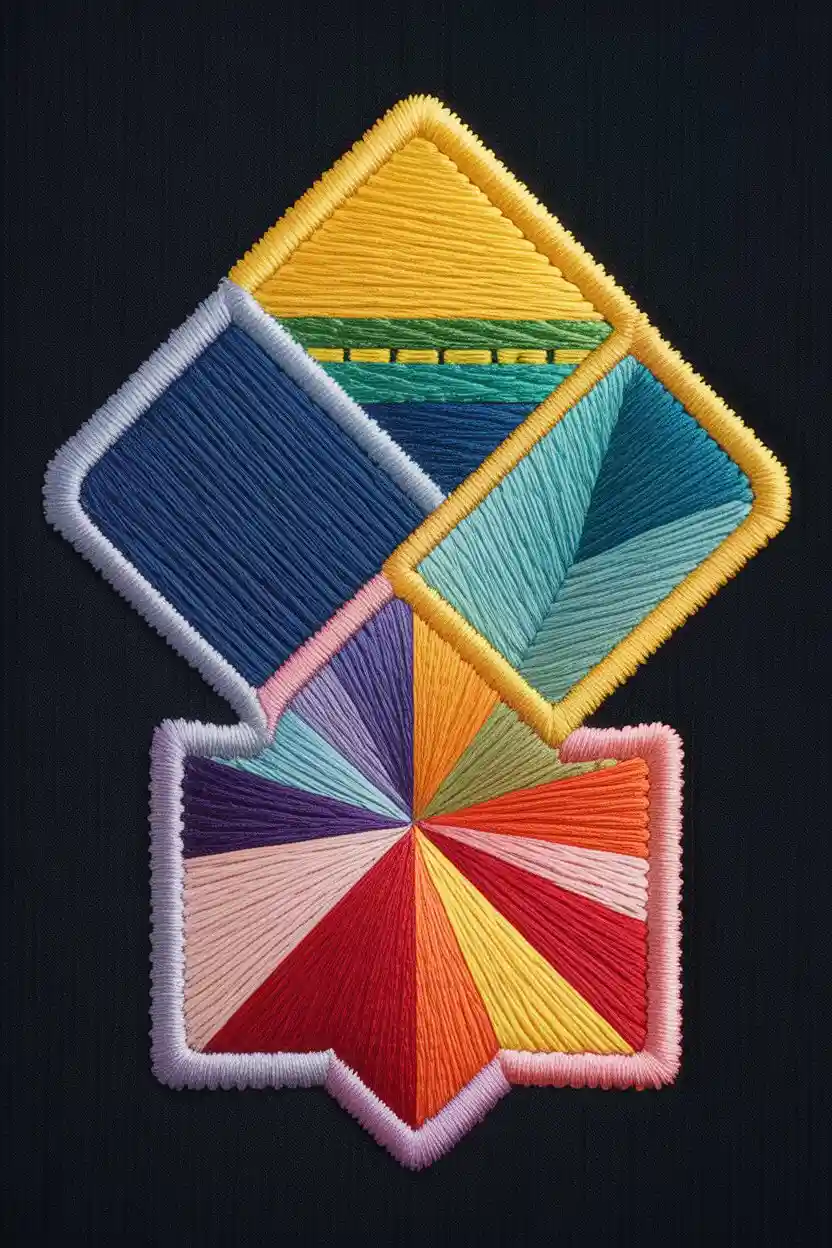
27. Abstract Geometric Patch Embroidery
Cut fabric into triangles, arcs, and irregular polygons, applique them in bold compositions, and outline in contrast stitching: instant contemporary art for jackets and casual wear. The interplay of printed or textured fabrics with thread outlines gives depth that pure stitching can’t. Plan the composition flat before cutting — rearrangement is free on the table and expensive on the garment.
28. Embroidered Pocket Square Design
An embroidered pocket square is detail for people who notice details: a small motif or initial in one corner, visible only when it peeks from the breast pocket. Keep it tiny and refined — this is whisper-level embroidery. On formal wear, restraint is the whole point; the square should reward a second glance, not demand a first.

29. Seasonal Theme Embroidery
Stitch the season: spring blossoms, summer suns, autumn leaves, winter snowflakes — timely motifs that keep a wardrobe feeling current. The palette does half the storytelling, so commit to it: pastels for spring, burnt oranges for fall, icy blues for winter. Seasonal pieces get worn hard for three months and rested for nine, which keeps them feeling fresh year after year.

30. Embroidered Collar and Placket Detail
Collar plus placket is embroidery’s power pairing: the two most visible lines on a shirt, treated as one continuous design opportunity. A vine that starts at the collar and trails down the placket, or matching geometric accents on both — the continuity is what elevates it. Fine thread, precise placement; this is tailoring-level detail that makes off-the-rack look bespoke.

FAQs for Creative Embroidery Design Ideas