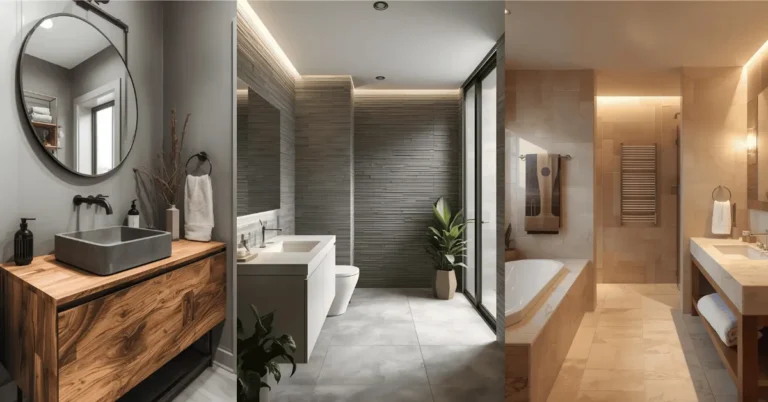
25 Minimalist Bathroom Decor Ideas for a Calm, Functional Space
Open the door of a truly minimalist bathroom and the first thing you notice is what’s missing: no cluster of half-empty bottles on the tub edge, no stack of mismatched towels, no bath mat curling at the corners. What’s left is doing all the work — one good mirror, one calm surface, light that flatters. Minimalism here isn’t a style you buy; it’s the result of removing everything that doesn’t earn its place, then choosing the few things that remain with unusual care.
That discipline pays off in the smallest room of the house, where clutter shows fastest. The 25 bathroom decor ideas below cover the whole approach — layout, surfaces, storage, light — each chosen to keep the room calm without feeling cold. Pick the ones that fit your space; even five of them will change how the room feels at 6 a.m.
1. Floating Vanity with Clean Lines
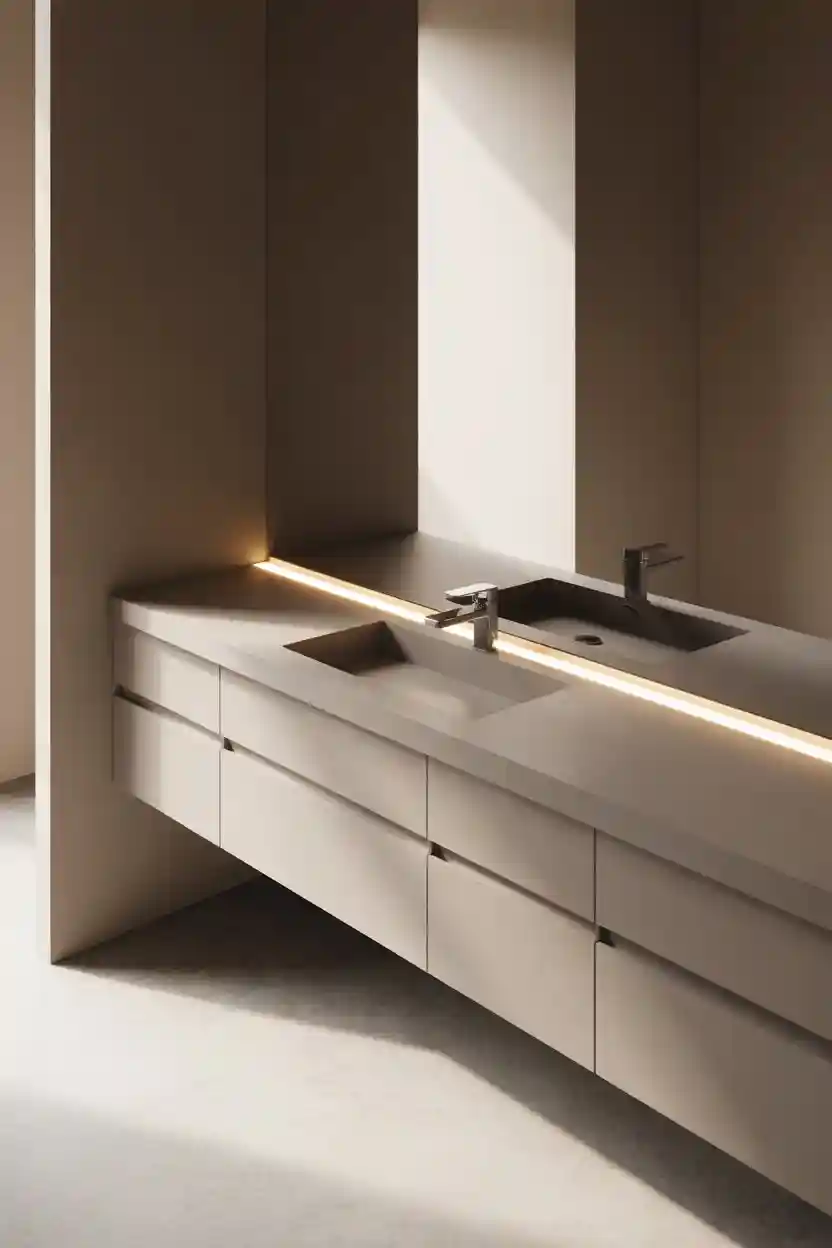
A vanity bolted to the wall leaves the floor continuous underneath, which reads as extra space and makes mopping a one-pass job. Go handleless — push-to-open drawers or a recessed finger pull — because hardware is visual noise in a minimalist room. A 24- or 36-inch wall-hung vanity in matte lacquer starts around $200 and installs in an afternoon.
Warm it with a single wood element — an oak drawer front, a teak stool — since one natural material keeps the room from feeling clinical. The same floating-vanity logic in our small bathroom guide applies here; the difference is restraint: fewer objects, calmer surfaces, nothing competing for attention.
2. Neutral Color Palette with Soft Contrast
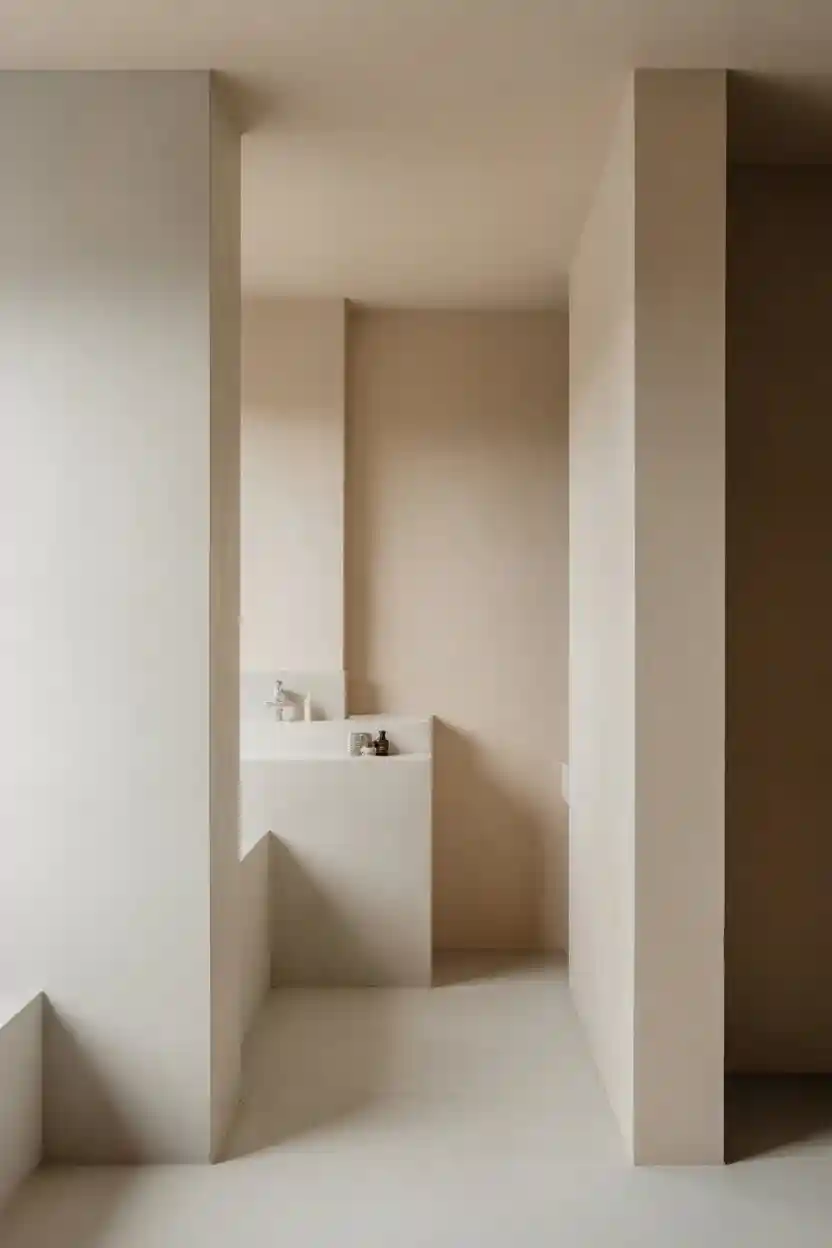
White, warm grey, greige, soft stone — pick two and commit. The minimalist palette works because it removes decisions: everything matches because there’s almost nothing to mismatch. Keep undertones consistent (all warm or all cool); mixing a warm beige tile with a cool grey paint is the subtle clash that makes a ‘neutral’ room feel off.
Contrast comes from texture, not color: a honed stone floor against matte wall tile, brushed brass against white oak. One dark line — a black-framed mirror, charcoal grout — can anchor the room, but it should be the only dark thing in it.
3. Frameless Glass Shower Enclosure
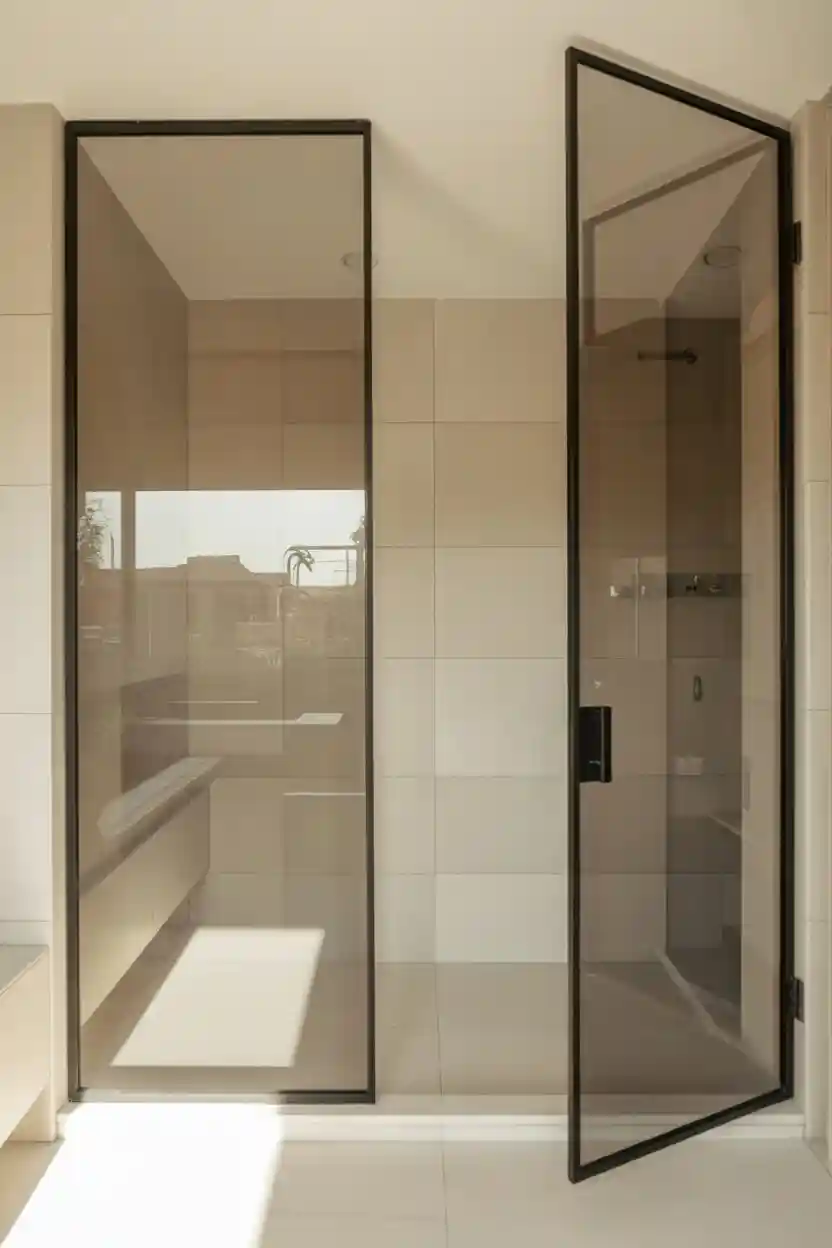
Frameless glass removes the shower’s visual walls entirely; the tile runs uninterrupted and the room reads as one space. Use 3/8-inch glass with minimal clips rather than a framed slider — the frame is exactly the line you’re paying to erase. A squeegee habit is mandatory; spots on frameless glass are visible from the doorway.
Because there’s no frame breaking the sightline, the tile and fixtures carry the whole design — which is why this pairs so well with modern bathroom design thinking: large calm surfaces, one metal finish, nothing fussy. Keep the shower controls simple (one thermostatic mixer, not a panel of body sprays) and the minimalism maintains itself.
4. Large-Format Minimalist Bathroom Tiles
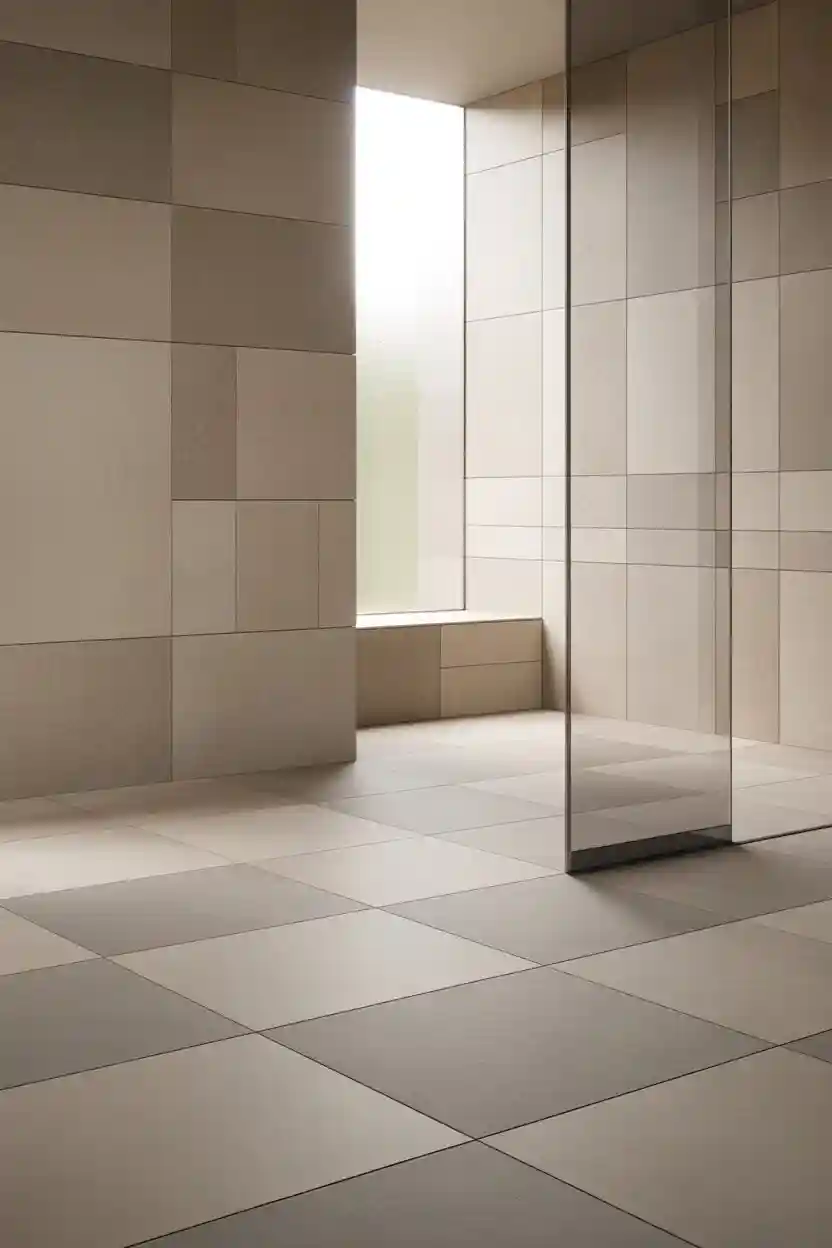
Fewer grout lines, fewer visual interruptions: 12×24 or 24×24 porcelain turns the floor and walls into calm planes. Matte finishes are the minimalist default — no glare, no reflections competing with the mirror. Stone-look porcelain at $2–$4 per square foot gives the quiet luxury of travertine without the sealing and staining anxiety.
Match the grout to the tile within a shade. In a minimalist room every line is visible, so the grout IS the design — a contrasting grid would be the busiest thing in the space. Epoxy grout ($30 a bag) never stains and never needs sealing; worth it when the grout is this exposed.
5. Minimalist Bathroom Sink with Integrated Basin
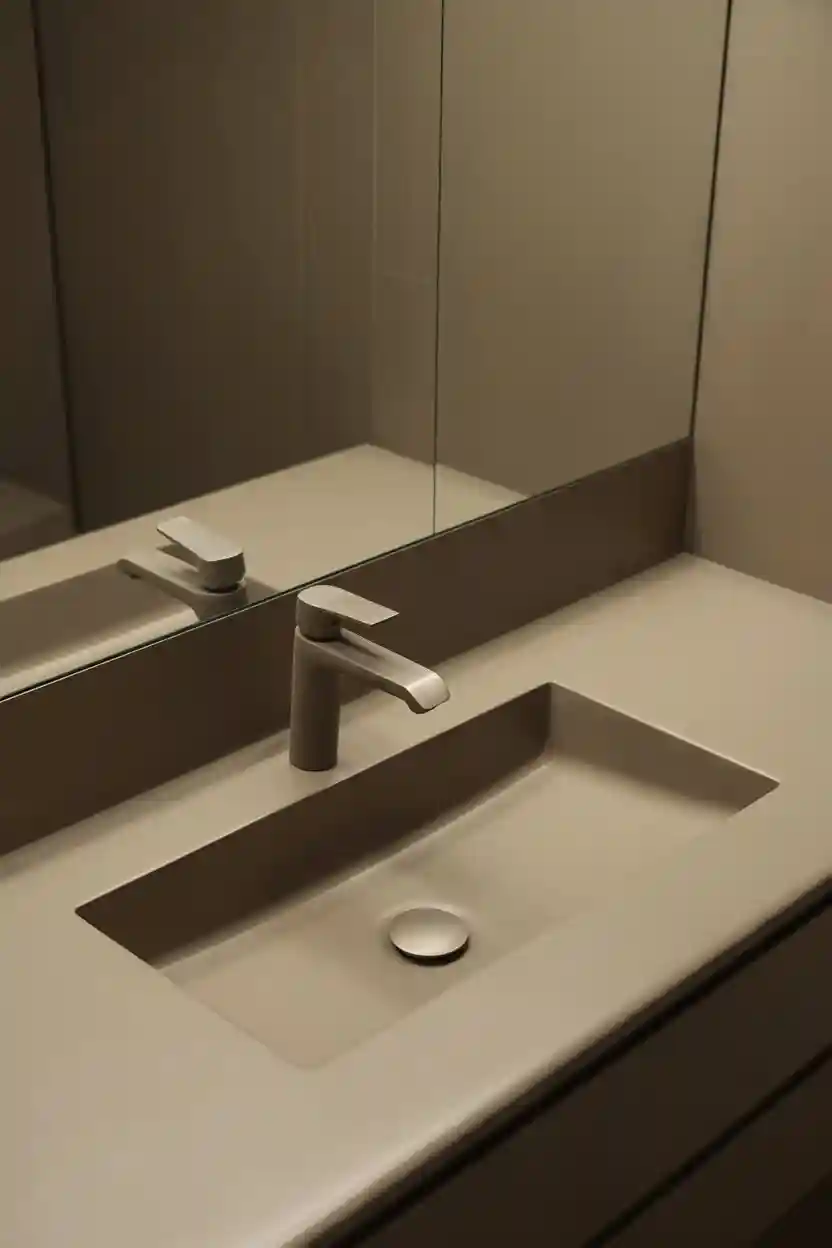
A basin molded into the countertop — one continuous surface, no rim, no caulk line — is the cleanest sink possible. Solid-surface and cast-stone versions start around $150 for a 24-inch top. The absence of a lip means there’s nowhere for grime to collect, which is both the aesthetic and the practical argument.
Pair it with a single wall-mount or short deck-mount mixer in the same finish as everything else. Vessel bowls fight minimalism — they add an object where the integrated basin removes one. If you must have a vessel, keep it low and matte.
6. Wall-Mounted Toilet for Visual Lightness
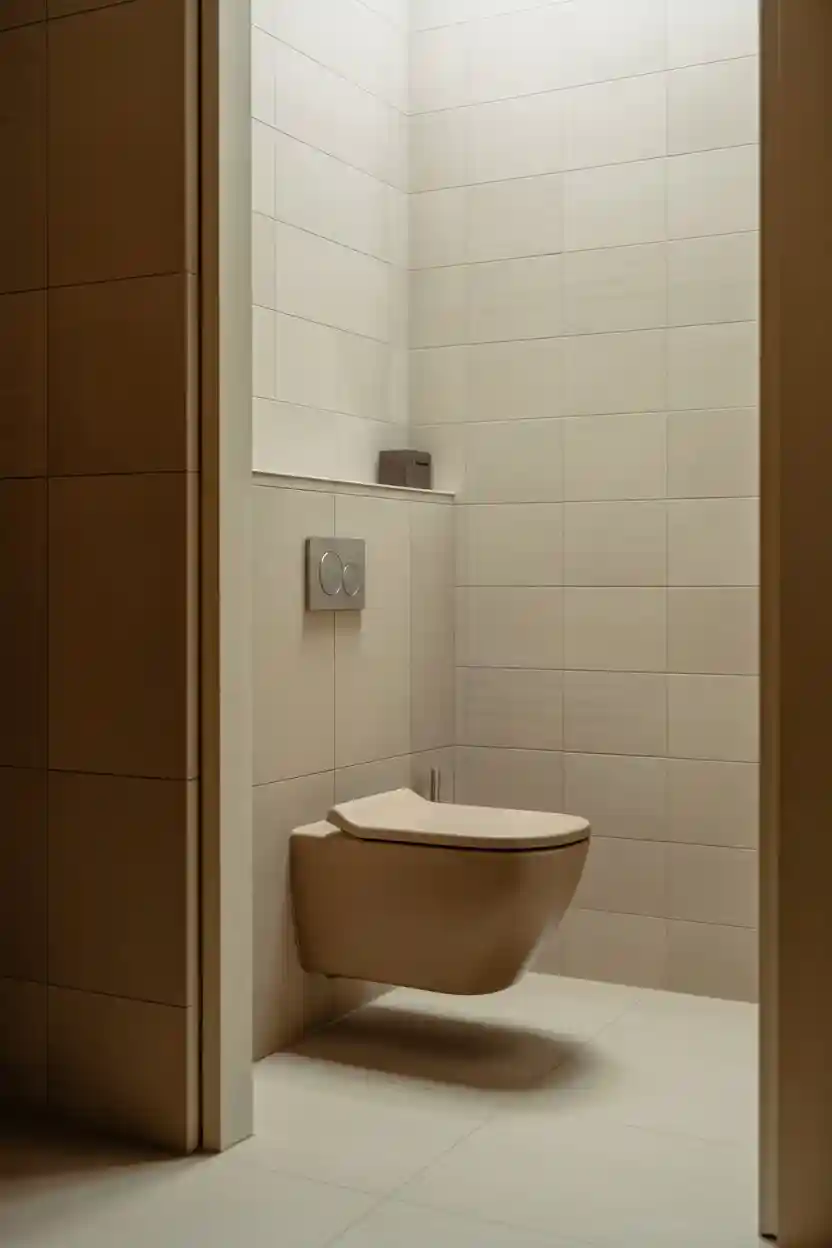
Hiding the cistern in the wall leaves only a clean bowl floating above the floor — the single most ‘designed’ move in a compact bath. The carrier frame needs a 2×6 wall or a furred-out chase, so this is a remodel decision, not a swap. Set the bowl at 17–19 inches high during install; the standard 15 feels needlessly low once you’ve chosen everything else this carefully.
With the tank gone and the floor clear, the toilet zone practically disappears — which is the point. Keep the flush plate in the same finish as the other hardware; a chrome plate in an all-matte-black room is a small betrayal the eye catches every time.
7. Minimal Bathroom Counter Decor Strategy
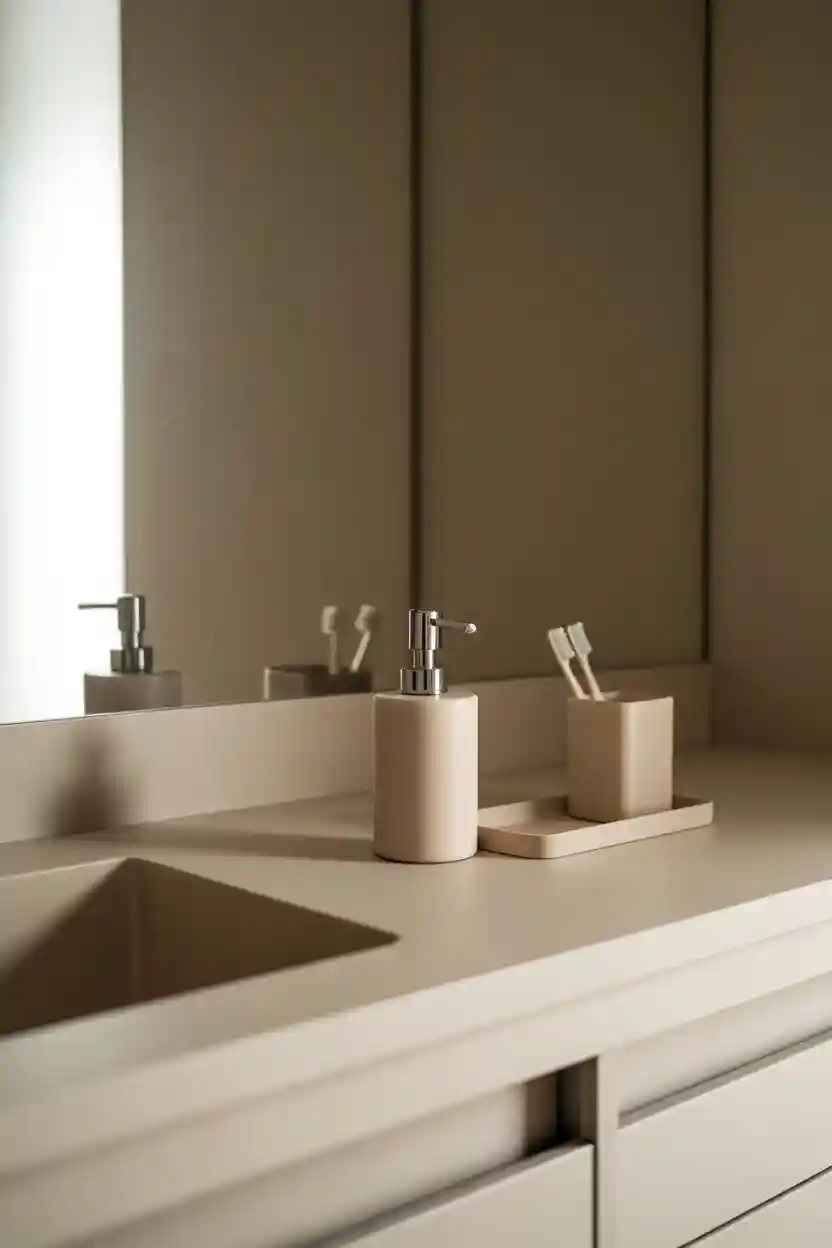
The counter rule: soap, toothbrush, one tray — everything else behind a door. Decant into matching dispensers so even the essentials look intentional. If an object hasn’t been touched in a week, it doesn’t live on the counter. This one habit does more for minimalism than any purchase.
Empty counter isn’t wasted space; it’s the luxury. A clear 24 inches of stone beside the sink reads as wealth in a way no accessory can. Corral the essentials on a single stone or wood tray so the boundary is visible — contained, not scattered.
8. Warm Wood Accents for Balance
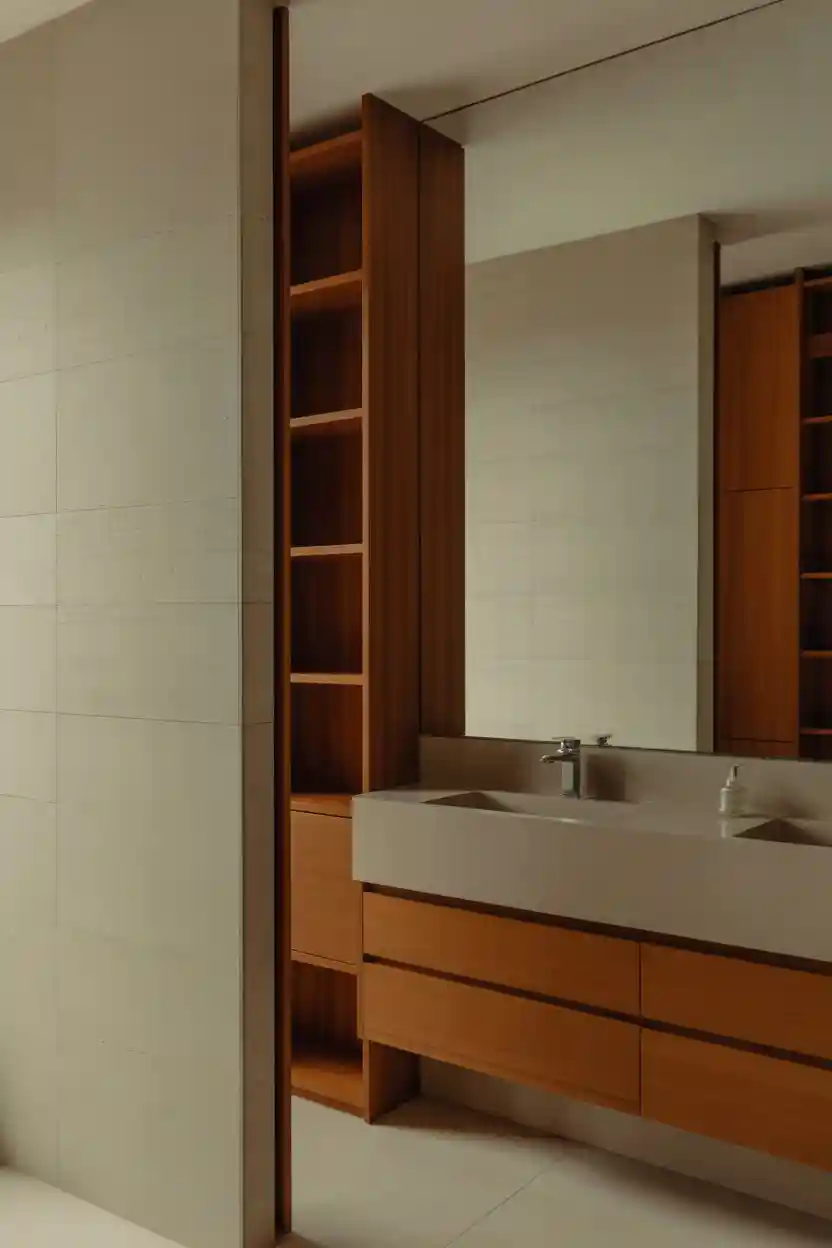
One wood tone — white oak, teak, walnut — in one or two places: the vanity front, a stool, a shelf. Wood is the warmth dial; turn it up with a second piece only if the room still feels cold. Keep it sealed (conversion varnish or marine finish) because bathroom steam will cup unsealed wood within two years.
Grain is the pattern. A plain-sawn oak front has more visual interest than any tile accent, which means you can keep every other surface dead quiet. That’s the trade that makes minimalism work: one natural material doing the decorative job of ten objects.
9. Concealed Storage Solutions
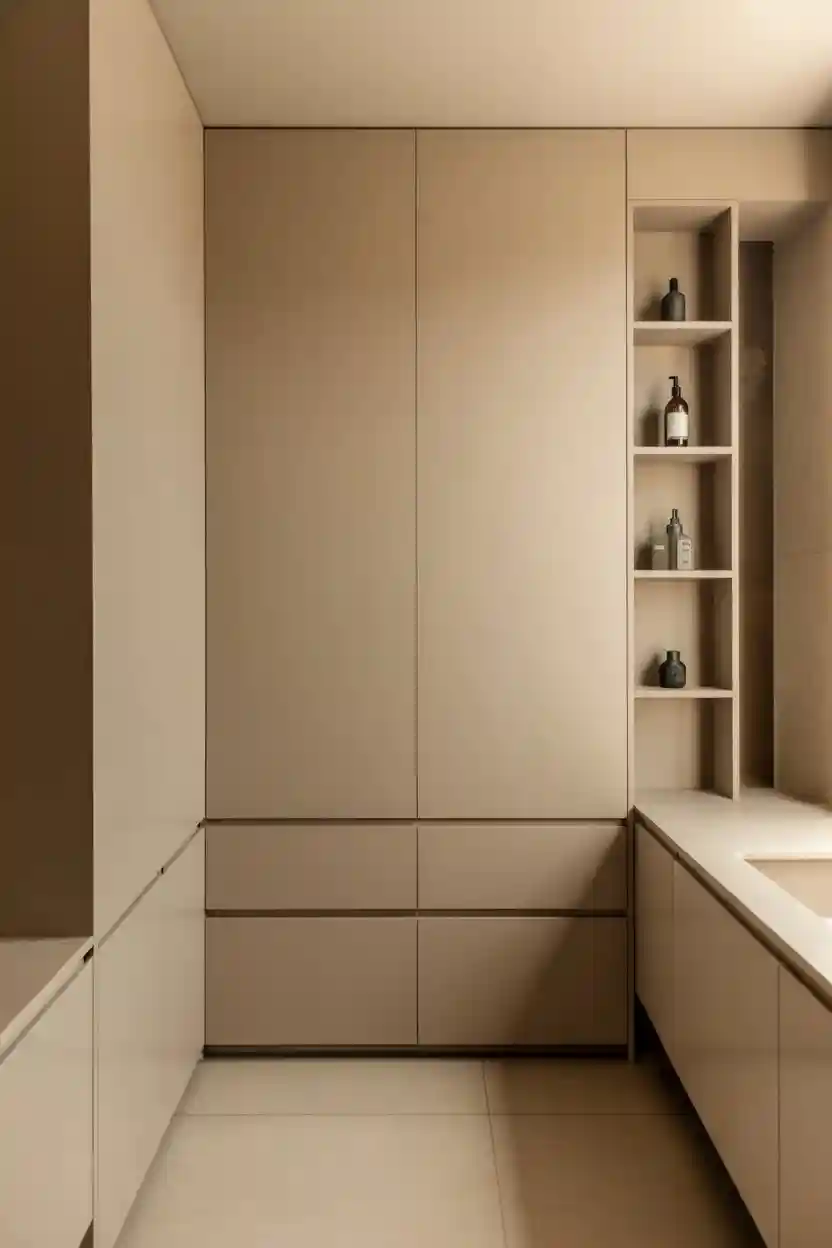
If you can see it, it’s decor — so put everything behind something: drawers instead of open shelves, a recessed medicine cabinet instead of a countertop caddy, a hamper with a lid. Plan storage for what you actually own, not an idealized version: count your bottles before choosing the niche size.
The test of concealed storage is the morning routine: everything you touch before 8 a.m. reachable in two motions, everything else invisible. A drawer with dividers beats a deep cabinet where things go to die. Label nothing; if you need labels, you have too much.
10. Minimalist Lighting with Soft Diffusion
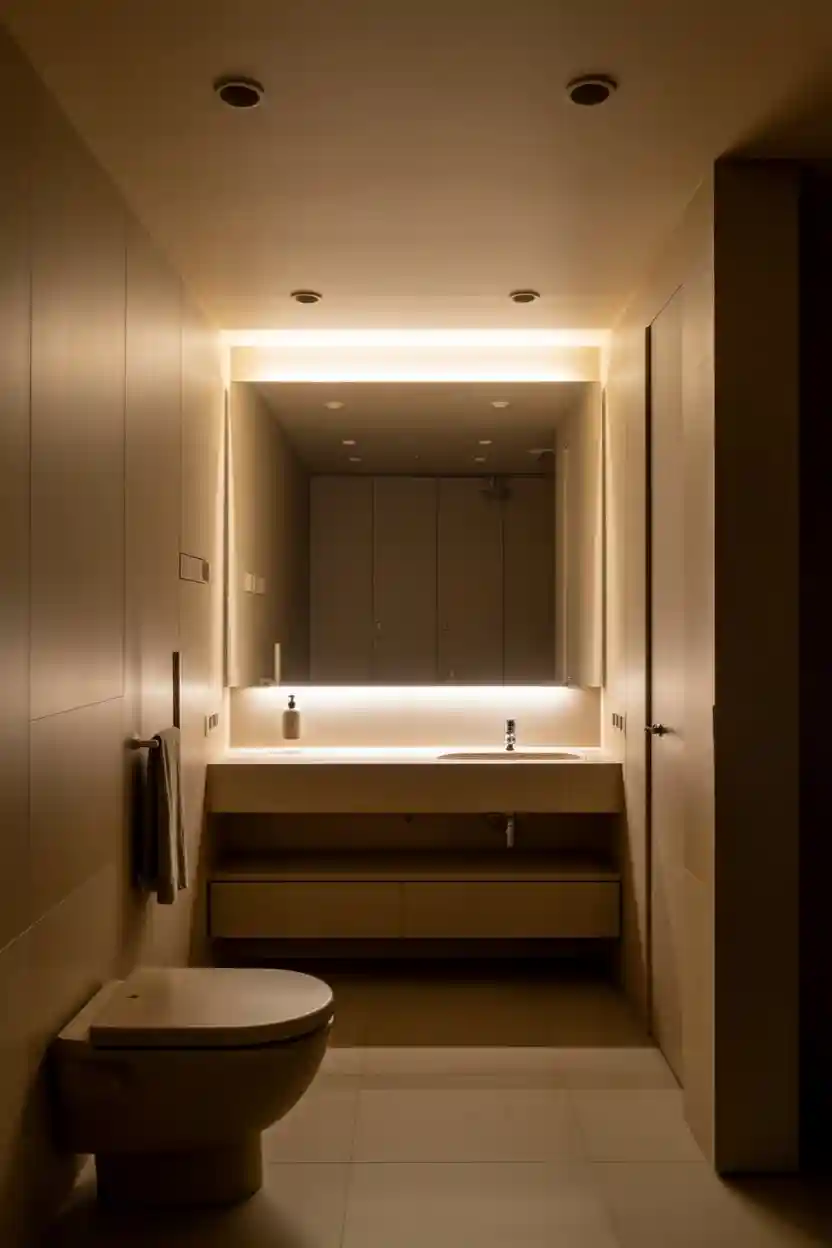
Light should come from nowhere in particular: recessed ceiling spots on a dimmer, a backlit mirror, an LED strip under the floating vanity. No visible fixture shouting for attention. Three sources minimum — overhead, mirror, accent — each on its own switch, so the room can be bright for cleaning and low for a bath.
Keep it warm: 2700–3000K. Cool white in a minimalist bathroom reads as laboratory; warm white reads as spa. It’s the cheapest warmth you’ll buy — a $5 bulb swap changes the room more than a $200 accessory.
11. Concrete Surfaces for Subtle Texture
Microcement or polished concrete on floors and walls gives subtle movement without pattern — the surface has depth that flat paint can’t. It’s seamless (no grout at all) and nearly indestructible. The catch: it must be sealed properly and installed by someone who’s done it before; bad microcement cracks, good microcement lasts decades.
Concrete runs cool visually, so balance it with warm light and wood — concrete plus warm oak plus 2700K light is the minimalist holy trinity. On its own with cool light, it reads as parking garage; the company it keeps decides everything.
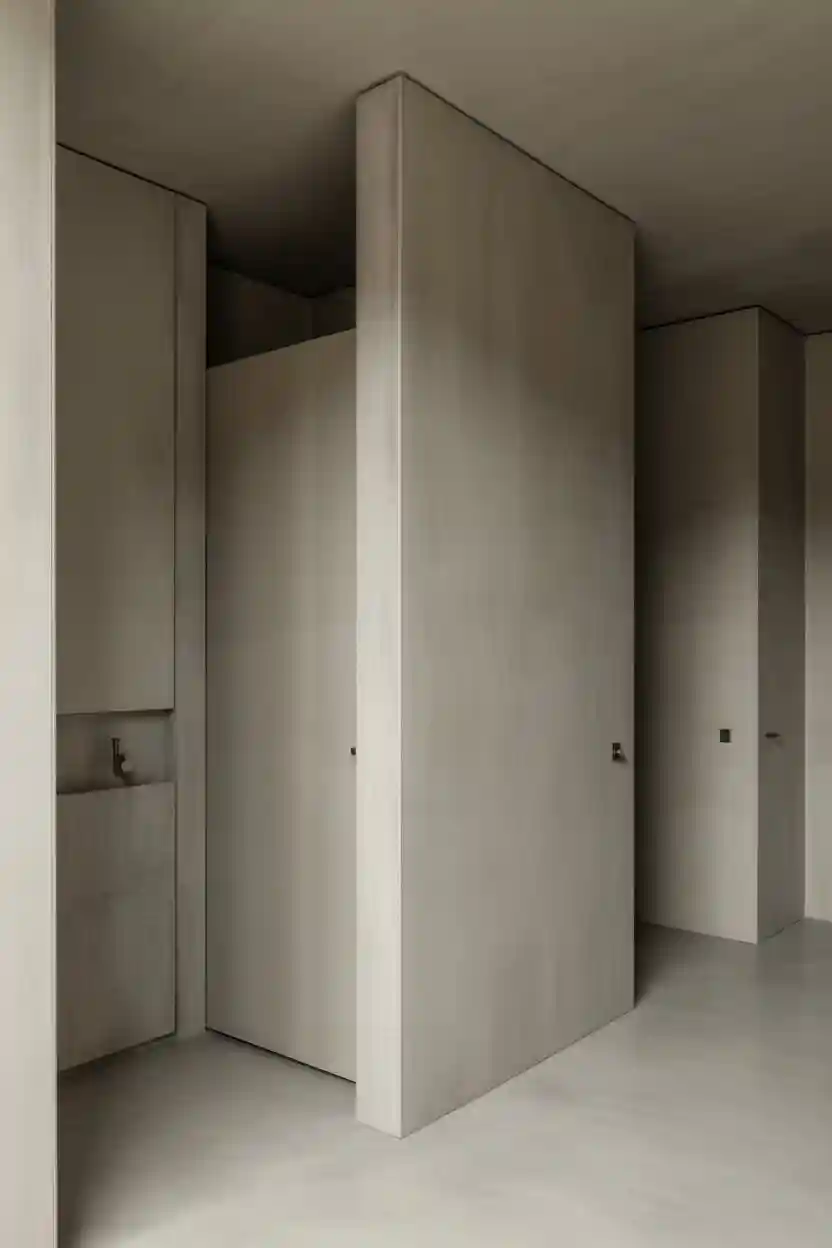
12. Minimalist Shower Fixtures
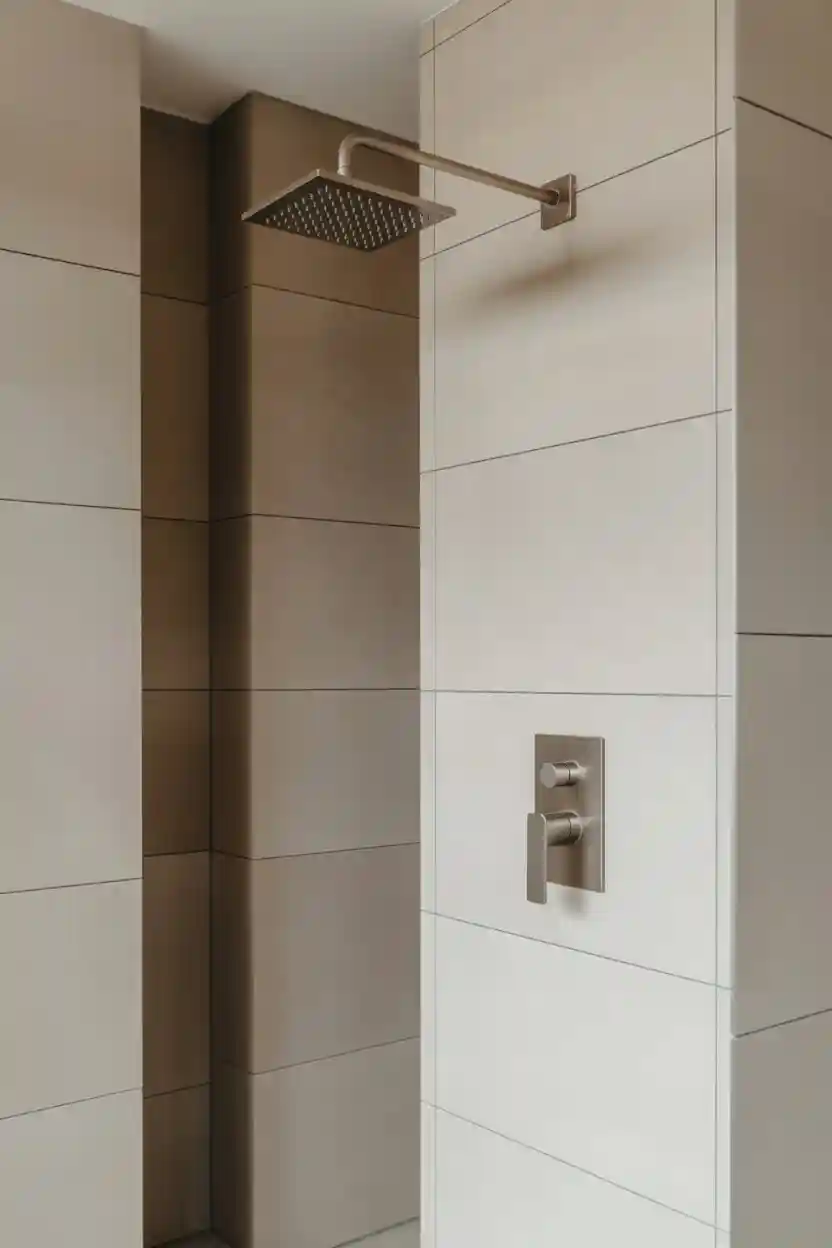
One thermostatic mixer, one slim rain head or hand shower, nothing else. Concealed valves (controls in the wall, only a plate showing) are the minimalist ideal; a simple exposed set in one finish is the practical version. Avoid the multi-jet body-spray panels — they’re the opposite of everything this room is trying to be.
Match the shower finish to the sink faucet exactly, not approximately. ‘Brushed nickel’ varies wildly between brands; buy both from the same manufacturer or hold them side by side. In a quiet room, a near-match reads as a mistake.
13. Black Accents for Defined Contrast
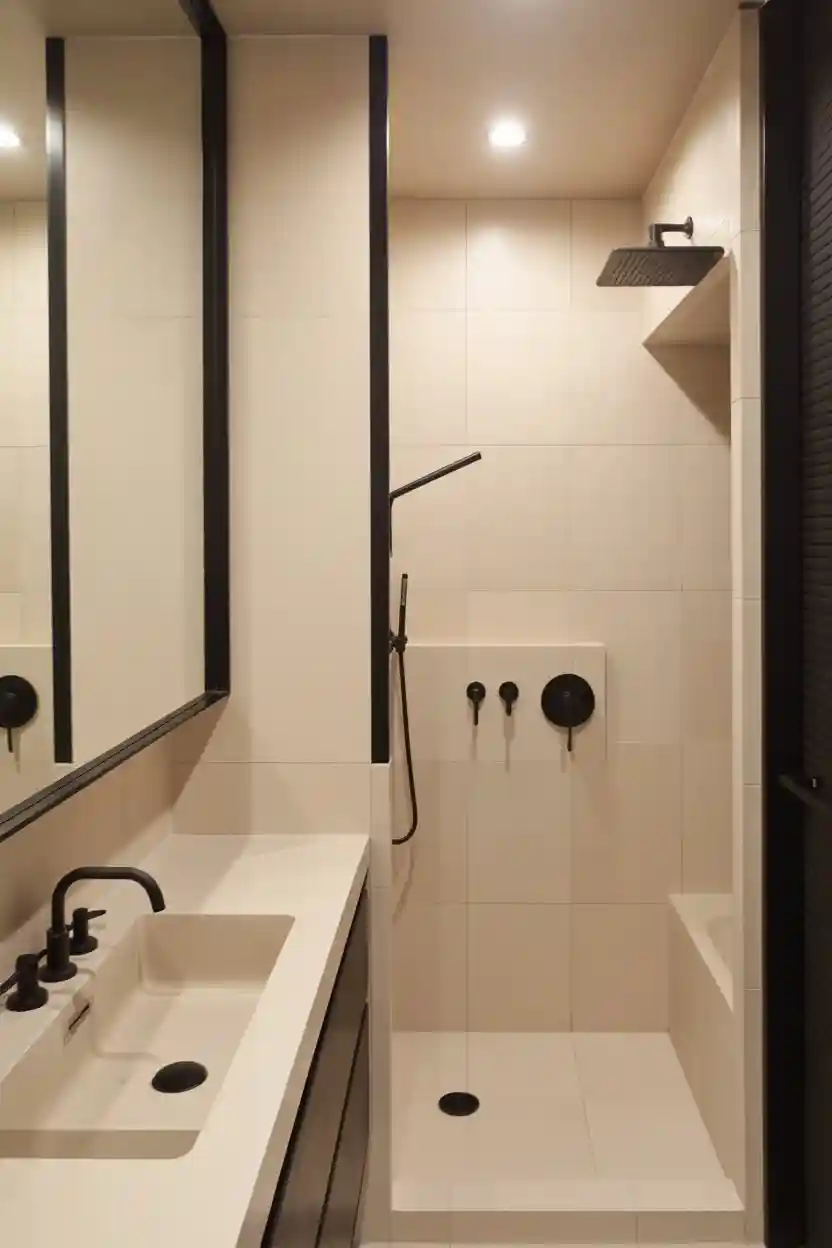
Black is the punctuation, not the sentence: a black faucet, black mirror frame, black hooks — pick two, max. Against white and wood, black defines edges and makes everything look sharper. The rule is proportion: black should be under 10% of what you see, or the room stops being calm.
Matte black shows water spots and fingerprints more than chrome — the tradeoff for the look. Keep a microfiber cloth in the vanity and give the faucet a ten-second wipe when you notice it; in a minimalist room, the one dark object gets all the attention, including the spots.
14. Minimalist Bathroom Wall Decor Approach
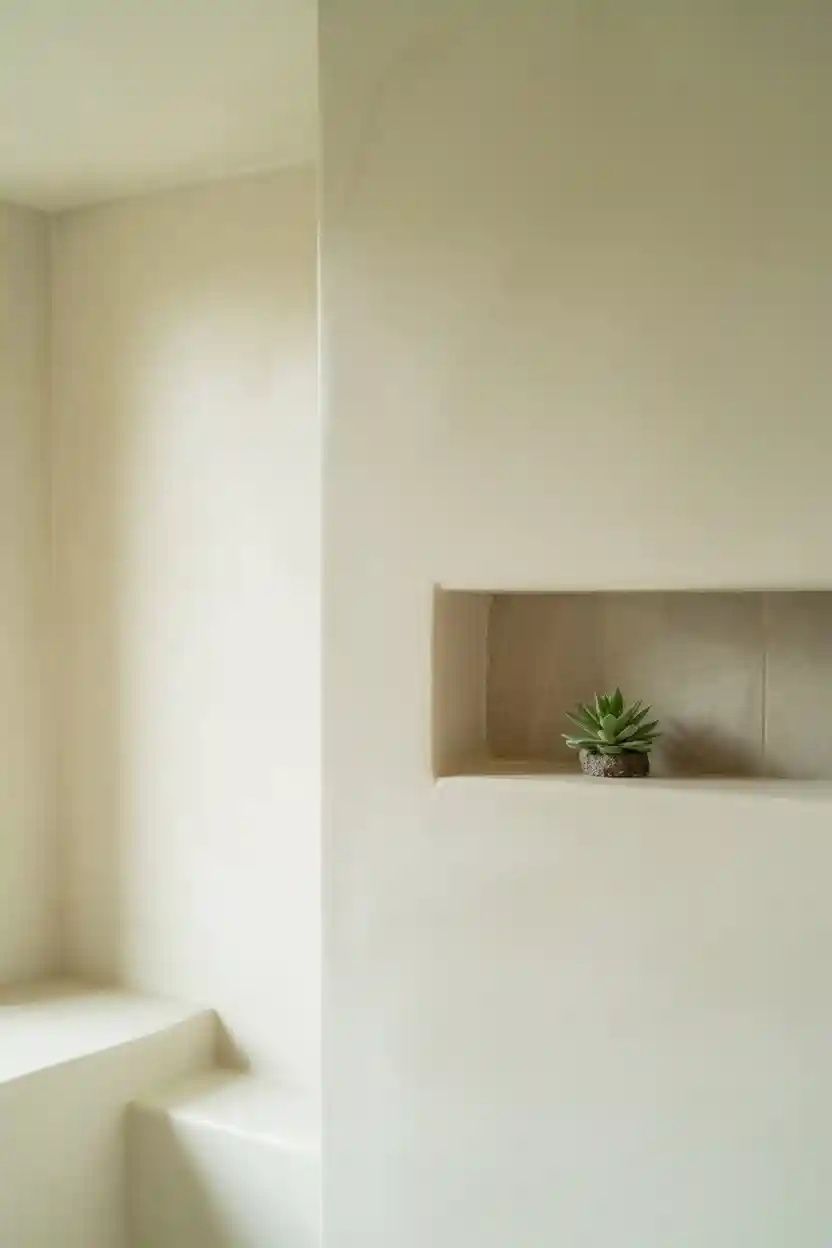
One piece, maximum: a single framed print, a textured wall panel, or a recessed niche with an object in it. It should feel like part of the architecture — hung at eye level, aligned with something — not added after. If you’re unsure, leave the wall empty; empty is always on-brief here.
The most common failure is the slow accumulation: a candle, then a plant, then a tray, then a sign. Edit quarterly. Minimalism isn’t achieved once; it’s maintained against entropy.
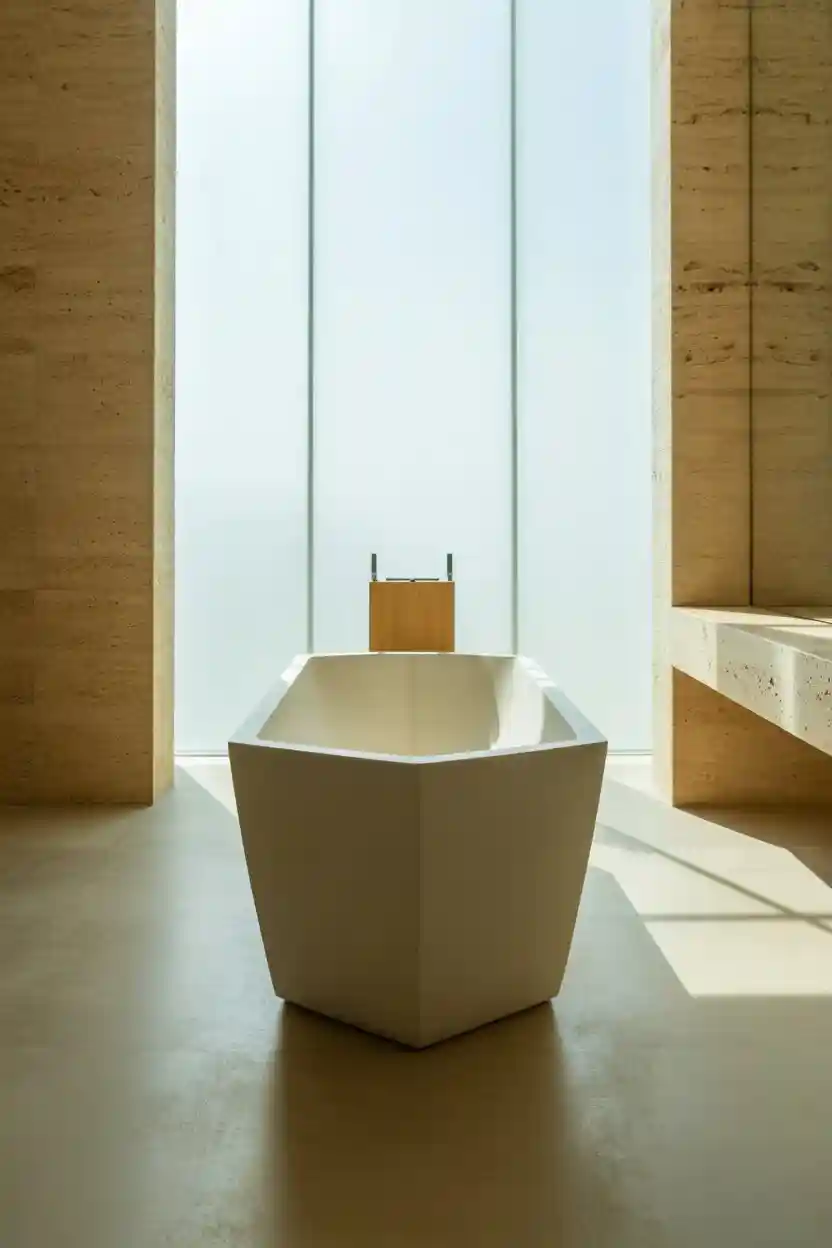
15. Minimalist Bathtub as a Sculptural Element
A freestanding tub with a simple oval silhouette becomes the room’s sculpture — everything else goes quiet around it. It needs space to breathe: 4+ inches clear on all sides, ideally a window nearby. In a compact bath, skip it; a cramped freestanding tub looks like a boat in a bathtub. A built-in tub with a tiled apron is the honest alternative.
16. Grey Tones for Depth and Calm
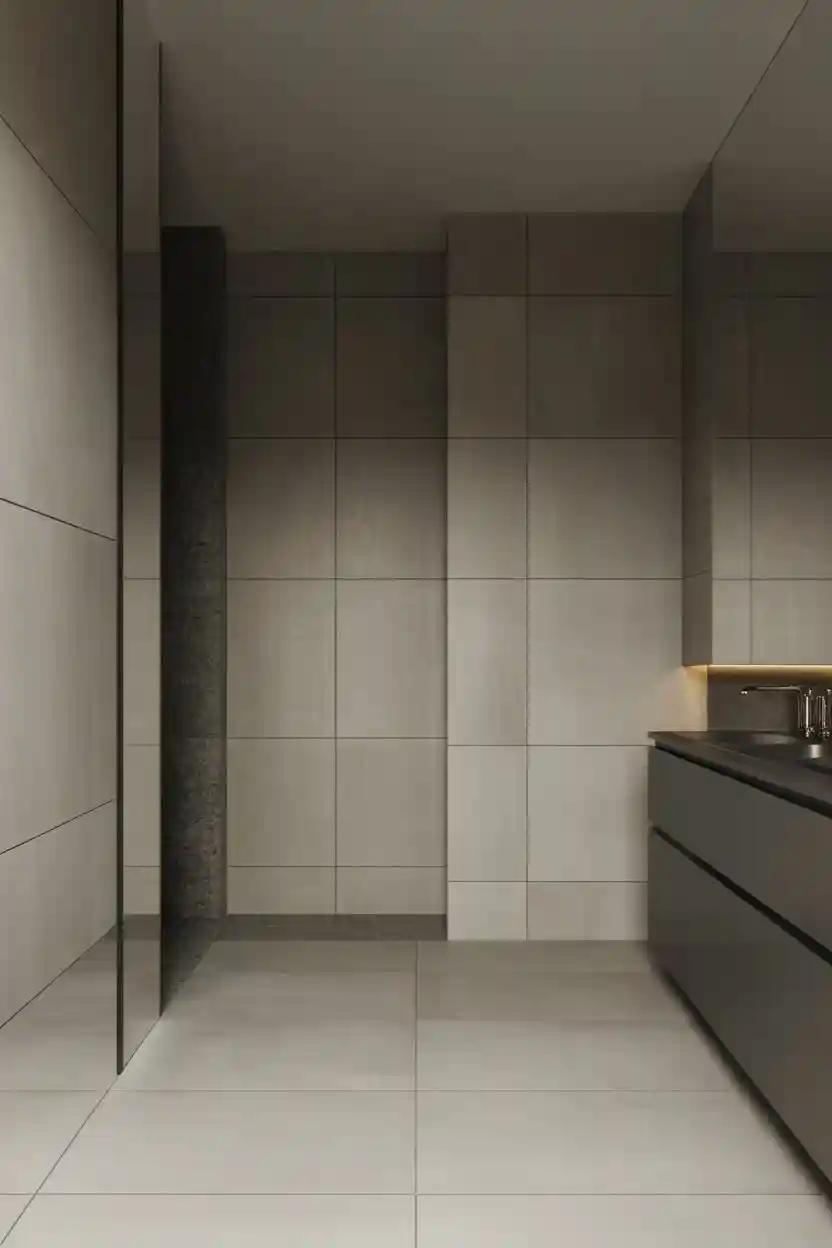
Grey is the minimalist workhorse: light grey brightens, mid grey hides water spots, dark grey adds drama on one wall or the vanity. But grey has undertones — blue-grey tile with beige-grey paint will fight all day. Get samples, tape them to the wall, and look at them in morning and evening light before committing.
17. Minimalist Basin with Clean Geometry
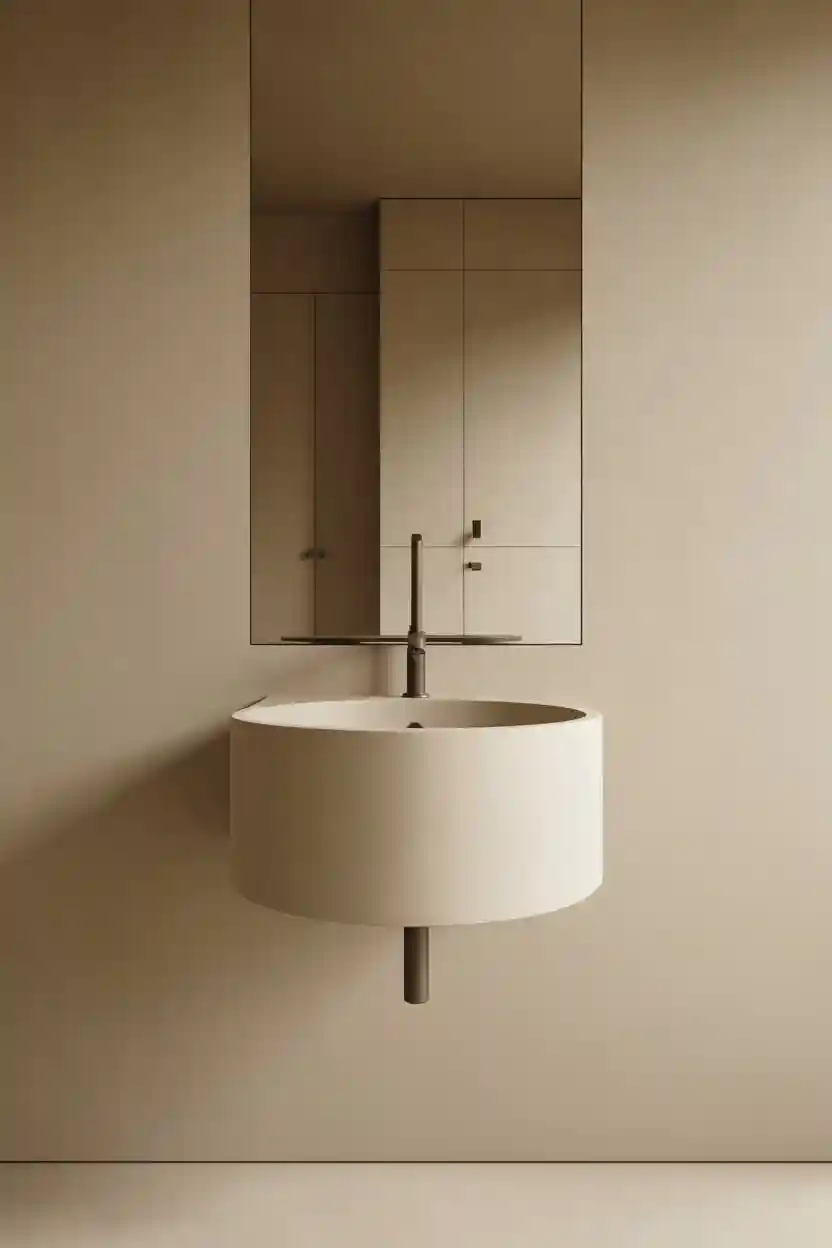
A rectangular undermount or wall-hung basin with soft corners: geometric enough to look intentional, soft enough to not feel sharp. Wall-hung saves the vanity entirely — just the basin, the trap hidden in the wall, floor clear below. Keep the basin shallow (5–6 inches) or splashing becomes the room’s main activity.
18. Floating Shelves Used Sparingly
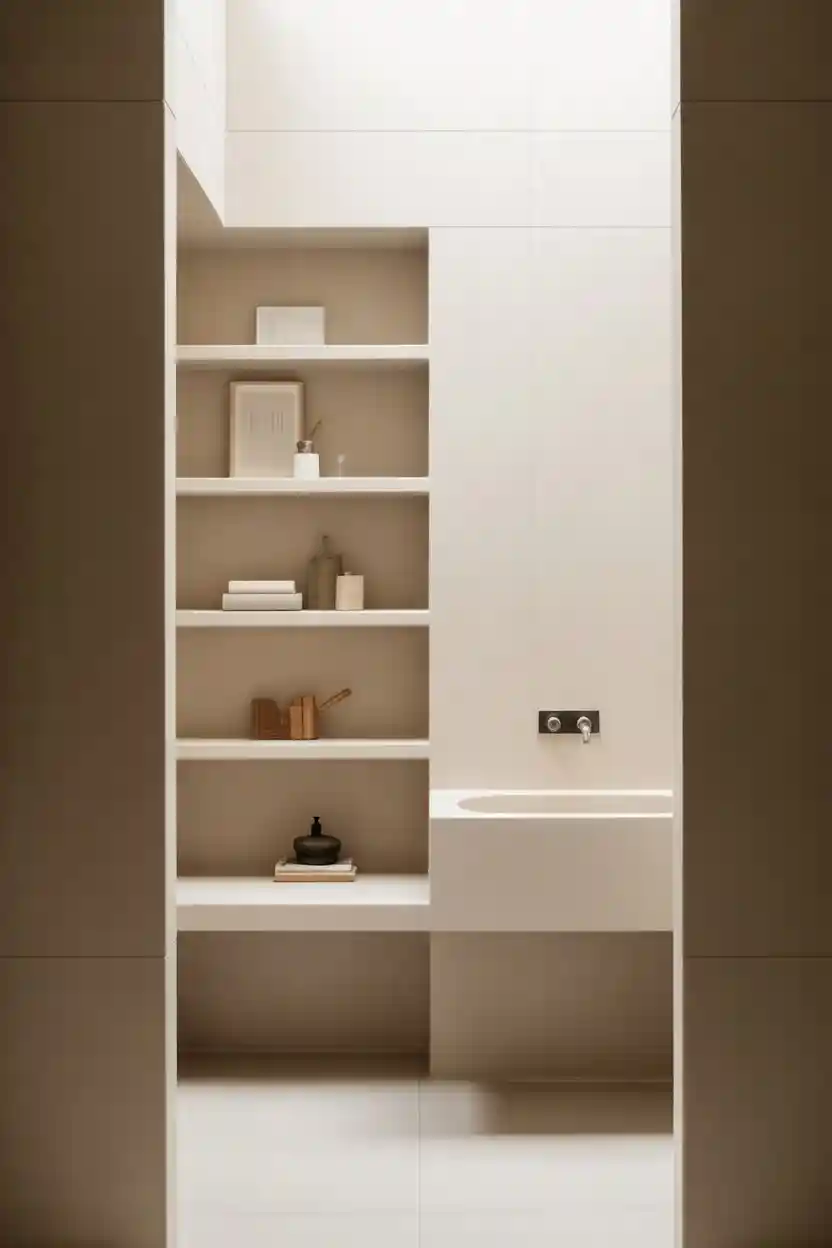
One shelf, maybe two, holding only what gets used daily: folded towels, a single plant. The moment a floating shelf holds ‘someday’ items it’s clutter on display — move those behind a door. Match the shelf to the vanity material so it reads as part of the furniture, not an addition.
19. Minimalist Powder Room Design
Powder rooms get one bold move: a dark wall, a dramatic stone, an unusual mirror — because guests spend two minutes there, bold never wears out its welcome. Keep everything else ruthlessly simple so the one move lands. A tiny room with one strong idea feels designed; a tiny room with five feels anxious.
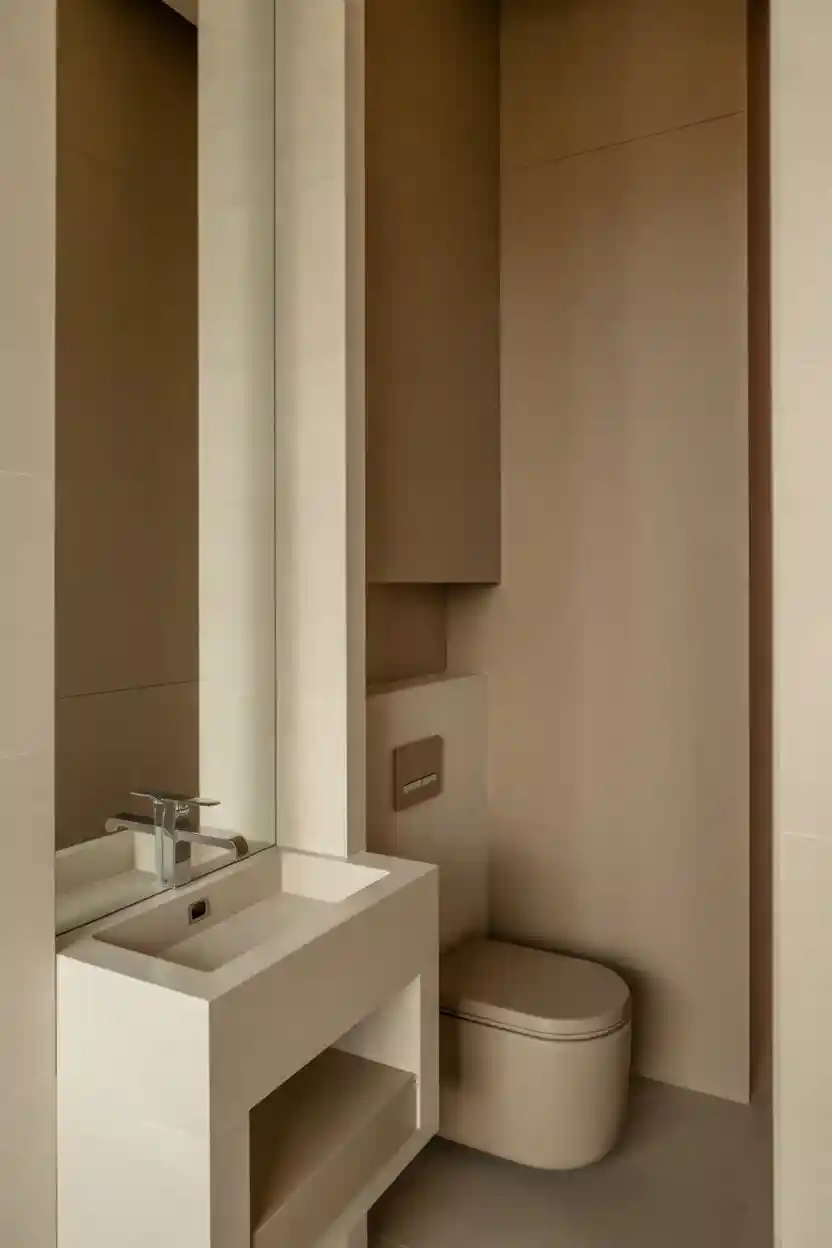
20. White-on-White Minimalist Bathroom
All white works when the whites vary: bright white fixtures, warm white walls, textured white tile. The variation is in finish — honed, matte, gloss — not color. Add the wood and warm light from earlier and it reads as serene, not sterile. Without those, all-white tips into clinic; the warmth is load-bearing.
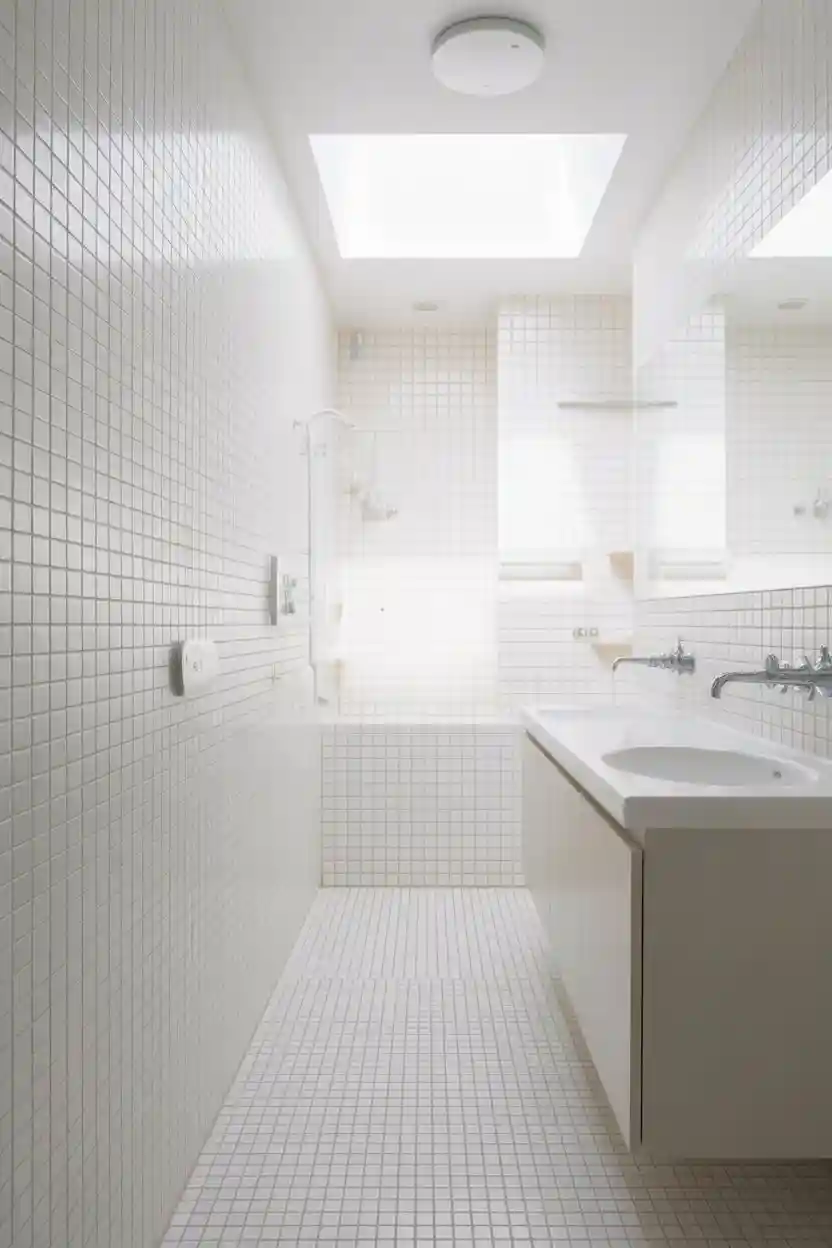
21. Minimalist Bathroom Accessories Consistency
Buy the set: dispenser, tray, toothbrush holder, wastebasket in one material and finish. Mismatched accessories are the fastest way to unravel a minimalist room because they’re at eye level on the counter. One material — frosted glass, matte ceramic, stone — across all four, and the counter goes quiet.
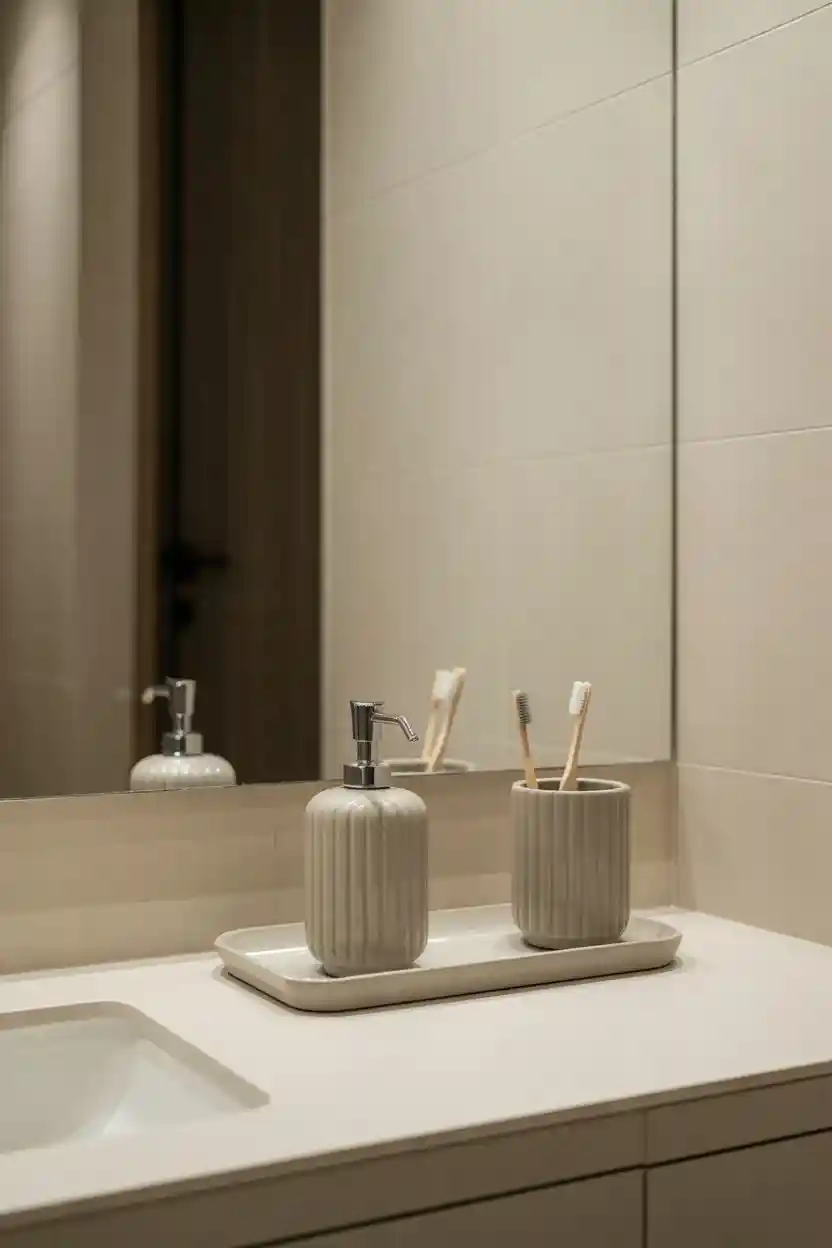
22. Minimalist Scandinavian Bathroom Influence
Scandinavian minimalism is minimalism with a pulse: white walls, pale wood, textiles, and light that feels like morning. Add one soft thing — a waffle-weave towel, a wooden bath mat, a sheepskin on the stool — because the style’s whole point is that restraint and comfort aren’t opposites. If the room feels cold, it needs wood and textile, not more objects.
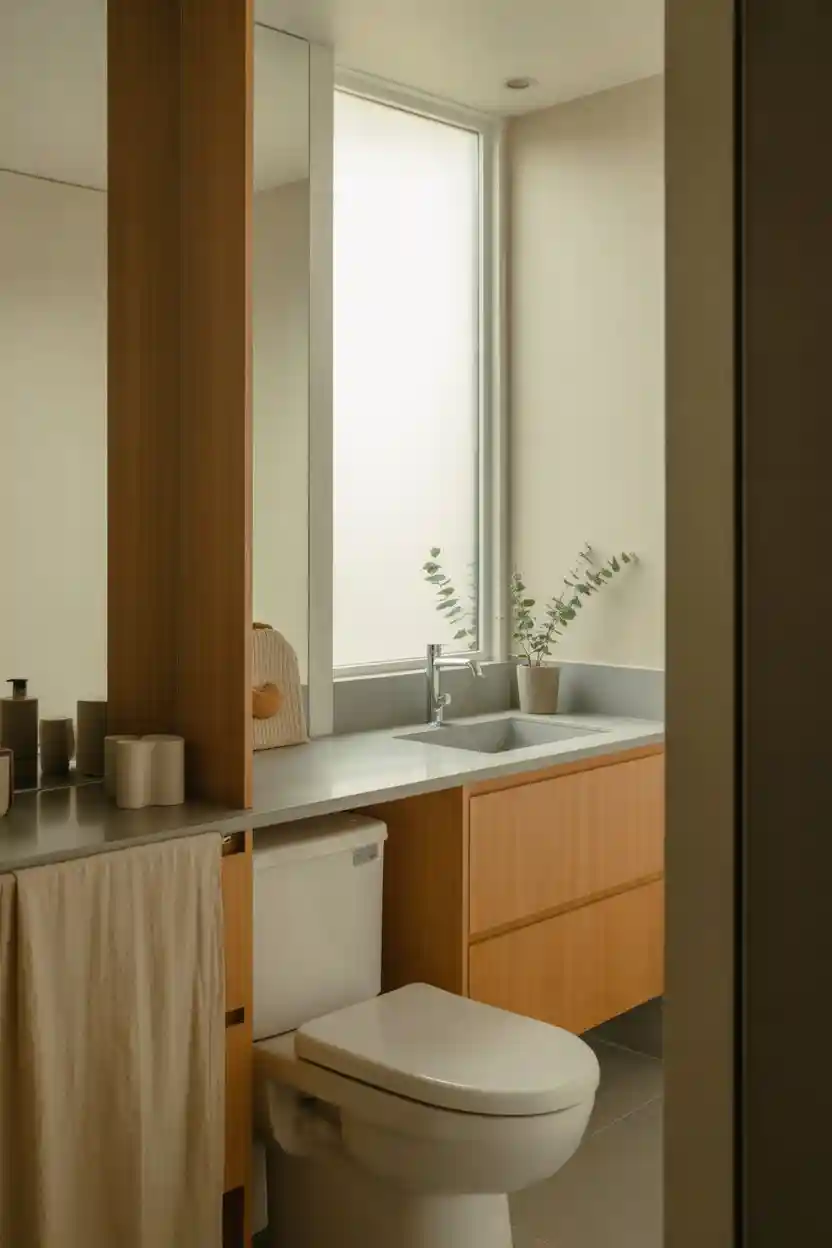
23. Zen-Inspired Minimalist Bathroom
Borrow the logic, not the props: clear surfaces, natural materials (stone, wood, bamboo), one plant, nothing you don’t use. A low wooden stool, a stone basin, a single branch in a vase — the zen bathroom is a room with nothing to argue with. Keep the palette to three naturals max; zen is edited nature, not a garden center.
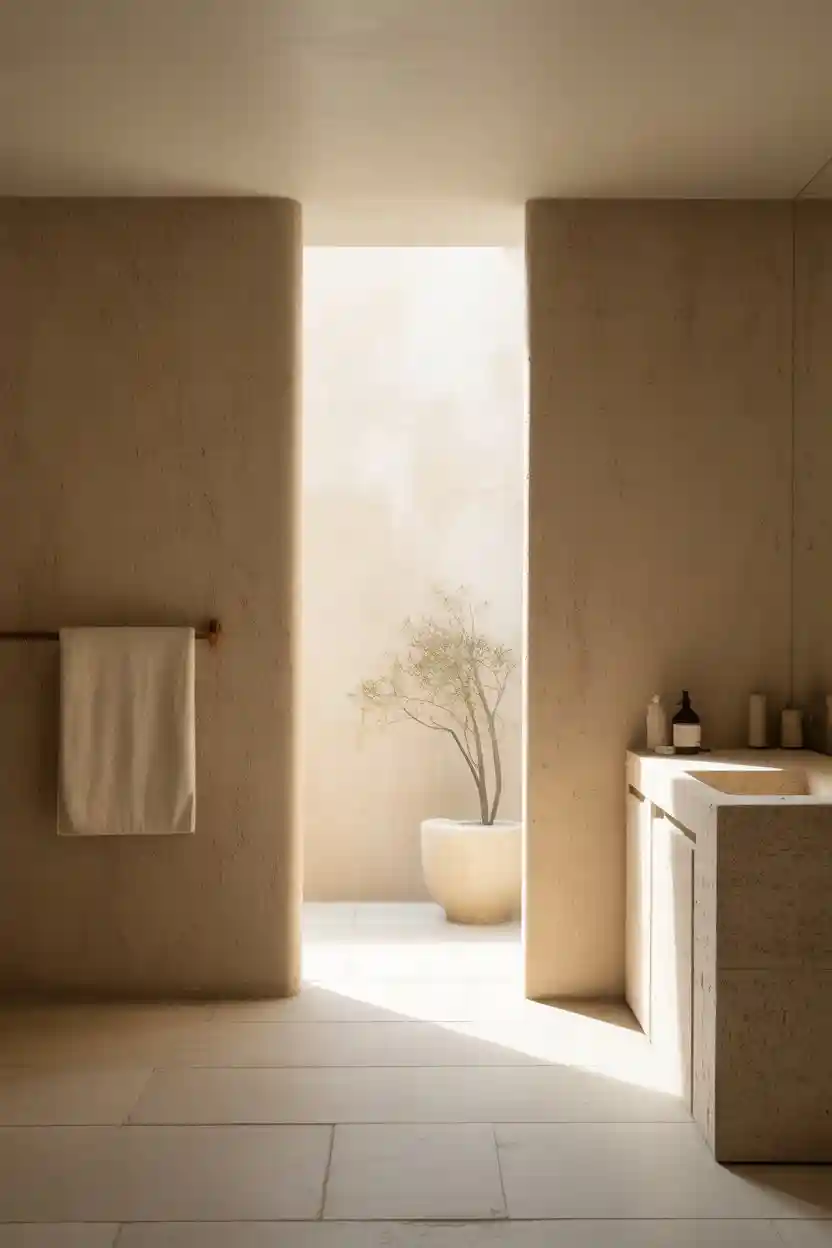
24. Minimalist Master Bath Layout Planning
Zone it: wet zone (shower/tub) at one end, grooming (vanity/mirror) in the middle, private (toilet) screened or around a corner. Each zone gets its own light on its own switch. In a master bath, double vanities only if two people genuinely get ready simultaneously — otherwise one generous vanity plus a dressing table elsewhere serves better.
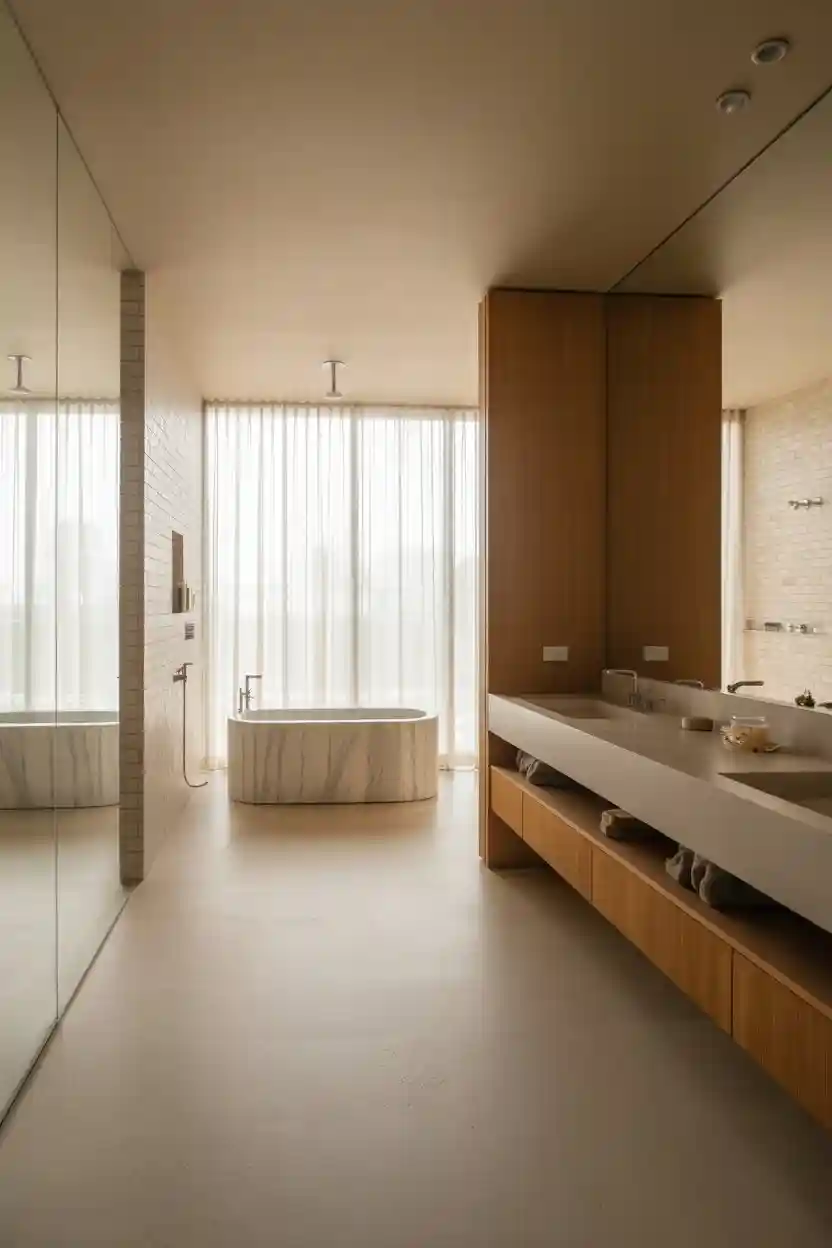
25. Timeless Minimalist Bathroom Design Philosophy
The timeless test: would this room look right in ten years? White fixtures, stone-look tile, one wood tone, one metal finish — yes. Feature walls, trendy tap shapes, statement wallpaper — rented excitement. Spend on what you touch daily (faucet, toilet, shower valve) and save on what you look at (paint, accessories); touch reveals quality, looks just need restraint.
FAQs for Minimalist Bathroom Ideas