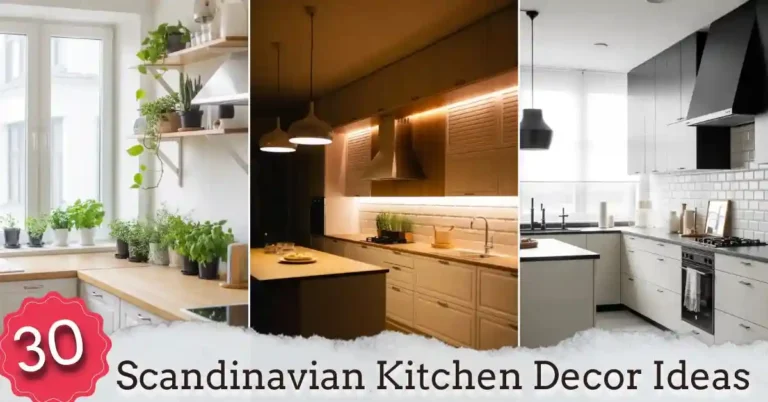
30 Scandinavian Kitchen Decor Ideas for Bright Spaces
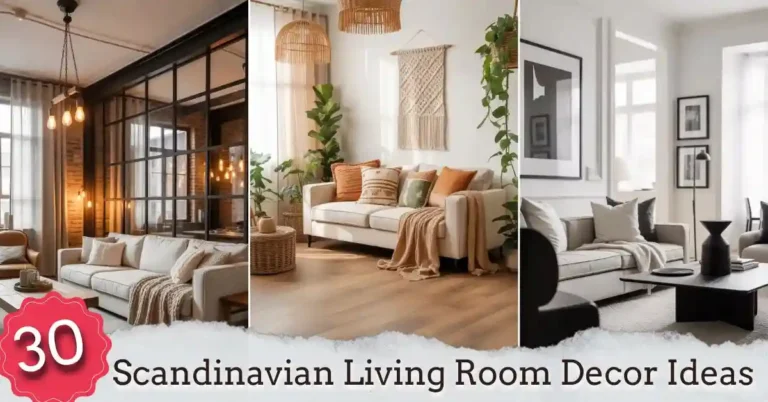
Scandinavian winters mean months of dim afternoons — which is exactly why Nordic kitchens are engineered around light. The style isn’t really about white paint; it’s about every surface earning its place, reflecting daylight a little further, and keeping visual noise low enough that the room feels calm at 7 a.m. These 30 ideas work through that logic room by room: cabinets, light, texture, and the few warm accents that keep minimalism from turning cold.
Idea 1: White Cabinets with Warm Wood Countertops
White cabinetry bounces light around the room with zero effort, but on its own it can read as clinical. A warm wood counter — oak, ash, or beech — fixes that in one move, adding texture and a honeyed tone that keeps the palette human. The combination works especially well in Nordic-inspired renovations, and it’s a friendly choice if you’re planning abudget-friendly makeoverbecause it blends brightness with natural warmth. The wood introduces texture while the overall look stays cohesive, timeless, and easy to maintain in both small and large kitchens.

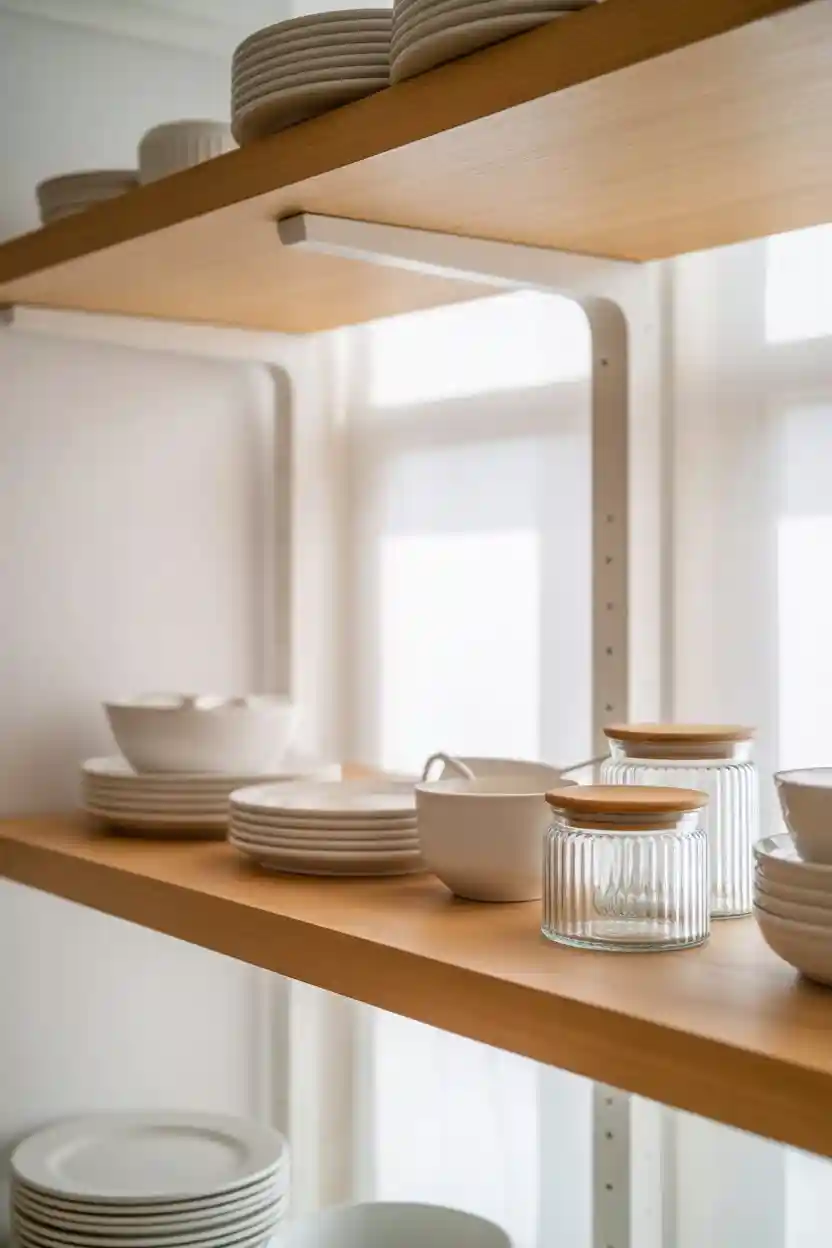
Idea 2: Open Shelving with Neutral Dishware
Replacing a run of uppers with open shelves removes visual weight instantly — the wall reads as open rather than boxed in. Keep the display disciplined: white ceramics, clear glass, and wood in a tight tonal range. Anything beyond that palette lives behind closed doors, which is how the shelves stay styled instead of cluttered.
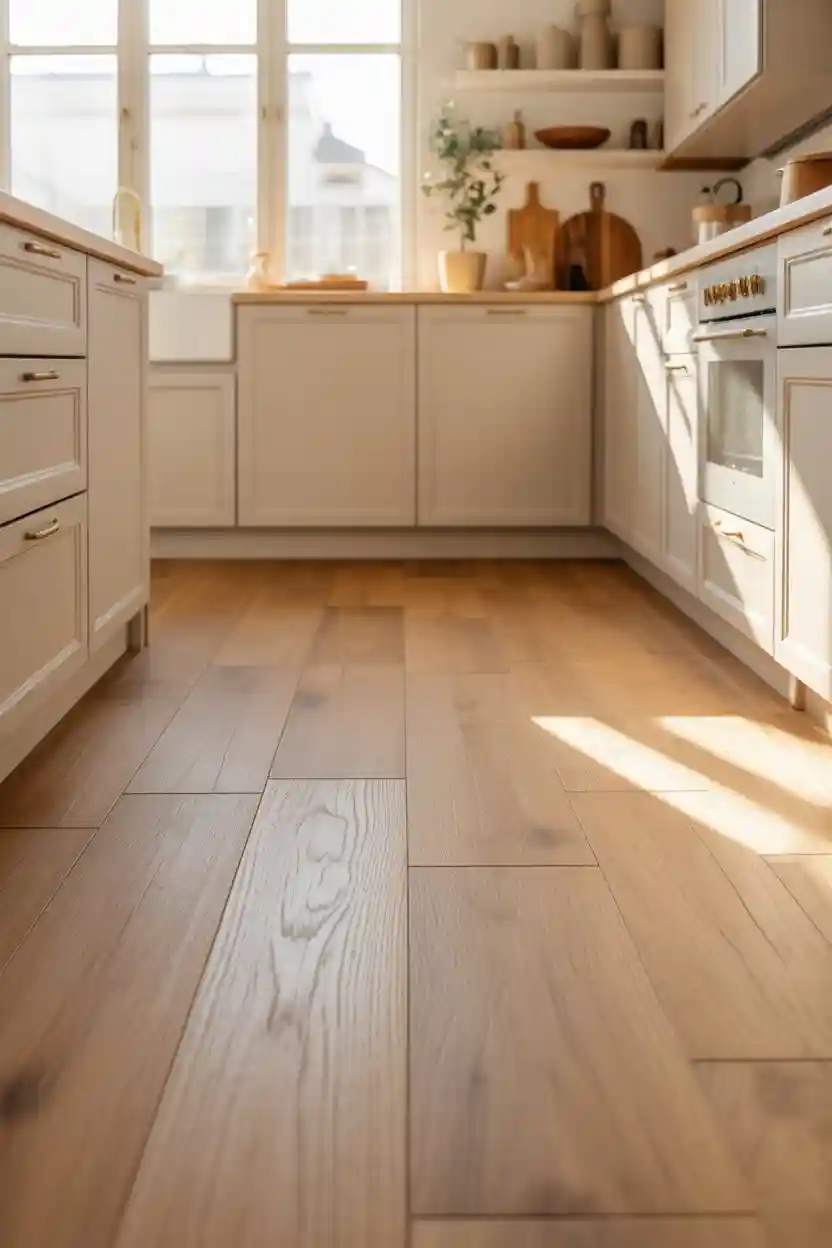
Idea 3: Light Wood Flooring for Natural Warmth
Pale oak or ash floors are the quiet backbone of the look: they reflect daylight, run continuously under cabinets for a seamless feel, and forgive the odd crumb far better than white tile. A matte or natural oil finish keeps them looking soft rather than glossy.
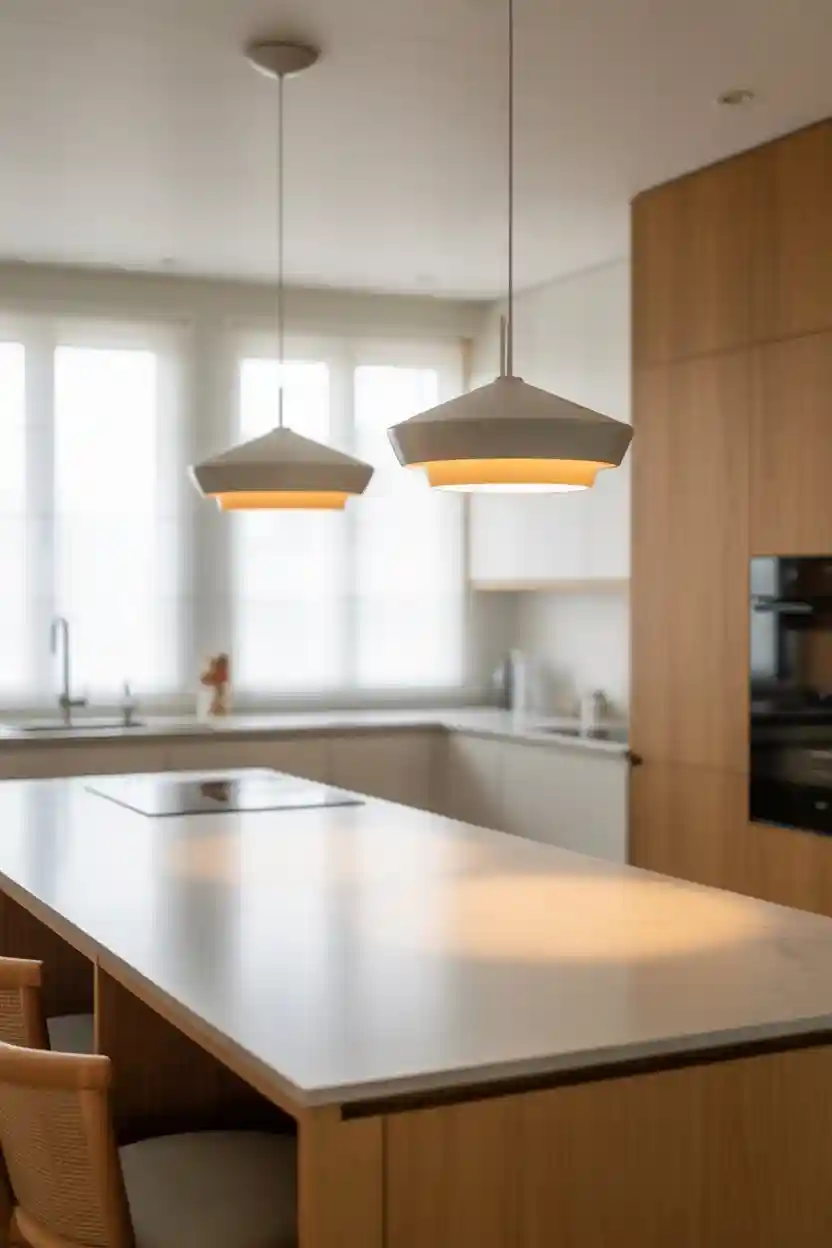
Idea 4: Minimal Pendant Lighting Over the Island
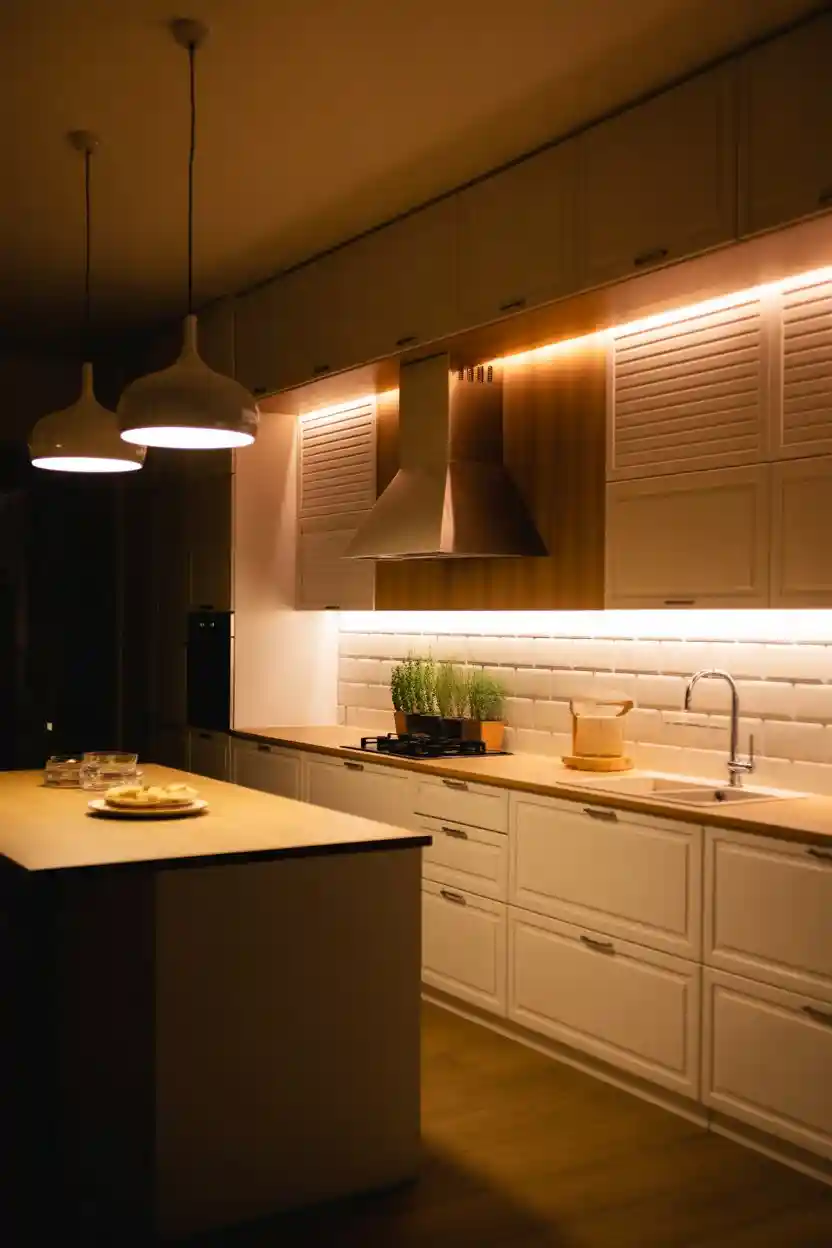
One to three simple pendants — opal glass globes, matte white domes, or pale wood shades — give the island focused task light without visual clutter. Hang them 30–36 inches above the counter at 2700K; anything cooler fights the warmth the rest of the room is building.
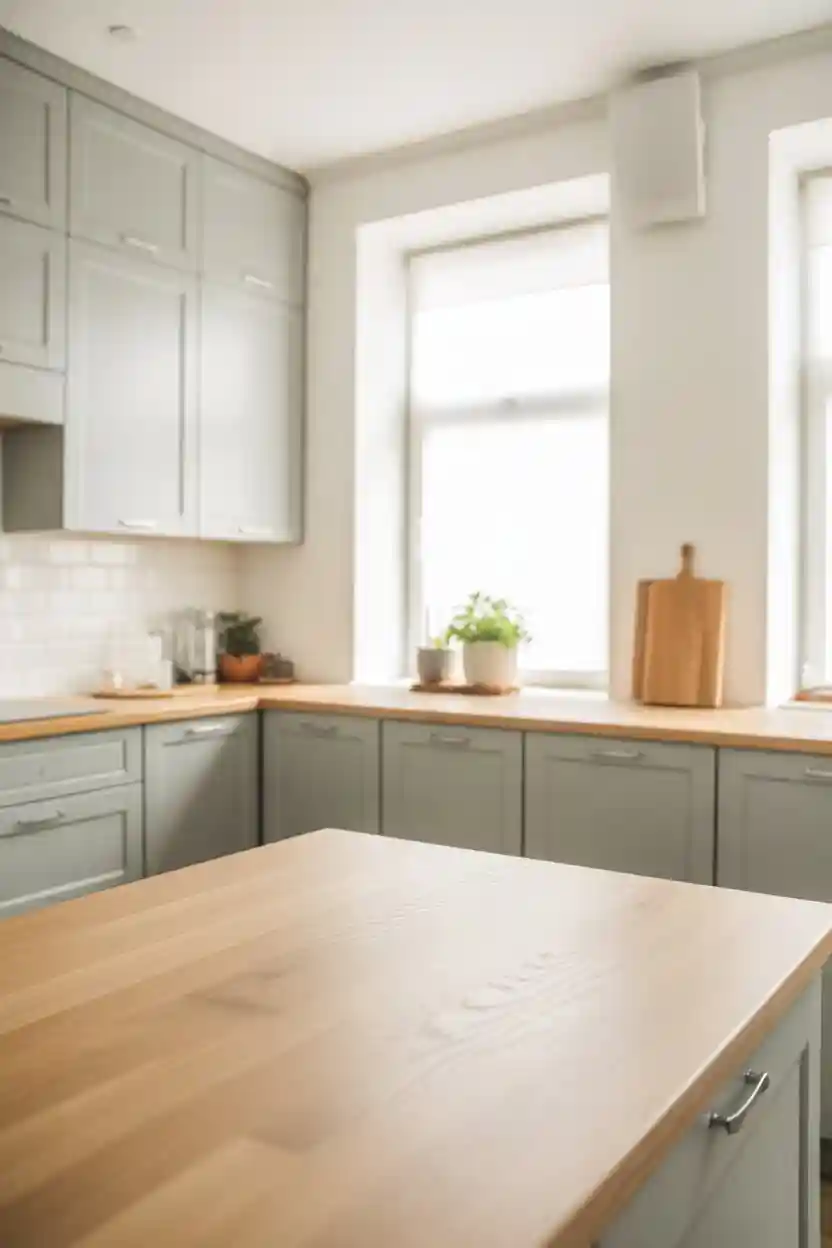
Idea 5: Soft Grey Cabinet Accents
When pure white feels too stark, soft grey steps in as the gentler neutral: still light-reflective, but with enough depth to ground the room. It pairs beautifully with pale wood and a single metal accent, and it hides everyday wear far better than white.
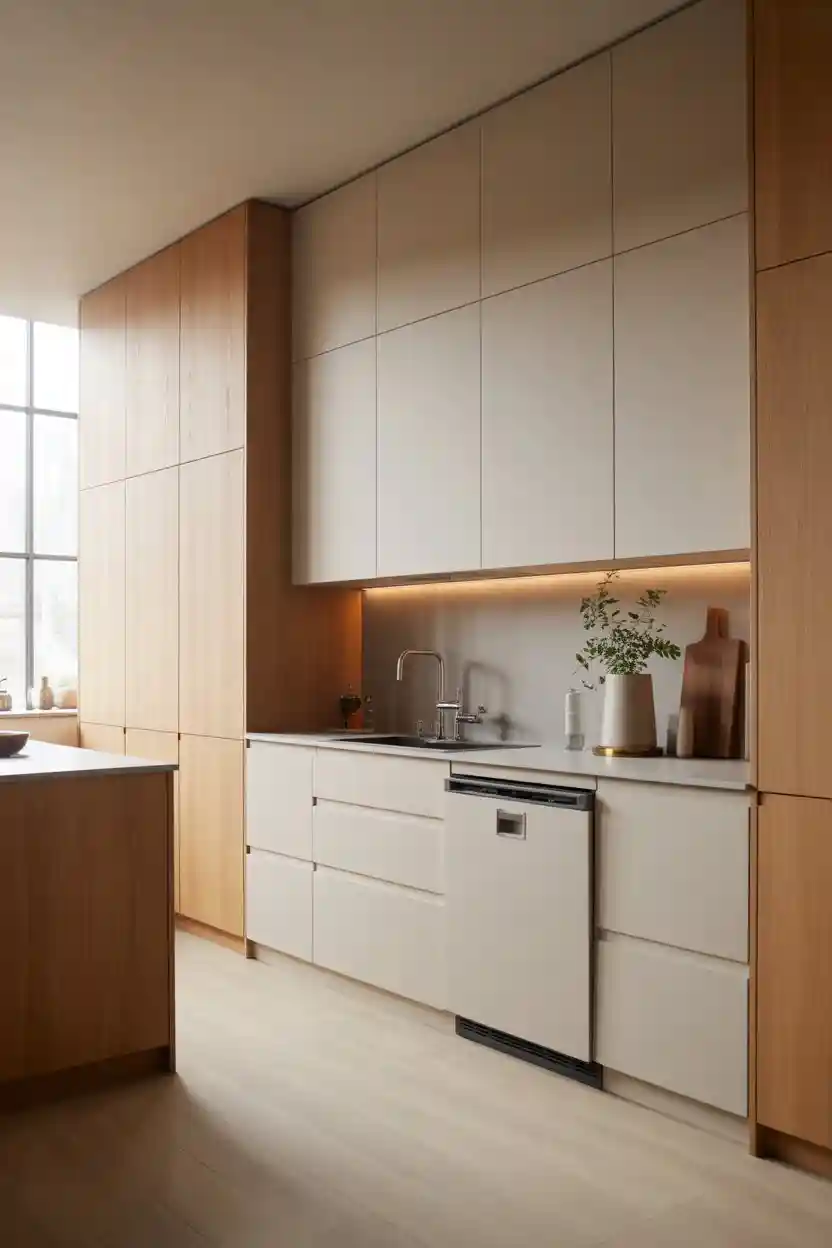
Idea 6: Integrated Appliances for a Clean Look
Panel-ready dishwashers, built-in ovens, and concealed refrigeration erase the appliance “faces” that chop up a minimalist wall. In a small Nordic kitchen this matters enormously — every uninterrupted surface makes the room read larger and calmer.
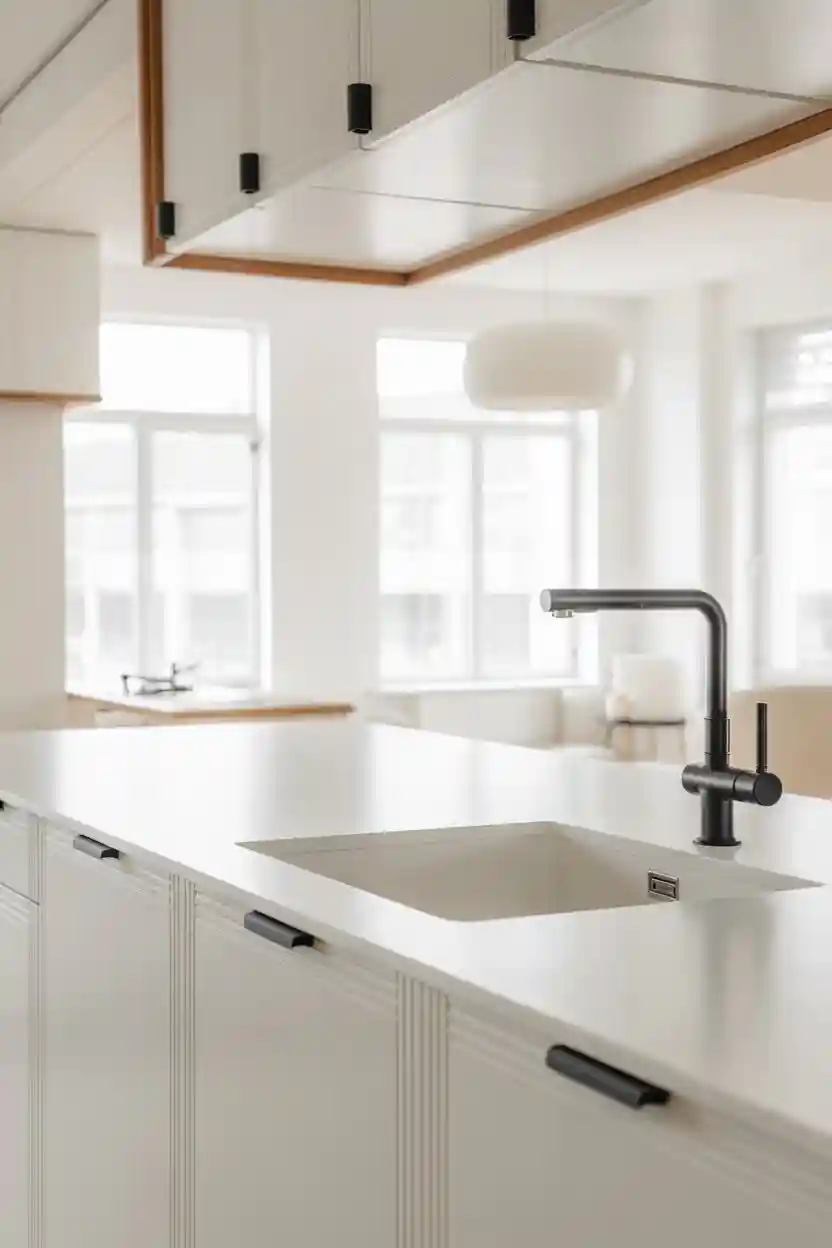
Idea 7: Matte Black Fixtures for Contrast
A black faucet, black window frames, or slim black handles give the eye somewhere to land in an all-pale room. The rule is sparing: pick two or three moments of black, repeat the same finish, and let the contrast do its anchoring work without tipping into drama.
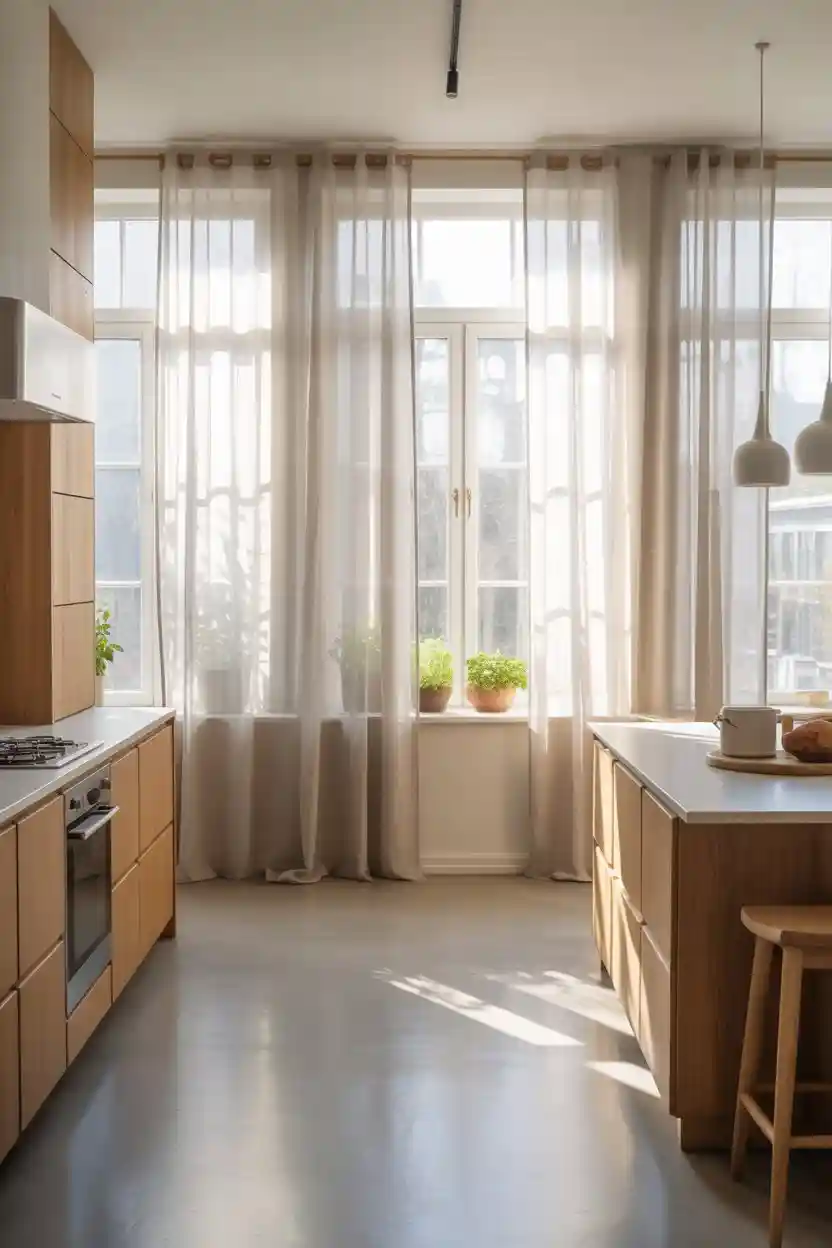
Idea 8: Large Windows with Sheer Curtains
Daylight is the primary building material here, so treat windows generously: sheer linen or cotton voile that diffuses sun without blocking it, mounted high and wide so the glass reads as large as possible. In dark months, the sheers soften lamplight the same way.
Idea 9: Island with Simple Seating
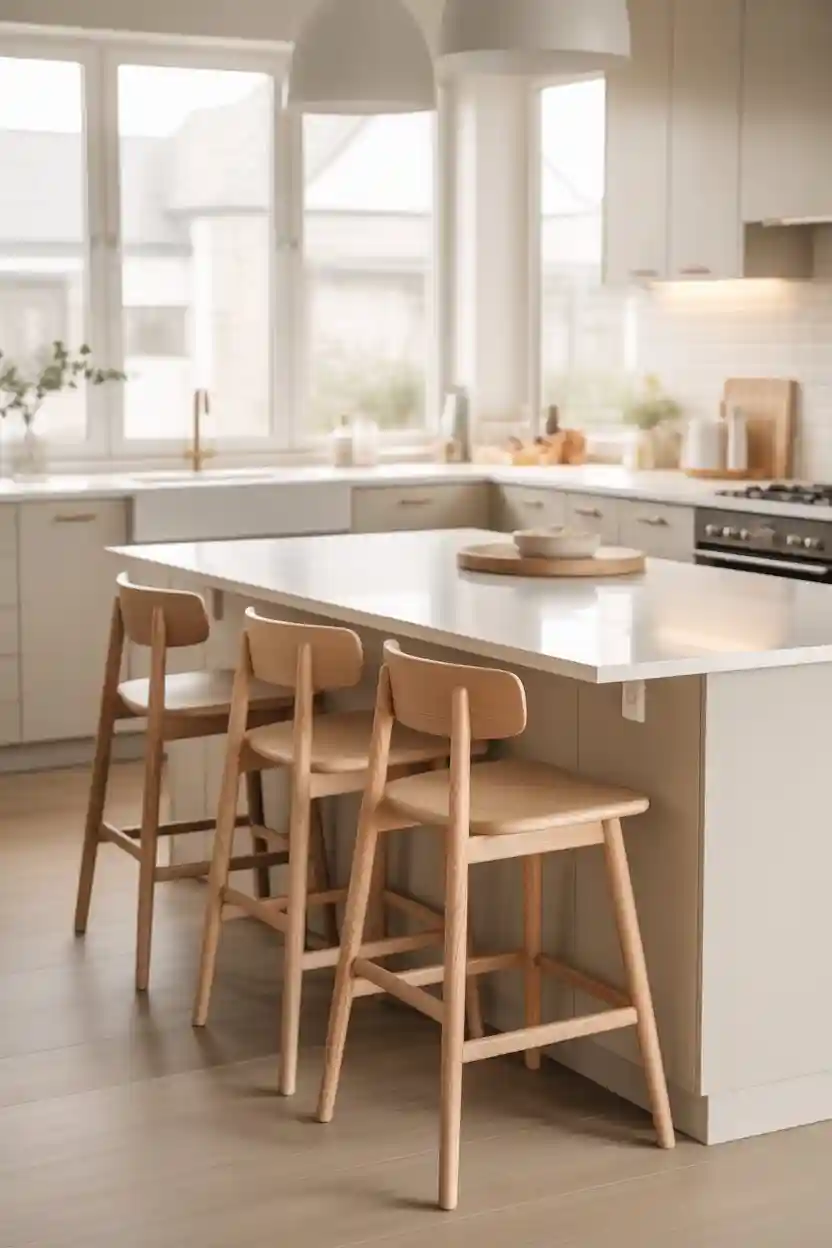
A slim island with two or three light-wood stools turns the kitchen into the household’s social center without any formal dining setup. Backless stools tuck fully underneath, preserving the clean sightlines the style depends on.
Idea 10: White Subway Tile Backsplash
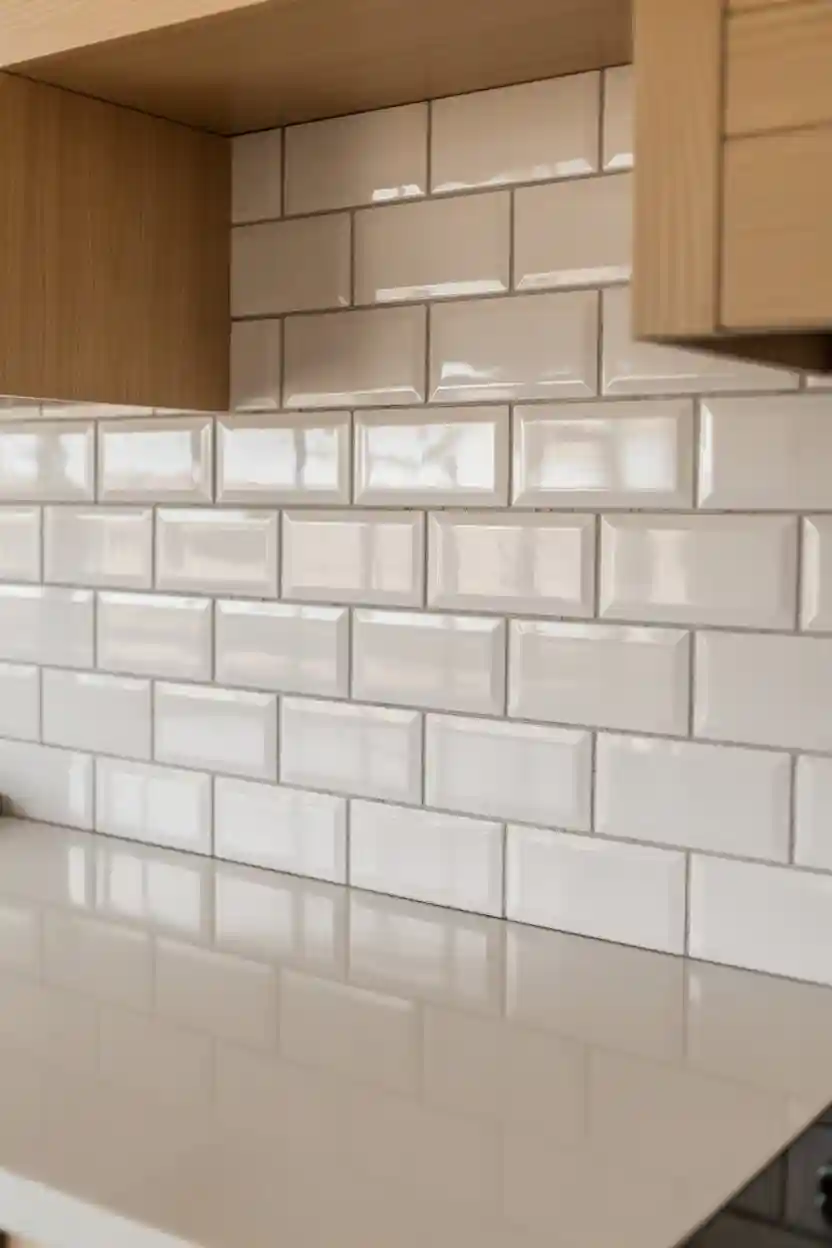
Handmade-look subway tile in white adds subtle surface variation while staying firmly in the bright palette. The slight undulation catches light differently across the wall — more interesting than flat tile, still calm. Keep grout light and the whole wall glows.
Idea 11: Natural Fiber Rugs for Softness
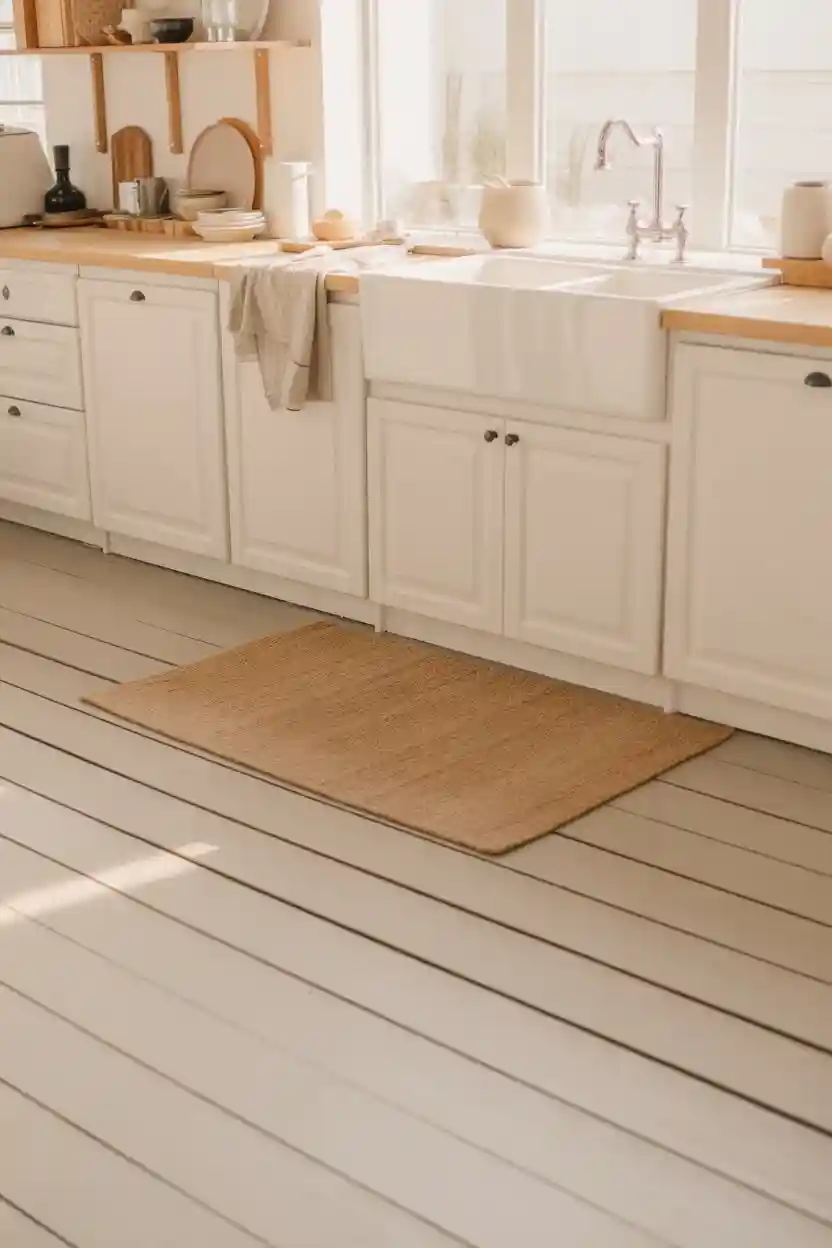
A flat-weave jute, cotton, or wool runner breaks the hardness of tile and cabinetry underfoot without adding pattern noise. Natural fibers in undyed tones stay inside the palette while making the kitchen feel lived-in rather than showroom-stiff. Choose washable or low-pile — kitchen floors take real abuse.
Idea 12: Green Plants for Fresh Contrast
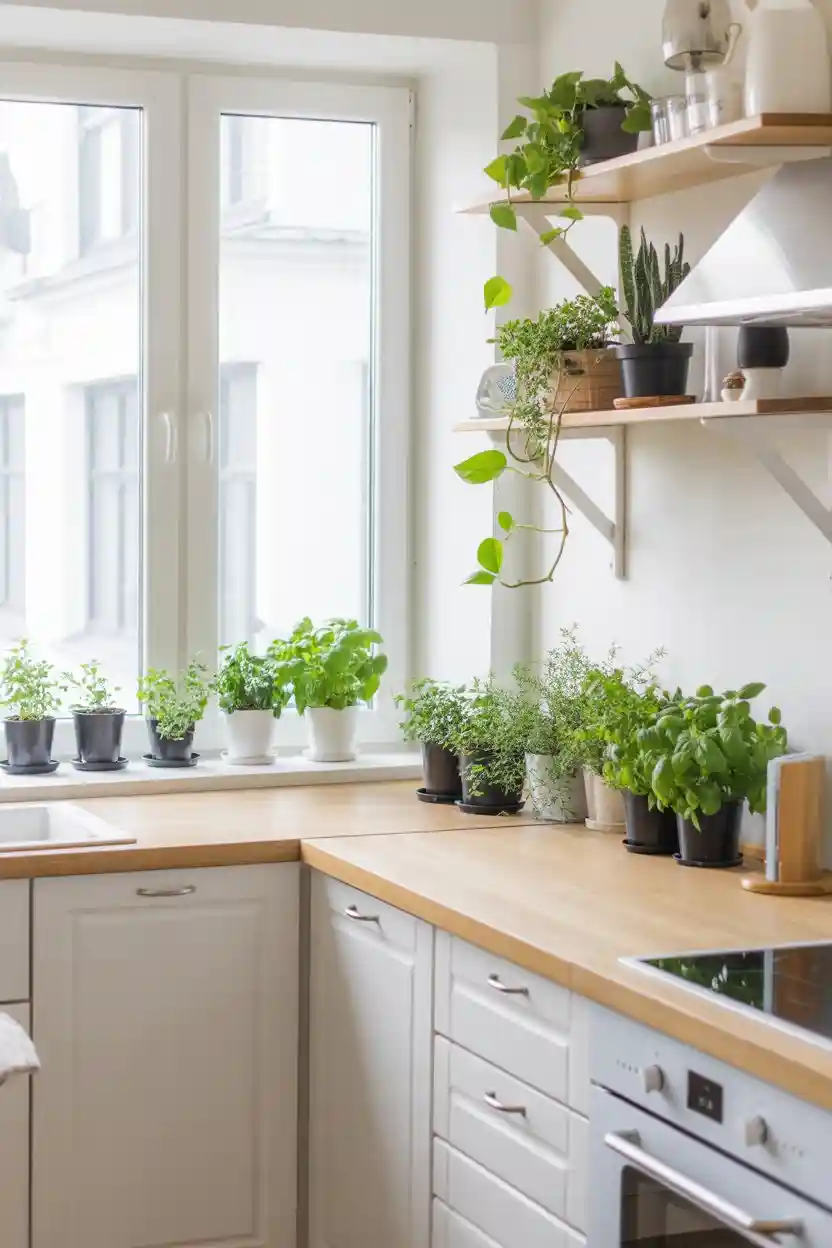
A pot of herbs on the sill, a trailing pothos on top of the uppers, or one sculptural olive tree in the corner — greenery is the one color the palette always welcomes. Plants connect the interior to the outdoors, which is the emotional core of the Nordic look. Pick varieties that tolerate your actual light levels.
Idea 13: Handleless Cabinets for a Sleek Finish
Push-to-open fronts or recessed channel pulls create the uninterrupted surfaces this style is known for. Without hardware breaking up the cabinet wall, even a compact kitchen reads as one calm plane. Keep a fingernail’s clearance in the channel design or daily use gets annoying fast.
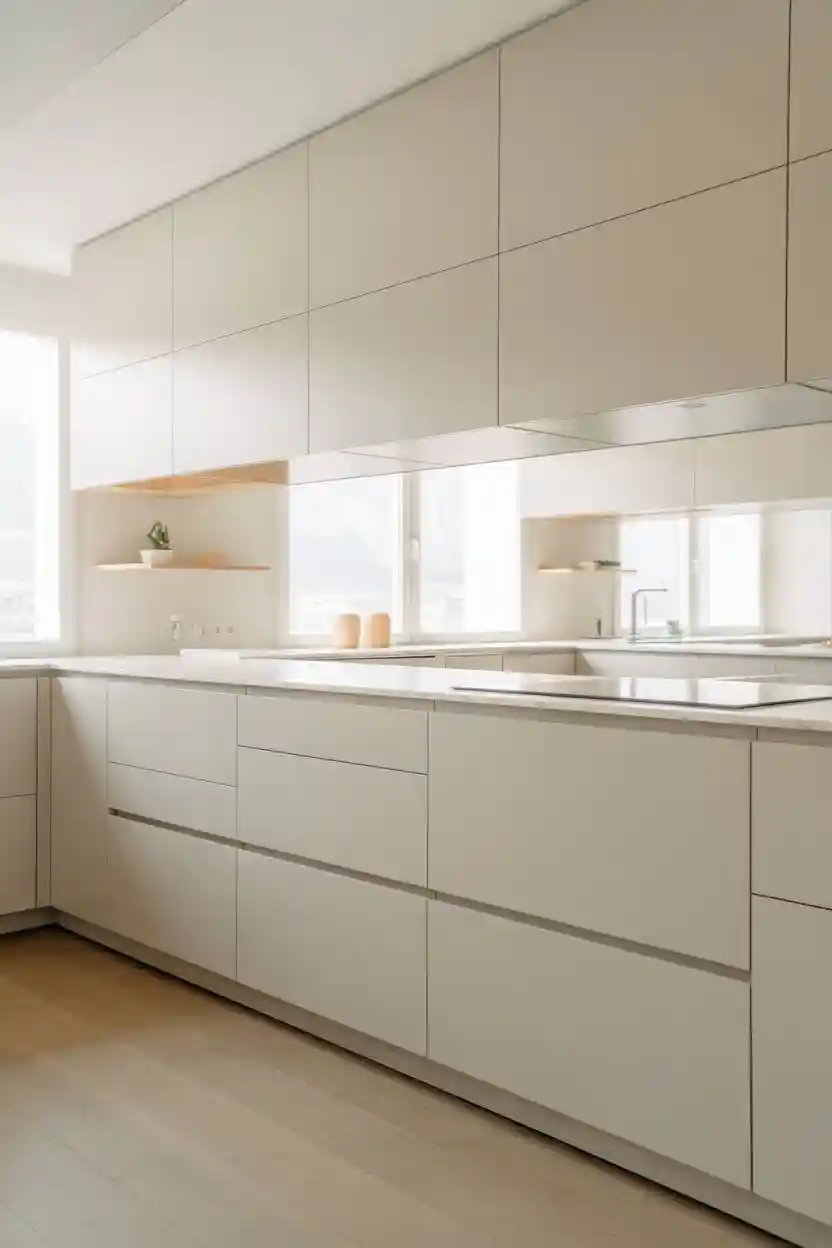
Idea 14: Light Marble Countertops
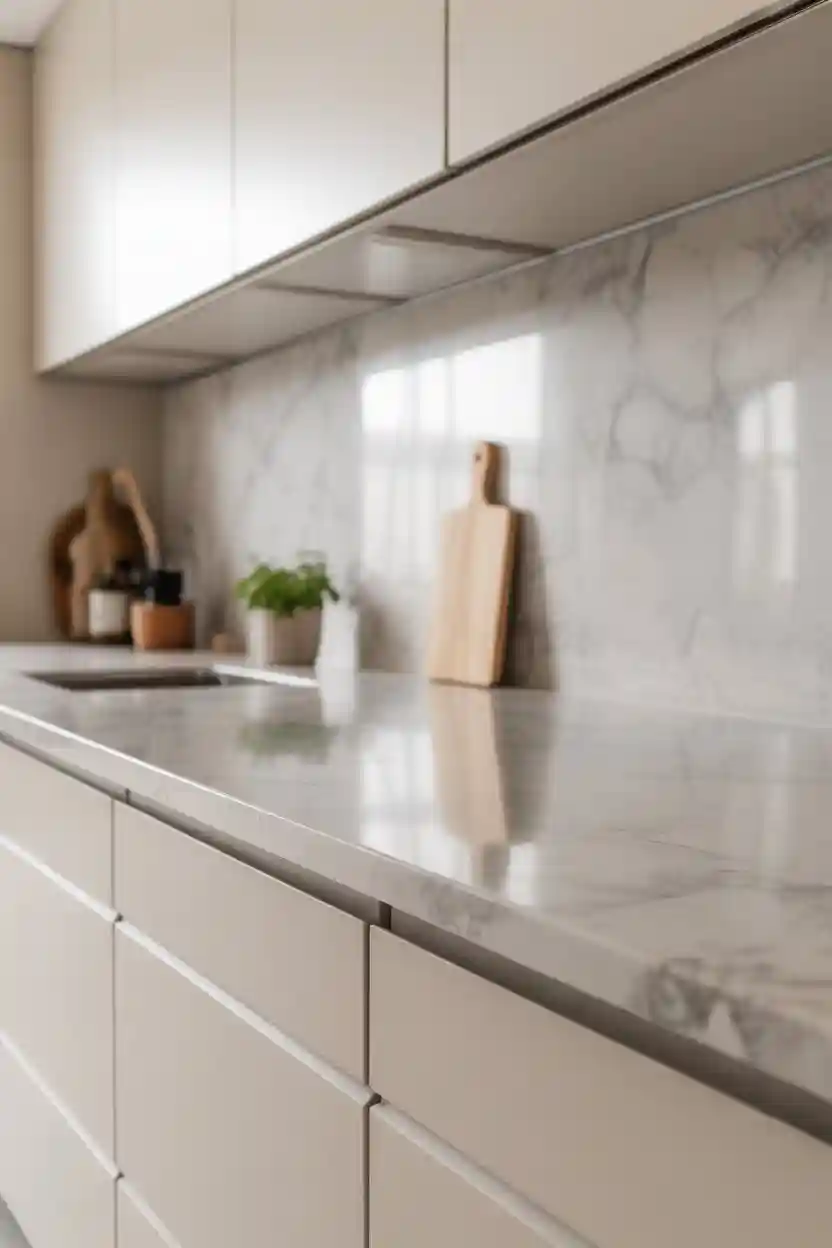
Light marble or marble-look quartz brings subtle sophistication while keeping things bright and airy. The natural veining adds depth without overpowering the minimal design. Incontemporary kitchens, stone pairs beautifully with white cabinets and wooden accents, reflecting light well enough to lift the whole room. Choose soft, low-contrast veining to keep the calm intact — dramatic veining belongs to bolder styles.
Idea 15: Wooden Open Storage Units
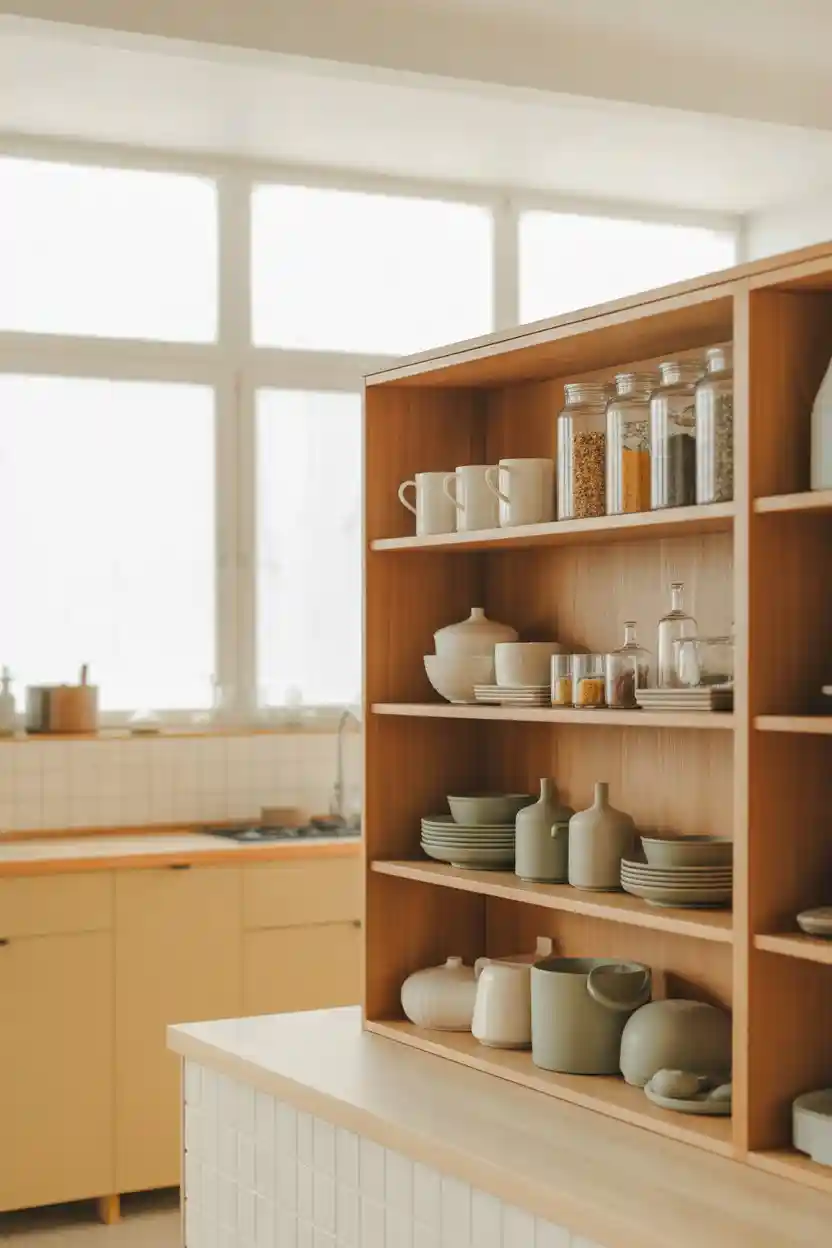
A freestanding oak shelf unit or wall-mounted wood shelves give everyday items a home in the open while adding the style’s signature material. Style them the way the rest of the room works: ceramics and glass in neutral tones, grouped with breathing room, nothing purely decorative competing for attention.
Idea 16: Bring the Dining Table Into the Kitchen
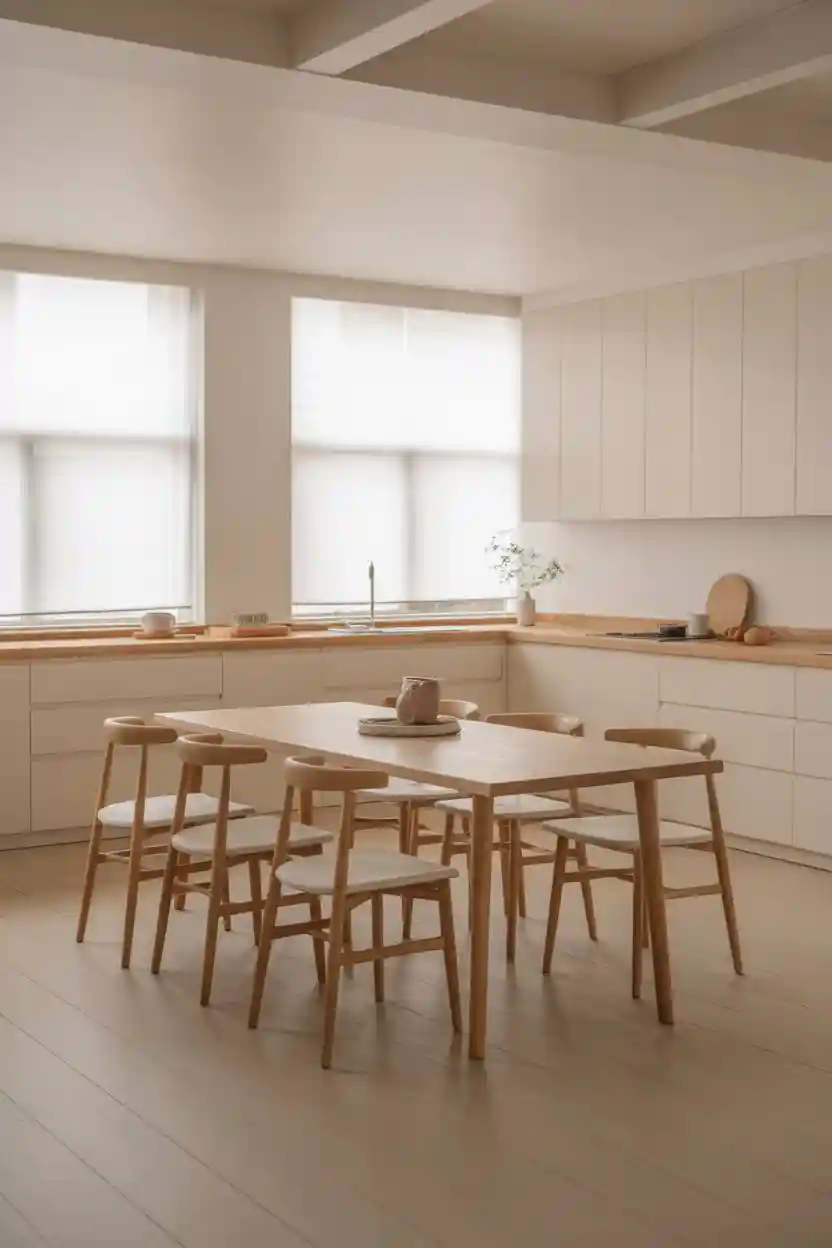
In open-plan Nordic homes the dining table often sits inside the kitchen zone rather than in a separate room. A simple oak table with minimal chairs extends the kitchen’s material palette and makes the cook part of the conversation. One pendant centered over the table marks the zone without walls.
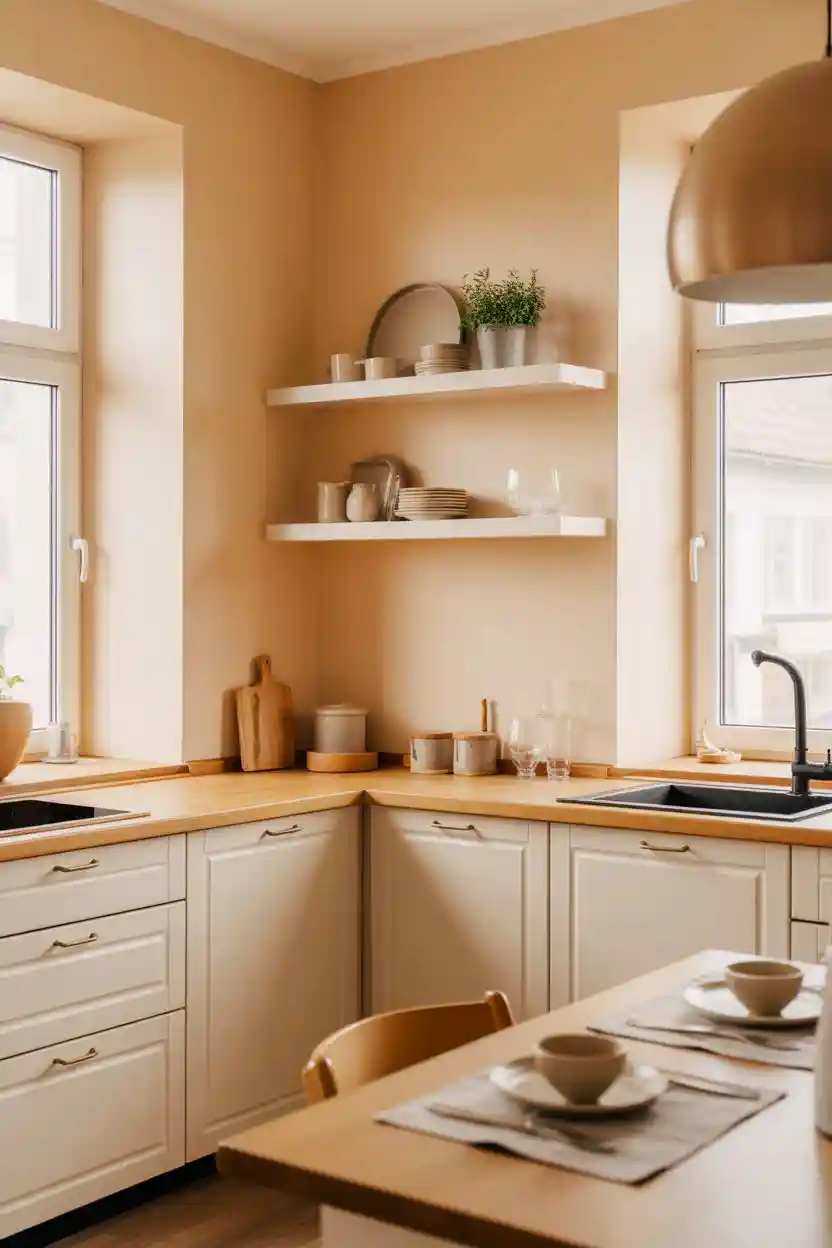
Idea 17: Soft Beige Wall Tones
Soft beige walls offer a warmer alternative to pure white. The subtle shift keeps brightness while adding a relaxed, inviting atmosphere. Incompact kitchens, beige works beautifully with wood textures and neutral decor, layering the look without overwhelming it. It’s especially effective where natural light is limited, since it still reflects light while adding depth and softness.
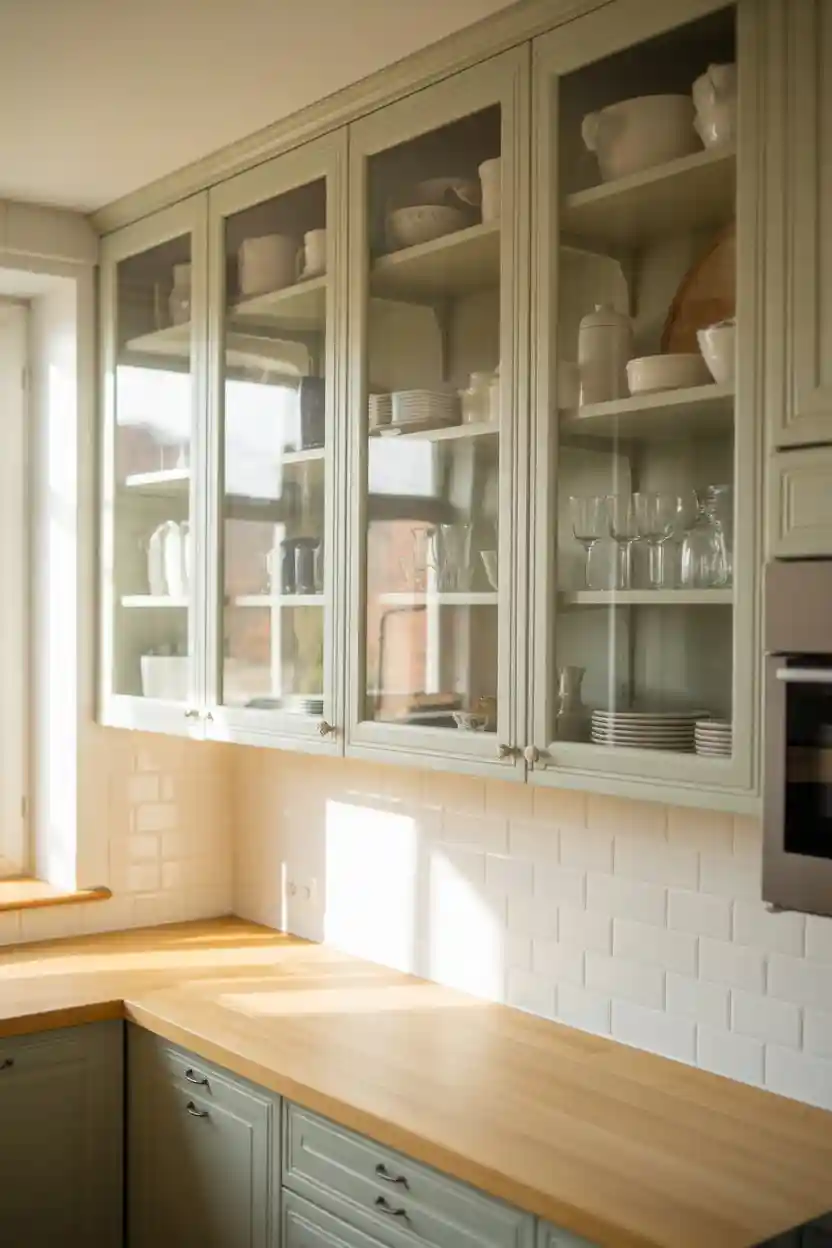
Idea 18: Glass Cabinet Doors for Openness
Glass-front uppers let light pass through the cabinetry instead of stopping at it, so the wall feels lighter even with full storage. The discipline tax is real — contents are visible — so commit to simple white dishes and clear glass inside, or choose frosted glass and relax.
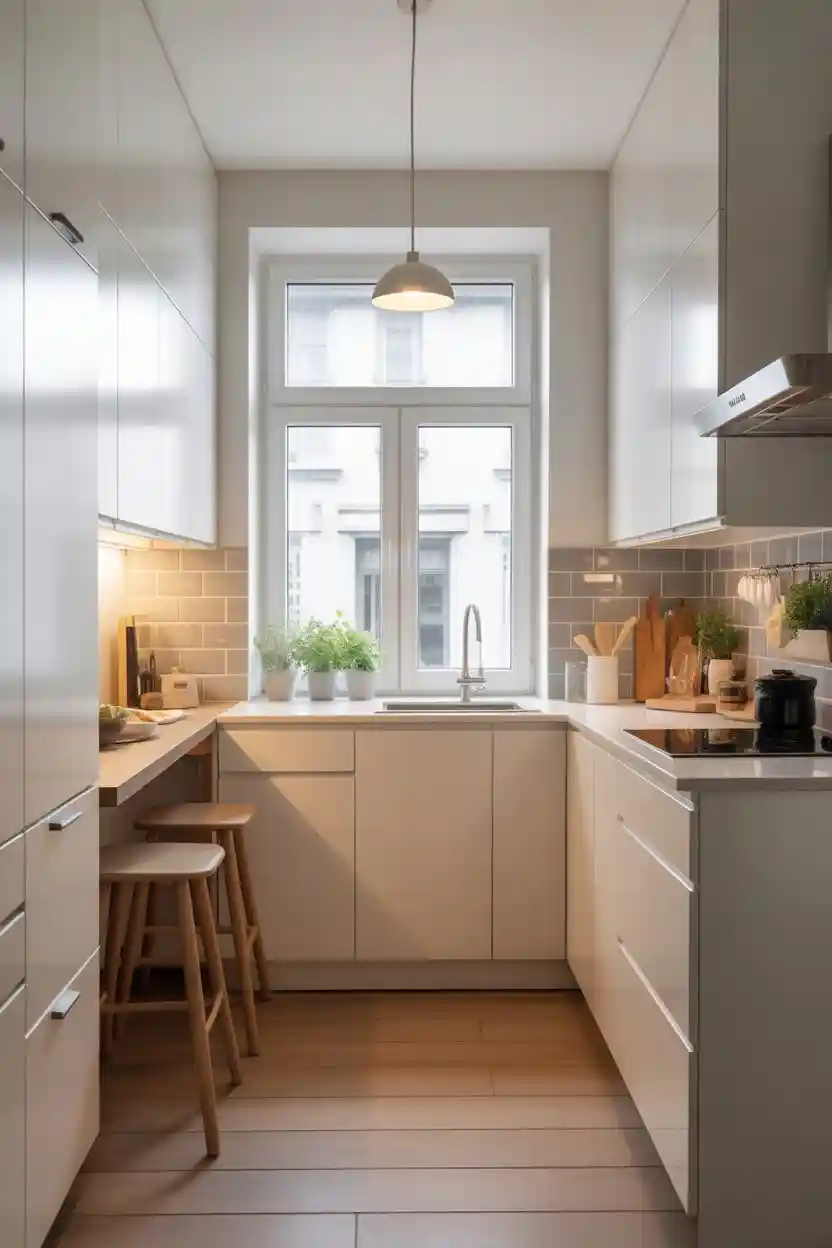
Idea 19: Keep the Layout Compact
Nordic small kitchens work because everything sits within a step or two: the classic work triangle tightened until cooking barely requires walking. Resist filling every wall — one clear stretch of counter is worth more than another cabinet in a compact, calm kitchen.
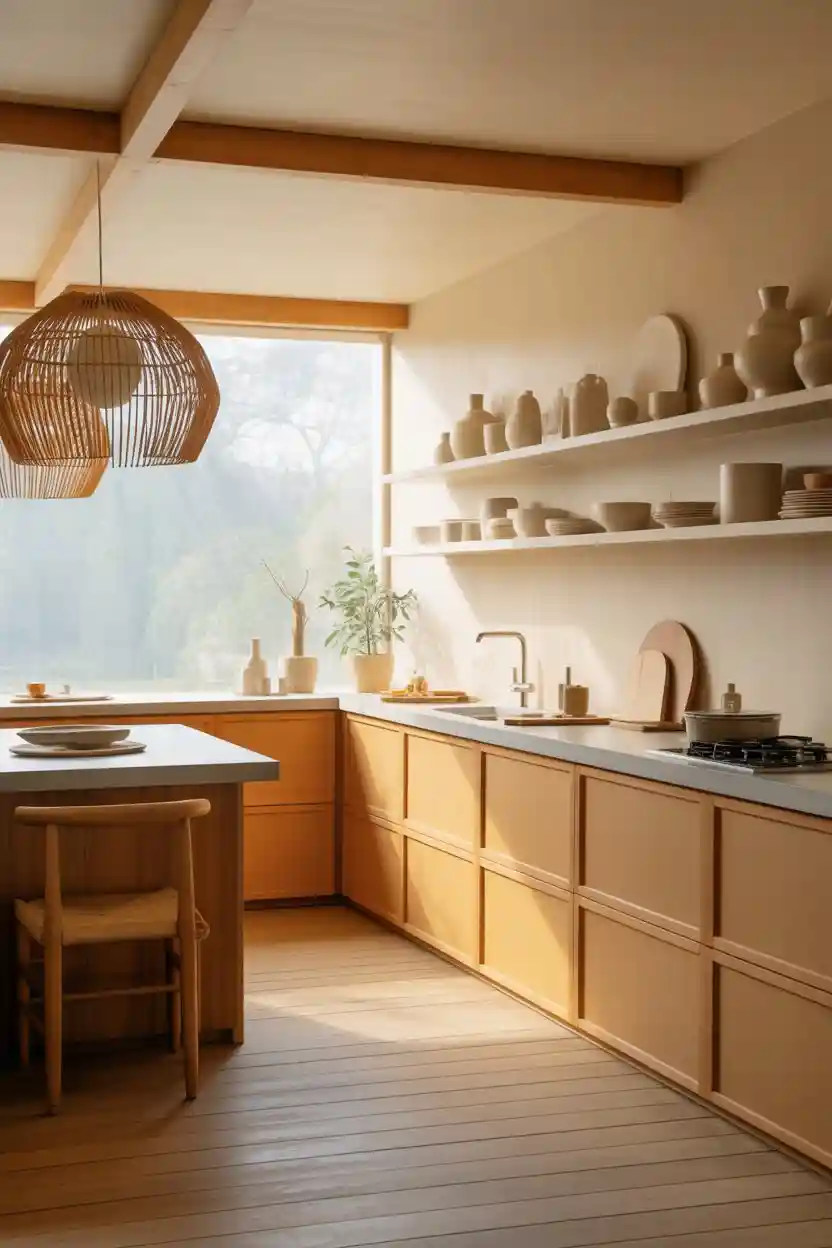
Idea 20: Try a Japandi Note
Japandi — Japanese minimalism meeting Scandinavian warmth — deepens the palette with charcoal, walnut, and handmade ceramics while keeping the serenity. A low walnut stool, a handmade vase, or darker grout lines nod to the blend without redecorating the whole room.
Idea 21: Black and White Contrast Theme
A disciplined black-and-white scheme — white walls and uppers, black lowers or a black faucet and frames — gives the room structure and definition. Keep the ratio heavily white-dominant (roughly 80/20) so contrast reads as crisp rather than heavy.
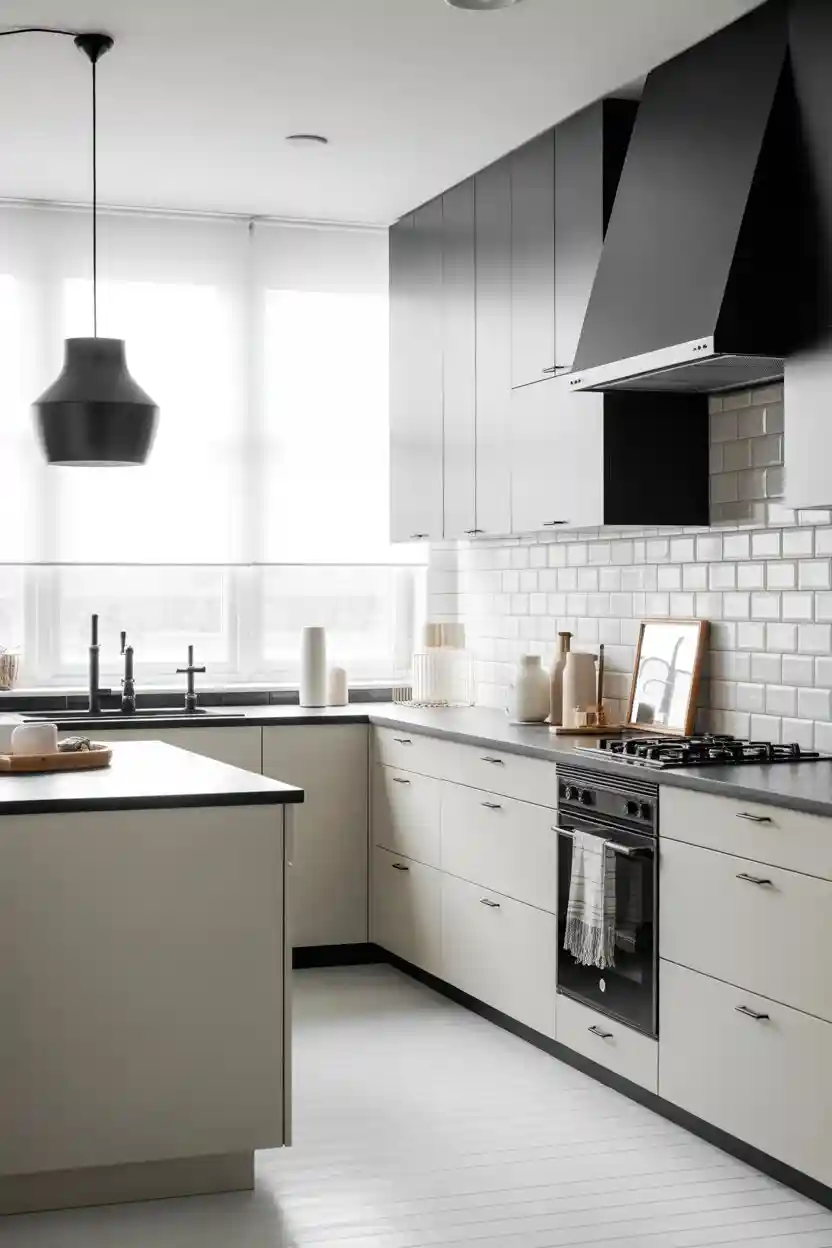
Idea 22: Wooden Ceiling Beams for Character
In homes that have them, exposed beams add architectural warmth no decor can fake. Limewash or leave natural depending on how much contrast you want; even faux beams in pale wood add the horizontal rhythm that makes plain ceilings feel finished.
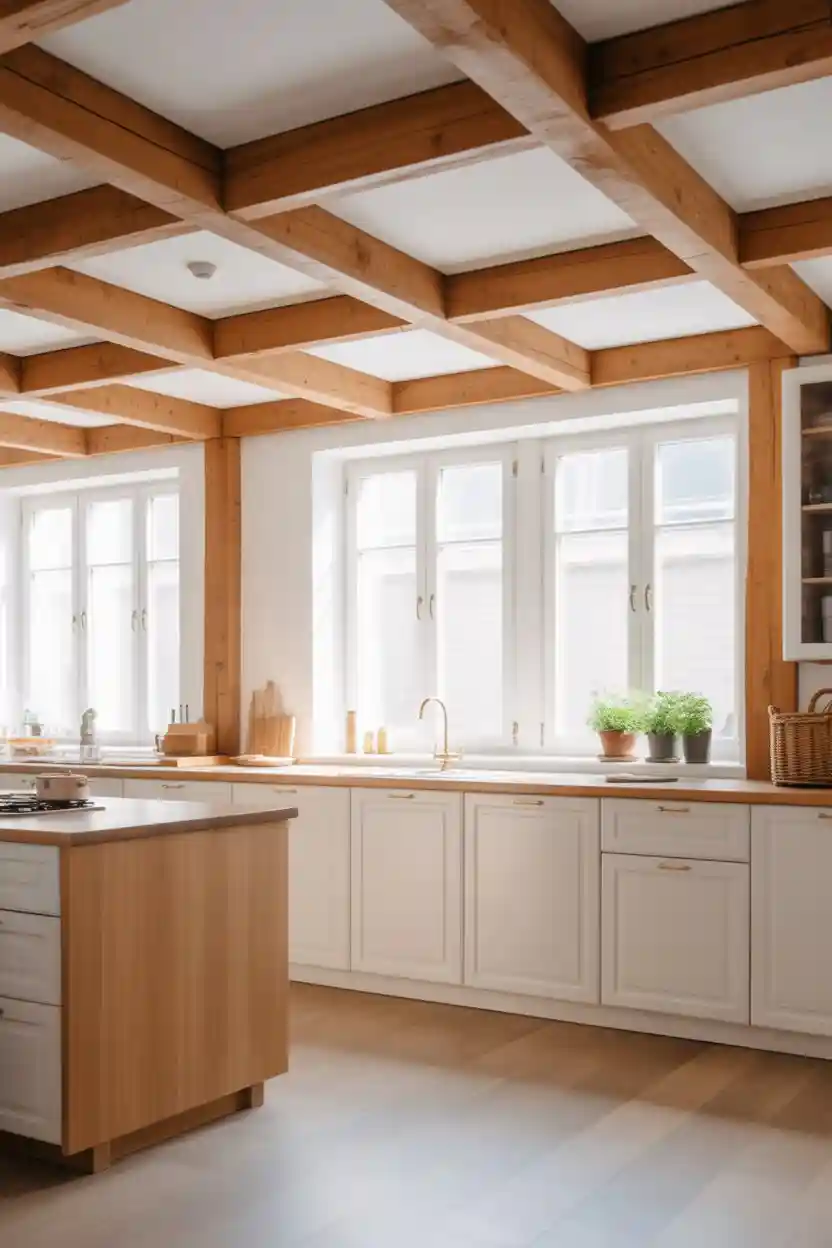
Idea 23: Minimal Wall Art with Neutral Frames
One or two simple prints in thin neutral frames — a botanical study, an abstract landscape — give the walls a focal point without clutter. Hang at eye level in the dining zone rather than scattering pieces; in this style, restraint is the decoration.

Idea 24: Dresser as Display Storage
A freestanding dresser or hutch in pale wood offers closed storage below and a styled display above: ceramics, glassware, a short stack of cookbooks. It brings furniture warmth into a fitted kitchen and gives the room a collected-over-time feel.
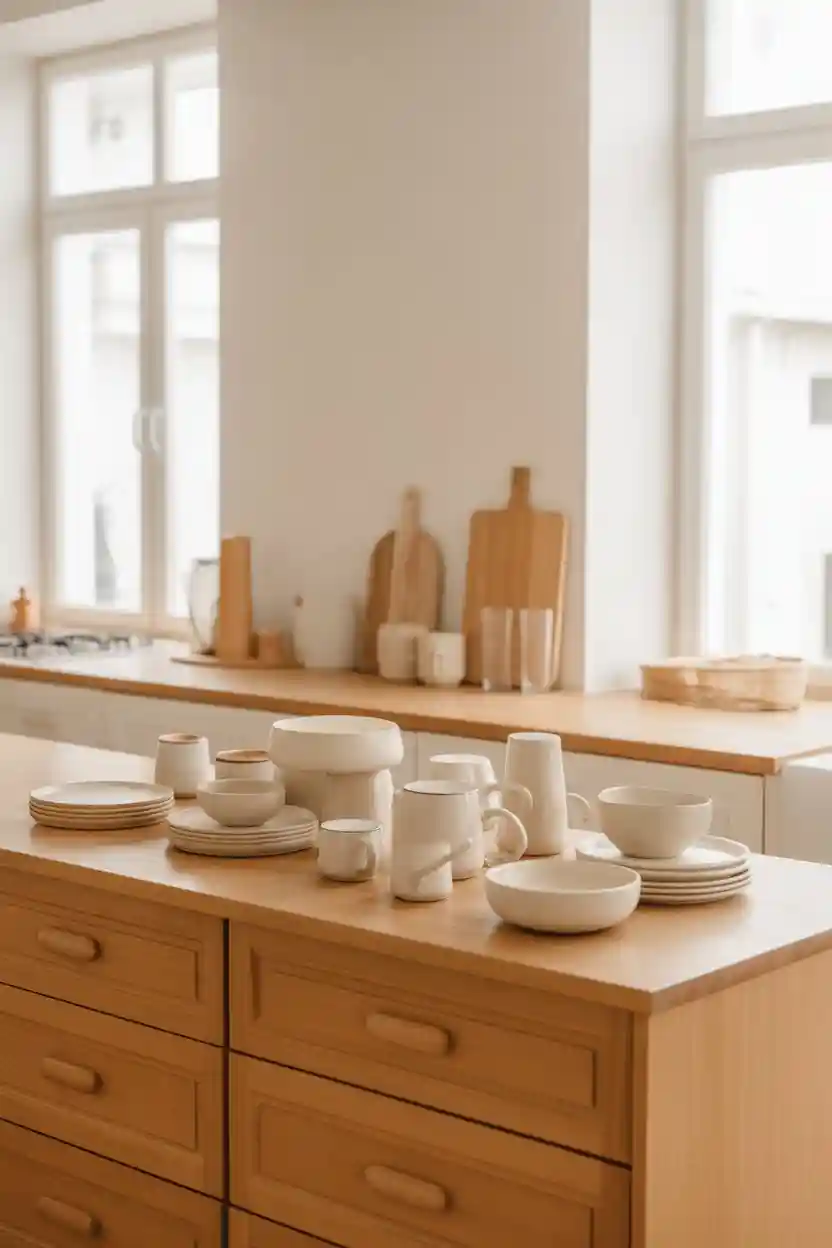
Idea 25: Blue Accent Cabinets
Dusty blue — think faded denim or pale slate — is the color accent the Nordic palette tolerates best. Use it on the island or lower cabinets only, keeping uppers white so the room stays light. It reads as fresh rather than bold, especially against oak.
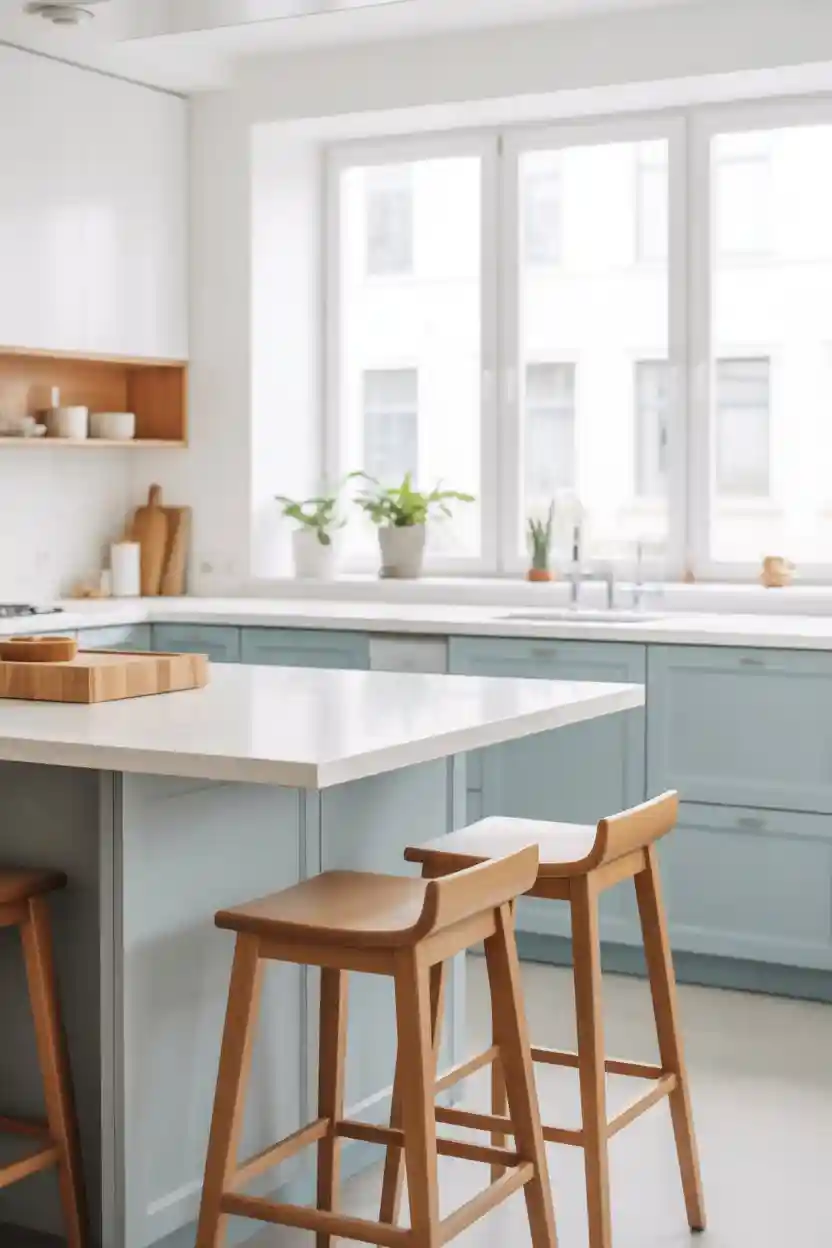
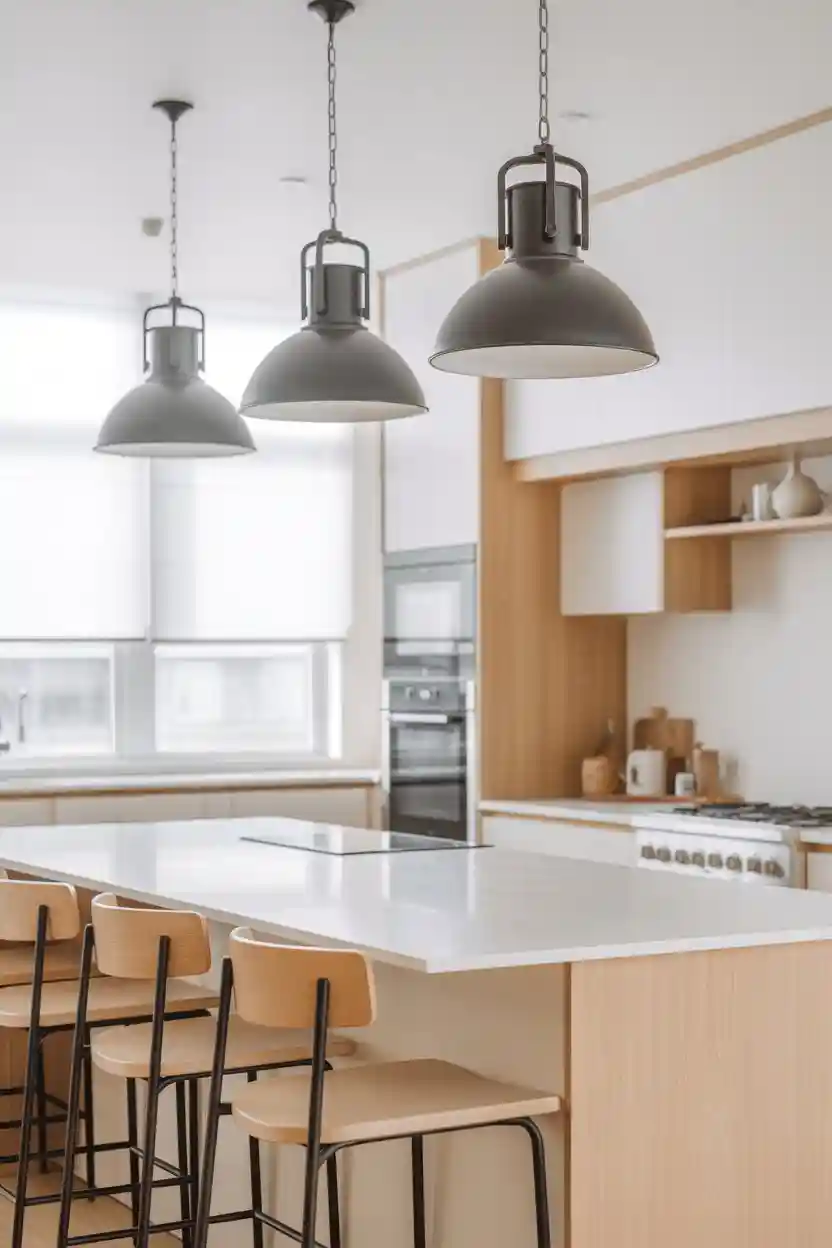
Idea 26: Industrial-Edge Lighting
A matte black metal pendant or two adds a slight industrial edge that keeps all the softness from going saccharine. Keep the shapes simple and the count low — one statement fixture over the island is enough tension for the whole room.
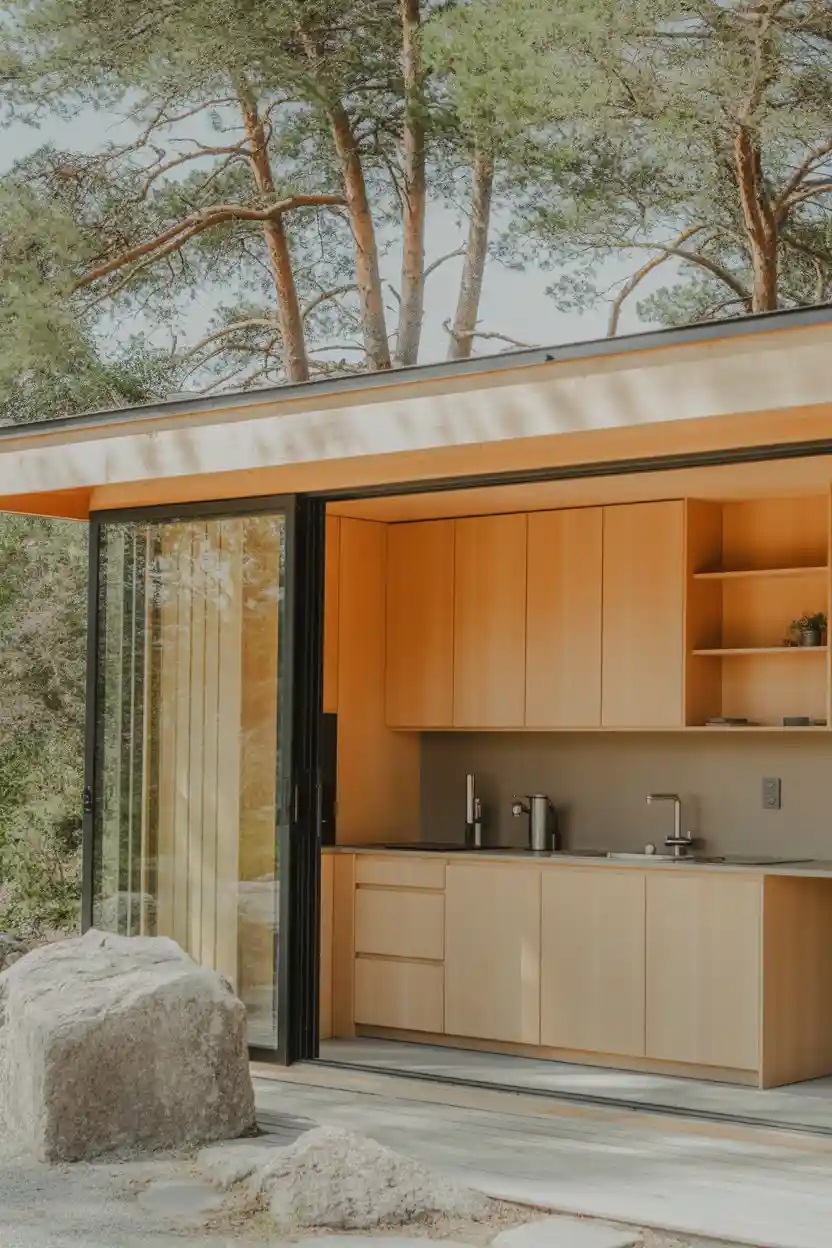
Idea 27: Extend Outdoors Simply
Where climate allows, a simple outdoor extension — a pale wood deck, a compact grill station, a weatherproof bench — continues the kitchen’s logic outside. Keep materials consistent with the interior (wood, neutral textiles) so the two spaces read as one larger room in summer.
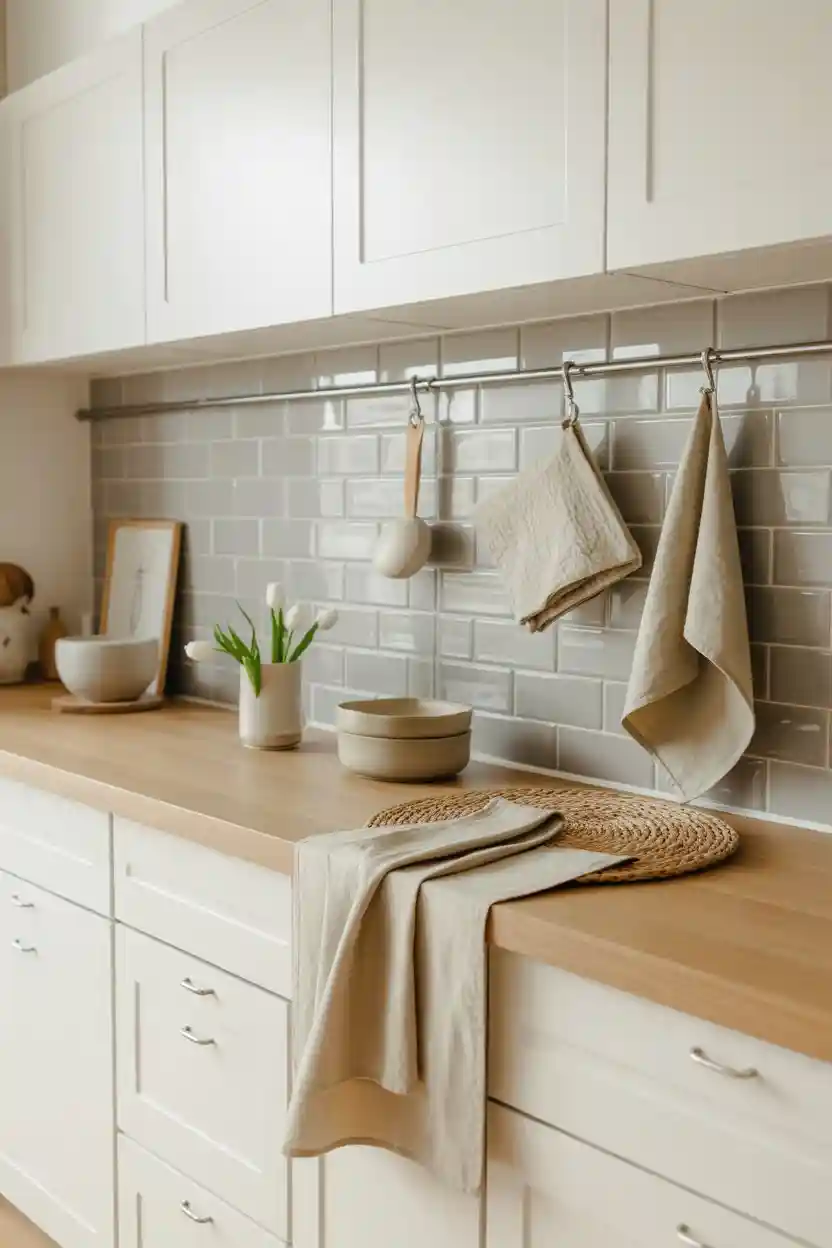
Idea 28: Neutral Kitchen Textiles
Linen tea towels, a cotton runner, simple seat cushions in undyed or soft-grey tones add the textile layer that makes minimalism feel inhabited. Natural fibers wrinkle and soften with use, which is precisely the relaxed texture the style wants.
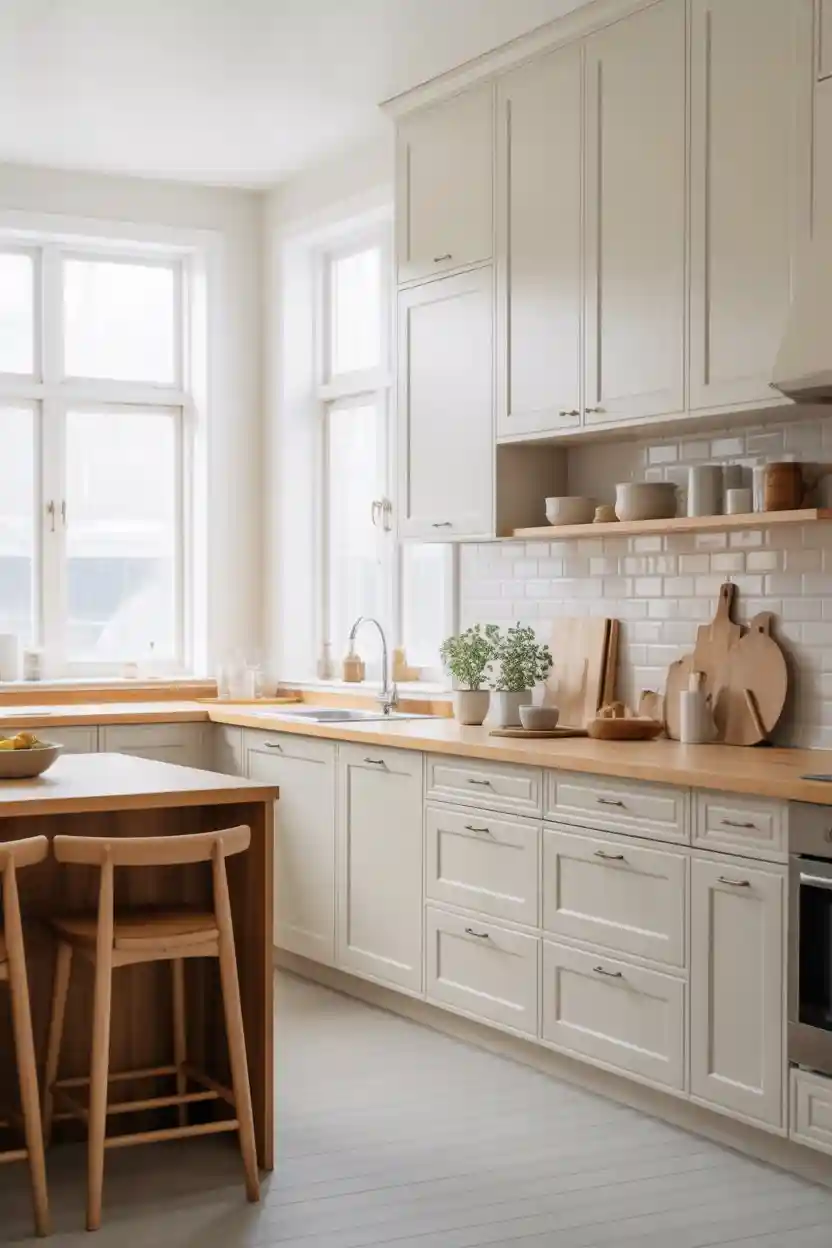
Idea 29: Shaker Cabinets, Nordic Style
Shaker fronts in white or pale grey bring quiet craftsmanship to the Nordic kitchen — the recessed panel adds just enough detail to feel considered without ornament. Pair with simple cup pulls or knobs in brushed steel and the look stays timeless for decades.
Idea 30: Layer Soft Lighting
Nordic homes layer light because the dark season demands it: bright task lighting under cabinets for cooking, warm pendants for the table, and a candle or two for the evening wind-down. Put each layer on its own control so the kitchen shifts mood from morning to midnight.
FAQs for Scandinavian Kitchen Decor Ideas