25 Minimalist Apartment Decor Ideas for Calm Interiors
There’s a particular quiet you feel walking into a well-edited apartment — no visual static, everything in its place, your shoulders drop an inch. That’s what this style is really selling: not emptiness, but the absence of low-grade stress. These 25 ideas are the practical moves that get you there.
Whether it’s a studio or a one-bedroom, the principles don’t change: fewer things, better chosen, with room to breathe around them. Here’s how to apply them without the place feeling like a showroom.
Idea 1 – Use a Restrained Neutral Color Palette
Everything starts with a tight palette — warm white, soft beige, light grey — because color is what chops small rooms into smaller pieces. Three neutrals, used everywhere, make the whole apartment read as one continuous space. This is the backbone of calm apartment decor: fewer colors, fewer visual boundaries, more breathing room.
Layer the neutrals through texture rather than new hues: a wool rug, linen curtains, an oak shelf. Same family, different surfaces — that’s how you avoid the flat, unfinished look.
Idea 2 – Choose Low-Profile Furniture for Visual Calm
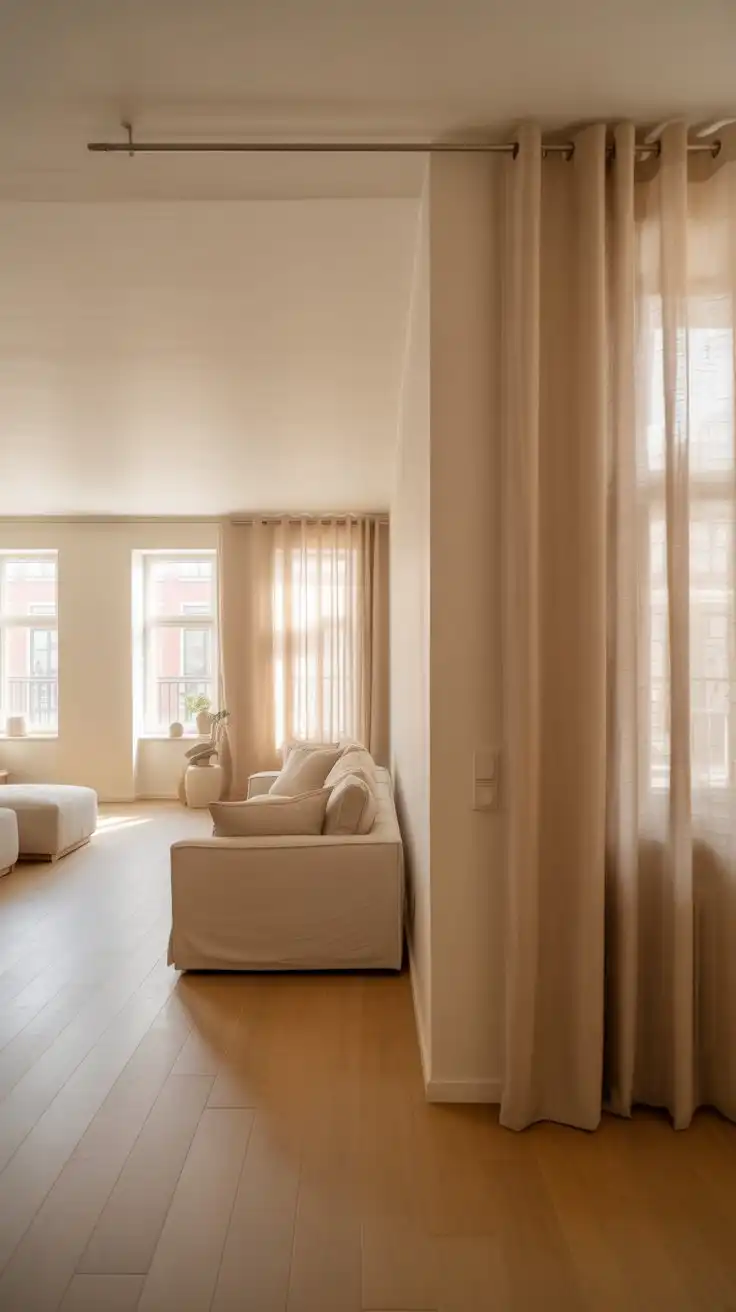
Low furniture changes a room’s proportions: a low-back sofa and a platform bed leave more wall visible, which reads as taller ceilings. In a studio, that extra perceived height is precious.
It also forces a calmer posture — you sink rather than perch. Japanese-inspired interiors have used this for centuries; the modern version is just lower sofas and beds on simple platform frames.
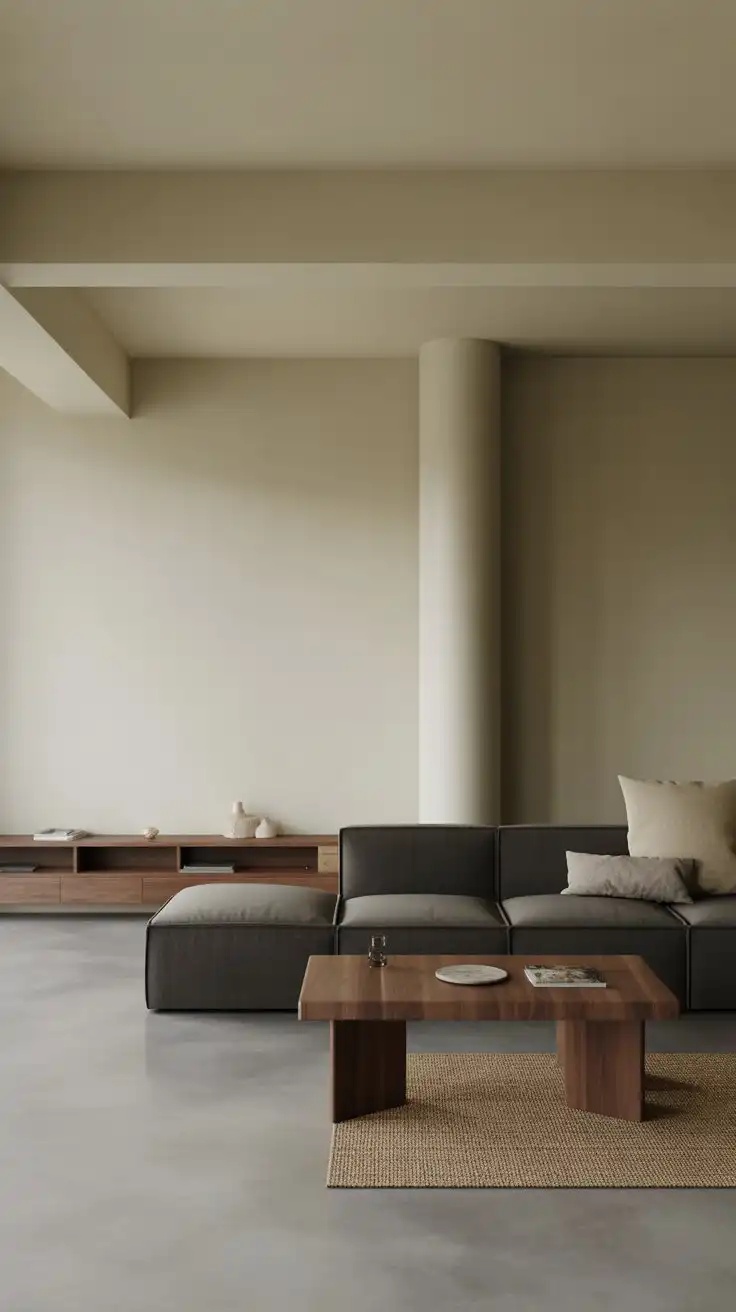
Idea 3 – Embrace Negative Space as a Design Element
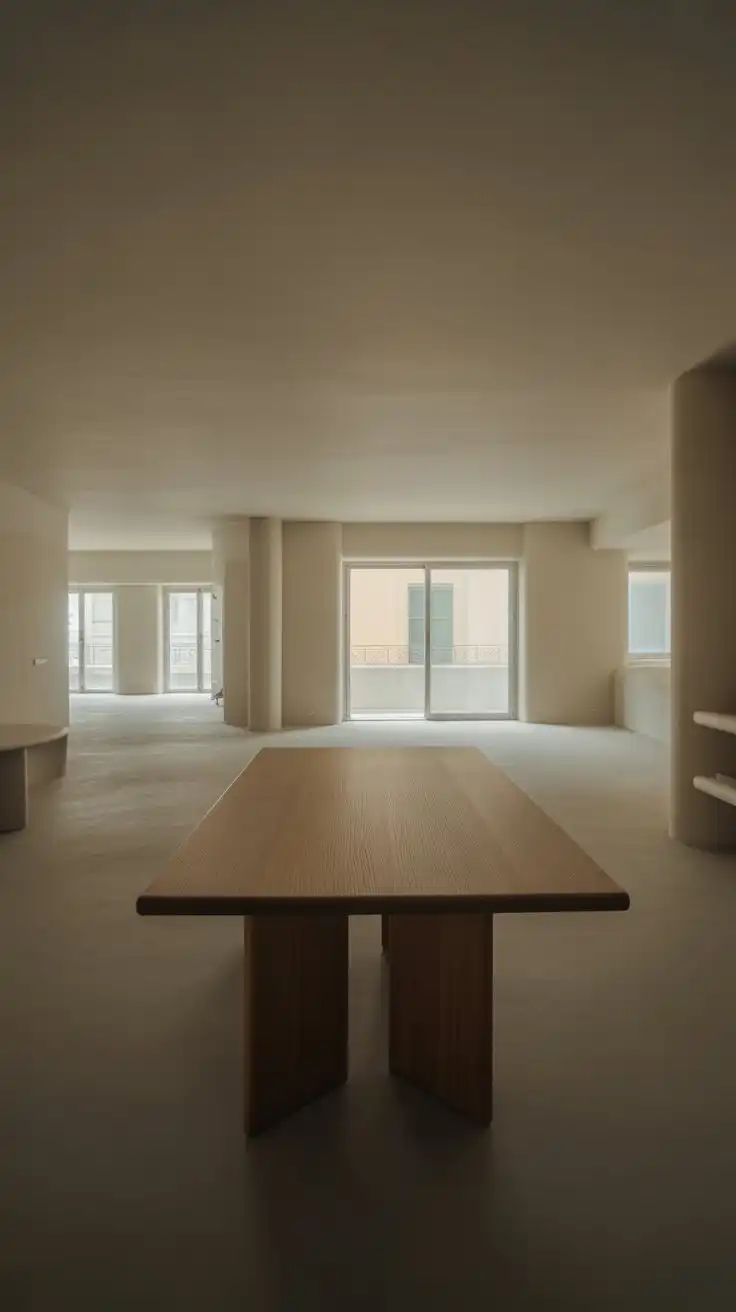
Empty space isn’t wasted space — it’s what gives the remaining objects meaning. A clear stretch of wall, an uncluttered corner: these are design decisions, not unfinished business.
It also makes small rooms livable: clear paths, light that travels, and surfaces you can actually set something down on. Resist the urge to fill every gap.
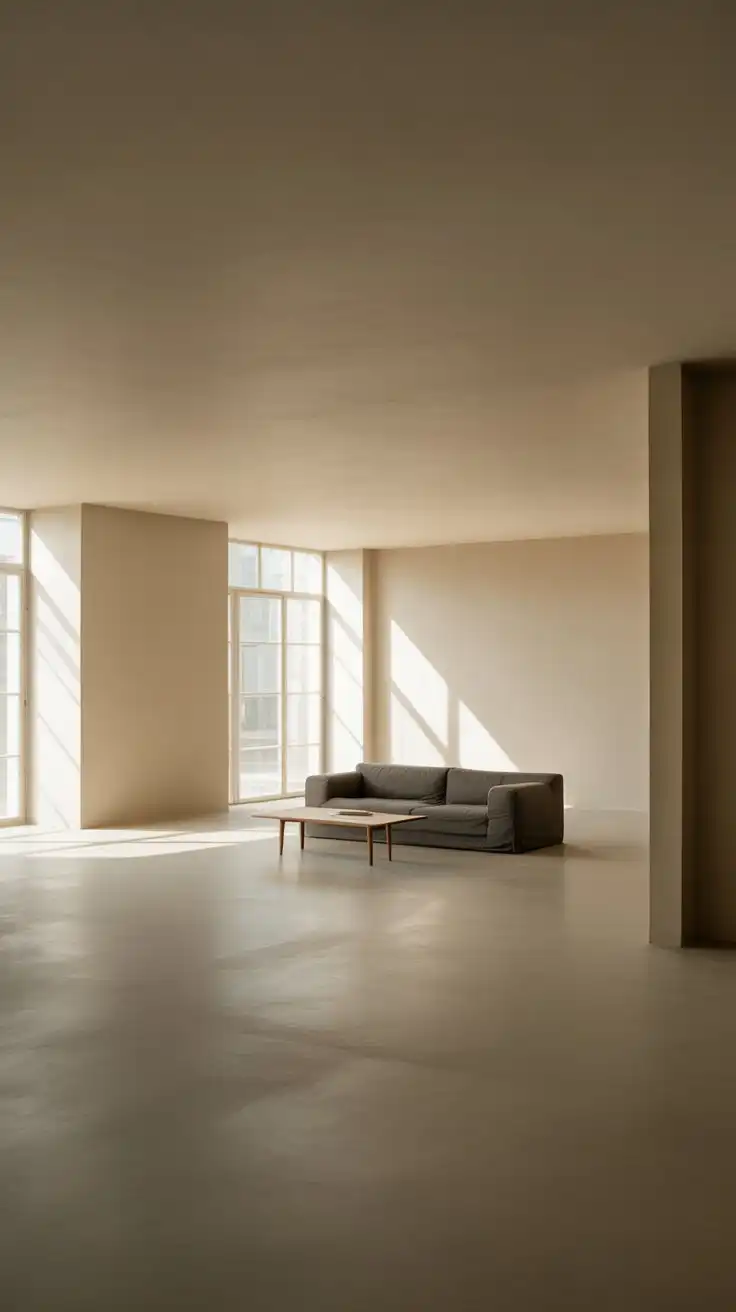
Idea 4 – Limit Materials to Create Cohesion
Pick two or three materials and repeat them everywhere: one wood tone, one metal, one textile family. Repetition is what makes a home feel designed rather than assembled.
Too many finishes in a small apartment reads as chaos — the eye never settles. Material discipline also makes future shopping easier: if it doesn’t match the palette, it doesn’t come home.
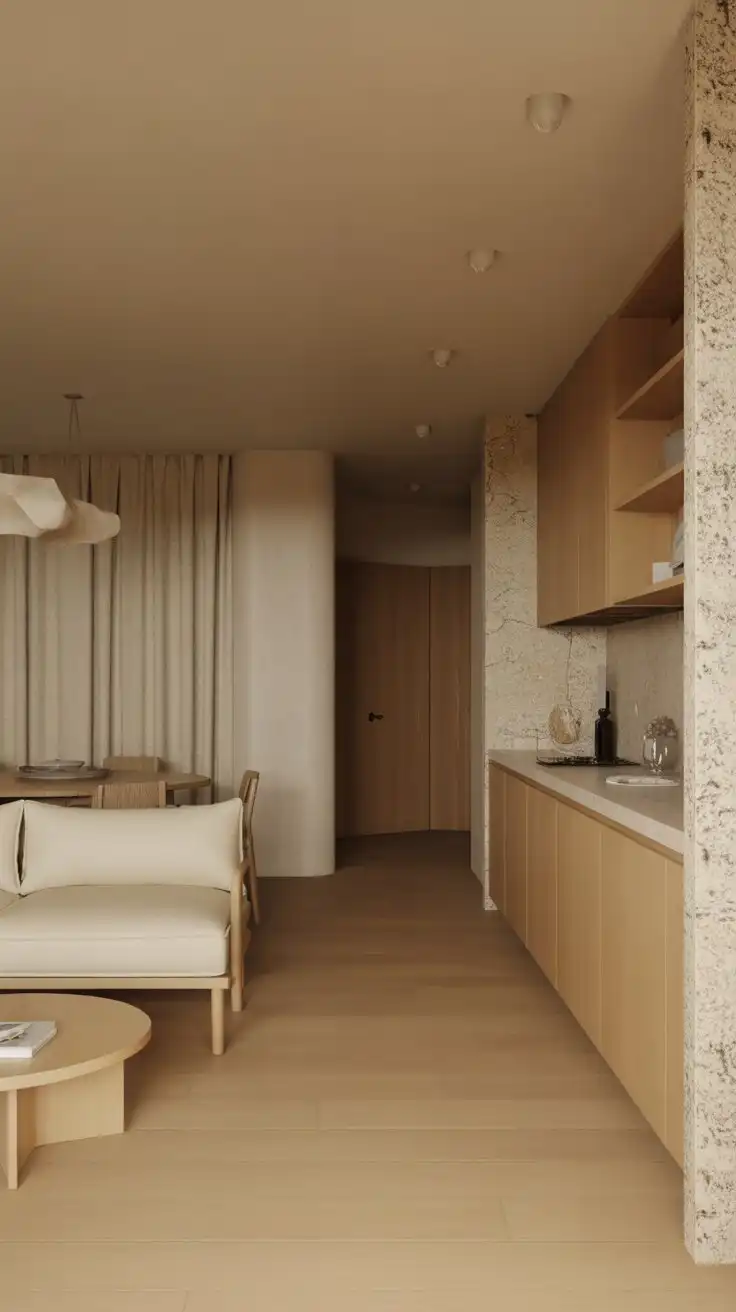
Idea 5 – Let Natural Light Define the Space
Daylight is the best decoration minimalism allows. Sheer curtains instead of blackout, nothing stacked on the sills, and a mirror to throw light deeper into the room.
After dark, keep artificial light warm (2700K) and low — a bright overhead will undo everything the daylight built. Dimmer switches are a $15 upgrade with outsized impact.
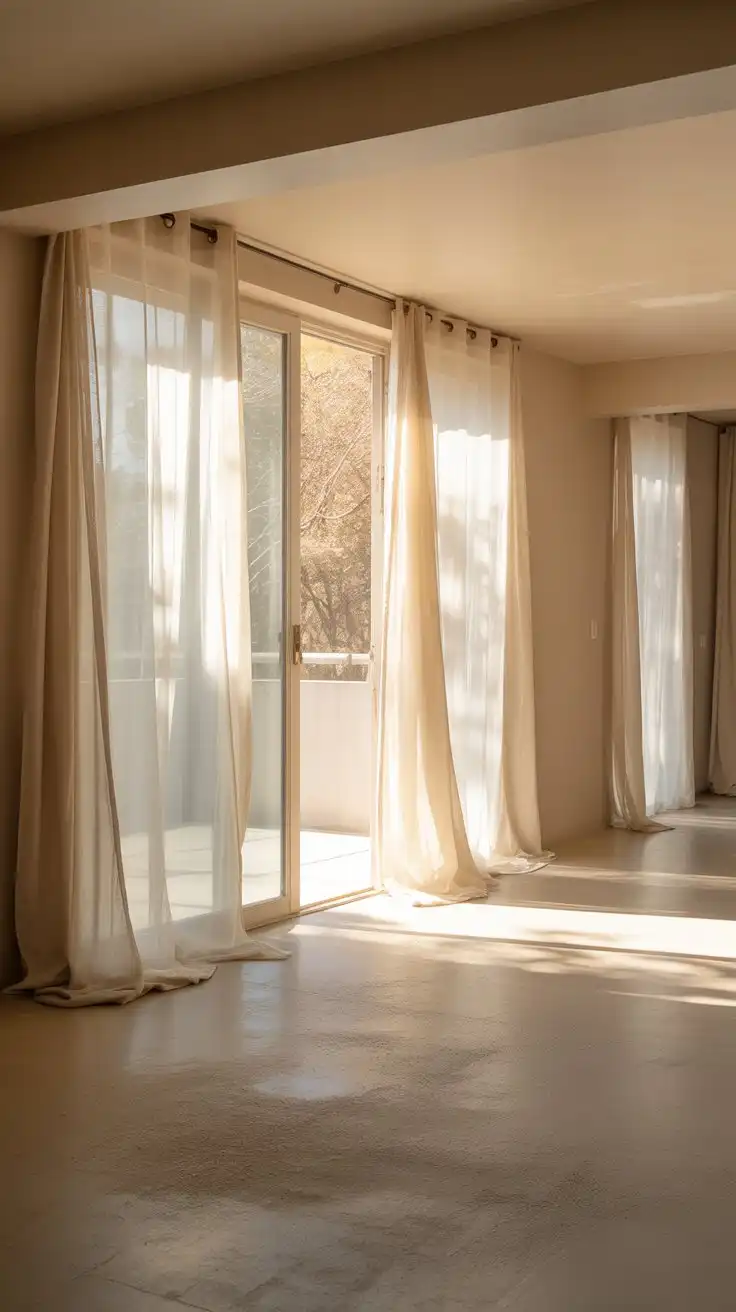
Idea 6 – Use Built-In Storage to Reduce Visual Noise
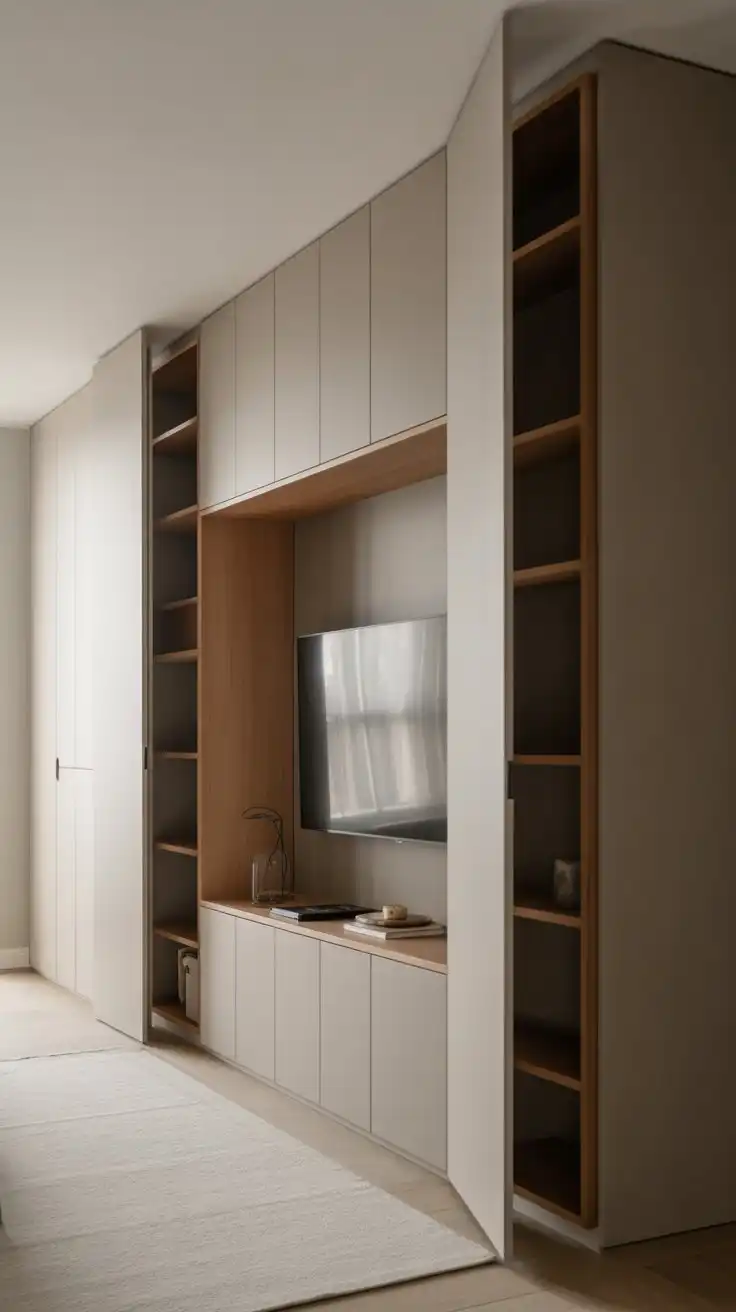
Minimalism only survives real life if clutter has somewhere to go. Floor-to-ceiling wardrobes, drawers under the bed, cabinets with push-to-open fronts — storage that disappears into the walls.
The test is simple: can you clear every surface in five minutes before guests arrive? If yes, the storage is working. If not, you need more of it, hidden better.
Idea 7 – Design a Minimalist Living Room with One Focal Point
Give the living room one thing to look at — the sofa, a big window, a single strong artwork — and let everything else stay quiet. One focal point is a decision; three is a committee.
This is also what keeps small living rooms from tipping into clutter: when the eye has an anchor, it stops hunting. Arrange seating around that anchor and the layout solves itself.
Idea 8 – Keep Wall Decor Sparse and Intentional
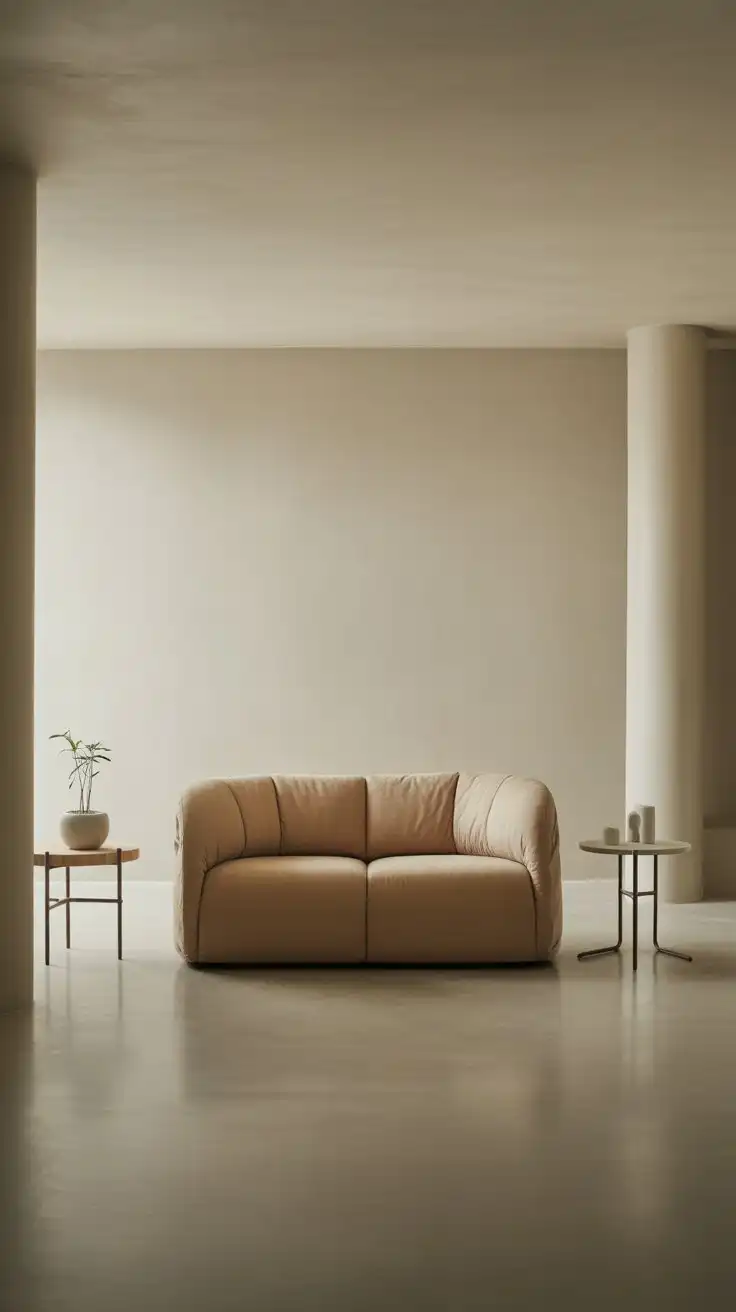
One or two pieces per wall, maximum — and they’d better be good. A single oversized print beats six small frames every time in this style.
Bare wall isn’t empty wall; it’s the frame around what you hung. Let the architecture and the light do the rest of the talking.

Idea 9 – Use Texture Instead of Decoration
Depth without objects comes from touch: linen, wool, raw wood, matte ceramic. A room in three neutrals can still feel rich if every surface feels different. cozy minimalist apartment is really a texture game — that’s where the warmth lives.
Go easy on the boho layering, though — three textures per room is plenty. More than that and ‘tactile’ slides into ‘busy’.
Idea 10 – Create a Calm Minimalist Bedroom Environment
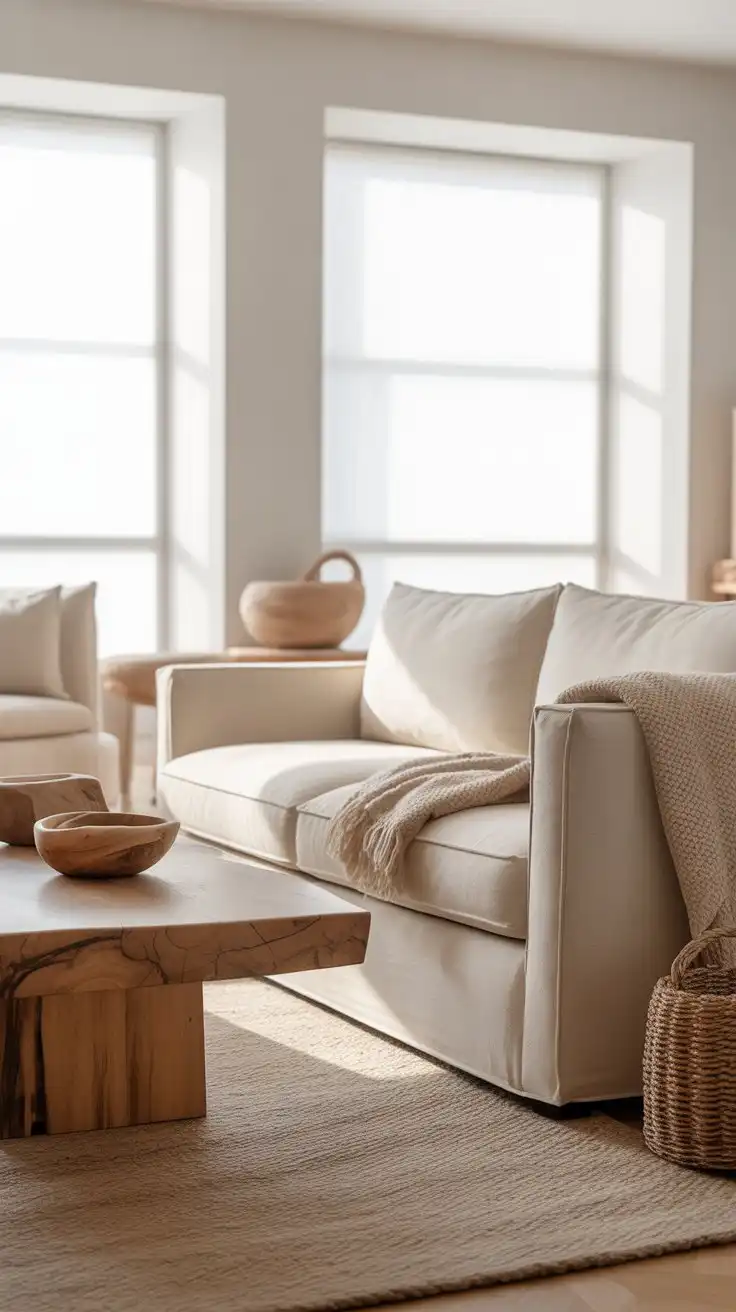
The bedroom gets the strictest edit: bed, two nightstands, one lamp each — and everything else has to justify itself. The goal is a room your brain reads as ‘sleep’, not ‘storage’.
Keep the surfaces clear and the palette to two tones. A calm bedroom is a retreat; a cluttered one is just another room with a bed in it.
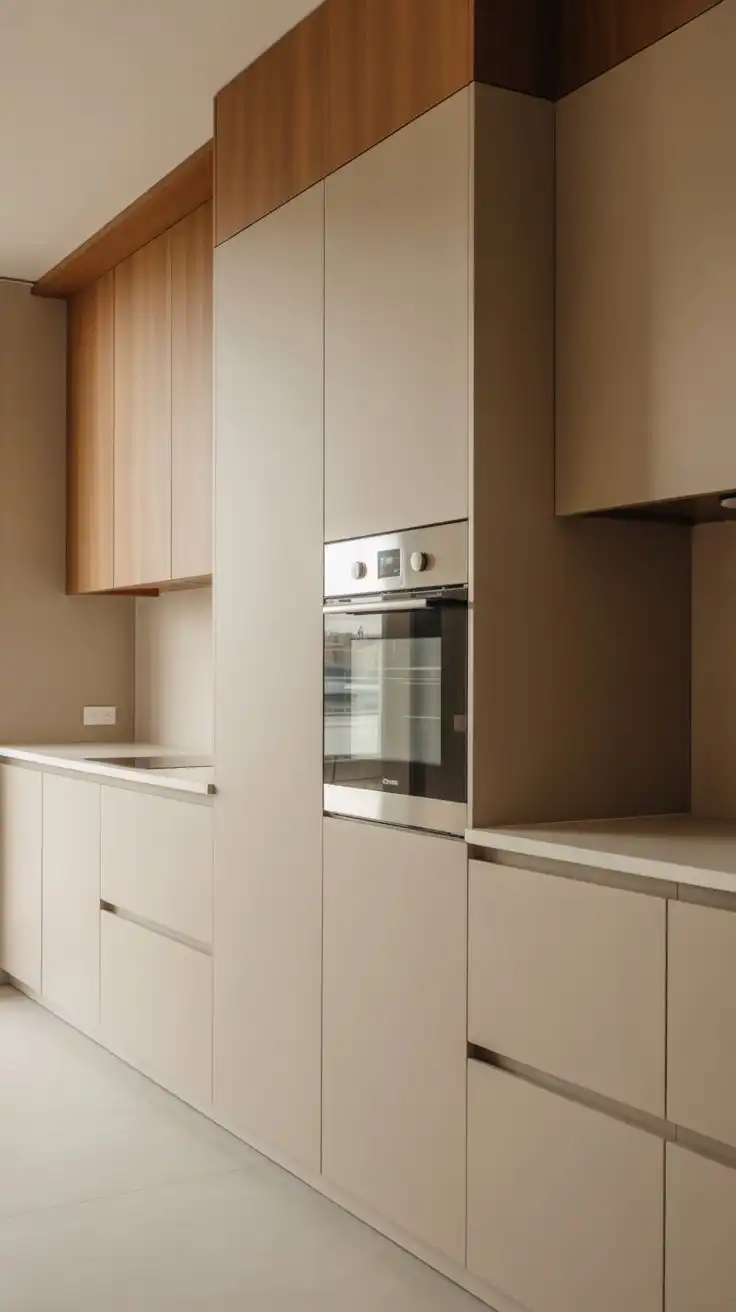
Idea 11 – Design a Minimalist Kitchen with Clean Surfaces
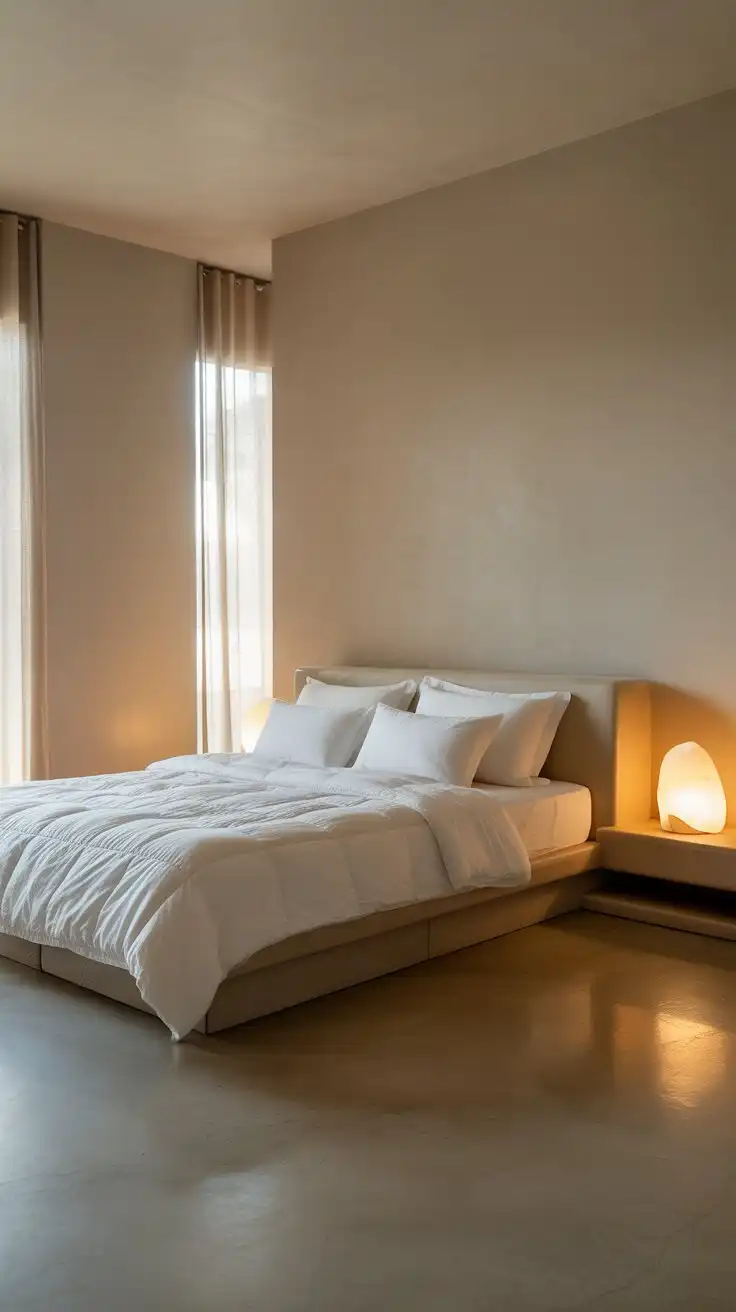
Clear counters, flat-front cabinets, appliances that disappear behind panels. In an open plan the kitchen is always visible, so it has to hold the same visual standard as the living room.
Corral the daily tools — knife block, cutting board, coffee setup — into one zone or behind a tambour door. What you use daily stays; what you use monthly lives in a cabinet.
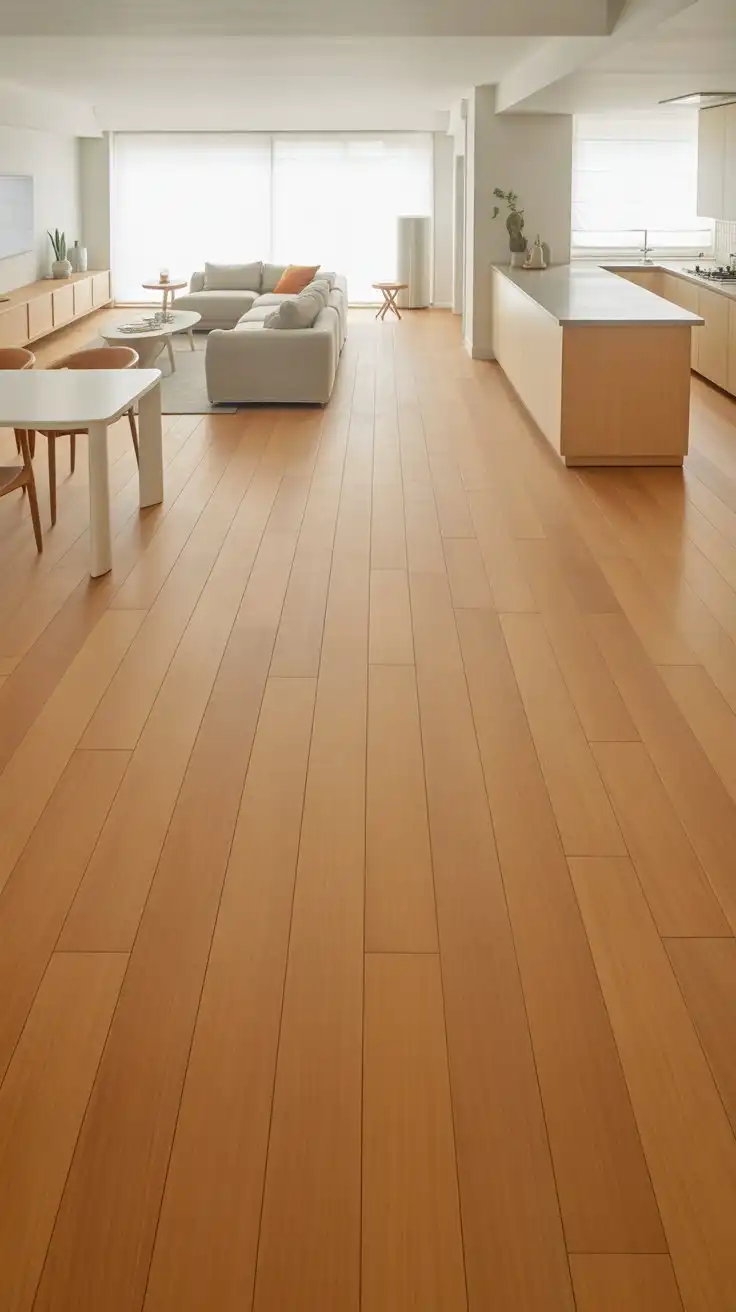
Idea 12 – Use Consistent Flooring Throughout the Apartment
One flooring material running wall to wall makes the apartment read as a single space instead of a series of small boxes. It’s the highest-impact continuity move there is.
If replacing floors isn’t an option, large rugs in the same tone family fake the effect. Either way, avoid chopping the plan into material zones.
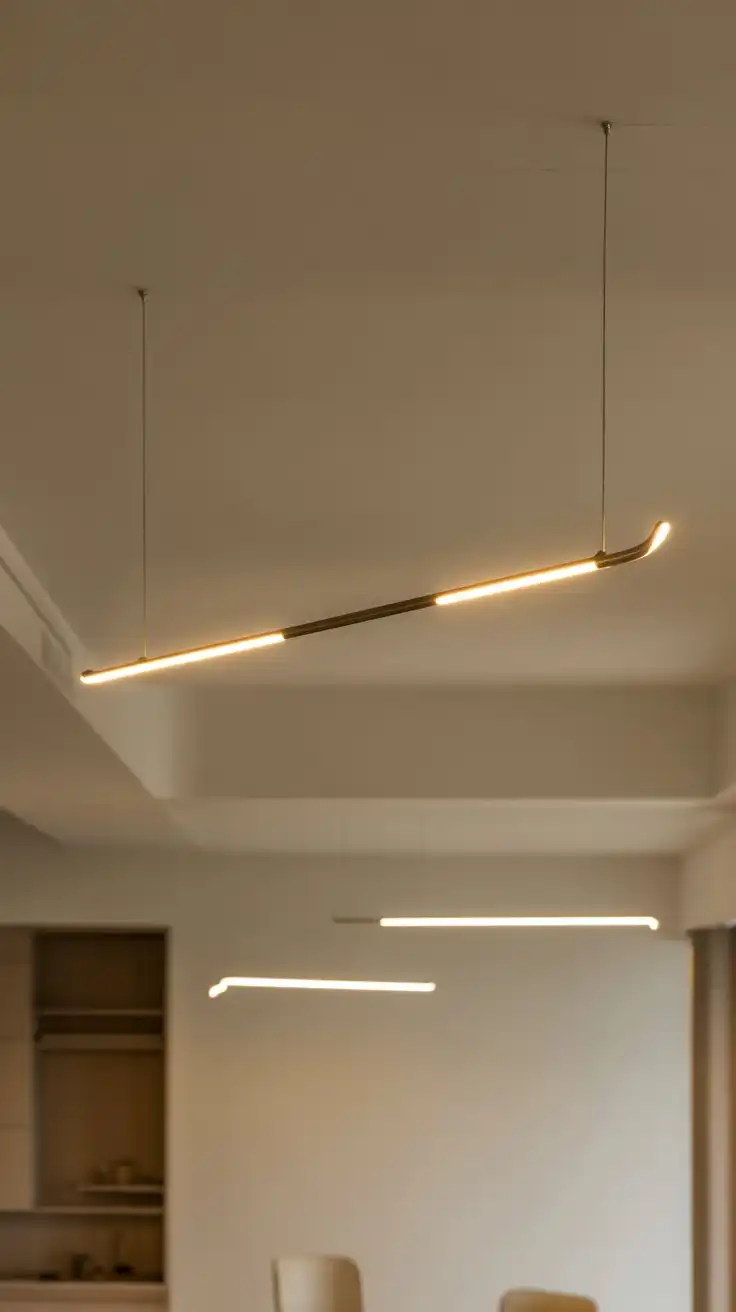
Idea 13 – Choose Minimalist Lighting with Purpose
Fixtures should be quiet: simple pendants, recessed spots, a floor lamp with clean lines. Three layers — ambient, task, accent — cover every use without visual noise.
Warm bulbs (2700K) are non-negotiable; cool white turns minimal into clinical. Put the main lights on dimmers so the mood can shift from workday to evening.
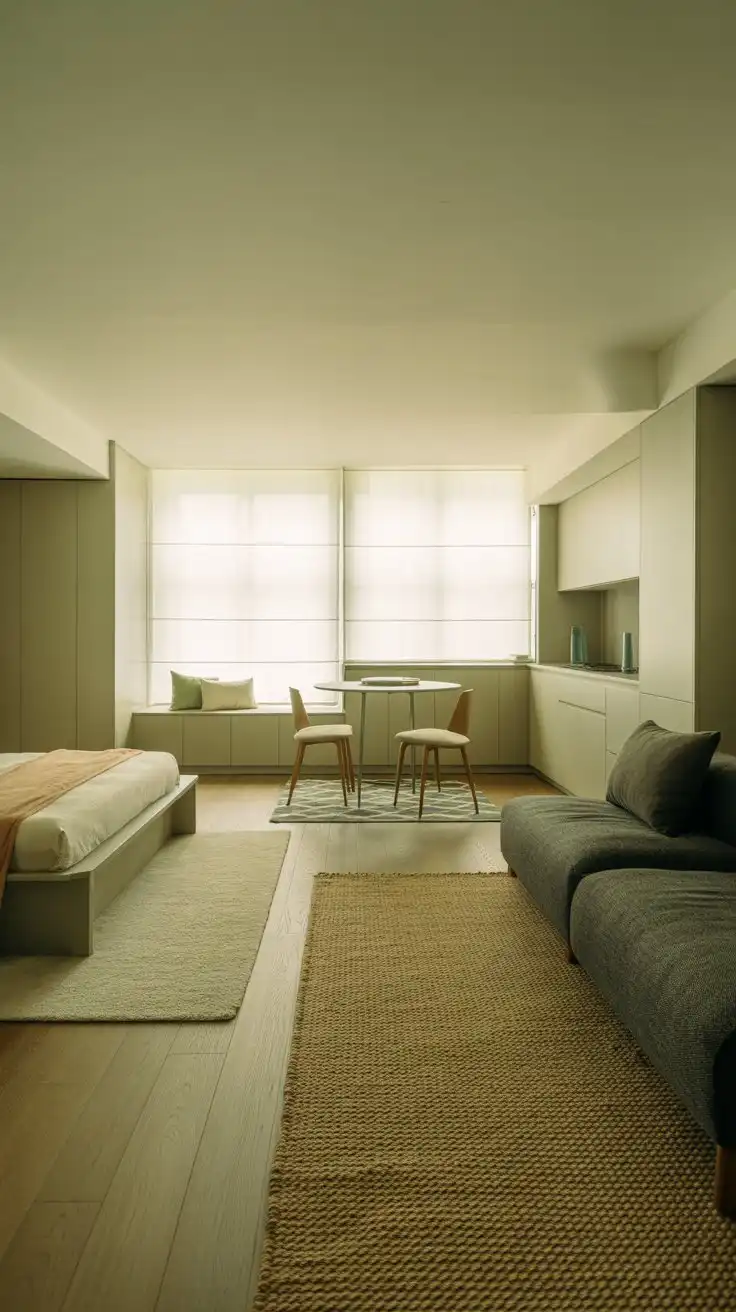
Idea 14 – Design Zones Without Physical Barriers
Studios need zones without walls: a rug under the ‘bedroom’, a pendant over the ‘dining table’, the sofa’s back marking the living area. Subtle cues, not partitions.
Keep the cues consistent — same rug family, same light temperature — so the zones feel like one home, not three rooms sharing rent.
Idea 15 – Keep Entryways Simple and Functional
The entry sets the tone: a mirror, a hook or two, a small tray for keys — and clear floor. A chaotic entrance undoes the calm before you’ve taken your shoes off.
This tiny zone works hardest in the whole apartment, so give it closed storage for shoes and bags. Five minutes of order here pays off every time you walk in.
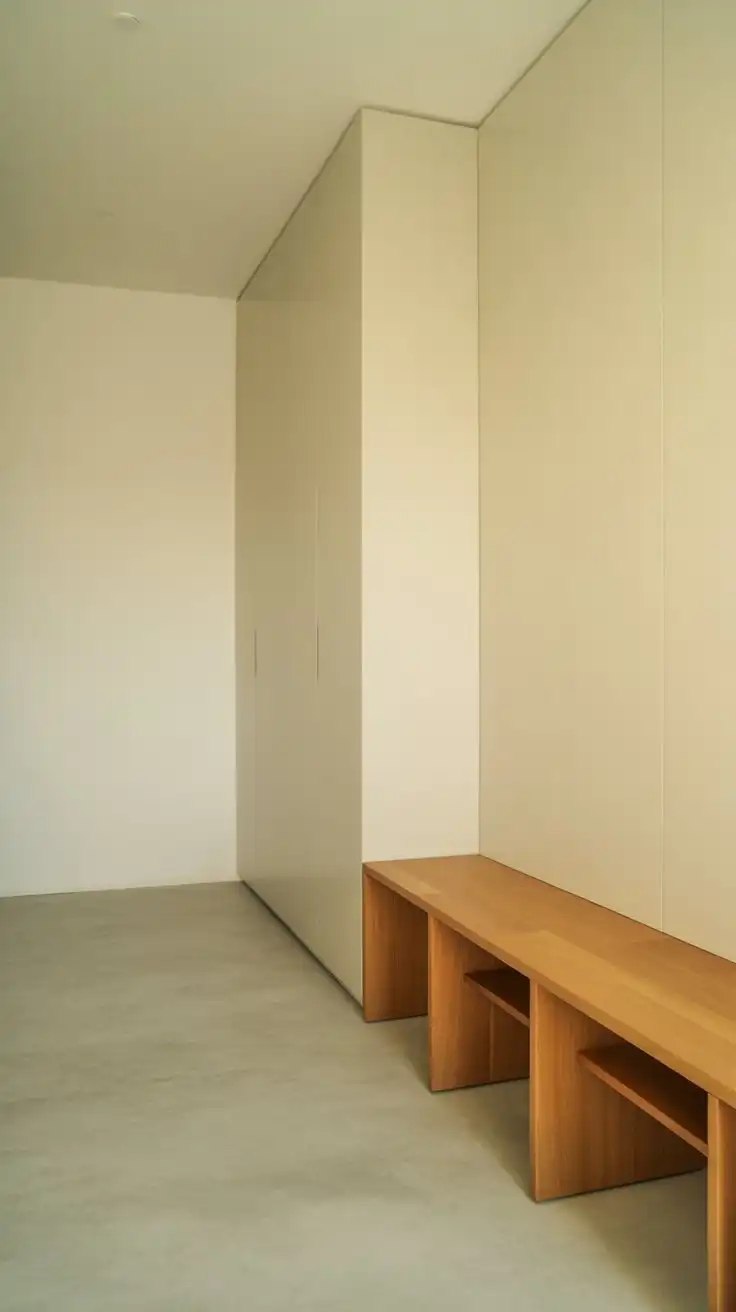
Idea 16 – Reduce Decorative Objects to Meaningful Pieces
Every object should earn its place through use, beauty, or meaning — ideally two of the three. That’s the difference between minimalism and just… empty.
Fewer, better things also age well: a solid oak stool and a handmade bowl beat a shelf of fast-fashion decor you’ll replace in a year.
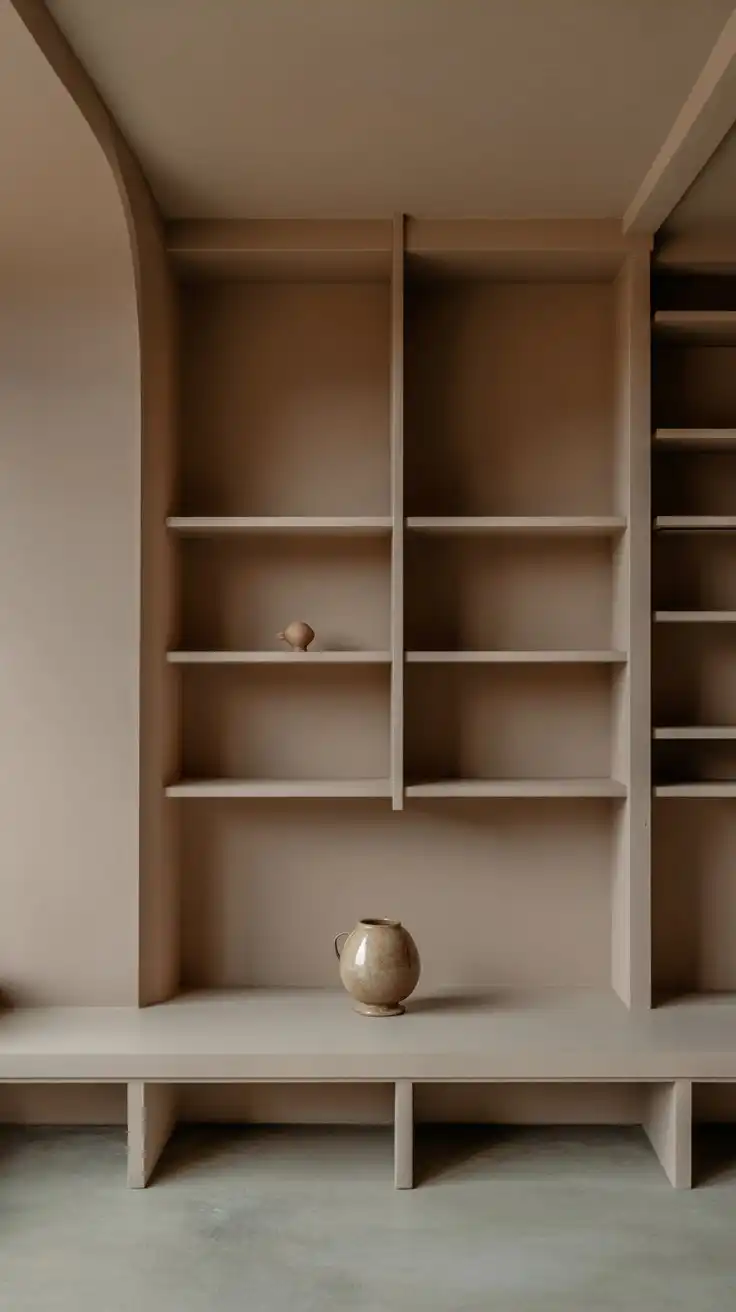
Idea 17 – Use Vertical Space Sparingly
Walls are precious in small apartments — don’t pave them with shelves. One tall, narrow bookcase or a single run of floating shelves, used sparingly, keeps storage without closing the room in.
Align what you hang and leave breathing room between pieces. Vertical storage should make the room feel taller, not busier.
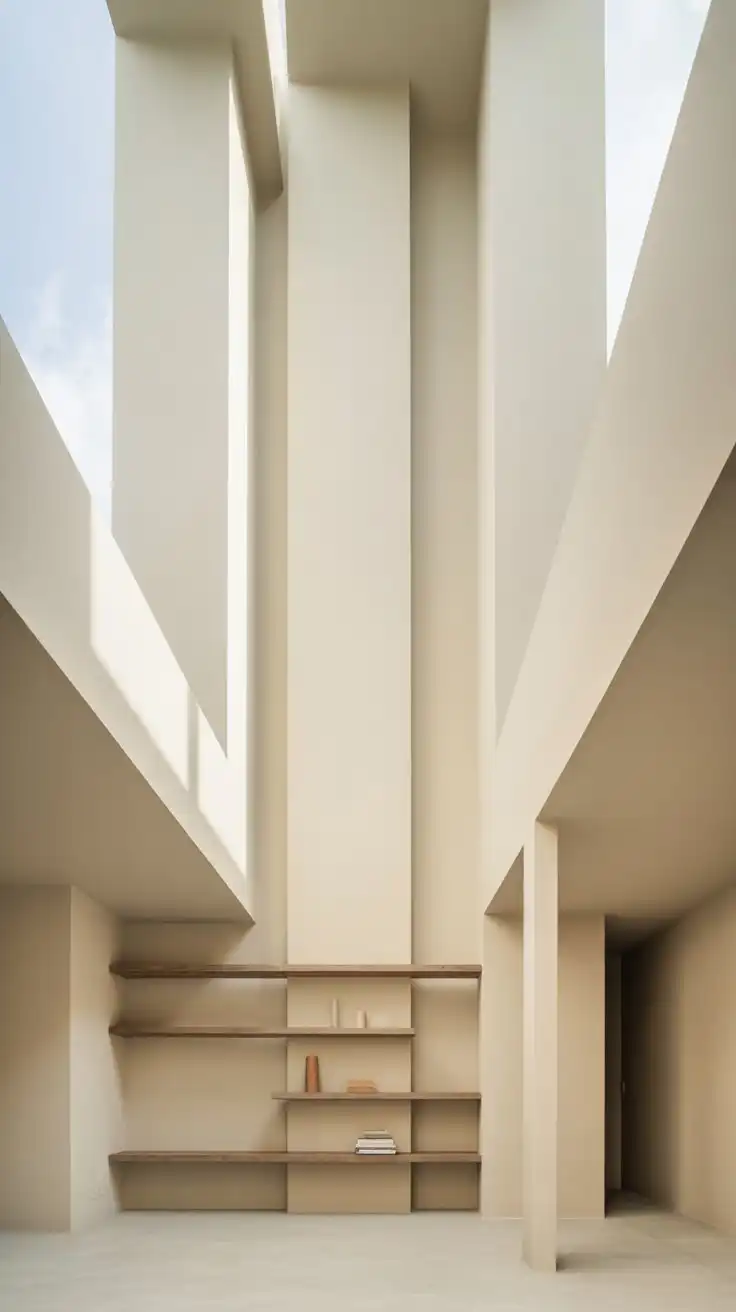
Idea 18 – Incorporate Nature Through Simple Elements
One plant, a wooden bowl, a stone tray — that’s enough nature. A single olive tree or a sculptural branch does more than a dozen small pots scattered around.
Keep it architectural and low-maintenance: snake plants, ZZ plants, dried grasses. Dead plants are the opposite of calm.
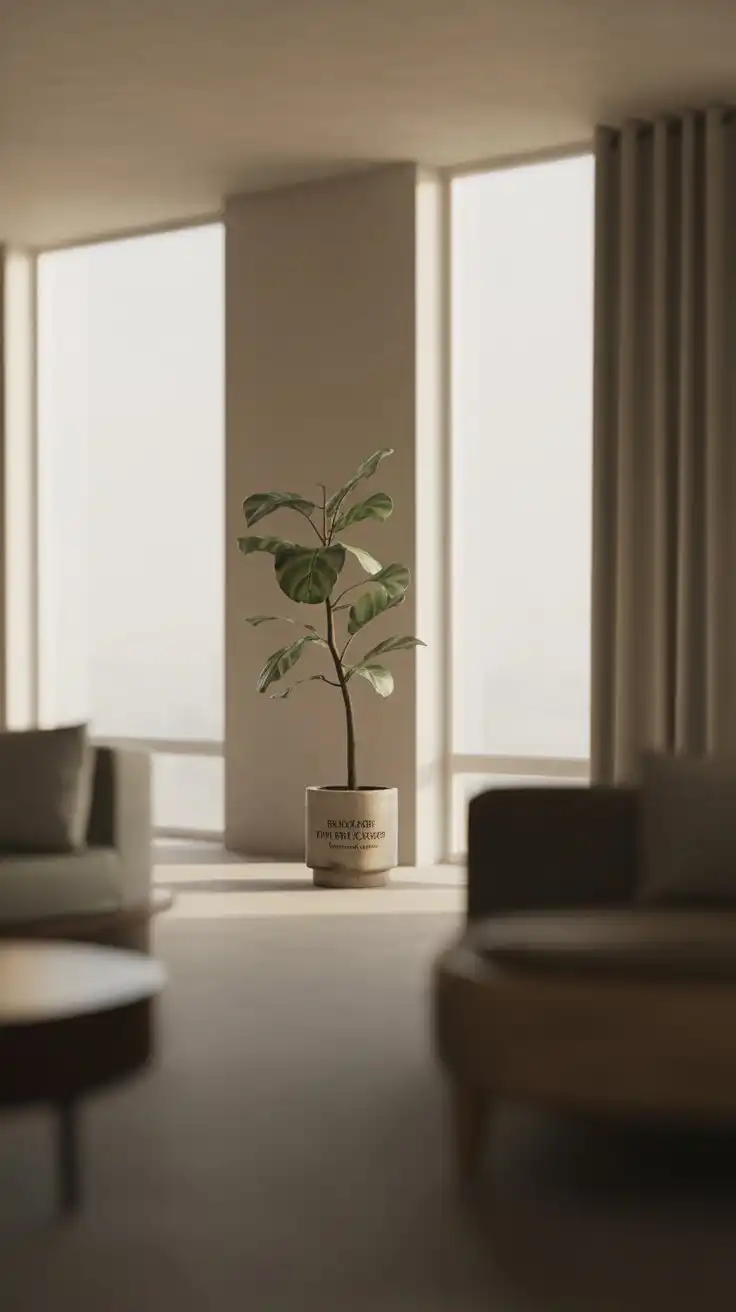
Idea 19 – Avoid Trend-Driven Design Choices
Trends are the enemy of this style — today’s viral boucle chair is tomorrow’s donation pile. Classic forms and honest materials don’t date.
It’s also the sustainable choice: buying once and keeping it for a decade beats redecorating every two years, financially and environmentally.
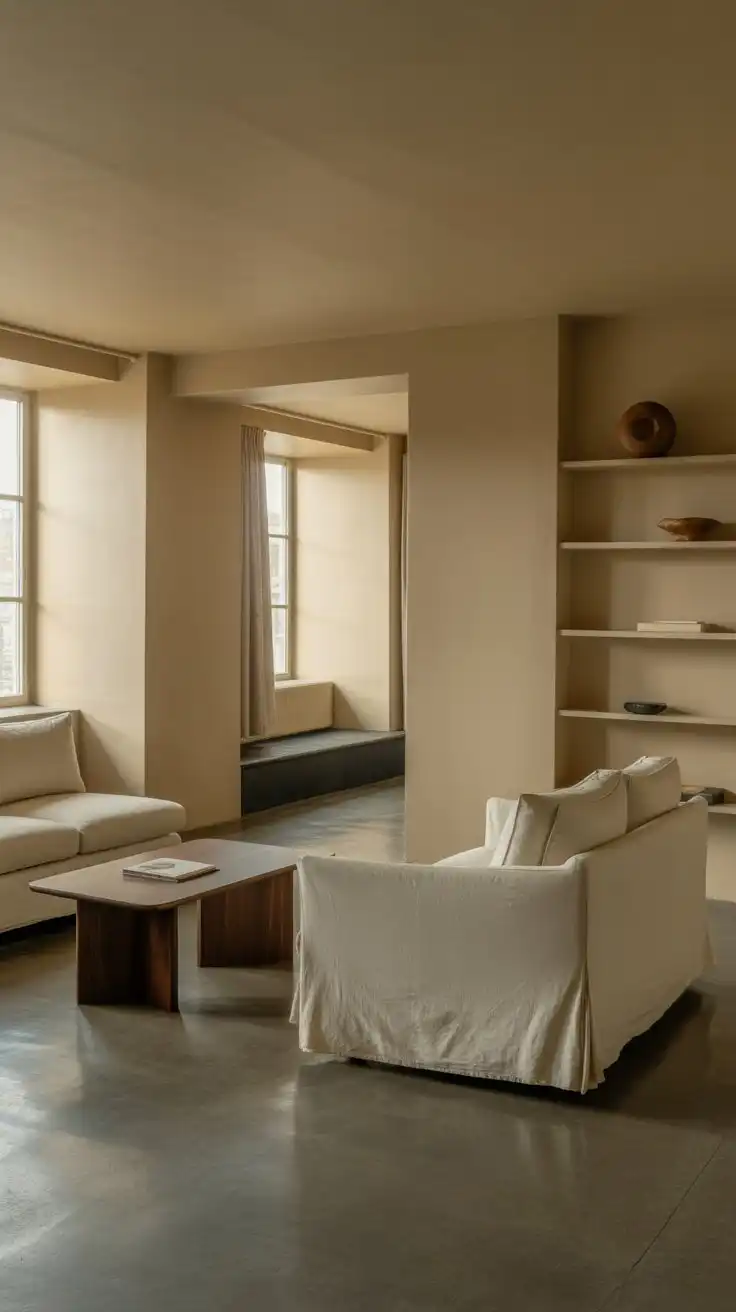
Idea 20 – Use Mirrors to Enhance Light and Space
A large mirror opposite the window doubles daylight and depth without adding a single object. Frameless or thin-framed keeps it quiet.
One is enough — a wall of mirrors turns the room into a funhouse. Place it to reflect the view or the light, never the clutter.
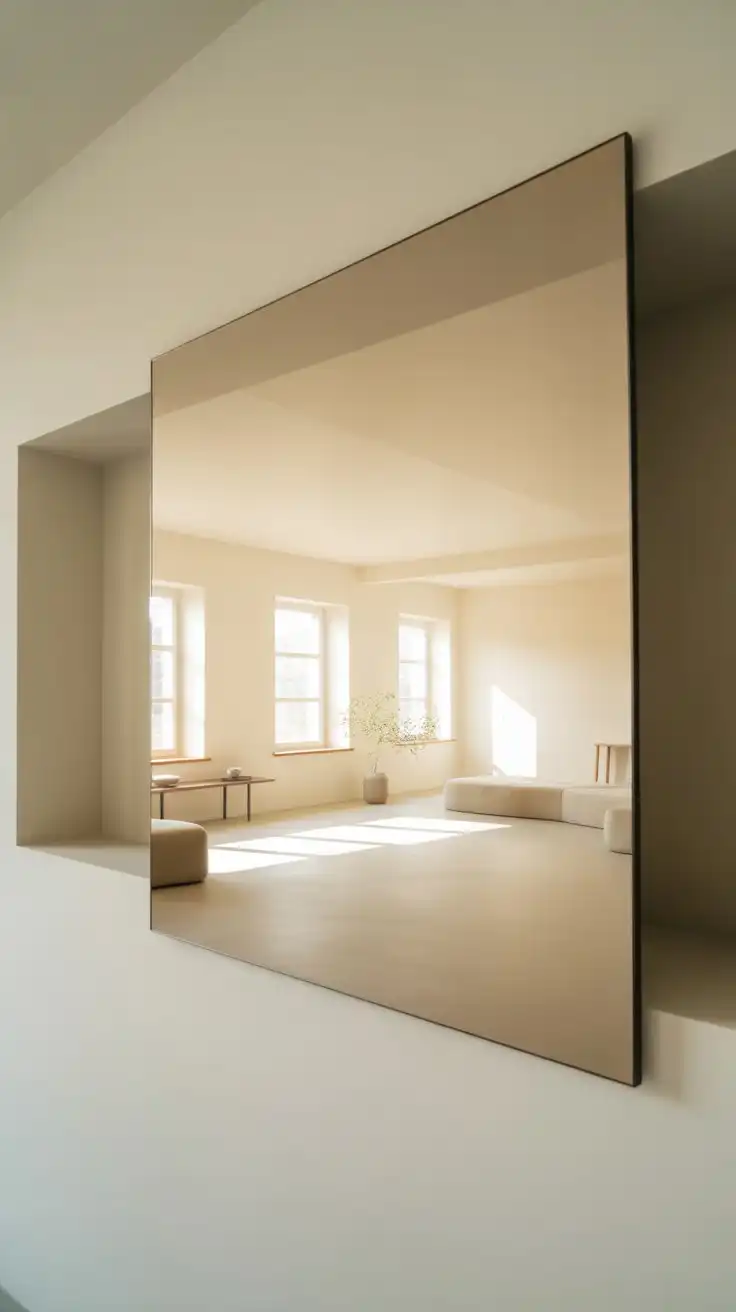
Idea 21 – Design a Minimalist Bathroom with Fewer Surfaces
Wall-hung vanity, concealed cistern, one shelf for daily products — everything else behind a mirrored cabinet. Fewer surfaces means faster cleaning and instant calm.
Decant into matching bottles if you must display anything. Mismatched packaging is visual noise in its purest form.
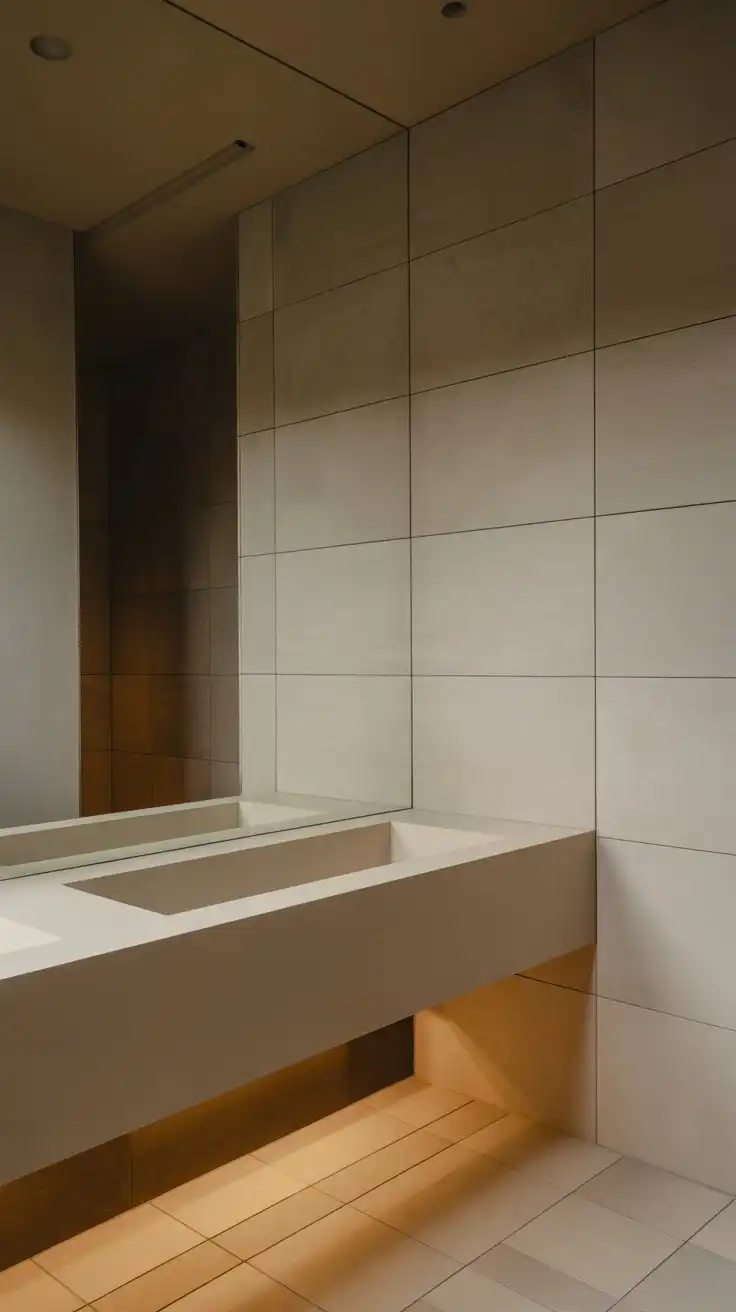
Idea 22 – Keep Technology Visually Invisible
Cables are clutter: run them through trunking, mount the TV flush, choose devices in white or black that vanish against the wall. In modern minimalist apartment design schemes, tech should be felt, not seen.
A charging drawer in the bedroom keeps the nightstand clear of cables. Out of sight really is out of mind here.
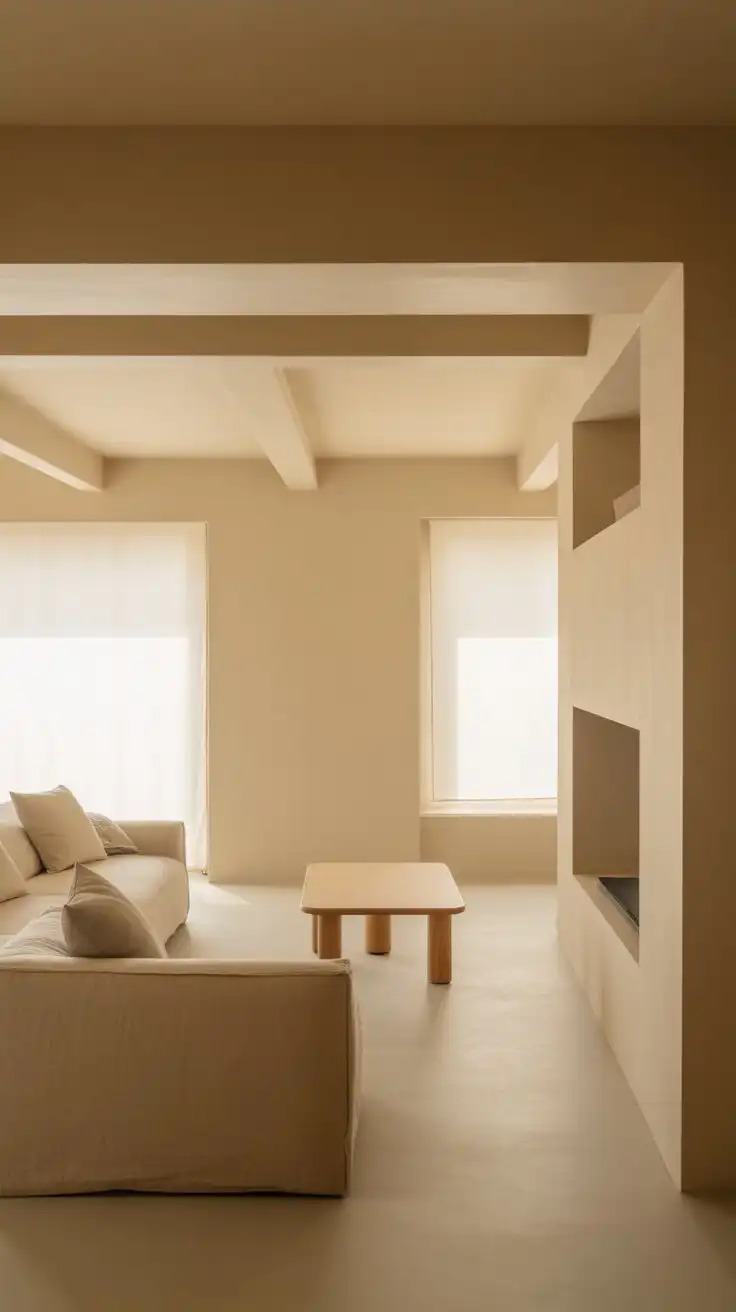
Idea 23 – Use Repetition to Create Rhythm
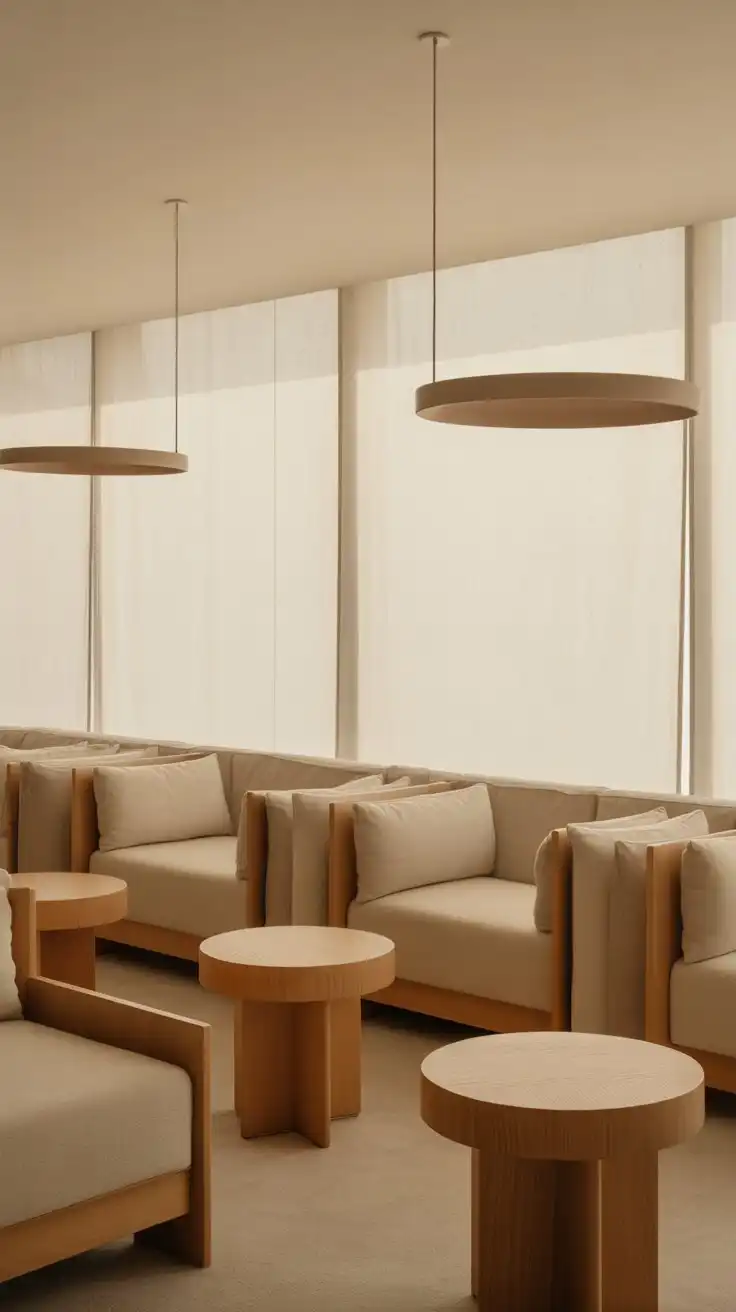
Repeat shapes and materials and the apartment starts to feel composed: round mirror, round side table, round rug — the echo ties rooms together without matching sets.
Repetition is rhythm. It’s also why buying the same frame in three sizes beats three different frames.
Idea 24 – Design for Daily Habits, Not Aesthetics Alone
Design around your actual routines, not a magazine spread: the coffee setup where you make coffee, the laundry path that makes sense, storage at the point of use. Pretty that fights your habits loses within a month.
When the layout matches behavior, tidiness stops requiring willpower. That’s the whole secret — systems, not discipline.
Idea 25 – Edit Regularly to Maintain Calm
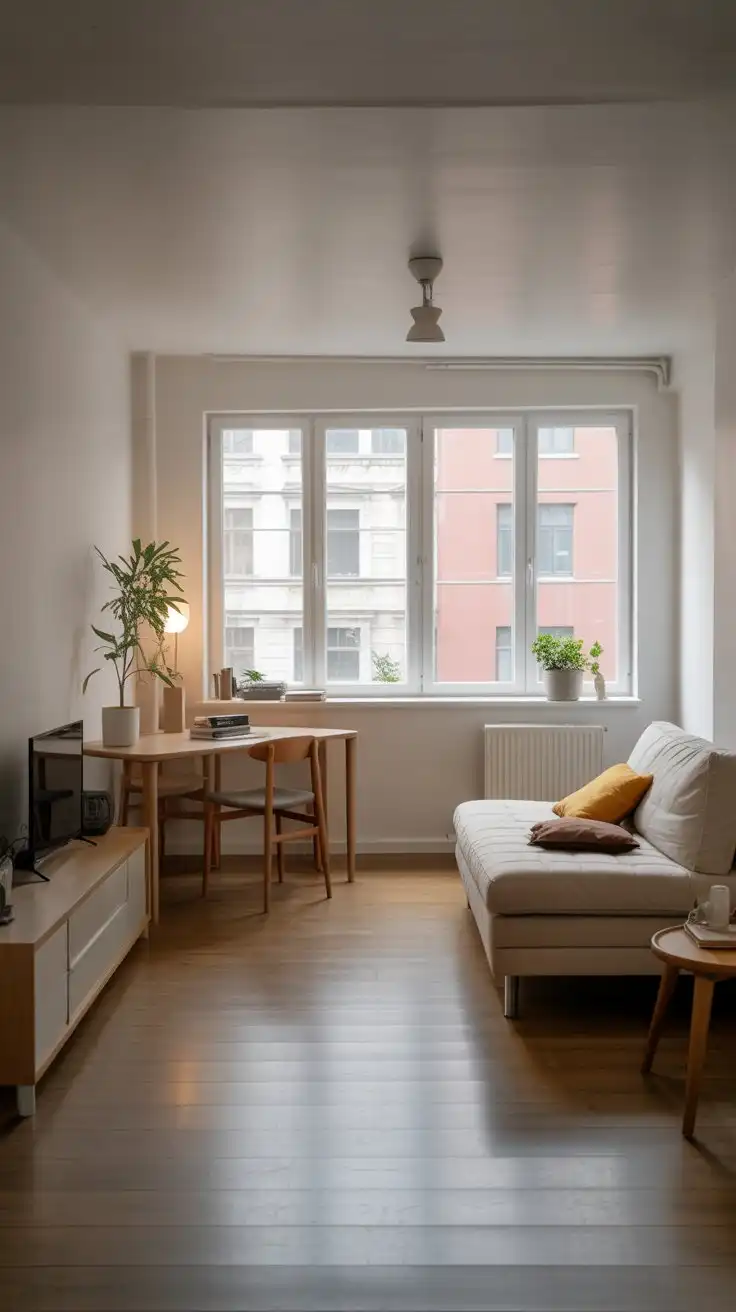
Minimalism is maintenance: a monthly pass through each room, one bag for donations, and the one-in-one-out rule for new purchases. Accumulation is gradual; so is the fix.
Don’t aim for perfection — aim for a steady state. A calm apartment is one where everything has a home and most things are in it.