30 Small Bedroom Closet Organization Ideas for Small Wardrobes
Squeezing a full wardrobe into a small bedroom closet is a design puzzle with a satisfying answer: every inch gets a job. A double rod here, a slim dresser there, the door put to work — and suddenly the same three-foot reach-in holds twice the clothes. These thirty ideas are practical and specific, built for real bedrooms: what to buy, what it costs, and the mistakes that waste space.
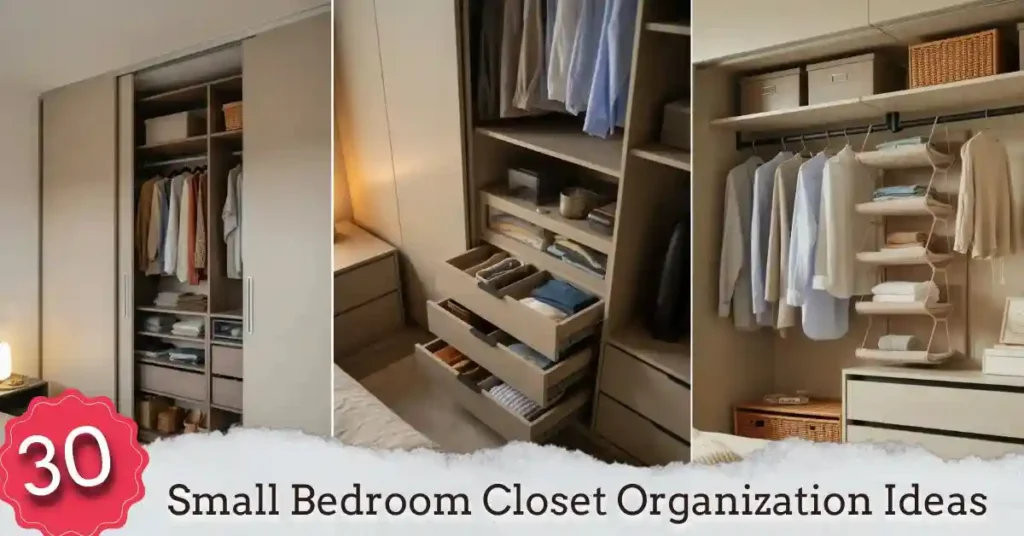
1. Install Double Hanging Rods
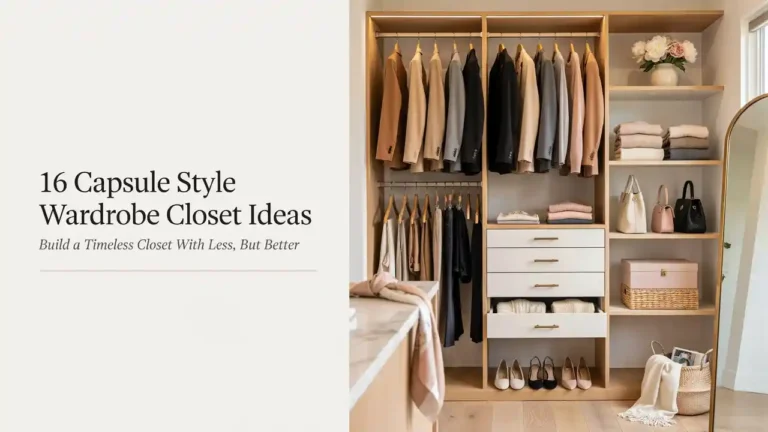
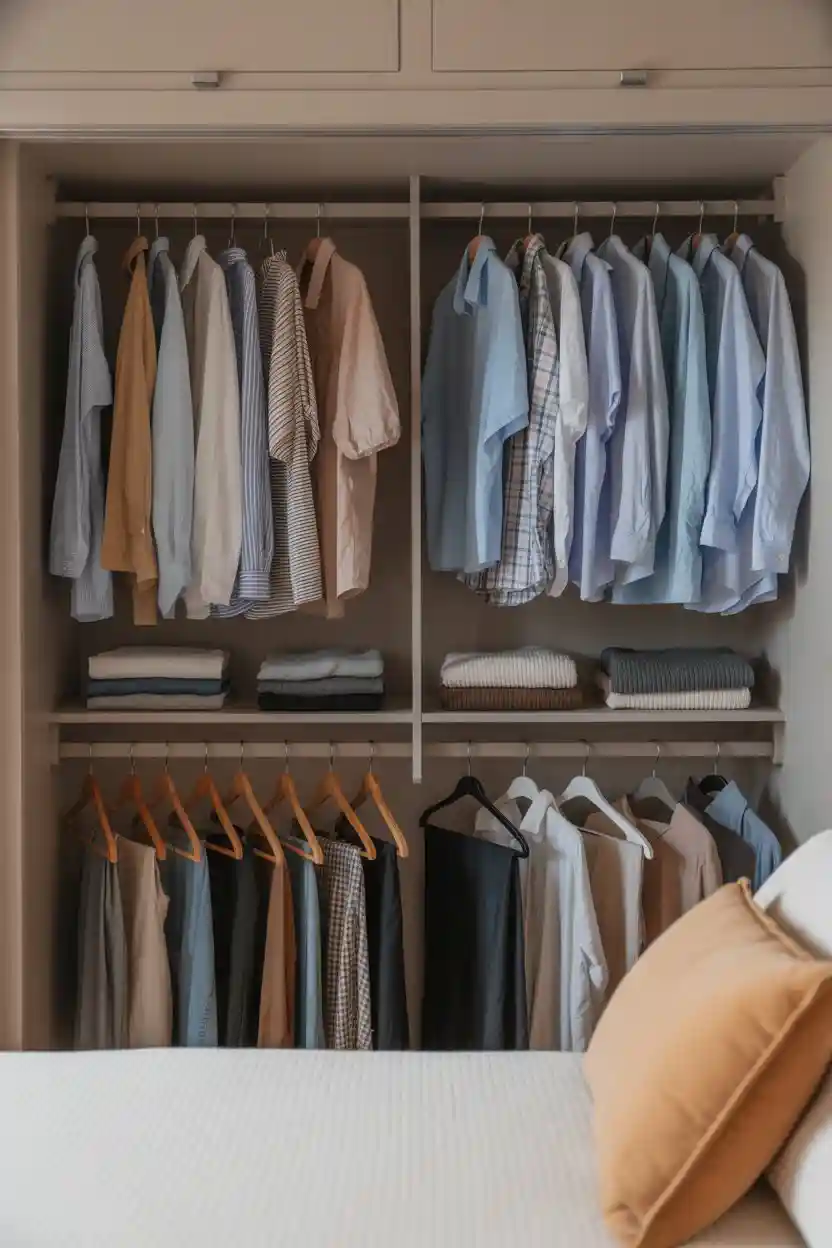
Double hanging rods are the single biggest capacity upgrade: mount one at 80 inches for shirts and one at 40 for pants and skirts, and a standard four-foot closet holds 40 to 60 garments instead of 20. A second rod with brackets costs under $20; keep one short single-rod section for dresses and coats.
2. Add Slim or Skinny Dressers Inside the Closet
A slim dresser — 12 to 15 inches deep — slides under hanging clothes and adds four to six drawers where dead air used to be. In a small bedroom closet, that’s transformative: tees, underwear, and socks get real drawers instead of shelf piles. A thrifted nightstand works too; just measure its depth against your hanging clothes first.

3. Use Clear Storage Bins
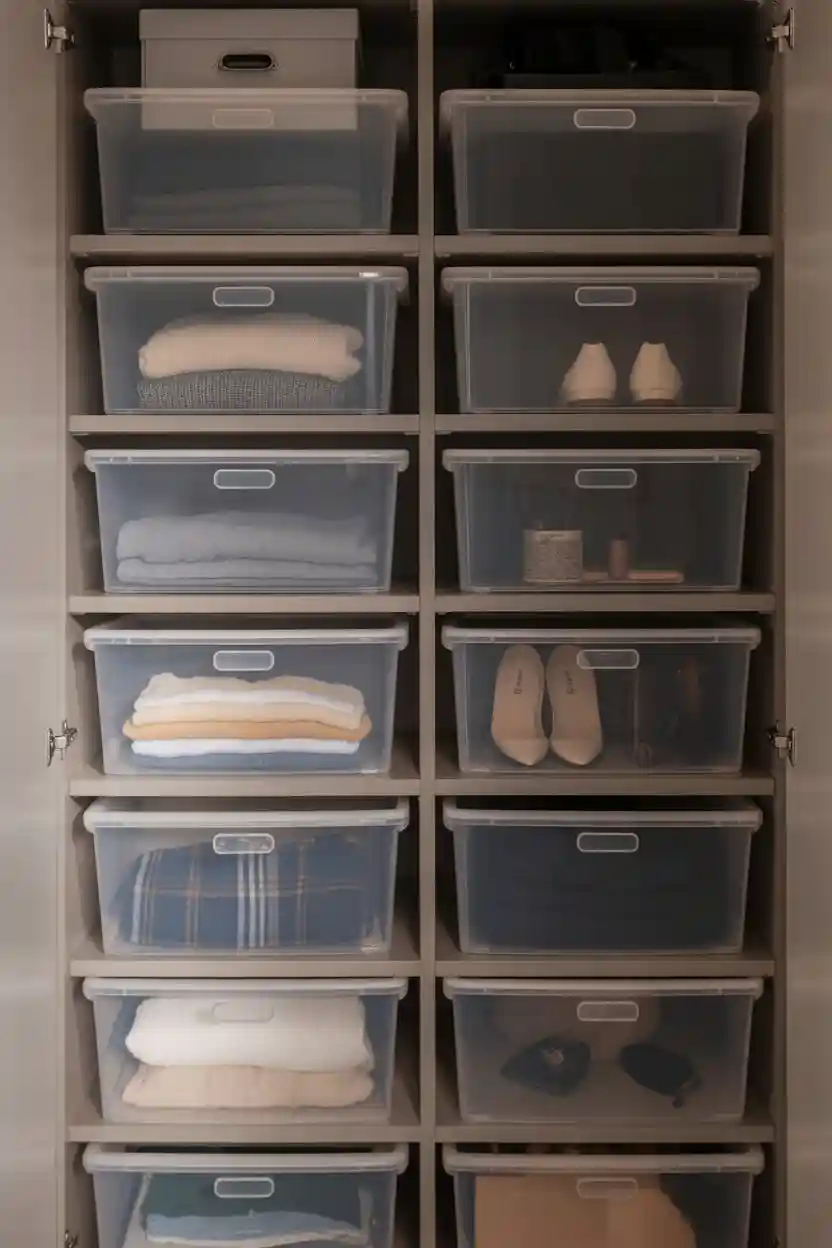
Clear bins ($3 to $6 each) end the digging: you see the contents without opening anything. Use them on the top shelf for off-season items and under the hanging rod for shoes. Label the short end — readable from below — and stack no more than three high.
4. Install Adjustable Shelving Units
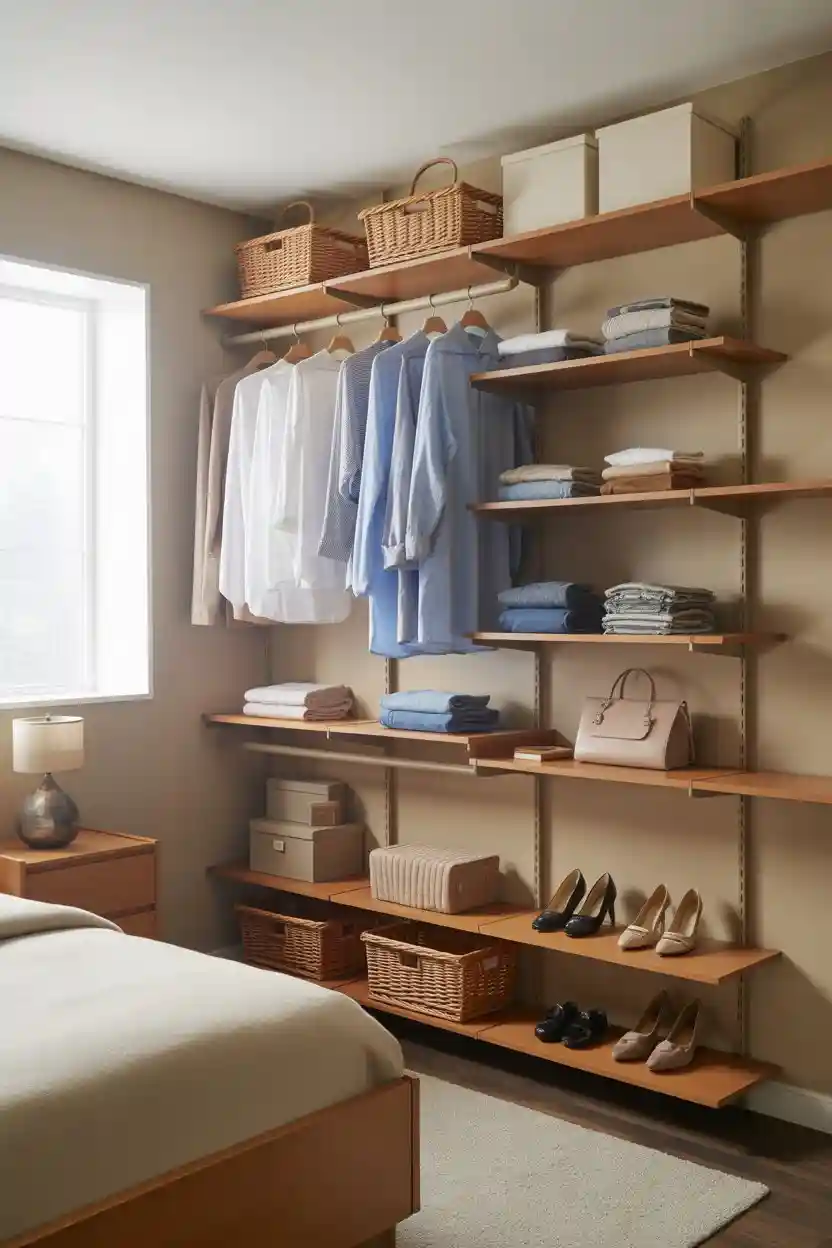
Adjustable track shelving lets you reset shelf heights as your wardrobe changes — twelve inches for folded tees, sixteen for sweaters, eight for shoes. In a small bedroom closet, that flexibility is everything: a $25 twin-slot system with brackets adapts for years, while fixed shelves lock you into one layout forever.
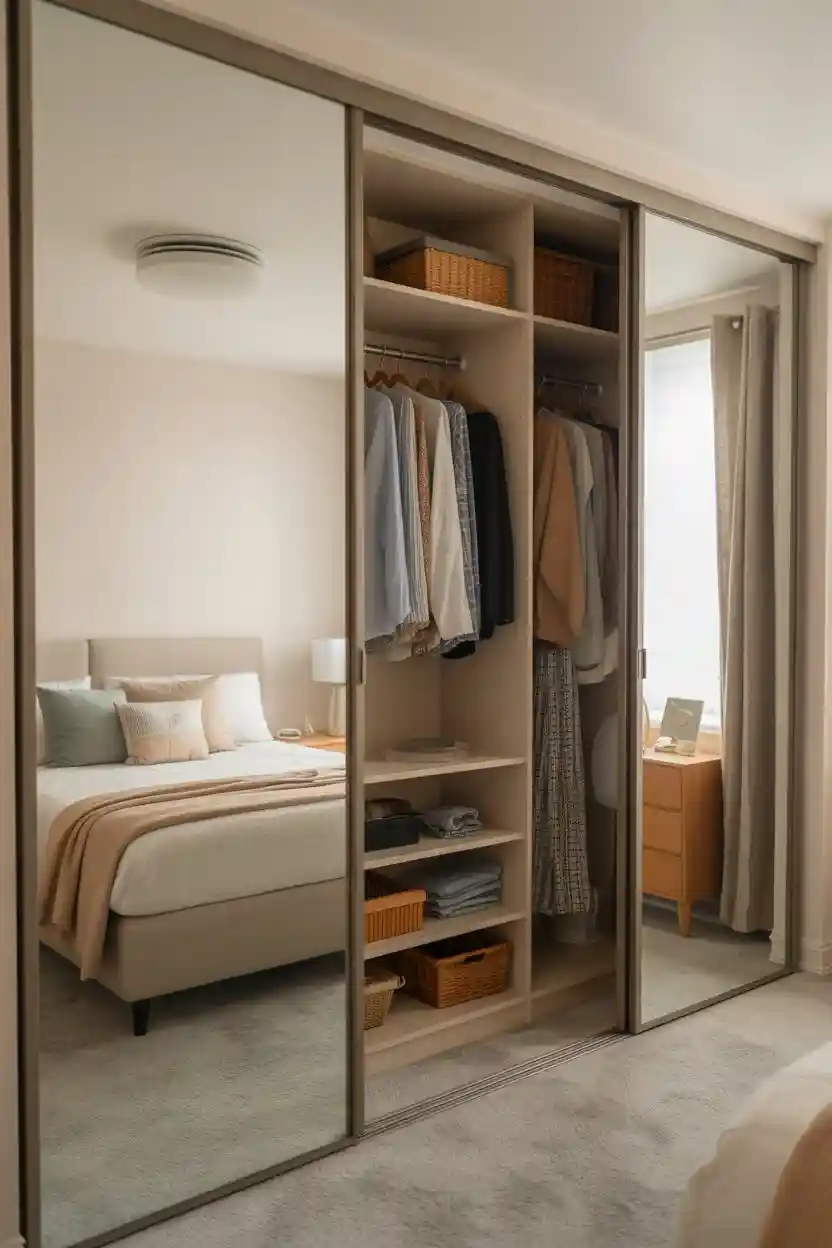
5. Add Sliding Doors to the Closet
Sliding doors reclaim the thirty inches of floor space a swinging door needs — room for a dresser, a hamper, or just walking. They also give the closet a clean, modern face. In a small bedroom closet, add mirrors to the doors and the room visually doubles. Bypass tracks cost $50 to $100 and install in an afternoon.

6. Turn a Bedroom into a Walk-In Closet
Got a spare small bedroom? Convert it: pull out the bed, run shelving and double rods along two walls, add a slim dresser and a mirror. You get a dressing room for the cost of lumber and brackets — the walk in closets approach, scaled to apartment life. Keep one wall clear so it never feels like a storage unit.
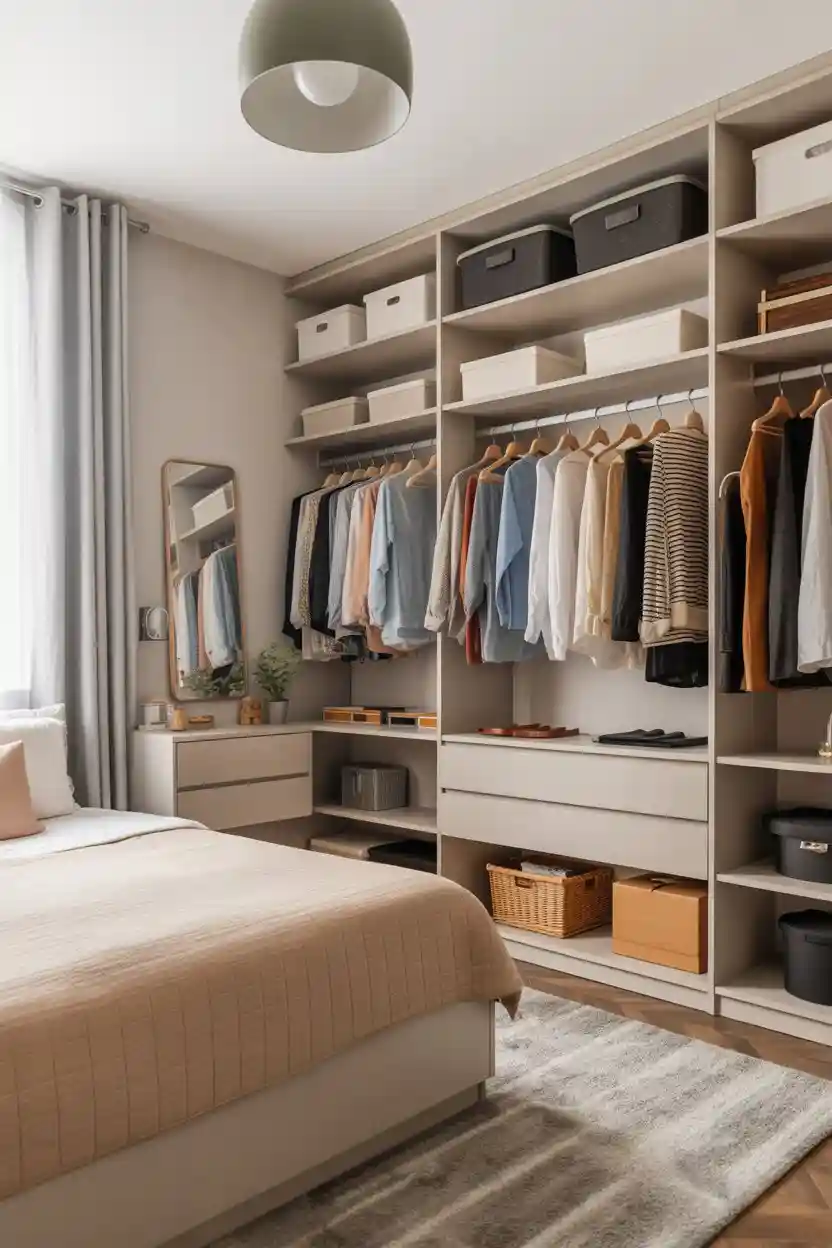
7. Use Over-the-Door Organizers
Over-the-door organizers ($12 to $20) add shoe, bag, and accessory storage with two hooks and zero wall damage. For small bedrooms, the door is the highest-ROI surface in the room — it holds daily items at eye level without touching a single shelf. Keep the load under 25 pounds.

8. Install Corner Shelves
Corners are dead space until you claim them: angled corner shelves hold folded clothes, bags, or baskets without intruding on the walkway. A simple triangular shelf or a rotating corner unit ($20 to $30) turns the most-ignored square foot into working storage.

9. Use Slim Hangers
Swapping bulky hangers for slim velvet ones — about $15 for fifty — reclaims two to three inches of rod space per garment and aligns everything at one height. It’s the cheapest visible transformation here: thirty minutes, and the closet looks twice as tidy.
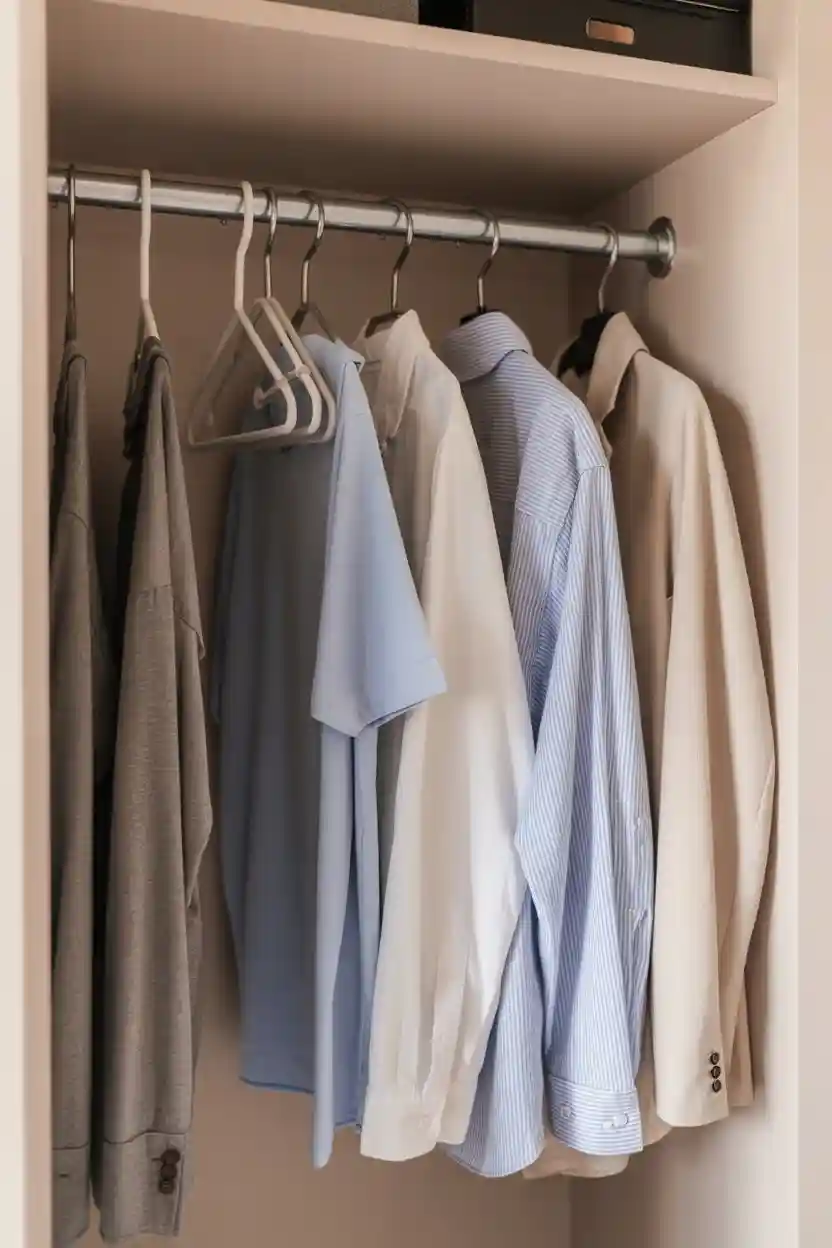
10. Add Rod Extenders or Cascading Hangers
Cascading hangers and rod extenders hang shirts, skirts, and pants in vertical tiers, doubling or tripling capacity on a single rod. They’re made for tight rooms with no horizontal space to spare: five garments in the footprint of one. Best for lightweight items — heavy coats will drag the whole cascade down.
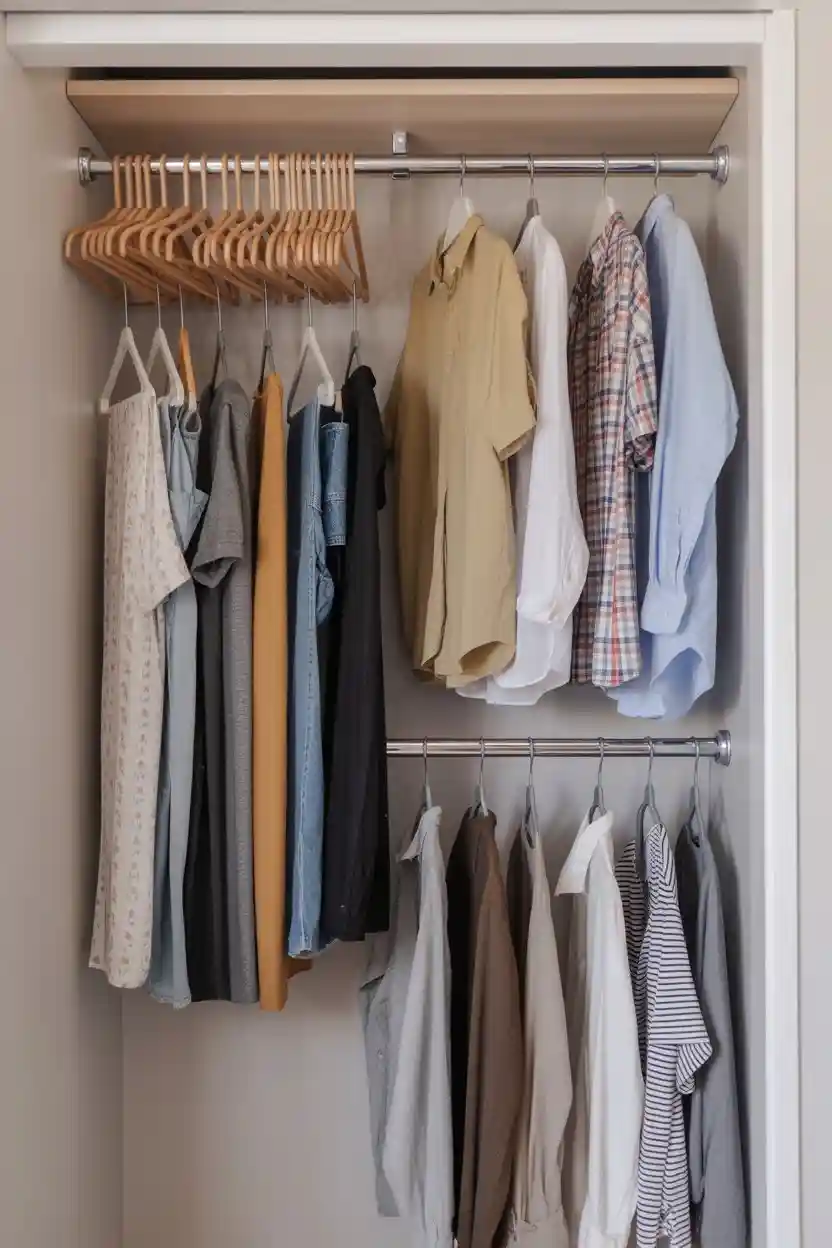
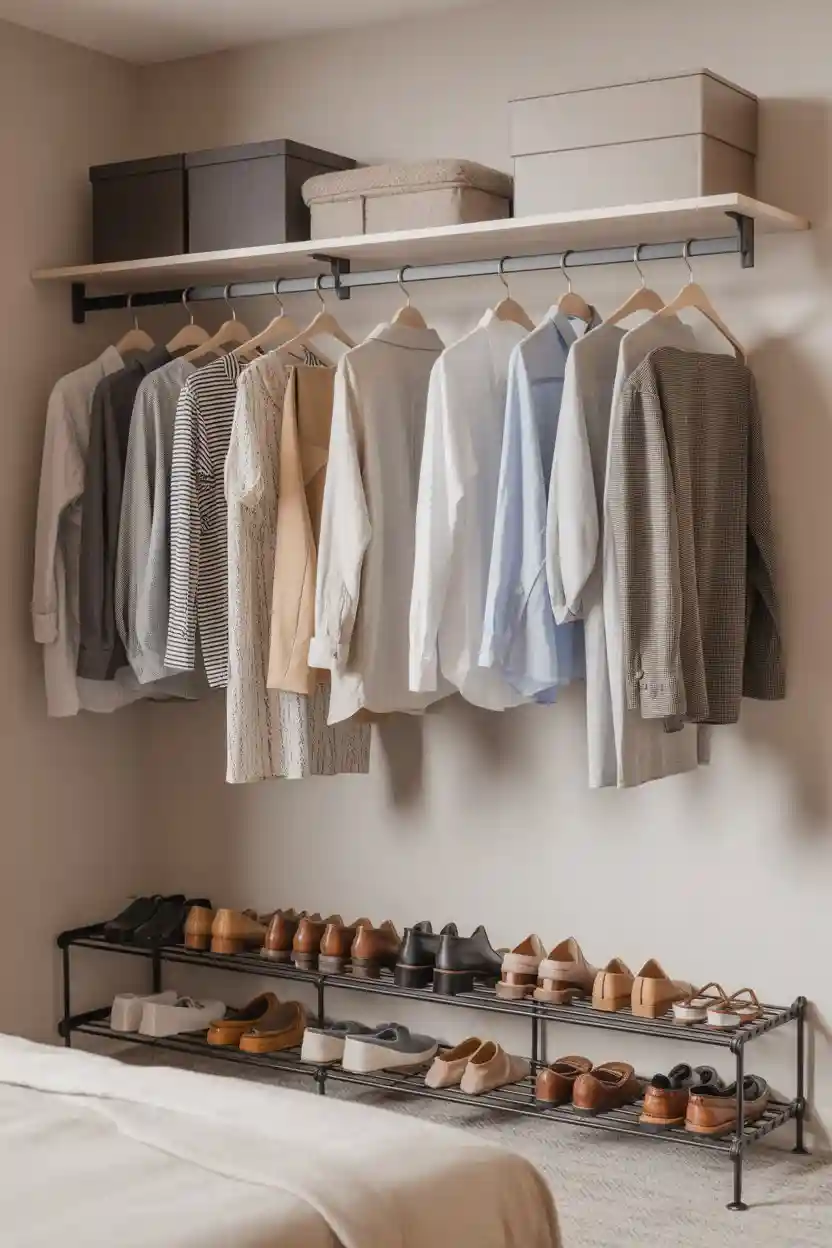
11. Install Shoe Racks
A multi-tier shoe rack at the base of the hanging clothes keeps footwear visible and off the floor. Tilted racks ($25 to $40) show every pair at a glance; a simple two-tier shelf handles sneakers and flats. Shoes you can see get worn — shoes in a pile don’t.
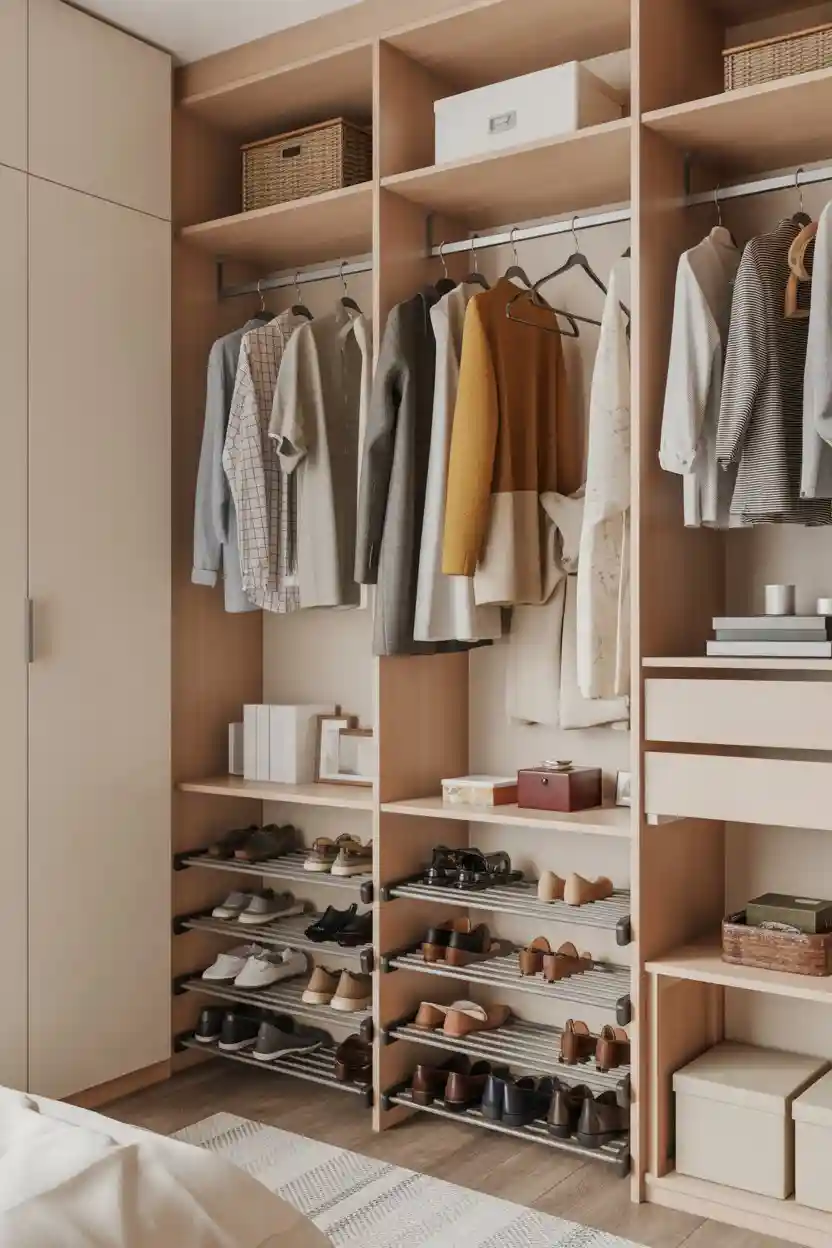
12. Rotate Seasonal Clothing
Rotate seasonally: when the weather turns, move off-season clothes to labeled bins on the top shelf or under the bed. Your small bedroom closet instantly breathes — daily items stay accessible, and the visual noise drops by half. Vacuum bags compress bulky coats to a third of their size for about $10.

13. Add Hooks Inside the Closet
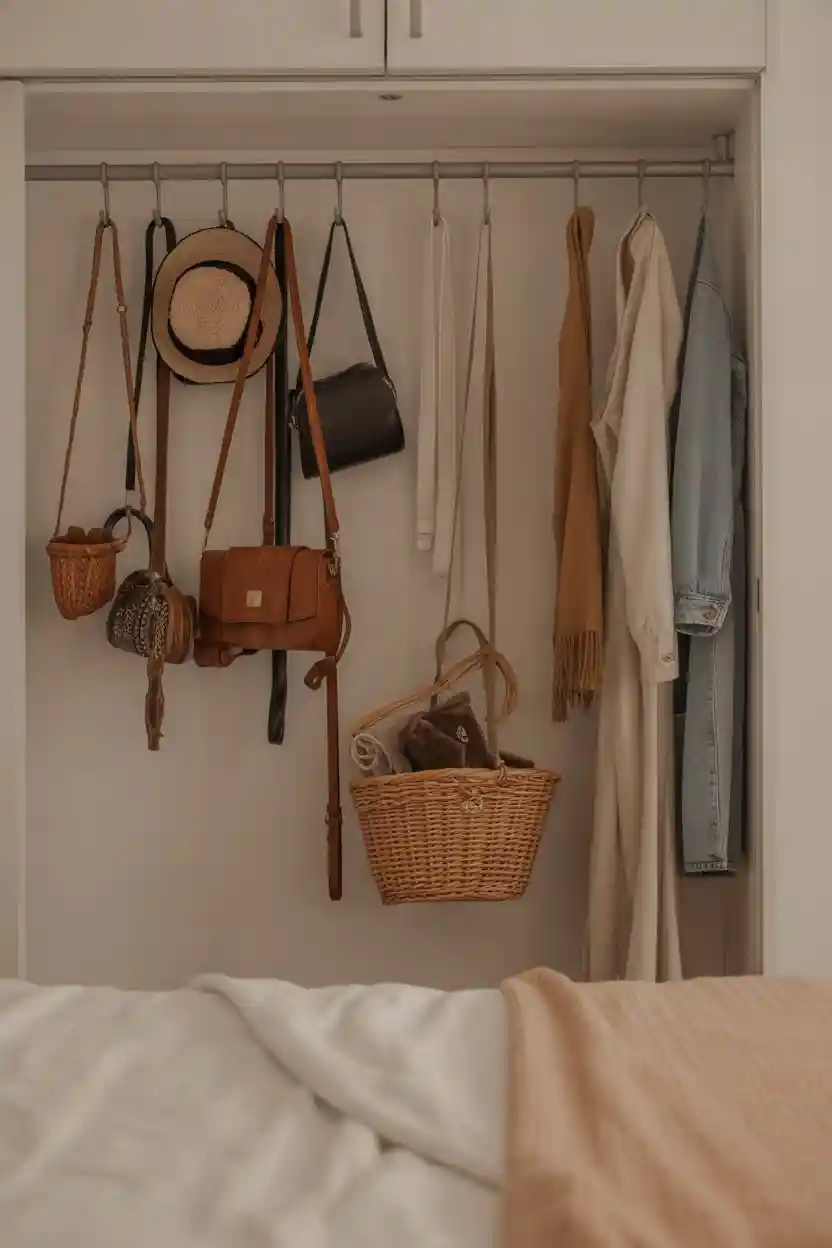
Hooks on walls and doors hold bags, hats, belts, and tomorrow’s outfit — the items you grab daily. For closet organization that actually sticks, mount hooks at the height you reach without thinking: daily items at eye level, occasional ones higher. Adhesive hooks ($5 a strip) work in rentals.
14. Integrate Baskets or Bins on Shelves
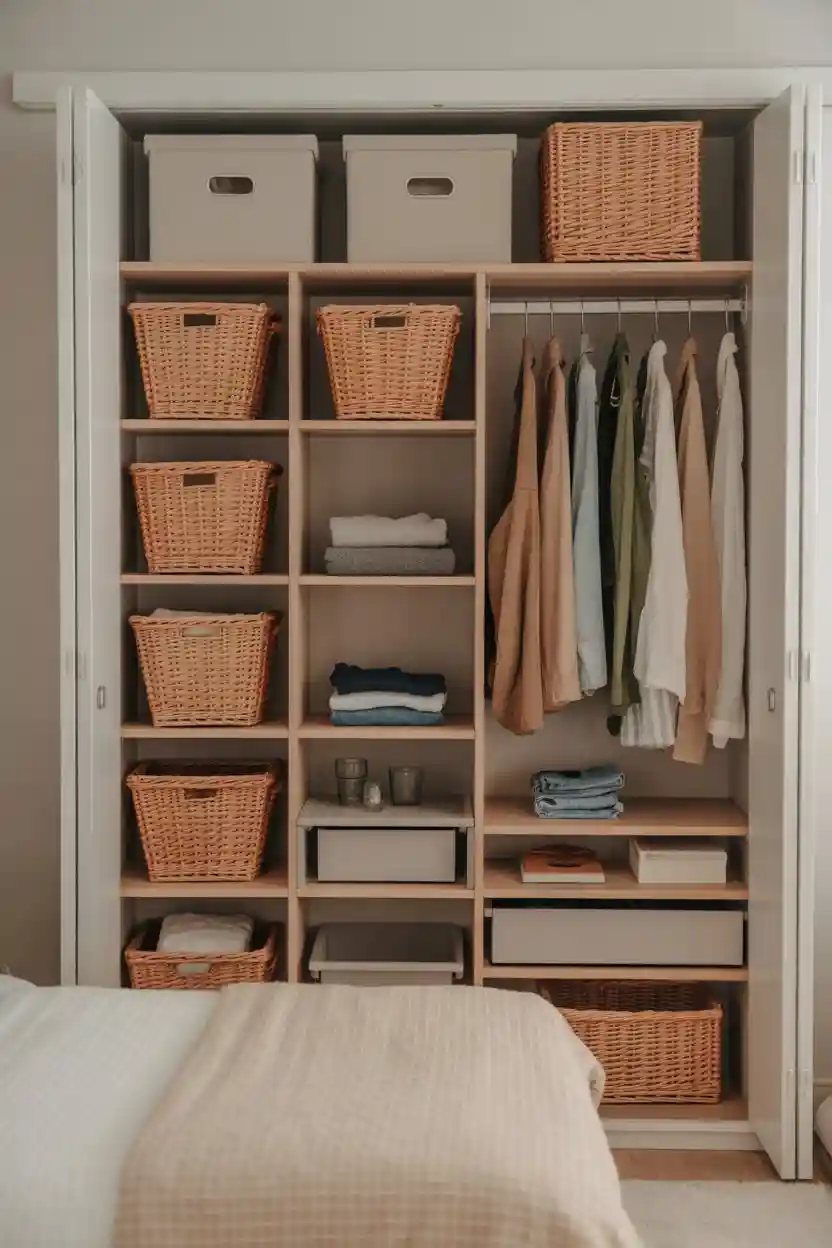
Baskets and bins corral the small stuff — socks, belts, scarves, seasonal accessories — into contained, labeled units. Woven or fabric baskets add texture; clear ones add visibility. In a compact closet, one basket per category on an adjustable shelf beats a junk drawer every time.
15. Use Pull-Out Drawers
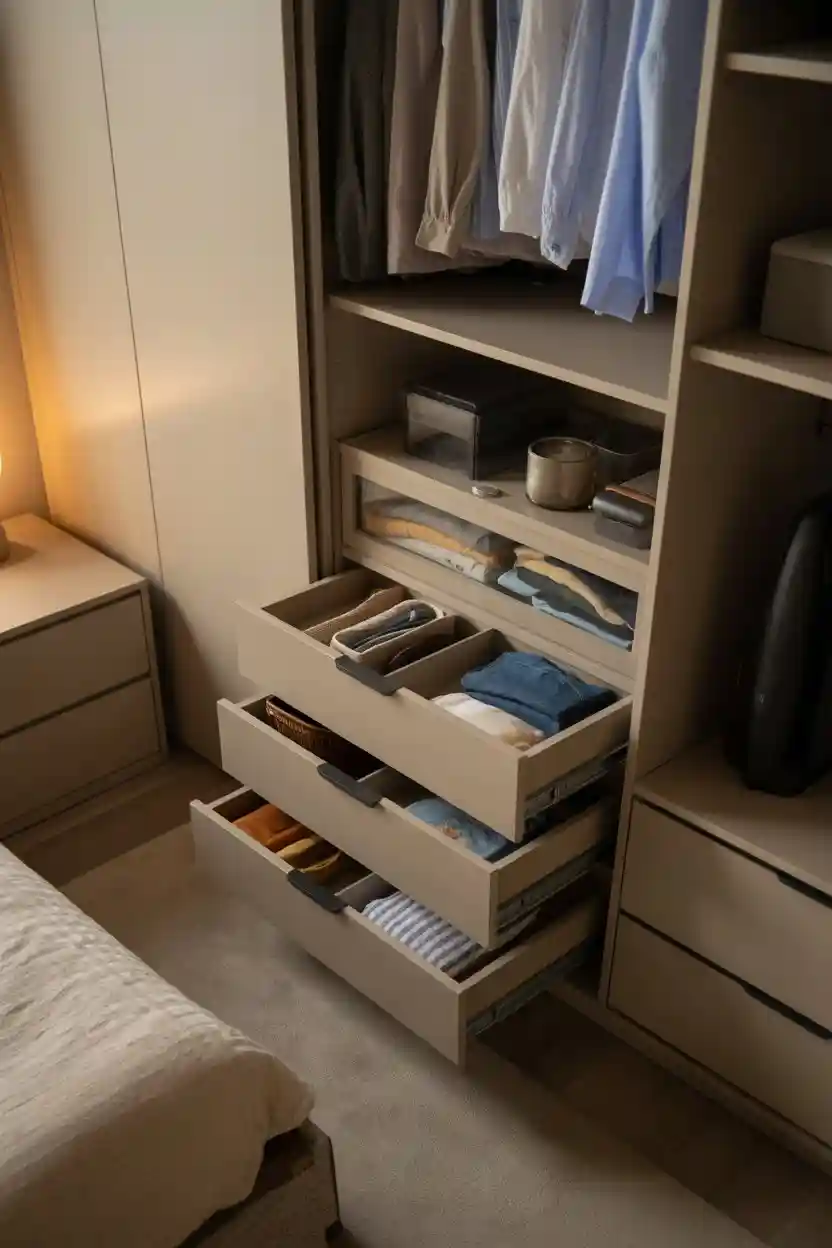
Pull-out drawers on full-extension slides bring deep-shelf contents to you — no more excavating. They’re ideal for underwear, folded tops, and accessories in narrow closets, keeping everything hidden yet reachable. As budget friendly closet organization goes, a $30 slide-out basket beats a $300 drawer unit for most needs.
16. Add LED or Stick-On Lighting
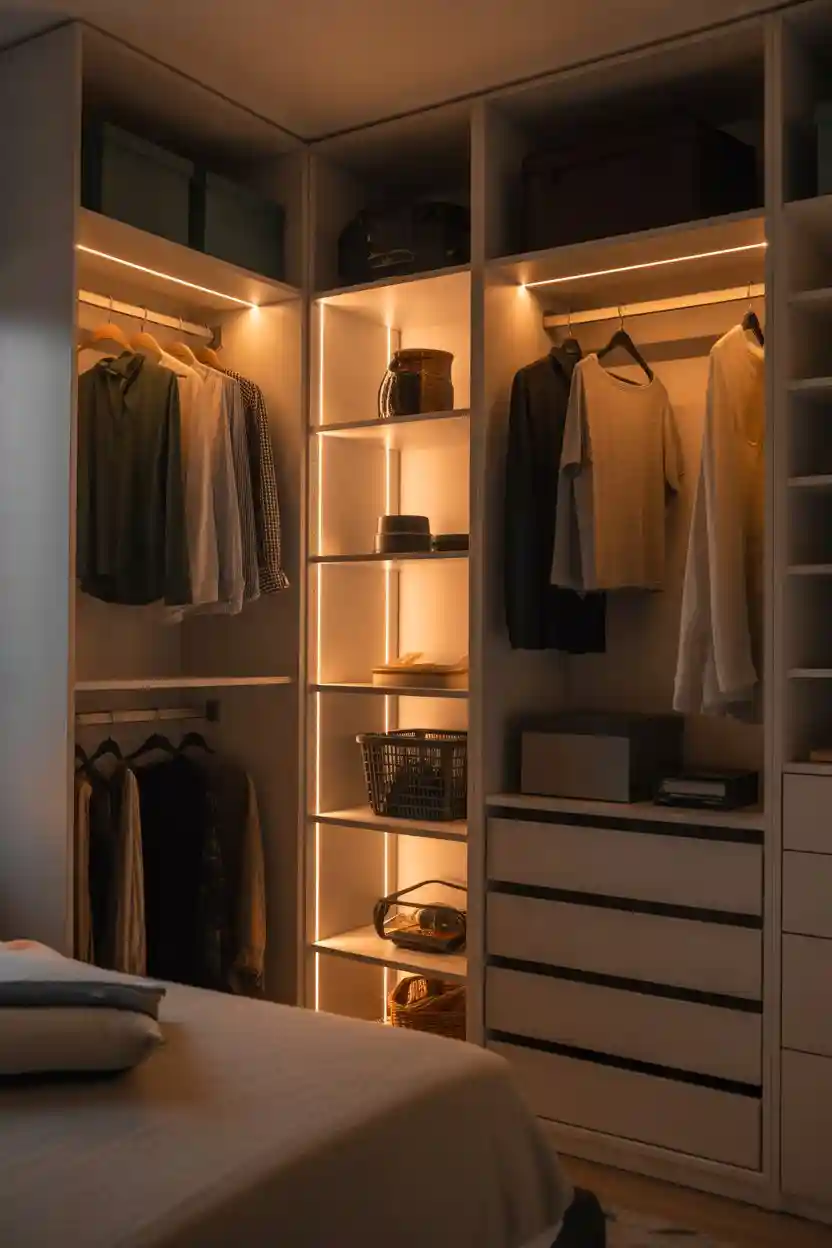
Dark closets get ignored; lit closets get used. Motion-sensor LED strips ($15 to $25 a roll) stick under shelves and switch on when the door opens — no electrician, no wiring. Daylight-balanced light also shows true colors, so you stop grabbing the wrong black sweater.
17. Install Pull-Down Closet Rods
Pull-down rods bring the top rod down to you — no step stool, no climbing. They’re made for compact bedroom layouts where the upper rod would otherwise be decorative: seasonal and rarely worn items live up high but stay reachable. Expect $40 to $70 per rod.
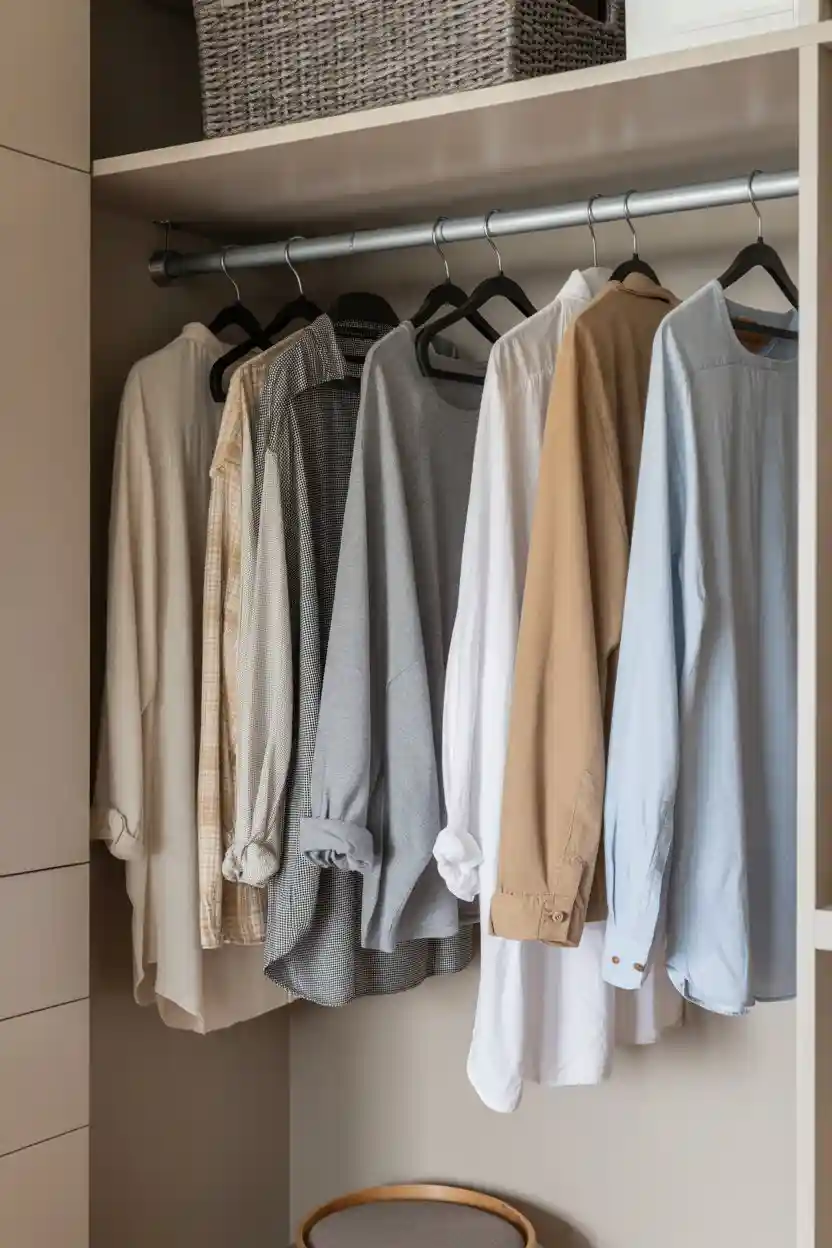
18. Use Hanging Shelf Organizers
Fabric hanging shelves ($10 to $15) hook onto the main rod and add five or six cubbies for folded clothes, shoes, or bags — instant shelving with no tools. Where every inch of closet space matters, they turn a single rod into a full storage wall. Slide a stiff board into sagging shelves to keep them crisp.

19. Install Sliding or Pocket Drawers
Shallow sliding drawers built into the closet keep accessories and folded items contained without stealing floor space. In a compact closet layout, a 12-inch-deep drawer bank on one wall handles everything the rod can’t: underwear, tees, workout gear. Soft-close slides are worth the upgrade.
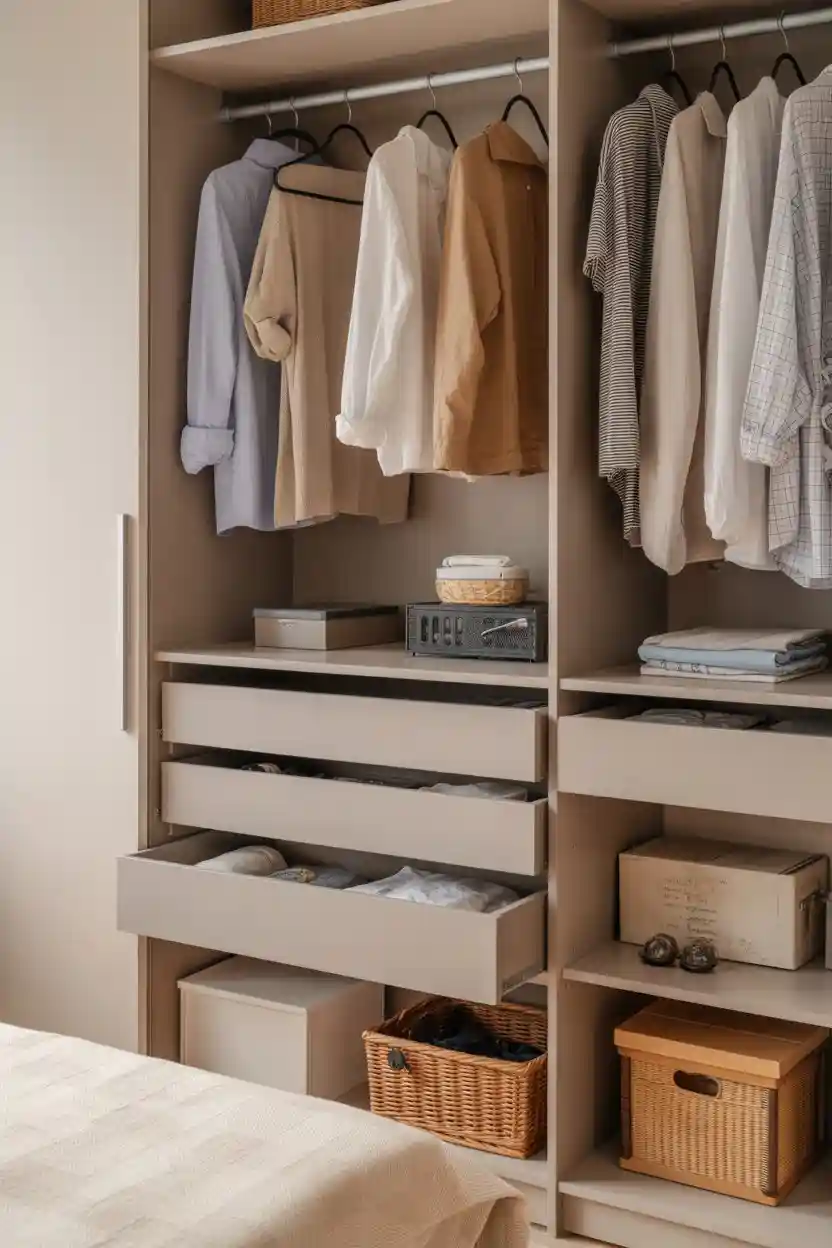
20. Use Modular Cube Storage
Modular cube units stack, rotate, and reconfigure around your space — shoes in one cube, bags in another, folded knits in a third. For small wardrobes, they’re the flexible middle ground between built-ins and bins: affordable, movable, and they look intentional. A six-cube unit runs $30 to $50.
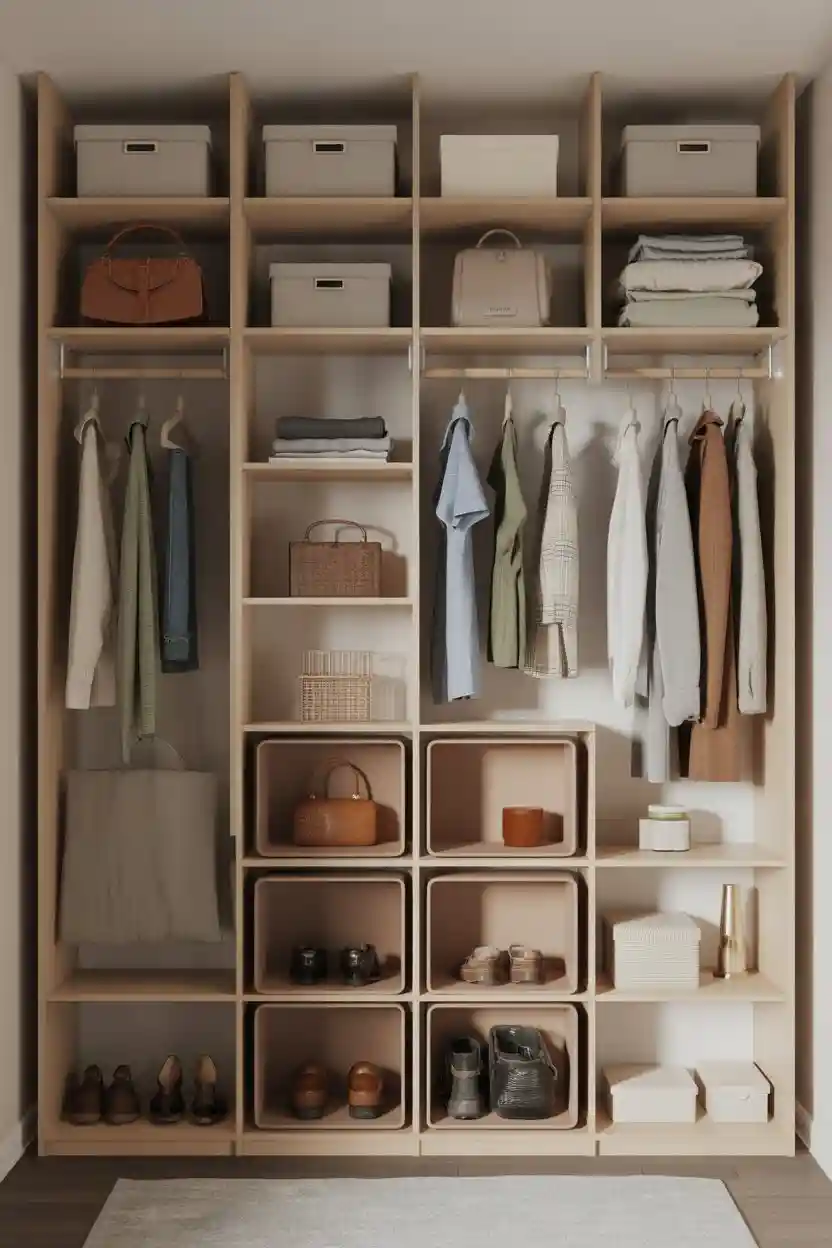
21. Add Pull-Out Pants Racks
A pull-out pants rack keeps trousers creased and visible on individual arms — no more folded stacks sliding off hangers. Mount one inside a slim wardrobe or on a closet wall for $25 to $40. In a bedroom with limited rod space, it’s the neatest way to store ten pairs in twelve inches.
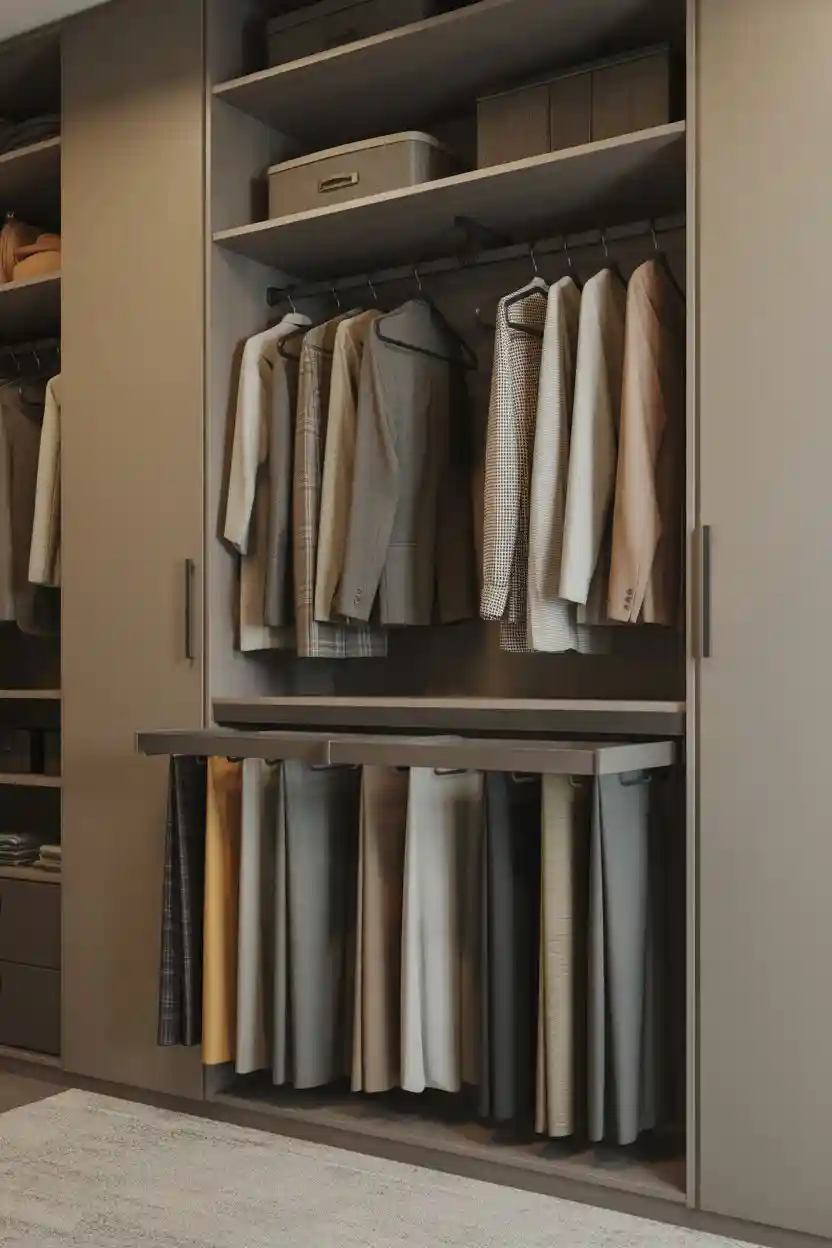
22. Use Shelf Dividers
Shelf dividers ($12 for four) keep folded stacks from avalanching — essential on tight shelves where things get messy fast. Separate jeans, sweaters, and tees into lanes and each stack stays upright when you pull from the middle. No tools required.

23. Add Hanging Baskets for Accessories
Hanging baskets clip to the rod or hooks and hold scarves, socks, and belts in visible, grabbable tiers. In a compact closet, they turn vertical air into accessory storage — rescuing the items that usually end up in a tangled drawer.

24. Incorporate Mirrored Doors
Mirrored doors do double duty: full-length mirror plus a light-bouncing surface that visually doubles the room. In tight bedrooms they’re transformative — the closet visually disappears and the space feels twice as large. Keep them clean; smudged mirrors have the opposite effect.
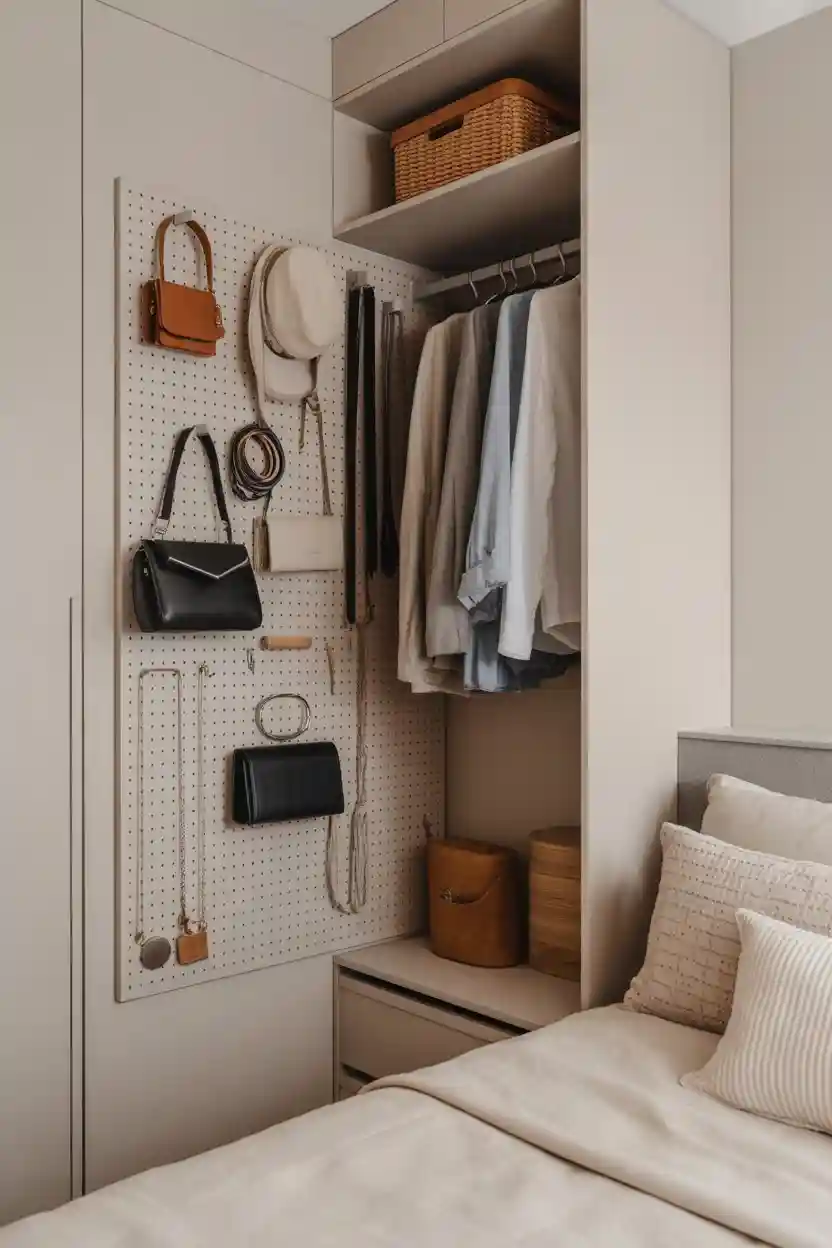
25. Use Pegboards for Accessories
A pegboard inside the closet door or on a side wall holds bags, jewelry, and belts on movable hooks — rearrange anytime. For accessory storage in tight spaces, it’s the most flexible wall you can build for $20: paint it to match and it looks built-in.
26. Store Shoes Under Hanging Clothes
Low-profile shoe trays under hanging clothes use the dead zone between hems and floor. A two-tier rack ($20) fits under most hanging shirts and keeps six to eight pairs organized. In bedroom closets where every inch counts, under-rod storage is the difference between tidy and tripping.
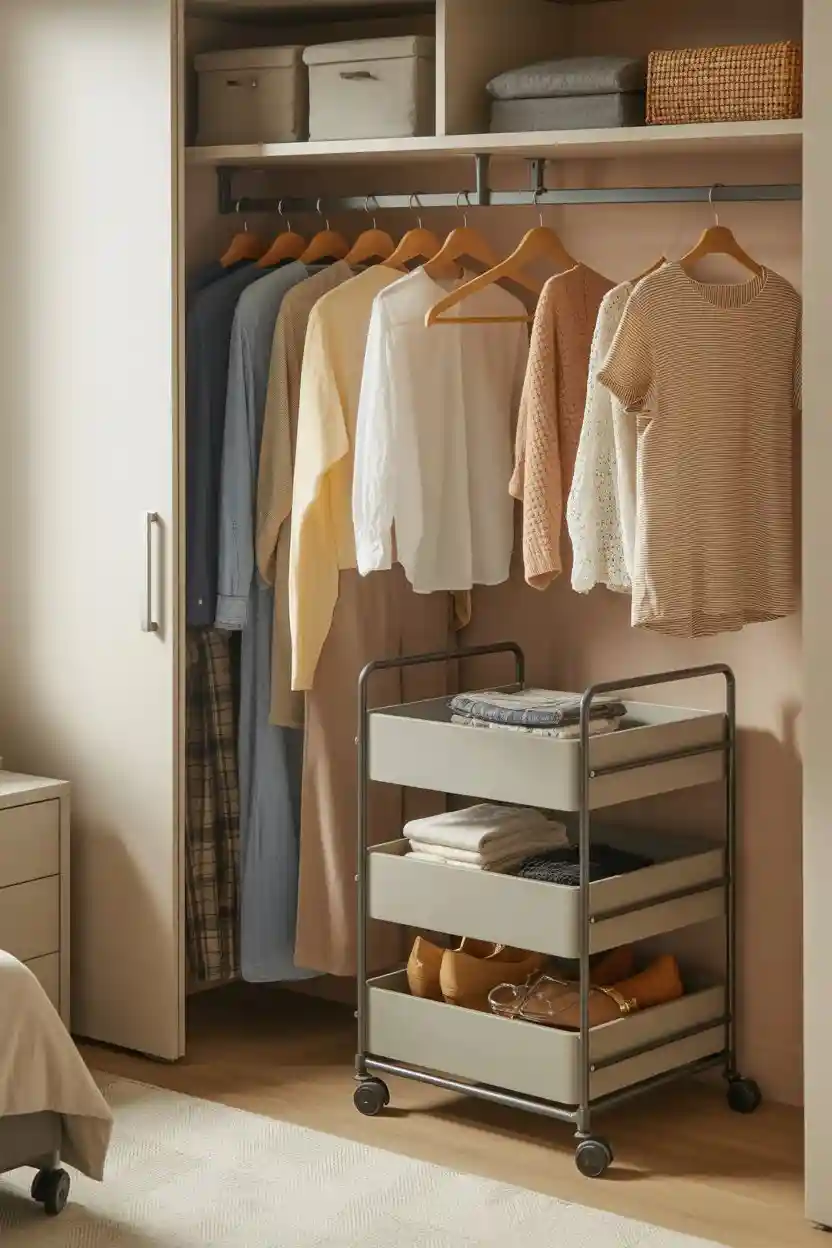
27. Use Rolling Storage Carts
A narrow rolling cart ($25 to $40) slides into the gap beside the dresser or between closet and wall, holding folded clothes, accessories, or seasonal items. For compact bedrooms, mobility is the feature: roll it out to reach the back, roll it away when you need floor space. It also allows quick reorganization without heavy lifting.
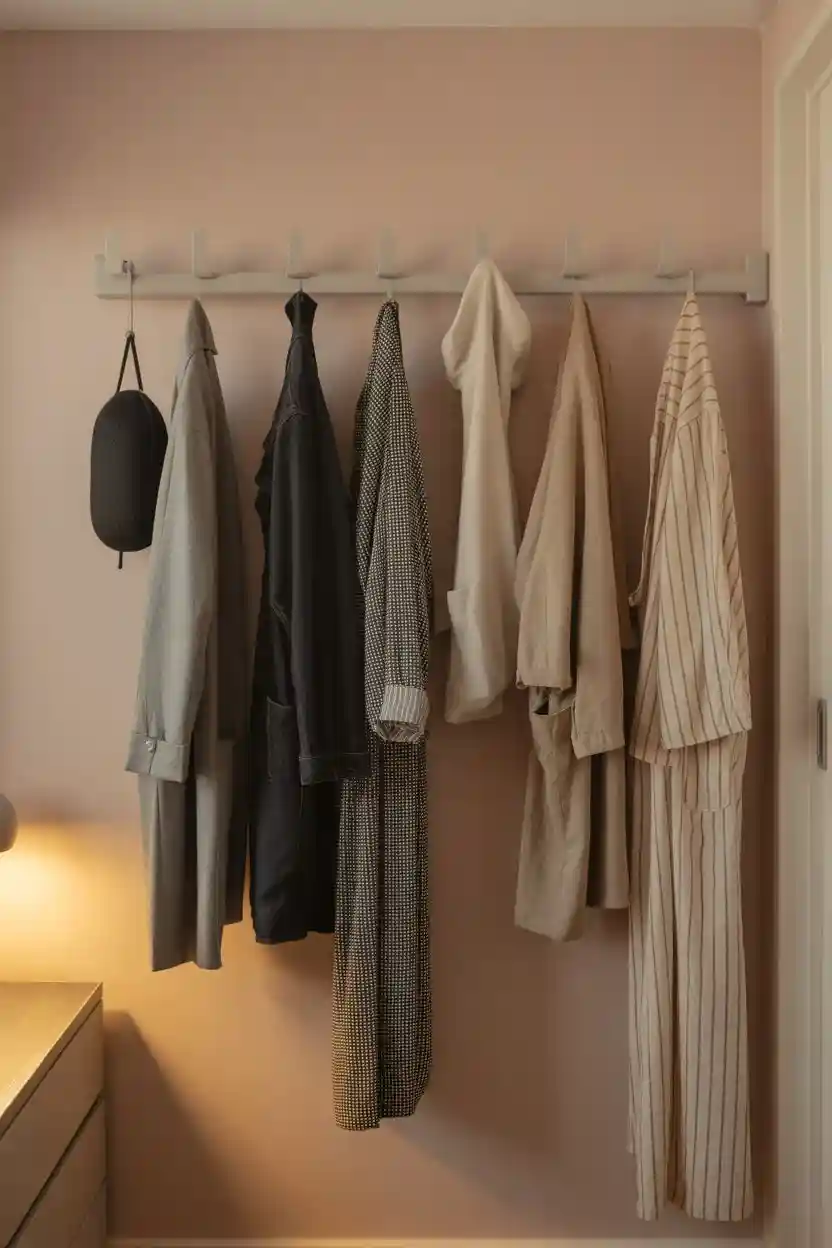
28. Install Wall-Mounted Hooks for Outerwear
Move coats, jackets, and robes to wall hooks outside or just inside the closet and free the rod for everything else. A staggered hook rail ($10) holds five jackets in two feet of wall. Daily outerwear should never compete with dress clothes for rod space.
29. Use Stackable Storage Cubes
Stackable cubes ($8 to $12 each) build custom towers for folded clothes, shoes, or bags — reconfigure whenever the wardrobe changes. They’re the LEGO of closet storage: start with four, add more as needed, never commit to a fixed layout.
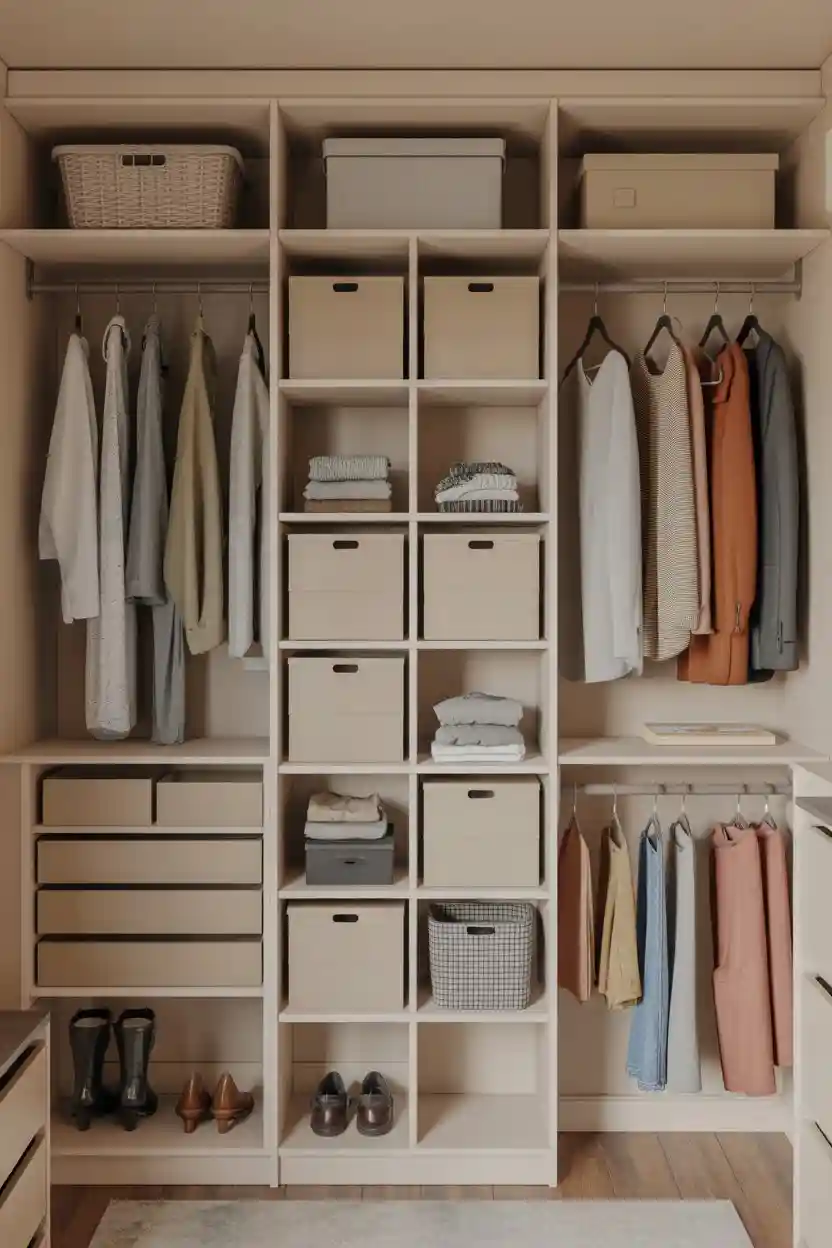
30. Label Everything for Easy Access
Label every bin, drawer, and shelf — the system only works if everyone can see it. In a tight closet, labels prevent the slow drift back to chaos: when each spot is named, putting things back takes no thought. A $10 label maker is the cheapest maintenance tool here.

FAQs for Small Bedroom Closet Organization