30 Upcycled Bookshelf Ideas for Chic Rooms
The bookshelf is the most forgiving piece of furniture to upcycle: it just needs to hold weight and look good doing it, which means crates, ladders, doors, and drawers all qualify. Thirty ideas is a lot, so treat this list as a materials menu — find the raw material you already have (or can get free), then jump to its entry.

1. Crate Stack Bookshelf
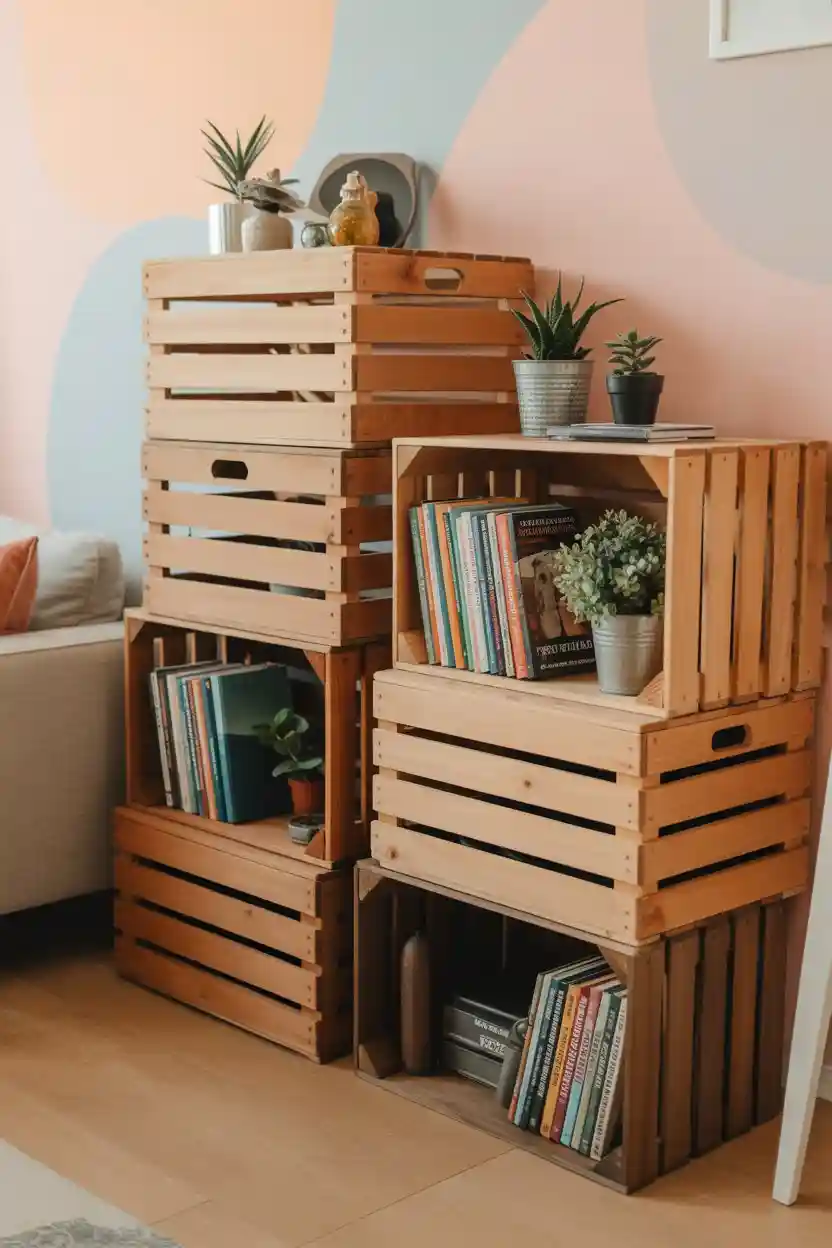
Wooden crates are the LEGO of bookshelves: sand them, paint them in two or three coordinating colors, and stack them in alternating orientations. A 30×40 cm crate holds a row of paperbacks; screw stacked crates together at the back so the tower can’t walk. Rearrange whenever the room changes — that’s the whole point of modular.
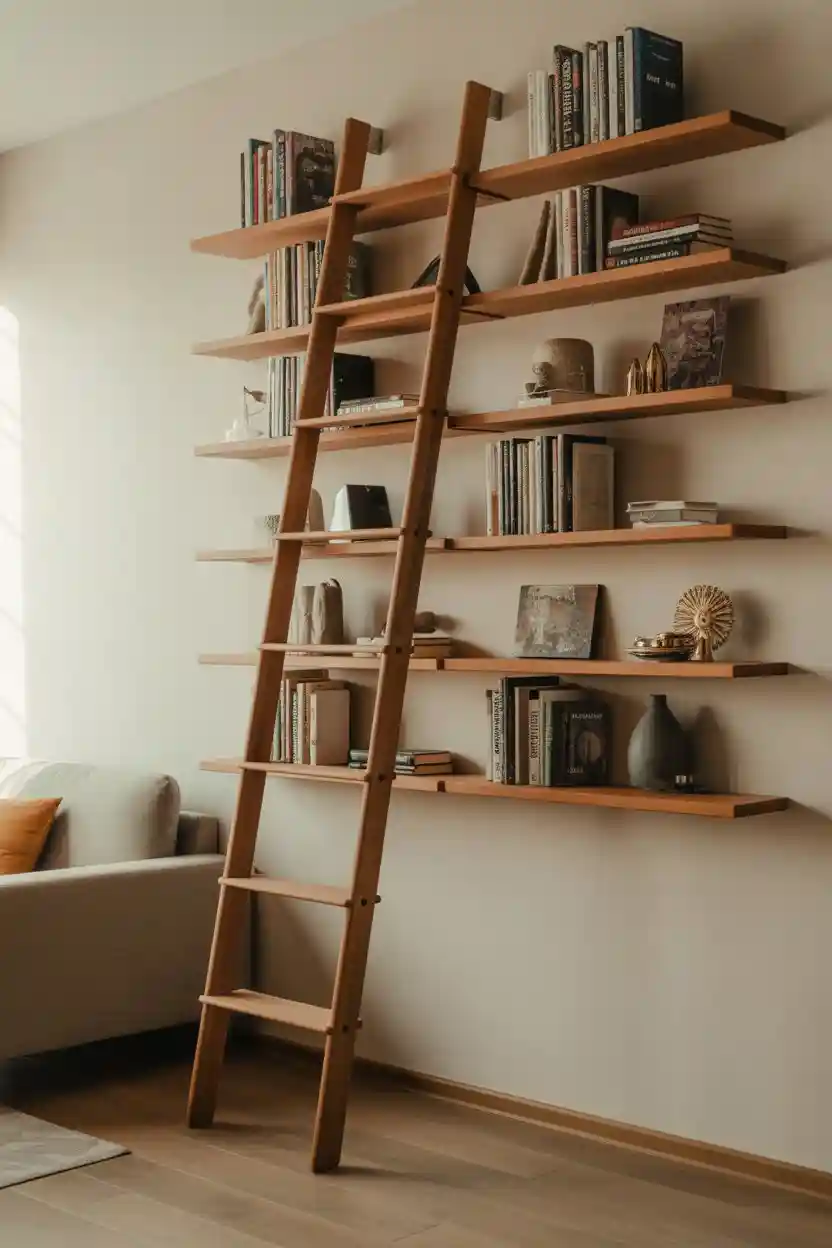
2. Ladder Shelf Bookcase
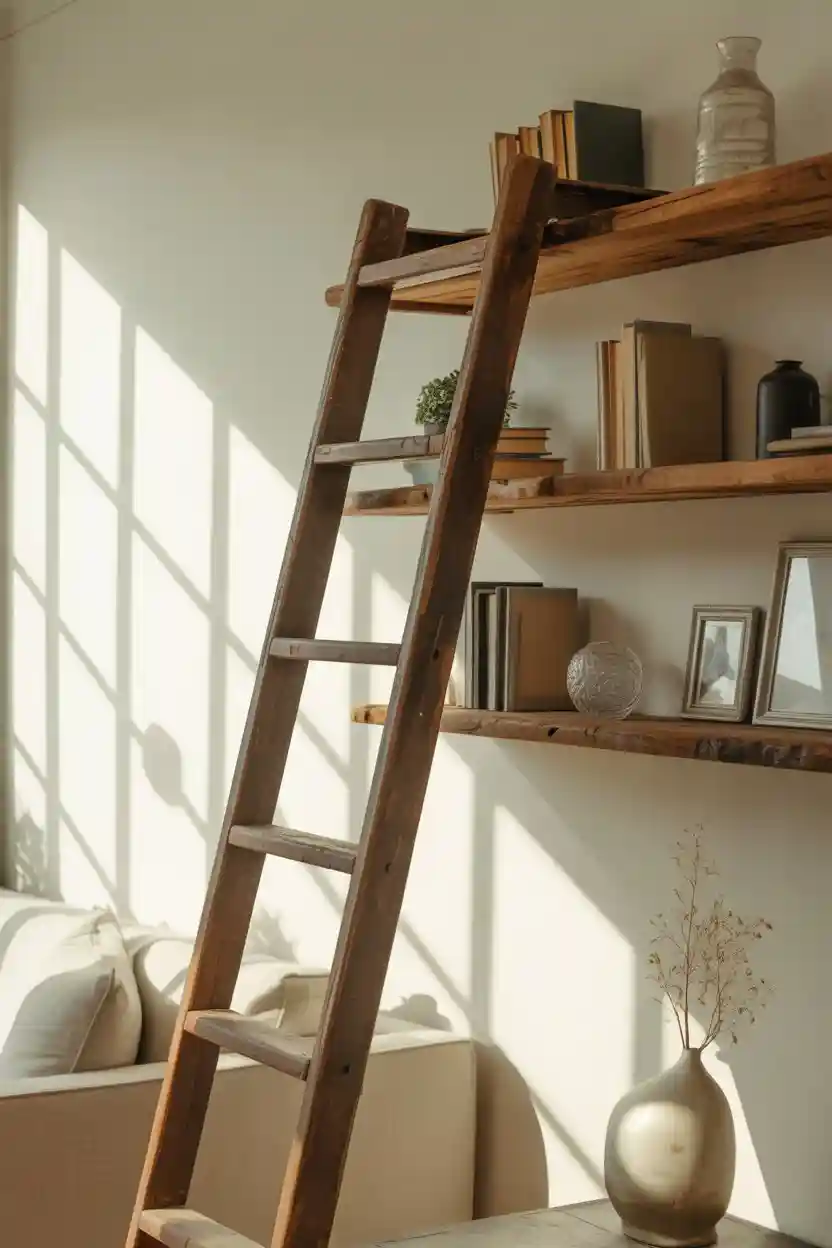
An old wooden ladder leaned against the wall is an instant tiered shelf: lay reclaimed planks across the rungs for book storage. Deep rungs hold paperbacks; the steps near the top suit small plants and frames. Paint it white or black for a modern read, or leave the wood raw for rustic. It lives happily in hallways and narrow bedrooms where a bookcase won’t fit.
3. Floating Shelf from Reclaimed Wood
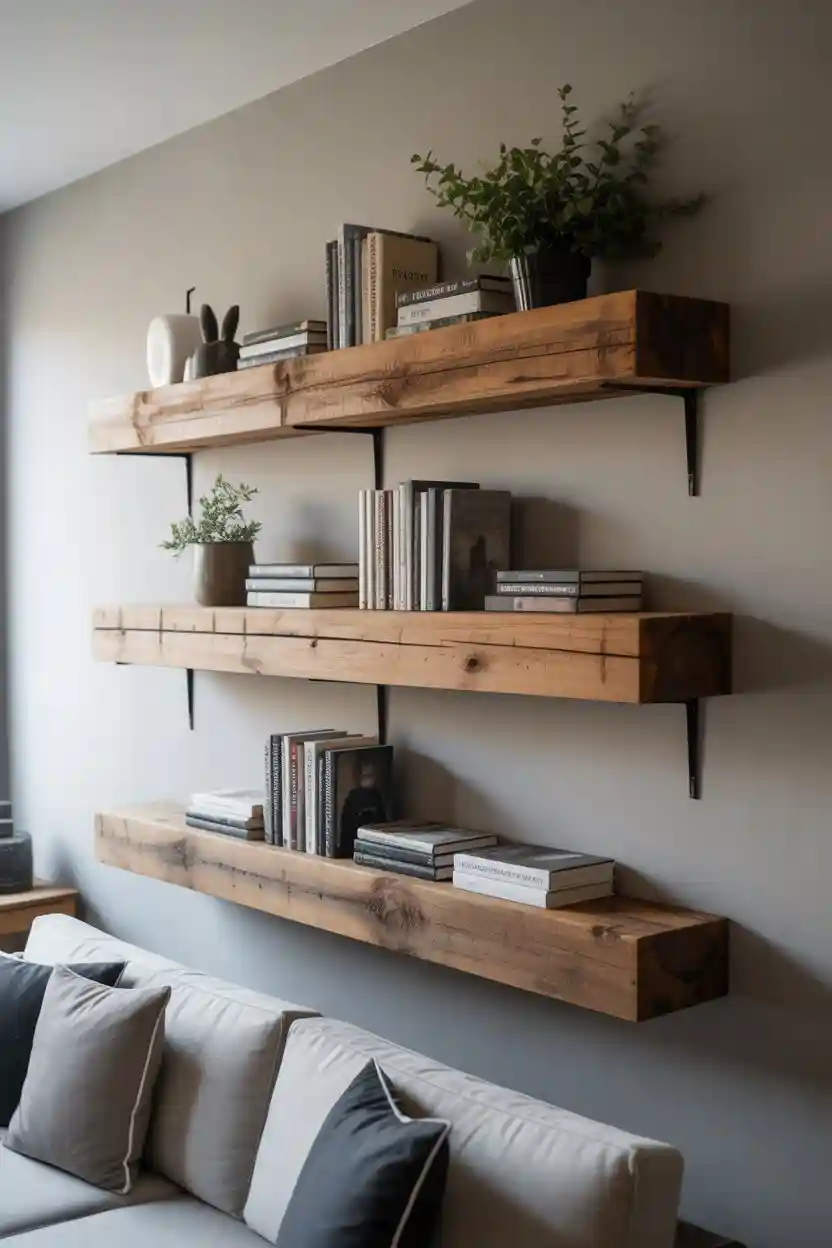
Reclaimed planks on hidden brackets make floating shelves that disappear under the books: sand, stain, and mount each bracket into a stud — drywall anchors won’t hold a shelf of hardcovers. Stagger them asymmetrically for a modern look. This is the small-apartment solution: all the storage, none of the floor space.
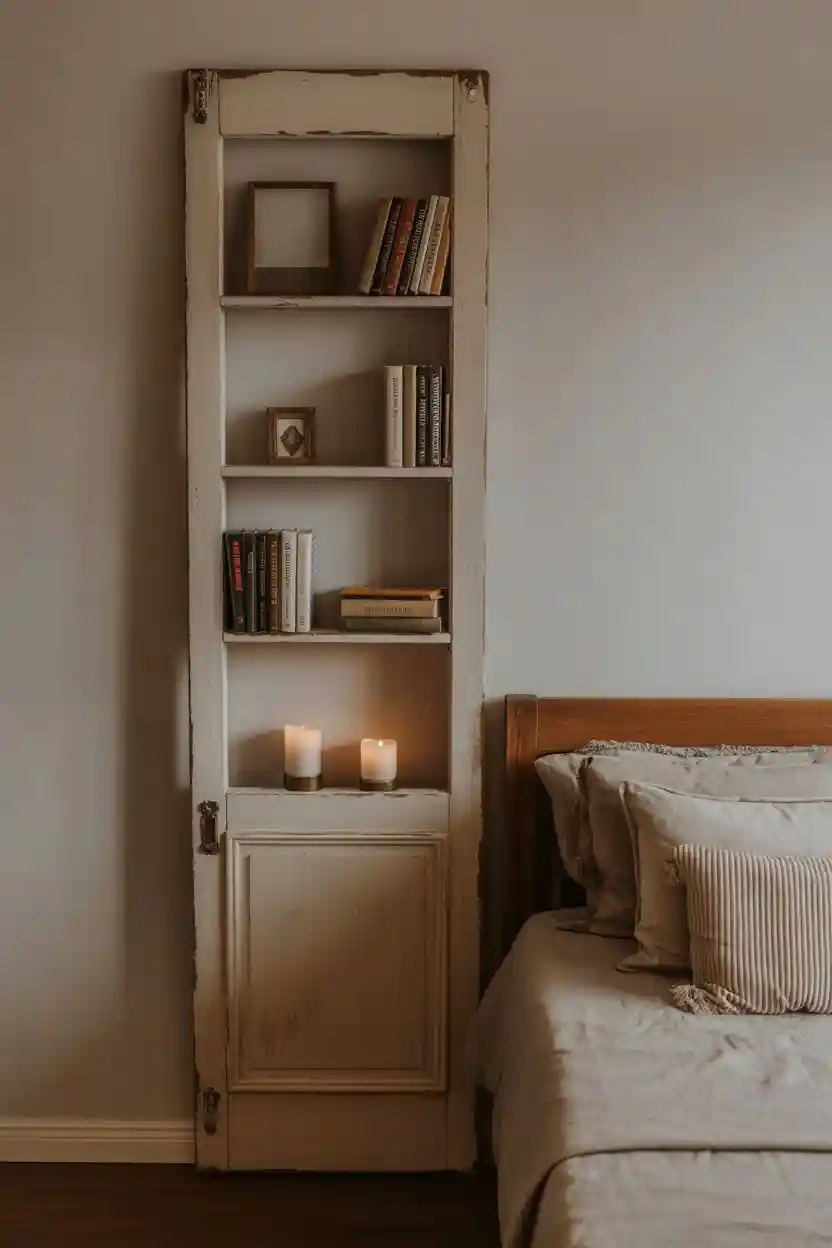
4. Old Door Bookshelf
A solid door stood upright is a ready-made tall bookcase frame: screw horizontal planks between the stiles, and the door’s own panels create natural compartments. Sand and paint it to match the room. Hallways and bedrooms love this one — 80 cm wide and two meters of vertical storage with almost no footprint.
5. Pallet Bookshelf
Pallets become multi-level shelving with minimal work: stand them upright and the slats are already shelves, or break them down for planks. Sand to 120 grit (splinters and books don’t mix), then stain or paint. They suit rustic and industrial rooms; in a formal space, painted pallets still read as pallets, so know your room.

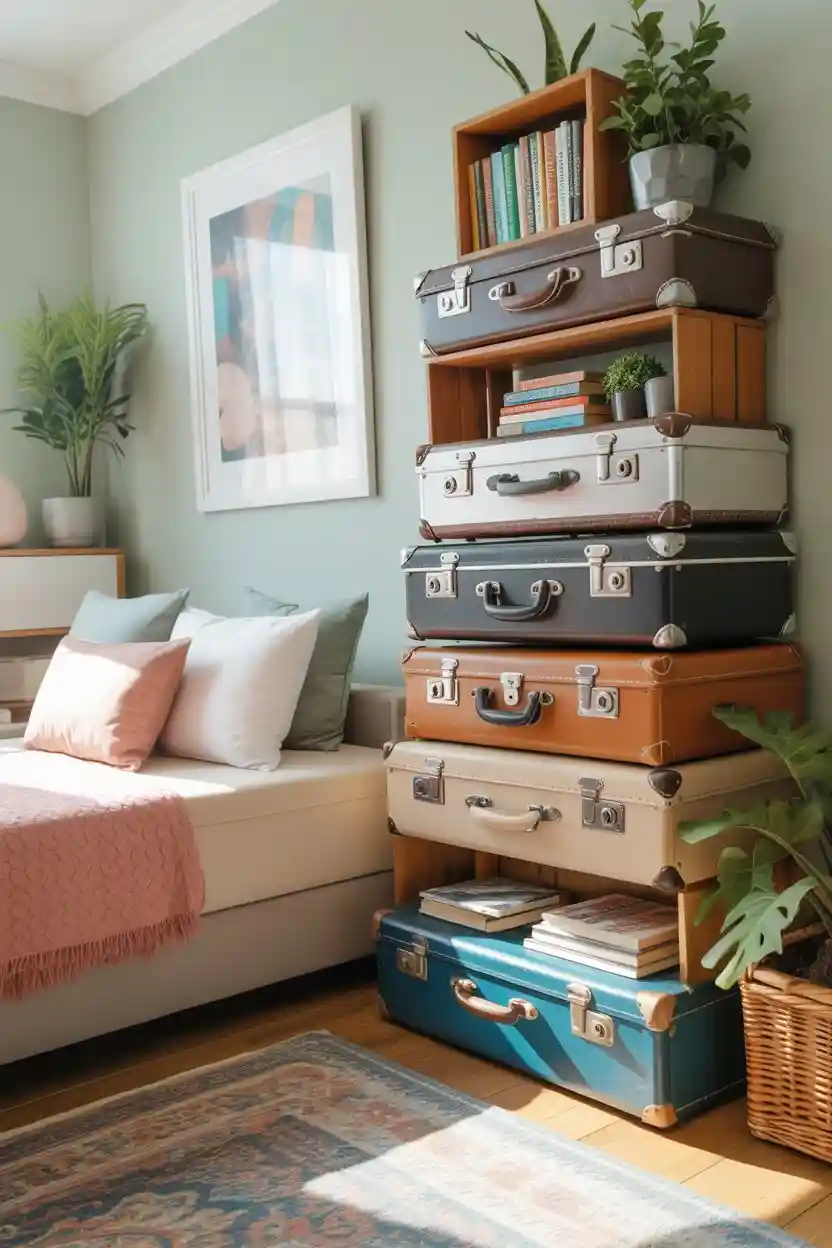
6. Vintage Suitcase Bookshelf
Stacked vintage suitcases make a bookshelf with built-in quirk: each case is a compartment, and the stack doubles as a side table. Line the interiors with wallpaper to protect the books, and put the heaviest volumes in the bottom case for stability. Mixed colors and patterns are the look — matching suitcases miss the point.
7. Wooden Crate Corner Bookshelf
Corners waste space in every room; a stepped stack of crates reclaims it. Use different-sized crates in a graduated arrangement — big at the bottom, small at the top — sanded and painted or stained to match. Bedrooms, offices, and reading nooks all have a dead corner waiting for this.

8. Repurposed Ladder with Glass Shelves
A ladder frame with glass shelves is the airy option: the books look like they’re floating, and the piece never visually crowds a small room. Have the glass cut to size at a glazier ($15–$25 a shelf) with polished edges. Paint the ladder a contrasting color — black frame, clear glass — for the full modern-rustic effect.

9. Barn Wood Floating Wall Bookshelf
Barn wood’s texture does the decorating for you: mount a few planks at varying heights and let the grain, nail holes, and saw marks be the design. Seal with a clear matte finish so the texture survives handling. These pair with industrial and farmhouse interiors the way nothing new quite manages.

10. Wine Crate Bookshelf
Wine crates are the upgrade from regular crates: sturdier, better proportioned (most fit paperbacks perfectly), and the stenciled labels are free decoration. Arrange them vertically, horizontally, or in a loose grid along the wall. Leave the labels visible — that’s the charm.

11. Floating Ladder Bookshelf
Anchor a ladder flat to the wall and mount floating planks across it for a hybrid: the ladder gives vertical rhythm, the planks give real shelf space. It reads lighter than a bookcase but holds as much. Add a picture light or LED strip and it becomes the room’s feature wall.
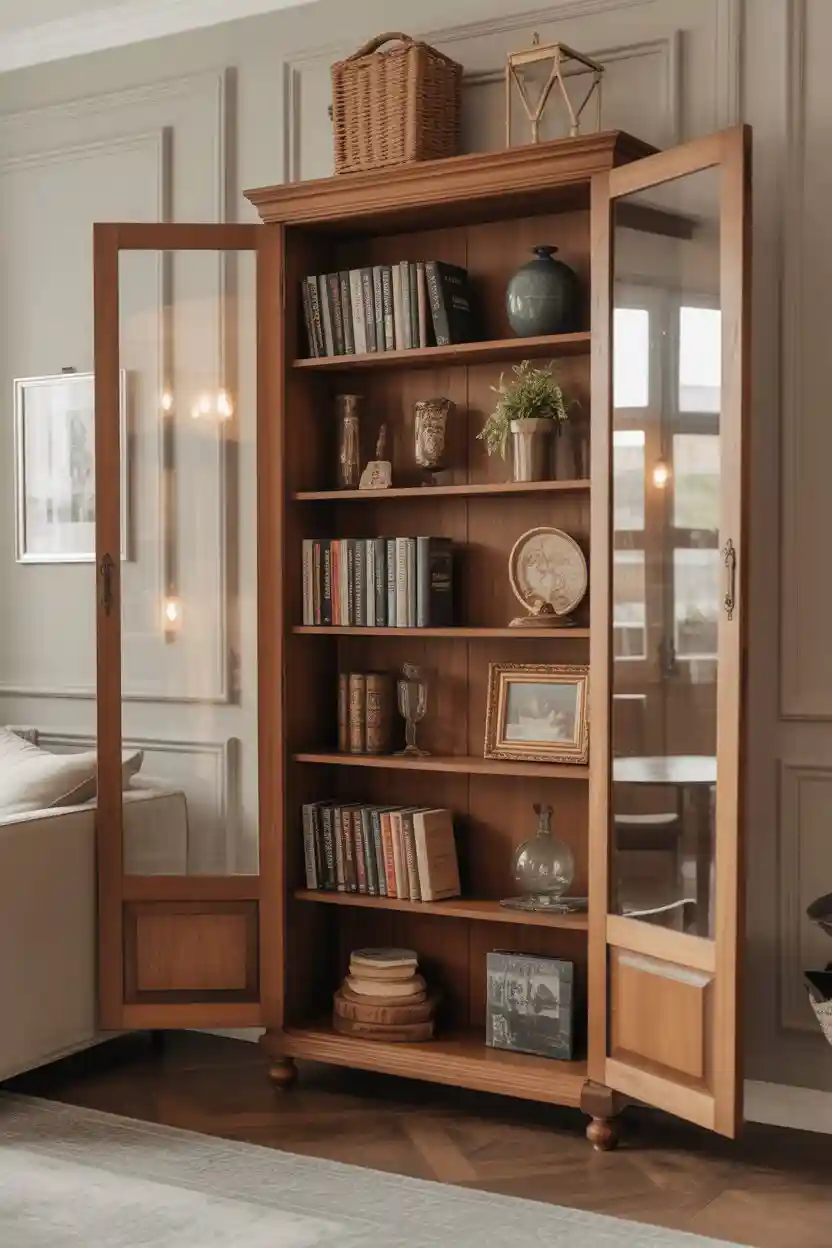
12. Old Cabinet with Glass Doors
An old cabinet with glass doors is a bookshelf that protects: adjust the shelf spacing for your tallest books, paint or refinish the carcass, and the glass keeps dust off while showing the spines. Made for collections and special editions — the books stay pristine and visible.
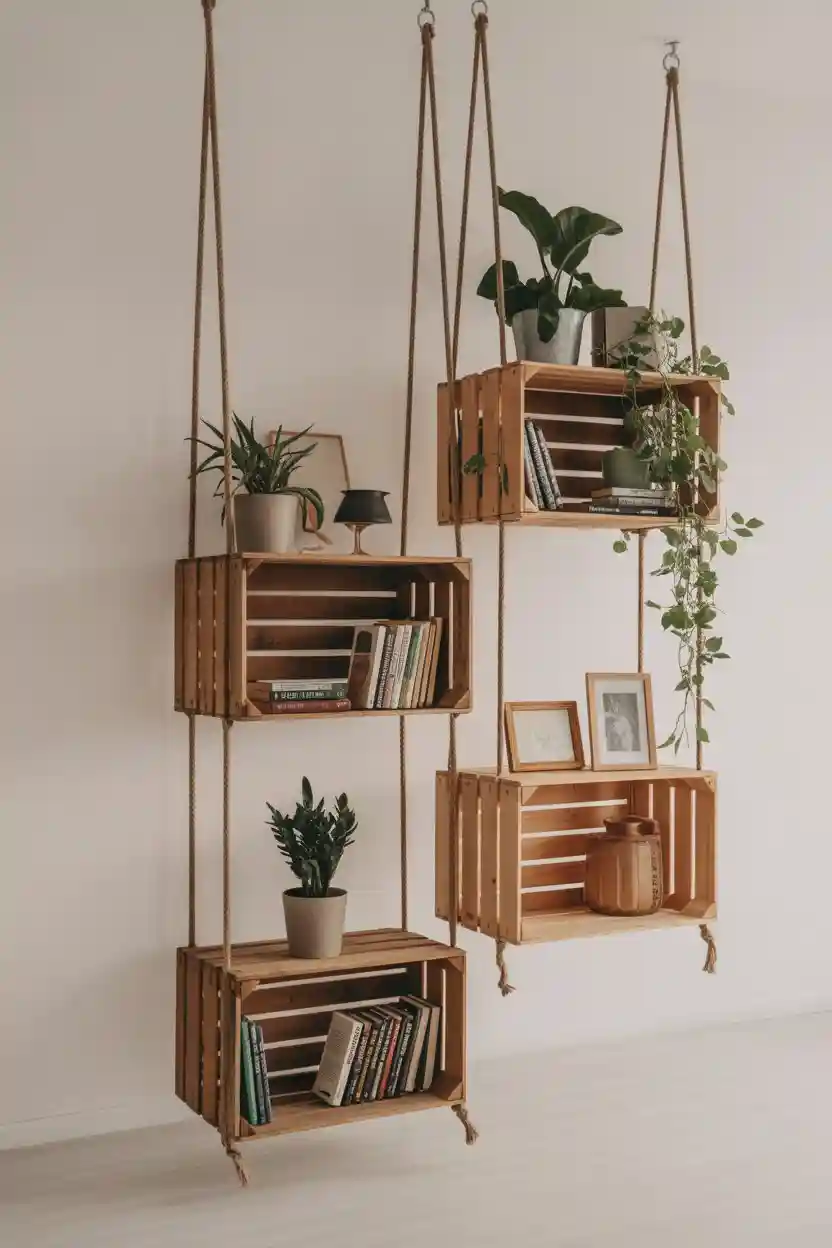
13. Crate and Rope Hanging Bookshelf
Crates hung from the ceiling on thick rope make a floating bookshelf for rooms with height to spare: drill through the crate corners, thread 12 mm rope, and anchor into ceiling joists (not drywall — books are heavy). It frees the floor entirely and looks like a design-magazine shoot.
14. Reclaimed Shutter Bookshelf
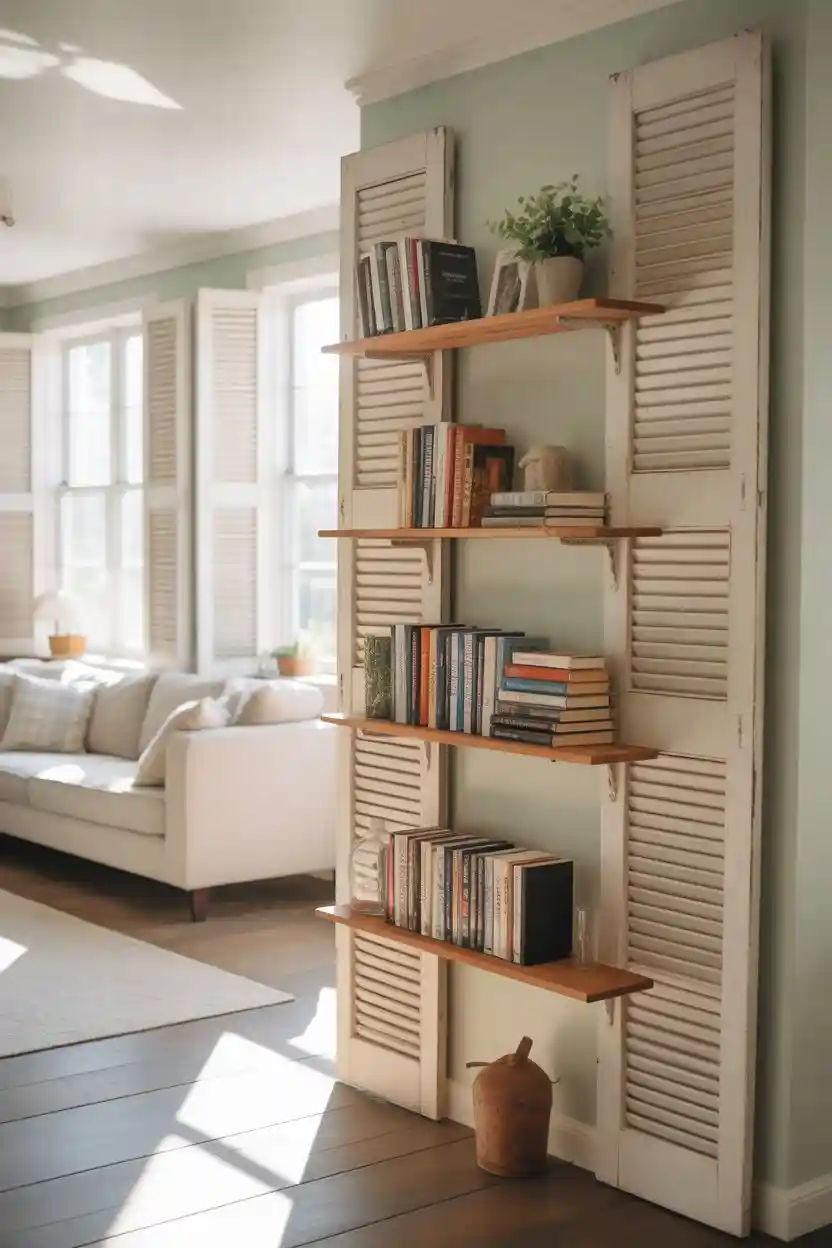
Old window shutters with planks screwed across the slats make a narrow bookshelf with built-in texture: the louvers add visual interest no flat board can match. Paint in a muted or bold color; mount in hallways and entryways where depth is limited. The open slats keep light and air moving.
15. Repurposed Drawer Bookshelf
Old drawers stacked horizontally or vertically are ready-made compartments — they’re already boxes with finished interiors. Paint or distress them to match, screw the stack together, and add small legs or casters for mobility. It’s the same trick as the upcycled dresser drawer-shelf conversion, applied to books: quirky, modular, and practically free.

16. Tree Branch Bookshelf
A tree-branch frame with planks across it is the sculptural option: two sturdy forked branches as uprights, horizontal planks as shelves. Sand and seal the branches, keep the books light (paperbacks, not encyclopedias), and let the organic curves be the design. Cabins, studios, and anyone whose taste runs wild.

17. Repurposed Skateboard Bookshelf
Skateboard decks mounted on wall brackets make shelves with built-in personality: the concave shape cradles books naturally. Mount at varying heights for a dynamic wall display — bedrooms, creative spaces, anywhere youthful. Keep the graphics visible; that’s the whole point.

18. Industrial Pipe Bookshelf
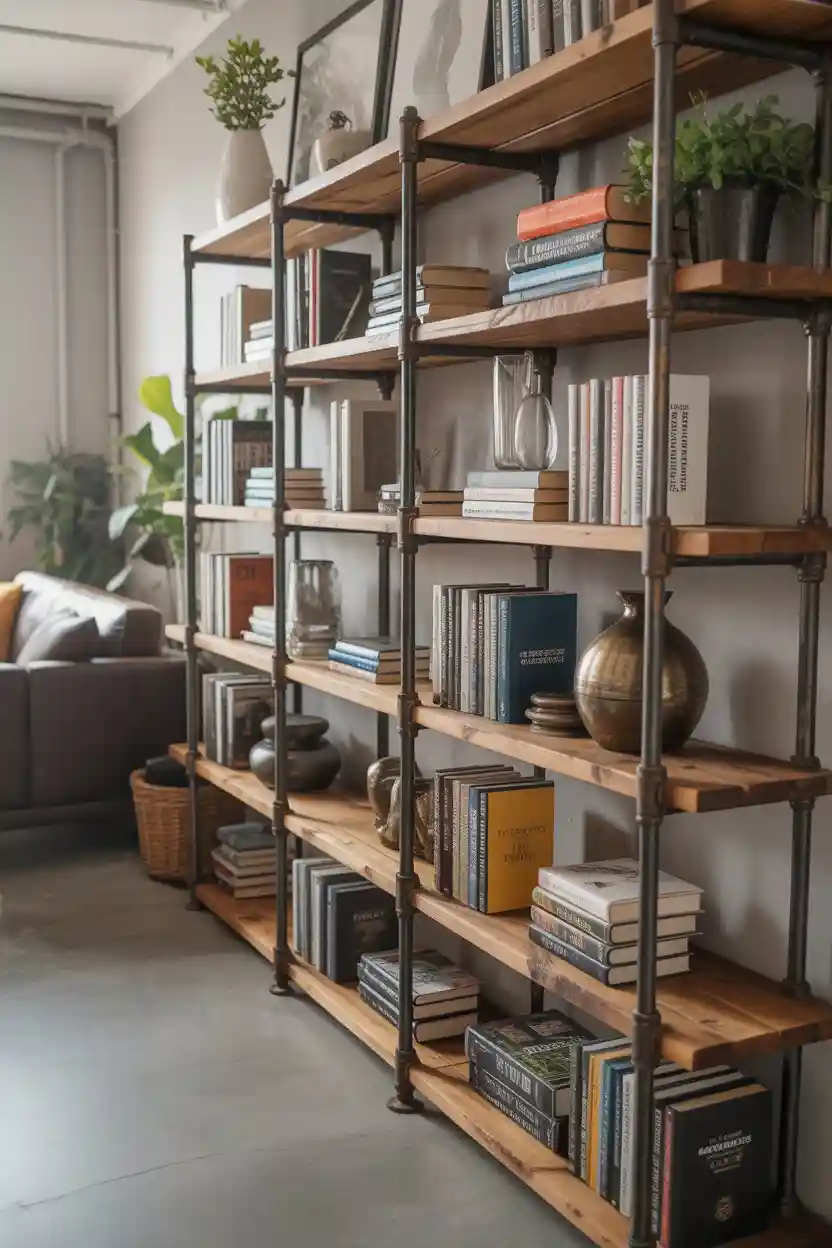
Black iron pipes with reclaimed wood planks is the industrial classic: the pipes are the uprights and the brackets in one, the wood brings warmth. A 3-meter pipe run with flanges costs $30–$50 and holds a serious library — anchor every upright into studs. Lofts, offices, modern living rooms.
19. Recycled Wine Barrel Bookshelf
A halved wine barrel stood on end is a curved cubby shelf: sand and stain the staves, and the rounded compartments hold books at an angle that actually looks deliberate. One barrel is a side table with storage; two stacked are a statement. Home bars and living rooms love this one.

20. Wooden Crate Stair Bookshelf
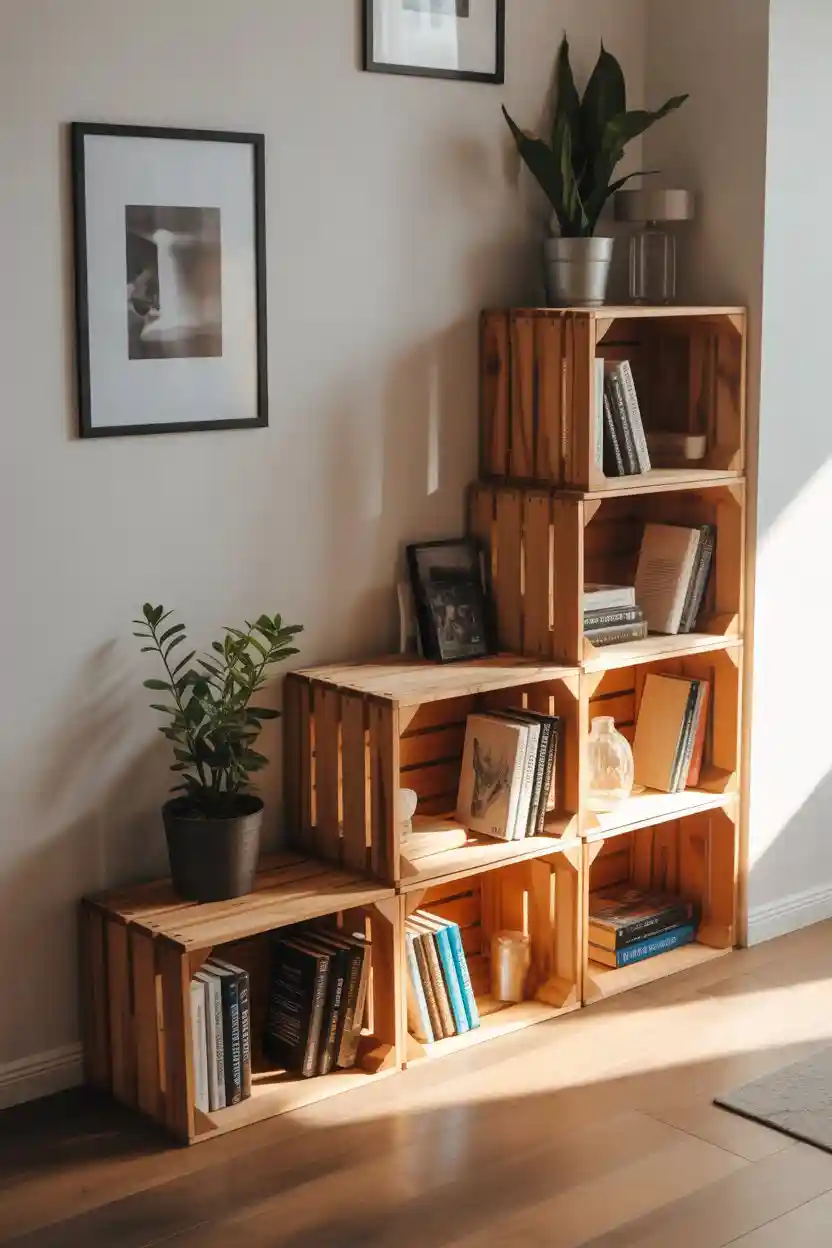
Crates arranged like stairs — each level set back from the one below — make a stepped bookshelf that’s perfect for corners and kids’ rooms: every shelf is reachable, nothing gets lost at the back. Paint the crates in a gradient or alternating colors for the full effect.
21. Pallet Cube Bookshelf
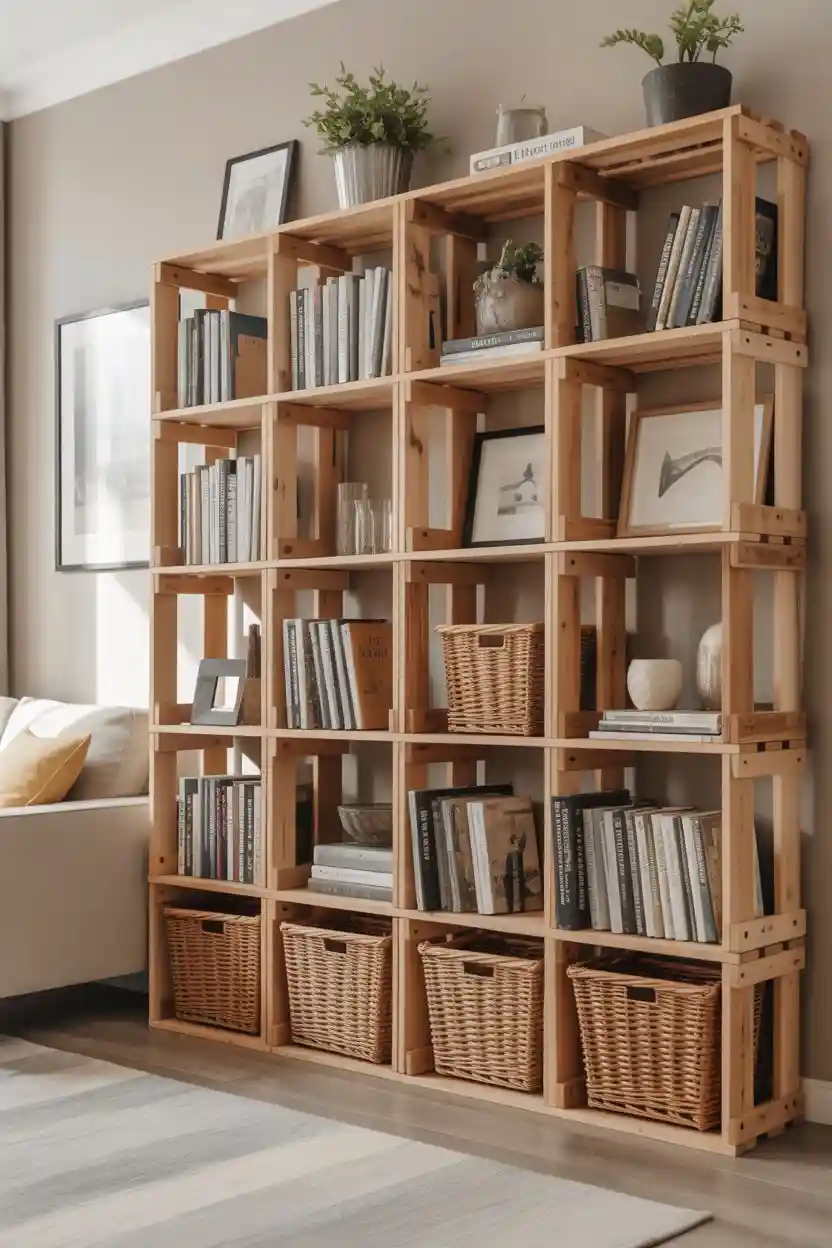
Break pallets down and rebuild them as cubes, then arrange the cubes in a grid or staggered pattern: modular shelving you can expand forever. Seal the wood for a finished look. Like the upcycled chairs designs in our other roundup, it’s pallet lumber doing a second, better job — a full wall of cubes costs almost nothing and holds a library.
22. Hanging Macrame Bookshelf
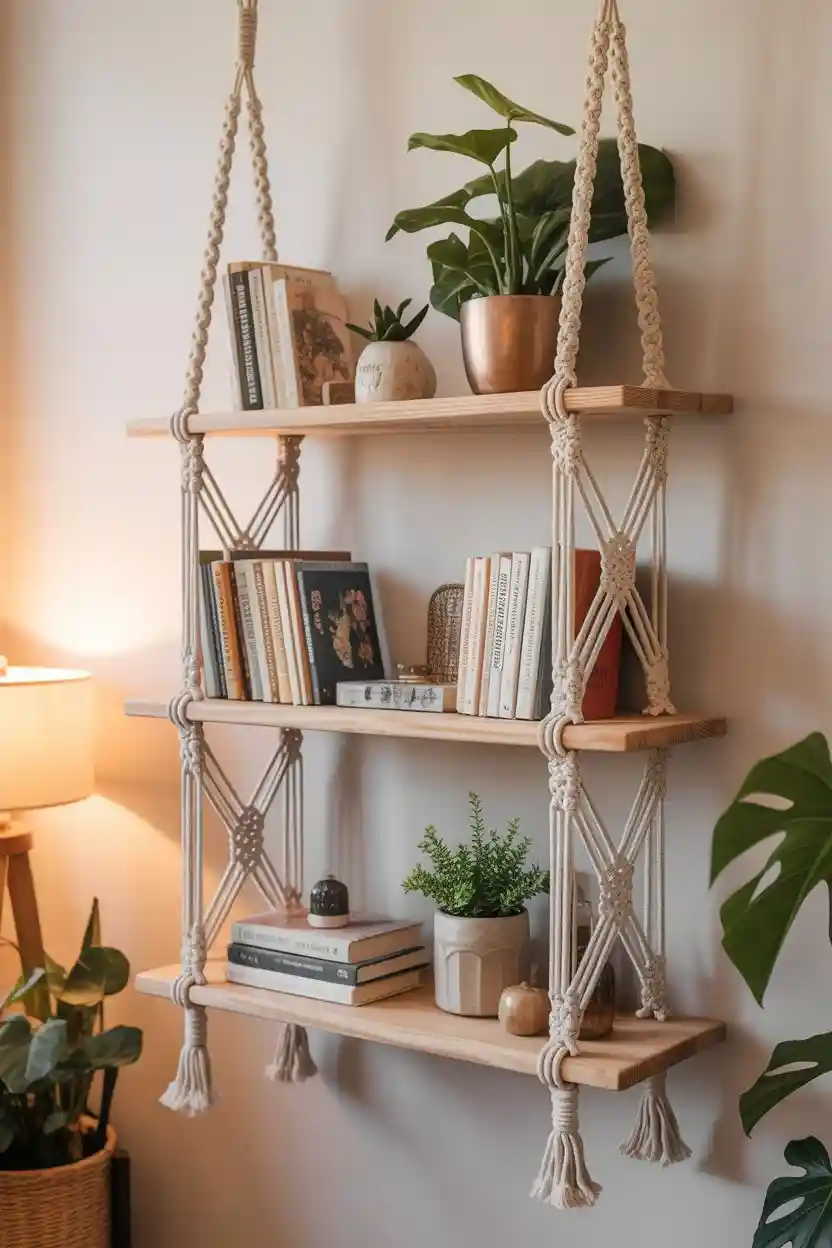
Macrame hangers with reclaimed wood boards make floating shelves with bohemian texture: the knotted rope is the bracket and the decoration in one. Keep the loads light — paperbacks and plants, not hardcover sets — and hang from ceiling hooks into joists. Reading nooks and small apartments.
23. Upcycled Bed Frame Bookshelf
A headboard and footboard stood upright with planks across make a tall, narrow bookcase with instant character: the bed’s original detailing becomes the frame’s ornament. Paint or refinish to match the room. It’s 150+ cm of vertical storage from a bed that was headed to the curb.

24. Window Frame Wall Bookshelf
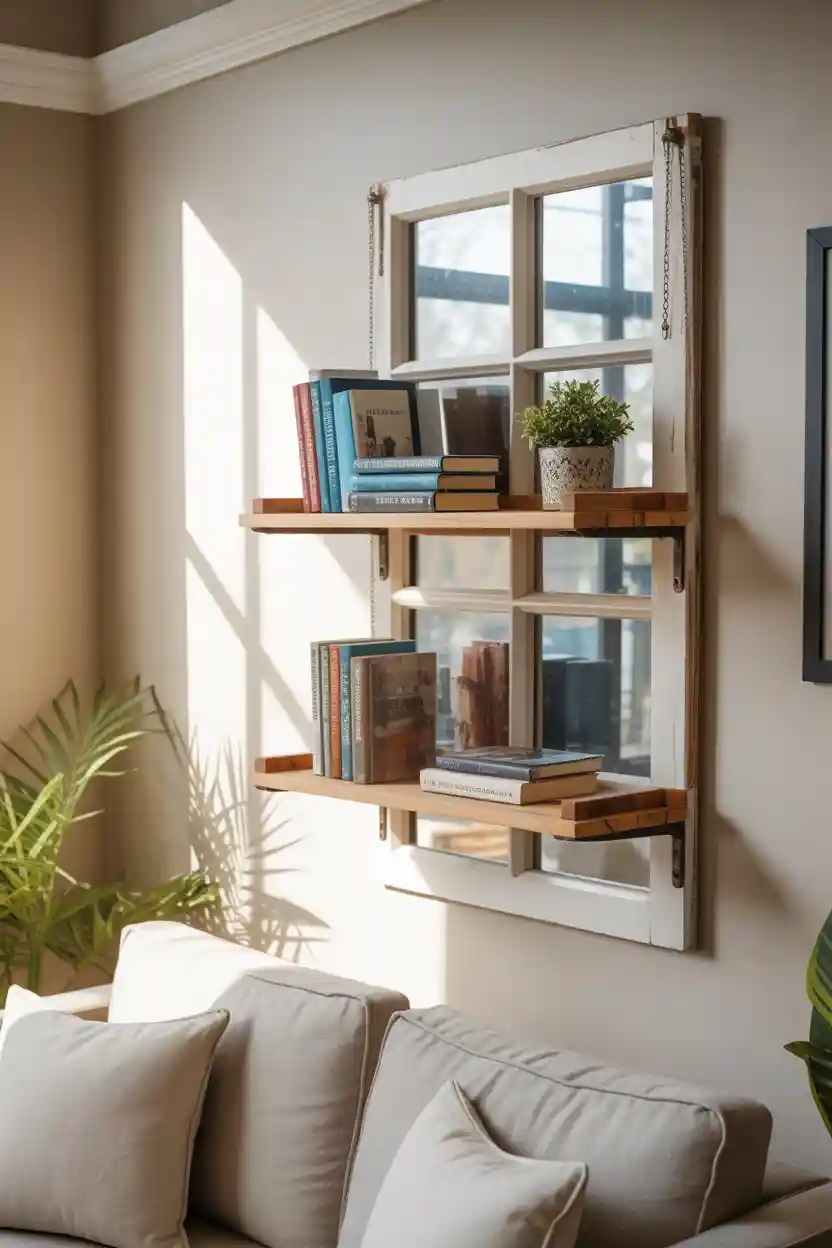
Old window frames with planks set into the panes make compartment shelving with a vintage, airy feel: each pane is a cubby. Distress or paint the frame; mount horizontally or vertically. Kitchens love these for cookbooks; offices for the curated-shelf look.
25. Reclaimed Wooden Ladder Floating Bookshelf
Ladder uprights with floating planks between them give you the best of both: the ladder’s vertical structure with real, deep shelf space. Stain or paint to coordinate, and you’ve got a sculptural piece for narrow spaces and entryways that holds more than it looks like it should.

26. Old Bookshelf Makeover
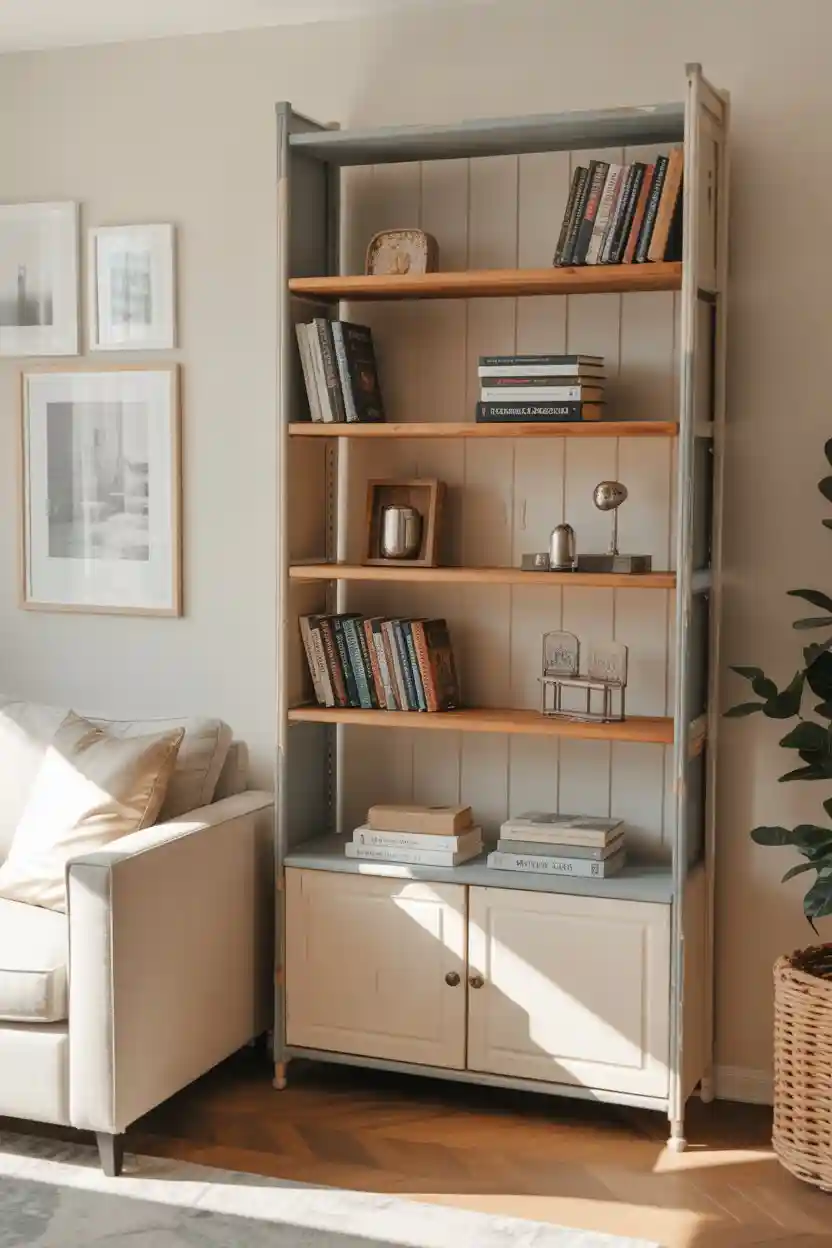
Take an existing worn-out bookshelf and give it new life with paint, adjusted shelf spacing, or added glass doors. A fresh finish modernizes a tired piece while keeping its structure — the simplest upcycled furniture project on this list, ideal for living rooms, bedrooms, or offices. Add accent lighting or new hardware and an old piece feels brand new without building anything from scratch.
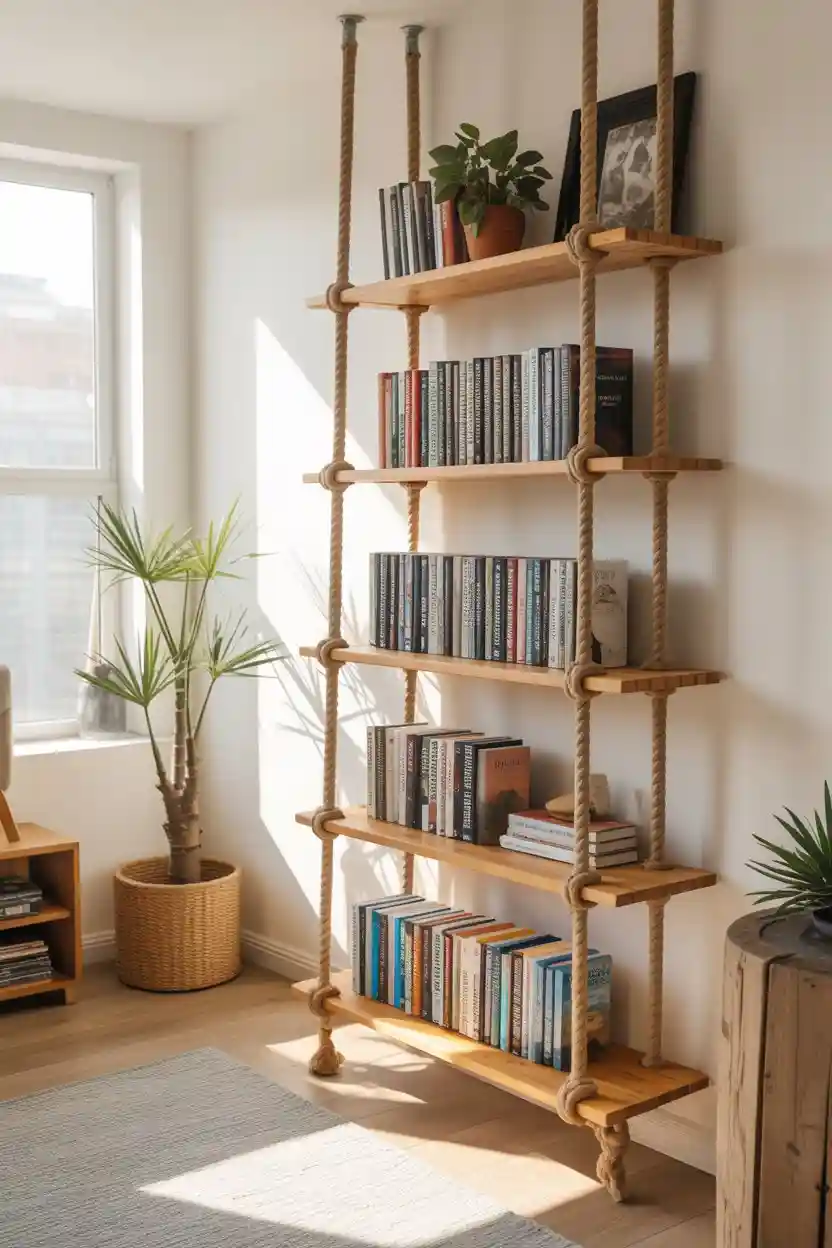
27. Rope Ladder Floating Bookshelf
A ladder frame hung from the ceiling on ropes, with planks across, is the dramatic space-saver: it floats above the floor, holds books and plants, and turns a studio or loft into a design statement. Anchor the ropes into joists, keep the load balanced, and let it be the room’s conversation piece.
28. Repurposed Filing Cabinet Bookshelf
Old filing cabinets convert to bookshelves by removing drawers and adding horizontal shelves: the steel carcass is indestructible, and a coat of paint (or stripped-back bare metal) gives it industrial polish. Casters add mobility. Home offices and studios — where the cabinet probably came from — are the natural home.

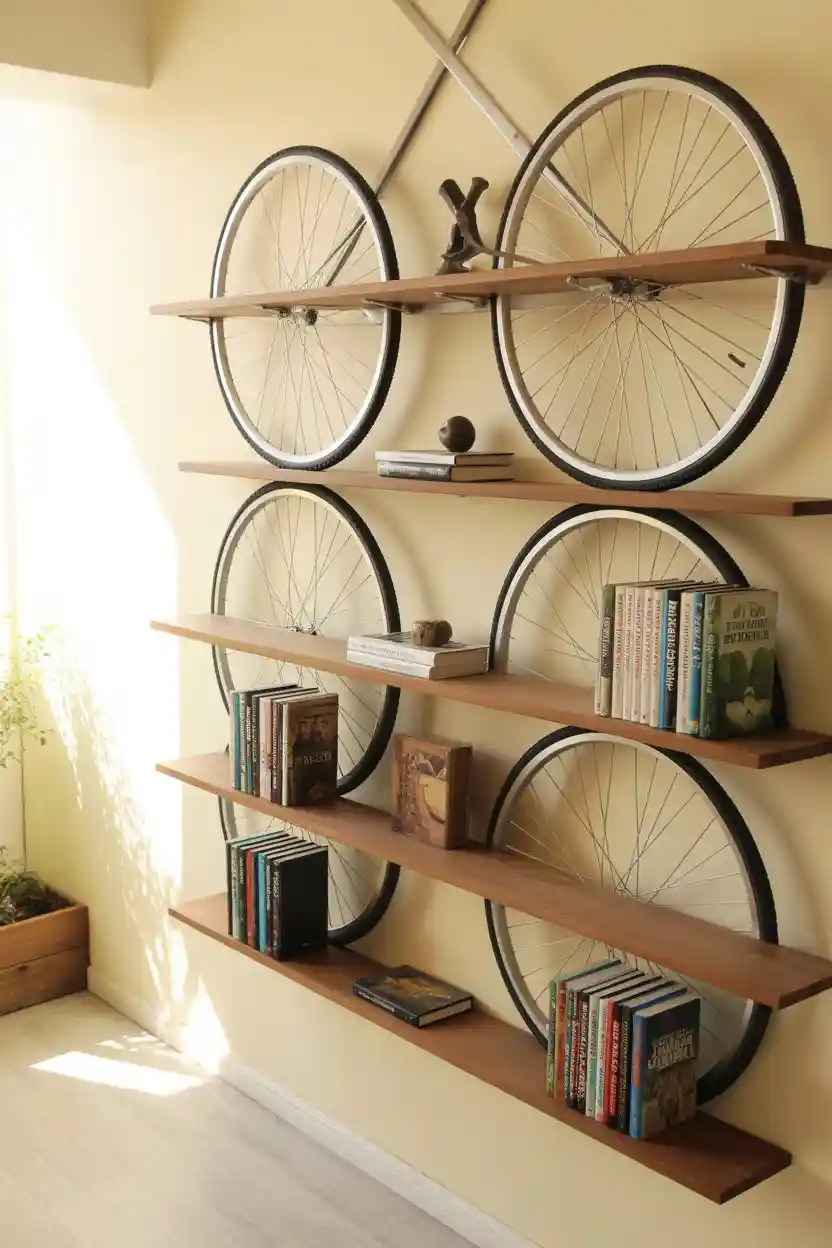
29. Bicycle Wheel Bookshelf
Bicycle wheels mounted horizontally on the wall with planks across the spokes make circular shelves: pure sculpture that happens to hold books. Paint the wheels to match the room and keep the loads light. It’s the conversation piece of this list — form first, function a close second.
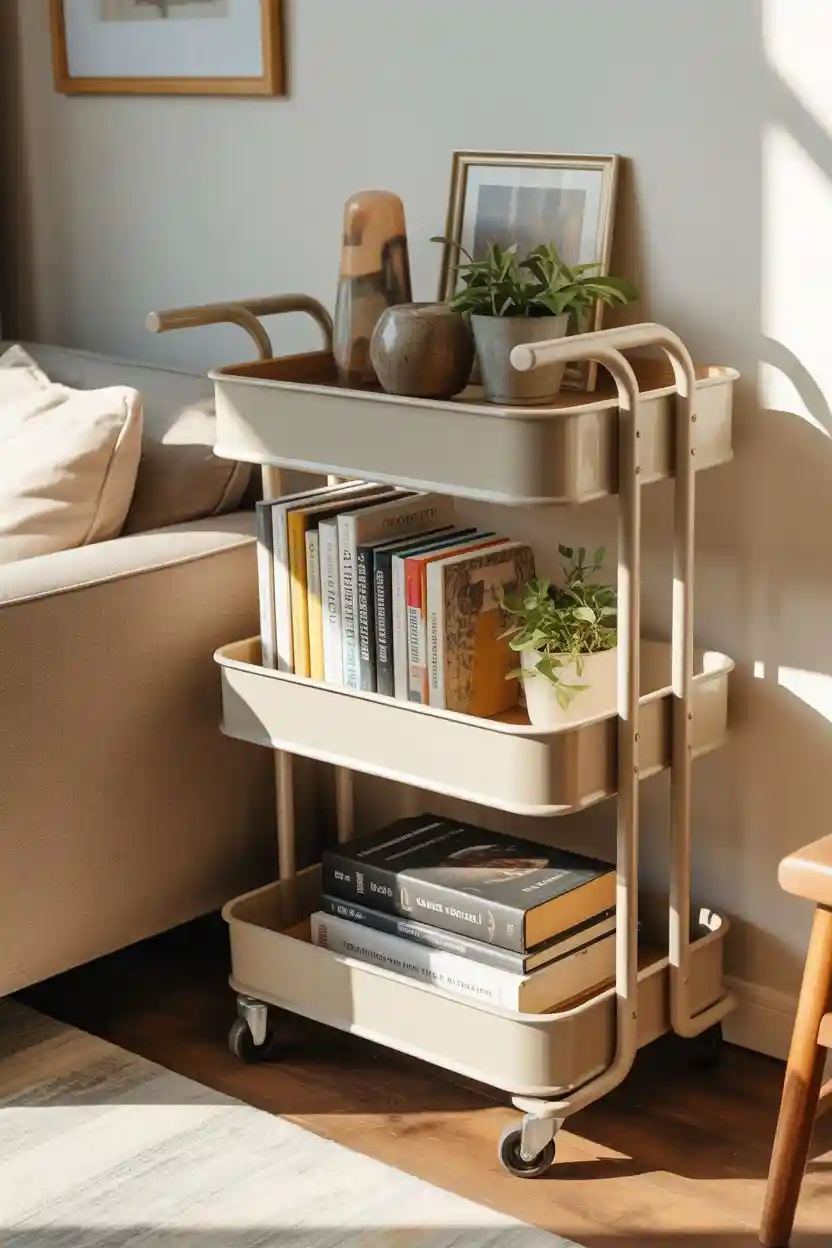
30. Rolling Cart Bookshelf
A rolling utility cart with added shelves is the mobile bookshelf: wheel it where you need it, park it where it fits. Bedrooms, studios, living rooms — anywhere the book collection migrates. Paint it to match the decor and it stops looking like a cart entirely.
FAQs for Upcycled Bookshelf Ideas