15 Closet Organization Ideas That Save Space
Open most bedroom closets and you’ll see the same problem: one long rod crammed with clothes, a shelf above it collecting things you can’t reach, and shoes piled on the floor. The space isn’t actually small — it’s just built with one way to use it. The best closet organization ideas add a second way: another rod, a divider, a door organizer. From modular systems to weekend DIY fixes, here are fifteen ways to give everything in your wardrobe a real spot.
1. Use Modular IKEA Closet Organizers for a Flexible Wardrobe
IKEA’s PAX and JONAXEL systems are built around one premise: your wardrobe will change, so your storage should too. A basic PAX frame starts around $100, and you bolt on shelves, wire baskets, and trouser pull-outs wherever you need them. In narrow reach-ins, the 13¾-inch-deep units add storage without eating floor space.
The real advantage is that nothing is permanent. When heavy sweaters replace summer tees, you move a shelf in two minutes — no drilling, no patching walls. One mistake to avoid: buy the drawer inserts after you’ve lived with the layout for a week, not before, so you don’t pay for compartments you never fill.

2. Add Adjustable Shelving for Versatile Storage
The gap between fixed shelves is where closet space quietly dies. Twelve inches between shelves holds folded tees and jeans; sixteen handles sweaters and handbags; eight is perfect for shoes. An adjustable track system — about $25 for a twin-slot pair with brackets from any hardware store — lets you reset those heights in minutes.
Put the top shelf at step-stool height and reserve it for off-season bins. Keep the middle band at eye level for daily items. Because you control the spacing, bulky coats and tall boots stop stealing room from everything else on the shelf.
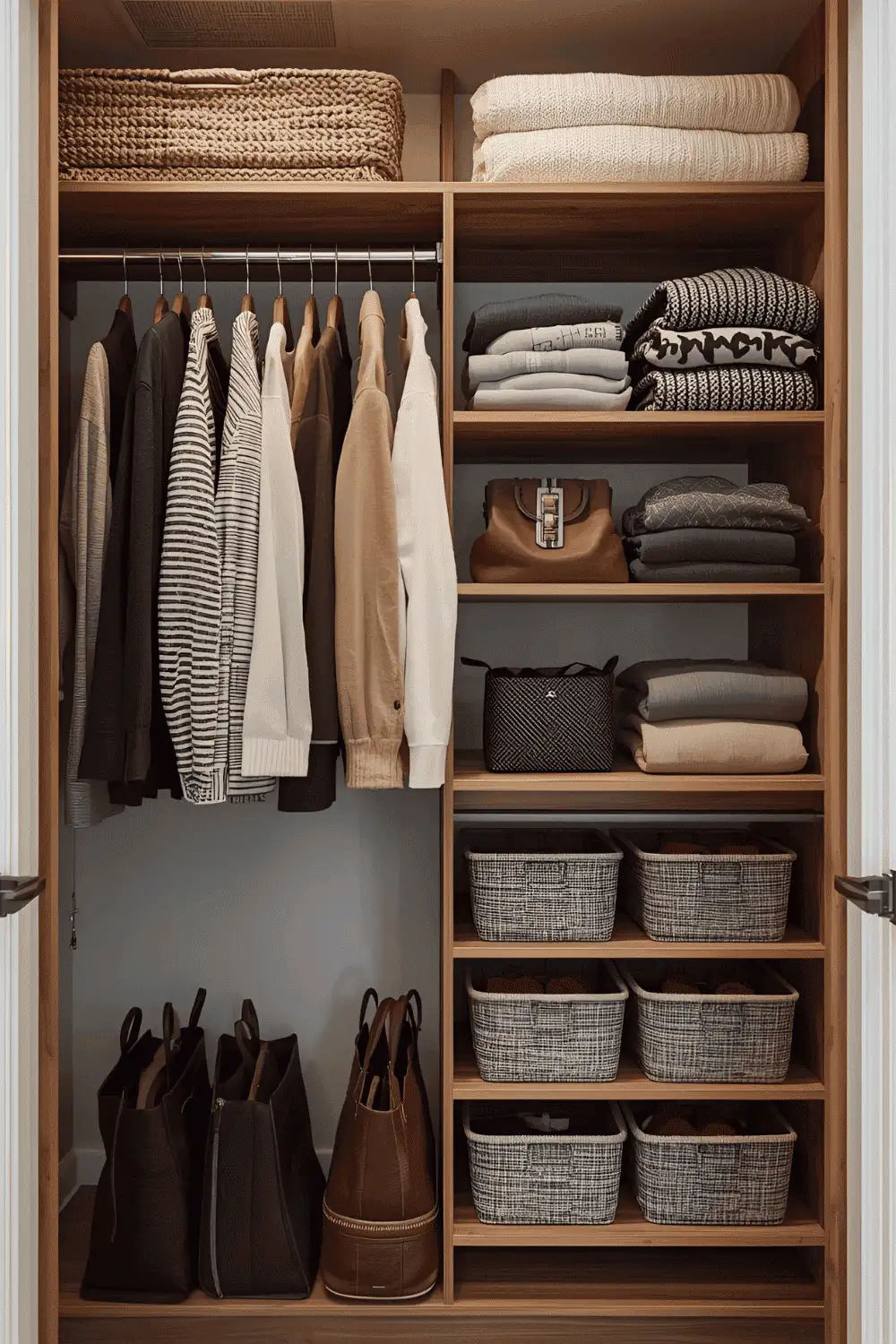
3. Store Shoes Vertically to Free the Floor
A pair of shoes eats about eight inches of floor space; stacked vertically, the same column holds four to six pairs. Wall-mounted racks and tall shoe towers pull footwear off the ground, and tilted shelves let you spot every pair at a glance instead of digging through a dark pile by the door.
Closet doors are free real estate: an over-the-door rack adds 24 to 36 pairs with two hooks and lifts off without marks, so it works in rentals. For dress shoes, clear stackable boxes — roughly $20 for a set of six — keep dust off while letting you see what’s inside.
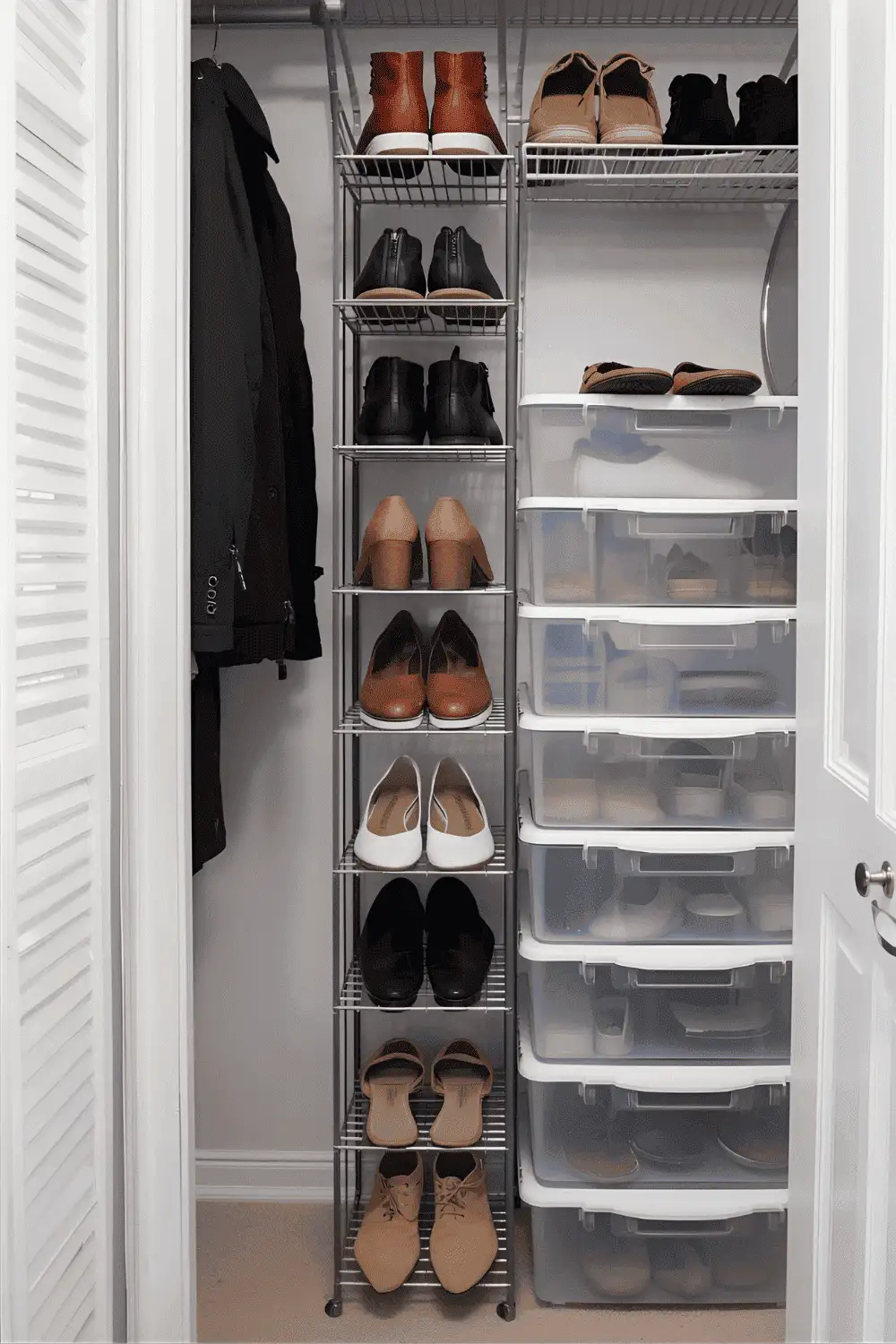
4. Stop Shelf Avalanches with Organizers and Dividers
Open shelves turn into landslides the moment you stack sweaters on them. Acrylic or bamboo dividers every twelve inches create lanes so piles stay upright when you pull one item out. They also give small things — clutches, scarves, beanies — a corral instead of a heap.
Dividers cost under $15 for a four-pack and need no tools. On deep shelves, run a divider front to back so folded items can’t drift toward the back wall, where they get forgotten for months.
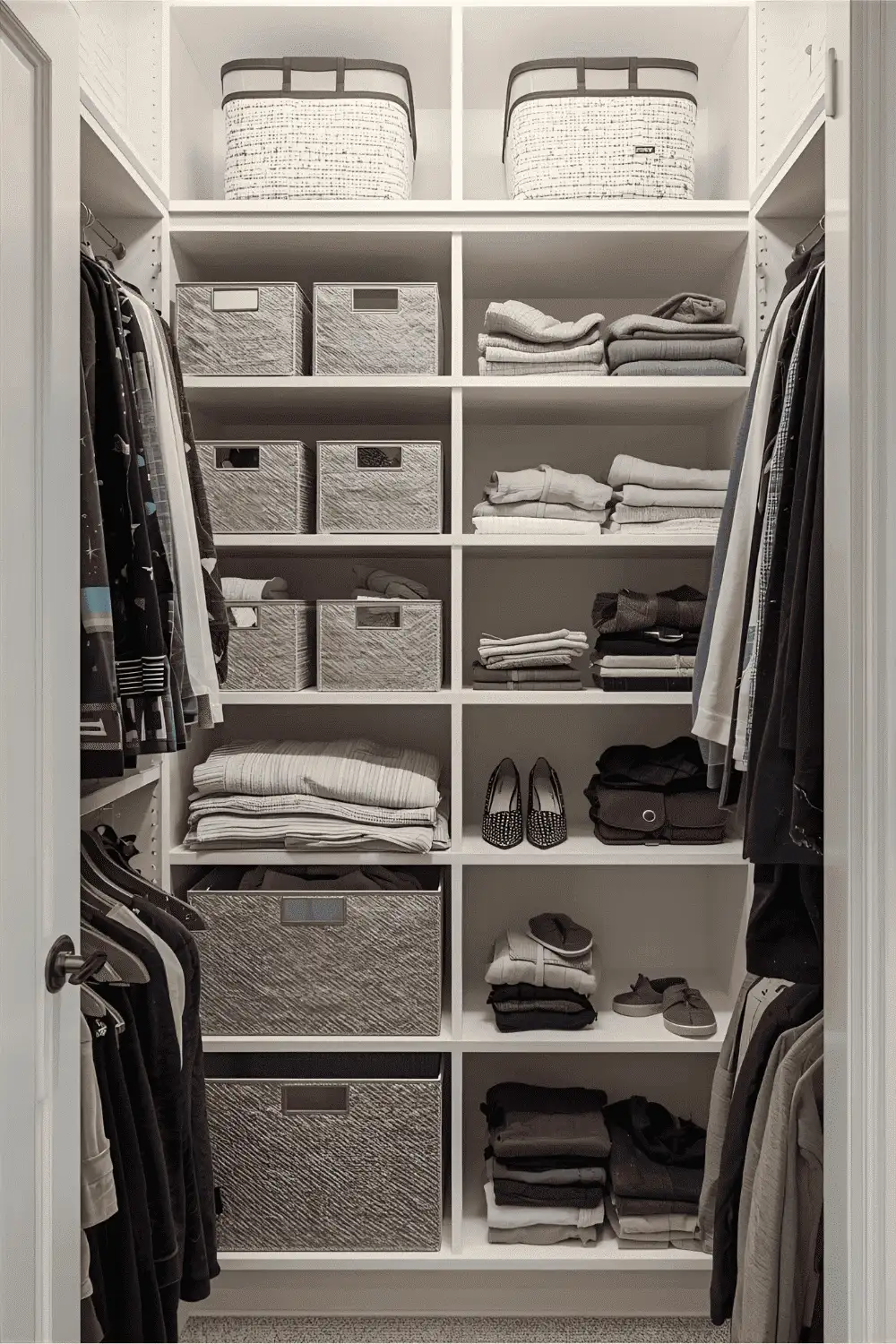
5. Double Your Hanging Space with a Second Rod
One rod holds one layer of clothes; two rods hold twice as many. Mount the upper rod at about 80 inches and the lower at 40, and shirts, blouses, and folded pants each get a full run. In a standard 48-inch reach-in, that single change fits 40 to 60 garments where twenty used to crowd.
Slim velvet hangers — about $15 for fifty — reclaim two to three inches of rod space per garment versus bulky plastic ones. Stick adhesive hooks inside the door frame for belts and necklaces: dead air becomes storage without touching your hanging space at all.
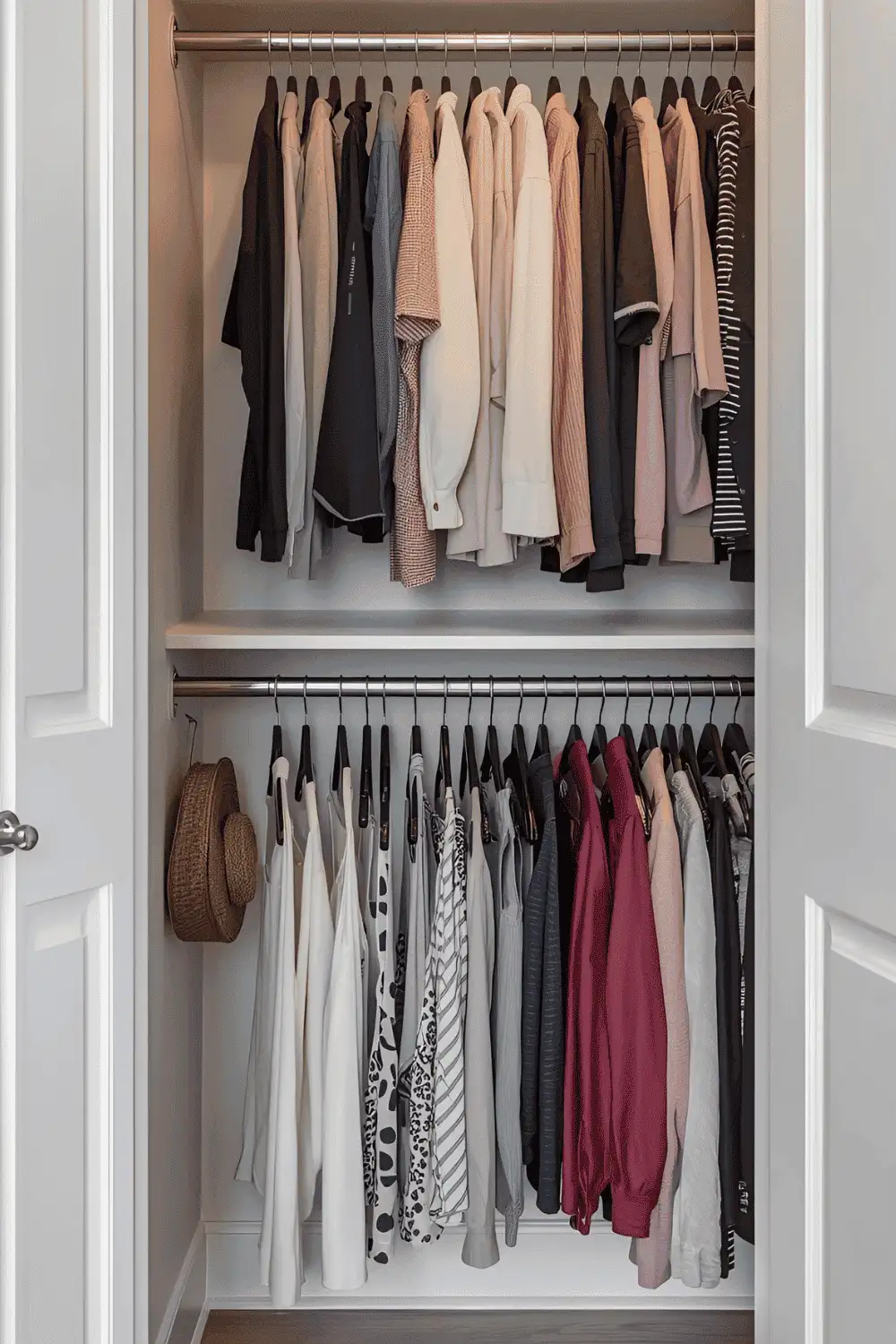
6. Turn the Under-Stairs Void into a Real Closet
That triangular space under the stairs fits more than it looks like it should. A 36-inch-deep run can hold pull-out shoe drawers, a hanging section for coats, and a shelf row above. Build drawers on full-extension slides so nothing disappears into the dark back corners.
Slope lighting matters here: battery puck lights — about $10 for a six-pack — make angled spaces genuinely usable. Fit doors to the slope and leave a small vent gap at the top so stored coats don’t trap moisture.
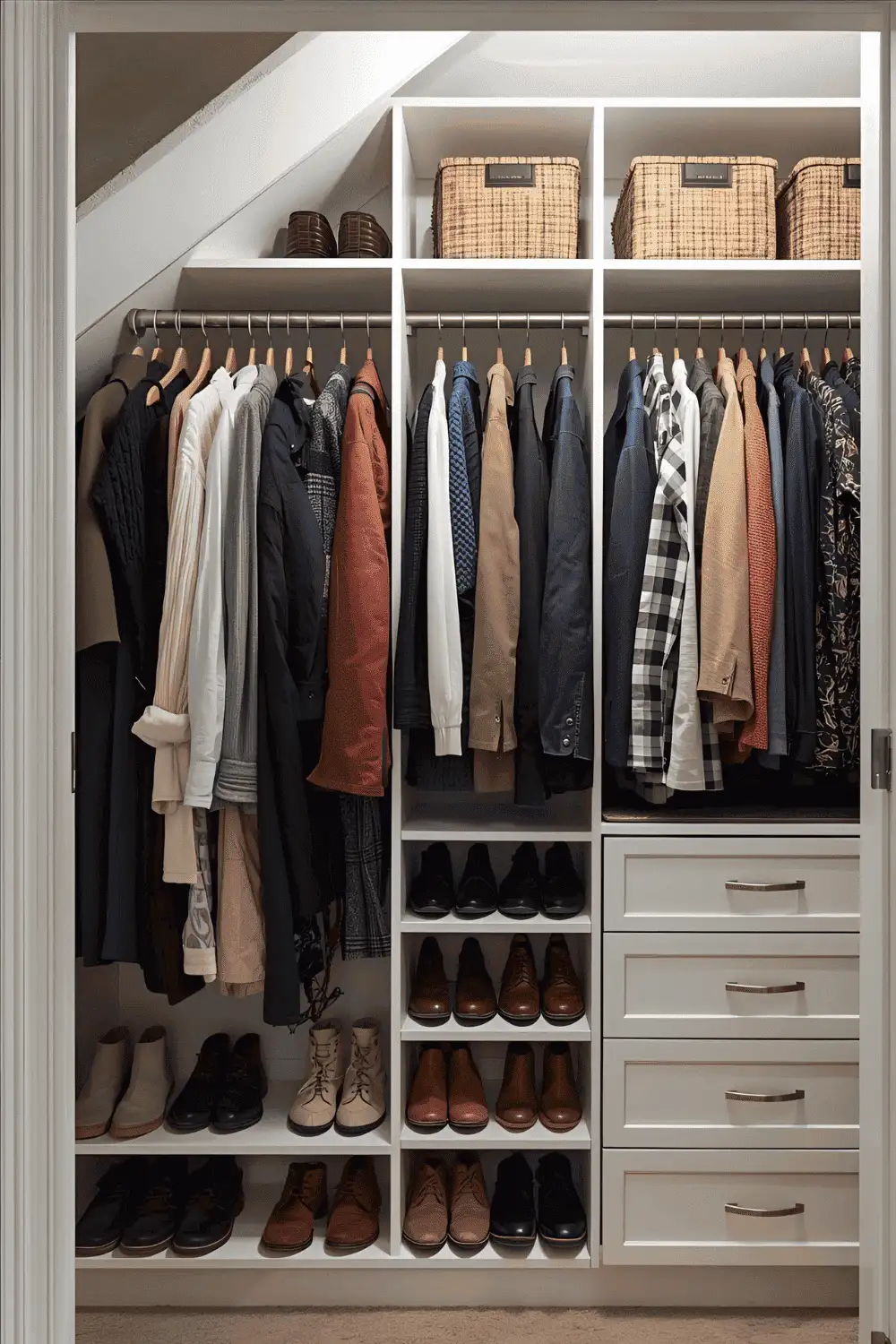
7. Make a Small Walk-In Feel Bigger with Zones
Even a four-by-four walk-in works when every wall has a job: hanging on one, open shelving on the second, drawers or bins on the third. Open shelving wins in tight walk-ins because nothing hides behind a door, and a full-length mirror on the open wall bounces light around the room.
Sort zones by frequency, not color: everyday pieces at arm’s height, occasion wear up high, shoes below. When each zone has exactly one purpose, the space stops feeling cramped and starts feeling designed.
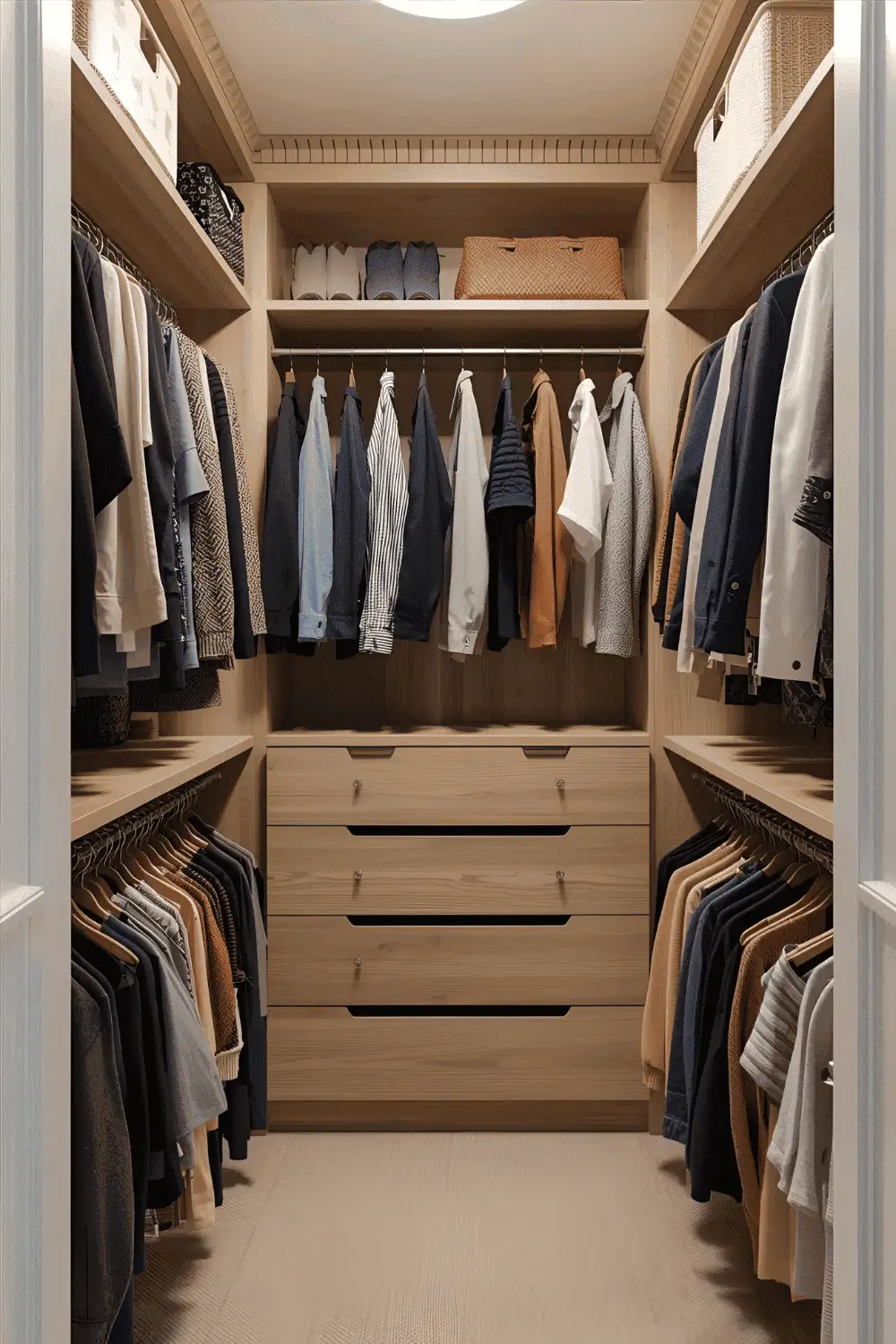
8. Put the Closet Door to Work
The back of a closet door holds an organizer panel for shoes, bags, or accessories without touching a single inch of floor or shelf. Most hang on two hooks — no tools, no wall damage — which makes them a renter’s best friend. Just keep the total load under about 25 pounds so the door still closes and swings freely.
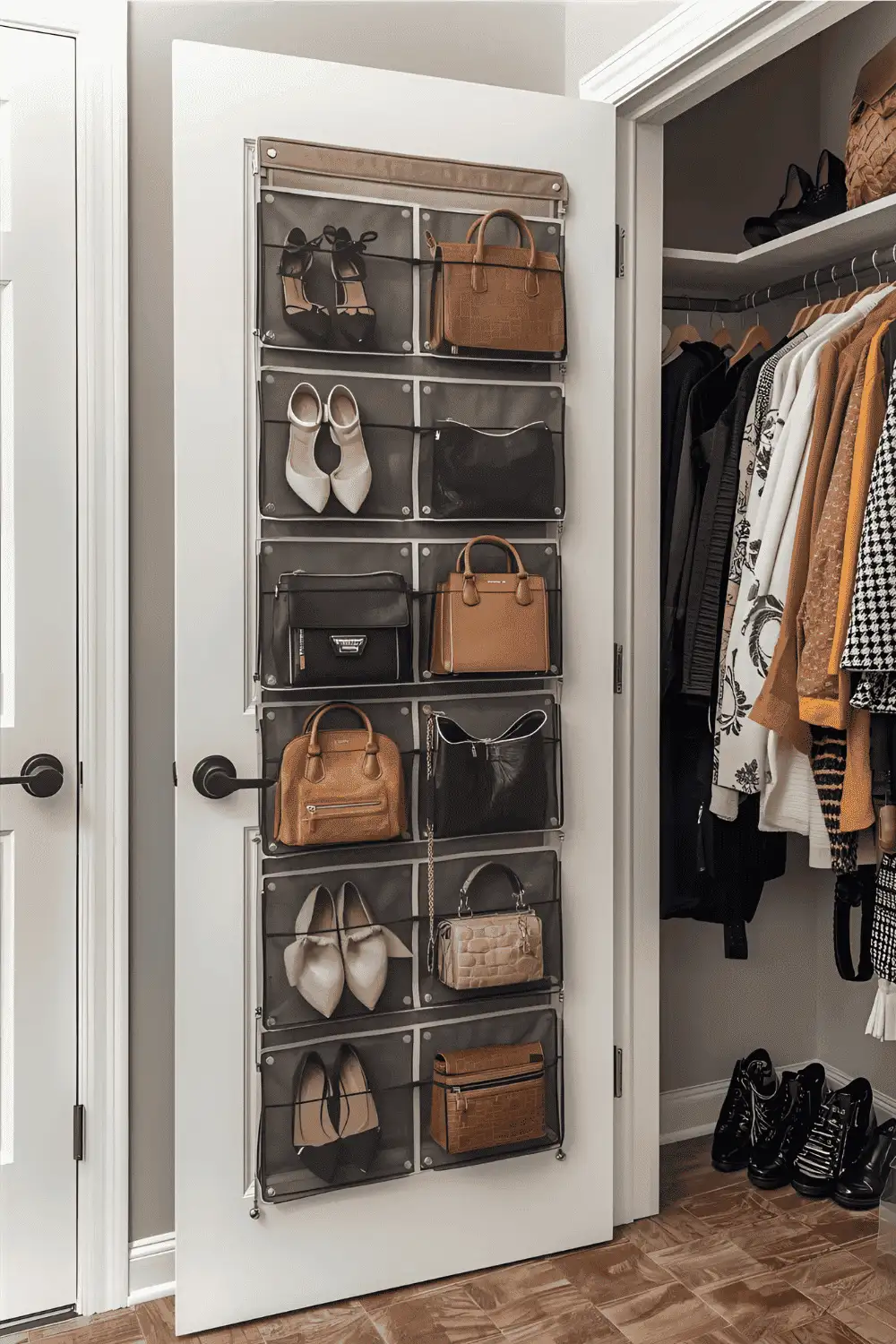
9. Invest in a Custom Closet System
A custom system — from a national brand or a local carpenter — starts with your measurements and your wardrobe: a double-wide drawer for jeans, a pull-out rack for shoes, a lit shelf for handbags. You’re paying for every inch to have a purpose instead of hoping off-the-shelf pieces happen to fit.
Budget $1,000 to $3,000 for a standard reach-in; walk-ins run far higher, with a few weeks of lead time. The payoff is no filler gaps, no dead corners, and storage that survives a decade of wardrobe changes. Get three quotes first — pricing swings wildly between installers.
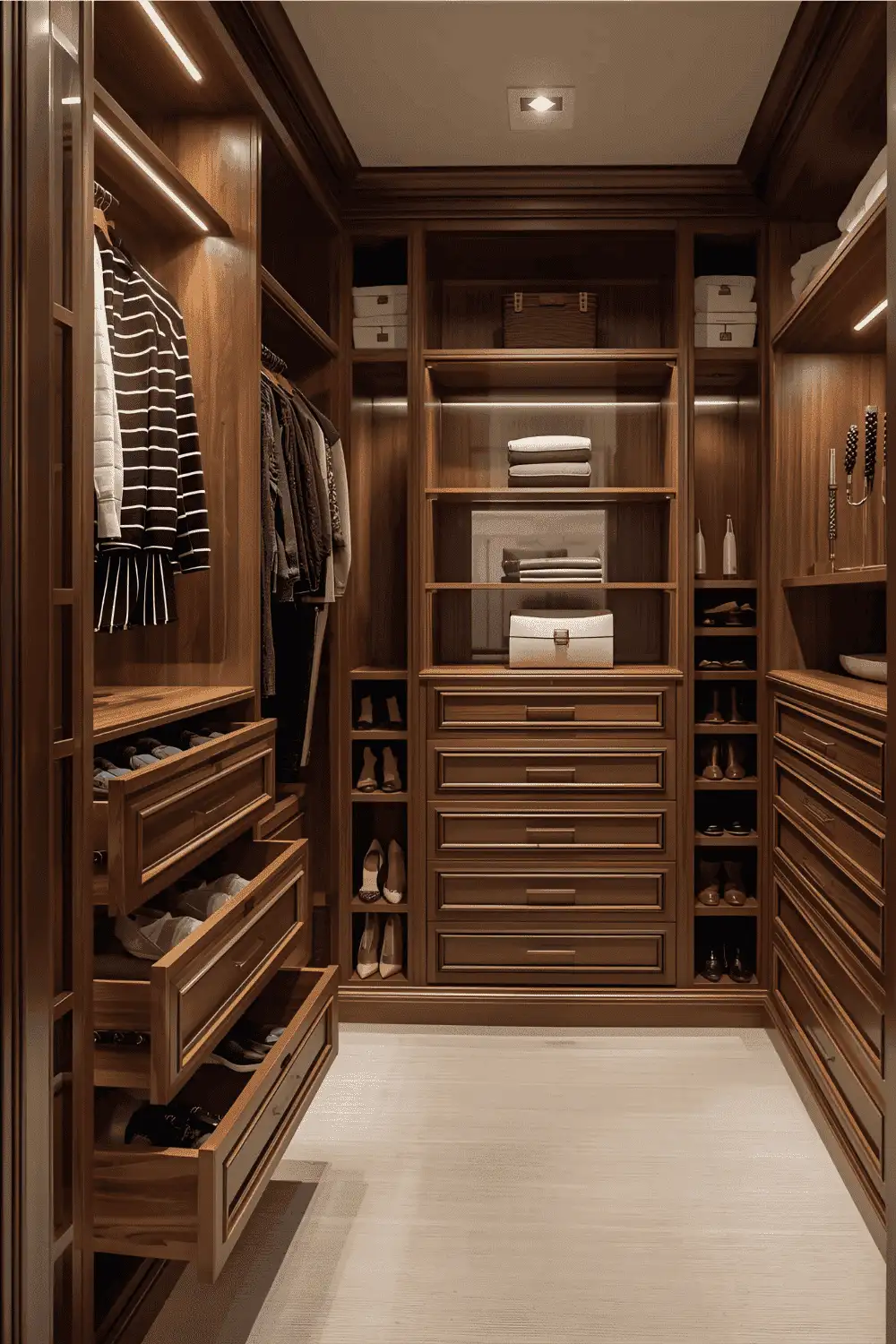
10. Build DIY Closet Organizers to Fit Your Space
Grab a tape measure and a free Saturday: DIY closet organizers cut from pine boards and brackets can outperform store-bought pieces because they’re sized to your exact walls. A simple 12-inch-deep shelf run along one side costs under $40 in lumber and holds bins, folded knits, and shoes.
Repurposed crates and hanging baskets add character, but be honest about the weight — anchor everything into studs, not drywall. Mixing one or two store-bought pieces, like a hanging rod or drawer unit, with DIY shelving usually gives the best cost-to-function ratio.
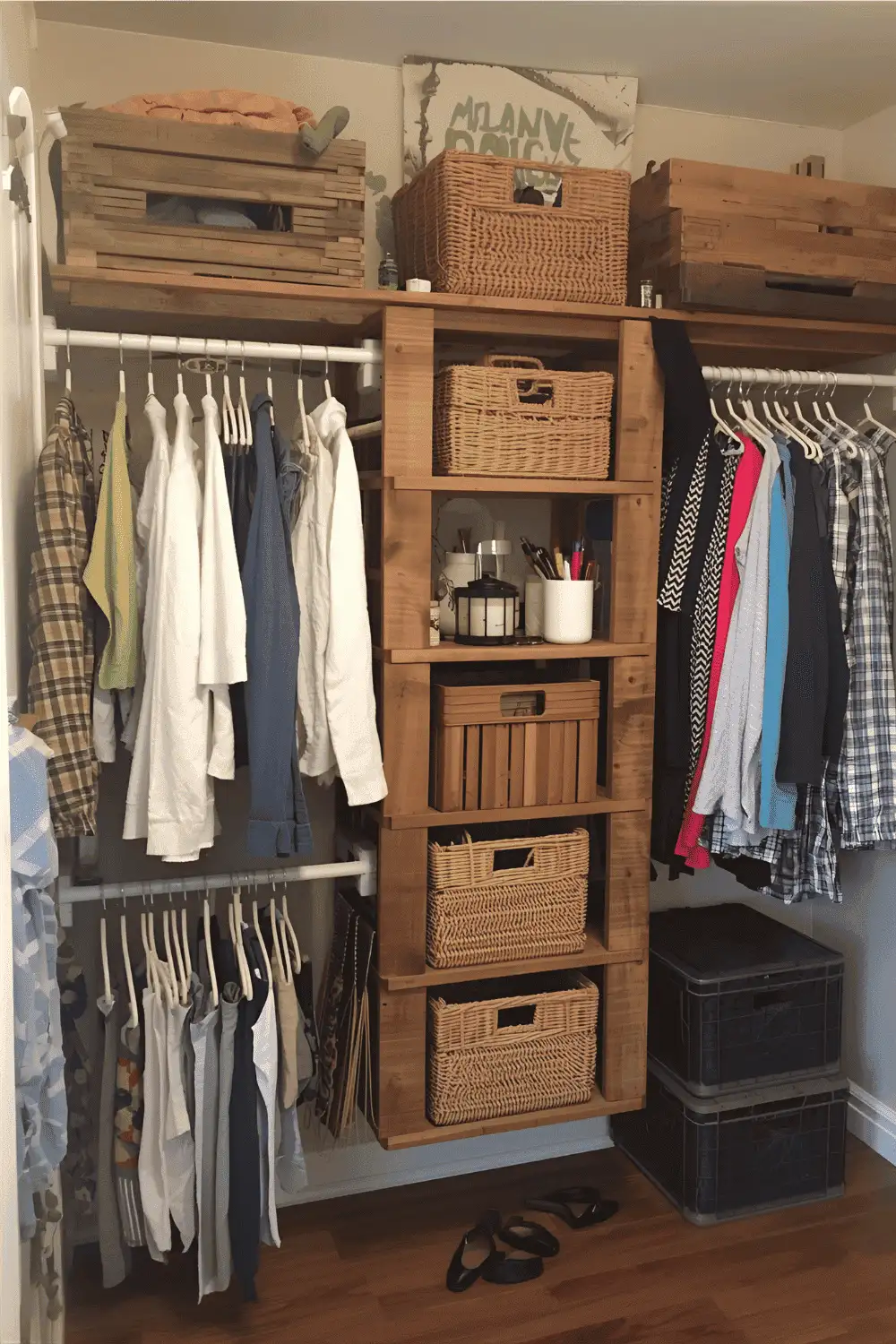
11. Light It Like You Mean It
A closet without light is a closet you avoid. Motion-sensor LED strips — $15 to $25 a roll — stick under shelves and switch on when the door opens, no electrician required. In a walk-in, one daylight-balanced ceiling fixture makes colors read true, so you stop grabbing the wrong black sweater.
Dark corners swallow accessories: a $10 puck light inside the shoe tower or handbag shelf ends the blind digging. With no outlet nearby, battery-powered options still last months on a charge.
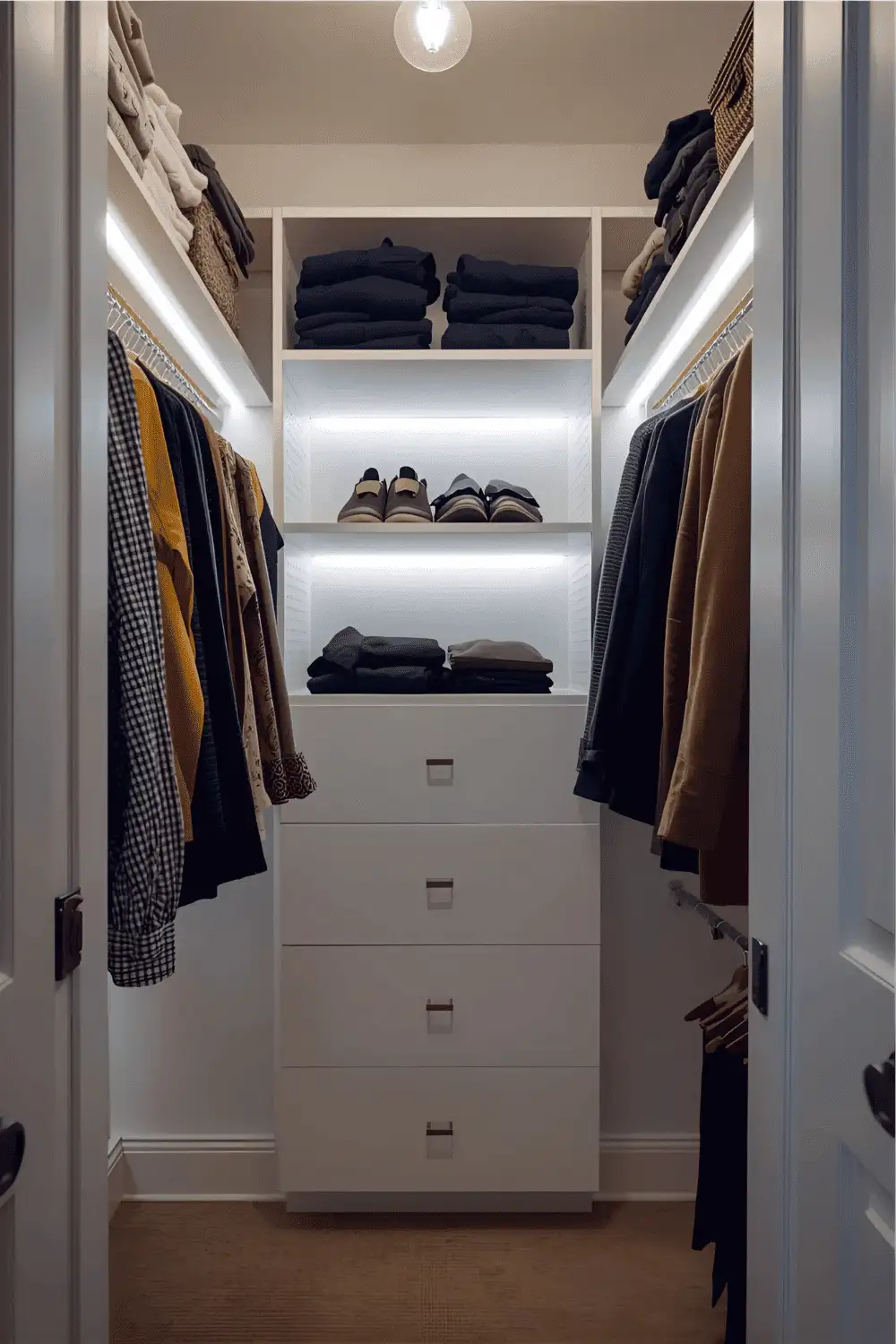
12. Sort by Category, Then by Color
Group clothes by category first — tops, bottoms, dresses — then by shade inside each group, and your closet becomes a visual menu. You spot gaps and duplicates instantly, which makes both getting dressed and shopping smarter noticeably faster.
The color order doesn’t need to be exact; light to dark in each section is plenty. Matching hangers multiply the effect — a uniform row of slim hangers makes even a packed rail look calm and deliberate.
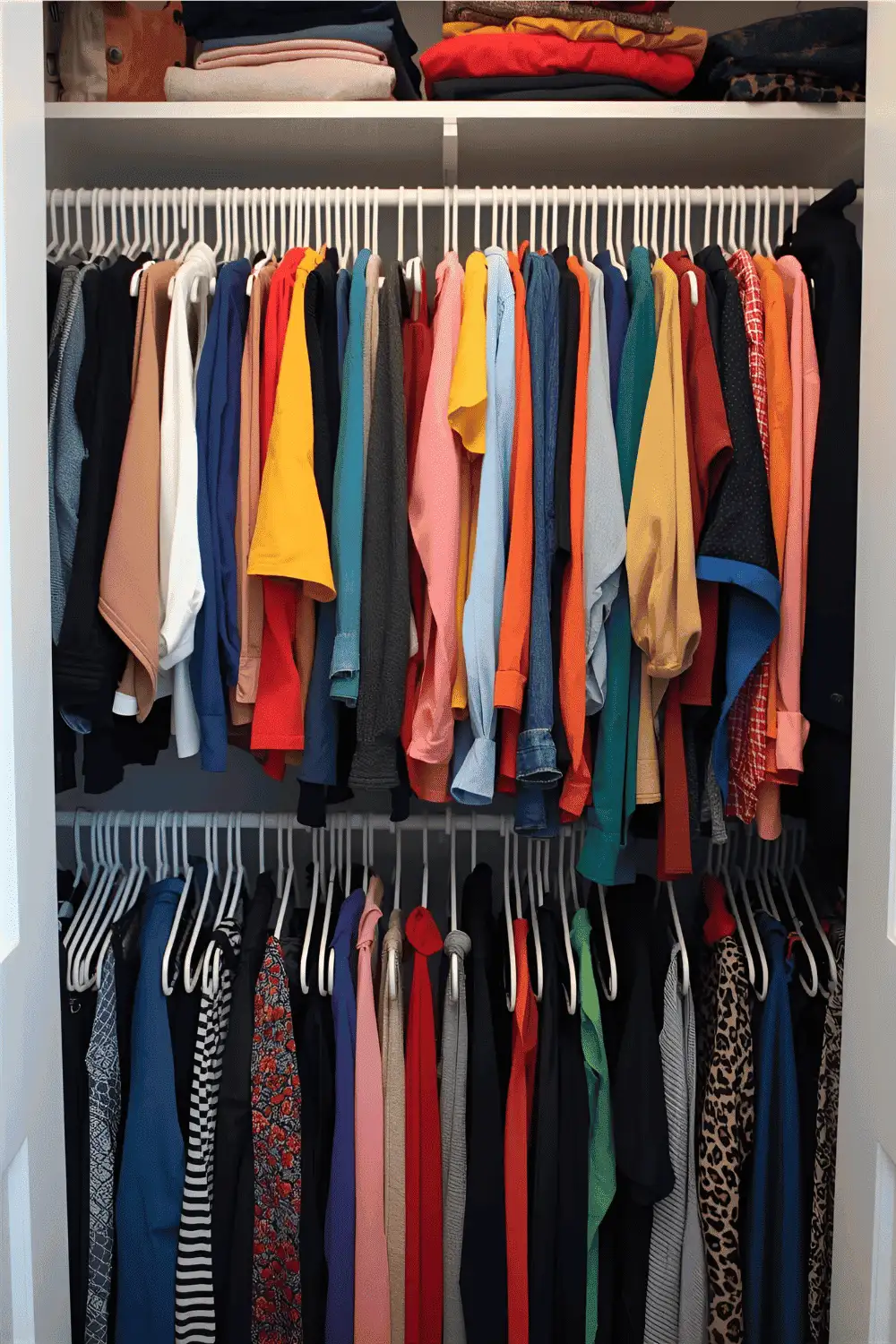
13. Banish Off-Season Clothes to Labeled Bins
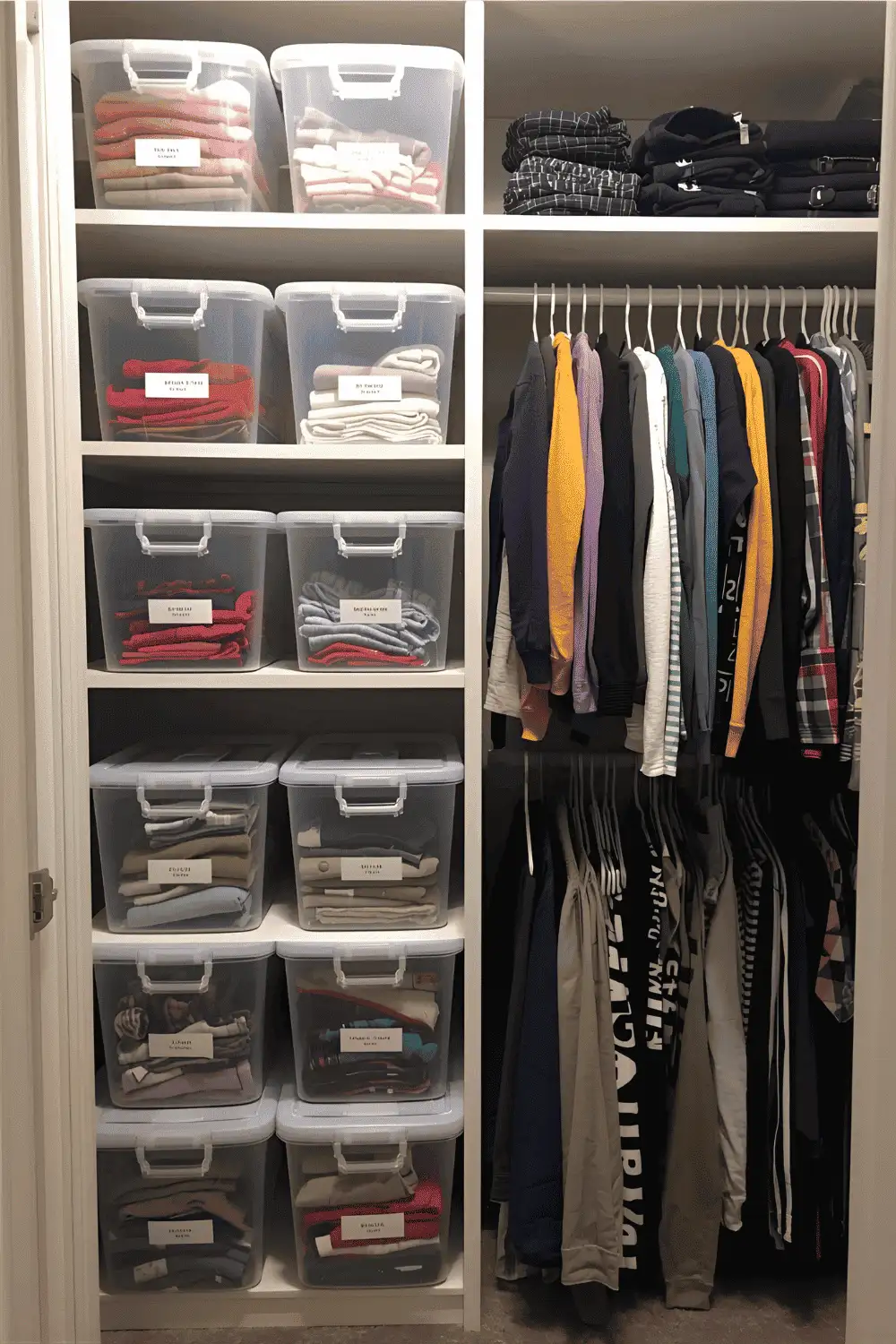
Off-season pieces earn their keep in labeled bins on the top shelf or under the bed, not on prime real estate. Clear bins let you find the winter coat without opening five boxes; fabric bins look better in open walk-ins. Label the short end so you can read it from below, and drop a cedar block in each to keep things fresh.
14. Go Tall: Use Every Inch of Ceiling Height
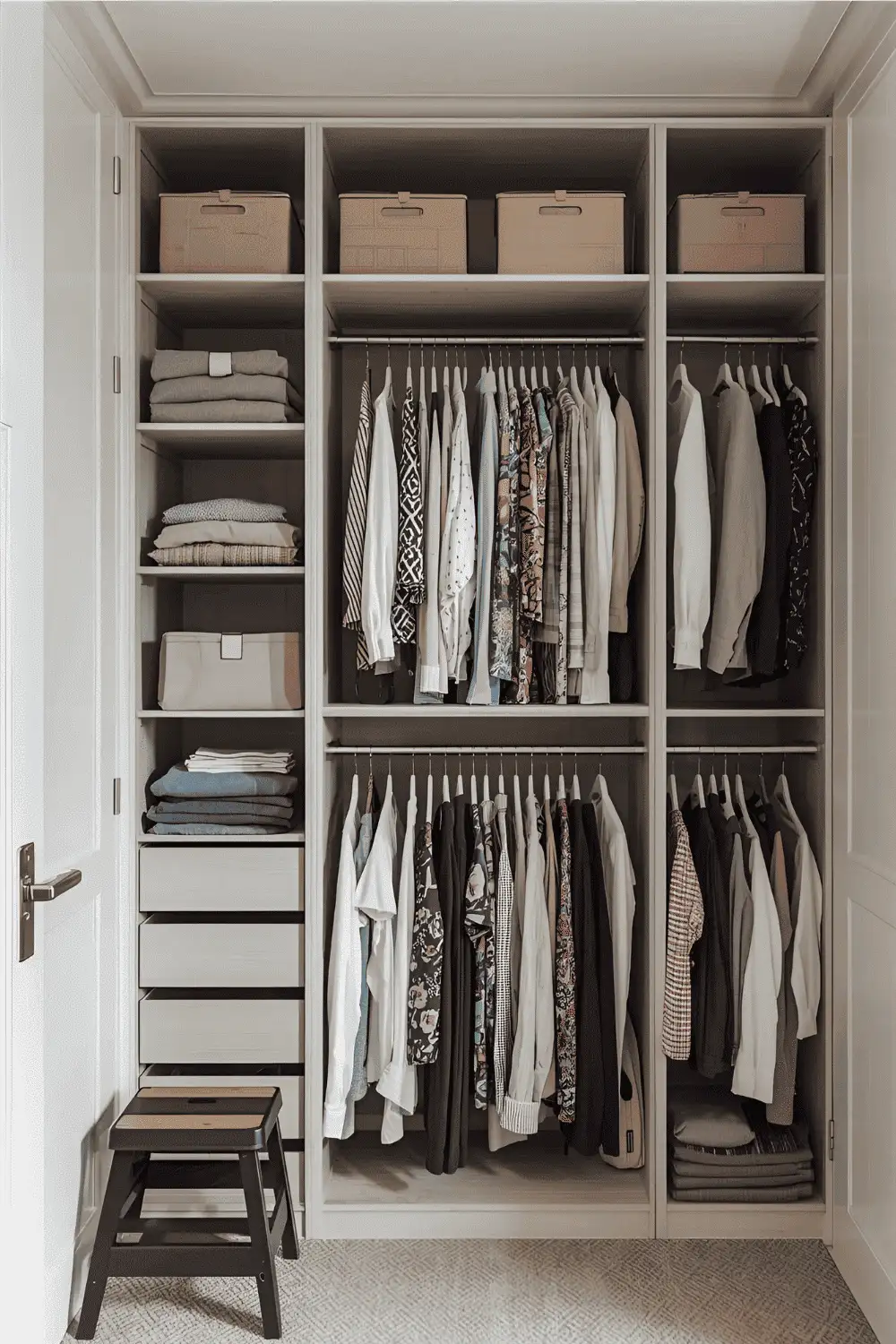
In rooms with nine-foot ceilings, the top two feet of a tall wardrobe are pure bonus storage — the right home for luggage, gift wrap, and the handbag you carry twice a year. Keep a folding step stool in the closet (about $25) so reaching up is safe instead of a chair-balancing act.
15. Declutter Twice a Year or Nothing Else Works
No storage system survives an overflowing wardrobe. Twice a year, pull everything out and sort into three piles: keep, donate, repair. If you haven’t worn something in twelve months and it has no specific future occasion, let it go — your daily outfit decisions get easier, and every organizer you installed suddenly works twice as well.
FAQs for Closet Organization