
Introduction
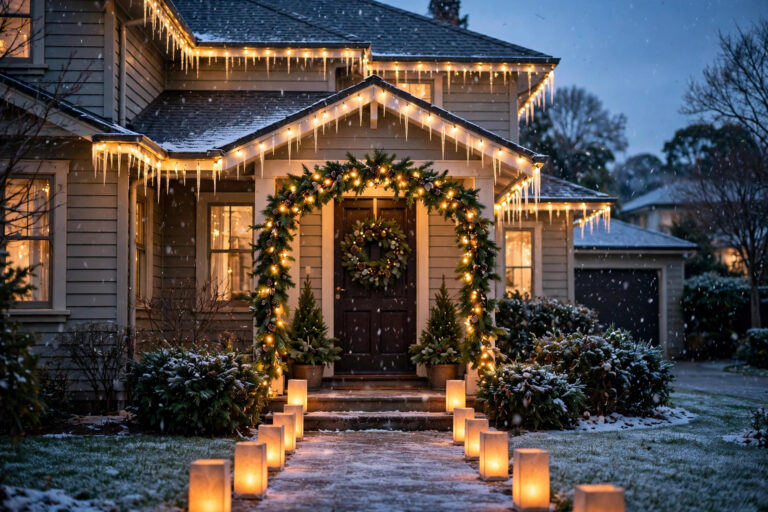
Here is the thing about winter wreaths: they are not Christmas wreaths. A Christmas wreath comes down December 26th; a winter wreath stays up through February, carrying your front door from the holidays into the deep winter months. I started making winter wreaths three years ago when I got tired of my porch looking bare in January. The key is avoiding anything explicitly Christmas — no red berries, no Santa, no “Merry Christmas” signs. Instead, think pinecones, frosted greens, white, silver, and natural textures. These 17 DIY winter wreath ideas use simple bases and materials you can find at craft stores (or your backyard), and most take under an hour.
1. Frosted Pinecone Wreath
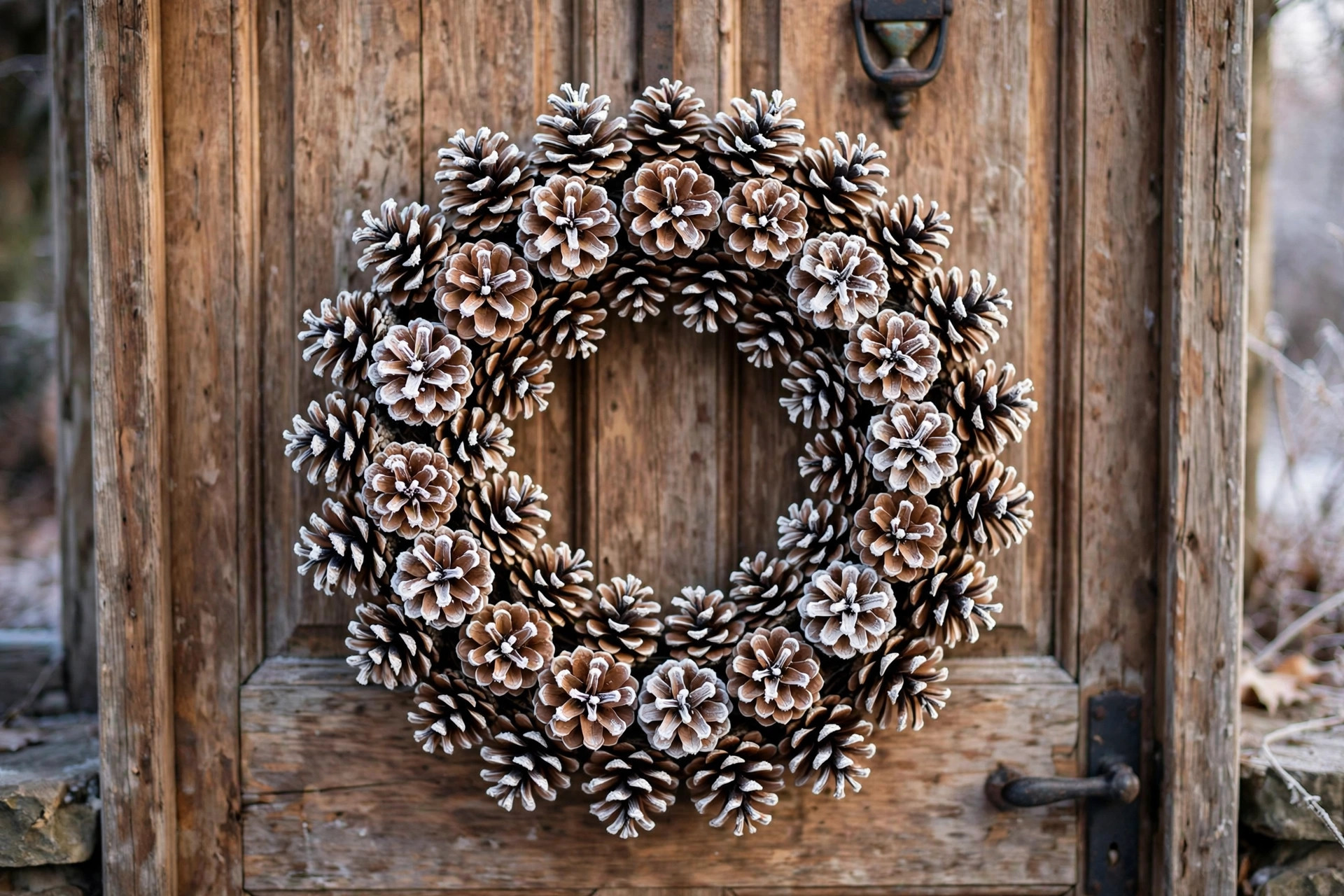
Pinecones are free if you collect them, and a wreath made entirely of pinecones is stunning. I hot-glue them onto a grapevine base, starting with the largest in the center and filling gaps with smaller ones. The “frosted” effect comes from brushing white craft paint lightly on the tips — do not overdo it; you want a dusting, not full coverage. I add a burlap bow for rustic charm. This wreath is incredibly durable; mine has lasted three winters stored in a garbage bag in the garage. Collect pinecones in fall when they are abundant, and make sure they are fully open and dry before gluing. The natural variation in size and color is what makes it beautiful.
2. Eucalyptus and White Berry
Seeded eucalyptus with white berries is my go-to for a soft, modern winter wreath. I buy two bunches of faux eucalyptus (real dries out and sheds) and wire them onto a grapevine form, then tuck in white berry picks. The silver-green and white palette is calm and elegant — it works on any door color. I add a simple white satin ribbon for hanging. This wreath transitions beautifully from December through March because there is nothing Christmas-specific about it. Total cost is about $25 in materials, and it takes 30 minutes. I have made three of these as gifts, and everyone asks where I bought them.
3. Birch Branch Rustic Wreath
Thin birch branches woven into a circle make a naturally beautiful wreath base that needs almost no decoration. I collect fallen birch branches (about pencil-thickness), soak them overnight to make them pliable, then weave them into a 18-inch circle, securing with floral wire. I add just a few white berries and a burlap bow — the branches are the star. The white bark with dark markings is striking against a dark door. This is the most “gathered from nature” wreath I make, and it costs nothing if you have birch trees nearby. It lasts one season, but the making is half the fun.
4. Silver and White Glam
For a touch of glam, I make a wreath on a white foam base wrapped in silver ribbon, then add silver ornaments in mixed sizes, white poinsettia picks, and silver berry stems. A small string of white fairy lights (battery-operated) makes it glow at night. This wreath is unapologetically sparkly — it catches light from the street and looks magical. I hang it on my black front door where the contrast is dramatic. The ornaments are shatterproof (important for an outdoor wreath), and I get them after Christmas on clearance. It is the most “decorated” wreath I make, but sometimes you want glam.
5. Dried Lavender and Wheat
Dried lavender bundles and wheat stalks make an unexpectedly beautiful winter wreath with a French countryside feel. I wire small lavender bunches around a straw base, then add wheat stalks pointing outward for texture. The purple-gray of lavender against golden wheat is subtle and sophisticated. It smells amazing for the first few weeks, too. This wreath is very lightweight, so it hangs easily. I keep it on my back door where I see it from the kitchen. It lasts for months — lavender and wheat are already dried, so there is nothing to wilt. A nice change from the usual pine-and-berry formula.
6. Flocked Evergreen Classic
A flocked (snow-dusted) evergreen wreath is the winter workhorse — it looks like fresh snow fell on it. I buy a pre-flocked artificial wreath (about $30) and embellish it minimally: a few pinecones, white berries, and a natural linen bow. The flocking does all the visual work. I fluff the branches thoroughly when I take it out of the box — this makes a huge difference. This wreath lives on my front door from Thanksgiving through February. The artificial flocking does not melt or yellow like real snow would. I store it in a wreath bag, and it has looked perfect for four years running.

7. Grapevine with Fairy Lights
Sometimes simple is best: a plain grapevine wreath wrapped with warm white fairy lights. That is it. The twisted vines catch the light beautifully, creating shadows and depth. I use the copper-wire fairy lights (the tiny ones on bendable wire) because they disappear into the vines. Battery pack hides behind the wreath. At night, it glows like something from a fairy tale. I hang this on my garden gate where there is no outlet — the battery lights solve that. It takes 10 minutes to make and looks effortlessly beautiful. This is my “I need something up today” wreath.
8. White Hydrangea Elegance
White hydrangeas — faux, because real ones do not survive winter — make a lush, full wreath that looks expensive. I hot-glue hydrangea heads onto a foam base, packing them tightly so no base shows through. I add a few silver brunia berries for texture contrast. The all-white palette is striking and modern. This wreath is heavier than most, so I use a sturdy over-the-door hanger rated for the weight. It is the most “wedding” of my winter wreaths, and I love it on my light gray door. Faux hydrangeas go on sale in January — that is when I stock up for next year.
9. Burlap and Pine Winter
Burlap ribbon woven through a pine wreath gives you farmhouse winter without any fuss. I use 4-inch wired burlap ribbon, weaving it in and out of the branches in loose loops, then add pinecones and a few white berries. The burlap’s natural tan color warms up the green pine. I finish with a big burlap bow — I watch a video every year to remember how to tie a good bow. This wreath is very forgiving; the rustic style means imperfection looks intentional. It is my most “Pinterest farmhouse” wreath, and I mean that as a compliment. The fall porch decor uses similar natural textures.

10. Ice Blue Ornament Wreath
Pale blue and silver ornaments on a white base make a wreath that looks like ice. I use a white styrofoam base, cover it with pale blue ornaments in various sizes (hot-glued), then fill gaps with silver berry picks and white tinsel. It is cool-toned and crisp — perfect for January when you want winter without warmth. I hang this inside on a mirror where it reflects beautifully. The monochromatic blue is calming. All the ornaments are shatterproof plastic, so it is lightweight and safe. This is the wreath people photograph; the color is unusual and eye-catching.
11. Twig and Berry Minimalist
A few bare twigs formed into a circle, with red or white berries tucked in — that is the whole wreath. I love the sculptural simplicity. I use curly willow branches (they have a natural twist that is gorgeous) formed into a loose circle and wired. Then I add berry picks sparingly — less is more here. This wreath is more art piece than decoration. It looks amazing on a modern home with clean lines. The negative space is intentional; do not be tempted to fill it. I hang this on my office door where I want something interesting but not busy. It takes 20 minutes and looks like it cost $80.
12. Felt Ball Winter Wreath
Wool felt balls in white, gray, and pale blue, strung on wire and formed into a wreath — it is soft, modern, and tactile. I buy bags of felt balls (about 100 for a 16-inch wreath) and thread them onto floral wire, then shape the wire into a circle. Kids love touching this wreath. It is incredibly lightweight and completely weatherproof (wool does not mind cold). I add a simple ribbon for hanging. The texture is the whole point — from a distance it looks like snowballs. My kids helped make this one; threading felt balls is perfect for little hands. It is cheerful without being childish.

13. Magnolia and Cotton
Magnolia leaves with cotton bolls is Southern winter at its finest. I wire faux magnolia branches onto a grapevine base, then tuck in cotton stems (the fluffy white bolls on brown stems). The glossy green, velvety brown leaf backs, and soft white cotton create beautiful texture contrast. I add a natural jute bow. This wreath feels established and timeless. Real cotton stems are inexpensive and last for years. I hang this on my front door in December and leave it through February — the magnolia and cotton read as “winter,” not “Christmas.” It is elegant without trying too hard.
14. Evergreen and White Candle Wreath
A wreath with candle holders built in — I attach small glass votive holders to a sturdy evergreen wreath using floral wire, then add battery tealights. At night, the wreath glows from within. It is absolutely magical. I use LED tealights (never real flames on a wreath) with a timer so they come on at dusk automatically. The evergreen can be faux or fresh; I use faux for longevity. This wreath gets more compliments than any other I make. People stop on the sidewalk to look at it. The key is spacing the votives evenly and hiding the wires in the greenery.
15. Dried Citrus and Greenery
Dried orange slices wired onto an evergreen wreath add unexpected color and a lovely scent. I dry my own oranges (low oven, several hours), then attach them with floral wire, interspersed with cinnamon sticks. The amber-orange against green is warm and inviting — very different from the typical winter palette. It smells like Christmas without any artificial fragrance. I make this one fresh each year because the oranges darken (beautifully, but they do change). It is the most “artisan” looking wreath I make. Guests always ask about it. The Christmas mantel ideas use dried oranges too — they coordinate perfectly.

16. White Birch and Snowberry
White birch stems (faux) with white snowberries on a simple base — this wreath is all about texture in white. I bundle birch stems and wire them into a loose circle, then add snowberry picks throughout. Against a dark door, it is striking; the white pops dramatically. It is monochromatic but far from boring because the textures vary so much (smooth birch bark, round berries, wispy stems). I add nothing else — no bow, no ribbon. The simplicity is sophisticated. This is my most modern wreath, and it looks great on contemporary homes. It also photographs beautifully for anyone sharing their decor.
17. Pinecone and Evergreen Swag Wreath
Not quite a full circle — a teardrop swag wreath is a fresh take. I build it on a wire swag form, layering evergreen branches from bottom to top, then add pinecones clustered at the bottom (the heaviest visual point). A burlap bow at the top finishes it. The asymmetrical shape is more dynamic than a round wreath and suits tall, narrow doors perfectly. I hang it slightly off-center for an editorial look. This is the wreath I make when I want something different from the usual circle. It takes the same time as a round wreath but looks more custom and intentional.
Styling Tips
- Choose winter (not Christmas) elements if you want the wreath to last past December — skip red, Santa, and holiday signage.
- Hang with a wide ribbon looped over the door (secured inside with a hook) instead of a metal hanger that scratches.
- Fluff artificial wreaths thoroughly — pull every branch outward. This single step makes a $30 wreath look like $80.
- For outdoor wreaths, use shatterproof ornaments and battery lights rated for outdoor use.
- Store wreaths in bags (not boxes) to prevent crushing — hang them in a closet or garage if possible.
- Make the bow separately and attach last; it is easier to get right when you are not fighting the whole wreath.
Frequently Asked Questions
How do you make a winter wreath? Start with a base (grapevine, foam, or wire form), attach your main greenery or material with floral wire or hot glue, then layer in accents (berries, pinecones, ornaments) and finish with a bow or ribbon. Most DIY wreaths take 30-60 minutes. Grapevine bases are easiest for beginners because you can tuck and wire without glue.
What is the difference between a Christmas wreath and a winter wreath? Christmas wreaths use holiday-specific elements (red berries, ornaments, Santa, “Merry Christmas” signs) and come down after December 25th. Winter wreaths use seasonal-but-neutral elements (pinecones, white berries, frosted greens, natural textures) and stay up through February. The key is avoiding anything explicitly Christmas.
When do you put up a winter wreath? Hang it in late November or early December, and leave it through February. Unlike Christmas-specific decor, a winter wreath is appropriate for the entire cold season. I put mine up the weekend after Thanksgiving and take it down when I see the first spring bulbs emerging.
How long do fresh winter wreaths last? Fresh evergreen wreaths last 3-4 weeks outdoors in cold weather (cold preserves them). Indoor fresh wreaths dry out faster — about 2 weeks. Mist outdoor wreaths occasionally if there is no rain or snow. For longer enjoyment, use high-quality faux greenery, which looks good for years with proper storage.
Final Thoughts
A winter wreath is the hardest-working decoration you will make — it greets guests for three months, not three weeks. Pick one of these 17 ideas that suits your style, gather your materials, and give yourself an hour. Your front door will thank you every time you come home, from the first frost through the last snow. Love the fresh-greenery look? These Christmas garland ideas use the same techniques on mantels, staircases, and doorways.