25 Simplistic Bedroom Decor Ideas That Feel Calm and Timeless
The calmest bedrooms share a formula: clarity, function, and very little excess. A minimalist bedroom supports rest by removing visual distractions — but the good ones stay warm and personal, never sterile. These ideas borrow from Scandinavian balance and Japanese simplicity, and every one of them comes down to the same three things: proportion, material quality, and thoughtful spacing.
Whether you’re working with a compact box room or a spacious master suite, these 25 bedroom decor ideas build a space that feels intentional, comfortable, and easy to live with — not just easy to photograph.
1. Minimalist Bed Frame as the Visual Anchor
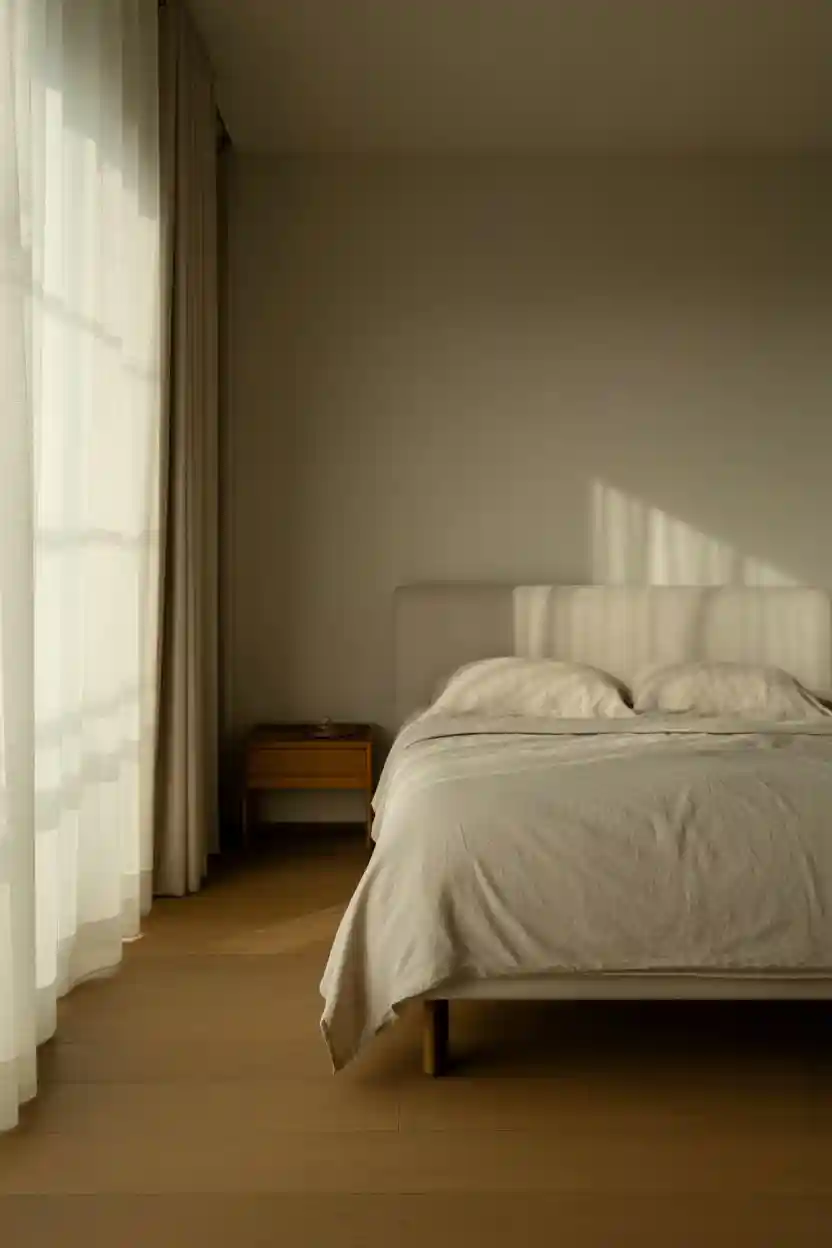
The bed sets the tone for everything else. A minimalist frame — clean lines, low profile, neutral matte finish in wood or metal — grounds the layout without dominating it. Keep the visual weight centered here and the rest of the room can stay light, which is the essence of modern bedroom design done calmly.
Pair it with simple bedding and clear surroundings, and the bed reads as calming rather than dominant. One strong anchor means everything else can breathe.
2. Neutral Color Palette for Visual Breathing Room
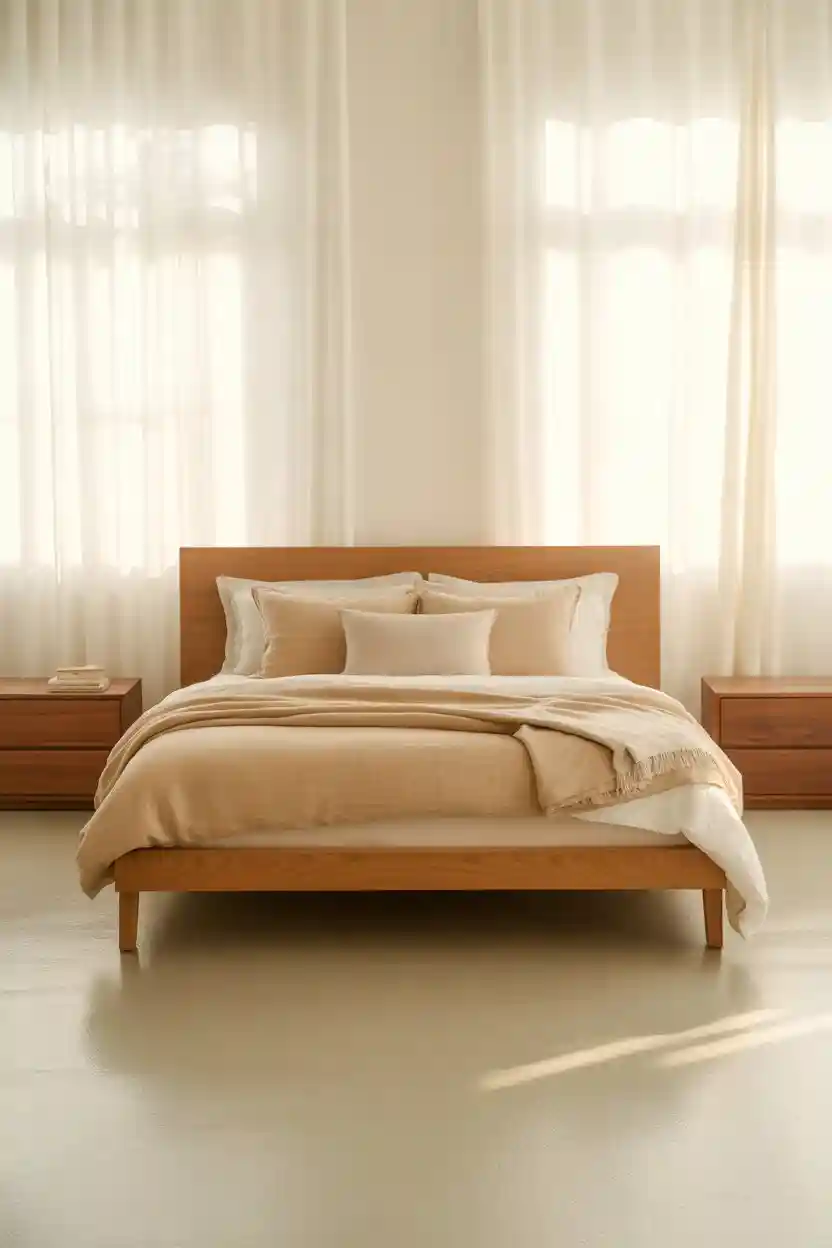
Soft whites, warm beiges, muted grays — neutrals lower the visual tension so your eyes can actually rest. They bounce light around, make small rooms feel open, and never go out of style, which means you won’t be repainting in three years.
A restrained palette also lets texture do the talking — a nubby throw, a linen duvet — and gives you a base that accepts small seasonal swaps without a rethink.
3. Minimalist Bedding with Texture Instead of Pattern
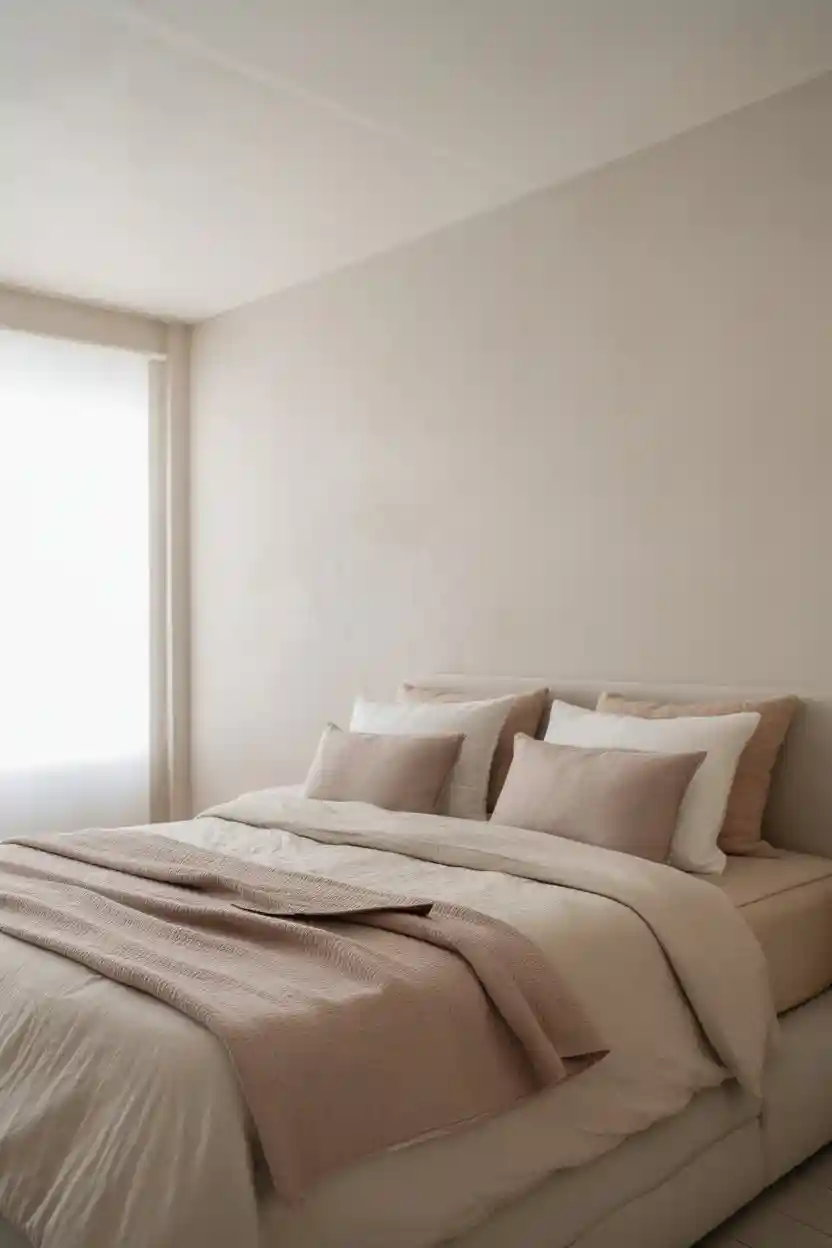
Choose bedding for texture, not pattern: washed linen, good cotton, a light waffle weave. These add depth while staying visually quiet — comfort without clutter, and they only get softer with washing.
Skip the seven-pillow arrangement — two sleeping pillows and one or two in front is plenty. Natural creases and soft folds make the bed feel relaxed and lived-in rather than styled for a photo shoot, and making it takes thirty seconds.

4. Open Floor Space as a Design Element
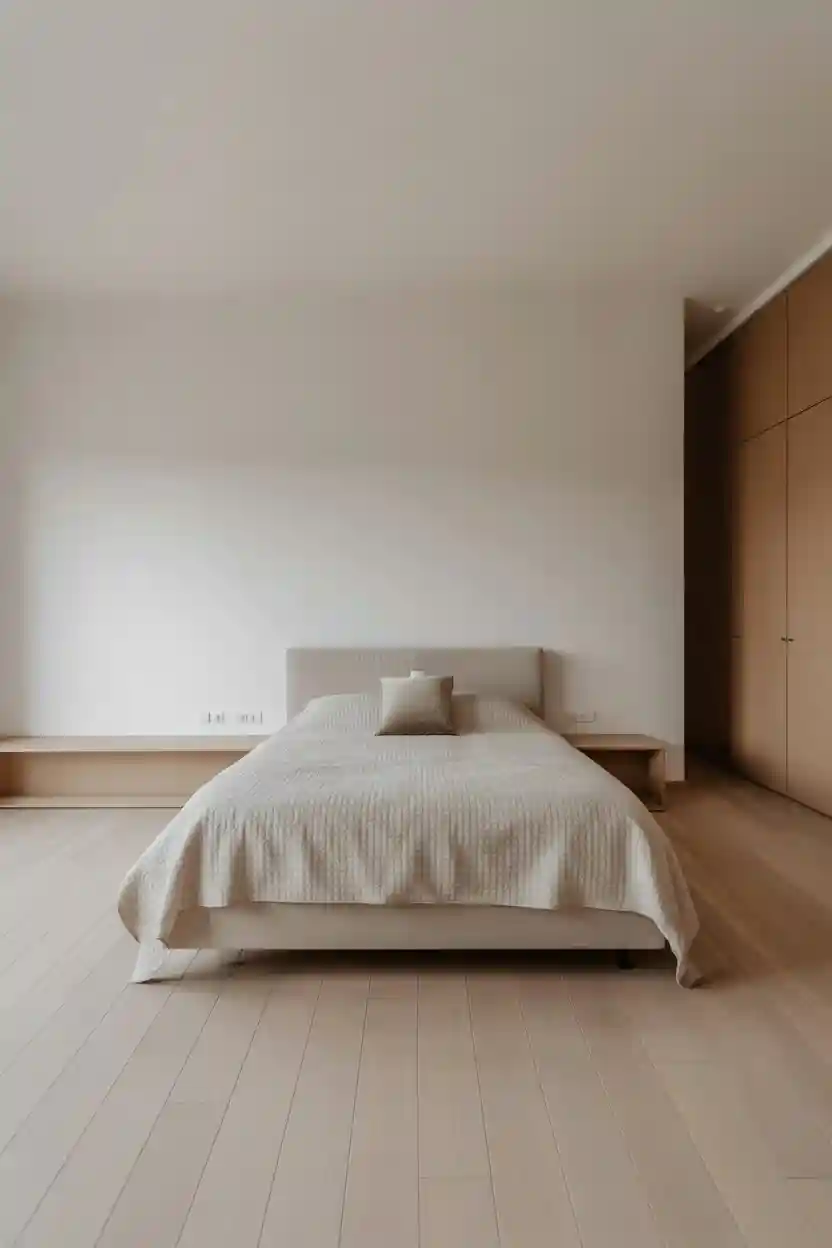
Empty floor isn’t wasted floor. Leaving clear space around the bed improves movement, airflow, and visual calm — openness as a deliberate feature, not a missing piece. Limit furniture to the essentials and even a small room feels larger and more breathable instead of crowded.
5. Scandinavian-Inspired Simplicity
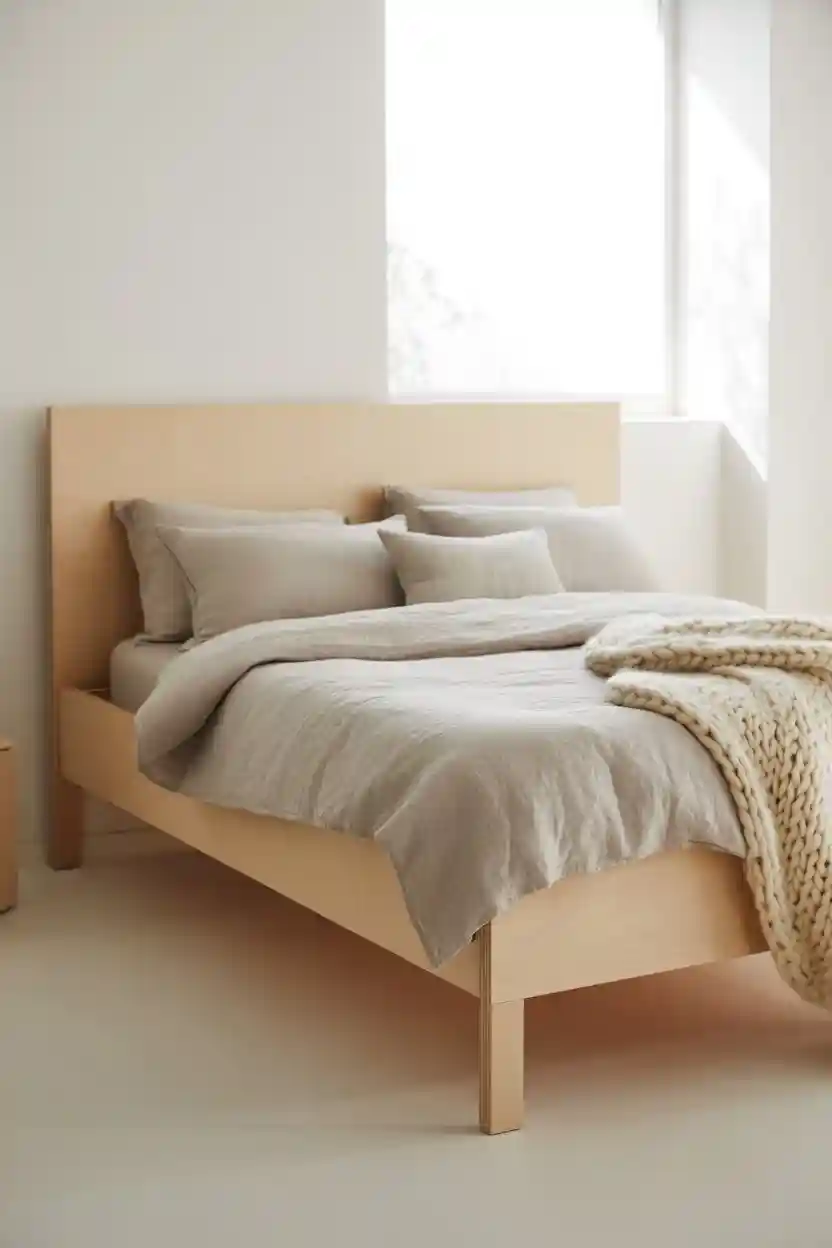
Scandinavian style is minimalism with a pulse: pale woods, soft whites, and practical furniture with clean silhouettes. It balances restraint with genuine comfort — subtle textures like sheepskin or woven cotton replace decoration. The look suits small rooms and master suites alike and never really dates.
6. Japanese Minimalist Bedroom Balance
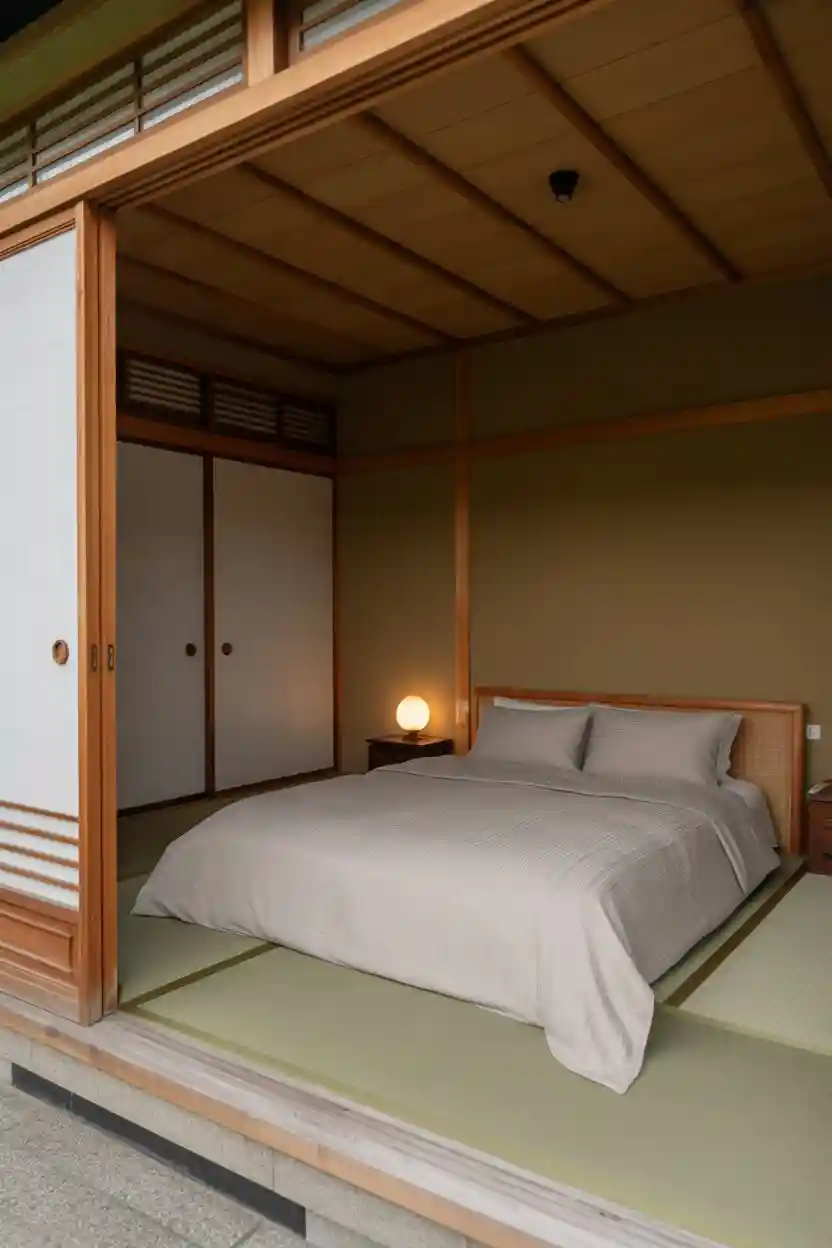
Japanese-inspired minimalism goes further: low platform beds, very few furnishings, and negative space treated as a design element. Natural materials and muted tones keep it grounded rather than empty. The payoff is real — a room that actively supports rest and mental clarity.
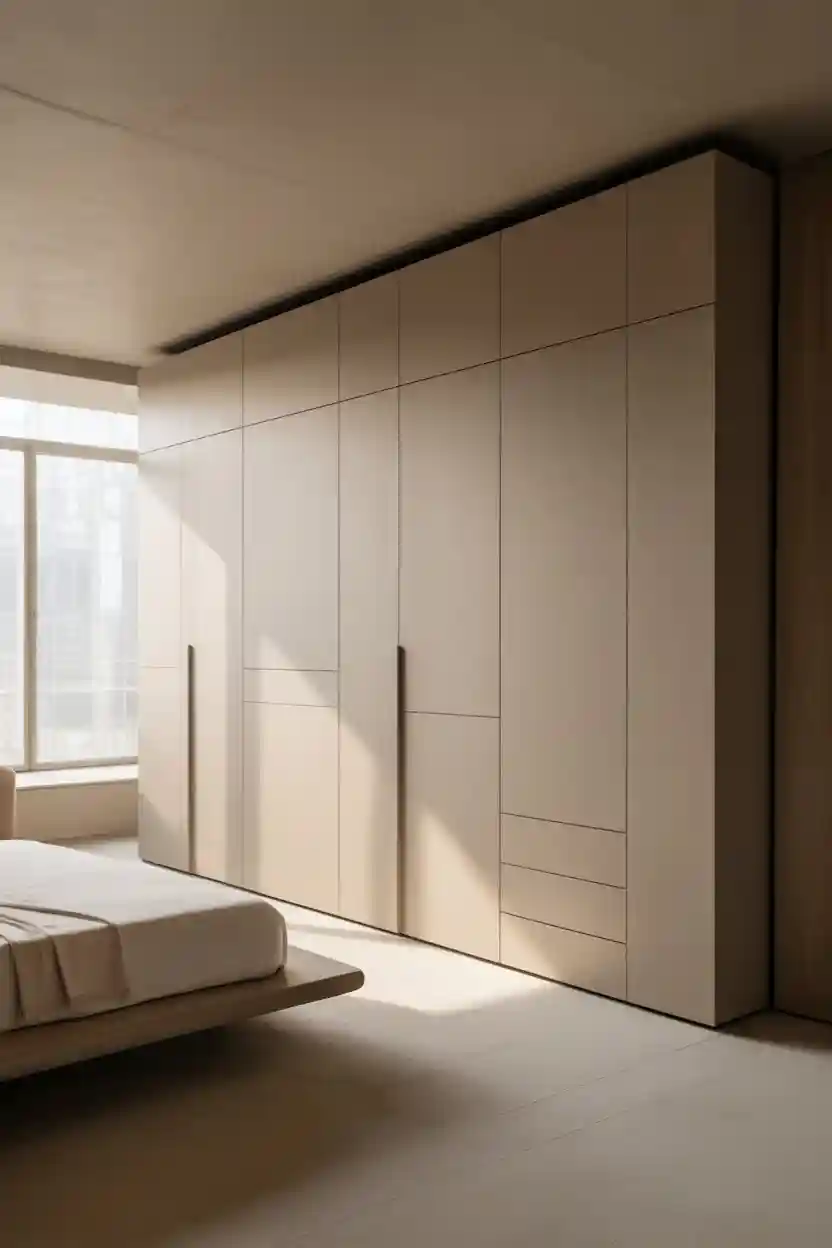
7. Built-In Storage for Visual Cleanliness
Built-ins are the minimalist’s secret weapon: wardrobes and shelving set into the walls eliminate the need for extra furniture entirely. Surfaces stay clean and uninterrupted, and storage becomes invisible rather than dominant — most valuable in small rooms where every inch counts.
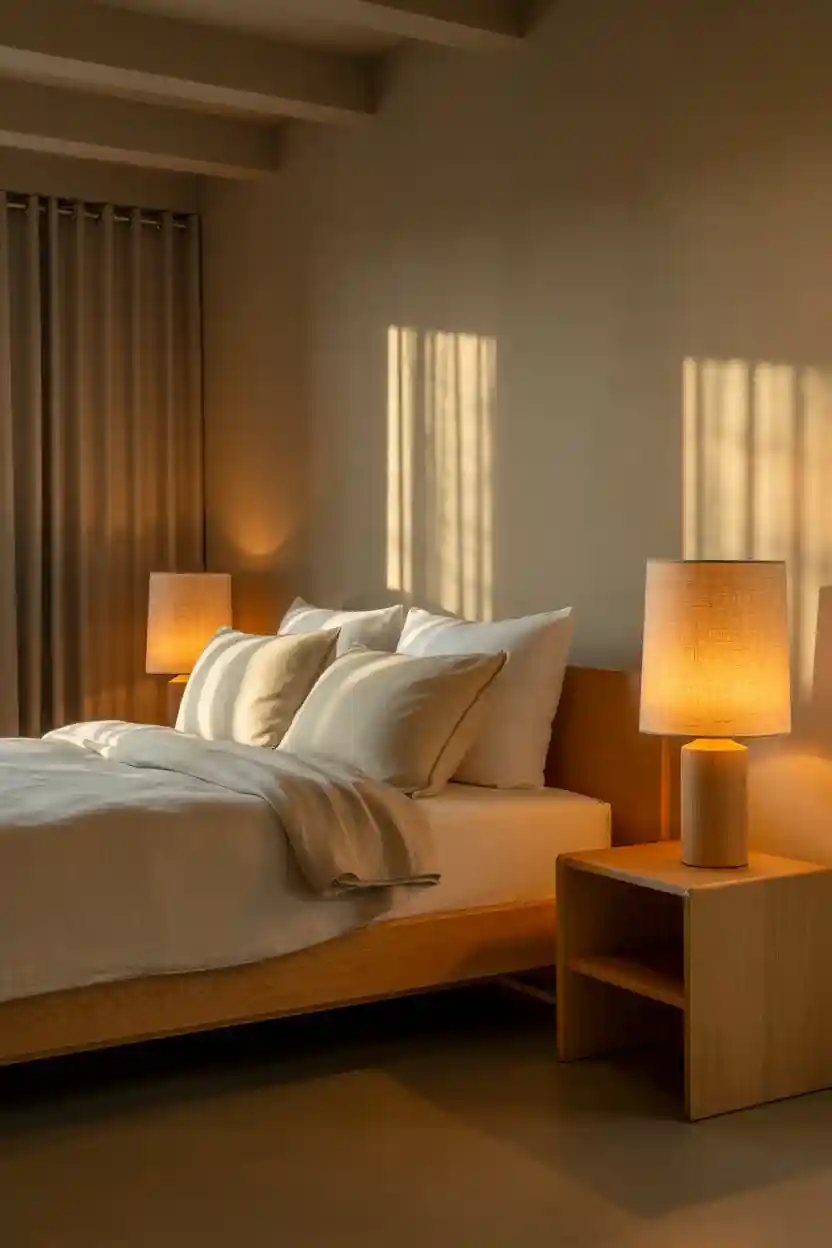
8. Soft Lighting Instead of Decorative Excess
In a pared-back room, lighting does the decorating. Soft, warm light — a table lamp, a wall-mounted reading light, a dimmer on the overhead — creates atmosphere without a single accessory. Get the lighting intentional and the room feels finished with far fewer objects.
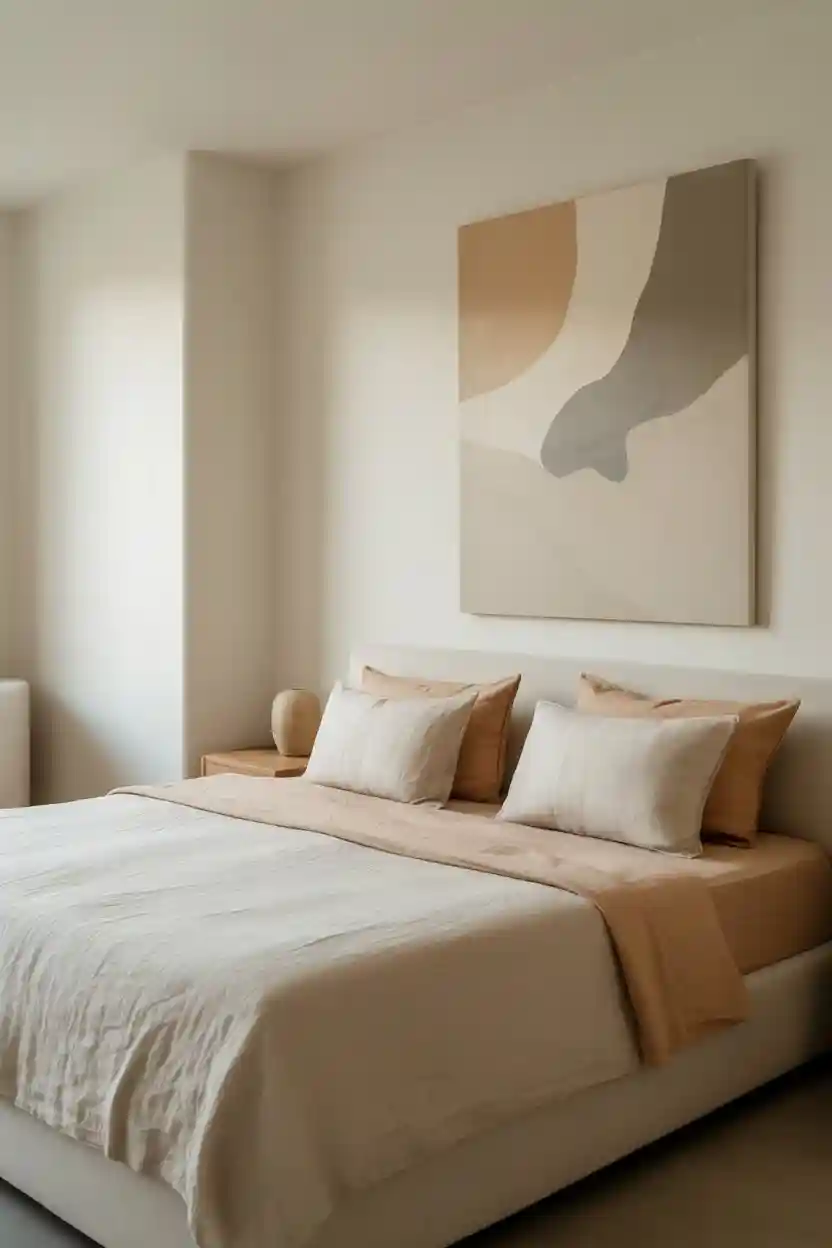
9. Minimal Wall Art with Purpose
Wall art in a minimalist bedroom should earn its wall. One meaningful piece — placed with care, at proper eye level — creates focus without noise. A single artwork can set the room’s entire emotional tone, which is exactly why restraint works: calm walls, personal depth.
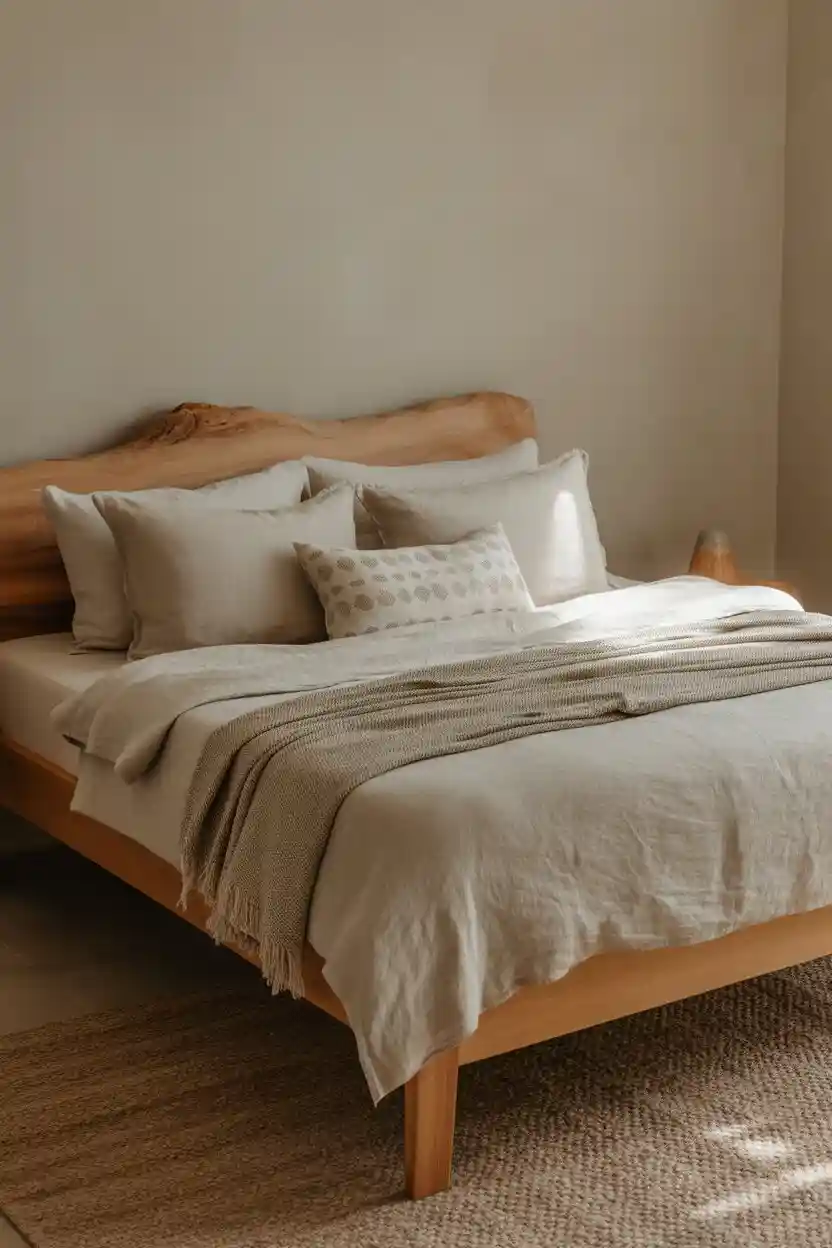
10. Natural Materials for Subtle Warmth
Wood, linen, wool — natural materials are what keep simplicity from feeling sterile. They add comfort quietly through touch, age beautifully, and make the space feel grounded. Authentic materials are the difference between minimal and cold.
11. Low-Profile Furniture for Visual Flow
Furniture that sits low — platform beds, low benches, short nightstands — keeps sightlines open and reduces visual weight. The room reads as more spacious and calm, with a proportional harmony that taller pieces can’t deliver.
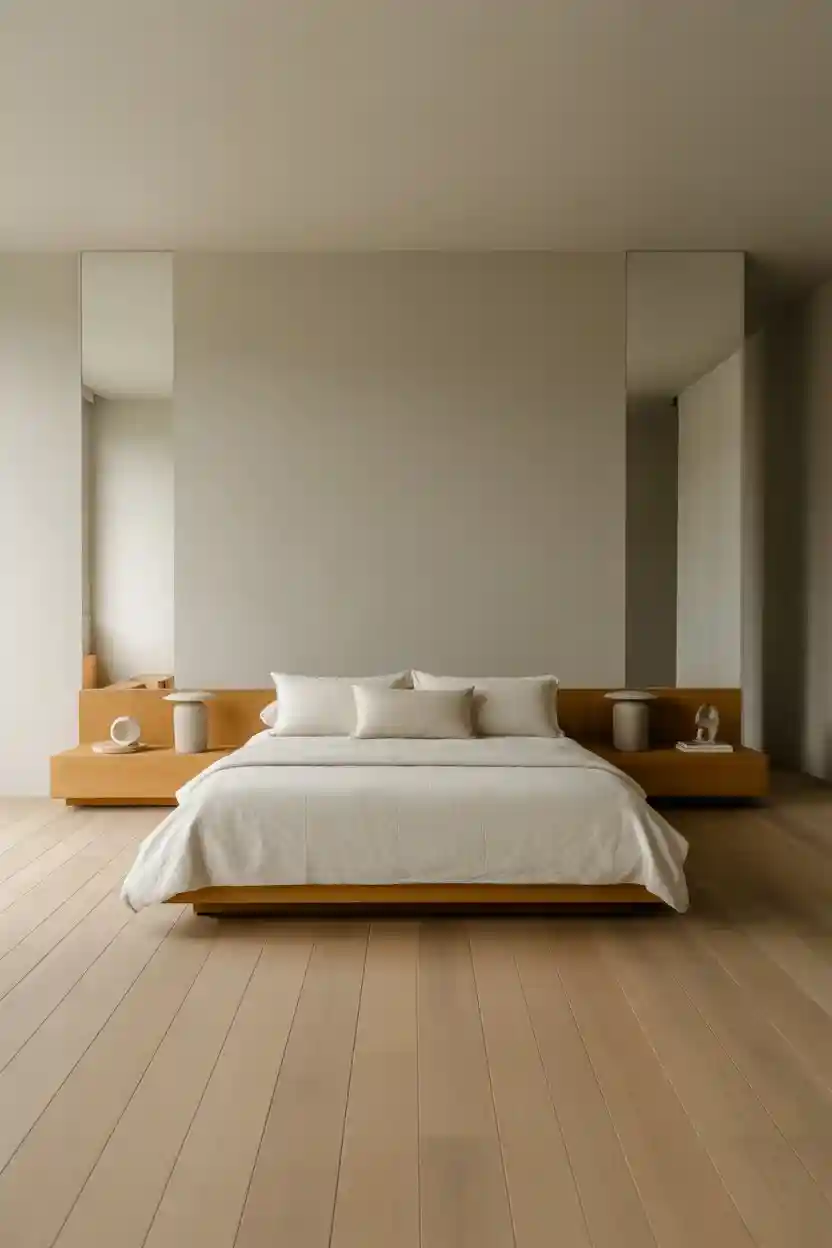
12. Minimal Nightstands with Only Essentials
A nightstand needs to hold a lamp, a book, and a glass of water — that’s the whole job description. Floating or slim designs keep things visually light, and a clear surface makes the entire room feel more intentional.
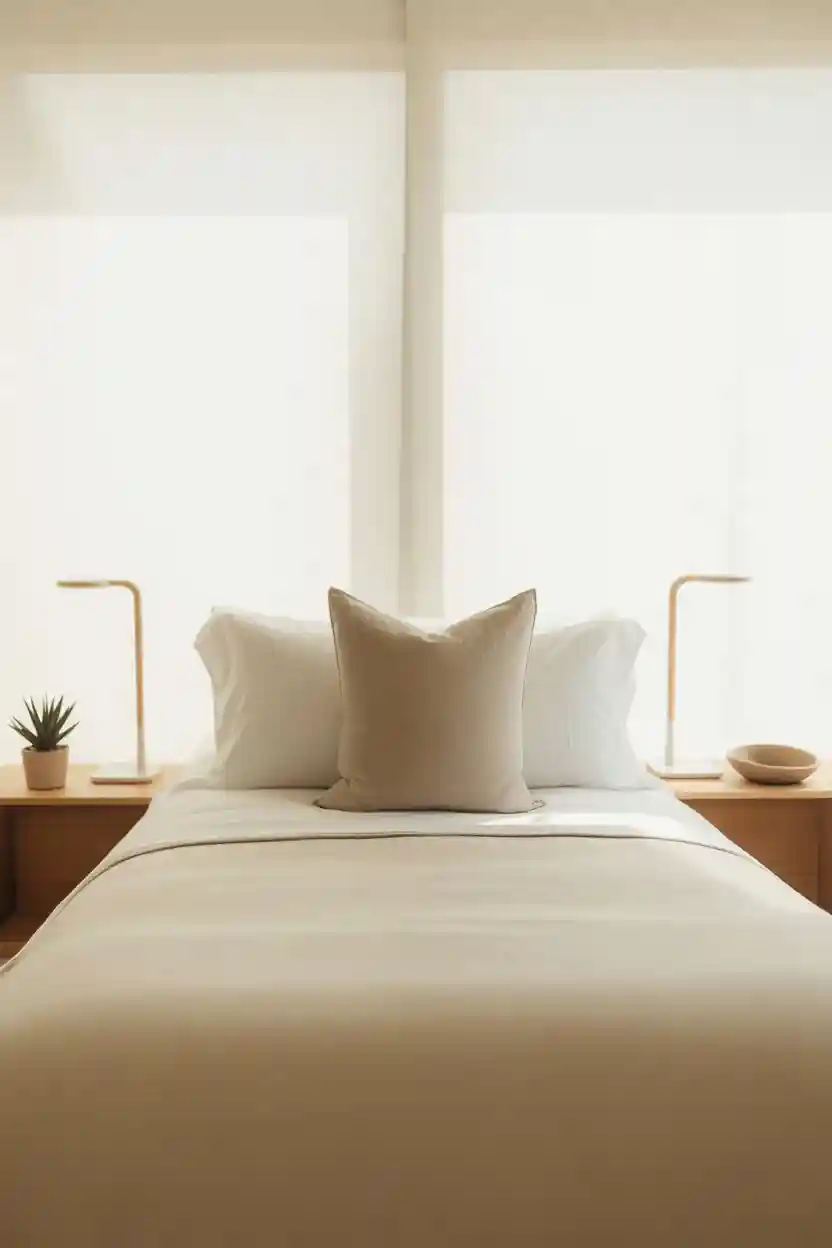
13. White Minimalist Bedroom for Timeless Calm
An all-white bedroom amplifies light like nothing else — walls bounce daylight deep into the room. The trick is layering textures (matte paint, linen, boucle, pale wood) so it stays interesting without color. White is the most adaptable foundation there is.
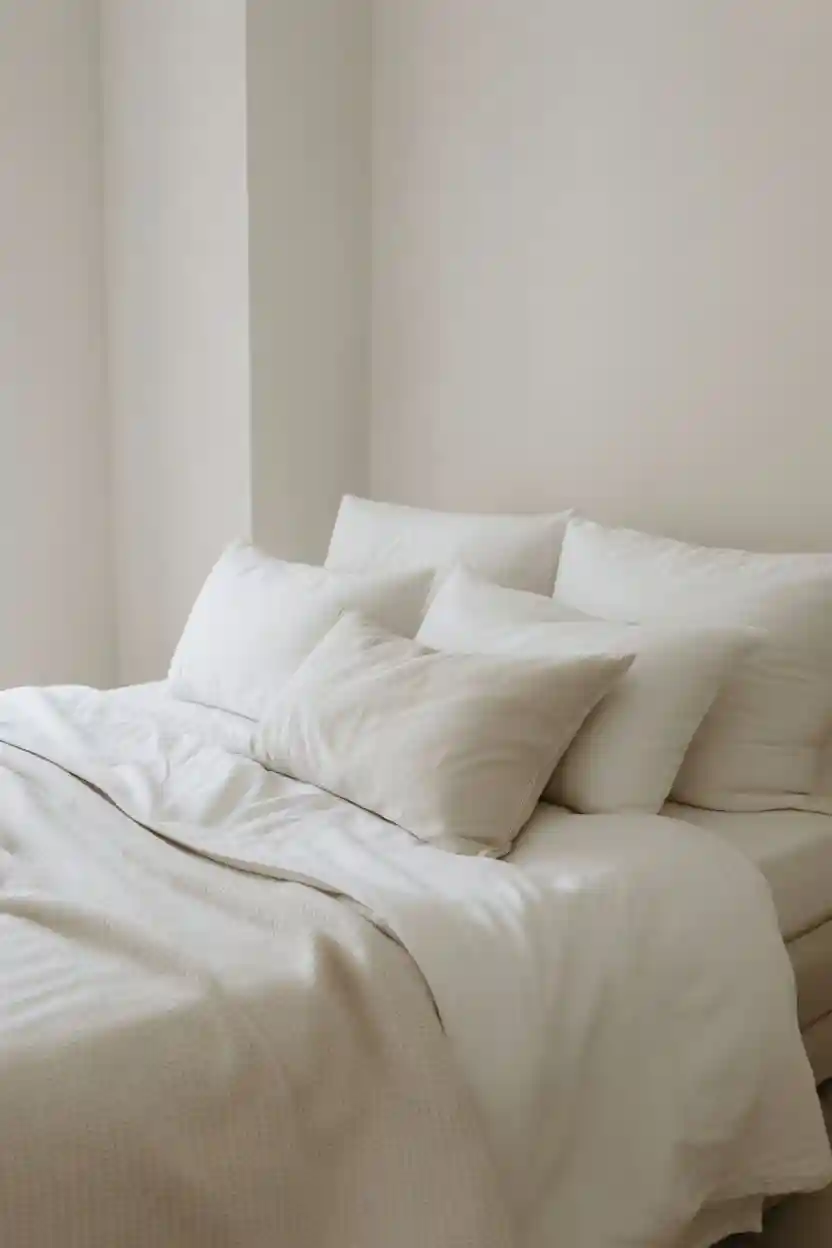
14. Cozy Minimalist Bedroom Through Soft Textiles
In simple bedroom decor, comfort comes from textiles, not objects. A soft rug underfoot, a throw with weight, good bedding — these add warmth without adding a single thing to dust. Soft textures counterbalance clean lines, and the room stays simple while feeling genuinely inviting.
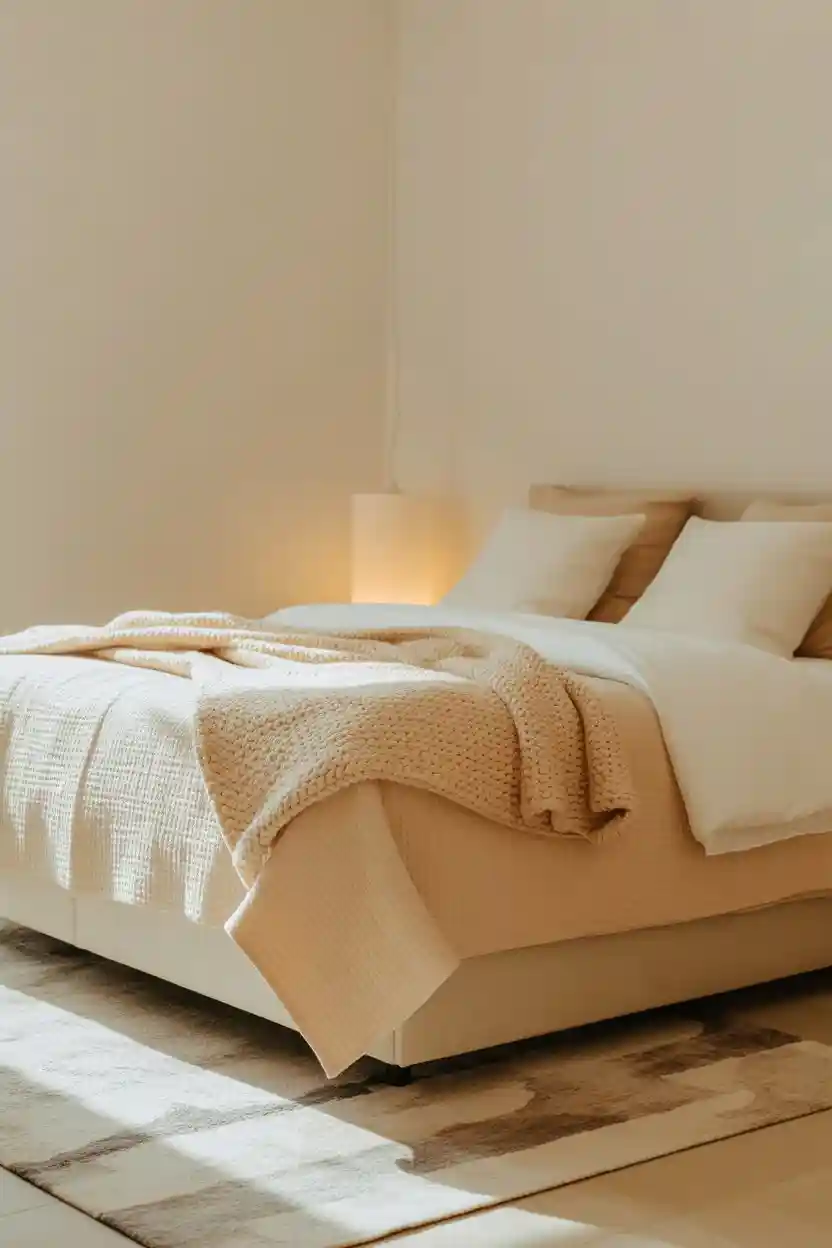
15. Minimalist Master Bedroom Layout
Big rooms need restraint most — it’s tempting to fill them. Symmetry and generous spacing create visual stability, and clear zones (sleep, dress, read) improve flow. In a master suite, luxury comes from proportion, not from more furniture.
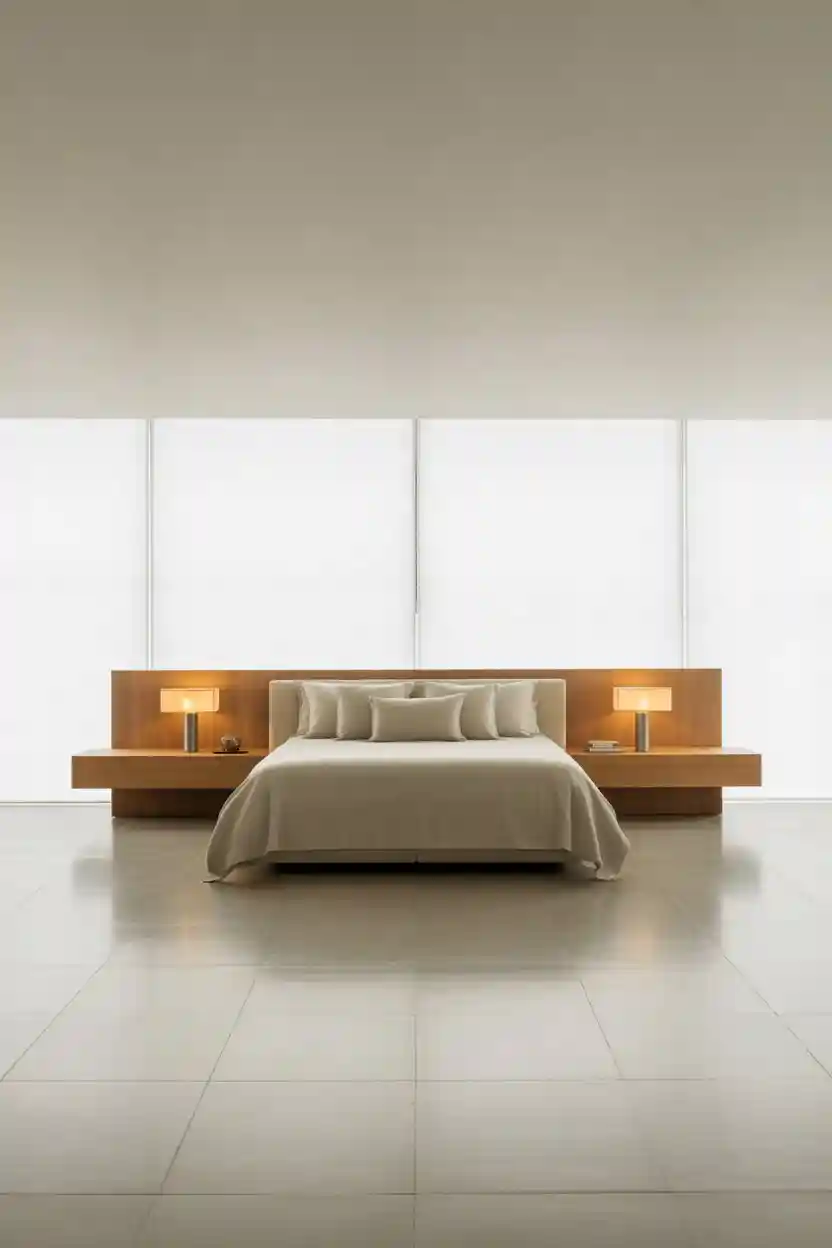
16. Modern Minimalist Bedroom Furniture Choices
Choose furniture for clean geometry and durability — simple shapes don’t cause visual fatigue, and solid construction means you buy once. When pieces feel architectural rather than decorative, with neutral finishes running throughout, the room holds together effortlessly.
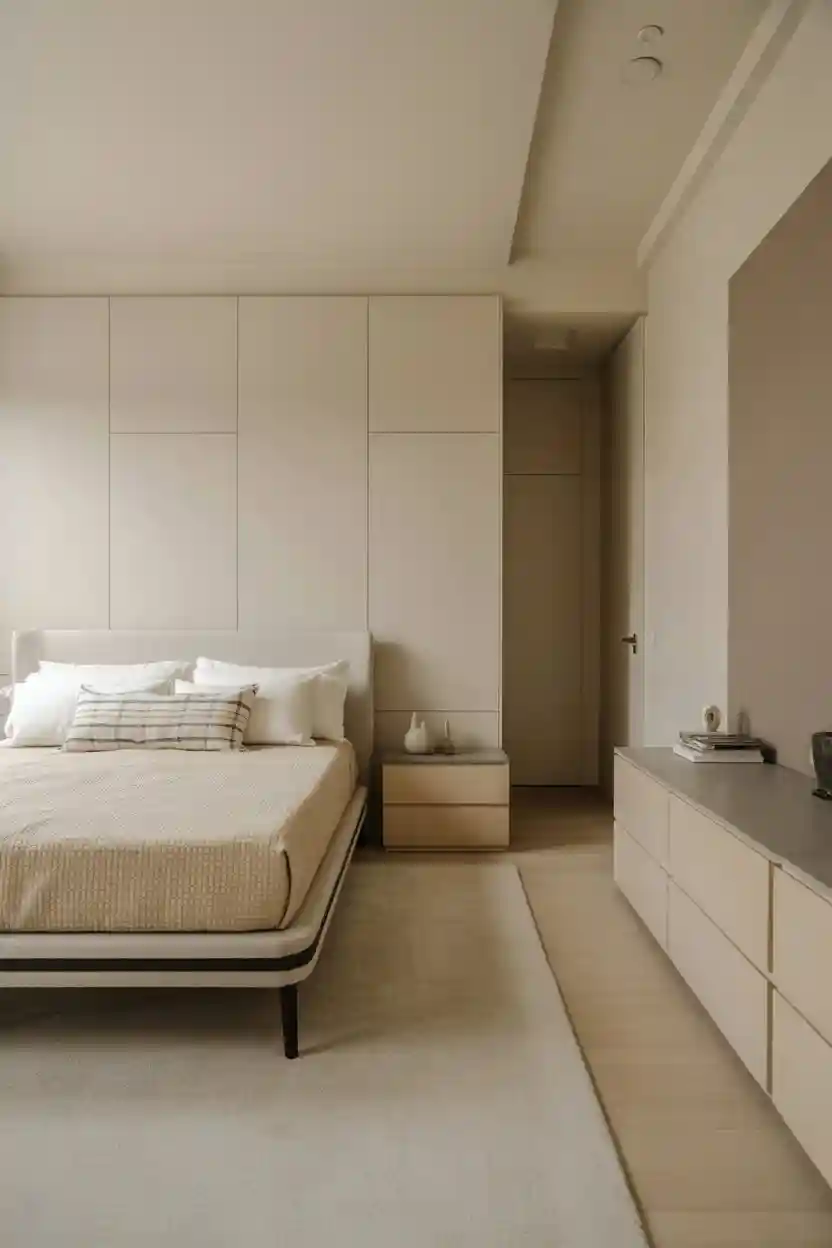
17. Minimalist Bedroom for Small Rooms
Small rooms are where minimalism pays off fastest. Fewer, slimmer pieces in light colors keep the flow open, and when every element earns its place, a compact bedroom feels intentional rather than constrained.
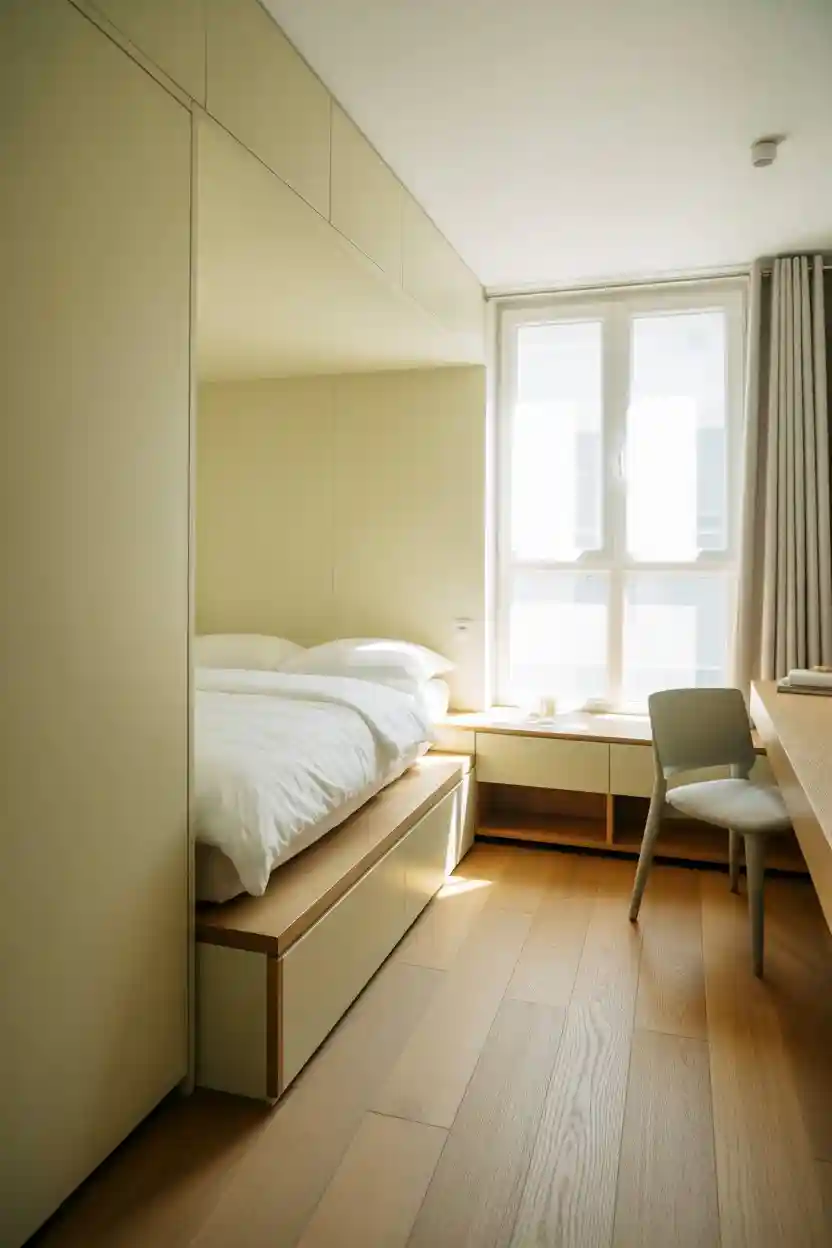
18. Minimalist Boho Bedroom Balance
Minimalist boho keeps the clean base and adds warmth through one or two natural accents — a rattan chair, a jute rug, a woven pendant. Earthy textures soften the minimal lines without tipping into clutter. Relaxed, personal, still calm.
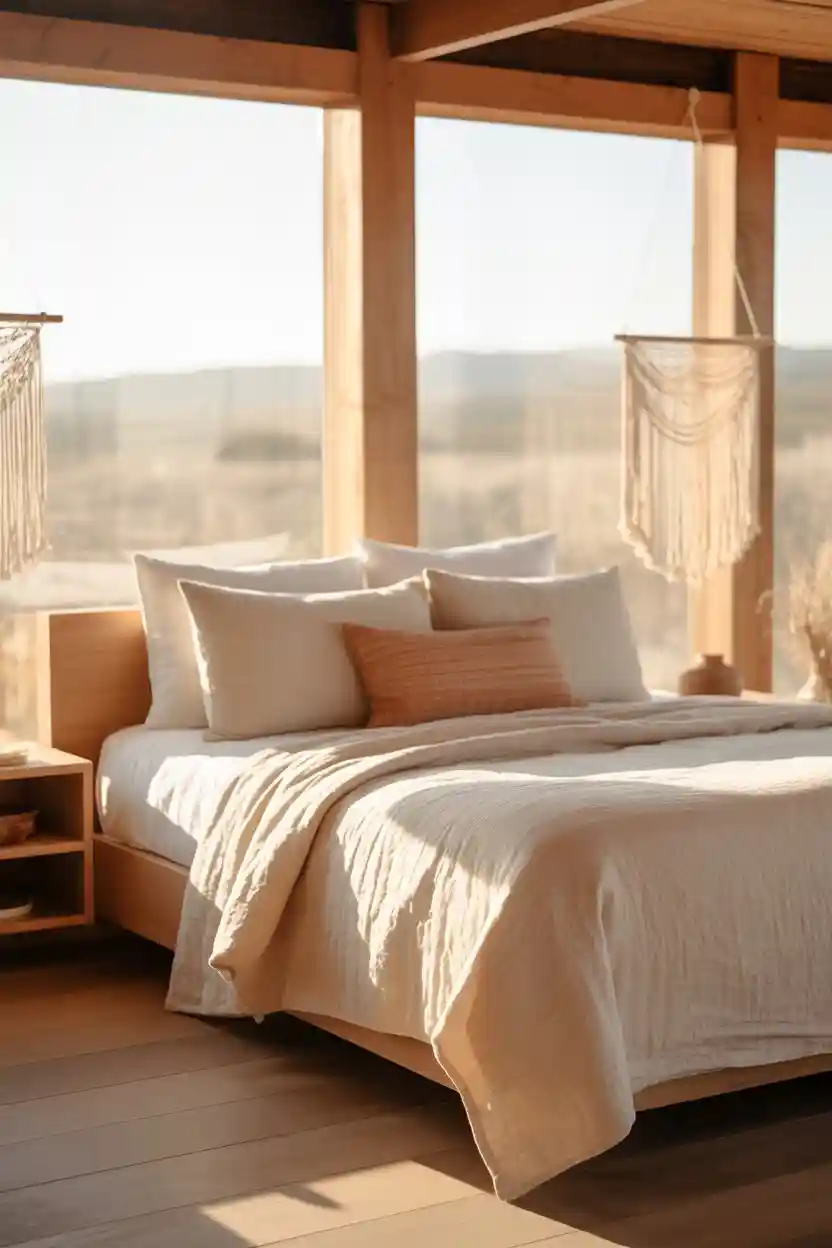
19. Minimalist Room Decor with Plants
One good plant beats five knickknacks. Greenery adds life, softness, and a bit of movement without any chaos — and placement matters more than quantity. A tall plant in an empty corner or a trailing one on a shelf is all it takes.
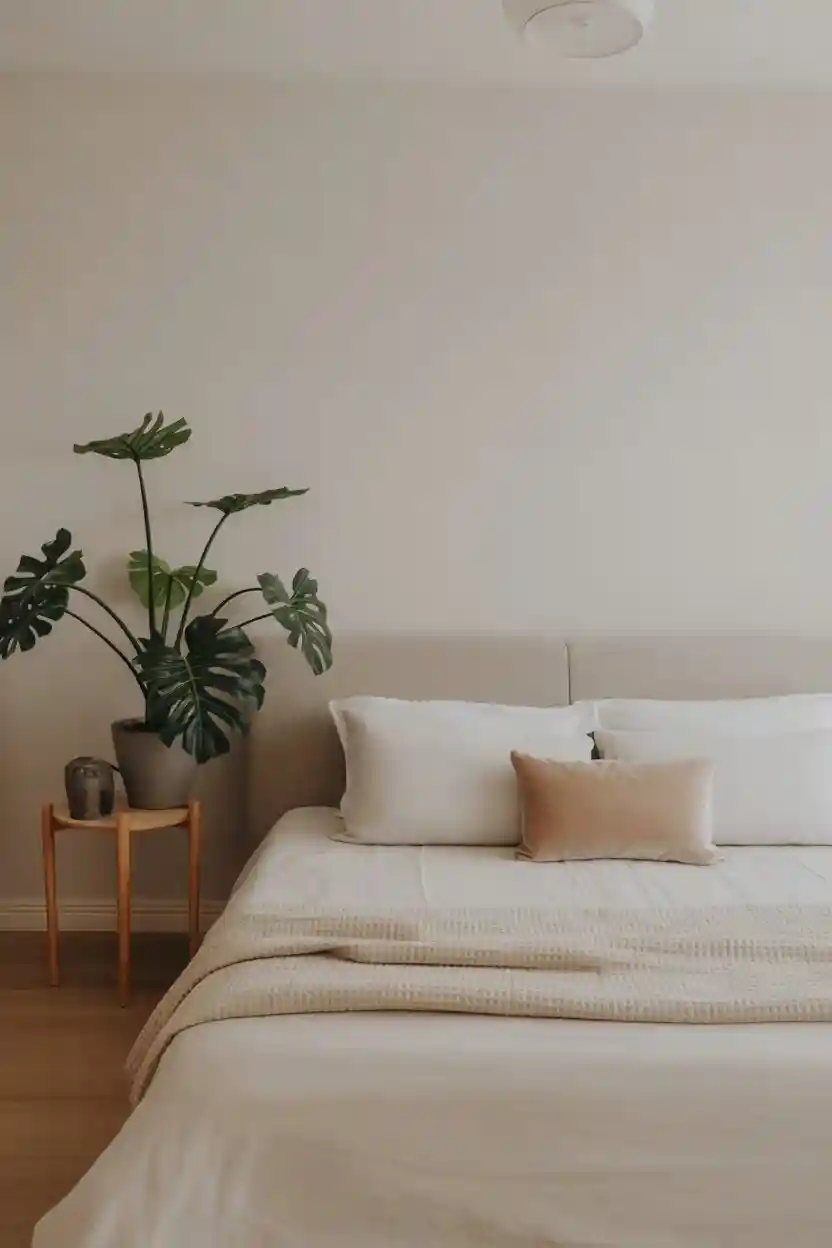
20. Minimalist Bedroom Aesthetic Through Consistency
Repeat your materials and the room knits together: same wood tone on bed and nightstands, same white across textiles. Consistency prevents visual fragmentation, and repetition — done deliberately — reads as calm, not boring.
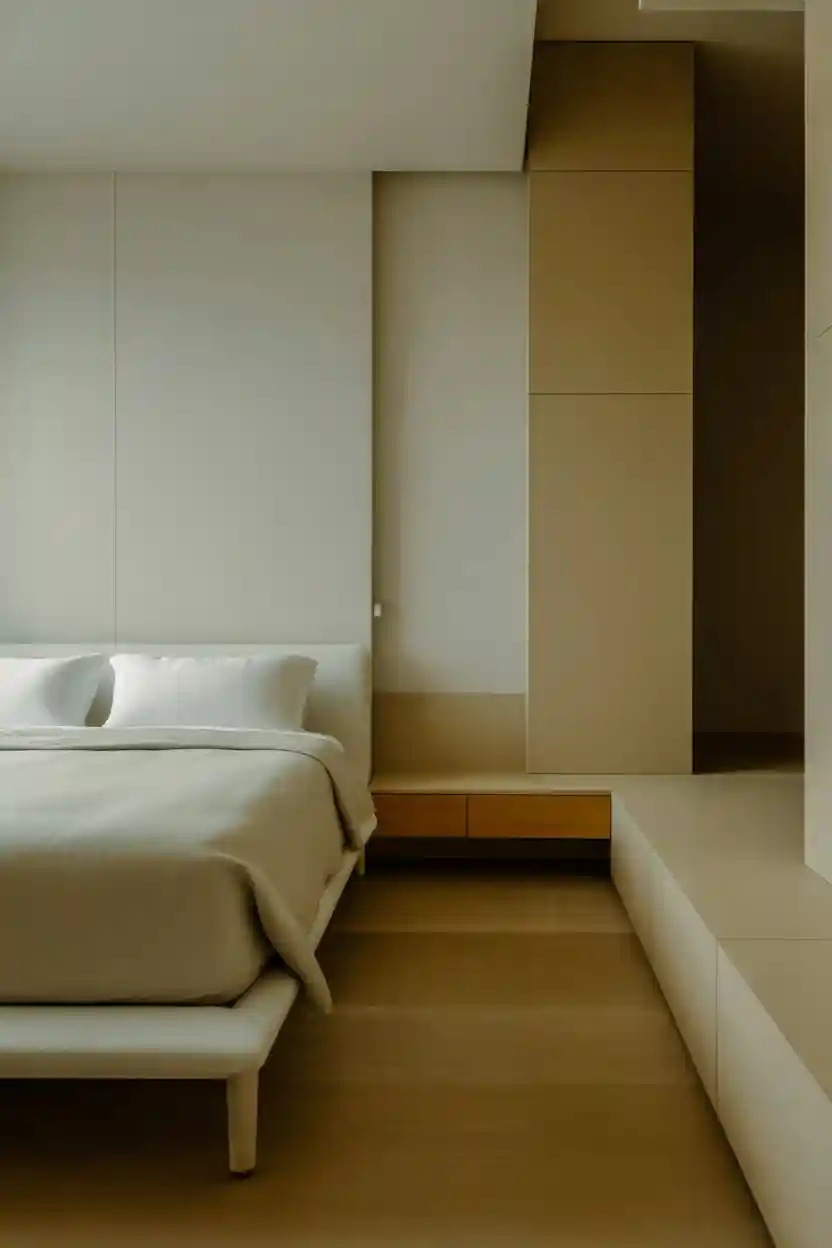
21. Modern Simplistic Bedroom with Clean Lines
Clean lines are the backbone: precise, uncluttered furniture silhouettes that don’t pull the eye in ten directions. Straightforward shapes reduce distraction, the room feels organized, and rest comes easier.
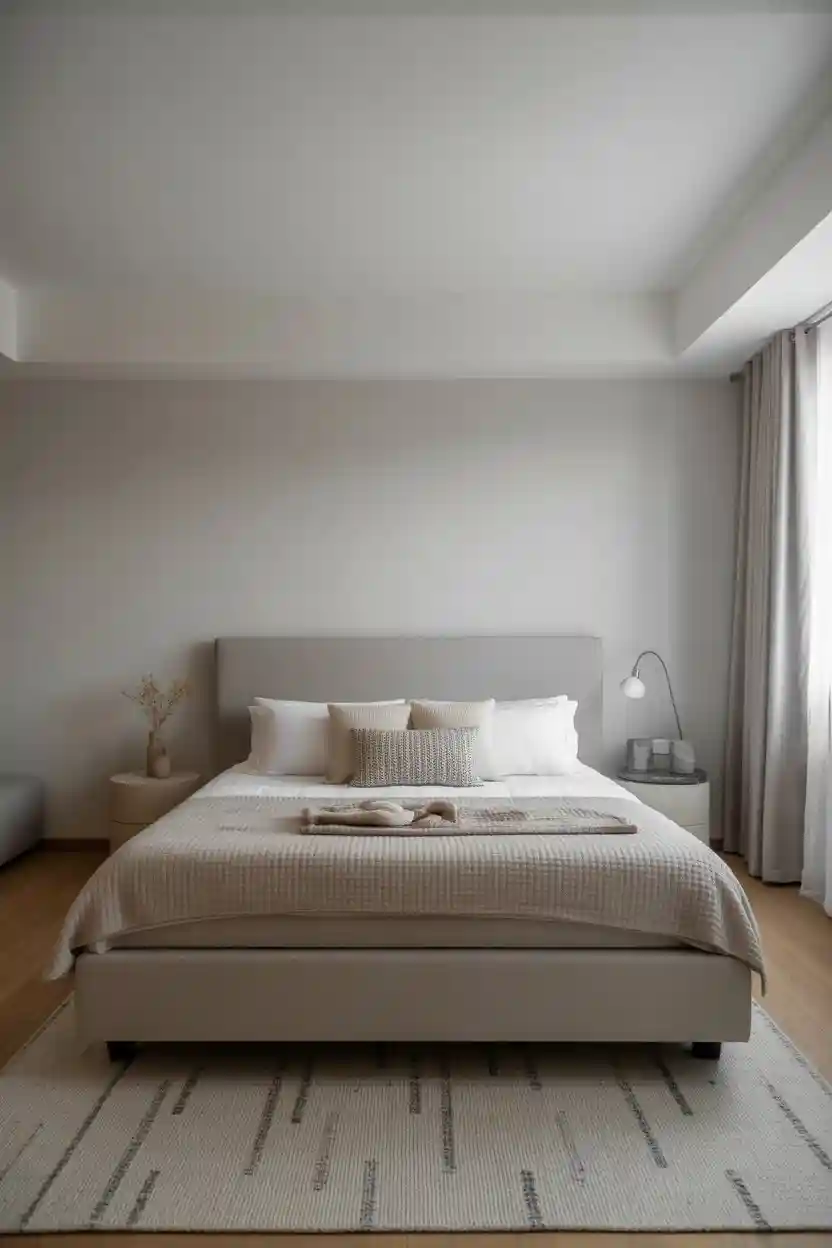
22. Minimalist Japanese-Scandinavian Fusion
Japandi — the Japanese-Scandinavian fusion — might be the most livable minimalism there is. Light woods, open layouts, craftsmanship over decoration. Both traditions prize balance and function, and together they make calm the room’s defining feature.
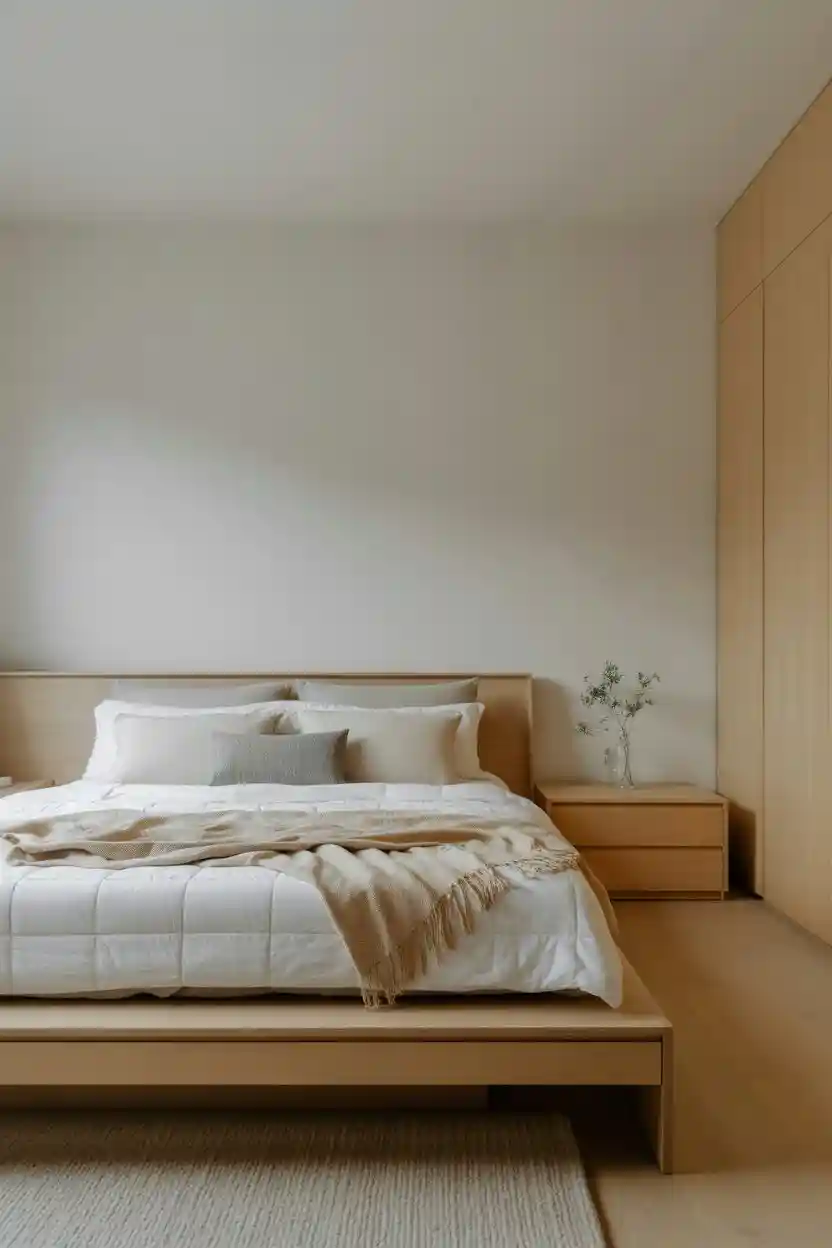
23. Minimalist Bedroom Pinterest-Inspired Layouts
Those serene Pinterest bedrooms work because of visual clarity, not expensive pieces — balanced compositions photograph well for a reason. Borrow the principles (restraint, light, texture) rather than copying the styling item by item. Adapted thoughtfully, it works in a real bedroom; copied literally, it feels like a set.
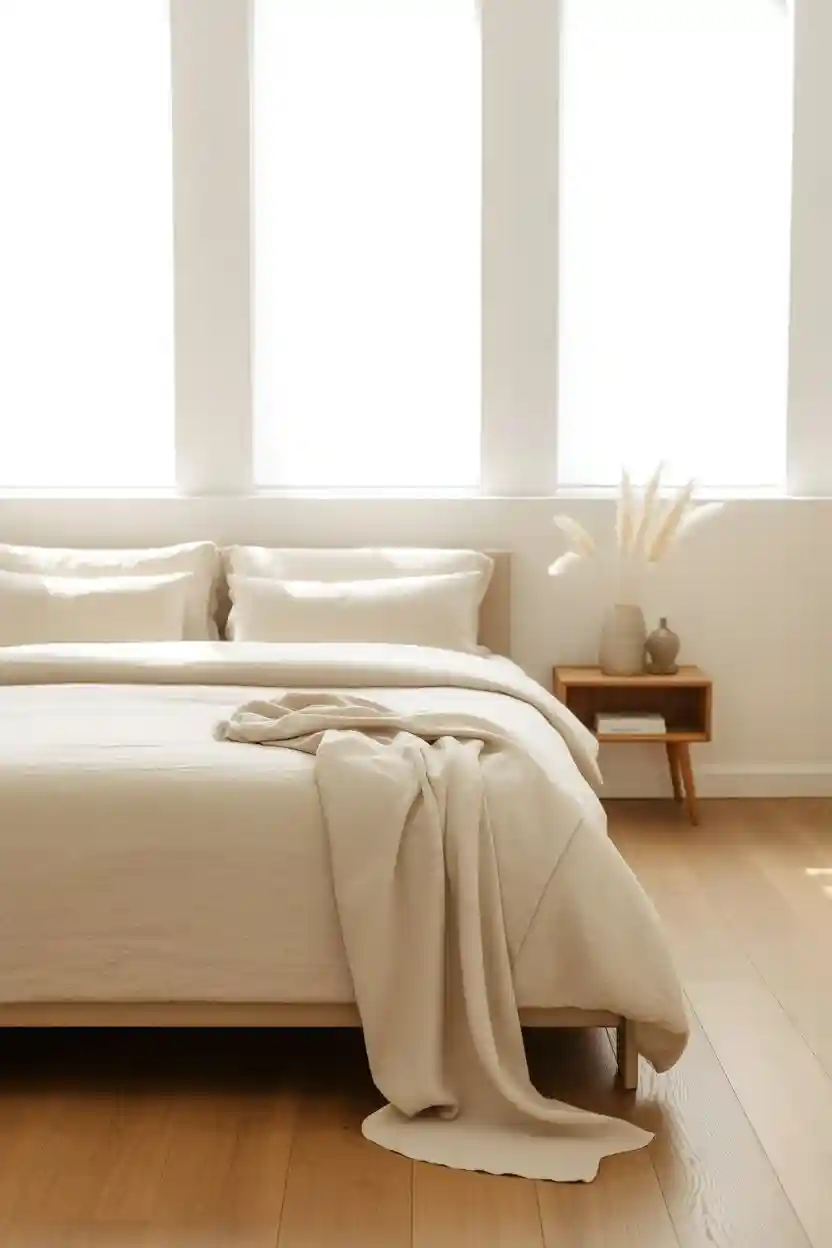
24. Long-Term Living with Simplistic Bedroom Decor
Fewer possessions means less dusting, less organizing, less visual stress — minimalism is genuinely lower-maintenance. The room evolves easily over time, the design stays relevant longer, and everyday life gets simpler alongside it.
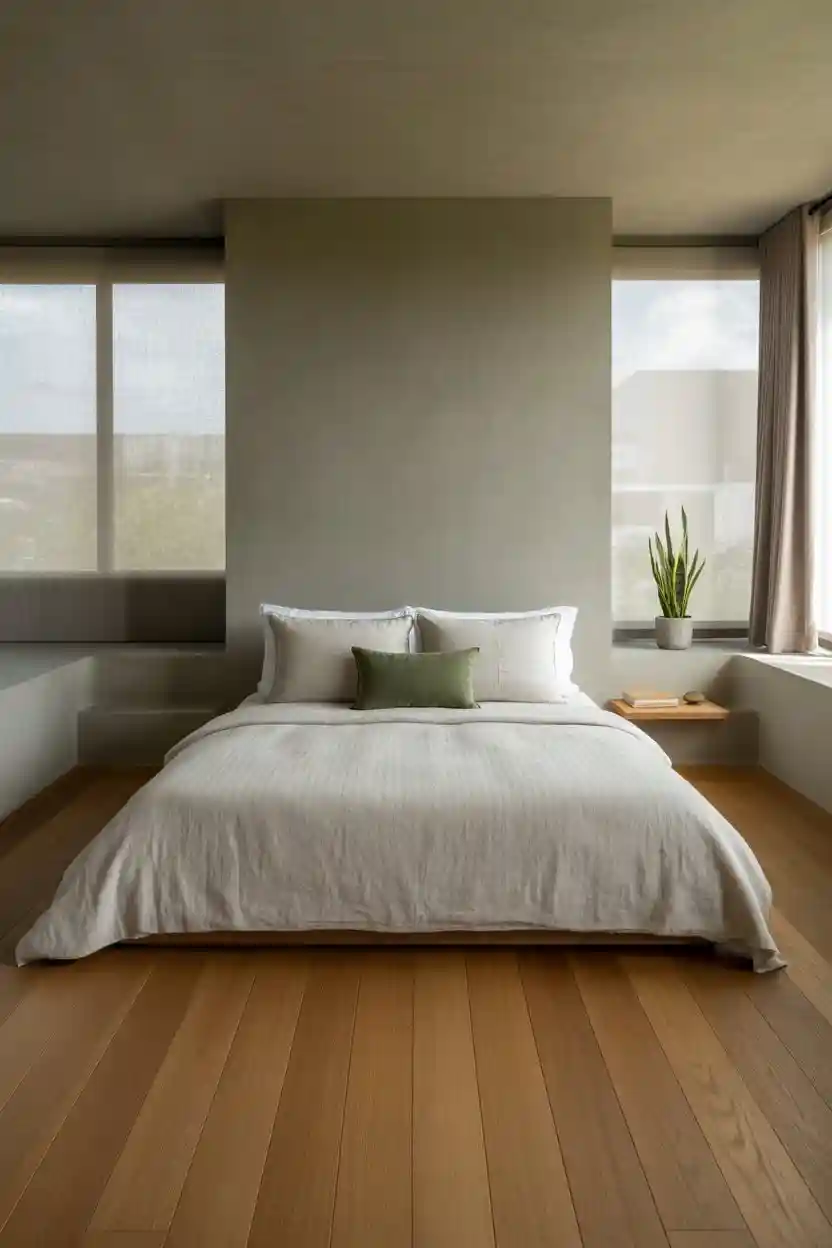
25. Final Thought on Simplistic Bedroom Ideas
This approach works because it respects both space and purpose. Calm comes from intentional choices, not from owning nothing — comfort and clarity coexist, and the bedroom becomes genuinely restorative rather than merely empty.