25 Wardrobe Organization Tips for Tight Spaces
There is something quietly defeating about opening your wardrobe in the morning and feeling like everything is fighting you. I have stood in front of a stuffed, chaotic closet more times than I can count, wearing a towel and running late, wondering how a space meant to make my life easier had somehow become the most stressful corner of my home. If that feeling is familiar to you, I want you to know you are not alone, and more importantly, it does not have to stay that way.
The thing about small wardrobes is that most people assume the problem is not having enough space, when the real problem is almost always how the space is being used. I learned this the hard way after moving into a flat with a single built-in wardrobe that barely fit my winter coats, let alone the rest of my life. That forced me to get creative, intentional, and honestly a little obsessive about organization — and what came out of it changed how I think about getting dressed entirely.
What I want to share with you today are the tips that actually worked, not the ones that look beautiful in a Pinterest photo but fall apart after three days. These are real, practical, tested ideas that work inside real closets — the ones with awkward shelves, low rods, and not nearly enough hanging space. Whether your wardrobe is a tiny reach-in, a shallow single door, or a rental you cannot drill into, there is something here for you.
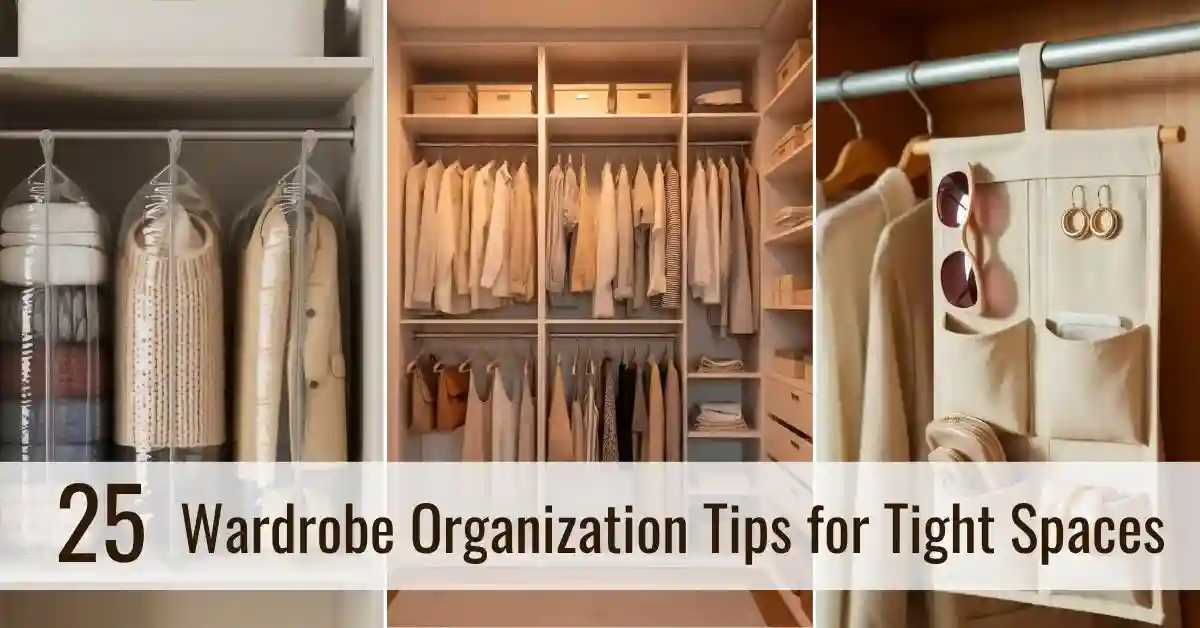
We have many ideas for closet organization and designing as per your need and requirement. Here are some of them;
- 15 Closet Organization ideas to save space
- 20 Closets Walk-In Ideas
- 25 Budget Closet Organization Ideas That Actually Work
- 30 Small Bedroom Closet Organization Ideas for Small Wardrobes
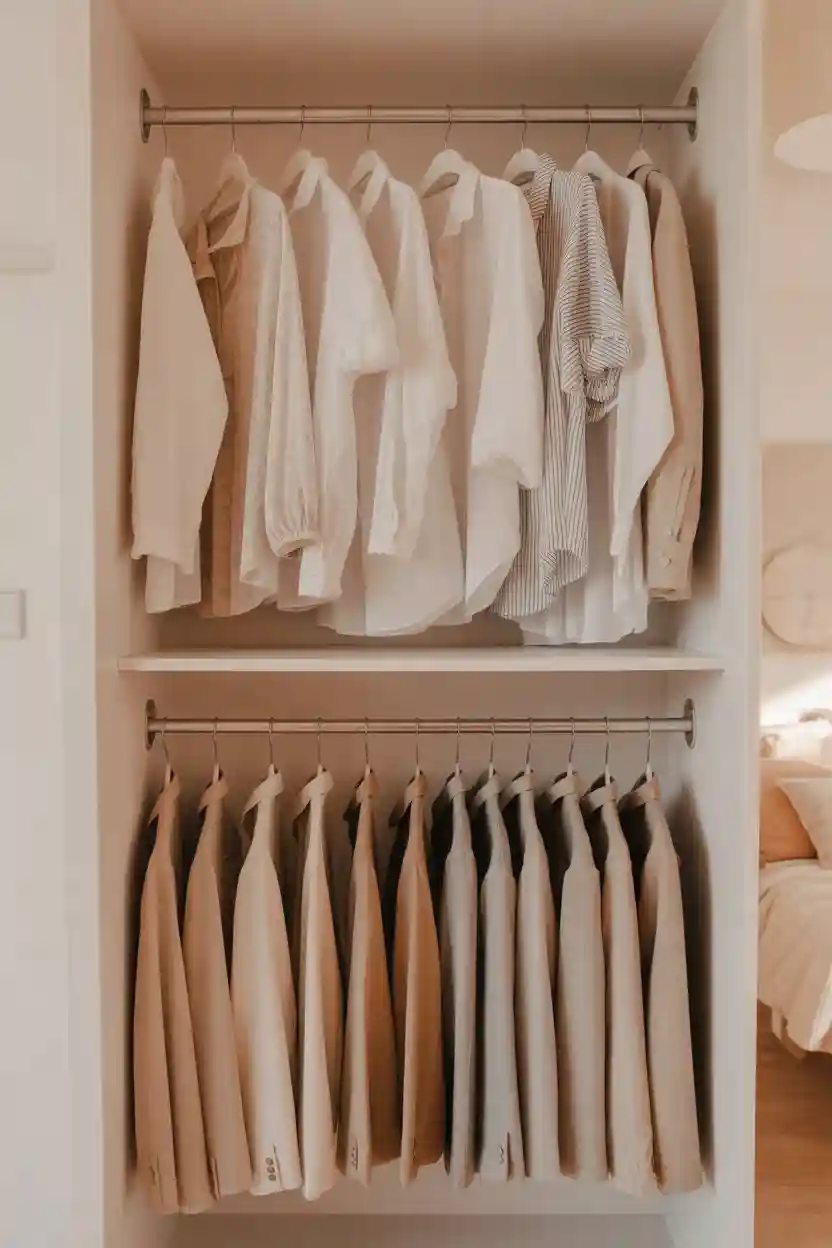
1. Use Double Hanging Rods to Stack Shorter Items
If you are only using one hanging rod in your wardrobe, you are leaving a significant amount of usable vertical space completely empty underneath it. A double hanging rod setup — where a second rod hangs below the first using adjustable hooks or a purchased extender — essentially gives you two rows of hanging space in the same footprint. I use the top rod for longer pieces like dresses and blouses, and the lower rod holds folded trousers, blazers, and short tops. This single change can nearly double the number of items you can hang without adding a single inch of floor space, and it costs almost nothing to set up.
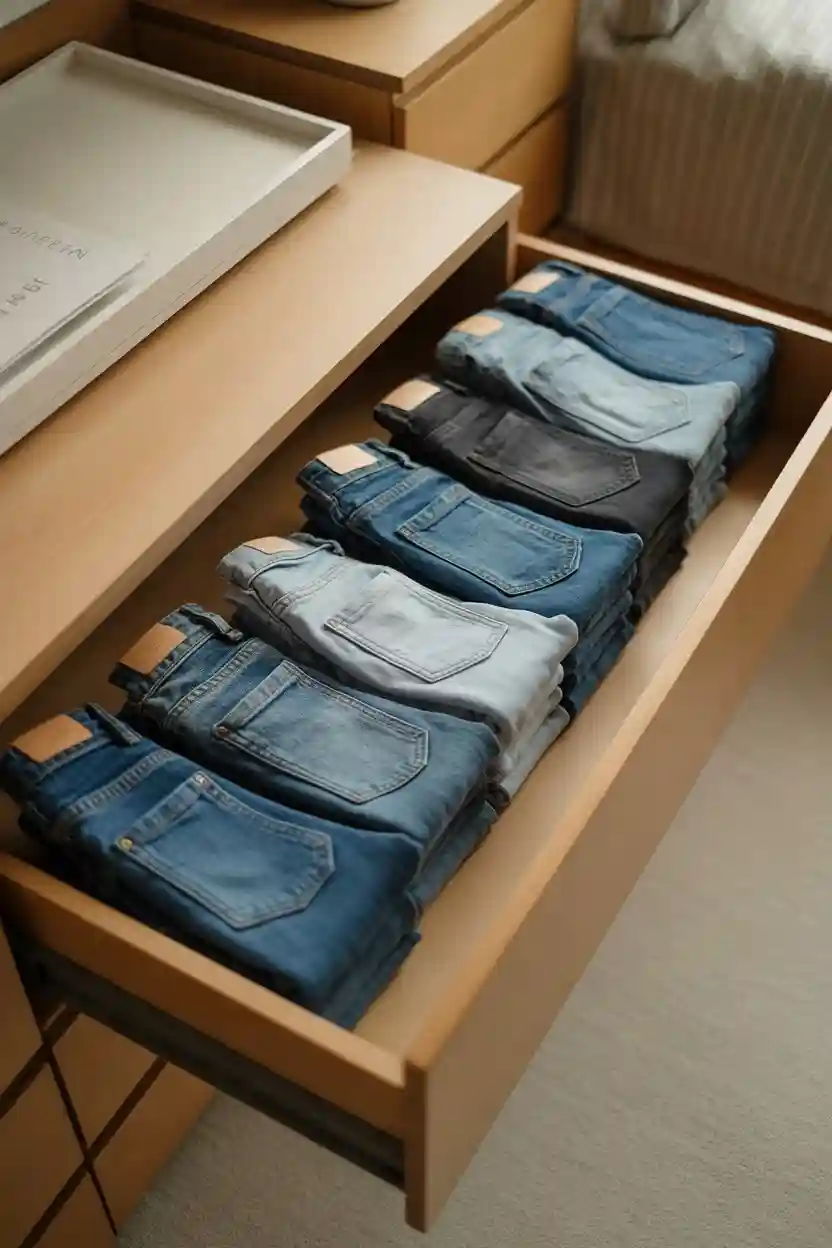
2. Fold Jeans Vertically in Drawers Using the KonMari Method
Stacking jeans flat in a drawer means you can only ever see and reach the pair on top, which is why you end up rotating the same two pairs on repeat. Folding your jeans into a compact rectangle and storing them upright — file-style — means every single pair is visible at once the moment you open the drawer. I folded all seven of my pairs this way and suddenly felt like I owned more jeans than I ever remembered buying. It takes a few extra seconds per pair when you do laundry, but it saves you minutes every morning and genuinely makes you wear more of what you own.
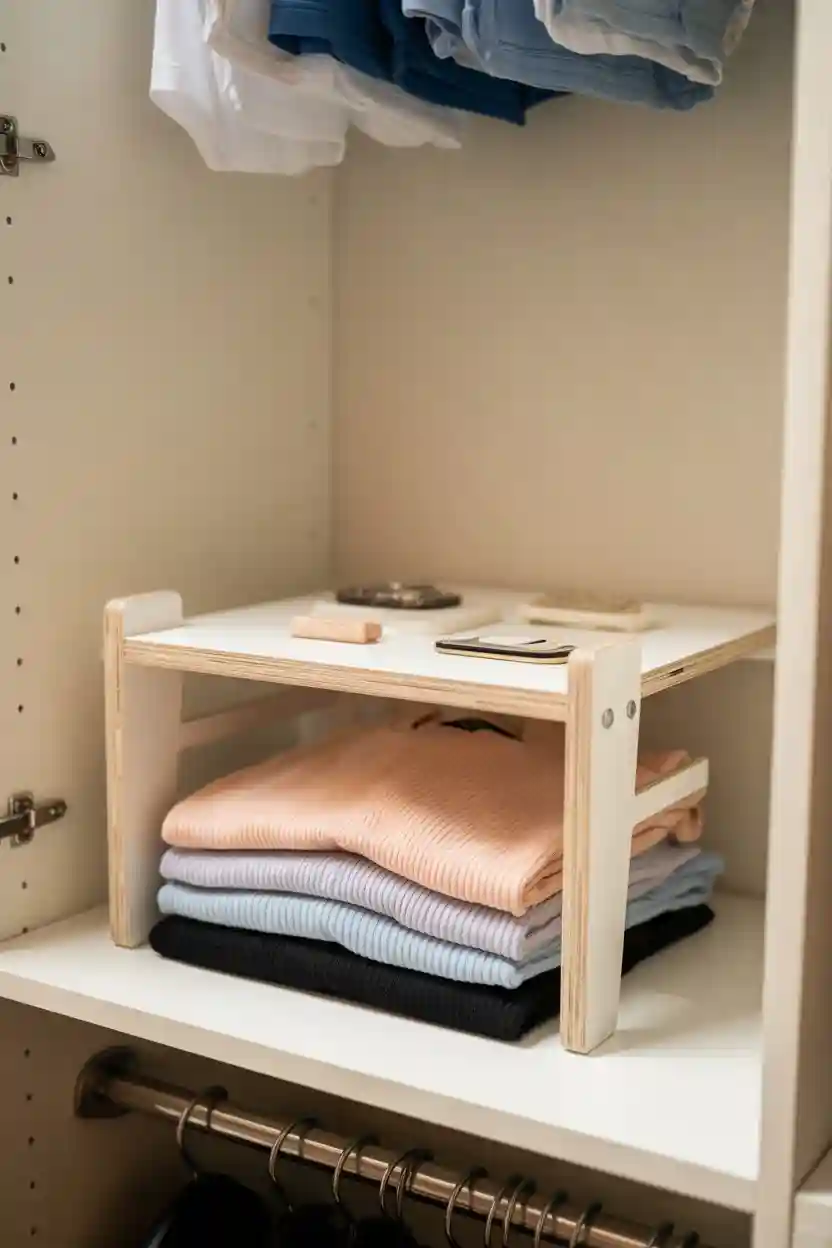
3. Add a Slim Shelf Riser to Double Your Shelf Capacity
Most wardrobe shelves are spaced far apart, which means short folded items like sweaters or clutch bags only fill half the vertical height and waste the air above them. A slim shelf riser — a small freestanding shelf you place on top of an existing shelf — creates a second level within that same gap. I use one on my top shelf to separate folded T-shirts on the lower level from smaller accessories above, and it feels like I found hidden square footage. They are inexpensive, require no drilling, and come in wood, wire, and acrylic finishes to match almost any wardrobe interior.
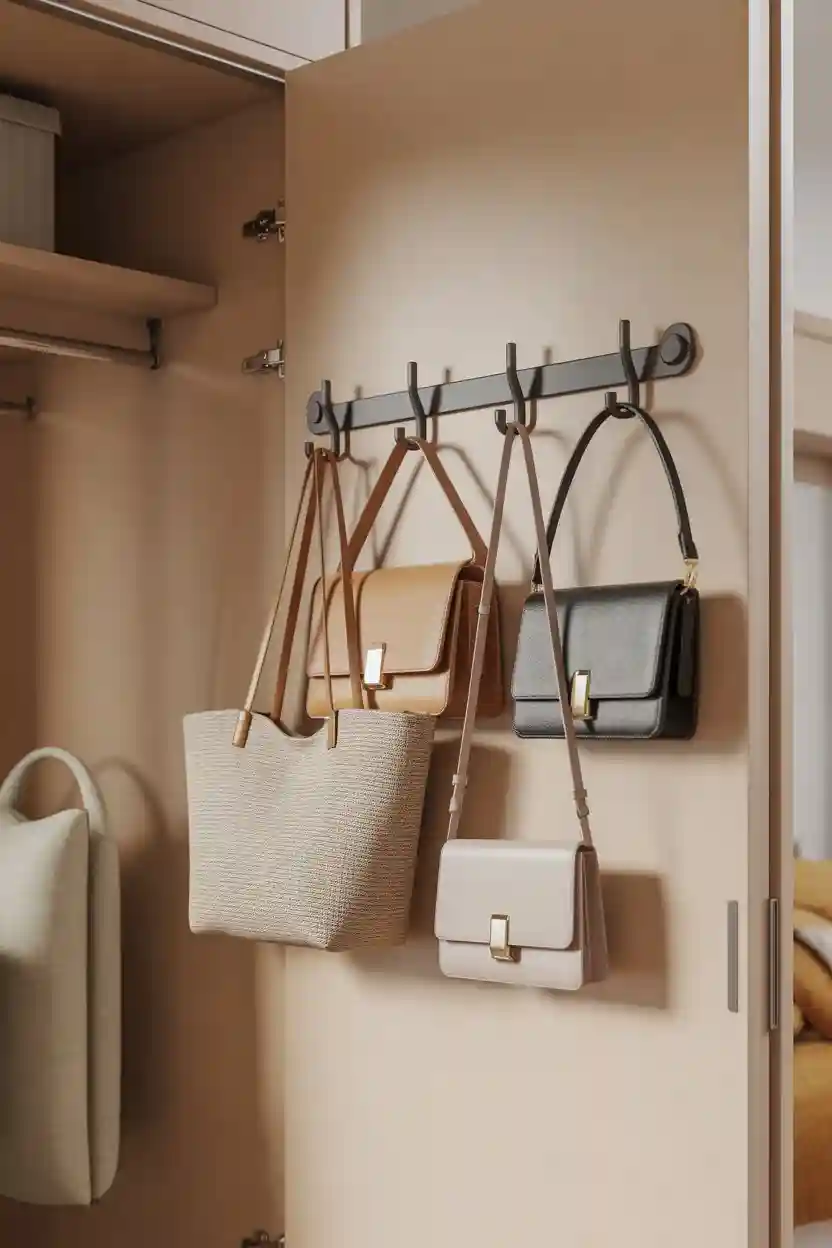
4. Store Handbags on a Mounted Hook Rail Inside the Door
The inside of your wardrobe door is one of the most underused surfaces in any small bedroom, and handbags are one of the most space-hungry items most of us own. A simple over-the-door hook rail or a mounted hook strip can hold five to eight bags in the vertical space that was previously just dead air. I keep my most-used everyday bags at eye level and the occasion bags higher up, and grabbing the right one in the morning now takes about three seconds. This also keeps bags in better shape than stacking them, which can cause creasing, misshaping, and wear on straps over time.
5. Use Slim Velvet Hangers Instead of Plastic or Wire
Switching from bulky plastic hangers to slim velvet ones is one of those changes that feels almost too simple to matter — until you do it and realize you suddenly have room for eight extra garments on the same rod. Velvet hangers are roughly a third of the width of standard plastic ones, which means a rod that held twenty items can now hold close to thirty. They also grip fabric gently so clothes do not slip off and pile up on the floor, which used to be a daily frustration for me with silky or lightweight tops. The visual uniformity they create also makes a wardrobe feel calmer and more intentional, even if nothing else has changed.

6. Assign a Dedicated Spot for Every Single Category
One of the quietest reasons small wardrobes feel chaotic is that similar items are scattered across different areas with no logic connecting them. When your cardigans live in three different places — one on a shelf, two hanging, one draped over a chair — you never have a clear picture of what you own, and you never feel like anything is truly put away. I spent one afternoon pulling everything out and grouping it strictly by category: all tops together, all bottoms together, all outerwear together, all loungewear in one drawer. That clarity alone made getting dressed feel like a completely different experience, even before I added a single organizer.

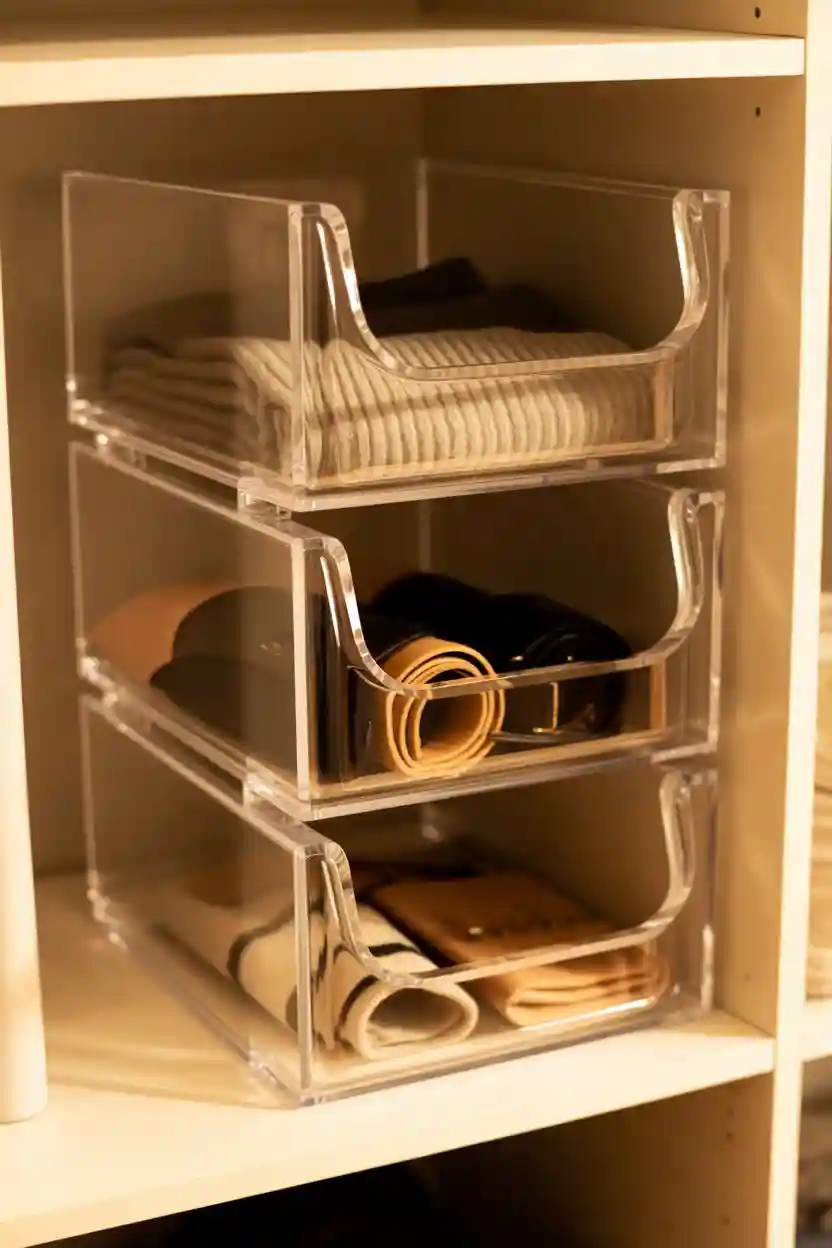
7. Use Stackable Clear Bins for Folded Accessories
Scarves, hats, gloves, and belts have a way of multiplying quietly in the background until they are consuming an entire shelf in a disorganized pile that you dread touching. Stackable clear bins — the kind with open fronts or removable lids — let you group these categories visually and stack them vertically so they take up far less shelf real estate. I use one bin per category and label the front edge with a small sticker so I never have to dig. Because they are clear, I can see exactly what is inside without opening anything, which makes the whole morning routine move faster and feel less frustrating.
8. Roll Knitwear Instead of Hanging It
Knitwear should almost never be hung, not because of space reasons but because hanging stretches the shoulders and distorts the shape over time — but many people hang it anyway because they run out of shelf room. Rolling knitwear tightly and storing it in a drawer or bin is actually more space-efficient than folding flat, and it keeps the shape of the garment far better long-term. I roll my chunky knits and store them in a large canvas bin on my wardrobe floor, which keeps them accessible and off the shelf where they were crowding out everything else. This tip alone freed up an entire shelf in my wardrobe, which I then used for shoes.

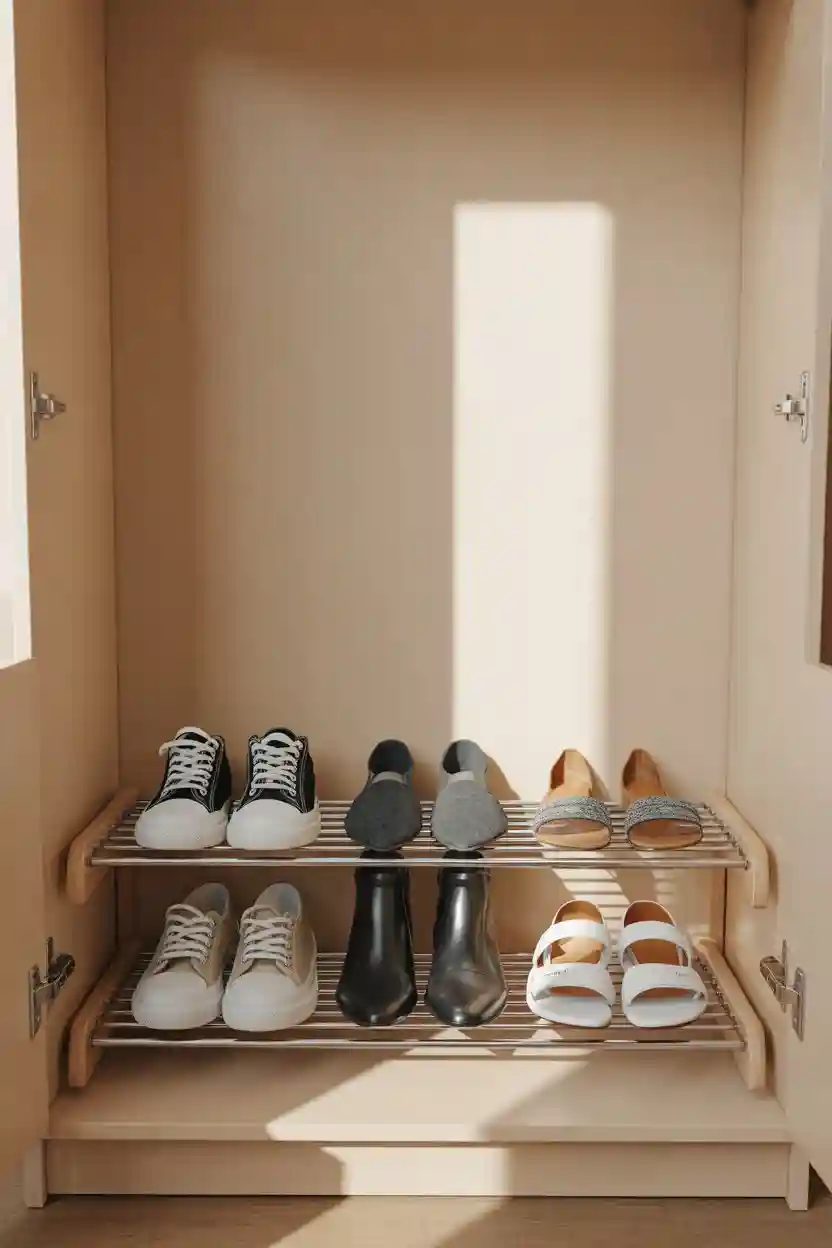
9. Use the Floor Space for Shoe Storage
Wardrobe floors are almost universally wasted in small spaces — people either pile shoes there randomly or leave the space empty because they cannot figure out what to do with it. A low stackable shoe rack, a row of individual shoe boxes, or even a angled shoe organizer can turn that floor strip into a proper, functional storage zone. I keep my most-worn shoes at the front and seasonal or occasion footwear at the back in their original boxes, which I label on the outside so I never have to open them to find what I need. Keeping shoes off the floor also makes cleaning the wardrobe interior far easier, which means you actually do it.
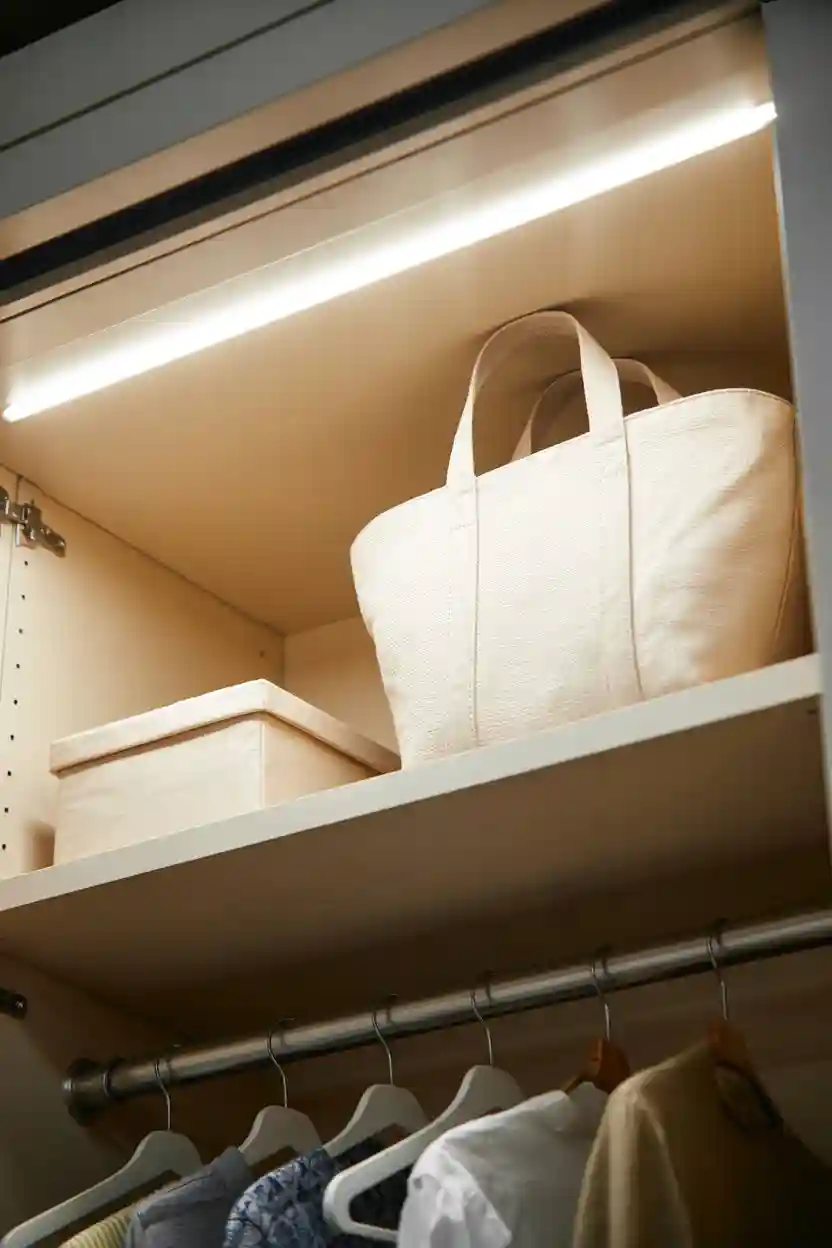
10. Install an Extra Shelf in the Gap Above the Hanging Rod
In most standard wardrobes there is a large gap between the top of the hanging rod and the ceiling of the wardrobe that goes completely unused. If you can add even one floating shelf in that space — whether by drilling, using adhesive strips, or purchasing an adjustable shelf unit — you gain an entire layer of storage that most people do not even think to look at. I use that top shelf for bulky items I do not need daily: winter bedding vacuum bags, large handbags, and off-season boots in their boxes. If drilling is not an option in your rental, tension-mounted shelving units work surprisingly well in this zone and leave no marks at all.
11. Sort Clothes by Color Within Each Category
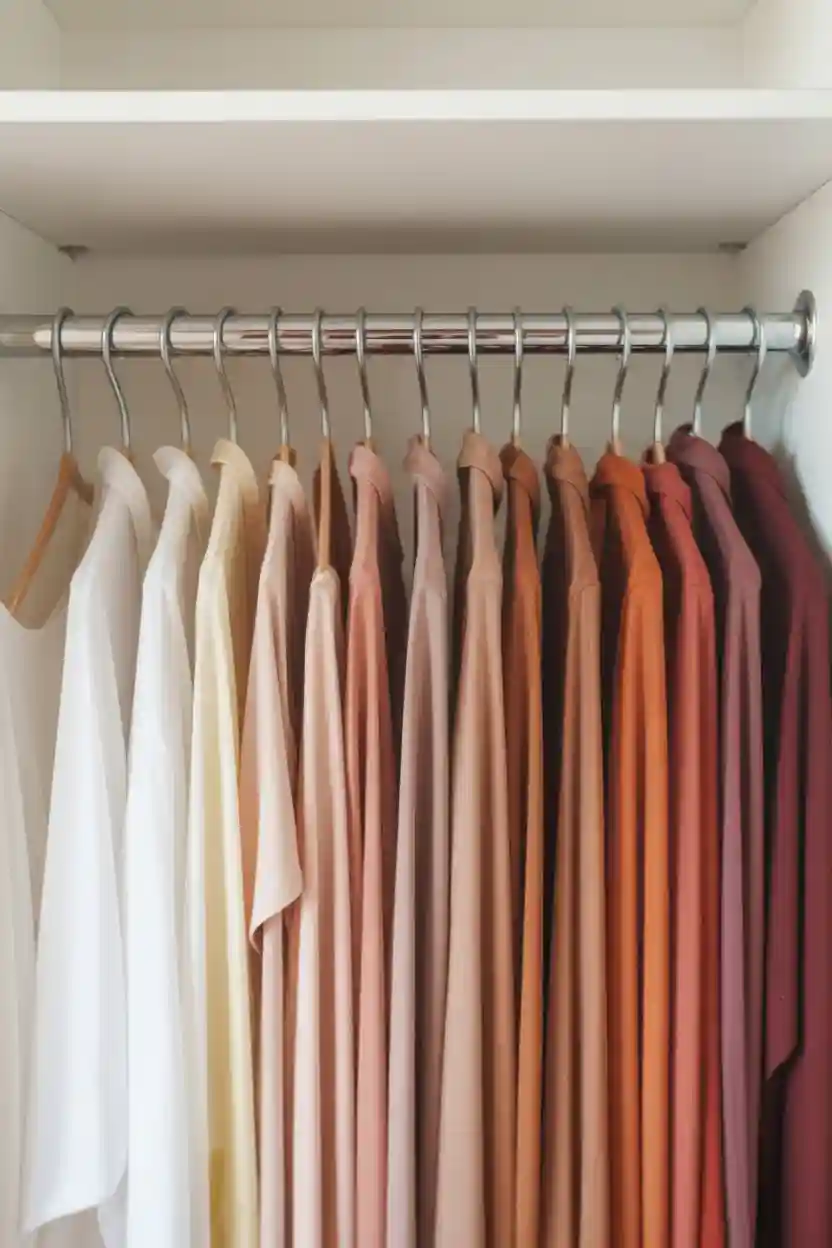
Once your wardrobe is organized by category, sorting within each category by color takes it from functional to genuinely enjoyable. When all your tops are arranged in a gradient from light to dark, you can scan your wardrobe at a glance and find exactly what you need without pushing hangers aside one by one. I started doing this about two years ago and I genuinely look forward to opening my wardrobe now in a way I never did before. It also helps you notice gaps in your wardrobe — if you have twelve black tops and nothing in any warm tone, color sorting makes that visible immediately.
12. Use Over-the-Door Shoe Pockets for Small Items
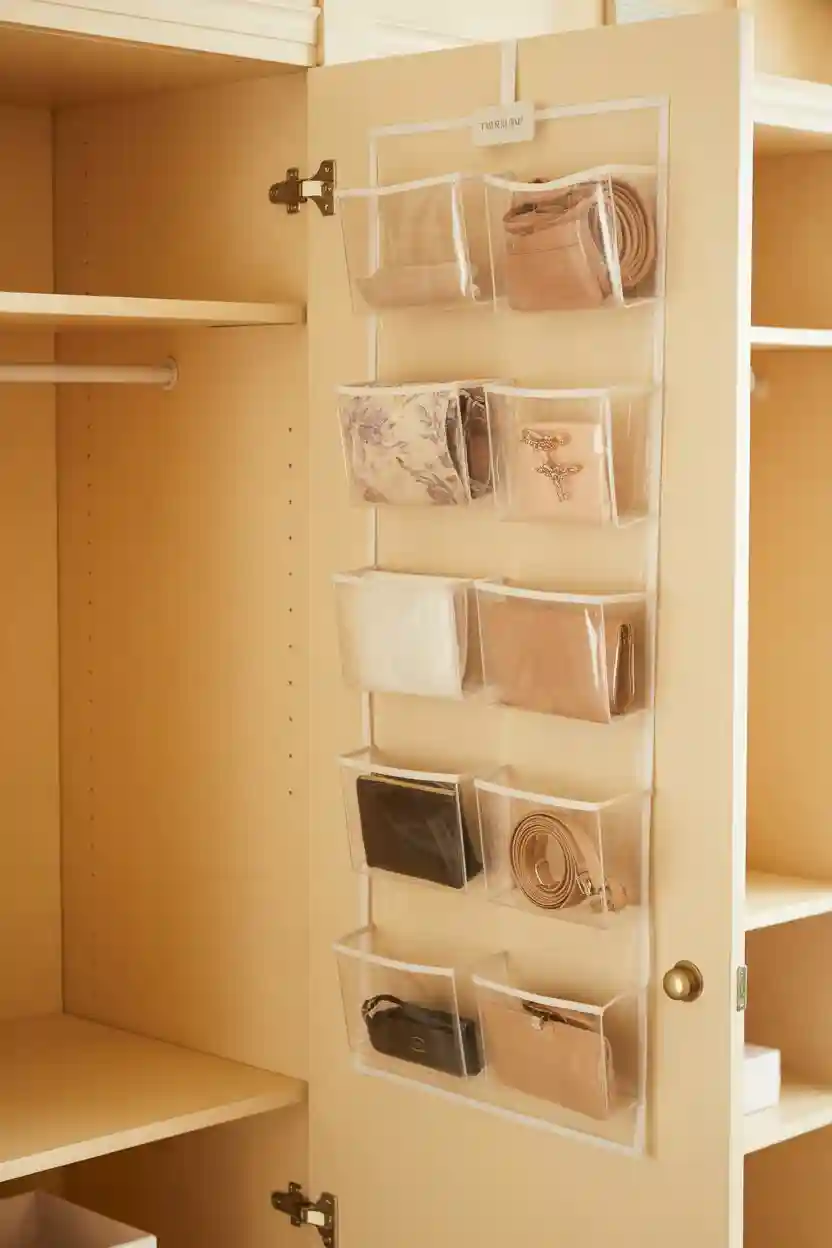
Those clear plastic over-the-door shoe organizers are one of the most versatile organizational tools in a small wardrobe, and their usefulness goes far beyond shoes. Each pocket can hold a clutch bag, a folded scarf, a rolled belt, hair accessories, nail polish, or jewelry pouches — essentially anything small and easily lost. I use one on the back of my wardrobe door entirely for accessories and find that it keeps my drawers so much cleaner because all the small items that used to fall to the bottom are now visible and contained. This works especially well for people who tend to pile accessories on the top shelf where they quickly become unmanageable.
13. Vacuum Pack Off-Season Clothing
Off-season clothing is the single biggest consumer of wardrobe real estate, and most people store it exactly as they would store in-season clothing — taking up the same volume on shelves or rods when it does not need to be touched for months. Vacuum storage bags compress bulky items like winter coats, chunky knits, and duvet-weight blankets down to a fraction of their original size. I store my entire winter wardrobe in three vacuum bags during summer, and those bags slide neatly under my bed or onto the very top wardrobe shelf where full-size items would not fit. The first time I tried this I was genuinely shocked at how much space suddenly opened up.

14. Hang a Pocket Organizer on the Rod for Everyday Essentials
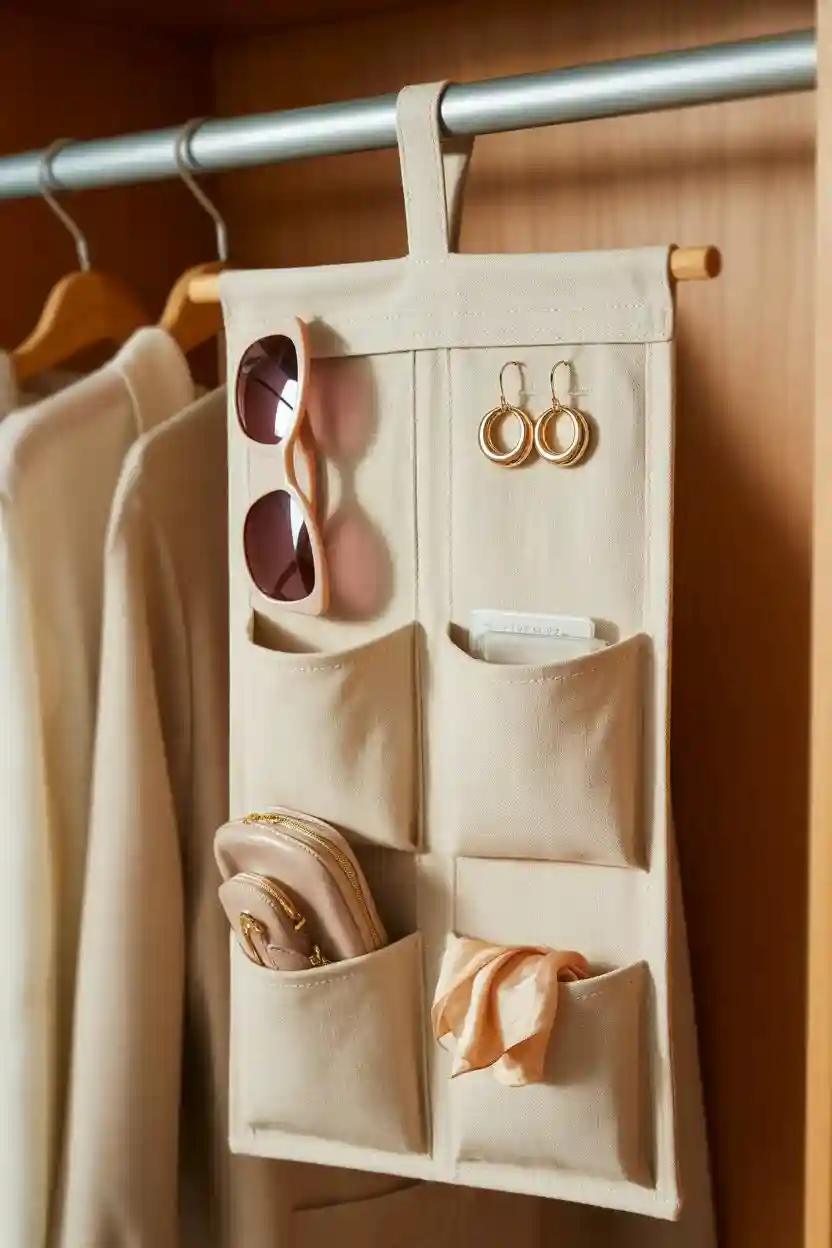
A fabric hanging organizer — the kind that attaches directly to your wardrobe rod with a loop and has multiple open pockets — is one of those tools that sounds almost too simple but genuinely changes daily life in a small wardrobe. You can use it to hold items you reach for every single day: sunglasses, a daily bag, hair ties, a go-to scarf, your most-worn jewelry. I keep mine at the very end of my rod right beside the door, so the first things I see when I open the wardrobe are the things I reach for most. It means I am not disturbing the rest of the wardrobe organization every morning just to find my everyday essentials.
15. Use Matching Storage Bins to Calm Visual Clutter
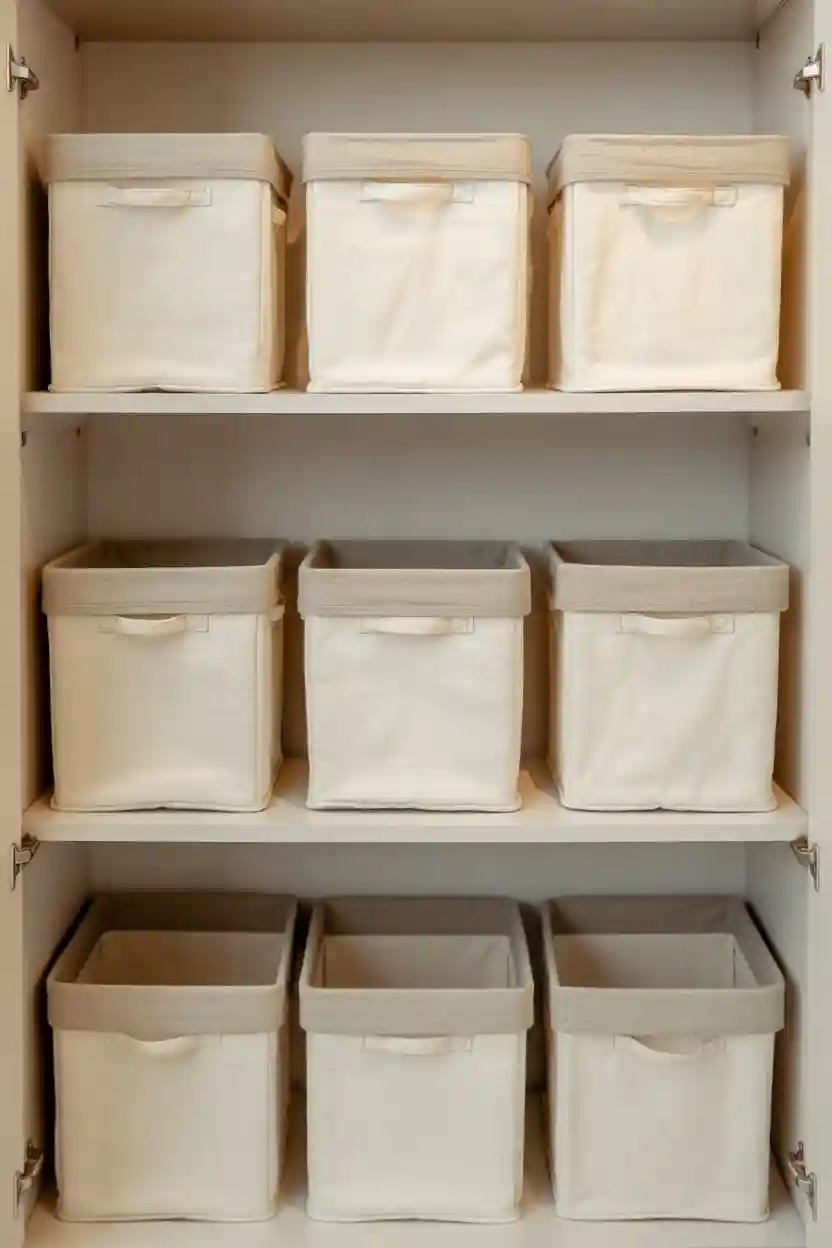
One thing nobody tells you about small wardrobes is that the visual noise of mismatched boxes, random bags, and assorted containers is actually what makes the space feel smaller than it is. When you replace that mix with a set of matching bins or baskets — even inexpensive ones in a consistent color or texture — the whole wardrobe looks larger, cleaner, and more intentional immediately. I replaced my collection of random shoeboxes and repurposed grocery bags with a set of eight identical white canvas bins, and the wardrobe felt like it had been renovated without a single structural change. It is a cosmetic fix that has a genuine functional payoff in how easy the space is to navigate.
16. Create a “Donate” Bin Inside the Wardrobe
Most people only declutter their wardrobe two or three times a year in a big exhausting session, when the far more effective approach is to make small decisions continuously throughout the year. Keeping a dedicated donate bin inside or at the base of your wardrobe means that whenever you try something on and remember you never actually wear it, you can put it straight in the bin rather than hanging it back up to be forgotten again. I keep a small canvas tote on my wardrobe floor labeled for donations, and when it fills up, I take it out — no big purge required. This habit has kept my wardrobe at a manageable size without a single stressful cleanout session in over a year.

17. Use Tiered Hangers for Trousers and Skirts
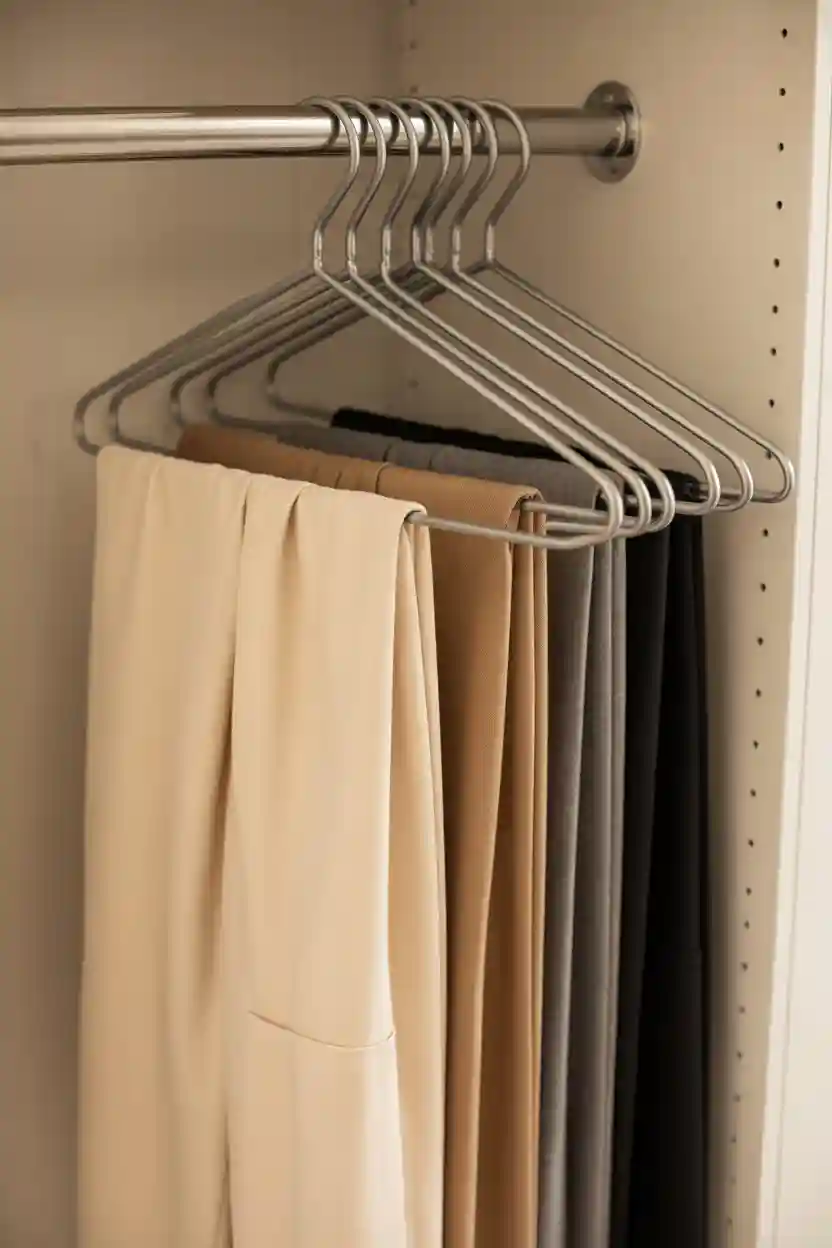
Standard hangers for trousers and skirts take up an enormous amount of rod space for single items, which quickly becomes unsustainable in a small wardrobe. Tiered or cascading hangers allow you to hang five to seven bottoms on a single hanger in a vertical stack, keeping them all visible and accessible while using only one slot on the rod. I use them exclusively for skirts and folded trousers and estimate they save me about a third of my rod space compared to individual hangers. They also keep trousers crease-free better than folding them on a shelf, which means less ironing — which is honestly just as motivating as the space saving.
18. Keep a Seasonal Rotation System
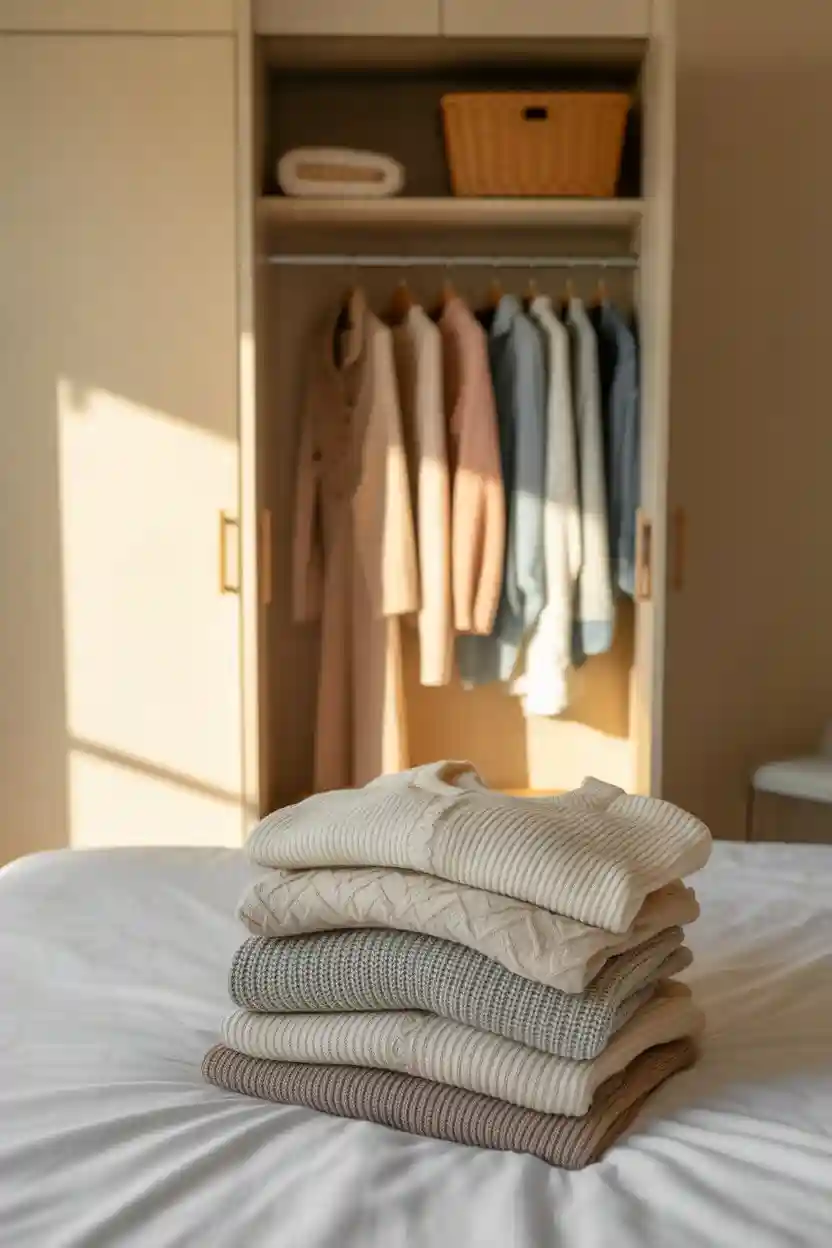
Rather than trying to fit your entire year-round wardrobe into one small space at the same time, a seasonal rotation system accepts the reality of limited space and works with it intentionally. At the start of each season, you move out the items that will not be needed for the next few months — either into vacuum bags, under-bed storage, or a separate spare-room rail — and bring in the season-relevant pieces. This means your active wardrobe only ever contains items you can realistically wear right now, which makes choosing an outfit infinitely easier and keeps the space from feeling overwhelmed. I do my rotation at the start of October and again in April, and it takes about an hour each time.
19. Label Everything, Including Drawers
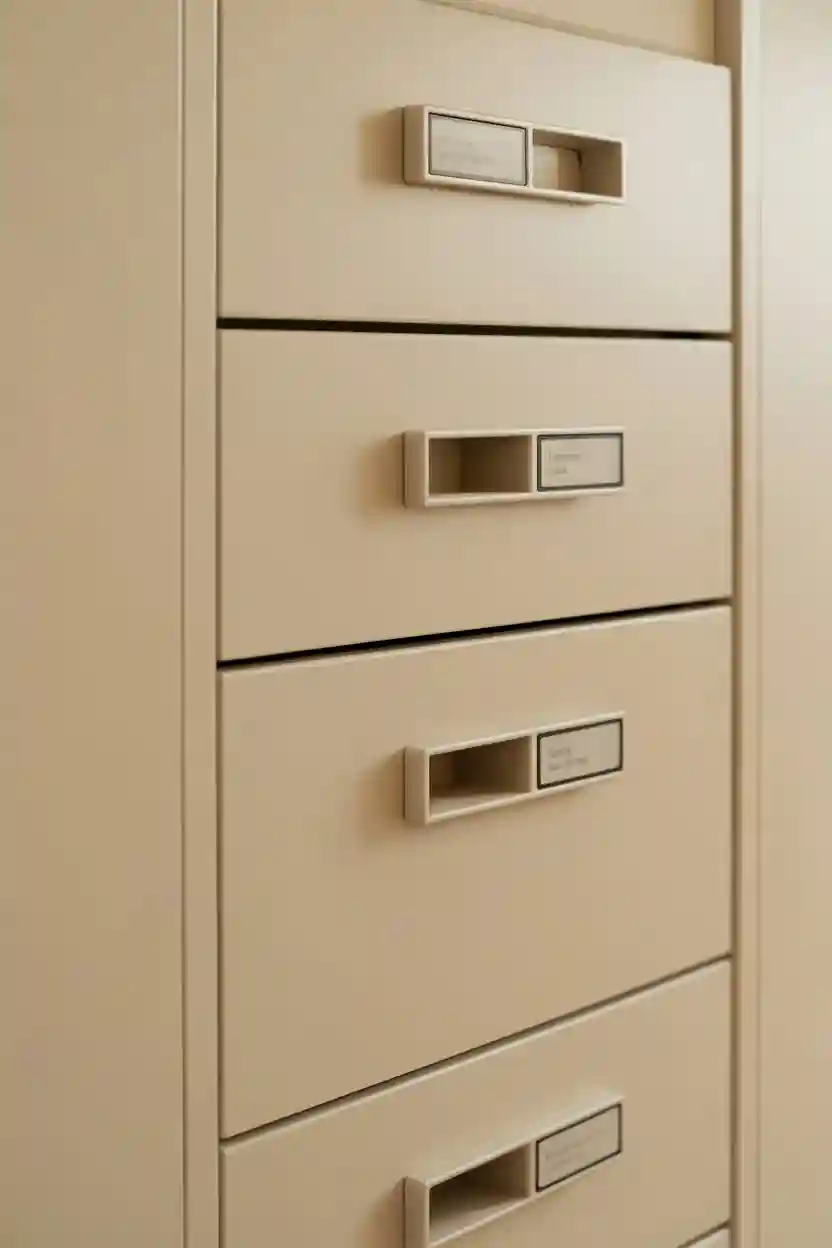
Labels feel like something you do in a utility room, not a wardrobe — but they are genuinely one of the most underrated tools in a small clothing space, especially if you share the wardrobe with a partner or if your organization tends to drift over time. A simple label on each drawer, bin, or shelf section means that everything has a defined home and that returning items to the right place becomes the default, not the exception. I use small adhesive label holders on my drawer fronts and removable sticker labels on my bins, which I can update if I reorganize. The commitment of labeling something also makes you much more intentional about what lives where in the first place.
20. Use a Jewelry Organizer That Mounts on the Wall or Door
Jewelry is one of those categories that can quietly consume an enormous amount of drawer or shelf space while also becoming completely inaccessible once it is buried in a box or tangle. A wall-mounted or over-the-door jewelry organizer — with hooks for necklaces, small pouches for rings and earrings, and slots for bangles — keeps everything visible, tangle-free, and genuinely easy to wear. I mounted one on the inside panel of my wardrobe door and it transformed how often I actually wear my jewelry, because I stopped forgetting what I owned. It also doubles as a visual style prompt in the morning when you can see all your options laid out in one glance.

21. Store Bags Inside Each Other When Possible
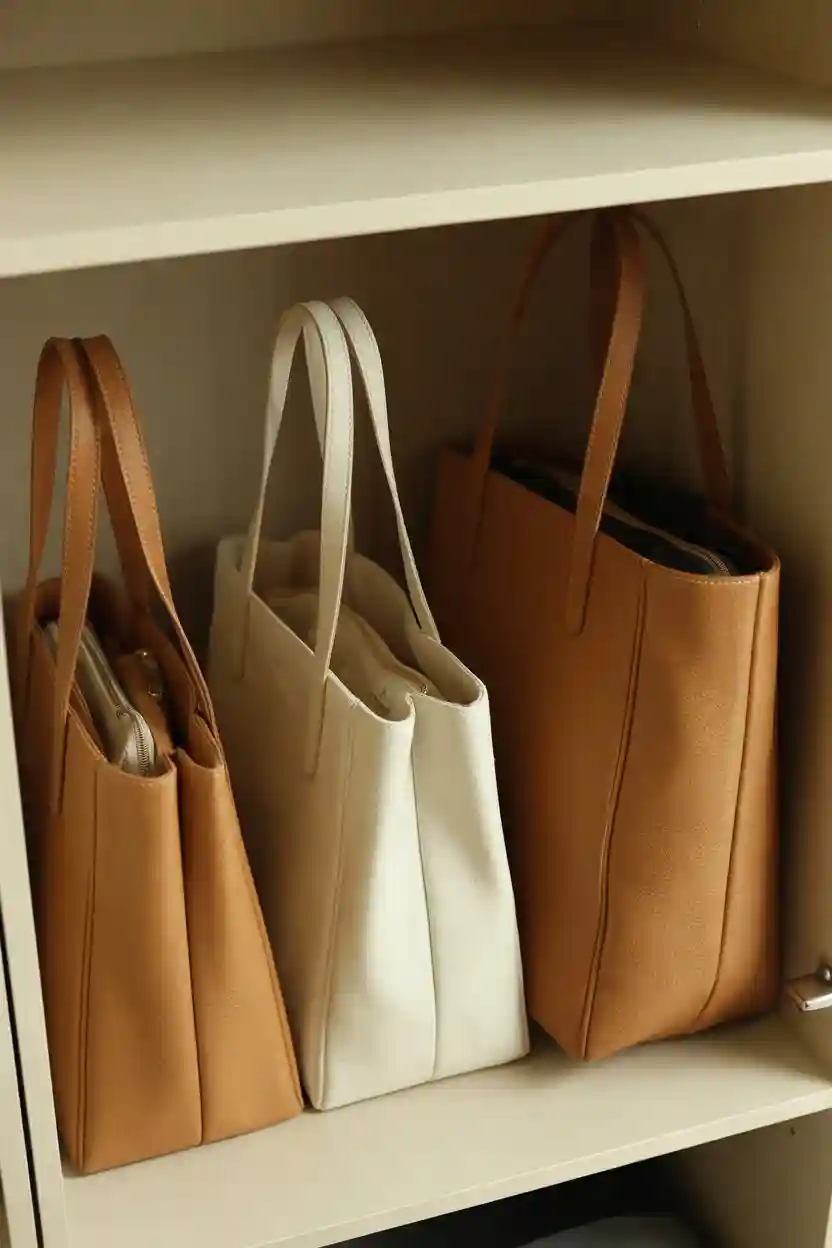
Handbags are notorious for taking up more space than almost any other wardrobe category because they are awkward shapes that do not stack or nest naturally — unless you make them. Smaller bags can often be stored inside larger ones of similar shape, which turns what was five separate items on a shelf into two, without any of them getting damaged. I store my small clutches inside a large tote and my crossbody bags inside a structured shopper, each stuffed lightly with tissue paper to keep their shape. This approach works best when bags are similar in structure, and it can clear an entire shelf section in one afternoon without buying a single new organizer.
22. Use a Tension Rod Under a Shelf to Hang Spray Bottles or Accessories
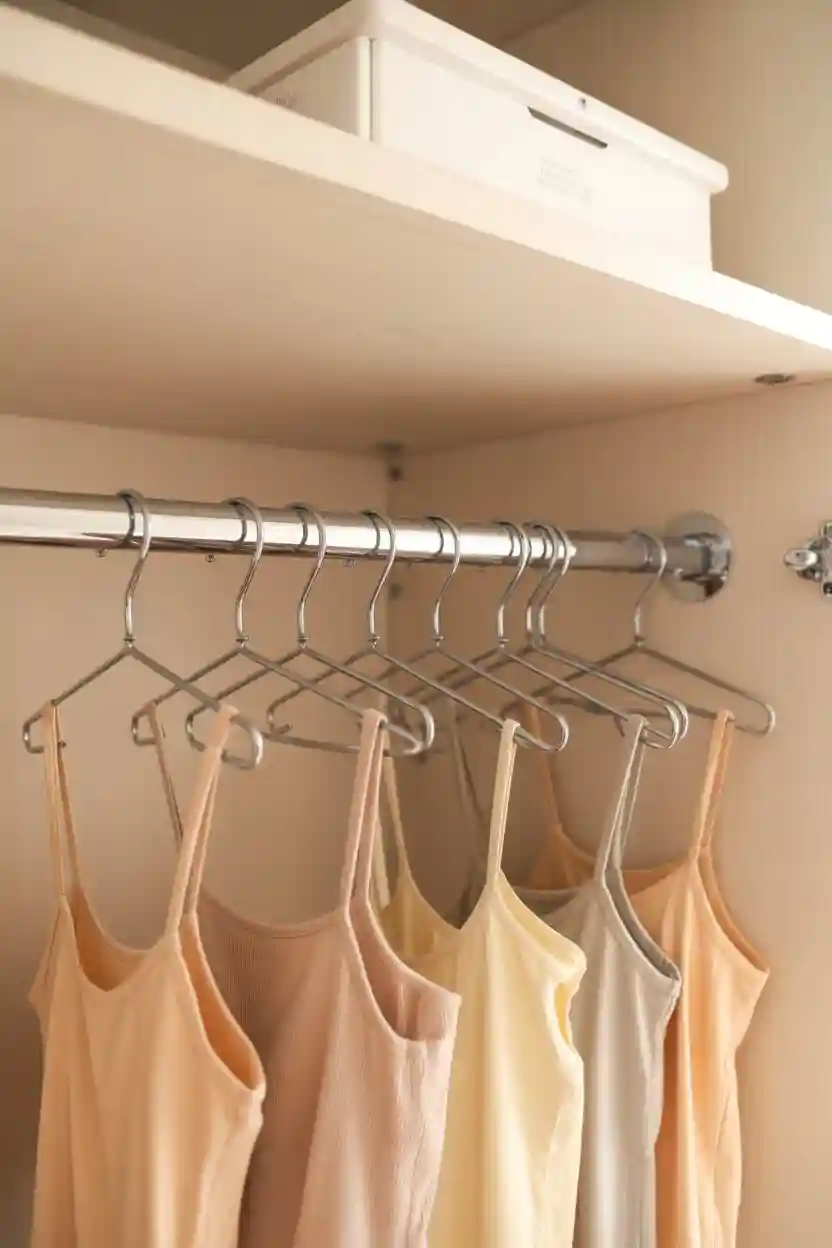
A tension rod — the spring-loaded kind typically used for curtains — can be wedged horizontally under an existing shelf to create an instant hanging bar for small items. This works beautifully for hanging spray bottles, small bags, or even a row of folded scarves draped over the rod. I use one in the cleaning section of my hallway cupboard, but I have seen it used brilliantly inside wardrobes to hold tank tops and camisoles on short hooks below a shelf, freeing up the rod for more structured pieces. It requires no tools, no drilling, and can be repositioned or removed in seconds, which makes it ideal for renters.
23. Do a 10-Minute Weekly Reset
The reason most small wardrobe systems collapse within a few weeks of being set up is not because the system is bad — it is because small daily disruptions compound into full chaos before anyone intervenes. A ten-minute weekly reset, where you rehang anything that landed on the chair, return items to their labeled spots, and do a quick visual check of the whole space, keeps the system functioning without ever requiring a big cleanout. I do mine every Sunday evening while a podcast plays, and the whole thing takes about eight minutes at most. This habit is genuinely more powerful than any individual organizer or tip, because it keeps every other system you have in place actually working.
24. Use the Back of Your Wardrobe Door for a Full-Length Mirror
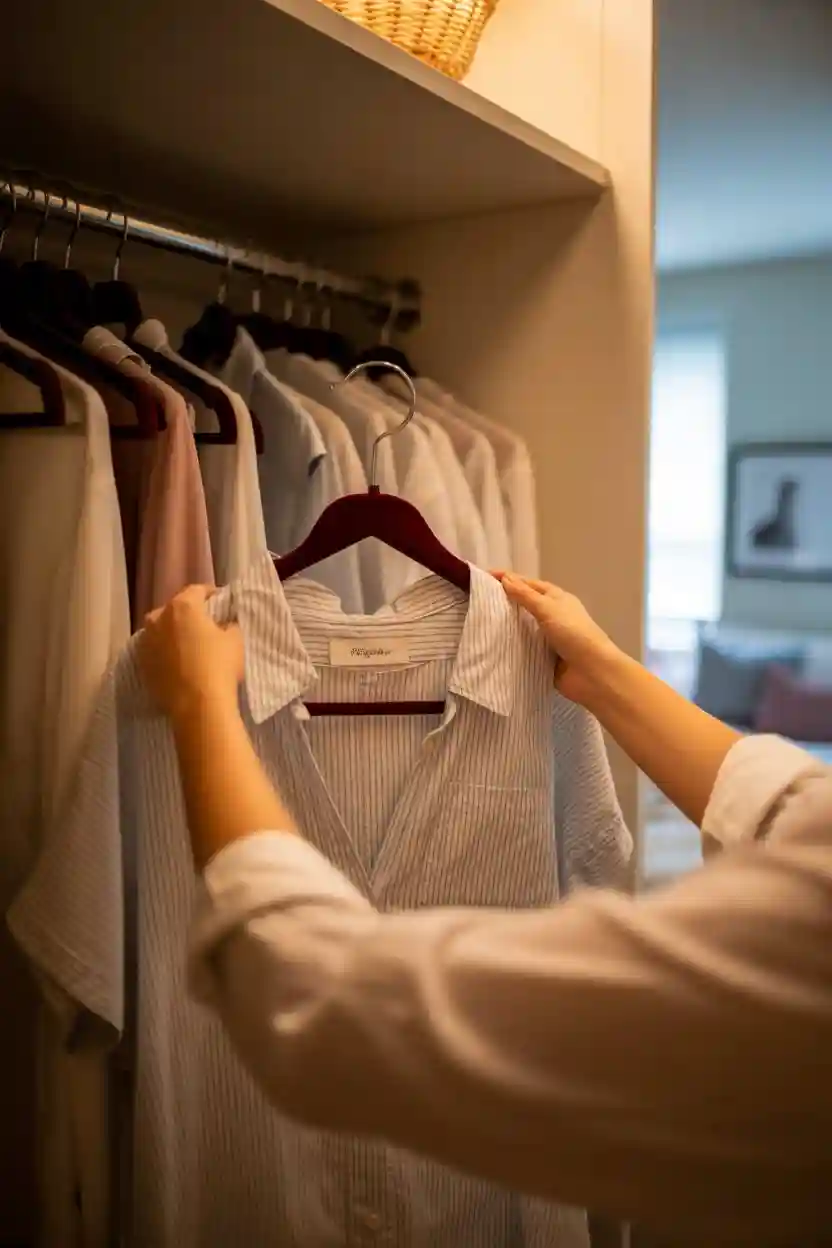
In a small bedroom, the back of a wardrobe door is one of the best possible locations for a full-length mirror — it uses no floor or wall space, it keeps the mirror inside the room flow rather than dominating a wall, and it turns the wardrobe door into a styling station every time you open it. Adhesive-backed mirrors are available in full-length sizes that require no drilling and leave no damage, making them perfect for renters. I added one to the inside of my wardrobe door and it completely changed my morning routine — I can check my outfit in the same motion as grabbing my bag. It also makes the bedroom feel larger because you are not losing wall space to a mirror frame.

25. Audit Your Wardrobe Every Three Months
A wardrobe organization system is not a one-time project — it is a living space that needs regular, lightweight check-ins to stay functional and relevant to who you are right now. Every three months, spending even thirty minutes going through your wardrobe with honest eyes — asking whether you have worn something in the past season, whether it still fits, whether it still feels like you — keeps the whole system from accumulating dead weight. I do my quarterly audit at the start of each season and always find at least five or six things I am ready to let go of that I would not have noticed in the day-to-day. The goal is not perfection — it is a wardrobe that consistently reflects your actual life, not a version of it from two years ago.

FAQs for Wardrobe Organization Tips
If this helped you look at your wardrobe a little differently, save this to your Pinterest organization board so you can come back to it when you are ready to tackle a section — I would love to know which tip you try first.