20 Floral Embroidery Ideas for Every Skill Level
There is something quietly magical about sitting down with a hoop, a needle, and a few strands of thread and watching a flower slowly come to life in your hands. I still remember the first time I finished a simple daisy — it was lopsided and the stitches were uneven, but I felt prouder of that tiny bloom than almost anything else I had made. That feeling never really goes away, no matter how long you have been embroidering.
Floral embroidery has this beautiful way of meeting you exactly where you are. Whether you have never picked up a needle before or you have been stitching for years and are hungry for something that pushes you further, there is a flower pattern out there with your name on it. You do not need expensive supplies or a dedicated craft room — just a quiet corner, some natural light, and the willingness to try.
I put together this list because I wanted something that actually covers every skill level honestly, not just the beginner-friendly stuff or the showstopper pieces. We are going from the simplest lazy daisy to intricate dimensional roses, and everything in between. Grab your floss and let’s get into it.
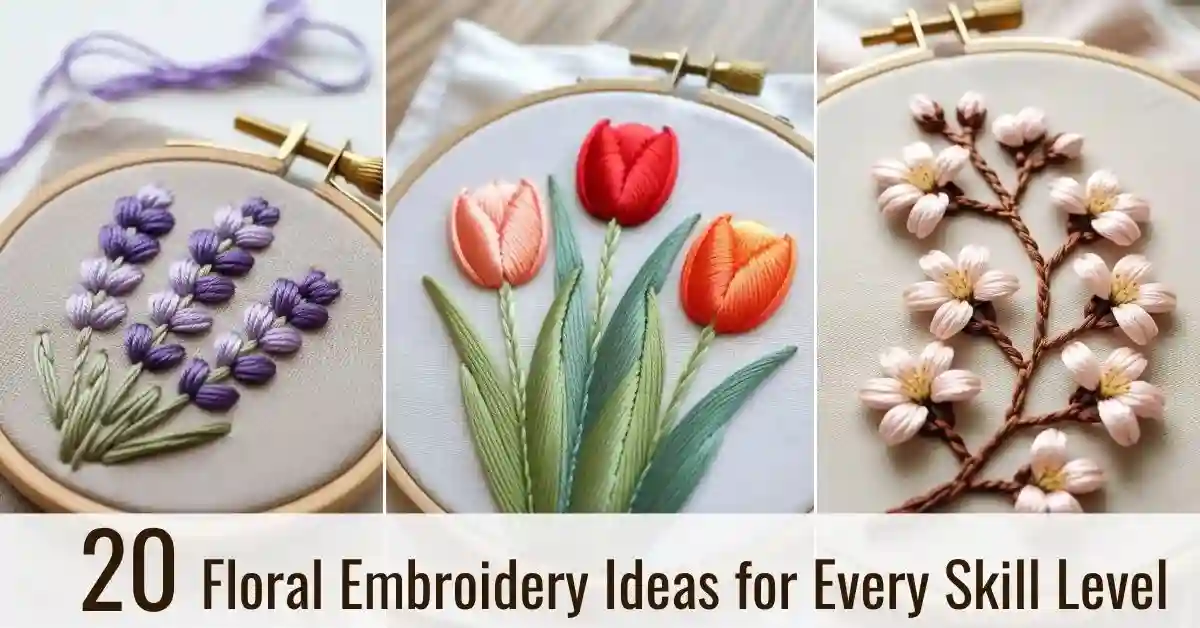
If any of these feel like a leap, warm up with the fundamentals first — these guides cover the stitches and setups you’ll use in every project above:
- 25 Easy Embroidery Designing Ideas for Beginners
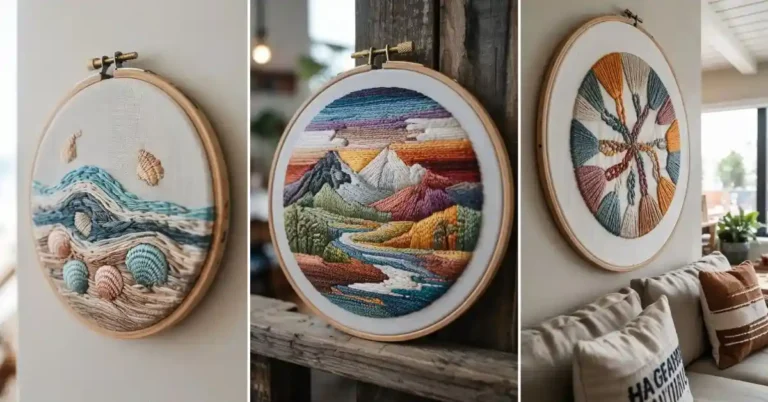
- 25 Embroidery Hoop Art Ideas for Home Decor
- 25 Hand Embroidery Projects Anyone Can Try
- 30 Creative Embroidery Design Ideas for Clothes
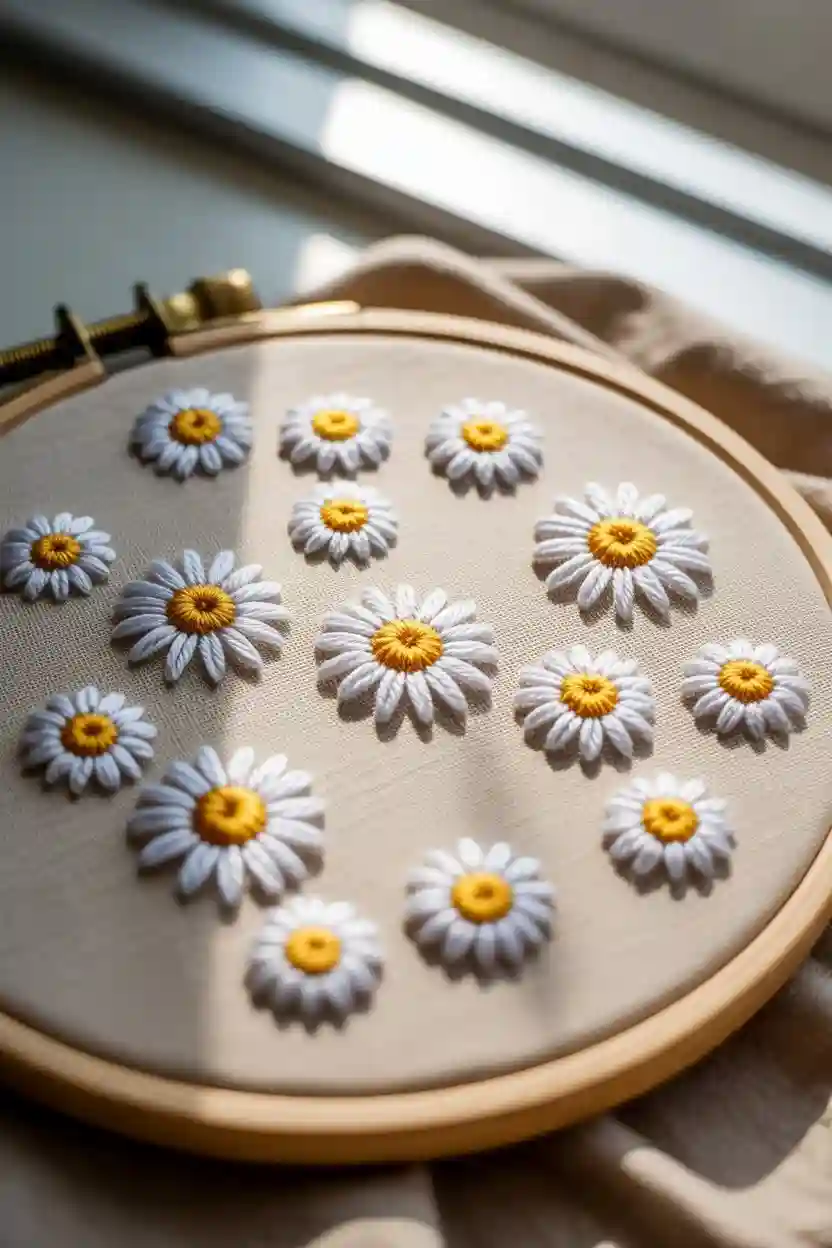
1. Lazy Daisy Stitch Flowers
The lazy daisy is where so many of us begin, and honestly, it never stops being useful no matter how advanced you get. Each petal is a single detached chain stitch, which means you loop the thread and anchor it down in one movement — beginner-friendly and incredibly satisfying to repeat. I love using this stitch to scatter small wildflower-style daisies across tote bags and denim jackets. Pair it with a French knot center in a contrasting color for an instant polished finish.
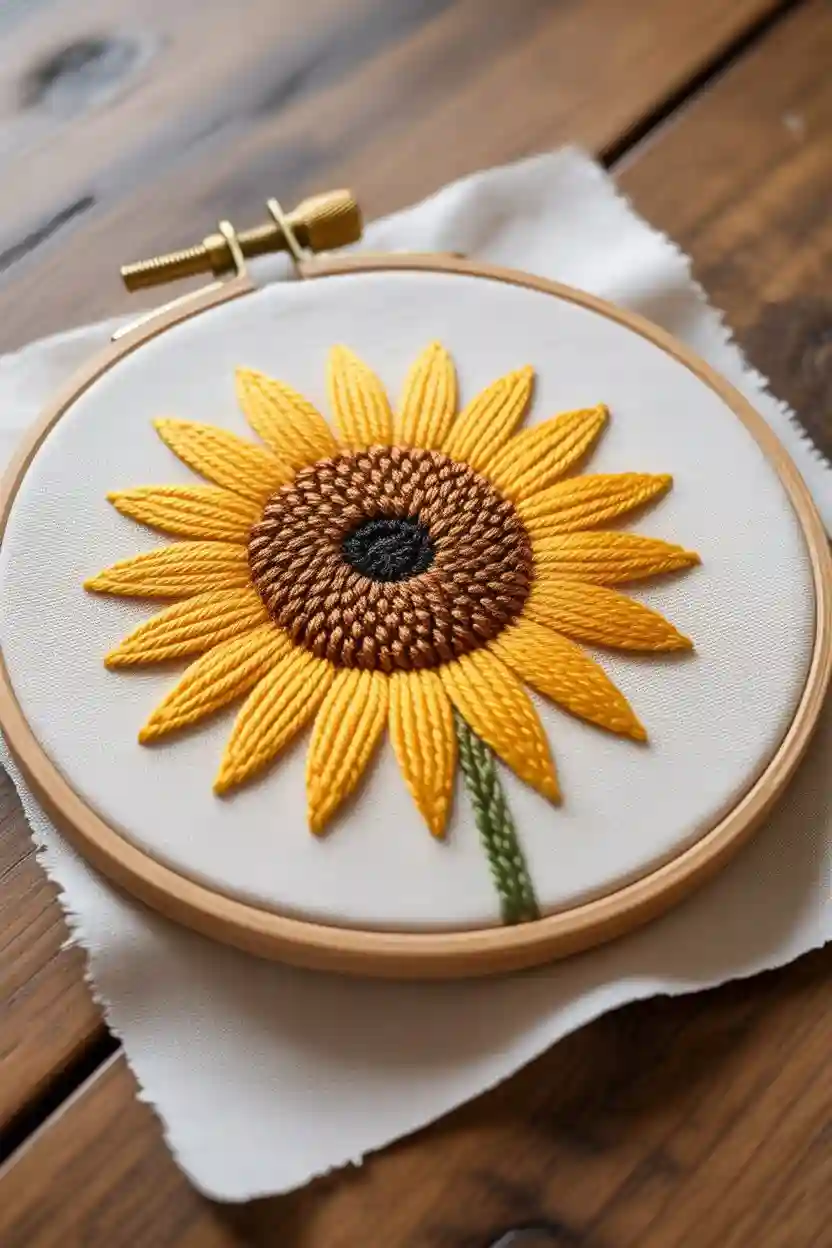
2. Simple Sunflower Design
A sunflower embroidery project is one of the best ways to practice straight stitches while creating something bold and recognizable from the very first session. The petals radiate outward from a dense, textured center that you can fill with French knots or satin stitch in deep brown and gold. I find sunflowers make the most gorgeous patch for the corner of a linen tote or the pocket of a chambray shirt. Work your petals in two shades of yellow to add depth without needing advanced shading skills.
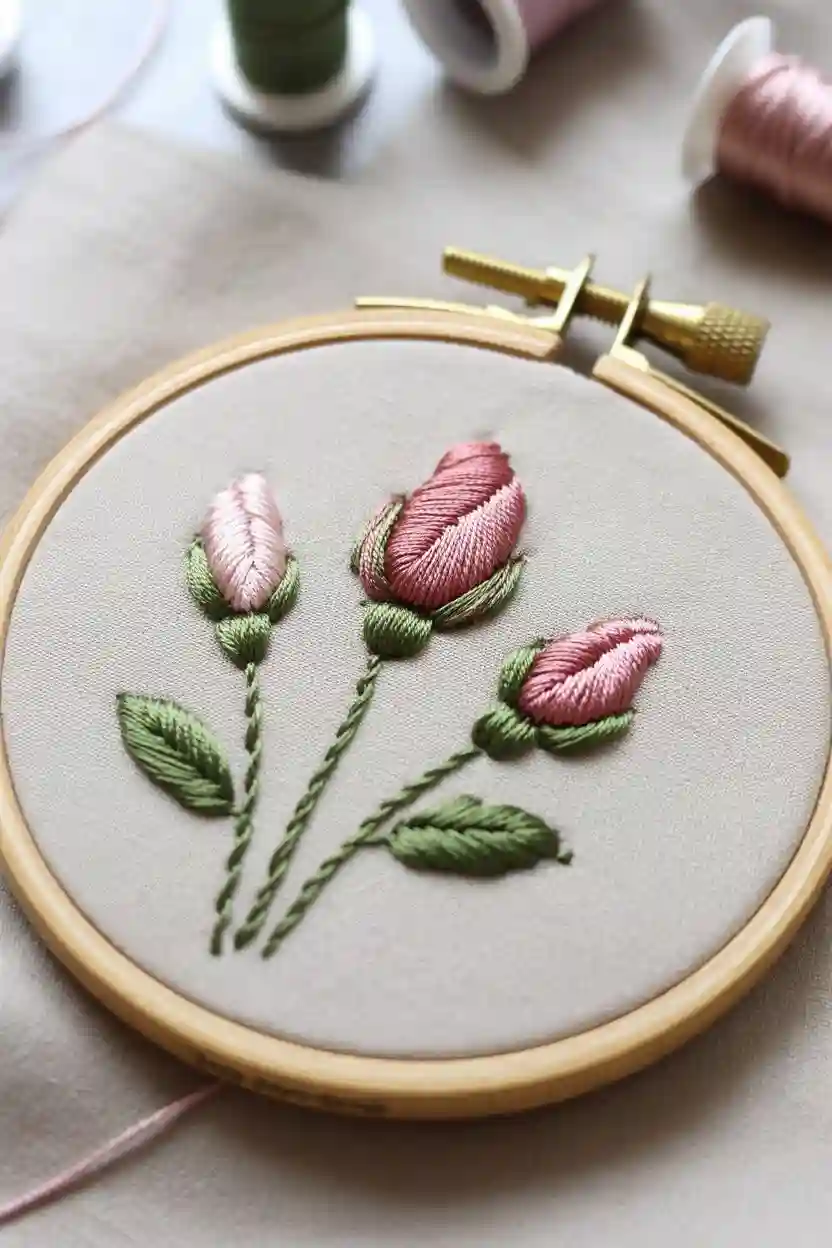
3. Satin Stitch Rose Buds
Rosebuds are a perfect stepping stone between beginner and intermediate work because they are small enough to stay manageable but teach you the fundamentals of filling a shape smoothly. Satin stitch requires keeping your thread tension consistent and your stitches lying flat and parallel, which builds real muscle memory for bigger projects. I suggest starting with a tight, closed bud shape before attempting full open roses — the smaller surface area is far more forgiving. Choose a dusty pink or antique rose thread color for that timeless, heirloom look.
4. Wildflower Meadow Sampler
A wildflower sampler lets you practice multiple stitches in one project without committing to a single technique for the whole piece. You can mix lazy daisies, stem stitches, straight stitches, and French knots to create a loose, organic cluster of meadow blooms that looks effortlessly beautiful. I love how this style of project has no wrong answer — the more varied and textured it looks, the better. This is a wonderful project to work on across several evenings without needing to follow a rigid pattern.
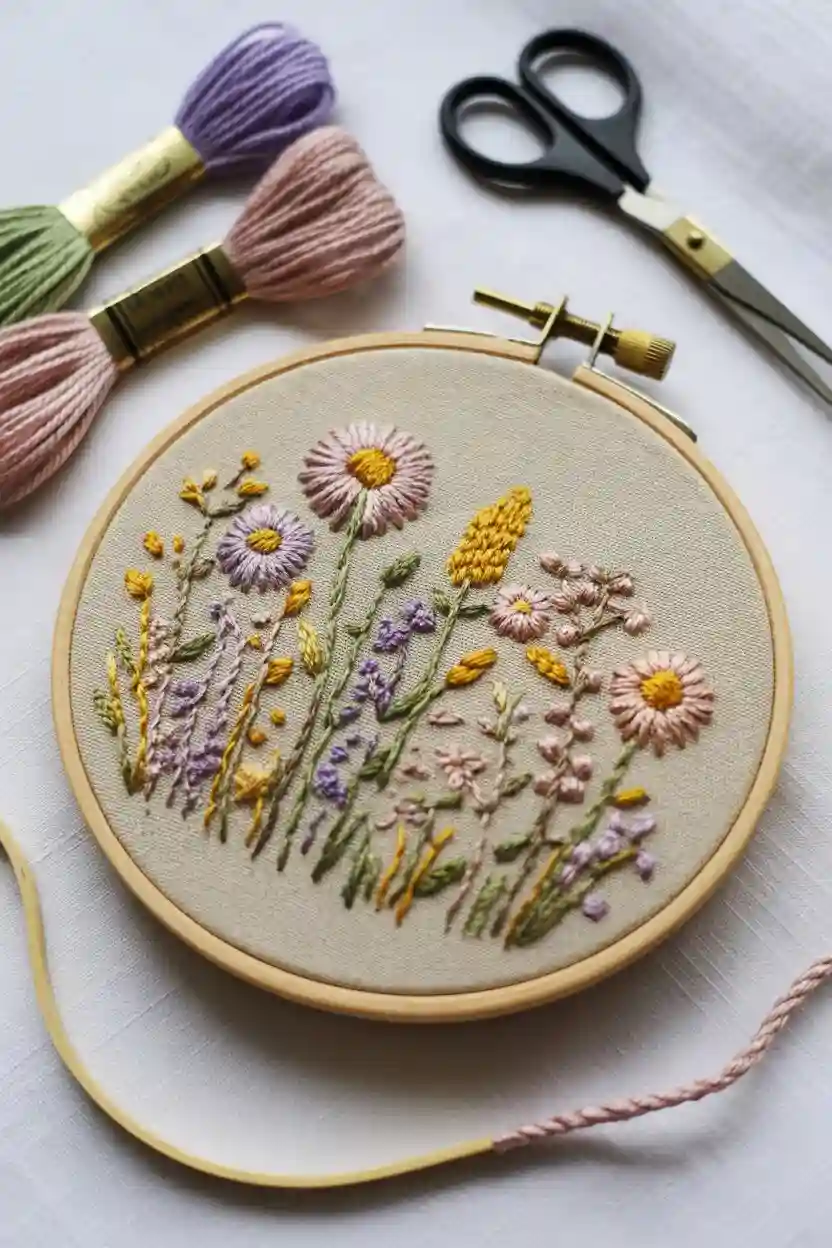
5. French Knot Flower Clusters
French knots intimidate almost every beginner, but once they click, you will find yourself adding them to everything. Grouped together tightly, they create the most beautiful textured flower heads — think mimosa blooms, lilac clusters, or field clover in miniature form. I once covered an entire small hoop with nothing but French knot flowers in varying sizes, and it became one of my most-complimented pieces. The trick is wrapping the thread around your needle just once or twice and keeping the fabric taut in your hoop at all times.
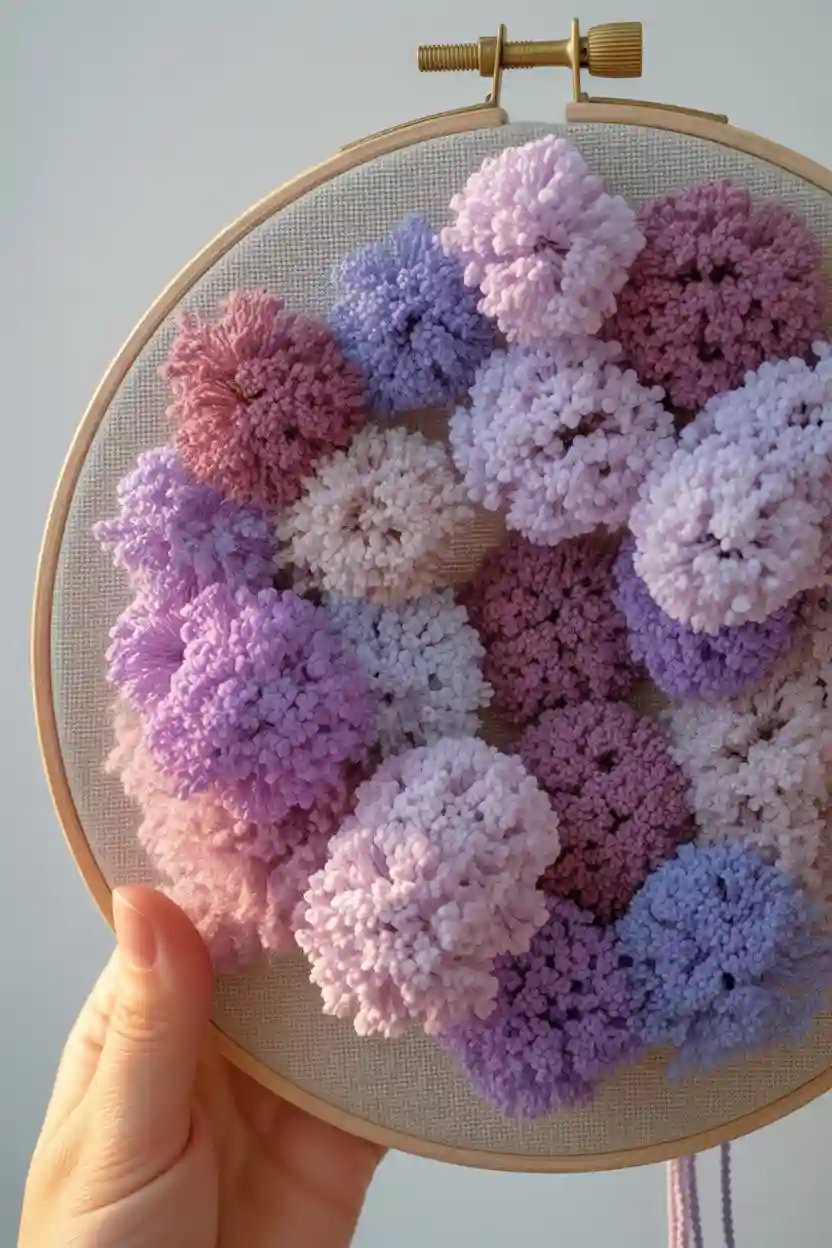
6. Botanical Line Art Embroidery
Botanical line art translates the aesthetic of vintage scientific illustrations into thread, and the results are absolutely stunning on neutral linen. You work primarily in stem stitch or back stitch to trace delicate outlines of leaves, stems, and petals without filling them in solidly. This style is forgiving for beginners because the beauty comes from the line quality, not from complex shading or color blending. I recommend using a single strand of thread in a deep green or warm black for the most refined, gallery-worthy look.
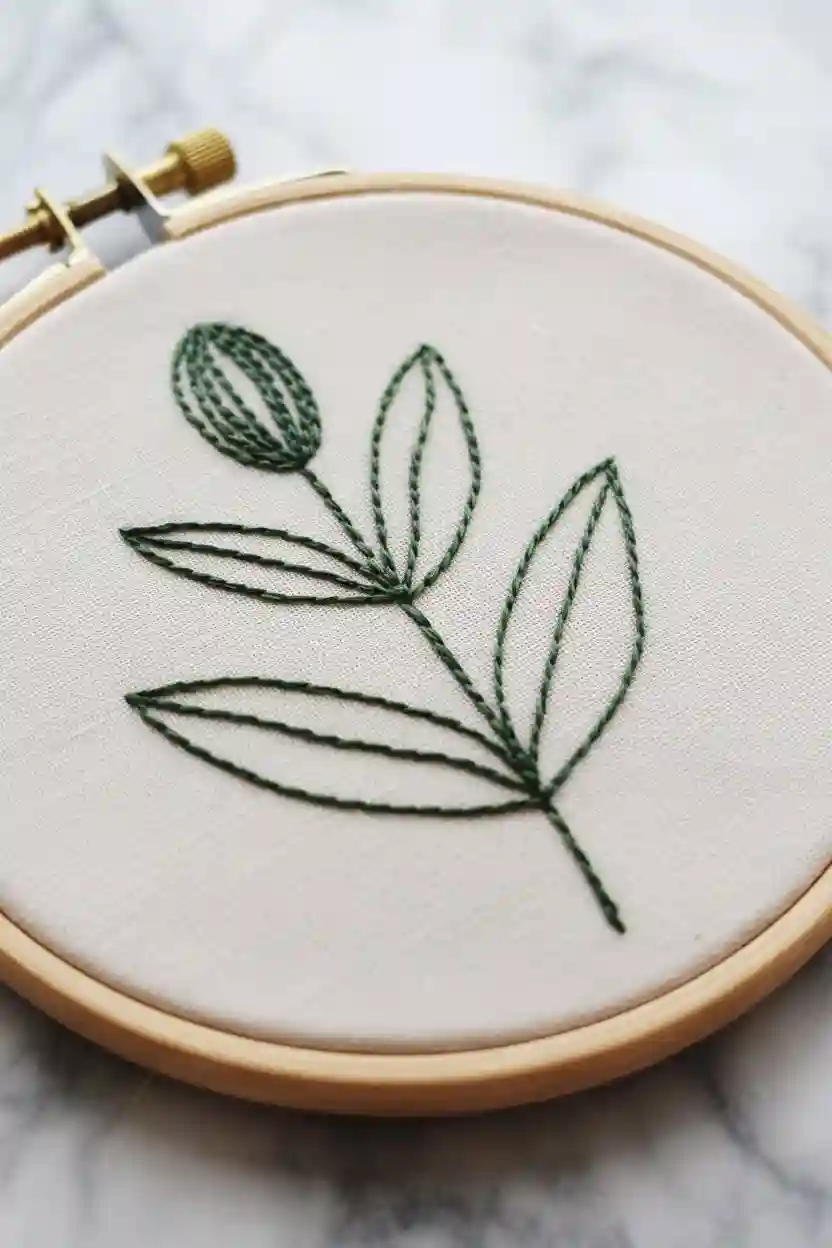
7. Tulip Embroidery with Satin Stitch Petals
Tulips are one of those flowers that translate beautifully into embroidery because of their clean, smooth petal shapes that are ideal for satin stitch practice. The simple three-petal form means you are not managing a complicated layout, but you still get to practice filling curved shapes evenly. I love stitching a row of tulips in graduating shades of coral and red to mimic a garden in full spring bloom. Add long, graceful straight-stitch stems and a few fly-stitch leaves to complete the scene without overcomplicating it.
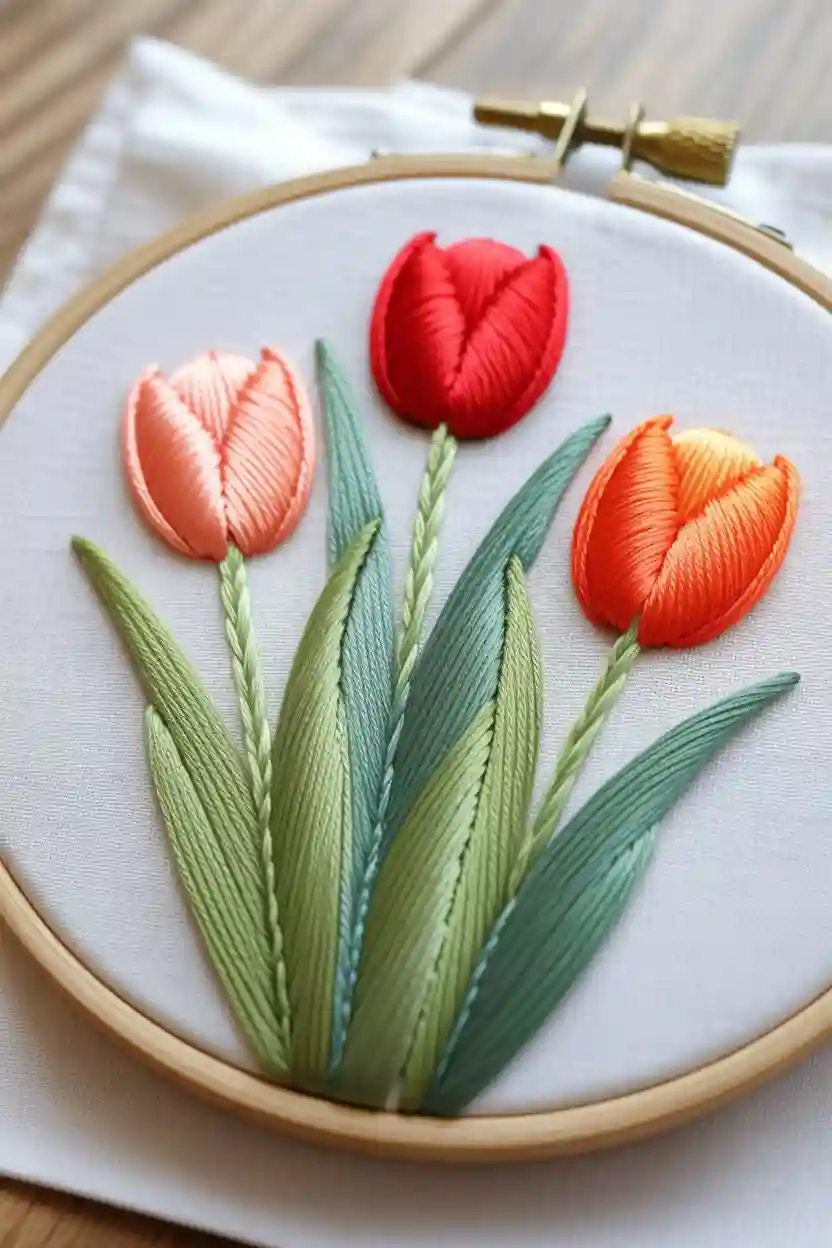
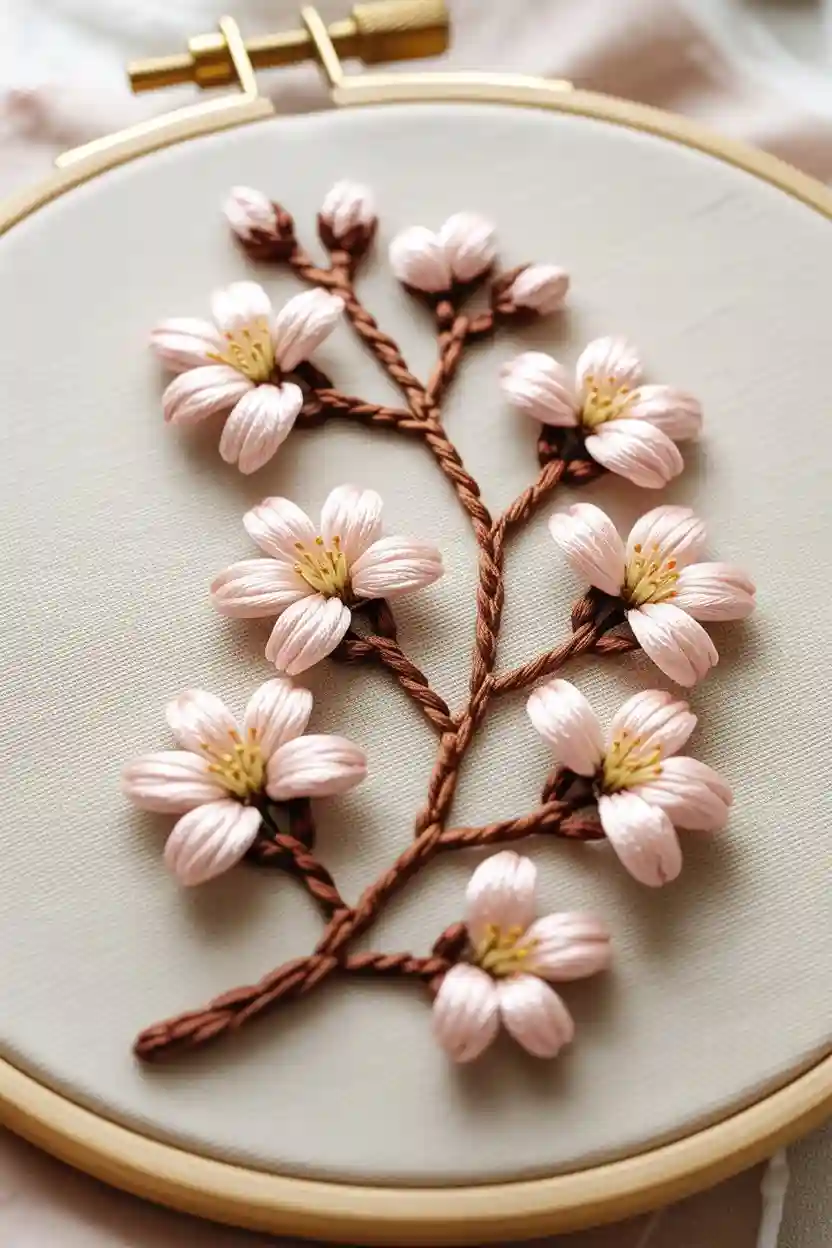
8. Cherry Blossom Branch Design
There is a particular romance to cherry blossom embroidery that makes it one of the most pinned and beloved floral patterns in the entire craft community. The design typically features a curved brown stem stitch branch with clusters of five-petal blossoms in blush and soft pink at each end. What I love most about this design is that the petals can be as simple or as detailed as your skill level allows — beginners can use straight stitches while more advanced stitchers can add shading with split stitch. Stitch it on a cream or pale grey fabric for maximum visual contrast.
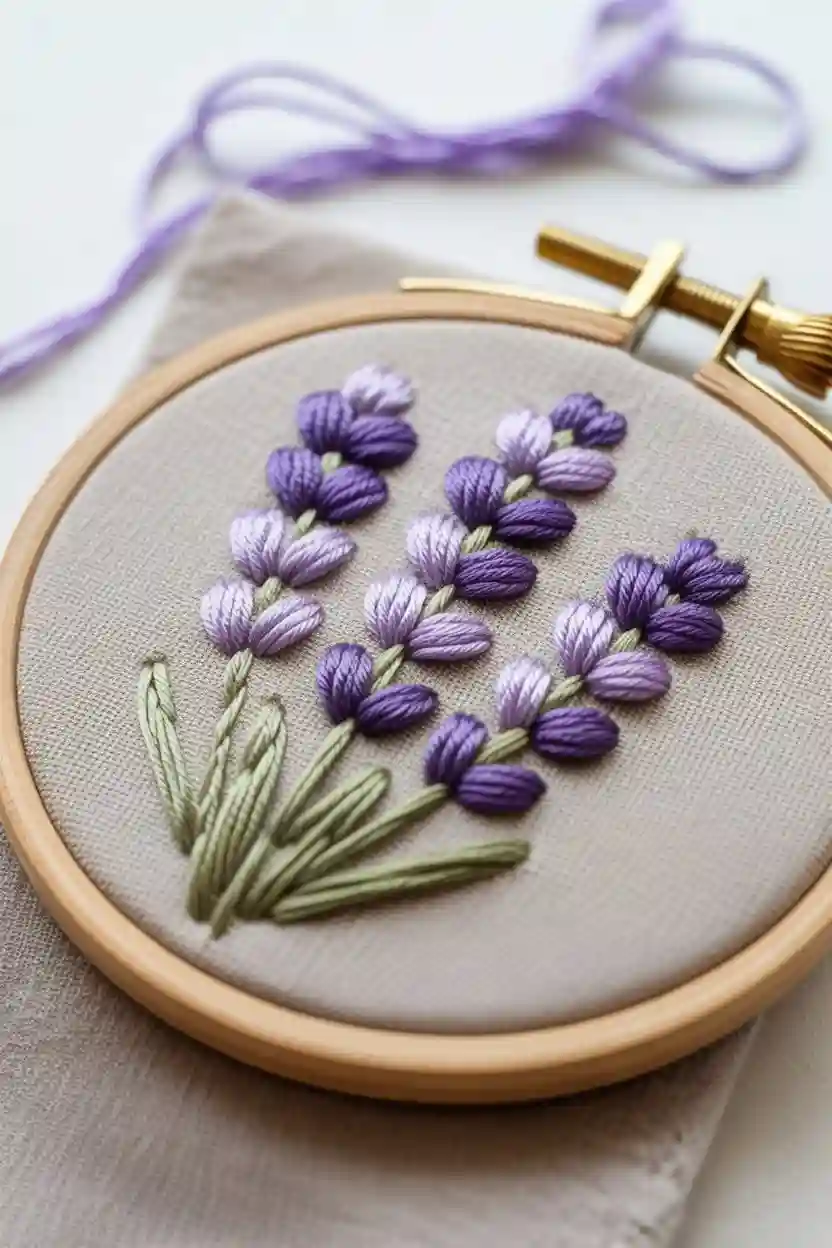
9. Lavender Sprig Embroidery
Lavender is one of the most satisfying floral embroidery subjects because even the simplest interpretation of it looks sophisticated and intentional. You work tiny detached stitches or French knots along a central stem to mimic the florets, and the repetitive motion becomes almost meditative after a few minutes. I have stitched lavender sprigs onto linen napkins, pillowcases, and even bookmarks as gifts, and every single person has loved them. Use at least two shades of purple — a medium violet and a dusty lavender — to give the florets realistic depth.
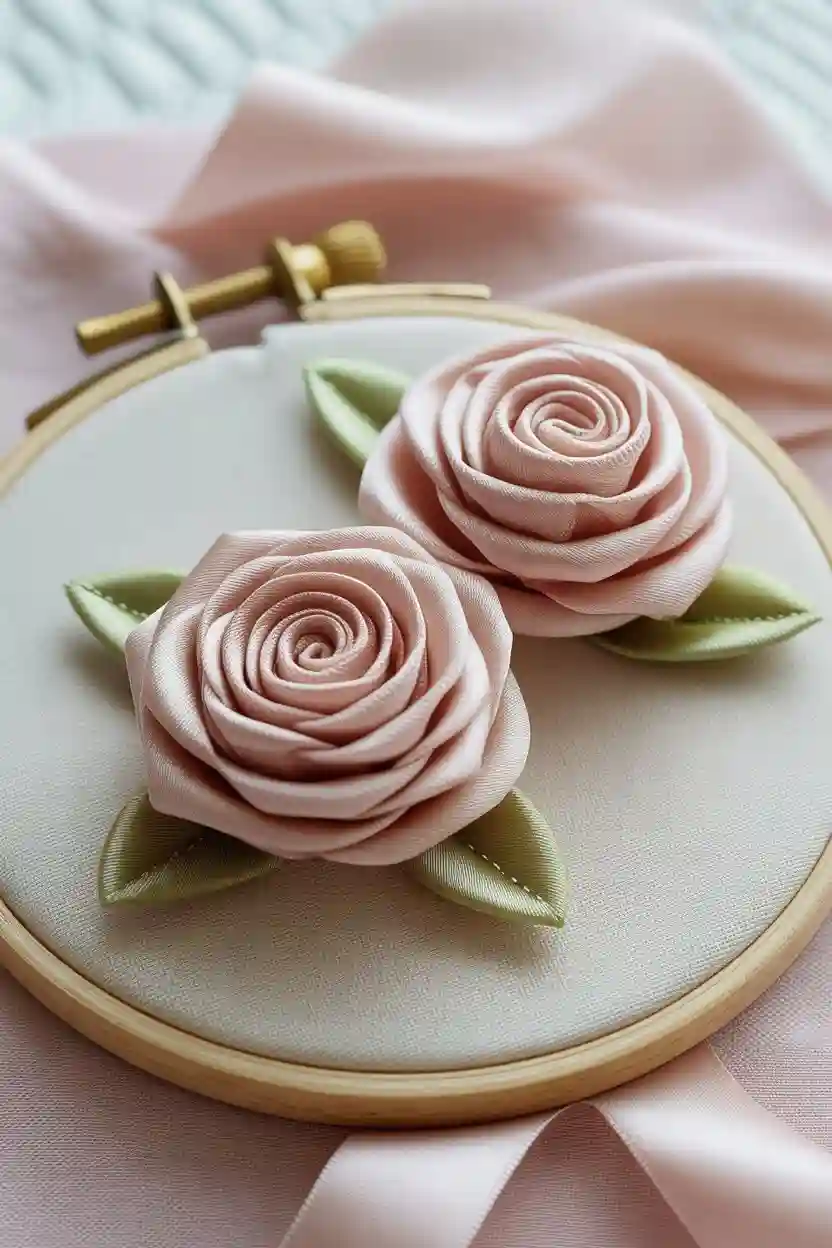
10. Dimensional Ribbon Rose
Ribbon embroidery opens up a whole new world of three-dimensional floral texture that flat thread simply cannot replicate, and the ribbon rose is the signature piece of this technique. Using narrow silk or satin ribbon instead of floss, you create roses that actually lift off the fabric surface and catch light in the most beautiful way. This technique sits comfortably in the intermediate category, but with a little patience, even newer stitchers can achieve lovely results on their first attempt. I recommend a 4mm ribbon in a soft blush or cream for a romantic, heirloom aesthetic.
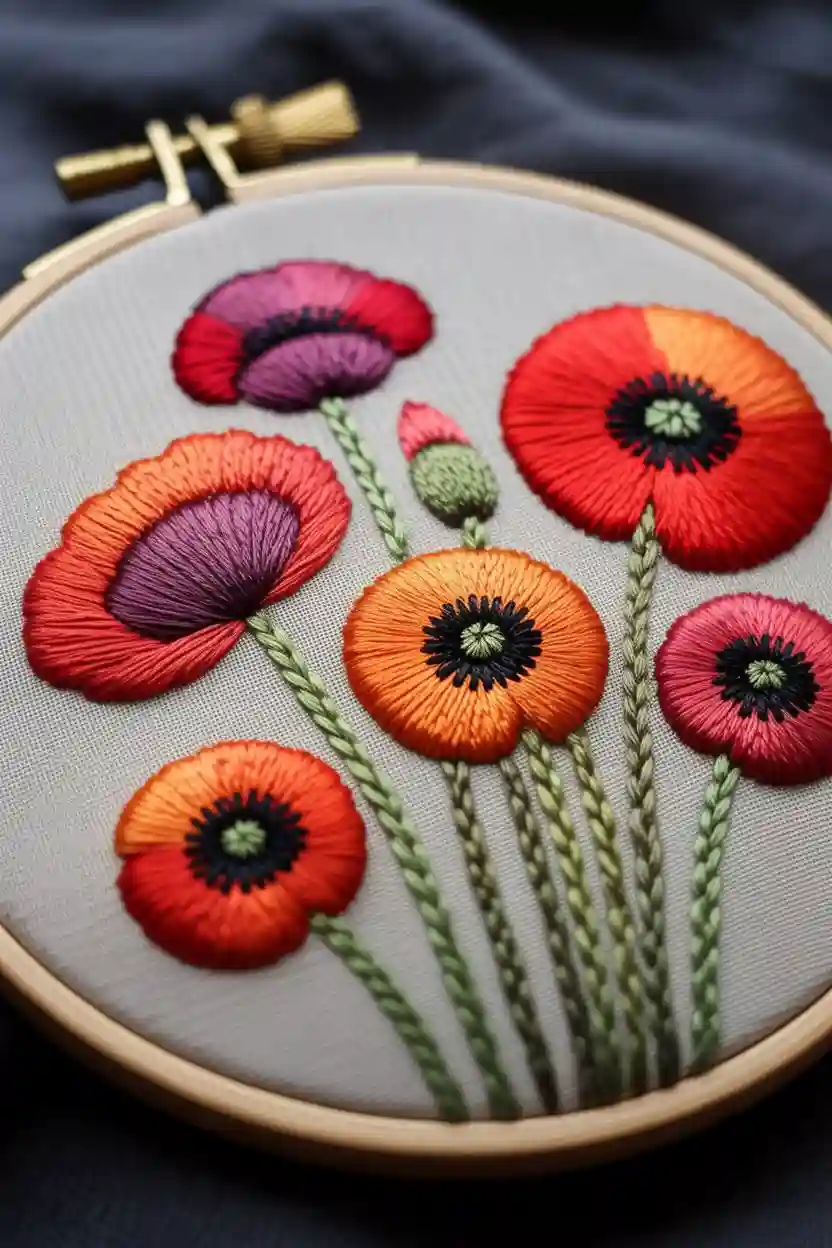
11. Poppy Field Embroidery
Poppies have a wildness to them that makes them one of the most expressive flowers you can stitch, and a small poppy field scene is a genuinely achievable project for anyone past the beginner stage. The petals are typically worked in long and short stitch to blend deep red and orange into a natural gradient, while the black centers are densely packed French knots. I always encourage people to let the poppy petals look slightly irregular and loose — that imperfection is exactly what makes them feel alive and real. Stitch a cluster of different heights and sizes to mimic how poppies actually grow in a field.
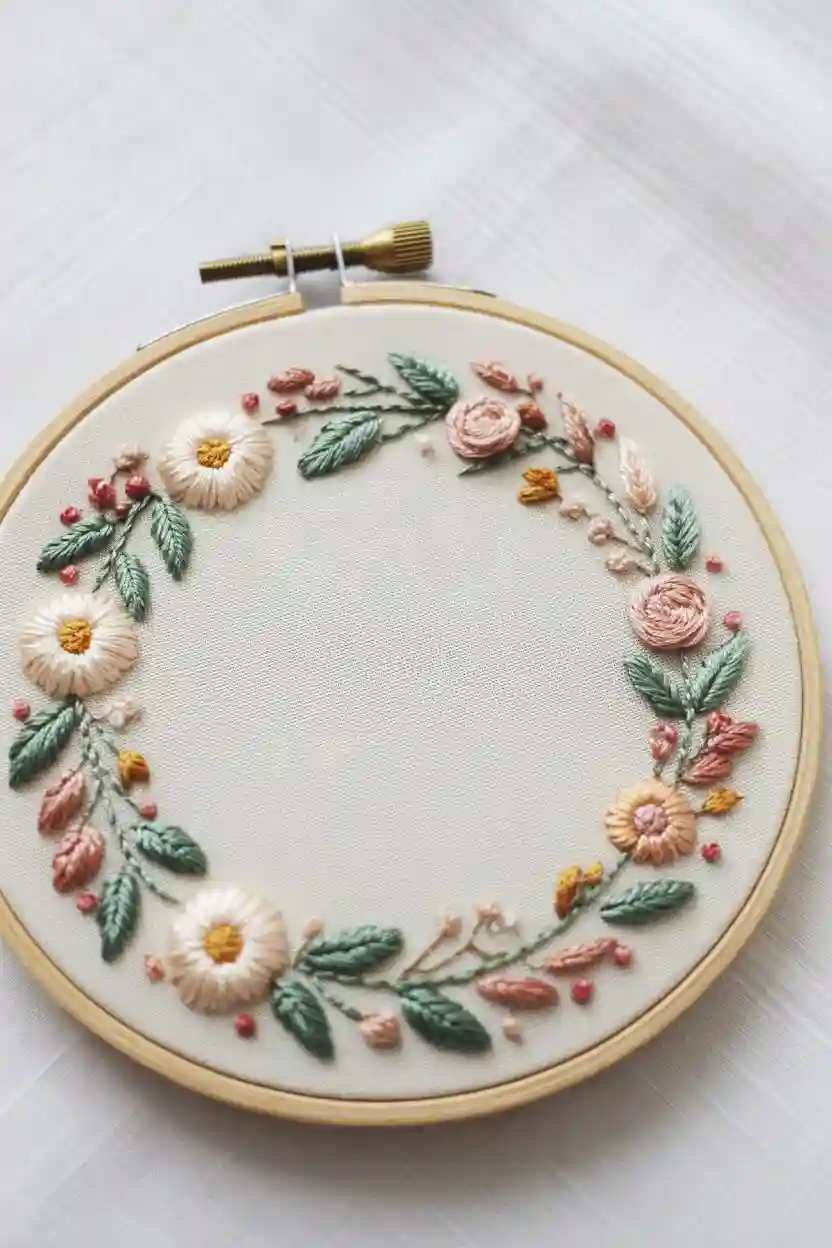
12. Embroidered Wreath of Mixed Blooms
A floral wreath is one of the most versatile and endlessly customizable embroidery projects because you can fill it with any combination of flowers, leaves, and filler stitches you like. The circular layout gives your work a finished, framed quality even before you mount it in a hoop, which makes it incredibly satisfying to display. I like building mine with a mix of roses, berries, small daisies, and eucalyptus-style leaves for a loose, organic feel rather than a stiff symmetrical arrangement. Sketch your wreath shape lightly with an air-erasable pen before you start so you have a guide without feeling locked in.
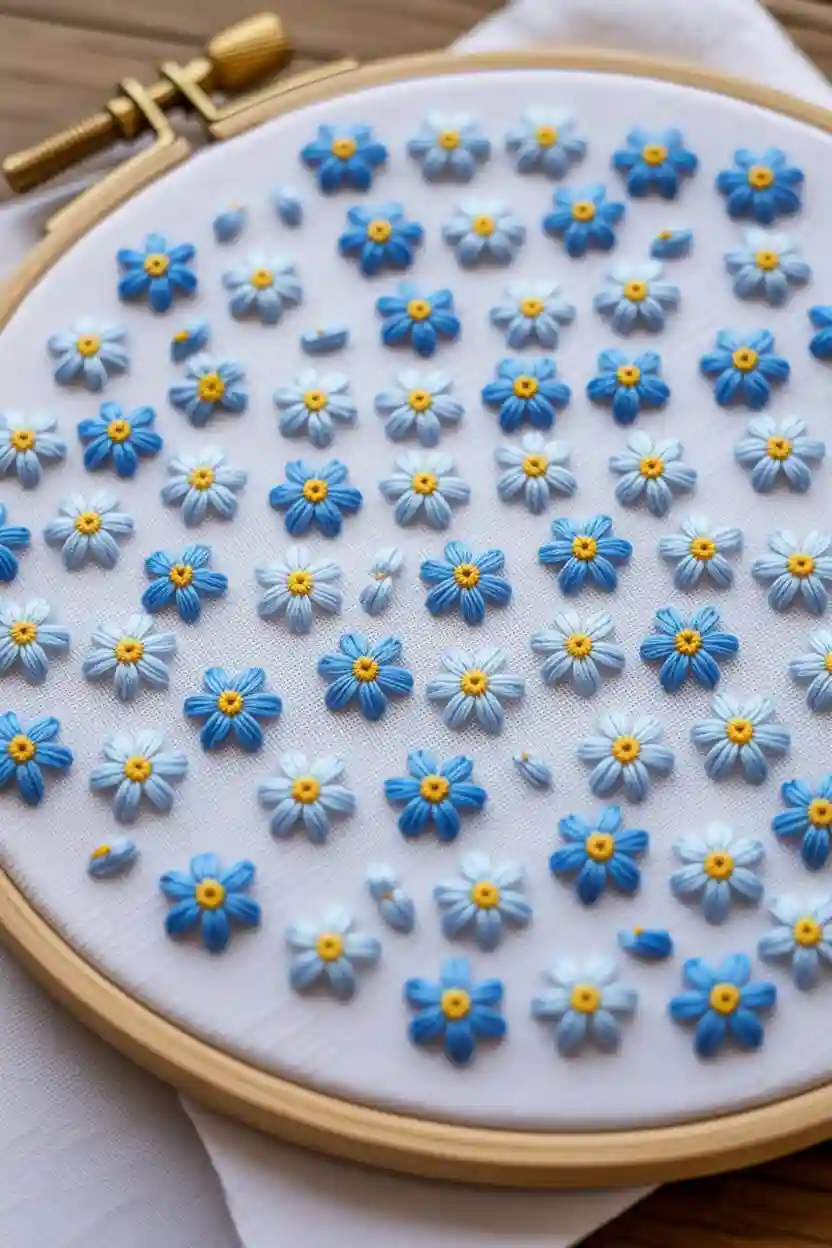
13. Forget-Me-Not Scatter Pattern
Forget-me-nots are tiny but mighty in embroidery — their small five-petal form and that iconic yellow center create huge visual impact when scattered freely across a fabric surface. Each flower is quick to stitch, which makes this an incredibly satisfying project for anyone who wants visible progress in a single sitting. I have used a scatter of forget-me-nots to refresh an old pillowcase and to decorate the collar of a plain white linen blouse. The key is varying your spacing and working in at least two shades of periwinkle blue so the cluster does not look flat or repetitive.
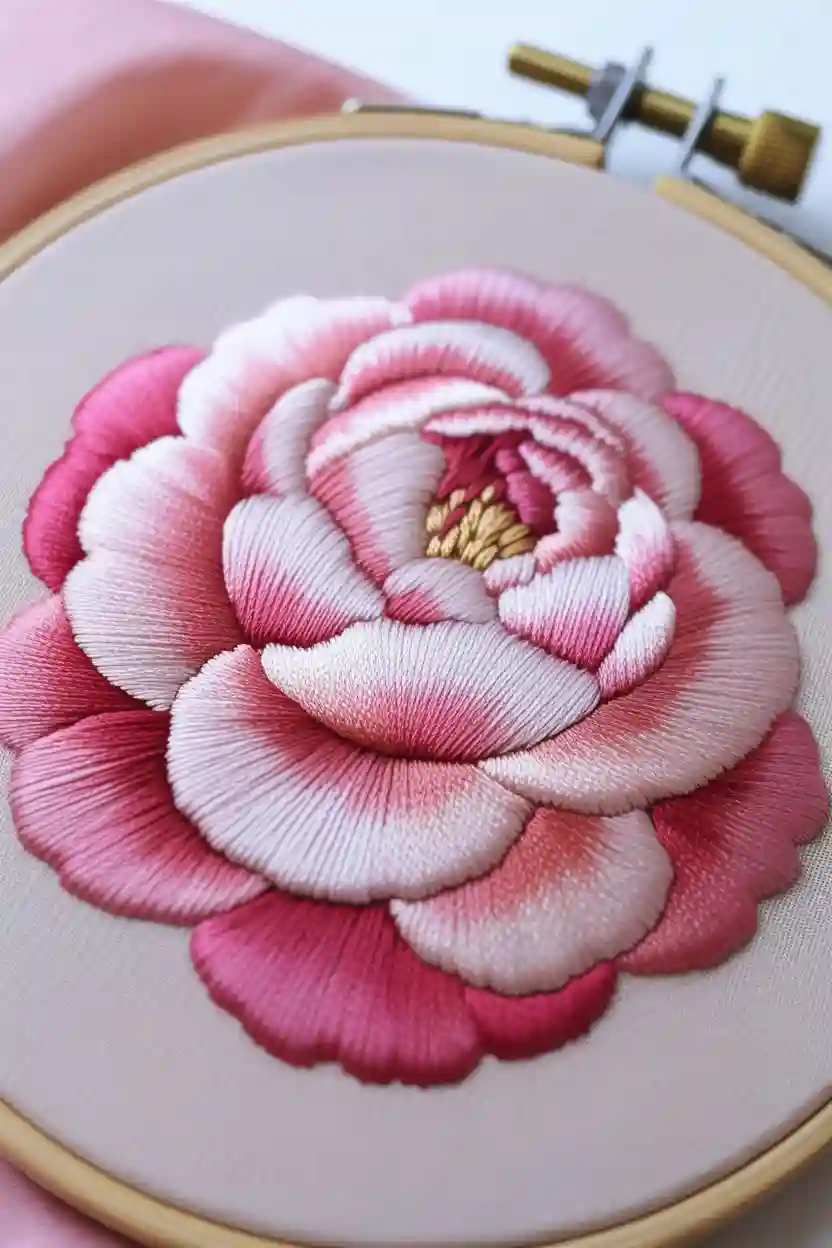
14. Peony Embroidery in Long and Short Stitch
Peonies are the crown jewel of floral embroidery, and working one in long and short stitch is a rite of passage for any serious needleworker. The technique allows you to blend multiple shades of pink — from the deepest rose at the center to the palest blush at the petal tips — in a way that genuinely mimics the look of the real flower. This sits firmly in the intermediate-to-advanced territory, and I would not recommend it as your first project, but it is absolutely worth working toward. Take your time layering the colors and resist the urge to rush the shading — the depth builds slowly and beautifully.
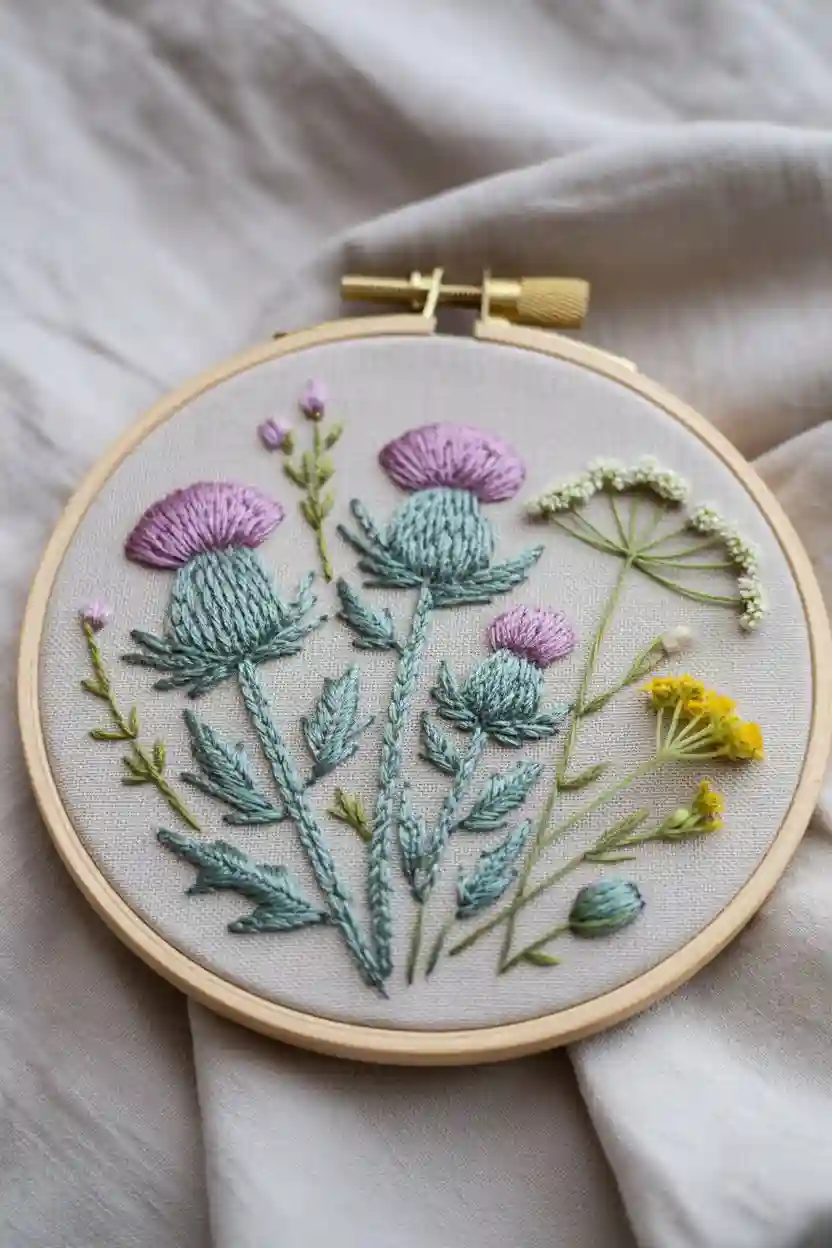
15. Thistle and Wildflower Botanical Hoop
Thistles are an underrated choice in floral embroidery and bring a wonderful sculptural quality to any botanical hoop design. The spiky leaves work beautifully in fishbone stitch or split stitch with varying shades of grey-green, while the purple flower head can be built from a dense cluster of straight stitches fanning outward from a center point. I love pairing thistles with looser wildflowers like Queen Anne’s lace and small yellow blooms to create that effortlessly curated-yet-wild meadow feeling. This project is best suited to someone who is comfortable with a few basic stitches and ready to experiment with composition.
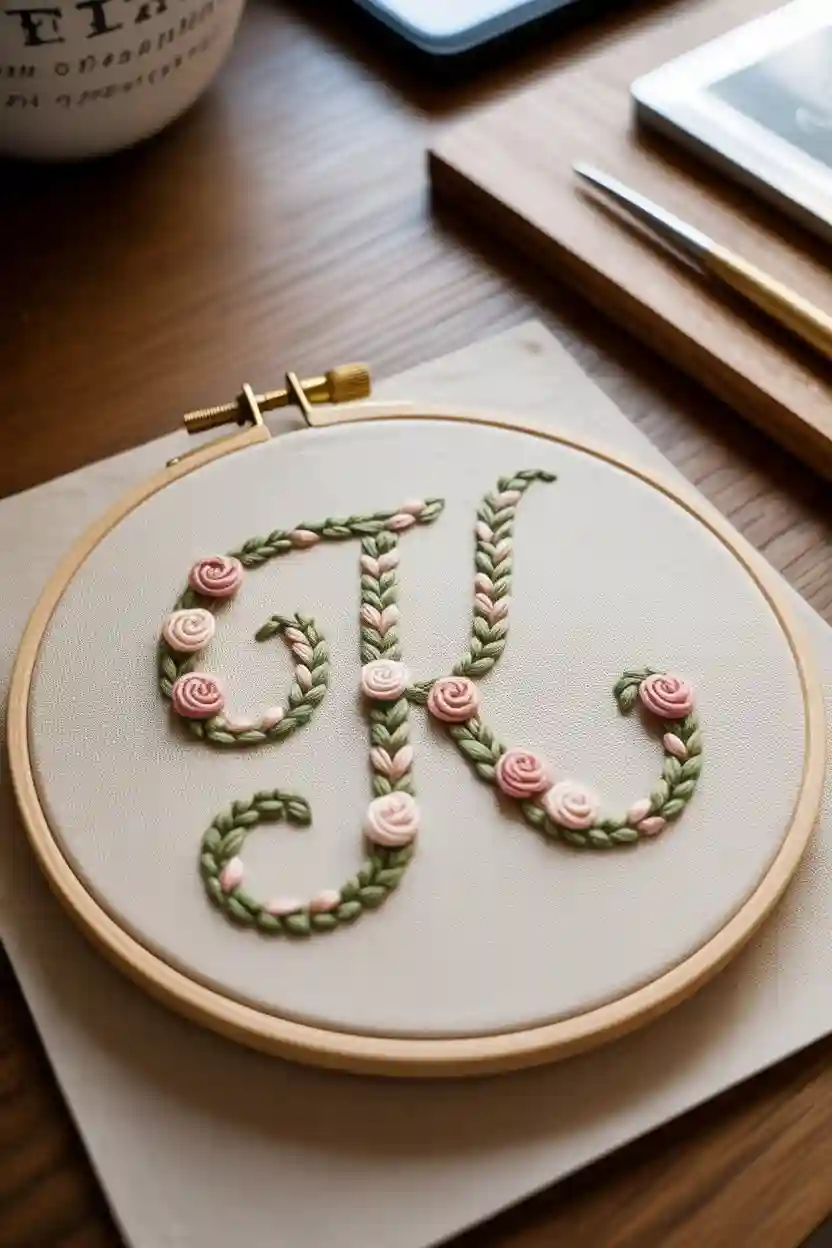
16. Monogrammed Floral Initial
A floral monogram combines the elegance of lettering with the softness of embroidery, and the finished piece makes one of the most thoughtful personalized gifts you can stitch. You trace or transfer your chosen letter onto fabric and then adorn it with small flowers, leaves, and vines using whatever stitches you feel most comfortable with. I have made these as wedding gifts, nursery decorations, and birthday presents, and they are always met with absolute delight from the recipient. Choose a script font with rounded curves rather than sharp angles — it gives you more comfortable surface area to build your floral details onto.
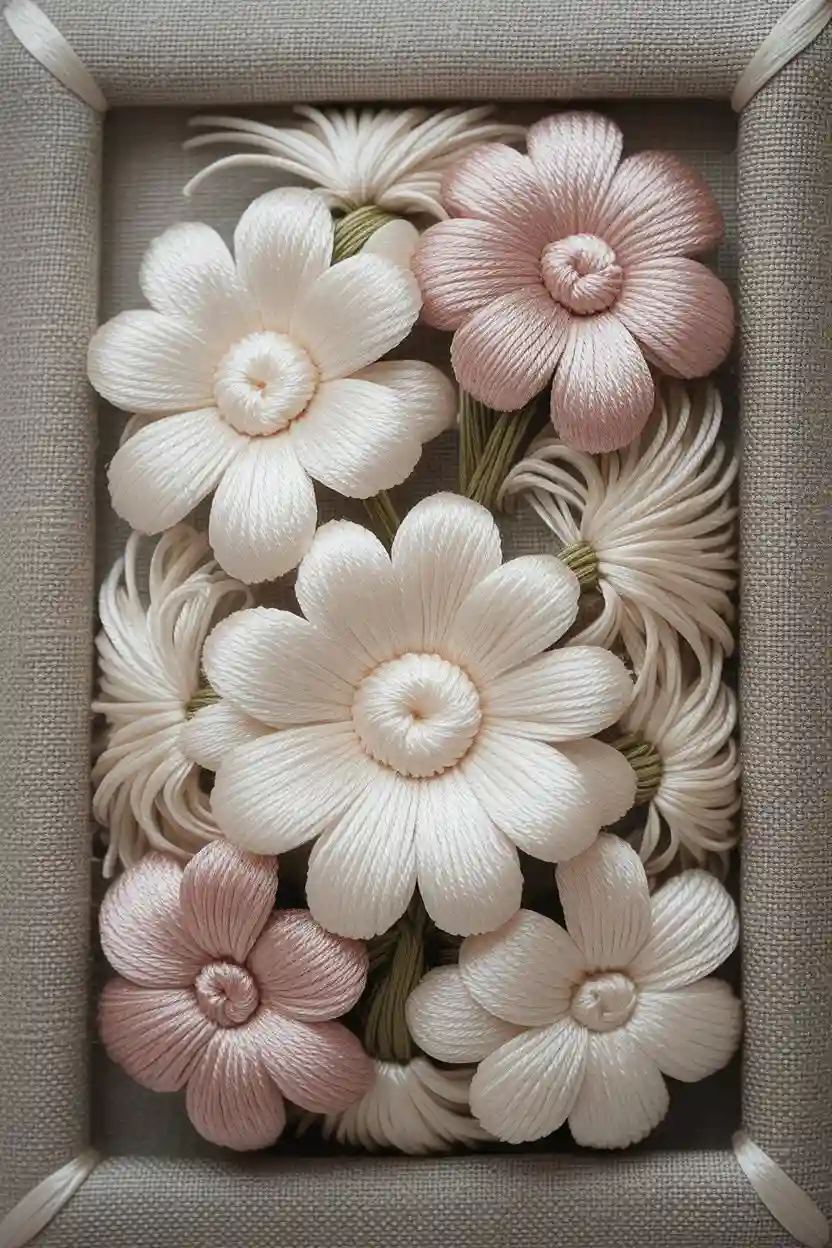
17. Stumpwork Raised Flower Panel
Stumpwork is an advanced embroidery technique where padded shapes and wired elements create fully three-dimensional flowers that appear to float off the fabric surface. Petals are often stitched separately on wire frames and then attached to the background fabric at the base, giving them the ability to bend and lift in a way that is genuinely breathtaking to look at. This technique requires patience, precision, and a willingness to practice the wired petal technique several times before your first finished piece. I consider it one of the most rewarding challenges in all of embroidery — the learning curve is steep but the results are completely unlike anything else you will stitch.
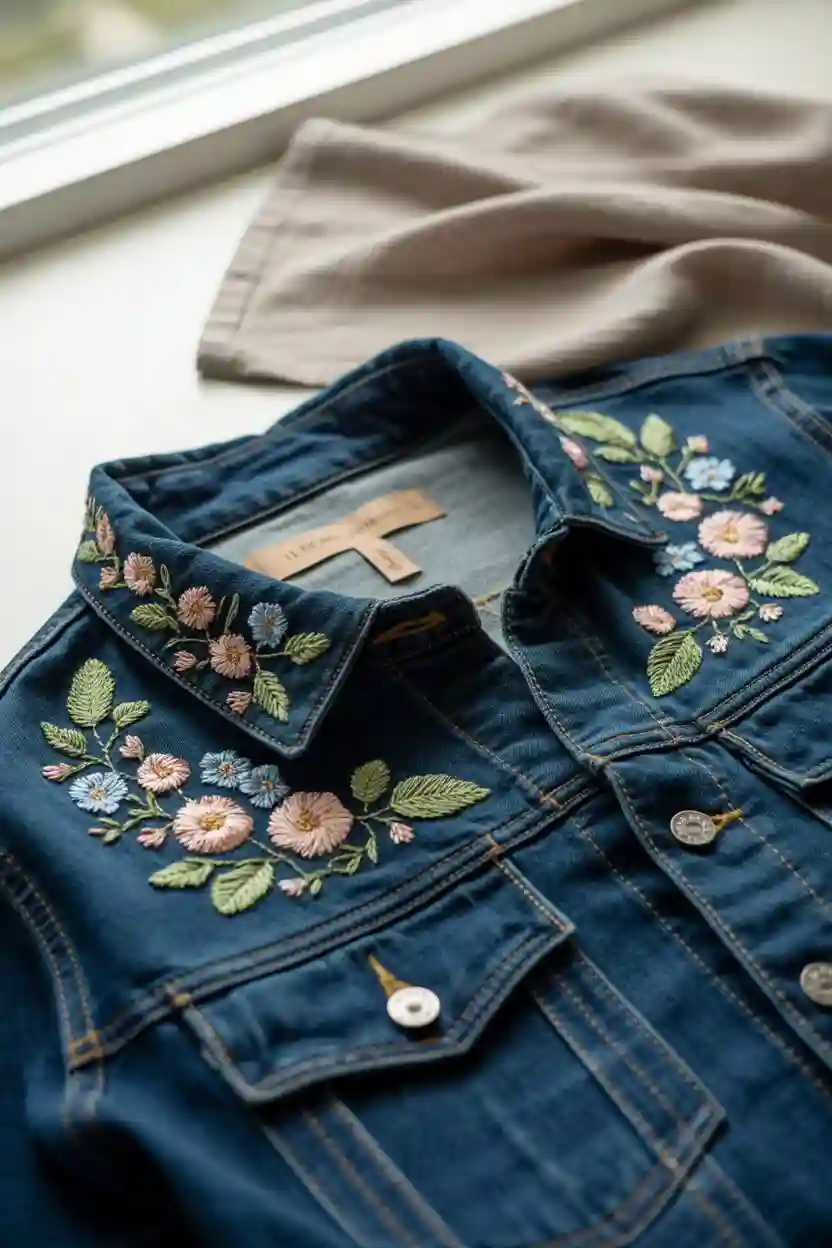
18. Floral Embroidery on Clothing and Denim
Taking your floral embroidery off the hoop and onto wearable pieces transforms the craft into something you can carry with you and show off every single day. Denim jackets, jean pockets, shirt collars, and canvas sneakers are all brilliant surfaces for floral embroidery, and the contrast of delicate thread against sturdy fabric is endlessly beautiful. I personally love stitching a small cluster of roses and leaves onto the collar tips of a plain Oxford shirt for an effect that looks expensive and intentional. Use a stabilizer or iron-on interfacing behind lightweight fabrics before you start to prevent puckering and distortion.
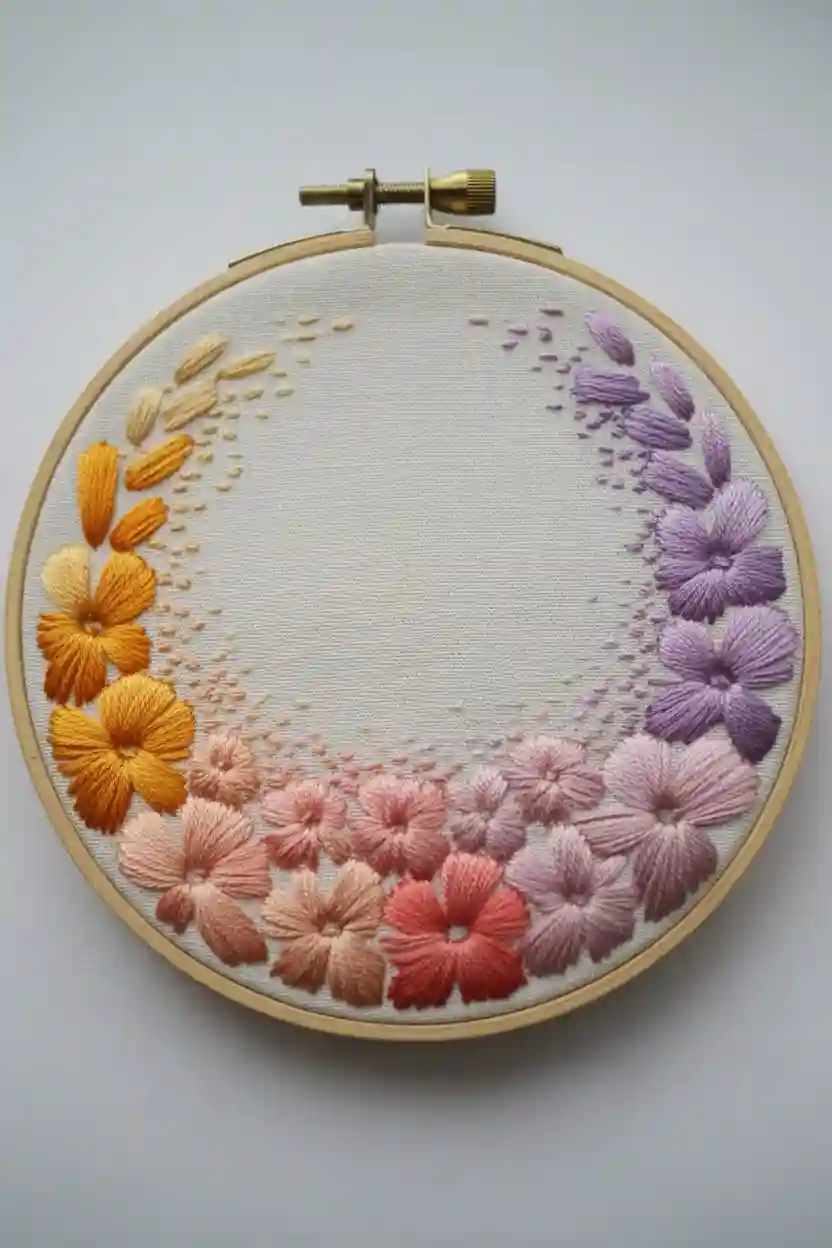
19. Gradient Color Wash Floral Hoop
A gradient or color wash technique in floral embroidery involves deliberately transitioning your thread colors across a design so the overall piece moves through a spectrum — from warm golden yellows into coral, blush, and then lavender, for example. This approach requires planning your color palette before you begin and committing to intentional placement rather than choosing colors spontaneously as you go. The results are show-stopping in the most effortless way — the gradient effect makes even simple flower shapes look painterly and sophisticated. I recommend laying all your chosen thread colors out in order before you start a single stitch so you can see the full transition clearly.
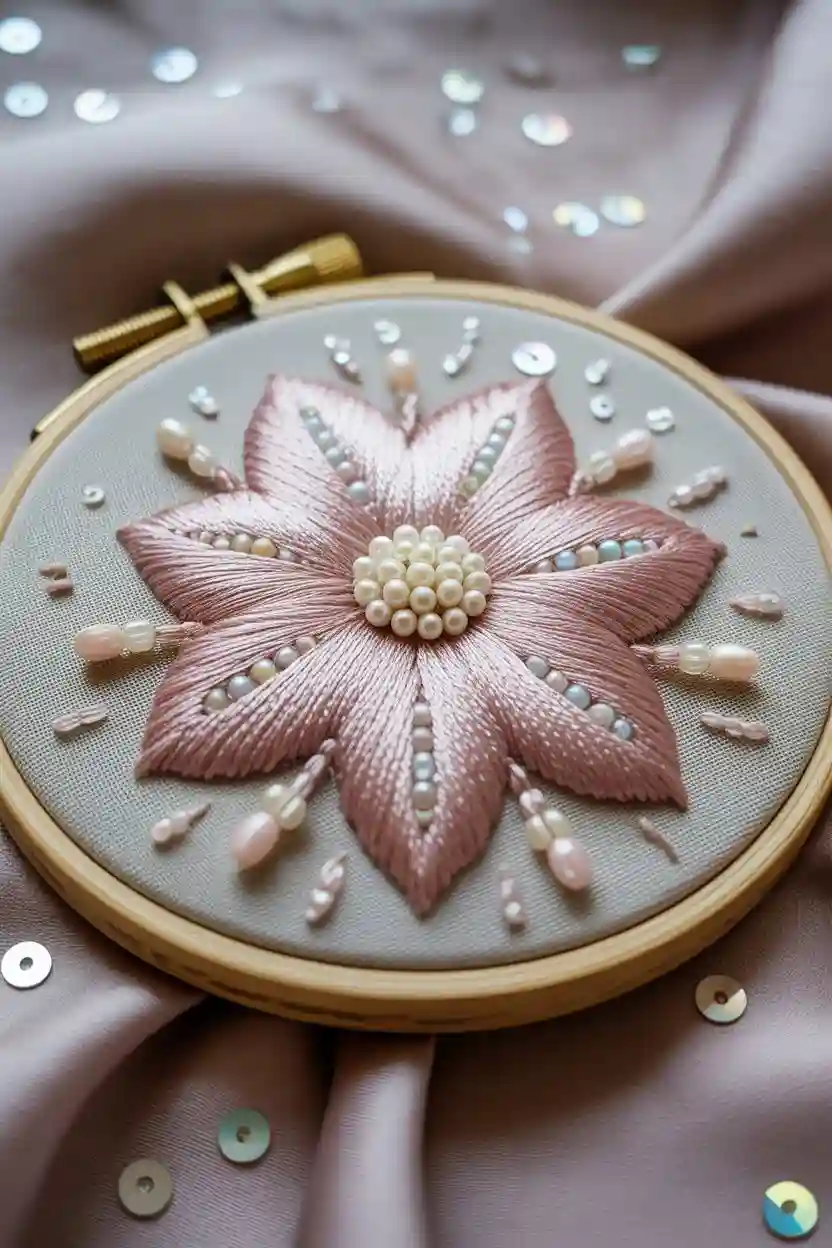
20. Mixed Media Floral Embroidery with Beads and Sequins
Mixed media embroidery takes your floral work into genuinely artistic territory by incorporating beads, seed pearls, sequins, and even small charms alongside your thread to create texture and sparkle. A beaded flower center, a scattering of sequin dewdrops, or pearl-edged petals can elevate a relatively simple design into something that looks museum-worthy. I first tried adding seed beads to a simple rose design almost on a whim, and it completely changed how I thought about what embroidery could be. This technique works at almost any skill level because you can apply as few or as many embellishments as feels right for where you are in your journey.
FAQs for Floral Embroidery Design Ideas
The real lesson across all twenty: every flower here is built from a handful of stitches repeated with care. Pick the one that made you reach for your hoop — the lazy daisy if you’re new, the peony if you’re ready — and give it one honest evening. The flower doesn’t have to be perfect; it has to be yours.