20 Flower Bed Ideas for Colorful Gardens
Stand at the edge of your yard in early spring and you'll notice something: the gardens that catch your eye aren't the ones with the priciest plants. They're the ones with a clear shape — a defined edge, a confident curve, plants grouped in drifts of three or five instead of scattered onesies. These twenty approaches cover the full arc of building beds like that, from soil-level decisions about raised frames and edging to the finishing touches that make a landscape feel deliberate.
Once you understand the basics — how raised bed gardening systems drain, which edging actually holds a line through a season of mowing, and how to arrange plants by height and bloom time — the rest becomes a series of small, confident decisions. Below you'll find classic cottage borders alongside modern steel-edged beds, each with practical notes on cost, materials, and upkeep.
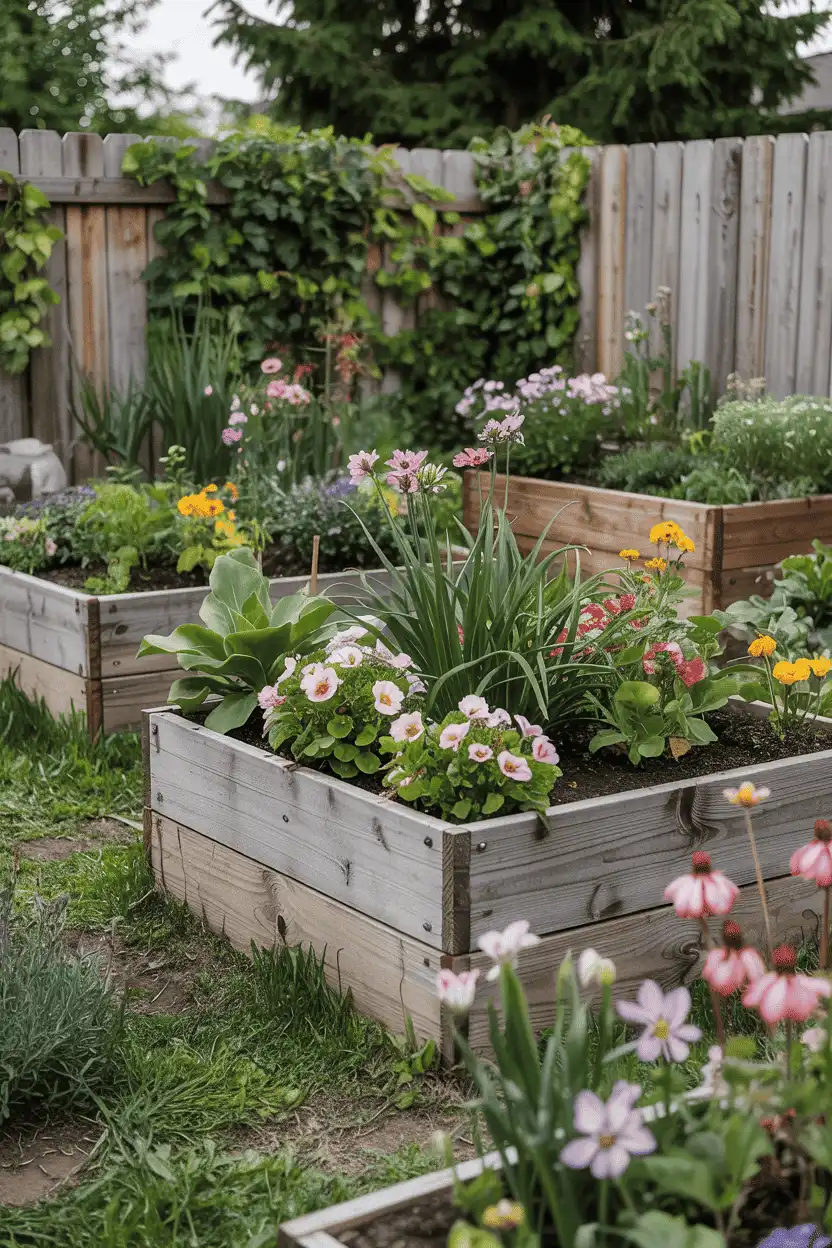
1. Raised Garden Beds for Better Structure
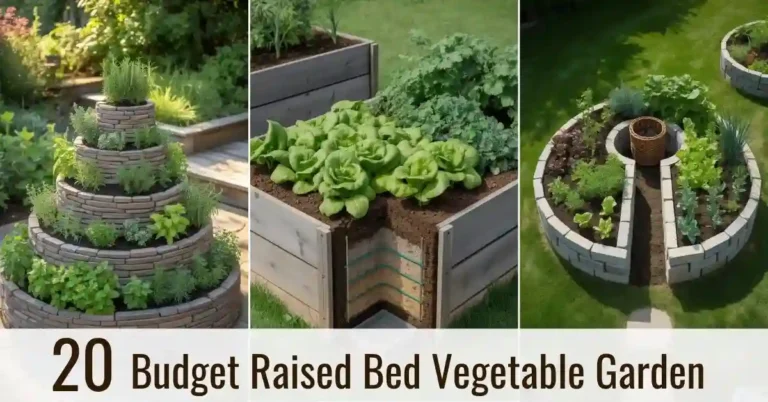
A frame full of soil you control beats whatever the builder left behind — that's the whole appeal of raised beds. Drainage improves overnight, the soil warms earlier in spring, and weeds arrive far less often. Cedar or pressure-treated 2x8s stacked two high give you a comfortable 16-inch working height; corrugated metal kits cost a bit more but last decades. In a tight yard, a single 4×8-foot rectangle along a fence line can hold an entire cutting garden.
Build the frame from whatever's on hand — pallets, reclaimed lumber, even dry-stacked stone — and fill it with roughly a 60/40 mix of topsoil and compost. A simple grid layout isn't just tidy: it makes succession planting genuinely easy, season after season.
2. Garden Edging for Clean Lines
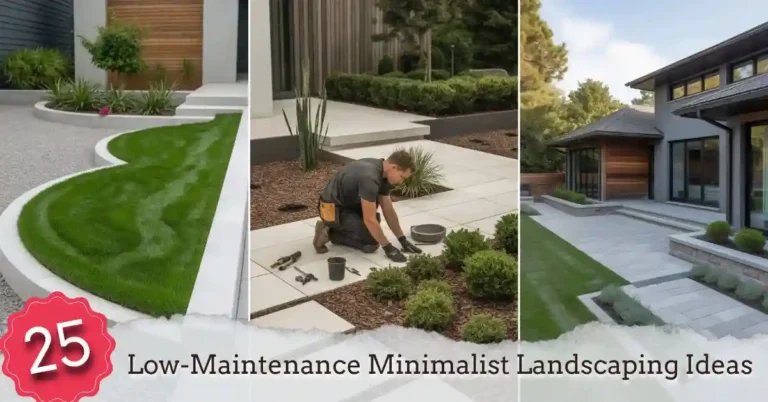
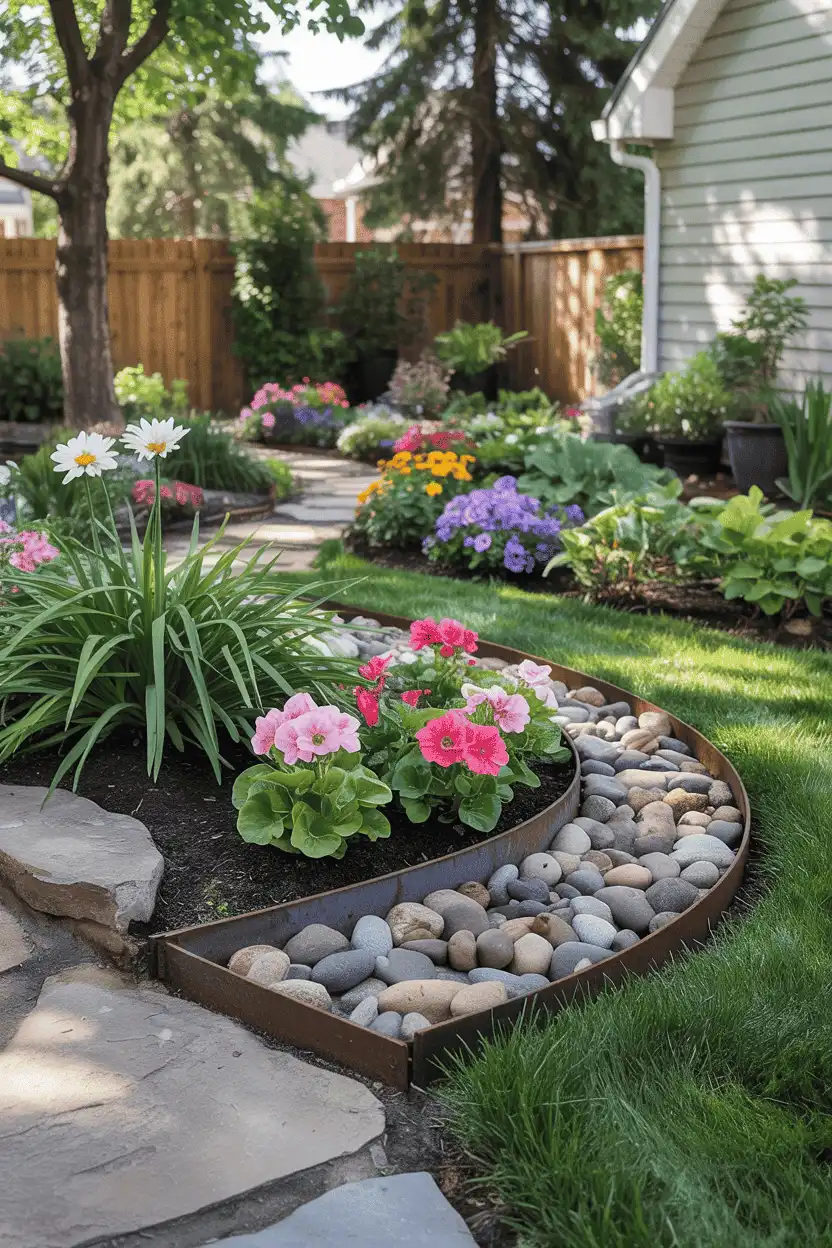
Edging is the cheapest way to make a bed look designed rather than accidental. A crisp line — a half-moon spade cut, a row of pavers set on edge, a 4-inch steel strip — stops grass from creeping in and gives mulch a place to end. Budget pick: flexible black plastic edging at a few dollars per 20-foot roll. Upgrade pick: natural stone, which never needs replacing.
Beyond looks, edging is a maintenance tool: it keeps the string trimmer away from your perennials and turns mowing into a straight pass instead of a careful dance. Against modern architecture keep the lines ruler-straight; against a cottage or ranch, let them curve.
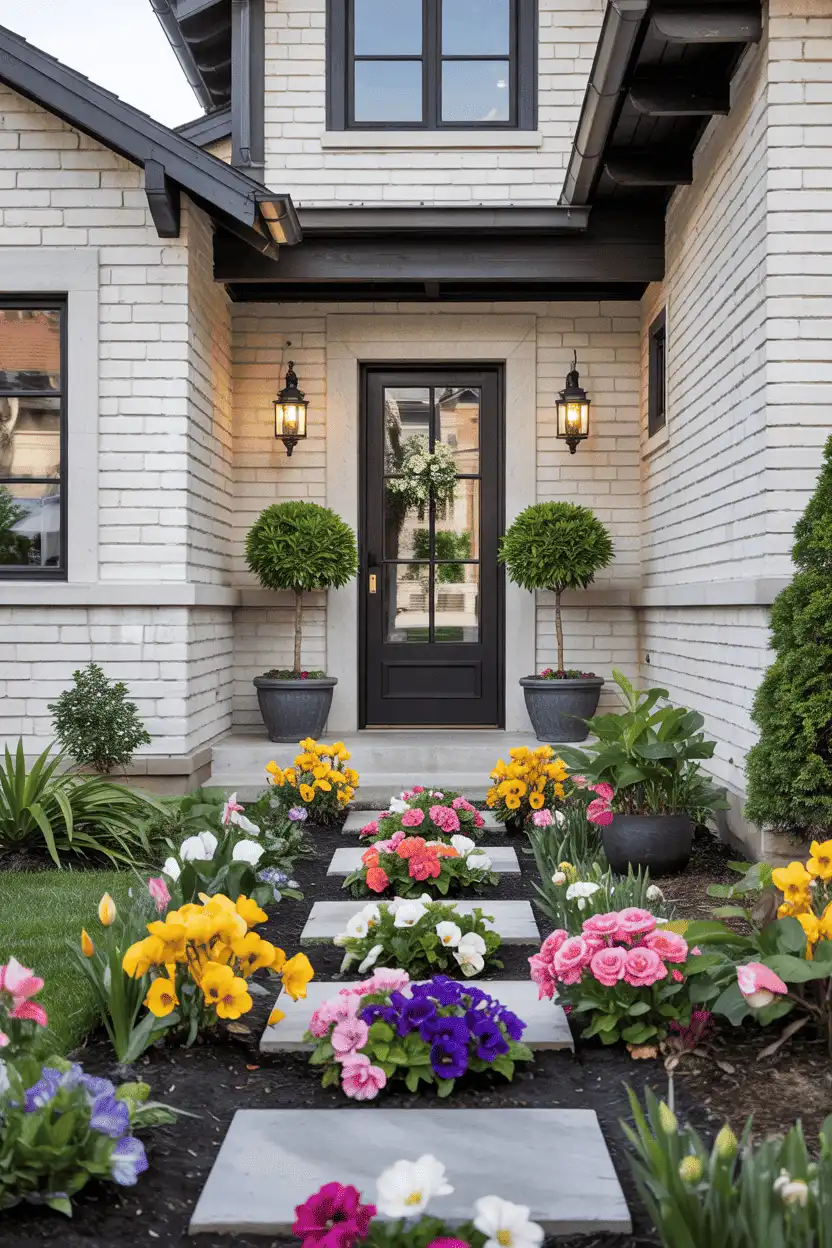
3. Front Yard Flower Bed Designs
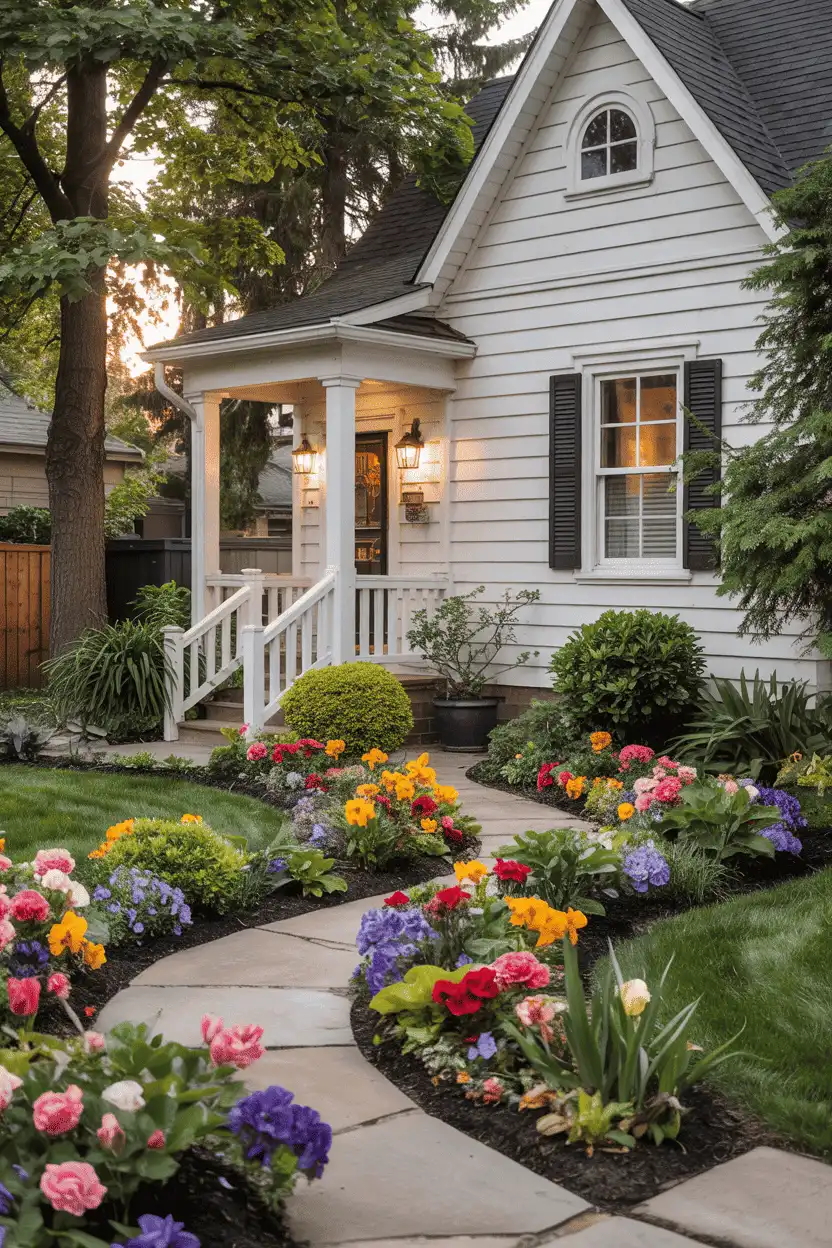
Curb appeal lives or dies at the front walk. Beds that flank the path or sit under the front windows get seen every day, so this is where layered planting pays off: tall structural plants at the back, mid-height color in the middle, and a low edging plant like sweet alyssum or dwarf mondo grass along the front. Tie the palette to your trim color or front door for a pulled-together feel.
Match the bed's geometry to the house. A colonial with symmetrical windows wants mirrored beds; a ranch with a long low roofline wants a sweeping curve that echoes it. When in doubt, a gentle arc reads well on almost any facade.
4. Rock-Based Flower Bed Themes
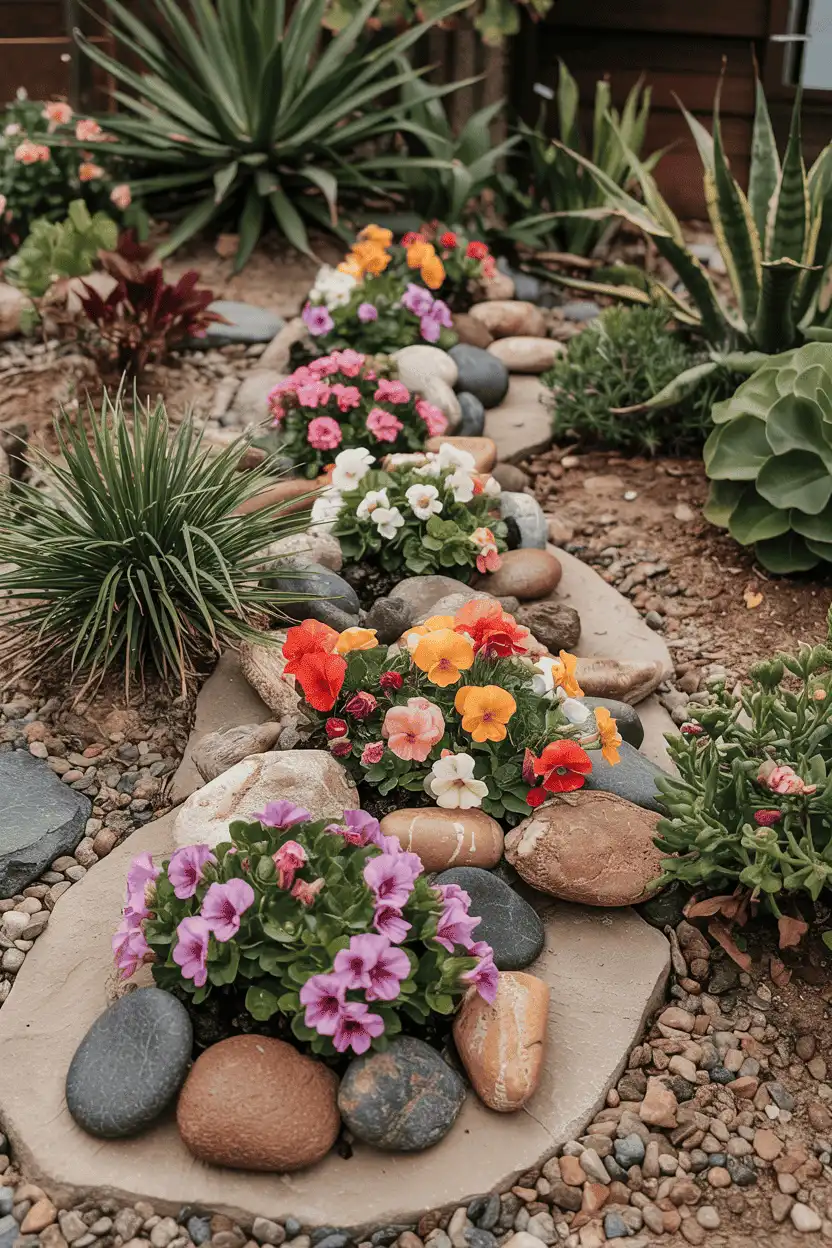
Stone does two jobs at once: it looks good and it works hard. A 2–3 inch layer of river rock or crushed gravel over landscape fabric suppresses weeds, holds moisture in the soil beneath, and keeps mud off petals during rain. Pair it with plants that like sharp drainage — lavender, sedum, ornamental grasses — or let bright annuals pop against the gray.
On a slope, rocks earn their keep. Partially buried boulders act as natural check dams, slowing water so soil stays put, while gravel paths between planting pockets make a steep bank walkable. The result lands somewhere between alpine garden and modern xeriscape.
5. Modern and Contemporary Garden Borders
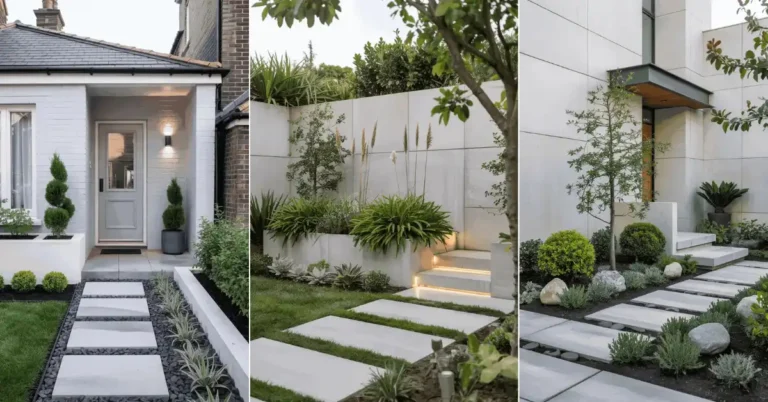
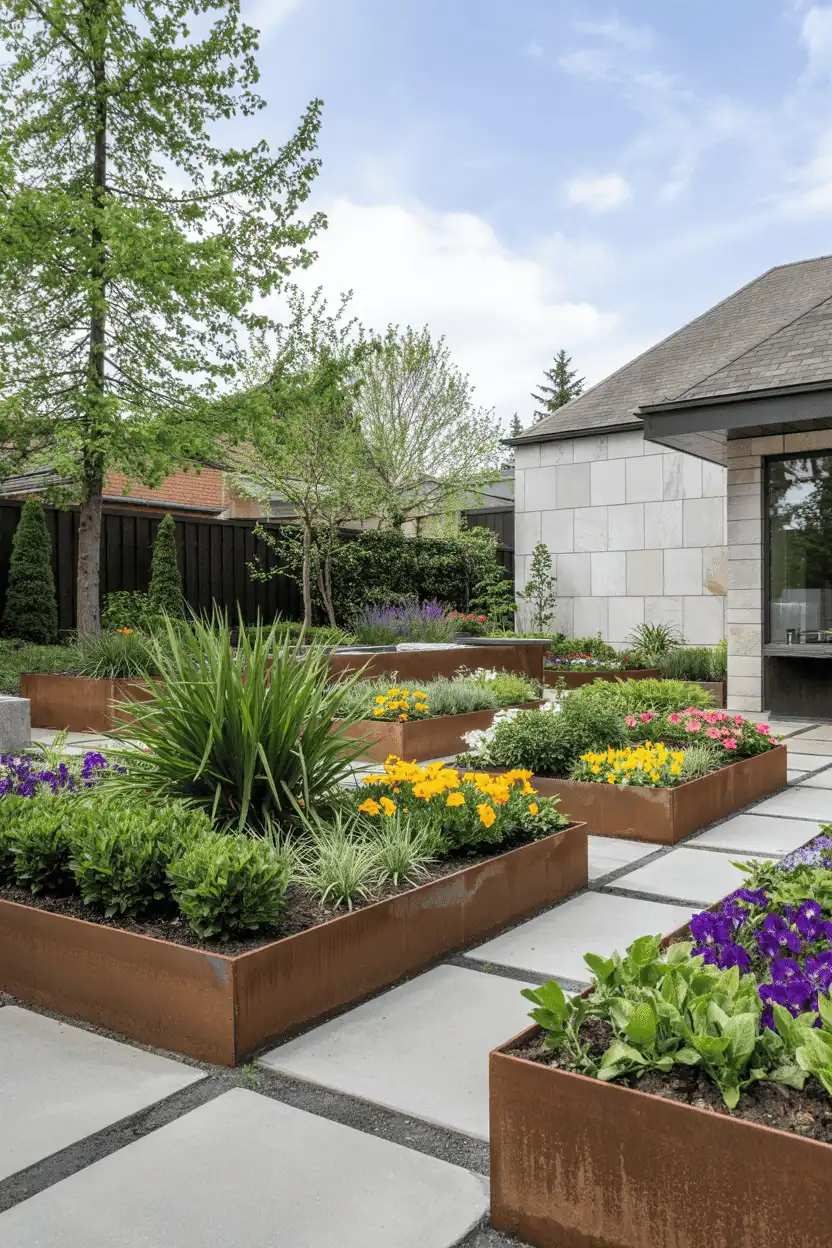
Modern beds are about restraint: straight lines, one or two materials, planting in bold blocks rather than fussy mixes. Corten or powder-coated steel edging, poured-concrete curbs, and large-format pavers do the heavy lifting; the plants — massed grasses, alliums, a drift of a single perennial — supply color in broad strokes.
The classic contemporary pairing is dark metal against pale gravel: it photographs beautifully and the materials last 15-plus years. Keep plant heights uniform and resist the urge to add just one more variety — the discipline is the design.
6. DIY Raised Garden Bed Approaches
You don't need a kit. Two 8-foot 2x10s cut in half make a 4×4 bed in under an hour with deck screws and a drill — roughly $30–40 in new lumber, less with reclaimed. Cinder blocks work too, and their hollow cores double as planting pockets for herbs. Stepped or L-shaped arrangements handle corners and slopes without extra engineering.
Start with one bed, not five. A single well-built 4×8 rectangle teaches you more about sun, water, and spacing in one season than a sprawling project you can't maintain. Expand next spring, once you know what actually thrived.
7. Designing Beds for Small Spaces
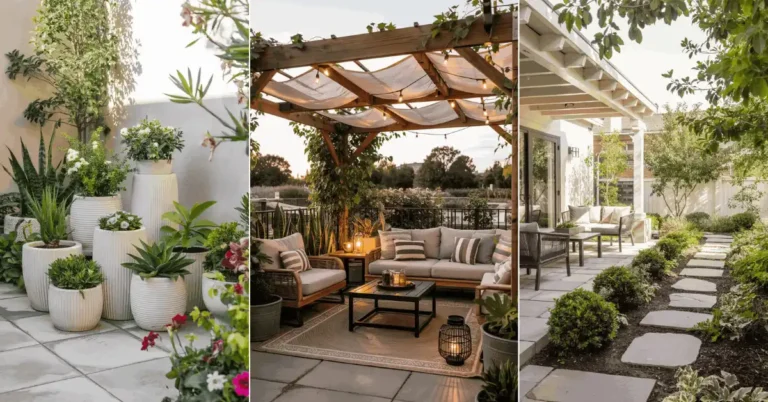
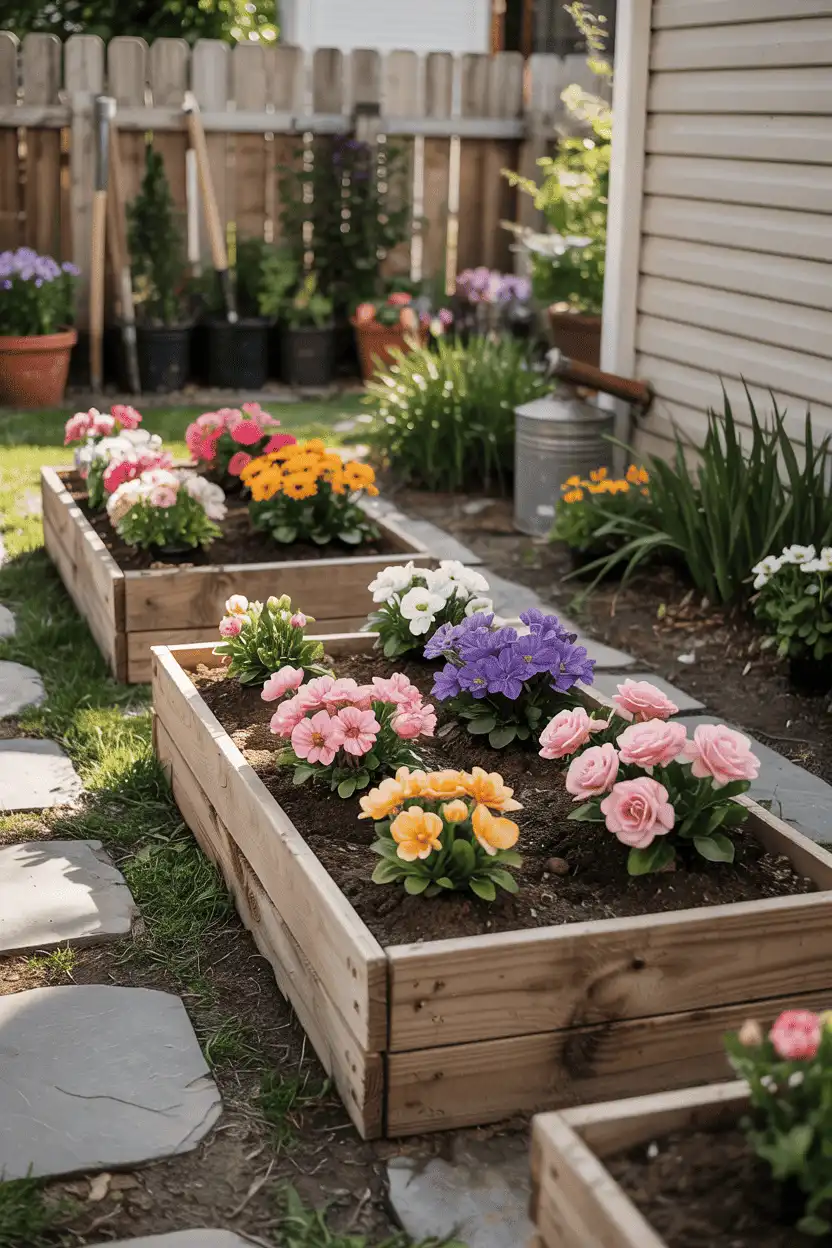
In a small yard, every bed has to earn its footprint. One strong move beats five fussy ones: a single curved bed hugging the patio, or a narrow border running the length of a fence. Plant in odd-numbered groups — threes and fives — with one anchor plant like a dwarf hydrangea or small ornamental tree, and fillers around it.
Tight spaces reward going vertical and going bold. A trellis of clematis or a columnar evergreen adds height without costing square footage, and a limited palette of two or three colors reads larger than a confetti mix. Even a 2-foot-wide strip along a walkway becomes a real garden with layered heights.
8. Shaded Flower Bed Inspiration
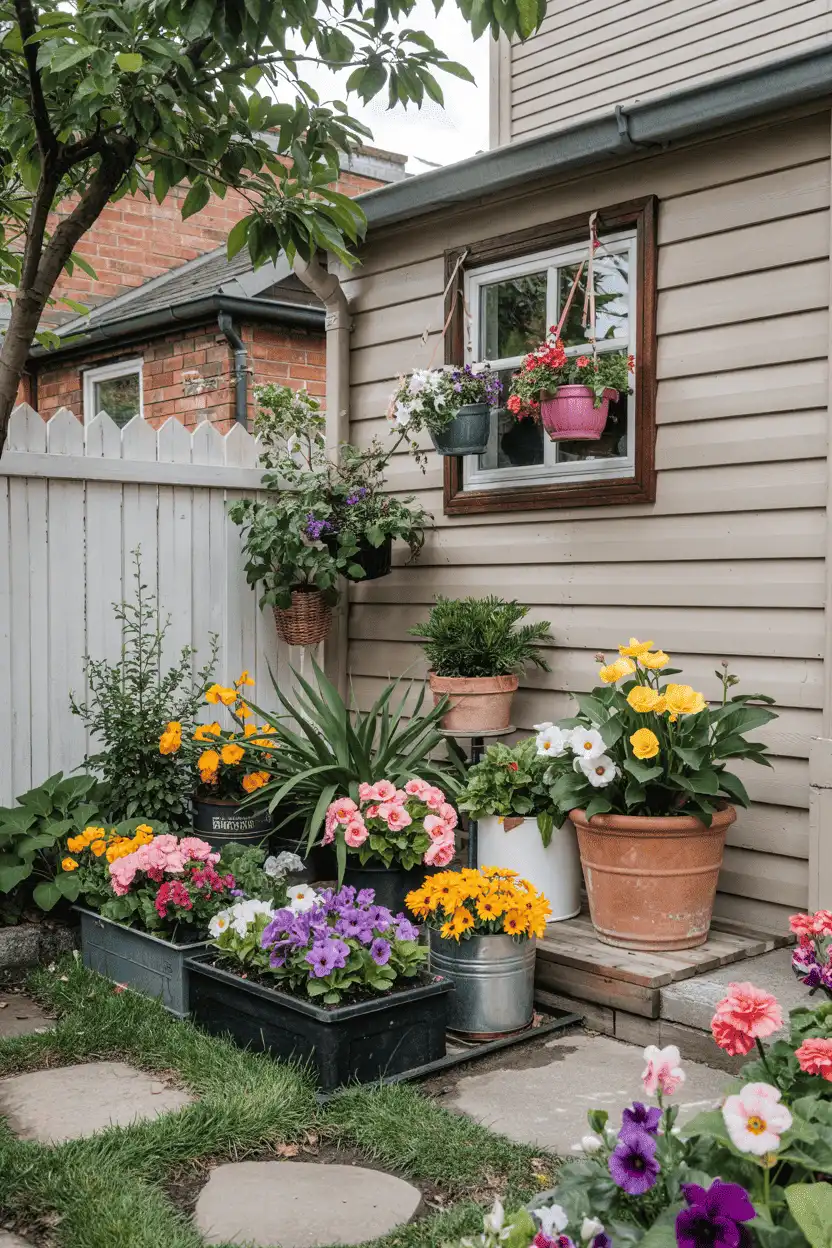
Shade gardens are built on foliage, not flowers — and that's fine, because leaf texture does the talking. Layer big hostas behind feathery ferns, edge with heuchera in burgundy or lime, and tuck in impatiens or begonias where you want actual bloom. Vary leaf size dramatically: the contrast between a dinner-plate hosta and a fine-textured fern is what makes a shade bed glow.
Raising a shade bed even 8–12 inches helps twice over: it lifts foliage toward dappled light and improves drainage under trees, where roots compete for every drop. A simple log or stone edge keeps the bed's soil from migrating into the lawn.
9. Elevated and Tiered Bed Concepts
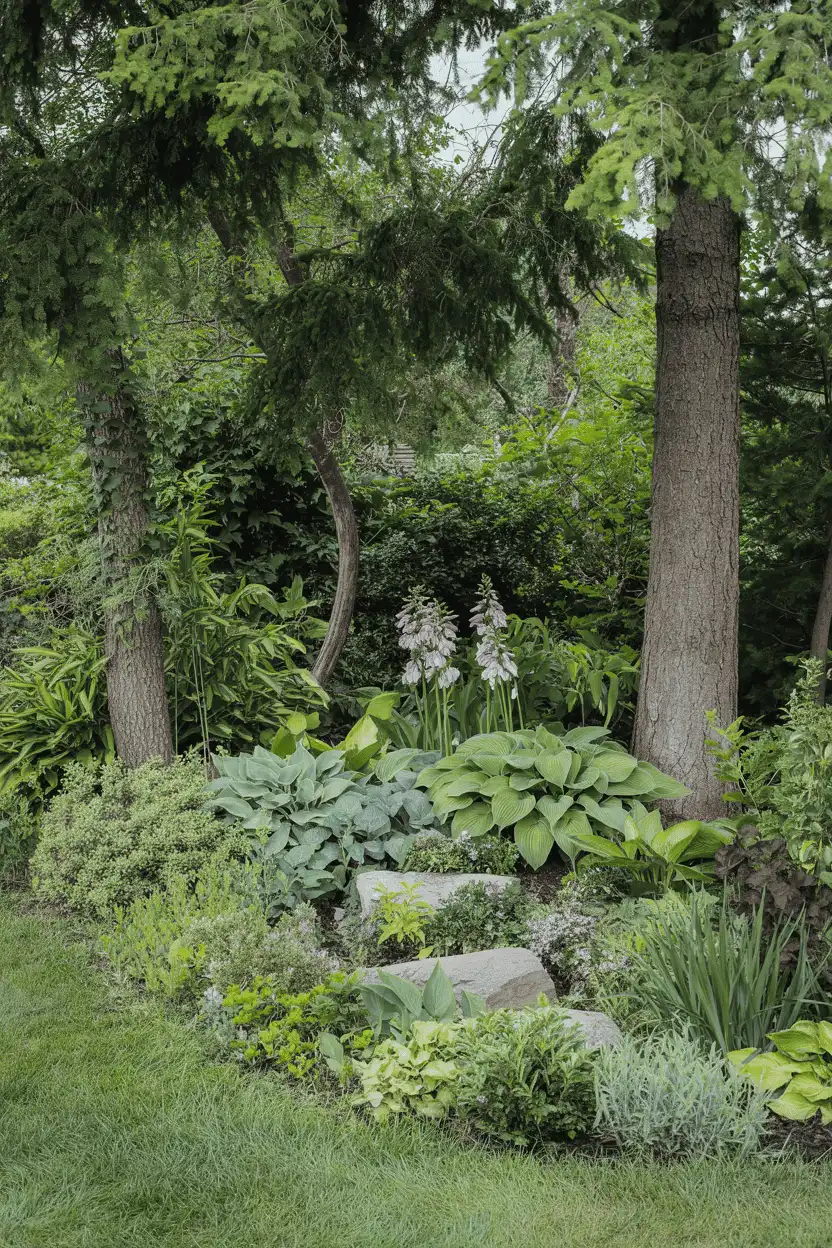
On uneven ground, step with the slope instead of fighting it: two or three terraced boxes, each one level, turn an awkward bank into planting stages. The vertical faces become part of the design — stain them dark for a modern look or let cedar silver naturally. Cascading plants like trailing rosemary or sweet potato vine soften each level's edge.
Tiers are also a color tool. Plant warm tones — reds, oranges — on the top tier and cool blues and purples below, and the eye reads a deliberate gradient. Each level becomes its own small composition.
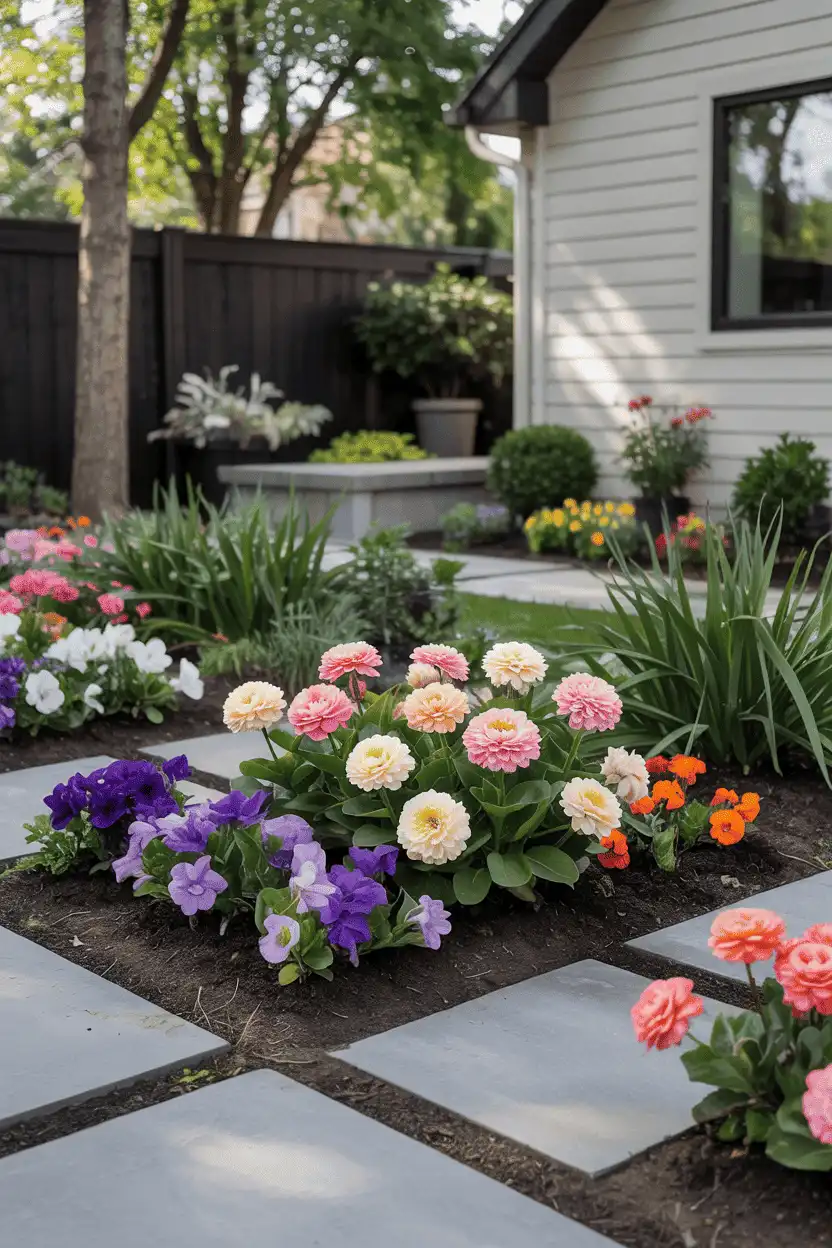
10. Flower Bed Curbing for Distinct Borders
Curbing — a continuous concrete or brick edge — is the set-it-and-forget-it option. Poured concrete curbing runs about $8–12 per linear foot installed and never shifts; dry-laid brick is a weekend DIY at a fraction of that. Either way, mulch stays in, grass stays out, and the mower gets a clean track to follow.
If the budget is tight, flexible rubber or no-dig plastic edging shapes to any curve for a few dollars per roll. It won't win design awards, but installed with its top edge level with the soil, it disappears and does the job.
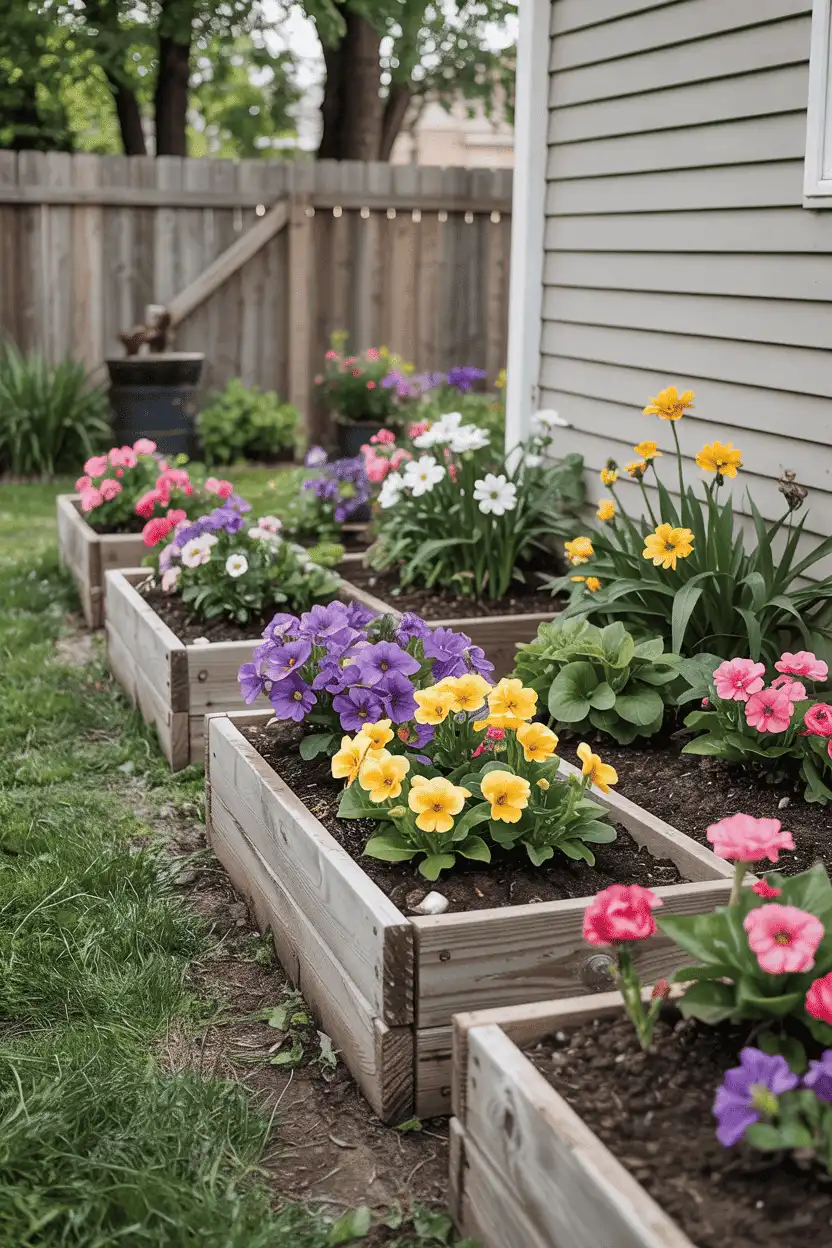
11. Gardens with Decorative Fencing
A low fence — 18 to 24 inches of pickets, willow, or powder-coated metal — gives a bed a backdrop that makes flowers read brighter. In cottage gardens it frames billowing perennials; around vegetables it politely says please don't walk here. It also gives clematis, sweet peas, and other light climbers something to scramble up.
Keep it low enough to step over for weeding. Wood brings warmth but wants restaining every few years; metal costs more upfront and then asks nothing of you for a decade.
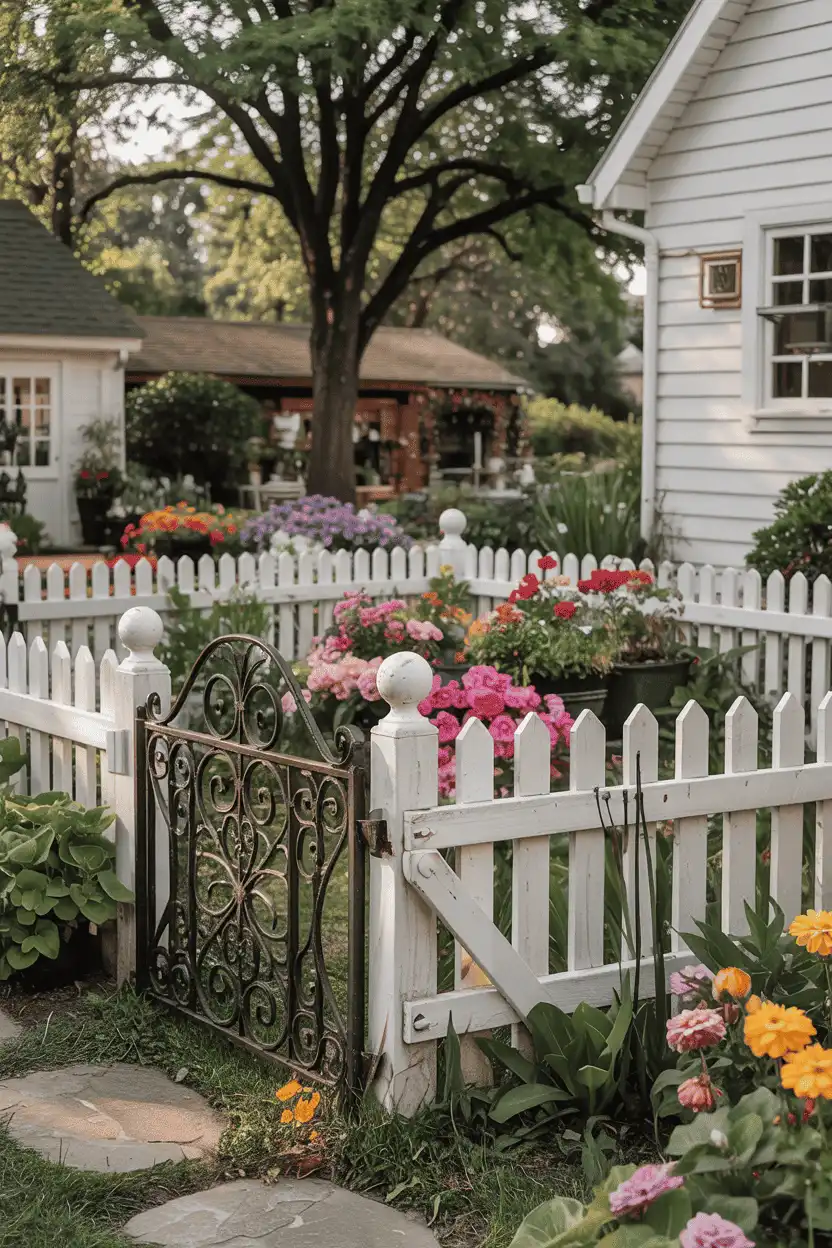
12. Water Features Near Flower Beds
A small fountain or bubbling urn changes a garden's whole register — the sound alone makes a seating area feel private. Tuck it beside a curved bed so blooms reflect in the water, and keep the scale modest: a 2-foot urn suits most yards better than a full pond. Solar pumps are reliable enough now to skip the electrician.
Water doubles whatever grows near it — colors look saturated in reflection, and the air stays a touch more humid, which ferns and astilbe appreciate. Edge the surrounding bed generously so splashed soil doesn't cloud the water.
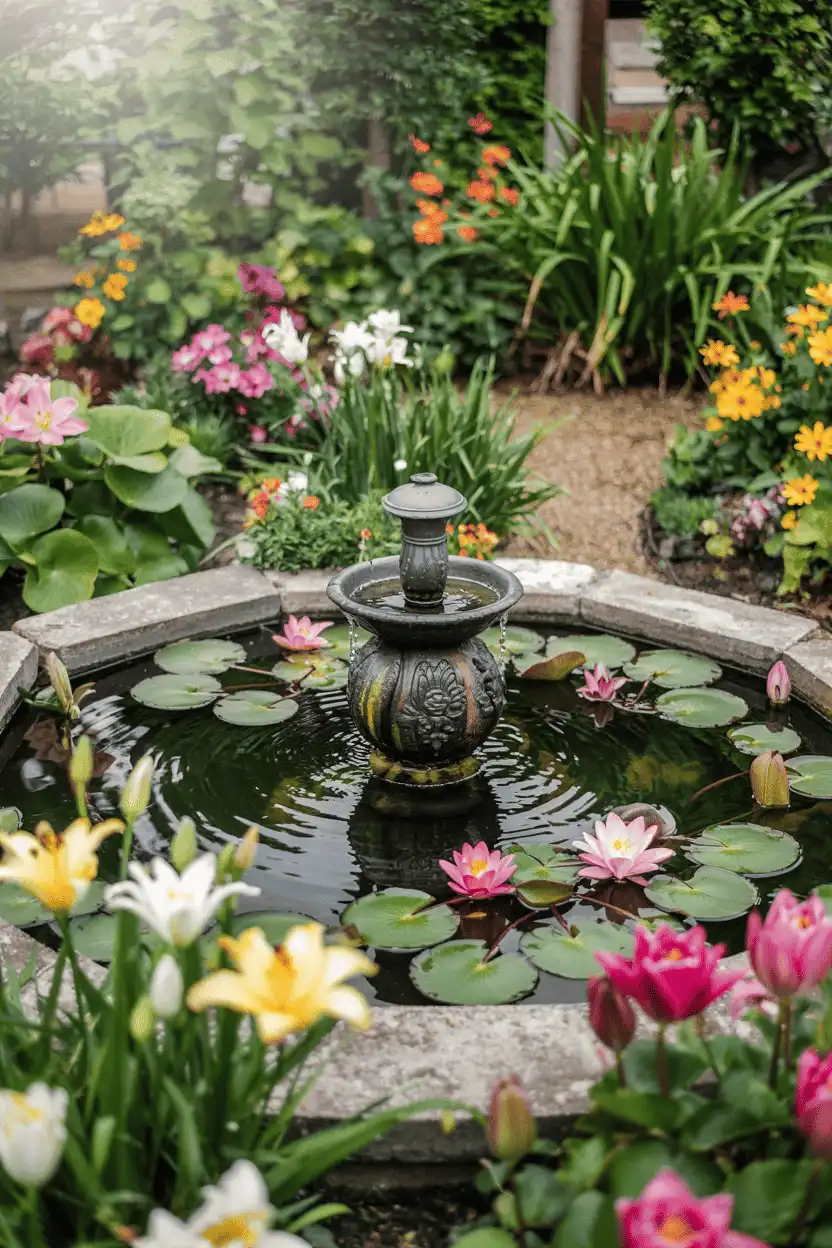
13. Seasonal Flower Bed Planning
A bed that peaks in June and sulks by August is a planning failure, not a plant failure. Layer bloom times deliberately: bulbs for April, perennials for summer, ornamental grasses and asters for fall, evergreen structure like boxwood or holly for winter. Sketch the bloom months on paper before buying a single plant.
Use the bed's structure to enforce the sequence — early bulbs along the front edge where you'll see them first, tall late-season plants at the back. Mixing in a few shrubs guarantees the bed never looks empty, even in February.
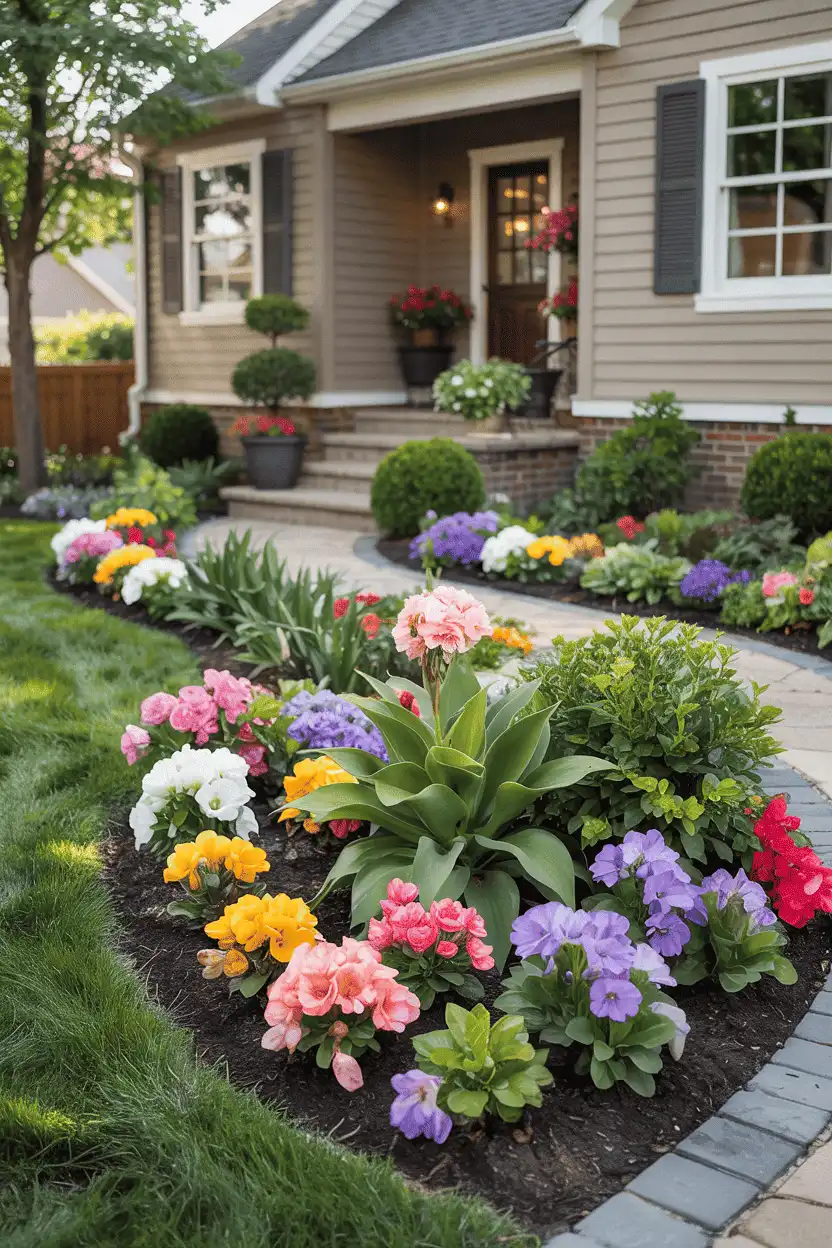
14. Beds Designed for Pathways
Paths are the garden's hallways, and flanking them with beds turns a walk from the driveway into an experience. Keep path-side plants under 18 inches so they don't crowd shoulders, and choose varieties that tolerate the occasional brush of a bag or a bike: catmint, lavender, daylilies. Slightly fragrant choices reward everyone who passes.
A narrow metal strip or a single course of gravel between path and bed gives a crisp finish for very little money. The payoff is practical too — defined edges mean the mower and the string trimmer never have to guess where the lawn ends.
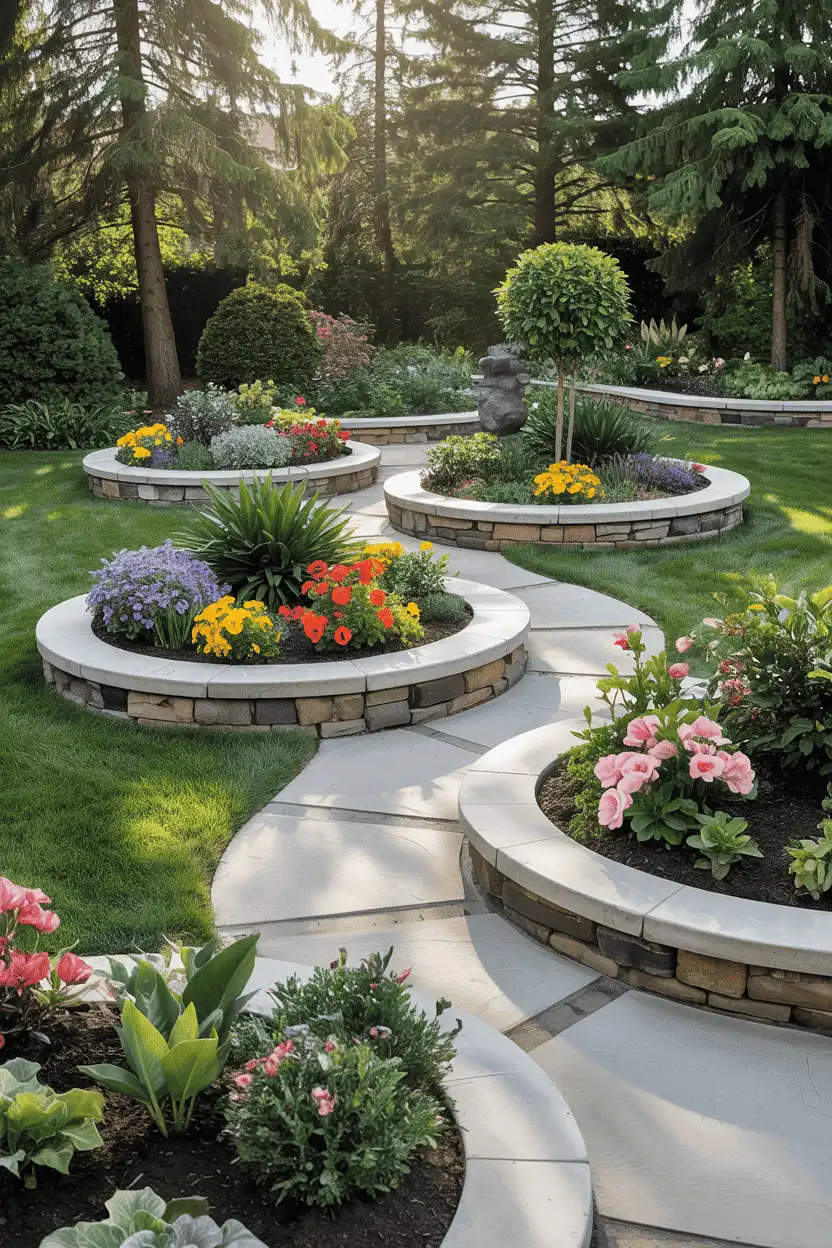
15. Creative Flower Bed Decorations
One good object beats a yard full of knick-knacks. A weathered stone lantern, a simple birdbath, or a single sculptural piece — placed where paths turn or beds end — gives the eye somewhere to land. Scale matters: a 3-foot urn anchors a bed, while a 6-inch figurine just gets lost.
Repeat one material or finish across your accents — all stone, all weathered wood, all matte black metal — and scattered pieces suddenly read as a collection. That consistency is what links separate beds into one garden.
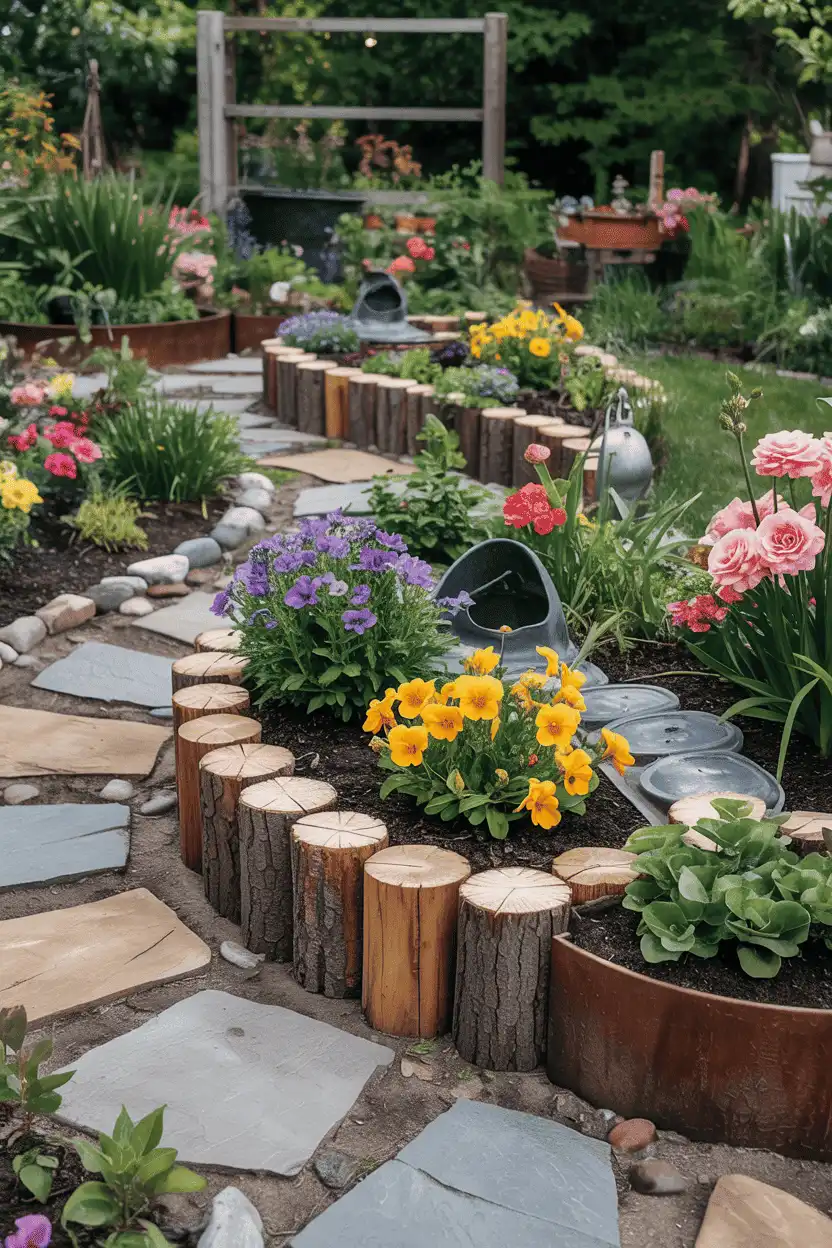
16. Beds Built with Reclaimed Materials
Salvage yards, demolition sites, and your own garage are all edging suppliers. Old barn boards weather to a silver-gray that looks intentional within a season; broken concrete — "urbanite" — stacked like stone makes a convincing retaining edge; scrap corrugated metal bends into curves. The patina is the point: new materials can't fake it.
Building from what's on hand forces better design, oddly enough. An odd lot of bricks becomes a herringbone edge; a short run of fence boards becomes a raised bed. Let the material's dimensions set the bed's dimensions instead of fighting them.
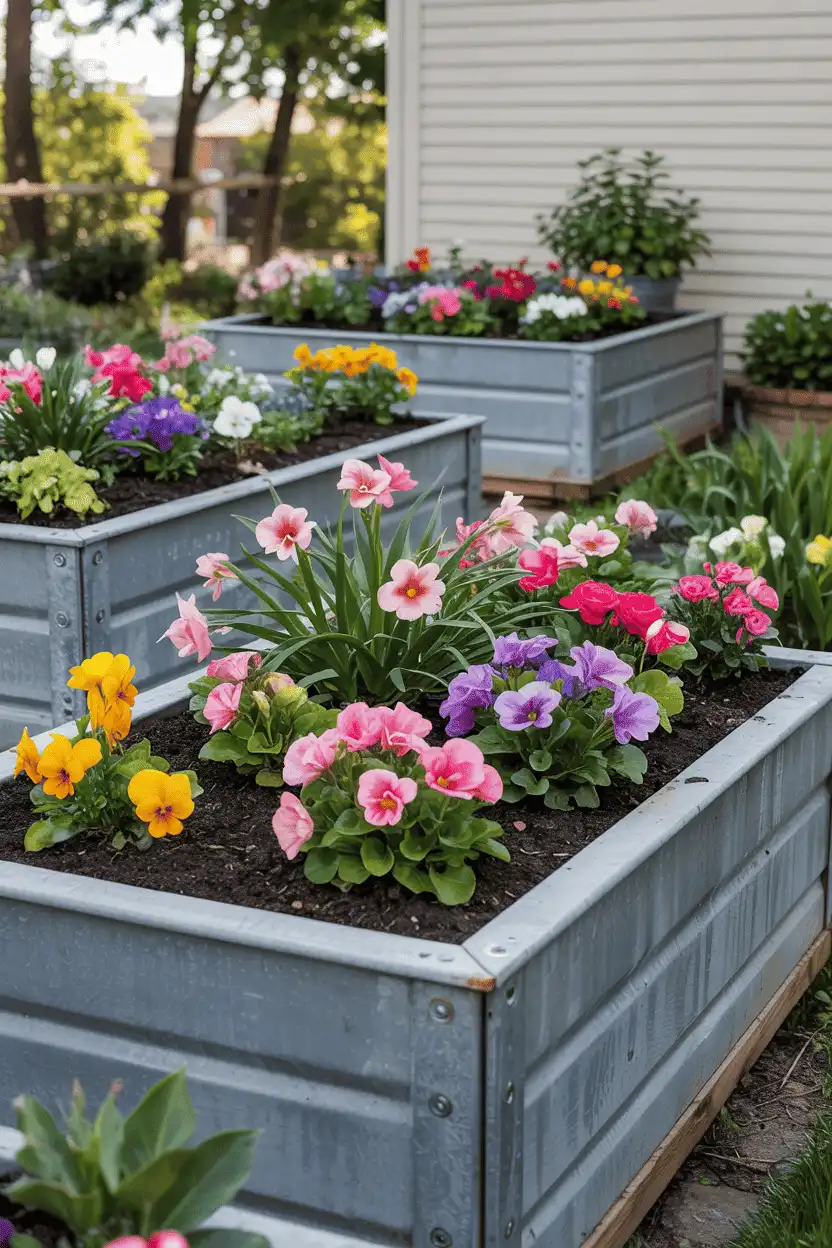
17. Combining Flowers with Vegetables
Flowers aren't decoration in a vegetable bed — they're staff. Marigolds and nasturtiums lure aphids away from crops, borage and cosmos summon pollinators, and a border of alyssum feeds the hoverflies that eat pests. Interplant them rather than segregating: basil between tomatoes, marigolds at the corners.
Put the flowers where they'll work hardest — low blooms along bed edges where pollinators cruise, taller ones like sunflowers or cosmos at the north end where they won't shade crops. The bed ends up more productive and better looking, with no tradeoff required.
18. Beds for Sloped Yards
Terracing is the answer to a slope: each level bed acts as a mini retaining wall, catching the soil and water that would otherwise wash to the fence. Build the lowest terrace first — it takes the most pressure — backfill with good soil, and plant deep-rooted perennials whose roots knit everything together over two seasons.
Dry-stacked stone and pressure-treated landscape timbers are the workhorse materials here; both hold soil while looking like they belong. Bonus: every terrace reads as its own garden room, so a steep yard ends up feeling bigger, not harder.
19. Low-Maintenance Flower Beds
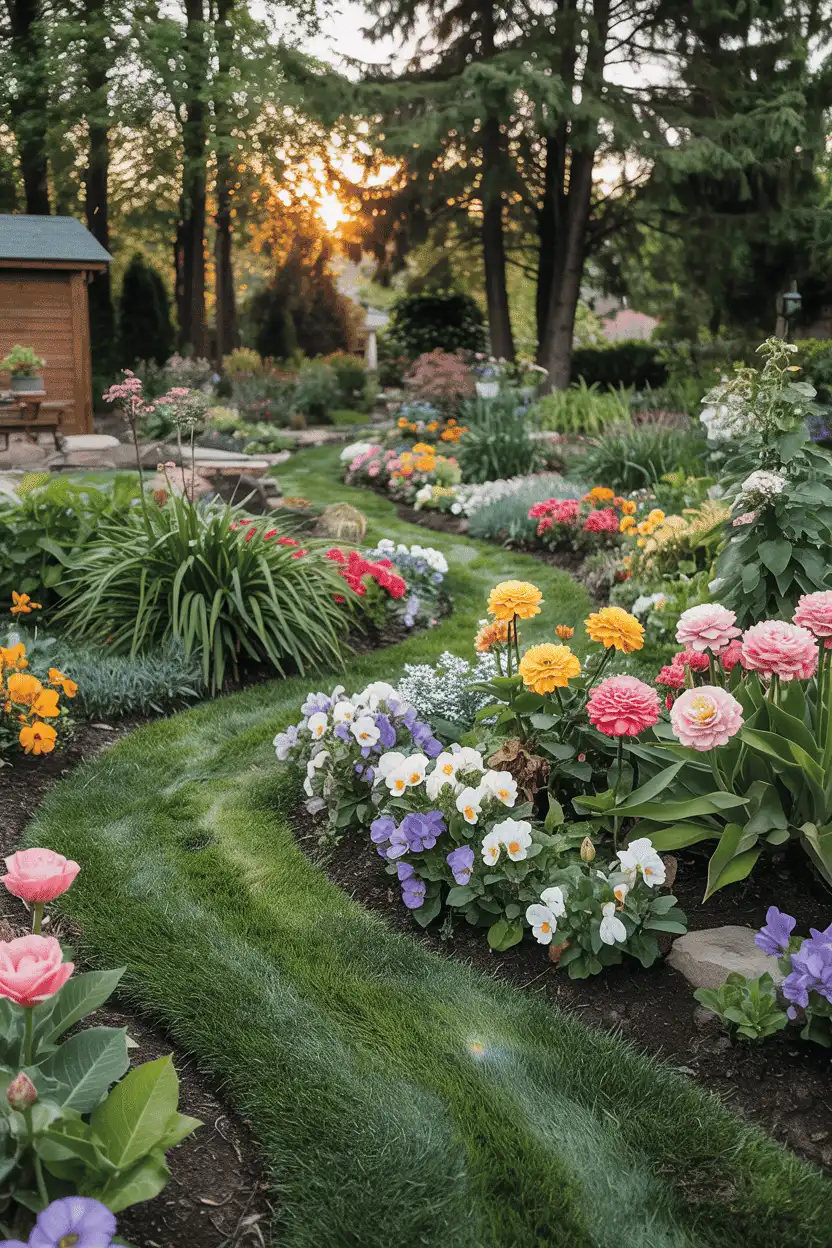
The lowest-maintenance bed is mostly plants that want to be there: drought-tolerant perennials, ornamental grasses, and ground covers that knit together and shade out weeds. A 3-inch mulch layer does the rest. After one season of watering to establish roots, beds like this coast on rainfall in most climates.
Perennials are the budget move — plant once, enjoy for years — and loose, compost-rich soil means you can divide and replant instead of buying new. Skip fussy annuals that need deadheading every weekend; choose self-sufficient varieties and let the bed mostly run itself.

20. Designing a New Bed from Scratch
Start with a hose, not a shovel: lay a garden hose on the ground to sketch the bed's outline, step back, and adjust until the curve looks right from the windows you actually look out of. Then cut the edge, kill the grass inside — smother it with cardboard for two weeks — and amend the soil before a single plant goes in.
Good beds share three habits: repetition (the same plant in drifts, not onesies), rhythm (tall-medium-short stepping), and restraint (a palette of three colors max). Get those right and even beginner plant choices look designed.
On My Premium Ideas, you will get updated Garden Ideas related to colorful Flower garden ideas, Patio garden, minimalistic Garden ideas, Fresh vegetable garden Ideas and much more. New garden guides go up regularly, so bookmark the site to keep them within easy reach.
FAQs for Flower Bed Ideas