20 Minimalist Landscaping Ideas with Greenery Only
There is something about a yard with just greenery that makes me stop and breathe a little slower. No pops of color competing for attention, no loud blooms demanding maintenance every other week — just clean, layered shades of green that feel like a quiet exhale. I fell in love with this style the first time I walked past a neighbor’s front yard that had nothing but trimmed hedges, soft ground cover, and a single ornamental grass swaying gently in the corner. It was the most peaceful outdoor space I had ever seen, and I could not stop thinking about it.
If you have ever felt overwhelmed by the idea of minimalist landscaping, I think greenery-only gardens might be exactly what you need. You do not have to be a professional gardener or spend a fortune on flowering plants that need replacing every season. The structure, texture, and depth that different shades and shapes of foliage create together is genuinely stunning, and it holds up beautifully year-round without the fuss.
We are going to walk through twenty of my favorite minimalist landscaping ideas using greenery only, and I promise each one is more doable than it looks. Whether you have a sprawling backyard, a small front yard, or even just a narrow side strip to work with, there is something here that will speak to you. Grab a coffee, settle in, and let this be your starting point for the most serene outdoor space you have ever had.
For those people, who love to keep the garden as minimalist landscaping but eye catchy and want to give modern as well as aesthetic touch to their landscaping, these ideas are also for them;
- 16 Minimalist Landscaping Ideas for Clean Gardens
- 20 Modern Minimalist Garden Design Ideas
- 25 Low-Maintenance Minimalist Landscaping Ideas
- 30 Minimalist Gravel Garden Ideas for Modern Houses
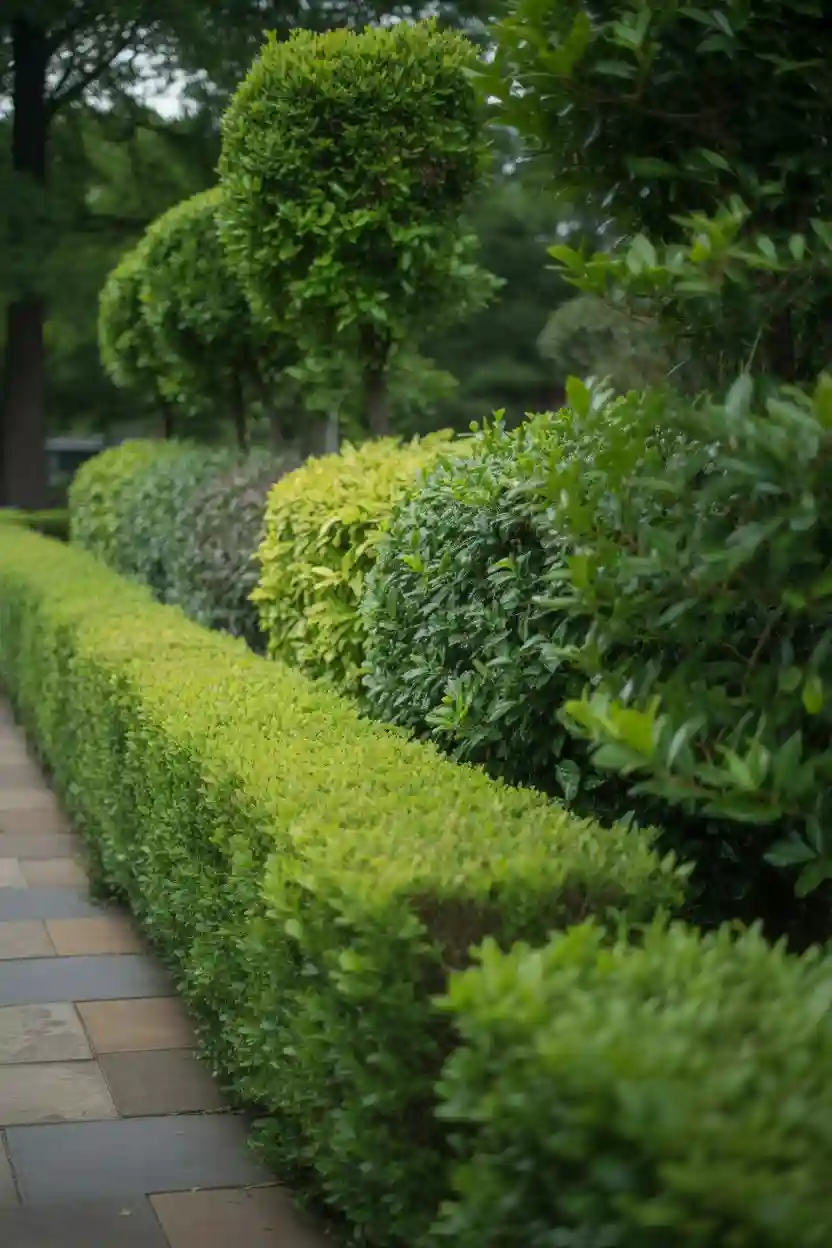
1. Layered Hedge Borders
A layered hedge border uses shrubs of different heights planted in a deliberate, tiered arrangement along the edge of a lawn or pathway, creating a lush green wall effect. I love this look because it adds instant structure without a single flower involved, and the varying heights make the space feel designed and intentional. It suits anyone who wants clear definition between their yard and the street or neighboring property. Trim each layer at slightly different times so the contrast between light and dark green stays visible all season.
2. Ornamental Grass Clusters
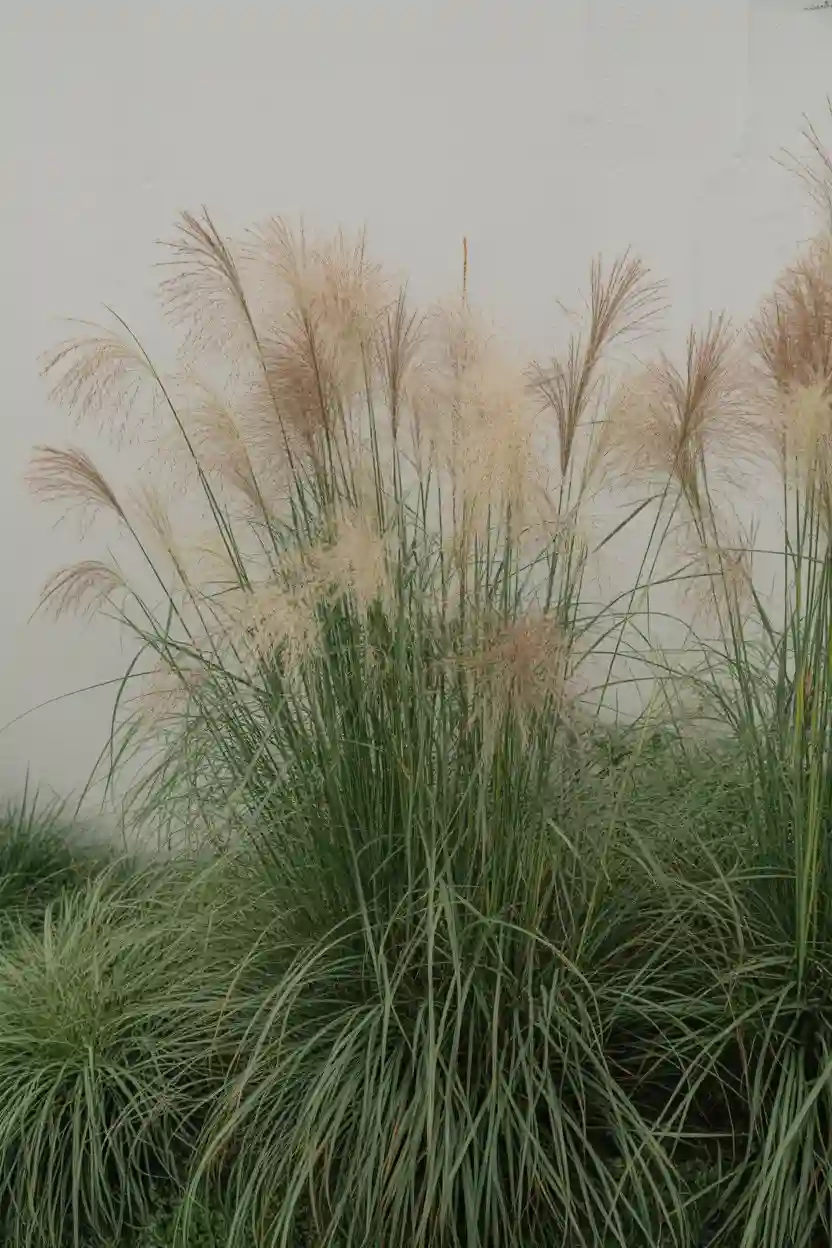
Ornamental grasses like feather reed grass or blue oat grass planted in tight clusters bring movement and softness to a minimalist landscape that rigid shrubs cannot replicate. The way they sway in a breeze is genuinely calming, and the fine-textured blades contrast beautifully against broader-leafed plants nearby. This idea works especially well along fences, at garden corners, or flanking a front door. I always recommend grouping odd numbers of three or five together for a natural, unplanned look that actually feels very polished.
3. Moss Ground Cover Paths
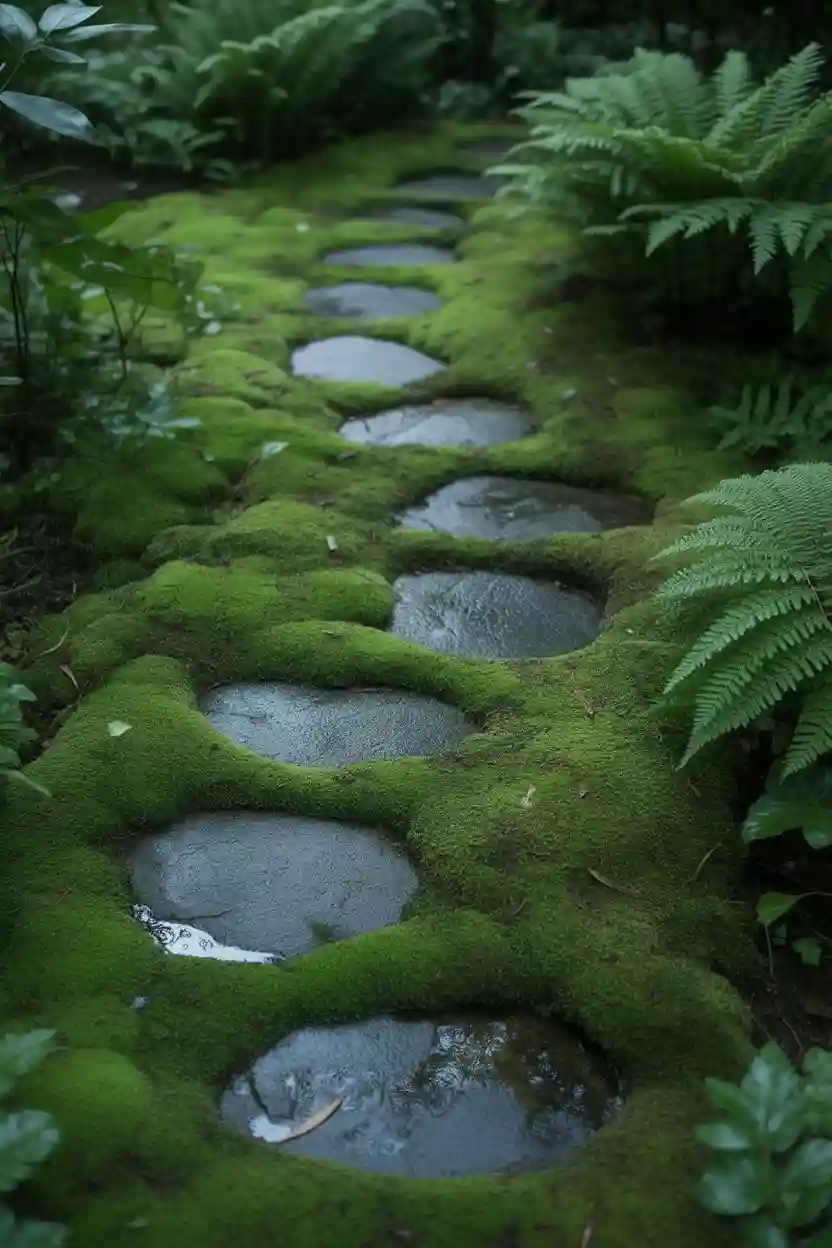
A moss ground cover path replaces traditional paving or mulch with a lush carpet of green moss that softens the entire feel of a garden space almost instantly. Walking through a yard lined with moss paths feels grounded and almost meditative, like stepping into a quiet woodland. It suits shaded areas particularly well where grass refuses to grow, making it a genuinely smart choice for tricky spots. Keep foot traffic moderate and mist during dry spells to help the moss stay vibrant and dense throughout the season.
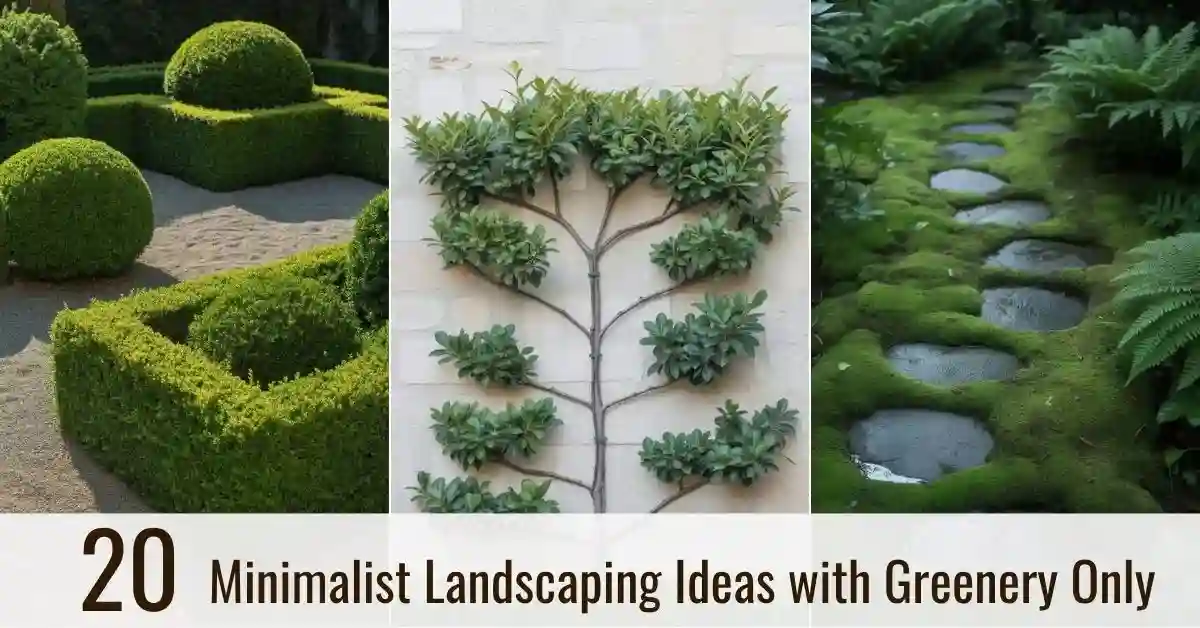
4. Boxwood Geometric Shapes
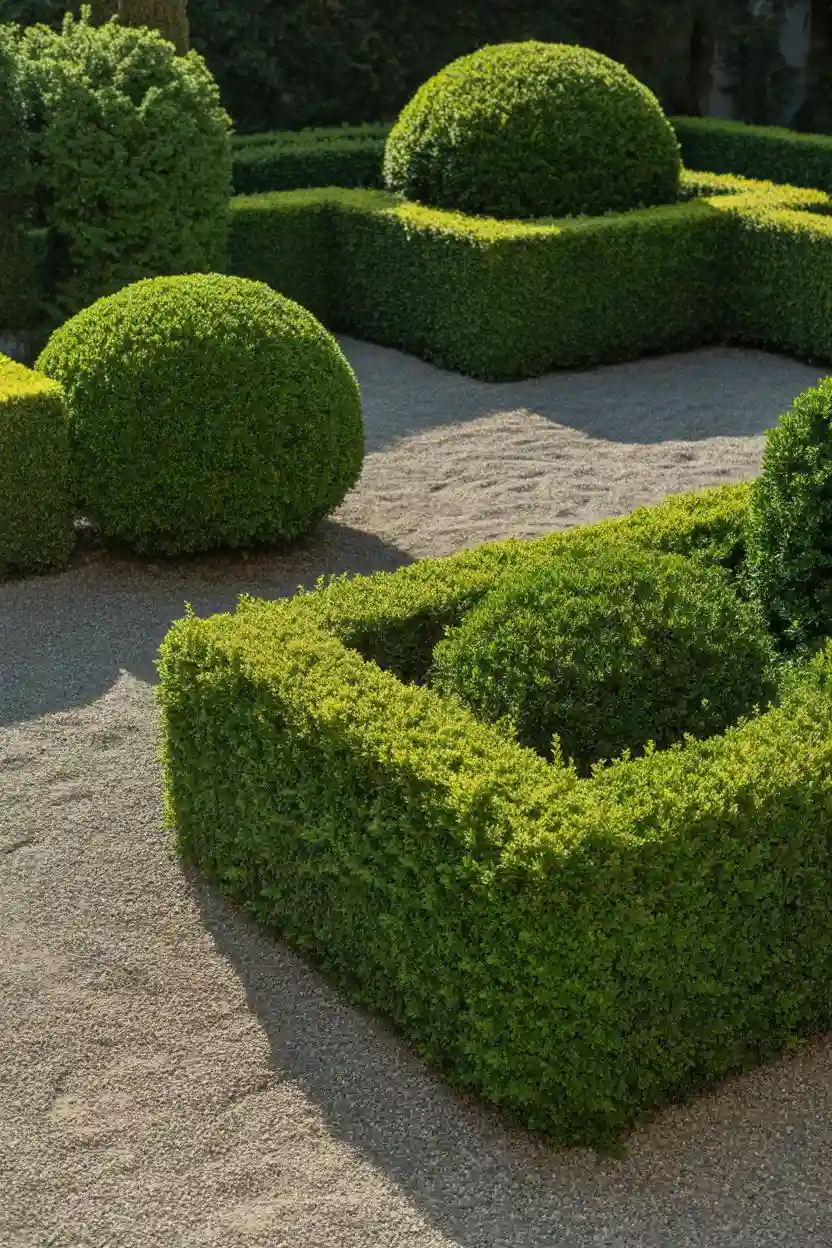
Clipped boxwood shrubs shaped into spheres, cubes, or low hedged rectangles bring a sculptural quality to a greenery-only landscape that feels modern and timeless at once. There is something so satisfying about the sharp, clean edges of a well-trimmed boxwood against an open lawn, and I think it makes even a small yard look highly curated. This style suits women who love a neat, organized outdoor space that feels like it belongs in a design magazine. Shear lightly and often rather than cutting hard once a year to keep the shapes crisp and the foliage dense.
5. Japanese Forest Grass Drifts
Japanese forest grass, or Hakonechloa, planted in sweeping drifts creates a flowing, painterly effect across a landscape bed that feels completely effortless. The arching blades are bright chartreuse green and seem to glow in shaded spots where most plants struggle, which makes this one of the most useful plants in a minimalist landscaping green palette. It suits anyone who has a partly shaded garden and wants texture without drama or high maintenance. Plant in groups and allow them to spread naturally over a few seasons for the most beautiful, organic drift effect.

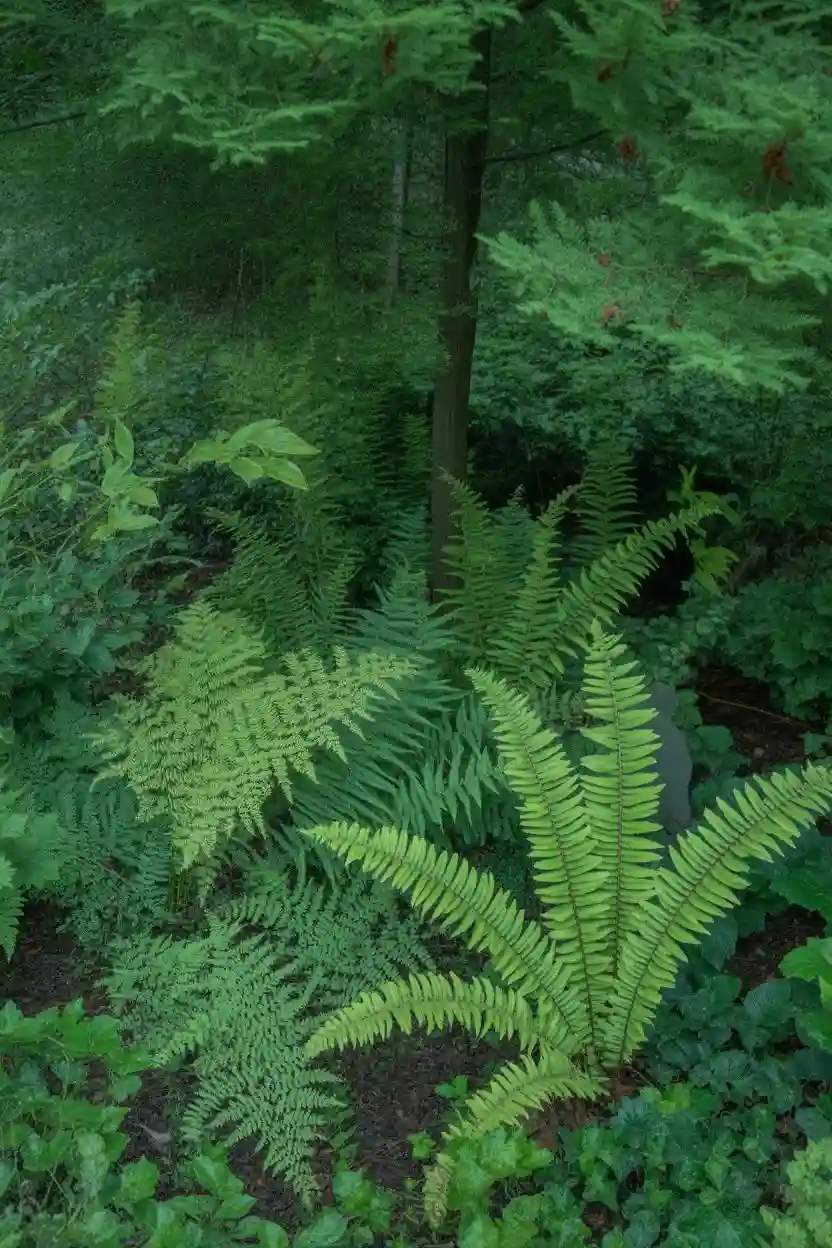
6. Fern Garden Understory
A fern garden understory fills the space beneath trees or along shaded borders with layers of feathery, arching fronds in rich, deep green tones. Ferns carry a natural elegance that I find hard to replicate with any other plant, and the variation between species like ostrich fern, lady fern, and autumn fern keeps the palette interesting without introducing color. This idea is perfect for women dealing with dry shade, one of the most frustrating minimalist landscaping challenges, because many fern varieties handle it beautifully once established. Mulch around the base to retain moisture and the colony will fill in thicker and more lush every single year.
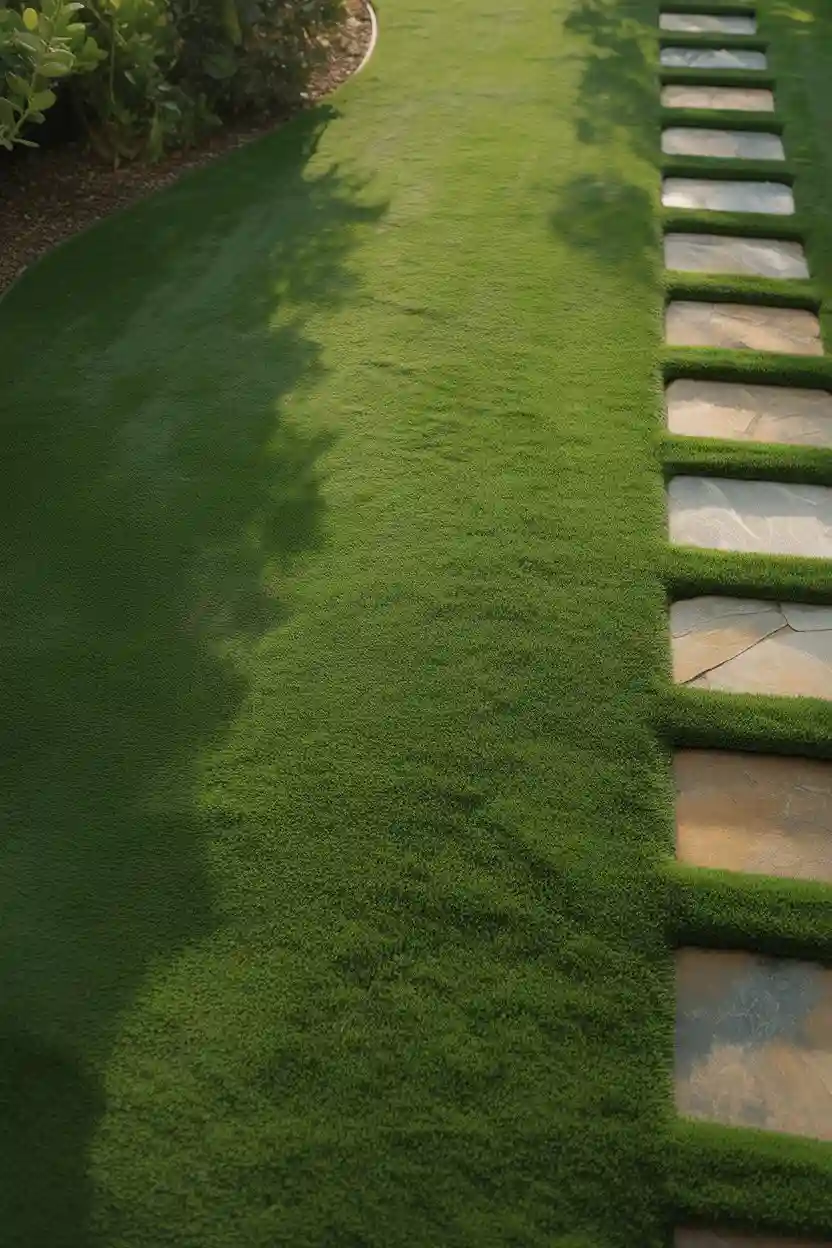
7. Low Creeping Thyme Lawn
Replacing sections of a traditional grass lawn with creeping thyme creates a dense, fragrant green carpet that stays low, requires almost no mowing, and handles foot traffic far better than most ground covers. I love suggesting this one because it genuinely feels like a discovery when people realize how beautiful and low-effort a thyme lawn actually is. It suits front yards or side gardens where a soft, natural ground texture is more appealing than a perfectly striped lawn. Plant plugs about six to eight inches apart in spring and within one full season you will have a seamlessly green, velvety surface.
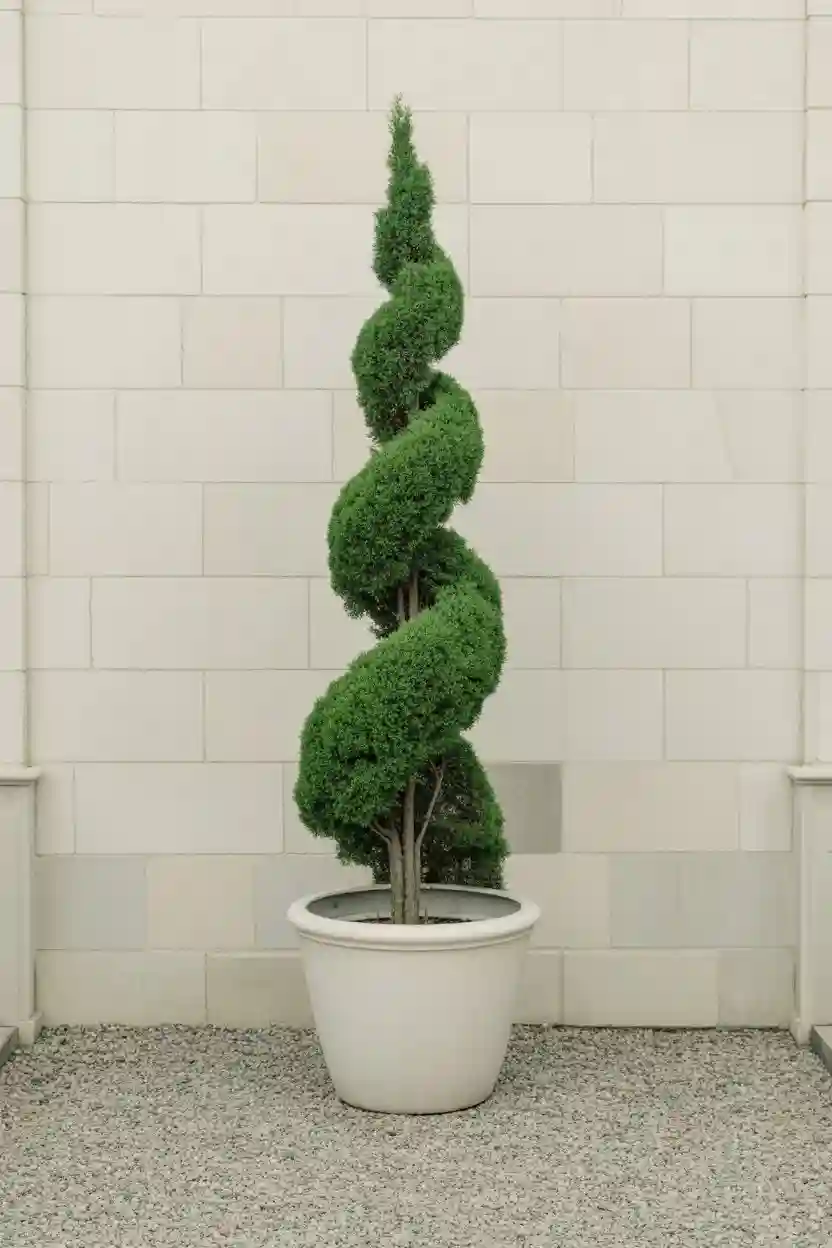
8. Topiary Focal Points
A single well-placed topiary, whether a spiral cypress or a cloud-pruned shrub, gives a greenery-only landscape a clear focal point that draws the eye and anchors the whole composition. I think the reason topiaries work so beautifully in minimalist gardens is because they bring artistry into the space without relying on color at all — it is pure form and structure. This suits anyone who wants one statement piece that says “this garden was thought about carefully.” Place yours at the end of a path, beside a gate, or centered in a lawn panel for maximum visual impact with minimal surrounding clutter.
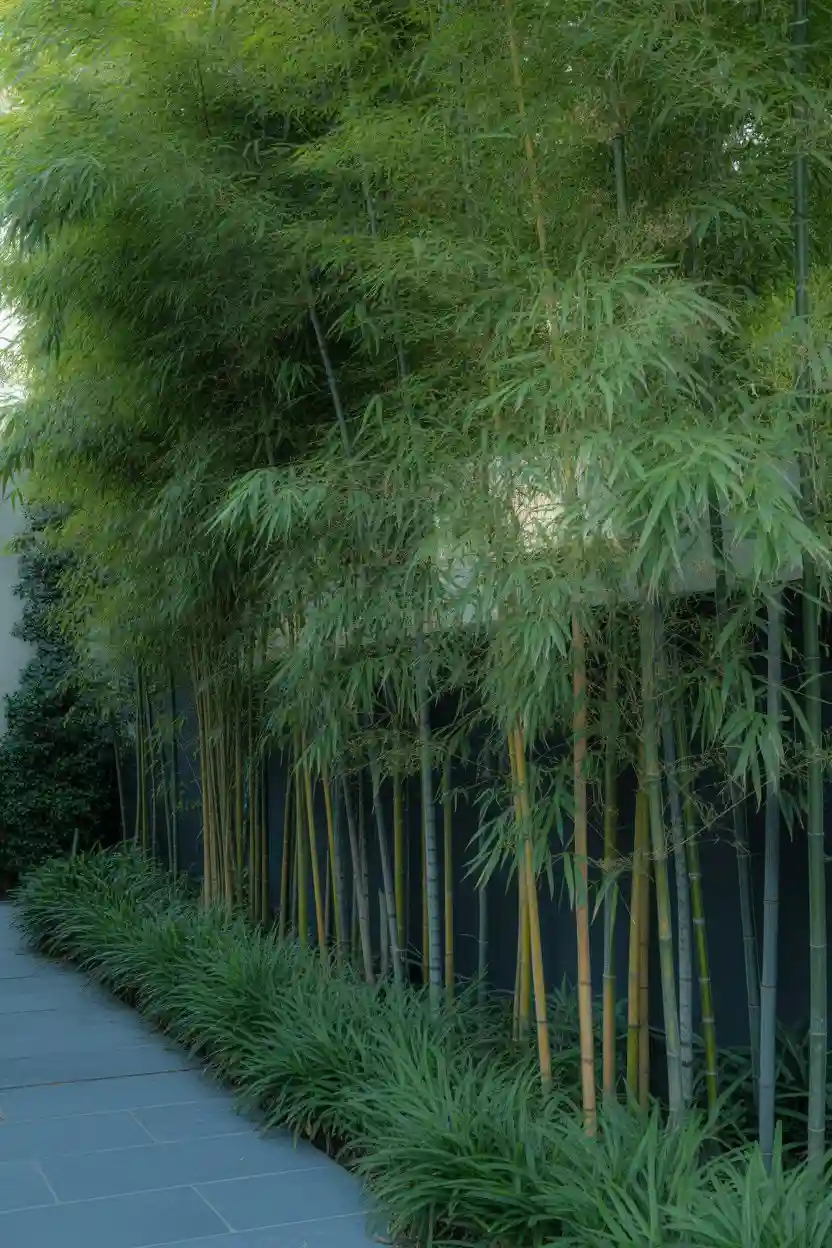
9. Bamboo Privacy Screen
A planted bamboo screen along a fence or property line creates an incredibly lush, tall wall of green that provides privacy, filters wind, and adds a calm, zen-like quality to the yard. The straight vertical lines of bamboo culms against feathery leaves are one of the most naturally architectural combinations in the plant world, and I think it looks stunning in minimal landscapes. Use clumping bamboo rather than running varieties to keep it contained and manageable without annual battles at the roots. Once established, this screen fills in fast and gives you a private, green sanctuary that feels genuinely luxurious.
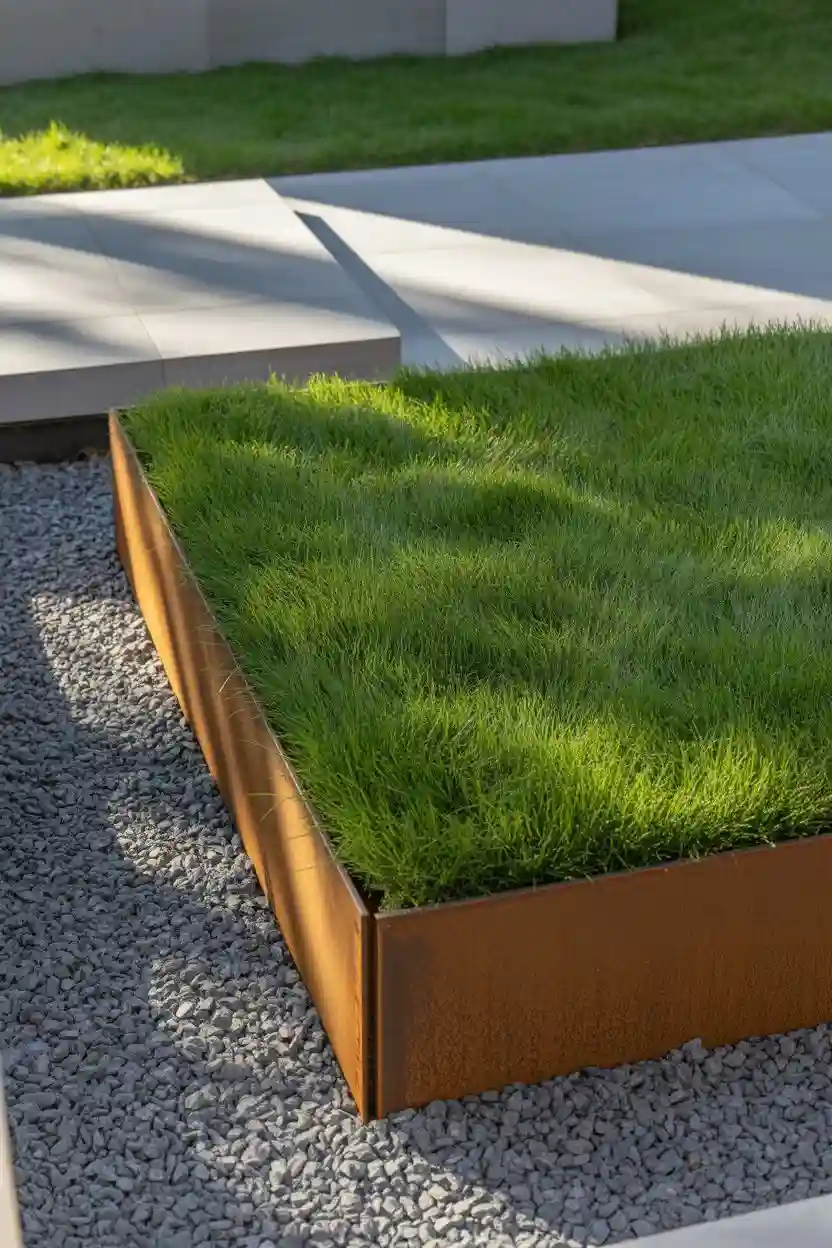
10. Raised Grass Panel Beds
Raising a section of lawn or ornamental grass into a framed panel bed using low stone, steel, or wooden edging immediately elevates a flat green yard into something that feels considered and designed. The contrast between the clean frame and the soft, living grass inside is visually satisfying in a way that is hard to explain until you see it in person. This works beautifully in modern or contemporary homes where the architecture is already clean and angular. I always suggest using Cor-Ten steel edging for a warm, sophisticated look that complements every shade of green without pulling attention from the plants themselves.
11. Hostas Mass Planting
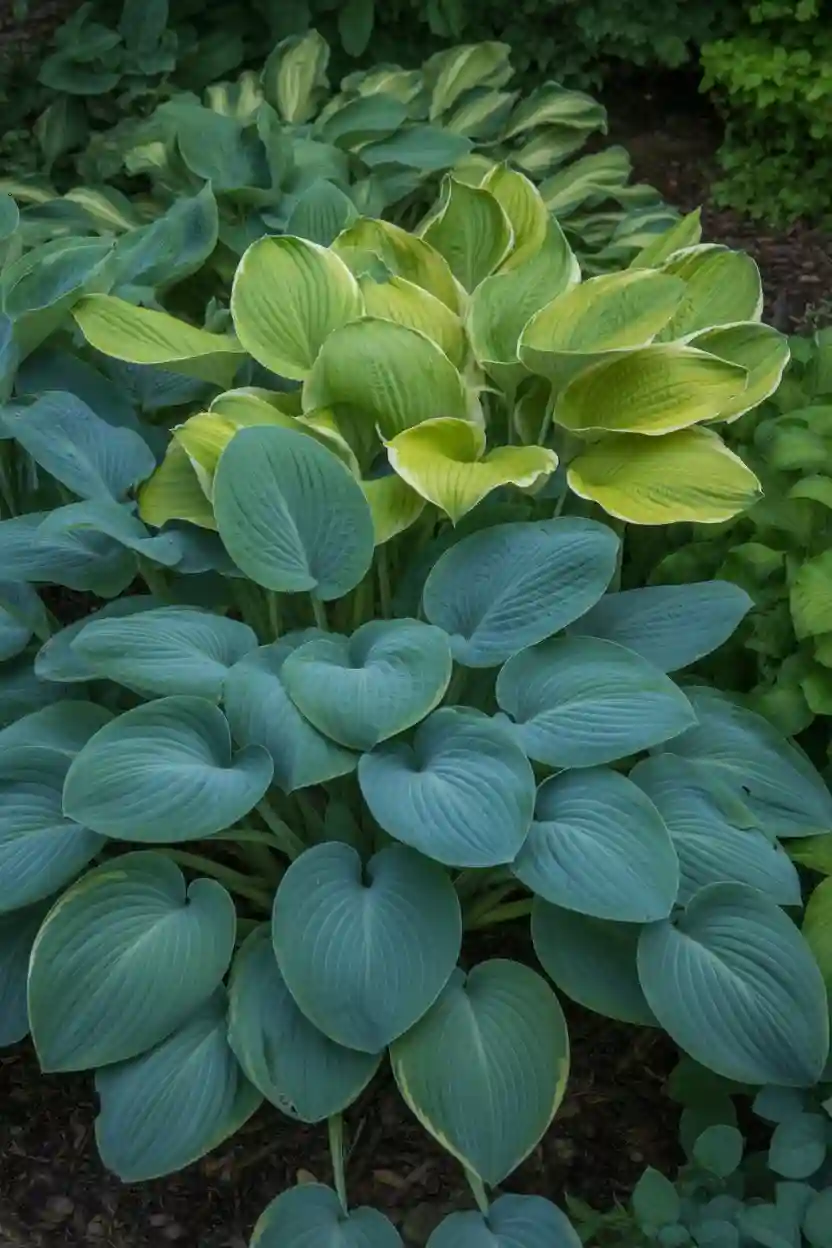
Mass planting hostas in a single large bed creates a bold, graphic sweep of broad, textured leaves that commands attention while keeping the palette entirely green. The variety within hostas alone, from tiny mouse-ear types to giant Empress Wu with leaves the size of dinner plates, means you can build a full planting design using this one genus. I find this idea particularly satisfying because it breaks the rule that greenery-only gardens must be subtle — a mass hosta planting is genuinely dramatic. Pair varieties with different leaf textures, sizes, and green tones side by side for maximum depth and a design that evolves beautifully across the whole season.
12. Espaliered Green Shrubs
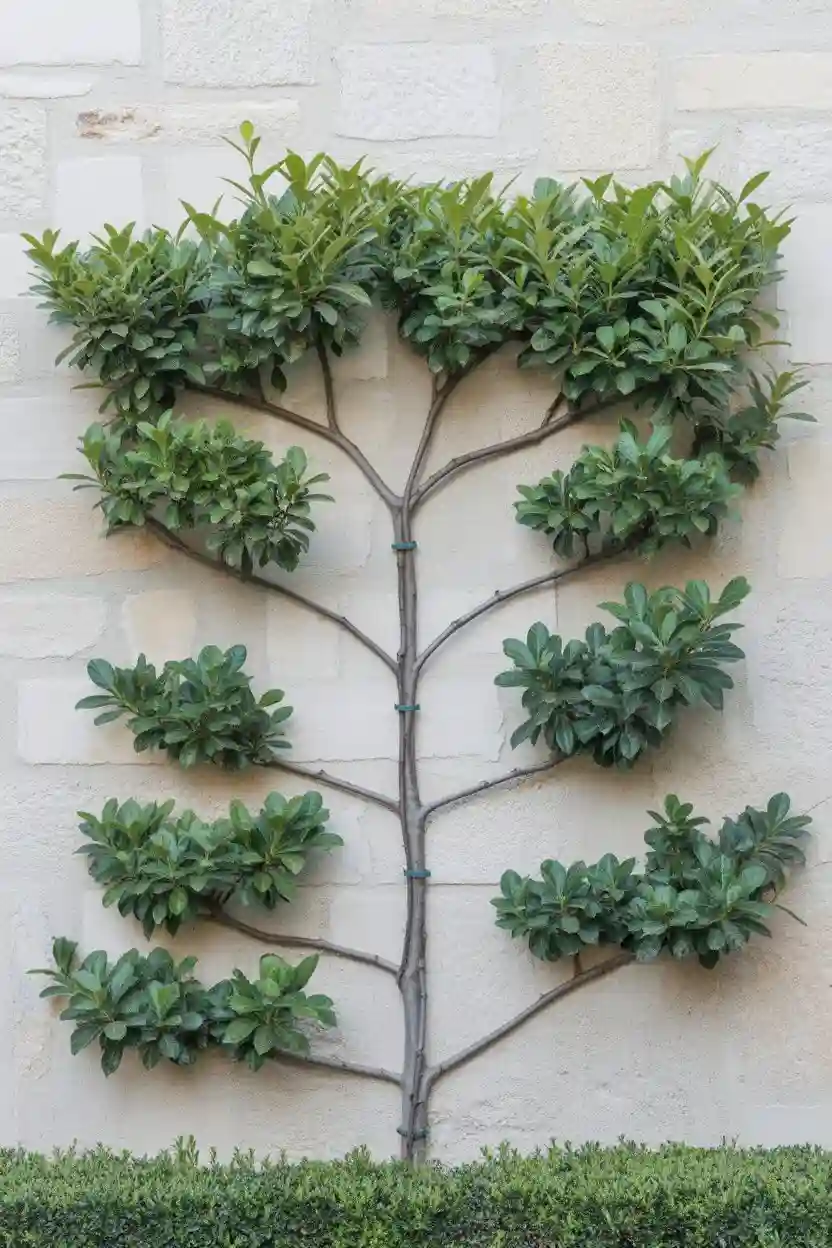
Training a shrub or small tree flat against a wall or fence in an espalier pattern is one of the most underrated techniques in minimalist landscaping, and the results look like living art. The flat, structured branching pattern against a wall brings an elegant formality to a greenery-only space that feels intentional and refined. This suits narrow side gardens or courtyard walls where you want vertical greenery without extending too far into the space. I recommend starting with a young, pliable plant and training it gradually using wall ties rather than trying to bend more mature growth, which can snap and discourage the whole plant.
13. Zoysia or Buffalo Grass Sweeps
Replacing a standard lawn with a warm-season grass like Zoysia or Buffalo grass creates a finer, softer, more beautiful green surface that requires significantly less water and mowing than traditional lawn varieties. The texture of these grasses has a quality I find genuinely more beautiful than standard turf, especially in the late afternoon light when the blades catch the sun from a low angle. This suits warm-climate gardeners who want a lawn that looks lush without intensive irrigation schedules. Overseed once in early spring and the result will be a dense, carpet-like sweep of green that becomes one of the most commented-on features of your yard.

14. Dry Creek Bed with Ferns and Moss
A dry creek bed lined with smooth stones and softened on either side with ferns, moss, and creeping ground covers creates a natural-looking drainage feature that also functions as a beautiful landscape design element. I love this idea because it solves a real practical problem — managing water runoff — while actually adding to the visual appeal of the garden rather than detracting from it. The layering of stone, moss, and feathery fern fronds together reads as deeply intentional even though it takes its cues entirely from nature. Plant the surrounding greenery densely so it slightly overhangs the stones, blurring the edges and making the whole feature look like it has always been there.

15. Clipped Green Mounds
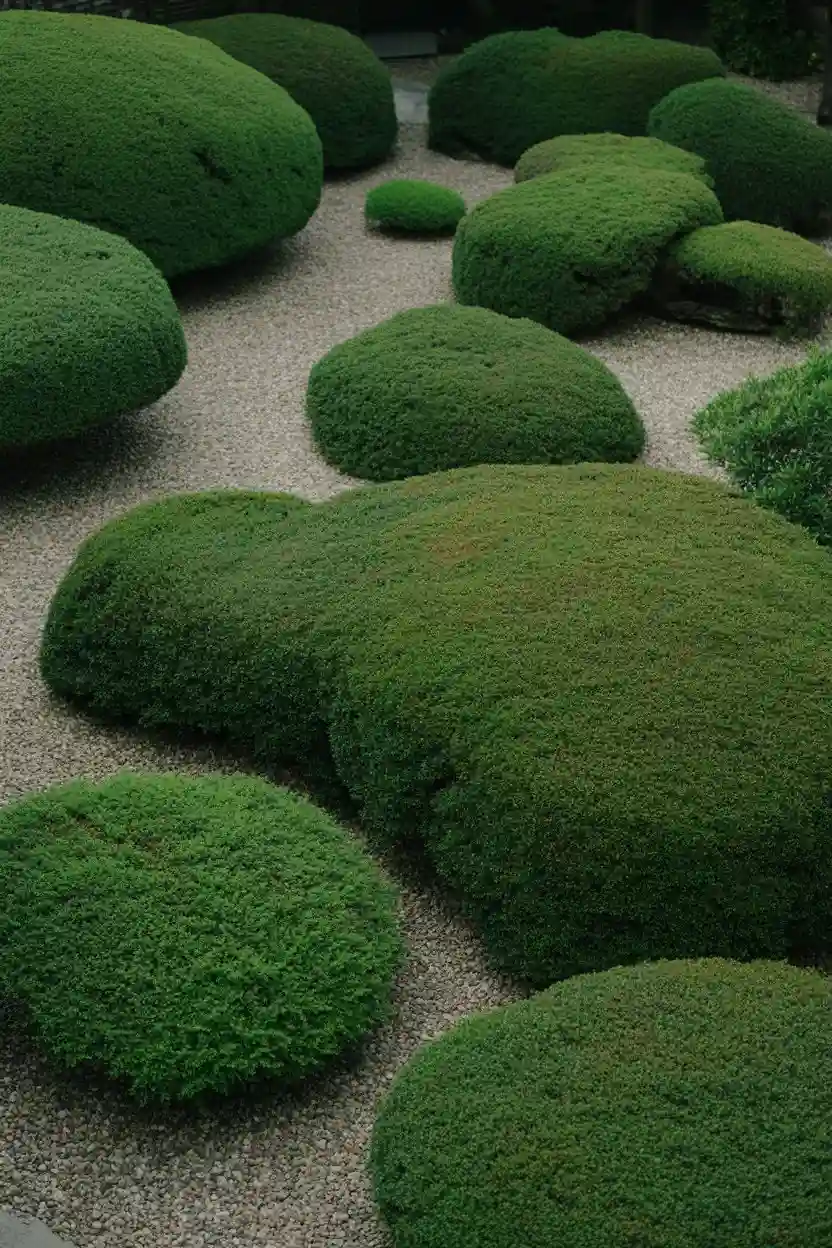
Shaping low growing shrubs like Buxus, Pittosporum, or Lonicera nitida into smooth, rounded mounds and scattering them across a lawn or gravel bed creates a calming, almost meditative landscape composition. The mounds read like gentle hills across the garden floor and the repetition of the rounded form brings a quiet rhythm to the space that I find deeply satisfying. This style suits women who love a Japanese or Scandinavian-influenced aesthetic where restraint and repetition are the design principles. Vary the sizes slightly between mounds rather than making them all identical, which keeps the arrangement from feeling too rigid or mechanical.
16. Green Roof Garden Panels
Installing living green panels or a partial green roof on a garden shed, pergola, or low outbuilding brings a dramatic sweep of lush foliage to a space that would otherwise just be a hard surface. I think green roofs are one of the most genuinely exciting directions in residential minimalist landscaping right now, and they do not have to be complicated or expensive to install on a small structure. Sedums, creeping Jenny, and baby’s tears all thrive in shallow green roof trays and create a dense, living mat of green that looks spectacular from above or at eye level. Make sure the structure can support the weight of saturated growing medium before planting, and choose a pre-planted modular tray system to simplify the whole installation process.

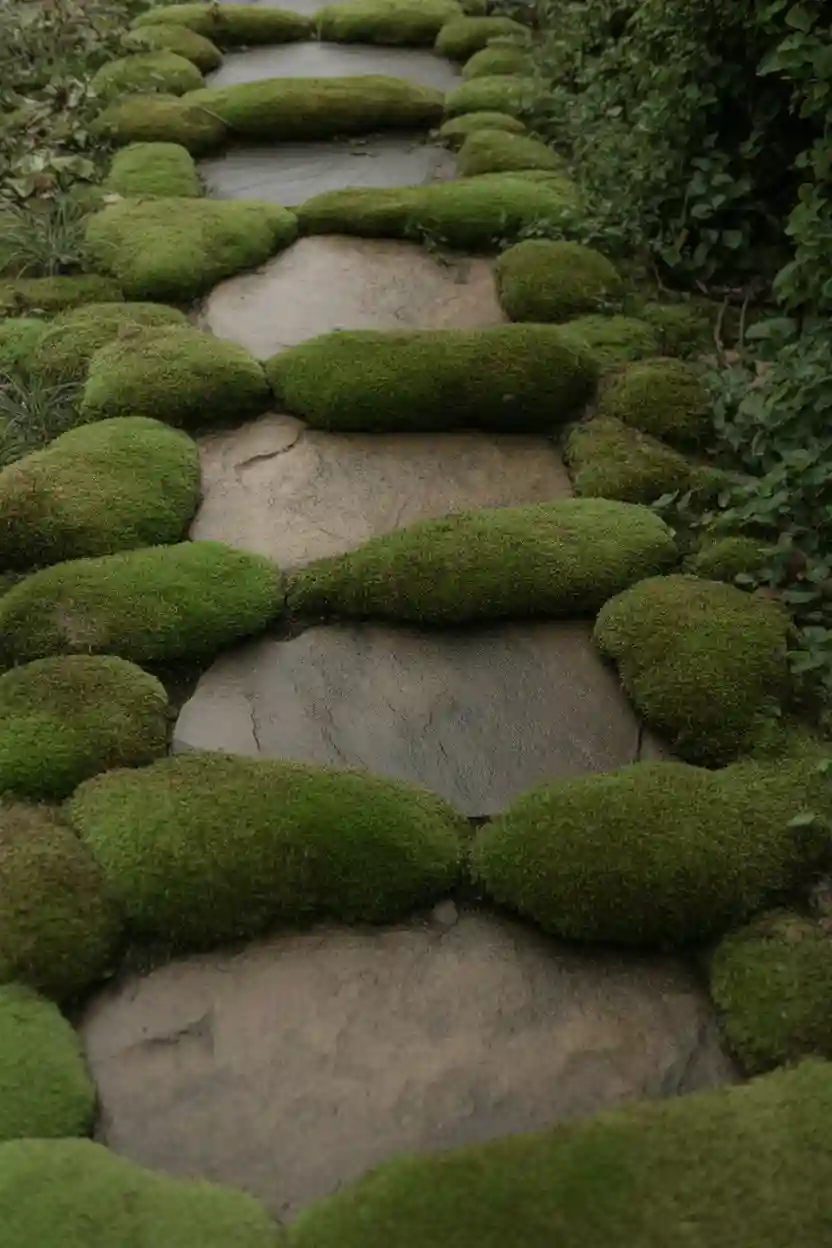
17. Stone and Moss Garden Floor
Pairing large flat stepping stones with moss growing between and around them creates a garden floor that feels ancient, serene, and wildly beautiful in equal measure. The contrast between the cold, still permanence of stone and the soft, living cushion of moss is one of the most visually satisfying combinations in all of landscape design, and I come back to this idea constantly. It suits shaded courtyard gardens, meditation corners, or any outdoor space where you want a sense of stillness and age. Encourage moss growth by blending a small amount of yogurt or buttermilk with moss fragments and painting the mixture onto stones in a shaded spot during cooler months.
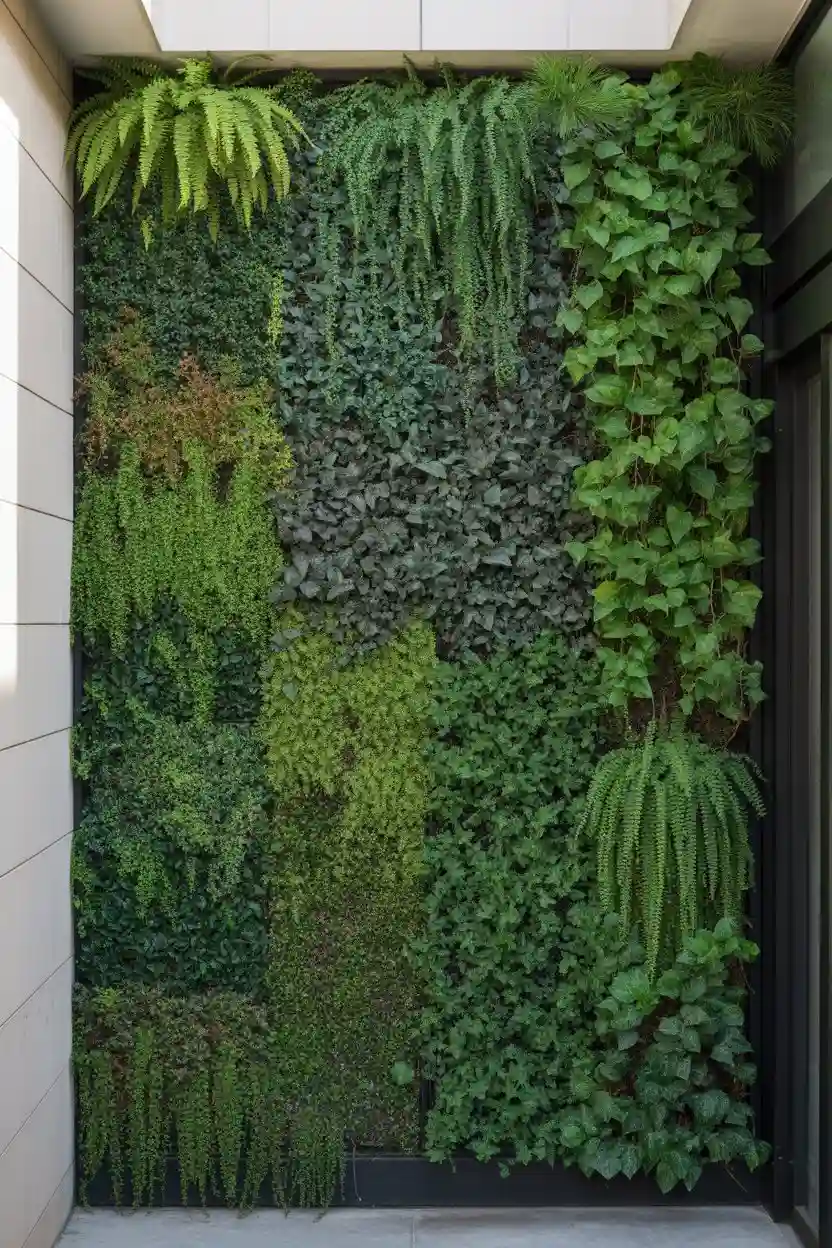
18. Vertical Green Wall Panel
A vertical wall planted with a mix of ferns, pothos, creeping fig, or small-leafed ivies transforms a bare fence, exterior wall, or courtyard divider into a living, breathing surface of layered green texture. I love this idea for smaller spaces because it takes your gardening vertical, which means you gain dramatic greenery coverage without sacrificing any ground-level space at all. The visual richness of a full vertical green wall is impossible to achieve with any other single minimalist landscaping technique, and it genuinely stops people in their tracks. Use a modular pocket planting system for easy installation and watering, and mix varieties with different leaf sizes and textures for the most layered, lush final result.
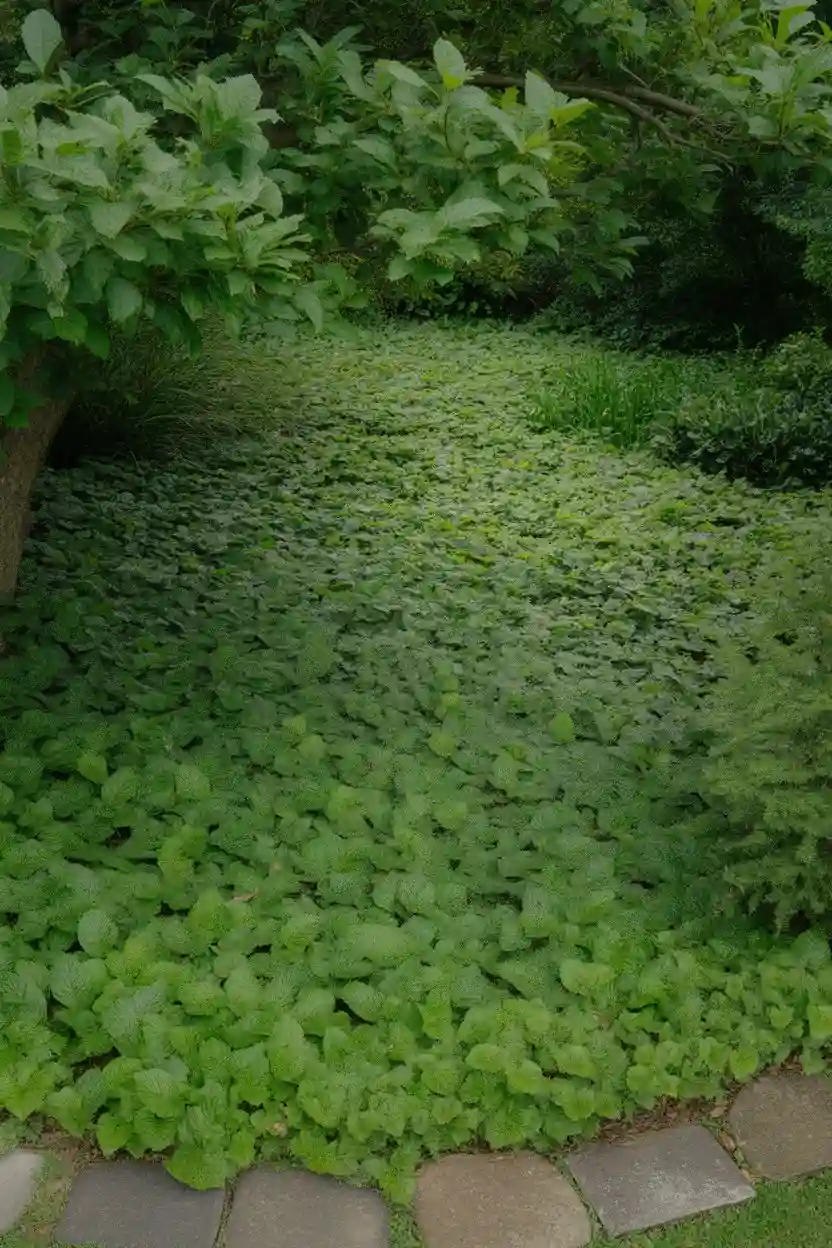
19. Native Groundcover Meadow
Replacing a portion of lawn with a carpet of native ground covers like wild ginger, pachysandra, or green-and-gold creates a low-maintenance, ecologically supportive landscape that is just as beautiful as a traditional garden bed. I am genuinely passionate about this idea because it works with your local ecosystem rather than against it, which means less watering, less feeding, and less fighting nature every season. This suits women who want a lush, full green yard without the weekly upkeep of a traditional lawn or flower border. Choose species native to your specific region and let them spread naturally, filling every gap with a dense, living green layer that looks better every single year it is left to settle in.
20. Sculptural Agave and Succulent Green Garden
Using architectural green succulents and agave varieties, chosen specifically for their foliage rather than their blooms, brings a bold, structural sculptural quality to a minimalist landscape that is striking in every season. The spiky rosettes, rigid leaf forms, and sharp geometry of these plants create a completely different visual language from soft, leafy gardens, and I find it endlessly interesting. This suits dry climates, modern homes, or anyone who wants a low-water greenery garden with genuine visual drama. Mix large statement agaves with smaller rosette succulents at their base to create a natural-looking tiered arrangement that fills in slowly and beautifully over several growing seasons.

FAQs for Minimalist Landscaping Ideas
If this gave you the push you needed to finally start planning that calm, green outdoor space you have been dreaming about, save this to your Pinterest garden board so you can come back to it whenever you are ready — and drop a comment below telling me which idea felt most like you.