Introduction
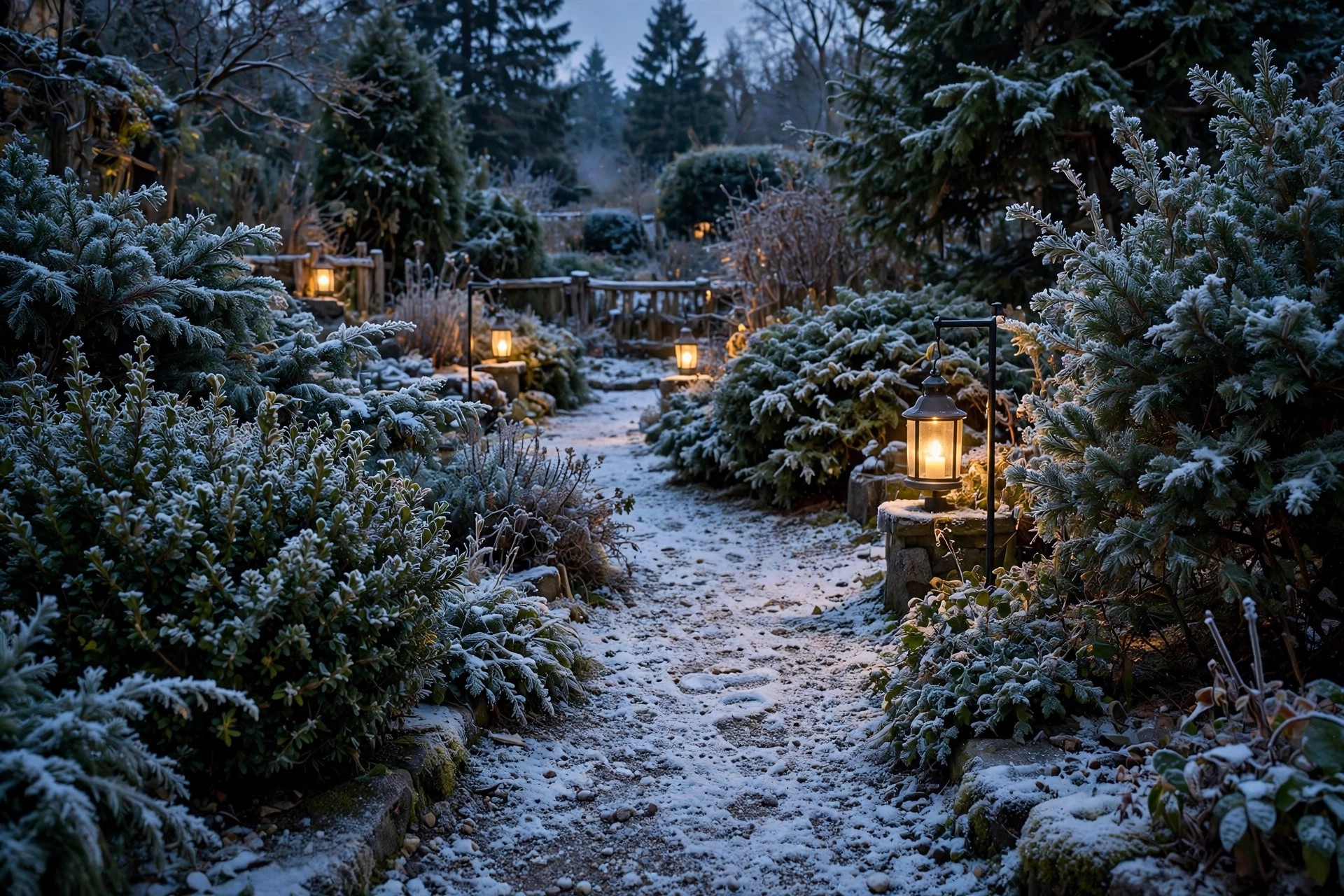
For years I treated my garden as a three-season room — glorious in spring, lush in summer, golden in autumn, and then abandoned to the cold from November onwards. Then one grey January afternoon I stood at the kitchen window and realised how much of the year I was wasting. A winter garden is not a garden that merely survives the cold; it is a garden designed for it, with evergreen structure, scented shrubs, berries, bark, and light. These 21 winter garden ideas cover everything from planting a hellebore border to lighting a frosty path, and every one of them is something I have tried, or watched thrive, in a real garden through a real winter. If your outdoor space disappears into darkness every November, this list will bring it back.
1. Plant a Hellebore Border for Late-Winter Flowers
Hellebores are the plant that changed my mind about winter gardening entirely, because they flower when almost nothing else dares to. I planted a drift of them under the bare branches of my apple tree, in soil I had improved with leaf mould, and by February the nodding flowers — white, dusky pink, deep plum — were opening above their glossy evergreen leaves. They need shade in summer and moisture in winter, which makes the north side of a hedge or the foot of a deciduous tree the perfect spot. The trick is to cut back the old leaves in late January so the flowers show properly, and to plant them where you will see them from the house. Mine are visible from the kitchen window, which is where I spend most of January, and they are the first flowers of my year.
2. Build Structure with Evergreen Shrubs
Structure is the word every garden designer uses about winter, and it took me years to understand what they meant. In summer, flowers hide a garden’s bones; in winter, the bones are all you have. I planted a backbone of evergreen shrubs — boxwood, yew, holly, and a couple of sarcococca — and suddenly the garden had shape in January. Boxwood balls mark the corners of my beds, a yew hedge runs along the back fence, and the holly gives me berries for the house. The trick is mixing shapes: rounded, upright, and spreading, so the garden reads as designed rather than a hedge. I buy small and let them grow, because a young shrub settles in better than a big one, and my modern minimalist garden design ideas show how the same evergreen bones work in a contemporary garden too.
3. Add Winter-Scented Shrubs by the Door
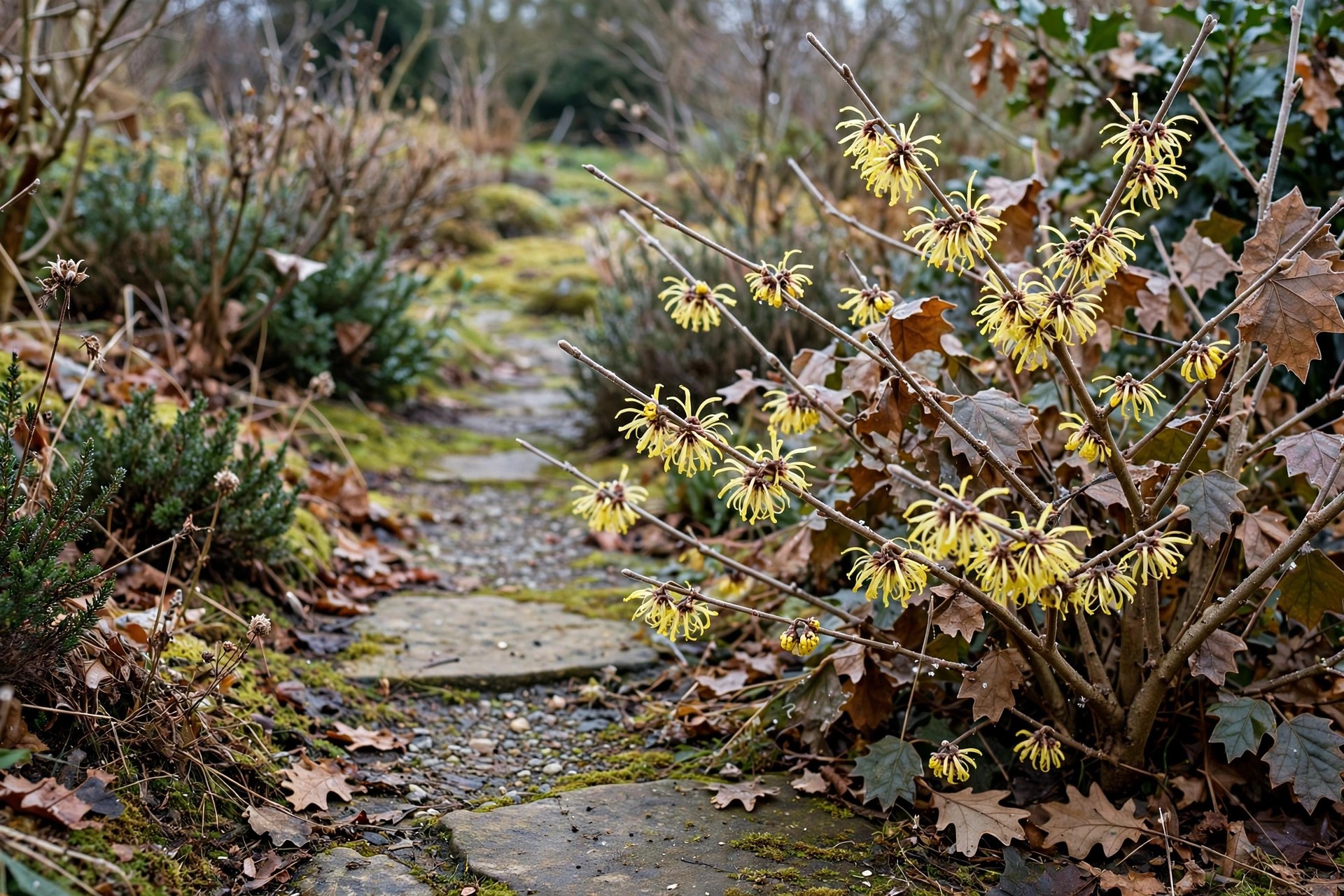
Scent is the most underrated part of a winter garden, and the shrubs that flower in the cold are some of the most fragrant plants I own. I planted sarcococca — sweet box — right beside the front door, and its tiny white flowers fill the porch with a honeyed scent from December to February. Witch hazel went by the path, its spidery yellow flowers opening on bare branches and smelling faintly of spice. Daphne sits in a sheltered corner, and I catch its perfume every time I take the bins out. The trick is planting them where you actually walk, not at the far end of the garden where nobody goes in January. A winter garden you cannot smell from the door is a wasted opportunity, and these three shrubs are the cheapest luxury I know.
4. Grow a Berry Border for Birds and Colour
Berries are the jewels of a winter garden, and a good berry border does double duty: it looks beautiful, and it feeds the birds when food is scarce. I planted a row of pyracantha along the fence — its orange berries glow against the bare branches all winter — plus a couple of cotoneaster shrubs and a crab apple tree whose small fruits hang on into January. The birds arrive in waves: blackbirds first, then fieldfares and redwings on the coldest mornings. I leave the berries for them rather than cutting them for the house, though I do snip a few sprigs of holly for the table. The trick is planting several species so the berries ripen at different times, and my perennial flower bed ideas include a few shrubs that carry colour from autumn right into the berry season.
5. Light the Garden with Warm Solar Lanterns
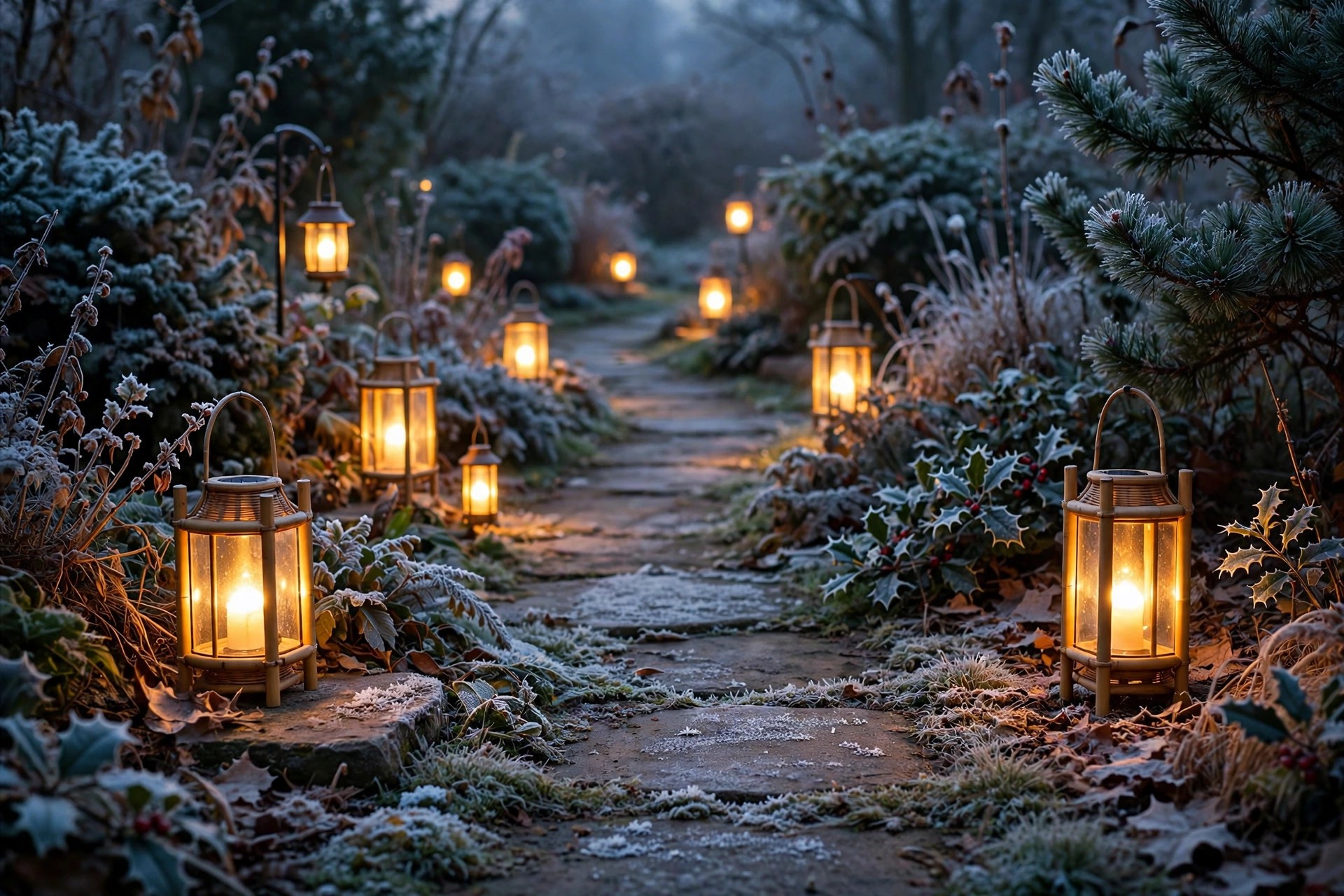
Winter light is low and golden, and the right lighting turns a dark garden into a place you actually want to look at after four o’clock. I use warm-white solar lanterns along the path — the glass kind with a flickering LED candle inside — plus a few string lights wound through the bare branches of the crab apple tree. The solar panels charge on even a grey winter day, and the lights switch on at dusk without me touching them. The trick is warm white, not cool white: cool white makes a garden look like a car park, while warm white makes it look like a candlelit room. I keep the lighting low and scattered rather than bright and even, because pools of light and shadow are what make a winter garden feel magical rather than floodlit.
6. Create a Frost Garden with Ornamental Grasses
Ornamental grasses are the plants that look their best in winter, and I wish someone had told me that years ago. I leave my miscanthus and pennisetum standing all winter — I do not cut them back until March — and on a frosty morning their seed heads are rimed with white and catch the low sun like spun glass. The grasses also give the garden movement: they sway in the wind when everything else is still, and they make a soft rustling sound that is wonderful on a quiet day. The trick is planting them in drifts of three or five rather than singly, and leaving the seed heads on for the birds. I grow mine in the sunniest part of the garden, where the frost melts last and the grasses glow longest.
What you need
Miscanthus and pennisetum grasses, a sunny spot with free-draining soil, and the patience to leave the seed heads standing until March.
7. Plant Winter-Flowering Clematis on a Bare Wall
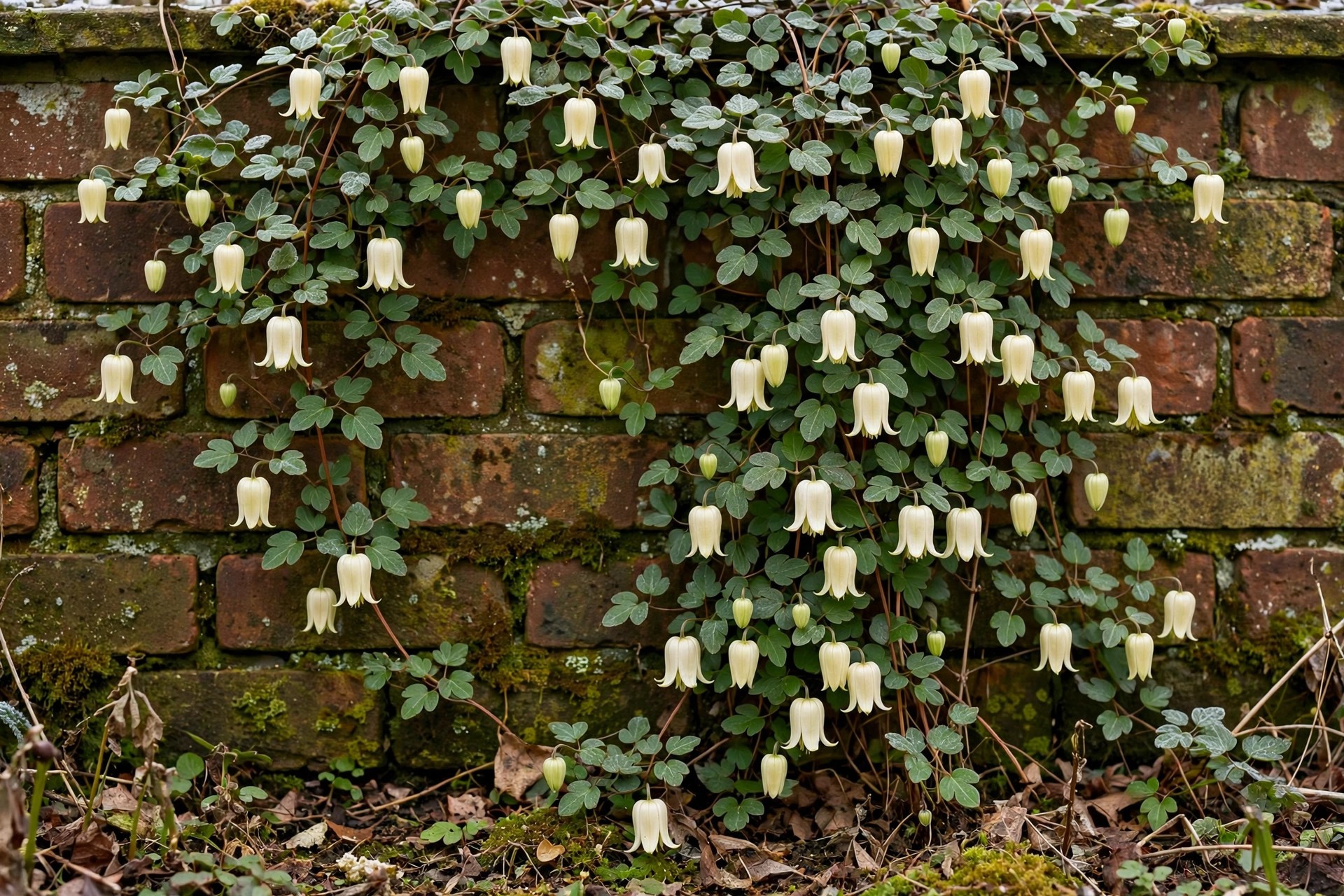
A bare wall in winter is a wasted opportunity, and a winter-flowering clematis is the plant that fixes it. I grow Clematis cirrhosa ‘Freckles’ up the south-facing wall of the house, and from December onwards it produces small cream bells freckled with maroon, with a delicate scent that drifts in through the kitchen window. It needs a sheltered spot and a trellis or wires to climb, and it appreciates its roots in the shade while its top reaches the sun. The trick is planting it deep — a good six inches deeper than it was in the pot — which encourages strong shoots from the base. Mine took two years to really get going, and then it covered the wall in a single season. It is now the first thing visitors notice in January.
8. Design a Four-Season Raised Bed
Raised beds are not just for summer vegetables — mine work hardest in winter, when they hold the plants that carry the garden through the cold months. I built a low raised bed near the kitchen door and planted it with winter salad leaves, spring bulbs, and a row of dwarf evergreen shrubs along the back edge, so it looks good even in January. The raised soil drains better than the ground, which matters in a wet winter, and the bed is at a height that makes tending it comfortable in a coat and gloves. I edge mine with reclaimed bricks, which hold the day’s warmth and give the bed a finished look. My raised garden bed ideas for small yards show how the same beds work in a tiny space, and the winter planting ideas there carry straight into this design.
9. Add a Fire Pit or Chiminea for Winter Evenings
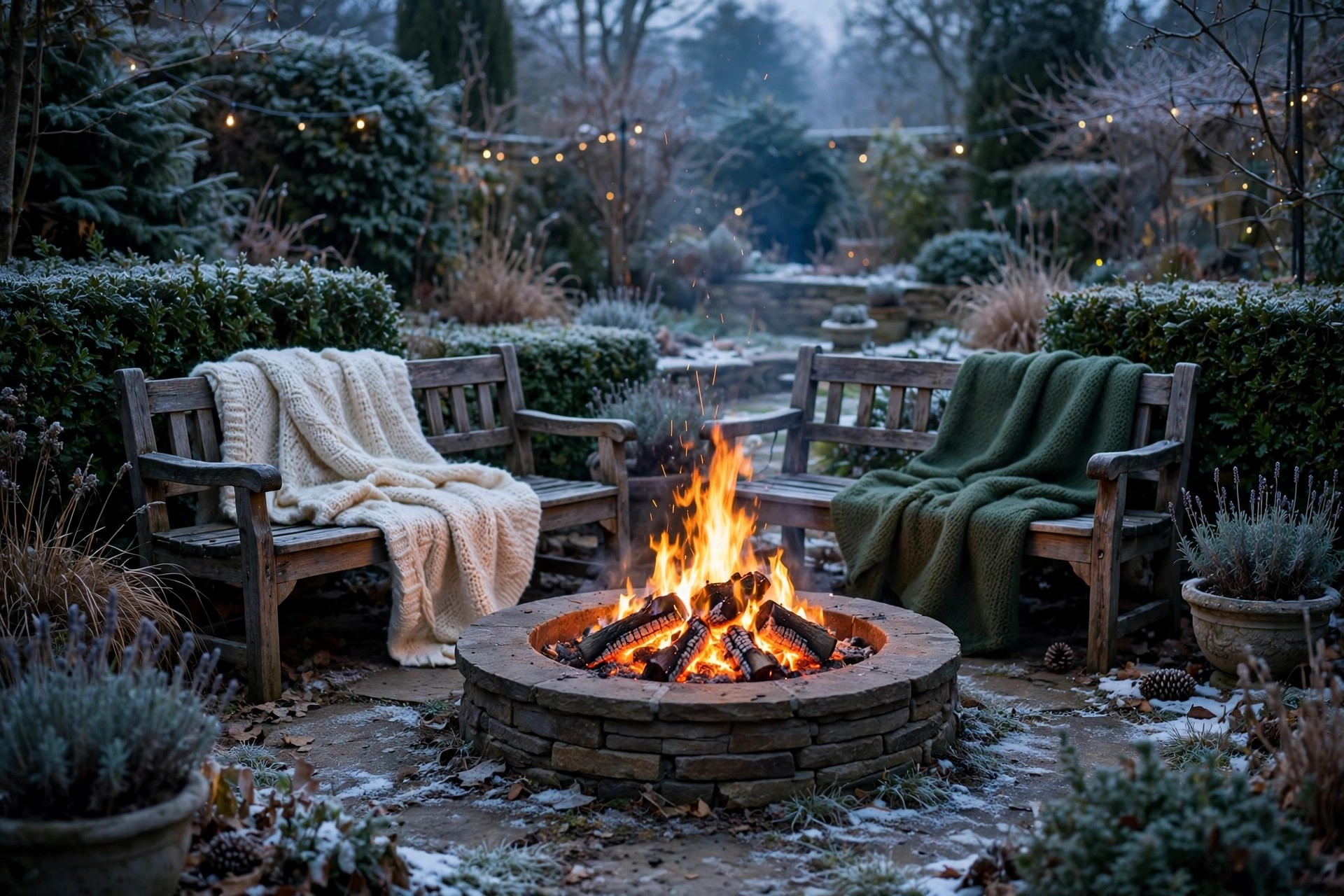
A fire pit is the thing that turns a winter garden from something you look at into something you use. I set a simple steel fire bowl on a gravel circle at the end of the garden, with a couple of old wooden benches and a basket of blankets, and on clear winter evenings we sit out there with mugs of hot chocolate and watch the stars. The smoke keeps the midges away — not that midges are a January problem — and the fire gives a focal point that the whole garden arranges itself around. The trick is siting it away from the house and any overhanging branches, and keeping a bucket of sand nearby. I use a chiminea on windy nights, since it throws the heat forward and keeps the sparks contained. It is the best money I have spent on the garden in years.
10. Plant Snowdrops in Drifts Under Trees
Snowdrops are the first flowers of the year in my garden, and they are the ones I look forward to most, because they mean the worst of winter is over. I plant them in drifts — hundreds of bulbs, scattered and planted where they fall — under the deciduous trees, where they get light before the canopy closes. The trick is planting them in the green, just after flowering, rather than as dry bulbs in autumn: they establish far more reliably that way, and a single clump becomes a carpet within three years. I mark the drifts with small stones so I do not dig into them by accident in summer. The sight of that white carpet on a grey February morning is worth every bulb, and it costs less than a takeaway to plant a whole drift.
11. Use Bark and Stem Colour as Winter Decoration
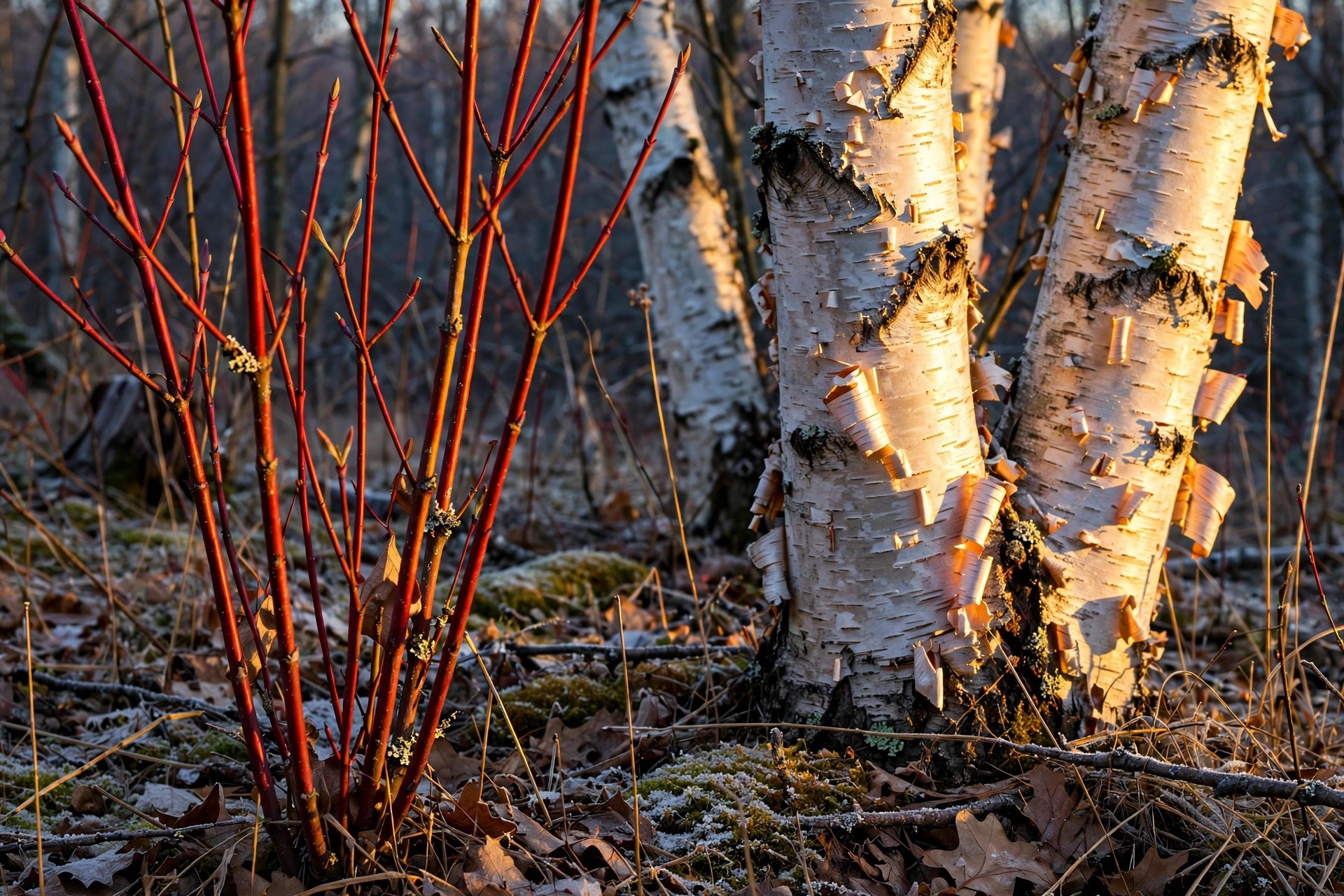
When the flowers are gone, bark and stems take over, and a garden planted for winter bark is a garden that glows in the low sun. I planted a Himalayan birch with its white peeling bark beside the path, a red-stemmed dogwood in a group of five, and a snake-bark maple in the corner where the evening light catches it. The dogwood stems are the stars — I cut them back hard every March, which forces the brightest red growth the following winter. The trick is planting them against a dark background, like a yew hedge or a fence, so the colours stand out. It is a slow kind of gardening — the trees take years to mature — but the effect on a frosty morning is worth the wait.
12. Build a Winter Herb Garden by the Kitchen Door
A winter herb garden by the kitchen door is the most practical idea on this list, because it puts fresh flavour within arm’s reach when the rest of the garden is asleep. I grow rosemary, thyme, sage, and winter savoury in a wooden planter by the back door, plus a pot of bay that I move into the sheltered porch in the coldest weeks. The herbs survive most winters with a bit of grit in the compost and a free-draining pot, and the rosemary flowers in late winter with small blue blooms that the early bees love. The trick is harvesting little and often rather than stripping a plant bare, and keeping the pots off the cold ground on pot feet. Fresh sage for stuffing, rosemary for roast potatoes — the garden earns its keep even in January.
13. Hang Bird Feeders Where You Can Watch Them
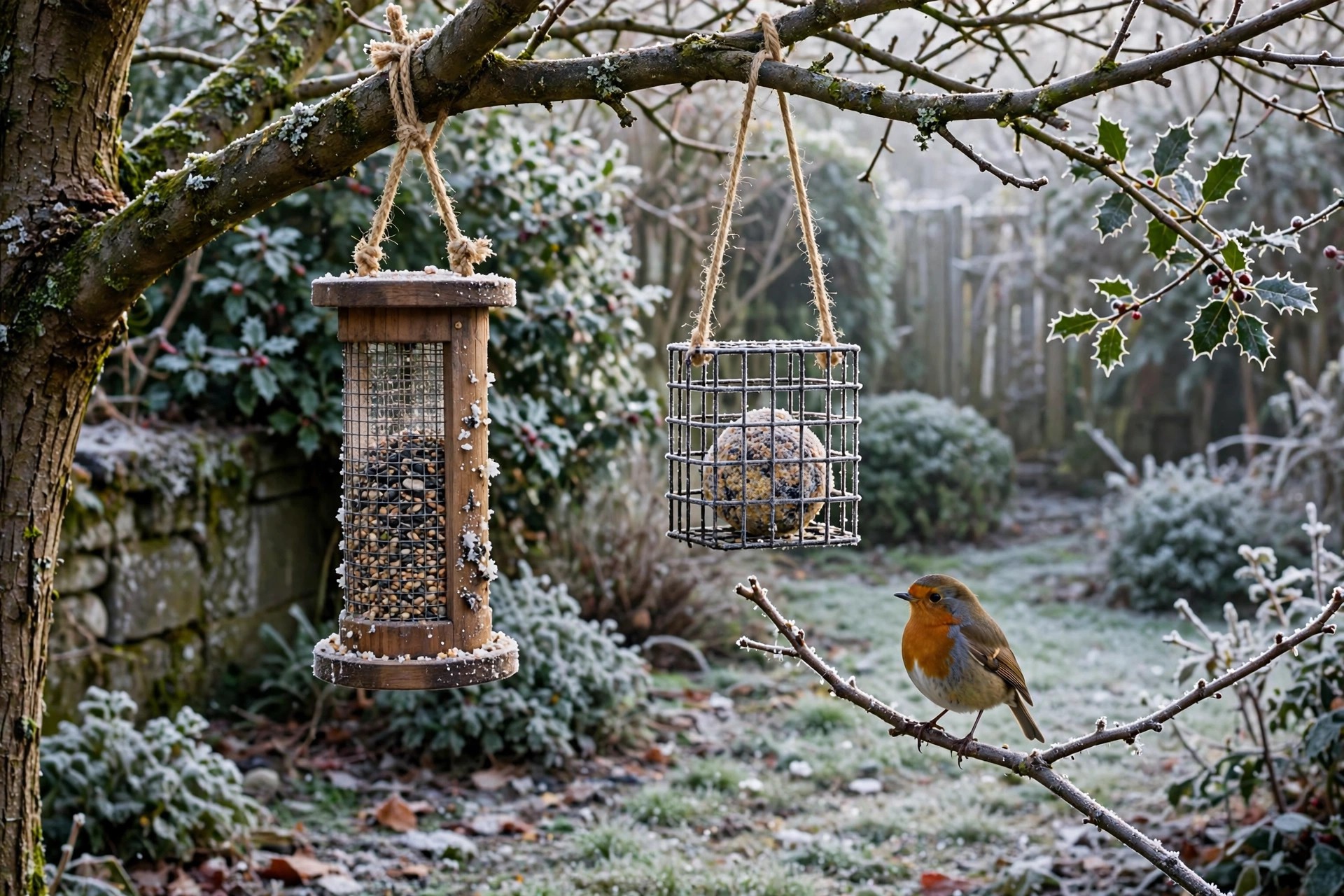
Winter is when the birds need us most, and a well-placed feeder turns the garden into a theatre. I hang a seed feeder, a fat-ball feeder, and a peanut feeder from the crab apple tree, all visible from the kitchen window, and the regulars arrive within days: blue tits, great tits, robins, and a nuthatch that comes upside down. I keep the feeders topped up from November to March, and I clean them monthly to stop disease spreading. The trick is hanging them near cover — a shrub or a hedge — so the birds can dart to safety, but far enough from the house that the window does not become a hazard. Watching a robin on a frosty morning with a cup of tea is one of the quiet pleasures of a winter garden.
14. Create a Winter Container Display
Containers are the fastest way to bring colour into a winter garden, because you can fill them with plants that are already looking good. I use a big terracotta pot by the front door, planted with a small conifer in the centre, winter pansies around the edge, and trailing ivy spilling over the rim. It looks smart from November to March, and I swap the pansies for spring bulbs as the season turns. The trick is using frost-proof pots — terracotta can crack in a hard frost, so I buy the frost-resistant kind and raise the pot on feet so water drains away. A second, smaller pot by the back door holds a sarcococca, so the scent greets me every time I come home. It is the lowest-effort, highest-impact idea on this list.
15. Lay a Frost-Proof Path with Gravel and Stepping Stones
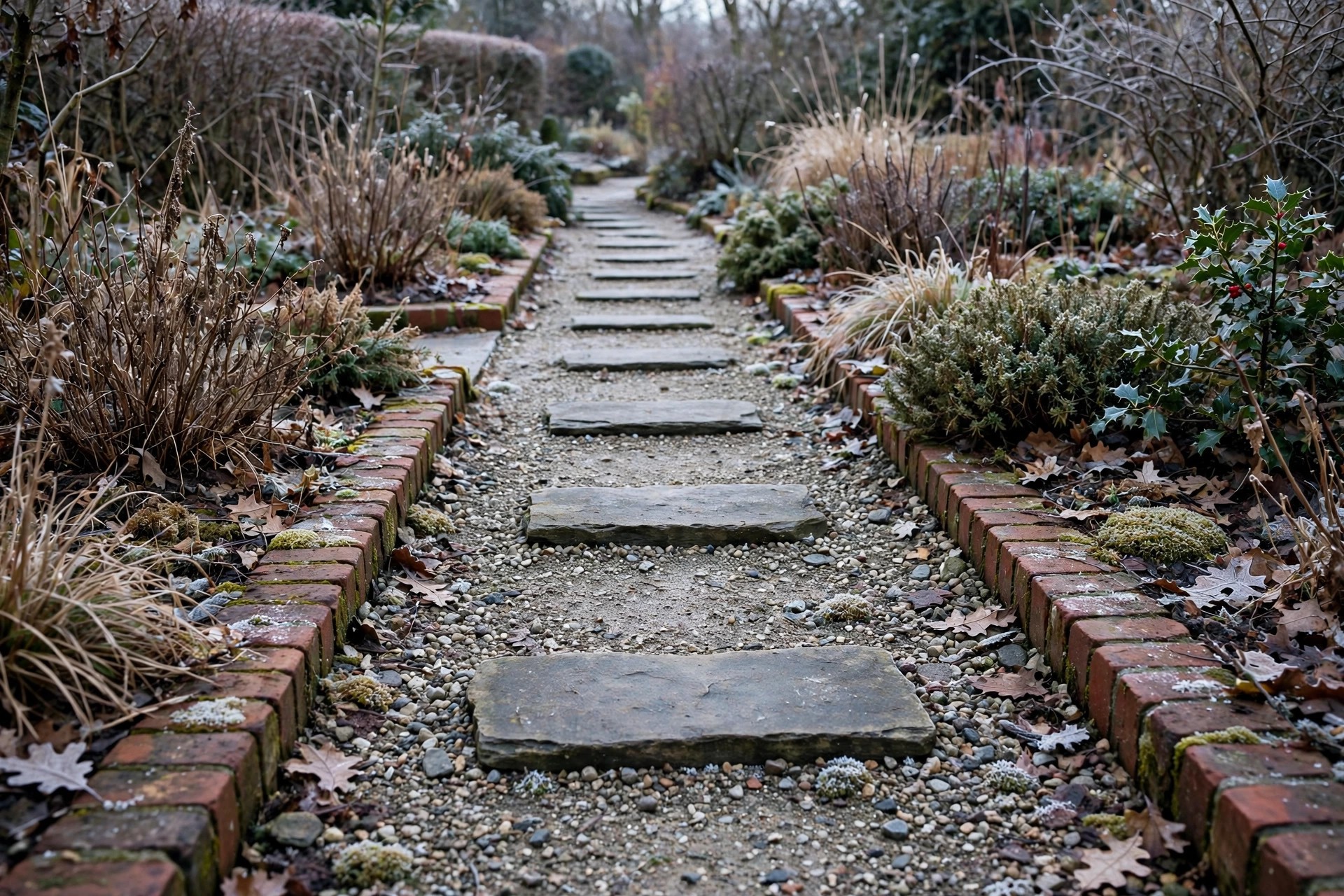
A winter garden needs a path you can actually use in the rain and the frost, and mine used to be a strip of mud that swallowed boots whole. I dug it out, laid a membrane, and filled it with pale gravel and large flat stepping stones, edged with reclaimed bricks. The gravel drains beautifully, the stones stay put, and the pale colour brightens the garden on a grey day. The trick is the membrane underneath — it stops the weeds coming through and keeps the gravel from sinking into the mud. I sweep it once a month and top up the gravel once a year. It is not glamorous work, but a good path is what makes the difference between a garden you look at through the window and a garden you actually walk in during winter.
16. Plant a Winter Vegetable Patch
Growing food in winter feels like a small act of defiance, and it is easier than most people think. I sow broad beans in November for an early spring harvest, plant garlic cloves in the same month, and keep a bed of leeks, kale, and winter cabbage going through the coldest weeks. The kale is the star — it sweetens after a frost, and I pick the leaves all winter long. The trick is protecting the young plants with a cloche or a sheet of horticultural fleece on the coldest nights, and choosing varieties bred for winter hardiness. My practical raised bed vegetable ideas include a winter rotation plan that keeps a bed productive twelve months a year. There is nothing quite like cutting fresh kale in January while the rest of the garden sleeps.
17. Add a Garden Mirror to Bounce Low Winter Light
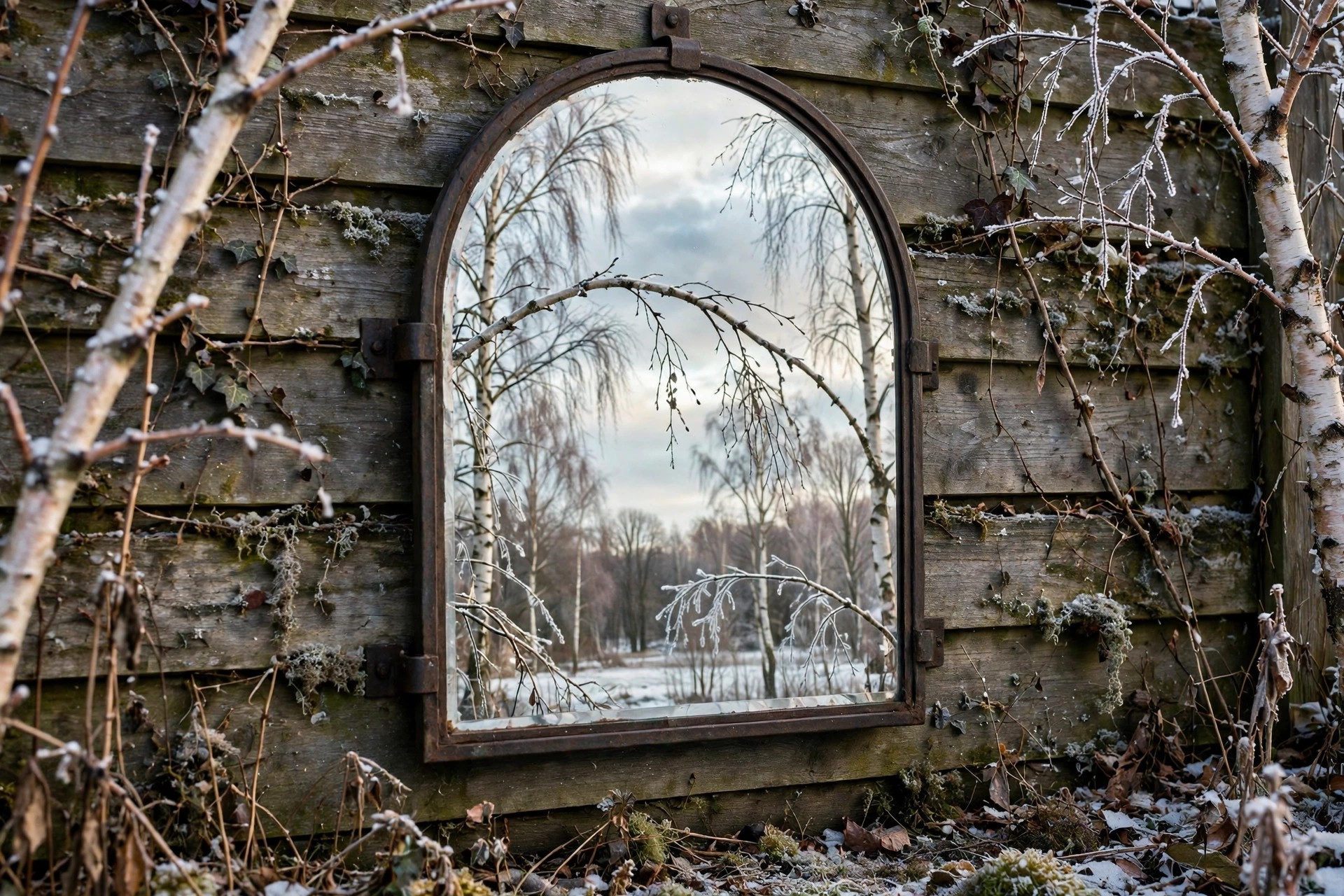
A garden mirror is the trick I was most sceptical about, and the one I now recommend most often, because low winter light is precious and a mirror makes more of it. I fixed a large arched mirror to the shady fence at the back of the garden, and it reflects the sky and the birch tree, making the space feel twice as big and twice as bright. The trick is angling it to reflect plants and sky, not the house or the neighbours’ bins, and choosing a mirror made for outdoor use so it does not cloud over. I frame mine with a climbing rose and a clematis, so it looks like a window rather than a mirror. It is a small change that transforms a dark corner, and it works even better in winter, when the light is low and the reflection is long.
18. Protect Tender Plants with Fleece and Mulch
Winter protection is the unglamorous work that saves the garden, and I learned its value the year I lost a whole row of tender salvias to a single hard frost. Now I mulch the beds with a thick layer of bark chips in late autumn, wrap the tender plants in horticultural fleece on the coldest nights, and move the pots into the sheltered porch. The mulch does double duty: it insulates the roots and it suppresses the weeds that would otherwise get a head start in spring. The trick is mulching after the first frost, when the soil is cold and damp, and removing the fleece on mild days so the plants can breathe. It is not a beautiful job, but it is the reason my garden wakes up in March instead of starting over.
19. Make a Willow Screen for Winter Privacy
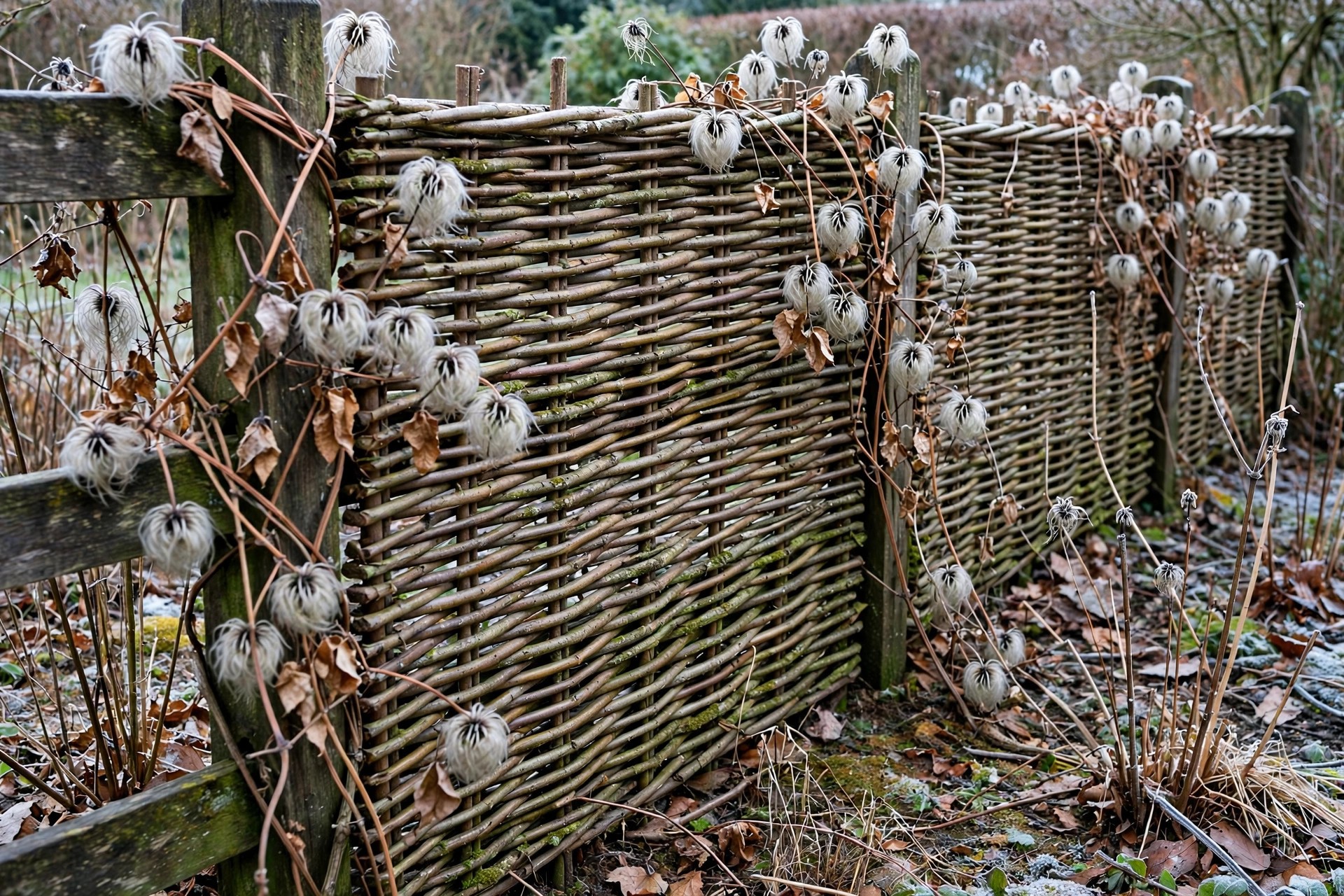
Bare branches in winter mean the neighbours can see straight into the garden, and a willow screen is my favourite fix. I wove a simple screen from willow rods — a weekend’s work with a willing friend — and planted it along the fence where the summer hedge thins out. The woven willow looks beautiful in its own right, all warm brown and texture, and it gives the garden privacy without blocking the low winter sun. The trick is buying fresh, flexible rods and soaking them overnight so they bend without snapping. I grow a clematis up one end, so the screen is green in summer and sculptural in winter. It is a craft project and a garden structure in one, and my vibrant flower bed ideas show how the same woven edging works around a bed.
20. Set Up a Winter Wildlife Corner
A wildlife corner is the part of my garden I leave deliberately messy, and it is the part the animals love most. I pile logs in a quiet corner for beetles and hedgehogs, leave a heap of leaves for frogs and overwintering insects, and keep a shallow dish of water that I break the ice on every morning. The trick is leaving it alone — the more I tidy it, the less wildlife uses it. I planted a few native shrubs around it, hawthorn and hazel, which give cover and food. It is a small patch of wildness in a tidy garden, and it reminds me that a winter garden is not just for me. On a still January morning, the tracks in the frost tell me exactly who visited overnight.
21. Plan Next Spring from the Winter Garden
The last idea is the one that costs nothing and gives the most: use the winter garden to plan the spring one. I walk the garden in January with a notebook and a cup of tea, and I write down what works — the hellebores by the window, the dogwood against the hedge — and what does not, the bare patch by the fence, the corner that stays dark all day. Winter shows you the garden’s bones, and a notebook in January is worth a dozen trips to the garden centre in April. I order my seeds and bulbs in the quiet weeks, sketch the new beds, and plan the planting for the year ahead. My outdoor Christmas decor ideas can carry the garden through the festive weeks, but the real work of a winter garden is this: looking, noting, and dreaming about spring.

Styling Tips
- Design for the view from the house first — the winter garden is mostly enjoyed through a window, so plant for that sightline.
- Mix evergreen shapes: rounded, upright and spreading shrubs give the garden structure when the flowers are gone.
- Use warm-white lighting only, kept low and scattered, so the garden glows rather than glares.
- Plant scent where you walk — sarcococca by the door, witch hazel by the path — so the garden greets you.
- Leave seed heads and grasses standing until March; they feed the birds and look beautiful in frost.
- Mulch in late autumn and keep fleece handy — protecting tender plants is what lets the garden wake up in spring.
Frequently Asked Questions
What plants look good in a winter garden? The best winter plants are hellebores, snowdrops, winter-flowering clematis, sarcococca, witch hazel, and evergreen shrubs like boxwood, yew and holly. Add ornamental grasses for frost-covered seed heads, and dogwood and birch for stem and bark colour. Together they give flowers, scent, berries and structure through the coldest months.
How do I protect plants from frost in winter? Mulch the beds with bark chips in late autumn to insulate the roots, wrap tender plants in horticultural fleece on the coldest nights, and move pots into a sheltered spot or raise them on pot feet so water drains away. Water plants in the morning rather than the evening, so wet leaves do not freeze overnight, and remove fleece on mild days so plants can breathe.
What is the best lighting for a winter garden? Warm-white lighting is best — solar lanterns along the path, string lights in bare branches, and a few uplights on trees or shrubs. Keep the light low and scattered rather than bright and even, so the garden glows in pools of light and shadow. Avoid cool-white lights, which make a garden look harsh, and use timers or solar sensors so the lights switch on at dusk without any effort.
When should I start planning a winter garden? Start in late summer or early autumn, when you can plant evergreen shrubs, bulbs and winter-flowering plants while the soil is still warm. Hellebores and snowdrops establish best when planted in autumn or in the green in spring, and structural planting like trees and hedges should go in before the first frost. Even in January, though, you can plan — walk the garden, note the bare spots, and order plants for spring.
Final Thoughts
A winter garden is not a consolation prize for the months when nothing grows — it is a garden in its own right, with its own flowers, its own scent, and its own quiet beauty. Start with one idea from this list: a pot of hellebores by the door, a string of warm lights, a drift of snowdrops under a tree. Then, next year, add another. Before long, the months you used to write off will be the months you look forward to most. And if you want to carry the festive feeling outside through December, my DIY winter wreath ideas will dress the front door to match. Happy gardening — even in January.